Content
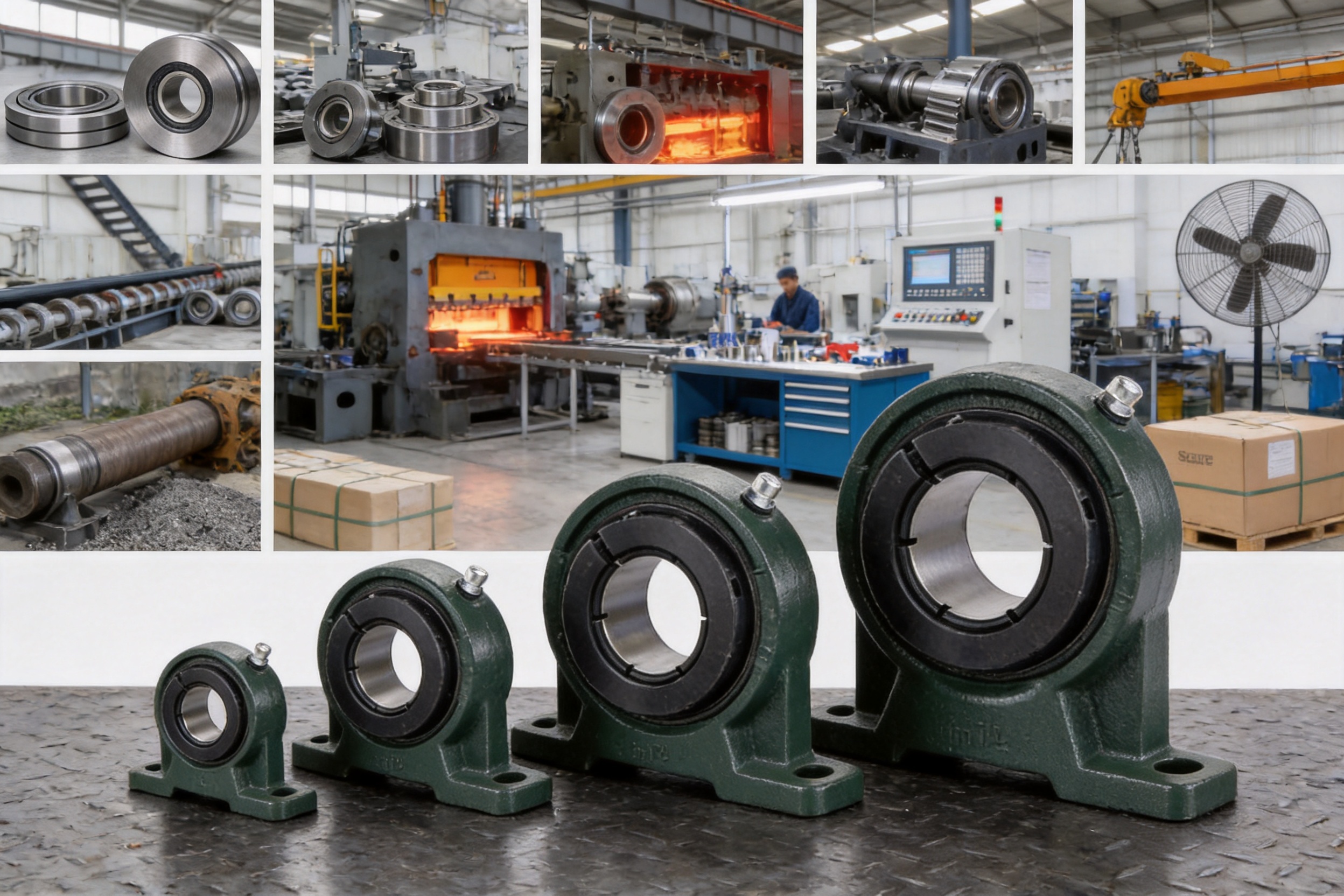
Hanger bearing units are compact, practical bearing assemblies developed to support rotating shafts in equipment where reliable mounting, alignment flexibility, and straightforward maintenance are important. Unlike a loose bearing that must be installed into a separately manufactured housing, a hanger bearing unit combines an insert bearing with a cast housing in one ready-to-install assembly. This arrangement reduces installation work, simplifies replacement, and provides a dependable solution for many conveying, agricultural, industrial, and mechanical transmission applications.
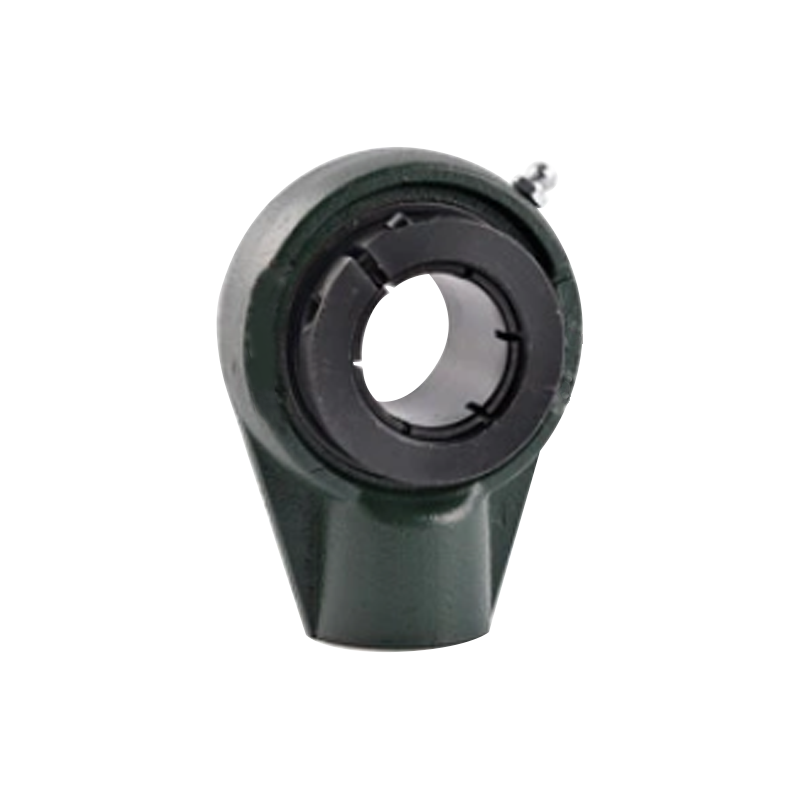
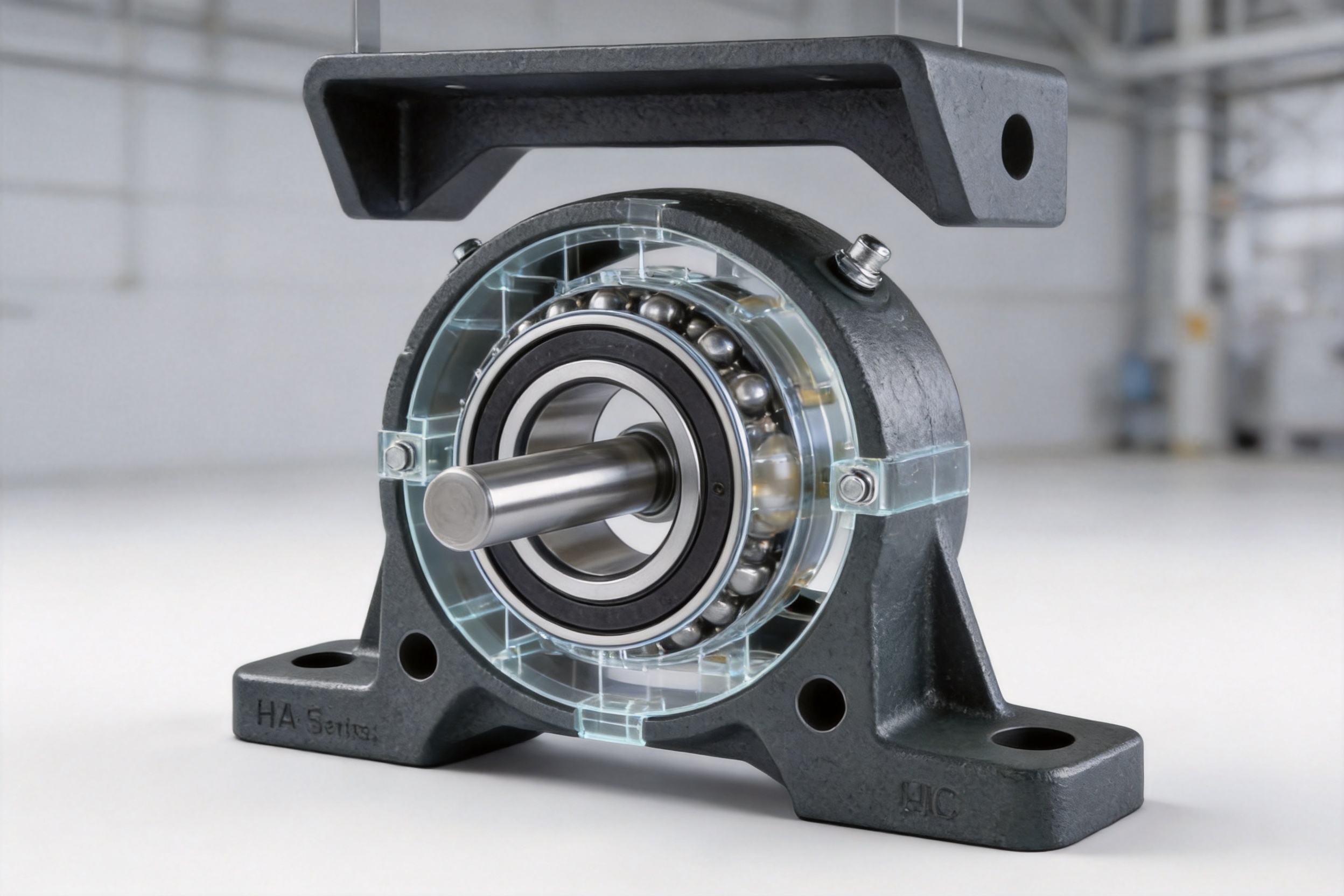
The UCHA2 design is one representative form of hanger bearing unit. It combines a UC Series insert bearing manufactured from chrome steel with an HA-style housing produced from cast iron. The bearing and housing work together as an integrated support assembly. The insert bearing contains the rolling elements and raceways, while the housing provides structural support and mounting stability. The spherical outside surface of the bearing outer ring allows limited self-alignment inside the housing, helping compensate for small installation errors and shaft misalignment.
Hanger bearing units are part of the mounted bearing family, but they offer characteristics that distinguish them from ordinary pillow block units. Their shape and mounting arrangement are suitable for suspended or elevated shaft supports, especially where the bearing must be attached to a frame, beam, bracket, or other structural member. Depending on the equipment layout, the unit can be installed in a location where a conventional horizontal pillow block would be difficult to use.
For industrial users, the value of this product extends beyond its basic bearing function. A well-designed unit must provide stable rotation, reasonable load capacity, resistance to contamination, reliable fastening, dimensional consistency, and long service life. It must also be available in a range of shaft diameters, including metric and inch versions. The UCHA2, UEHA, and UCHE series shown in the product range address these requirements through different housing and mounting configurations.
Hanger Bearing Units
A hanger bearing unit normally consists of four principal elements: the insert bearing, the housing, the locking mechanism, and the sealing or lubrication arrangement. Each element has a direct influence on the performance of the completed assembly.
The UC Series insert bearing uses the same basic internal operating principle as a deep groove ball bearing. It has an inner ring, outer ring, rolling balls, cage, and raceway system designed to carry radial loads and moderate axial loads. The principal difference is that the outer ring has a spherical outside surface. This spherical surface fits into the matching curved seat of the housing and permits a limited degree of alignment correction.
The insert bearing also normally has a wider inner ring than a standard deep groove ball bearing. The wider inner ring improves shaft contact and provides room for the locking arrangement. Depending on the particular series, the shaft is secured using a set screw, eccentric locking collar, or another suitable fixing method. This makes the assembly convenient for applications where the shaft does not have a machined shoulder or complicated locating arrangement.
Chrome steel is used for the rolling components and rings because it provides a useful combination of hardness, wear resistance, fatigue strength, and dimensional stability. Proper heat treatment is essential. If the rings are too soft, premature raceway wear may occur. If the material is improperly treated, internal stresses can affect roundness, noise, and service life. Controlled heat treatment therefore forms an important part of the manufacturing process.
The HA housing is manufactured from cast iron, a material widely used for mounted bearing supports because of its strength, rigidity, vibration damping, and cost efficiency. A cast iron housing can withstand the clamping forces generated during installation and can maintain its shape under normal industrial loading conditions.
Housing rigidity is particularly important in hanger applications. The support may be attached to a structural element that experiences vibration, impact, or changing loads. A housing that distorts under load can place additional stress on the bearing, cause uneven contact, and shorten operating life. The cast housing helps maintain a stable bearing seat while also absorbing a portion of the system’s vibration.
The internal spherical seat must be manufactured with suitable accuracy. It must allow the bearing to align within the intended range without creating excessive looseness. At the same time, the fit must be sufficiently secure to prevent unwanted movement between the insert bearing and the housing during operation.
A mounted unit is only as reliable as its connection to the shaft and machine frame. The shaft-locking system must provide adequate holding force while avoiding damage to the shaft surface. Installation torque, shaft tolerance, surface condition, and correct fastener engagement all influence the quality of the connection.
The housing mounting holes or threaded features must also match the intended installation method. In the supplied range, different housing designs use dimensions such as G3/4, G1, G5/4, G1-1/2, and metric mounting specifications including M16, M20, and M24. These options allow equipment designers to select a unit that fits available mounting hardware and structural space.
The hanger bearing unit range includes multiple shaft sizes and several housing formats. Metric bore sizes cover shafts from approximately 12 mm to 65 mm, while inch-bore versions provide alternatives for equipment designed around imperial dimensions. This breadth is useful for replacement projects, export machinery, and original equipment manufacturers serving different regional markets.
The UCHA2 series includes metric sizes beginning at UCHA204 with a 20 mm shaft diameter and extending to UCHA213 with a 65 mm shaft diameter. Inch-bore suffixes are available for many of the same bearing sizes. The series uses compact housing dimensions for the smaller units and progressively larger structures for higher shaft diameters and load requirements.
The UEHA series covers a similar general shaft range and uses a related HA housing design. Although many major dimensions correspond closely with the UCHA2 family, values such as housing width, bearing projection, and weight differ. This gives customers another option when the installation requires a particular housing geometry or replacement dimension.
The UCHE series begins with a 12 mm shaft diameter and includes sizes through 50 mm in the supplied table. Its housing arrangement uses metric mounting specifications, including M16, M20, and M24. This series can be suitable for machinery designed around metric structural components and fastening systems.
The following summary illustrates representative sizes from the product data. Exact dimensions should be checked against the relevant drawing before production installation or replacement.
| Series | Representative Unit | Shaft Diameter | Housing Material | Mounting or Thread Feature | Approximate Weight |
|---|---|---|---|---|---|
| UCHA2 | UCHA204 | 20 mm | Cast iron | G3/4 | 0.70 kg |
| UCHA2 | UCHA208 | 40 mm | Cast iron | G3/4 | 1.36 kg |
| UCHA2 | UCHA213 | 65 mm | Cast iron | G1-1/2 | Not listed in supplied data |
| UEHA | UEHA204 | 20 mm | Cast iron | G3/4 | 0.77 kg |
| UEHA | UEHA209 | 45 mm | Cast iron | G1 | 2.35 kg |
| UEHA | UEHA212 | 60 mm | Cast iron | G5/4 | 4.47 kg |
| UCHE | UCHE201 | 12 mm | Cast iron | M16 | 0.61 kg |
| UCHE | UCHE206 | 30 mm | Cast iron | M24 | 1.23 kg |
| UCHE | UCHE210 | 50 mm | Cast iron | M24 | 2.13 kg |
In each group, the suffix identifies the nominal bearing size, while an additional suffix such as -12, -15, -24, or -40 generally identifies an inch shaft bore. Some source data contains unusual fractional entries, including values that appear to be typographical errors. Buyers should confirm the intended inch diameter with the supplier before placing an order, especially when a suffix is used as a direct replacement reference.
The most immediate advantage of a mounted hanger bearing unit is installation efficiency. A separate bearing arrangement may require a machined housing, accurate bearing seat tolerances, retaining rings, end covers, seals, and additional locating hardware. A complete unit arrives with the bearing and housing matched as an assembly. The installer primarily needs to position the housing, align the shaft, tighten the mounting hardware, and secure the bearing to the shaft.
This reduced assembly time can be especially valuable in maintenance work. When a production line is stopped, technicians need a replacement component that can be installed quickly and accurately. A complete mounted unit reduces the number of loose parts that can be lost, incorrectly fitted, or contaminated during repair.
The spherical outer ring and matching housing seat allow the insert bearing to compensate for limited shaft misalignment. This does not mean the unit can correct major structural errors or a severely bent shaft. It does, however, provide useful tolerance for small differences between shaft centerlines, mounting surfaces, and support brackets.
Compared with a rigid bearing arrangement, this self-aligning feature can reduce edge loading and unnecessary stress on the raceways. It is particularly useful when the frame is welded, when the mounting surfaces are not machined in one operation, or when thermal movement causes small changes in alignment during operation.
UC insert bearings are designed for practical shaft attachment. The locking arrangement can be tightened directly onto a plain shaft without requiring a shoulder, keyway, or complex machining operation. This makes the product attractive for conveyors, fans, agricultural equipment, material handling machinery, and general transmission systems.
However, the locking mechanism should not be treated as a substitute for correct installation. The shaft must have the correct diameter, reasonable surface finish, and adequate hardness for the operating conditions. Fasteners should be tightened to the recommended torque, and the shaft should be checked for slippage after initial operation.
Cast iron provides a durable and economical housing solution. It offers greater stiffness than many light fabricated alternatives and provides good resistance to ordinary industrial vibration. Its natural damping characteristics can help reduce the transmission of some vibration through the support structure.
The housing also protects the insert bearing from direct contact with mounting brackets and external forces. When correctly installed, it distributes the support load into the machine frame rather than concentrating it at a small point around the bearing outer ring.
The availability of both metric and inch shaft bore options is a practical advantage over suppliers that offer only one standard. International machinery frequently combines components from different markets. A customer may need a 30 mm metric bore for one machine and a 1-1/4 inch or similar imperial bore for another. A broad suffix range helps simplify procurement and reduces the need for shaft modification.
Mounted units are identified by clear unit numbers, making it easier for maintenance departments to establish spare-parts lists. A plant can record the unit number, shaft diameter, mounting dimensions, and weight for each application. This is more convenient than managing separate bearing, housing, seal, and locking collar part numbers.
For original equipment manufacturers, standardized unit sizes can also simplify product design. Designers can use the published dimensions to allocate space, select support brackets, and prepare assembly instructions without developing a custom housing for every machine.
The performance of a hanger bearing unit depends heavily on manufacturing control. A good design cannot compensate for inconsistent steel quality, poor heat treatment, inaccurate grinding, defective casting, or incorrect assembly. An integrated manufacturer with control over several production stages can improve consistency by coordinating material, process, and inspection requirements.
Bearing rings commonly begin with suitable bearing steel in bar, tube, or forged form. Forging can improve material flow and produce a strong blank with an efficient grain structure. The forging process must be controlled for temperature, reduction, dimensional allowance, and surface condition.
After forging, the blanks are inspected and prepared for turning. Material traceability is important because each production batch should be identifiable through subsequent heat treatment, grinding, assembly, and packaging stages. Traceability supports quality analysis and helps manufacturers investigate any field issue efficiently.
Turning creates the basic geometry of the inner and outer rings. It establishes the preliminary dimensions of the raceway regions, shoulders, bore, outside diameter, and side faces. Modern CNC turning equipment can maintain repeatable tolerances and reduce variation between production batches.
For insert bearings, the outside surface of the outer ring requires particular attention because it forms the spherical contact with the housing. The inner ring bore must also remain within the specified tolerance so that the unit can be installed correctly on the shaft. Turning allowances must be appropriate for later heat treatment and grinding.
Heat treatment develops the hardness and internal structure required for bearing operation. The objective is to produce raceways that resist rolling contact fatigue, while maintaining adequate toughness to avoid cracking or excessive brittleness.
Process control may include monitoring heating temperature, holding time, cooling conditions, atmosphere, and post-treatment tempering. Distortion must be controlled because raceway roundness and ring geometry have a direct effect on noise, vibration, load distribution, and life.
A manufacturer with dedicated heat-treatment capability can coordinate material grades and production requirements more effectively than a company that relies entirely on uncontrolled external processing. Consistent heat treatment is one of the foundations of stable bearing performance.
Grinding establishes the final accuracy of the bearing rings. The bore, outside diameter, side faces, and raceways must be produced to precise geometric and dimensional requirements. Raceway surface quality is especially important because rolling elements repeatedly pass over the same contact paths during operation.
Surface roughness, waviness, roundness, and profile accuracy can affect friction, noise, temperature, and fatigue life. Grinding parameters must therefore be controlled to prevent burns, chatter marks, excessive residual stress, and inconsistent geometry.
Depending on the product specification, superfinishing or additional polishing may be used to improve raceway surface texture. A smoother and more consistent raceway can support stable lubricant films and reduce frictional losses.
The cast iron housing begins with a controlled casting process. The mold design must provide the required shape while minimizing shrinkage defects, porosity, inclusions, and distortion. The chemical composition of the cast iron and the cooling conditions influence strength, machinability, and dimensional stability.
After casting, the housing is cleaned, inspected, and machined. Mounting surfaces, bolt holes, bearing seats, grease passages, and other functional features must be produced accurately. The spherical bearing seat is particularly important because it determines how the insert bearing is supported and how effectively it can align.
Machining allowances, tool condition, fixture stability, and measurement procedures all influence the final result. A modern production line with coordinated casting and machining capabilities can reduce transfer errors between suppliers and improve the consistency of housing dimensions.
Assembly should take place in a controlled environment that protects components from dust, metal chips, moisture, and incorrect handling. The rings, balls, cage, seals, grease, and housing must be combined according to the product specification.
Correct grease quantity is important. Too little lubricant may cause rapid wear and overheating, while excessive grease can increase churning resistance and operating temperature. The sealing arrangement must also be installed without distortion, and the bearing should rotate smoothly after assembly.
The insert bearing is then fitted into the housing. The spherical outer ring and housing seat must be compatible, allowing the intended self-alignment without excessive play. The completed unit is checked for rotation, appearance, dimensional conformity, and identification marking.
Quality inspection can include raw material verification, dimensional measurement, hardness testing, surface inspection, vibration or noise testing, rotational torque testing, and visual examination. Sampling plans should be supported by process records and corrective-action procedures.
For export and OEM supply, documentation can be just as important as the physical product. Certificates, inspection records, packing lists, and product identification help customers maintain their own quality systems and traceability requirements.
UKL Bearing Manufacturing Co., Ltd. describes an integrated production structure covering forging, turning, heat treatment, grinding, assembly, and packaging. This type of manufacturing integration is a significant strength because it allows production teams to coordinate the entire process rather than treating the bearing as an isolated purchased component.
Hanger bearing units can be used in many systems that require a supported rotating shaft and convenient frame mounting. Their practical design makes them suitable for equipment with moderate speed and load requirements, provided that the selected unit is correctly sized.
Conveyors often use shafts, rollers, pulleys, and drive components that require support at several points. Hanger units can be installed on brackets or frames where a conventional pillow block arrangement is not convenient. Their self-aligning capability can help accommodate minor variations in welded conveyor structures.
Agricultural equipment is exposed to dust, vibration, changing loads, and seasonal operating conditions. Mounted bearing units provide a replaceable support assembly that can be serviced in the field. Proper sealing and routine relubrication are important in dusty environments.
Fans and blowers require accurate shaft support and stable rotation. A suitable hanger unit can provide a practical mounting solution, especially where the shaft is supported from a frame or suspended bracket. Balance, alignment, speed, and temperature must be evaluated before selection.
Material handling machinery often benefits from simplified maintenance. Hanger bearing units can support shafts in transfer systems, feeders, rollers, and auxiliary drives. Their standard dimensions and available shaft sizes help equipment builders create modular designs.
General transmission equipment, including low- and medium-speed drives, may use insert bearing units for shaft support. The final selection should consider radial load, axial load, shock, shaft speed, operating temperature, lubrication, contamination, and expected service life.
Automation equipment often emphasizes compact installation, repeatability, and rapid replacement. While hanger bearing units are not intended to replace precision spindle bearings or specialized robotic bearings in every application, they can be valuable in auxiliary shafts, conveyors, indexing mechanisms, and support systems where a mounted bearing is appropriate.
The first selection step is to confirm the actual shaft diameter. A metric shaft requires a metric-bore unit, while an inch shaft requires the correct inch suffix. The shaft should be measured at several points to identify wear, taper, or damage. A bearing should not be forced onto a shaft that is undersized or out of round.
Calculate the expected radial load at each bearing position. Include the weight of the rotating assembly, belt or chain tension, product load, impact, and any other external force. Axial loads should also be considered, even when the principal load is radial.
The standard UC insert bearing is generally selected for applications dominated by radial loading with limited axial loading. If thrust loads are high, if the load direction changes frequently, or if shock loads are severe, a different bearing arrangement may be required.
Operating speed affects bearing temperature, grease life, seal performance, and vibration. The selected unit should be checked against the manufacturer’s speed recommendations. High-speed applications may require different clearance, grease, sealing, or balancing specifications.
Temperature also influences lubricant viscosity and material dimensions. Continuous operation at elevated temperature can reduce grease life and may require special seals or high-temperature lubricant.
Dust, water, chemicals, abrasive particles, and washdown conditions can all affect service life. Standard cast iron units may be suitable for ordinary industrial environments, but corrosive or hygienic applications may require stainless steel, plated, polymer, or specially sealed alternatives.
Where the environment is contaminated, the sealing arrangement should be selected carefully and relubrication should be performed at appropriate intervals. Grease should not be mixed indiscriminately because incompatible thickeners or additives can reduce lubricant performance.
Check the housing length, height, width, bolt-hole position, shaft extension, and access for tools. The unit must have enough clearance for installation, lubrication, inspection, and future replacement. The mounting structure should be sufficiently rigid and flat to prevent housing distortion.
UCHA2, UEHA, and UCHE units may have similar bearing bore ranges but different external dimensions, mounting features, and weights. The correct series is determined by the machine layout rather than bore size alone. A replacement unit should be compared with the original using all relevant dimensions.
Before installation, clean the shaft and mounting surface. Remove burrs, rust, paint buildup, and debris. Verify that the shaft diameter matches the unit designation. Inspect the housing for cracks or casting damage and confirm that the bearing rotates smoothly.
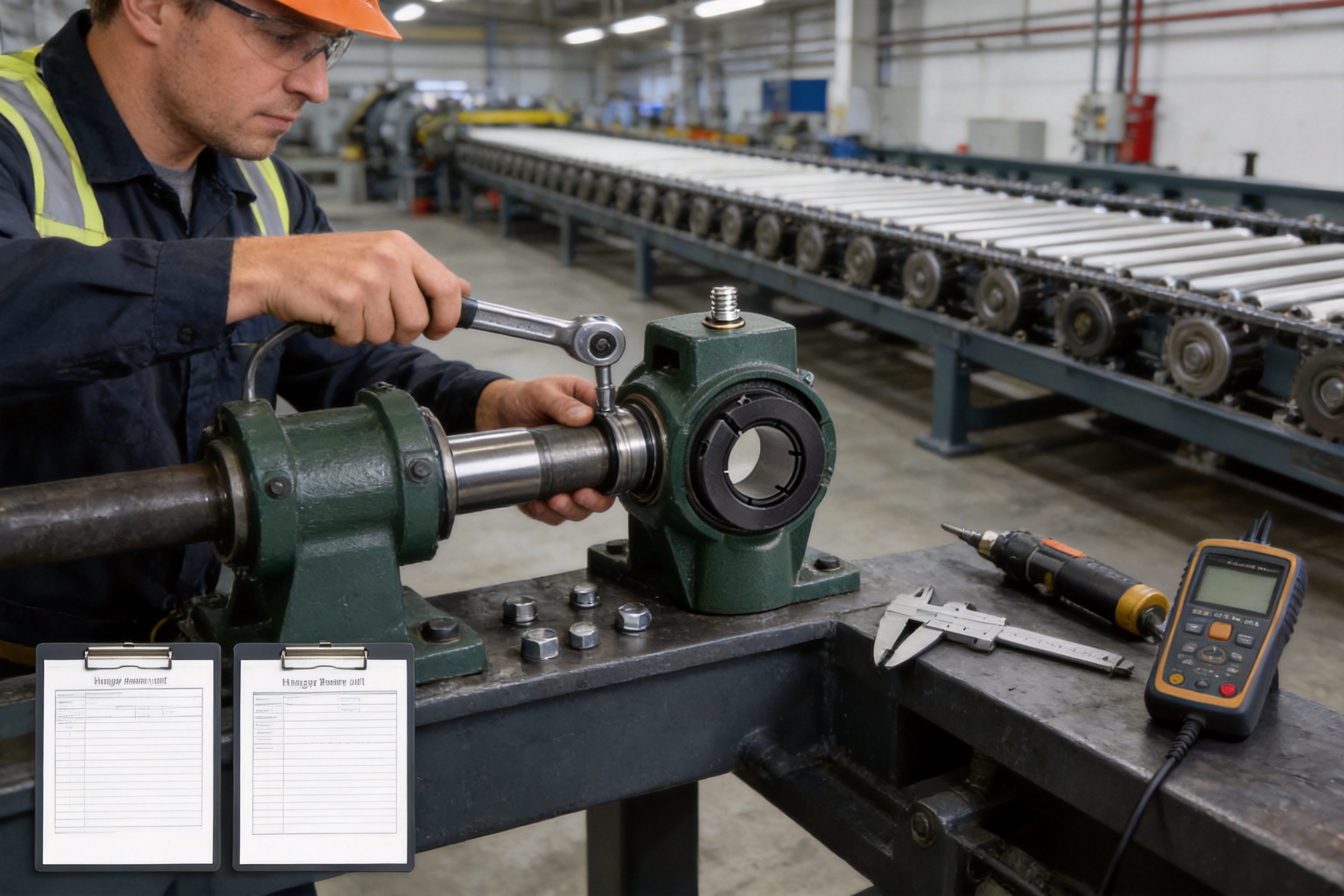
Position the housing without forcing it into alignment. If two or more bearings support the same shaft, loosely install all units first. Insert the shaft and allow the bearings to find their natural alignment. Tighten the housing fasteners gradually and evenly. This approach helps prevent the support structure from imposing unnecessary stress on the bearings.
After the housing is secure, tighten the bearing locking mechanism according to the recommended procedure. Do not use excessive force, and do not strike the bearing rings directly with a hammer. If the design uses set screws, ensure that the screws engage the shaft correctly. If an eccentric collar is used, rotate it in the proper direction before tightening.
Rotate the shaft by hand after installation. It should move smoothly without binding, abnormal noise, or sudden resistance. Check that the shaft does not slide axially beyond the intended amount. During initial operation, monitor temperature, vibration, noise, and fastener security.
Maintenance intervals depend on speed, load, contamination, temperature, and operating hours. Inspect the unit regularly for grease leakage, seal damage, housing cracks, loose fasteners, shaft movement, and unusual sound. Relubricate only with a compatible grease and avoid overfilling.
If the bearing becomes unusually hot, investigate the cause rather than simply adding more grease. Possible causes include excessive belt tension, misalignment, overloading, incorrect installation, inadequate clearance, damaged seals, or unsuitable lubricant.
Customers purchasing mounted bearing units are not only buying a catalog dimension. They are buying consistency across repeated orders. This is particularly important for OEMs, distributors, and maintenance organizations that need interchangeable products over time.
An integrated manufacturer can coordinate steel purchasing, ring production, heat treatment, grinding, housing production, assembly, and packaging under one quality system. This can reduce variation between components and make it easier to respond to technical questions. It also allows the manufacturer to investigate issues across the complete process chain.
UKL Bearing Manufacturing Co., Ltd. reports production capacity in the range of 10,000 to 50,000 units per month and serves customers in Europe, Asia, Africa, Russia, and other markets. Its stated production capabilities include forging, turning, heat treatment, grinding, assembly, and packaging. These capabilities support both standard production and OEM/ODM cooperation.
The company also describes experience in developing cross roller bearings, dual-direction thrust angular contact ball bearings, and other precision products for CNC machinery, robotics, and intelligent automation. Although hanger bearing units serve a different market segment, this broader engineering background demonstrates familiarity with bearing geometry, material control, precision production, and application requirements.
For international customers, technical communication and after-sales support are also important. Clear product identification, responsive engineering assistance, installation guidance, and replacement planning can reduce downtime. A multilingual service structure can be particularly useful when bearing units are supplied to distributors and machinery manufacturers in different regions.
Modern bearing manufacturing must consider not only product performance but also resource efficiency and environmental responsibility. Forging, heat treatment, machining, grinding, casting, and cleaning all consume energy and materials. Efficient production planning can reduce scrap, rework, unnecessary transport, and excessive energy use.
UKL states that it adopts environmentally responsible processes, promotes material recycling, and optimizes energy usage. These practices are relevant to customers that evaluate suppliers according to environmental, social, and governance criteria. A responsible production strategy can also improve manufacturing efficiency and reduce operating waste.
Long service life is itself an important sustainability advantage. A bearing unit that lasts longer reduces replacement consumption, maintenance labor, emergency shipping, and equipment downtime. Correct application, suitable lubrication, and proper installation are therefore essential parts of sustainable product use.
A hanger bearing unit is a mounted bearing assembly designed to support a rotating shaft from a bracket, frame, beam, or similar structure. It combines an insert ball bearing with a housing, allowing the customer to install one integrated component instead of fitting a loose bearing into a separately manufactured housing.
UCHA2 identifies a particular hanger-style mounted bearing unit design. In the supplied product range, UCHA2 units use UC Series chrome steel insert bearings and HA-style cast iron housings. The exact shaft diameter and dimensions are determined by the complete unit number, such as UCHA204, UCHA208, or UCHA213.
The spherical outer ring fits into a matching housing seat and allows limited self-alignment. This helps accommodate small installation inaccuracies and shaft misalignment. It does not correct severe alignment problems, bent shafts, or an inadequately rigid frame.
Yes. The product data includes metric bore units and inch-bore variants identified by suffixes. The suffix must be confirmed carefully because some fractional values in the supplied table appear inconsistent. Buyers should verify the actual bore diameter before ordering.
Cast iron provides good rigidity, vibration damping, machinability, and economical production. It is suitable for many general industrial applications. If the environment is corrosive, highly hygienic, or exposed to frequent washdown, an alternative housing material may be more appropriate.
It can carry limited axial loads, but the primary design purpose is radial shaft support. The actual allowable axial load depends on bearing size, speed, lubrication, mounting condition, and load direction. Applications with substantial or continuous thrust should be reviewed by a bearing engineer.
Start with the shaft diameter, then compare radial and axial loads, speed, temperature, environment, mounting dimensions, shaft extension, and available space. Confirm the housing series and locking arrangement. For replacements, compare every critical dimension rather than relying only on a similar-looking part number.
Common causes include overloading, excessive belt tension, misalignment, incorrect installation, excessive grease, insufficient grease, damaged seals, high operating speed, and unsuitable lubricant. Temperature should be checked together with vibration, noise, shaft alignment, and installation torque.
No. The self-aligning feature compensates for limited misalignment, but the machine frame and shaft must still be installed correctly. Severe misalignment can overload the bearing, housing, shaft, or locking mechanism and will reduce service life.
Buyers should consider material traceability, forging or blank preparation, CNC turning, heat-treatment control, grinding accuracy, housing casting quality, assembly cleanliness, inspection procedures, packaging, and technical support. A supplier with integrated manufacturing can often provide more consistent control over these factors.
Hanger bearing units provide a practical and adaptable method for supporting rotating shafts in industrial machinery. Their principal strengths are integrated construction, convenient installation, spherical self-alignment, robust cast iron housing design, practical shaft locking, and availability in metric and inch bore options.
The UCHA2 design combines a UC Series chrome steel insert bearing with an HA cast iron housing, while the UEHA and UCHE ranges provide alternative dimensional and mounting arrangements. Together, these product families address a broad selection of shaft diameters and machine layouts.
Compared with a separately designed bearing and housing assembly, a complete hanger unit can reduce installation time, simplify maintenance, and improve replacement control. Its value is greatest when the product is correctly selected, installed on a suitable shaft, protected from contamination, and maintained with compatible lubrication.
Manufacturing quality remains the foundation of performance. Forging, turning, heat treatment, grinding, casting, machining, assembly, and inspection must all be controlled to produce a dependable unit. UKL Bearing Manufacturing Co., Ltd. combines these production capabilities with OEM/ODM experience, international distribution, engineering development, and technical service. This integrated approach supports consistent production and gives customers a capable source for standard and customized bearing requirements.
For equipment manufacturers, distributors, and maintenance teams, the right hanger bearing unit is more than a replacement part. It is a complete support solution that can contribute to lower downtime, easier installation, stable operation, and predictable maintenance over the service life of the machine.
1. Product specification data for UCHA2, UEHA, and UCHE hanger bearing units supplied for this article.
2. ISO 281, Rolling bearings—Dynamic load ratings and rating life.
3. ISO 76, Rolling bearings—Static load ratings.
4. ISO 492, Rolling bearings—Radial bearings—Geometrical product specifications and tolerance values.
5. General engineering principles for rolling bearing installation, lubrication, alignment, and maintenance.
6. General technical literature on bearing steel heat treatment, raceway grinding, cast iron housing production, and mounted bearing design.
7. Manufacturer information concerning production capacity, OEM/ODM services, research and development, international distribution, and sustainability practices.
Product Categories
Contact Us

Jane@ukl-bearing.com
Jenny@ukl-bearing.com
Andy@ukl-bearing.com
Ivy@ukl-bearing.com

+86-510- 88763239
+86-15371057968

No.1 Hehuan Road, Hudai Town, Binhu District, Wuxi City.
Ready to Begin?
Get in Touch

Now!
UKL BEARING
 English
 Español
 русский