Content
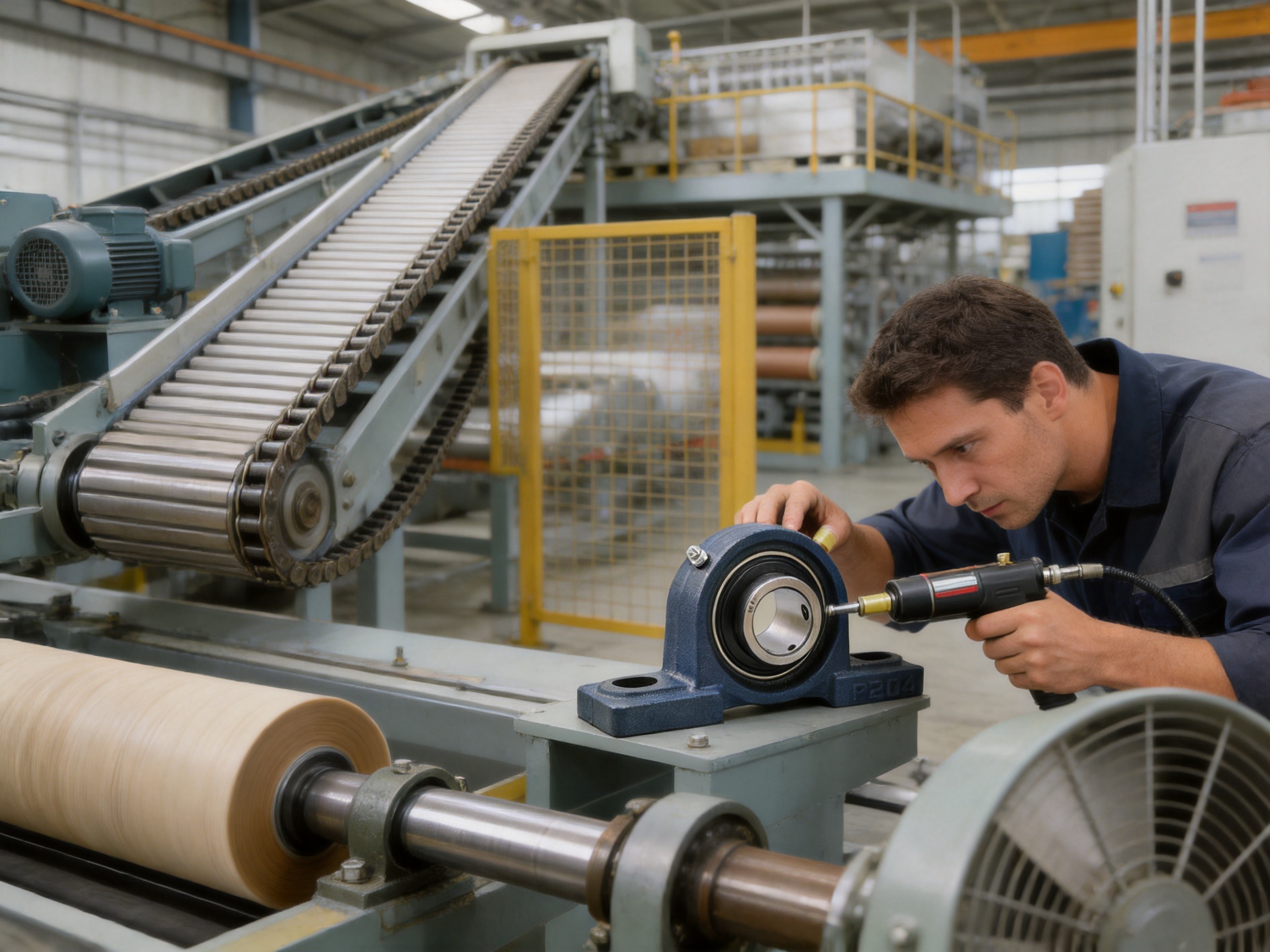
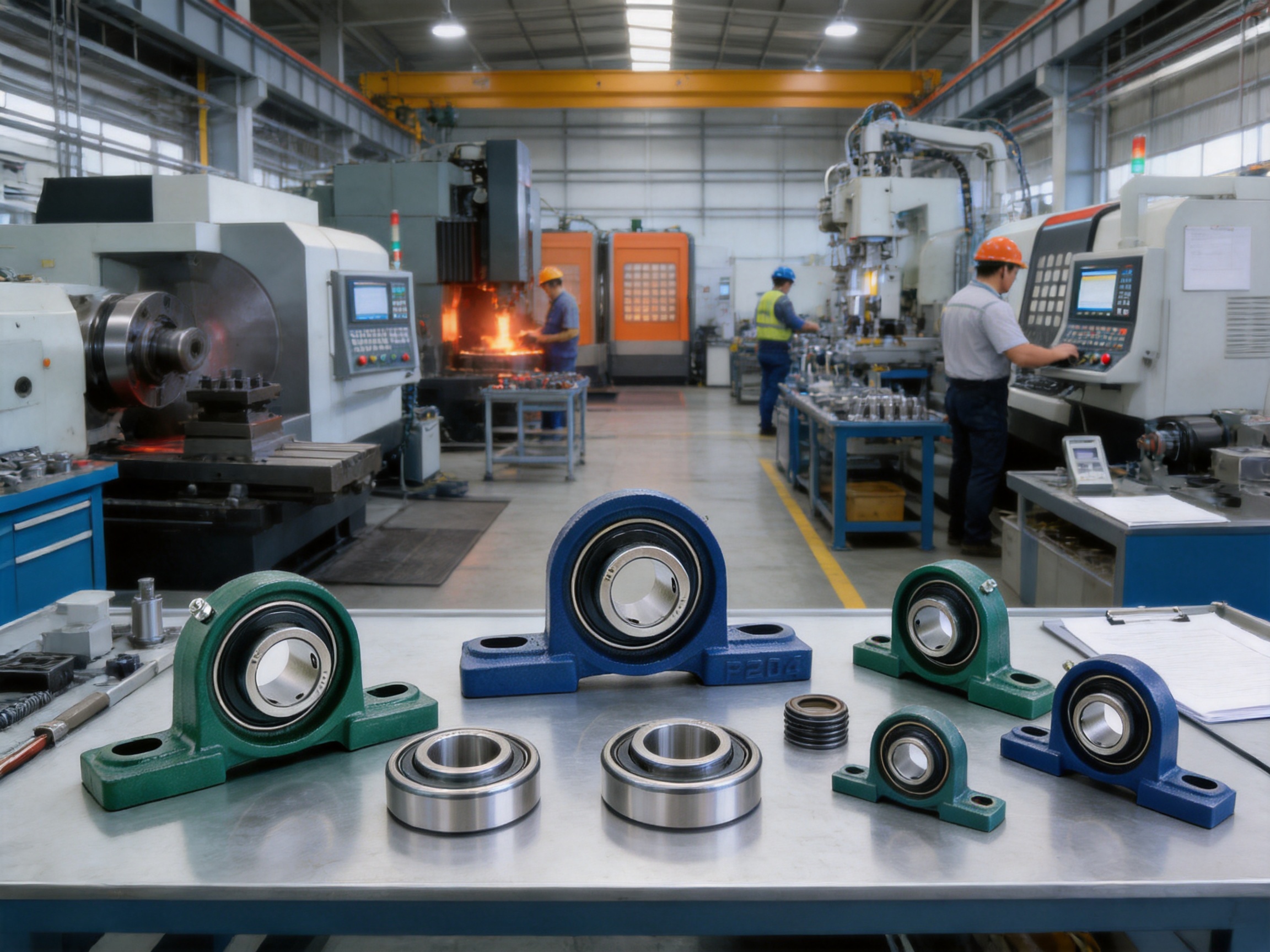
Pillow block bearings are among the most practical and widely used bearing assemblies in industrial machinery. By combining a bearing insert with a rigid housing, they provide a straightforward method for supporting rotating shafts, maintaining shaft alignment, and simplifying installation. Their compact structure, accessible mounting arrangement, and adaptability to many operating conditions make them suitable for conveyors, processing equipment, agricultural machinery, packaging systems, material-handling lines, fans, pumps, and general automation equipment.
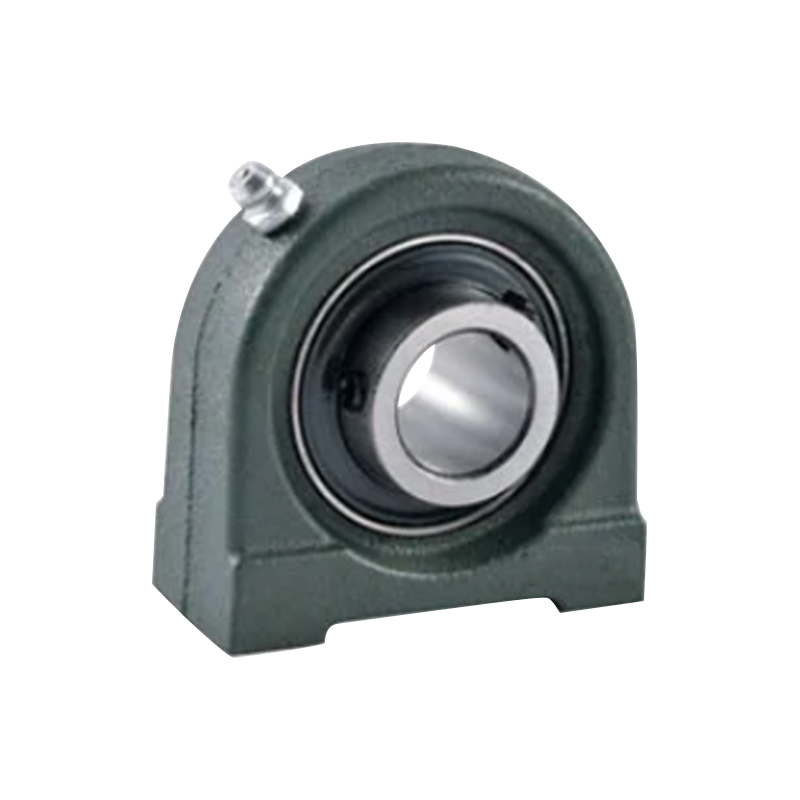
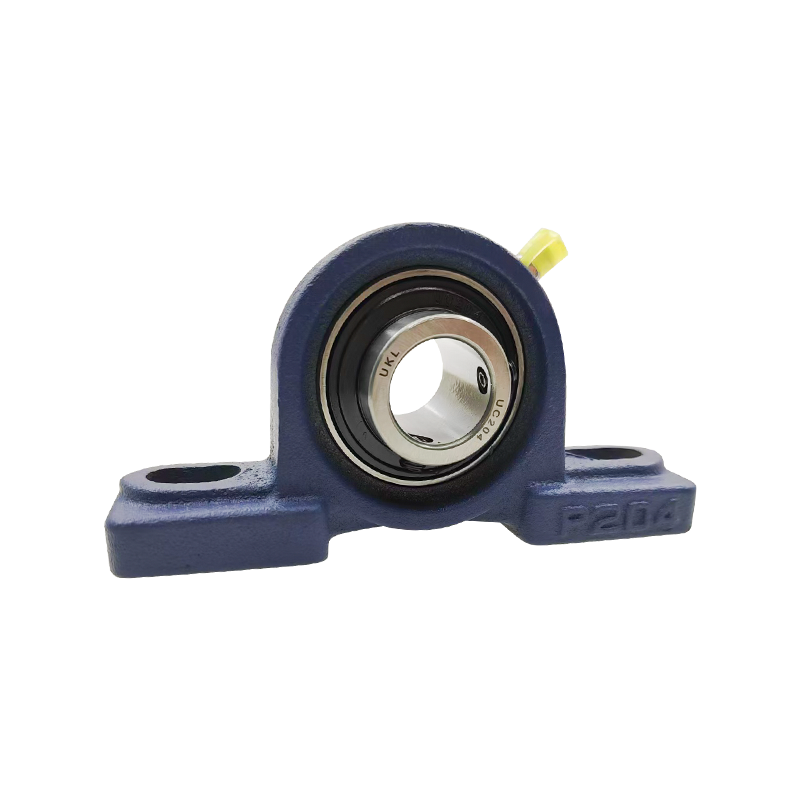
A pillow block bearing is also commonly called a plummer block bearing. In its basic form, it consists of a mounting housing, a bearing insert, sealing elements, and locking or positioning features. The housing is secured to a machine frame, while the bearing supports the shaft passing through its bore. This integrated arrangement reduces the need to design a separate bearing support assembly and allows maintenance teams to replace or adjust components with comparatively little downtime.
Although pillow block bearings are frequently associated with low- to moderate-torque applications, their value extends beyond simple shaft support. A well-designed unit can contribute to stable rotation, reduced installation time, easier maintenance, improved equipment serviceability, and more consistent operating performance. These benefits become especially important when machinery operates continuously or when access to the bearing position is limited.
UKL Bearing Manufacturing Co., Ltd. supplies pillow block bearings as part of a broader bearing portfolio that includes cross roller bearings, robot bearings, angular contact ball bearings, rod end bearings, spherical roller bearings, cylindrical roller bearings, tapered roller bearings, Nilos rings, and other mounted bearing solutions. Its manufacturing and engineering capabilities support both standard product supply and custom bearing requirements for industrial customers.
The defining characteristic of a pillow block bearing is the relationship between the bearing and its housing. Instead of installing a bearing directly into a machine structure, the bearing is placed inside a prepared mounting block. The block normally includes a flat base, bolt holes or slots, and a shaped internal seat that holds the bearing insert in the correct position.
The bearing insert may use different internal designs depending on the intended application. Common arrangements include deep-groove ball bearing inserts, spherical outer-ring inserts, and other bearing configurations designed for shaft support. The selection depends on speed, radial load, expected misalignment, sealing requirements, lubrication conditions, shaft diameter, and environmental exposure.
The housing is usually manufactured from a material capable of resisting deformation under normal operating loads. Cast iron is widely used for general industrial applications because it provides good stiffness, dimensional stability, vibration resistance, and cost efficiency. Other housing materials may be selected when reduced weight, corrosion resistance, hygiene, or specialized operating conditions are important.
A typical pillow block assembly may include the following components:
• A housing that attaches to the machine frame.
• A bearing insert that supports the rotating shaft.
• Seals that help retain lubricant and limit the entry of dust, moisture, or other contaminants.
• A locking collar, set-screw arrangement, eccentric ring, or another shaft-fixing mechanism.
• Grease fittings or lubrication ports for routine maintenance.
• Mounting holes or slots that allow the housing to be fixed and adjusted.
The combination of these components allows a pillow block bearing to function as a complete shaft-supporting unit. This is one reason mounted bearings remain popular among equipment designers. The designer does not need to create a separate bearing seat, cover, and shaft-retention mechanism for every installation. Instead, the mounted unit can be positioned on the machine frame and aligned with the shaft.
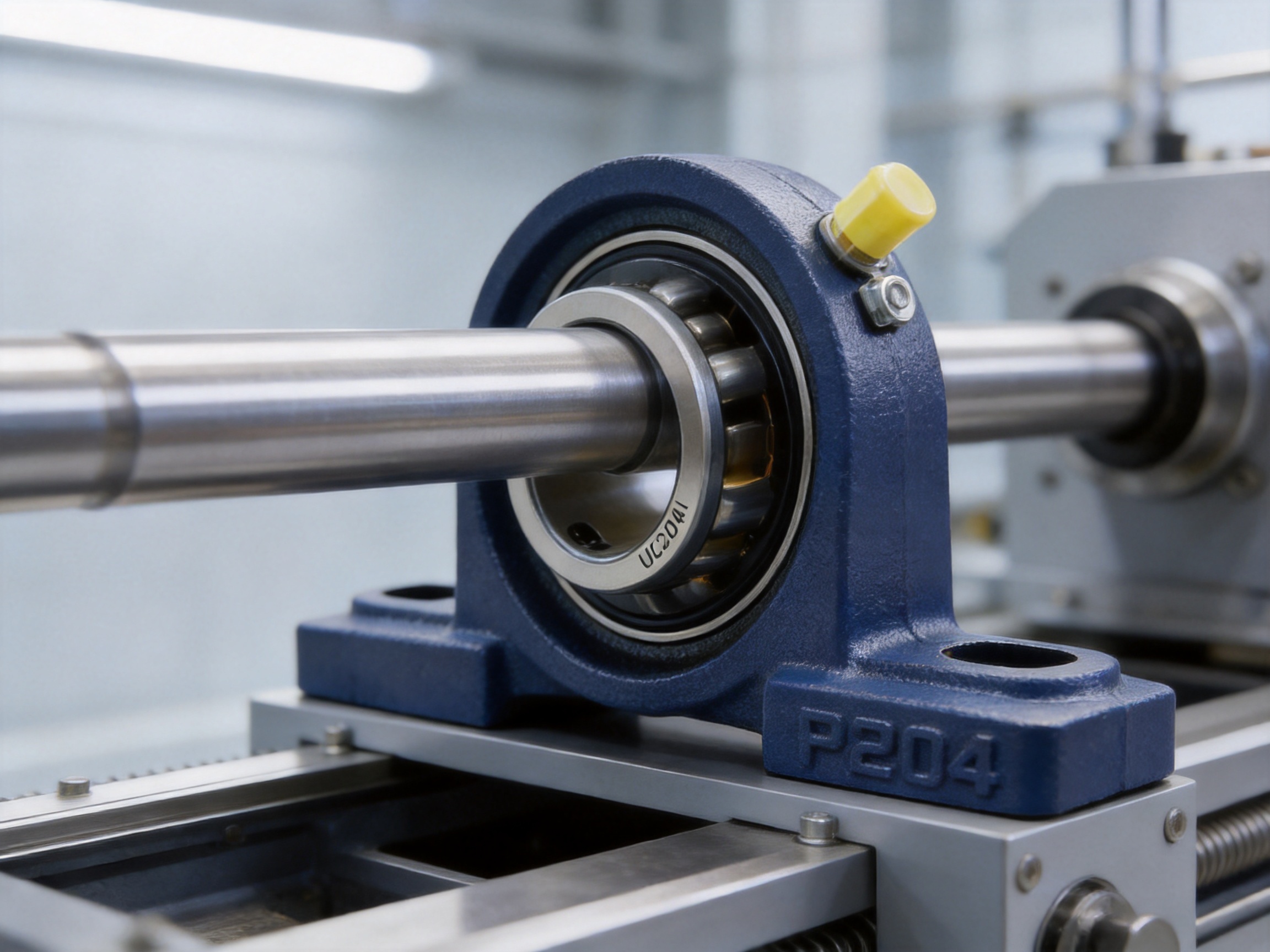
During operation, the shaft rotates within the bearing insert while the housing remains stationary. Rolling elements inside the bearing reduce friction between the rotating and stationary races. The housing transfers external loads from the shaft and bearing into the supporting structure of the machine.
Most pillow block applications primarily involve radial loads, meaning loads acting perpendicular to the shaft. Some designs can accommodate limited axial loads, but the permissible axial capacity depends on the internal bearing structure and the direction and magnitude of the applied force. For applications with substantial axial loading, specialized angular contact, thrust, or other bearing arrangements may be more appropriate.
The mounting base provides a stable reference surface. When the base is correctly seated and fastened, it helps maintain the bearing centerline relative to the machine frame. Mounting slots can provide adjustment during installation, allowing the user to fine-tune shaft alignment or compensate for a practical installation tolerance.
Some pillow block bearings use a spherical outer surface on the bearing insert. This arrangement can allow limited self-alignment inside the housing. Self-aligning capability is useful when shaft deflection, frame distortion, or minor mounting errors may occur. However, self-alignment should not be treated as a substitute for proper installation. Excessive angular misalignment can increase internal stress, generate heat, accelerate wear, and shorten operating life.
Lubrication is another essential part of operation. Grease reduces rolling and sliding friction, protects contact surfaces, and helps control heat generation. The correct grease type, filling quantity, and relubrication interval depend on speed, load, temperature, contamination, and operating duty. Over-greasing can also create problems because excess grease may increase churning resistance and temperature.
Pillow Block Bearings
One of the most important advantages of a pillow block bearing is its installation simplicity. The unit is supplied as a bearing and housing assembly, so the user can mount it directly onto a prepared support surface. This can reduce the number of parts that must be handled during machine assembly and decrease the chance of installing separate bearing components incorrectly.
The mounting holes or slots in the base provide a practical method for positioning the unit. Slots can be particularly useful when the shaft must be tensioned, when belt alignment requires adjustment, or when the support structure has limited dimensional flexibility. The installer can place the unit, align the shaft, tighten the fasteners, and secure the shaft using the designated locking arrangement.
Compared with a bearing arrangement that requires a separate housing, adapter, cover, and custom mounting components, a pillow block assembly can reduce design complexity. This advantage is valuable for standard machinery platforms, replacement projects, and equipment produced in moderate or high quantities.
Reducing the number of separate components may also make inventory management easier. A maintenance department can stock complete mounted units for commonly used shaft sizes rather than managing every housing and bearing component independently. Replacement work can therefore be completed more efficiently, provided that the replacement unit matches the original specifications.
Pillow block bearings are generally positioned outside the main body of a machine, which makes them easier to inspect. Maintenance personnel can check housing condition, shaft movement, seal integrity, grease condition, mounting-bolt tightness, and unusual noise without dismantling a large portion of the equipment.
Many designs include a grease fitting that permits relubrication while the bearing remains mounted. This feature can reduce maintenance labor and help extend service life. The lubrication schedule should be based on actual operating conditions rather than a generic interval. High contamination, elevated temperature, high speed, or frequent starts and stops may require a different maintenance program from a clean, lightly loaded application.
The practical geometry of a pillow block bearing allows it to be used in many machine configurations. It can support horizontal shafts, conveyor rollers, fans, processing shafts, drive shafts, and other rotating elements. Different bore sizes, sealing arrangements, locking methods, and housing materials can be selected to suit the application.
This adaptability gives pillow block bearings an advantage over bearing arrangements that are designed for only one specialized installation. A standard mounted bearing can often be incorporated into a new machine design with minimal modification, while replacement units can be selected using shaft diameter, load, speed, and environmental requirements.
The housing provides a broad mounting footprint that helps distribute forces into the support structure. A stable base can reduce unwanted movement and help preserve the shaft centerline during operation. Stable support is especially important in conveyor systems and other equipment where shaft displacement can affect belt tracking, roller position, coupling alignment, or product movement.
Proper stability depends on more than the bearing itself. The mounting surface must be sufficiently rigid and flat, the fasteners must be correctly tightened, and the shaft should be free from excessive runout. When these conditions are satisfied, the pillow block can provide dependable support over long operating periods.
Every bearing arrangement has a suitable field of application. Pillow block bearings are not intended to replace every type of bearing, but they offer distinct advantages when a machine requires practical radial shaft support and straightforward mounting.
A bearing insert without a housing requires the machine designer to provide a suitable bore, shoulder, retaining feature, and mounting structure. That approach may be appropriate for compact or highly integrated equipment, but it can increase machining requirements and reduce installation flexibility.
A pillow block bearing arrives with the external support structure already integrated. This can shorten design time, reduce the number of custom-machined components, and simplify replacement. It also makes the bearing position easier to access for inspection and service.
Custom housings can be valuable in specialized equipment, especially when dimensions, materials, or sealing arrangements are unusual. However, they normally involve additional engineering, machining, inspection, and validation. A standardized pillow block unit can provide a more economical alternative for general-purpose applications.
Standardization also supports faster procurement. Because pillow block bearings are widely used, users can often identify a replacement according to nominal bore, housing style, bearing type, and locking method without redesigning the surrounding equipment.
Cross roller bearings and precision angular contact bearings are highly suitable for applications requiring exceptional rotational accuracy, high stiffness, or combined load capacity. Spherical roller bearings and tapered roller bearings are often selected for heavier load conditions. Pillow block bearings generally address a different requirement: accessible, economical, and dependable support for rotating shafts in conventional machinery.
The advantage of a pillow block bearing is therefore application efficiency. When the machine does not require the extreme precision or load capability of a specialized bearing, a mounted unit can provide the necessary performance with simpler installation and maintenance.
The performance of a pillow block bearing depends on the relationship between its housing, insert, sealing system, mounting arrangement, and operating environment. A suitable design should balance load capacity, speed, sealing, adjustability, lubrication, and maintenance requirements.
The housing must provide adequate support without unnecessary material or weight. Its base should have sufficient contact area to resist movement, and its mounting holes should be positioned to support secure fastening. The internal seat must maintain the bearing insert in the intended location while allowing the design’s specified alignment behavior.
A well-finished housing surface can improve seating consistency. Dimensional control is important because deviations in the mounting base or bearing seat can influence shaft alignment and load distribution. For this reason, machining and inspection are important stages in the manufacturing process.
The insert is selected according to shaft size, load direction, speed, sealing, and expected service life. Deep-groove ball bearing inserts are commonly used for general radial loads and moderate axial loads. Spherical outer-ring designs may be selected where limited self-alignment is beneficial.
The internal clearance must also be appropriate. Excessive clearance can increase vibration and reduce running accuracy, while insufficient clearance can lead to heat generation and premature damage, especially when temperature changes cause shaft or housing expansion.
Seals are essential when a bearing operates in dusty, wet, dirty, or humid conditions. Effective sealing helps retain grease and restrict the entry of abrasive particles. The correct seal design depends on speed, temperature, contamination level, and the need to minimize friction.
No seal can compensate for severe contamination or incorrect installation. The shaft surface should be clean and free from damage, and the bearing should be handled carefully to avoid deforming the sealing elements. Where contamination is particularly severe, external guards or additional protective structures may be required.
A pillow block bearing may use set screws, eccentric locking collars, adapter sleeves, or other shaft-retention arrangements. Each method has specific installation requirements. Set screws must be tightened to the correct torque, while eccentric collars must be rotated in the correct direction before fastening.
The locking system must secure the bearing to the shaft without causing excessive deformation or local damage. The shaft tolerance, surface finish, and hardness should be compatible with the selected locking method. Incorrect locking can produce shaft creep, fretting, vibration, and uneven wear.
The quality of a pillow block bearing is closely connected with the consistency of its manufacturing process. Dimensional accuracy, material condition, heat treatment, surface finish, cleanliness, assembly quality, and final inspection all influence performance.
UKL Bearing Manufacturing Co., Ltd. integrates research and development, production, and international distribution. Its factory includes production lines covering forging, turning, heat treatment, grinding, assembly, and packaging. This integrated arrangement allows the manufacturer to coordinate key production stages and maintain closer control over process consistency.
Forging can be used to form bearing rings and other components with a material structure suited to mechanical loading. The forging stage must be controlled for temperature, forming accuracy, surface condition, and allowance for subsequent machining. Consistent material preparation helps establish a reliable foundation for later operations.
Material traceability is important in bearing production. It supports process verification, quality documentation, and investigation if a deviation occurs. The selected steel must be appropriate for the expected load, hardness, fatigue resistance, and dimensional stability of the bearing component.
Turning operations establish the basic geometry of rings, housings, and related components. Controlled machining influences concentricity, dimensional accuracy, and the amount of material available for grinding. Stable cutting conditions, suitable tooling, and regular measurement are necessary to keep components within specification.
For pillow block housings, machining accuracy affects the seating relationship between the housing and the bearing insert. For bearing rings, turning provides the foundation for later heat treatment and grinding. Any significant error introduced during early machining can affect the final component, which is why in-process inspection is valuable.
Heat treatment gives bearing steel the hardness and structural properties needed to resist rolling contact fatigue, wear, and deformation. The process must be carefully controlled because excessive variation can cause dimensional change, cracking, insufficient hardness, or undesirable residual stress.
After heat treatment, components are inspected and prepared for precision finishing. The correct balance between hardness and toughness is important. A component that is too soft may wear prematurely, while a component with unsuitable brittleness may be vulnerable to cracking or impact damage.
Grinding is a critical stage in bearing production because rolling contact surfaces require fine geometry and surface quality. Grinding can improve roundness, profile accuracy, raceway finish, and dimensional consistency. These factors influence friction, noise, vibration, load distribution, and service life.
For pillow block bearings, precision grinding of the internal bearing components must be coordinated with the insert assembly and housing fit. Cleanliness is also essential. Grinding particles, metal debris, or other contaminants must not remain in the finished bearing because they can damage raceways and rolling elements.
Assembly involves installing rolling elements, cages, seals, grease, and other components according to the product design. The process must control cleanliness, component orientation, lubrication quantity, and handling force. Excessive impact during assembly can create indentations or distort seals.
Once the bearing insert is assembled, it is installed in the pillow block housing. The housing, insert, locking components, grease fitting, and seals must be checked as a complete unit. This is important because the final product is not simply a bearing and a block placed together; it is an engineered assembly in which each part contributes to performance.
Final inspection may include dimensional measurement, visual examination, rotation checks, noise evaluation, seal verification, and review of relevant production records. Depending on the customer requirement, additional inspection or documentation may be provided.
Packaging protects the bearing from impact, moisture, dust, and corrosion during storage and transportation. Correct packaging is particularly important for international shipments, where products may pass through multiple handling and climate conditions before reaching the customer.
A bearing manufacturer’s competitiveness depends on more than production volume. Customers also require technical communication, application guidance, consistent delivery, and the ability to adapt products to specific equipment requirements.
UKL maintains an R&D focus covering high-precision cross roller bearings, dual-direction thrust angular contact ball bearings, and other products used in CNC machines, robotics, and intelligent automation systems. This technical background supports a broader understanding of bearing geometry, load behavior, precision requirements, and manufacturing control.
Although pillow block bearings serve many general industrial applications, the engineering disciplines used in precision bearing development can also benefit mounted-bearing production. Attention to geometry, friction, material behavior, dimensional control, and inspection helps improve product consistency across different bearing categories.
OEM and ODM experience is valuable when a customer needs a bearing adapted to a particular machine. Custom requirements may involve shaft diameter, housing dimensions, bolt-hole spacing, sealing, lubrication, material selection, locking method, marking, packaging, or performance documentation.
A structured customization process should begin with application information. The customer should provide shaft speed, radial and axial loads, operating temperature, environmental conditions, duty cycle, shaft material and tolerance, available installation space, and expected service life. With this information, the manufacturer can evaluate whether a standard model is suitable or whether a modified design is necessary.
UKL reports a production capacity of approximately 10,000 to 50,000 units per month and supplies customers in Europe, Asia, Africa, Russia, the United States, and other markets. Production capacity can help support both recurring industrial orders and replacement-bearing programs.
Capacity alone does not guarantee quality. The important consideration is whether capacity is supported by controlled processes, trained personnel, suitable equipment, inspection procedures, and effective production planning. An integrated factory structure can help coordinate these elements and improve delivery reliability.
Technical support can reduce the risk of selecting an unsuitable bearing or installing a suitable bearing incorrectly. UKL provides technical response, installation guidance, and after-sales maintenance support through its service team.
Useful technical communication should cover bearing selection, shaft and housing tolerances, mounting procedures, lubrication, alignment, inspection, and failure analysis. Clear guidance is especially important for international customers who may operate machinery under different environmental and maintenance conditions.
Conveyor systems use rotating shafts and rollers to transport materials or products. Pillow block bearings can support conveyor shafts while allowing accessible adjustment and replacement. Their external mounting arrangement is useful where maintenance teams need to service bearings without removing large sections of the conveyor.
In conveyor applications, alignment is critical. Misaligned bearings can increase belt tracking problems, shaft deflection, and motor load. The mounting base should be positioned accurately, and both sides of a shaft should be aligned before final tightening.
Material-handling systems often operate for long periods and may be exposed to dust, vibration, and variable loads. Pillow block bearings provide a practical means of supporting rollers, pulleys, and drive shafts. Sealing and relubrication requirements should be evaluated according to the material being handled and the cleanliness of the working environment.
Agricultural machinery can encounter dust, soil, moisture, shock loads, and seasonal storage conditions. Mounted bearings are used in equipment such as feeders, harvesters, conveyors, and processing machines. Strong seals, suitable grease, corrosion protection, and regular inspection are important for these applications.
Packaging machines frequently require compact and serviceable shaft supports. Pillow block bearings can be used in rollers, feed systems, indexing mechanisms, and auxiliary drives. Where hygienic or washdown conditions exist, the housing and sealing materials must be selected carefully.
Fans and pumps may use mounted bearing units to support shafts and maintain rotation stability. In these applications, vibration monitoring is particularly useful because imbalance, misalignment, looseness, and bearing damage can all affect operating behavior.
Automation systems require repeatable movement and reliable operation. While high-precision robotic axes may require specialized bearings, pillow block bearings remain useful for conveyors, auxiliary shafts, tensioning mechanisms, transfer units, and other supporting equipment around an automated production line.
Choosing the correct pillow block bearing begins with identifying the operating conditions rather than selecting a unit only by bore diameter. The following factors should be reviewed before an order is placed.
| Selection factor | Questions to evaluate | Potential design implication |
|---|---|---|
| Shaft diameter | What is the actual shaft size and tolerance? | Determines the bearing bore and locking compatibility. |
| Radial load | What static and dynamic loads act on the shaft? | Influences bearing size, internal design, and expected life. |
| Axial load | Is thrust present, and in which direction? | May require a bearing design with suitable axial capacity. |
| Speed | What are the normal and maximum rotational speeds? | Affects heat generation, lubrication, seals, and bearing selection. |
| Misalignment | Can the frame or shaft deflect during operation? | May justify a self-aligning insert, but does not eliminate alignment work. |
| Environment | Is there dust, water, chemicals, heat, or abrasive material? | Determines sealing, housing material, grease, and protective requirements. |
| Maintenance plan | Will relubrication and inspection be performed regularly? | Influences grease fittings, seal design, access, and service intervals. |
| Installation space | Are there restrictions around the housing and shaft ends? | Determines housing dimensions, mounting method, and replacement access. |
| Purchase quantity | Is the requirement for replacement, batch production, or OEM supply? | May influence standardization, customization, packaging, and delivery planning. |
Load calculations should account for the actual force distribution rather than relying only on the motor rating. Belt tension, chain pull, gear forces, product weight, shock, and shaft self-weight may all contribute to the bearing load. If the load varies significantly, the duty cycle and peak load should be considered as well as the average load.
Speed and temperature must be considered together. A bearing may operate satisfactorily at a particular speed under normal ambient conditions but require a different lubricant or seal arrangement at elevated temperature. High speed can increase frictional heat, while low speed with heavy load can place greater emphasis on static capacity and contact stress.
Environmental conditions often determine service life. Contamination is one of the most common causes of premature bearing damage. Dust and abrasive particles can enter through damaged seals or along the shaft interface. Water can cause corrosion and lubricant deterioration. Proper sealing, clean installation, protective guards, and planned relubrication can reduce these risks.
Before installation, inspect the bearing, housing, shaft, mounting surface, and fasteners. Confirm that the product identification matches the required bore, housing type, seal arrangement, and locking system. Do not remove protective packaging until the bearing is ready to be installed.
The shaft should be clean, dry, and free from burrs, dents, excessive rust, or sharp edges. A damaged shaft can prevent correct seating and may create local stress beneath the locking components. Check the shaft diameter at several positions if there is any concern about wear or manufacturing variation.
The mounting surface should be sufficiently flat and rigid. Remove dirt, paint buildup, chips, and other material that could prevent full contact between the housing base and the support structure. Place the pillow block in position and install the fasteners without immediately applying final tightening.
Where slots are provided, use them to align the shaft and the connected equipment. Rotate the shaft by hand, if possible, to identify binding or resistance. Once alignment is satisfactory, tighten the housing fasteners evenly and according to the applicable installation instructions.
Install the shaft into the bearing bore without using force that could damage the seals or rolling elements. If a locking collar is used, position and tighten it according to the specified direction and procedure. If set screws are used, apply the recommended tightening sequence and torque. Excessive tightening can damage the shaft or distort the inner ring.
After installation, rotate the shaft and listen for abnormal noise. Check for unusual resistance, looseness, seal displacement, and contact between rotating and stationary components. If the unit is lubricated before operation, use the correct grease and quantity. Do not assume that adding more grease will improve performance.
Regular inspection helps identify problems before they become major failures. A basic inspection program should monitor temperature, noise, vibration, lubrication condition, shaft movement, seal condition, housing cracks, and mounting-bolt security.
A moderate temperature increase during initial operation may occur as grease distributes within the bearing. However, a continuing rise, sudden temperature increase, or temperature significantly higher than neighboring bearings may indicate over-lubrication, misalignment, excessive load, inadequate clearance, damaged seals, or internal bearing damage.
Unusual grinding, clicking, rumbling, or irregular sound should be investigated. Vibration can result from bearing damage, shaft imbalance, loose mounting, misalignment, contamination, or resonance in the machine structure. Comparing readings over time is often more useful than relying on one isolated measurement.
Use a grease compatible with the bearing seals, temperature range, speed, and load. Mixing incompatible greases can lead to separation, hardening, softening, or loss of lubricating performance. The lubrication record should identify the grease type, quantity, date, and person performing the work.
Relubrication should be performed through a clean grease fitting. Wipe the fitting before connection and avoid introducing dirt into the lubrication path. If purging old grease is part of the maintenance procedure, ensure that displaced grease has a safe exit path and does not accumulate near sensitive equipment.
Vibration, thermal cycling, and repeated load changes can affect mounting fasteners. Periodic checks can identify loosening before the housing shifts. If the machine has experienced a collision, overload, or major repair, the bearing alignment should be reviewed even if the bearing appears undamaged.
A pillow block bearing should be replaced when it shows excessive play, damaged seals, severe corrosion, abnormal noise, overheating, raceway damage, cracked housing, or persistent vibration that cannot be corrected through alignment or lubrication. Replacing only the visibly damaged component may not be sufficient if contamination or overload has affected the complete assembly.
Premature failure does not necessarily indicate a manufacturing defect. Installation, lubrication, contamination, load, alignment, and operating conditions often have a greater influence on bearing life than expected.
Incorrect mounting can damage the inner ring or rolling elements. Striking the bearing directly, forcing the shaft through a misaligned bore, or tightening locking screws unevenly can create indentation, deformation, or uneven contact.
Insufficient lubrication allows metal-to-metal contact, increasing wear and heat. Excessive lubrication can cause churning and temperature rise. The solution is not simply to add grease more frequently; the maintenance plan must match the actual duty cycle and environment.
Contamination can produce abrasive wear and fatigue damage. Keeping the bearing sealed, protecting the shaft interface, using clean tools, and storing replacement bearings in dry conditions are effective preventive measures.
Misalignment can cause uneven load distribution across the bearing. A self-aligning housing may accommodate a limited amount of angular error, but excessive misalignment can still reduce service life. Shafts, supports, couplings, belts, and connected equipment should be checked together.
Overloading can deform components or accelerate rolling contact fatigue. Shock loads may be especially damaging because their peak values are higher than the normal operating load. If operating conditions have changed, the bearing selection should be reviewed rather than assuming that the original unit remains adequate.
Modern bearing production must consider both technical performance and environmental responsibility. UKL describes sustainability as a long-term commitment and reports efforts involving responsible processes, material recycling, and energy optimization.
Efficient production can reduce waste of steel, grinding media, lubricants, packaging, and energy. Process monitoring may also reduce the number of rejected components and the resources required to remake them. Longer-lasting bearings contribute to sustainability by reducing replacement frequency, transportation, maintenance materials, and equipment downtime.
Responsible manufacturing also includes the safe management of heat-treatment operations, machining fluids, cleaning agents, and packaging materials. Customers may wish to request information about material traceability, packaging composition, factory quality systems, and environmental practices when evaluating a long-term bearing supplier.
Sustainability should not be separated from reliability. A bearing that provides stable service and predictable maintenance intervals can help improve the overall efficiency of a machine. In this sense, durability, process control, service support, and responsible resource use are connected parts of industrial value.
Two pillow block bearings with similar dimensions may not deliver identical results. Differences in steel quality, heat treatment, grinding accuracy, seal performance, grease, housing stiffness, inspection, and assembly cleanliness can influence operating life.
A capable manufacturer should be able to explain the product structure, recommend suitable specifications, provide dimensional information, and respond to application questions. Consistent batch production is also important for OEM customers because variations between deliveries can complicate machine assembly and maintenance.
UKL Bearing Manufacturing Co., Ltd. combines manufacturing and trading operations and reports more than 15 years of OEM and ODM export experience. Its company information identifies a workforce of approximately 201 to 500 employees, international distribution capabilities, and customers or markets across multiple continents.
For industrial buyers, these capabilities can offer several practical benefits:
• Access to a broad range of bearing technologies from one supplier.
• Support for standard and customized bearing requirements.
• Coordination between R&D, production, inspection, packaging, and export service.
• Technical assistance for installation, maintenance, and product selection.
• Production planning suited to recurring OEM and replacement orders.
• International communication and after-sales support.
Supplier evaluation should still be based on the specific application. Buyers should review drawings, tolerances, load ratings, material information, inspection documents, sample performance, and delivery requirements before approving a product for critical equipment.
When comparing pillow block bearings from different manufacturers, the lowest purchase price should not be the only consideration. A useful comparison should include product consistency, technical suitability, service life, maintenance requirements, and total operating cost.
Check whether the supplier can provide accurate housing and bore dimensions, shaft-locking instructions, seal information, grease recommendations, and applicable load data. Confirm whether the product is manufactured under controlled processes and whether inspection records are available for the required order.
For demanding applications, buyers may also compare running noise, vibration, temperature behavior, shaft fit, housing rigidity, corrosion protection, packaging quality, and replacement compatibility. Field trials or sample testing can provide additional confidence when the bearing is intended for continuous operation or safety-relevant machinery.
A pillow block bearing is a bearing insert installed inside a mounting housing. The housing is fixed to a machine frame while the insert supports a rotating shaft. It is also commonly called a plummer block bearing.
They are commonly suited to radial shaft-support applications such as conveyors, material-handling equipment, agricultural machinery, packaging systems, fans, pumps, processing machinery, and general automation equipment. The specific bearing must be selected according to load, speed, environment, and alignment requirements.
Pillow block bearings are most commonly used in low- to moderate-torque applications. Their suitability for a particular high-load or high-torque machine depends on the bearing insert, shaft size, load direction, speed, housing strength, and operating conditions. A specialized bearing arrangement may be better for very high loads or severe axial forces.
Some pillow block designs use self-aligning inserts that can accommodate limited misalignment. However, this capability is not unlimited. The shaft, mounting surfaces, and connected equipment should still be aligned accurately to avoid excessive internal stress and uneven loading.
Common methods include set screws, eccentric locking collars, and adapter-based arrangements. The correct method depends on the product design. Installation should follow the specified direction, tightening sequence, and torque requirements.
Many pillow block bearings are supplied with grease and include a lubrication fitting for relubrication. The correct grease and service interval depend on speed, load, temperature, contamination, and operating time. Both under-lubrication and over-lubrication can reduce performance.
Use the correct bearing size, maintain accurate alignment, keep the unit clean, protect it from water and dust, use compatible grease, monitor temperature and vibration, and inspect the housing and locking components regularly. Correct installation is one of the most effective ways to prevent premature failure.
Useful information includes shaft diameter, radial and axial loads, rotational speed, operating temperature, duty cycle, environmental conditions, required seals, mounting dimensions, locking method, available space, expected service life, packaging requirements, and annual or monthly quantity.
An integrated manufacturer can coordinate research, material preparation, machining, heat treatment, grinding, assembly, inspection, packaging, and technical service. This may improve process consistency and make it easier to manage customized products or recurring OEM requirements.
Yes. They can support conveyors, transfer mechanisms, auxiliary shafts, tensioning systems, rollers, and other rotating components around an automated line. Precision robotic axes may require specialized bearings, but pillow blocks remain useful for many supporting functions.
Pillow block bearings provide a practical balance of performance, installation convenience, serviceability, and application flexibility. Their integrated housing and bearing structure simplifies shaft support and can reduce the complexity of both machine design and maintenance. Mounting slots or bores allow accessible installation and adjustment, while suitable seals, locking systems, and lubrication features support dependable operation in many industrial environments.
The advantages of a pillow block bearing are strongest when the product is correctly matched to the application. Shaft size, radial and axial loads, speed, alignment, temperature, contamination, lubrication, and maintenance access should all be considered before selection. Correct installation and regular condition monitoring are equally important for achieving a long service life.
UKL Bearing Manufacturing Co., Ltd. supports pillow block bearing supply through integrated manufacturing, R&D, OEM/ODM experience, international distribution, and technical service. Its production capabilities cover forging, turning, heat treatment, grinding, assembly, and packaging, providing a structured foundation for dimensional consistency and product reliability. Its wider product range also enables customers to evaluate mounted bearings alongside specialized bearing technologies for different machine functions.
For equipment manufacturers, distributors, and maintenance departments, the best pillow block bearing is not merely the least expensive unit or the most heavily rated model. It is the product that provides the correct load and speed capability, fits the machine accurately, withstands the operating environment, and can be supported throughout its service life. With appropriate engineering selection and controlled manufacturing, pillow block bearings remain an efficient and dependable solution for rotating-shaft support.
1. ISO 281, Rolling Bearings — Dynamic Load Ratings and Rating Life.
2. ISO 76, Rolling Bearings — Static Load Ratings.
3. ISO 15243, Rolling Bearings — Damage and Failures — Terms, Characteristics and Causes.
4. ISO 492, Rolling Bearings — Radial Bearings — Geometrical Product Specifications and Tolerance Values.
5. SKF, Rolling Bearings Catalogue and Maintenance Guidance.
6. NSK, Rolling Bearings Technical Handbook.
7. Timken, Engineering Manual for Rolling Bearings and Industrial Applications.
8. Manufacturer-provided product and company information for pillow block bearings, mounted bearing solutions, manufacturing processes, and technical services.
Product Categories
Contact Us

Jane@ukl-bearing.com
Jenny@ukl-bearing.com
Andy@ukl-bearing.com
Ivy@ukl-bearing.com

+86-510- 88763239
+86-15371057968

No.1 Hehuan Road, Hudai Town, Binhu District, Wuxi City.
Ready to Begin?
Get in Touch

Now!
UKL BEARING
 English
 Español
 русский