Content
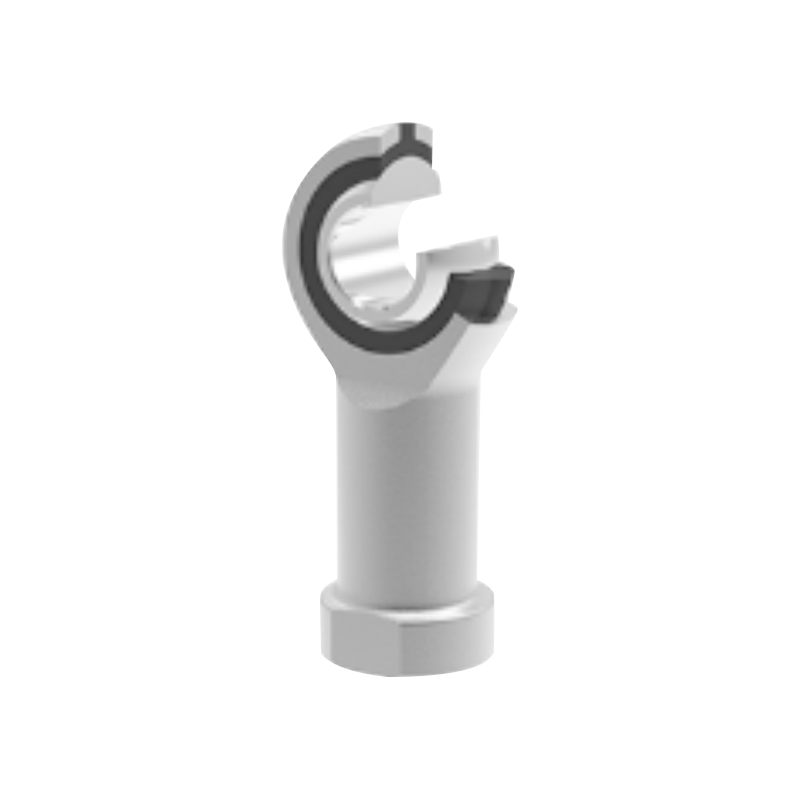
SIZP Threaded Self-Lubricating Rod End Bearing with PTFE Insert
Threaded rod end bearings are compact mechanical components used to connect control rods, linkages, actuators, and moving assemblies while allowing angular misalignment. In applications where space is limited, maintenance access is difficult, or repeated oscillating motion is expected, the bearing must provide more than a simple connection. It must combine accurate thread geometry, dependable load support, controlled movement, wear resistance, and stable performance over a long operating period.
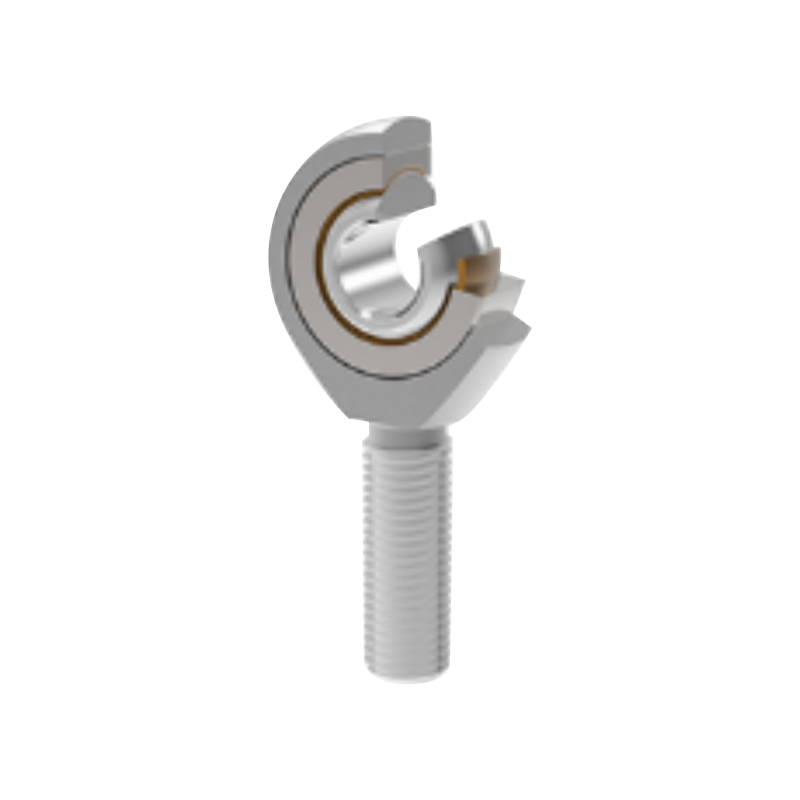
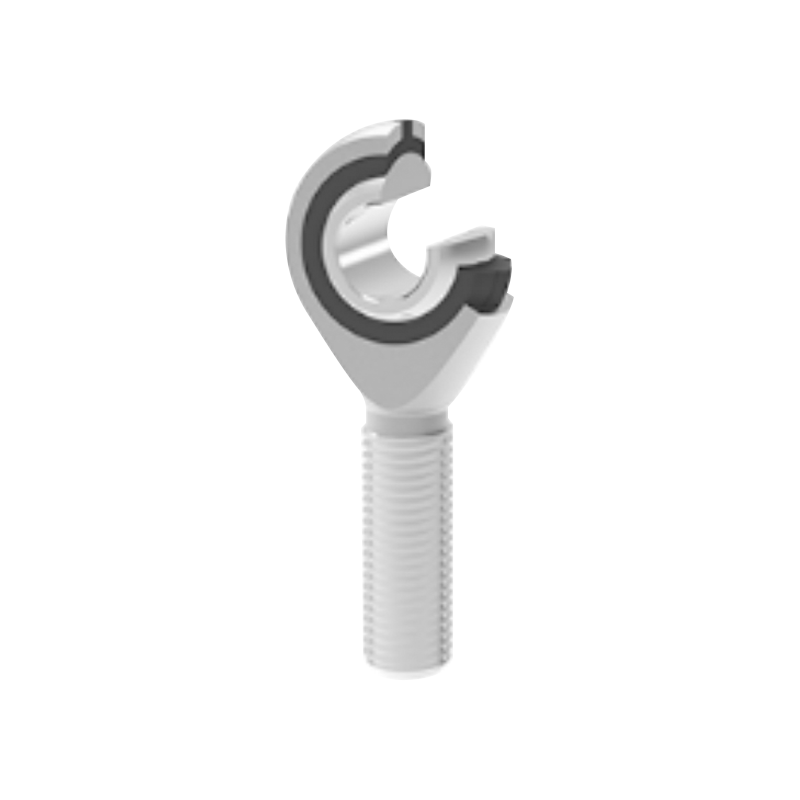
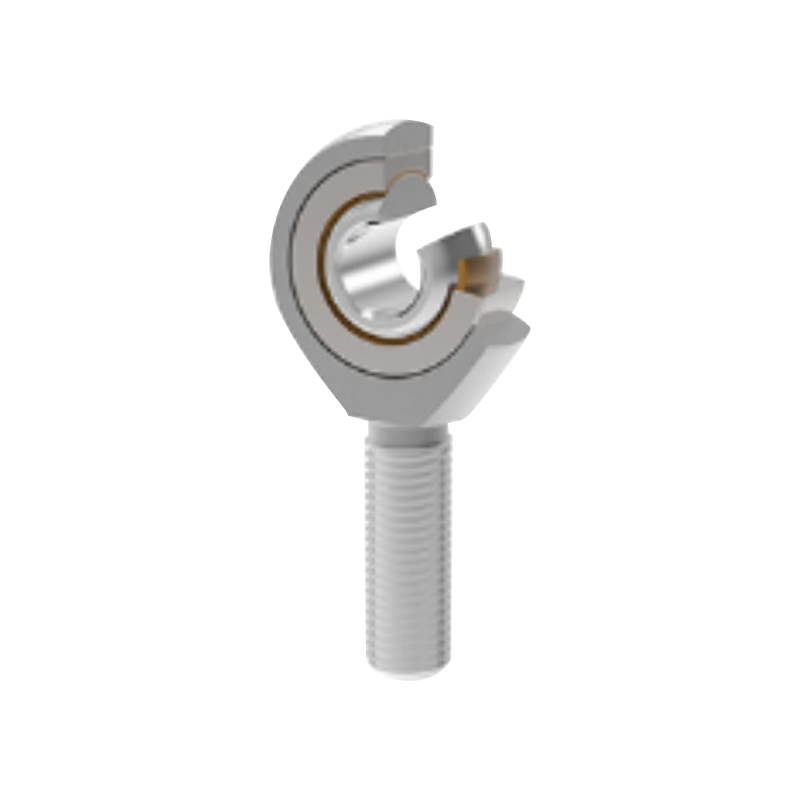
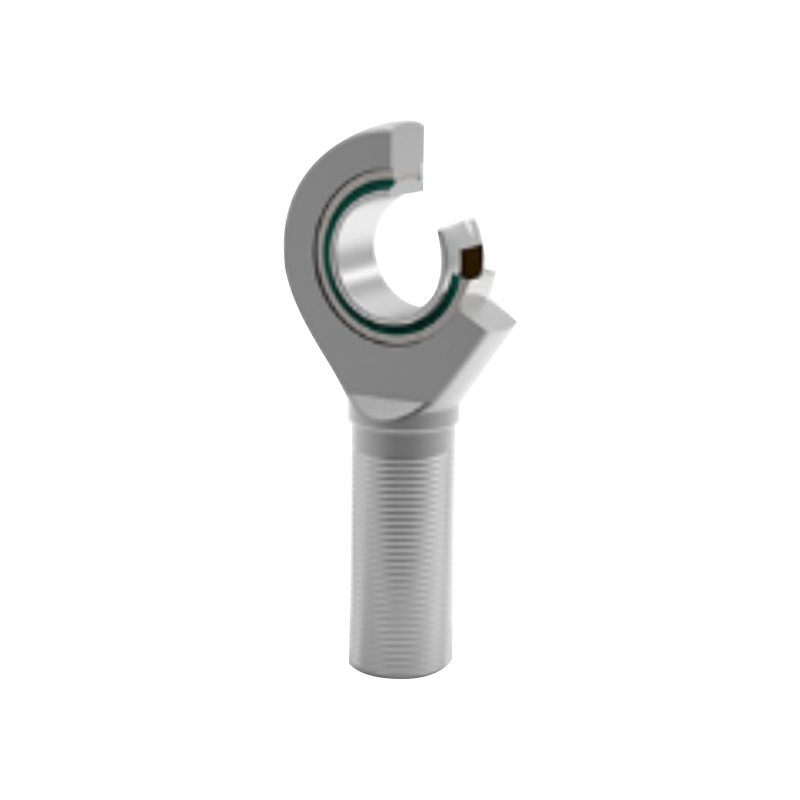
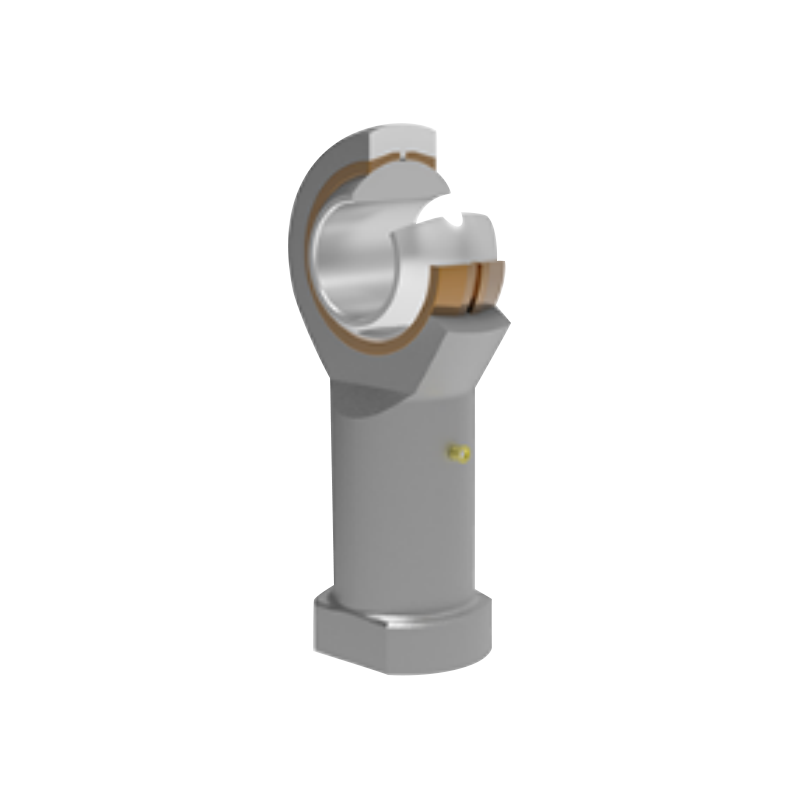
The SIZP series threaded self-lubricating rod end bearing with PTFE insert is designed to meet these requirements. It uses a three-piece construction consisting of a rod end body, an inner ring, and a bonded or retained PTFE plastic liner. The rod end body is manufactured from carbon steel and protected with a galvanized surface. The inner ring is produced from high-carbon chromium bearing steel, hardened through quenching, and finished with a hard chrome spherical surface. Together, these materials create a steel-versus-PTFE sliding friction pair that supports maintenance-free operation under suitable working conditions.
This product is intended for applications that require a threaded connection and rotational or oscillating movement around the spherical inner ring. Available in inch sizes from approximately 4.83 mm to 19.05 mm bore diameter, the series covers common linkage and actuator requirements. Standard internal thread options include 10-32, 1/4-28, 5/16-24, 3/8-24, 7/16-20, 1/2-20, 5/8-18, and 3/4-16 UNF-2B configurations.
Its principal value lies in combining a self-lubricating PTFE interface with a hardened spherical inner ring and a corrosion-protected threaded body. Compared with conventional greased rod ends, the SIZP structure can reduce lubrication-related maintenance, simplify equipment design, and offer more consistent operation in locations where manual servicing is inconvenient.
A rod end bearing, also known as a spherical rod end or heim joint in some markets, connects a threaded shaft or rod to another machine element. The spherical inner ring allows the connected rod to articulate relative to the housing. This articulation compensates for angular misalignment and enables controlled movement in linkages, steering systems, automation mechanisms, and actuator assemblies.
The SIZP series has an internally threaded rod end body. The internal thread allows the component to receive a threaded shaft, stud, or adjustment rod. This configuration is useful where the bearing is installed at the end of a control rod or where the linkage length must be adjusted during assembly.
The product is built around three primary elements:
1. The rod end body, which provides the external structure, internal thread, and connection to the surrounding machine.
2. The spherical inner ring, which provides the bore for the mounting pin or shaft and rotates or oscillates inside the liner.
3. The PTFE plastic liner, which forms the sliding contact surface between the inner ring and the rod end body.
The combination of these parts creates a compact plain spherical bearing. Unlike a rolling-element bearing, the SIZP does not depend on balls, rollers, cages, or a separate grease reservoir. Its movement is supported by sliding contact between the hard chrome-plated inner ring and the PTFE liner.
The functional principle of the SIZP bearing is based on a carefully selected material pair. The inner ring uses high-carbon chromium bearing steel with a hardened surface and hard chrome plating. The liner uses PTFE plastic, a low-friction engineering polymer known for its sliding properties and resistance to many common operating environments.
When the inner ring moves relative to the rod end body, the PTFE liner provides the bearing surface. The liner is intended to operate without regular external lubrication. This is important because adding grease or oil to a PTFE sliding interface may not always improve performance and can attract dust, abrasive particles, or process contaminants.
The steel/PTFE friction pair offers several practical advantages. First, it can reduce the coefficient of sliding friction compared with an unlined steel-on-steel joint. Second, it allows the bearing to operate without a scheduled lubrication system. Third, it can maintain smooth movement during short-stroke oscillation, where conventional rolling bearings may experience difficult lubrication conditions or localized wear.
The PTFE liner does not eliminate all design limitations. Load, speed, oscillation angle, operating temperature, surface condition, and environmental contamination all affect service life. The bearing should therefore be selected according to the actual motion cycle rather than by bore diameter alone. Nevertheless, for properly sized linkage and articulation systems, the self-lubricating interface can provide a strong balance between low maintenance and dependable movement.
PTFE is widely used in sliding applications because it offers naturally low friction. In the SIZP bearing, the liner supports movement between the spherical inner ring and the body without requiring a conventional grease film. This can help reduce starting resistance and improve the smoothness of repeated angular motion.
Lower friction can be especially beneficial in pneumatic and electric actuators, where excessive joint resistance can reduce positioning accuracy or increase the force required from the actuator. It can also help reduce energy losses in small automated mechanisms and improve the response of control linkages.
The product is designed for completely maintenance-free operation under its specified conditions. Because the liner is self-lubricating, the user does not need to install a grease fitting or create a regular relubrication schedule. This simplifies maintenance planning and can reduce the total service effort over the life of the equipment.
Maintenance-free operation is particularly valuable in machinery with numerous linkage points. If every joint requires periodic lubrication, service time increases and the risk of missed maintenance becomes significant. In production lines, servicing can also require machine stoppage. A self-lubricating rod end can reduce these interruptions when the application is appropriately designed.
Rod ends commonly experience angular oscillation rather than continuous high-speed rotation. Examples include actuator pivots, robotic linkage joints, damper connections, valve mechanisms, and adjustable control rods. A PTFE-lined spherical interface is well suited to this type of movement because it provides a broad sliding contact area and accommodates angular misalignment.
For continuous rotation, high-speed applications, or heavily contaminated environments, a different bearing type may be more suitable. The SIZP series is best considered for controlled oscillation, intermittent rotation, and articulation within the recommended design limits.
Material selection is one of the most important factors determining the performance of a rod end bearing. The SIZP series uses different materials for the body, inner ring, and sliding liner so that each component can perform its specific function.
The rod end body is made from carbon steel. Carbon steel provides the structural strength required to support the inner ring, transmit loads through the threaded connection, and maintain the geometry of the housing during operation.
The body is galvanized to improve surface protection. Galvanization helps reduce the risk of corrosion during storage, handling, assembly, and service. It is particularly useful for general industrial equipment where the bearing may be exposed to ordinary humidity, condensation, or occasional contact with a less aggressive atmosphere.
The galvanized surface also contributes to a cleaner and more consistent external finish. However, galvanization should not be interpreted as full protection against every chemical or environmental condition. Applications involving salt spray, strong chemicals, continuous outdoor exposure, or high humidity should be reviewed with the manufacturer before final selection.
The inner ring is manufactured from high-carbon chromium bearing steel. This type of steel is widely used for bearing components because it offers a combination of hardness, wear resistance, fatigue strength, and dimensional stability after heat treatment.
The inner ring is hardened by quenching. Quenching increases the hardness of the steel and improves resistance to deformation under load. In a spherical sliding bearing, the inner ring surface must remain accurately shaped while carrying radial and alternating loads. A properly heat-treated inner ring helps preserve this spherical geometry over time.
After hardening, the inner ring receives a hard chrome spherical plating treatment. The spherical chrome surface serves several purposes. It improves resistance to sliding wear, creates a hard and uniform contact surface for the PTFE liner, and helps protect the steel substrate from direct exposure to the operating environment.
Surface preparation and finishing are critical in this process. The spherical surface must be sufficiently smooth and accurately formed to work with the liner. Excessive roughness can increase friction and accelerate liner wear, while dimensional inconsistency can create uneven contact and localized loading.
The hard chrome finish also provides a useful barrier against corrosion on the working surface. The actual performance of the plated layer depends on thickness, adhesion, surface preparation, and process control. UKL’s manufacturing approach integrates machining, heat treatment, grinding, assembly, and inspection so that the inner ring can be produced as part of a controlled bearing manufacturing sequence.
The PTFE liner is the key element that gives the bearing its self-lubricating function. It creates a low-friction sliding layer between the chrome-plated inner ring and the carbon steel body. The liner must be correctly fitted and supported by the rod end body so that it can carry the intended load without excessive deformation.
PTFE also offers useful resistance to many common industrial substances and can remain functional across a broad temperature range. For this product, the stated operating temperature range is approximately -40°C to +75°C. This range should be observed during application design, especially when heat from nearby motors, welding operations, hydraulic systems, or outdoor exposure may increase the actual bearing temperature.
The SIZP rod end bearing competes with several alternative designs, including greased steel-on-steel rod ends, bronze-lined spherical joints, rolling-element rod ends, and unlined metal joints. Each design has an appropriate area of use, but the SIZP series provides several advantages in applications where low maintenance and compact articulation are priorities.
Traditional steel-on-steel rod ends normally require lubrication to reduce friction and prevent premature wear. Grease fittings may be included, but a fitting does not guarantee that lubrication will be performed correctly. Inaccessible installations, short maintenance intervals, contamination, and incorrect grease selection can all reduce service performance.
The PTFE-lined design avoids the need for routine grease replenishment under suitable operating conditions. This reduces maintenance labor and eliminates the possibility of grease leakage into products or work areas. It can also simplify the surrounding machine because a lubrication line, grease fitting, or service access panel may not be necessary.
An unlined metal joint can have high friction, particularly when the contact surfaces are dry or poorly protected. It may also suffer from stick-slip behavior, surface galling, and accelerated wear. The PTFE insert creates a more controlled sliding interface, helping the joint move more smoothly and reducing direct metal-to-metal contact.
This advantage is important for precision linkages. Irregular friction can produce hysteresis, vibration, or inconsistent movement. A properly selected PTFE-lined rod end can help the mechanism respond more predictably.
Rolling-element rod ends can provide low rolling resistance, but they may require more complex internal construction. Balls, rollers, cages, seals, and raceways add components and may increase the overall size or cost of the joint. Rolling bearings can also be sensitive to contamination and may not be ideal for small-angle oscillation, where the rolling elements repeatedly move over the same limited section of the raceway.
The SIZP bearing uses a simpler three-piece sliding structure. It can provide a compact solution for oscillating motion and angular misalignment without requiring a rolling-element assembly. This simplicity may improve installation flexibility and reduce the number of internal components that could fail.
Some low-cost rod ends focus primarily on initial purchase price and may use untreated or lightly finished surfaces. Such components can show greater variation in thread accuracy, surface condition, liner fit, or load capacity. In demanding machinery, an inexpensive joint can create higher costs through adjustment problems, early wear, or unplanned replacement.
The SIZP design combines defined materials, heat treatment, hard chrome plating, a PTFE liner, and controlled dimensional production. This gives equipment designers a more complete performance specification rather than relying only on nominal bore size.
The SIZP series covers bore diameters from approximately 4.83 mm to 19.05 mm. The range is expressed in both metric dimensions and inch thread designations. The internal threads are based on UNF-2B forms, with left-hand thread versions available by customization and appropriate product marking.
The following table summarizes the principal published dimensions and load ratings for the standard size range. Values are shown in millimeters unless the thread column indicates an inch designation. The dynamic and static load ratings are stated in kilonewtons. The data should be confirmed against the manufacturer’s latest technical drawing before production use.
| Product | Bore d (mm) | Width B (mm) | Spherical diameter dₖ (mm) | Thread | Approx. angle α (°) | Dynamic load (kN) | Static load (kN) | Approx. weight (kg) |
| SIZP4N | 4.83 | 7.92 | 11.10 | 10-32 UNF-2B | 10 | 3.3 | 5.38 | 0.015 |
| SIZP6N | 6.35 | 9.53 | 12.70 | 1/4-28 UNF-2B | 13 | 6.8 | 10.9 | 0.025 |
| SIZP7N | 7.94 | 11.10 | 15.88 | 5/16-24 UNF-2B | 10 | 7.6 | 12.2 | 0.036 |
| SIZP9N | 9.53 | 12.70 | 18.26 | 3/8-24 UNF-2B | 9 | 11.9 | 18.2 | 0.061 |
| SIZP11N | 11.10 | 14.27 | 20.62 | 7/16-20 UNF-2B | 11 | 17.4 | 23.8 | 0.081 |
| SIZP12N | 12.70 | 15.88 | 23.81 | 1/2-20 UNF-2B | 9 | 19.9 | 28.6 | 0.133 |
| SIZP15N | 15.88 | 19.05 | 28.58 | 5/8-18 UNF-2B | 11 | 22.9 | 38.9 | 0.190 |
| SIZP19N | 19.05 | 22.23 | 33.32 | 3/4-16 UNF-2B | 10 | 30.2 | 48.5 | 0.285 |
The load ratings in the table provide a basis for preliminary selection, but they should not be treated as a substitute for application engineering. Actual permissible loads depend on the direction of loading, oscillation frequency, operating temperature, mounting arrangement, misalignment, surface contamination, and required service life.
In many mechanisms, the load is not purely radial. A rod end may experience a combination of radial load, axial load, bending moment, and dynamic shock. The connection design should prevent excessive bending of the threaded shank and should keep the load path as close as possible to the intended centerline of the spherical bore.
Thread quality has a direct influence on installation, adjustability, alignment, and load transfer. The SIZP series uses internal UNF-2B thread configurations in its standard inch sizes. The internal thread must be manufactured accurately enough to receive the mating rod or stud without excessive play, binding, or damage to the thread flanks.
Thread accuracy grades can be customized upon request. This option is useful for equipment manufacturers that have defined fit requirements, special adjustment procedures, or integration standards. A customer may need a different tolerance class to match a precision actuator rod, a locking arrangement, or a particular assembly process.
When specifying a customized thread, the buyer should provide the nominal diameter, thread form, pitch, tolerance class, effective thread length, right-hand or left-hand direction, and any special inspection requirements. It is also important to define whether the thread must be compatible with an existing rod, clevis, or adjustment sleeve.
Left-hand thread models are available by request. They are useful in adjustable linkages where two rod ends are used together to permit length adjustment without removing the linkage. One end can use a right-hand thread and the other a left-hand thread, allowing the connecting rod to be rotated to change the assembly length.
Left-hand thread products must include the appropriate “L” and “LH” markings. An example designation is SILZP12N 1/2-20 UNF 2B LH, as provided in the product information. Correct marking is essential because left-hand and right-hand threads can look similar during handling, especially when products are stored in mixed batches.
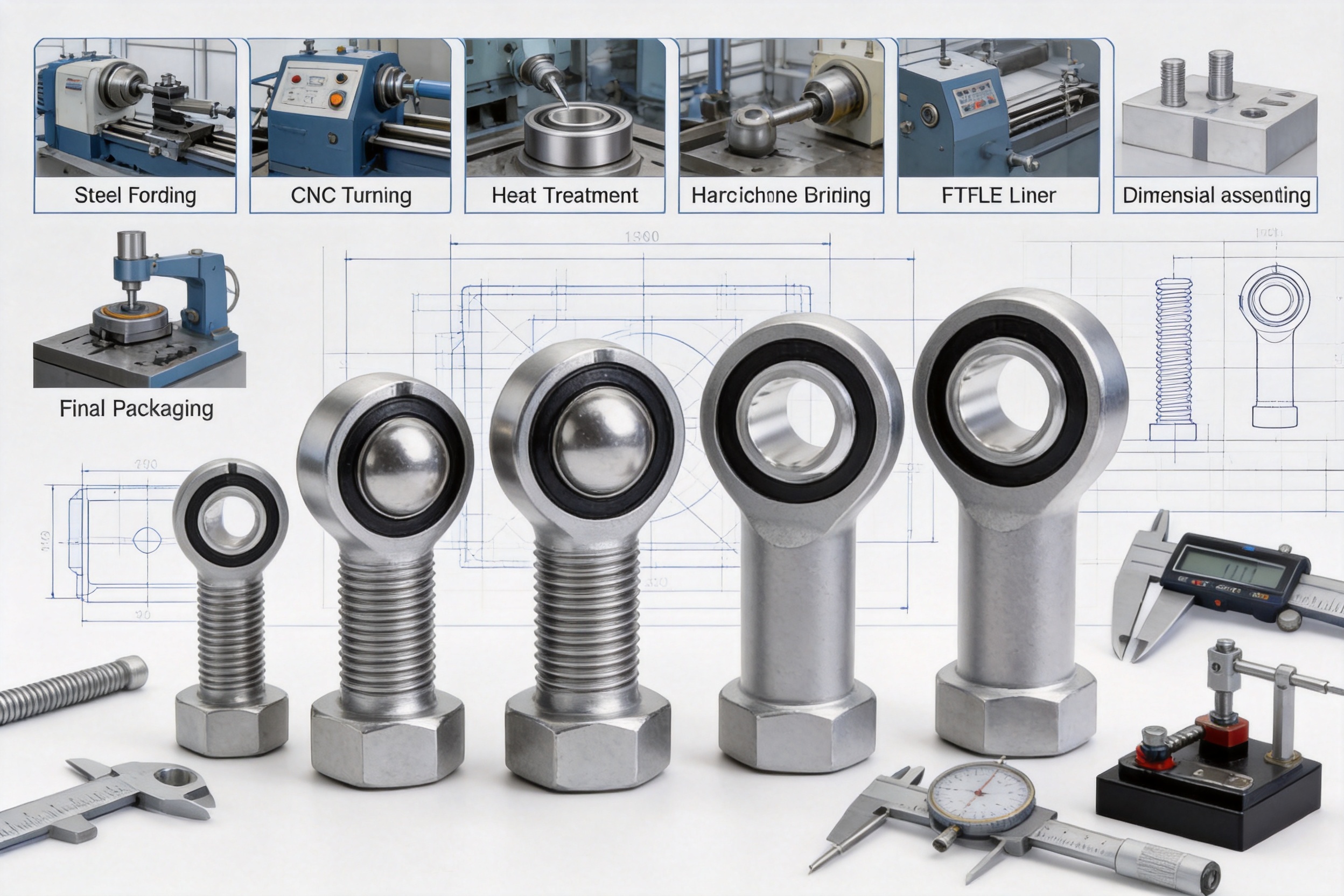
The performance of a PTFE-lined rod end depends not only on the selected materials but also on the consistency of the manufacturing process. UKL Bearing Manufacturing Co., Ltd. integrates research and development, production, and international distribution. Its factory structure covers forging, turning, heat treatment, grinding, assembly, and packaging, allowing multiple stages of production to be coordinated within one manufacturing system.
This integrated approach can provide several advantages over fragmented sourcing. When forging, machining, heat treatment, finishing, and assembly are managed through a connected production system, process information can be transferred more efficiently between departments. It also becomes easier to establish consistent inspection points and identify the source of dimensional variation.
Forging is used to prepare metal components with an efficient grain structure and appropriate material distribution. For a rod end body, the initial metal shape must support the housing profile, threaded section, and load-bearing areas. A well-controlled forming process can reduce unnecessary machining allowance and help produce a structurally efficient component.
Material preparation is also important for the inner ring. Bearing steel must be properly identified, stored, and processed before machining. Consistent raw material quality supports predictable heat treatment and surface finishing results.
Turning creates the basic geometry of the rod end body and inner ring. The bore, spherical profile, external features, and thread-related areas must be machined with appropriate dimensional control. Turning accuracy affects later grinding, plating, assembly fit, and the final alignment of the bearing.
For the threaded body, the internal thread must be formed with suitable tooling and inspected for profile, pitch, diameter, and effective engagement. For the inner ring, the spherical geometry must be maintained so that load is distributed across the PTFE liner rather than concentrated at isolated points.
The high-carbon chromium steel inner ring is hardened by quenching. Heat treatment changes the steel’s microstructure and increases its hardness. The process must be controlled carefully because insufficient hardness may lead to early wear, while excessive distortion can affect the spherical shape or bore accuracy.
After quenching, components may require additional finishing operations to restore dimensional precision. Process control should include temperature management, quenching conditions, hardness verification, and distortion evaluation. These steps are essential when the component must operate against a low-friction polymer liner with a defined contact geometry.
Grinding is used to achieve the required surface accuracy and finish on bearing components. The inner ring’s spherical surface is especially important. It must provide a smooth, consistent interface for the PTFE liner and should be free from sharp defects, deep grinding marks, or irregularities that could accelerate wear.
Grinding also supports dimensional consistency across production batches. Consistent dimensions help maintain predictable clearance and movement characteristics when the inner ring is assembled into the lined body.
Hard chrome plating is applied to the spherical inner ring after the steel has been hardened and prepared. The plating process must provide strong adhesion and uniform coverage. Because the surface is spherical, the plating operation must account for the geometry so that coating distribution remains consistent around the contact area.
Following plating, the component may require finishing or polishing to achieve the intended surface condition. The objective is to create a durable, smooth working surface that complements the PTFE liner rather than damaging it through excessive roughness or uneven contact.
The PTFE liner must be correctly positioned inside the rod end body. Its fit, thickness, retention, and contact with the inner ring all influence the finished bearing’s movement and load performance. Assembly should be performed under controlled conditions to avoid contamination, liner damage, or misalignment.
During assembly, the inner ring is inserted into the lined body and checked for articulation, movement, and fit. The finished assembly should allow the specified angular movement without binding while maintaining the necessary support around the spherical surface.
Inspection may include visual checks, dimensional measurement, thread gauging, hardness testing, surface inspection, articulation testing, and verification of product identification. Packaging protects the galvanized body, plated inner ring, and PTFE liner during transport and storage.
Clear packaging labels are especially important for products with multiple thread sizes and for left-hand thread versions. Proper traceability helps customers manage inventory, identify production batches, and avoid mixing similar-looking components.
UKL’s stated business focus includes bearing research and development, custom bearing manufacturing, and OEM/ODM export services. This is relevant to rod end bearing users because standard catalog dimensions do not always meet the requirements of specialized machinery.
Customization may involve thread accuracy, left-hand thread direction, dimensional adaptations, material alternatives, surface treatments, packaging, or identification. Before approving a customized design, the customer should provide a complete application description, including load, motion, temperature, speed, environment, available space, and expected operating life.
Engineering cooperation is particularly important when a rod end is used in a new mechanism. A small change in the thread length or spherical diameter can affect installation strength, angular movement, and the load path. Similarly, a change in liner material may alter friction, temperature capability, or wear behavior.
UKL reports a production capacity of approximately 10,000 to 50,000 units per month and experience serving customers in Europe, Asia, Africa, Russia, North America, and other markets. For OEM customers, production capacity and export experience can support repeat orders, product standardization, and coordinated delivery schedules.
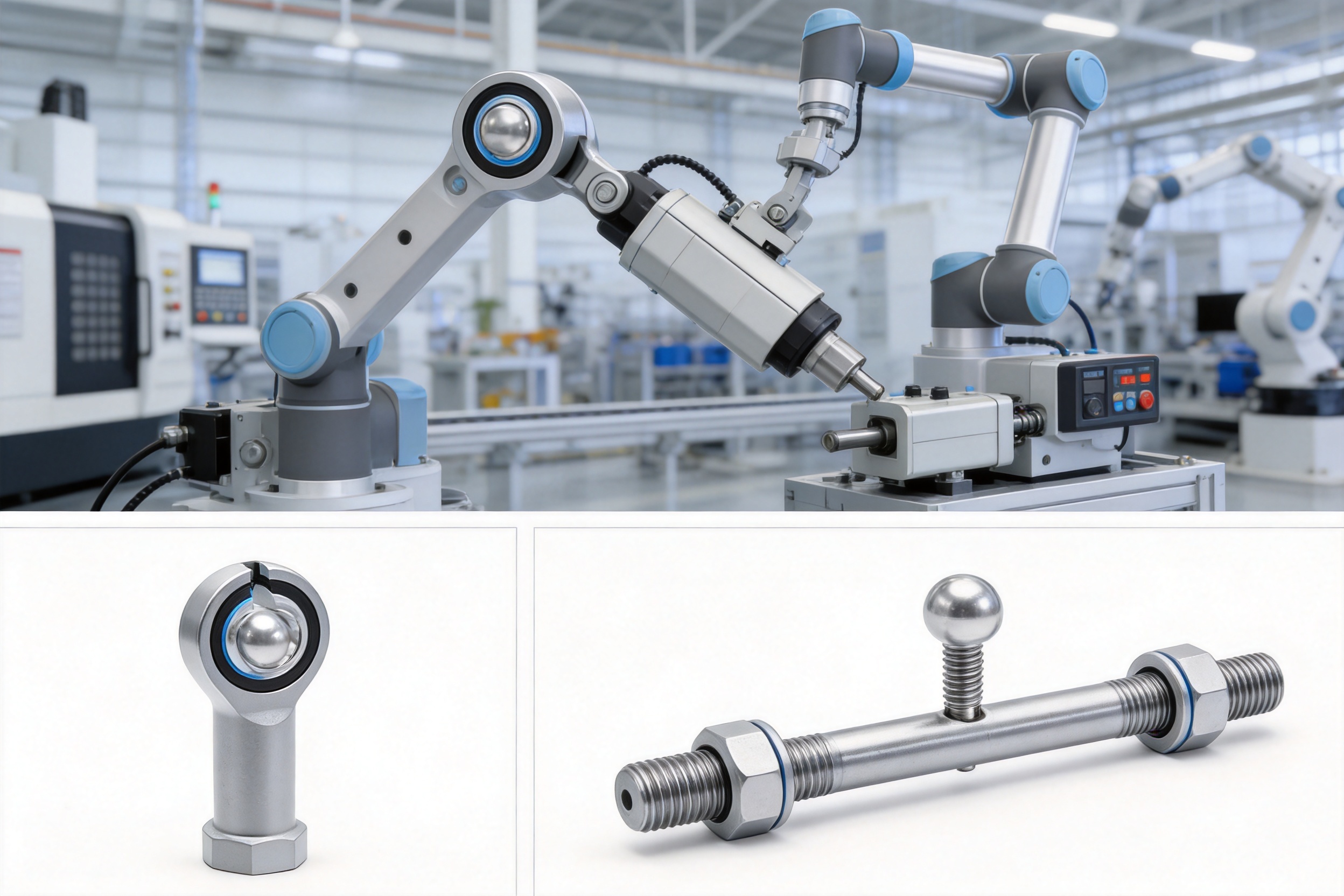
Automation equipment frequently uses compact linkages, actuators, grippers, and positioning mechanisms. These systems may contain many joints, each of which must operate reliably without frequent manual service. The SIZP rod end can be used where an internally threaded connection and angular movement are required.
Its self-lubricating design helps simplify equipment maintenance. It can also reduce the risk that grease will contaminate sensors, workpieces, or clean machine surfaces. The compact structure is suitable for mechanisms where the joint must fit into a confined installation envelope.
Robotic mechanisms often require repeatable movement and controlled articulation. Rod ends may be used in auxiliary linkages, end-effectors, guarding mechanisms, linear actuator connections, or adjustment systems. The PTFE liner can support smooth oscillation while the spherical inner ring compensates for small alignment errors.
Robotics applications should be evaluated carefully because high cycle counts can produce substantial cumulative movement even when individual loads are moderate. Designers should assess the product’s load capacity, motion amplitude, cycle frequency, temperature, and contamination conditions before selection.
Actuator rods must often connect to a pivoting machine element. A rigid connection can impose bending loads on the actuator rod if the pivot angle changes during operation. A spherical rod end allows the actuator to transmit force while accommodating angular movement.
The internally threaded SIZP configuration can be installed directly on a threaded actuator rod or adjustment member. The absence of routine lubrication can be helpful in actuator systems installed inside protective covers or in areas where access is restricted.
Control rods, throttle mechanisms, valve linkages, and positioning assemblies commonly use threaded rod ends. The available right-hand and optional left-hand thread arrangements can support adjustable linkage designs. By rotating a connecting rod with opposite thread directions at each end, the installed length can be adjusted without completely dismantling the assembly.
The bearing may also be used in packaging machinery, conveying equipment, agricultural mechanisms, laboratory equipment, light vehicle systems, and custom mechanical assemblies. Its suitability depends on the load and environment rather than on a particular industry alone.
Correct installation is essential for achieving the expected service life of a PTFE-lined rod end. Before installation, verify the product number, bore size, thread direction, thread designation, and required mounting hardware.
The mating shaft or stud should have a compatible diameter and surface condition. It should pass through the spherical bore without excessive clearance or forced interference unless the design specifically requires a press fit. The mounting bolt or pin must be strong enough for the expected load and should be secured against loosening.
Loads should be aligned as closely as possible with the center of the spherical bore. Excessive side loading, bending moment, or cantilever loading can reduce bearing life and may damage the threaded body. If a spacer is required, it should support the inner ring correctly without restricting its intended angular movement.
The threaded connection should engage through an adequate length. Inadequate thread engagement can reduce the effective load capacity and increase the risk of thread damage. Excessive tightening torque should also be avoided because it can distort the rod end body or interfere with the inner ring’s movement.
PTFE-lined bearings should not normally be packed with additional grease unless specifically approved for the product and application. External contaminants should be removed before assembly, and the bearing should be protected from impact, sharp tools, welding sparks, and improper clamping.
The published approximate angular movement for the SIZP sizes is generally between 9° and 13°, depending on the model. The exact permissible angle should be confirmed from the applicable product drawing. The bearing should not be forced beyond its designed articulation range because contact between the body and adjacent components can create abnormal stress.
Rod ends are generally strongest when the load acts through the centerline of the bore and in the intended radial direction. Side loads and bending moments should be minimized. If the application includes shock loads, reversing loads, or significant axial forces, the bearing should be evaluated using the static load rating and an appropriate safety factor.
Selecting the correct rod end involves more than matching the bore to a bolt diameter. The following factors should be considered together.
First, determine the required bore diameter and mating hardware. The bore must accommodate the shaft or pin while allowing the correct clearance and assembly method.
Second, calculate the operating load. Consider normal load, peak load, acceleration, impact, and load reversal. Compare the calculated values with the published dynamic and static load ratings.
Third, evaluate the motion. Identify whether the joint will oscillate, rotate intermittently, or rotate continuously. Record the angular range, cycle frequency, stroke length, and expected number of cycles.
Fourth, check the operating temperature. The stated range is -40°C to +75°C. If the bearing is near a heat source or exposed to low-temperature outdoor conditions, the actual temperature should be measured or estimated conservatively.
Fifth, review the environment. Dust, water, abrasive particles, chemicals, salt, cleaning fluids, and process debris may influence the service life of the liner and surface treatments.
Sixth, confirm the thread. Select the correct UNF designation and tolerance class. If a linkage requires length adjustment, determine whether a left-hand thread is needed.
Finally, confirm the available space, installation tools, locking method, and maintenance expectations. The smallest bearing that meets the load requirement is not always the best choice if the application includes shock, difficult alignment, or severe contamination.
The SIZP series is designed to be maintenance-free, which means that routine lubrication is not required under suitable operating conditions. Maintenance-free does not mean inspection-free. Equipment operators should still inspect the joint during scheduled machine checks.
Inspection should look for excessive radial or axial play, unusual noise, stick-slip movement, liner damage, corrosion, thread loosening, deformation, and visible contamination. If movement becomes rough or the joint develops excessive clearance, the bearing should be evaluated and replaced if necessary.
Service life depends on the relationship between load and sliding distance. A bearing subjected to a light load and modest oscillation may operate for a long period, while a bearing exposed to high load, large angular movement, and frequent cycling may wear more quickly. Temperature and contamination can further change the behavior of the PTFE liner.
To maximize service life, avoid overloading, protect the bearing from abrasive contamination, maintain correct alignment, and prevent impact during installation. The mating pin should remain properly supported and should not be allowed to rotate in a way that damages the bore or creates unintended fretting.
For industrial buyers, the value of a bearing supplier includes more than the individual component. Consistent quality, technical communication, production capacity, and delivery coordination are also important.
UKL Bearing Manufacturing Co., Ltd. describes itself as an integrated manufacturer and trader with R&D, production, and international distribution capabilities. Its manufacturing facilities include production lines for forging, turning, heat treatment, grinding, assembly, and packaging. This combination can support both standard product supply and customized OEM/ODM projects.
The company reports a workforce of approximately 201 to 500 employees and more than 15 years of OEM/ODM export experience. It also states that it has served customers in the United States, Italy, Germany, Poland, South Africa, Egypt, India, and other regions. International experience can be useful when customers require export documentation, multilingual communication, packaging coordination, or technical support across different markets.
UKL also identifies cross roller bearings, dual-direction thrust angular contact ball bearings, and other precision bearing products as areas of R&D. This broader technical background can support customers that use rod end bearings alongside robotics, CNC machinery, automation systems, or other precision assemblies.
A production capacity of 10,000 to 50,000 units per month provides a basis for volume supply planning. Actual capacity for a specific SIZP configuration depends on size, customization, order quantity, inspection requirements, and production scheduling. Buyers should confirm lead time and available capacity before placing a time-sensitive order.
Rod end bearings are not interchangeable with every other bearing type. Cross roller bearings are designed for high stiffness and precise rotary or linear guidance. Angular contact ball bearings support combined radial and axial loads at higher speeds. Cylindrical and spherical roller bearings are used for heavier radial loads, while tapered roller bearings support combined loads with conical rolling elements. Mounted bearings are generally supplied in housings for easier installation.
The SIZP rod end occupies a different role. It is a compact articulated connection with an internal thread and a spherical sliding interface. It is selected when the machine needs angular misalignment compensation, an adjustable threaded connection, and self-lubricating movement rather than high-speed rolling performance.
Understanding this distinction helps prevent incorrect substitution. A rod end should not be selected simply because its bore matches a rolling bearing. The motion type, load path, angular movement, mounting arrangement, and environmental conditions must all be considered.
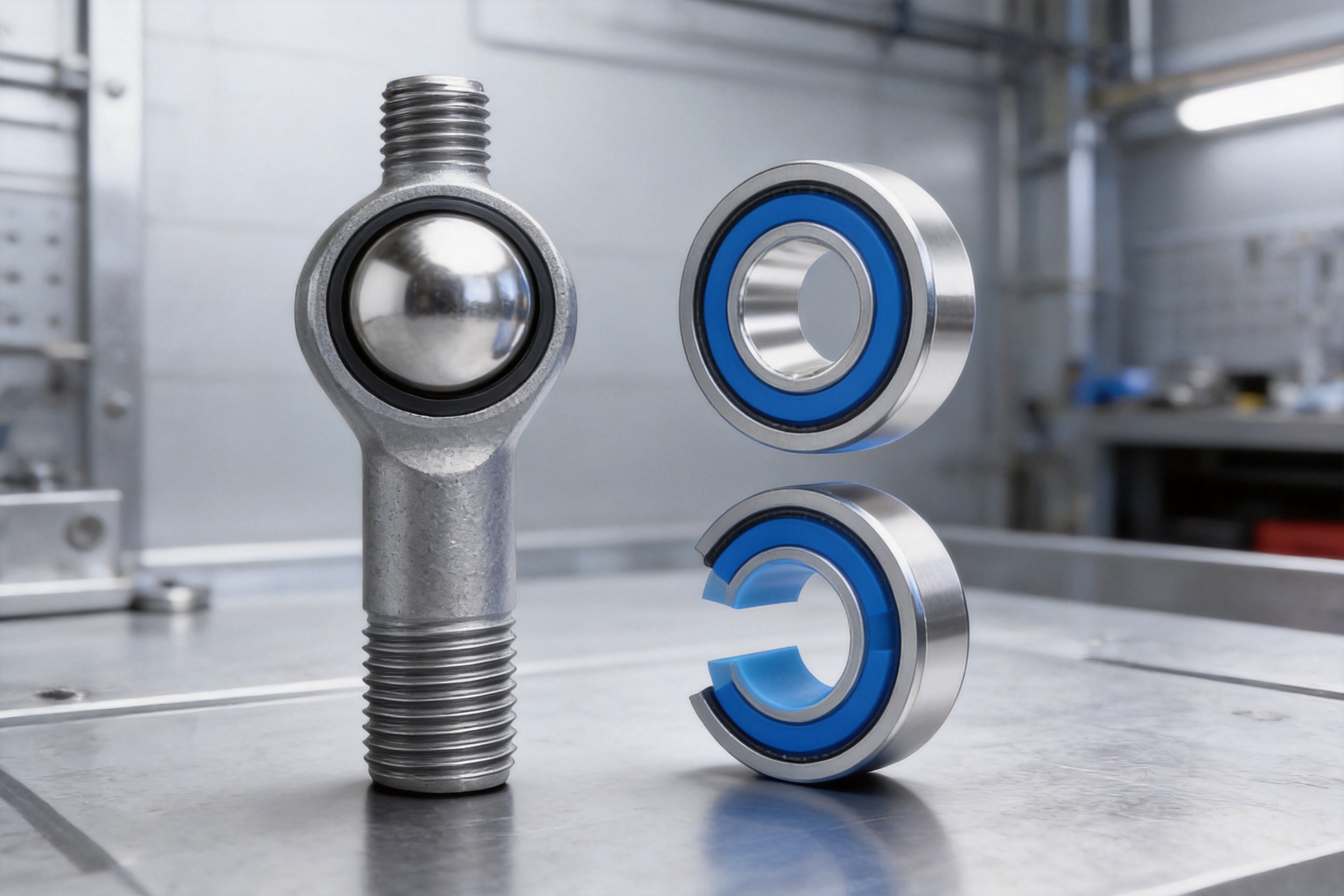
The three-piece structure provides a practical balance between performance and manufacturability. The body provides strength and thread integration. The inner ring provides the hardened spherical load surface. The PTFE liner provides the low-friction sliding interface.
Separating these functions allows each material to be optimized. A single-material construction would not provide the same combination of structural strength, surface hardness, corrosion protection, and low friction. The three-piece design also makes it possible to control the geometry and surface treatment of the inner ring independently from the threaded body.
From a production standpoint, the structure supports staged inspection. The body can be checked before lining, the inner ring can be inspected after heat treatment and plating, and the completed assembly can be evaluated for movement and fit. This separation can improve process control and make it easier to identify quality issues.
The self-lubricating design can contribute to cleaner equipment operation by reducing the need for external grease. Fewer lubrication events may reduce the consumption of maintenance materials and lower the risk of lubricant entering the surrounding production area.
UKL states that it adopts environmentally responsible processes, promotes material recycling, and seeks to optimize energy use. These commitments are relevant to industrial customers that evaluate suppliers according to environmental management, resource efficiency, and long-term manufacturing practices.
Environmental performance must be evaluated across the entire product life cycle. Longer service life, reduced maintenance, efficient packaging, responsible material handling, and controlled production processes can all contribute to a lower overall impact. Final disposal and recycling requirements should be considered according to local regulations and the specific materials used in the product.
The SIZP bearing connects a threaded rod or shaft to another machine element while allowing angular movement around a spherical inner ring. It is suitable for linkages, actuators, control mechanisms, and automation equipment.
Yes. The bearing uses a PTFE plastic liner that forms a low-friction sliding interface with the hard chrome-plated spherical inner ring. It is designed for maintenance-free operation under suitable load, temperature, motion, and environmental conditions.
Routine lubrication is not required for the intended self-lubricating design. Additional grease should not be applied unless the manufacturer has confirmed that it is compatible with the liner and operating conditions.
The rod end body is made from carbon steel with a galvanized surface. The inner ring is made from high-carbon chromium bearing steel, quenched for hardness, and hard chrome plated on the spherical working surface. The sliding liner is made from PTFE plastic.
The stated operating temperature range is approximately -40°C to +75°C. Applications outside this range should be reviewed with the manufacturer because temperature affects PTFE behavior, clearance, friction, and service life.
Standard internal thread options include 10-32, 1/4-28, 5/16-24, 3/8-24, 7/16-20, 1/2-20, 5/8-18, and 3/4-16 UNF-2B, corresponding to the SIZP4N through SIZP19N size range.
Yes. Left-hand thread models and markings can be supplied upon request. The product designation should include the appropriate “L” and “LH” identifiers so that the thread direction is clear during assembly.
Yes. Custom products with different thread accuracy grades are available upon request. The required thread size, tolerance class, direction, engagement length, and mating component details should be provided during technical discussions.
The SIZP series is primarily intended for articulated, oscillating, or intermittent movement. Continuous high-speed rotation may generate heat and wear that exceed the intended design conditions. Such applications should be evaluated separately.
Use a compatible pin, bolt, or shaft and ensure that the load is aligned with the spherical bore. Provide sufficient thread engagement, avoid excessive tightening torque, prevent contamination, and do not force the bearing beyond its permitted angular movement.
Selection should consider bore diameter, dynamic and static load, motion type, angular range, cycle frequency, temperature, environment, thread direction, and available installation space. The published ratings are a starting point and should be checked against the complete application.
Potential applications include industrial automation, robotics, actuator systems, packaging machinery, control linkages, valve mechanisms, conveying equipment, agricultural machinery, and custom mechanical assemblies.
The PTFE-lined SIZP design can provide lower maintenance requirements and a cleaner operating interface because it does not depend on routine external lubrication. A greased steel rod end may be preferred in some high-load or specialized conditions, so the choice should be based on the actual application.
OEM customers can discuss customized thread accuracy, left-hand thread options, product identification, packaging, inspection requirements, and production arrangements. UKL’s integrated manufacturing and export experience supports communication from design review through delivery.
The SIZP threaded self-lubricating rod end bearing is designed for mechanical systems that require compact articulation, threaded adjustment, and reduced maintenance. Its three-piece construction combines a galvanized carbon steel body, a hardened and hard chrome-plated high-carbon chromium steel inner ring, and a PTFE plastic liner.
This steel/PTFE sliding pair provides a practical alternative to conventional greased rod ends and unlined metal joints. Its advantages include low-friction movement, maintenance-free operation under suitable conditions, resistance to sliding wear, angular misalignment capability, and a broad range of inch thread sizes. Optional left-hand threads and customizable thread accuracy provide additional flexibility for OEM linkage and actuator designs.
The product’s performance is supported by an integrated manufacturing approach that includes forging, turning, heat treatment, grinding, plating, assembly, and packaging. UKL Bearing Manufacturing Co., Ltd. combines these production capabilities with R&D, international distribution, and OEM/ODM experience to serve industrial customers requiring both standard and customized bearing solutions.
For successful application, engineers should evaluate load, motion, temperature, contamination, thread engagement, alignment, and service-life requirements together. When correctly selected and installed, the SIZP rod end bearing can provide a reliable, compact, and low-maintenance connection for automation, robotics, actuators, control linkages, and general industrial machinery.
1. Product data supplied for the SIZP Threaded Self-Lubricating Rod End Bearing with PTFE Insert, including dimensions, thread designations, load ratings, operating temperature, and material information.
2. General principles of plain spherical bearing design, sliding contact, angular misalignment, and rod end bearing selection.
3. General engineering references concerning PTFE friction materials, self-lubricating polymer liners, and steel-to-polymer sliding interfaces.
4. General bearing manufacturing practices covering forging, precision turning, quenching, grinding, surface plating, assembly, inspection, and packaging.
5. Manufacturer information concerning UKL Bearing Manufacturing Co., Ltd., its R&D activities, production capabilities, OEM/ODM services, export experience, and environmental commitments.
Product Categories
Contact Us

Jane@ukl-bearing.com
Jenny@ukl-bearing.com
Andy@ukl-bearing.com
Ivy@ukl-bearing.com

+86-510- 88763239
+86-15371057968

No.1 Hehuan Road, Hudai Town, Binhu District, Wuxi City.
Ready to Begin?
Get in Touch

Now!
UKL BEARING
 English
 Español
 русский