Content
Take up bearing units are practical mounted bearing assemblies designed to support rotating shafts while allowing controlled movement for shaft adjustment, belt tensioning, and installation alignment. They are widely used in conveyor systems, material-handling equipment, agricultural machinery, packaging lines, food-processing equipment, chemical-production systems, and many other industrial machines that require dependable shaft support in demanding operating environments.
A take up bearing unit combines an insert bearing with a take up housing. Instead of installing a bearing directly into a separate machine structure, the complete unit can be mounted onto a frame or guide system. This arrangement simplifies installation, supports efficient maintenance, and makes it possible to adjust the shaft position when a drive belt, conveyor chain, or other transmission component requires tension correction.
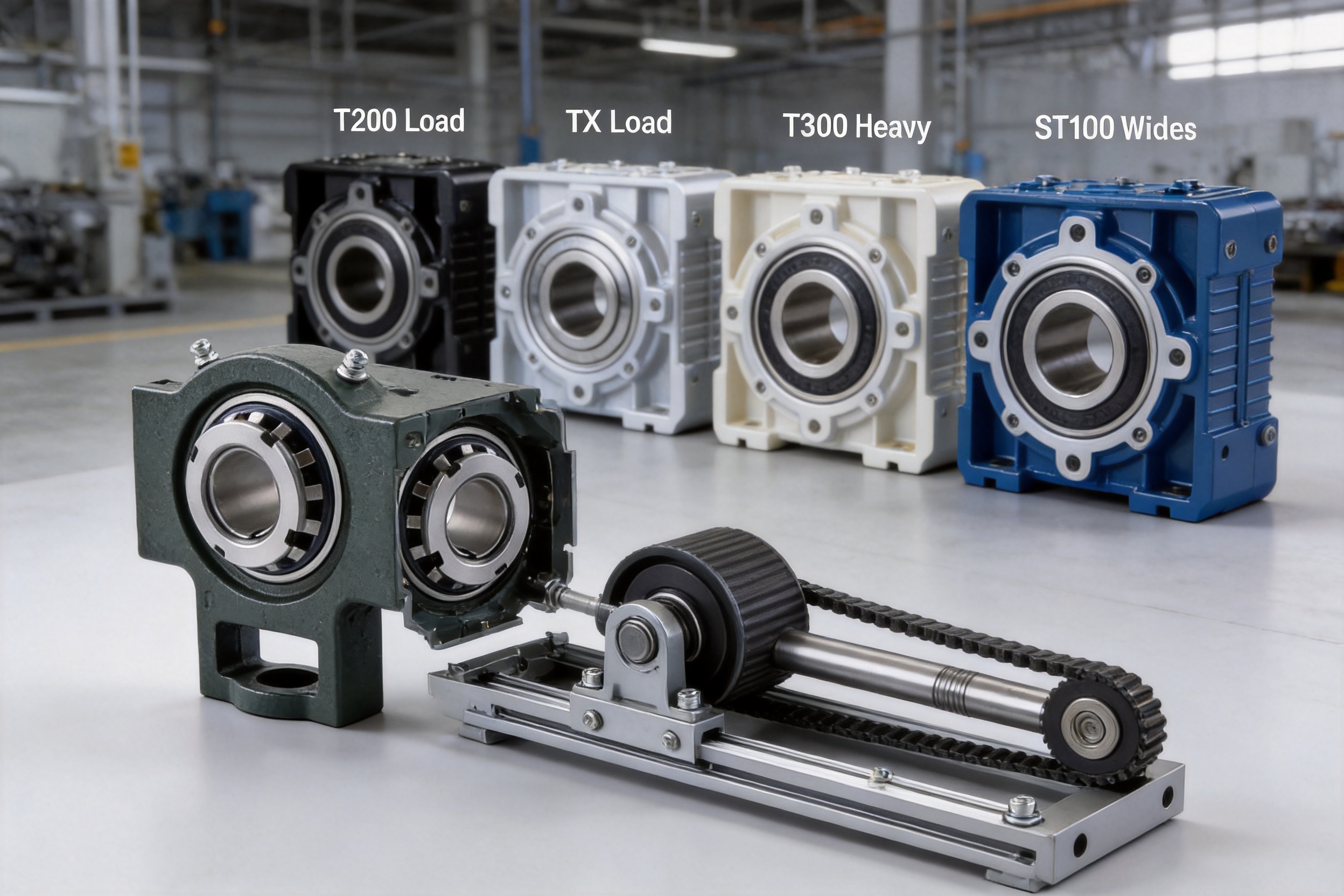
The take up bearing units described in this article include four principal model families: T200 for standard-load applications, TX for medium-load service, T300 for heavy-load conditions, and ST200 for wide-groove applications. Each series is intended to address a different combination of load, space, adjustment, and environmental requirements. Proper selection depends on load magnitude, shaft size, operating speed, contamination level, temperature, lubrication, mounting method, and the materials used in the housing and internal bearing.
A well-designed take up unit offers more than basic shaft support. It can contribute to improved conveyor tracking, reduced maintenance downtime, simplified replacement procedures, and longer service life for the entire transmission system. The value of the product therefore depends on the quality of the complete assembly, including the housing, insert bearing, seals, locking arrangement, internal clearance, surface finish, and manufacturing consistency.
Take Up Bearing Units
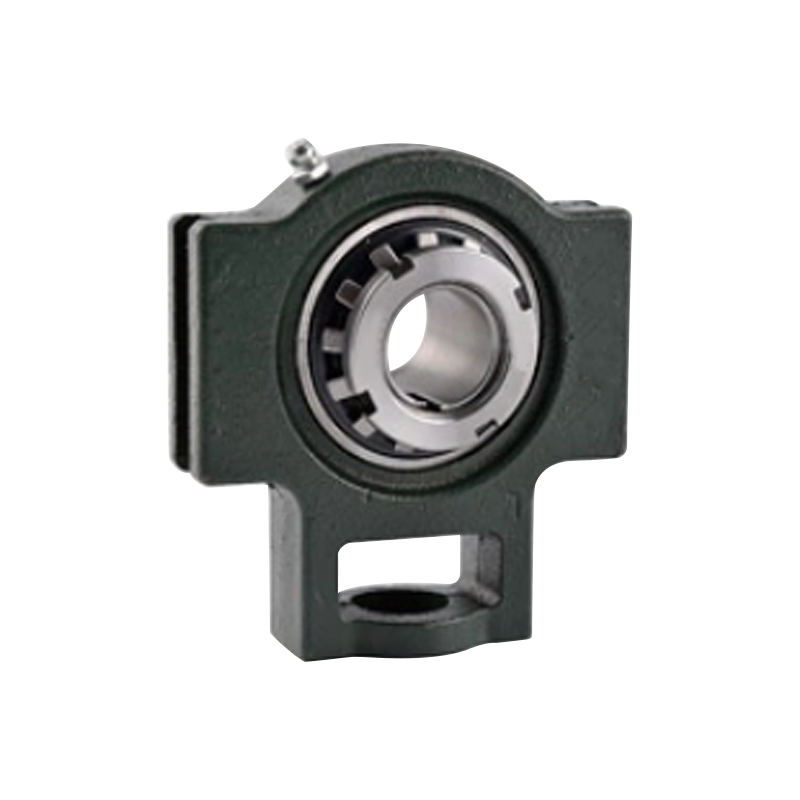
A take up bearing unit is a mounted bearing assembly consisting primarily of a T-type housing and an insert bearing. The housing provides the external structure and mounting interface, while the insert bearing supports the rotating shaft. In many applications, the housing is positioned on a take up frame, allowing the bearing and shaft to move along a controlled path.
This movement is particularly useful in conveyor and power-transmission systems. As a belt stretches through normal operation, the take up unit can be adjusted to restore proper tension. The same principle can be used to compensate for installation tolerances, accommodate thermal expansion, or make future maintenance easier. Rather than redesigning the entire machine structure, an operator can move the mounted bearing assembly to achieve the required shaft position.
The housing may be produced from cast iron, ductile iron, plastic, or stainless steel. The insert bearing may use chrome steel or stainless steel, depending on the application. Cast iron housing combined with a chrome steel internal bearing remains a common industrial configuration because it provides a practical balance of load capacity, rigidity, availability, and cost.
Stainless steel and plastic versions are often selected for chemical, food, pharmaceutical, washdown, and corrosion-sensitive environments. These materials can provide advantages where moisture, cleaning chemicals, salt, process fluids, or hygiene requirements make conventional cast iron unsuitable. Material selection should always consider the full operating environment rather than a single factor such as corrosion alone.
The T-type housing forms the structural body of the unit. Its shape provides a mounting surface and a guided arrangement for shaft adjustment. The housing must be sufficiently rigid to resist deformation under radial loads, belt tension, vibration, and external impact. Dimensional accuracy is also important because the housing controls the position of the bearing relative to the machine frame.
Cast iron is frequently used for general industrial service because it offers good stiffness, vibration-damping capability, and economical production. Ductile iron can be considered when greater toughness and impact resistance are required. Plastic housings may be appropriate for lightweight equipment or applications where corrosion resistance, low friction, or reduced mass is important. Stainless steel housings are suited to wet, corrosive, and hygiene-sensitive applications.
The insert bearing is the rotating element installed inside the housing. It normally contains rolling elements, raceways, a cage, seals, and a shaft-locking arrangement. The internal bearing must be compatible with the intended load, speed, shaft diameter, lubrication method, and environmental conditions.
Chrome steel is commonly used for standard industrial insert bearings because it provides high hardness, good fatigue resistance, and suitable rolling-contact performance. Stainless steel is selected when corrosion resistance is more important than maximum load capacity or when the equipment is exposed to moisture and cleaning agents. The choice between chrome steel and stainless steel should be based on a complete assessment of load, speed, chemical exposure, cleaning frequency, temperature, and expected service life.
The defining feature of a take up unit is its ability to support controlled positional adjustment. The bearing housing is mounted to a take up frame or guide arrangement, and the shaft location can be changed to regulate belt or chain tension. This function can reduce the need for frequent component replacement caused by gradual belt elongation.
Correct adjustment is essential. Excessive belt tension can increase bearing load, shaft deflection, seal friction, and energy consumption. Insufficient tension can cause slipping, vibration, poor conveying performance, and uneven wear. A take up unit provides the adjustment capability, but the final setting must be determined according to the drive manufacturer’s recommendations and the operating characteristics of the machine.
The available take up bearing unit range is organized into four principal model families. The distinction between these families is primarily related to load level, housing configuration, and application requirements. Exact dimensions, shaft sizes, static ratings, dynamic ratings, speed limits, and sealing arrangements should be confirmed from the applicable product drawing or technical catalog before purchase.
| Model family | General service classification | Typical selection focus | Common application considerations |
|---|---|---|---|
| T200 | Standard load | Economical support for ordinary operating loads | General conveyors, light industrial machinery, and standard shaft adjustment |
| TX | Medium load | Higher operating demand than standard service | Continuous-duty equipment, moderate belt tension, and more demanding production lines |
| T300 | Heavy load | Increased structural and load-handling requirements | Heavy conveyors, bulk handling, industrial transmission systems, and impact-prone service |
| ST200 | Wide-groove type | Applications requiring a wider mounting or adjustment arrangement | Equipment with special frame geometry, broader adjustment paths, or installation constraints |
T200 units are intended for standard-load applications where the equipment requires reliable shaft support and routine adjustment but does not impose unusually high radial loads or severe shock conditions. They can be used in general conveyor systems, packaging equipment, agricultural machinery, and ordinary industrial transmission assemblies.
The main advantages of the T200 configuration are practical installation, straightforward maintenance, and economical operation. It is often suitable for systems where the load is stable, the operating speed is moderate, and the surrounding environment is not highly corrosive. When paired with an appropriate insert bearing and correctly aligned take up frame, a standard-load unit can provide dependable service without unnecessary oversizing.
TX units are intended for medium-load applications. They may be selected when a standard-load unit would operate too close to its capacity or when the machine experiences longer operating cycles, higher belt tension, or more frequent starting and stopping.
Medium-load service can create greater demands on the housing, rolling elements, seals, locking mechanism, and mounting structure. A suitable TX unit should be evaluated not only by nominal radial load but also by shock, vibration, duty cycle, misalignment, and the effects of the connected transmission components. A medium-load product can improve operating margin and reduce the risk of premature fatigue when the equipment operates continuously or under variable loads.
T300 units are designed for heavy-load conditions where the bearing assembly must withstand increased forces and demanding operating cycles. Applications may include bulk-material conveyors, heavy industrial machinery, aggregate handling, large processing systems, and equipment exposed to impact or substantial belt tension.
Heavy-load selection requires careful attention to the complete load path. The shaft, housing, take up frame, fasteners, and machine support must all be capable of carrying the applied load. Installing a heavy-duty bearing unit on an inadequately reinforced frame can undermine the benefits of the product. The T300 series should therefore be integrated into a properly engineered support structure, with particular attention to rigidity, alignment, mounting flatness, and load distribution.
ST200 units use a wide-groove configuration for applications where a broader mounting or adjustment arrangement is beneficial. The wider groove can help accommodate certain frame designs, installation constraints, or adjustment requirements. It may also simplify positioning in systems where the available mounting geometry differs from a conventional take up arrangement.
Wide-groove designs should be selected based on the actual frame dimensions and the required adjustment range. The available space, guide design, fastener arrangement, shaft position, and anticipated movement should be checked before installation. A wider groove is not automatically a substitute for greater load capacity; it is primarily a configuration advantage and must be evaluated together with the bearing rating and housing strength.
Cast iron is a mainstream housing material for industrial take up bearing units. It offers a strong and rigid structure at a competitive cost. Its natural vibration-damping characteristics can be useful in rotating equipment, and its established casting technology supports repeatable production of complex housing geometries.
Cast iron units are commonly used in dry indoor environments, general conveyor applications, packaging machinery, and equipment where exposure to aggressive chemicals is limited. Protective coatings, suitable seals, and correct maintenance can improve resistance to ordinary industrial contamination. However, cast iron should be carefully evaluated for persistent moisture, saltwater exposure, frequent washdown, and corrosive process chemicals.
Ductile iron can provide improved toughness and impact resistance compared with conventional cast iron. It may be appropriate where the equipment experiences shock loading, vibration, or mechanical impacts. Heavy-duty conveying and material-handling systems can benefit from a housing material that offers a useful combination of strength, stiffness, and resistance to fracture.
The final performance depends on material grade, casting quality, heat treatment, machining accuracy, and inspection standards. A ductile iron housing should not be selected only by material name; the manufacturer’s specifications and production controls remain important.
Plastic housings can offer low weight, corrosion resistance, and a smooth external surface. These characteristics can be valuable in food-processing equipment, chemical machinery, small conveyors, and applications where metal contamination or rust must be minimized.
Plastic materials must be checked for temperature range, chemical compatibility, creep resistance, impact strength, ultraviolet exposure, and dimensional stability. Unlike metal, some plastics can deform under sustained load or elevated temperature. Correct application engineering is therefore essential, especially when the unit is subjected to high belt tension or continuous heavy loading.
Stainless steel housing and insert-bearing combinations are widely considered for wet, corrosive, and hygiene-sensitive conditions. They can be used in food, beverage, chemical, pharmaceutical, marine, and outdoor equipment. Stainless steel can reduce the risk of red rust and help maintain a cleanable surface when combined with appropriate seals and design features.
Corrosion resistance does not eliminate the need for cleaning and inspection. Chlorides, acidic chemicals, alkaline cleaners, high temperatures, and trapped contaminants can still affect stainless components. The correct stainless grade, seal material, lubricant, and cleaning procedure should be selected for the actual process environment.
| Operating environment | Potentially suitable housing | Important selection checks |
|---|---|---|
| General industrial, dry indoor service | Cast iron or ductile iron | Load, vibration, dust sealing, and lubrication interval |
| Heavy or impact-prone machinery | Ductile iron or heavy-duty metal housing | Shock load, frame strength, shaft deflection, and fastening |
| Wet or corrosive service | Stainless steel or suitable plastic | Chemical compatibility, seal performance, washdown, and drainage |
| Food or hygiene-sensitive equipment | Stainless steel or approved plastic | Cleanability, lubricant suitability, surface condition, and contamination control |
| Lightweight equipment | Plastic or compact metal housing | Temperature, creep, impact, and long-term dimensional stability |
A take up bearing unit is supplied as an integrated housing-and-bearing assembly. This can simplify machine design because the engineer does not need to create a separate bearing block, precision bore, and independent adjustment mechanism. The assembly provides a defined interface between the rotating shaft and the machine frame.
Integrated mounting can also reduce installation time. Once the take up frame is correctly prepared, the unit can be positioned, fastened, aligned, and connected to the shaft. This is often more convenient than installing a loose bearing into a separately machined housing and then developing a custom adjustment solution.
The take up function is a significant advantage in conveyor and transmission equipment. Belts can elongate due to wear, temperature, loading, and long-term operation. A fixed bearing arrangement may require belt replacement or structural modification when tension changes. A take up unit allows the shaft position to be adjusted, helping restore the intended tension and improve system efficiency.
Effective tension adjustment can reduce belt slip, lower vibration, improve product flow, and extend the useful life of the belt and connected pulleys. It can also make routine maintenance more predictable because operators have a controlled method for compensating for normal belt elongation.
The availability of T200, TX, T300, and ST200 configurations allows users to select a unit according to the machine’s actual needs. This is preferable to using one universal bearing for every application. A standard unit may be the most economical choice for moderate service, while a medium- or heavy-load design can provide greater operating margin where conditions are more severe.
Material options further improve application flexibility. Chrome steel and cast iron can provide an efficient general-purpose solution, while stainless steel and plastic can address corrosion, hygiene, and weight concerns. This combination of model and material choices helps the product compete with less adaptable bearing arrangements.
Mounted bearing units are generally accessible and replaceable as assemblies. If the insert bearing reaches the end of its service life, the maintenance team may be able to replace the internal bearing or the complete unit without dismantling a large portion of the machine. The correct maintenance procedure depends on the specific design, shaft-locking method, and manufacturer’s instructions.
Accessible mounting can also support visual inspection. Operators can examine seals, housing condition, fasteners, grease fittings, shaft surfaces, and signs of abnormal movement. Early detection of contamination, overheating, looseness, or vibration can prevent a minor bearing problem from becoming a major production failure.
A take up unit can reduce total ownership cost by combining a practical housing design with a replaceable insert bearing. The initial price is only one part of the economic evaluation. Installation time, adjustment capability, spare-parts availability, energy consumption, maintenance labor, and unplanned downtime can have a much greater effect over the equipment’s life.
Using a correctly selected unit can avoid both under-specification and unnecessary oversizing. An undersized bearing may fail prematurely, while a substantially oversized assembly can increase purchase cost, mass, and installation requirements without providing a meaningful benefit. Product selection should focus on the real operating profile rather than on nominal size alone.
The performance of a take up bearing unit depends heavily on manufacturing consistency. High-quality production requires coordinated control of material preparation, forming, machining, heat treatment, grinding, assembly, lubrication, sealing, and packaging. A manufacturer with integrated production capabilities can manage more of these stages internally and reduce variation between process steps.
Manufacturing begins with product engineering. Engineers evaluate housing geometry, bearing fit, shaft-locking method, groove dimensions, seal arrangement, load path, lubrication access, and installation requirements. Computer-aided design and dimensional analysis can be used to identify interference risks, stress concentration, and assembly limitations before production tooling is released.
Product development should also consider the way the unit will be used in the field. A housing that is strong in laboratory testing may still perform poorly if the mounting surface is difficult to access or if routine relubrication cannot be carried out safely. Practical installation, inspection, and replacement requirements should therefore be included in the design process.
Where forged bearing components are used, forging can improve material flow and create a strong foundation for later machining. The process must control heating temperature, forming pressure, die condition, and cooling behavior. Proper raw-material identification is essential so that the finished component can be traced to the correct steel grade or casting batch.
Housing production may involve casting or other forming processes depending on the selected material. Castings require control of mold design, molten-metal quality, solidification, shrinkage, inclusions, and surface defects. Ductile iron requires particular attention to nodularity and matrix structure because these characteristics influence strength and toughness.
Turning creates the basic dimensions of rings, shafts, and other rotational components. Precision machining establishes the geometry required for subsequent heat treatment and grinding. Important variables include diameter, roundness, concentricity, groove profile, shoulder geometry, and allowance for finishing operations.
Housing machining may include mounting faces, bearing bores, grooves, lubrication passages, and locating surfaces. These features must be produced within controlled tolerances so that the insert bearing is correctly supported without excessive interference or looseness. Poor machining can lead to housing distortion, abnormal noise, uneven load distribution, and premature wear.
Heat treatment improves the hardness, strength, wear resistance, and fatigue performance of bearing components. The process may include hardening, tempering, carburizing, or other controlled thermal cycles according to the material and component design.
Temperature uniformity, furnace atmosphere, holding time, cooling rate, and distortion control all affect the final result. A component that is too soft may suffer rolling-contact fatigue or wear, while excessive hardness or poor tempering can increase brittleness. After heat treatment, dimensional inspection and surface evaluation are necessary to confirm that the component remains suitable for grinding and assembly.
Grinding is used to achieve the precise dimensions and surface quality required for rolling contact. Raceways and other functional surfaces must have suitable roundness, waviness, roughness, and geometric accuracy. The grinding process must control wheel condition, dressing, coolant flow, feed rate, and thermal effects.
Grinding burns, excessive residual stress, chatter marks, and incorrect profiles can reduce fatigue life even when the nominal dimensions are acceptable. For this reason, advanced bearing production relies on process monitoring and inspection rather than visual assessment alone. Superfinishing may be used to further improve the surface texture and support smooth rolling contact.
Assembly takes place in a controlled environment where components are cleaned, inspected, and matched according to the required design. Rolling elements, cages, rings, seals, and locking components must be installed without damaging precision surfaces. Cleanliness is essential because small particles can create early indentation, noise, and accelerated fatigue.
Lubricant quantity and type are also important. Too little lubricant can increase friction and temperature, while too much can cause churning and heat generation at higher speed. The grease must be compatible with the bearing material, seal material, temperature range, and surrounding process conditions.
Quality assurance may include dimensional inspection, hardness testing, surface roughness measurement, visual examination, noise and vibration testing, rotational torque evaluation, seal inspection, and batch traceability. Housing components may also be checked for casting integrity, mounting accuracy, and material properties.
Testing should be linked to the intended product requirements. A standard-load T200 unit and a heavy-load T300 unit may require different evaluation emphasis, even if they share certain manufacturing stages. The objective is to verify that the finished product performs consistently within its defined application range.
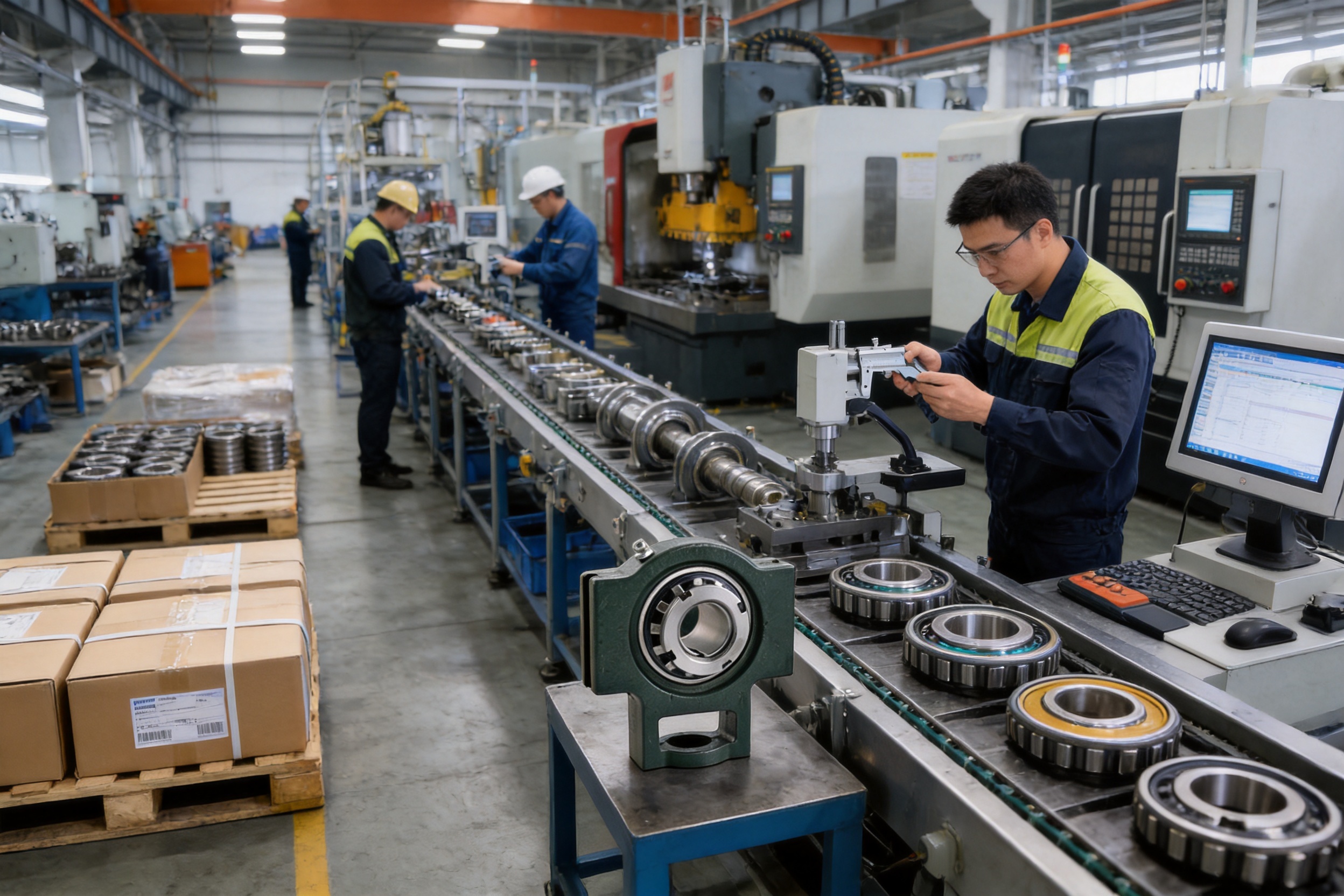
The manufacturer described in the supplied product information combines research and development, production, trading, and international distribution. Its reported production structure includes multiple lines covering forging, turning, heat treatment, grinding, assembly, and packaging. This integrated arrangement can support closer coordination between engineering and manufacturing teams.
In-house or closely managed process integration offers several potential advantages. Dimensional feedback from inspection can be returned to machining and engineering teams more quickly. Material and process records can be linked across production stages. Manufacturing schedules can also be coordinated with export requirements, reducing the risk that packaging or documentation problems delay shipment.
The stated production capacity is approximately 10,000 to 50,000 units per month. Such capacity can be valuable for original equipment manufacturers, distributors, maintenance contractors, and industrial users that require repeat supply. Capacity alone, however, is not a guarantee of quality. Buyers should also evaluate process control, inspection records, product consistency, technical support, and the manufacturer’s ability to maintain specifications during high-volume production.
The company reports a workforce of approximately 201 to 500 employees and more than 15 years of OEM and ODM export experience. These capabilities may support customized shaft sizes, housing arrangements, materials, seals, packaging, labels, and documentation. Customization should be confirmed through engineering review because changes to the bearing, housing, clearance, or locking arrangement can affect load rating and service life.
International distribution experience is particularly relevant for industrial bearing customers. Export projects often require clear technical drawings, commercial documentation, packaging suitable for long-distance transport, consistent labeling, and responsive communication across time zones. A multilingual service team can also help with installation guidance, product selection, troubleshooting, and after-sales maintenance.
Conveyors are one of the most natural applications for take up bearing units. The units support shafts at the end or intermediate sections of a conveyor while allowing adjustment of belt tension. They may be used in parcel handling, warehousing, mining, agriculture, food processing, and general manufacturing.
Conveyor selection should consider the belt width, belt tension, pulley diameter, material load, speed, environmental contamination, and frequency of cleaning. Heavy bulk-material conveyors may require T300 units and reinforced support frames, while lighter packaging conveyors may be suitable for T200 units. Wet or food-related conveyors may require stainless steel or plastic versions with compatible seals and lubricants.
Agricultural equipment often operates in dusty, dirty, and variable conditions. Take up bearing units can support shafts in harvesters, grain conveyors, feed systems, elevators, and other farm machinery. The adjustment function can help maintain belt tension despite changes caused by seasonal use, temperature, and belt wear.
Dust protection and relubrication practices are particularly important in agricultural applications. Operators should inspect seals and housing surfaces regularly and avoid directing high-pressure cleaning spray directly at the bearing seals unless the unit is specifically designed for that service.
Food and beverage machinery requires careful control of contamination, corrosion, and cleanability. Stainless steel or suitable plastic take up units may provide a better fit than conventional cast iron products. The unit should be evaluated for clean-in-place procedures, washdown chemicals, temperature, lubricant approval, and the possibility of water or food particles entering the bearing.
Material selection is only one part of hygienic design. Smooth external surfaces, appropriate seals, correct drainage, accessible inspection points, and a maintenance program are also important. The user should verify that all components meet the regulatory and internal hygiene requirements of the specific production facility.
Chemical-processing equipment can expose bearing units to vapors, splashes, cleaning solutions, and corrosive fluids. Stainless steel and plastic housing options can be considered where they are compatible with the chemical environment. Seal materials and grease must be selected with equal care because a corrosion-resistant housing cannot protect an internal bearing from an incompatible chemical or lubricant.
Process temperature, chemical concentration, exposure duration, ventilation, and cleaning methods should be documented during selection. In severe environments, additional shielding, remote mounting, or a different bearing arrangement may be required.
Packaging lines and automated machines often operate continuously and may require accurate, repeatable adjustment. Take up bearing units can support shafts in conveyors, film-handling systems, indexing equipment, and auxiliary drives. Their integrated form can simplify machine construction while allowing maintenance staff to adjust or replace the unit without extensive disassembly.
For automated systems, vibration and noise can affect sensors, product positioning, and machine diagnostics. Correct shaft alignment, balanced rotating components, suitable bearing clearance, and proper lubrication are essential. A take up unit should be integrated into the machine’s overall precision and maintenance strategy.
Selecting a take up bearing unit should begin with the operating conditions rather than the product name. The following questions can help define the correct configuration:
What is the shaft diameter and tolerance?
What radial and axial loads act on the bearing?
Are the loads steady, fluctuating, or subject to shock?
What are the rotational speed and duty cycle?
How much adjustment travel is required?
What is the available mounting and guide geometry?
Is the environment dry, dusty, wet, corrosive, or hygiene-sensitive?
What temperature range will the housing, bearing, seals, and lubricant experience?
Will the unit be exposed to washdown, chemicals, salt, or abrasive particles?
What maintenance and relubrication resources are available?
Answers to these questions help determine whether the T200, TX, T300, or ST200 family is appropriate and whether cast iron, ductile iron, plastic, or stainless steel is the most suitable housing material.
| Selection factor | Why it matters | Potential consequence of incorrect selection |
|---|---|---|
| Radial load | Determines bearing fatigue and housing stress | Overheating, fatigue, deformation, or premature failure |
| Shock and vibration | Influences housing toughness and internal contact stress | Looseness, cracking, noise, and reduced service life |
| Adjustment range | Ensures the unit can maintain belt or chain tension | Insufficient tension correction or difficult installation |
| Environment | Determines material, seal, and lubricant requirements | Corrosion, contamination, seal damage, or lubricant breakdown |
| Speed and duty cycle | Affects heat generation and grease performance | Excessive temperature, churning, and accelerated wear |
| Frame rigidity | Supports correct alignment and load distribution | Housing distortion, shaft deflection, and uneven bearing load |
| Maintenance access | Influences inspection and replacement efficiency | Longer downtime and delayed fault detection |
Before installation, inspect the shaft, mounting frame, guide surfaces, fasteners, and bearing unit. The shaft should be clean, free from burrs, and within the specified dimensional range. Damaged or heavily worn shaft surfaces can prevent the insert bearing from locking correctly and may create fretting or slippage during operation.
The take up frame should be rigid, clean, and correctly aligned. Guide surfaces must allow the intended adjustment without binding. Mounting faces should be checked for distortion, welding spatter, paint buildup, and other conditions that could prevent the housing from sitting evenly.
Slide the bearing unit into position without applying impact to the housing or seals. Position the shaft and bearing assembly according to the machine drawing, then tighten the mounting fasteners progressively and evenly. The specific tightening torque should follow the applicable technical instructions rather than an improvised value.
After the bearing is mounted, adjust the shaft position gradually. Both sides of a conveyor or transmission should be adjusted consistently so that the shaft remains square to the frame. Unequal adjustment can cause belt misalignment, edge wear, lateral loading, and increased bearing temperature.
Once the required position is established, secure the take up mechanism and confirm that the shaft rotates freely. Check belt or chain tension, pulley alignment, guard clearance, and locking-component installation. Operate the system initially at low speed where possible, then inspect for abnormal noise, vibration, heat, or movement.
Routine inspection should include visual examination of the housing, seals, shaft, fasteners, guide arrangement, and surrounding machine components. Look for grease leakage, rust, cracks, looseness, belt dust, unusual wear patterns, and signs of water or chemical entry.
Temperature monitoring can help identify developing problems. A gradual temperature increase may indicate insufficient lubrication, excessive belt tension, misalignment, contamination, internal damage, or an unsuitable bearing for the operating speed. Temperature should be compared with the machine’s normal operating baseline rather than judged only by touch.
Relubrication intervals depend on speed, load, temperature, contamination, seal design, and operating hours. Use only a compatible lubricant and avoid mixing greases unless compatibility has been confirmed. Excessive grease can be as harmful as insufficient grease, particularly in higher-speed applications.
Before adding lubricant, clean the grease fitting and surrounding area. Contaminants pushed through a dirty fitting can enter the bearing. After lubrication, observe the unit during operation and check whether excess grease is discharged in a controlled manner.
Unusual noise may result from contamination, inadequate lubrication, raceway damage, incorrect installation, or excessive clearance. Vibration can be caused by shaft misalignment, belt imbalance, housing looseness, pulley eccentricity, or bearing damage. Repeated belt misalignment may indicate unequal adjustment, a distorted frame, or incorrect pulley alignment rather than a bearing defect alone.
Premature failure should be investigated systematically. Replacing the unit without correcting the underlying cause may lead to a repeated failure. The investigation should consider load, speed, tension, contamination, installation, lubrication, shaft condition, and the structural strength of the take up frame.
When replacing a unit, isolate the machine and follow all applicable safety procedures. Remove belt or chain tension before loosening the bearing assembly. Inspect the shaft and frame after removal, and correct wear or deformation before installing the replacement.
Replacing the entire mounted unit can be efficient when the housing, seals, or locking components also show wear. In other cases, replacing the insert bearing may be sufficient. The decision should be based on inspection, repair cost, downtime, and the manufacturer’s recommended service procedure.
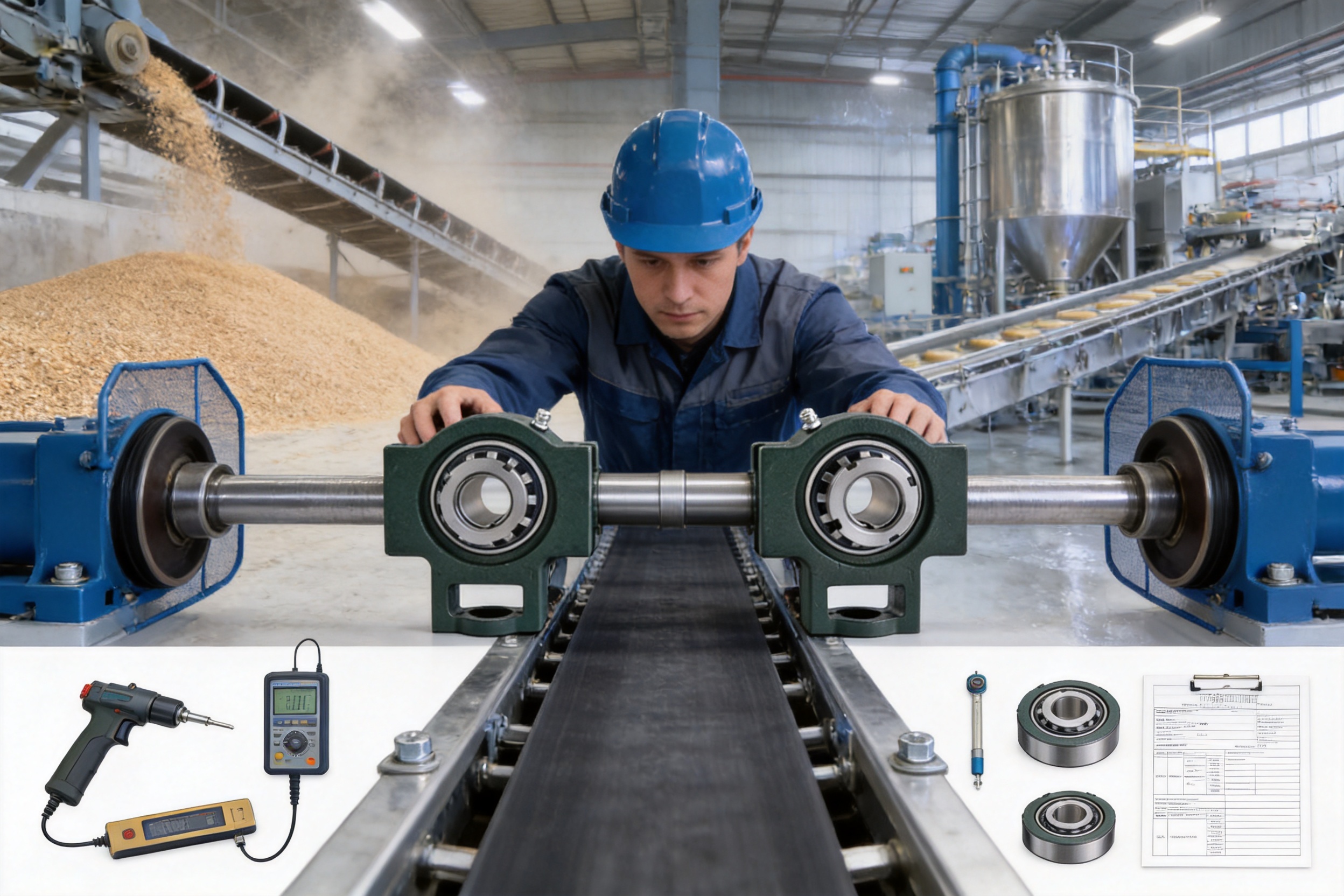
Take up bearing units may appear mechanically simple, but their reliability depends on the interaction of many precision features. A small error in bearing roundness, housing fit, seal installation, shaft locking, or groove geometry can create excessive vibration or uneven loading. Manufacturing quality therefore has a direct effect on service life and maintenance cost.
Advanced production systems help control this risk by combining specialized equipment, documented procedures, inspection checkpoints, and traceability. Forging and casting establish the material structure. Turning creates accurate preliminary geometry. Heat treatment develops the required mechanical properties. Grinding produces precise rolling surfaces. Assembly protects cleanliness and correct component relationships. Final inspection verifies that the finished unit is ready for service.
Research and development capabilities also strengthen product competitiveness. A manufacturer that continuously develops high-precision cross roller bearings, dual-direction thrust angular contact ball bearings, and other specialized products gains experience in rolling-contact analysis, material behavior, process control, and application engineering. That technical foundation can support improvements in mounted bearing design, even when the product is intended for conventional industrial machinery.
Digital production control can further improve consistency by recording process conditions, inspection results, production batches, and corrective actions. Data-based manufacturing allows engineers to identify recurring variation and adjust processes before defects become widespread. For international customers, traceable production and consistent documentation can simplify approval, incoming inspection, and long-term spare-parts management.
Modern bearing manufacturing must address not only performance and cost but also environmental responsibility. Material efficiency, recycling, energy management, coolant handling, packaging reduction, and responsible waste treatment can reduce the environmental impact of production.
The supplied company information indicates a commitment to environmentally responsible processes, material recycling, and optimized energy use. These measures are relevant to customers that evaluate suppliers through environmental, social, and governance criteria. Sustainable manufacturing can also support operational efficiency because reduced waste, improved energy control, and stable processes often lower production losses.
Responsible production extends beyond the factory. Long-lasting bearings require fewer replacements, less transportation, and fewer discarded components over the life of a machine. Correct product selection, reliable sealing, maintainable construction, and technical support can therefore contribute to a lower total environmental burden.
Industrial buyers should request the information necessary to verify product suitability. This may include dimensional drawings, shaft-size ranges, material specifications, bearing ratings, sealing details, lubrication recommendations, operating temperature limits, mounting instructions, and available inspection documentation.
For custom or OEM projects, the buyer should provide complete application data. Useful information includes shaft dimensions, load cases, speed, duty cycle, belt or chain tension, installation orientation, adjustment travel, surrounding temperature, cleaning chemicals, and expected service life. Clear data helps the manufacturer recommend the correct model and prevents avoidable substitutions.
Packaging is also important. Bearings should be protected from moisture, impact, contamination, and corrosion during storage and transport. Labels should identify the model, size, quantity, and batch information clearly. Export customers may also require customized cartons, pallets, documentation, barcodes, or private labeling.
After-sales support can include installation guidance, troubleshooting, maintenance recommendations, replacement planning, and technical responses to field conditions. A supplier that combines manufacturing with international distribution may be able to coordinate product, documentation, and service more efficiently than a disconnected trading chain.
Its main purpose is to support a rotating shaft while allowing controlled shaft-position adjustment. This adjustment is commonly used to maintain conveyor-belt tension, compensate for belt elongation, simplify alignment, and support maintenance operations.
The principal components are a T-type housing and an insert bearing. The insert bearing may include rolling elements, raceways, seals, a cage, lubricant, and a shaft-locking arrangement. The housing provides structural support and the mounting or adjustment interface.
T200 is generally intended for standard-load service, TX for medium-load applications, T300 for heavy-load conditions, and ST200 for a wide-groove configuration. Final selection requires confirmation of load ratings, dimensions, shaft size, adjustment requirements, and environmental conditions.
Cast iron is commonly used for general industrial service. Ductile iron may be preferred for higher toughness and impact resistance. Plastic can provide low weight and corrosion resistance in suitable applications. Stainless steel is often considered for wet, corrosive, food, chemical, and hygiene-sensitive environments.
No. Stainless steel can offer improved corrosion resistance, but chrome steel often provides excellent hardness, fatigue performance, and cost efficiency in general industrial conditions. The best material depends on load, speed, temperature, chemical exposure, cleaning procedures, and required service life.
No. They make belt-tension adjustment easier, but belts, pulleys, guides, fasteners, and bearings still require inspection and maintenance. Incorrect tension, poor alignment, contamination, or excessive loading can damage the system even when a take up unit is installed.
Evaluate stainless steel or suitable plastic options, seal design, lubricant compatibility, cleaning chemicals, washdown pressure, temperature, drainage, and hygiene requirements. The complete assembly should be suitable for the facility’s sanitation procedures and regulatory expectations.
Common causes include excessive load, shock, misalignment, over-tensioned belts, contaminated lubricant, insufficient lubrication, incorrect installation, shaft damage, housing distortion, seal failure, and operation beyond the recommended speed or temperature range.
The frame carries the housing and controls shaft alignment. If it is weak, distorted, or poorly aligned, the bearing may experience uneven loading even if the bearing itself is correctly manufactured. The frame, fasteners, guides, shaft, and housing must be considered as one load-bearing system.
Provide the required model if known, shaft diameter, quantity, load, speed, duty cycle, operating temperature, environment, housing material, bearing material, seal requirements, adjustment range, delivery destination, and any OEM packaging or labeling needs.
Take up bearing units provide a practical combination of shaft support, adjustment capability, and maintainable construction. The T200, TX, T300, and ST200 families address different service requirements, from standard-load equipment to medium-load, heavy-load, and wide-groove applications. Material choices including cast iron, ductile iron, plastic, stainless steel, chrome steel, and stainless steel bearing components allow the product to serve a broad range of industrial environments.
The advantages of a high-quality take up unit extend beyond its basic bearing function. Integrated mounting can simplify machine construction, adjustable positioning can maintain belt tension, accessible installation can reduce downtime, and application-specific materials can improve resistance to corrosion and contamination. These benefits become more valuable when the unit is supported by accurate engineering, controlled manufacturing, reliable inspection, and responsive technical service.
The manufacturer described in the supplied information combines production, research and development, OEM and ODM experience, export capability, and technical support. Its reported process coverage includes forging, turning, heat treatment, grinding, assembly, and packaging. Such capabilities provide a foundation for consistent production and customized industrial solutions, provided that each application is evaluated according to its actual loads, environment, speed, and maintenance requirements.
For the best result, users should select the model and material through a complete engineering review, install the unit on a rigid and aligned frame, maintain proper belt or chain tension, use compatible lubrication, and investigate abnormal temperature, noise, or vibration at an early stage. When properly specified and maintained, take up bearing units can support reliable operation across conveyors, agricultural equipment, food machinery, chemical systems, packaging lines, and other industrial applications.
1. General principles of rolling-bearing selection, mounting, lubrication, and maintenance, industrial bearing engineering practice.
2. Standard methods for evaluating rolling-element bearing load, fatigue life, internal clearance, and operating temperature.
3. Engineering guidance for mounted bearing units, conveyor shaft adjustment, belt tension, and alignment.
4. Materials engineering references covering chrome bearing steel, stainless steel, cast iron, ductile iron, and engineering plastics.
5. Manufacturing practice references for forging, casting, turning, heat treatment, grinding, superfinishing, assembly, and bearing inspection.
6. Industrial maintenance guidelines for vibration monitoring, lubrication control, contamination prevention, and bearing replacement.
Product Categories
Contact Us

Jane@ukl-bearing.com
Jenny@ukl-bearing.com
Andy@ukl-bearing.com
Ivy@ukl-bearing.com

+86-510- 88763239
+86-15371057968

No.1 Hehuan Road, Hudai Town, Binhu District, Wuxi City.
Ready to Begin?
Get in Touch

Now!
UKL BEARING
 English
 Español
 русский