Content
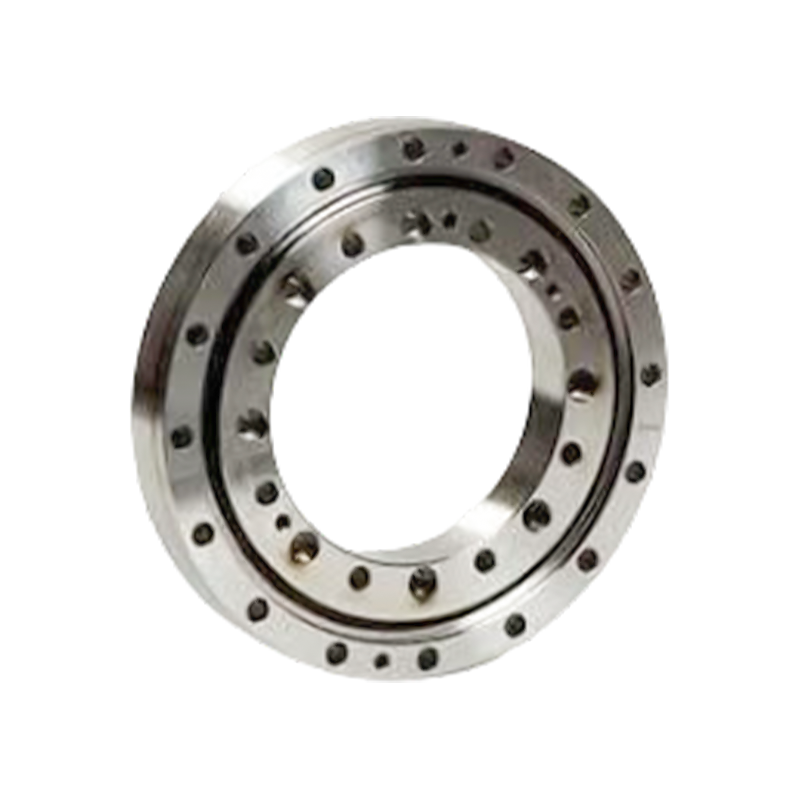
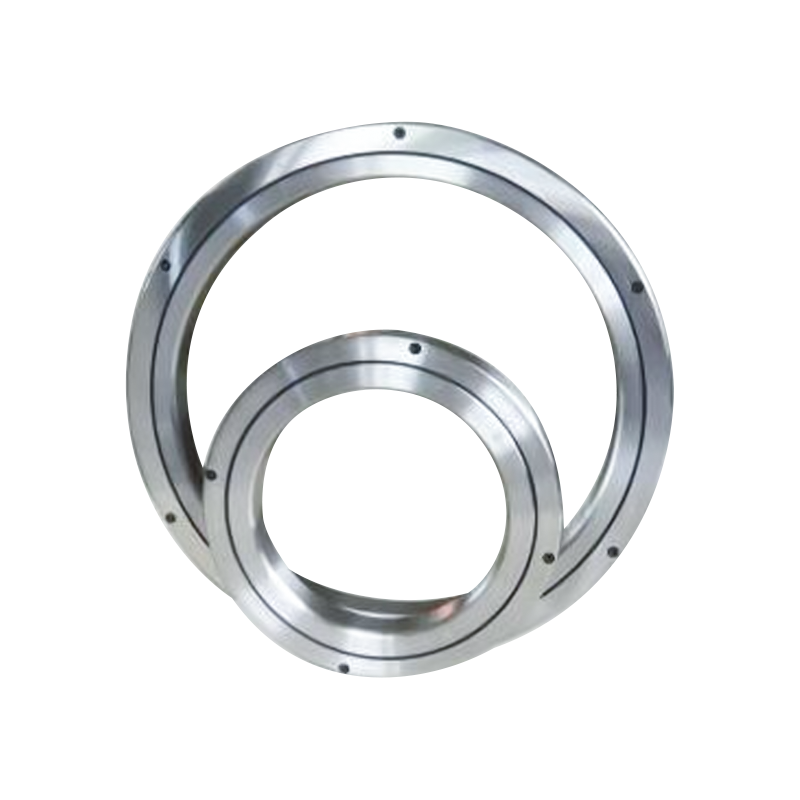
Cross roller bearings have emerged as a cornerstone of modern industrial engineering, enabling high-precision rotational motion in applications ranging from robotics to CNC machine tools. Unlike traditional bearings that handle single or dual loads, cross roller bearings are designed to withstand radial, axial, and moment loads simultaneously—making them indispensable in systems where space is limited and accuracy is non-negotiable. This article explores the technical advancements, performance advantages, and manufacturing excellence behind a leading line of cross roller bearings, as well as the industrial processes that ensure their reliability and precision.
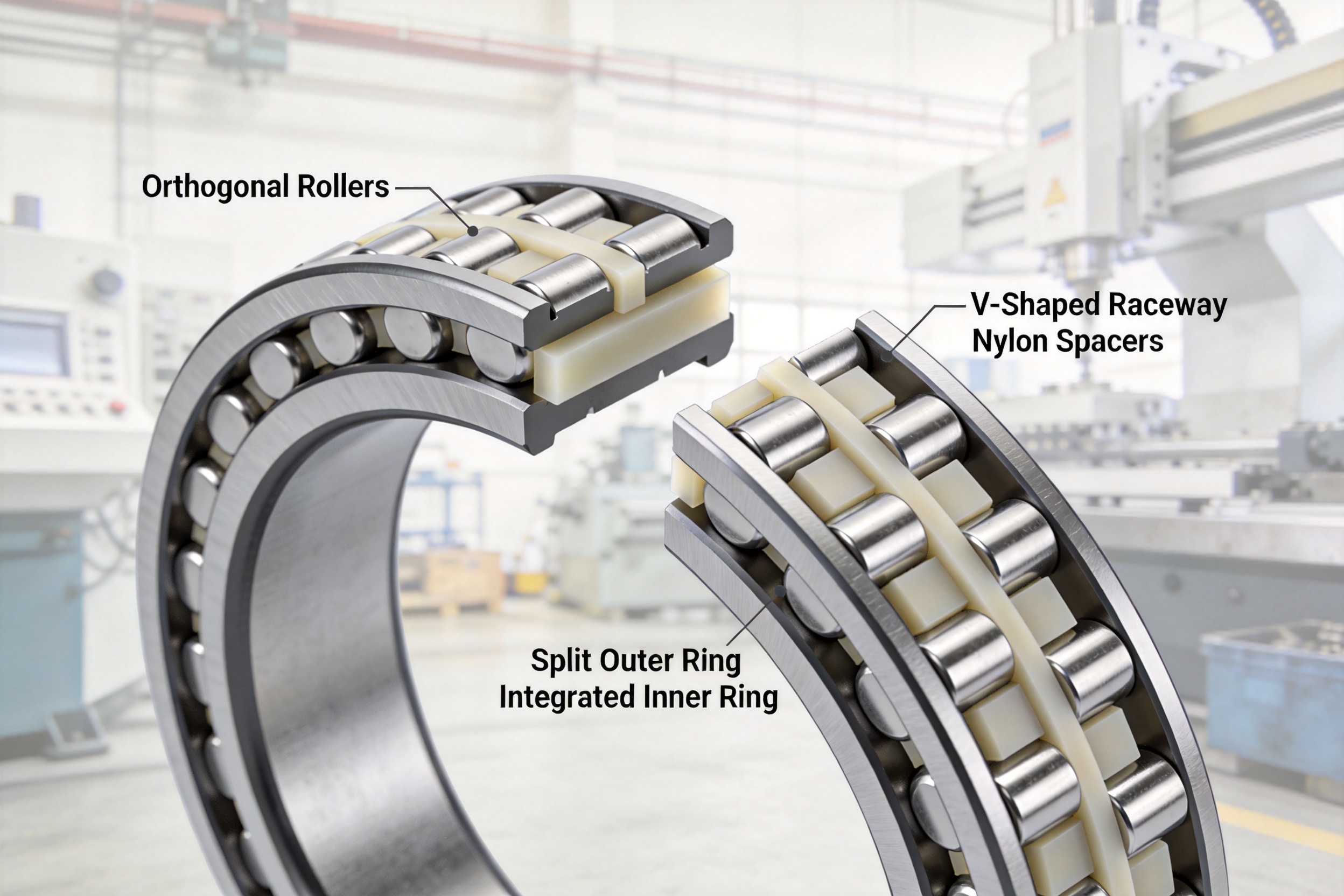
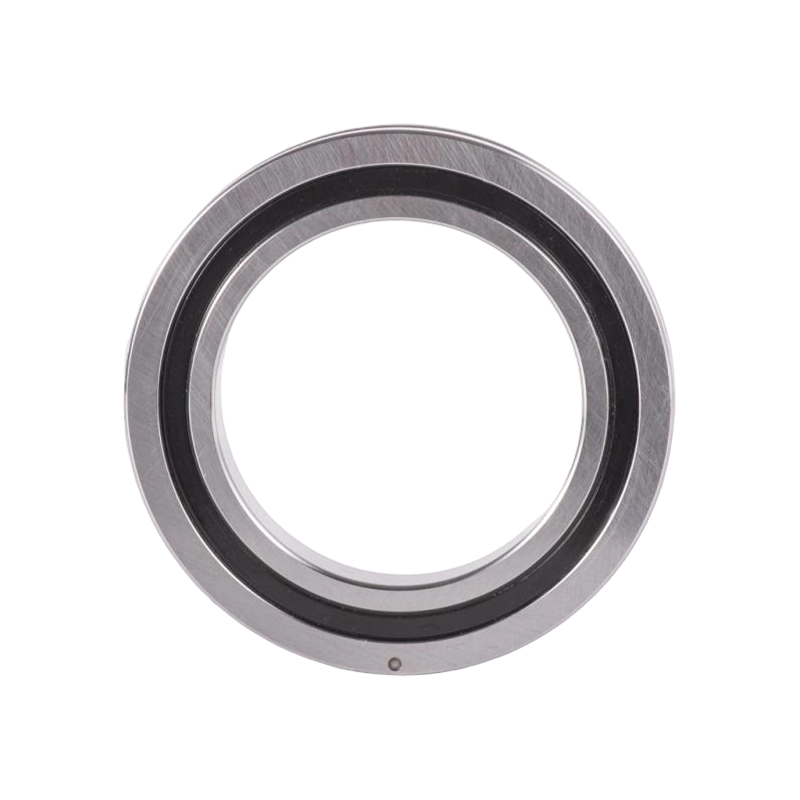
Cross roller bearings are characterized by their unique arrangement of cylindrical rollers: two rows of rollers are placed orthogonally (at 90 degrees) on V-shaped raceways, separated by nylon spacers. This configuration allows the bearing to distribute loads evenly across multiple contact points, reducing stress and extending lifespan. The design also minimizes friction, enabling smooth, low-torque rotation even under heavy loads.
Among the most widely used cross roller bearing series are the RB and RE models, each tailored to specific application needs: - RB Series: Features a split outer ring and an integrated inner ring. This design is ideal for applications requiring high rotational accuracy of the inner ring, such as indexing tables in CNC machines or robot joints. - RE Series: Often used for applications where the outer ring needs high precision, with a split inner ring and integrated outer ring (a common industry design complementing the RB series).
Key features common to both series include: - Orthogonal roller arrangement for multi-load capacity. - Nylon spacers to separate rollers, reducing friction and noise. - Compact dimensions (ultra-thin designs) that save space without compromising rigidity. - Precision grades up to P2, meeting the highest international standards for accuracy.
Cross roller bearings outperform traditional bearings (such as ball bearings or single-row roller bearings) in several critical areas:
Traditional bearings are typically optimized for either radial or axial loads, but cross roller bearings can handle all three load types (radial, axial, moment) simultaneously. For example, a robot joint requires the bearing to support the weight of the arm (radial), resist thrust from movement (axial), and withstand torque from rotational forces (moment). Cross roller bearings excel in this scenario, eliminating the need for multiple bearings and simplifying system design.
The RB and RE series achieve precision up to P2 grade, which is 2-3 times more accurate than standard P4 or P5 grades. This precision is critical in applications like precision inspection instruments or direct-drive torque motors, where even a micron of error can lead to significant performance issues. The use of high-precision grinding and digital production control ensures consistent accuracy across every unit.
The ultra-thin design of cross roller bearings (e.g., RB 2008 has a height of just 8mm) allows engineers to reduce the overall size of their systems without sacrificing performance. This is particularly valuable in robotics, where space is at a premium, and in medical devices where portability is key.
The orthogonal roller arrangement and nylon spacers reduce friction and wear, extending the bearing's lifespan. Additionally, the heat treatment processes used in manufacturing enhance the hardness of the raceways and rollers, making them resistant to fatigue and deformation even under continuous use.
Unlike many off-the-shelf bearings, cross roller bearings can be customized to meet specific client needs. This includes adjusting dimensions, precision grades, or even material compositions for specialized applications (e.g., high-temperature environments). With over 15 years of OEM/ODM experience, manufacturers can tailor bearings to unique industrial requirements.
The performance of cross roller bearings is directly tied to the manufacturing processes that produce them. A leading manufacturer integrates R&D, production, and distribution to ensure consistency and quality across every stage:
A dedicated R&D team focuses on developing high-precision cross roller bearings and dual-direction thrust angular contact ball bearings. The team uses advanced simulation tools to optimize roller arrangements, raceway designs, and material selections. This focus on innovation has led to the development of bearings that meet or exceed international standards (ISO 5593 for precision, ISO 281 for dynamic load ratings).
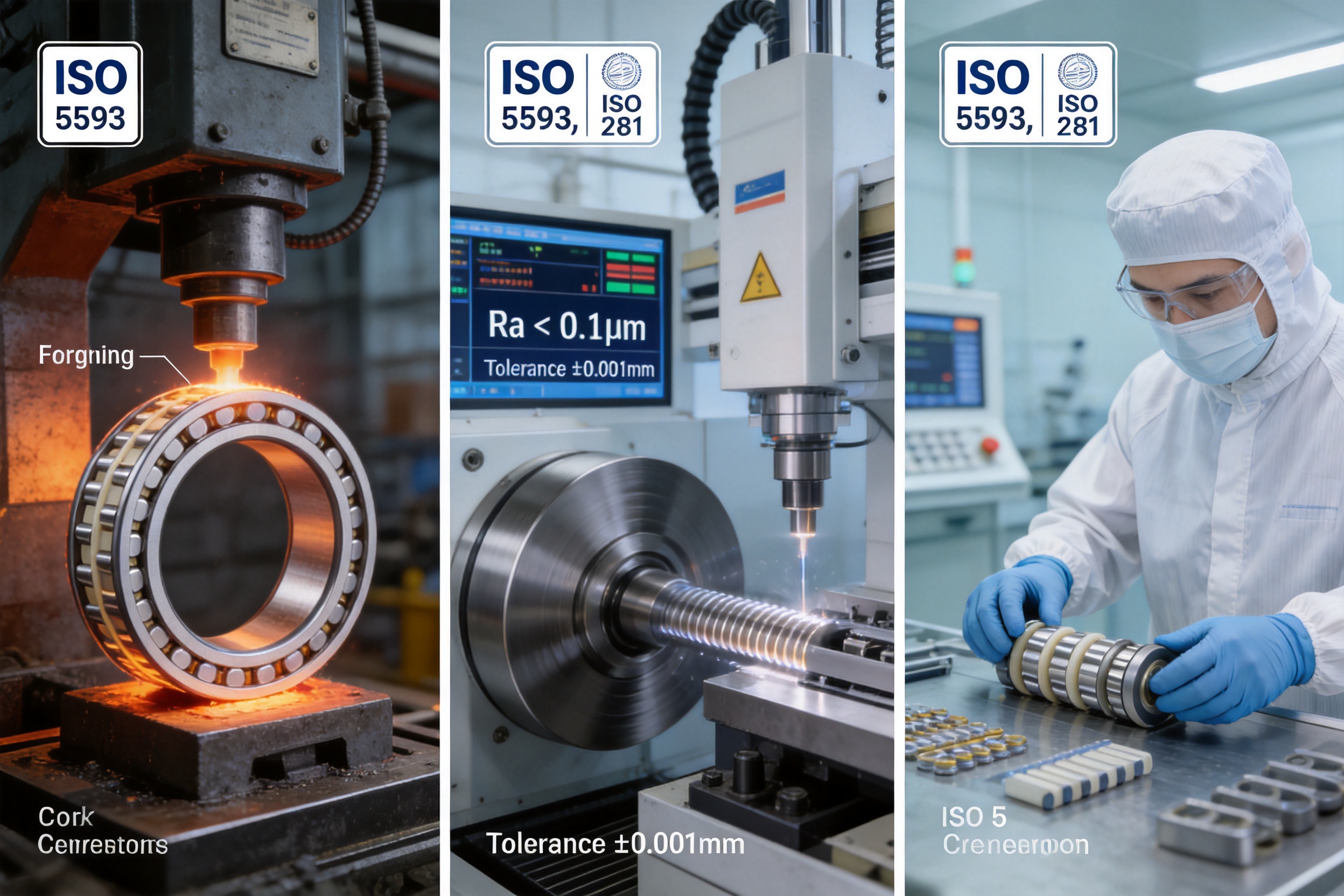
Forging is the first step in shaping the bearing rings. Modern forging lines use controlled pressure and temperature to ensure the material's integrity, reducing internal defects and increasing strength. This process also optimizes the grain flow of the metal, enhancing the bearing's fatigue resistance.
Precision turning is used to shape the inner and outer rings to exact dimensions. Computer Numerical Control (CNC) machines ensure tight tolerances, with accuracy down to 0.001mm. This step is critical for ensuring the raceways are perfectly round and aligned, which directly impacts the bearing's rotational accuracy.
Heat treatment processes (quenching and tempering) are used to harden the bearing rings and rollers. Controlled heating and cooling cycles ensure the material achieves the optimal balance of hardness and toughness. This step is essential for withstanding heavy loads and preventing wear over time.
High-precision grinding is used to finish the raceways and rollers. This process removes any remaining material to achieve the required surface finish (Ra < 0.1μm) and dimensional accuracy. Digital control systems monitor the grinding process in real time, ensuring consistency across all units.
Assembly involves placing the rollers, spacers, and rings together. Nylon spacers are used to separate the rollers, reducing friction and preventing metal-to-metal contact. The assembly process is done in a clean room environment to avoid contamination, which can affect the bearing's performance.
Every bearing undergoes rigorous quality control tests, including: - Dimensional inspection (using coordinate measuring machines). - Precision testing (to verify P2 grade accuracy). - Load testing (to ensure it meets dynamic and static load ratings). - Noise and vibration testing (to check for smooth operation).
Bearings are packaged in anti-corrosion materials to prevent rust during shipping. The manufacturer has a global distribution network, exporting to over 20 countries (including the US, Germany, Italy, and India). A multilingual service team provides technical support, installation guidance, and after-sales maintenance worldwide.
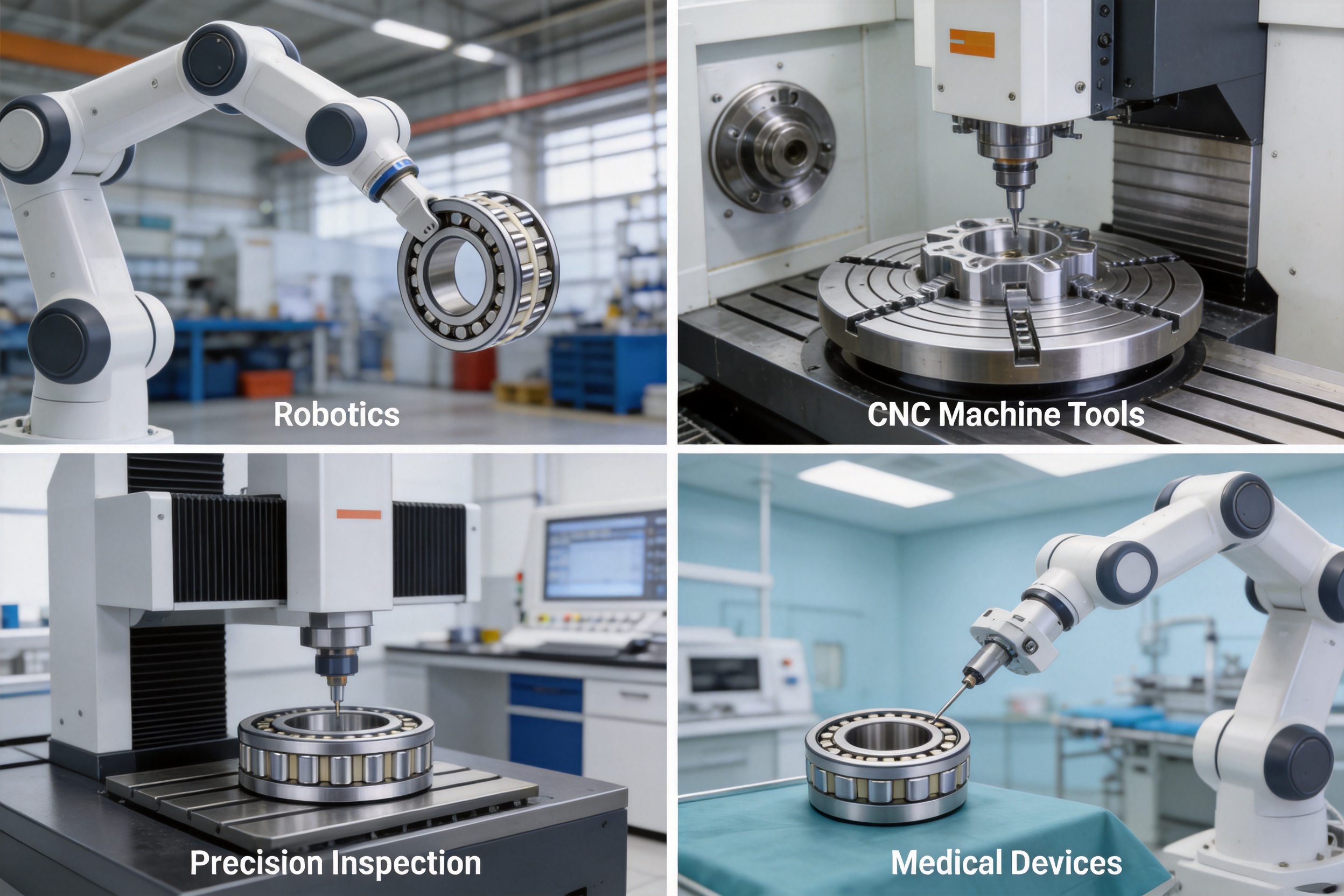
Cross roller bearings are used in a wide range of industrial applications where precision and reliability are critical:
Robot joints require bearings that can handle multi-directional loads and provide smooth, accurate rotation. The RB series is particularly popular for robot arms, as its split outer ring allows for easy installation and maintenance. For example, collaborative robots (cobots) use cross roller bearings to ensure precise movement and safety.
Indexing tables in CNC machines rely on cross roller bearings for high rotational accuracy. The RB series' integrated inner ring ensures that the table rotates with minimal error, which is essential for machining complex parts with tight tolerances.
Instruments like coordinate measuring machines (CMMs) use cross roller bearings to achieve micron-level accuracy. The low friction and high precision of these bearings ensure that the instrument can take reliable measurements.
Direct-drive motors eliminate the need for gearboxes, so they require bearings that can handle high torque and rotational speeds. Cross roller bearings are ideal for this application, as they provide high rigidity and low friction.
Medical devices like surgical robots and diagnostic equipment use cross roller bearings for their compact size and precision. The ability to customize bearings also allows manufacturers to meet the strict regulatory requirements of the medical industry.
The RB series is a popular line of cross roller bearings, with models ranging from small (RB 2008) to large (RB 13025). Below is a table of key specifications for selected RB series models:
| Bearing Type | Inner Diameter (d, mm) | Outside Diameter (D, mm) | Roller Pitch Diameter (Dpw, mm) | Height (B, mm) | Chamfer (rmin, mm) | Shoulder Size (ds, mm) | Shoulder Size (Dh, mm) | Basic Radial Load Rating (Cr, kN) | Basic Static Load Rating (Cor, kN) | Weight (kg) |
|---|---|---|---|---|---|---|---|---|---|---|
| RB 2008 | 20 | 36 | 27 | 8 | 0.5 | 23.5 | 30.5 | 3.23 | 3.1 | 0.04 |
| RB 2508 | 25 | 41 | 32 | 8 | 0.5 | 28.5 | 35.5 | 3.63 | 3.83 | 0.05 |
| RB 3010 | 30 | 55 | 41.5 | 10 | 0.6 | 37 | 47 | 7.35 | 8.36 | 0.12 |
| RB 5013 | 50 | 80 | 64 | 13 | 0.6 | 57.4 | 72 | 16.7 | 20.9 | 0.27 |
| RB 12025 | 120 | 180 | 148.7 | 25 | 1.5 | 133 | 164 | 66.9 | 100 | 2.62 |
These specifications highlight the range of sizes and load capacities available in the RB series, making it suitable for a wide variety of applications. For example, the RB 2008 is ideal for small robotic joints, while the RB 12025 is designed for heavy-duty CNC indexing tables.
A: The RB series features a split outer ring and an integrated inner ring, making it ideal for applications where the inner ring requires high rotational accuracy (e.g., robot joints). The RE series, on the other hand, has a split inner ring and an integrated outer ring, which is better suited for applications where the outer ring needs precision (e.g., large rotary tables). Both series offer multi-load capacity and high precision up to P2 grade.
A: The RB and RE series are available in precision grades up to P2, which is the highest grade for rolling bearings (per ISO 5593). This grade ensures that the bearing has minimal runout and high rotational accuracy, making it suitable for precision applications like CNC machines and inspection instruments.
A: Yes, the manufacturer offers OEM/ODM services with over 15 years of experience. Customizations can include adjusting dimensions, precision grades, material compositions (e.g., for high-temperature or corrosive environments), and even special coatings. Clients can work with the R&D team to design bearings that meet their unique needs.
A: The lifespan depends on several factors, including load, speed, operating temperature, and maintenance. Under normal operating conditions (e.g., moderate loads and clean environments), a cross roller bearing can last for thousands of hours. The manufacturer's quality control processes ensure that each bearing is designed to maximize lifespan and reliability.
A: Cross roller bearings have a higher load capacity than traditional ball bearings of the same size. This is because the orthogonal roller arrangement distributes loads over a larger contact area, reducing stress on individual components. For example, a cross roller bearing can handle up to 3-5 times more axial load than a ball bearing of similar dimensions.
A: Cross roller bearings are used in a wide range of industries, including: - Robotics (industrial and collaborative robots) - CNC machine tools (indexing tables, lathes) - Precision inspection instruments (CMMs, optical comparators) - Medical devices (surgical robots, diagnostic equipment) - Aerospace (actuators, gimbals) - Automotive (steering systems, transmission components)
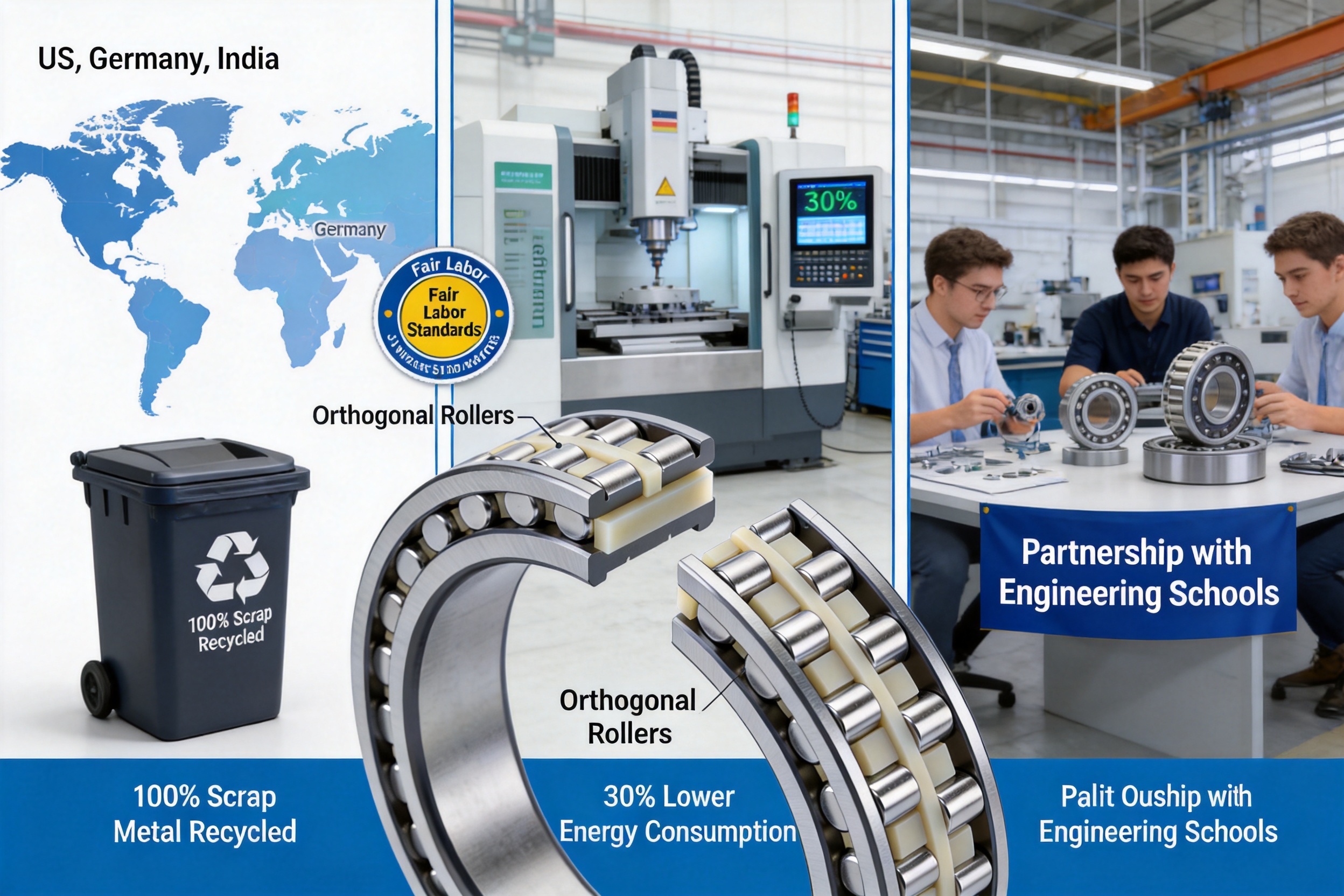
In addition to technical excellence, the manufacturer is committed to sustainability and corporate responsibility:
The manufacturer adopts environmentally friendly processes, including: - Material recycling: Scrap metal from forging and machining is recycled to reduce waste. - Energy optimization: Modern production lines use energy-efficient equipment to minimize power consumption. - Emission reduction: Heat treatment processes are equipped with emission control systems to reduce air pollution.
The company supports educational and technical training initiatives to foster future engineering talent. This includes partnerships with universities and vocational schools to provide hands-on training in bearing manufacturing and industrial engineering.
The manufacturer adheres to ethical business practices, including fair labor standards and transparent supply chain management. All suppliers are vetted to ensure they meet the company's quality and ethical standards.
Cross roller bearings are a testament to the advancements in precision engineering, offering unmatched performance in applications where accuracy, load capacity, and space efficiency are critical. The RB and RE series, with their unique design features and high-precision manufacturing, have become a preferred choice for industries ranging from robotics to CNC machine tools. The manufacturer's commitment to innovation, quality, and sustainability further enhances the value of these bearings, making them a reliable partner for global clients. As industrial systems continue to evolve, cross roller bearings will remain at the forefront of technological progress, enabling the next generation of high-performance machines.
1. ISO 5593:2019, Rolling bearings — Tolerances — Radial bearings for precision applications. 2. ISO 281:2007, Rolling bearings — Dynamic load ratings and rating life. 3. Harris, T. A., & Kotzalas, M. N. (2007). Rolling Bearing Analysis: Advanced Theory and Practice in Bearing Design, Performance, and Life. CRC Press. 4. Industrial Robotics: A Guide to Technologies and Applications (2021). International Federation of Robotics (IFR). 5. CNC Machine Tool Technology: Principles and Applications (2018). American Society of Mechanical Engineers (ASME).
Product Categories
Contact Us

Jane@ukl-bearing.com
Jenny@ukl-bearing.com
Andy@ukl-bearing.com
Ivy@ukl-bearing.com

+86-510- 88763239
+86-15371057968

No.1 Hehuan Road, Hudai Town, Binhu District, Wuxi City.
Ready to Begin?
Get in Touch

Now!
UKL BEARING
 English
 Español
 русский