Content
Flange cartridge bearing units are practical, self-aligning bearing assemblies designed to support rotating shafts while simplifying installation, maintenance, and housing integration. By combining a rigid cast iron housing, a piloted flange cartridge, and a wider inner-ring bearing insert, this type of mounted bearing offers a dependable solution for machinery that requires stable shaft support, straightforward mounting, and reliable operation in demanding industrial environments.
Among the many mounted bearing configurations available today, flange cartridge bearing units are valued for their balance of structural strength, installation convenience, adaptability, and cost efficiency. They are commonly used in conveyors, processing equipment, agricultural machinery, packaging systems, material-handling equipment, fans, pumps, automation equipment, and general industrial machinery. Their compact assembly reduces the need for separately designed housings and bearing supports, helping equipment manufacturers shorten design cycles and simplify spare-parts management.
A high-quality flange cartridge bearing unit is more than a standard bearing installed inside a housing. Its performance depends on the precision of the bearing insert, the rigidity and dimensional consistency of the housing, the accuracy of the bore and mounting surfaces, the effectiveness of the sealing arrangement, the quality of the locking system, and the compatibility of the internal lubricant with the working environment. For this reason, manufacturing capability and process control have a direct influence on service life, noise, vibration, maintenance intervals, and overall equipment reliability.
This article examines the construction, operating characteristics, advantages, manufacturing processes, customization potential, applications, installation practices, maintenance requirements, and selection considerations associated with flange cartridge bearing units. It also explains how an integrated bearing manufacturer can add value through engineering support, process control, production flexibility, and international technical service.
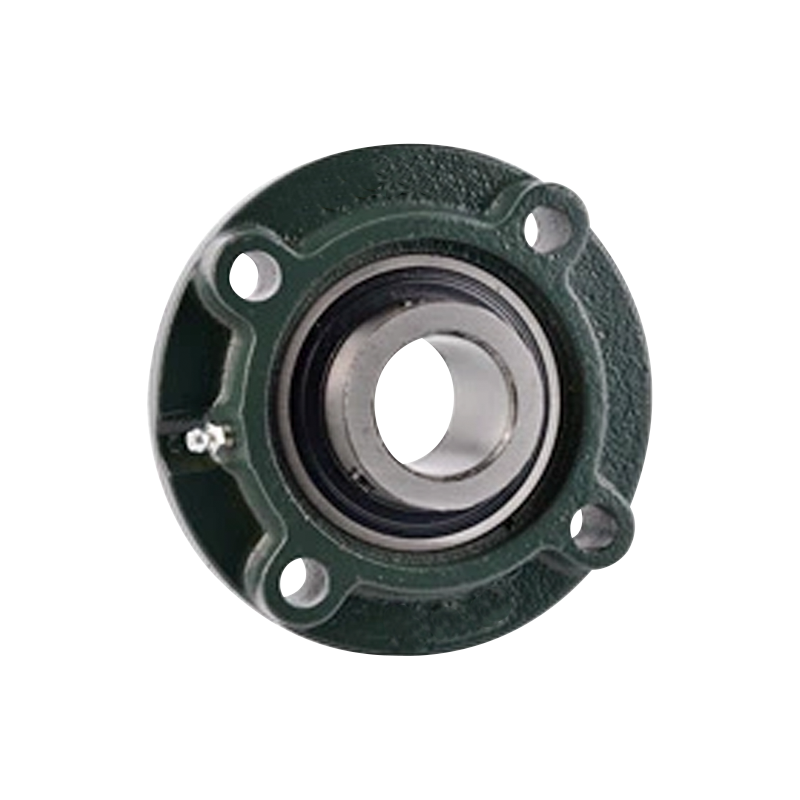
Flange Cartridge Bearing Units
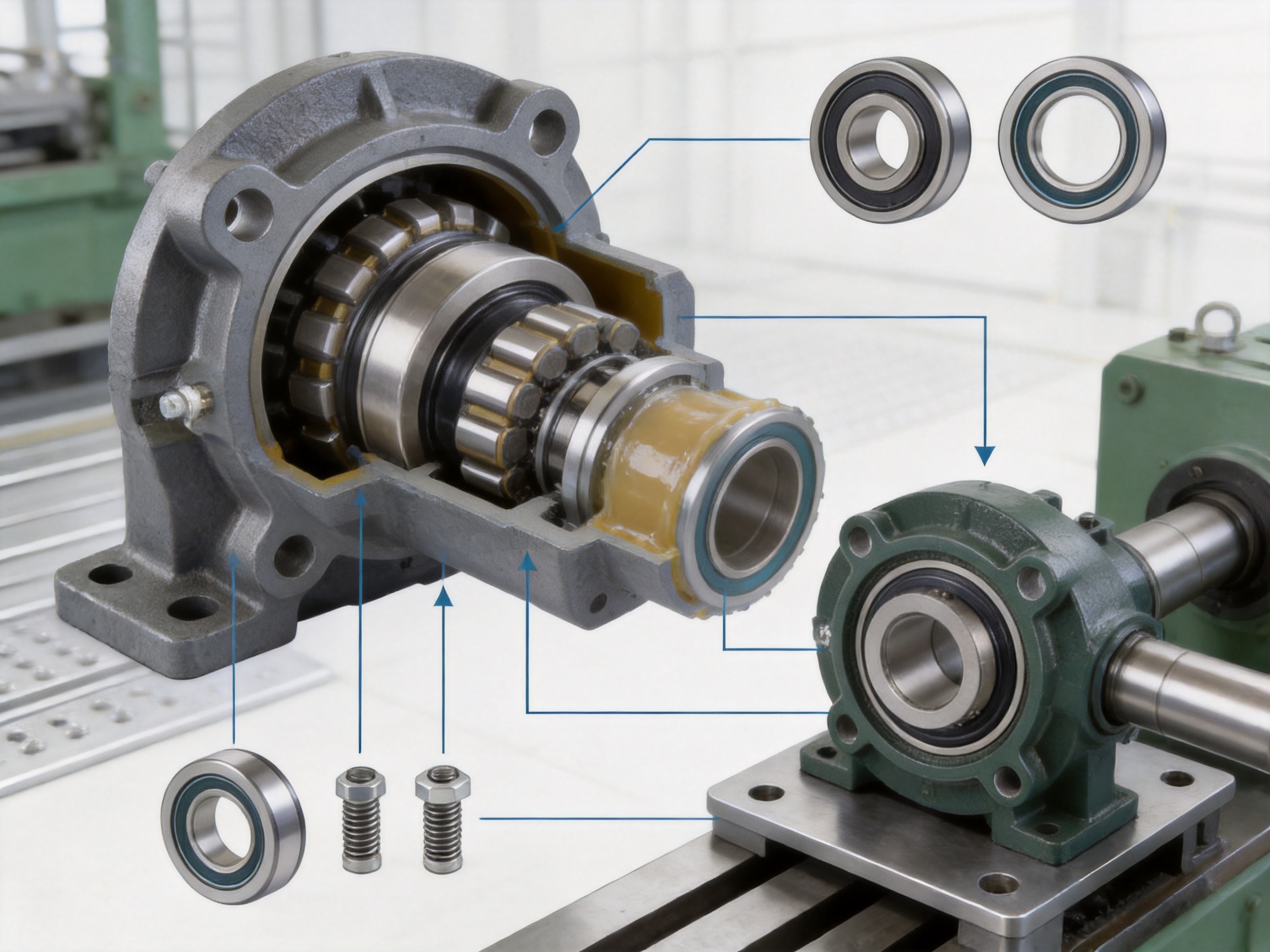
A flange cartridge bearing unit generally consists of four principal elements: a cast iron housing, a piloted cartridge section, a bearing insert, and a shaft-locking arrangement. Depending on the application, end caps, sealing components, grease fittings, protective covers, and special surface treatments may also be included.
The housing provides the structural connection between the bearing and the machine frame. Gray cast iron is widely selected because it offers a useful combination of rigidity, vibration-damping capacity, machinability, and cost effectiveness. A rigid housing helps maintain the position of the bearing under radial loads and reduces the risk of distortion during operation.
The housing must be manufactured with accurate mounting faces and controlled dimensional tolerances. If the mounting surface is uneven or the housing is improperly aligned, excessive stress may be transferred to the bearing insert. Precision machining of the housing therefore contributes to smoother running, more stable load distribution, and longer bearing life.
The piloted flange cartridge enables the unit to be accurately located in a machine structure or support plate. Instead of relying only on bolts for positioning, the pilot helps center the assembly and improves repeatability during installation or replacement. This feature is particularly useful where several bearing units must be aligned along a common shaft.
A well-designed pilot also reduces the possibility of lateral movement caused by vibration, cyclic loading, or thermal changes. In equipment where shaft alignment is critical, the piloted design can provide an additional layer of positional control compared with simple non-piloted mounting arrangements.
The bearing insert normally includes a wider inner ring than a standard deep-groove ball bearing. The extended inner ring provides additional support around the shaft and creates space for a reliable locking system. It can also improve the connection between the rotating shaft and the bearing assembly when the shaft is exposed to vibration, reversing loads, or moderate shock.
Insert bearings used in these units are generally self-aligning within a limited range. This ability helps compensate for slight static misalignment between the shaft and housing. It should not be treated as a substitute for correct machine alignment, but it can reduce the negative effects of small installation inaccuracies and structural deflections.
Several locking methods may be used, including setscrews, eccentric locking collars, adapter sleeves, and concentric locking collars. Setscrew locking is common in standard-duty applications because it is simple, economical, and easy to install. The screws press against the shaft and secure the inner ring in the required position.
Eccentric collars can provide strong locking action by using the rotation of the collar to increase contact between the inner ring and shaft. Adapter sleeves are useful where a bearing must be mounted on a larger or specially prepared shaft. Concentric locking collars can be selected when balanced rotation, accurate positioning, and reduced shaft marking are important.
Sealing components help prevent the entry of dust, moisture, process residue, and other external contaminants. Pressed-steel end caps may be used to protect exposed portions of the bearing assembly from external pollution and dust. The most suitable protection depends on shaft speed, operating temperature, contamination level, washdown conditions, and the need for frequent relubrication.
Although a seal or end cap cannot eliminate every environmental risk, it can significantly reduce contamination-related wear. Keeping abrasive particles away from the rolling elements and raceways is particularly important because even small particles can create indentation, noise, increased friction, and premature fatigue.
The UCFC configuration is commonly associated with flange cartridge bearing units designed for standard-duty applications. The standard arrangement combines a flange-mounted cast iron housing with a wider inner-ring insert bearing and setscrew locking. This configuration is suitable for a broad range of machinery where moderate loads, conventional speeds, and general industrial conditions are expected.
Standard-duty versions are often manufactured using FC200-grade gray cast iron or an equivalent housing material selected for strength, machinability, and vibration absorption. Medium-duty versions, such as FCX configurations, may be chosen where the application requires additional structural capacity or a more robust housing design.
Exterior painting is typically provided in green as a standard finish, while alternative colors can be supplied for equipment identification, customer branding, corrosion-control programs, or visual coordination with a complete machine. Paint does not replace proper material selection or corrosion protection, but it can improve surface protection and contribute to a clean, professional appearance.
| Component | Typical function | Important selection factor |
|---|---|---|
| Cast iron housing | Supports and locates the bearing insert | Rigidity, dimensional accuracy, mounting geometry |
| Piloted flange | Centers the unit in the machine structure | Pilot diameter, fit, face accuracy |
| Wider inner ring | Supports the shaft and accommodates locking hardware | Bore size, width, shaft tolerance |
| Setscrew or collar | Secures the bearing to the shaft | Holding force, installation method, service conditions |
| Seal or end cap | Limits contamination entry | Dust, moisture, speed, temperature, washdown exposure |
| Internal grease | Reduces friction and protects rolling contacts | Temperature range, load, speed, food or chemical compatibility |
Flange cartridge bearing units offer several practical advantages over a loose bearing-and-housing arrangement. Their principal value comes from integration: the bearing, housing, locking mechanism, and protective features are supplied as a coordinated unit. This reduces the number of individual components that the machine designer and maintenance team must select, assemble, align, and stock.
The integrated housing allows the unit to be bolted directly to a suitable machine plate or support structure. Installation is generally faster than fitting a separate bearing into a custom-machined housing. The piloted flange can help locate the unit, while the setscrew or collar secures it to the shaft.
Faster installation can reduce assembly labor and equipment downtime. It also decreases the risk that a maintenance technician will combine incompatible parts, such as a bearing with an unsuitable housing bore or an incorrect locking component.
The self-aligning capability of the bearing insert can compensate for slight static misalignment between the shaft and housing. This is beneficial in fabricated frames, welded structures, conveyors, and other equipment where small deviations can occur during manufacturing or assembly.
The degree of permissible misalignment depends on the specific bearing design, seal arrangement, load, speed, and manufacturer’s specifications. Excessive angular displacement can increase internal stress and reduce operating life. The self-aligning function should therefore complement, rather than replace, careful alignment procedures.
A wider inner ring provides a stable platform for the locking system. Setscrews are convenient and economical, while eccentric or concentric collars can be selected when a different balance of holding force, shaft protection, and installation precision is required.
Correct locking is essential. A bearing that is insufficiently secured may creep on the shaft, generate heat, damage the shaft surface, and create vibration. A bearing that is excessively tightened may experience distortion or localized stress. Proper torque, shaft preparation, and installation sequence are therefore important to achieving the intended performance.
Cast iron housings provide a strong support structure for radial loading and help damp vibration. Compared with lighter stamped housings, a rigid cast housing may offer better stability in applications subject to continuous operation, moderate shock, or fluctuating loads.
The housing design can also influence the distribution of forces through the machine frame. A properly supported flange unit helps keep the shaft centerline stable and reduces deflection that could otherwise affect seals, couplings, sprockets, pulleys, and other rotating components.
Seals and pressed-steel end caps provide protection against ordinary dust and external pollution. This can be a significant advantage in agricultural machinery, conveying equipment, packaging lines, and general factories where airborne particles are present.
For highly contaminated, wet, corrosive, or hygienically controlled environments, the standard configuration should be reviewed carefully. Specialized sealing, stainless materials, food-grade grease, or alternative housing materials may be necessary. The correct product is determined by the complete operating environment rather than by load capacity alone.
Standard grease is suitable for many general industrial applications. Low-temperature grease can support operation in cold environments, while high-temperature grease is appropriate for equipment exposed to elevated temperatures within the limits of the bearing and seal materials. Food-grade grease may be selected for machinery used in food-processing environments where incidental contact requirements must be considered.
Grease selection should account for temperature, speed, load, moisture, chemical exposure, relubrication frequency, and compatibility with the original lubricant. Mixing incompatible greases can reduce lubrication performance, so maintenance teams should follow a documented lubrication plan.
Although a flange cartridge bearing unit can be robust and versatile, its service life depends on a combination of mechanical, environmental, and maintenance factors. Bearing selection should begin with an understanding of the actual operating conditions rather than simply matching the shaft diameter.
Radial load is usually the primary load supported by a mounted insert bearing. However, axial load, moment load, belt tension, chain pull, impact, and vibration may also affect the assembly. The housing, bearing insert, shaft, and mounting bolts must be evaluated as a complete system.
Where loads are intermittent or impact-heavy, a medium-duty housing may provide a better margin than a standard-duty version. Load direction should also be reviewed because the most favorable orientation for the housing and locking system may depend on the direction of rotation and force.
Speed affects heat generation, grease life, seal performance, and dynamic stability. Higher speeds may require a specific internal clearance, lubricant, seal design, or balancing consideration. The maximum permissible speed should be confirmed for the exact bearing insert and operating temperature.
Speed changes can also influence vibration behavior. A unit that performs well at a steady moderate speed may require additional analysis when acceleration, frequent starts and stops, or variable-speed operation are introduced.
The shaft must have the appropriate diameter, roundness, straightness, hardness, and surface condition. Burrs, scale, excessive roughness, paint, or corrosion can interfere with the bearing’s seating and locking action. A poorly prepared shaft can cause slippage, uneven contact, and premature wear.
For setscrew locking, the shaft surface should be clean and free from oil at the locking locations unless the installation procedure specifies otherwise. The shaft should not be so soft that the screw causes unacceptable deformation, nor so hard that the screw cannot establish reliable contact.
The supporting structure should be rigid, flat, and capable of maintaining alignment under operating loads. Weld distortion, irregular paint buildup, burrs, and damaged mounting holes can prevent the flange from seating correctly.
When two or more bearing units support the same shaft, their centerlines should be aligned carefully. The self-aligning insert can accommodate minor errors, but large errors may create internal loading, seal wear, and increased friction. Alignment should be checked after bolting and again after the shaft and connected equipment have been installed.
Temperature affects lubricant viscosity, seal elasticity, housing dimensions, shaft expansion, and internal bearing clearance. If the shaft becomes substantially hotter than the housing, axial expansion may place additional load on the bearing system unless the design allows for it.
High-temperature applications may require special grease, seals, internal clearances, and housing arrangements. Low-temperature operation may increase starting torque and reduce lubricant flow. The operating temperature range should therefore be specified at the design stage.
Dust, abrasive powder, water, chemicals, and process residues are common causes of bearing failure. A seal may protect against ordinary contamination, but severe conditions may require additional shields, covers, labyrinth arrangements, or a different bearing material.
Washdown applications deserve particular attention. Repeated exposure to pressurized water can force contaminants past seals and may cause corrosion if moisture remains trapped in the housing area. In such cases, corrosion-resistant components, suitable grease, and a controlled cleaning procedure should be considered.
The quality of a flange cartridge bearing unit is established through a sequence of controlled manufacturing operations. An integrated manufacturing company with capabilities covering forging, turning, heat treatment, grinding, assembly, and packaging can coordinate these steps more effectively than a fragmented supply chain.
Rings and other bearing components require materials with suitable fatigue strength, dimensional stability, hardness response, and cleanliness. Forging can produce a favorable grain flow and efficient material utilization for ring blanks and related components. The forging process must be controlled to achieve consistent geometry and avoid defects that could affect later machining or fatigue performance.
Material certification, incoming inspection, heat analysis, and traceability provide a foundation for quality control. Consistent raw material is particularly important when products are supplied in repeated batches for original equipment manufacturing programs.
Turning operations establish the basic geometry of rings, housings, collars, and other components. Computer-controlled equipment can maintain repeatable dimensions and reduce variation between production lots. Proper tooling management and in-process measurement are essential for controlling bore diameters, outside diameters, widths, shoulders, and reference surfaces.
For cast iron housings, machining must account for casting quality, dimensional allowance, and the relationship between the mounting face, pilot, and bearing seat. A housing that is dimensionally correct in isolation may still create problems if its functional surfaces are not concentric and perpendicular.
Heat treatment develops the hardness and structural properties required for rolling-contact components. The process may include heating, quenching, tempering, or other controlled cycles selected for the material and product design.
Uniform heat treatment is important because excessive hardness variation can affect wear resistance, toughness, dimensional stability, and fatigue life. Process records, temperature monitoring, hardness testing, and metallurgical verification help confirm that components meet the required specifications.
Grinding refines the dimensional accuracy and surface finish of raceways, bores, and other critical surfaces. Rolling elements require carefully controlled geometry and surface quality because roughness, waviness, or form errors can increase noise, friction, and localized stress.
Grinding processes must be monitored to prevent thermal damage, grinding burns, and unwanted residual stresses. Precision measurement of roundness, diameter, profile, and surface finish helps ensure that the assembled bearing can rotate smoothly and carry loads consistently.
During assembly, rings, rolling elements, cages, seals, and lubricant are combined according to the product design. Cleanliness is essential because particles introduced during assembly can become a source of premature wear or noise.
Assembly control includes inspection of internal clearance, rotation torque, seal seating, locking components, grease quantity, and visual condition. Automated or semi-automated equipment can improve repeatability, while trained technicians provide judgment for unusual configurations and customized orders.
Cast iron housings are produced through controlled casting, cleaning, machining, inspection, and finishing operations. The mounting face and pilot must be accurately formed, and the bearing seat must provide the correct fit for the insert.
After machining and inspection, the housing may receive cleaning, painting, marking, and protective treatment. Standard green painting can be applied for general supply, while other colors may be available for customer requirements. Coating quality should be checked for adhesion, coverage, and protection of machined functional surfaces.
Packaging protects the units from impact, moisture, contamination, and corrosion during storage and transportation. Correct labeling should identify the product type, bore designation, production information, quantity, and handling requirements.
Traceability connects the finished unit to material batches, machining operations, heat treatment records, inspection results, and packaging documentation. This supports quality investigations, repeat orders, and reliable after-sales service.
A dedicated research and development team can support product improvement beyond standard catalog configurations. Engineering work may involve housing geometry, internal bearing design, sealing systems, lubrication, dimensional adaptation, or application-specific locking methods.
Experience with cross roller bearings, dual-direction thrust angular contact ball bearings, and other precision products can strengthen a manufacturer’s understanding of demanding applications in robotics, CNC machinery, automation, and intelligent manufacturing. That knowledge can be valuable when a mounted bearing must operate alongside high-precision motion systems.
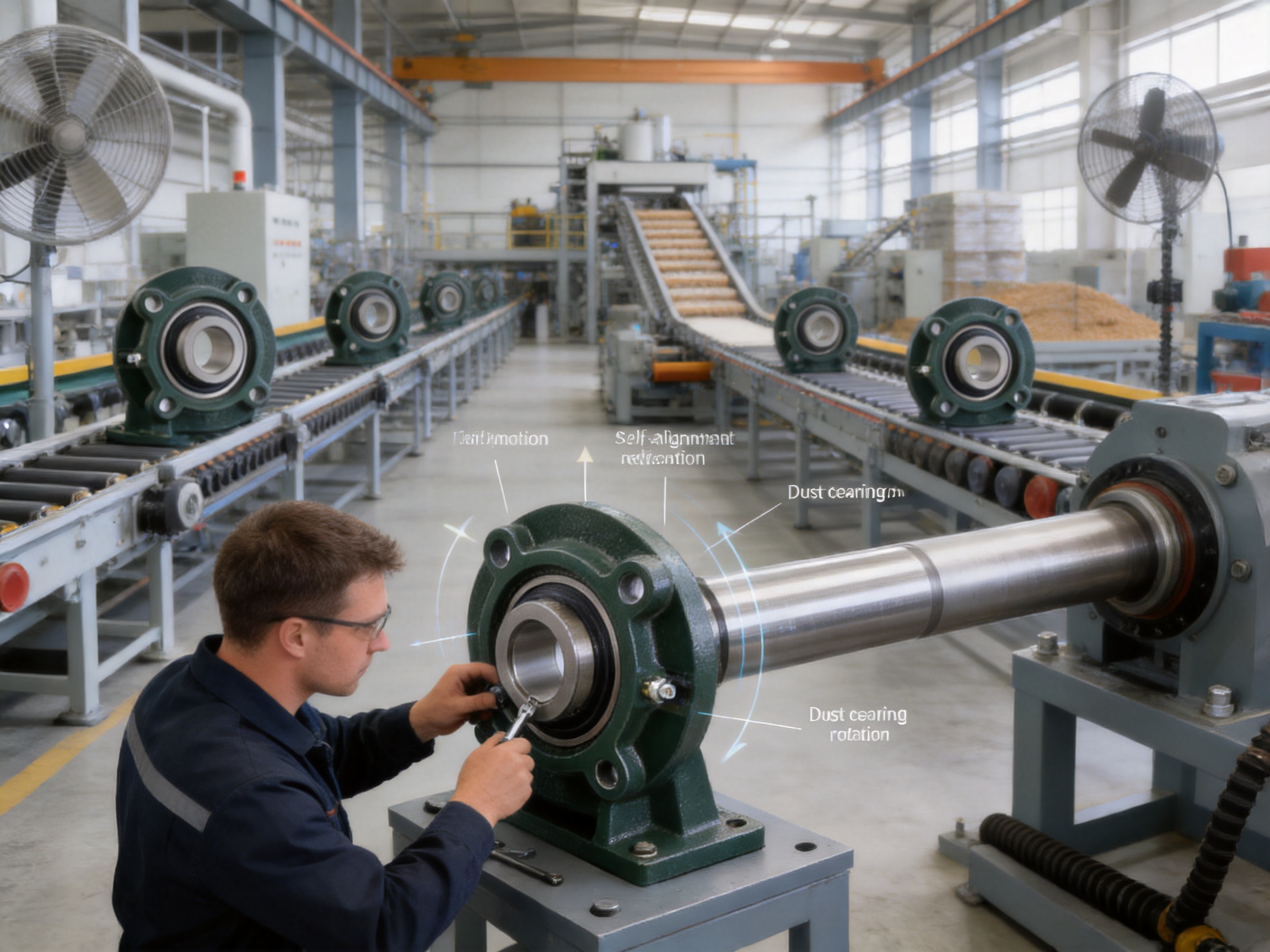
An integrated bearing supplier can offer advantages in coordination, responsiveness, and customization. When research, production, inspection, packaging, and international distribution are managed within one organization, engineering information can move more quickly from customer inquiry to finished product.
A reported production capacity of approximately 10,000 to 50,000 units per month allows the supplier to support both recurring OEM programs and replacement-market demand. Capacity alone does not guarantee quality, but adequate production resources can improve delivery planning, reduce interruptions, and support multiple product families.
Production lines covering forging, turning, heat treatment, grinding, assembly, and packaging provide greater control over the critical stages of bearing manufacturing. They also make it easier to investigate quality issues because process information is available across the product’s manufacturing history.
For OEM customers, this integrated structure can support drawing review, prototype development, sample approval, production scheduling, inspection documentation, packaging customization, and repeat-order management. It can also simplify communication when changes are required to the housing, grease, color, seal, locking method, or labeling.
Flange cartridge bearing units are used in machinery exported and operated in many different regions. A supplier serving customers in Europe, Asia, Africa, Russia, North America, and other markets must understand differences in technical documentation, packaging expectations, operating environments, and service practices.
Multilingual technical service can help customers select the correct unit, confirm dimensions, understand installation procedures, and resolve maintenance questions. Rapid technical response is especially important when a bearing failure interrupts a production line or when a replacement must be matched to an existing shaft and housing arrangement.
International experience also encourages consistent documentation. Product drawings, inspection reports, packing lists, certificates, maintenance instructions, and technical quotations should be clear enough for purchasing departments, engineers, maintenance personnel, and distributors to use effectively.
Standard UCFC configurations cover many general applications, but specialized equipment may require adjustments. Customization may include non-standard bore dimensions, alternative housing materials, different paint colors, modified mounting geometry, special end caps, customized grease, altered seals, private labeling, or packaging designed for a specific distribution network.
Customization should begin with a technical review. The manufacturer should evaluate load, speed, shaft size, environment, temperature, expected life, mounting constraints, and production volume before recommending a change. A modification that appears minor, such as changing the seal or grease, can affect friction, speed capability, temperature limits, and maintenance intervals.
Prototype evaluation and sample testing are useful for validating customized designs. Depending on the application, testing may include dimensional inspection, rotation testing, noise and vibration measurement, load testing, grease compatibility checks, environmental exposure, and endurance testing.
Lubrication reduces friction between rolling elements, raceways, cage components, and seal interfaces. It also helps protect metallic surfaces against corrosion and carries heat away from the rolling contacts. The choice of grease should reflect actual operating conditions rather than relying on a general-purpose product for every application.
Standard industrial grease is appropriate for many moderate-temperature applications with ordinary speed and load conditions. It is commonly used in conveyors, fans, agricultural machinery, processing equipment, and general factory equipment.
Low-temperature grease is formulated to remain workable when ambient temperatures fall significantly. Without suitable lubrication, starting torque may increase and the bearing may experience inadequate lubricant flow. Cold-storage equipment, outdoor machinery, and equipment used in winter climates may require this option.
High-temperature grease can retain more stable properties when the bearing operates near elevated temperatures. It must be selected together with compatible seals and bearing materials. A high-temperature grease cannot compensate for excessive load, inadequate clearance, poor alignment, or temperatures beyond the design limit.
Food-grade grease may be selected for equipment used in food-processing or packaging environments where incidental contact requirements apply. The complete bearing unit, including seals, housing finish, cleaning method, and surrounding machine design, should be reviewed to ensure that the assembly meets the relevant hygiene requirements.
Relubrication intervals depend on speed, load, temperature, contamination, grease type, and seal design. Adding too much grease can be as harmful as adding too little because overgreasing may increase temperature and churning losses. Maintenance personnel should follow a measured lubrication schedule and use clean equipment.
Before adding grease, the fitting and surrounding area should be cleaned. Contaminated grease guns or dirty fittings can introduce abrasive particles into the bearing. If the bearing shows unusual noise, temperature rise, vibration, or grease discoloration, the cause should be investigated instead of simply adding more lubricant.
Correct installation helps the flange cartridge bearing unit deliver its intended service life. Before installation, verify the bearing designation, bore size, housing type, shaft diameter, locking arrangement, and mounting dimensions.
Inspect the shaft for burrs, corrosion, dirt, and damage. Clean the shaft and mounting surface, and confirm that the support plate is flat and rigid. Do not hammer directly on the housing, seal, or bearing rings. If force is necessary, it should be applied through suitable tools and to the correct component.
Position the unit on the shaft and align the flange with the mounting holes. Tighten the mounting bolts gradually and in a crosswise sequence where appropriate. This helps the housing seat evenly and reduces the chance of distortion.
After the unit is mounted, rotate the shaft by hand if possible. It should turn smoothly without binding or abnormal resistance. Align the shaft with adjacent bearings, couplings, pulleys, sprockets, and other components. Once alignment is confirmed, tighten the locking screws or collar according to the recommended sequence and torque.
After startup, monitor temperature, noise, vibration, and shaft behavior. A short observation period can identify loose hardware, misalignment, insufficient lubrication, seal interference, or shaft slippage before serious damage occurs.
Conveyors use mounted bearing units to support rollers, pulleys, drive shafts, and tensioning components. Flange cartridge units are useful where the bearing must be attached to a side plate or support structure. Their integrated design can simplify replacement and help maintain shaft positioning.
Packaging lines often require compact, clean, and serviceable bearing arrangements. Flange-mounted units may be used in feed mechanisms, rollers, indexing devices, and material-handling sections. Grease and sealing options should be selected according to the product environment and cleaning requirements.
Agricultural machinery operates in the presence of dust, soil, vibration, changing temperatures, and intermittent shock. Cast iron housings, protective seals, and reliable shaft locking can make flange cartridge bearing units suitable for many agricultural mechanisms, provided that the load and contamination conditions are properly evaluated.
Fans and blowers require stable shaft support and controlled vibration. The bearing unit should be selected according to speed, rotor balance, temperature, belt tension, and expected operating hours. Proper alignment is especially important because fan systems can amplify vibration when bearing supports are not positioned correctly.
Processing equipment may require food-grade grease, special coatings, improved sealing, or corrosion-resistant components. The standard cast iron configuration can be considered for dry and controlled areas, while wet or hygiene-sensitive zones may call for a customized product design.
Automation equipment benefits from repeatable mounting dimensions, stable shaft support, and predictable maintenance. Although high-precision robotic axes may require specialized bearing types, flange cartridge units can be valuable in auxiliary drives, conveyors, transfer systems, guarding mechanisms, and general material-handling modules.
The best bearing arrangement depends on the machine design. Flange cartridge units are not automatically superior in every application, but they offer a strong combination of features for many general industrial systems.
| Solution | Typical advantage | Potential limitation | When a flange cartridge unit may be preferred |
|---|---|---|---|
| Flange cartridge bearing unit | Integrated housing, piloted mounting, simple replacement | Usually intended for moderate loads and defined alignment limits | When a compact flange-mounted, self-aligning support is required |
| Pillow block unit | Convenient base mounting and common availability | Requires horizontal support space and different mounting geometry | When side or flange mounting is more practical than base mounting |
| Separate bearing and machined housing | High design flexibility and specialized geometry | Higher engineering, machining, and assembly requirements | When the machine requires a fully custom housing or high-load arrangement |
| Stamped housing unit | Low weight and economical construction | Less rigidity and lower resistance to severe structural loads | When cast housing rigidity and vibration damping are valuable |
| Flanged plain bearing | Simple construction and suitability for oscillating motion | Different friction, speed, and lubrication behavior | When continuous rolling motion and reduced friction are required |
Compared with separate components, the integrated flange cartridge design can reduce procurement complexity and assembly time. Compared with lighter stamped housings, cast iron may provide greater rigidity and vibration damping. Compared with a fully customized housing, a standardized unit can reduce development cost and improve replacement availability.
Responsible manufacturing is increasingly important to industrial customers. Efficient use of materials, energy optimization, recycling, waste reduction, and durable product design can reduce the environmental impact associated with bearing production and equipment maintenance.
Longer bearing service life also supports sustainability because fewer replacements mean reduced material consumption, packaging, transportation, and downtime. A bearing that is correctly selected, lubricated, sealed, and maintained can contribute to more efficient operation of the machine in which it is installed.
Cast iron housings can be recycled at the end of their service life, while process control can reduce machining waste and rejected components. Energy-efficient equipment, responsible coolant management, and controlled heat-treatment operations can further improve manufacturing performance.
Technical training is another part of responsible industrial development. Educating engineers, technicians, and maintenance teams about alignment, lubrication, inspection, and safe installation helps prevent avoidable failures and supports the productive use of machinery throughout its operating life.
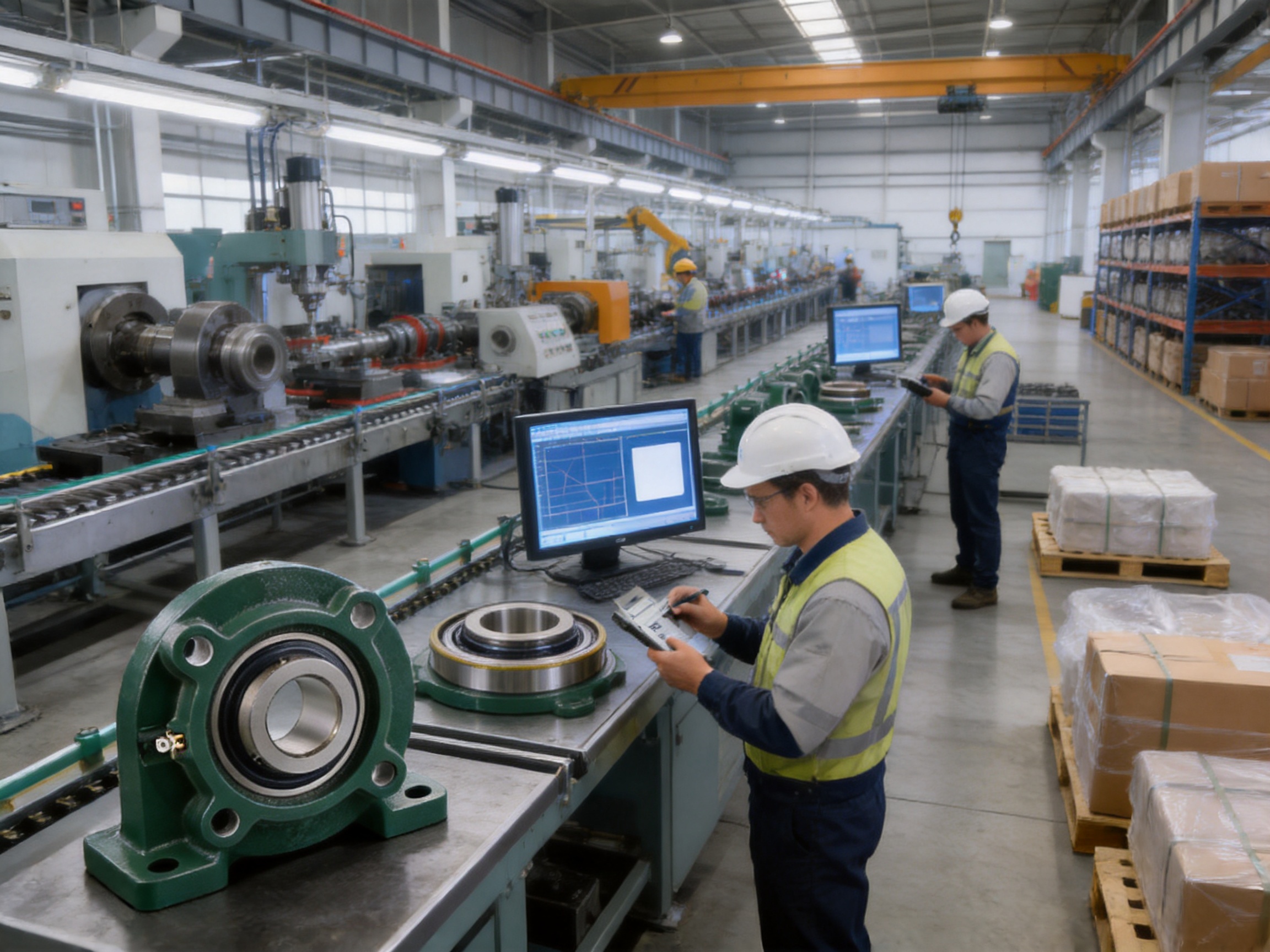
Before ordering a flange cartridge bearing unit, the buyer should prepare accurate application information. This allows the manufacturer to recommend the correct standard configuration or identify the need for customization.
Shaft diameter and shaft tolerance.
Required flange dimensions and mounting-hole arrangement.
Radial load, axial load, impact load, and belt or chain tension.
Operating speed, acceleration, and duty cycle.
Ambient and bearing operating temperature.
Dust, water, chemicals, washdown, and other contamination risks.
Required seal or end-cap arrangement.
Preferred locking method, such as setscrew, eccentric collar, adapter sleeve, or concentric collar.
Lubricant requirements, including standard, low-temperature, high-temperature, or food-grade grease.
Standard green paint or an alternative color and surface finish.
Expected service life and maintenance interval.
Required inspection documents, packaging, labeling, and delivery schedule.
Providing complete information at the quotation stage helps avoid incorrect substitutions and supports more accurate engineering review. Photographs, drawings, operating data, failure reports, and samples of existing units can be useful when replacing a bearing in an established machine.
For distributors and equipment manufacturers, the supplier relationship can be as important as the product specification. A dependable bearing manufacturer should offer consistent dimensions, stable quality, responsive communication, reasonable lead times, and technical support after delivery.
An organization combining R&D, production, international distribution, and after-sales service can provide a more complete customer experience. Instead of treating the flange cartridge unit as an isolated commodity, the supplier can help integrate it into the machine’s shaft, housing, lubrication, maintenance, and replacement strategy.
For OEM and ODM projects, manufacturing experience is especially valuable. The supplier may assist with initial drawings, product selection, pilot samples, testing, batch approval, and production scaling. This can reduce design risk and make it easier to maintain consistency across different machine models or export markets.
Quality should remain measurable. Customers may request dimensional reports, material information, hardness data, inspection records, rotation checks, grease details, or traceability documentation. Clear records promote confidence and make it easier to compare shipments over time.
A flange cartridge bearing unit is a mounted bearing assembly consisting of a flange-style housing, a piloted cartridge section, and a bearing insert with an extended inner ring. The unit is attached to a machine structure by its flange and secured to a shaft using a locking system such as setscrews or an eccentric collar.
The pilot helps locate and center the bearing housing in the machine support. It improves mounting repeatability and can reduce movement caused by vibration or fluctuating loads. The pilot does not eliminate the need for correct alignment and a rigid mounting surface.
The wider inner ring provides additional shaft support and creates space for the locking arrangement. It can improve shaft retention and help the bearing remain stable under vibration or moderate reversing loads.
The insert bearing can compensate for slight static misalignment between the shaft and housing. The allowable amount depends on the specific design and operating conditions. Significant misalignment should be corrected through proper machine alignment rather than relying on the self-aligning feature.
Standard-duty units are intended for common industrial loads and operating conditions. Medium-duty versions generally provide a more robust housing or greater structural capacity for applications involving higher loads, vibration, or demanding support conditions. The exact difference should be confirmed from the product drawing and technical data.
Green is commonly supplied as a standard paint color, while other colors may be available for customer requirements. Color selection may support machine appearance, product identification, corrosion-protection programs, or private-label projects.
Setscrews are convenient for many general applications. Eccentric collars can provide effective locking through a collar mechanism, while adapter sleeves are useful for particular shaft arrangements. Concentric collars may be selected when balanced rotation and accurate positioning are important. Load direction, speed, shaft condition, maintenance practice, and installation space should all be considered.
Standard grease suits many normal industrial applications. Low-temperature, high-temperature, or food-grade grease can be selected when the operating environment requires it. Grease compatibility, temperature limits, speed, load, and seal materials should be reviewed before changing lubricant.
Seals and pressed-steel end caps provide protection against ordinary dust and external pollution. Severe moisture, abrasive dust, chemical exposure, or washdown conditions may require special seals, corrosion-resistant materials, alternative grease, protective covers, or a customized configuration.
Maintenance should include periodic checks of temperature, noise, vibration, locking hardware, mounting bolts, seals, shaft condition, and lubrication. The inspection interval should reflect the application’s speed, load, contamination, duty cycle, and consequences of failure.
Customization may be possible for dimensions, housing design, grease, seals, end caps, paint, labeling, packaging, and locking arrangements. A technical review is required to confirm that the requested changes are compatible with load, speed, temperature, and production requirements.
Useful information includes shaft diameter, load, speed, temperature, environment, mounting dimensions, locking preference, quantity, operating hours, lubricant requirements, and any available drawing or sample. Complete information improves selection accuracy and reduces the risk of receiving an unsuitable replacement.
Flange cartridge bearing units provide a practical and adaptable method of supporting rotating shafts in a wide range of industrial equipment. Their integrated cast iron housing, piloted flange, wider inner-ring insert, self-aligning capability, shaft-locking options, protective end features, and flexible lubrication choices make them suitable for many standard and medium-duty applications.
Their advantages are strongest when the unit is correctly matched to the shaft, load, speed, environment, and mounting structure. A reliable product must combine accurate bearing components with a rigid and precisely machined housing, effective seals, suitable grease, and a locking system appropriate for the shaft and operating conditions.
Manufacturing capability plays a decisive role in achieving this balance. Processes covering forging, turning, heat treatment, grinding, assembly, inspection, and packaging create opportunities for comprehensive quality control. Research and development expertise, production capacity, customization support, and international technical service further increase the value of a long-term manufacturing partnership.
For equipment builders, distributors, and maintenance departments, the right flange cartridge bearing unit can reduce installation complexity, improve serviceability, support stable machine operation, and simplify inventory management. With careful engineering selection, controlled manufacturing, correct installation, and disciplined maintenance, these units can deliver dependable performance across conveyors, packaging lines, agricultural machinery, fans, processing systems, automation equipment, and many other industrial applications.
1. General principles of rolling bearing selection, load rating, service life, and lubrication.
2. Industrial guidance on mounted bearing units, housing design, shaft locking, and installation practice.
3. Technical literature concerning gray cast iron properties, machining accuracy, vibration damping, and housing rigidity.
4. Manufacturing references covering bearing steel, forging, heat treatment, grinding, dimensional inspection, and assembly cleanliness.
5. Industrial maintenance guidance for bearing lubrication, contamination control, alignment, vibration monitoring, and failure prevention.
6. Engineering references on self-aligning insert bearings, flange-mounted housings, eccentric collars, setscrew locking, and adapter sleeves.
7. General quality-management practices for OEM bearing production, product traceability, packaging, and international technical support.
Product Categories
Contact Us

Jane@ukl-bearing.com
Jenny@ukl-bearing.com
Andy@ukl-bearing.com
Ivy@ukl-bearing.com

+86-510- 88763239
+86-15371057968

No.1 Hehuan Road, Hudai Town, Binhu District, Wuxi City.
Ready to Begin?
Get in Touch

Now!
UKL BEARING
 English
 Español
 русский