Content
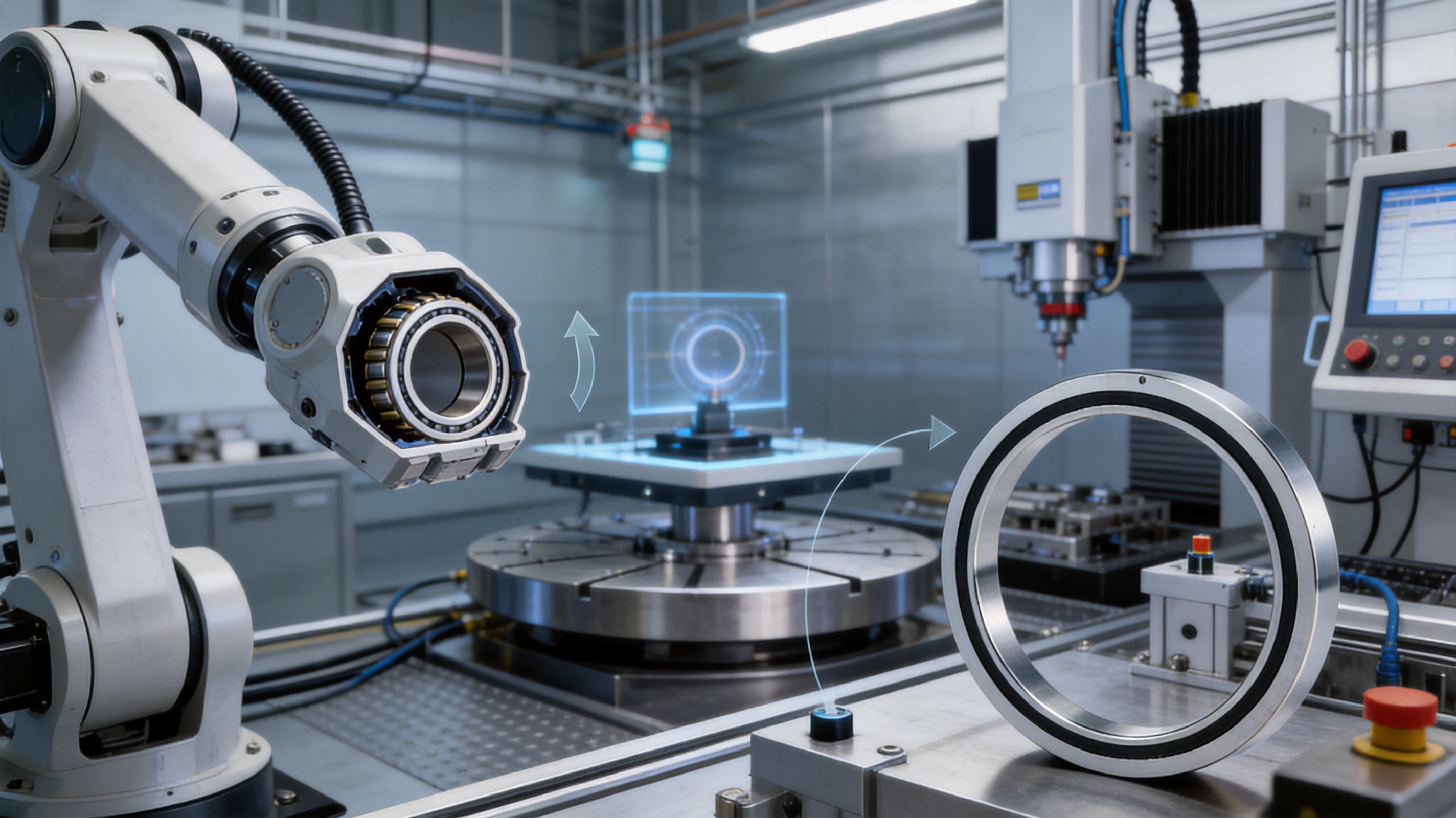
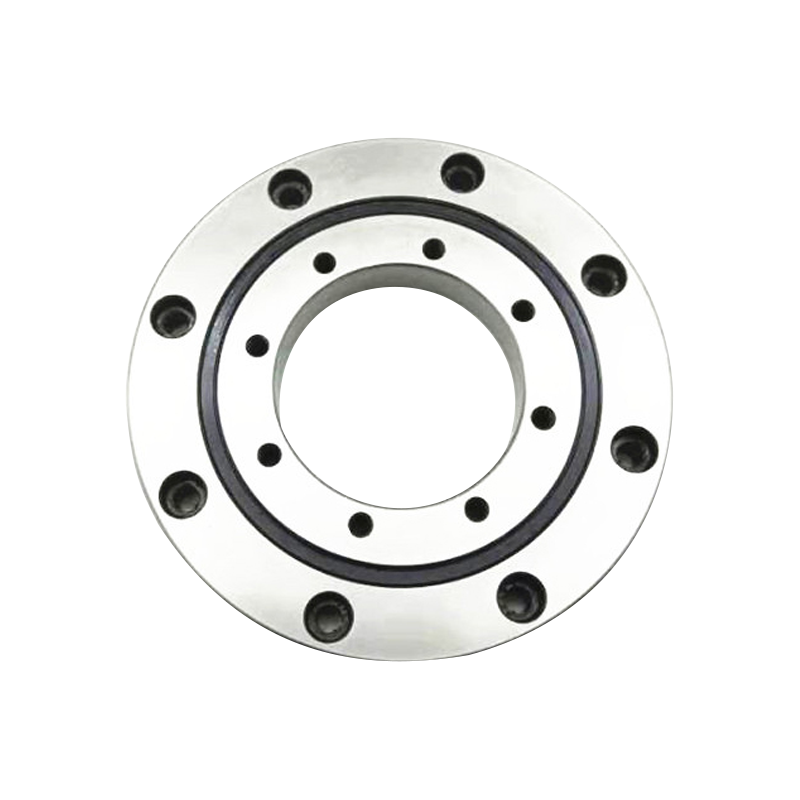
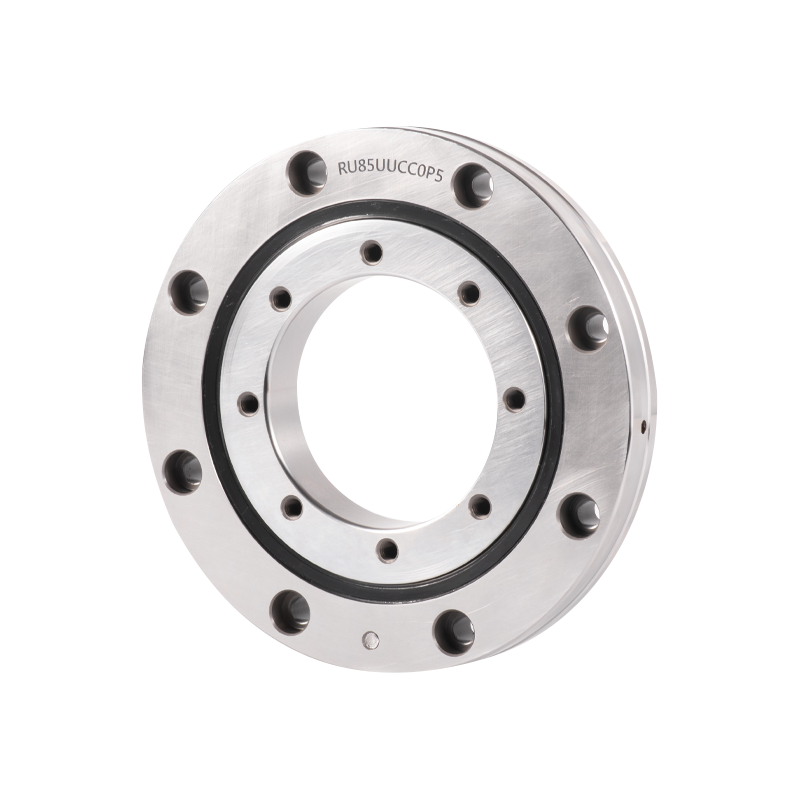
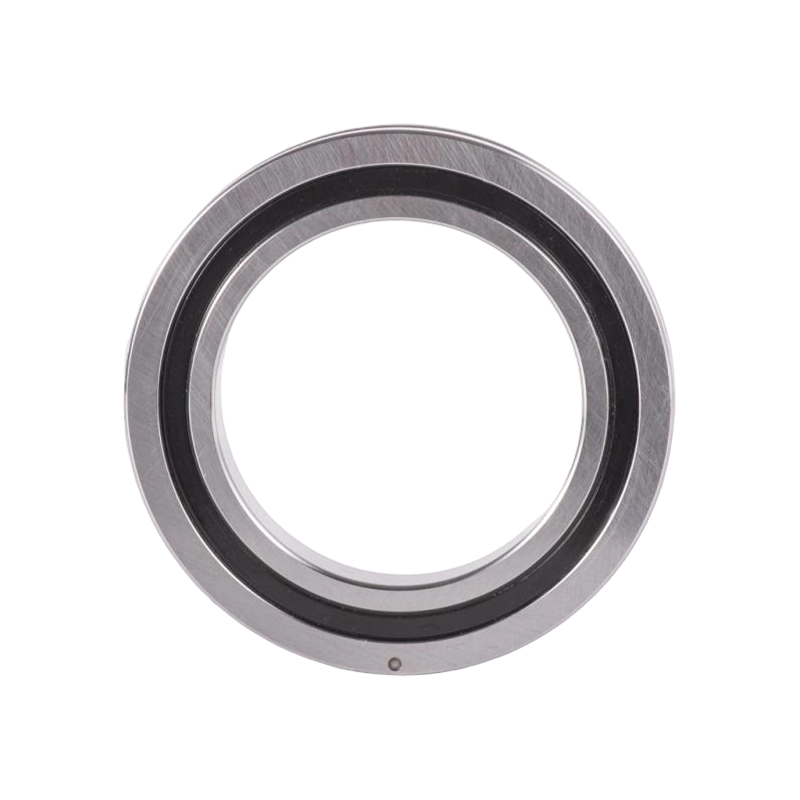
Modern automation systems increasingly require bearing solutions that combine high rotational accuracy, strong load-carrying capability, compact dimensions, and dependable long-term operation. Conventional bearing arrangements can often support radial or axial loads, but they may require multiple components, additional spacers, or a larger installation envelope to achieve the same level of performance. RA thin cross roller bearings address these challenges through a compact crossed-roller structure that supports radial, axial, and moment loads within a single bearing assembly.
The RA series is designed for applications in which available space is limited but accuracy and rigidity cannot be compromised. With reduced outer diameter and width dimensions, these thin-profile crossed roller bearings are well suited to robot hand rotary joints, precision testing instruments, direct-drive torque motors, high-precision turntables, and other advanced motion systems. Their internal roller arrangement provides stable guidance and high resistance to deformation, while their compact geometry helps equipment designers reduce shaft length, housing size, and overall machine weight.
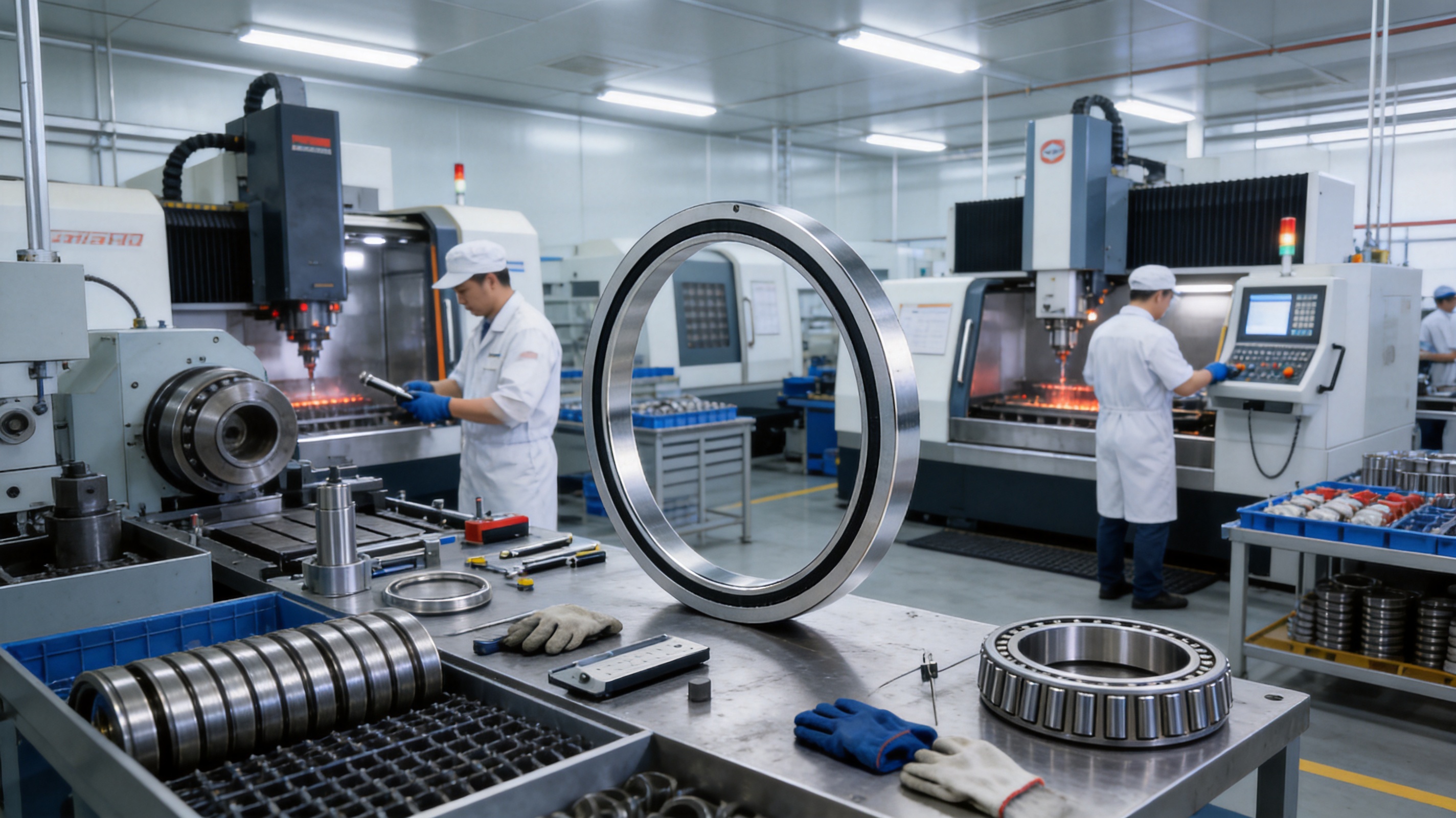
Manufactured by UKL Bearing Manufacturing Co., Ltd., the RA series reflects a manufacturing philosophy centered on precision engineering, carefully controlled materials, and integrated production. The company combines research and development, forging, turning, heat treatment, grinding, assembly, inspection, and international distribution within one operating structure. This integrated approach allows the manufacturer to control critical processes that influence bearing accuracy, preload, surface quality, service life, and consistency from batch to batch.
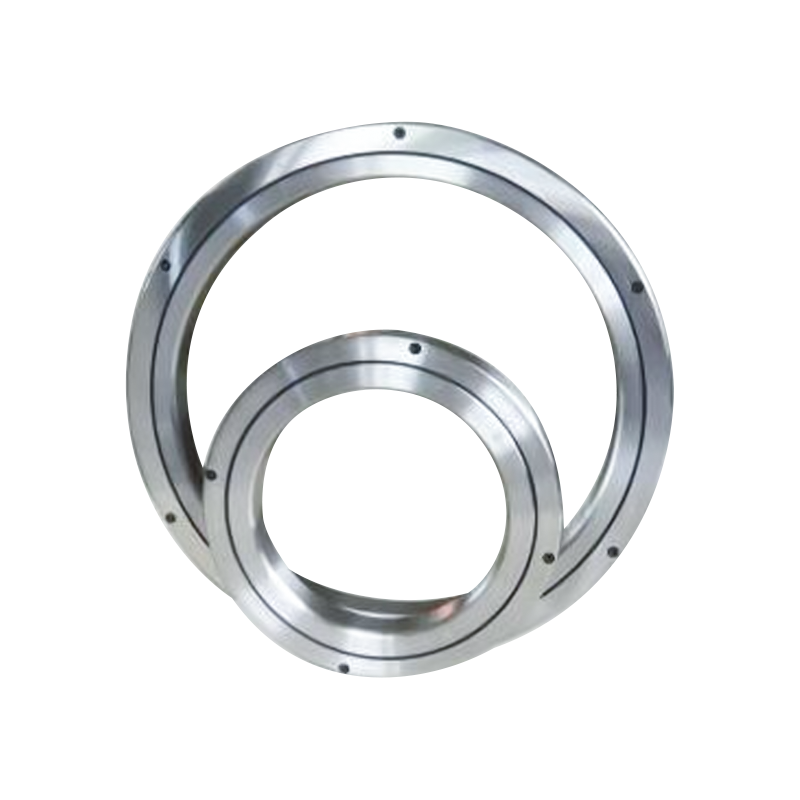
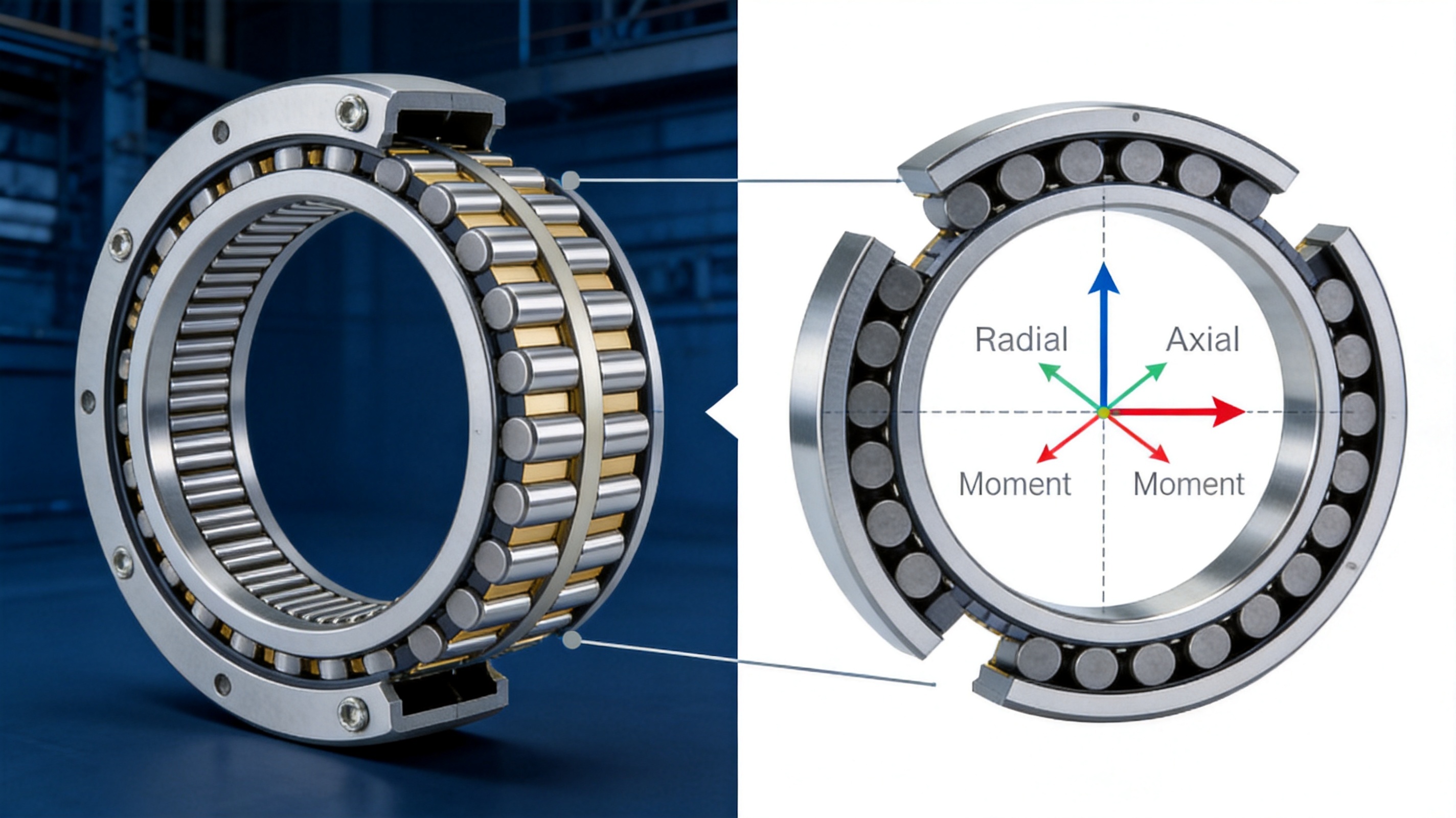
An RA thin cross roller bearing is a precision rotary bearing that uses cylindrical rollers arranged alternately at right angles to one another. One roller set primarily accommodates loads in one direction, while the adjacent set supports loads in the perpendicular direction. Because the rollers are positioned in a crossed pattern around the raceway, the bearing can carry radial loads, axial loads, and overturning moments at the same time.
This design differs from a conventional single-row ball bearing, which normally relies on point contact between balls and raceways. Crossed cylindrical rollers create a larger effective contact area and distribute load along the length of each roller. The result is high rigidity and improved resistance to angular displacement under load. For equipment that must maintain the position of a rotary table, robot arm, optical platform, or precision actuator, this structural advantage can be highly valuable.
The RA series is a thin-profile design. Its reduced section height allows the bearing to be placed in assemblies where a conventional bearing arrangement would occupy too much space. The compact bearing geometry also supports shorter shafts and smaller housings. These design benefits can simplify machine construction and reduce the quantity of surrounding components.
Depending on the operating requirements, the RA series may be supplied in cage, separator, or full-complement configurations. A cage or separator arrangement can help control roller spacing, reduce frictional interaction, and support smoother operation. A full-complement design may be selected when maximum load capacity is a priority and the application permits the associated operating conditions. The availability of different internal configurations gives designers greater freedom to match bearing construction with speed, load, torque, and precision requirements.
The most visible characteristic of the RA series is its thin profile. Models such as RA5008 through RA15008 have a nominal height of 8 mm, while larger models such as RA16013 through RA20013 have a height of 13 mm. This compact geometry is especially useful in wrist joints, rotary indexing mechanisms, inspection platforms, and other assemblies where axial space is restricted.
A smaller bearing cross-section can provide more than a dimensional benefit. It may allow engineers to position the center of rotation closer to the machine structure, reduce the length of a cantilevered shaft, and lower the moment generated by moving components. In robotic and automation equipment, these changes can improve dynamic response and reduce the energy required for acceleration and deceleration.
Crossed roller bearings are commonly selected for applications that require controlled and repeatable rotation. The optimized roller geometry, controlled preload, and precision-ground raceways help minimize unwanted radial and axial movement. This is important for equipment such as optical inspection systems, precision measurement instruments, semiconductor-related machinery, and high-resolution positioning stages.
Rotational accuracy is influenced by the bearing itself as well as by shaft and housing accuracy, mounting conditions, lubrication, and applied load. The RA bearing provides a strong foundation for precision motion, but the surrounding components must also be manufactured and assembled correctly. UKL’s integrated process capability supports the dimensional consistency needed for this type of precision assembly.
The crossed arrangement enables the RA series to support combined loads in multiple directions. Radial loads act perpendicular to the axis of rotation, axial loads act along the axis, and moment loads attempt to tilt the rotating member. In a compact rotary assembly, these loads often occur simultaneously rather than independently.
By accommodating multiple load directions within one bearing, the RA series can reduce the need for separate radial and thrust bearings. This can simplify the machine structure, reduce assembly time, and lower the number of interfaces that may introduce alignment errors. It may also create a cleaner load path between the rotating and stationary components.
Rigidity describes the ability of a bearing system to resist displacement when an external force or moment is applied. High rigidity is essential when even a small angular deflection could affect product quality, measurement accuracy, or robot positioning.
The line-contact characteristics of cylindrical rollers, combined with appropriate preload, give crossed roller bearings high resistance to elastic deformation. The RA series is therefore suitable for systems that demand stable rotary support under changing loads. Applications may include robot end-effectors, precision rotary tables, direct-drive motors, indexing mechanisms, and inspection equipment.
Starting torque is the torque required to initiate rotation. Low starting torque is beneficial in systems that perform frequent indexing, angular positioning, or low-speed oscillating movement. It can also reduce the size requirement of the drive motor and help improve control sensitivity.
The RA series may use nylon separators to reduce roller-to-roller contact and lower rotational inertia. The separator arrangement supports smooth roller movement and can facilitate accurate angular indexing. This is especially useful in robotic joints and automated platforms that repeatedly move between defined positions.
Temperature changes can influence bearing clearance, preload, dimensional accuracy, and the alignment of connected components. In high-precision equipment, even small dimensional changes may influence repeatability or create additional friction.
The RA series is designed for applications that benefit from stable dimensions and controlled thermal behavior. Its compact construction and carefully selected materials help minimize dimensional changes during operation. Proper lubrication, heat dissipation, mounting accuracy, and operating-speed control remain important, but the bearing’s low-profile structure supports stable performance in precision environments.
RA series bearings are manufactured using high-carbon chromium steel, commonly identified as GCr15, for the main bearing components. This material is widely used in precision bearing production because it offers a combination of hardness, fatigue resistance, dimensional stability, and wear resistance after appropriate heat treatment.
Engineering plastics such as TN material may be used in separator components. These materials can provide low mass, reduced friction, and resistance to impact and surface wear. The final material selection depends on the internal bearing configuration, operating speed, lubrication, temperature, and application requirements.
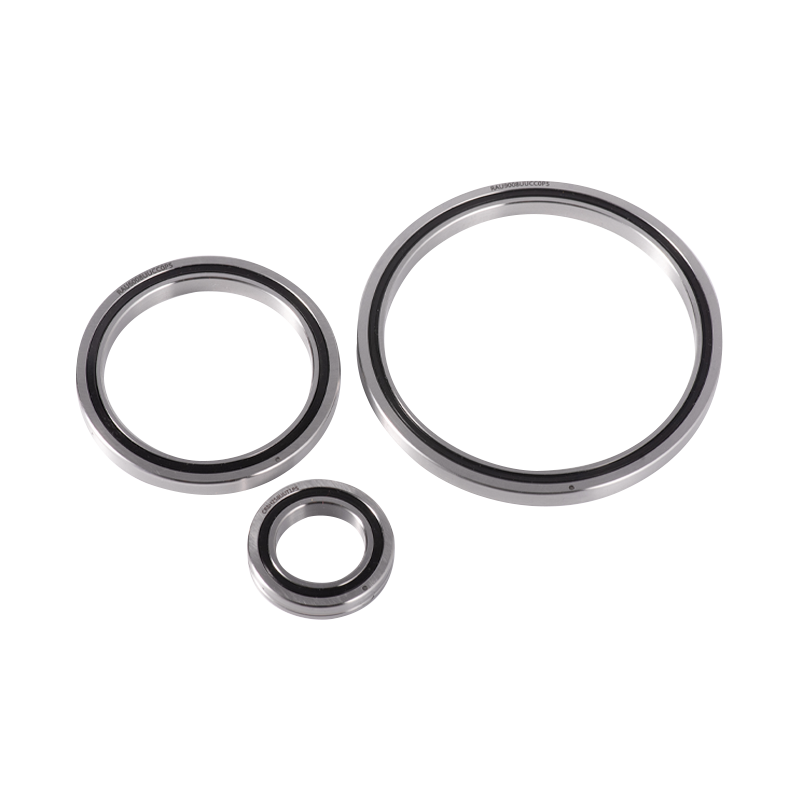
The RA series covers a range of bore sizes from 50 mm to 200 mm in the models listed for this product family. The smaller models from RA5008 to RA15008 use an 8 mm bearing height, while the larger RA16013 to RA20013 models use a 13 mm height. Outside diameters range from 66 mm for RA5008 to 226 mm for RA20013.
The roller pitch diameter increases progressively across the series. This allows equipment designers to select a bearing that matches the required shaft diameter, housing dimensions, load capacity, and available installation space. The product range is sufficiently broad for many compact rotary assemblies while maintaining a consistent design concept across different sizes.
| Model | Inner Diameter d (mm) | Outside Diameter D (mm) | Roller Pitch Diameter Dpw (mm) | Height BB1 (mm) | Chamfer Rmin (mm) | Radial Dynamic Load Rating Cr (kN) | Radial Static Load Rating Cor (kN) | Weight (kg) |
|---|---|---|---|---|---|---|---|---|
| RA5008 | 50 | 66 | 57 | 8 | 0.5 | 5.1 | 7.19 | 0.08 |
| RA6008 | 60 | 76 | 67 | 8 | 0.5 | 5.68 | 8.68 | 0.09 |
| RA7008 | 70 | 86 | 77 | 8 | 0.5 | 5.98 | 9.80 | 0.10 |
| RA8008 | 80 | 96 | 87 | 8 | 0.5 | 6.37 | 11.30 | 0.11 |
| RA9008 | 90 | 106 | 97 | 8 | 0.5 | 6.76 | 12.40 | 0.12 |
| RA10008 | 100 | 116 | 107 | 8 | 0.5 | 7.15 | 13.90 | 0.14 |
| RA11008 | 110 | 126 | 117 | 8 | 0.5 | 7.45 | 15.00 | 0.15 |
| RA12008 | 120 | 136 | 127 | 8 | 0.5 | 7.84 | 16.50 | 0.17 |
| RA13008 | 130 | 146 | 137 | 8 | 0.5 | 7.94 | 17.60 | 0.18 |
| RA14008 | 140 | 156 | 147 | 8 | 0.5 | 8.33 | 19.10 | 0.19 |
| RA15008 | 150 | 166 | 157 | 8 | 0.5 | 8.82 | 20.60 | 0.20 |
| RA16013 | 160 | 186 | 172 | 13 | 0.8 | 23.30 | 44.90 | 0.59 |
| RA17013 | 170 | 196 | 182 | 13 | 0.8 | 23.50 | 46.50 | 0.64 |
| RA18013 | 180 | 206 | 192 | 13 | 0.8 | 24.50 | 49.80 | 0.68 |
| RA19013 | 190 | 216 | 202 | 13 | 0.8 | 24.90 | 51.50 | 0.69 |
| RA20013 | 200 | 226 | 212 | 13 | 0.8 | 25.80 | 54.70 | 0.71 |
The table presents the principal dimensions and radial load ratings supplied for the listed RA models. Actual application selection should also consider axial loading, moment loading, speed, lubrication, mounting stiffness, preload, operating temperature, contamination, and required service life. A bearing with a suitable radial rating may not be appropriate if the application is dominated by axial force or overturning moment.
The supplied product information also identifies representative basic load ratings of 234,000 N for the basic dynamic load rating, 690,000 N for the basic axial static load rating, 166,000 N for the basic axial dynamic load rating, and 340,000 N for the basic radial static load rating. These values should be matched to the applicable configuration and size during technical selection. Because load ratings vary by model and bearing arrangement, engineers should confirm the final rating against the approved product drawing and operating conditions.
A conventional rotary mechanism may require a radial bearing pair combined with a thrust bearing or another support element to handle radial, axial, and moment loads. Such an arrangement can occupy considerable axial space and may require careful adjustment of several components.
The crossed roller structure integrates support for multiple load directions into one compact unit. This can reduce the number of parts, simplify housing design, and decrease the possibility of alignment errors between separate bearings. It also helps designers create more compact joints and rotary modules.
Ball bearings are efficient and versatile, but their point-contact geometry may provide less stiffness than a properly preloaded crossed roller bearing in demanding precision applications. The line contact of cylindrical rollers creates a broader load-supporting interface and can improve resistance to displacement under load.
This difference is important in robot joints, rotary tables, and inspection platforms, where a small deflection can translate into a noticeable positioning error at the end of a long arm or tool. The RA series is designed to maintain stable support under combined forces and moments without requiring an unnecessarily large bearing assembly.
The thin section of the RA bearing makes it attractive for equipment manufacturers who need to reduce overall machine dimensions. A smaller housing can lower material consumption and make the final machine easier to integrate into a production line. In mobile or robotic equipment, lower component weight may also support faster movement and lower energy consumption.
With multiple bore and outside diameter options, the RA series can be incorporated into a wide range of mechanical architectures. Engineers can select a model based on shaft diameter, bearing envelope, load rating, and stiffness rather than redesigning the entire support system around a limited bearing selection.
The availability of cage, separator, and full-complement variants provides another level of flexibility. A high-speed positioning mechanism may prioritize smooth operation and controlled friction, while a heavily loaded low-speed rotary platform may prioritize maximum load capacity. Matching the internal configuration to the application can improve the balance between speed, load, torque, and service life.
Bearing performance depends on much more than the nominal dimensions printed in a catalog. Material quality, heat treatment, grinding accuracy, raceway geometry, roller quality, assembly cleanliness, preload control, and final inspection all affect how a bearing behaves in service. UKL Bearing Manufacturing Co., Ltd. uses an integrated manufacturing model that covers multiple stages of bearing production.
High-carbon chromium bearing steel must be prepared with strict attention to chemical composition, cleanliness, and internal structure. Forging helps form the basic rings while improving material utilization and establishing a suitable grain flow. Consistent forging practices can reduce material waste and provide a stable foundation for subsequent machining.
Material traceability is important throughout this stage. Recording material batches and process conditions supports quality analysis and allows production teams to identify the source of any abnormality. For industrial customers, traceability also contributes to confidence in repeat supply and long-term product support.
After forging, bearing rings undergo turning operations to create the preliminary inner and outer profiles. Turning establishes reference surfaces and leaves a controlled allowance for heat treatment and grinding. Dimensional control at this stage helps prevent excessive distortion during later processing.
Modern turning operations can use programmable equipment and in-process monitoring to maintain consistent dimensions across production batches. Proper control of cutting tools, workholding, surface speed, and thermal conditions contributes to stable geometry and efficient production.
Heat treatment develops the hardness and structural properties required for bearing operation. The process must be carefully controlled because excessive hardness variation, distortion, or residual stress may influence fatigue life and running accuracy.
For GCr15 bearing steel, heat treatment commonly involves a controlled sequence of heating, quenching, and tempering. The exact parameters depend on the component size, required hardness, dimensional stability, and production specification. A well-controlled process produces raceway surfaces capable of resisting repeated rolling contact and high localized stress.
Grinding is one of the most important stages in precision bearing manufacturing. It establishes final dimensions, raceway geometry, surface finish, and the relationship between critical reference surfaces. In a crossed roller bearing, raceway accuracy directly affects roller contact, preload, torque, noise, and rotational smoothness.
Grinding must be performed with appropriate control of wheel condition, coolant, feed rate, dressing, and workpiece temperature. Small deviations in profile or roundness can influence the distribution of load among the rollers. UKL’s production capabilities include grinding processes intended to support the precision requirements of high-accuracy bearing applications.
Cylindrical rollers must maintain accurate diameter, length, end geometry, roundness, and surface finish. Consistency among rollers is essential because unequal roller dimensions can cause uneven load distribution or unstable preload.
Separators must also be manufactured with appropriate dimensional accuracy and material stability. Nylon or other engineering plastic separators are lightweight and can help reduce frictional interaction between rollers. Their design must provide adequate roller guidance without creating excessive resistance or interference during operation.
Crossed roller bearings require careful assembly because roller orientation, raceway alignment, internal clearance, and preload all influence performance. Rollers are arranged alternately at right angles, and the internal arrangement must be maintained during assembly.
Preload is particularly important. Too little preload may allow unwanted play, reduce rigidity, and increase vibration. Excessive preload may increase starting torque, operating temperature, and wear. A controlled assembly process helps establish the intended balance between rigidity and smooth running.
Cleanliness is equally important. Small particles trapped between rollers and raceways can create indentation, noise, premature wear, or localized stress. Assembly areas, tools, lubrication procedures, and packaging practices must therefore be managed to protect the finished bearing from contamination.
Final inspection may include dimensional measurement, runout verification, rotation torque testing, visual inspection, material checks, and packaging review. Depending on the customer specification, additional testing may be performed for noise, vibration, temperature rise, preload, or load performance.
Inspection data provides more than a pass-or-fail decision. It also helps manufacturing teams identify trends and improve process capability. When measurements are analyzed over time, potential tool wear, grinding drift, material variation, or assembly issues can be addressed before they affect larger quantities of product.
UKL Bearing Manufacturing Co., Ltd. combines manufacturing and trading capabilities with research and development, production, and international distribution. The company reports a workforce of approximately 201 to 500 employees and a production capacity of 10,000 to 50,000 units per month. This scale supports both standard product supply and customized bearing programs for original equipment manufacturers.
The company’s manufacturing structure covers forging, turning, heat treatment, grinding, assembly, and packaging. The advantage of this integrated arrangement is that important processes are coordinated rather than treated as isolated subcontracting steps. Production teams can align material specifications, machining allowances, heat-treatment requirements, grinding targets, and assembly conditions around the final performance objectives of the bearing.
UKL also emphasizes research and development in high-precision cross roller bearings, dual-direction thrust angular contact ball bearings, and other products used in CNC machinery, robotics, and intelligent automation systems. This product knowledge is valuable when customers require more than a standard catalog part. Technical teams can help evaluate the bearing envelope, applied loads, desired accuracy, lubrication, mounting arrangement, and service environment.
International supply experience is another important strength. UKL exports bearings to markets in Europe, Asia, Africa, Russia, North America, and other regions. A broad export base requires attention to packaging, documentation, delivery coordination, technical communication, and after-sales support. The company provides multilingual service, installation guidance, and maintenance assistance to help customers integrate bearing products into their equipment.
The company also identifies sustainability as part of its long-term manufacturing commitment. Material recycling, energy optimization, and environmentally responsible process management can improve resource efficiency while supporting stable production. These practices are increasingly important to industrial customers evaluating not only product performance but also the broader manufacturing impact of their supply chain.
Robot hand and wrist assemblies require compact bearings that can support radial forces, axial forces, and moments generated by tooling and payloads. The RA series can help create a rigid rotary joint while preserving space for motors, reduction mechanisms, cables, sensors, and control components.
Low starting torque is useful when the robot performs frequent angular indexing. High rigidity supports repeatable tool positioning, while the thin profile helps reduce the size and mass of the wrist assembly. These characteristics are suitable for industrial robots, collaborative robots, automated grippers, and specialized handling systems.
Testing and measurement equipment often requires smooth movement with minimal play. A small amount of bearing clearance or angular deflection can influence measurement results, particularly when the instrument uses optical, laser, or high-resolution electronic sensors.
The RA series provides a compact support solution for rotary measurement stages, inspection fixtures, and laboratory positioning platforms. Its performance should be evaluated together with the instrument’s accuracy class, environmental conditions, vibration requirements, and lubrication policy.
Direct-drive torque motors eliminate or reduce the need for mechanical transmission components such as belts and gearboxes. This can improve response and reduce backlash, but it also places demanding requirements on the rotary bearing. The bearing must support motor-generated forces while maintaining accurate rotor and stator alignment.
The high rigidity and combined-load capability of a crossed roller bearing make it a suitable candidate for direct-drive rotary modules. Its compact dimensions can also help designers maintain a short motor package. Final selection should consider motor torque, acceleration, radial and axial forces, thermal conditions, and any magnetic or electrical constraints.
Rotary tables used in machining, inspection, assembly, and indexing applications require stable support and accurate angular positioning. The RA series can help maintain the position of a table under workpiece weight, cutting forces, clamping forces, or acceleration loads.
High rigidity is especially important when the table is used for machining or measurement. The bearing should be installed in a sufficiently stiff housing, and the mounting surfaces should be machined to the specified flatness and runout requirements. Correct preload and lubrication are also necessary to achieve the intended performance.
CNC machines and automated production equipment increasingly use compact rotary modules, tool changers, indexing units, and sensor-controlled mechanisms. These applications benefit from bearings that provide high repeatability without consuming excessive space.
Because the RA series is available in multiple sizes and configurations, it can support different machine architectures. Its ability to handle combined loading may reduce the number of support components and simplify integration into modular automation equipment.
Choosing the correct RA bearing begins with a complete load analysis. Engineers should identify the radial load, axial load, moment load, speed, acceleration, operating cycle, temperature, contamination level, lubrication method, and desired service life. Static load conditions must also be considered if the bearing may experience shock, emergency stops, clamping forces, or prolonged stationary loading.
The shaft and housing should be designed to support the bearing uniformly. Uneven mounting surfaces can distort the raceways and alter the internal preload. The housing should provide adequate stiffness, and the mounting shoulder should be correctly dimensioned to prevent interference with the bearing chamfer.
Installation should be performed in a clean environment using suitable tools. Force must be applied to the correct bearing ring, and impact directly through the rollers should be avoided. Improper pressing can damage raceways, create indentations, or produce misalignment that may not be visible during assembly.
Lubrication must be selected according to speed, load, temperature, and operating environment. The lubricant should be compatible with the bearing materials, including any engineering plastic separator. Excessive grease can increase torque and heat generation, while insufficient lubrication can accelerate wear and surface distress.
After installation, the bearing should be rotated slowly to confirm smooth movement. Abnormal resistance, noise, vibration, or temperature rise may indicate contamination, incorrect preload, mounting distortion, insufficient lubrication, or component damage. Early verification can prevent a minor installation issue from becoming a major equipment failure.
The strongest competitive advantage of the RA series is its combination of compactness and structural capability. Many bearing products offer either low cost, high speed, high load capacity, or precision, but demanding automation applications often require several of these characteristics simultaneously. The RA crossed roller design is intended specifically for that balance.
Compared with ordinary deep-groove ball bearings, the RA series can provide greater rigidity and better support for moment loads. Compared with multi-bearing arrangements, it may reduce installation space and simplify the mechanical structure. Compared with larger conventional roller bearings, its thin profile can reduce weight and improve packaging efficiency.
The series also benefits from manufacturing flexibility. Customers can select among several sizes and internal arrangements, while the manufacturer’s R&D and OEM/ODM experience supports application-specific communication. This is important for robotics and automation, where the bearing often forms part of a custom joint or module rather than a simple replacement component.
Consistent production is another differentiating factor. Integrated control of forging, machining, heat treatment, grinding, assembly, and inspection provides a stronger basis for repeatability than a supply chain in which every process is disconnected. For equipment manufacturers, consistent quality can reduce assembly adjustment, improve machine commissioning, and support predictable maintenance planning.
Although crossed roller bearings are designed for precision and durability, their operating life depends on correct installation and maintenance. Lubricant condition should be monitored according to the duty cycle and environment. Applications exposed to dust, coolant, humidity, or corrosive substances may require additional sealing or protective design measures.
Unusual noise, increasing torque, vibration, or temperature should be investigated promptly. These symptoms can result from contamination, roller damage, raceway fatigue, insufficient lubrication, excessive preload, or housing distortion. Replacing a bearing without addressing the root cause may lead to repeated failure.
During maintenance, the bearing should be protected from impact and contamination. If the assembly is removed, the shaft and housing should be inspected for scoring, burrs, fretting, or dimensional changes. Fasteners should be tightened according to the equipment manufacturer’s procedure, and the rotary assembly should be checked for smooth movement after reassembly.
For critical applications, customers should maintain records of operating hours, load conditions, lubricant changes, temperature trends, and observed vibration. These records can help determine whether a bearing is approaching the end of its expected service life and can support more effective preventive maintenance.
The main benefit is the ability to support radial, axial, and moment loads in a compact bearing structure. The thin profile saves installation space, while the crossed cylindrical rollers provide high rigidity and rotational accuracy.
A standard ball bearing uses balls that create point contact with the raceways. An RA bearing uses cylindrical rollers arranged at right angles, creating line contact and improved resistance to deformation. This makes the RA series particularly suitable for precision rotary systems that experience combined loading.
Yes. Robot hand rotary joints are one of the intended application areas. The compact dimensions, low starting torque, high rigidity, and combined-load capability are useful in robot wrists, end-effectors, and other articulated rotary modules.
The RA series may be supplied in cage, separator, and full-complement types. The appropriate configuration depends on speed, load, friction, torque, lubrication, and the operating cycle of the application.
The principal bearing components are made from high-carbon chromium steel, commonly identified as GCr15. Engineering plastics such as TN material may be used for separator components, depending on the selected construction.
No. Bearing selection must consider radial load together with axial load, moment load, speed, acceleration, preload, temperature, lubrication, mounting stiffness, contamination, and required service life. The model with the highest radial rating may not be the best choice for an application dominated by axial or overturning forces.
The shaft and housing dimensions, shoulder geometry, mounting surface accuracy, cleanliness, lubricant, preload requirements, and installation tools should all be checked. Incorrect mounting can distort the bearing and reduce its accuracy or service life.
UKL provides OEM and ODM export experience and maintains R&D capabilities in high-precision bearing products. Customers should provide the required dimensions, loads, speed, accuracy, environment, lubrication, and operating cycle so that the technical team can evaluate the application and recommend a suitable configuration.
Common applications include robot rotary joints, precision testing instruments, direct-drive torque motors, high-precision turntables, CNC equipment, inspection systems, and intelligent automation machinery.
An inquiry should include the desired bearing model or dimensions, shaft and housing arrangement, radial and axial loads, moment load, rotational speed, operating temperature, lubrication method, accuracy requirement, expected service life, and quantity. Drawings or assembly diagrams are also helpful.
RA thin cross roller bearings provide a practical solution for compact precision rotary systems that must withstand combined loading while maintaining accurate movement. Their crossed cylindrical roller arrangement delivers high rigidity, strong load support, low starting torque, and resistance to displacement. The thin profile helps reduce installation space and can simplify the surrounding machine structure.
The product range covers inner diameters from 50 mm to 200 mm, with compact 8 mm and 13 mm height options across the listed models. Cage, separator, and full-complement configurations provide flexibility for different combinations of speed, load, friction, and operating requirements.
UKL Bearing Manufacturing Co., Ltd. supports the RA series through integrated production capabilities that include forging, turning, heat treatment, grinding, assembly, inspection, and packaging. Its R&D experience, OEM/ODM support, international distribution network, and technical service resources make the company a suitable partner for robotics, CNC machinery, automation, and precision motion applications.
For designers seeking a bearing that combines compact dimensions with high rigidity and multi-directional load support, the RA series offers a strong alternative to ordinary ball bearings and complex multi-bearing arrangements. Proper model selection, accurate mounting, suitable lubrication, and regular maintenance will allow the bearing to deliver its intended performance throughout the service life of the equipment.
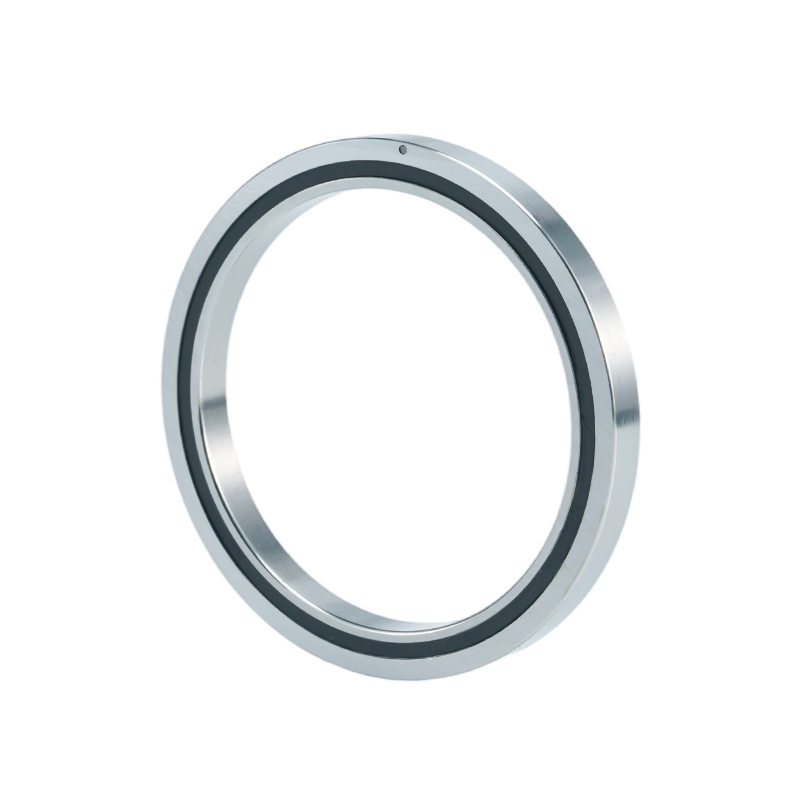
RA Thin Cross Roller Bearing
1. UKL Bearing Manufacturing Co., Ltd., RA Thin Cross Roller Bearing Product Information.
2. UKL Bearing Manufacturing Co., Ltd., RA Series Dimensional and Load Rating Data.
3. International Organization for Standardization, Rolling Bearings—Load Ratings and Rating Life Principles.
4. International Organization for Standardization, Rolling Bearings—Tolerances and Dimensional Accuracy.
5. Bearing Industry Technical Association, Rolling Bearing Application and Maintenance Practices.
6. Materials and Heat Treatment Guidelines for High-Carbon Chromium Bearing Steel.
7. General Engineering Principles for Crossed Roller Bearings, Precision Rotary Stages, and Robotic Joint Design.
Product Categories
Contact Us

Jane@ukl-bearing.com
Jenny@ukl-bearing.com
Andy@ukl-bearing.com
Ivy@ukl-bearing.com

+86-510- 88763239
+86-15371057968

No.1 Hehuan Road, Hudai Town, Binhu District, Wuxi City.
Ready to Begin?
Get in Touch

Now!
UKL BEARING
 English
 Español
 русский