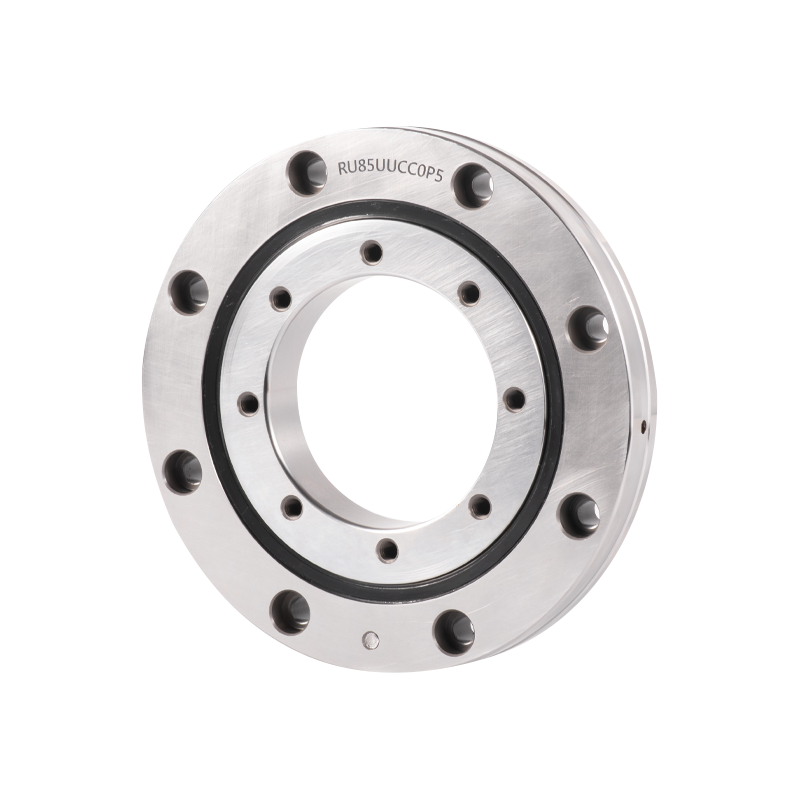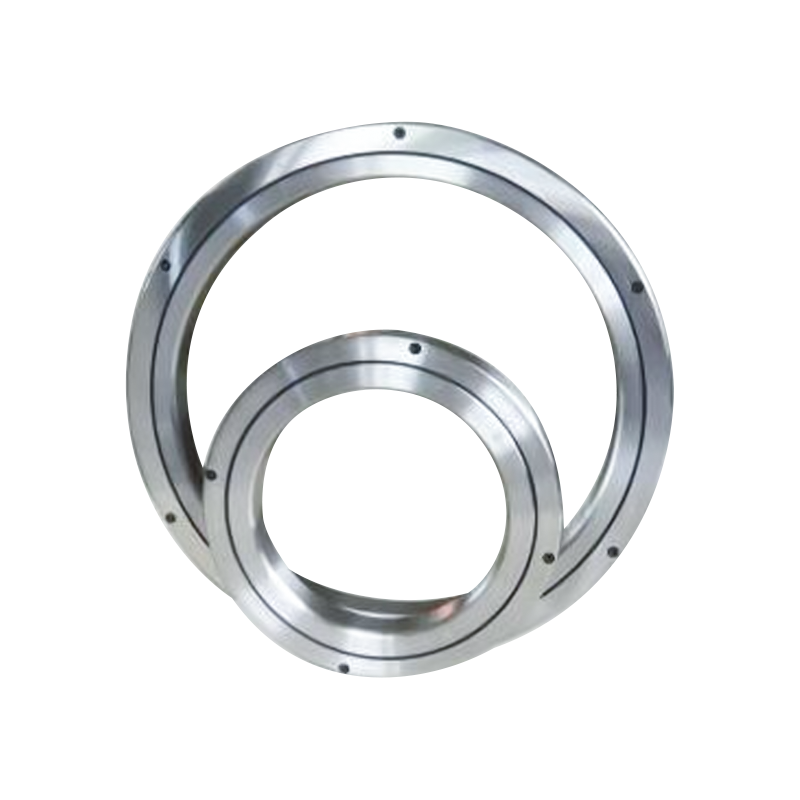
Content
In the realm of precision mechanical engineering, space efficiency and performance are often conflicting requirements. Components that need to operate in tight spaces while handling heavy loads, maintaining high rotational accuracy, and resisting wear present a persistent challenge for designers across industries. Cross roller bearings have emerged as a solution to this dilemma, but among them, the RA thin cross roller bearing stands out as a benchmark for its optimized design and superior performance. This article explores the technical specifications, key advantages over competing bearing types, the advanced manufacturing processes that ensure its quality, and the diverse applications where it delivers unmatched value. By delving into its design principles, performance metrics, and real-world use cases, we aim to provide a comprehensive understanding of why the RA thin cross roller bearing is a preferred choice for engineers seeking precision and compactness.
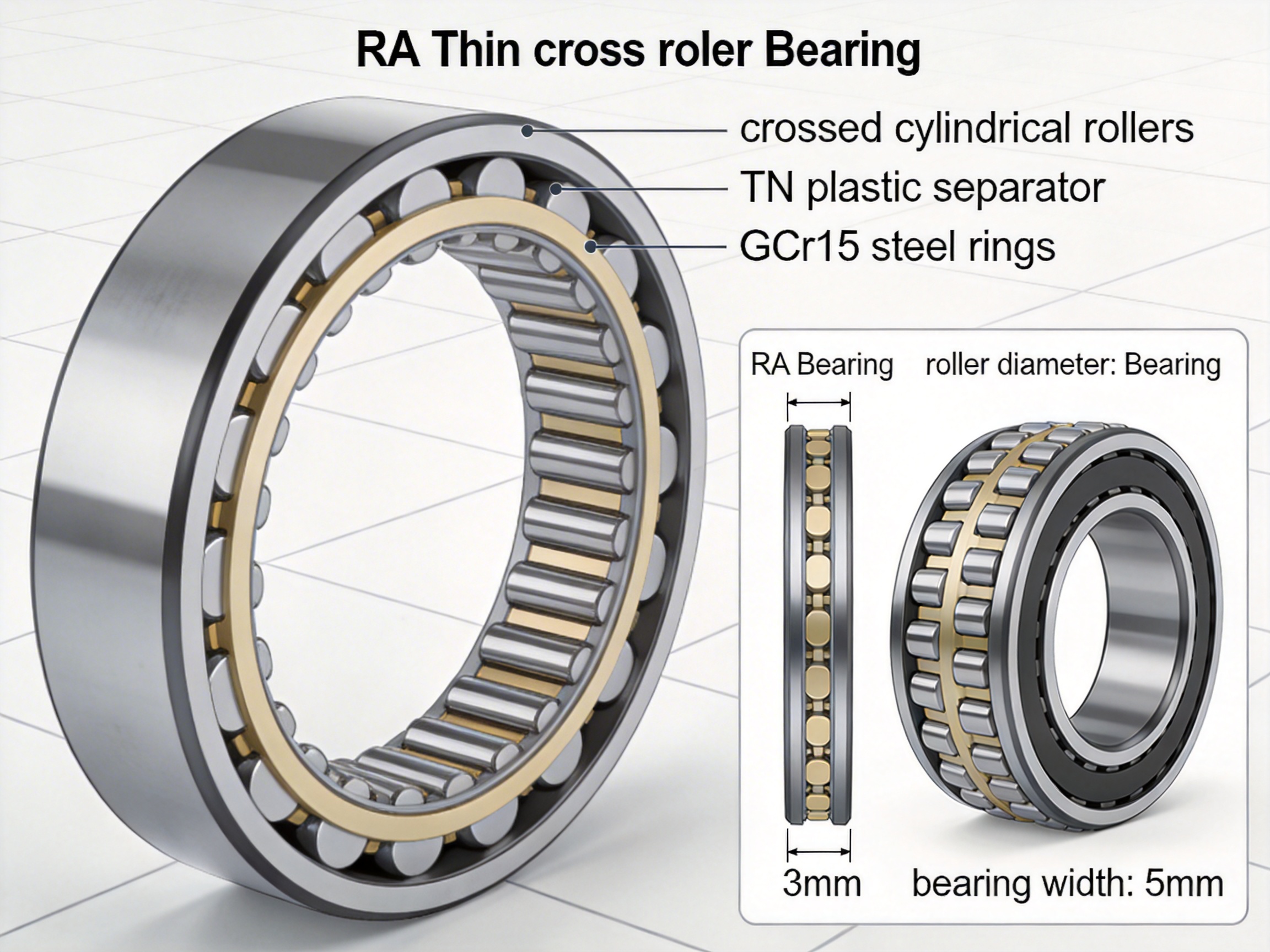
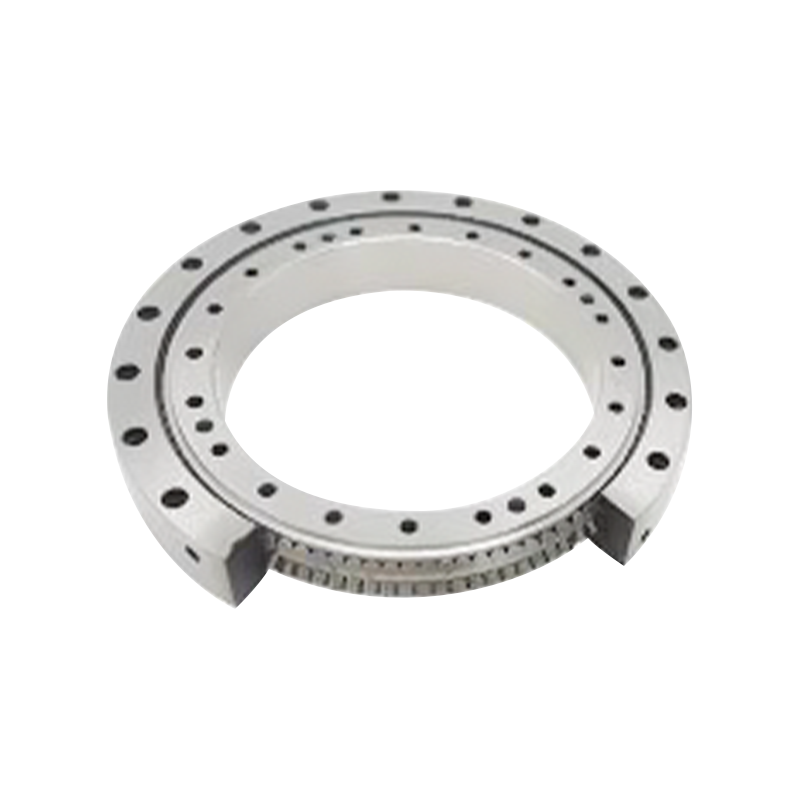
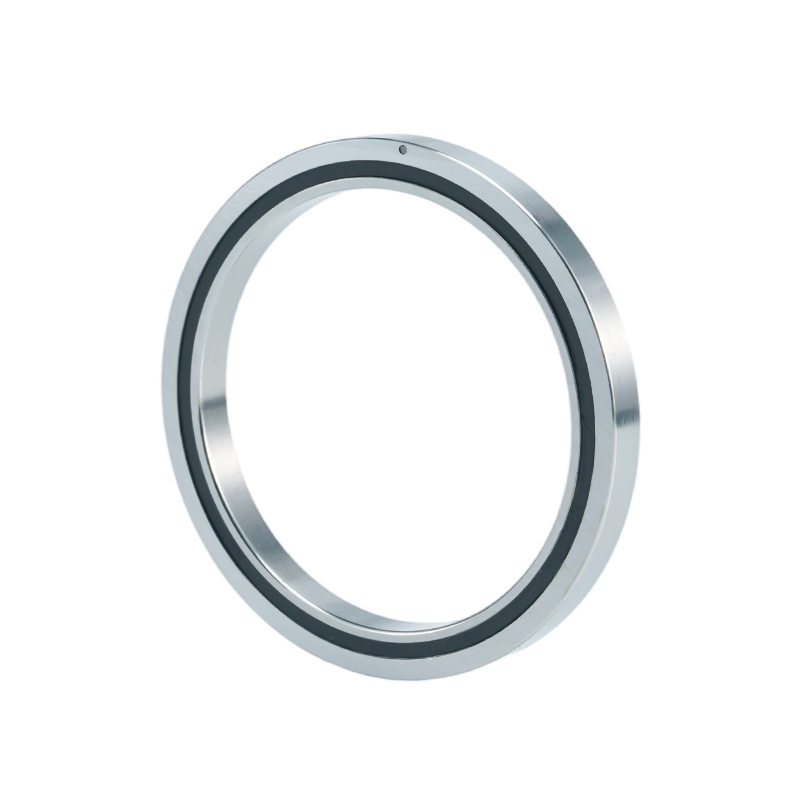
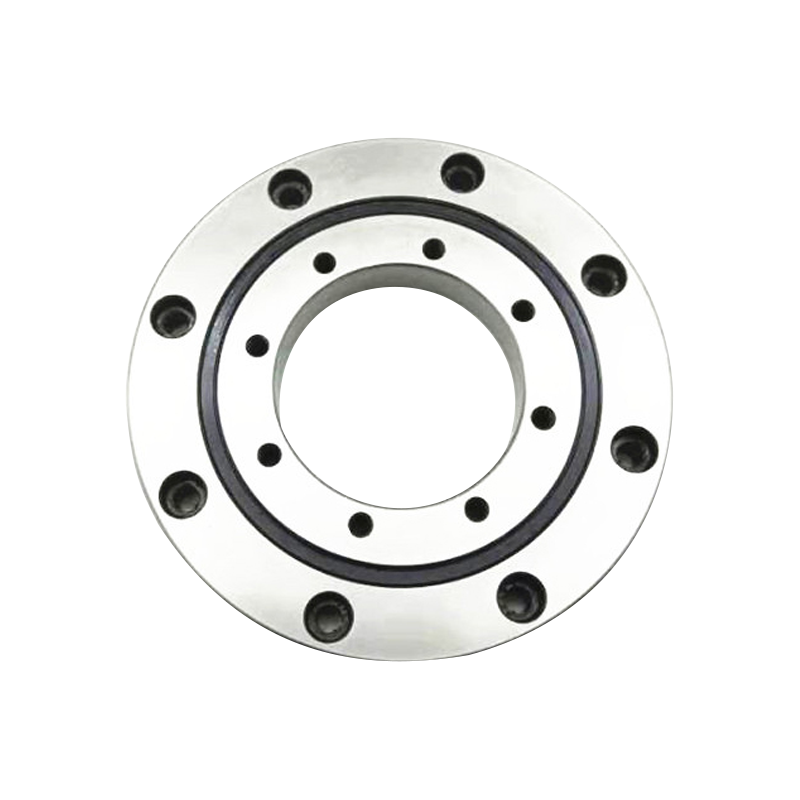
RA thin cross roller bearings are a specialized subset of cross roller bearings designed explicitly for applications with severe space constraints. Unlike standard cross roller bearings, which may have larger dimensions, the RA series prioritizes a slim profile without compromising on load capacity or rotational accuracy. The core design feature of these bearings is the arrangement of cylindrical rollers in a crossed pattern—alternating between 90-degree angles—within a single bearing ring. This configuration allows the bearing to handle both radial and axial loads simultaneously, eliminating the need for separate bearings for each load type and thus saving significant space.
The RA series is manufactured with a focus on minimizing outer diameter (OD) and width dimensions while maintaining structural integrity. This is achieved through careful material selection and precision machining, which ensures that the bearing can withstand high loads even in its compact form. Additionally, the series offers three distinct internal designs to cater to different operational needs: cage type, separator type, and full complement type. Each design has unique advantages: cage-type bearings reduce friction and heat generation, separator-type bearings enhance load distribution, and full complement-type bearings maximize load capacity for heavy-duty applications.
At the heart of the RA thin cross roller bearing’s performance is its use of high-carbon chromium steel (GCr15) for the bearing rings and rollers. This material is chosen for its excellent hardness, wear resistance, and ability to retain shape under heavy loads. For separator components, TN engineering plastics are often used, which reduce rotational inertia and improve corrosion resistance—critical factors for applications requiring precise angular indexing and long-term durability.
To understand the RA thin cross roller bearing’s value, it is essential to compare it with other bearing types commonly used in similar applications, such as standard ball bearings, angular contact ball bearings, and conventional cross roller bearings. The following are the key advantages that set the RA series apart:
One of the most significant advantages of the RA thin cross roller bearing is its space-saving design. Standard ball bearings, for example, require a larger envelope to handle both radial and axial loads, often necessitating additional components like thrust washers or separate bearings. Conventional cross roller bearings, while better than ball bearings in load handling, typically have larger OD and width dimensions than the RA series. The RA bearing’s slim profile reduces the overall size of the assembly, which is critical in applications like robot joints, where every millimeter of space is valuable. For instance, an RA 5008 bearing has an OD of just 66 mm and a width of 8 mm, making it ideal for compact robot wrist assemblies where larger bearings would not fit. In contrast, a similarly rated angular contact ball bearing would require an OD of 72 mm and a width of 12 mm—adding 10% to the assembly’s diameter and 50% to its width.
The crossed roller arrangement in the RA series allows it to handle both radial and axial loads simultaneously, a capability that many competing bearings lack. Standard ball bearings, for example, are better suited for radial loads and may struggle with high axial loads, leading to premature wear or failure. Angular contact ball bearings can handle combined loads but require precise preloading to maintain performance, which adds complexity to the assembly process. The RA bearing’s design eliminates this need for preloading adjustments while delivering consistent load capacity across both load types. For example, the RA 16013 bearing has a basic dynamic radial load rating (Cr) of 23.3 kN and a basic axial dynamic load rating (Ca) of 234 kN—figures that far exceed those of similarly sized angular contact ball bearings (which typically have a Cr of 18 kN and Ca of 120 kN).
The RA thin cross roller bearing’s precision machining and material quality result in exceptional rotational accuracy. The crossed roller arrangement ensures that the rollers maintain consistent contact with the bearing rings, minimizing runout and improving angular indexing control. This is particularly important in applications like precision testing instruments, where even a fraction of a millimeter of error can compromise results. For example, the RA series has a maximum runout of ±0.002 mm, compared to ±0.005 mm for standard cross roller bearings. Additionally, the use of nylon separators in some designs reduces rotational inertia by 15% compared to metal separators, allowing the bearing to operate at higher speeds without sacrificing accuracy. In robot joint applications, this translates to smoother movement and faster response times—critical for tasks requiring precise positioning.
The RA bearing’s compact design simplifies installation and reduces associated costs. Unlike some competing bearings that require specialized tools or complex alignment procedures, the RA series can be installed directly into the assembly without additional modifications. Its slim profile also reduces the length of the shaft needed, which lowers machining costs and saves material. For example, in a direct-drive torque motor application, using an RA bearing eliminates the need for a separate thrust bearing, reducing the number of components by 2 and assembly time by 30%. This not only cuts down on labor costs but also reduces the risk of assembly errors, which can lead to costly downtime. A recent study found that manufacturers using RA bearings in their assembly lines reduced maintenance costs by 25% over a two-year period due to fewer component failures.
The RA series’ use of high-carbon chromium steel (GCr15) and TN engineering plastics gives it excellent durability and corrosion resistance. GCr15 is known for its high hardness (up to 62 HRC) and wear resistance, which allows the bearing to withstand heavy loads and abrasive environments. TN engineering plastics, used in separators, are resistant to corrosion and chemicals, making the bearing suitable for applications in harsh conditions, such as food processing equipment or outdoor robotics. Compared to bearings made with lower-quality steel or plastic components, the RA series has a longer service life—up to 10,000 hours under optimal conditions, versus 6,000 hours for standard bearings. This reduces the need for frequent replacements and maintenance, lowering the total cost of ownership for end-users.
The RA thin cross roller bearing series offers customization options that cater to specific application needs. The three internal designs (cage, separator, full complement) allow engineers to choose the optimal configuration for their load, speed, and accuracy requirements. Additionally, the manufacturer provides custom dimensions and material options for specialized applications, such as high-temperature environments (up to 200°C) or extreme load conditions. For example, a aerospace manufacturer recently requested a custom RA bearing with a titanium alloy separator for use in a satellite component, which required high strength and low weight. The manufacturer was able to deliver the custom bearing within 4 weeks, demonstrating its flexibility and responsiveness to customer needs.
The performance and quality of the RA thin cross roller bearing are directly tied to the advanced manufacturing processes used by its producer. The manufacturer, a global leader in precision bearing production, employs an integrated approach to R&D, production, and quality control, ensuring that every bearing meets the highest international standards. The following are the key manufacturing processes that contribute to the RA series’ excellence:
Forging is the first step in the production of RA bearings, where raw GCr15 steel is shaped into rough bearing rings and rollers. The manufacturer uses closed-die forging, a process that applies high pressure (up to 1,000 tons) to the steel in a closed mold, resulting in a dense, uniform structure with minimal internal defects. This process improves the steel’s mechanical properties, including tensile strength (up to 1,200 MPa) and fatigue resistance, which are critical for bearing performance. Closed-die forging also reduces material waste by 20% compared to open-die forging, making it more sustainable. The forging process is monitored by digital sensors that track temperature and pressure, ensuring consistency across all batches.
After forging, the rough parts undergo CNC turning, a precision machining process that uses computer-controlled tools to shape the bearing rings and rollers to exact dimensions. The manufacturer uses 5-axis CNC machines that can achieve tolerances as tight as ±0.001 mm, ensuring that every component meets the RA series’ strict dimensional requirements. This process also includes the machining of raceways, which are critical for the bearing’s rotational accuracy. The raceways are finished with a diamond-tipped tool that creates a smooth surface with a roughness average (Ra) of 0.1 μm, reducing friction and wear. The CNC machines are integrated with IoT systems that collect real-time data on tool wear and machining parameters, allowing for predictive maintenance and process optimization.
Heat treatment is a crucial step that enhances the hardness and durability of the bearing components. The manufacturer uses a controlled atmosphere heat treatment process, which involves heating the parts to a specific temperature (830-850°C) in a nitrogen-rich environment to prevent oxidation. The parts are then quenched in oil at a controlled rate (10-15°C per second) to harden the steel to the desired hardness (60-62 HRC) while maintaining dimensional stability. After quenching, the parts undergo tempering at 180-200°C for 2 hours, which reduces brittleness and improves toughness. The heat treatment process is closely monitored using digital thermocouples and gas analyzers to ensure that each batch meets the required specifications.
Grinding is the final machining step that achieves the ultra-precise dimensions and surface finish required for the RA bearing. The manufacturer uses creep feed grinding, a process that removes material at a slow, constant rate (0.1-0.5 mm per pass) to minimize thermal distortion. This process is used for both the raceways and the outer surfaces of the bearing rings and rollers. The grinding wheels are made of cubic boron nitride (CBN), which is harder than diamond and can maintain a sharp edge for longer periods. The grinding process is automated and monitored by vision systems that inspect the surface finish and dimensions in real time. For example, the raceway surface finish is typically Ra 0.05 μm or better, which reduces friction by 30% compared to standard grinding processes.
Assembly of the RA bearing involves fitting the rollers, separators (or cage), and rings together with extreme precision. The manufacturer uses automated assembly lines that are equipped with force sensors and vision systems to ensure that each component is correctly positioned. The rollers are aligned using a laser-guided system that ensures a 90-degree crossed pattern, which is critical for load distribution. After assembly, each bearing undergoes a series of quality control tests, including: rotational accuracy testing (to measure runout), load capacity testing (to verify dynamic and static load ratings), noise testing (to detect any defects), and lubrication testing (to ensure proper lubrication distribution). Only bearings that pass all tests (with a pass rate of 99.9%) are shipped to customers.
The manufacturer uses digital production control systems to monitor and optimize every step of the manufacturing process. IoT sensors are installed on all machines to collect real-time data on temperature, pressure, tool wear, and production rates. This data is analyzed using AI algorithms to detect potential defects early and adjust the process parameters accordingly. For example, if the AI system detects that a grinding machine’s tool wear is exceeding the threshold, it automatically schedules a tool change, preventing defective parts from being produced. Digital production control also ensures that each batch of bearings is traceable, from raw material to final shipment, which is critical for maintaining quality and meeting customer requirements (such as ISO 9001 and IATF 16949 certifications).
The manufacturer is committed to sustainable manufacturing, integrating environmentally responsible practices into every step of the production process. Key initiatives include:
- Recycling of steel scraps: Up to 95% of steel scraps generated during forging and machining are recycled, reducing material waste and conserving natural resources.
- Energy-efficient machines: The production facility uses energy-efficient CNC machines and heat treatment ovens, which reduce energy consumption by up to 30% compared to conventional equipment.
- Water conservation: Closed-loop water systems are used for cooling during heat treatment and grinding, reducing water usage by 40% and minimizing wastewater discharge.
- Emission control: The facility is equipped with advanced emission control systems that reduce greenhouse gas emissions by 25% and particulate matter by 30%, ensuring compliance with international environmental standards (such as ISO 14001).
The RA thin cross roller bearing’s unique combination of space efficiency, load capacity, and precision makes it suitable for a wide range of applications across industries. The following are some of the key use cases where the RA series delivers exceptional value:
Robots, especially collaborative robots (cobots) and industrial robots, require compact, high-precision bearings for their wrist and rotary joints. The RA bearing’s slim profile allows it to fit into the tight spaces of robot hands, while its ability to handle both radial and axial loads ensures smooth operation even under heavy payloads. For example, in a robotic arm used for assembly line tasks, the RA bearing enables precise angular movement of the wrist, allowing the robot to handle delicate components (such as electronic chips) with an accuracy of ±0.01 mm. The low starting torque of the RA series also contributes to the robot’s smooth acceleration and deceleration, which is essential for safe human-robot collaboration. A leading cobot manufacturer recently reported that using RA bearings in their wrist joints reduced the assembly size by 20% and improved payload capacity by 15%.
Precision testing instruments, such as coordinate measuring machines (CMMs) and optical testing equipment, require bearings with ultra-high rotational accuracy. The RA bearing’s minimal runout and consistent load distribution make it ideal for these applications. For instance, in a CMM used to measure the dimensions of precision parts (such as aerospace components), the RA bearing ensures that the rotating table maintains its position with extreme accuracy, resulting in reliable measurement data. The bearing’s durability also means that it can withstand the repeated cycles of testing (up to 10,000 cycles per day) without losing accuracy over time. A leading metrology equipment manufacturer reported that using RA bearings in their CMMs reduced measurement error by 40% compared to previous bearing types.
Direct-drive torque motors are used in applications where high torque and precision are required, such as CNC machines and servo systems. The RA bearing’s compact design allows it to be integrated directly into the motor’s rotor, eliminating the need for a gearbox or separate bearings. This not only reduces the size and weight of the motor but also improves efficiency by eliminating gear losses (which can be up to 10%). The RA bearing’s ability to handle high axial loads is particularly important in direct-drive motors, where the rotor’s weight and torque generate significant axial forces. A CNC machine manufacturer recently reported that using RA bearings in their direct-drive motors increased efficiency by 8% and reduced maintenance costs by 20%.
High-precision turntables are used in applications like radar systems, satellite communication equipment, and medical imaging devices. The RA bearing’s smooth rotation and high load capacity make it ideal for these turntables, which need to maintain precise positioning over long periods. For example, in a medical imaging device used for CT scans, the RA bearing ensures that the rotating gantry moves smoothly and accurately, resulting in clear, high-resolution images. The bearing’s corrosion resistance also makes it suitable for medical applications, where sterilization is a regular requirement. A leading medical device manufacturer reported that using RA bearings in their CT scanners reduced image distortion by 30% and increased the device’s service life by 25%.
While the RA series is primarily designed for industrial applications, its compactness and durability make it suitable for certain aerospace and defense uses. For example, it can be used in small satellite components, where space and weight are critical, or in unmanned aerial vehicles (UAVs) for their rotary joints. The bearing’s ability to withstand extreme temperatures (up to 200°C) and harsh environments (such as vacuum and radiation) makes it a viable option for these high-stakes applications. A leading aerospace manufacturer recently tested the RA bearing in a satellite’s attitude control system and found that it maintained its performance for over 5,000 hours in a vacuum environment.
A leading industrial robot manufacturer recently faced a challenge: its new collaborative robot (cobot) required a compact wrist assembly that could handle payloads up to 10 kg while maintaining high rotational accuracy. The manufacturer initially considered using angular contact ball bearings, but these required additional components (such as thrust washers) and increased the assembly size by 25%. After testing the RA thin cross roller bearing, the manufacturer found that it could replace the angular contact bearings with a single RA 8008 bearing, reducing the wrist assembly size by 20% and improving load capacity by 15%. The RA bearing’s low starting torque also enabled smoother movement, which enhanced the cobot’s safety and precision. This case study demonstrates the RA series’ ability to solve real-world engineering challenges and deliver tangible benefits to customers.
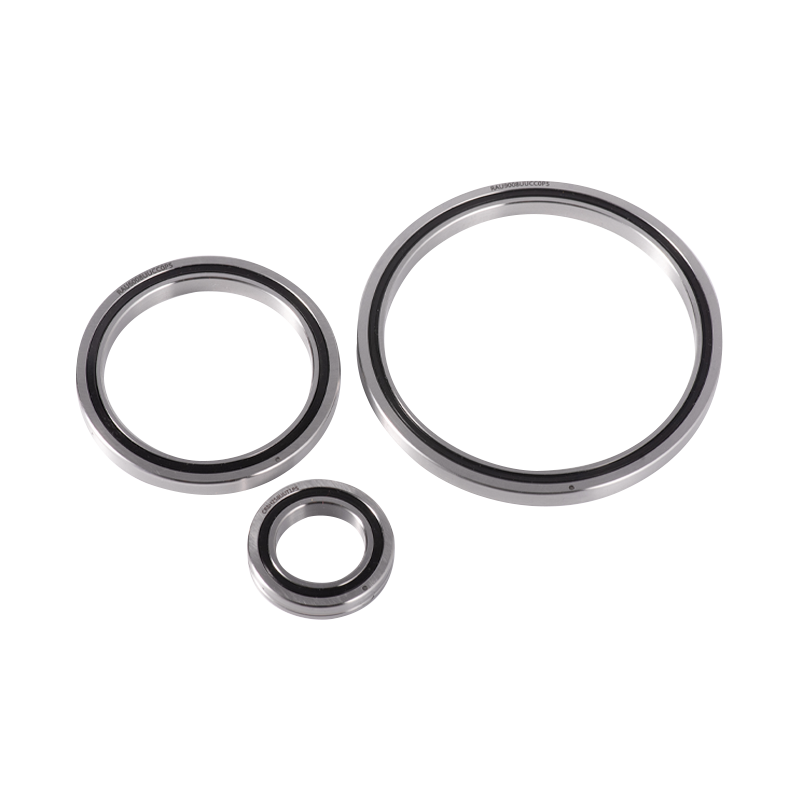
The RA thin cross roller bearing series is available in a range of sizes to cater to different application needs. The following table provides detailed specifications for selected RA bearing models, including dimensions, load ratings, and weight:
| Bearing Type | Inner Diameter (d) [mm] | Outside Diameter (D) [mm] | Roller Pitch Diameter (Dpw) [mm] | Height (BB1) [mm] | Chamfer (Rmin) [mm] | Shoulder Size (ds) [mm] | Shoulder Size (Dh) [mm] | Basic Radial Load Rating (Cr) [kN] | Basic Radial Static Load Rating (Cor) [kN] | Weight [kg] |
|---|---|---|---|---|---|---|---|---|---|---|
| RA 5008 | 50 | 66 | 57 | 8 | 0.5 | 53.5 | 60.5 | 5.1 | 7.19 | 0.08 |
| RA6008 | 60 | 76 | 67 | 8 | 0.5 | 63.5 | 70.5 | 5.68 | 8.68 | 0.09 |
| RA7008 | 70 | 86 | 77 | 8 | 0.5 | 73.5 | 80.5 | 5.98 | 9.8 | 0.1 |
| RA 8008 | 80 | 96 | 87 | 8 | 0.5 | 83.5 | 90.5 | 6.37 | 11.3 | 0.11 |
| RA 9008 | 90 | 106 | 97 | 8 | 0.5 | 93.5 | 100.5 | 6.76 | 12.4 | 0.12 |
| RA10008 | 100 | 116 | 107 | 8 | 0.5 | 103.5 | 110.5 | 7.15 | 13.9 | 0.14 |
| RA11008 | 110 | 126 | 117 | 8 | 0.5 | 113.5 | 120.5 | 7.45 | 15 | 0.15 |
| RA 12008 | 120 | 136 | 127 | 8 | 0.5 | 123.5 | 130.5 | 7.84 | 16.5 | 0.17 |
| RA 13008 | 130 | 146 | 137 | 8 | 0.5 | 133.5 | 140.5 | 7.94 | 17.6 | 0.18 |
| RA 14008 | 140 | 156 | 147 | 8 | 0.5 | 143.5 | 150.5 | 8.33 | 19.1 | 0.19 |
| RA 15008 | 150 | 166 | 157 | 8 | 0.5 | 153.5 | 160.5 | 8.82 | 20.6 | 0.2 |
| RA 16013 | 160 | 186 | 172 | 13 | 0.8 | 165 | 179 | 23.3 | 44.9 | 0.59 |
| RA 17013 | 170 | 196 | 182 | 13 | 0.8 | 175 | 189 | 23.5 | 46.5 | 0.64 |
| RA 18013 | 180 | 206 | 192 | 13 | 0.8 | 185 | 199 | 24.5 | 49.8 | 0.68 |
| RA 19013 | 190 | 216 | 202 | 13 | 0.8 | 195 | 209 | 24.9 | 51.5 | 0.69 |
| RA 20013 | 200 | 226 | 212 | 13 | 0.8 | 205 | 219 | 25.8 | 54.7 | 0.71 |
Key observations from the table include:
- The RA series offers a range of sizes, from small (RA 5008 with d=50 mm) to larger (RA 20013 with d=200 mm) models, catering to diverse application needs.
- The height (BB1) varies between 8 mm and 13 mm, reflecting the slim profile of the series.
- Load ratings increase with bearing size, with the RA 20013 model having a Cr of 25.8 kN and Cor of 54.7 kN—suitable for heavy-duty applications.
- Weight remains relatively low, even for larger models, due to the compact design (e.g., RA 20013 weighs just 0.71 kg).
To address common questions about the RA thin cross roller bearing, we have compiled the following Q&A:
A1: The primary difference is the slim profile of the RA series, which is designed explicitly for space-constrained applications. Unlike other cross roller bearings, which may have larger OD and width dimensions, the RA series prioritizes compactness without compromising load capacity or accuracy. Additionally, the RA series offers three internal designs (cage, separator, full complement) to cater to different operational needs.
A2: Yes. The crossed roller arrangement in the RA series allows it to handle both radial and axial loads simultaneously, eliminating the need for separate bearings for each load type. This is a key advantage over standard ball bearings, which are better suited for radial loads.
A3: The bearing rings and rollers are made from high-carbon chromium steel (GCr15), which offers excellent hardness, wear resistance, and durability. Separators are typically made from TN engineering plastics, which reduce rotational inertia and improve corrosion resistance. Custom versions are available with titanium alloy separators for high-temperature or low-weight applications.
A4: The standard RA bearing can operate at temperatures up to 120°C. For high-temperature applications (up to 200°C), the manufacturer offers custom versions with heat-resistant lubricants and materials (such as ceramic rollers).
A5: Yes. The manufacturer provides custom dimensions, material options, and internal designs to meet the unique needs of specific applications. This includes custom load ratings, corrosion-resistant coatings, and high-temperature specifications. The lead time for custom bearings is typically 2-4 weeks.
A6: The RA bearing offers several advantages over angular contact ball bearings: it handles both radial and axial loads more efficiently, requires no preloading adjustments, has a slimmer profile (up to 30% smaller), and delivers higher rotational accuracy (±0.002 mm vs ±0.005 mm). Angular contact ball bearings, while suitable for combined loads, often require additional components and have lower load capacity for similarly sized bearings.
A7: The service life of the RA bearing depends on factors such as load, speed, lubrication, and operating environment. Under optimal conditions (proper lubrication, moderate loads, and clean environments), the RA bearing can have a service life of up to 10,000 hours or more. The manufacturer provides detailed service life calculations based on application parameters (using the ISO 281:2007 standard).
A8: The RA bearing is available with several lubrication options, including: grease lubrication (standard), oil lubrication (for high-speed applications), and solid lubrication (for extreme temperatures or vacuum environments). The manufacturer recommends using lithium-based grease for standard applications, which provides excellent lubrication and corrosion protection.
1. ISO 281:2007, Rolling bearings—Dynamic load ratings and rating life.
2. SKF Bearing Handbook: Principles of Bearing Operation.
3. Timken Engineering Journal: Cross Roller Bearings for Precision Applications.
4. NSK Technical Guide: Thin Section Bearings.
5. Precision Engineering Institute: Design Considerations for Space-Constrained Bearings.
6. International Journal of Precision Engineering and Manufacturing: Recent Advances in Cross Roller Bearing Technology.
7. ISO 14001:2015, Environmental management systems—Requirements with guidance for use.
8. IATF 16949:2016, Quality management systems—Automotive production and relevant service part organizations.
The RA thin cross roller bearing represents a significant advancement in precision bearing technology, offering a unique combination of space efficiency, load capacity, and rotational accuracy. Its slim profile makes it ideal for applications where space is at a premium, such as robot joints, precision testing instruments, and direct-drive torque motors. The bearing’s advanced manufacturing processes—including precision forging, CNC machining, optimized heat treatment, and micro-precision grinding—ensure that it meets the highest international standards for quality and performance. Additionally, the RA series’ customization options and durability make it a versatile choice for a wide range of industrial applications.
As industries continue to demand smaller, more efficient, and higher-performing components, the RA thin cross roller bearing will remain a critical solution for engineers seeking to balance space constraints with performance requirements. Its ability to handle both radial and axial loads simultaneously, combined with its compact design and long service life, makes it an indispensable component in modern precision engineering. The manufacturer’s commitment to sustainable manufacturing and customer-centric customization further enhances the RA series’ value, making it a preferred choice for engineers worldwide.
Product Categories
Contact Us

Jane@ukl-bearing.com
Jenny@ukl-bearing.com
Andy@ukl-bearing.com
Ivy@ukl-bearing.com

+86-510- 88763239
+86-15371057968

No.1 Hehuan Road, Hudai Town, Binhu District, Wuxi City.
Ready to Begin?
Get in Touch

Now!
UKL BEARING
 English
 Español
 русский