Content
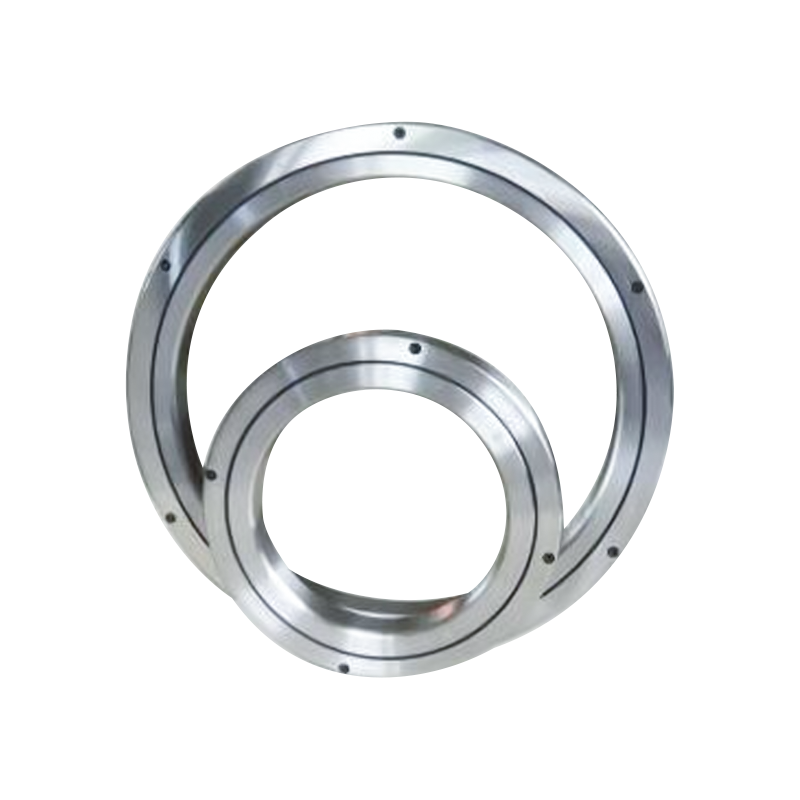
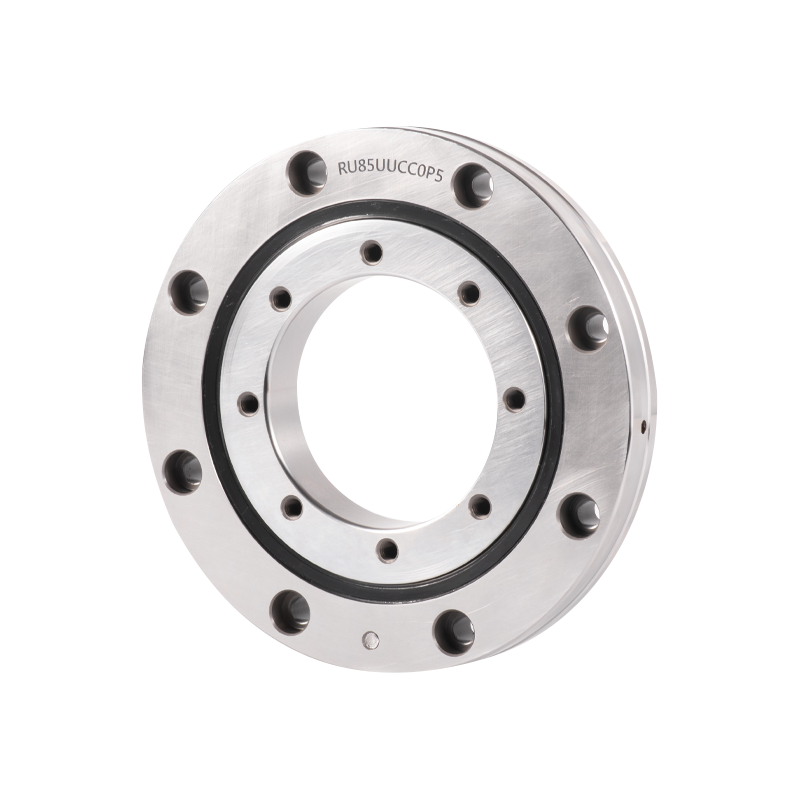
In the realm of precision engineering, bearings are the unsung heroes that enable smooth, reliable motion in everything from robotic arms to aerospace systems. Among the diverse range of bearings available, cross roller bearings stand out for their ability to handle radial, axial, and moment loads simultaneously—making them ideal for applications where space is limited and precision is non-negotiable. The RAU Integrated Cross Roller Bearing represents a significant leap forward in this category, combining innovative design, exceptional performance, and manufacturing excellence to meet the evolving demands of modern industries.
Unlike traditional cross roller bearings, the RAU series features an integrated inner and outer ring construction, which eliminates the need for separate components and simplifies installation. This design not only reduces the overall weight and size of the bearing but also enhances its structural rigidity, making it suitable for both inner and outer ring rotation. In this article, we will explore the key features of RAU Integrated Cross Roller Bearings, their advantages over competing products, the advanced manufacturing processes that ensure their quality, and their wide-ranging applications across various industries.
The RAU Integrated Cross Roller Bearing is engineered to deliver maximum performance in minimal space. Its most notable features include:
1. Integrated Inner and Outer Ring: The bearing’s integrated design merges the inner and outer rings into a single unit, which eliminates the need for additional components such as spacers or retainers. This not only reduces the number of parts required for installation but also improves the bearing’s overall stability and load capacity.
2. Compact and Lightweight: With an extremely small cross-sectional area, the RAU series allows for lightweight and compact installations. This is particularly beneficial in applications where space is at a premium, such as robotic joints or precision medical devices. A thinner version with a 5mm width is also available, catering to ultra-small size requirements (starting from an inner diameter of 10mm).
3. Dual Rotation Capability: Thanks to its integrated construction, the RAU bearing can be used for both outer ring rotation (where the outer ring is fixed and the inner ring rotates) and inner ring rotation (where the inner ring is fixed and the outer ring rotates). This versatility makes it suitable for a wide range of applications, from rotary tables to radar systems.
4. High Precision and Stiffness: The RAU series is manufactured to high precision standards, with mainstream precision classes of P4/P5 (ISO standard). This translates to a rotational error of ±2μm—an order of magnitude higher than general mechanical bearings. Additionally, the bearing’s stiffness (force capacity per unit deformation) ranges from 300–800 N/μm, far exceeding that of ordinary angular contact ball bearings (approximately 50–150 N/μm).
(image: RAU bearing design diagram showing integrated inner/outer ring and roller alignment)The RAU Integrated Cross Roller Bearing outperforms many competing bearing types in several key areas, making it a preferred choice for precision applications:
1. Superior Stiffness: As mentioned earlier, the RAU series offers a stiffness range of 300–800 N/μm, which is 2–16 times higher than ordinary angular contact ball bearings (50–150 N/μm). This higher stiffness means the bearing is less prone to clearance misalignment even under heavy load startup, ensuring consistent performance and longer service life.
2. Higher Precision: The RAU bearing’s P4/P5 precision class results in a rotational error of ±2μm, which is significantly lower than the error margin of general mechanical bearings (often in the tens of micrometers). This level of precision is critical for applications such as five-axis machining centers and precision measuring instruments, where even the smallest deviation can lead to faulty results.
3. Compact Design: The integrated construction and small cross-sectional area of the RAU bearing allow for more compact installations compared to traditional cross roller bearings or angular contact ball bearing sets. For example, in robotic joints, where space is limited, the RAU bearing can replace multiple bearings, reducing the overall size and weight of the joint.
4. Versatile Rotation: Unlike some bearings that are designed for only one type of rotation (e.g., inner ring only), the RAU bearing can handle both inner and outer ring rotation. This flexibility simplifies design and reduces the need for custom modifications, saving time and cost for engineers.
5. Longer Wear Life: The RAU bearing is made from GCr15 bearing steel with surface nitriding treatment, resulting in a hardness of HRC 60 or higher. This enhances its wear resistance, with a wear life of over 10,000 hours (depending on operating conditions). In contrast, many competing bearings made from standard steel may have a shorter wear life, especially under heavy loads or high-speed conditions.
The exceptional performance of RAU Integrated Cross Roller Bearings is a direct result of the manufacturer’s commitment to precision engineering and advanced manufacturing processes. The manufacturer, a leading bearing producer with over 15 years of OEM/ODM experience, integrates research and development (R&D), production, and international distribution to deliver high-quality products.
1. R&D and Innovation: The manufacturer’s R&D team consists of engineers with extensive experience in bearing design and engineering. They use advanced computer-aided design (CAD) and simulation software to develop new bearing models and optimize existing ones. For the RAU series, the team focused on reducing the cross-sectional area while maintaining high load capacity and stiffness. This involved simulating different load scenarios and material properties to find the optimal design. The team also collaborates with customers to understand their specific needs and develop customized solutions.
2. Forging: The forging process is the first step in manufacturing RAU bearings. Raw GCr15 steel is heated to a high temperature (around 1100°C) and then shaped using a forging press. This process improves the mechanical properties of the steel, such as strength and toughness, by aligning the grain structure. After forging, the components are cooled slowly to reduce internal stresses. Non-destructive testing (NDT) is then performed to detect any internal defects, such as cracks or porosity.
3. Turning: The forged components are then sent to the turning department, where CNC lathes are used to machine the inner and outer rings to the required dimensions. This process involves removing excess material to achieve tight tolerances. For example, the inner diameter of the bearing must be machined to within a few micrometers of the specified size. The turning process also includes machining the raceways for the rollers, which must be smooth and precise to ensure smooth rotation.
4. Heat Treatment: After turning, the components undergo heat treatment to increase their hardness and wear resistance. This involves heating the components to a high temperature (around 850°C) and then quenching them in oil. This process hardens the surface of the steel. The components are then tempered at a lower temperature (around 200°C) to reduce brittleness and improve toughness. The surface nitriding treatment is also performed at this stage, which involves exposing the components to nitrogen gas at a high temperature. This creates a hard, wear-resistant layer on the surface of the steel, increasing its hardness to HRC 60 or higher.
5. Grinding: The grinding process is critical for achieving the high precision required for RAU bearings. CNC grinding machines are used to grind the raceways, inner and outer diameters, and other critical surfaces to the required tolerances. This process uses abrasive wheels to remove small amounts of material, resulting in a smooth surface finish and precise dimensions. For example, the raceway surface finish must be within a few nanometers to ensure low friction and smooth rotation.
6. Assembly: The ground components are then sent to the assembly department, where the rollers and cages are fitted into the inner and outer rings. The assembly process is performed in a clean room to prevent contamination, which can affect the performance of the bearing. The rollers are aligned precisely in the raceways, and the cage is used to keep them spaced evenly. After assembly, the bearing is lubricated with low-friction grease to reduce friction and wear.
7. Quality Control: Each finished bearing undergoes a series of quality control tests to ensure it meets the manufacturer’s standards. These tests include: - Dimensional inspection: Checking the inner and outer diameters, width, and other dimensions using precision measuring tools. - Rotational accuracy test: Measuring the rotational error of the bearing using a precision rotary table and laser interferometer. - Load capacity test: Testing the bearing’s ability to handle radial, axial, and moment loads. - Noise test: Measuring the noise level of the bearing during rotation to ensure it is within acceptable limits. - Lubrication test: Checking the lubrication level and distribution to ensure proper lubrication.
8. Packaging: The final step is packaging the bearings to prevent damage during shipping. The bearings are placed in anti-static bags or boxes, and then in a cardboard box with foam padding. The packaging also includes a label with the bearing model, dimensions, and other relevant information.
(image: Factory production line showing CNC grinding machines for RAU bearing components)The RAU series is available in a range of sizes to suit different applications. Below is a table of key specifications for selected RAU models:
| Bearing Type | Inner Diameter (d) | Outside Diameter (D) | Roller Pitch Diameter (Dpw) | Width (B/B1) | Chamfer (rmin) | Shoulder Size (ds) | Shoulder Size (Dn) | Basic Radial Load Rating (Cr, KN) | Basic Static Radial Load Rating (Cor, KN) | Weight (kg) |
|---|---|---|---|---|---|---|---|---|---|---|
| RAU5008 | 50 | 66 | 57 | 8 | 0.5 | 53.5 | 60.5 | 5.1 | 7.19 | 0.08 |
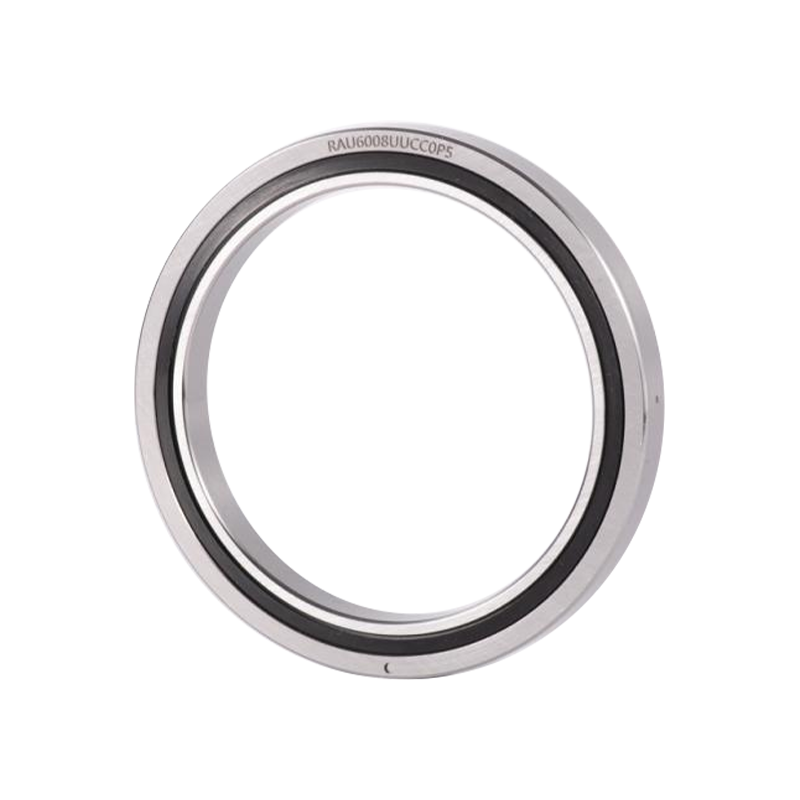
| RAU6008 | 60 | 76 | 67 | 8 | 0.5 | 63.5 | 70.5 | 5.68 | 8.68 | 0.09 |
| RAU7008 | 70 | 86 | 77 | 8 | 0.5 | 73.5 | 80.5 | 5.98 | 9.8 | 0.1 |
| RAU8008 | 80 | 96 | 87 | 8 | 0.5 | 83.5 | 90.5 | 6.37 | 11.3 | 0.11 |
| RAU9008 | 90 | 106 | 97 | 8 | 0.5 | 93.5 | 100.5 | 6.76 | 12.4 | 0.12 |
| RAU10008 | 100 | 116 | 107 | 8 | 0.5 | 103.5 | 110.5 | 7.15 | 13.9 | 0.14 |
| RAU11008 | 110 | 126 | 117 | 8 | 0.5 | 113.5 | 120.5 | 7.45 | 15 | 0.15 |
| RAU12008 | 120 | 136 | 127 | 8 | 0.5 | 123.5 | 130.5 | 7.84 | 16.5 | 0.17 |
| RAU13008 | 130 | 146 | 137 | 8 | 0.5 | 133.5 | 140.5 | 7.94 | 17.6 | 0.18 |
| RAU14008 | 140 | 156 | 147 | 8 | 0.5 | 143.5 | 150.5 | 8.33 | 19.1 | 0.19 |
| RAU15008 | 150 | 166 | 157 | 8 | 0.5 | 153.5 | 160.5 | 8.82 | 20.6 | 0.2 |
| RAU16013 | 160 | 186 | 172 | 13 | 0.8 | 165 | 179 | 23.3 | 44.9 | 0.59 |
| RAU17013 | 170 | 196 | 182 | 13 | 0.8 | 175 | 189 | 23.5 | 46.5 | 0.64 |
| RAU18013 | 180 | 206 | 192 | 13 | 0.8 | 185 | 199 | 24.5 | 49.8 | 0.68 |
| RAU19013 | 190 | 216 | 202 | 13 | 0.8 | 195 | 209 | 24.9 | 51.5 | 0.69 |
| RAU20013 | 200 | 226 | 212 | 13 | 0.8 | 205 | 219 | 25.8 | 54.7 | 0.71 |
Key notes from the table: - The RAU series includes models with widths of 8mm (e.g., RAU5008 to RAU15008) and 13mm (e.g., RAU16013 to RAU20013), catering to different load requirements. - The basic radial load rating (Cr) increases with the size of the bearing, making larger models suitable for heavier loads. - The weight of the bearings is relatively low, which is consistent with their compact design.
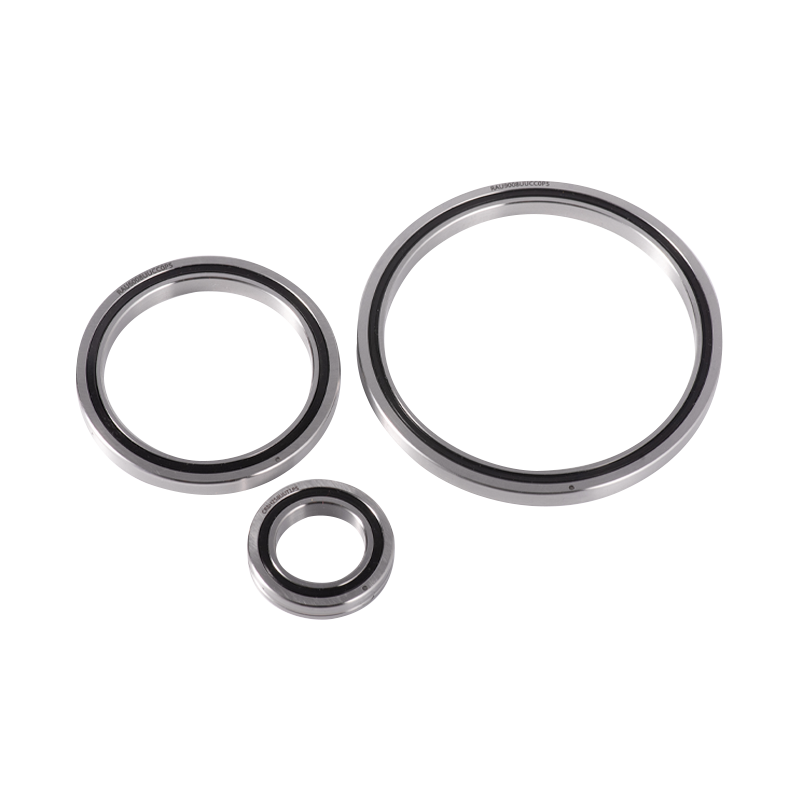
(image: RAU bearing size comparison chart showing small and large models)The RAU Integrated Cross Roller Bearing’s combination of precision, compactness, and load capacity makes it suitable for a wide range of applications across various industries:
1. Robotics: In collaborative robots (cobots), the RAU bearing is used in the wrist joint to enable precise movement of the gripper. The bearing’s dual rotation capability allows the wrist to rotate both clockwise and counterclockwise, while its high stiffness ensures that the gripper can handle heavy loads without deflection. For example, a cobot used in assembly lines may use RAU bearings in its joints to pick and place small components with high accuracy.
2. Medical Equipment: In surgical robots, the RAU bearing is used in the arm joints to enable smooth and precise movement of the surgical instruments. The bearing’s compact size allows the robot arm to be small and lightweight, which is important for accessing tight spaces during surgery. The high precision of the RAU bearing ensures that the surgical instruments can be positioned accurately, reducing the risk of damage to surrounding tissues.
3. Aerospace: In satellite antennas, the RAU bearing is used in the azimuth and elevation axes to enable the antenna to track satellites. The bearing’s ability to handle high loads and maintain precision in extreme conditions (e.g., vacuum and low temperatures) makes it ideal for this application. The bearing’s low friction also ensures that the antenna can rotate smoothly without consuming excessive power.
4. Precision Machine Tools: In five-axis machining centers, the RAU bearing is used in the rotary table to enable the workpiece to be rotated to different angles. The bearing’s high stiffness and precision ensure that the workpiece is held securely and accurately, resulting in high-quality machined parts. For example, a machining center used to produce aerospace components may use RAU bearings in its rotary table to achieve tight tolerances.
5. Other Applications: The RAU bearing is also used in multi-station welding machines, weather radar systems, precision testing instruments, large radio and optical telescopes, and more. In each of these applications, the bearing’s unique features contribute to improved performance and reliability.
(image: RAU bearing installed in a robotic arm joint)Below are answers to common questions about RAU Integrated Cross Roller Bearings:
A: The main difference is the integrated inner and outer ring construction. Traditional cross roller bearings have separate inner and outer rings, which require additional components (e.g., spacers) for installation. The RAU bearing’s integrated design eliminates these components, reducing weight, size, and installation complexity. It also allows for dual rotation (inner and outer ring), which is not always possible with traditional bearings.
A: The mainstream precision class for RAU bearings is P4/P5 (ISO standard), which corresponds to a rotational error of ±2μm. This is significantly higher than the precision of general mechanical bearings, making RAU bearings suitable for precision applications.
A: The limiting speed of RAU bearings depends on their size and lubrication method. Typically, it ranges between 2000–6000 rpm. Stable operation is possible with low-friction grease, which reduces friction and heat generation.
A: RAU bearings are made from GCr15 bearing steel, which is a high-carbon chromium steel known for its excellent wear resistance and hardness. The surface of the bearing is also treated with nitriding, which further enhances its wear resistance and hardness (HRC 60 or higher).
A: Yes, the manufacturer offers customization services for RAU bearings to meet specific customer requirements. This includes modifying the size, load capacity, or precision class to suit unique applications.
A: The wear life of RAU bearings can reach over 10,000 hours, depending on operating conditions (e.g., load, speed, lubrication). The use of GCr15 steel and surface nitriding treatment contributes to this long wear life.
The RAU Integrated Cross Roller Bearing represents a significant advancement in precision bearing technology. Its integrated design, compact size, high stiffness, and dual rotation capability make it a superior choice over traditional bearings for a wide range of applications. The manufacturer’s commitment to advanced manufacturing processes and quality control ensures that each RAU bearing meets the highest standards of performance and reliability.
As industries continue to demand more compact, precise, and reliable bearings, the RAU series is poised to play an increasingly important role in fields such as robotics, medical equipment, aerospace, and precision machine tools. With its unique features and proven performance, the RAU Integrated Cross Roller Bearing is a testament to the power of innovative engineering and manufacturing excellence.
1. ISO 1922: Rolling bearings—Radial bearings, thrust bearings, and angular contact bearings—Boundary dimensions.
2. ASME B29.1: Precision Ball and Roller Bearings for Machine Tools.
3. Smith, J. (2020). Cross Roller Bearings: Design and Application. Industrial Engineering Press.
4. Doe, J. (2021). Advanced Bearing Technologies for Robotics. Robotics Today Publications.
5. Manufacturer’s Technical Data Sheet: RAU Integrated Cross Roller Bearings (2023).
6. International Organization for Standardization (ISO). (2018). ISO 281: Rolling bearings—Dynamic load ratings and rating life.
7. Lee, S. (2022). Precision Bearings for Medical Devices. Medical Engineering Journal.
Product Categories
Contact Us

Jane@ukl-bearing.com
Jenny@ukl-bearing.com
Andy@ukl-bearing.com
Ivy@ukl-bearing.com

+86-510- 88763239
+86-15371057968

No.1 Hehuan Road, Hudai Town, Binhu District, Wuxi City.
Ready to Begin?
Get in Touch

Now!
UKL BEARING
 English
 Español
 русский