Content
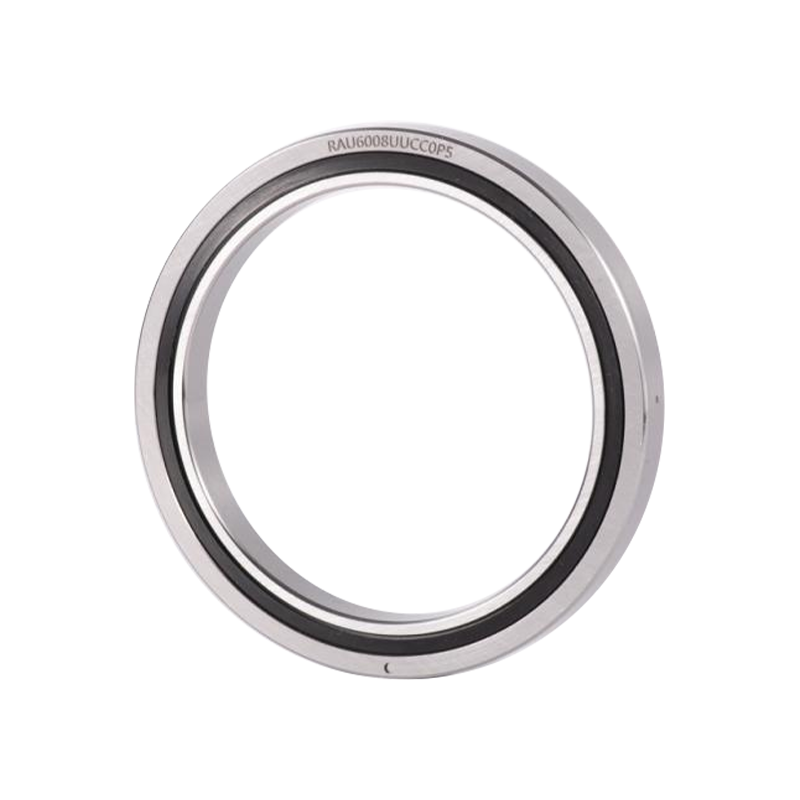
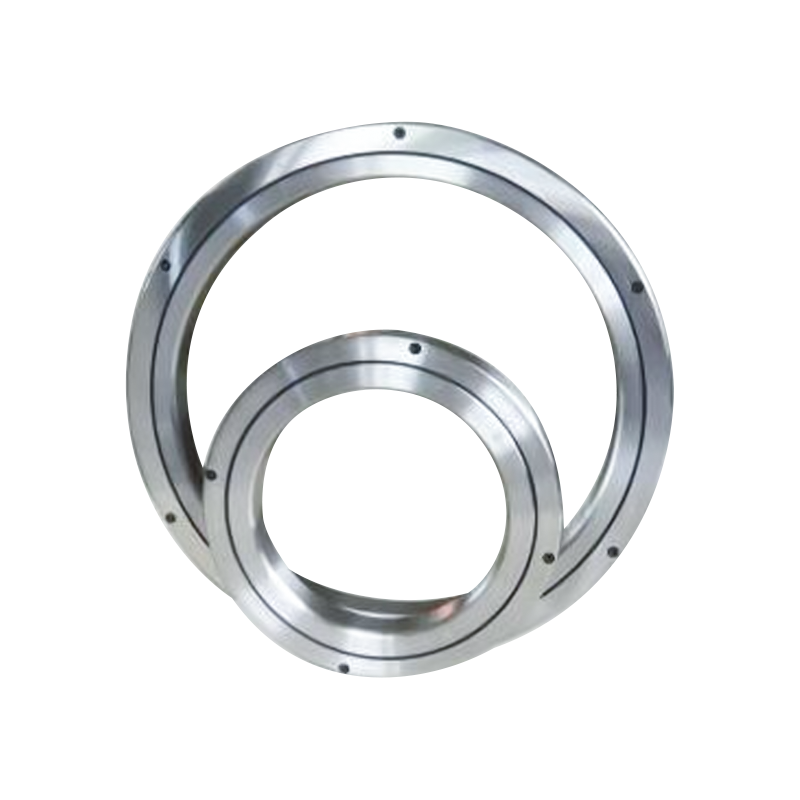
In compact motion systems, every millimeter of space and every gram of mass can influence performance, stability, energy consumption, and design freedom. The CRBT lightweight rotary joint bearing is engineered for exactly this kind of demanding environment. With an exceptionally thin section height of 5.5 mm and a width of only 5 mm, it provides a precise, compact, and lightweight bearing solution for applications where conventional rotary bearings are too large, too heavy, or too difficult to integrate.
This bearing belongs to the cross roller bearing family, a bearing type known for high rigidity, rotational accuracy, and the ability to support radial loads, axial loads, and moment loads in a single compact unit. The CRBT design takes these advantages further by reducing the section size and weight dramatically. Compared with the previous ultra-thin cross roller bearing structure represented by CRBS-type products, the CRBT bearing achieves a section height of only 69% of its predecessor, a cross-sectional area of only 43%, and, in a 50 mm inner diameter comparison, a weight of only 0.38 times that of the earlier design.
For engineers developing humanoid robots, small robotic arms, surveillance camera gimbals, rotary tables, precision machine tools, and compact joint modules, this reduction is not a minor improvement. It can change the entire design strategy. Smaller bearings allow smaller housings, lighter arms, reduced motor load, improved response speed, lower inertia, and better use of internal space. In miniature and high-precision mechanisms, the CRBT lightweight rotary joint bearing provides the structural support needed for smooth rotation while helping designers avoid the compromises commonly caused by oversized bearing components.
The CRBT lightweight rotary joint bearing is an ultra-compact cross roller bearing designed for rotation systems that require high precision, low mass, and minimal installation volume. Its 5 mm width is particularly important because many compact mechanisms have very limited axial space. In robotic joints, camera pan-tilt units, small index tables, optical positioning devices, and measurement instruments, the available width may be constrained by motors, encoders, gear reducers, cables, housings, and protective covers. A bearing with a 5 mm width gives engineers more freedom to place these components without enlarging the entire module.
The bearing’s section height of 5.5 mm also enables extremely compact radial packaging. A low section height means the difference between inner diameter and outside diameter is minimized while still preserving the rolling element structure required for stable load carrying. This is valuable when the rotating shaft or central cable passage must remain large, but the outside envelope cannot increase. For example, a robot joint may need a central bore for wiring, air tubes, or sensor cables. A thin-section bearing allows the designer to maintain a usable internal passage while keeping the joint diameter small.
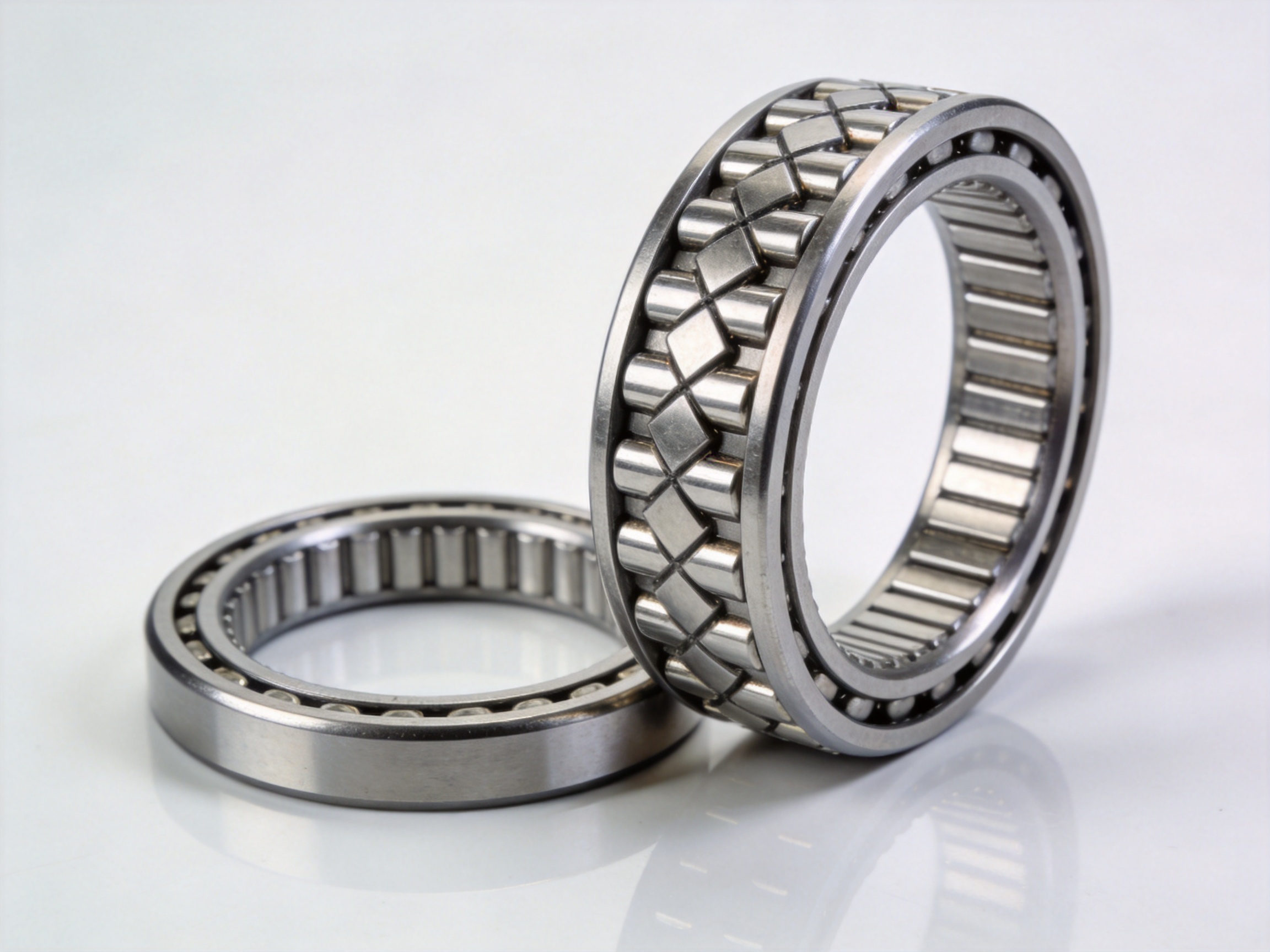
Unlike many rotary bearings that require complicated surrounding bearing arrangements, cross roller bearings can support multi-directional loads through a single bearing. Their internal rollers are arranged in a crossed pattern, typically alternating at right angles. This arrangement allows the bearing to carry radial, axial, and tilting moment loads efficiently. In practical terms, this means a compact rotary joint can often use one CRBT bearing where a less rigid system might require multiple bearings, spacers, and preload adjustments. The result is a cleaner structure, reduced part count, easier assembly, and more stable precision.
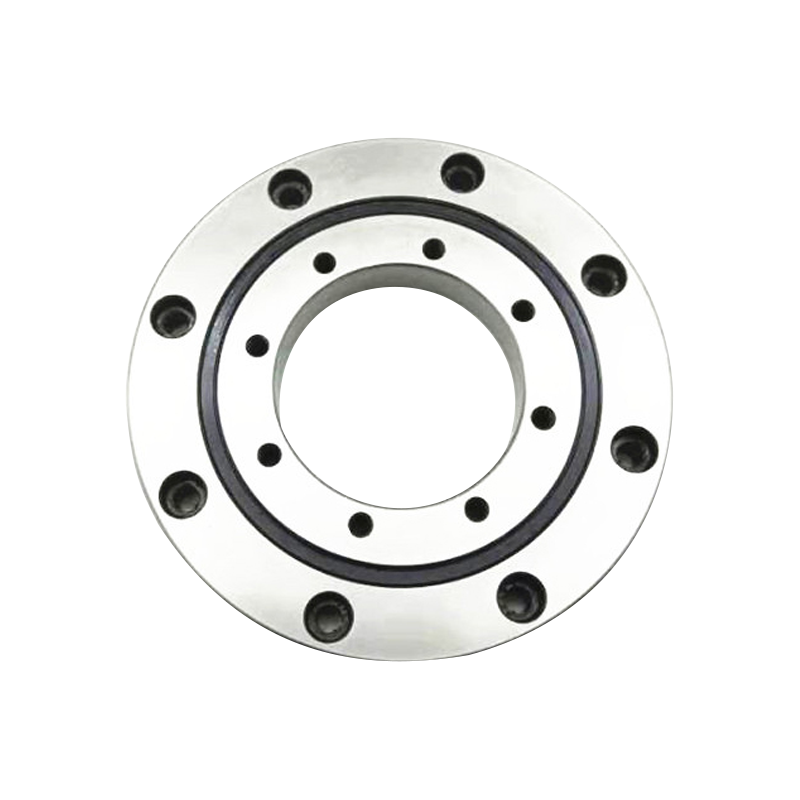
The CRBT lightweight rotary joint bearing has no mounting holes. This feature contributes to its extremely compact structure and low mass. In some bearing designs, mounting holes, flanges, or integrated fixing structures add material and increase the outer envelope. While such designs can be convenient in some applications, they are not always suitable for devices where every gram and millimeter matters. The CRBT bearing is intended for installations where the surrounding housing and shaft can provide the required support and fixing method, allowing the bearing itself to remain as light and small as possible.
Lightweight rotary bearing design is not simply about reducing product weight for convenience. In precision machinery and robotics, mass influences nearly every aspect of motion performance. When a rotating joint is lighter, the motor requires less torque to accelerate and decelerate it. This can reduce energy consumption, improve battery life in mobile systems, and allow the use of smaller drive components. Lower inertia also improves dynamic response, which is especially important in robotic arms that perform rapid positioning, repeated pick-and-place operations, or coordinated multi-axis movement.
In humanoid robots, lightweight joints are essential because the mass of each joint affects the entire kinematic chain. A heavy wrist joint increases the load on the elbow, shoulder, waist, and leg actuators. Weight reduction at the distal end of a limb can therefore produce benefits throughout the whole robot. The CRBT bearing’s low weight helps designers create slimmer arms, more agile end effectors, and more human-like movement. Its precision also supports smooth joint control, which is necessary for stable walking, manipulation, and interaction with delicate objects.
In miniature surveillance cameras and compact optical positioning systems, bearing weight and size affect both packaging and image stability. A camera head must move smoothly and accurately without vibration or backlash. If the bearing is too large, the enclosure becomes bulky. If it is not rigid enough, the image may shake during rotation or after stopping. The CRBT bearing provides a compact support structure that helps maintain rotational accuracy while allowing small, clean exterior designs. This is useful in security devices, inspection cameras, drones, portable observation systems, and compact sensing platforms.
For precision machine tools and rotary tables, the benefit of lightweight construction is often combined with the need for rigidity and accuracy. A bearing that is too flexible may reduce machining precision, while a bearing that is too large may limit machine layout. The CRBT lightweight rotary joint bearing offers a balance between compactness and performance. It is not intended to replace every heavy-duty rotary bearing, but it is an excellent choice where the load requirements match the bearing capacity and compact high-precision support is the priority.
The most obvious advantage of the CRBT lightweight rotary joint bearing is its reduced section size. With a section height of 5.5 mm and a 5 mm width, the bearing occupies extremely little installation space. Compared with conventional cross roller bearings, this allows the designer to shrink the joint structure or preserve space for other components. In modern electromechanical assemblies, the bearing is rarely the only part competing for space. Motors, reducers, sensors, brakes, wiring, seals, and mounting fasteners all require room. A thin bearing makes the entire system easier to optimize.
The second advantage is weight reduction. A bearing with a lower cross-sectional area naturally uses less material, but achieving low weight while maintaining functional performance requires careful design and manufacturing control. The CRBT bearing’s weight is only 0.38 times that of a comparable previous ultra-thin design in the 50 mm inner diameter comparison. This reduction can help decrease joint inertia, improve acceleration, reduce motor heating, and extend the working life of surrounding components. In portable, battery-powered, or mobile equipment, the value of weight reduction is especially high.
The third advantage is the cross roller structure itself. Because the rollers are arranged in alternating directions, the bearing can support complex loads in a compact form. Many rotary joints experience not only radial load but also axial force and overturning moment. For example, a robot wrist may experience tilting load when gripping an object, while a camera gimbal may experience moment load from an offset lens assembly. A cross roller bearing is well suited to these conditions because it provides rigidity in multiple directions without requiring a long bearing span.
The fourth advantage is compactness without integrated mounting holes. Some competing bearing products include mounting holes as a built-in convenience, but the additional material may increase size and weight. The CRBT design focuses on minimal bearing envelope and minimal mass. This allows engineers to design the mounting interface according to the application rather than being forced to accept a larger bearing outline. In ultra-compact devices, this flexibility can be the difference between a successful design and a mechanism that cannot fit into the desired housing.
When compared with traditional paired angular contact ball bearing arrangements, the CRBT lightweight rotary joint bearing can simplify the structure of compact rotary assemblies. Angular contact ball bearings are excellent for many high-speed and precision applications, but when they are used in pairs to support moment loads, they require spacing, preload control, alignment, and additional housing length. In very small joints, this can be difficult. A cross roller bearing can often provide the necessary combined load capacity in a single bearing, reducing assembly complexity and axial space requirements.
Compared with deep groove ball bearings, the CRBT bearing offers greater suitability for moment load and high-rigidity rotary support. Deep groove ball bearings are common, economical, and versatile, but they are not always ideal for precision rotary joints subject to tilting moments. If a compact joint uses only a small deep groove bearing, the system may suffer from deflection or unstable positioning. The cross roller configuration provides a more rigid structure in a thin bearing format, making it better suited for high-accuracy robotic and instrument applications.
Compared with standard cross roller bearings, the CRBT bearing’s most significant competitive advantage is compactness. Standard cross roller bearings are often designed for higher load capacity and may have larger widths, larger section heights, or integrated mounting structures. These features are useful in heavier equipment, but they can be excessive in miniature robotic joints or compact surveillance modules. The CRBT bearing is optimized for applications where space and weight are as important as rigidity. It gives engineers a way to retain cross roller performance while moving toward smaller mechanism design.
Compared with flanged or hole-mounted rotary bearings, the CRBT bearing offers a cleaner and lighter bearing body. Integrated flanges and mounting holes may shorten installation time in some machines, but they also define the external shape and may waste space in custom compact assemblies. By eliminating mounting holes, the CRBT bearing leaves the fixing strategy to the designer. The surrounding shaft and housing can be made as thin, light, or specialized as the application requires. This is particularly valuable in OEM and ODM projects where the final assembly must be optimized for a unique product architecture.
Another important advantage is scalability across inner diameters from 10 mm to 95 mm in the listed series. This allows designers to apply the same bearing concept across multiple product sizes. A manufacturer developing a family of robot joints, for example, may require smaller bearings for wrists and larger bearings for elbows or compact waist modules. A consistent bearing series simplifies design standardization, procurement, assembly training, and maintenance planning.
The CRBT lightweight rotary joint bearing series covers a range of compact sizes. Each model maintains a 5 mm width and is designed with a thin radial section. The following table summarizes representative models, dimensions, basic load ratings, mass, and corresponding reference models. Values should be considered during engineering selection together with actual operating conditions, expected load direction, rotational speed, required precision, lubrication, temperature, mounting rigidity, and safety factor.
| Model | Inner Diameter d mm | Outside Diameter D mm | Width B mm | Installation ds min mm | Installation Dh mm | Dynamic Load C kN | Static Load Co kN | Mass g | Corresponding Model |
| CRBT105AC1P5 | 10 | 21 | 5 | 0.15 | 12.5 / 17 | 1.12 | 0.809 | 9 | RAU1005C0P5 |
| CRBT155AC1P5 | 15 | 26 | 5 | 0.15 | 17.5 / 22 | 1.32 | 1.10 | 12 | RAU1505C0P5 |
| CRBT205AC1P5 | 20 | 31 | 5 | 0.15 | 22.5 / 27 | 1.49 | 1.40 | 15 | RAU2005C0P5 |
| CRBT305AC1P5 | 30 | 41 | 5 | 0.15 | 32.5 / 37 | 1.89 | 2.14 | 21 | RAU3005C0P5 |
| CRBT405AC1P5 | 40 | 51 | 5 | 0.15 | 42.5 / 47 | 2.14 | 2.74 | 27 | RAU4005C0P5 |
| CRBT505AC1P5 | 50 | 61 | 5 | 0.15 | 52.5 / 57 | 2.43 | 3.49 | 32 | RAU5005C0P5 |
| CRBT605AC1P5 | 60 | 71 | 5 | 0.15 | 62.5 / 67 | 2.63 | 4.09 | 38 | RAU6005C0P5 |
| CRBT705AC1P5 | 70 | 81 | 5 | 0.15 | 72.5 / 77 | 2.81 | 4.68 | 44 | RAU7005C0P5 |
| CRBT805AC1P5 | 80 | 91 | 5 | 0.15 | 82.5 / 87 | 3.05 | 5.43 | 50 | RAU8005C0P5 |
| CRBT955AC1P5 | 95 | 106 | 5 | 0.15 | 97.5 / 102 | 3.22 | 6.31 | 59 | RAU9505C0P5 |
The table shows how the series maintains a constant width while increasing inner and outer diameters. This is beneficial for equipment platforms that need multiple sizes but want a consistent axial design. The low mass values are also notable. For example, the 50 mm inner diameter model weighs approximately 32 g, which makes it suitable for compact rotary systems where a conventional bearing arrangement might add unnecessary weight. The load ratings increase with size, allowing the engineer to choose a model based on the required load capacity and installation envelope.
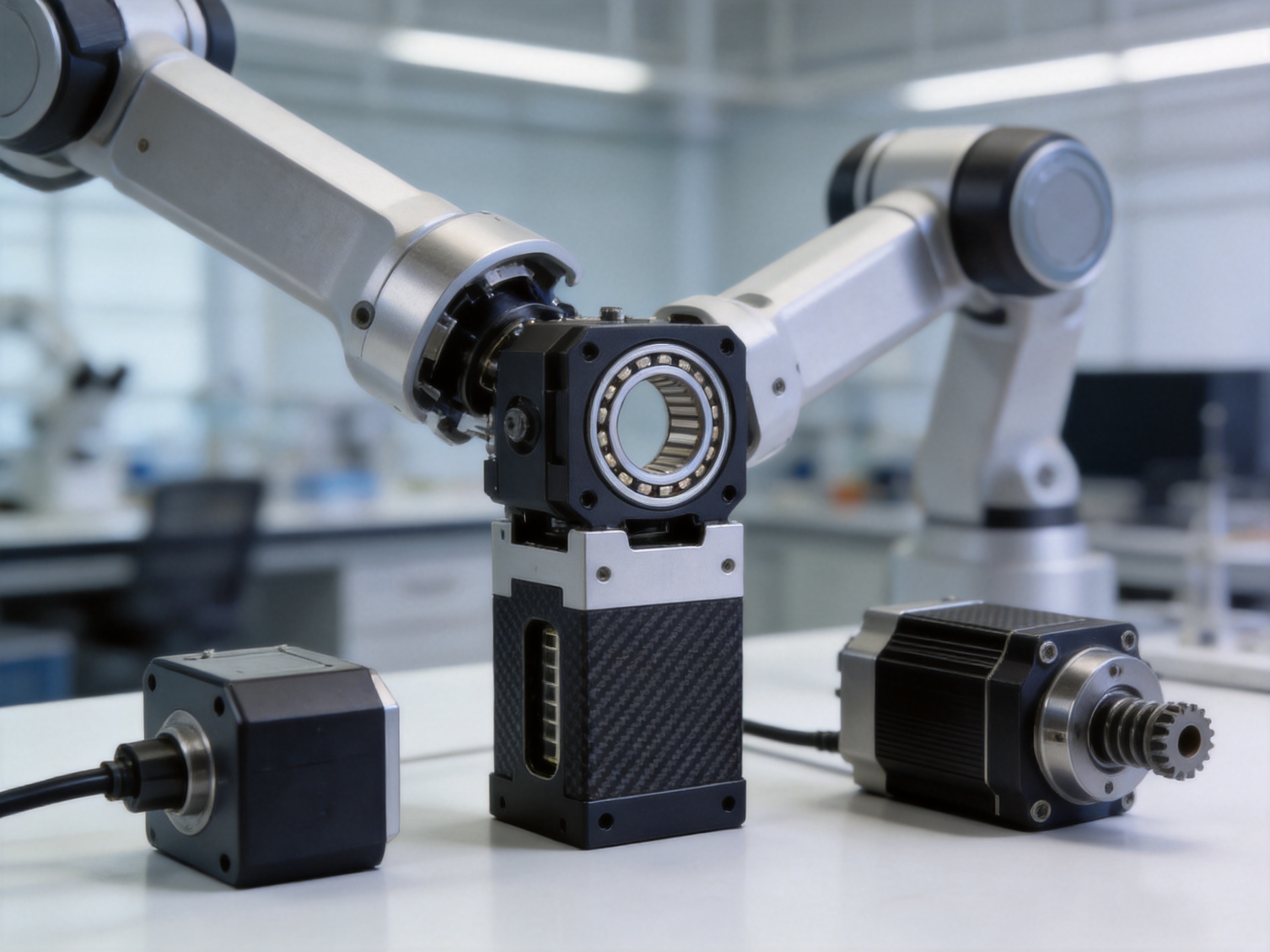
Humanoid robots place exceptional demands on rotary joint bearings. The mechanism must be compact enough to fit inside human-like limbs, light enough to avoid excessive power consumption, and precise enough to support stable controlled movement. Bearings in these systems may be used in wrists, elbows, shoulders, neck rotation units, waist joints, sensor platforms, and compact hand mechanisms. The CRBT lightweight rotary joint bearing is well matched to this field because it supports multi-directional loads while keeping the bearing envelope extremely small.
In a humanoid arm, joint mass directly affects motion efficiency. A heavy bearing at the wrist increases the torque required at the elbow and shoulder. This can force the use of larger motors and reducers, which then increase total weight even further. By choosing a lightweight bearing, designers can reduce this cascading mass effect. The CRBT design helps support a more compact actuator module, which may include a motor, gear reducer, brake, encoder, cable routing, and housing in a limited volume.
Precision is also essential. Humanoid robots often perform tasks such as gripping, pointing, manipulating tools, interacting with humans, and maintaining balance. Uncontrolled bearing clearance, poor rigidity, or inconsistent friction can reduce control accuracy. A cross roller bearing provides a rigid rotating support structure that can contribute to repeatable motion. When integrated with appropriate preload, lubrication, housing accuracy, and assembly control, it helps create smooth and reliable joint behavior.
Small robotic arms are used in electronics assembly, laboratory automation, education, medical support equipment, packaging, inspection, and light industrial handling. These robots are usually expected to move quickly, repeat positions accurately, and operate within tight workspaces. A compact bearing such as the CRBT lightweight rotary joint bearing supports the development of slim, efficient joints that do not compromise the usable working area of the robot.
Because the CRBT bearing can carry radial, axial, and moment loads, it may reduce the need for long bearing spans in small rotary joints. This is especially useful when the robot arm must be designed around compact harmonic drives, planetary reducers, direct-drive motors, or hollow-shaft actuators. A thin bearing can fit near the output side of the joint, helping maintain stiffness without expanding the joint housing. It also supports a neat design with fewer components and less assembly complexity.
Small robotic arms often operate continuously in repetitive cycles. The bearing must therefore be manufactured with stable dimensional accuracy, good surface finish, and reliable material properties. Poor bearing quality can lead to noise, vibration, uneven torque, premature wear, or reduced positioning performance. The CRBT bearing’s value is not only in its dimensions but also in the manufacturing discipline required to make such a thin component function consistently.
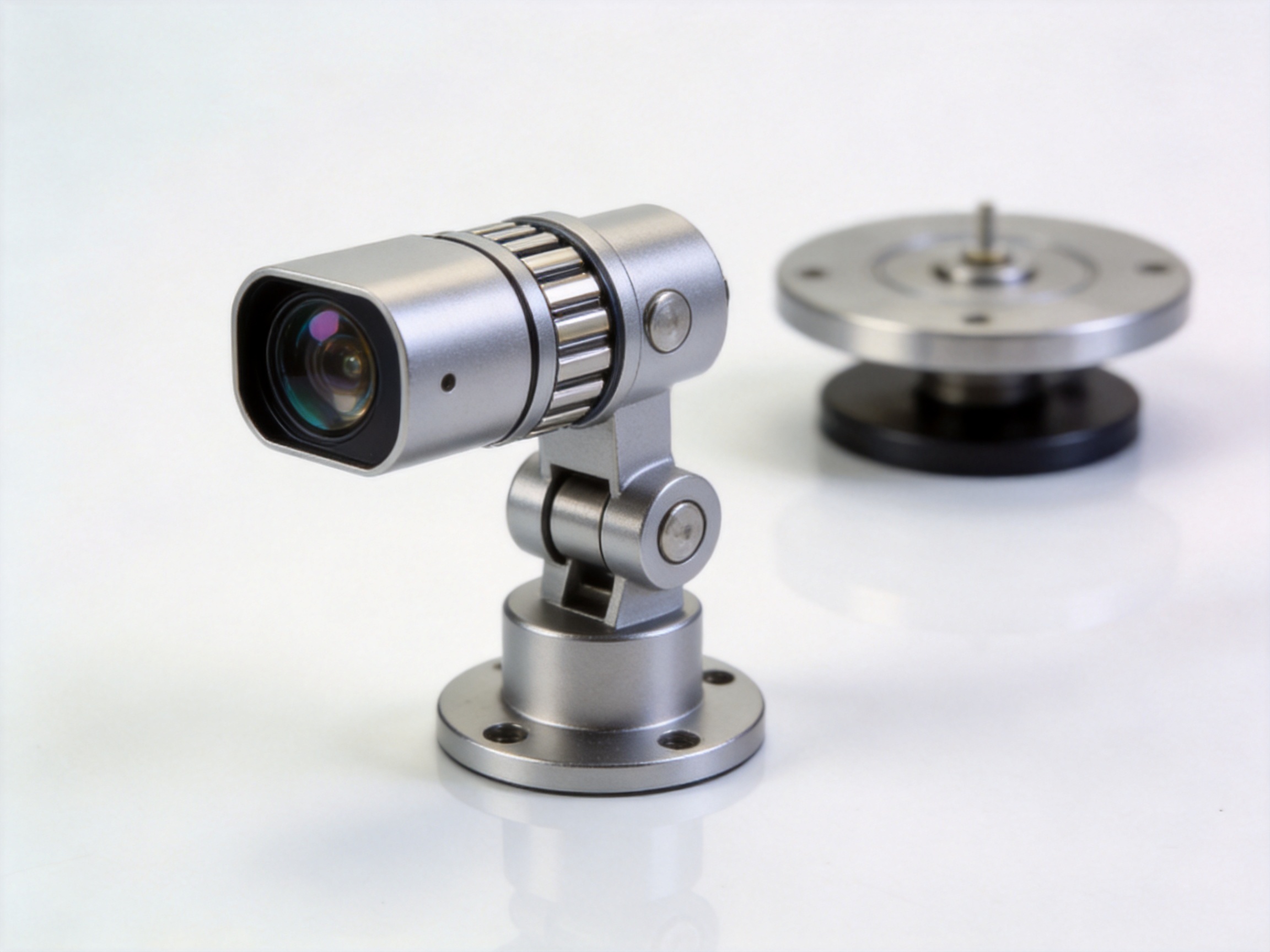
Miniature surveillance cameras, pan-tilt units, inspection cameras, and optical sensing modules require smooth, stable, and compact rotation. The bearing must support the camera body or optical payload while allowing controlled movement with minimal vibration. The CRBT lightweight rotary joint bearing is suitable for these systems because its thin profile helps reduce camera head size while its cross roller structure contributes to rigidity.
In surveillance applications, compact design can be a commercial and functional advantage. Smaller camera assemblies are easier to integrate into buildings, vehicles, drones, robots, and portable monitoring equipment. They may also be less visually intrusive. However, compactness cannot come at the cost of unstable rotation. A bearing with poor rigidity may allow image jitter, especially when the camera stops after a rapid pan or tilt movement. The CRBT bearing helps address this challenge by providing a stable bearing interface in a small package.
Optical devices also benefit from low and consistent rotational resistance. When a camera or sensor module is driven by a small motor, excess bearing torque can reduce control quality and increase power consumption. Properly manufactured and lubricated thin cross roller bearings can support smooth motion in these compact systems. Engineers should still consider sealing, contamination control, lubrication selection, and assembly alignment to ensure long-term performance.
Rotary tables and precision machine tools require bearings that support accurate rotation under combined loads. While large machine tools often use larger and heavier crossed roller rings, miniature or compact precision stages require a bearing that can maintain rigidity in a very small envelope. The CRBT lightweight rotary joint bearing is a practical choice for light-duty precision rotary stages, compact inspection equipment, small indexing mechanisms, and measurement fixtures.
In these applications, rotational accuracy, stiffness, and repeatability are often more important than high-speed operation. The cross roller arrangement helps resist tilting moments, which is important when a workpiece or fixture is offset from the bearing centerline. The ultra-thin section helps keep the rotary table profile low. A lower profile can improve machine layout, reduce stack height, and allow more compact integration with linear axes, motors, encoders, and clamps.
For precision machine tool use, the surrounding structure must be designed carefully. Even a high-quality bearing cannot deliver full performance if the housing is weak, out of round, or poorly aligned. The CRBT bearing should be mounted in accurately machined seats with suitable fits and proper axial support. Clean assembly, correct lubrication, and controlled tightening procedures are also important. When these conditions are met, the bearing can contribute to stable, compact rotary motion.
Producing an ultra-thin cross roller bearing is more demanding than producing a large, heavy bearing with generous material sections. The rings are slender, the raceway geometry must be precise, and small errors can affect preload, stiffness, friction torque, and service life. UKL Bearing Manufacturing Co., Ltd. integrates research and development, production, and international distribution to support this level of precision manufacturing. Its manufacturing system includes multiple process stages such as forging, turning, heat treatment, grinding, assembly, and packaging.
The process begins with material preparation and forming. Bearing steel must offer suitable hardness, fatigue resistance, dimensional stability, and wear resistance. Forging helps improve the internal structure of the material and prepares the blank for later machining. In thin bearing rings, material uniformity is especially important because distortion during heat treatment or grinding can be more difficult to control than in thicker components.
Turning creates the initial ring geometry. At this stage, the inner diameter, outer diameter, width, shoulders, and preliminary raceway forms are produced with allowance for later finishing. Because the CRBT bearing has a very narrow width and thin section, turning accuracy and clamping control are critical. Excessive machining stress or improper handling can lead to deformation. Skilled process planning helps keep ring geometry stable through each manufacturing stage.
Heat treatment provides the hardness and structural properties required for bearing raceways. For precision bearings, heat treatment must balance hardness, toughness, and dimensional stability. Uneven heating, quenching, or tempering can create distortion or residual stress. A manufacturer with strong process control can reduce these risks and improve consistency from batch to batch. This is especially important for OEM customers who require stable quality across repeated orders.
Grinding is one of the most critical stages. The bearing raceways, inner and outer diameters, side faces, and other reference surfaces require fine dimensional accuracy and surface finish. In a cross roller bearing, raceway geometry affects roller contact, load distribution, running smoothness, and stiffness. The thinner the bearing, the more important it becomes to control roundness, flatness, parallelism, and raceway accuracy. Digital production control and precision grinding equipment help ensure that the final bearing meets the requirements of high-precision applications.
Assembly requires careful roller selection, cage or separator arrangement, cleanliness, lubrication, and clearance or preload control. Cross roller bearings depend on accurate rolling element positioning. Contamination, incorrect roller size grouping, or uneven assembly can create torque variation or premature wear. A disciplined assembly process ensures that each bearing rotates smoothly and supports the intended load conditions. Final inspection confirms that the bearing meets dimensional and functional standards before packaging.
Quality control is essential for any bearing, but it becomes even more important for ultra-thin rotary joint bearings. Small deviations in geometry can be magnified in compact assemblies. UKL applies precision design and digital production control to ensure product accuracy and performance. This approach supports consistency across forging, machining, heat treatment, grinding, assembly, and final inspection.
Dimensional inspection may include checks of inner diameter, outside diameter, width, roundness, raceway form, side-face parallelism, and installation dimensions. Functional inspection may include rotational smoothness, noise, friction torque, and visual quality. Material and heat treatment verification help confirm that the bearing has suitable hardness and durability. Packaging inspection protects the bearing during transport so that precision surfaces are not damaged before installation.
For customers in robotics, automation, and precision equipment, quality consistency is often as important as a single high-performance sample. A prototype may work well, but mass production requires repeatable results. With a production capacity of 10,000 to 50,000 units per month and experience serving customers in the United States, Italy, Germany, Poland, South Africa, Egypt, India, and other regions, the company is positioned to support both development projects and regular supply programs.
Another strength is the company’s combined manufacturer and trader model. This structure can help customers source not only CRBT lightweight rotary joint bearings but also related bearing types, including robot bearings, angular contact ball bearings, rod end bearings, spherical roller bearings, cylindrical roller bearings, tapered roller bearings, Nilos rings, and mounted bearings. For OEM buyers, working with a supplier that understands multiple bearing categories can simplify technical communication and purchasing coordination.
Selecting the correct CRBT bearing model requires more than matching the shaft diameter. Engineers should evaluate radial load, axial load, moment load, duty cycle, rotational speed, expected life, mounting stiffness, temperature, lubrication, contamination level, and required precision. The basic load ratings in the table provide useful guidance, but the real application environment determines whether a bearing is suitable.
Moment load deserves special attention. Compact rotary joints often have loads applied at a distance from the bearing centerline. This creates an overturning moment. Cross roller bearings are designed to handle such loads better than many simple radial bearings, but each application still requires calculation. If the moment is too high, the bearing may experience excessive stress or reduced life. When in doubt, engineers should consult the bearing manufacturer with load diagrams, operating cycles, and installation drawings.
Mounting accuracy is also critical. Because the CRBT bearing is thin, it relies on the surrounding shaft and housing for proper support. If the housing is distorted, out of round, or misaligned, the bearing may not run smoothly. Recommended fits should be selected according to load direction, rotation mode, material, temperature, and required precision. The installation shoulders must support the rings without creating uneven stress. Careful machining and assembly are necessary to obtain the full benefit of the bearing’s precision design.
Lubrication should be chosen according to operating speed, temperature, environment, and maintenance expectations. Grease is common in compact robotic joints and camera systems because it provides long-lasting lubrication with limited maintenance. However, the grease type and quantity should be appropriate for low torque, noise control, and service life. Excess grease can increase starting torque, while insufficient lubrication can accelerate wear. Clean handling during assembly helps prevent contamination from damaging the raceways.
OEM and ODM projects often require custom engineering support, stable supply, and practical manufacturing knowledge. A bearing may look like a standard component, but in compact equipment it becomes a central part of the mechanical architecture. UKL has over 15 years of OEM and ODM export experience and supports customers with technical response, installation guidance, and after-sales maintenance. This is valuable for international buyers developing new robotic, automation, machine tool, or instrument products.
The CRBT lightweight rotary joint bearing is especially useful in platform development. Designers can create a product family based on multiple bearing sizes while maintaining a consistent compact design philosophy. For example, a robot company may use smaller models for wrists and camera mounts, medium models for elbows, and larger models for compact rotary bases. Because the series maintains a 5 mm width, axial layout can remain consistent across different modules.
Another OEM benefit is the opportunity to reduce total system cost through design simplification. Although a high-precision cross roller bearing may cost more than a simple commodity ball bearing, it can reduce the number of parts required in the joint. If one CRBT bearing replaces a more complex arrangement of multiple bearings, spacers, and adjustment components, the final assembly may become easier to manufacture and more reliable. Reduced weight may also allow smaller motors or lighter housings, creating additional system-level savings.
The no-mounting-hole structure provides further customization freedom. Instead of adapting the product around a predefined bearing flange, engineers can design the shaft and housing for the exact shape, material, and assembly sequence required. This is useful in compact products where the bearing must share space with sensors, wiring channels, gear teeth, seals, or electronic modules. The bearing becomes a precise core element around which the rest of the mechanism can be optimized.
Modern manufacturing is expected to deliver not only precision and productivity but also responsible environmental performance. UKL treats sustainability as a long-term commitment by adopting environmentally responsible processes, promoting material recycling, and optimizing energy use. Bearing production involves material processing, heat treatment, grinding, cleaning, lubrication, and packaging, so continuous improvement in energy efficiency and waste control can make a meaningful difference.
Lightweight bearing design also supports sustainability at the product level. When a bearing helps reduce the mass of a robot joint, camera system, or precision mechanism, the equipment may require less energy during operation. In battery-powered robots or mobile devices, lower mass can extend operating time and reduce charging frequency. In industrial automation, reduced moving mass can decrease energy consumption over many cycles. Although the bearing is only one component, its effect on system efficiency can be significant.
Material efficiency is another advantage of the CRBT design. By reducing cross-sectional area while preserving essential performance, the product uses material more efficiently than larger conventional alternatives. This aligns with the broader engineering trend toward compact, resource-conscious design. The best sustainable component is not simply one made with responsible processes, but one that also helps the final machine operate more efficiently throughout its life.
Industrial buyers need more than a catalog. They need a supplier that can communicate clearly, provide technical support, deliver stable quality, and respond to project requirements. UKL has developed partnerships with distributors and OEM customers across multiple continents. Its multilingual service team provides technical response, installation guidance, and after-sales support for global customers.
The company’s location in Wuxi City, an important industrial area in China, supports manufacturing access, logistics, skilled labor, and supply chain coordination. Its modernized factory and multiple production lines help maintain production continuity. With 201 to 500 employees and monthly production capacity ranging from 10,000 to 50,000 units, the company can support both small engineering orders and larger production programs.
International experience is especially important for precision bearing supply. Different markets may have different documentation expectations, packaging standards, communication styles, and delivery requirements. A supplier with export experience can help reduce purchasing friction. For OEM customers, this can shorten development cycles and improve confidence during the transition from prototype to mass production.
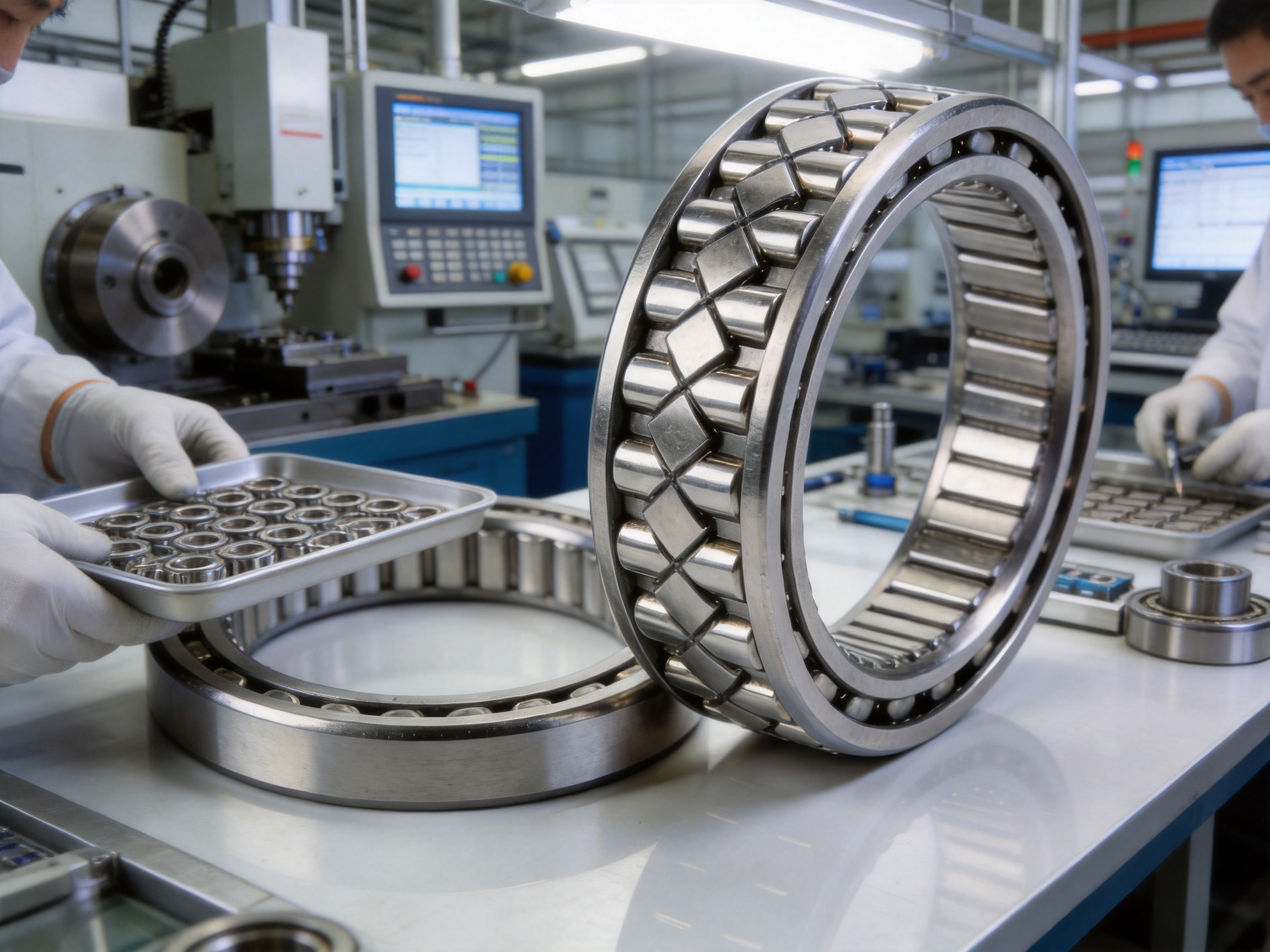
The CRBT lightweight rotary joint bearing is designed for compact rotary systems that require high precision, low weight, and minimal installation space. It is especially suitable for humanoid robots, small robotic arms, miniature surveillance cameras, rotary tables, precision machine tools, and compact joint modules.
The bearing has a section height of 5.5 mm and a width of only 5 mm. This makes it extremely compact compared with many conventional rotary bearing solutions.
Compared with the previous ultra-thin cross roller bearing design represented by CRBS-type products, the CRBT bearing has a section height of only 69%, a cross-sectional area of only 43%, and, in a 50 mm inner diameter comparison, a weight of only 0.38 times. These improvements make it much easier to design smaller and lighter mechanisms.
The absence of mounting holes reduces material, weight, and external size. This design gives engineers more freedom to create a custom housing or shaft interface while keeping the bearing itself extremely compact.
Yes. As a cross roller bearing, it can support radial loads, axial loads, and moment loads within its rated capacity. This is one of the reasons it is useful in compact rotary joints where space does not allow multiple bearing arrangements.
The CRBT bearing is primarily designed for compactness, rigidity, and precision in rotary joints. Suitability for high-speed operation depends on the exact model, lubrication, load, mounting design, and operating temperature. Engineers should consult technical support for applications involving higher speeds.
The bearing is highly relevant to robotics, intelligent automation, compact surveillance equipment, optical positioning devices, precision instruments, small rotary tables, and light-duty precision machine tools.
Engineers should ensure accurate shaft and housing machining, proper fits, clean assembly, suitable lubrication, and correct support of the bearing rings. Because the bearing is ultra-thin, surrounding structure accuracy has a strong influence on final performance.
The bearing is supported by integrated manufacturing processes including forging, turning, heat treatment, precision grinding, assembly, inspection, and packaging. Digital production control and dedicated research and development help maintain product consistency and accuracy.
Yes. The bearing is well suited to OEM and ODM projects because it offers a compact standard platform while allowing flexible surrounding structure design. Technical support can assist with model selection, installation guidance, and application evaluation.
The CRBT lightweight rotary joint bearing represents a focused response to one of the most important trends in modern mechanical design: the demand for smaller, lighter, and more precise motion systems. Its 5.5 mm section height and 5 mm width provide an ultra-compact bearing envelope, while its cross roller structure supports radial, axial, and moment loads in a single unit. Compared with earlier thin cross roller bearing designs, its reduced section height, reduced cross-sectional area, and substantial weight reduction create meaningful advantages for robotics, surveillance equipment, rotary stages, and compact precision mechanisms.
Its value is not limited to size. The product supports system-level improvements, including lower inertia, smaller joint housings, reduced motor load, simplified assembly, and greater design flexibility. The no-mounting-hole structure further reduces weight and allows engineers to develop optimized custom interfaces. For humanoid robots, small robotic arms, miniature cameras, and precision rotary modules, these advantages can directly influence performance and commercial competitiveness.
Behind the product is a manufacturing system that integrates research and development, forging, turning, heat treatment, grinding, assembly, quality control, and global service. UKL Bearing Manufacturing Co., Ltd. combines production capability, OEM and ODM experience, international distribution, and technical support to provide bearing solutions for demanding customers. With careful selection and proper installation, the CRBT lightweight rotary joint bearing can become a key component in the next generation of compact, intelligent, and high-precision equipment.
1. Harris, T. A., and Kotzalas, M. N. Rolling Bearing Analysis: Essential Concepts of Bearing Technology. CRC Press.
2. Brändlein, J., Eschmann, P., Hasbargen, L., and Weigand, K. Ball and Roller Bearings: Theory, Design and Application. Wiley.
3. ISO 281. Rolling Bearings: Dynamic Load Ratings and Rating Life. International Organization for Standardization.
4. ISO 492. Rolling Bearings: Radial Bearings, Geometrical Product Specifications and Tolerance Values. International Organization for Standardization.
5. Design guidelines and technical data for precision cross roller bearings, rotary joints, and compact motion systems.
Product Categories
Contact Us

Jane@ukl-bearing.com
Jenny@ukl-bearing.com
Andy@ukl-bearing.com
Ivy@ukl-bearing.com

+86-510- 88763239
+86-15371057968

No.1 Hehuan Road, Hudai Town, Binhu District, Wuxi City.
Ready to Begin?
Get in Touch

Now!
UKL BEARING
 English
 Español
 русский