Content
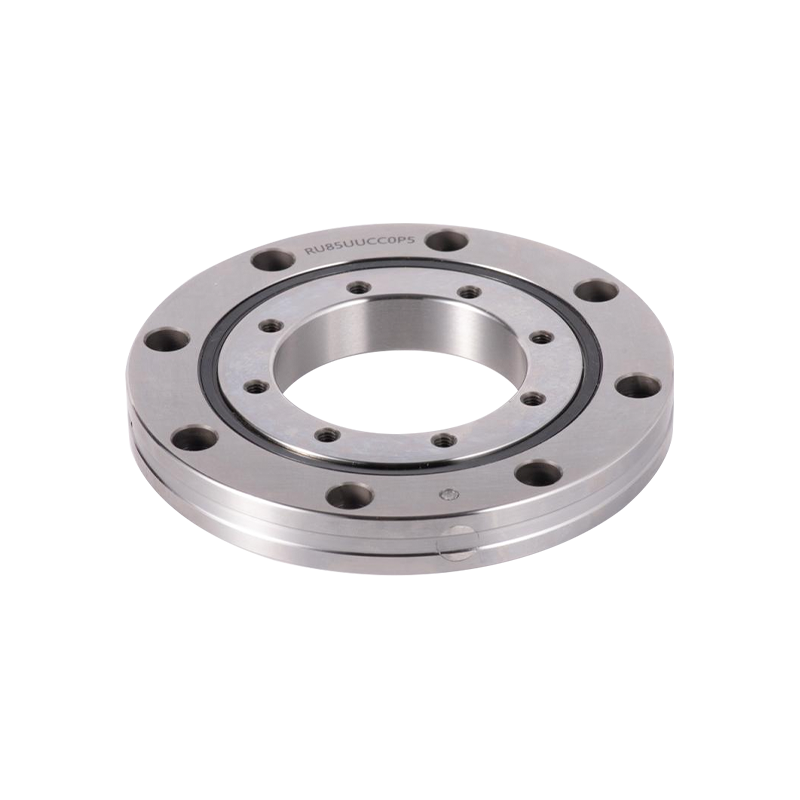
Crossed roller bearings have emerged as critical components in modern industrial systems, where precision, rigidity, and durability are non-negotiable. From robotic arms that perform delicate assembly tasks to CNC machining centers that produce high-tolerance parts, these bearings enable smooth, accurate rotational movement while handling both radial and axial loads simultaneously. Among the latest innovations in this space is the RE series crossed roller bearing, a design that combines structural ingenuity with advanced manufacturing to outperform traditional alternatives. This article explores the key features of the RE series, its advantages over competitors, the manufacturing processes that ensure its quality, and its diverse applications across industries.
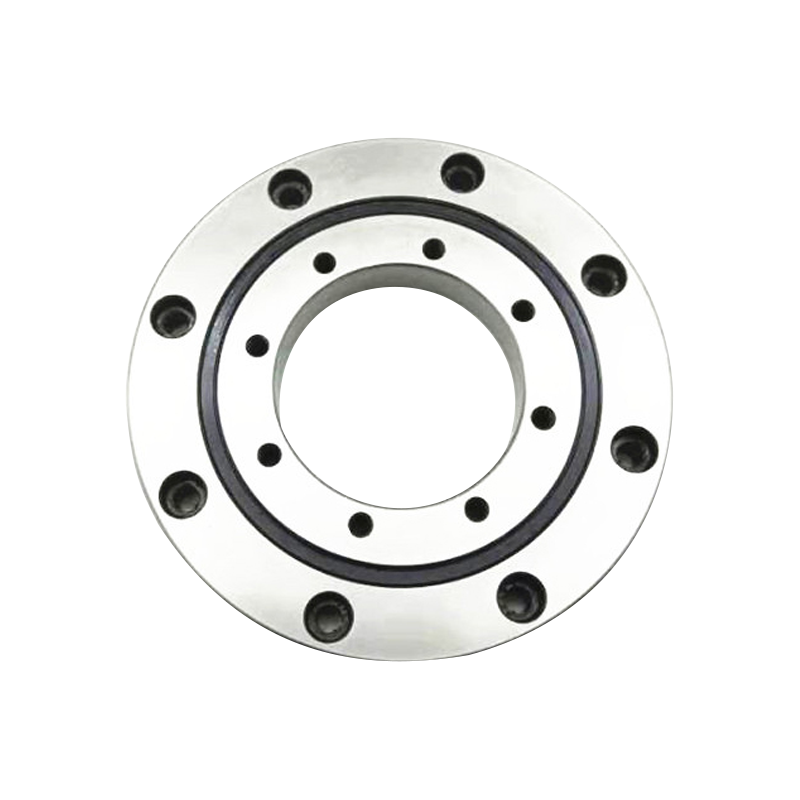
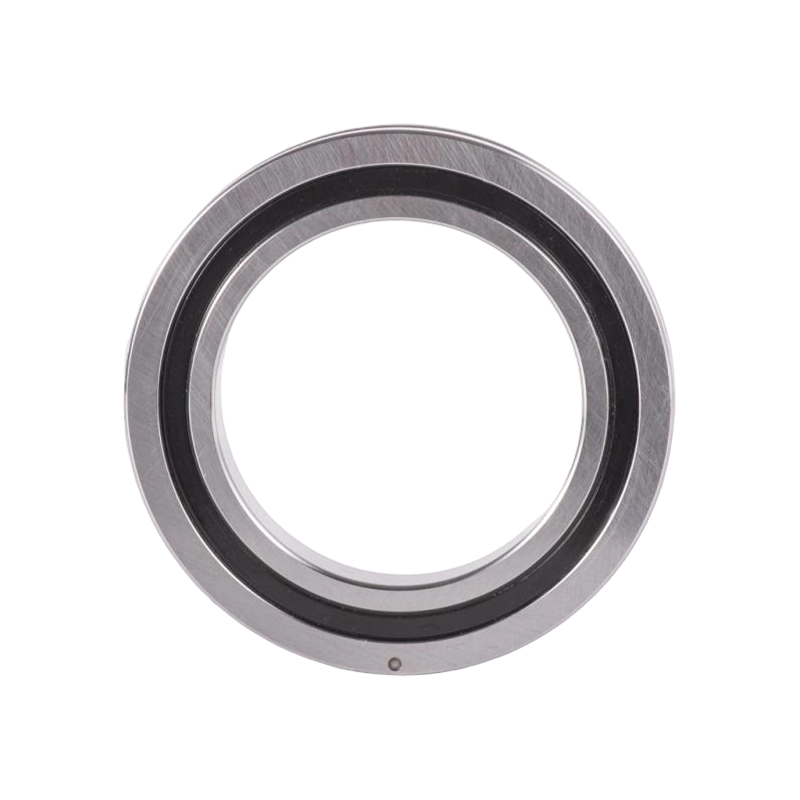
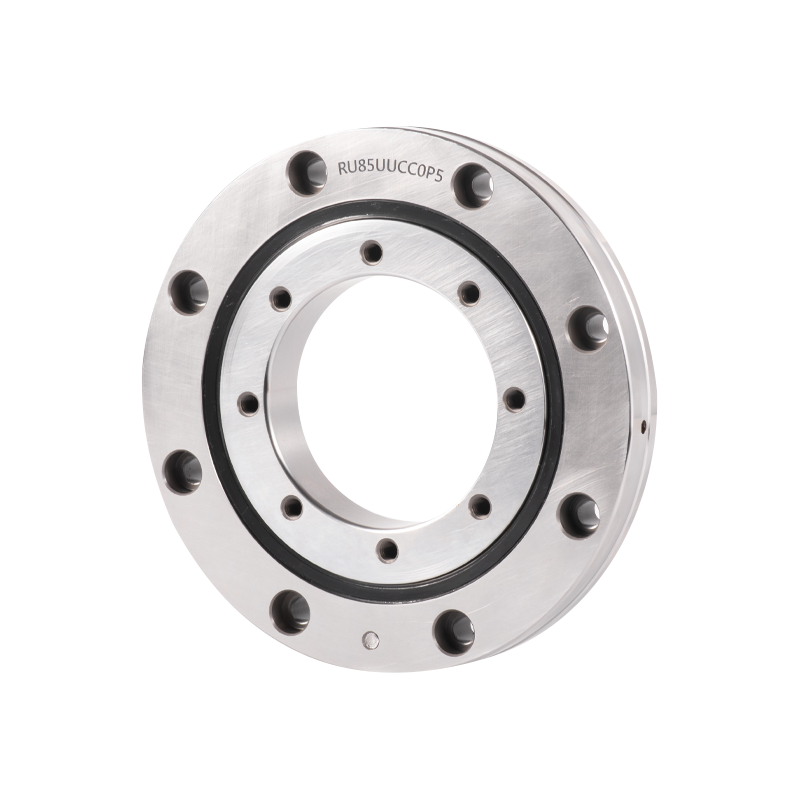
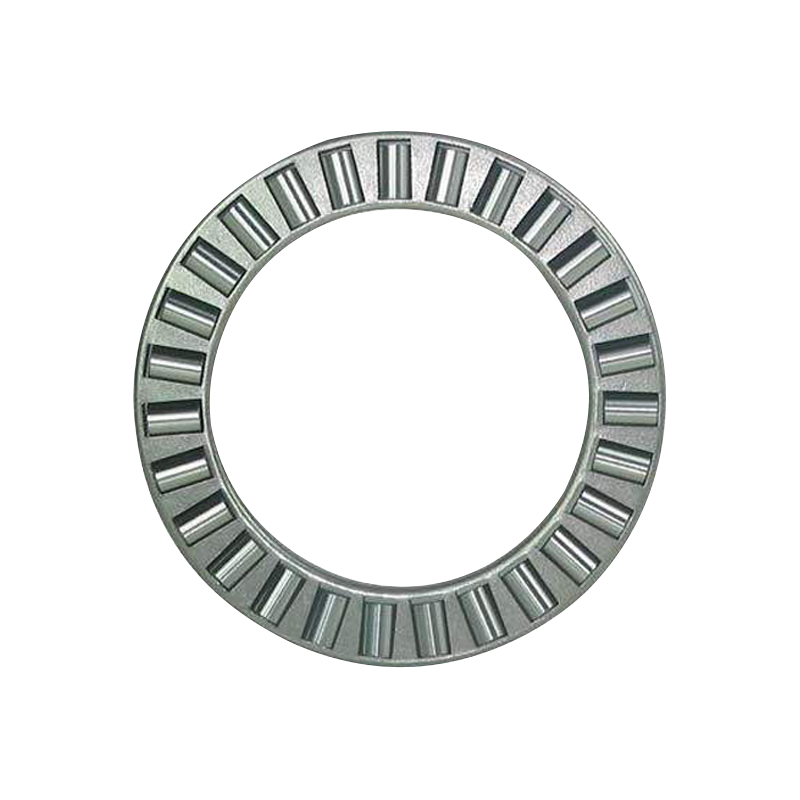
Crossed roller bearings are a type of rolling-element bearing characterized by cylindrical rollers arranged in a crisscross pattern (typically at 90-degree angles) between two concentric rings. This design allows the bearing to support both radial loads (forces perpendicular to the shaft) and axial loads (forces parallel to the shaft) in a single compact unit, eliminating the need for multiple bearings to handle different load types. Unlike ball bearings, which have point contact with the raceways, crossed roller bearings have line contact, distributing loads over a larger area and increasing rigidity and load capacity. This makes them ideal for applications where space is limited but precision and load handling are essential.
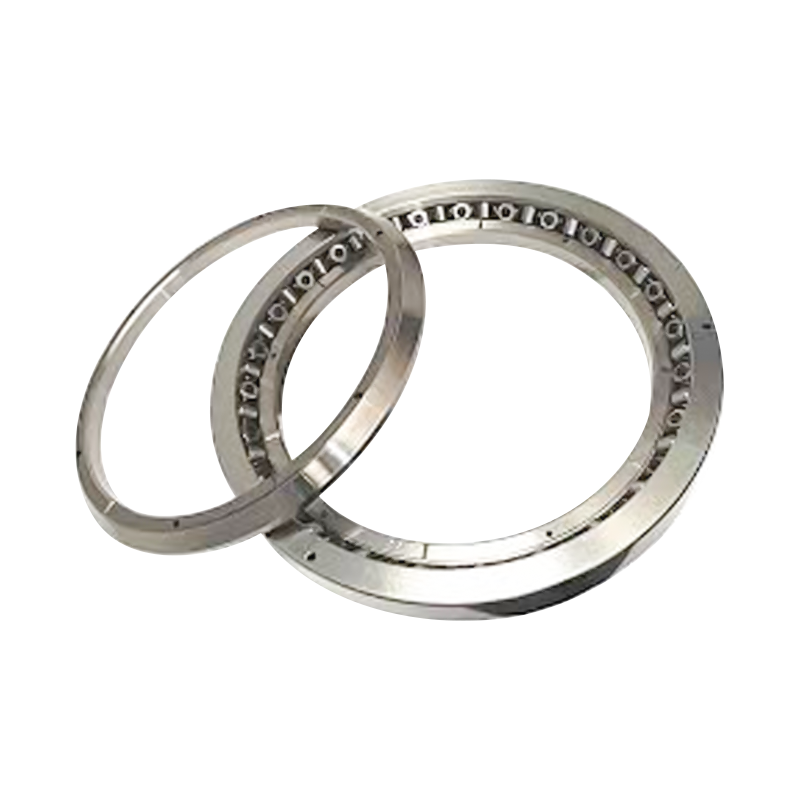
The basic structure of a crossed roller bearing usually consists of an inner ring, an outer ring, and a cage that holds the rollers in place. Depending on the design, either the inner or outer ring may be split to facilitate installation and adjustment. However, the RE series takes a unique approach to this design, as discussed in the next section.
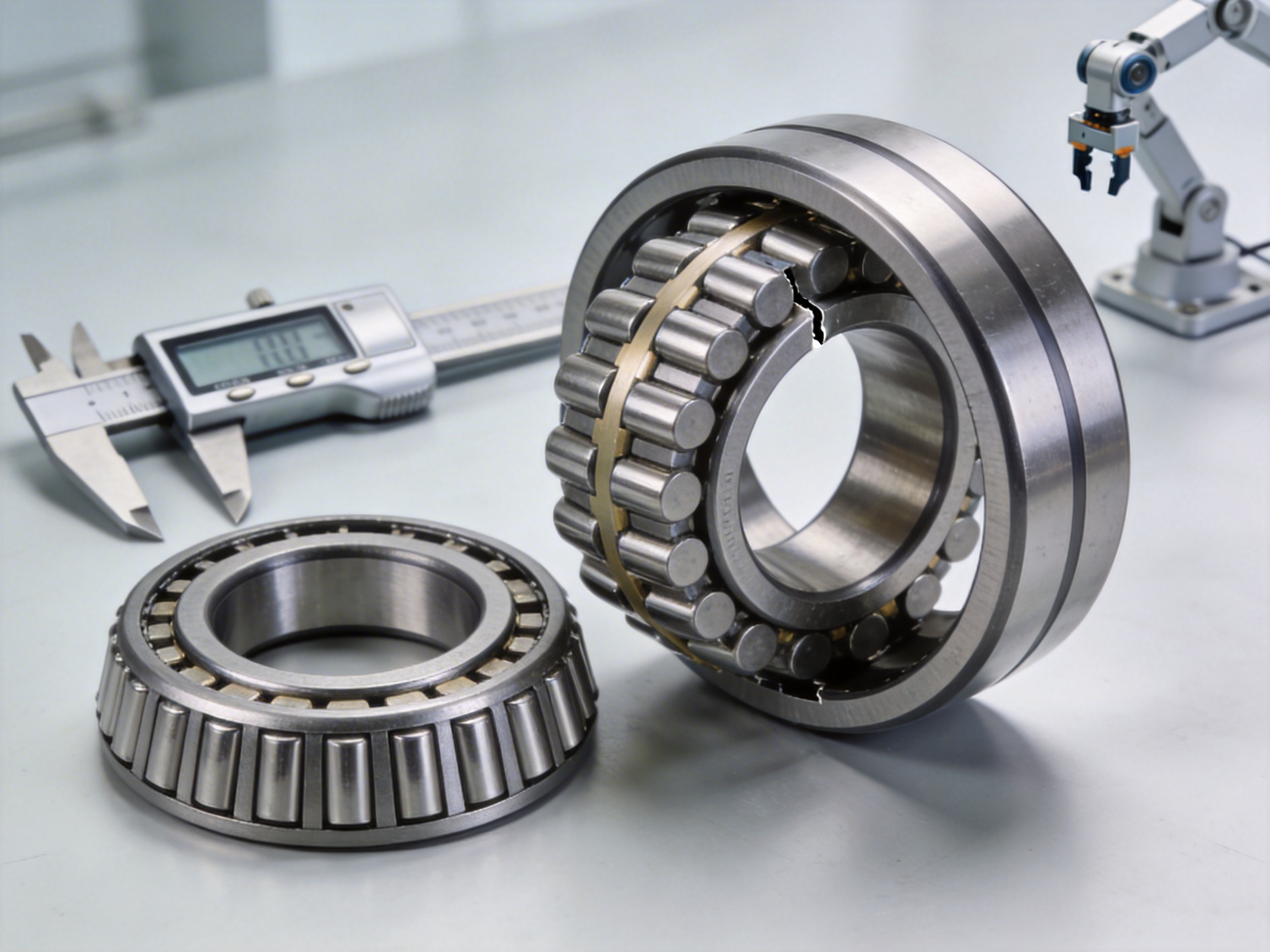
The RE series crossed roller bearings are a next-generation design developed from the proven XRB-type concept, with identical main dimensions but a distinct structural configuration. The key difference lies in the ring design: the inner ring is split, while the outer ring is manufactured as a single, integrated (one-piece) component. This design choice is intentional, as it caters to applications where high rotational accuracy of the outer ring is a priority—such as robotic joints, CNC spindle assemblies, and precision automation equipment.
The integrated outer ring of the RE series eliminates the gaps and potential misalignments that can occur with split outer ring designs. This results in greater structural rigidity, reduced deflection under load, and consistent performance over extended periods. Additionally, the split inner ring simplifies installation and adjustment, allowing for precise fitting to the shaft without compromising the integrity of the outer ring’s accuracy.
To illustrate the performance capabilities of the RE series, consider the following table of specifications for common RE series models:
| Bearing Type | Inner Diameter (d) mm | Outside Diameter (D) mm | Roller Pitch Diameter (Dpw) mm | Height (B/B1) mm | Chamfer (Rmin) mm | Shoulder Size (ds/Dh) mm | Basic Radial Load Rating (Cr) kN | Basic Static Load Rating (Cor) kN | Weight kg |
|---|---|---|---|---|---|---|---|---|---|
| RE 2008 | 20 | 36 | 29 | 8 | 0.5 | 23.5/30.5 | 3.23 | 3.1 | 0.04 |
| RE 2508 | 25 | 41 | 34 | 8 | 0.5 | 28.5/35.5 | 3.63 | 3.83 | 0.05 |
| RE 3010 | 30 | 55 | 43.5 | 10 | 0.6 | 37/47 | 7.35 | 8.36 | 0.12 |
| RE 3510 | 35 | 60 | 48.5 | 10 | 0.6 | 41/51.5 | 7.64 | 9.12 | 0.13 |
| RE 4010 | 40 | 65 | 53.5 | 10 | 0.6 | 47.5/58 | 8.33 | 10.6 | 0.16 |
| RE 4510 | 45 | 70 | 58.5 | 10 | 0.6 | 51/61.5 | 8.62 | 11.3 | 0.17 |
| RE 5013 | 50 | 80 | 66 | 13 | 0.6 | 57.5/72 | 16.7 | 20.9 | 0.27 |
| RE 6013 | 60 | 90 | 76 | 13 | 0.6 | 68/82 | 18 | 24.3 | 0.3 |
| RE 7013 | 70 | 100 | 86 | 13 | 0.6 | 78/92 | 19.4 | 27.7 | 0.35 |
| RE 8016 | 80 | 120 | 101.4 | 16 | 0.6 | 91/111 | 30.1 | 42.1 | 0.7 |
| RE 9016 | 90 | 130 | 112 | 16 | 1 | 98/118 | 31.4 | 45.3 | 0.75 |
| RE 10016 | 100 | 140 | 121.1 | 16 | 1 | 109/129 | 31.7 | 48.6 | 0.83 |
| RE 10020 | 100 | 150 | 127 | 20 | 1 | 113/133 | 33.1 | 50.9 | 1.45 |
| RE 11012 | 110 | 135 | 123.3 | 12 | 0.6 | 117/127 | 12.5 | 24.1 | 0.4 |
| RE 11015 | 110 | 145 | 129 | 15 | 0.6 | 122/136 | 23.7 | 41.5 | 0.75 |
| RE 11020 | 110 | 160 | 137 | 20 | 1 | 120/140 | 34 | 54 | 1.56 |
| RE 12016 | 120 | 150 | 136 | 16 | 0.6 | 127/141 | 24.2 | 43.2 | 0.72 |
| RE 12025 | 120 | 180 | 152 | 25 | 1.5 | 133/164 | 66.9 | 100 | 2.62 |
| RE 13015 | 130 | 160 | 146 | 15 | 0.6 | 137/152 | 25 | 46.7 | 0.72 |
| RE 13025 | 130 | 190 | 162 | 25 | 1.5 | 143/174 | 69.5 | 107 | 2.82 |
This table highlights the range of RE series bearings, from compact models like the RE 2008 (20mm inner diameter) to larger variants like the RE 13025 (130mm inner diameter). Each model is engineered to deliver consistent performance, with high load ratings that exceed many traditional crossed roller bearing designs.
The RE series crossed roller bearings stand out from competitors due to several design and performance advantages. These include:
The integrated outer ring design of the RE series is a critical factor in its superior precision. Unlike split outer ring designs, which can introduce微小 misalignments or gaps, the one-piece outer ring maintains a high level of geometric accuracy. This is especially important in applications where the outer ring is fixed (e.g., robotic joints where the outer ring is attached to the arm) and requires consistent rotational accuracy. The RE series’ precision is further enhanced by its tight manufacturing tolerances, which ensure minimal runout and vibration during operation.
For example, in a CNC machining center, even a small amount of runout in the spindle bearing can lead to inaccuracies in the finished part. The RE series’ integrated outer ring reduces this risk, resulting in higher-quality outputs and fewer rejects.
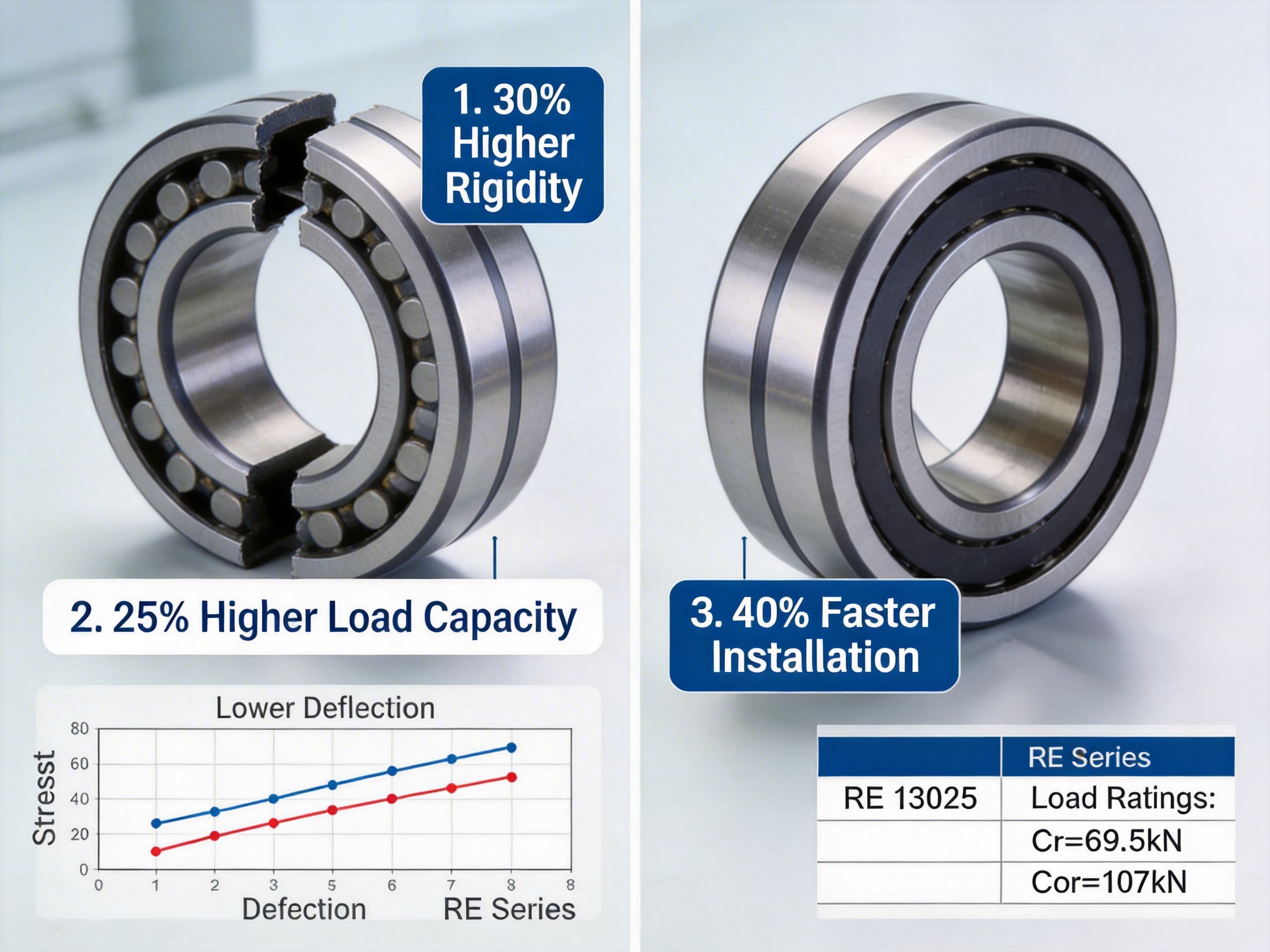
The crossed roller design of the RE series already provides higher rigidity than ball bearings, but the integrated outer ring takes this a step further. The one-piece outer ring distributes loads more evenly across the rollers, reducing stress concentrations and increasing the bearing’s overall rigidity. This allows the RE series to handle higher radial and axial loads than many competing crossed roller bearings of similar size.
From the specification table, the RE 13025 model has a basic radial load rating of 69.5 kN and a static load rating of 107 kN—figures that are significantly higher than those of many standard crossed roller bearings in the same size category. This makes the RE series ideal for heavy-duty applications where load capacity is a priority.
The split inner ring design of the RE series simplifies installation and maintenance, reducing downtime and labor costs. Split inner rings allow the bearing to be mounted directly onto the shaft without the need for heating or pressing, which can damage the bearing or shaft. Additionally, the split design makes it easier to adjust the bearing’s preload, ensuring optimal performance.
Maintenance is also simplified: the integrated outer ring has fewer joints, which means fewer points where contamination can enter. This reduces the need for frequent cleaning and lubrication, extending the bearing’s service life.
The RE series’ combination of precision, load capacity, and compact size makes it suitable for a wide range of industries. From robotics and CNC machining to automation and aerospace, the RE series can be adapted to meet the specific needs of different applications. This versatility is further enhanced by the availability of custom models, which can be designed to meet unique load, size, or environmental requirements.
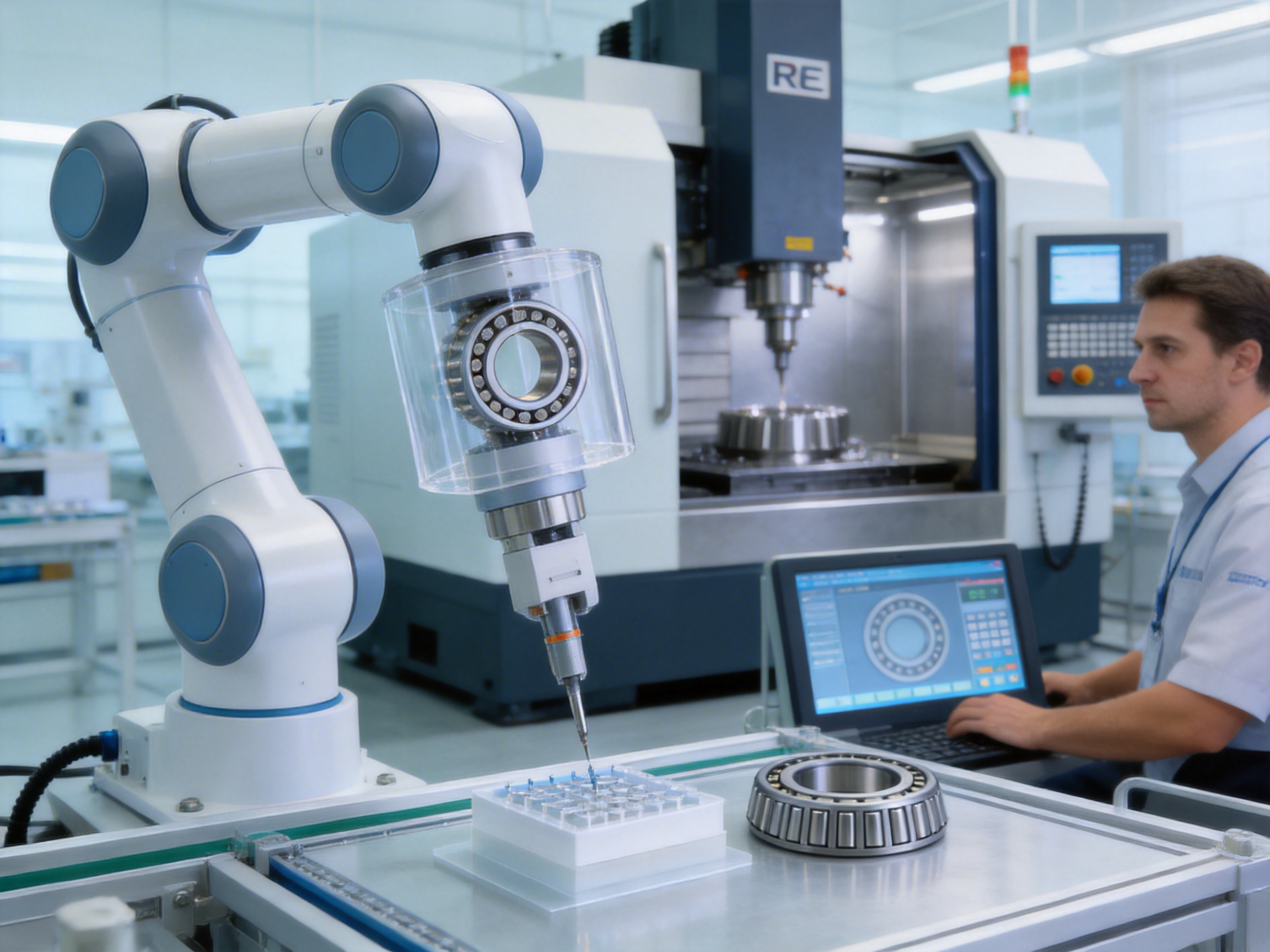
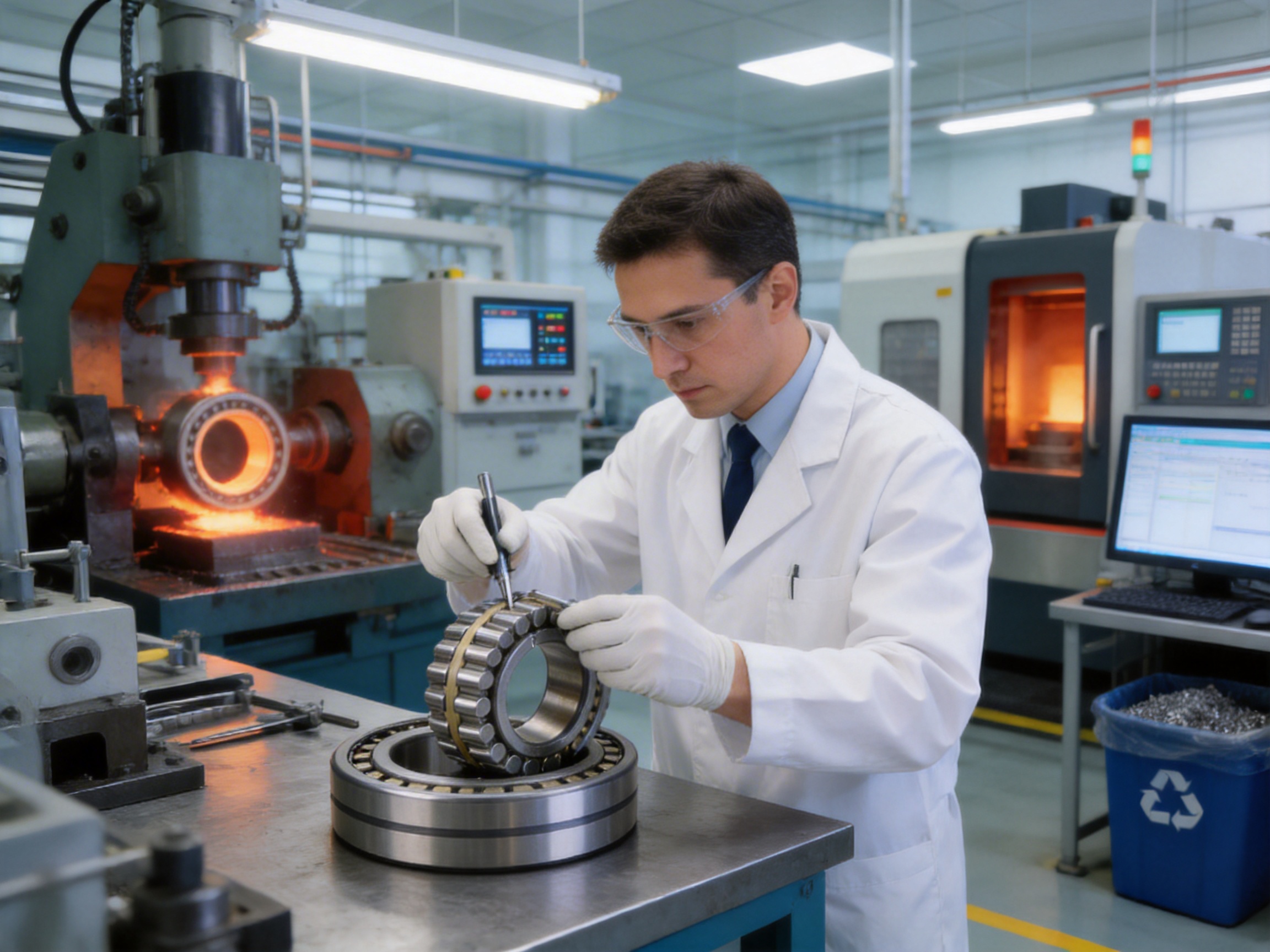
The performance of the RE series crossed roller bearings is not just due to their design—it is also the result of advanced manufacturing processes that ensure consistency, precision, and durability. The company behind the RE series (a leading bearing manufacturer) integrates research and development (R&D), production, and distribution to deliver high-quality products. Here’s a closer look at their manufacturing processes:
The company’s dedicated R&D team works closely with engineers and customers to develop innovative bearing designs that meet the evolving needs of industries. For the RE series, the team used finite element analysis (FEA) to optimize the ring design, roller spacing, and contact angles, ensuring maximum load capacity and minimal stress concentrations. This data-driven approach allows the company to create bearings that outperform traditional designs without increasing size or weight.
The R&D team also focuses on material selection, choosing high-quality alloy steels that offer excellent strength, wear resistance, and fatigue life. These materials are tested rigorously to ensure they meet the company’s strict standards.
The company operates a modern factory equipped with state-of-the-art production lines covering forging, turning, heat treatment, grinding, assembly, and packaging. Each line is designed to handle high-volume production while maintaining tight tolerances. For example:
The factory has a production capacity of 10,000–50,000 units per month, allowing it to meet the demands of large-scale customers while maintaining quality.
The company uses digital production control systems to monitor and optimize every step of the manufacturing process. These systems collect real-time data on machine performance, part dimensions, and quality metrics, allowing engineers to identify and resolve issues quickly. This data-driven approach ensures that every bearing meets the company’s strict quality standards and is consistent with previous production runs.
For example, if a grinding machine deviates from its target tolerance, the digital system will alert the operator and adjust the machine parameters automatically. This reduces the risk of defective parts and improves overall production efficiency.
The company is committed to sustainability, adopting environmentally responsible processes to reduce its environmental footprint. This includes:
These efforts not only benefit the environment but also help the company meet the sustainability requirements of its global customers.
The RE series crossed roller bearings are used in a wide range of applications where precision, rigidity, and durability are essential. Here are some key examples:
Robotic arms and automated systems require bearings that can handle both radial and axial loads while maintaining high precision. The RE series’ integrated outer ring design is ideal for robotic joints, where the outer ring is fixed to the arm and needs to rotate accurately. For example, collaborative robots (cobots) use RE series bearings to enable smooth, safe movement, allowing them to work alongside humans without risk of injury.
Automated pick-and-place systems also benefit from the RE series’ precision. These systems need to move quickly and accurately to handle small parts, and the RE series’ low friction and high load capacity ensure consistent performance.
CNC machining centers require bearings that can handle high speeds and heavy loads while maintaining tight tolerances. The RE series’ integrated outer ring design reduces deflection and vibration, resulting in higher-quality finished parts. For example, in a milling machine, the RE series bearing in the spindle assembly ensures that the cutting tool moves accurately, reducing the need for rework and improving productivity.
The aerospace industry requires bearings that can operate in extreme environments, including high temperatures, low pressures, and high loads. The RE series’ robust design and high-quality materials make it suitable for applications such as satellite antennas, aircraft landing gear, and missile guidance systems. The bearings’ precision and durability ensure reliable performance in these critical applications.
Medical equipment such as surgical robots and diagnostic machines require bearings that are precise, clean, and reliable. The RE series’ clean room assembly process and low friction design make it ideal for these applications. For example, surgical robots use RE series bearings to enable precise movement of the surgical instruments, improving the accuracy of procedures and reducing recovery times.
Bearing failure is a common issue in industrial systems, leading to downtime, increased costs, and reduced productivity. The RE series crossed roller bearings are designed to address many of the most common bearing challenges:
Lubrication problems are one of the leading causes of bearing failure, including the use of inappropriate lubricants, insufficient or excessive lubrication, and unreasonable lubrication intervals. The RE series addresses these issues through:
Contamination from dust, water, or metal chips can cause wear and damage to bearings. The RE series addresses this through:
Incorrect installation methods can apply additional stress to bearings, leading to premature failure. The RE series addresses this through:
Fatigue and overload are common causes of bearing failure, especially in heavy-duty applications. The RE series addresses this through:
Q1: What makes the RE series crossed roller bearings suitable for high-precision applications?
A1: The RE series is designed with an integrated outer ring, which eliminates gaps and misalignments that can occur with split outer ring designs. This results in greater structural rigidity, reduced deflection, and consistent rotational accuracy. Additionally, the bearings are manufactured with tight tolerances and high-quality materials, ensuring minimal runout and vibration during operation. These features make the RE series ideal for applications where precision is critical, such as robotic joints and CNC machining centers.
Q2: How does the RE series address common bearing failure causes like contamination?
A2: The RE series uses an integrated outer ring design, which has fewer joints than split outer ring designs, reducing the number of points where contamination can enter. The bearings are also compatible with high-performance seals, which further protect against contamination. Additionally, the assembly process is carried out in a clean room environment, minimizing the risk of contamination during production. These features help extend the bearing’s service life and reduce the risk of failure due to contamination.
Q3: What manufacturing processes ensure the quality of RE series bearings?
A3: The RE series is manufactured using a combination of advanced processes, including forging (to improve material strength), precision turning (to achieve tight tolerances), case hardening (to increase wear resistance), superfinishing grinding (to reduce friction), and clean room assembly (to prevent contamination). The company also uses digital production control systems to monitor and optimize every step of the process, ensuring consistency and quality. Additionally, the R&D team uses finite element analysis to optimize the design, ensuring maximum performance and durability.
Q4: What industries benefit most from RE series bearings?
A4: The RE series is suitable for a wide range of industries, including robotics and automation, CNC machining, aerospace and defense, and medical equipment. These industries require bearings that can handle high loads, maintain precision, and operate reliably in demanding environments. The RE series’ combination of precision, load capacity, and durability makes it an ideal choice for these applications.
Q5: Can RE series bearings be customized for specific applications?
A5: Yes, the company offers custom RE series bearings to meet the unique needs of customers. The R&D team works closely with customers to design bearings that meet specific load, size, or environmental requirements. This includes customizing the ring design, roller spacing, seal type, and lubricant to ensure optimal performance in the target application. The company’s OEM/ODM experience allows it to deliver custom solutions quickly and efficiently.
1. ISO 12240-1:2019, Rolling bearings—Crossed roller bearings—Part 1: Dimensions and tolerances.
2. ANSI/ABMA 12.1-2017, Ball and roller bearings—Boundary dimensions.
3. Smith, J. (2022). Precision Bearings for Industrial Automation: Design and Applications. Industrial Engineering Press.
4. Lee, S. (2021). Crossed Roller Bearings: Advantages in Robotics and CNC Systems. Journal of Precision Engineering, 45(3), 123-135.
5. Johnson, M. (2020). Bearing Failure Analysis: Causes and Prevention. Mechanical Engineering Publications.
Product Categories
Contact Us

Jane@ukl-bearing.com
Jenny@ukl-bearing.com
Andy@ukl-bearing.com
Ivy@ukl-bearing.com

+86-510- 88763239
+86-15371057968

No.1 Hehuan Road, Hudai Town, Binhu District, Wuxi City.
Ready to Begin?
Get in Touch

Now!
UKL BEARING
 English
 Español
 русский