Content
Rod end bearings are compact mechanical components, but their influence on machine performance can be considerable. They connect rods, actuators, linkages, steering mechanisms, robotic joints, and adjustable control systems while accommodating oscillation, angular misalignment, and repeated loads. In applications where ordinary joints may wear rapidly, develop excessive clearance, or require frequent replacement, a properly designed rod end bearing can provide a more stable and predictable connection.
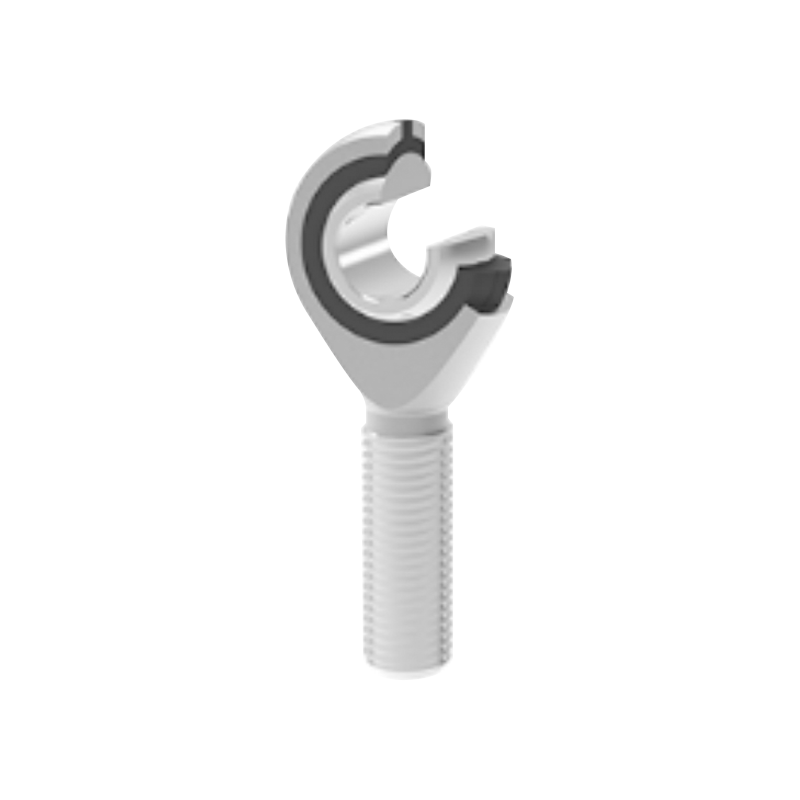
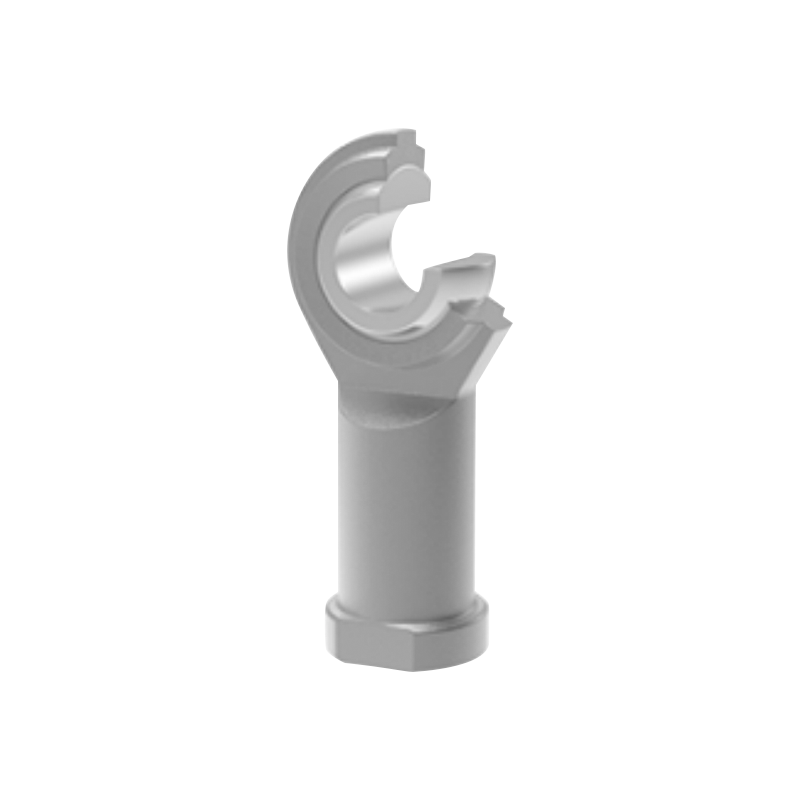
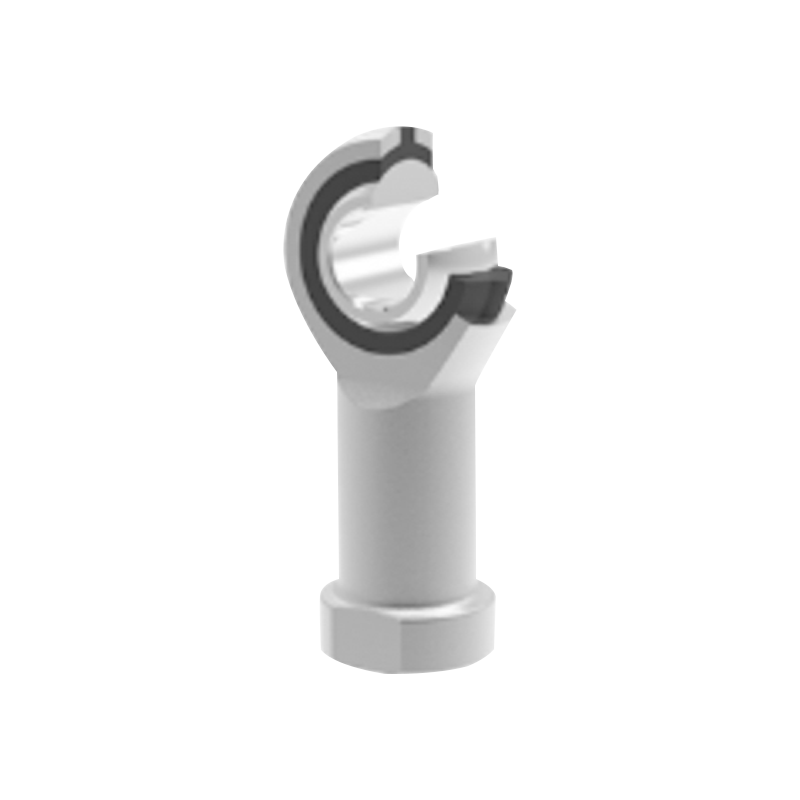
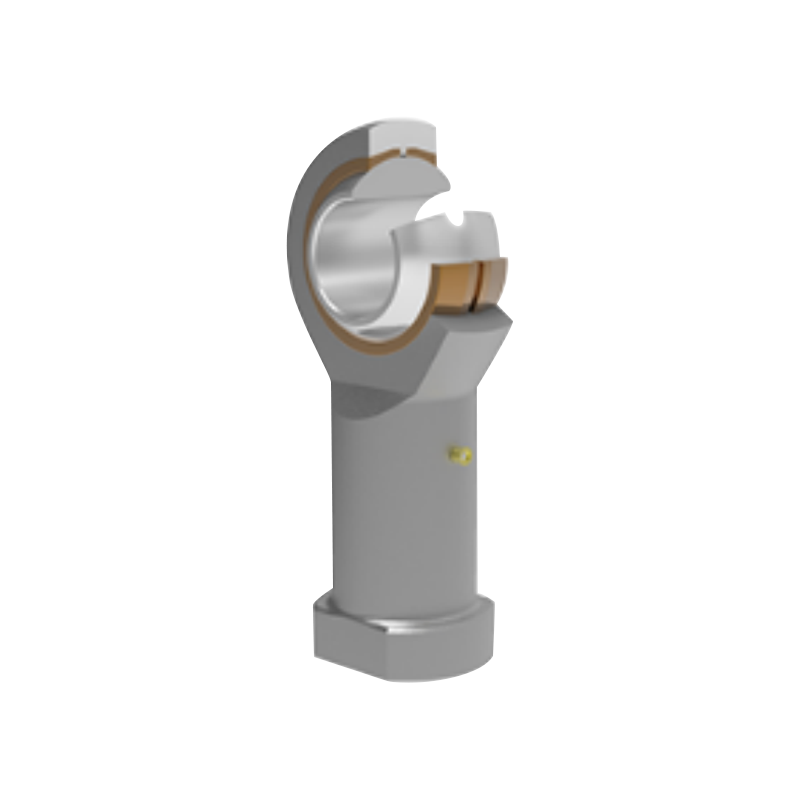
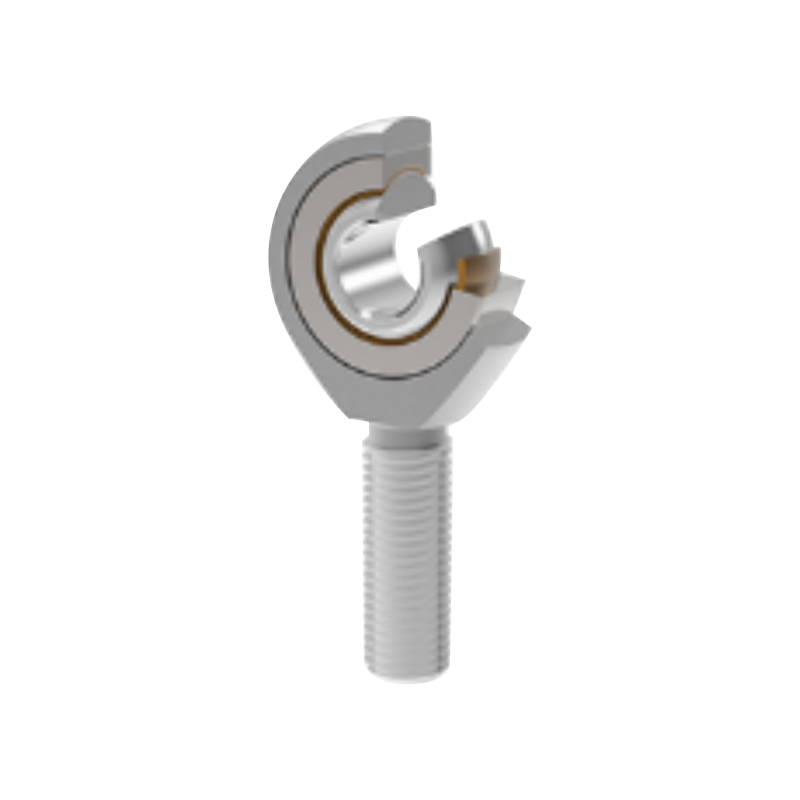
The SABP lubrication-compatible high-rigidity rod end bearing is designed for applications that require a combination of load capacity, structural stiffness, controllable friction, and long-term serviceability. Its construction pairs a high-quality carbon-steel rod end body with a galvanized surface, an internal high-performance bronze liner, and a hardened bearing-steel inner ring with a spherical hard-chrome-plated surface. Together, these materials form a steel-and-bronze sliding friction pair intended for reliable oscillating motion.
Unlike many maintenance-free sliding rod ends, this design supports replenishable lubrication in nearly all sizes. Except for models with a bore diameter below 6.35 mm and other versions specifically identified as non-lubricatable, the bearing is equipped with an oil cup. This feature gives equipment designers and maintenance teams greater control over friction, wear, heat generation, and service intervals.
The product range covers nominal bore diameters from 5 mm to 30 mm. It includes compact versions for light mechanisms as well as larger models capable of supporting significantly higher dynamic and static loads. The product is suitable for automation equipment, industrial machinery, actuator assemblies, robotic mechanisms, packaging systems, material-handling equipment, and other applications requiring a rigid, adjustable, and serviceable rod-end connection.
A rod end bearing, also known as a spherical plain rod end, provides a threaded connection on one side and a spherical bearing interface on the other. The threaded shank allows the component to be installed into a mechanism or connected to an adjustable rod. The spherical internal ring permits angular movement, allowing the rod to move relative to the housing without imposing excessive bending stress on the connected components.
This operating principle is particularly useful in linkages that do not remain perfectly aligned throughout their working cycle. A rigid connection would transfer misalignment into the shaft, actuator, frame, or mounting bracket. Over time, this can cause uneven loading, premature fatigue, vibration, and accelerated wear. A spherical rod end compensates for the changing angle while maintaining a controlled mechanical connection.
However, not all rod ends provide the same level of performance. The body must be strong enough to resist deformation, the liner must maintain a stable sliding surface, and the inner ring must withstand repeated oscillation and contact pressure. Thread quality is also important because the thread is responsible for transmitting axial loads into the surrounding structure.
The SABP series addresses these requirements through a combination of rigid body construction, a carefully selected sliding pair, surface protection, and lubrication compatibility. It is intended for users who need more than a basic low-cost linkage joint and who value both operating performance and maintainability.
The spherical inner ring allows the rod end to accommodate angular movement around the joint. The approximate angular movement listed for the range is generally 13 to 17 degrees, depending on the model. Smaller sizes typically have an approximate angular value between 13 and 14 degrees, while several larger models reach approximately 15 degrees or more.
The actual permissible angle in an installed assembly depends on the surrounding geometry, the clearance between adjacent components, the direction of applied load, and the operating speed. Designers should therefore consider the stated approximate angle as a reference rather than as permission to operate continuously at the maximum value under every load condition.
The product uses a steel/bronze sliding friction pair. The bronze liner is positioned inside the rod end body and works against the hardened bearing-steel inner ring. Bronze is widely used in sliding applications because it can provide a favorable combination of conformability, wear resistance, and friction behavior. The hardened inner ring supplies a durable spherical contact surface.
This arrangement differs from a rolling bearing, where balls or rollers separate the raceways. A rod end bearing is a plain bearing assembly, so its performance depends on the condition of the sliding surfaces, the applied load, the oscillation frequency, the amplitude of movement, the lubrication condition, and the operating environment.
The rod end body is manufactured from high-quality carbon steel. This material provides a strong structural foundation for the threaded shank and spherical housing. In a linkage system, the body may be exposed to tensile forces, compressive forces, alternating loads, vibration, and occasional shock. A rigid steel body helps the joint retain its geometry under these conditions.
Body stiffness is especially important in precision machinery. Excessive elastic deformation at the joint can introduce positioning errors, reduce repeatability, and create unwanted movement during acceleration or reversal. Compared with lighter or less rigid constructions, a properly manufactured carbon-steel body can offer a more stable load path between the rod and the connected mechanism.
The outer surface of the rod end body is galvanized. Galvanizing provides a protective layer that helps reduce the risk of surface corrosion during storage, installation, and service. This is valuable in factories where equipment may be exposed to humidity, condensation, dust, cleaning agents, or fluctuating temperatures.
Surface protection does not eliminate the need for correct storage and maintenance. The bearing should still be protected from prolonged exposure to corrosive chemicals, salt spray, and conditions beyond the intended application. Nevertheless, the galvanized body gives the product a practical advantage over untreated carbon-steel components, particularly in general industrial environments.
The inner ring is made from hardened bearing steel and features a spherical hard-chrome-plated surface. Hardening improves resistance to contact deformation and wear. The hard-chrome-plated surface further supports a durable sliding interface and helps the ring withstand repeated movement against the bronze liner.
The spherical surface must remain accurately formed because the geometry determines how the load is distributed across the liner. An accurately produced and properly finished inner ring can reduce local stress concentrations, promote smoother movement, and help preserve the intended clearance over the service life of the joint.
The internal bronze liner forms the mating surface for the inner ring. Its purpose is not merely to fill the housing; it is a functional wear component that must maintain contact with the spherical ring while tolerating oscillatory motion. Bronze can accommodate small alignment variations and support a stable sliding interface when correctly lubricated.
The liner also provides a replaceable or service-oriented wear surface in the overall design concept. As with any plain bearing, the actual service life depends on load, speed, motion amplitude, contamination, lubrication, and installation quality. Proper lubrication and clean assembly are essential to achieving the intended performance.
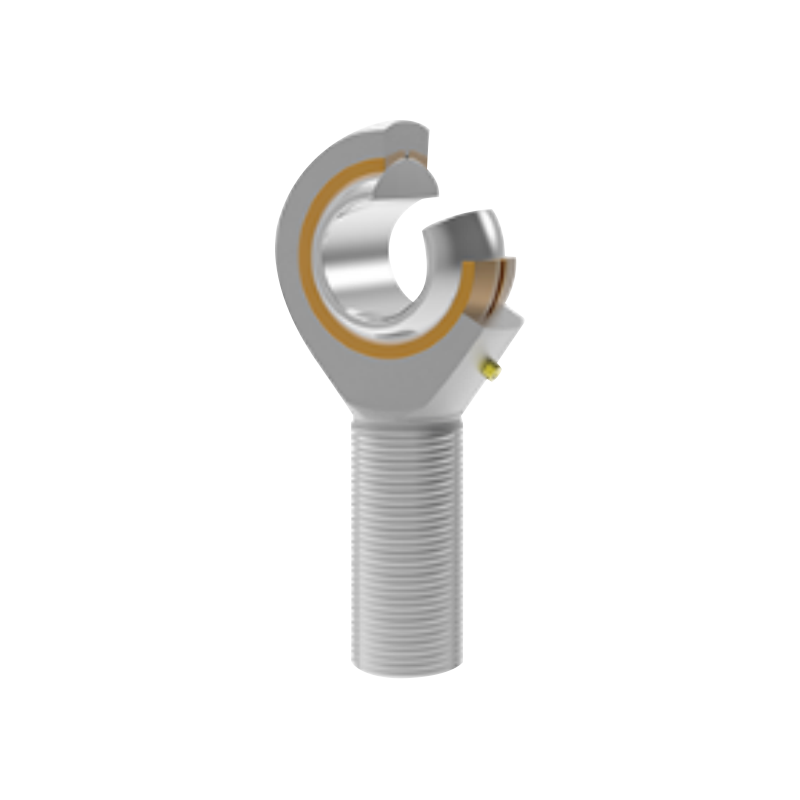
SABP Lubrication Compatible High Rigidity Bearing
One of the defining features of the SABP series is its compatibility with lubrication. Except for models with a bore diameter below 6.35 mm and versions identified as unsuitable for lubrication, the product is equipped with an oil cup. The oil cup provides a practical access point for applying lubricant to the sliding interface.
Lubrication can reduce friction between the bronze liner and the hardened inner ring. It can also help remove heat generated during repeated oscillation and reduce direct metal-to-metal interaction. In demanding mechanisms, the ability to replenish lubricant may extend useful service life and make performance easier to manage than a completely sealed or non-serviceable design.
Maintenance-free rod ends can be attractive when access is difficult or when the application has very low operating demands. However, a non-lubricatable product offers limited ability to respond to changing conditions. If friction increases because of dust, high cycle rates, temperature variation, or gradual lubricant loss, the maintenance team cannot easily restore the sliding condition.
A lubrication-compatible rod end gives users more flexibility. The lubrication schedule can be adapted to the operating environment. A lightly loaded mechanism may require only occasional service, while a frequently oscillating actuator can be inspected and lubricated at planned maintenance intervals. This adjustability is an important advantage for industrial equipment that must operate for many years under changing production conditions.
Lubrication also supports condition-based maintenance. Technicians can monitor changes in movement resistance, sound, temperature, and visible wear. If lubrication temporarily improves the behavior of the joint, the observation may indicate a developing wear or contamination issue. If lubrication does not restore normal performance, the bearing can be scheduled for replacement before a secondary failure occurs.
The selected lubricant should be compatible with the bronze liner, hardened and plated inner ring, seals or adjacent materials, and the operating temperature. The bearing should be cleaned around the oil-cup area before lubricant is applied. This prevents dirt from being pushed into the sliding interface.
Lubricant should be applied in a controlled quantity. Excessive grease can attract dust, increase resistance, or interfere with nearby components. Insufficient lubricant can result in boundary contact, elevated friction, and accelerated liner wear. The correct interval depends on duty cycle, load, oscillation angle, environment, and lubricant type.
Applications exposed to abrasive particles, water, chemicals, or high levels of humidity should receive particular attention. Lubrication is not a substitute for contamination control. Protective covers, correct installation orientation, and regular inspection may be required when the rod end operates in a harsh environment.
The SABP series includes sizes from SABP5S through SABP30S. The nominal bore diameter ranges from 5 mm to 30 mm. The range includes metric threads, with thread pitch changes appearing in the larger sizes. Bore, body, spherical head, thread, length, corner radius, angular movement, load rating, and approximate weight vary by model.
The following table summarizes the principal dimensions and ratings provided for the standard range. Dimensions are stated in millimeters, load ratings in kilonewtons, and approximate weights in kilograms. The headings follow the supplied product data: d is the bore diameter, B is the inner-ring width, dₖ is the spherical head diameter, C₁max is the maximum body or head-related dimension listed, d₂ is the shank-related diameter, G6g is the thread designation, h is the thread or body height reference, I₁min, I₂, and I₇ are product length dimensions, rₛmin is the minimum radius reference, and α is the approximate angular movement.
| Bearing number | d | B | dₖ | C₁max | d₂ | Thread G6g | h | I₁min | I₂ | I₇ | rₛmin | α° approx. | Dynamic load kN | Static load kN | Weight kg |
|---|---|---|---|---|---|---|---|---|---|---|---|---|---|---|---|
| SABP5S | 5 | 8 | 11.112 | 6 | 16 | M5 | 33 | 20 | 41 | — | 0.3 | 13 | 3.3 | 3.9 | 0.016 |
| SABP6S | 6 | 9 | 12.7 | 6.75 | 18 | M6 | 36 | 22 | 45 | — | 0.3 | 13 | 4.3 | 5.3 | 0.026 |
| SABP8S | 8 | 12 | 15.88 | 9 | 22 | M8 | 42 | 25 | 53 | — | 0.3 | 14 | 6.8 | 8.5 | 0.044 |
| SABP10S | 10 | 14 | 19.05 | 10.5 | 26 | M10 | 48 | 29 | 61 | — | 0.3 | 14 | 10 | 11 | 0.072 |
| SABP12S | 12 | 16 | 22.23 | 12 | 30 | M12 | 54 | 33 | 69 | — | 0.3 | 13 | 13 | 14 | 0.108 |
| SABP14S | 14 | 19 | 25.4 | 13.5 | 34 | M14 | 60 | 36 | 77 | — | 0.3 | 16 | 17 | 20 | 0.161 |
| SABP16S | 16 | 21 | 28.58 | 15 | 38 | M16 | 66 | 40 | 85 | — | 0.3 | 15 | 21 | 25 | 0.225 |
| SABP18S | 18 | 23 | 31.75 | 16.5 | 42 | M18×1.5 | 72 | 44 | 93 | 23 | 0.6 | 15 | 26 | 30 | 0.295 |
| SABP20S | 20 | 25 | 34.93 | 18 | 46 | M20×1.5 | 78 | 47 | 101 | 25 | 0.6 | 15 | 31 | 35 | 0.382 |
| SABP22S | 22 | 28 | 38.1 | 20 | 50 | M22×1.5 | 84 | 51 | 109 | 27 | 0.6 | 15 | 38 | 43 | 0.488 |
| SABP25S | 25 | 31 | 42.88 | 22 | 60 | M24×2 | 94 | 57 | 124 | 29 | 0.6 | 15 | 47 | 65 | 0.749 |
| SABP28S | 28 | 35 | 47.63 | 25 | 66 | M27×2 | 103 | 82 | 136 | 33 | 0.6 | 15 | 59 | 77 | 0.949 |
| SABP30S | 30 | 37 | 50.8 | 25 | 70 | M30×2 | 110 | 66 | 145 | 39 | 0.6 | 17 | 63 | 86 | 1.13 |
The load ratings demonstrate the scalability of the product family. The SABP5S has a listed dynamic load rating of 3.3 kN and static load rating of 3.9 kN, while the SABP30S reaches 63 kN dynamically and 86 kN statically. This broad range allows designers to select a size appropriate to the available installation space and the expected mechanical load rather than using one oversized or undersized joint for every application.
Load ratings should not be interpreted as universal permissible working loads. Engineering selection must account for load direction, shock, oscillation, cycle count, lubrication, temperature, mounting strength, safety factor, and the relationship between static and dynamic loading. The surrounding rod, bolt, bracket, and threaded connection must also be capable of carrying the applied force.
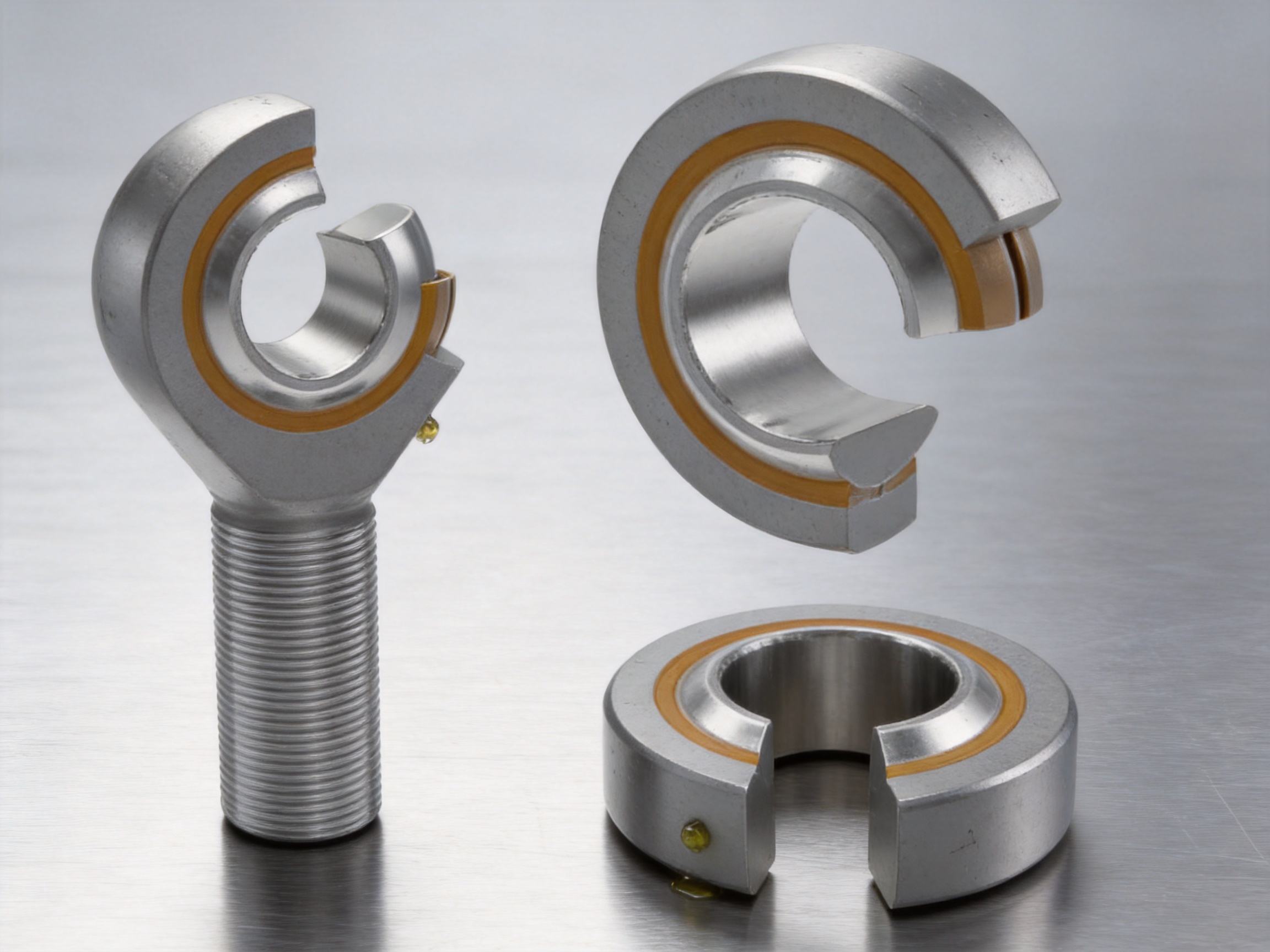
The oil-cup design provides a maintenance option that is unavailable in many sealed or permanently lubricated rod ends. In production equipment, serviceability can be as important as initial purchase price. A bearing that can be inspected and lubricated may reduce unplanned downtime and make preventive maintenance more effective.
The carbon-steel body and hardened inner ring are suited to mechanisms where rigidity matters. Some lightweight linkage components are adequate for low-load applications but may deflect more readily under alternating or shock loads. The SABP construction is intended to provide a firm load path, helping preserve alignment and reduce unwanted play when properly selected and installed.
The galvanized body offers a practical level of surface protection for ordinary industrial service. This can be advantageous compared with uncoated carbon-steel rod ends, especially during transport, storage, and installation. For more aggressive environments, stainless-steel customization is available for both the rod end body and inner ring.
Standardized thread sizes simplify replacement and integration, but machinery designers sometimes require a different pitch, a special thread precision, or a left-hand thread. The product can be customized for different pitches and special thread precision requirements. Left-hand versions are identified by adding “L” and “left” after the model number and thread marking.
For example, a customized designation may be written in the form of SALBP20S M20×1.5 left 6g. The exact designation should be confirmed during technical communication because thread direction, tolerance, pitch, and model coding must match the assembly drawing and the mating component.
When corrosion resistance is a primary requirement, both the rod end body and inner ring can be manufactured from stainless steel. The stainless version is indicated by adding “X” after the model number, such as SABP…S/X. This option can be considered for food-processing equipment, outdoor machinery, chemical-adjacent systems, washdown areas, and applications where surface corrosion could affect hygiene or operation.
Material customization should be evaluated together with load, friction, lubrication, and temperature requirements. Stainless steel does not automatically provide identical performance to carbon steel in every condition. The final material and surface treatment should be selected according to the complete operating environment.
The stated operating temperature range is approximately 50°C to +150°C as supplied in the product information. The negative-temperature value appears in the source specification as “50℃,” which may represent a formatting omission for a minus sign. Users should confirm the lower temperature limit with the manufacturer before applying the product in sub-zero environments.
The upper temperature limit of approximately +150°C is relevant to machinery installed near ovens, dryers, engines, heat-treatment equipment, or high-temperature process lines. Temperature affects lubricant viscosity, clearance, material expansion, friction, and the performance of nearby seals or coatings. The lubricant used must be appropriate for the actual temperature range.
Environmental conditions should be assessed beyond temperature. Dust, metal particles, abrasive powder, water, cleaning fluids, vibration, and chemical exposure can all influence the life of a sliding bearing. A galvanized carbon-steel body may be suitable for standard factory conditions, while stainless-steel customization may be more appropriate for corrosive or washdown environments.
Plain bearing interfaces are sensitive to abrasive contamination. Particles trapped between the bronze liner and the inner ring can score the surface, increase friction, and accelerate wear. Installation should therefore be carried out in a clean area. Protective packaging should remain in place until the bearing is ready to install.
Where practical, the joint should be shielded from direct contamination. A cover, bellows, or suitable machine guard can help prevent dust and moisture from reaching the spherical interface. The oil cup should be kept clean, and lubricant fittings should not be touched with contaminated tools.
Rod end bearings are commonly used in oscillating or reciprocating applications rather than continuous high-speed rotation. Short-stroke motion can be demanding because the same small area of the sliding surface may repeatedly carry the load. Proper lubrication, correct alignment, and sufficient movement amplitude are important for distributing wear.
Designers should evaluate the frequency and amplitude of oscillation, the load during reversal, and whether the joint experiences vibration while stationary. A bearing that performs well in a moderate oscillation cycle may require a different maintenance schedule when installed in a high-frequency robotic linkage.
Robotic mechanisms often contain compact joints that must transfer force while accommodating changing angles. Rod end bearings can be used in grippers, auxiliary linkages, end-effectors, tool changers, and supporting mechanisms. The high-rigidity body helps maintain positional stability, while the spherical interface reduces binding caused by small alignment errors.
In robotic applications, designers should consider the effect of bearing clearance on repeatability. The mounting arrangement must be rigid, and the selected bearing should be sized for both peak and continuous loads. Lubrication access should also be considered during machine layout because an oil cup is valuable only when technicians can reach it safely.
Machine tools require stable motion and controlled vibration. Rod ends may be used in lever mechanisms, sensor linkages, guarding systems, tool-management components, and actuator connections. A rigid connection can help reduce unwanted deflection, while the spherical movement allows the mechanism to follow its designed path without excessive side loading.
In precision equipment, the rod end should not be treated as an isolated component. Its performance depends on the flatness and strength of the bracket, the accuracy of the mounting hole, the quality of the threaded connection, and the alignment of the connected rod. Incorrect installation can create loads that exceed the rating of the bearing itself.
Packaging machines often operate at high cycle rates, with repeated starts, stops, and reversals. Linkage components in these systems may experience continuous oscillation and vibration. A lubrication-compatible rod end can support scheduled servicing and help maintenance teams manage wear before it disrupts production.
Material-handling systems may operate in dusty environments or around conveyed products. The galvanized body is suitable for many general industrial conditions, while stainless-steel customization can be considered where cleaning, humidity, or corrosion resistance is important.
The threaded shank makes the bearing useful in adjustable rod assemblies. It can be installed on pneumatic or hydraulic actuator rods, mechanical screw mechanisms, control linkages, and tensioning systems. Thread customization can be valuable when the standard pitch does not match the actuator or when a left-hand thread is needed to enable adjustment from both ends of a rod assembly.
Agricultural equipment commonly experiences vibration, dust, moisture, and irregular maintenance intervals. The strong steel body and galvanized surface offer practical advantages in general outdoor machinery, although the actual suitability depends on exposure and protective measures. Stainless-steel customization may provide a better solution in especially corrosive environments.
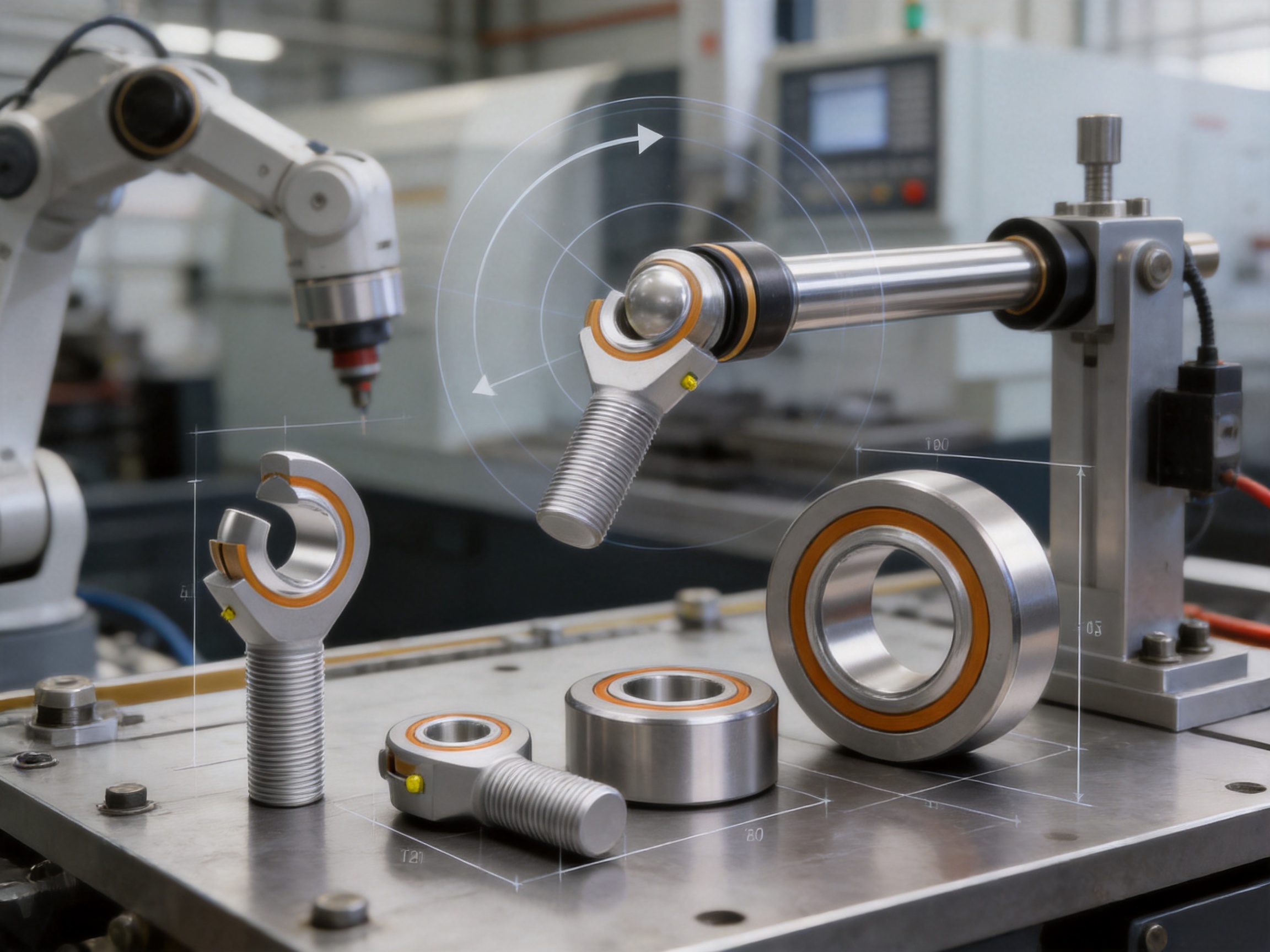
The performance of a rod end bearing depends on more than its material list. Dimensional accuracy, heat treatment, surface finishing, thread quality, assembly control, and inspection all influence the final product. UKL Bearing Manufacturing Co., Ltd. integrates research and development, production, and international distribution within its operating structure.
The company reports a modernized factory with multiple production lines covering forging, turning, heat treatment, grinding, assembly, and packaging. This process coverage is significant because it allows key manufacturing stages to be coordinated rather than handled as unrelated operations. Better process coordination can support consistency in geometry, hardness, surface quality, and assembly fit.
Forging can provide a strong starting form for the rod end body by shaping the steel under controlled pressure. A well-prepared blank can reduce unnecessary machining allowance and support a more consistent grain flow than a purely rough-cut starting form. The exact forging method and process parameters should be selected according to the component size, steel grade, and required mechanical properties.
Material traceability is important at this stage. Steel batches should be identified and controlled so that the raw material used in production can be connected with the relevant production records. This is especially important for industrial customers who require repeatability across multiple orders.
Turning establishes the principal external and internal geometries of the rod end body. The threaded shank, shoulders, cylindrical sections, and other reference surfaces must be produced within appropriate dimensional tolerances. Accurate turning also provides a stable foundation for later heat treatment and finishing operations.
Thread quality is particularly important. A thread that is incorrectly formed, damaged, or out of tolerance can create installation problems or reduce the effective load-bearing area. Special thread pitch and precision requirements should be communicated before production so that tooling and inspection methods can be planned correctly.
Heat treatment is used to achieve the required hardness and mechanical properties of the bearing steel inner ring and other applicable components. The process must be controlled to balance hardness, toughness, dimensional stability, and resistance to cracking. Excessive distortion can affect the spherical geometry, while insufficient hardness can reduce resistance to wear.
Consistent heat treatment supports stable performance across production batches. Process monitoring, temperature control, quenching management, and post-treatment inspection are all important parts of a professional bearing manufacturing system.
Grinding is used to improve dimensional accuracy and surface quality after heat treatment. The spherical surface of the inner ring requires particular attention because its roundness, roughness, and profile influence the contact with the bronze liner. A properly finished surface can promote smoother movement and more uniform load distribution.
Surface finishing also affects lubrication behavior. Excessive roughness can increase friction and wear, while an unsuitable surface may retain contaminants or interfere with lubricant distribution. Grinding and finishing parameters should therefore be selected according to the material pair and intended operating conditions.
During assembly, the inner ring and bronze liner must be combined with the body in a way that preserves the intended fit and movement. The assembled bearing should be checked for smooth articulation, abnormal resistance, visible damage, and excessive clearance. Oil-cup installation must also be controlled so that the fitting is secure and accessible.
Assembly cleanliness is critical. Foreign particles introduced during assembly may remain trapped in the sliding interface and cause damage immediately after installation. A controlled assembly area, clean tooling, and protective packaging help reduce this risk.
Packaging protects the bearing from impact, moisture, contamination, and corrosion during storage and transportation. Proper packaging is especially important for international shipments, where products may pass through multiple handling stages and climate zones.
The company reports international export experience and distribution to markets including the United States, Italy, Germany, Poland, South Africa, Egypt, India, and other regions. This international orientation supports the use of export-oriented documentation, product identification, packaging control, and communication with overseas OEM and distributor customers.
UKL describes research and development as a foundation of its competitiveness. Its engineering activities include high-precision cross roller bearings, dual-direction thrust angular contact ball bearings, and other bearing products used in CNC machines, robotics, and intelligent automation systems.
This broader product experience is relevant to the SABP rod end bearing because advanced bearing development requires an understanding of materials, friction, load paths, precision manufacturing, heat treatment, and application conditions. Knowledge developed across different bearing families can support better product selection and more informed technical service.
The company reports a production capacity of approximately 10,000 to 50,000 units per month and an organization of 201 to 500 employees. For OEM customers, production scale can be important because supply continuity, batch consistency, and the ability to support repeat orders are often as important as the initial product specification.
At the same time, production capacity should be combined with appropriate quality controls. Customers should confirm the inspection documents, material certificates, dimensional reports, testing procedures, and acceptance criteria required for their particular project. A professional supplier should be able to discuss these requirements before mass production begins.
Standard catalog sizes are useful for many applications, but industrial machinery frequently requires customization. The SABP range supports several customization options, including different thread pitches, special thread precision, left-hand threads, and stainless-steel materials for the body and inner ring.
Thread customization can simplify integration into an existing actuator, rod, clevis, or adjustment mechanism. Designers may require a fine pitch for precise adjustment, a special tolerance for a controlled fit, or a left-hand thread to create a turnbuckle-style adjustment system.
When requesting a customized thread, the customer should provide the nominal diameter, pitch, thread direction, tolerance class, effective thread length, mating-part details, and any special inspection requirements. This information reduces the risk of ordering a component that is dimensionally close but incompatible with the assembly.
Stainless-steel construction can improve corrosion resistance where ordinary galvanized carbon steel is not sufficient. It may be considered for humid environments, outdoor applications, food-related machinery, chemical processing areas, and equipment subject to frequent cleaning.
The stainless-steel option applies to both the rod end body and the inner ring according to the supplied product information. The model designation uses “X” after the standard model number. Customers should confirm the stainless-steel grade, surface treatment, lubricant compatibility, and expected load ratings before final approval.
OEM projects may require drawings, product codes, packaging specifications, inspection plans, sampling requirements, and traceability records. Clear communication between the supplier and customer is essential, particularly when a customized part will be installed in a safety-related or high-cycle mechanism.
A complete technical review should cover installation space, load direction, oscillation angle, operating temperature, lubrication access, corrosion exposure, required life, and replacement strategy. This information allows the selected rod end to be evaluated as part of the complete machine rather than as an isolated catalog item.
Before installation, inspect the bearing for transport damage, corrosion, thread deformation, contamination, and abnormal movement. Confirm that the model number, bore diameter, thread, and material match the assembly drawing. Do not install a bearing with visible damage or a rough, binding spherical movement.
The mating rod or threaded hole should be clean and accurately manufactured. The thread should engage for the required length without cross-threading. Tools should be applied to the designated wrenching surfaces rather than to the inner ring, oil cup, or other delicate features.
Misalignment should be corrected through the machine design rather than forced into the bearing. Although the spherical inner ring accommodates angular movement, it is not intended to compensate for a severely misaligned bracket or an incorrectly positioned rod. Excessive side loading can reduce life and increase friction.
Where the design permits, the bearing should be installed so that the oil cup remains accessible. The joint should be lubricated with a compatible product before operation if required by the maintenance procedure. After installation, the mechanism should be moved slowly through its intended range while technicians check for binding, interference, unusual noise, or unexpected resistance.
The first selection parameter is usually the required bore diameter. The bore must match the pin, bolt, or shaft while allowing the correct fit and load transfer. The outer dimensions must fit within the available envelope, and the thread must match the rod or actuator connection.
Next, calculate the applied loads. Consider continuous force, peak force, shock, acceleration, reversal, and any radial or axial components. Compare the expected loads with the listed dynamic and static ratings, applying an appropriate safety factor for the application. The bearing should not be selected solely by bore diameter.
Angular movement must also be reviewed. The selected model should provide sufficient movement for the mechanism without allowing the inner ring or body to contact adjacent parts. If the actual operating angle approaches the approximate catalog value, a detailed engineering review is recommended.
Operating temperature, lubricant availability, contamination, moisture, and chemical exposure determine whether the standard galvanized carbon-steel version is appropriate or whether stainless-steel customization should be considered. In high-cycle applications, plan the lubrication access and inspection interval before finalizing the machine layout.
Finally, consider replacement logistics. A standardized model may simplify spare-parts management, while a customized thread may improve machine integration but require dedicated inventory. The best choice balances performance, serviceability, availability, and total ownership cost.
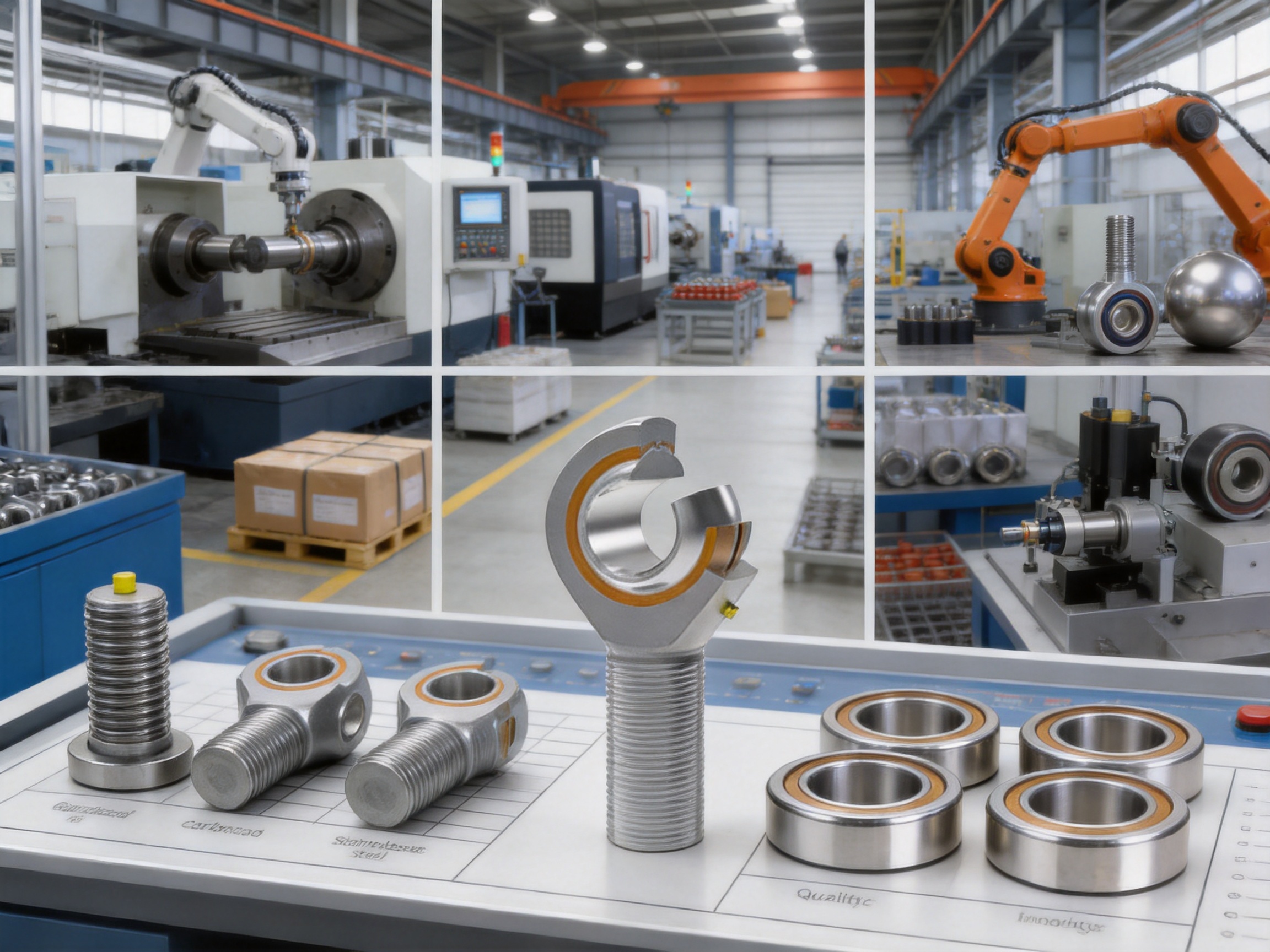
The company states that it adopts environmentally responsible processes, promotes material recycling, and optimizes energy usage. These practices are relevant to customers that evaluate suppliers according to both product performance and broader sustainability objectives.
Sustainability in bearing production can involve efficient material utilization, responsible handling of metal waste, longer product service life, optimized packaging, and reduced scrap through stable process control. A durable and serviceable rod end can also contribute to sustainability by reducing the frequency of replacement and the material consumed over the life of a machine.
UKL reports long-term partnerships with distributors and OEM customers across several continents. Its multilingual service team provides technical response, installation guidance, and after-sales maintenance support. For international customers, this type of support can reduce communication delays when a product must be selected, installed, or replaced in a different region.
Technical service is particularly valuable for customized products. A left-hand thread, special pitch, stainless-steel version, or special precision requirement should be documented accurately throughout quotation, production, inspection, and shipment. Clear communication reduces the risk of installation errors and supports consistent repeat orders.
It is a lubrication-compatible spherical plain rod end bearing. The product combines a threaded rod end body, a bronze internal liner, and a spherical inner ring made from hardened bearing steel with a hard-chrome-plated surface.
Rod end bearings are primarily intended for oscillating, reciprocating, and angular movement rather than high-speed continuous rotation. Application suitability depends on load, speed, movement amplitude, lubrication, and temperature. A rolling bearing should generally be considered for high-speed rotary motion.
Except for sizes with a bore diameter below 6.35 mm and models that cannot be lubricated, the products are equipped with an oil cup. Users should confirm the exact lubrication configuration for the selected model before ordering.
The sliding friction pair is steel and bronze. The bronze liner works against the hardened bearing-steel inner ring, whose spherical surface is hard chrome plated.
The supplied specification states an operating temperature range from 50°C to approximately +150°C, but the lower value appears to omit a minus sign in the source formatting. The precise lower temperature limit should be confirmed with the manufacturer before use in sub-zero conditions.
Yes. Different pitches and special thread precision are available. Left-hand threads require the appropriate “L” and “left” identification after the model number and thread marking. The final designation should be confirmed in the technical order documentation.
Yes. Both the rod end body and inner ring can be made from stainless steel. The stainless version is identified by adding “X” after the model number, for example, SABP…S/X.
Clean the oil-cup area, use a lubricant compatible with the materials and operating temperature, and apply only the required quantity. The correct interval depends on load, oscillation, contamination, speed, and duty cycle. Excessive lubricant can attract contaminants.
The dynamic and static ratings are reference values for product selection. The actual permissible load must consider safety factors, load direction, shock, oscillation, speed, temperature, lubrication, mounting conditions, and the strength of connected components.
Check the model, bore, thread, dimensions, material, thread engagement, alignment, angular clearance, lubrication access, and surrounding component strength. Move the mechanism slowly after installation and verify that there is no binding, interference, excessive clearance, or abnormal noise.
The SABP lubrication-compatible high-rigidity rod end bearing is designed for industrial mechanisms that require controlled angular movement, strong construction, a durable sliding pair, and practical maintenance access. Its carbon-steel body, galvanized surface, bronze liner, and hardened hard-chrome-plated inner ring provide a balanced solution for demanding linkage applications.
The product range from 5 mm to 30 mm bore diameter offers multiple choices for compact and higher-load assemblies. Listed dynamic load ratings range from 3.3 kN to 63 kN, while static ratings range from 3.9 kN to 86 kN. The availability of oil-cup lubrication in nearly all sizes gives the series an advantage where serviceability and long-term maintenance planning are important.
Thread customization, left-hand configurations, special precision, and stainless-steel construction extend the product’s usefulness beyond standard applications. These options allow the bearing to be adapted to actuator assemblies, robotic linkages, machine tools, packaging systems, material-handling equipment, and specialized OEM machinery.
Behind the product, the manufacturer combines forging, turning, heat treatment, grinding, assembly, packaging, research and development, and international technical service. This integrated capability supports the consistent production of precision bearing components and provides a foundation for customized industrial solutions.
For the best results, the bearing must be selected as part of the complete mechanical system. Load, motion, temperature, contamination, lubrication, alignment, and replacement requirements should all be evaluated. When correctly specified, installed, and maintained, the SABP series can provide a rigid, adjustable, and serviceable connection for modern industrial equipment.
1. Product specification for SABP Lubrication Compatible High Rigidity Bearing, including dimensions, load ratings, materials, temperature range, and customization options.
2. General principles of spherical plain bearing design, including angular misalignment, sliding friction, lubrication, and load evaluation.
3. Industrial bearing maintenance practices for lubrication control, contamination prevention, installation, and condition monitoring.
4. Manufacturer information concerning production capabilities, research and development, export experience, OEM/ODM services, and sustainability practices.
5. Engineering guidance for the selection of rod end bearings in oscillating linkages, actuator systems, automation equipment, and robotic mechanisms.
Product Categories
Contact Us

Jane@ukl-bearing.com
Jenny@ukl-bearing.com
Andy@ukl-bearing.com
Ivy@ukl-bearing.com

+86-510- 88763239
+86-15371057968

No.1 Hehuan Road, Hudai Town, Binhu District, Wuxi City.
Ready to Begin?
Get in Touch

Now!
UKL BEARING
 English
 Español
 русский