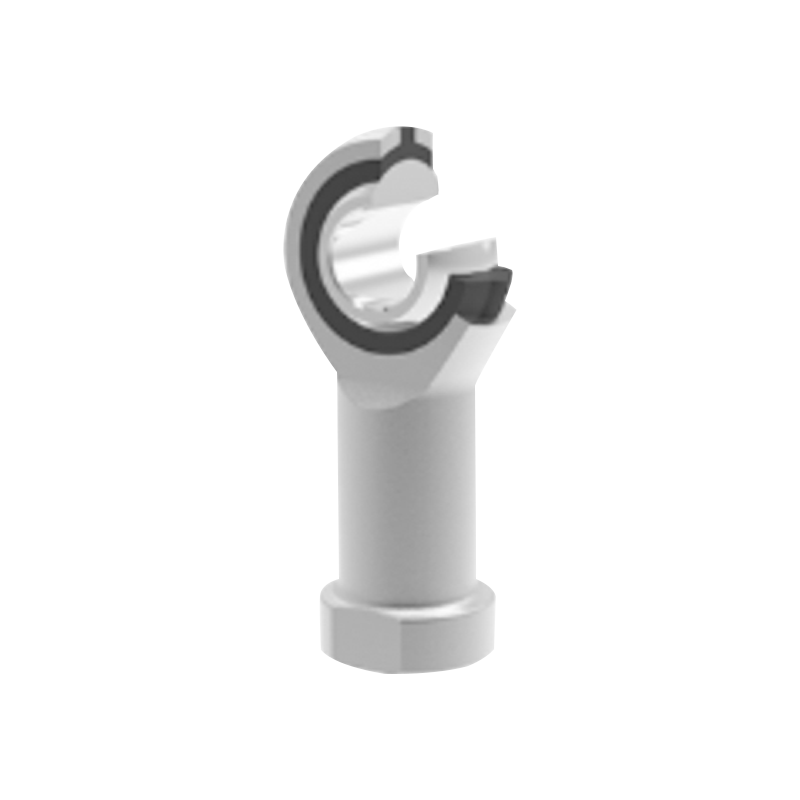
Content
Rod end joint bearings are essential components in mechanical systems that require controlled articulation, angular movement, and reliable load transmission. They are widely used in linkage assemblies, automation equipment, industrial machinery, agricultural systems, vehicle mechanisms, and motion-control applications. By combining a threaded rod-end body with a spherical sliding bearing, they allow connected components to move relative to one another while maintaining a compact and structurally efficient design.
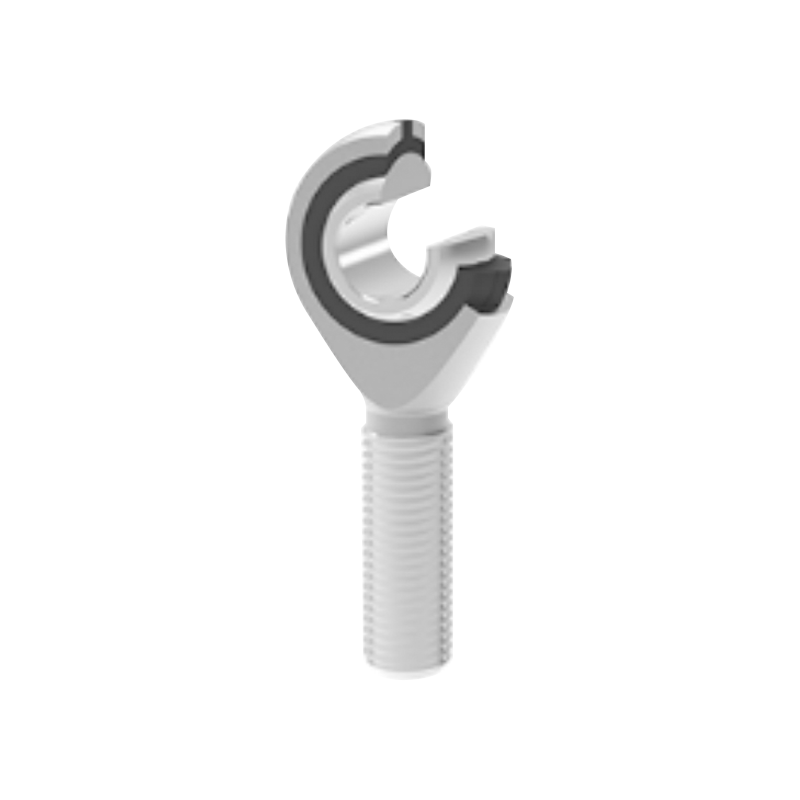
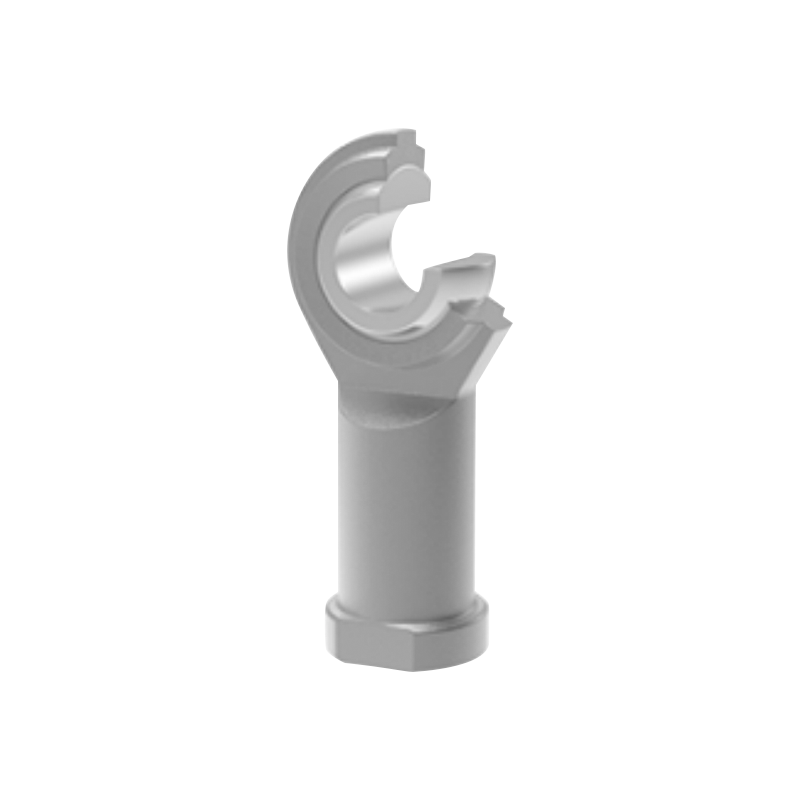
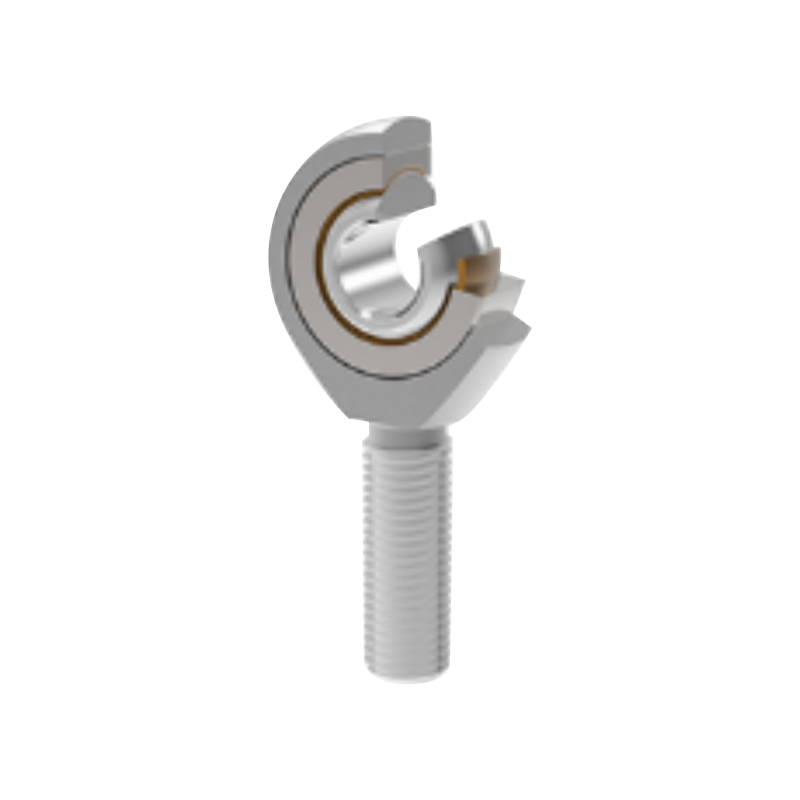
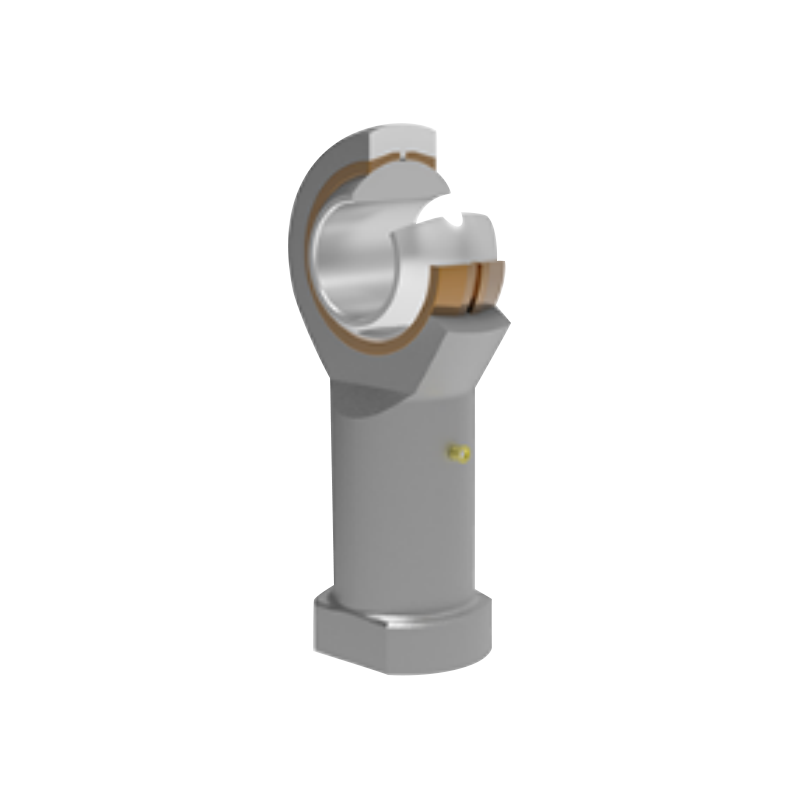
The SAZP Rod End Joint Bearing is designed for applications in which dependable performance, installation flexibility, corrosion resistance, and serviceability are important. Its construction combines a carbon-steel body with a galvanized surface, a hardened bearing-steel inner ring, and a bronze-lined sliding interface. This material combination gives the bearing a practical balance of strength, wear resistance, friction control, and manufacturing economy.
Manufactured and supplied by UKL Bearing Manufacturing Co., Ltd., the SAZP series is available in a range of metric and inch bore sizes, from 4.83 mm to 25.40 mm. The product family includes Unified National Fine thread configurations, optional left-hand threads, and stainless-steel versions for the body and inner ring. These options make the bearing suitable for both standard equipment and customized mechanical assemblies.
A rod end joint bearing, also called a rod end bearing or spherical rod end, is a mechanical joint that connects a threaded shaft or rod to a moving component. The bearing contains a spherical inner ring housed inside a bearing body. The inner ring can rotate and tilt relative to the body, allowing angular misalignment between connected parts.
Unlike a conventional rolling-element bearing, a rod end joint bearing normally uses a sliding contact interface rather than balls or rollers. This makes it especially useful in applications where oscillating motion, alignment variation, limited space, or direct threaded attachment is more important than high-speed continuous rotation.
The threaded shank enables direct installation into a linkage, actuator, cylinder, clevis, or adjustable mechanical rod. The spherical bore provides articulation around the connected pin. In a properly designed assembly, the bearing can compensate for angular movement and small alignment errors while transmitting radial or combined loads.
Rod end bearings are frequently selected for mechanisms that repeatedly change direction. Examples include robotic joints, steering linkages, control systems, pneumatic and hydraulic cylinders, packaging equipment, production machinery, and adjustable suspension assemblies. Their compact shape and integrated thread reduce the number of separate parts required in a linkage.
The body of the SAZP bearing is made from carbon steel. Carbon steel provides the mechanical strength needed for a threaded connection and load-bearing housing. It also offers good machinability, allowing the body to be formed and finished with accurate thread geometry, bore alignment, and external dimensions.
The body receives a galvanized surface treatment. Galvanizing helps improve resistance to atmospheric corrosion and protects the exposed steel from moisture during storage, handling, and service. This is particularly useful for industrial installations in which the bearing may be exposed to humidity, condensation, workshop contaminants, or occasional contact with non-aggressive fluids.
The galvanized exterior also provides a consistent visual finish and contributes to longer service life compared with an untreated carbon-steel surface. The actual suitability of the coating depends on the environment, load, maintenance conditions, and exposure to chemicals. For highly corrosive or outdoor applications, the optional stainless-steel construction should be evaluated.
The sliding surface is inlaid with bronze gaskets. Bronze is widely used in sliding bearing systems because it provides favorable friction characteristics, good resistance to adhesive wear, and the ability to accommodate repeated oscillating motion. The bronze interface forms the sliding pair with the hardened inner ring.
The specified sliding friction pair is steel and bronze. This combination is different from many low-cost rod ends that use a basic steel-on-steel contact without a dedicated sliding insert. A properly designed bronze interface can help reduce friction, distribute contact pressure, and control wear during articulation.
Bronze-lined construction can be particularly beneficial where the motion is intermittent or oscillatory. In these conditions, rolling bearings may not always be the most practical option, especially when the available movement is small and repeated reversal can produce localized stress. The sliding design of the SAZP series is intended to support this type of motion while maintaining a compact bearing envelope.
The inner ring is manufactured from bearing steel. It is hardened to improve resistance to indentation, deformation, and surface wear. The spherical outer surface is hard chrome plated, creating a durable contact surface against the bronze-lined body.
The hardened steel substrate provides structural support, while the hard chrome surface helps improve surface durability and corrosion resistance. The smooth spherical surface also supports controlled sliding and reduces the risk of rough contact between the inner ring and the bronze insert.
This inner-ring design is one of the key functional features of the product. The spherical geometry allows angular movement, while the hard surface is designed to withstand repeated contact. As with all sliding bearings, correct loading, alignment, lubrication, and contamination control are important for achieving the expected service life.
Except for bore diameters below 6.35 mm, the SAZP series can be lubricated through an oil cup. This feature provides a practical maintenance advantage for medium and larger sizes. Lubricant can be introduced into the sliding interface during installation or scheduled maintenance, helping reduce friction and slow wear.
Lubrication is especially valuable in applications with relatively high loads, frequent oscillation, elevated operating hours, or demanding environmental conditions. The maintenance interval should be established according to operating speed, load, temperature, contamination, motion angle, and the lubricant recommended for the specific system.
The smallest sizes, including those below 6.35 mm, do not provide the same oil-cup arrangement. These compact bearings are typically selected where space is limited and loads are lower. Their operating conditions should be carefully reviewed because small sliding surfaces can be more sensitive to excessive load, contamination, or insufficient installation accuracy.
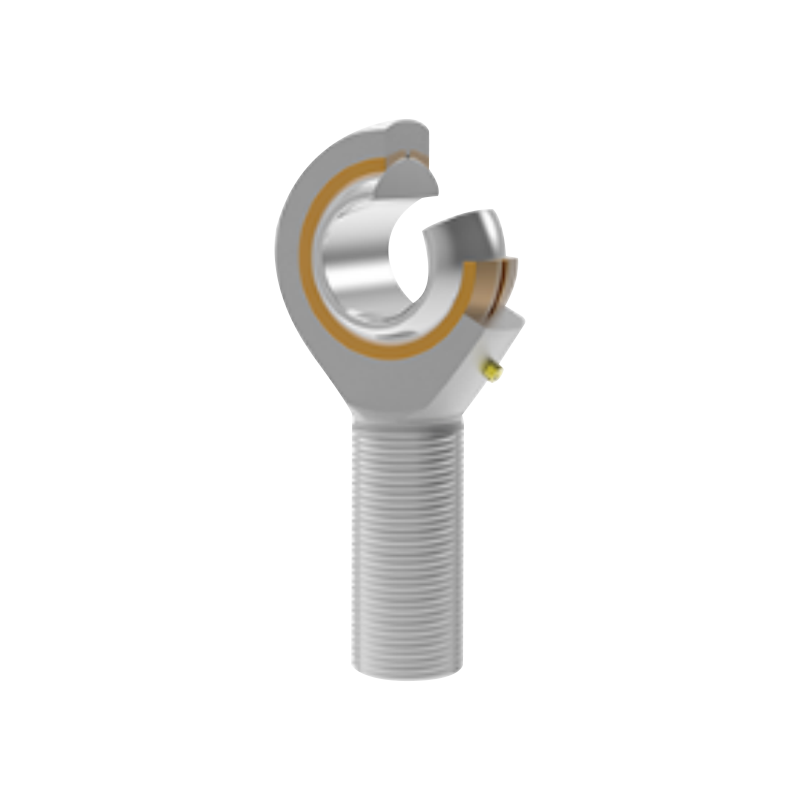
SAZP Rod End Joint Bearing
The spherical inner ring enables the bearing to accommodate angular movement between connected members. This helps prevent excessive bending stress in the rod, shaft, or housing when the linkage does not remain perfectly aligned throughout its travel.
In practical equipment, perfect alignment is difficult to maintain. Welded frames may have dimensional variation, shafts may deflect under load, and moving arms may change their angle during operation. A fixed joint can transfer these alignment errors into unwanted side loads. A spherical rod end can reduce this problem by allowing the connection to articulate naturally.
The SAZP specification lists an approximate angular movement of 9 to 14 degrees depending on size. The exact allowable angle should be confirmed for the intended installation, and the bearing should not be forced beyond its designed movement range. Adequate clearance around the outer body and adjacent components is also necessary.
The combination of a carbon-steel body, bronze sliding elements, and a hardened chrome-plated bearing-steel inner ring creates a balanced construction. The steel body supports the threaded connection and external loads. The bronze interface manages sliding contact. The hardened inner ring maintains a durable spherical surface.
This division of material functions is an important advantage over constructions that rely on a single material for all contact and structural requirements. The body can be optimized for strength and machining, while the sliding insert can be optimized for friction and wear behavior. The inner ring can be optimized for hardness and dimensional stability.
The SAZP series includes dimensional data in millimeters and inches. Bore sizes range from 4.83 mm, corresponding to approximately 0.19 inch, to 25.40 mm, corresponding to 1 inch. Thread configurations include common Unified National Fine forms such as 10-32, 1/4-28, 5/16-24, 3/8-24, 7/16-20, 1/2-20, 5/8-18, 3/4-16, and 5/4-12.
The availability of inch-thread versions is valuable for customers maintaining equipment designed to North American standards. It can reduce the need for adapters or redesigns when replacing an existing component. The range also supports export machinery, custom assemblies, and mixed-standard production environments.
Some mechanical assemblies require both right-hand and left-hand threads to allow adjustment without removing the connected components. The SAZP family can be supplied with left-hand thread configurations. For left-hand versions, the model and thread marking are followed by the appropriate “L” and “LH” designations.
For example, a left-hand configuration may be identified by a designation such as SALZP12S 1/2 20UNF 2ALH. Customers should specify the complete thread requirement when ordering because thread direction, pitch, fit, and tolerance can directly affect installation and adjustment.
Left-hand thread options are useful in turnbuckle-style mechanisms, adjustable linkages, alignment systems, steering arrangements, and assemblies that require synchronized extension or retraction. They also help engineers design compact adjustment systems with opposing thread directions on either side.
The body and inner ring of the standard product can be manufactured from stainless steel as an option. The bearing model is marked with “X” to identify this version, such as SAZP…S/X.
Stainless-steel construction can be considered for applications exposed to higher humidity, washdown, salt-containing atmospheres, or corrosive industrial environments. It may also be appropriate where a longer corrosion-resistance period is required or where surface contamination must be minimized.
Material selection should be based on the complete application rather than corrosion exposure alone. Load capacity, temperature, lubrication, chemical compatibility, installation method, and required service life should all be reviewed. UKL can support customers in comparing standard galvanized carbon steel with optional stainless-steel construction.
The SAZP product family covers compact and larger rod-end sizes. The table below summarizes the principal metric dimensions, thread specifications, approximate angular movement, dynamic and static load ratings, and approximate weight provided for the series.
| Bearing number | Bore d (mm) | Width B (mm) | Thread | Angular movement α (approx.) | Dynamic load rating (kN) | Static load rating (kN) | Approx. weight (kg) |
|---|---|---|---|---|---|---|---|
| SAZP4S | 4.83 | 7.92 | 10-32 | 10° | 3.4 | 3.8 | 0.013 |
| SAZP8S | 6.35 | 9.53 | 1/4-28 | 13° | 4.5 | 6.6 | 0.022 |
| SAZP7S | 7.94 | 11.10 | 5/16-24 | 10° | 6.9 | 8.4 | 0.037 |
| SAZP9S | 9.53 | 12.70 | 3/8-24 | 9° | 9.4 | 10 | 0.055 |
| SAZP11S | 11.11 | 14.27 | 7/16-20 | 11° | 11 | 13 | 0.078 |
| SAZP12S | 12.70 | 15.88 | 1/2-20 | 9° | 15 | 19 | 0.12 |
| SAZP15S | 15.88 | 19.05 | 5/8-18 | 11° | 20 | 21 | 0.18 |
| SAZP19S | 19.05 | 22.23 | 3/4-16 | 10° | 29 | 29 | 0.29 |
| SAZP25S | 25.40 | 34.93 | 5/4-12 | 14° | 60 | 101 | 1.1 |
The ratings in the table are reference values from the supplied product data. Actual bearing selection must consider the direction and type of load, oscillation angle, frequency of movement, speed, temperature, mounting arrangement, lubrication, shock loading, and the required safety factor.
Dynamic load rating is generally associated with repeated movement and service-life calculations, while static load rating is relevant to stationary or slowly moving loads and the prevention of excessive permanent deformation. These values should not be interpreted as universal allowable working loads without application-specific engineering review.
Some basic rod ends use a steel-on-steel sliding interface. Such designs can be effective in selected applications, but they may require more careful lubrication and may be more vulnerable to galling, friction variation, or accelerated wear under unfavorable conditions.
The bronze-lined sliding pair in the SAZP series is intended to provide a more controlled contact interface. Bronze can support smooth articulation and reduce the tendency toward direct steel-on-steel adhesive wear. This can be advantageous in mechanisms with repeated oscillation or frequent changes in direction.
The benefit is not simply the presence of bronze; the quality of the insert, its fit, surface finish, load distribution, and alignment are also important. UKL’s manufacturing controls are therefore relevant to the overall performance of the finished bearing.
Many compact rod ends are permanently lubricated or have no provision for relubrication. These can be suitable for low-maintenance applications, but their service life may be limited when operating loads and motion cycles are high.
For SAZP sizes with oil-cup capability, maintenance teams have the option of replenishing lubricant during scheduled service. This can help extend operational life and provides greater flexibility when the bearing is used in demanding industrial equipment.
A serviceable design also allows the maintenance strategy to be adapted to actual operating conditions. For example, a bearing used in a clean, low-cycle environment may require minimal maintenance, while one in a dusty, high-cycle mechanism may need more frequent inspection and lubrication.
A fixed threaded connection cannot compensate for angular movement. When used in a linkage that changes angle, it may force the rod or connected structure to bend. The spherical articulation of a rod end joint bearing helps reduce these unwanted forces and allows the mechanism to move more freely.
This can improve the reliability of the surrounding assembly. A bearing that accommodates misalignment may reduce stress on pins, brackets, cylinders, shafts, and fasteners. It can also make adjustment and assembly easier because small alignment variations do not automatically prevent installation.
A supplier with only a few standard sizes may require adapters or special redesigns when the required bore, thread, or load rating falls outside the available range. The SAZP series provides multiple sizes, including both small precision linkage components and larger load-bearing versions.
The availability of metric dimensions, inch threads, left-hand threads, and stainless-steel options supports a broader range of engineering requirements. This product flexibility can reduce procurement complexity and help standardize rod-end components across different machines.
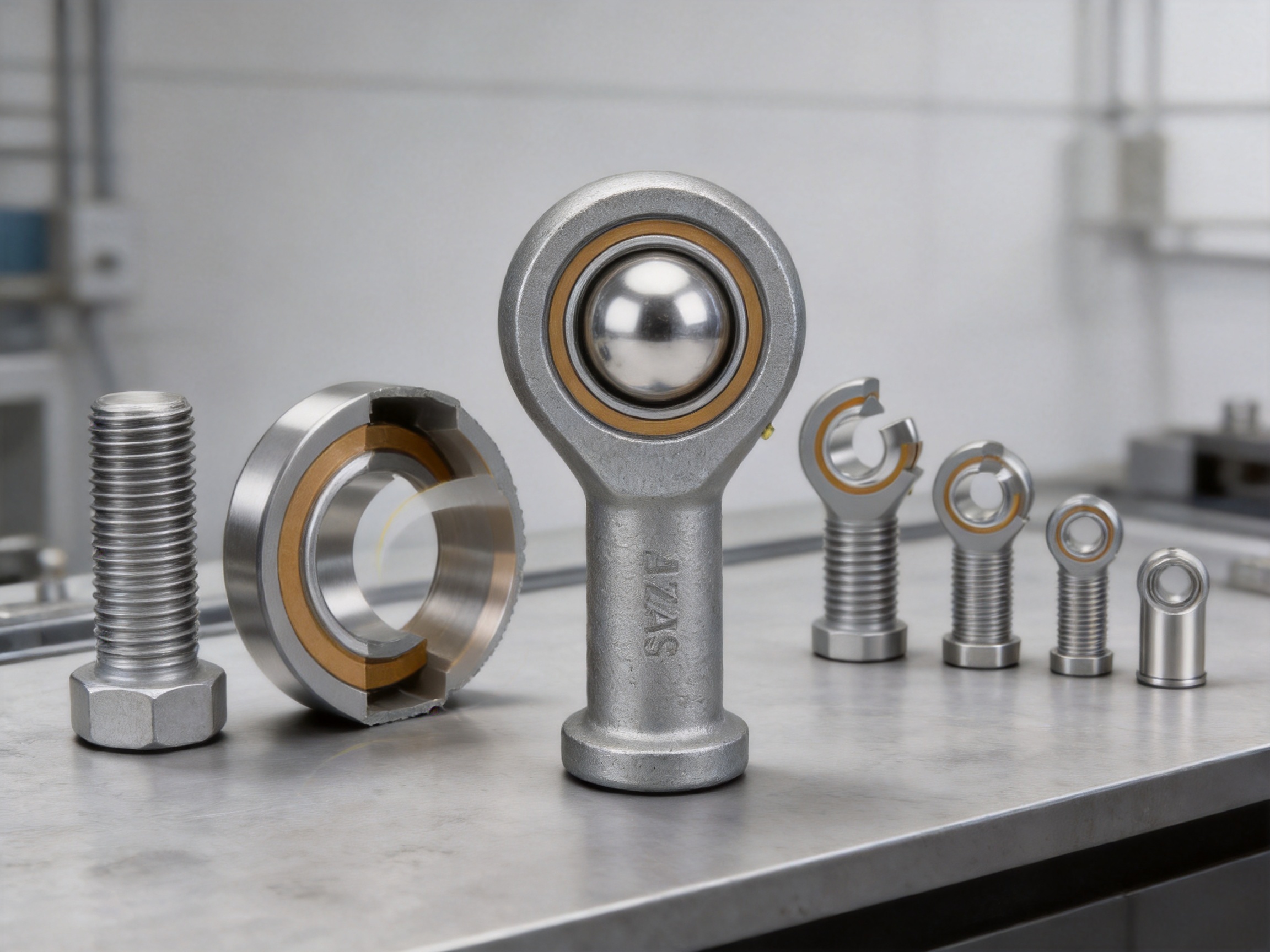
UKL Bearing Manufacturing Co., Ltd. integrates research and development, production, and international distribution. This structure allows product design, manufacturing feedback, quality control, and customer support to operate as connected functions rather than isolated activities.
For rod end bearings, this integration is important because performance depends on the relationship between multiple parts. Thread accuracy, inner-ring sphericity, bronze-insert positioning, surface hardness, coating quality, and final assembly all influence the final result. An integrated production system makes it easier to control these relationships.
Forging and material preparation provide the foundation for durable bearing components. Proper material selection and forming help establish the required strength and dimensional consistency of the bearing body. The production route must account for the geometry of the rod-end body, the threaded shank, the housing cavity, and the areas around the sliding insert.
Material preparation is followed by machining operations that establish the critical dimensions. Consistent raw-material control helps limit variation in hardness, machinability, and structural integrity. These factors are especially important for a threaded component that must withstand both mechanical loading and repeated installation torque.
Turning is used to create the external profile, threaded shank, shoulders, and other rotational features of the rod-end body. Accurate turning helps maintain concentricity and provides a controlled base for subsequent operations.
Precision machining is also important for the inner ring. The ring must maintain the correct spherical geometry and bore dimension so that it can articulate smoothly while supporting the intended load. Dimensional control during turning reduces the likelihood of excessive clearance, binding, or uneven contact.
Heat treatment is applied to bearing-steel components to achieve the required hardness and structural properties. The inner ring of the SAZP series is hardened to resist wear and deformation at the spherical sliding surface.
A controlled heat-treatment process requires attention to heating temperature, holding time, cooling conditions, distortion, and final hardness. The objective is to improve durability without creating unacceptable dimensional changes or residual stresses.
Heat treatment must be followed by appropriate finishing operations. A hardened component can provide excellent wear resistance, but its final performance still depends on surface finish, geometry, plating quality, and assembly accuracy.
Grinding is used to achieve accurate dimensions and controlled surface finish on critical bearing surfaces. For the inner ring, grinding helps produce a smooth and consistent spherical surface before hard chrome plating or final finishing.
A well-finished surface supports stable sliding contact with the bronze gasket. It can help reduce friction variation, limit localized wear, and improve the repeatability of the bearing’s angular motion. Grinding also supports interchangeability by keeping key dimensions within the required tolerance range.
The spherical outer surface of the inner ring is hard chrome plated. Plating requires careful preparation of the substrate, controlled deposition, and suitable post-plating finishing. The finished layer must provide a consistent surface without compromising the spherical profile.
Hard chrome plating contributes to surface hardness and corrosion resistance. It is particularly relevant to a sliding bearing because the spherical surface is repeatedly exposed to contact with the bronze insert. The quality of the plated surface directly affects friction, wear, and long-term operating stability.
During assembly, the inner ring, bronze sliding components, and bearing body must be fitted correctly. The insert must remain securely positioned, and the inner ring must move within the specified angular range without excessive looseness or binding.
Inspection may include dimensional measurement, thread verification, visual examination, surface assessment, movement testing, and review of material or process records. Depending on customer requirements, additional inspections can be arranged for hardness, coating thickness, torque, clearance, or load performance.
Final packaging is also part of the manufacturing process. Bearings should be protected from impact, contamination, and moisture during storage and transportation. Correct packaging helps preserve the galvanized body, finished inner ring, and threaded connection until the product reaches the assembly line.
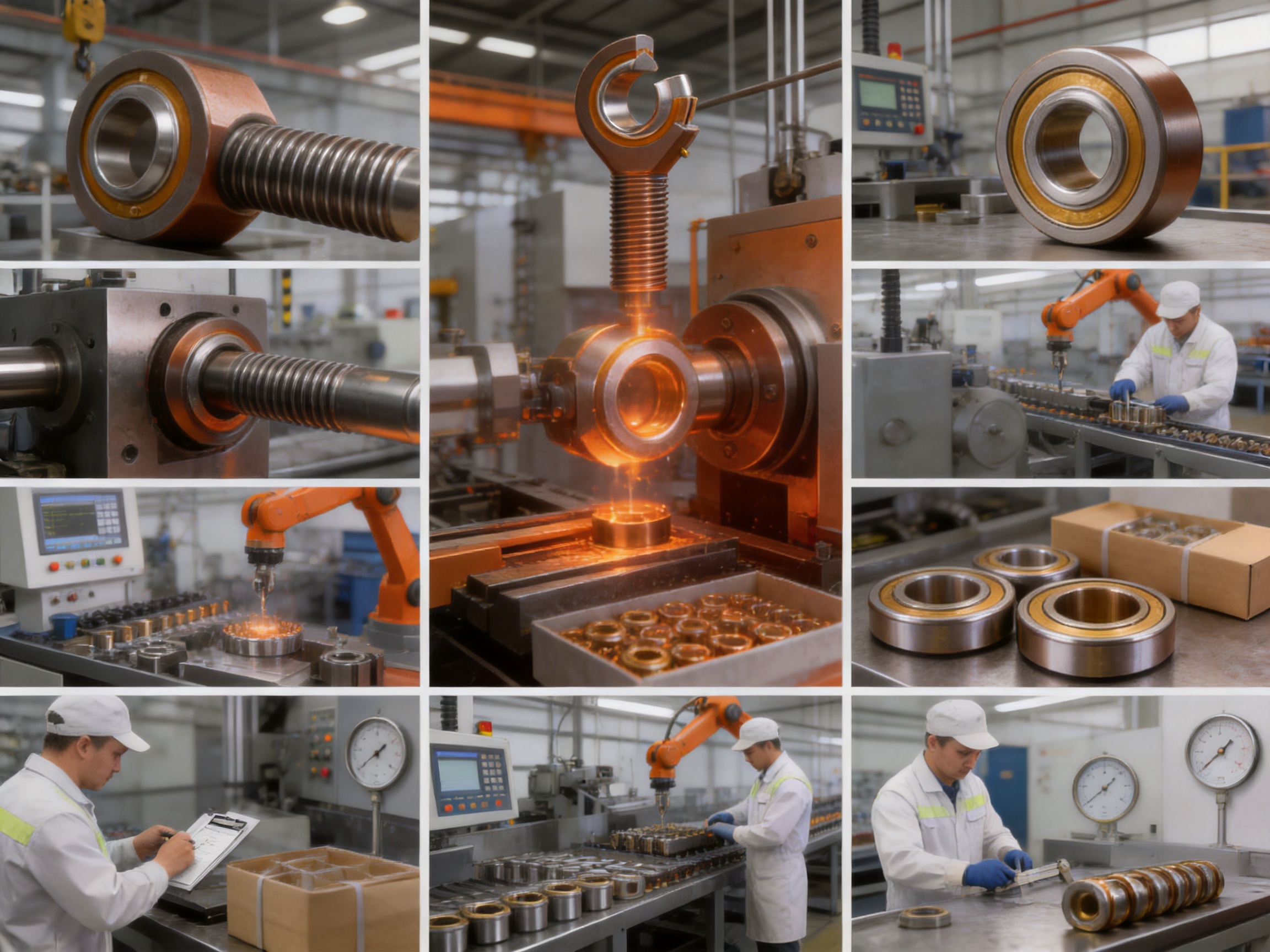
UKL operates a modernized factory with multiple production lines covering forging, turning, heat treatment, grinding, assembly, and packaging. This broad process capability allows the company to coordinate production from material preparation through finished-product delivery.
The company reports a production capacity of approximately 10,000 to 50,000 units per month. This range supports both regular industrial supply and larger OEM or distributor programs. Production planning can be adapted to product size, order volume, customization requirements, and delivery schedules.
UKL also reports an organization of approximately 201 to 500 employees and more than 15 years of OEM and ODM export experience. These resources support manufacturing, engineering, quality assurance, logistics, documentation, and after-sales service.
For customers, the practical value of manufacturing capacity is not only volume. It also includes the ability to maintain product availability, manage repeat orders, support multiple specifications, and coordinate technical changes. A supplier that can combine engineering and production support is better positioned to assist with custom rod-end requirements.
UKL supplies bearings to customers in Europe, Asia, Africa, Russia, the United States, Italy, Germany, Poland, South Africa, Egypt, India, and other markets. International experience can help a manufacturer understand different thread standards, packaging expectations, documentation needs, and procurement procedures.
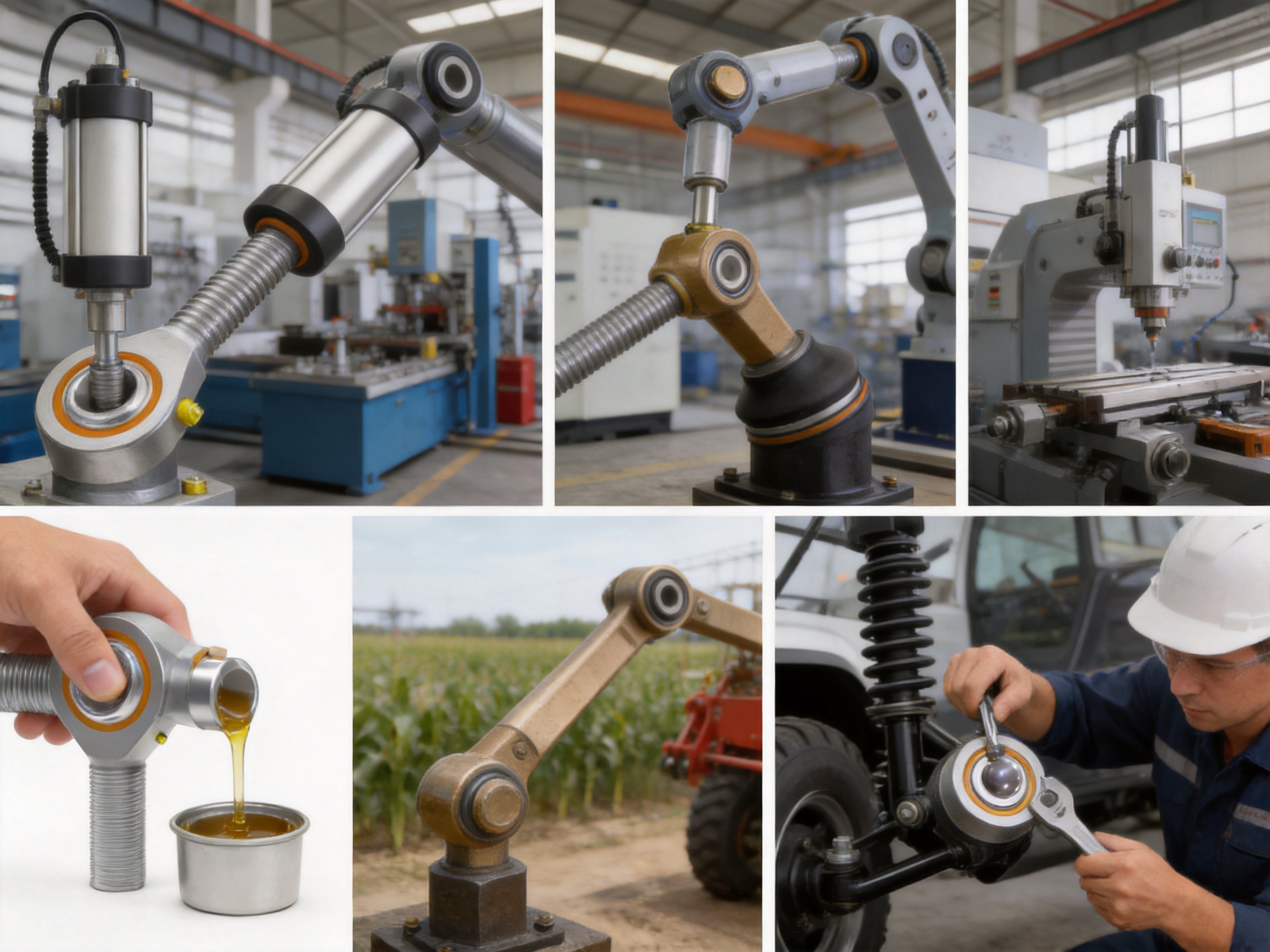
Automation systems often contain compact linkages and actuators that operate repeatedly and require precise movement. Rod end bearings can connect pneumatic cylinders, electric actuators, guide mechanisms, and moving arms while accommodating changes in alignment.
The SAZP series can be used where an adjustable threaded connection and spherical articulation are required. The range of bore and thread sizes allows engineers to match the bearing to the actuator capacity and available installation space.
Robotic and intelligent manufacturing systems use multiple joints and linkages. While high-speed robot axes may use specialized rolling bearings, rod end bearings remain useful in auxiliary mechanisms, grippers, end-effectors, adjustment systems, sensor linkages, and compact articulated structures.
The bearing’s angular movement can help compensate for small assembly tolerances in robot tooling. The galvanized body is suitable for many indoor industrial environments, while stainless-steel versions can be considered for applications requiring greater corrosion resistance.
CNC machines and production lines often include clamping systems, tool-changing mechanisms, protective doors, adjustable supports, and motion-control linkages. These mechanisms may require repeated oscillation rather than continuous high-speed rotation.
A compact rod end can simplify the connection between a drive element and a moving member. Its thread allows adjustment during machine setup, while the spherical inner ring helps maintain smooth movement when the connected components change angle.
Rod end bearings are commonly installed at the ends of hydraulic and pneumatic cylinders. They allow the cylinder rod to transfer force to a moving lever, bracket, or arm without imposing excessive bending when the operating angle changes.
Correct installation is essential. The cylinder should not be used to compensate for severe misalignment, and the bearing should not be exposed to loads beyond its rating. A properly supported and aligned rod end can improve the operating behavior of the cylinder assembly.
Mechanical linkages in vehicles and mobile equipment often require a threaded adjustment and controlled articulation. Rod ends may be used in steering, suspension, control, and actuator systems, subject to the applicable design standards and safety requirements.
In these applications, engineers should pay particular attention to shock loads, vibration, environmental exposure, fatigue, and the consequences of joint failure. The bearing should be selected with appropriate safety factors and verified through testing when used in safety-critical systems.
Agricultural machinery and construction equipment operate in environments with dust, mud, vibration, moisture, and shock loading. Rod end bearings may be used in control linkages, adjustment assemblies, hydraulic equipment, and articulated mechanisms.
The galvanized body provides useful general corrosion protection, while regular inspection and lubrication are important in contaminated environments. Protective covers, seals, or alternative materials may be required where abrasive particles can enter the sliding interface.
Other applications include packaging machines, conveyor systems, laboratory equipment, fitness equipment, industrial doors, textile machines, printing equipment, and custom-built machinery. In each case, the key benefits are compact installation, threaded adjustability, angular movement, and controlled sliding contact.
Before installation, verify the bearing number, bore size, thread type, thread direction, material option, and required lubrication arrangement. The standard SAZP designation may be followed by additional markings for size, thread, left-hand direction, or stainless-steel construction.
Do not assume that visually similar rod ends have identical threads. A bearing with the wrong pitch or thread direction can damage the mating component or create an unsafe connection.
The mating pin or shaft should match the bearing bore and should be free from burrs, severe wear, and contamination. The pin should be properly supported and secured so that the load is transmitted through the intended bearing surfaces rather than through the edge of the inner ring.
The threaded rod or actuator should be clean and correctly aligned with the bearing. Avoid forcing the thread into engagement. Cross-threading can permanently damage both components and may reduce the effective strength of the connection.
When tightening the rod end into a threaded assembly, use the appropriate wrenching surfaces on the bearing body or shank. Do not apply excessive torque through the inner ring. The spherical ring is designed for articulation and load transmission, not as a general-purpose tightening tool.
If a locknut is used, tighten it against the correct mounting surface and ensure that the bearing remains correctly oriented. The final assembly should allow the required angular movement without contact between the body and surrounding parts.
Rod end bearings accommodate angular misalignment, but they should not be used to correct severe structural misalignment. Excessive side loading can increase contact pressure, accelerate wear, and reduce service life.
Where possible, design the linkage so that the primary load passes through the center of the bearing bore. Avoid applying bending loads to the threaded shank. If a large moment is unavoidable, consider a larger bearing, a double-support arrangement, or a different joint design.
For oil-cup-equipped models, apply a compatible lubricant before initial operation and at intervals established by the equipment manufacturer. Lubricant should be clean and suitable for the operating temperature and load conditions.
Excessive lubrication may attract dust and abrasive particles, especially in open industrial environments. Insufficient lubrication may increase friction and wear. The correct maintenance practice depends on the actual operating conditions.
The stated operating temperature range for the product is approximately minus 50 degrees Celsius to plus 150 degrees Celsius. This range provides broad applicability across many industrial environments, including cold storage, outdoor machinery, heated production equipment, and temperature-variable installations.
Temperature affects lubricant viscosity, clearance, material expansion, friction, and coating performance. At low temperatures, lubricant may become more resistant to movement. At high temperatures, lubricant degradation and material expansion may become more significant. Applications near the limits of the stated range should be reviewed carefully.
The galvanized carbon-steel version is suitable for many general industrial environments, but it should not be assumed to be fully resistant to all chemicals, salt spray, or continuous washdown. Stainless-steel options may provide better corrosion resistance, but the specific stainless-steel grade and lubricant must be matched to the application.
Contamination is another important consideration. Dust, metal particles, sand, and process debris can enter the sliding interface and act as abrasive material. Where contamination is expected, the bearing should be protected through suitable guards, covers, sealing arrangements, cleaning practices, and maintenance intervals.
Service life depends on more than the nominal load rating. A rod end bearing may experience radial load, axial load, tilting load, shock, vibration, and reversing movement. The motion angle and frequency can be especially important because repeated oscillation concentrates contact in a limited area of the sliding surface.
Maintenance personnel should inspect the bearing for excessive looseness, unusual noise, increased friction, surface damage, corrosion, thread deformation, and movement outside the intended range. Any change in joint behavior should be investigated before the bearing reaches a critical condition.
Lubrication should be coordinated with the operating environment. In clean machinery, a scheduled interval may be sufficient. In dusty or wet machinery, more frequent inspection may be needed. If lubricant becomes contaminated, cleaning and relubrication should be performed according to the equipment maintenance procedure.
Replacement should be considered when the inner ring develops excessive radial play, the bronze insert shows significant wear, the body or shank is cracked or deformed, the thread is damaged, or corrosion has compromised the component. A worn bearing should not be restored to service merely because it still moves.
Industrial customers often require more than a standard catalog bearing. They may need a specific thread tolerance, a special thread direction, stainless-steel materials, custom packaging, private labeling, modified dimensions, or a defined inspection plan.
UKL’s OEM and ODM experience supports these requirements. The company can coordinate engineering communication, manufacturing feasibility, production scheduling, packaging, and export documentation. Customers should provide complete technical information at the quotation stage, including load data, motion conditions, environment, thread standard, quantity, and quality requirements.
Different thread precision requirements are available for rod end bearings. This is valuable when the bearing must be integrated into a precision adjustment system or when the mating component has a defined tolerance class. Thread selection should be made together with the design engineer to ensure correct fit and adequate engagement length.
Custom solutions should be validated before mass production. Prototype testing can confirm articulation, installation torque, clearance, lubrication behavior, corrosion resistance, and performance under representative loads. Testing is particularly important for safety-related applications or mechanisms with severe shock and vibration.
UKL Bearing Manufacturing Co., Ltd. was established in 2020 and focuses on bearing technology, engineering services, manufacturing, and international supply. The company describes itself as an integrated manufacturer and trader with a global customer base and extensive OEM and ODM export experience.
Its production scope includes cross roller bearings, dual-direction thrust angular contact ball bearings, rod end bearings, and other specialized bearing products. This broader technical background supports the development of products for CNC equipment, robotics, automation systems, and industrial machinery.
The company’s research and development team works on high-precision bearing products and application-oriented designs. For customers purchasing rod end bearings, this engineering capability can be useful when a standard part must be adapted to a special linkage, operating environment, or production requirement.
UKL’s manufacturing process covers forging, turning, heat treatment, grinding, assembly, and packaging. Managing these steps within a coordinated production system helps improve process consistency and supports repeatability between production batches.
The company also emphasizes digital production control, environmentally responsible processes, material recycling, and energy optimization. These activities contribute to a more sustainable manufacturing model while supporting the traceability and efficiency expected by modern industrial customers.
International service is another company strength. UKL provides technical response, installation guidance, and after-sales maintenance support through a multilingual service team. This is important for overseas customers that need help with selection, documentation, troubleshooting, replacement planning, or production integration.
The first selection factor is the required bore diameter. The bore must match the pin or shaft while providing suitable clearance for the intended movement. The second factor is the thread specification, including diameter, pitch, thread form, tolerance, and direction.
Next, determine the expected load. Engineers should distinguish between steady radial load, alternating load, axial load, shock load, and combined loading. The published dynamic and static ratings provide a starting point, but the selected bearing should include an appropriate safety factor.
The required angular movement should also be calculated. Confirm that the bearing can achieve the required angle without the body contacting adjacent parts. If the movement is close to the product limit, a design review or prototype test is recommended.
Environmental conditions determine whether the galvanized carbon-steel version is appropriate or whether the stainless-steel option should be considered. Temperature, water, salt, chemicals, dust, vibration, and cleaning procedures should all be documented.
Finally, define the maintenance approach. If the bearing will be accessible for routine lubrication, an oil-cup-equipped size may provide a useful service advantage. If access is difficult, the design may require special lubrication, protective features, or a different bearing type.
The bearing connects a threaded rod or actuator to a moving component while allowing angular articulation. It is designed to transmit loads and accommodate changes in alignment in linkages, automation systems, cylinders, robotics equipment, and general machinery.
The standard body is made from carbon steel with a galvanized surface. The sliding interface uses bronze gaskets. The inner ring is made from hardened bearing steel and has a hard chrome-plated spherical surface.
Yes. Its steel-and-bronze sliding pair and spherical inner ring are designed for angular and oscillating movement. The actual suitability depends on load, frequency, angle, lubrication, temperature, and contamination.
Models with bore diameters of 6.35 mm and above can be lubricated through an oil cup. Bore sizes below 6.35 mm do not provide the same oil-cup arrangement.
Yes. Left-hand thread versions are available. The model and thread markings include the applicable “L” and “LH” designations. The complete thread requirement should be confirmed before ordering.
Yes. The body and inner ring can be made from stainless steel as an option. The model is marked with “X,” such as SAZP…S/X. Stainless-steel construction should be selected after reviewing the actual corrosion, load, temperature, and lubrication conditions.
The supplied product range extends from 4.83 mm to 25.40 mm. The series includes both metric dimensional references and inch-thread configurations.
The listed versions use Unified National Fine thread specifications, including 10-32, 1/4-28, 5/16-24, 3/8-24, 7/16-20, 1/2-20, 5/8-18, 3/4-16, and 5/4-12.
Verify the complete part number, clean the mating components, engage the thread carefully, use the correct wrenching surfaces, avoid excessive tightening through the inner ring, and ensure that the bearing is properly aligned. The assembly should not force the bearing beyond its angular movement range.
No. It can accommodate angular movement and moderate alignment variation, but severe structural misalignment can create excessive side loads and reduce service life. The surrounding machine should be designed with proper alignment and support.
The stated operating temperature range is approximately minus 50 degrees Celsius to plus 150 degrees Celsius. Applications near either limit should be reviewed for lubricant, clearance, material, and environmental compatibility.
The SAZP series uses a bronze-lined sliding interface and a hardened chrome-plated inner ring. This construction is intended to provide more controlled friction and wear behavior than a basic unlined steel-on-steel design, particularly in oscillating applications.
Yes. UKL provides OEM and ODM support and can discuss thread precision, left-hand threads, stainless-steel materials, packaging, inspection, and other project-specific requirements.
The SAZP Rod End Joint Bearing is a practical solution for articulated mechanical connections that require strength, compact installation, threaded adjustment, and reliable sliding performance. Its carbon-steel galvanized body provides a durable structural housing, while the bronze-lined sliding interface supports controlled articulation. The hardened and hard chrome-plated bearing-steel inner ring adds surface durability and helps maintain stable contact during repeated movement.
The product range covers bore sizes from 4.83 mm to 25.40 mm and includes a broad selection of Unified National Fine thread configurations. Left-hand thread versions, different thread precision requirements, oil-cup lubrication for larger sizes, and optional stainless-steel construction provide additional flexibility over narrower standard offerings.
UKL Bearing Manufacturing Co., Ltd. strengthens the product with integrated manufacturing capabilities covering forging, turning, heat treatment, grinding, assembly, and packaging. Its R&D resources, OEM and ODM experience, international distribution, production capacity, and technical service provide support for both standard bearing purchases and customized industrial projects.
For the best results, the bearing should be selected according to load, motion, alignment, environment, temperature, lubrication, and maintenance requirements. When these factors are properly addressed, the SAZP series can provide dependable service in automation equipment, robotics, cylinders, CNC machinery, industrial linkages, agricultural equipment, and many other motion-control applications.
1. UKL Bearing Manufacturing Co., Ltd., SAZP Rod End Joint Bearing product information and dimensional data.
2. UKL Bearing Manufacturing Co., Ltd., company manufacturing, OEM, ODM, and engineering capability information.
3. General principles of plain bearing design, sliding friction pairs, lubrication, and wear control.
4. General engineering practices for spherical rod-end selection, threaded-joint installation, and angular misalignment management.
5. General bearing maintenance guidance covering load ratings, operating temperature, contamination control, inspection, and lubrication intervals.
Product Categories
Contact Us

Jane@ukl-bearing.com
Jenny@ukl-bearing.com
Andy@ukl-bearing.com
Ivy@ukl-bearing.com

+86-510- 88763239
+86-15371057968

No.1 Hehuan Road, Hudai Town, Binhu District, Wuxi City.
Ready to Begin?
Get in Touch

Now!
UKL BEARING
 English
 Español
 русский