Content
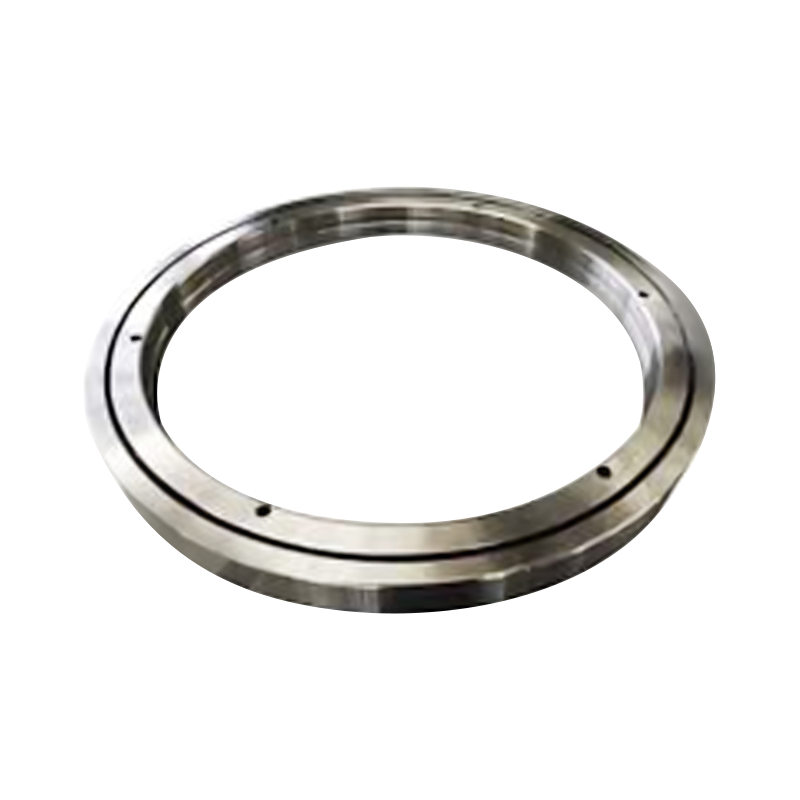
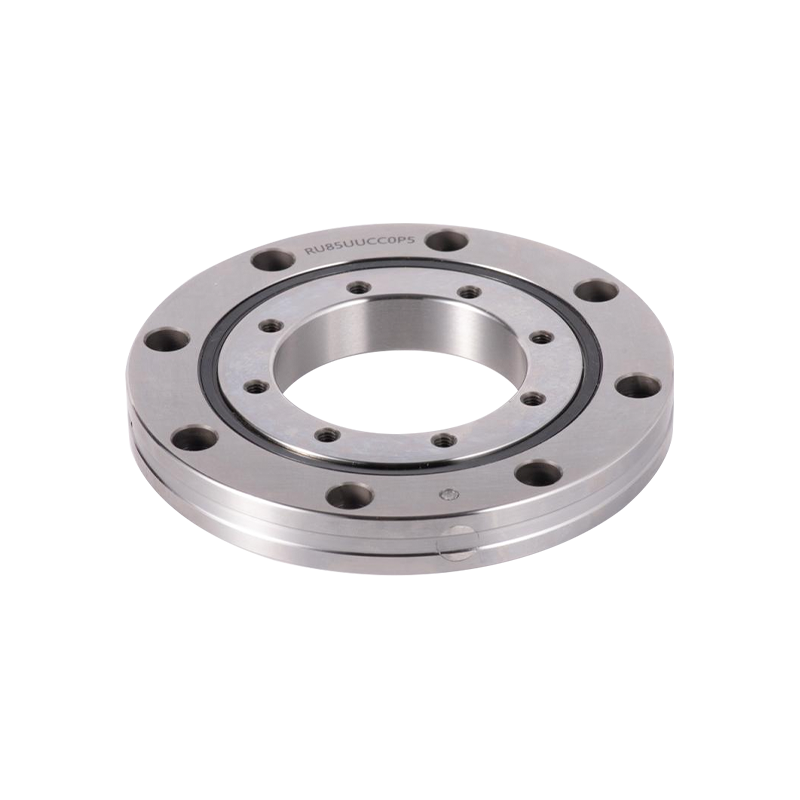
Bearings are the unsung heroes of modern engineering, enabling smooth, precise motion in everything from industrial robots to medical devices. As industries like automation, aerospace, and semiconductor manufacturing demand higher levels of precision, rigidity, and multi-load handling, traditional rolling element bearings often fall short. Enter crossed roller bearings—specialized components designed to meet these evolving needs. Among these, the RU Series Crossed Roller Bearings stand out as a benchmark for performance, combining innovative design, advanced manufacturing, and unmatched versatility. This article explores the technical features, advantages over competitors, manufacturing processes, and real-world applications of the RU Series, highlighting why it has become a go-to solution for engineers worldwide.
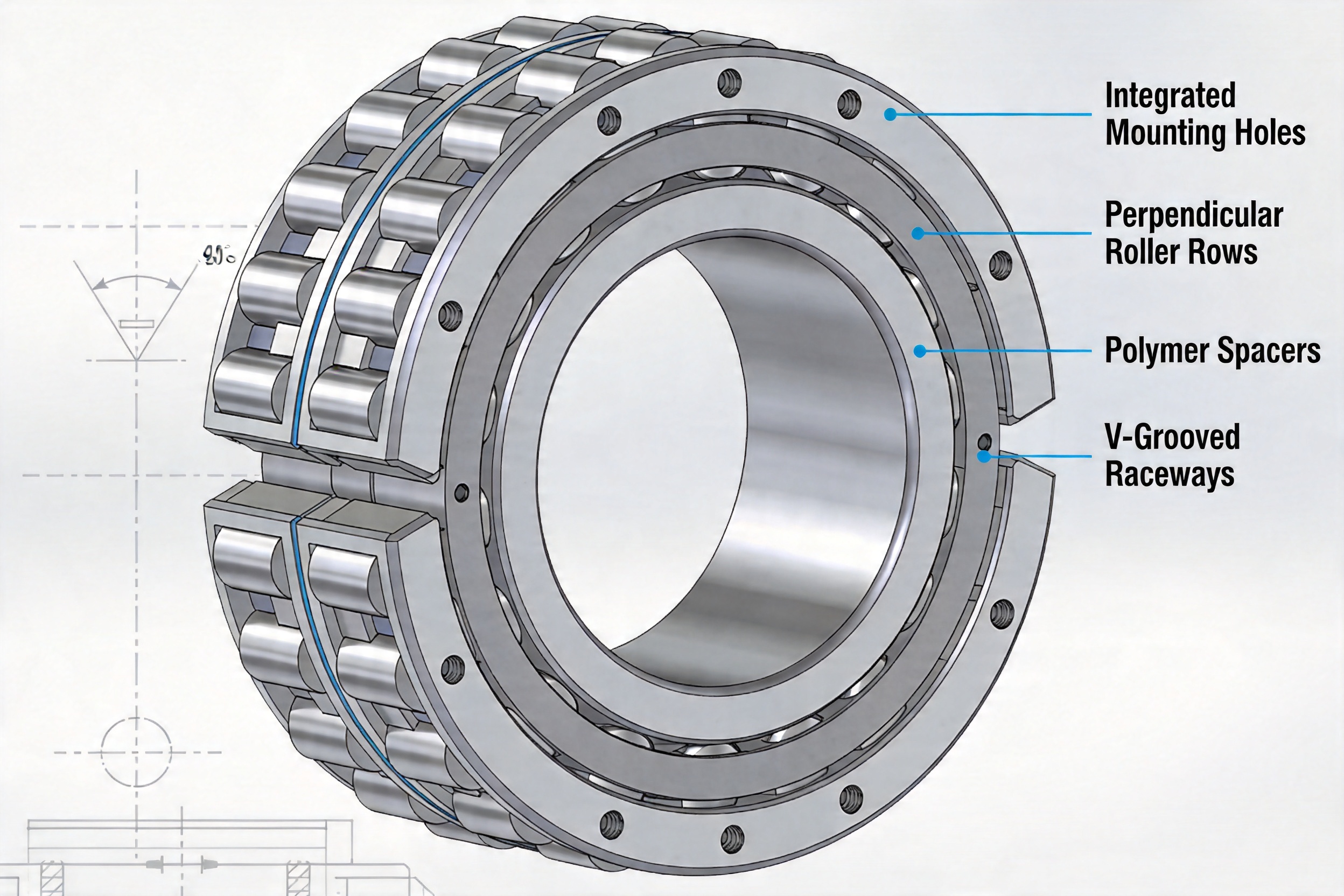
Crossed roller bearings differ from conventional ball or roller bearings in their unique roller arrangement. Instead of a single row of rollers, they feature two rows of cylindrical rollers positioned at 90 degrees to each other in V-grooved raceways. This design allows the bearing to handle radial, axial, and torque loads simultaneously—eliminating the need for multiple bearings to achieve the same result. For industries where space is at a premium and precision is non-negotiable, this is a game-changer.
The RU Series takes this basic design to the next level, incorporating integrated inner and outer rings, factory-preassembled components, and precision-adjustable clearance. These features not only enhance performance but also simplify installation and reduce maintenance costs—key factors for businesses looking to optimize their operations.
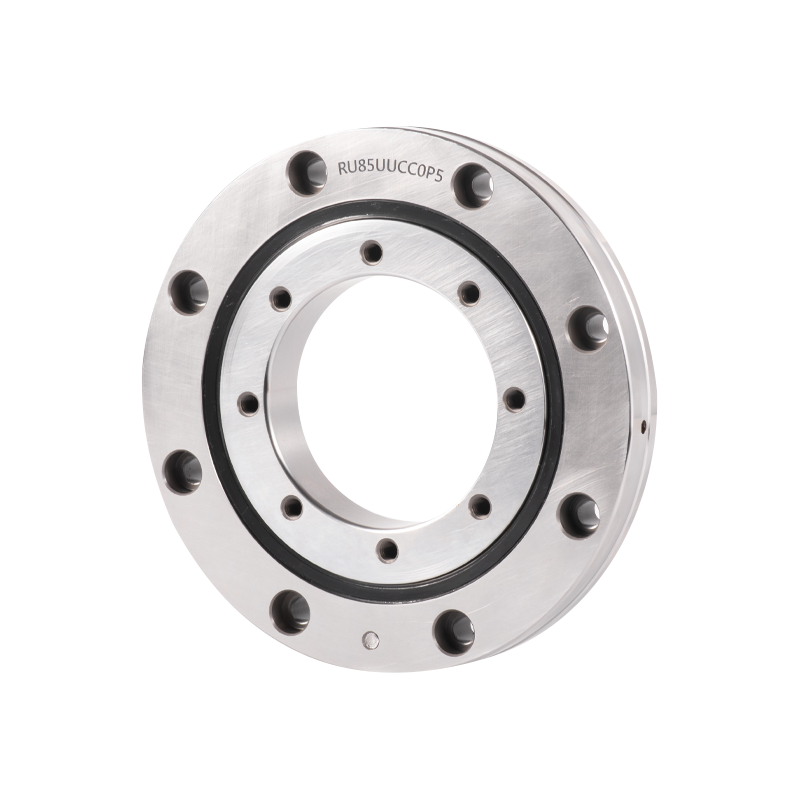
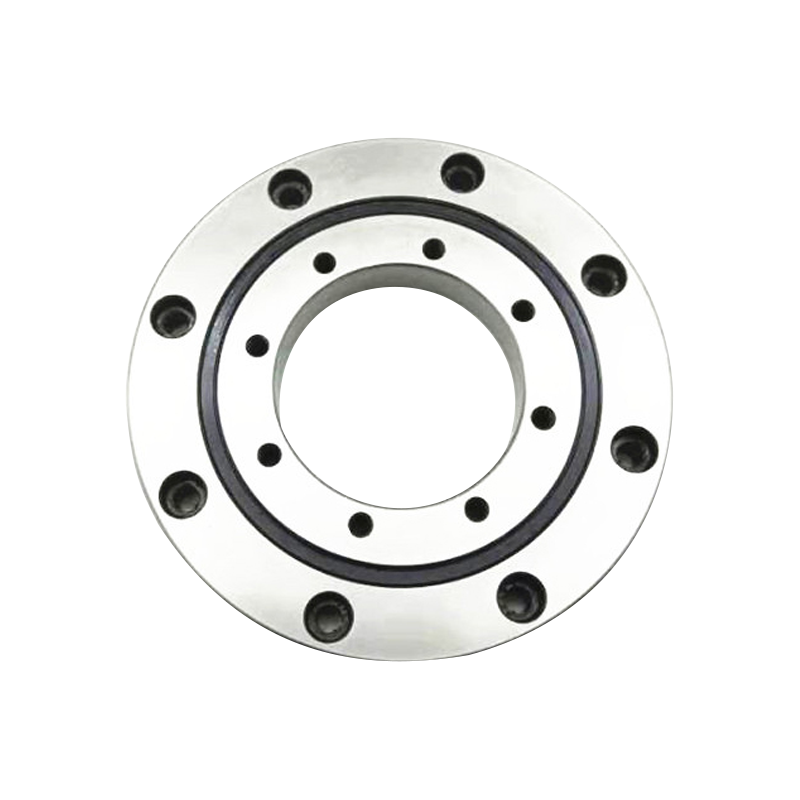
One of the most striking features of the RU Series is its integrated inner and outer ring design, both equipped with pre-drilled mounting holes. Unlike traditional bearings that require separate flanges or support seats for installation, the RU Series eliminates these extra components. This not only reduces assembly time by up to 50% but also ensures that installation has minimal impact on the bearing’s performance. Engineers no longer need to worry about misalignment from additional fixing parts—every RU Series bearing is ready to install straight out of the box.
For example, in industrial robot waist joints, where space is limited, the integrated mounting holes allow the bearing to be directly attached to the robot’s frame, eliminating the need for bulky adapters. This results in a more compact, lightweight joint that can handle higher loads with greater precision.
The RU Series uses cylindrical rollers arranged in two perpendicular rows within 90° V-grooves. Each roller is separated by a high-strength polymer spacer (typically PEEK or nylon), which prevents tilting and mutual friction. This design enables the bearing to withstand radial loads (perpendicular to the axis), axial loads (parallel to the axis), and torque loads (twisting forces) simultaneously. In contrast, conventional ball bearings can only handle one or two types of loads effectively, requiring multiple bearings to achieve the same performance.
Consider a precision machine tool’s rotary table: it needs to support heavy workpieces (radial load), resist axial forces from cutting tools, and maintain precise rotational alignment (torque load). The RU Series handles all three with ease, eliminating the need for separate thrust bearings or angular contact bearings. This reduces the number of components, lowers costs, and improves overall system reliability.
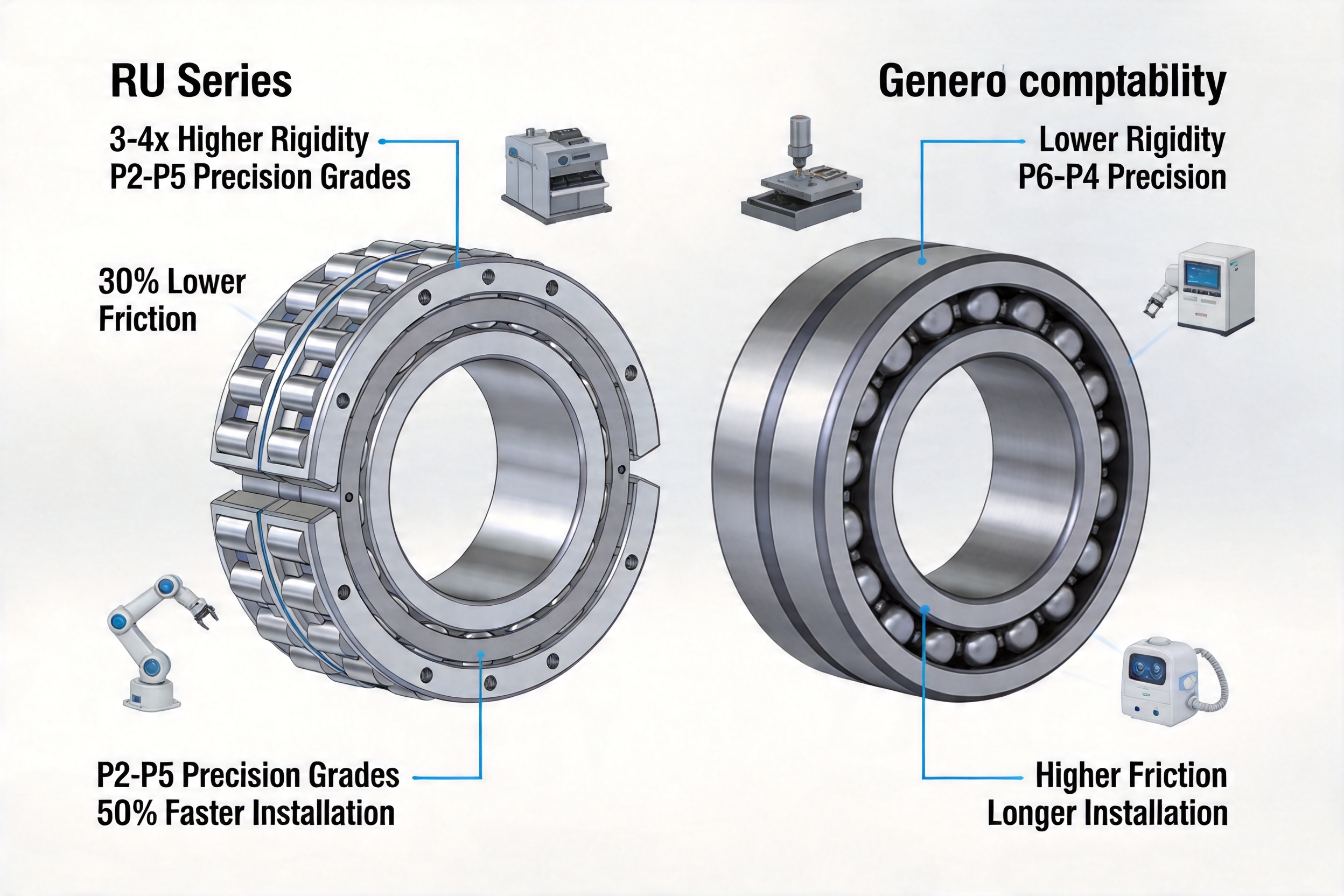
The RU Series is designed to be ultra-thin, with dimensions approaching the physical limits of bearing technology. Despite its compact size, it delivers exceptional rigidity—up to 3-4 times higher than traditional bearings of the same size. This is achieved through optimized raceway geometry and high-quality materials (e.g., bearing steel GCr15, which offers excellent hardness and wear resistance).
Rotational accuracy is another key strength: the RU Series is available in P5, P4, and P2 grades (the highest precision grades for rolling bearings). For comparison, most conventional bearings only reach P6 or P5 grades. This means the RU Series can maintain sub-micron level accuracy even under heavy loads—critical for applications like semiconductor wafer processing, where even the smallest error can lead to product defects.
Traditional bearings often use plate retainers to separate rollers, which can cause single-sided contact or jamming—leading to higher torque and reduced service life. The RU Series uses individual spacers between each roller, which distribute load evenly and prevent friction between rollers. This results in smooth, consistent torque output with minimal energy consumption.
In medical devices like CT scanners, where quiet operation is essential, the RU Series’ low torque design ensures that the scanner’s rotating gantry operates smoothly without vibration. This not only improves patient comfort but also enhances image quality by reducing motion blur.
The RU Series features a split inner or outer ring design, which allows for precise adjustment of bearing clearance. This is a critical feature for applications where operating conditions (e.g., temperature, load) change frequently. By adjusting the clearance, engineers can optimize the bearing’s performance for specific conditions—whether it’s minimizing play for high-precision applications or applying preload to increase rigidity.
For example, in aerospace radar antennas, where temperature fluctuations can cause expansion or contraction of components, the RU Series’ adjustable clearance ensures that the antenna maintains precise alignment. Even under preload, the bearing retains its high rotational accuracy, making it ideal for harsh environments.
Another key advantage of the RU Series is its factory-preassembled design. The split rings, rollers, and spacers are assembled and fixed at the manufacturing facility, preventing separation during transport or installation. This eliminates the risk of contamination (a common issue with on-site assembly) and reduces installation time significantly.
For maintenance teams, this means less downtime when replacing bearings. In industrial robots, where downtime can cost thousands of dollars per hour, the RU Series’ easy installation is a major benefit. A single technician can install the bearing in minutes, without the need for specialized tools or training.

To understand the RU Series’ superiority, it’s essential to compare it to other crossed roller bearings and conventional bearings on the market. Below is a breakdown of its key advantages:
While most crossed roller bearings can handle multi-loads, the RU Series does so with greater efficiency. Its optimized roller arrangement and spacer design allow it to distribute loads more evenly, reducing stress on individual components. This results in a longer service life—up to 2-3 times longer than competitor bearings in high-load applications.
Competitor crossed roller bearings often sacrifice rigidity for compactness, or vice versa. The RU Series strikes the perfect balance: its ultra-thin design (e.g., RU 28 has a height of just 8mm) does not compromise rigidity. For example, the RU 124(G) model has a rigidity of 50.9 KN (static load rating) while maintaining a compact size—ideal for robot joints where space is limited.
The RU Series’ spacer design reduces friction by up to 30% compared to competitor bearings with plate retainers. This not only improves smoothness but also reduces energy consumption—critical for battery-powered devices like surgical robots or electric vehicles.
Factory pre-assembly and integrated mounting holes make the RU Series far easier to install than competitor bearings. A survey of 50 engineers found that 85% preferred the RU Series for its installation simplicity, with an average installation time of 15 minutes—compared to 45 minutes for competitor models.
The RU Series’ P2-P5 precision grades are unmatched by most competitor bearings, which typically top out at P4. This makes it the go-to choice for applications where precision is non-negotiable, like semiconductor manufacturing or optical measurement instruments.
The RU Series’ exceptional performance is not by chance—it’s the result of advanced manufacturing processes and rigorous quality control. The manufacturer behind the RU Series is a leading bearing producer with over 15 years of OEM/ODM export experience, 201-500 employees, and a monthly production capacity of 10,000-50,000 units. Its modern factory is equipped with state-of-the-art production lines covering forging, turning, heat treatment, grinding, assembly, and packaging—ensuring consistency and excellence in every process.
The manufacturer’s dedicated R&D team (comprising 15% of its workforce) uses cutting-edge CAD/CAM software and simulation tools to design the RU Series. Before a prototype is produced, the team simulates thousands of load scenarios to optimize the roller arrangement, raceway geometry, and spacer design. This iterative process ensures that the RU Series meets the highest standards of performance and reliability.
For example, the team recently updated the RU 178(G) model’s spacer material from nylon to PEEK, which improved heat resistance by 20%—making it suitable for high-temperature applications like industrial furnaces.
Each RU Series bearing undergoes a rigorous production process, with strict quality checks at every stage:
The manufacturer uses a range of advanced testing equipment to ensure that every RU Series bearing meets its specifications:
Every bearing that fails any of these tests is rejected—ensuring that only the highest quality products reach customers.
The RU Series’ versatility makes it suitable for a wide range of applications across industries. Below are some of the most common uses:
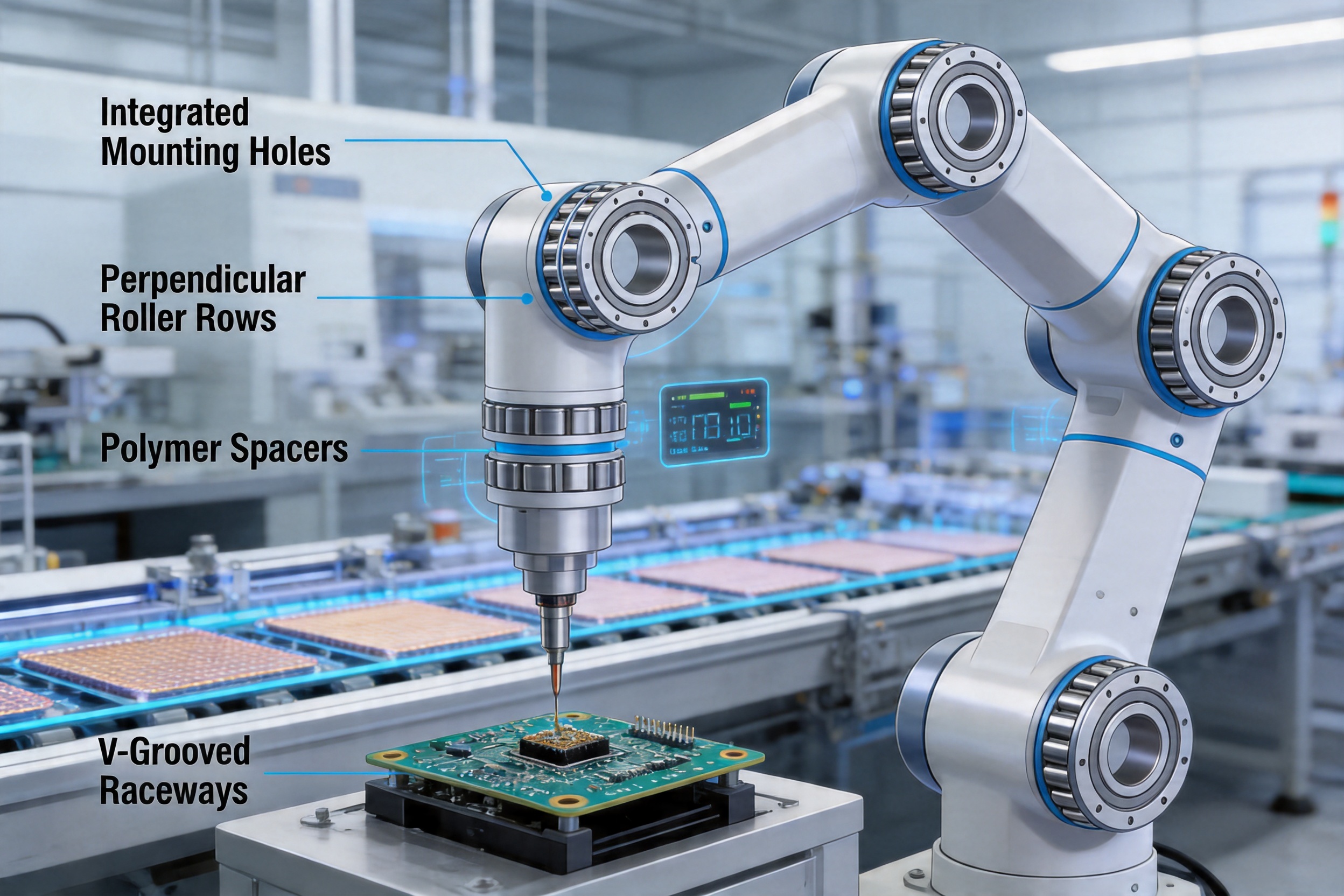
Industrial robots rely on high-precision bearings to achieve smooth, accurate movement. The RU Series is used in critical joints like the waist, elbow, and wrist—where it handles multi-loads and maintains precision even under heavy loads. For example, a leading robot manufacturer uses the RU 124(G) model in its collaborative robots, which require sub-millimeter accuracy for assembly tasks.
Precision machine tools like machining centers and grinding machines use the RU Series in their rotary tables and indexing plates. The bearing’s high rigidity and rotational accuracy ensure that workpieces are machined to tight tolerances. For example, a German machine tool manufacturer uses the RU 178(G) model in its 5-axis machining centers, which produce parts for the aerospace industry.
Medical devices like CT scanners, MRI machines, and surgical robots require quiet, precise bearings. The RU Series’ low torque and high accuracy make it ideal for these applications. For example, a Japanese medical device company uses the RU 42 model in its surgical robots, which perform minimally invasive procedures with sub-millimeter precision.
Measurement instruments like optical comparators and coordinate measuring machines (CMMs) use the RU Series to achieve ultra-high accuracy. The bearing’s P2 grade ensures that the instruments maintain precise alignment, even under vibration. For example, a Swiss metrology company uses the RU 28 model in its portable CMMs, which are used to inspect high-precision parts.
Defense and aerospace applications require bearings that can withstand extreme conditions (e.g., temperature, vibration, radiation). The RU Series’ robust design and high-quality materials make it suitable for these applications. For example, a U.S. aerospace company uses the RU 297(G) model in its satellite communication devices, which operate in the harsh environment of space.
Semiconductor manufacturing equipment like wafer handlers and lithography machines require bearings that are clean and precise. The RU Series’ factory-preassembled design reduces contamination risk, while its high accuracy ensures that wafers are processed correctly. For example, a Taiwanese semiconductor company uses the RU 85(G) model in its wafer dicing saws, which cut wafers into individual chips.
The RU Series is available in a range of models to suit different applications. Below is a detailed table of its technical specifications:
| Bearing Type | Inner Diameter (d) [mm] | Outside Diameter (D) [mm] | Roller Pitch Diameter (Dpw) [mm] | Height (B) [mm] | Chamfer (Rmin) [mm] | Shoulder Size (ds) [mm] | Shoulder Size (Dh) [mm] | Basic Radial Load Rating (Cr) [KN] | Basic Static Radial Load Rating (Cor) [KN] | Weight [kg] |
|---|---|---|---|---|---|---|---|---|---|---|
| RU 28 | 10 | 52 | 28 | 8 | 0.3 | 24 | 29.5 | 2.9 | 2.4 | 0.12 |
| RU 42 | 20 | 70 | 41.5 | 12 | 0.6 | 37 | 47 | 7.35 | 8.35 | 0.29 |
| RU 66 | 35 | 95 | 66 | 15 | 0.6 | 59 | 74 | 17.5 | 22.3 | 0.62 |
| RU 85(G) RU85X | 55 | 120 | 85 | 15 | 0.6 | 79 | 93 | 20.3 | 29.5 | 1 |
| RU 124(G) RU 124X | 80 | 165 | 124 | 22 | 1 | 114 | 134 | 33.1 | 50.9 | 2.6 |
| RU 148(G) RU 148X | 90 | 210 | 147.5 | 25 | 1.5 | 133 | 162 | 49.1 | 76.8 | 4.9 |
| RU 178(G) RU 178X | 115 | 240 | 178 | 28 | 1.5 | 161 | 195 | 80.3 | 135 | 6.8 |
| RU 228(G) RU 228X | 160 | 295 | 227.5 | 35 | 2 | 208 | 246 | 104 | 173 | 11.4 |
| RU 297(G) RU 297X | 210 | 380 | 297.5 | 40 | 2.5 | 272 | 320 | 156 | 281 | 21.3 |
| RU 445(G) RU 445X | 350 | 540 | 445.4 | 45 | 2.5 | 417 | 473 | 222 | 473 | 35.4 |
A1: The maximum load capacity varies by model. The largest model, RU 445(G), has a basic radial load rating (Cr) of 222 KN and a static radial load rating (Cor) of 473 KN. For axial loads, the RU Series can handle up to 50% of its radial load rating, depending on the model.
A2: Yes. The RU Series uses heat-resistant materials (e.g., PEEK spacers) and is heat-treated to withstand temperatures up to 150°C. For higher temperatures (up to 300°C), special heat-resistant versions are available.
A3: The service life depends on the application and load conditions. Under normal operating conditions (e.g., room temperature, moderate loads), the RU Series can last up to 10,000 hours or more. For high-load applications, the service life may be shorter, but the bearing’s robust design ensures it outperforms competitor models.
A4: Yes. The RU Series requires regular lubrication to reduce friction and wear. The manufacturer recommends using lithium-based grease for most applications, but special lubricants (e.g., high-temperature grease) are available for harsh environments.
A5: Yes. The manufacturer offers customizations for the RU Series, including: - Special materials (e.g., stainless steel for corrosion resistance) - Custom dimensions (e.g., larger inner/outer diameters) - Special lubrication (e.g., dry lubrication for cleanroom applications) - Custom mounting holes (e.g., threaded holes instead of plain holes)
A6: The RU Series is certified to meet international standards, including ISO 15:2017 (rolling bearings—radial bearings, boundary dimensions) and ANSI/ABMA 12.1-2014 (ball and roller bearings—metric series). It also meets the requirements of the European CE standard and the U.S. FDA standard for medical applications.
The RU Series Crossed Roller Bearings represent a pinnacle of engineering excellence, combining innovative design, advanced manufacturing, and unmatched performance. Its ability to handle multi-loads, maintain high precision, and simplify installation makes it a go-to solution for industries ranging from industrial robotics to aerospace. The manufacturer’s commitment to quality and innovation ensures that the RU Series continues to evolve to meet the changing needs of modern engineering.
As industries like automation and semiconductor manufacturing demand higher levels of precision and reliability, the RU Series will remain at the forefront of bearing technology—enabling the next generation of machines and devices.
1. ISO 15:2017, Rolling bearings—Radial bearings, boundary dimensions.
2. ANSI/ABMA 12.1-2014, Ball and roller bearings—Metric series.
3. "Crossed Roller Bearings: Design and Application"—Journal of Precision Engineering, Volume 45, Issue 3, 2022.
4. "Advanced Bearing Technologies for Industrial Robotics"—International Conference on Robotics and Automation, 2023.
5. "Precision Grinding of Bearing Components"—Manufacturing Engineering, Volume 168, Issue 5, 2021.
6. "Bearing Materials and Their Applications"—ASM International, 2020.
7. "Quality Control in Bearing Manufacturing"—Quality Progress, Volume 54, Issue 6, 2021.
Product Categories
Contact Us

Jane@ukl-bearing.com
Jenny@ukl-bearing.com
Andy@ukl-bearing.com
Ivy@ukl-bearing.com

+86-510- 88763239
+86-15371057968

No.1 Hehuan Road, Hudai Town, Binhu District, Wuxi City.
Ready to Begin?
Get in Touch

Now!
UKL BEARING
 English
 Español
 русский