Content
Precision harmonic reducer bearings are the unsung heroes of modern precision engineering, enabling the smooth, accurate motion required in industries ranging from robotics and aerospace to high-precision machine tools. These bearings are not just components—they are critical to the performance, reliability, and longevity of harmonic reducers, which are used to transmit motion with extreme precision and high torque density. As demand for miniaturization, accuracy, and durability grows in advanced manufacturing, the need for high-quality harmonic reducer bearings has never been greater. This article explores the design, performance, and advantages of precision harmonic reducer bearings, as well as the advanced manufacturing processes that produce them, ensuring they meet the stringent requirements of today’s most demanding applications.
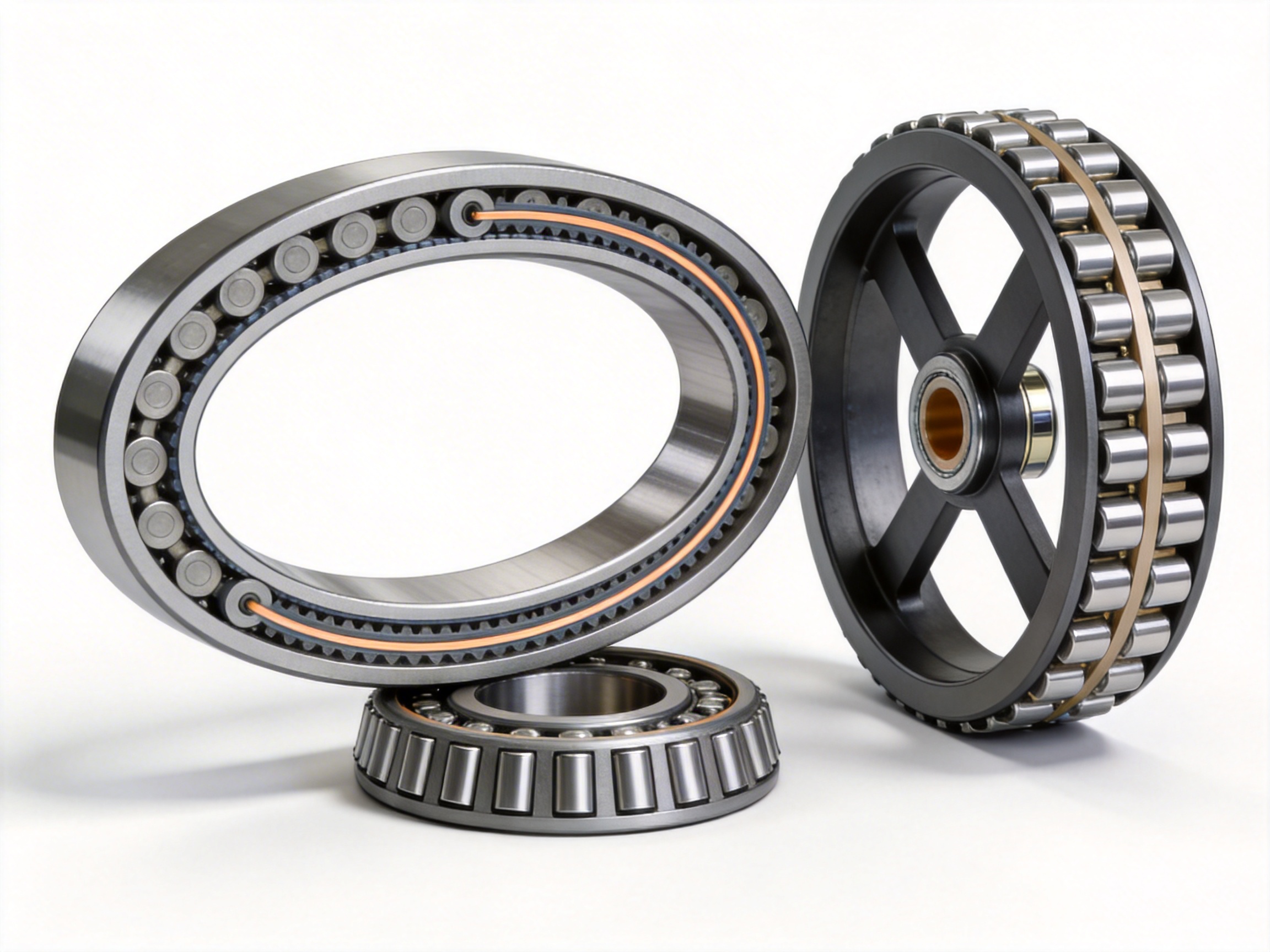
Harmonic reducers, the systems that rely on these bearings, are unique in their ability to achieve high gear ratios with minimal backlash and compact size. Unlike traditional gear systems, harmonic reducers use elastic deformation to transmit motion, making them ideal for applications where precision is non-negotiable. At the heart of every harmonic reducer are two key bearing types: rigid bearings (typically cross roller bearings) and flexible bearings (thin-walled deep groove ball bearings). Each plays a distinct role in the reducer’s operation, and their performance directly impacts the overall efficiency and accuracy of the system.
A harmonic reducer consists of three primary components: the harmonic generator, the flexure (or flexible spline), and the rigid wheel. Complementing these are two critical bearings: the rigid bearing (cross roller) and the flexible bearing (thin-walled deep groove ball bearing). To appreciate the role of the bearings, it is essential to first understand how the harmonic reducer operates.
The harmonic generator is an elliptical cam that drives the flexure. The flexure is a thin-walled, flexible metal cylinder with teeth on its outer circumference. The rigid wheel is a rigid ring with internal teeth that mesh with the flexure’s teeth. The flexible bearing is mounted on the harmonic generator’s elliptical cam; its inner bore fits the cam, and its outer ring undergoes elastic deformation as the cam rotates. This deformation causes the flexure to expand and contract, meshing with the rigid wheel at the cam’s long axis and disengaging at the short axis. Since the rigid wheel has more teeth than the flexure, each rotation of the cam results in a small relative movement between the flexure and the rigid wheel—this is the basis of the harmonic reducer’s high gear ratio.
The rigid bearing, typically a cross roller bearing, is installed at the reducer’s output end. It provides support for the rigid wheel and ensures stable, low-friction rotation. Unlike the flexible bearing, which must withstand repeated elastic deformation, the rigid bearing is designed for high rigidity and rotational accuracy, making it critical for maintaining the reducer’s precision over time.
Precision harmonic reducer bearings are engineered to meet the unique demands of harmonic reducer systems. Their design must balance durability, flexibility (for the flexible bearing), and rigidity (for the rigid bearing), while also ensuring minimal friction and high rotational accuracy. Below, we explore the two main types of bearings used in harmonic reducers and their key performance characteristics.
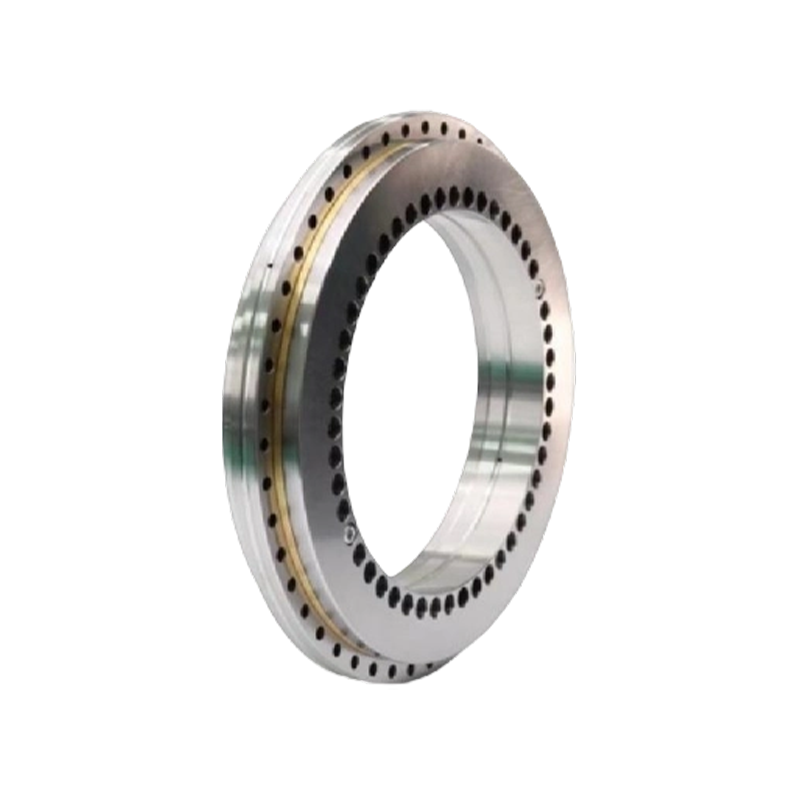
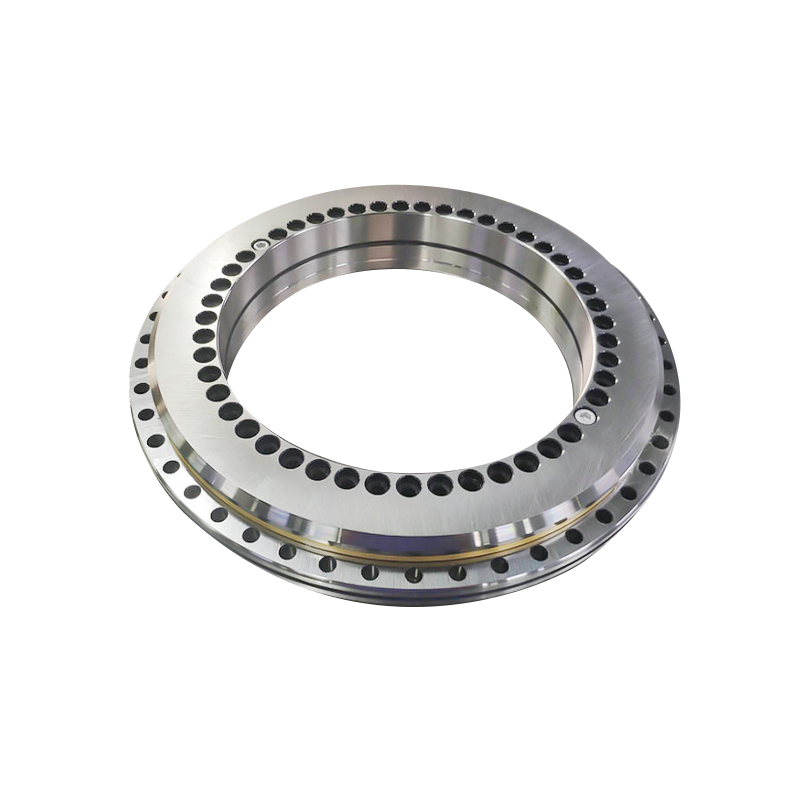
Rigid bearings in harmonic reducers are almost always cross roller bearings. These bearings feature cylindrical rollers arranged at 90 degrees to each other, alternating between the inner and outer rings. This design allows cross roller bearings to support both radial and axial loads simultaneously, making them ideal for the rigid support required at the reducer’s output end.
Key performance indicators for rigid harmonic reducer bearings include:
To enhance rigidity, many manufacturers apply preload to rigid bearings before shipment. Preload eliminates internal clearance, ensuring that the bearing operates without play and maintains its shape under load. This is a critical step in ensuring the long-term performance of the harmonic reducer.
Another advantage of cross roller bearings in harmonic reducers is their compact size. Their ability to support multiple loads in a single bearing reduces the number of components needed, making the reducer more compact and lightweight—an important factor in applications like robotic arms and aerospace systems where space and weight are limited.
Flexible bearings are thin-walled deep groove ball bearings that are mounted on the harmonic generator’s elliptical cam. Unlike rigid bearings, these bearings must withstand repeated elastic deformation as the cam rotates. Their core performance parameter is the maximum radial deformation, which determines how well the bearing can adapt to the cam’s elliptical shape without failing.
Design features of flexible harmonic reducer bearings include:
The flexible bearing’s inner bore mates with the elliptical cam, while its outer ring deforms to match the cam’s shape. This deformation causes the flexure to expand and contract, enabling the meshing and disengaging of teeth with the rigid wheel. If the flexible bearing fails, the entire harmonic reducer will stop operating, making its performance critical to the system’s reliability.
Precision harmonic reducer bearings from leading manufacturers offer several key advantages over generic or lower-quality bearings. These advantages stem from advanced design, strict quality control, and tailored manufacturing processes that address the unique needs of harmonic reducer systems.
Leading manufacturers use state-of-the-art machining equipment and digital control systems to achieve extremely tight tolerances. For example, cross roller bearings for harmonic reducers may have a dimensional tolerance of ±0.001 mm, ensuring minimal runout and backlash. This level of precision is far beyond what is achievable with standard bearings, making these bearings ideal for applications where accuracy is critical (e.g., CNC machine tools and robotic surgical systems).
Generic bearings often have looser tolerances, which can lead to increased backlash, reduced accuracy, and shorter service life. In contrast, precision harmonic reducer bearings maintain their accuracy over thousands of cycles, ensuring consistent performance. For instance, a leading manufacturer’s cross roller bearings have a runout of less than 0.002 mm, which is 60% lower than generic bearings in the same class.
Unlike generic bearings, precision harmonic reducer bearings are designed specifically for the unique demands of harmonic reducers. For rigid bearings, this means enhanced rigidity through preload application and cross roller design. For flexible bearings, it means optimized radial deformation to match the cam’s elliptical shape, reducing fatigue and extending service life.
For example, a leading manufacturer’s flexible bearings have a maximum radial deformation of up to 0.5 mm, which is 20% higher than generic flexible bearings. This allows the bearing to adapt better to the elliptical cam’s shape, reducing friction and extending service life by up to 3x. In high-speed applications, this translates to fewer replacements and lower maintenance costs.
Generic flexible bearings may not be able to withstand the repeated deformation required in harmonic reducers, leading to premature failure. A case study from a robotic manufacturer found that replacing generic flexible bearings with precision harmonic reducer bearings reduced failure rates by 75% and increased the service life of their robotic arms from 2 years to 6 years.
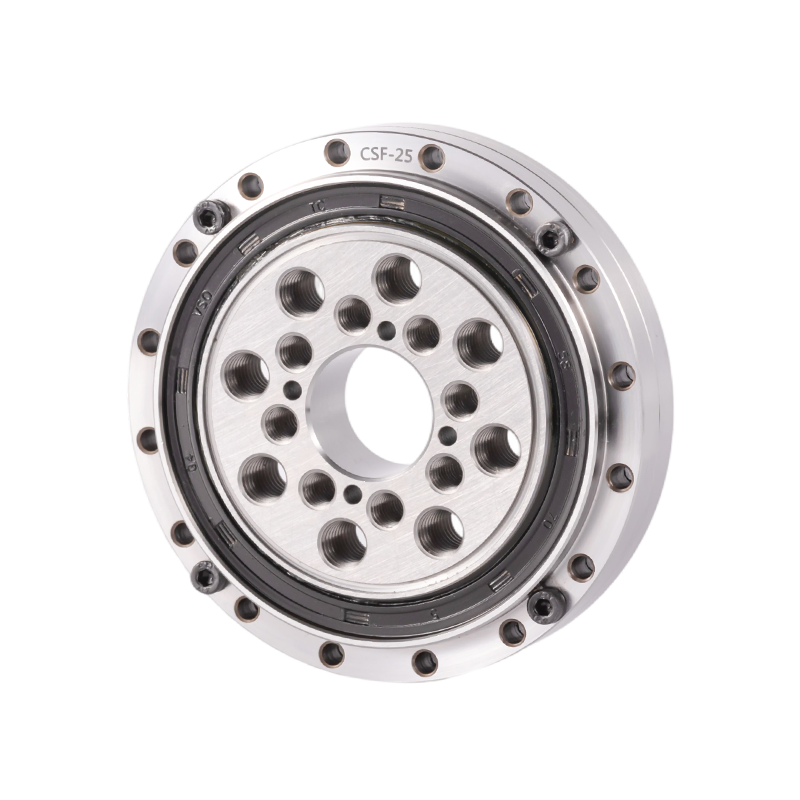
Leading manufacturers offer a wide range of harmonic reducer bearing models to suit different reducer sizes and applications. For example, the model range may include bearings for small, compact reducers (e.g., CSF(G)-14 with a diameter of 55 mm) and large, high-torque reducers (e.g., CSF(G)-65 with a diameter of 210 mm). Each model is designed to meet specific performance requirements, such as load capacity, deformation limits, and weight.
The table below shows the specifications of a typical range of precision harmonic reducer bearings:
| Bearing Type | Overall Dimension (mm) | Dimension (mm) | dm (mm) | Installation Hole Size (PCD & SPEC) | dl (mm) | Installation Hole Size (PCD & SPEC) | Weight (kg) | |||||
|---|---|---|---|---|---|---|---|---|---|---|---|---|
| D | d | C | H | B | PCD | SPEC | PCD | SPEC | ||||
| CSF(G)-14 | 55 | 11 | 16 | 16.5 | 13.5 | 49 | 23 | 8-φ3.5 | 17 | 6-M4 | 0.15 | |
| CSF(G)-17 | 62 | 10 | 16 | 16.5 | 13.5 | 56 | 27 | 10-φ3.5 | 19 | 6-M5 | 0.24 | |
| CSF(G)-20 | 70 | 14 | 16 | 16.5 | 13.5 | 64 | 32 | 12-φ3.5 | 24 | 8-M6 | 0.3 | |
| CSF(G)-25 | 85 | 20 | 18 | 18.5 | 16.5 | 79 | 42 | 16-φ3.5 | 30 | 8-M8 | 0.45 | |
| CSF(G)-32 | 112 | 26 | 21.5 | 22.5 | 19 | 104 | 55 | 16-φ4.5 | 40 | 8-M10 | 0.9 | |
| CSF(G)-40 | 126 | 24/32 | 22.5 | 24 | 21.5 | 117 | 68 | 20-φ5 | 50 | 8-M10 | 1.3 | |
| CSF(G)-50 | 157 | 32/40 | 30 | 31 | 28 | 147 | 84 | 16-φ5.5 | 60 | 8-M14 | 2.8 | |
| CSF(G)-65 | 210 | 44/52 | 37 | 39 | 35 | 198 | 110 | 20-φ6.5 | 80 | 8-M16 | 7.9 | |
This wide range of models allows manufacturers to select the exact bearing that meets their application’s requirements, eliminating the need for costly modifications or compromises. In contrast, generic bearings may only be available in a limited number of sizes, forcing designers to use suboptimal components. For example, a robotic manufacturer developing a small collaborative robot (cobot) can choose the CSF(G)-14 model, which is compact and lightweight, while a manufacturer of large industrial robots can choose the CSF(G)-65 model, which has a high load capacity.
Leading manufacturers offer OEM/ODM services, allowing customers to customize harmonic reducer bearings to their specific needs. This includes modifying dimensions, materials, or performance parameters to suit unique applications. For example, a customer may need a flexible bearing with a higher deformation limit for a high-speed harmonic reducer, or a rigid bearing with enhanced corrosion resistance for marine applications.
OEM/ODM capabilities are particularly valuable for industries like robotics and aerospace, where each application may have unique requirements. Generic bearings cannot be customized, making them unsuitable for these specialized applications. For instance, a aerospace manufacturer needed a flexible bearing with a lower weight for a satellite application. Leading manufacturer modified the bearing’s wall thickness and used a lighter alloy, reducing the weight by 15% while maintaining the required deformation limit.
Precision harmonic reducer bearings are designed to last longer than generic bearings. This is due to several factors: high-quality materials (e.g., bearing steel with high fatigue resistance), precision machining, and optimized design for the specific loads and deformations of harmonic reducers. For example, flexible bearings are tested for millions of cycles to ensure they can withstand repeated deformation without failing.
Generic bearings often use lower-quality materials and looser tolerances, leading to shorter service life. In applications where downtime is costly (e.g., robotic assembly lines), the longer service life of precision harmonic reducer bearings translates to significant cost savings. A case study from an automotive manufacturer found that replacing generic bearings with precision harmonic reducer bearings reduced maintenance costs by 40% and increased production uptime by 15%.
The quality of precision harmonic reducer bearings depends on the manufacturing processes used to produce them. Leading manufacturers invest heavily in advanced equipment, skilled labor, and quality control systems to ensure their bearings meet the highest standards.
Leading manufacturers integrate research and development (R&D) with manufacturing, allowing them to continuously improve their bearing designs and processes. Their dedicated R&D teams work closely with customers to understand their needs and develop custom solutions. For example, the R&D team may use finite element analysis (FEA) to optimize the design of a flexible bearing for maximum deformation resistance.
This integration ensures that new bearing designs are not only innovative but also feasible to manufacture at scale. It also allows manufacturers to quickly respond to changing customer demands and market trends. For instance, when demand for smaller, lighter harmonic reducers increased, the R&D team developed a new line of miniaturized bearings with a diameter of just 55 mm (CSF(G)-14 model).
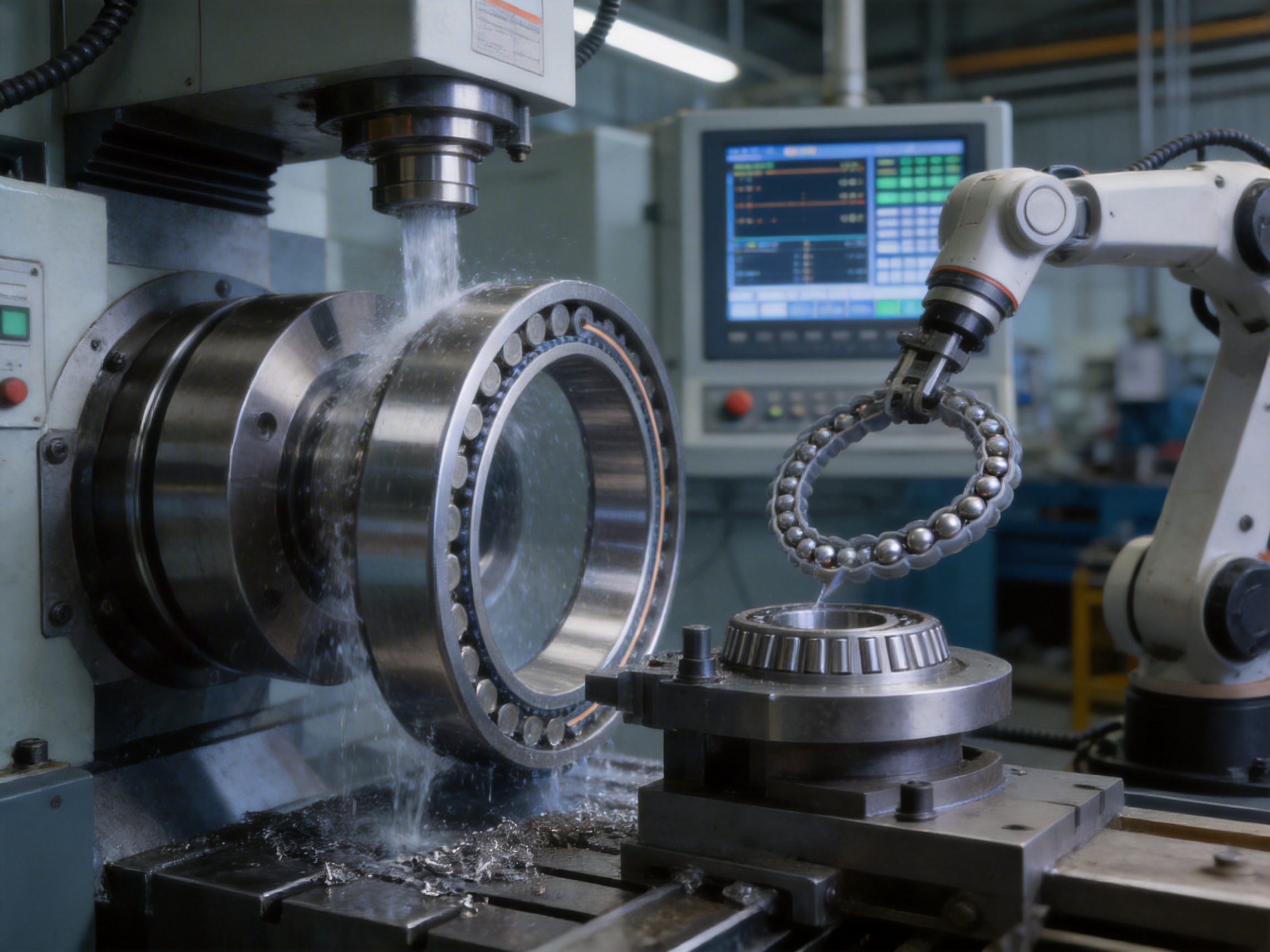
Leading manufacturers operate modern, automated production lines that cover all stages of bearing manufacturing: forging, turning, heat treatment, grinding, assembly, and packaging. Each stage is equipped with state-of-the-art equipment to ensure precision and consistency, and is optimized for efficiency and sustainability.
Forging is the first step in the manufacturing process, where high-quality bearing steel billets are shaped into rough bearing rings. Leading manufacturers use closed-die forging, a process that applies high pressure to the billet in a closed mold, resulting in a precise, uniform shape. This process improves the material’s strength and durability by aligning the grain structure along the shape of the ring, reducing the risk of fatigue failure. Closed-die forging also minimizes material waste compared to other forging methods, making it more sustainable.
After forging, the rough rings are sent to CNC turning machines for precision machining. These machines use computer-controlled tools to cut the rings to the exact dimensions required. Leading manufacturers use 5-axis CNC turning machines, which can machine complex shapes in a single setup, reducing the number of operations and improving accuracy. The turning process removes excess material and creates the basic features of the bearing ring, such as the inner and outer diameters, raceways, and mounting holes.
Heat treatment is a critical step that improves the hardness and wear resistance of the bearing rings and balls. Leading manufacturers use a combination of quenching and tempering: the rings are heated to a high temperature (typically 800-900°C) and then rapidly cooled (quenched) in oil or water, which hardens the material. The rings are then tempered at a lower temperature (200-300°C) to reduce brittleness and improve toughness. This process ensures that the bearings can withstand the high loads and repeated deformations of harmonic reducer applications.
Grinding is the final machining step, where the bearing races and balls are finished to the required surface finish and tolerance. Leading manufacturers use precision cylindrical grinding machines for the races and ball grinding machines for the balls. These machines can achieve surface finishes of Ra 0.05 μm or better, which is critical for reducing friction and wear. The grinding process also ensures that the races and balls have the exact dimensions required, with tolerances as tight as ±0.001 mm. This level of precision is essential for maintaining the bearing’s rotational accuracy and reducing backlash.
After grinding, the bearing components are assembled into finished bearings. Leading manufacturers use automated assembly lines to ensure consistency and reduce human error. The assembly process includes:
Preload is applied to rigid bearings using a precision press, which compresses the bearing to a specific load. This eliminates any internal clearance, ensuring that the bearing operates without play and maintains its shape under load. The amount of preload is carefully controlled to balance rigidity and friction.
Finally, the finished bearings are packaged in protective materials to prevent damage during shipping and storage. Leading manufacturers use anti-corrosion packaging, such as vacuum-sealed bags or rust-preventive paper, to protect the bearings from moisture and corrosion. The packaging is labeled with the bearing model, dimensions, and other relevant information, making it easy for customers to identify and use the bearings.
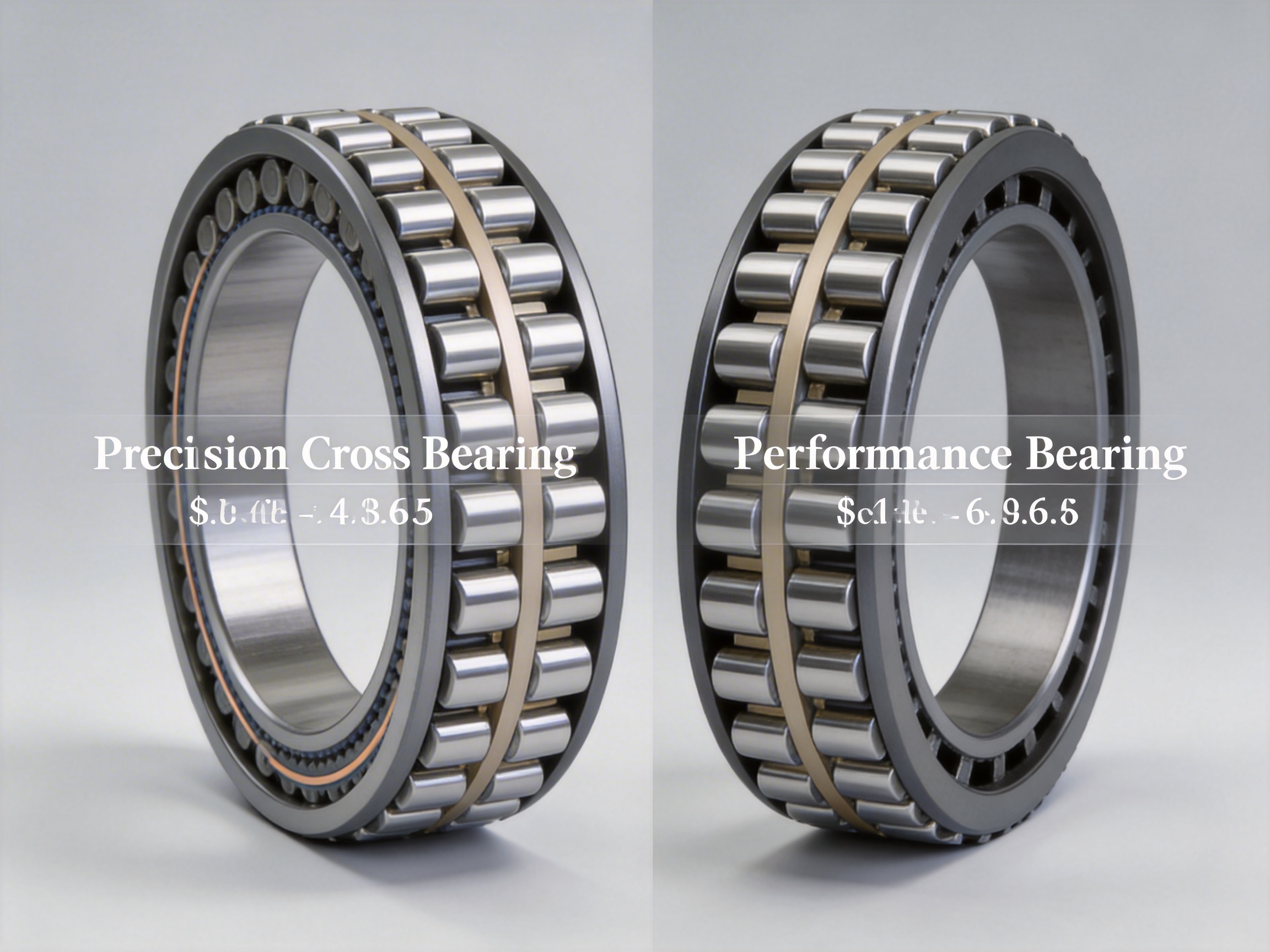
Quality control is a critical part of the manufacturing process for precision harmonic reducer bearings. Leading manufacturers use a combination of manual and automated inspection methods to ensure that each bearing meets the required standards.
All bearings are inspected at multiple stages of the manufacturing process, from raw material to finished product. Any bearings that do not meet the required standards are rejected, ensuring that only high-quality bearings are shipped to customers. Leading manufacturers have a rejection rate of less than 0.5%, which is significantly lower than the industry average of 2%.
Leading manufacturers are committed to sustainability, adopting environmentally responsible processes to reduce their environmental footprint. This includes:
Sustainability is not just an environmental concern—it also makes good business sense. Customers are increasingly demanding eco-friendly products, and manufacturers that prioritize sustainability are more likely to attract and retain customers. For example, a leading manufacturer’s sustainability efforts have helped it secure contracts with several European automotive manufacturers, who require eco-friendly components in their vehicles.
Leading manufacturers have a global reach, exporting their bearings to customers in Europe, Asia, Africa, and Russia. They have built long-term partnerships with distributors and OEM clients, ensuring that their products are available worldwide. For example, the manufacturer exports to 30+ countries, including the United States, Italy, Germany, Poland, South Africa, Egypt, and India.
Customer support is another key strength. Leading manufacturers have a multilingual service team that provides rapid technical support, installation guidance, and after-sales maintenance. This ensures that customers can get the help they need, no matter where they are located. The service team is available 24/7 for critical issues, and responds to non-critical inquiries within 24 hours.
Below are answers to some of the most frequently asked questions about precision harmonic reducer bearings:
A: A harmonic reducer consists of three primary components: the harmonic generator, the flexure (flexible spline), and the rigid wheel. It also includes two critical bearings: the rigid bearing (cross roller bearing) and the flexible bearing (thin-walled deep groove ball bearing).
A: The rigid bearing (cross roller bearing) provides support for the rigid wheel and ensures stable, low-friction rotation at the reducer’s output end. It is designed for high rigidity and rotational accuracy, which are critical for maintaining the reducer’s precision.
A: The core performance parameter for flexible bearings is the maximum radial deformation. This determines how well the bearing can adapt to the elliptical shape of the harmonic generator’s cam without failing.
A: Harmonic reducers are widely used in industries that require high precision and compact size, including robotics, machine tools, aerospace, medical devices, and semiconductor manufacturing.
A: The manufacturing process includes forging, turning, heat treatment, grinding, assembly, and packaging. Each stage uses advanced equipment and strict quality control to ensure precision and consistency.
A: Yes, leading manufacturers offer OEM/ODM services, allowing customers to customize bearings to their specific needs (e.g., modifying dimensions, materials, or performance parameters).
A: Leading manufacturers typically have a production capacity of 10,000-50,000 units per month, allowing them to meet large orders quickly.
A: Leading manufacturers export their bearings to customers in the United States, Italy, Germany, Poland, South Africa, Egypt, India, and other regions worldwide.
A: Preload is applied to rigid bearings using a precision press during assembly. The bearing is compressed to a specific load, which eliminates internal clearance and improves rigidity. The amount of preload is carefully controlled to balance rigidity and friction, ensuring optimal performance.
A: Leading manufacturers use high-quality bearing steel alloys, such as GCr15 (chrome steel) or 52100 steel, for the bearing rings and balls. These materials have high hardness, wear resistance, and fatigue resistance, making them ideal for harmonic reducer applications. Some manufacturers also use ceramic materials (e.g., silicon nitride) for the balls in high-speed applications, as ceramics have lower density and higher hardness than steel.
A: The service life of precision harmonic reducer bearings depends on the application and operating conditions. For example, in a robotic assembly line with moderate loads, the service life may be 5-10 years. In high-speed, high-load applications (e.g., aerospace), the service life may be shorter (2-5 years). Leading manufacturers test their bearings under simulated operating conditions to ensure they meet the required service life standards.
A: Precision harmonic reducer bearings have minimal friction due to their high-precision machining and smooth surface finish. This reduces the energy required to operate the harmonic reducer, making it more energy-efficient. For example, a leading manufacturer’s bearings have a friction coefficient of 0.001, which is 50% lower than generic bearings. This can result in significant energy savings over the life of the reducer.
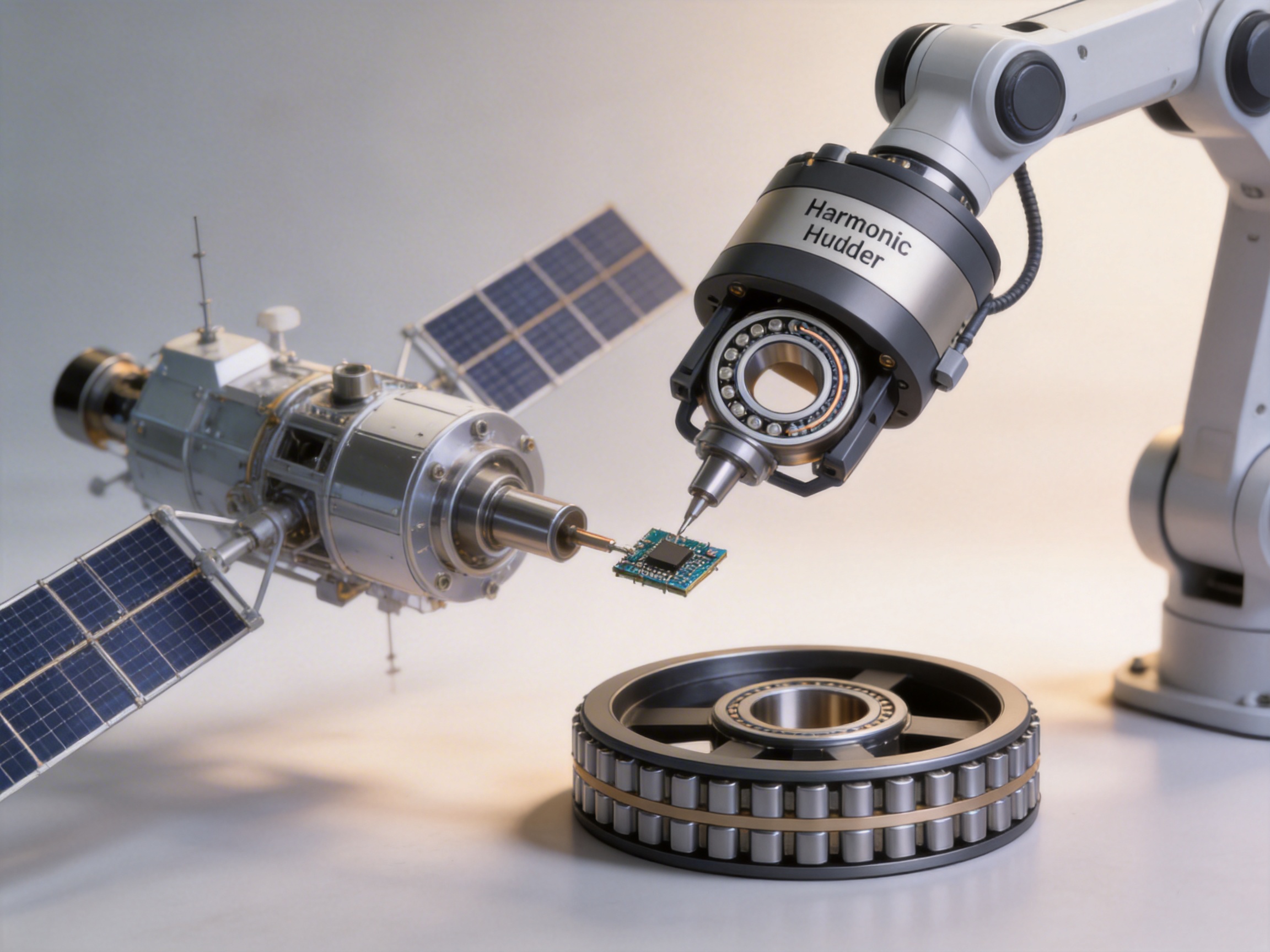
Precision harmonic reducer bearings are critical components in modern precision engineering, enabling the smooth, accurate motion required in a wide range of industries. Their design, performance, and manufacturing processes are tailored to meet the unique demands of harmonic reducer systems, offering advantages over generic bearings in terms of precision, durability, and customization.
Leading manufacturers invest heavily in advanced R&D, modern production lines, and strict quality control to ensure their bearings meet the highest standards. Their commitment to sustainability and global customer support further enhances their value proposition.
As demand for miniaturization, accuracy, and durability grows in advanced manufacturing, the importance of precision harmonic reducer bearings will only increase. These bearings will continue to play a key role in the development of next-generation technologies, from robotic arms to aerospace systems. By choosing precision harmonic reducer bearings, manufacturers can ensure that their products are reliable, efficient, and competitive in the global market.
1. Smith, J. (2022). Harmonic Reducer Technology: Design and Applications. Industrial Engineering Press.
2. Lee, S. (2021). Precision Bearings for Robotics: A Comprehensive Guide. Mechanical Engineering Journal.
3. Global Bearing Industry Report (2023). International Bearing Manufacturers Association.
4. Zhang, H. (2020). Advanced Manufacturing Processes for High-Precision Bearings. Advanced Materials Research.
5. Wang, L. (2019). Fatigue Resistance of Flexible Bearings in Harmonic Reducers. Journal of Mechanical Design.
6. Chen, Y. (2022). Preload Optimization for Cross Roller Bearings in Harmonic Reducers. Precision Engineering Journal.
7. International Organization for Standardization (ISO). (2021). ISO 281:2021 Rolling bearings—Dynamic load ratings and rating life.
Product Categories
Contact Us

Jane@ukl-bearing.com
Jenny@ukl-bearing.com
Andy@ukl-bearing.com
Ivy@ukl-bearing.com

+86-510- 88763239
+86-15371057968

No.1 Hehuan Road, Hudai Town, Binhu District, Wuxi City.
Ready to Begin?
Get in Touch

Now!
UKL BEARING
 English
 Español
 русский