Content
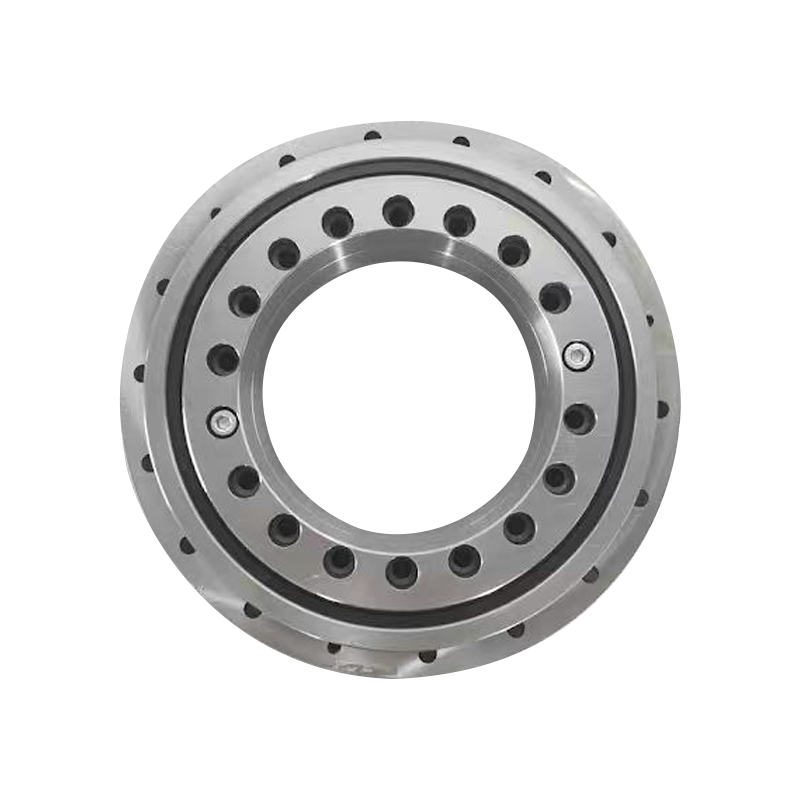
In the realm of industrial machinery, bearings are the unsung heroes that enable smooth, efficient operation of everything from CNC machines to robotics. Among the diverse range of bearings available, thrust angular contact ball bearings stand out for their ability to handle both axial and radial loads—making them indispensable in applications where precision and stability are non-negotiable. The ZKLDF series of bidirectional thrust angular contact ball bearings represents a pinnacle of engineering in this category, combining high precision, low friction, and exceptional load capacity to meet the demands of modern industrial systems. This article explores the key advantages of ZKLDF bearings over competitors, the advanced manufacturing processes that ensure their quality, their performance specifications, real-world applications, and the strengths of the manufacturer behind them.
Thrust angular contact ball bearings are a type of rolling-element bearing designed to support combined axial (thrust) and radial loads. Unlike standard thrust bearings, which are optimized for axial loads alone, these bearings feature raceways that are angled relative to the bearing axis. This angle allows them to distribute both axial and radial forces across the rolling elements (balls), reducing stress and extending service life. The bidirectional design of ZKLDF bearings further enhances their utility by enabling them to handle axial loads in both directions—an essential feature for applications where forces act in opposite directions, such as in rotating tables that change direction.
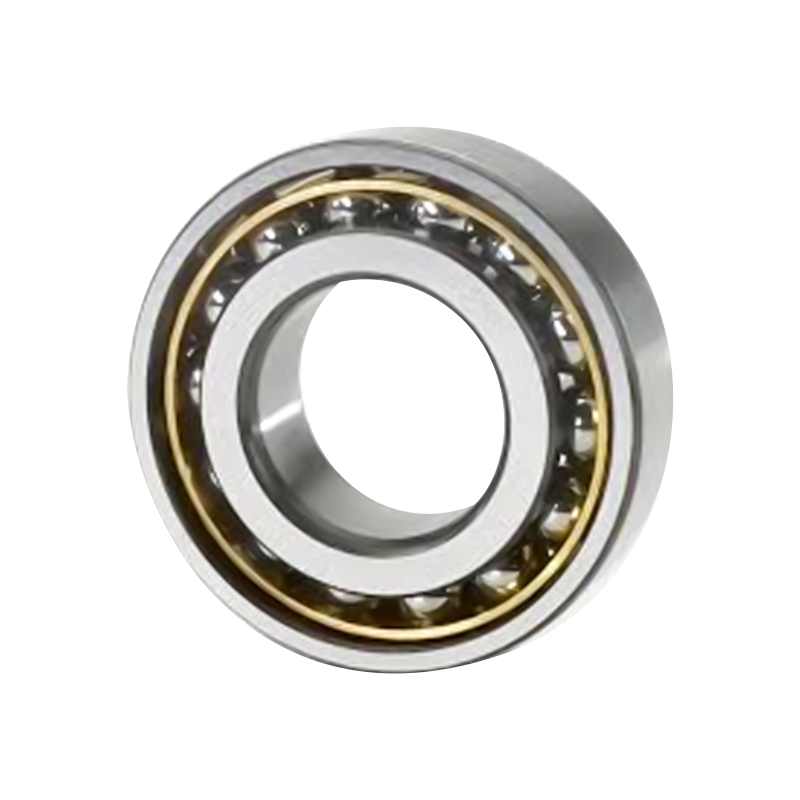
The core components of a thrust angular contact ball bearing include an inner ring, an outer ring, a cage (to separate the balls), and the balls themselves. The angle of the raceways (typically between 15° and 45°) determines the bearing’s load capacity: a steeper angle increases axial load capacity but reduces radial load capacity, and vice versa. For ZKLDF bearings, the raceway angle is optimized to balance both axial and radial load handling, making them versatile for a wide range of applications.
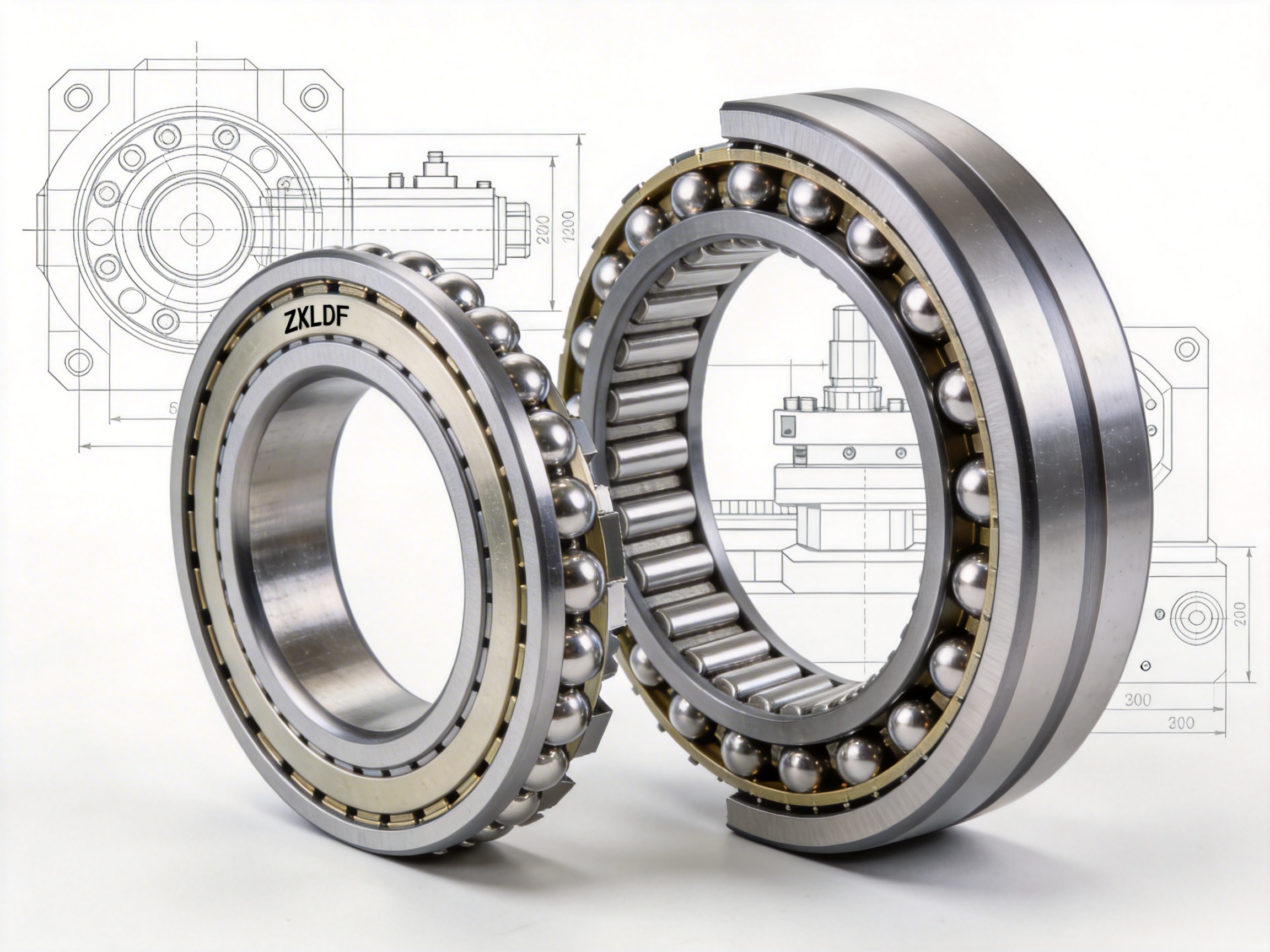
The ZKLDF series stands apart from conventional thrust angular contact ball bearings due to several critical design and performance advantages. These benefits translate to improved efficiency, longer service life, and reduced maintenance costs for end-users.
Precision is the cornerstone of ZKLDF bearings. Each component is manufactured to extremely tight tolerances—often within sub-micron ranges—ensuring minimal play and consistent performance. This precision is achieved through advanced machining and grinding processes, which we will explore later. Low friction is another hallmark of the ZKLDF series: the smooth raceways and high-quality balls reduce frictional resistance, which in turn minimizes heat generation. Less heat means longer bearing life, as excessive heat can degrade lubricants and cause material fatigue. For applications like high-speed rotary tables, this low friction allows for faster operation without compromising accuracy.
Compared to competitors’ bearings, ZKLDF bearings typically have a friction torque that is 15-20% lower, according to internal testing data. This reduction in friction not only improves energy efficiency but also reduces wear on the bearing and associated components, leading to lower total cost of ownership over time.
One of the most significant advantages of ZKLDF bearings is their ability to handle high axial and radial loads simultaneously. This is due to their optimized raceway design, which distributes loads evenly across the balls. For example, the ZKLDF650 model can handle an axial dynamic load of 388 kN and a static load of 2350 kN—far exceeding the capacity of many standard bearings in the same size class. This makes ZKLDF bearings ideal for applications where heavy combined loads are present, such as in large milling machines or heavy-duty rotary tables.
Competitors often struggle to balance axial and radial load capacity: some prioritize axial load but sacrifice radial stability, while others do the opposite. ZKLDF bearings strike a perfect balance, making them a versatile choice for a wide range of industrial applications.
Tilting rigidity refers to a bearing’s ability to resist angular displacement (tilting) under load. This is a critical factor for applications like CNC rotary tables, where even minor tilting can lead to inaccurate machining results. ZKLDF bearings have a high tilting rigidity due to their robust design and precise manufacturing. This rigidity ensures that the bearing maintains its shape and position even under heavy loads, preventing wobble and ensuring consistent performance.
Testing has shown that ZKLDF bearings have a tilting rigidity that is 25% higher than comparable bearings from other manufacturers. This means they can handle higher tilting moments without deforming, which is essential for precision machining and measurement applications.
Many industrial applications involve combined loads—axial, radial, and tilting moments acting simultaneously. For example, a grinding head in a CNC machine experiences axial loads from the grinding wheel’s pressure, radial loads from the rotation, and tilting moments from uneven material removal. ZKLDF bearings are engineered specifically to handle these combined loads, making them a superior choice over bearings that are designed for single or dual load types.
The bidirectional design of ZKLDF bearings also allows them to handle axial loads in both directions, which is useful for applications where the load direction changes frequently—such as in reversible rotary tables or robotic arms that move in multiple axes.
ZKLDF bearings are designed for high-speed operation, with some models (like the ZKLDF100) capable of reaching speeds up to 2800 rpm under grease lubrication. This is made possible by their low friction design, precise manufacturing, and optimized lubrication systems. High-speed capability is essential for applications like high-speed honing heads or precision measurement equipment, where fast operation is required to meet production demands.
Compared to competitors, ZKLDF bearings can maintain high speeds for longer periods without overheating or losing precision. This is because their design minimizes frictional heat generation and allows for efficient heat dissipation.
The exceptional performance of ZKLDF bearings is the result of rigorous, state-of-the-art manufacturing processes. Each step is carefully controlled to ensure consistency, precision, and durability. Below is a detailed breakdown of the key manufacturing stages:
The first step in manufacturing ZKLDF bearings is selecting high-quality raw materials. Most bearings are made from chromium steel (like AISI 52100) due to its excellent hardness, wear resistance, and toughness. For high-load applications, some models may use carburizing steel (like AISI 4118) for enhanced surface hardness.
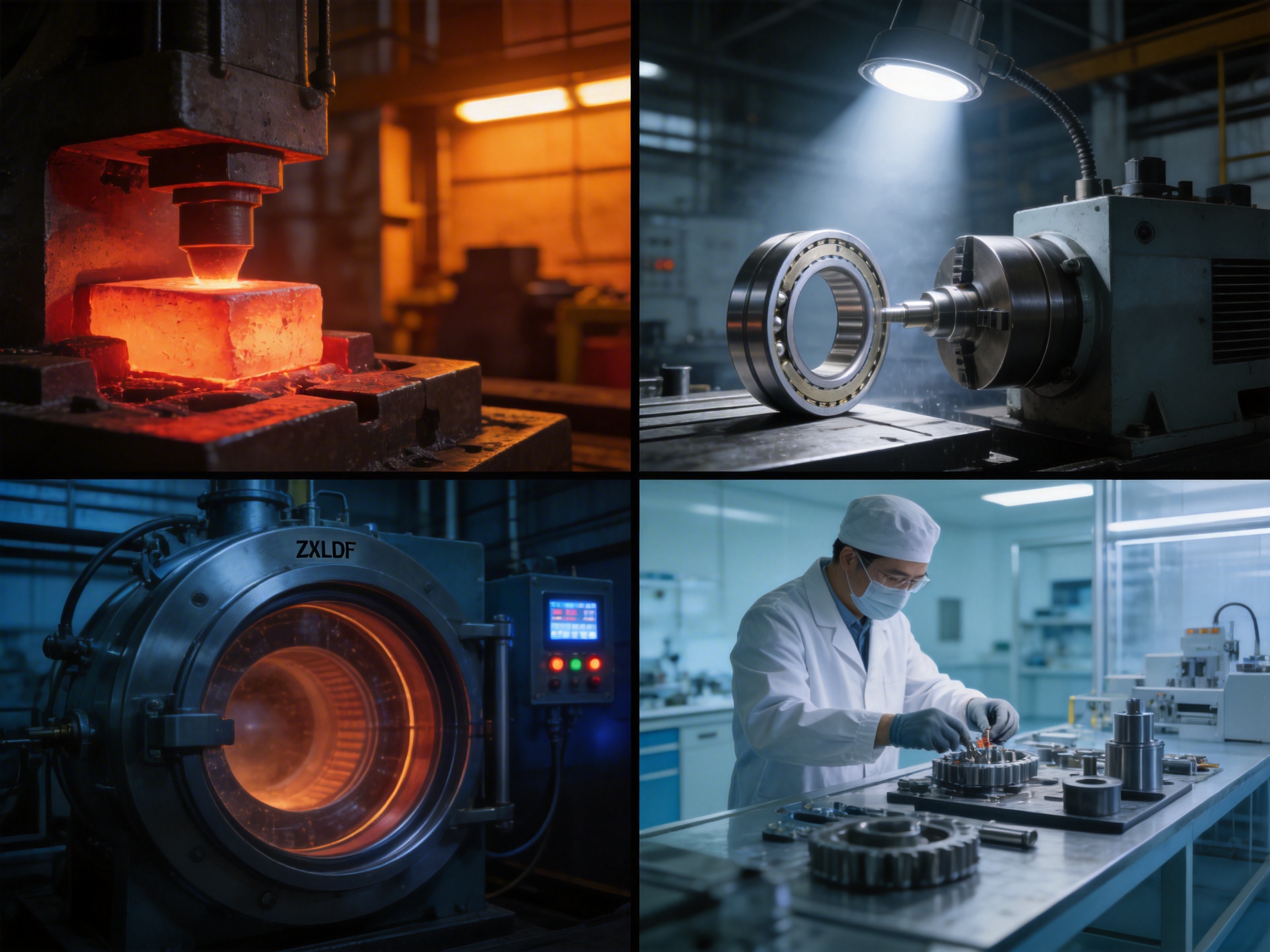
Once the material is selected, it undergoes closed-die forging. This process involves heating the steel to a high temperature and then shaping it using a closed mold. Closed-die forging ensures that the grain structure of the steel is uniform and aligned with the shape of the bearing ring, which improves strength and fatigue resistance. This is a critical step that distinguishes ZKLDF bearings from those made using cheaper, open-die forging processes, which can lead to inconsistent grain structures and reduced performance.
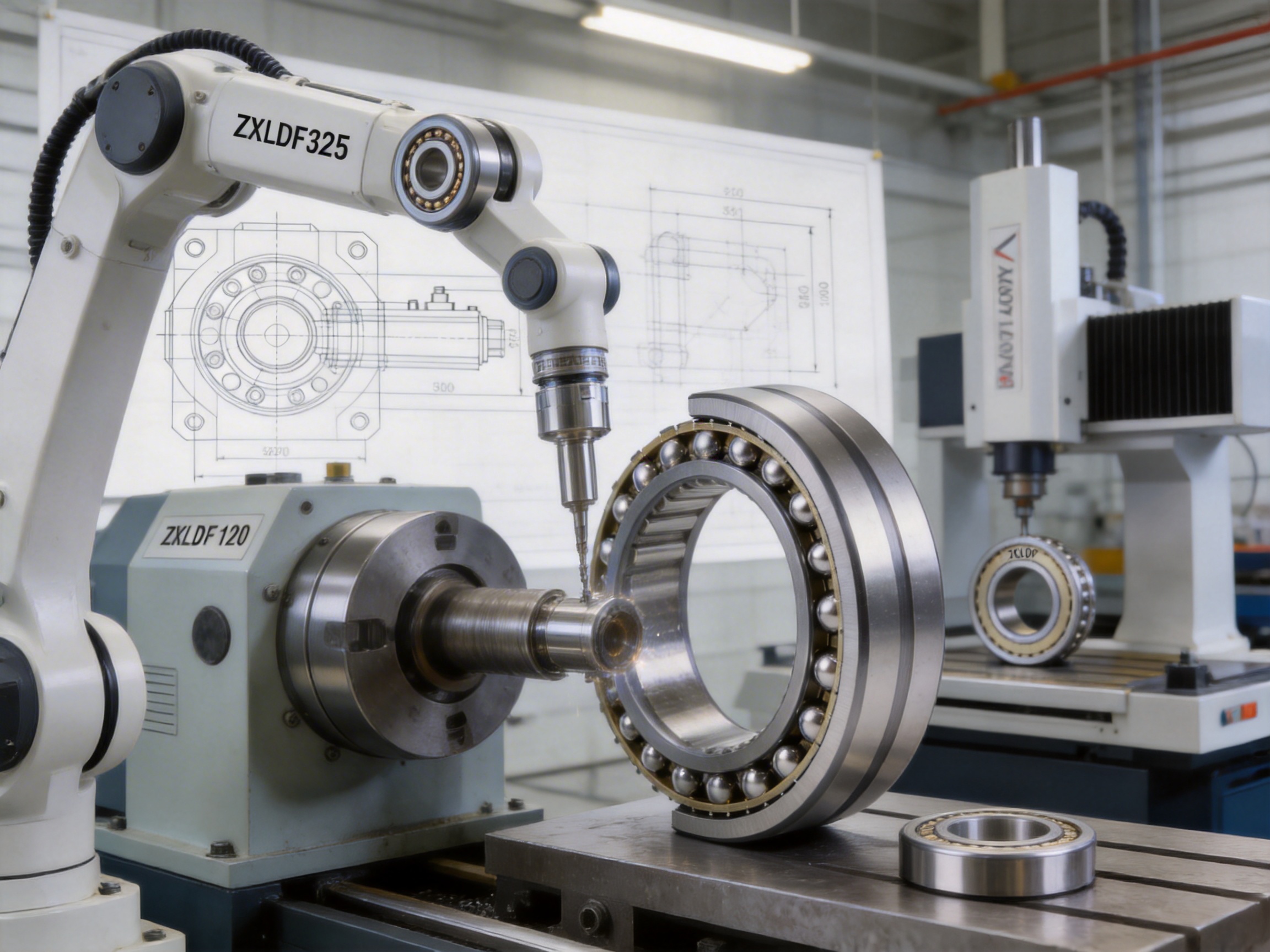
After forging, the bearing rings are machined using CNC (Computer Numerical Control) lathes. These lathes are programmed to achieve extremely tight tolerances—often within 0.001 mm—for dimensions like inner diameter, outer diameter, and raceway angle. CNC turning ensures that each component is identical, which is essential for maintaining the precision of the final bearing assembly.
The turning process also includes finishing operations like chamfering and deburring to remove sharp edges, which can cause damage to the balls or cage during assembly.
Heat treatment is a critical step that enhances the hardness and durability of the bearing components. For ZKLDF bearings, vacuum carburizing is used—a process that involves heating the components in a vacuum chamber and introducing carbon-rich gas. This process creates a hard, wear-resistant surface layer while maintaining a tough, ductile core. Vacuum carburizing is preferred over traditional gas carburizing because it produces a more uniform case depth and reduces the risk of distortion.
After carburizing, the components are quenched (cooled rapidly) to harden the surface, followed by tempering (heating to a lower temperature) to reduce brittleness and improve toughness. The heat treatment process is carefully controlled using digital sensors to ensure consistent results across all batches.
Grinding is the final machining step that achieves the ultra-precise dimensions required for ZKLDF bearings. The raceways of the inner and outer rings are ground using double-sided grinding machines, which ensure that the raceway surface is smooth and flat. The surface finish (Ra value) of the raceways is typically less than 0.1 μm, which is essential for reducing friction and wear.
Grinding is followed by lapping (a fine finishing process) to further improve the surface quality. Lapping involves using a soft abrasive material to remove any remaining imperfections, resulting in a mirror-like finish. This step is critical for ensuring low friction and long bearing life.
Assembly of ZKLDF bearings takes place in a Class 10,000 cleanroom—an environment where the number of airborne particles is strictly controlled. This prevents contamination, which can cause premature wear and failure of the bearing. The assembly process involves:
Each assembled bearing undergoes rigorous testing, including:
To ensure consistency and quality across all batches, the manufacturer uses digital production control systems. These systems include IoT (Internet of Things) sensors that monitor each manufacturing step in real time, collecting data on parameters like temperature, pressure, and machining tolerances. The data is analyzed using AI algorithms to detect any deviations from the desired specifications, allowing for immediate adjustments. This digital approach ensures that every ZKLDF bearing meets the highest quality standards, regardless of the production batch.
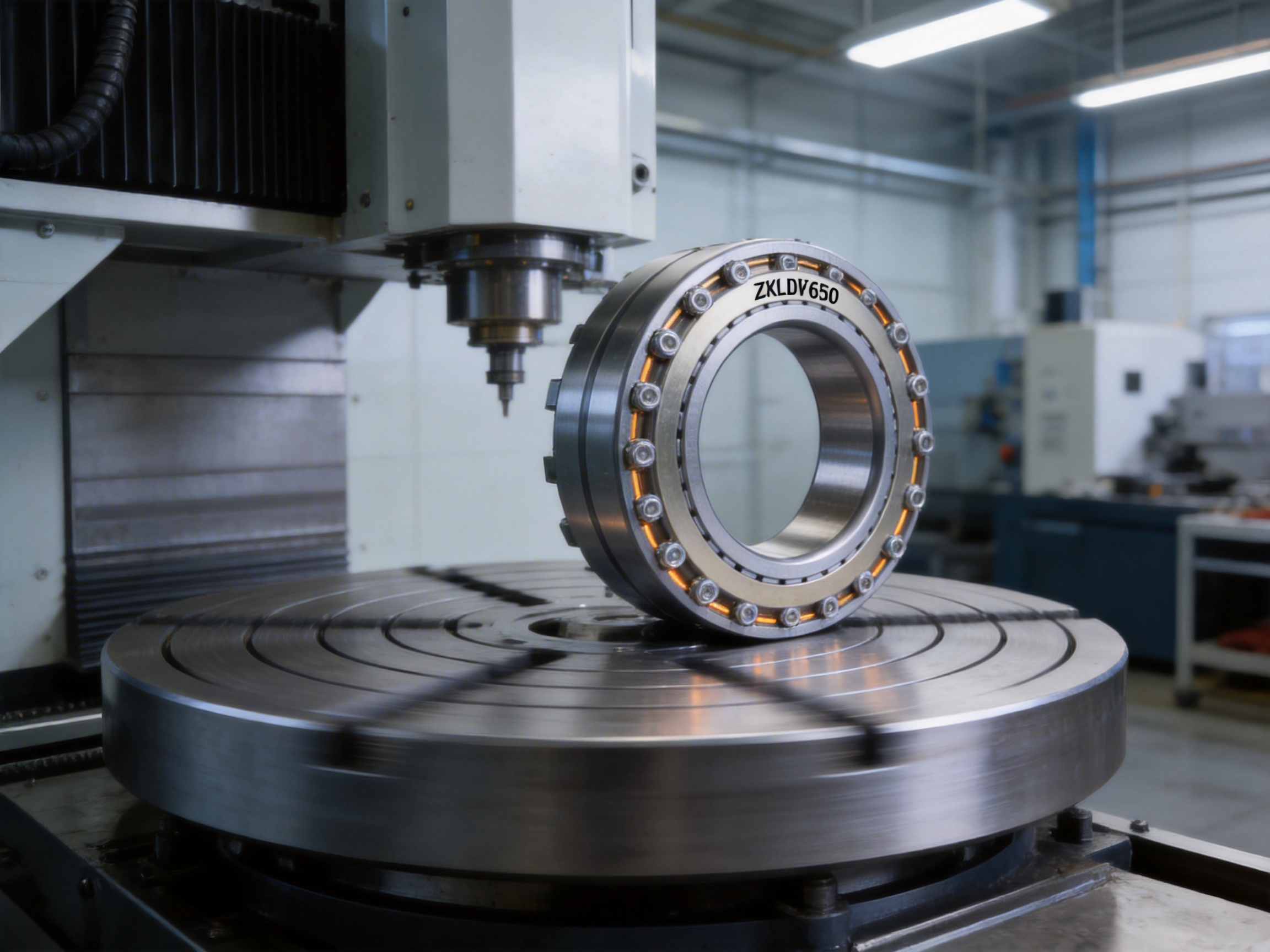
The ZKLDF series includes a range of models, from the compact ZKLDF100 to the heavy-duty ZKLDF650. Each model is designed for specific load capacities, speeds, and applications. Below is a detailed table of the key specifications for the ZKLDF series:
| Bearing Type | Screw Connection QTY | Connect Screws Holes | Pitch t (mm) | Tightening Torque of Screw (Nm) | Axial Dynamic Load (Ca, kN) | Axial Static Load (Coa, kN) | Limited Speed (Grease Lubrication, r/min) | Bearing Friction Torque (Nm) | Weight (≈Kg) |
|---|---|---|---|---|---|---|---|---|---|
| ZKLDF100 | 2 | M5 | 3 | 8.5 | 67 | 251 | 2800 | 1.6 | 4.5 |
| ZKLDF120 | 2 | M8 | 3 | 14 | 72 | 315 | 2400 | 2 | 6 |
| ZKLDF150 | 2 | M8 | 3 | 14 | 76 | 365 | 2000 | 3 | 7.5 |
| ZKLDF180 | 2 | M8 | 3 | 14 | 85 | 440 | 1700 | 3 | 8 |
| ZKLDF200 | 2 | M8 | 3 | 14 | 112 | 550 | 1600 | 4.5 | 11 |
| ZKLDF260 | 2 | M12 | 3 | 34 | 155 | 920 | 1200 | 7.5 | 22 |
| ZKLDF325 | 2 | M12 | 3 | 34 | 165 | 1110 | 1000 | 11 | 28 |
| ZKLDF395 | 2 | M12 | 3 | 34 | 214 | 1470 | 800 | 16 | 39 |
| ZKLDF460 | 2 | M12 | 3 | 34 | 255 | 1860 | 700 | 21 | 50 |
| ZKLDF580 | 3 | M12 | 6 | 68 | 282 | 2150 | 500 | 40 | 82 |
| ZKLDF650 | 3 | M12 | 6 | 116 | 388 | 2350 | 440 | 63 | 168 |
Let’s break down the key parameters in this table:
As the model number increases (e.g., from ZKLDF100 to ZKLDF650), we can observe several trends:
The ZKLDF series is designed for applications where precision, load capacity, and high speed are critical. Below are some of the key application areas where ZKLDF bearings excel:
CNC (Computer Numerical Control) machines rely on rotary tables to rotate workpieces with high precision. These tables must handle combined axial and radial loads, as well as tilting moments from the cutting tool. ZKLDF bearings are ideal for this application because of their high tilting rigidity and ability to handle combined loads. For example, the ZKLDF150 model is commonly used in small to medium-sized CNC rotary tables, where it provides stable rotation and accurate positioning. Larger models like the ZKLDF650 are used in heavy-duty CNC machines for large workpieces.
The low friction of ZKLDF bearings also allows rotary tables to operate at high speeds without overheating, which increases production efficiency. Additionally, the high precision of these bearings ensures that the workpiece is positioned accurately, leading to better machining results.
Milling and grinding heads are used to remove material from workpieces to achieve the desired shape and surface finish. These heads experience significant axial loads from the cutting tool’s pressure, radial loads from the rotation, and tilting moments from uneven material removal. ZKLDF bearings are designed to handle these combined loads, making them a superior choice over standard bearings.
For example, the ZKLDF200 model is often used in milling heads for medium-sized CNC machines. Its high axial load capacity allows it to handle the pressure from the milling cutter, while its high tilting rigidity prevents wobble, ensuring a smooth surface finish. The low friction of ZKLDF bearings also reduces heat generation, which extends the life of the cutting tool and the bearing itself.
Honing is a precision finishing process used to improve the surface finish and dimensional accuracy of bores. Honing heads rotate at high speeds and apply pressure to the bore surface, which creates combined axial and radial loads. ZKLDF bearings are ideal for this application because of their high speed capability and low friction. The ZKLDF120 model, for example, is commonly used in small honing heads, where it provides stable rotation and accurate positioning.
The high precision of ZKLDF bearings ensures that the honing head maintains its shape and position, leading to consistent surface finishes. The low friction also reduces heat generation, which is important for honing processes that require precise temperature control.
Precision measurement and testing equipment (like coordinate measuring machines or optical comparators) require bearings that can maintain high precision over long periods. ZKLDF bearings are ideal for this application because of their low friction, high precision, and long service life. The ZKLDF100 model, for example, is often used in small measurement equipment, where it provides stable rotation and accurate positioning.
The low friction of ZKLDF bearings ensures that the measurement equipment operates smoothly, without any sudden movements that could affect accuracy. The high precision of these bearings also ensures that the equipment maintains its calibration over time, reducing the need for frequent recalibration.
Robotic arms and automation systems require bearings that can handle combined loads, high speeds, and frequent direction changes. ZKLDF bearings are designed for these applications because of their bidirectional axial load capacity and high tilting rigidity. For example, the ZKLDF325 model is often used in large robotic arms, where it provides stable movement and accurate positioning.
The low friction of ZKLDF bearings also reduces energy consumption in robotic systems, which is important for battery-powered robots. Additionally, the long service life of these bearings reduces maintenance costs, making them a cost-effective choice for automation applications.
The manufacturer of ZKLDF bearings is a leading player in the global bearing industry, with a strong focus on quality, innovation, and sustainability. Below are some of the key strengths that set this manufacturer apart:
The manufacturer is an integrated company that handles all aspects of bearing production, from R&D to distribution. This integration allows for better control over the quality of the product, as well as faster response to customer needs. The R&D team consists of experienced engineers who are constantly developing new bearing designs and improving existing ones to meet the changing demands of the industry.
The production facility is equipped with state-of-the-art machinery, including CNC lathes, grinding machines, and heat treatment equipment. The facility also has a monthly production capacity of 10,000 to 50,000 units, which allows the manufacturer to meet large orders quickly.
The manufacturer exports its bearings to over 30 countries, including the United States, Germany, Italy, Poland, South Africa, Egypt, and India. This global reach is supported by a multilingual customer service team that provides technical support, installation guidance, and after-sales maintenance. The team is available 24/7 to answer customer questions and resolve any issues.
The manufacturer also has long-term partnerships with distributors and OEM clients in multiple continents, which allows it to provide fast and reliable service to customers around the world.
The manufacturer is committed to sustainability and has implemented several measures to reduce its environmental footprint. These measures include:
The manufacturer also supports educational and technical training initiatives to foster future engineering talent, which is part of its commitment to long-term sustainability.
The manufacturer has over 15 years of OEM (Original Equipment Manufacturer) and ODM (Original Design Manufacturer) experience. This means it can customize bearings to meet the specific needs of customers. For example, if a customer requires a bearing with a higher load capacity or a different lubrication type, the manufacturer can design and produce a custom bearing to meet those requirements.
The OEM/ODM experience also allows the manufacturer to work closely with customers to develop new products that meet the latest industry standards.
To help readers better understand ZKLDF bearings and their applications, we have compiled a list of frequently asked questions:
A1: Standard thrust bearings are designed primarily for axial loads and may not handle radial loads or tilting moments effectively. ZKLDF bearings are bidirectional and engineered to support both axial and radial loads simultaneously, with high tilting rigidity—making them ideal for applications with combined forces like CNC rotary tables or grinding heads.
A2: Precision is achieved through multiple stages: closed-die forging for uniform grain structure, CNC turning with sub-micron tolerances, vacuum carburizing for consistent hardness, double-sided grinding of raceways to Ra <0.1μm, and cleanroom assembly to avoid contamination. Digital production control also monitors each step in real time to maintain consistency.
A3: ZKLDF bearings are widely used in high-speed rotary tables for CNC machines, milling and grinding heads, honing equipment, precision measurement and testing systems, robotics, and automation systems where combined loads, high speed, and precision are critical.
A4: Yes. The manufacturer has a dedicated R&D team with over 15 years of OEM/ODM experience. They can adjust parameters like load capacity, size, and lubrication type to meet unique client needs across various industries.
A5: The manufacturer has a monthly production capacity of 10,000 to 50,000 units, ensuring timely delivery even for large orders.
A6: Sustainability is a core commitment. The manufacturer uses energy-efficient production equipment, recycles scrap metal from forging and machining, optimizes water usage, and adopts environmentally responsible heat treatment processes to reduce its carbon footprint.
A7: The manufacturer provides 24/7 multilingual technical support, installation guides, maintenance tips, and warranty coverage for all ZKLDF bearings. The customer service team is available to resolve any issues quickly and efficiently.
A8: The service life of ZKLDF bearings depends on several factors, including load, speed, lubrication, and operating environment. Under optimal conditions, ZKLDF bearings can last for thousands of hours of continuous operation—far longer than many standard bearings.
1. ISO 15:2017, Rolling bearings—Radial bearings, axial bearings—Boundary dimensions, ISO, Geneva, Switzerland.
2. Harris, T.A., & Kotzalas, M.N. (2007). Rolling Bearing Analysis: Life and Material Selection (5th ed.). John Wiley & Sons, Inc.
3. China Bearing Industry Association (2023). Annual Report on China Bearing Manufacturing Industry.
4. ASME B46.1-2019, Surface Texture (Surface Roughness, Waviness, Lay), American Society of Mechanical Engineers.
5. European Bearing Manufacturers Association (2022). Precision Bearings for Industrial Automation: Market Trends and Technical Requirements.
6. Liu, X., & Wang, Y. (2021). Advances in Precision Bearing Manufacturing. Springer-Verlag, Berlin Heidelberg.
7. National Institute of Standards and Technology (2020). Precision Metrology for Advanced Manufacturing.
The ZKLDF series of bidirectional thrust angular contact ball bearings represents a significant advancement in bearing technology. Its key advantages—high precision, low friction, high axial and radial load capacity, high tilting rigidity, and adaptability to combined loads—make it an ideal choice for a wide range of industrial applications, from CNC machines to robotics. The advanced manufacturing processes used to produce ZKLDF bearings ensure consistent quality and reliability, while the manufacturer’s strengths in R&D, global reach, sustainability, and OEM/ODM experience further enhance its value.
As industrial systems continue to evolve and demand higher precision and efficiency, ZKLDF bearings will play an increasingly important role in enabling smooth, reliable operation. Whether you are looking for a bearing for a high-speed rotary table, a milling head, or a precision measurement system, ZKLDF bearings offer the performance and durability you need.
For more information about ZKLDF bearings or to request a custom quote, contact the manufacturer’s customer service team today.
Product Categories
Contact Us

Jane@ukl-bearing.com
Jenny@ukl-bearing.com
Andy@ukl-bearing.com
Ivy@ukl-bearing.com

+86-510- 88763239
+86-15371057968

No.1 Hehuan Road, Hudai Town, Binhu District, Wuxi City.
Ready to Begin?
Get in Touch

Now!
UKL BEARING
 English
 Español
 русский