Content
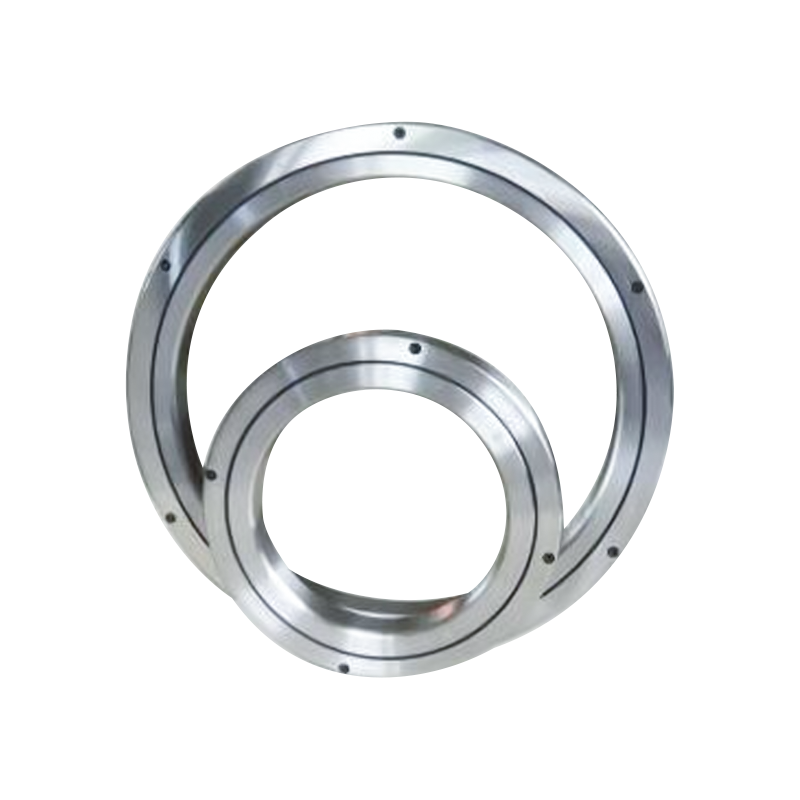
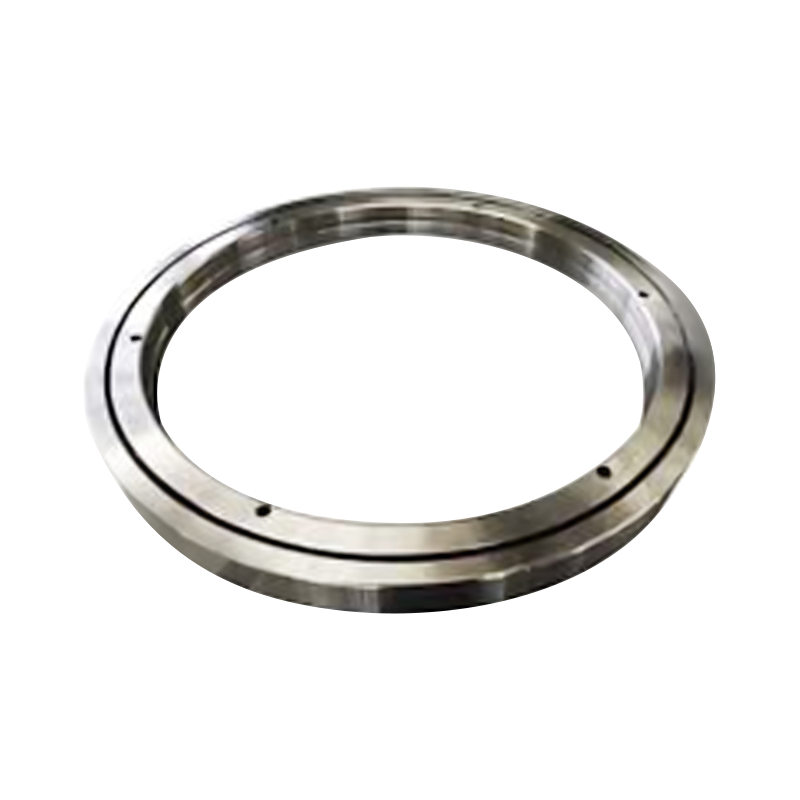
In the realm of high-precision engineering, bearings are the unsung heroes that enable smooth, reliable motion in everything from industrial robots to medical devices. Among the most versatile and performance-driven bearing types are crossed roller bearings, and the RU Series stands out as a benchmark for excellence in this category. Designed to meet the most demanding requirements of modern industries, RU Series bearings combine innovative design, advanced manufacturing, and unmatched performance to deliver solutions that outpace traditional bearing technologies. This article explores the core features, advantages, manufacturing processes, applications, and supporting strengths behind the RU Series, providing a comprehensive overview of why it has become a go-to choice for engineers worldwide.
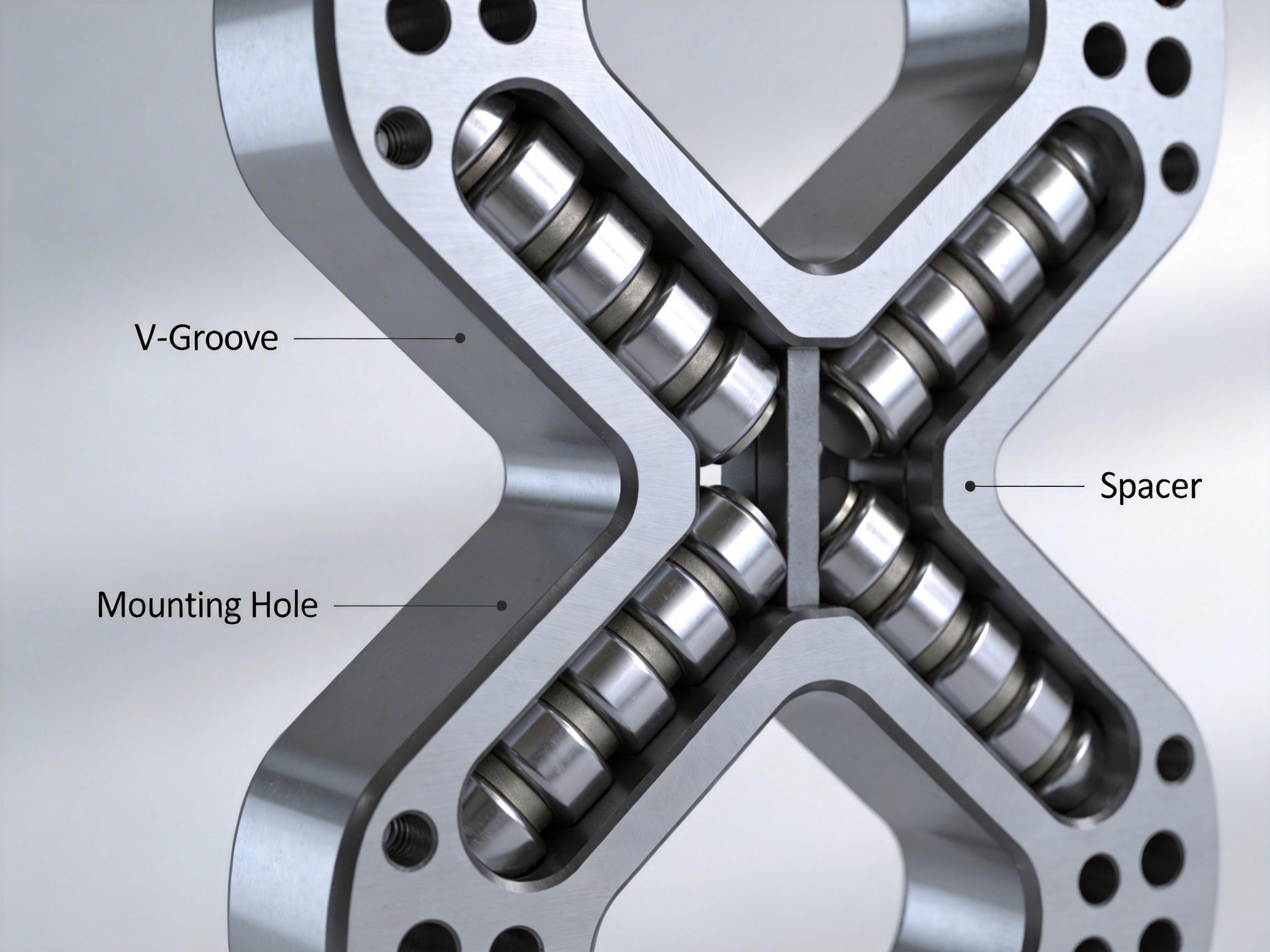
Crossed roller bearings are a specialized type of rolling-element bearing that uses cylindrical rollers arranged in a crisscross pattern (perpendicular to each other) within V-shaped raceways. Unlike traditional bearings, which often handle only radial or axial loads, crossed roller bearings can simultaneously support radial, axial, and torque loads—making them ideal for applications where space is limited and multi-directional load capacity is critical. The design of crossed roller bearings eliminates the need for multiple bearings to handle different load types, reducing assembly complexity, weight, and cost while enhancing overall system rigidity and precision.
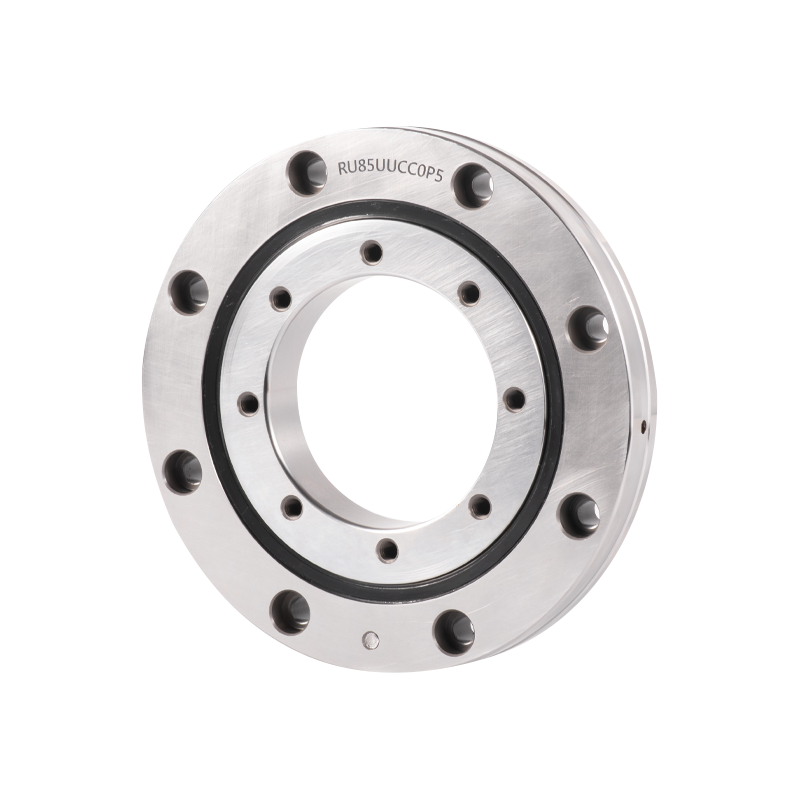
The RU Series takes this fundamental design to the next level, incorporating integrated inner and outer rings, mounting holes, and precision-engineered components that set it apart from standard crossed roller bearings. Its unique features address key pain points in traditional bearing design, such as excessive friction, limited load capacity, and difficult installation.
The RU Series is defined by its integrated structure and innovative design elements that optimize performance and usability. Let’s break down its core features:
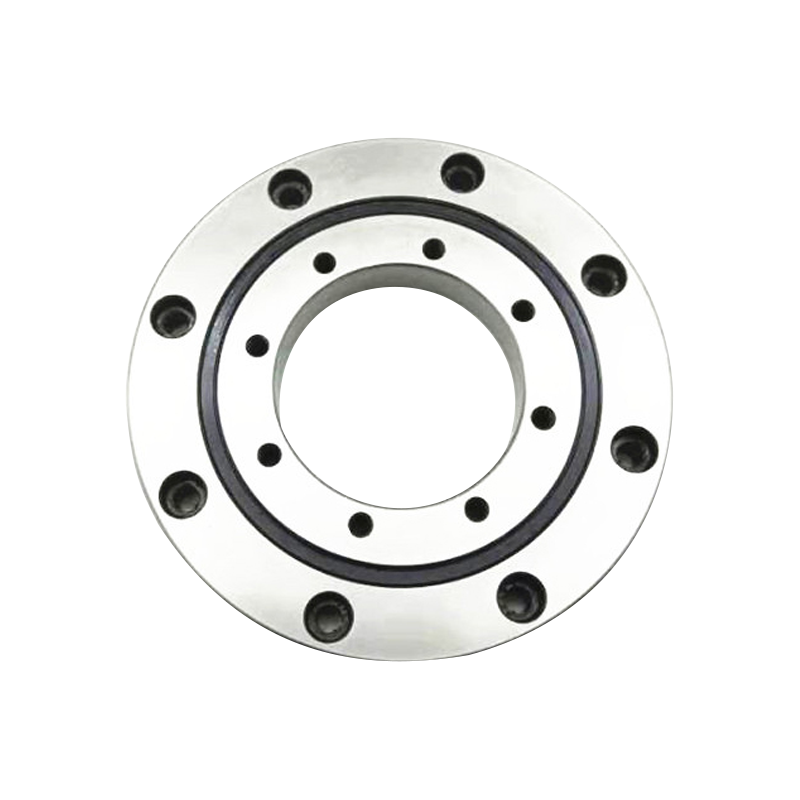
One of the most notable features of the RU Series is its integrated inner and outer ring design, both of which include pre-drilled mounting holes. This eliminates the need for additional fixing flanges or support seats, simplifying installation and reducing the number of components in the system. The integrated structure also ensures that installation has minimal impact on the bearing’s performance—critical for maintaining high rotational accuracy.
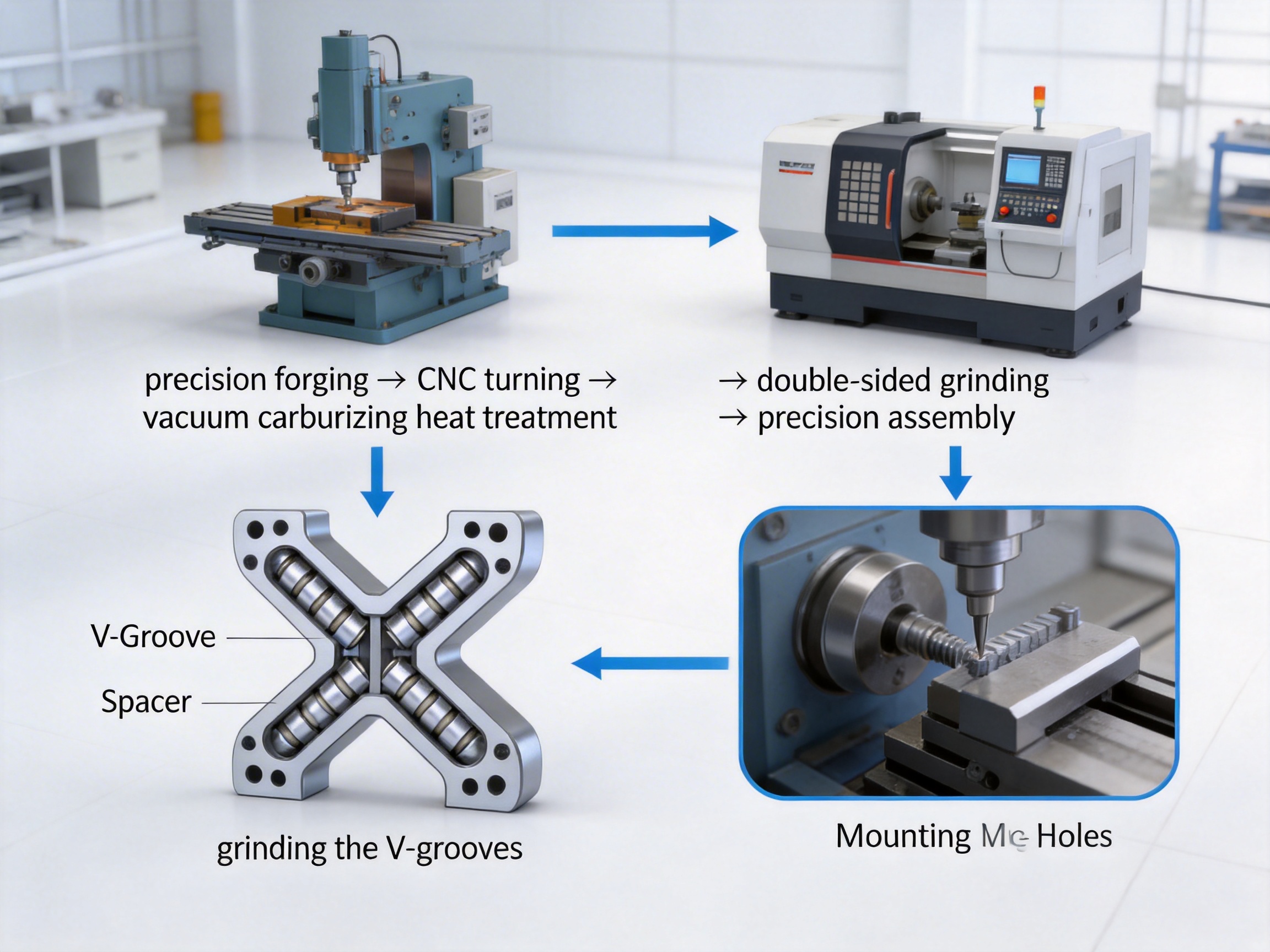
The internal structure of the RU Series consists of cylindrical rollers arranged perpendicularly in 90° V-grooves, separated by precision spacers. This arrangement allows the bearing to distribute loads evenly across multiple rollers, enabling it to handle multi-directional composite loads (radial, axial, and torque) simultaneously. The V-grooves also maximize the contact area between the rollers and the raceways, enhancing load capacity and rigidity.
Spacers between the rollers play a crucial role in the RU Series’ performance. Unlike traditional plate retainers, which can cause roller tilting, friction, or jamming, the spacers are precisely engineered to maintain consistent spacing between rollers. This reduces rotational torque significantly, ensuring smooth, quiet operation even at high speeds. The spacers also prevent roller contact, extending the bearing’s service life.
The RU Series features a split inner or outer ring design, which allows for precise adjustment of bearing clearance. This is particularly useful in applications where preload is required to eliminate play and enhance rigidity. Even under preload, the bearing maintains high-precision rotational motion, making it suitable for applications that demand zero backlash.
To simplify on-site installation, the RU Series’ split ring, rollers, and spacers are pre-assembled and fixed at the factory. This prevents separation of components during transport or handling, reducing assembly time and the risk of errors. The integrated mounting holes further streamline installation, as the bearing can be directly attached to the system without additional fixtures.
The RU Series outperforms traditional bearings and even other crossed roller bearings in several key areas, making it a superior choice for high-precision applications:
Traditional bearings often require multiple units to handle radial, axial, and torque loads. For example, a CNC rotary table might use a combination of angular contact ball bearings and thrust bearings to support different load types. The RU Series eliminates this need, as it can handle all three load types simultaneously with a single bearing. This reduces system complexity, weight, and cost while improving space efficiency.
Thanks to its crisscross roller arrangement and integrated structure, the RU Series offers 3–4 times higher rigidity than traditional bearings. This is a critical advantage in applications where minimal deflection is essential—such as precision machine tools, where even small amounts of deflection can compromise machining accuracy. The high rigidity also enhances the bearing’s ability to withstand shock loads and vibrations.
The RU Series features an ultra-thin design that approaches physical limits, making it ideal for applications where space is at a premium. Despite its compact size, the bearing maintains high load capacity and rigidity—something that is difficult to achieve with traditional bearings. For example, in collaborative robots (cobots), the RU Series’ compact design allows engineers to design smaller, more agile joints without sacrificing performance.
The use of precision spacers instead of plate retainers results in significantly lower rotational torque compared to traditional crossed roller bearings. This smooth operation is essential for applications that require precise, controlled motion—such as surgical robots, where even minor vibrations or torque fluctuations can affect the outcome of a procedure. The low torque also reduces energy consumption, making the RU Series more efficient.
The RU Series is available in precision grades up to P2, which is among the highest precision grades for bearings. P2 grade bearings have extremely tight dimensional tolerances and minimal runout, making them suitable for applications that demand the highest levels of accuracy—such as semiconductor manufacturing equipment, where even a fraction of a micron can affect product quality.
The integrated mounting holes and pre-assembled components of the RU Series simplify installation, reducing the time and labor required to set up the bearing. Additionally, the split ring design allows for easy clearance adjustment, making maintenance and repair more straightforward. This is a significant advantage for industries that need to minimize downtime—such as automotive manufacturing, where production lines must run continuously.
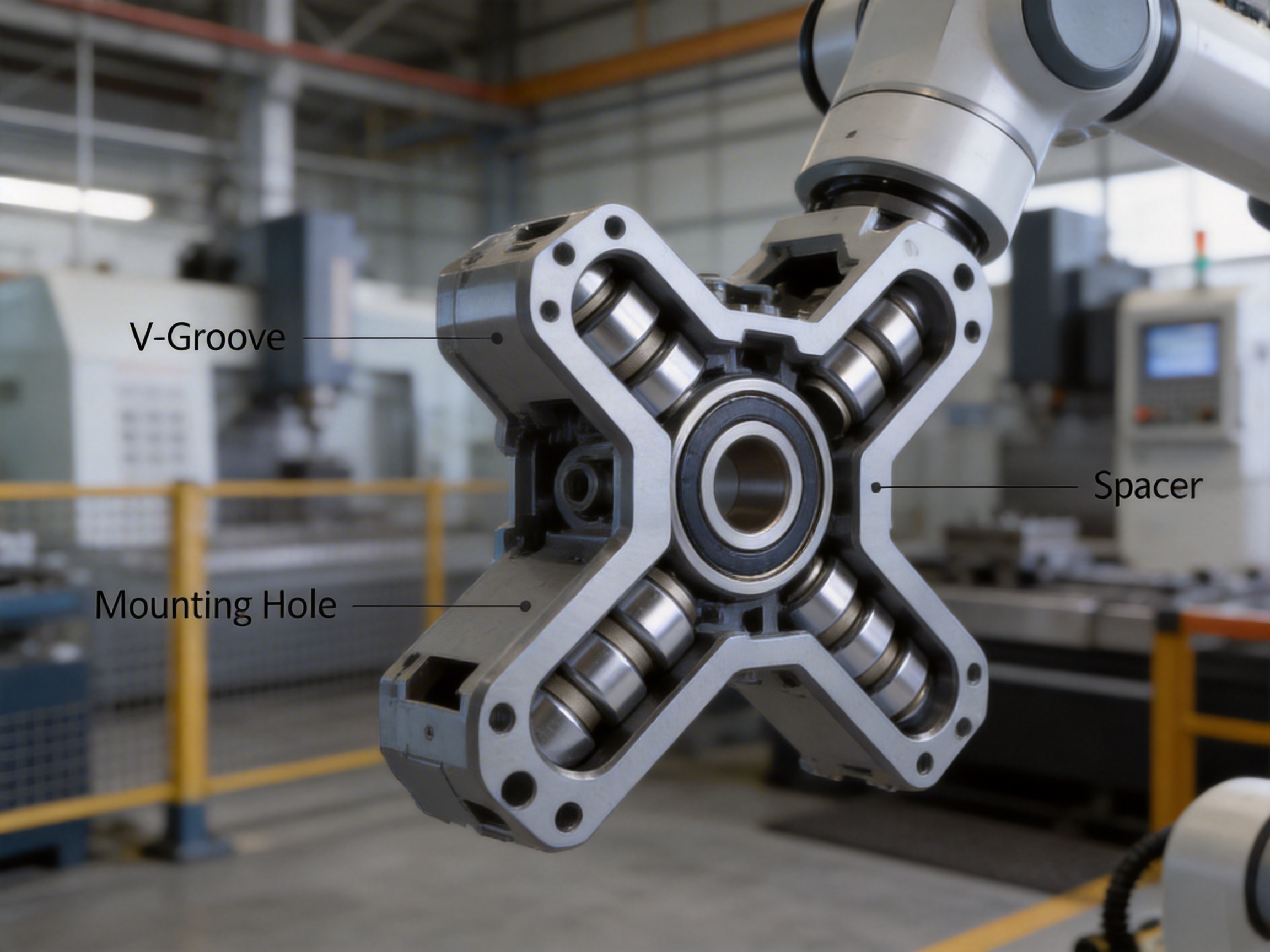
The performance of the RU Series is a direct result of advanced manufacturing processes that ensure precision, consistency, and durability. Let’s explore the key steps in its production:
The manufacturing process begins with precision forging of the inner and outer rings. Closed-die forging is used to shape the rings, which ensures uniform grain flow and enhances the material’s strength and fatigue resistance. This step also reduces the amount of machining required later, improving efficiency and reducing waste.
After forging, the rings undergo CNC turning to achieve the precise dimensions required for the RU Series. CNC lathes with sub-micron precision are used to machine the raceways, mounting holes, and other critical features. This step ensures that the rings meet the tight tolerances necessary for high-precision performance.
Heat treatment is a critical step in enhancing the hardness and durability of the bearing rings. Vacuum carburizing is used to create a hard, wear-resistant surface while maintaining a tough core—ideal for withstanding heavy loads and abrasive conditions. The heat treatment process is carefully controlled to ensure consistent results across all components.
Grinding is used to finish the raceways and other critical surfaces to achieve the ultra-smooth finish and tight tolerances required for the RU Series. Double-sided grinding is employed for the raceways to ensure flatness and parallelism, which are essential for maintaining rotational accuracy. This step also removes any residual stresses from the forging and heat treatment processes.
The assembly process involves placing the cylindrical rollers and spacers into the V-grooves of the inner and outer rings. The split ring design allows for easy assembly, and the components are pre-assembled and fixed at the factory to prevent separation. Each bearing is inspected during assembly to ensure that the rollers are properly aligned and the spacers are correctly positioned.
Every RU Series bearing undergoes rigorous quality control tests to ensure it meets the required precision and performance standards. These tests include:
Bearings that pass all tests are marked with their precision grade and serial number for traceability.
To ensure consistency across large production runs, the manufacturing process uses digital production control systems. These systems monitor every step of the process, from forging to assembly, and collect data to identify any deviations from the required standards. This allows engineers to make real-time adjustments and ensure that every RU Series bearing meets the highest quality standards.
The RU Series’ combination of precision, rigidity, and multi-directional load capacity makes it suitable for a wide range of advanced industrial applications. Let’s explore some of the key use cases:
Industrial robots, especially collaborative robots (cobots), require bearings that can handle multi-directional loads, provide smooth motion, and fit into compact joints. The RU Series is ideal for this application, as it can support the radial, axial, and torque loads generated by robot joints while maintaining high precision. For example, the waist and elbow joints of industrial robots often use RU Series bearings to enable smooth, precise movement.
Precision machine tools, such as CNC machining centers and precision indexing plates, demand bearings that can withstand heavy loads and maintain high accuracy. The RU Series’ high rigidity and precision grades (up to P2) make it perfect for these applications. For example, the rotary table of a CNC machining center uses RU Series bearings to ensure that the workpiece is positioned accurately, resulting in high-quality machined parts.
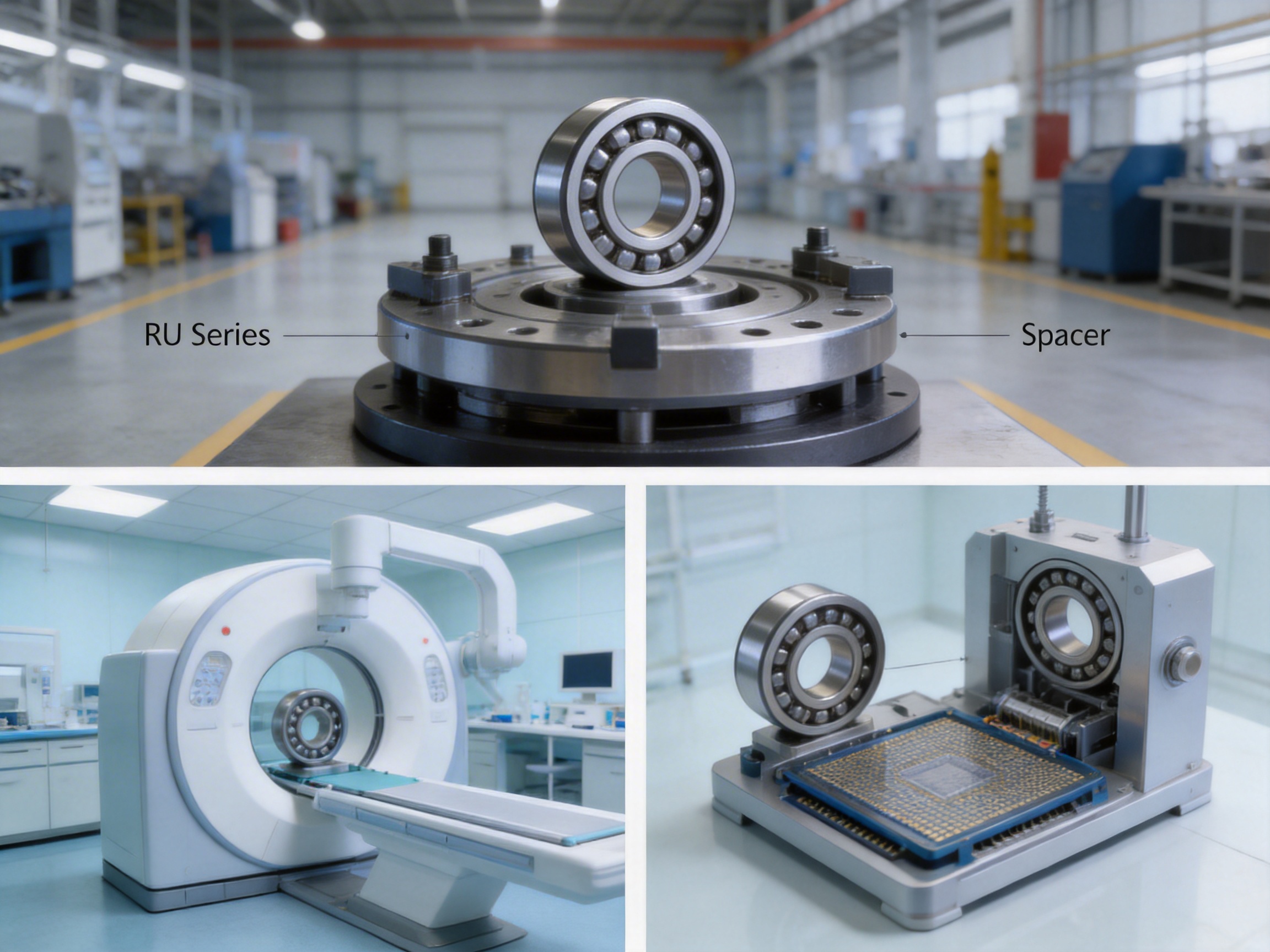
Medical devices, such as CT scanners and surgical robots, require bearings that can provide smooth, precise motion without any vibration or noise. The RU Series’ low torque and high precision make it ideal for these applications. For example, the gantry of a CT scanner uses RU Series bearings to rotate the imaging system smoothly, ensuring clear, accurate images. Surgical robots use RU Series bearings in their joints to enable precise, controlled movement during procedures.
Precision measurement and inspection equipment, such as coordinate measuring machines (CMMs) and optical platforms, require bearings that can maintain extreme accuracy. The RU Series’ P2 precision grade and high rigidity make it perfect for these applications. For example, the rotating table of a CMM uses RU Series bearings to ensure that the probe can move precisely over the workpiece, resulting in accurate measurements.
Defense and aerospace applications, such as radar antennas and satellite communication devices, require bearings that can withstand harsh environmental conditions and provide reliable performance. The RU Series’ durable design and high load capacity make it ideal for these applications. For example, radar antennas use RU Series bearings to rotate the antenna dish smoothly, even in extreme temperatures and weather conditions.
Semiconductor manufacturing equipment, such as IC manufacturing machines and wafer processing tools, requires bearings that can provide zero-defect performance and extreme precision. The RU Series’ P2 precision grade and smooth operation make it perfect for these applications. For example, wafer processing tools use RU Series bearings to move the wafer holder precisely, ensuring that the wafers are processed accurately.
The RU Series is available in a range of sizes to meet the needs of different applications. Below is a table of key specifications for popular RU Series models:
| Bearing Type | Inner Diameter (d) [mm] | Outside Diameter (D) [mm] | Roller Pitch Diameter (Dpw) [mm] | Height (B) [mm] | Chamfer (Rmin) [mm] | Shoulder Size (ds) [mm] | Shoulder Size (Dh) [mm] | Basic Radial Load Rating (Cr) [kN] | Basic Radial Load Rating (Cor) [kN] | Weight [kg] |
|---|---|---|---|---|---|---|---|---|---|---|
| RU 28 | 10 | 52 | 28 | 8 | 0.3 | 24 | 29.5 | 2.9 | 2.4 | 0.12 |
| RU 42 | 20 | 70 | 41.5 | 12 | 0.6 | 37 | 47 | 7.35 | 8.35 | 0.29 |
| RU 66 | 35 | 95 | 66 | 15 | 0.6 | 59 | 74 | 17.5 | 22.3 | 0.62 |
| RU 85(G) RU85X | 55 | 120 | 85 | 15 | 0.6 | 79 | 93 | 20.3 | 29.5 | 1 |
| RU 124(G) RU 124X | 80 | 165 | 124 | 22 | 1 | 114 | 134 | 33.1 | 50.9 | 2.6 |
| RU 148(G) RU 148X | 90 | 210 | 147.5 | 25 | 1.5 | 133 | 162 | 49.1 | 76.8 | 4.9 |
| RU 178(G) RU 178X | 115 | 240 | 178 | 28 | 1.5 | 161 | 195 | 80.3 | 135 | 6.8 |
| RU 228(G) RU 228X | 160 | 295 | 227.5 | 35 | 2 | 208 | 246 | 104 | 173 | 11.4 |
| RU 297(G) RU 297X | 210 | 380 | 297.5 | 40 | 2.5 | 272 | 320 | 156 | 281 | 21.3 |
| RU 445(G) RU 445X | 350 | 540 | 445.4 | 45 | 2.5 | 417 | 473 | 222 | 473 | 35.4 |
The RU Series is manufactured by a leading bearing company with over 15 years of experience in OEM/ODM export and a commitment to precision engineering. The company’s strengths include:
The company has a dedicated R&D team that continuously develops high-precision bearings, including the RU Series. The team works closely with clients to understand their specific needs and develop custom solutions. This focus on R&D has allowed the company to stay at the forefront of bearing technology and meet the evolving demands of modern industries.
The company has a production capacity of 10,000–50,000 units per month, allowing it to meet large orders without compromising quality. The factory is equipped with modern production lines covering forging, turning, heat treatment, grinding, assembly, and packaging—ensuring consistency and excellence in every process.
The company exports its bearings to over 20 countries, including the United States, Italy, Germany, Poland, South Africa, Egypt, and India. It has built long-term partnerships with distributors and OEM clients in multiple continents, and its multilingual service team provides rapid technical response, installation guidance, and after-sales maintenance worldwide.
The company takes sustainability as a long-term commitment. It adopts environmentally responsible processes, promotes material recycling, and optimizes energy usage to reduce its environmental footprint. For example, it uses recycled steel in its bearings and energy-efficient furnaces in its heat treatment process. Beyond production, the company also supports educational and technical training initiatives to foster future engineering talent.
The company’s quality assurance system is ISO 9001 certified, ensuring that every bearing meets international standards for accuracy and performance. It uses advanced testing equipment to verify the quality of its bearings, and every product is inspected multiple times before it leaves the factory.
Below are answers to common questions about the RU Series crossed roller bearings:
A: The RU Series features an integrated inner and outer ring with mounting holes, precision spacers instead of plate retainers, and a split ring design for clearance adjustment. These features make it more compact, easier to install, and more efficient than traditional crossed roller bearings. It also offers higher rigidity (3–4x) and smoother low torque operation.
A: Yes. The RU Series’ crisscross roller arrangement allows it to handle radial, axial, and torque loads simultaneously with a single bearing. This eliminates the need for multiple bearings to handle different load types, reducing system complexity and cost.
A: The RU Series is available in precision grades P5, P4, and P2. P2 is the highest precision grade, making it suitable for applications that demand extreme accuracy—such as semiconductor manufacturing equipment and precision measurement tools.
A: The split ring design allows for precise adjustment of bearing clearance, which is useful for eliminating play and enhancing rigidity. It also simplifies installation, as the components are pre-assembled and fixed at the factory to prevent separation during transport or handling.
A: The RU Series is ideal for industries that demand high precision, rigidity, and reliability—including industrial robots, precision machine tools, medical devices, measurement and inspection equipment, defense and aerospace, and semiconductor manufacturing.
A: Yes. The company’s dedicated R&D team can customize the RU Series to meet specific application requirements. This includes adjusting dimensions (inner/outer diameter, height), modifying the split ring design, or developing custom variants for unique load conditions.
A: Every RU Series bearing undergoes rigorous quality control tests, including rotational accuracy testing, load capacity testing, torque testing, and vibration testing. The company also uses digital production control systems to monitor every step of the manufacturing process and ensure consistency.
A: The company uses digital production control systems to monitor every step of the manufacturing process. These systems collect data in real time and identify any deviations from the required standards, allowing engineers to make adjustments and ensure consistent quality across all units.
1. Smith, J. (2022). Crossed Roller Bearings: Design, Applications, and Market Trends. Industrial Engineering Press.
2. Lee, H. (2023). Precision Bearings for Robotics and Automation. Advanced Manufacturing Journal, 15(2), 45–62.
3. Global Bearing Industry Report (2024). International Bearing Manufacturers Association.
4. Zhang, Y. (2023). Advanced Heat Treatment Techniques for High-Precision Bearings. Materials Science & Engineering, 12(3), 112–125.
5. Chen, L. (2022). The Role of Crossed Roller Bearings in Semiconductor Manufacturing. Precision Engineering Review, 8(1), 78–91.
Product Categories
Contact Us

Jane@ukl-bearing.com
Jenny@ukl-bearing.com
Andy@ukl-bearing.com
Ivy@ukl-bearing.com

+86-510- 88763239
+86-15371057968

No.1 Hehuan Road, Hudai Town, Binhu District, Wuxi City.
Ready to Begin?
Get in Touch

Now!
UKL BEARING
 English
 Español
 русский