Content
In modern mechanical equipment, stable rotation, accurate shaft support, and convenient installation are essential for productivity and reliability. The 2 bolt flange bearing is designed to meet these practical requirements by combining an insert ball bearing with a compact two-bolt flange housing. This structure allows the bearing unit to be fixed directly onto a machine frame, side plate, conveyor structure, or support bracket, making it a highly efficient solution for many industrial applications.
As part of the mounted bearings category, the 2 bolt flange bearing offers a balance of strength, installation flexibility, and maintenance convenience. Compared with loose bearings that require separate housing design, alignment work, and additional mounting components, a complete 2-bolt flange bearing unit simplifies assembly and reduces the time needed to build or repair equipment. For machinery manufacturers and maintenance teams, this means faster installation, fewer compatibility concerns, and improved operating stability.
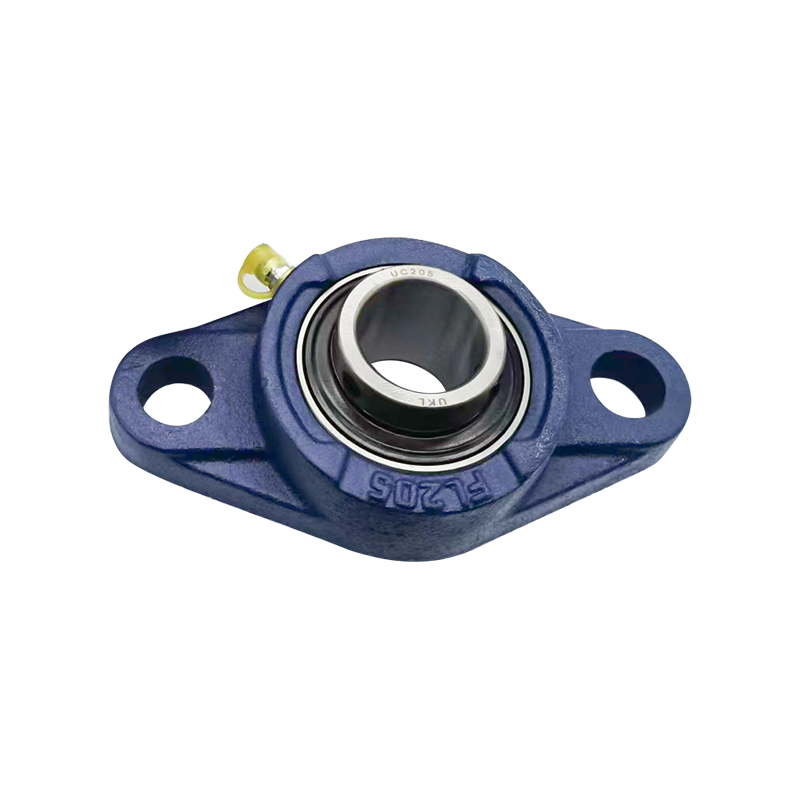
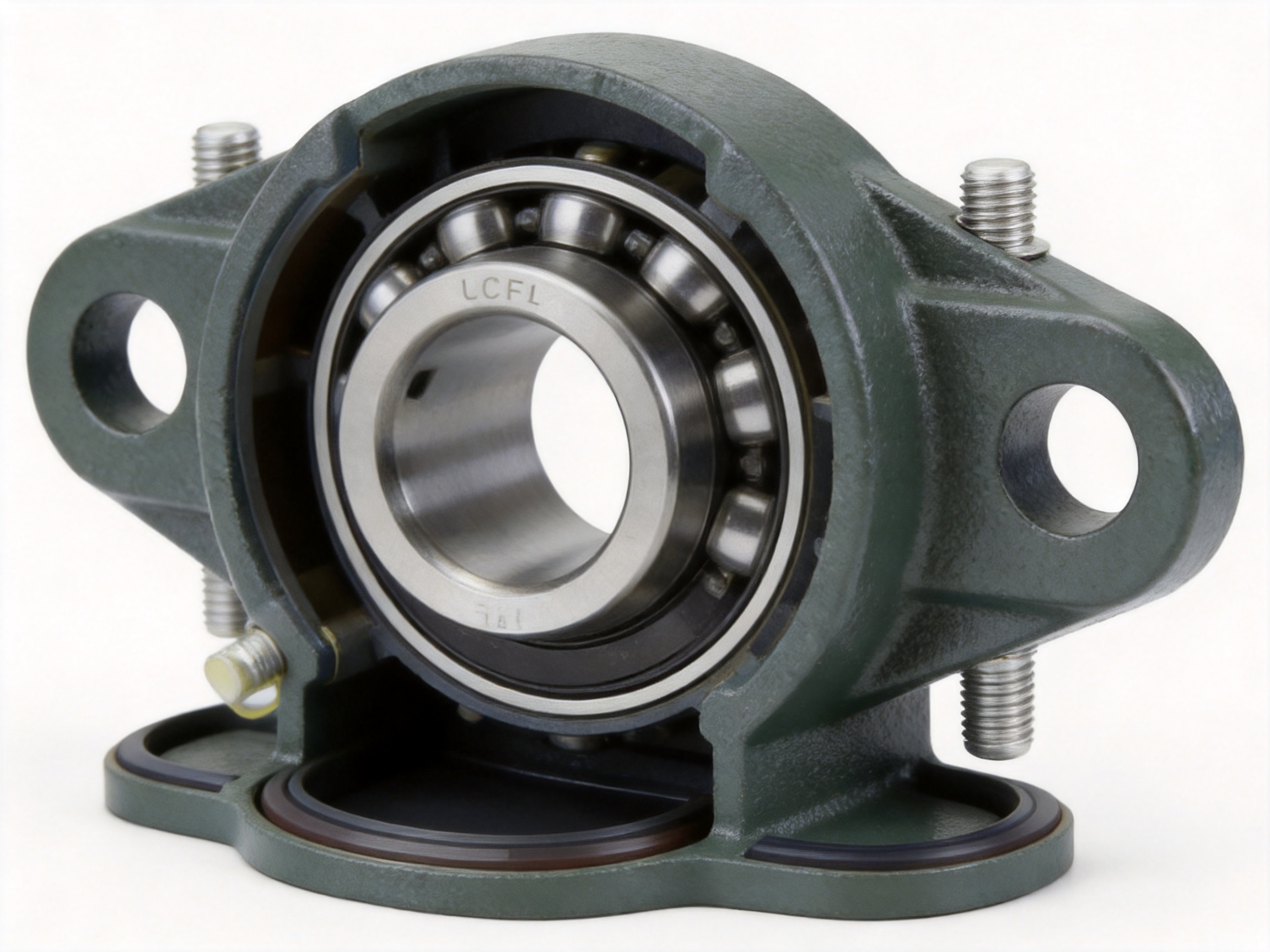
The UCFL series 2-bolt flange bearing unit is a widely used mounted ball bearing unit. It generally consists of a UCFL housing and an insert bearing, such as UC, NA, UE, UK, or SB type. Depending on the application, it may use set screw locking, eccentric locking, or other shaft-locking methods. The housing can be produced from cast iron, cast steel, plastic, or stainless steel, giving users the flexibility to choose a configuration that suits load level, working environment, corrosion resistance, hygiene requirements, and cost targets.
For users seeking a dependable bearing manufacturer, UKL Bearing Manufacturing Co., Ltd. provides strong manufacturing capability, OEM and ODM export experience, and a product range that supports industries such as automation, conveying, food machinery, agricultural machinery, packaging equipment, light industrial machines, and general mechanical transmission systems. The company integrates research and development, production, inspection, packaging, and international service, allowing customers to obtain both standard and customized bearing solutions.
A 2 bolt flange bearing is a mounted bearing unit with a flange housing that uses two mounting holes. The two-hole design is one of its most important advantages because it provides a compact installation footprint while still delivering sufficient support for radial loads and moderate axial positioning requirements. The unit is commonly mounted on vertical surfaces, side plates, and structural frames where a shaft must pass through or be supported close to a wall or panel.
The basic structure includes an insert bearing and a flange housing. The insert bearing is typically a deep groove ball bearing with a spherical outside diameter. The housing seat has a matching spherical inner surface, allowing the bearing to self-align within a limited range. This self-aligning capability is valuable because real machinery often includes small mounting errors, frame deformation, or shaft deflection. Instead of forcing the shaft and bearing into rigid misalignment, the bearing unit can compensate for minor angular deviations, helping reduce stress concentration and premature failure.
The housing provides the mounting interface and protects the insert bearing. UCFL housings are usually shaped like an oval or diamond, with one bolt hole at each end. This design is space-saving compared with four-bolt flange units, while offering better positional stability than unsupported shaft arrangements. The insert bearing is fixed to the shaft through set screws, eccentric collars, adapter sleeves, or other locking methods depending on the bearing type selected.
In many applications, the insert bearing can be replaced without changing the housing, and different insert types may be interchangeable when dimensions match. This interchangeability reduces inventory pressure for maintenance teams. Instead of keeping an entire new unit for every repair situation, users may stock selected insert bearings and housings separately. For equipment manufacturers, the modular design supports product standardization and simplifies supply chain planning.
The greatest value of a 2 bolt flange bearing lies in its practicality. It is not only a bearing; it is a ready-to-install shaft support solution. The integrated design eliminates many uncertainties associated with separate bearing and housing assembly. This helps users reduce installation errors, improve mechanical reliability, and shorten maintenance downtime.
One important advantage is quick mounting. The installer only needs to align the unit with the shaft and secure the two housing bolts to the machine frame. After shaft positioning, the locking mechanism is tightened. Compared with designing a custom bearing seat, machining a housing bore, installing retaining parts, and setting alignment manually, the mounted unit significantly reduces labor and setup time.
Another advantage is alignment tolerance. In many light and medium-duty machines, frames are welded or bolted, and perfect geometric accuracy is difficult to maintain. A mounted bearing with a spherical insert can compensate for small deviations, reducing the risk of bearing edge loading. This feature is especially helpful in conveyor systems, agricultural equipment, packaging machines, and material handling equipment, where long shafts and multiple supports can create alignment challenges.
The 2-bolt layout also saves space. A four-bolt flange bearing offers high stability, but it requires a larger mounting area. In compact machines, side panels, guards, or structural members may not provide enough space for four bolts. The 2 bolt flange design fits where installation space is limited, while still providing firm support through two properly tightened mounting bolts.
Maintenance convenience is another strong benefit. The unit can be inspected visually, lubricated if equipped with a grease fitting, and replaced without major disassembly. For production lines, this can reduce downtime and lower total maintenance cost. A bearing unit that can be replaced quickly is often more valuable than a component that requires complicated removal procedures.
Compared with ordinary radial ball bearings installed directly into custom housings, the 2 bolt flange bearing offers a more complete and user-friendly solution. Standard radial bearings may require precision housing machining, retaining rings, seals, end covers, and exact alignment. These requirements increase manufacturing cost and assembly complexity. A mounted flange unit provides a finished support structure, reducing the number of separate parts and minimizing design effort.
Compared with pillow block bearings, 2 bolt flange bearings are more suitable for side mounting. Pillow block units are typically installed on horizontal surfaces and support shafts above the base. However, when a shaft must pass through a panel or be supported on a vertical plate, a flange bearing is often the better choice. The 2-bolt flange bearing provides a compact and direct mounting arrangement without requiring extra brackets.
Compared with four-bolt flange bearings, the 2 bolt flange bearing has a smaller footprint and lower weight. Four-bolt units may be preferable for heavier loads or higher rigidity requirements, but they can be oversized for many light and medium applications. The 2-bolt unit provides adequate support while saving material, installation space, and mounting time. This makes it a cost-effective option for equipment where compact design and efficiency are priorities.
Compared with low-quality bearing units from less controlled manufacturing sources, a well-produced 2 bolt flange bearing offers more consistent housing geometry, better bearing raceway precision, more reliable sealing, and stronger locking performance. These factors directly affect service life. Poorly machined housings may cause abnormal stress, low-grade insert bearings may generate noise and heat, and weak locking systems may allow shaft slipping. A carefully manufactured unit avoids these problems by controlling each production step.
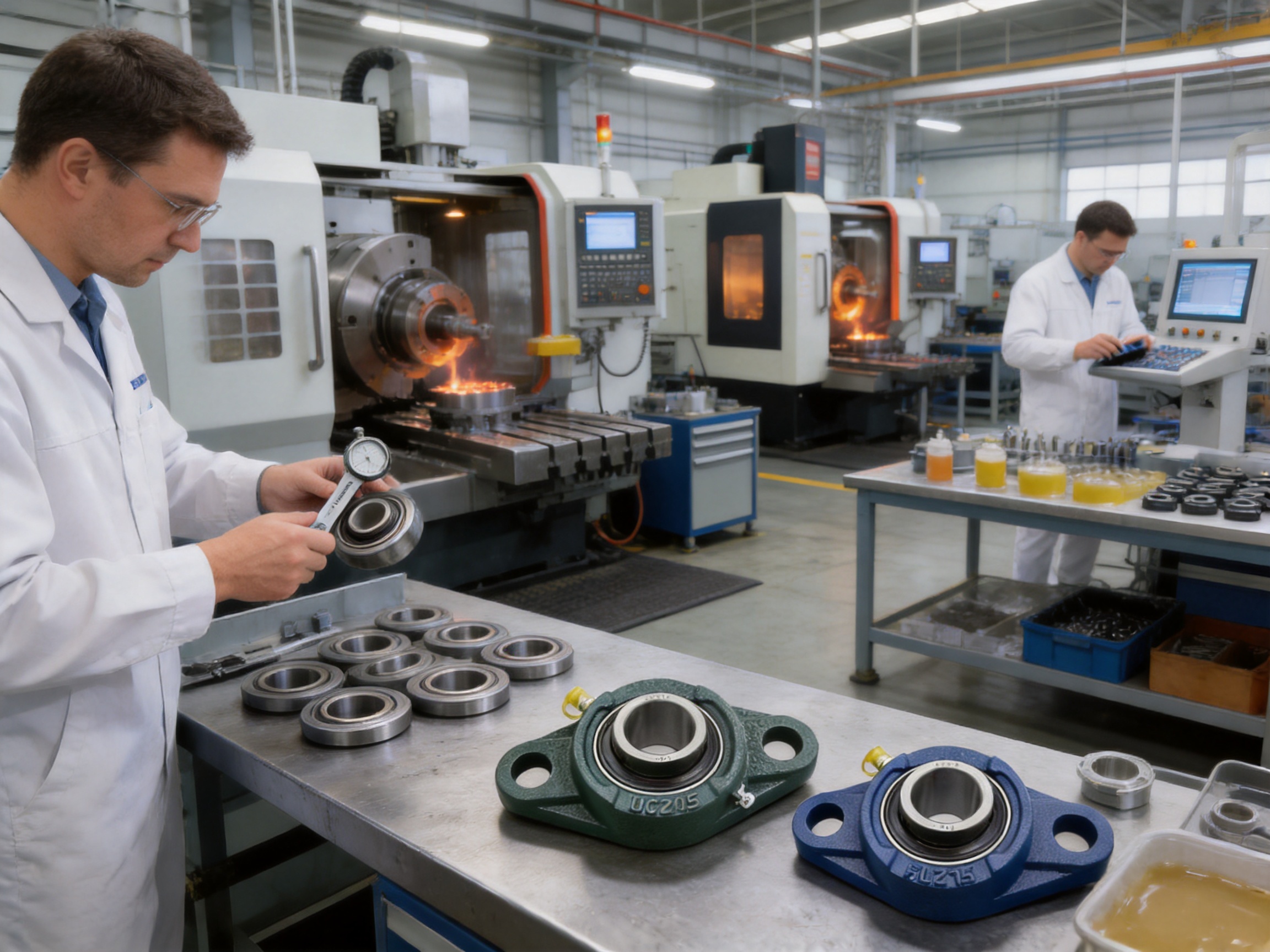
For many customers, the competitive advantage is not only the product type but also the manufacturing discipline behind it. UKL Bearing Manufacturing Co., Ltd. supports product quality through production processes covering forging, turning, heat treatment, grinding, assembly, and packaging. This integrated capability helps ensure that the bearing unit is not merely assembled, but engineered and controlled as a functional mechanical component.
The housing material greatly influences the performance and suitable application range of a 2 bolt flange bearing. Cast iron is one of the most common housing materials because it provides good compressive strength, vibration damping, machinability, and cost efficiency. For general industrial equipment, cast iron housings offer dependable service and are widely accepted.
Cast steel housings may be selected for applications requiring higher impact resistance or greater structural toughness. In environments where sudden loads, vibration, or harsh mechanical conditions are present, cast steel can provide additional safety margin. Although it is usually more expensive than cast iron, it may be justified in demanding equipment.
Plastic housings are useful where corrosion resistance, low weight, or washdown compatibility is important. They are often considered for food-related machinery, packaging systems, light conveyor equipment, and clean operating environments. Plastic housings also reduce overall unit weight and can provide good resistance to certain chemicals, depending on the material formulation.
Stainless steel housings provide excellent corrosion resistance and are suitable for wet, humid, or hygienic environments. When combined with stainless steel insert bearings and appropriate sealing, they can support applications in food processing, beverage equipment, pharmaceutical machinery, marine-related systems, and other corrosion-prone settings. The stainless steel option is often chosen when long-term cleanliness and resistance to rust are more important than the lowest initial cost.
The availability of different housing materials gives customers the ability to optimize the bearing unit for the real working environment. Instead of forcing one standard solution into every machine, users can select cast iron for general use, cast steel for tougher mechanical conditions, plastic for lightweight corrosion-resistant applications, or stainless steel for demanding sanitary and anti-corrosion requirements.
The insert bearing is the rotating heart of the 2 bolt flange bearing unit. Different insert bearing types allow the same housing concept to serve different shaft conditions and installation preferences. UC type insert bearings are widely used and commonly fixed with set screws. They are suitable for many standard industrial applications where the shaft surface provides a reliable grip and axial positioning requirements are moderate.
NA, UE, UK, and SB type insert bearings provide additional options depending on shaft tolerance, locking preference, and working requirements. Eccentric locking collars are often preferred for shafts rotating primarily in one direction. The eccentric collar grips the shaft through a cam-locking action, providing a secure connection with reduced shaft damage compared with some direct set screw arrangements. Set screw locking is simple, fast, and widely understood by maintenance technicians.
Adapter sleeve arrangements can be useful when a more concentric fit is desired or when the bearing must be mounted on shafts with specific tolerance conditions. Different locking systems affect installation procedure, vibration behavior, shaft surface contact, and maintenance convenience. Choosing the right locking method can improve bearing life and reduce unexpected loosening.
In applications with frequent start-stop motion, shock loads, or vibration, proper locking is especially important. If the insert bearing slips on the shaft, the shaft may wear, the bearing may overheat, and the machine may lose accuracy. High-quality locking components, accurately machined inner rings, and clear installation guidance help prevent these problems.
A mounted bearing unit looks simple from the outside, but reliable performance depends on many controlled manufacturing details. UKL Bearing Manufacturing Co., Ltd. operates as an integrated manufacturer and trader with strong OEM and ODM export experience. The company’s production capability covers 10,000 to 50,000 units per month, supporting both regular orders and customized supply programs.
The manufacturing process begins with material selection. Bearing steel, housing materials, seals, grease, locking screws, and packaging materials must all meet the intended quality level. For insert bearings, steel cleanliness and proper heat treatment are critical because the raceways and rolling elements must withstand repeated contact stress. For housings, dimensional stability, strength, and surface quality are important because the housing must hold the bearing correctly and remain secure during operation.
Forging helps create the basic metal structure for bearing rings. Proper forging improves material flow, reduces internal defects, and prepares the workpiece for later machining. Turning then shapes the bearing rings to accurate dimensions before heat treatment. Heat treatment is one of the most important steps because it gives the bearing steel the hardness and durability needed for rolling contact fatigue resistance.
After heat treatment, grinding brings the raceways and critical surfaces to precise geometry and surface finish. Good grinding quality reduces noise, vibration, and friction. A smooth raceway allows the rolling elements to move with less resistance, helping lower operating temperature and improve service life. Poor grinding can create waviness, roughness, or geometry errors that lead to noise and premature damage.
Assembly requires clean conditions and careful control. Rolling elements, cages, seals, shields, grease, inner rings, outer rings, and locking parts must be assembled correctly. Lubrication quantity and grease type affect temperature, sealing performance, and bearing life. Too little grease may cause wear, while too much grease can generate heat in some applications. Correct assembly ensures that the insert bearing performs as designed.
Packaging is also part of product quality. Bearings must be protected from corrosion, contamination, impact, and moisture during transportation and storage. For international shipments, packaging quality matters because goods may pass through long logistics chains. Proper anti-rust protection and strong packaging help customers receive products in ready-to-use condition.
Consistent product quality requires more than final inspection. It depends on process control throughout production. UKL emphasizes precision design and digital production control, helping ensure that each product meets demanding expectations for accuracy and performance. In mounted bearing units, important inspection points include bearing bore size, outer spherical diameter, housing seat geometry, bolt hole accuracy, radial clearance, rotation smoothness, noise level, seal condition, and locking component quality.
For the UCFL housing, the spherical seat must be accurately formed so the insert bearing can align properly without excessive looseness. If the seat is too tight, the bearing may not self-align; if it is too loose, the unit may lack stability. Bolt holes must be positioned correctly to ensure proper installation. The mounting face must also be sufficiently flat to avoid distortion when the unit is tightened to the machine frame.
For the insert bearing, raceway precision and radial clearance are central to performance. Excessive clearance can create noise and vibration, while insufficient clearance may cause overheating when the bearing operates under load or thermal expansion. Seals must contact properly to prevent contamination while avoiding excessive friction. Locking screws or collars must be strong enough to maintain shaft grip during operation.
Advanced inspection supports stable batches, which is important for OEM customers. Equipment manufacturers need bearing units that fit consistently from one batch to another. If housing dimensions or bearing tolerances vary too much, assembly lines slow down and field failures increase. Reliable dimensional control helps customers build machines more efficiently.
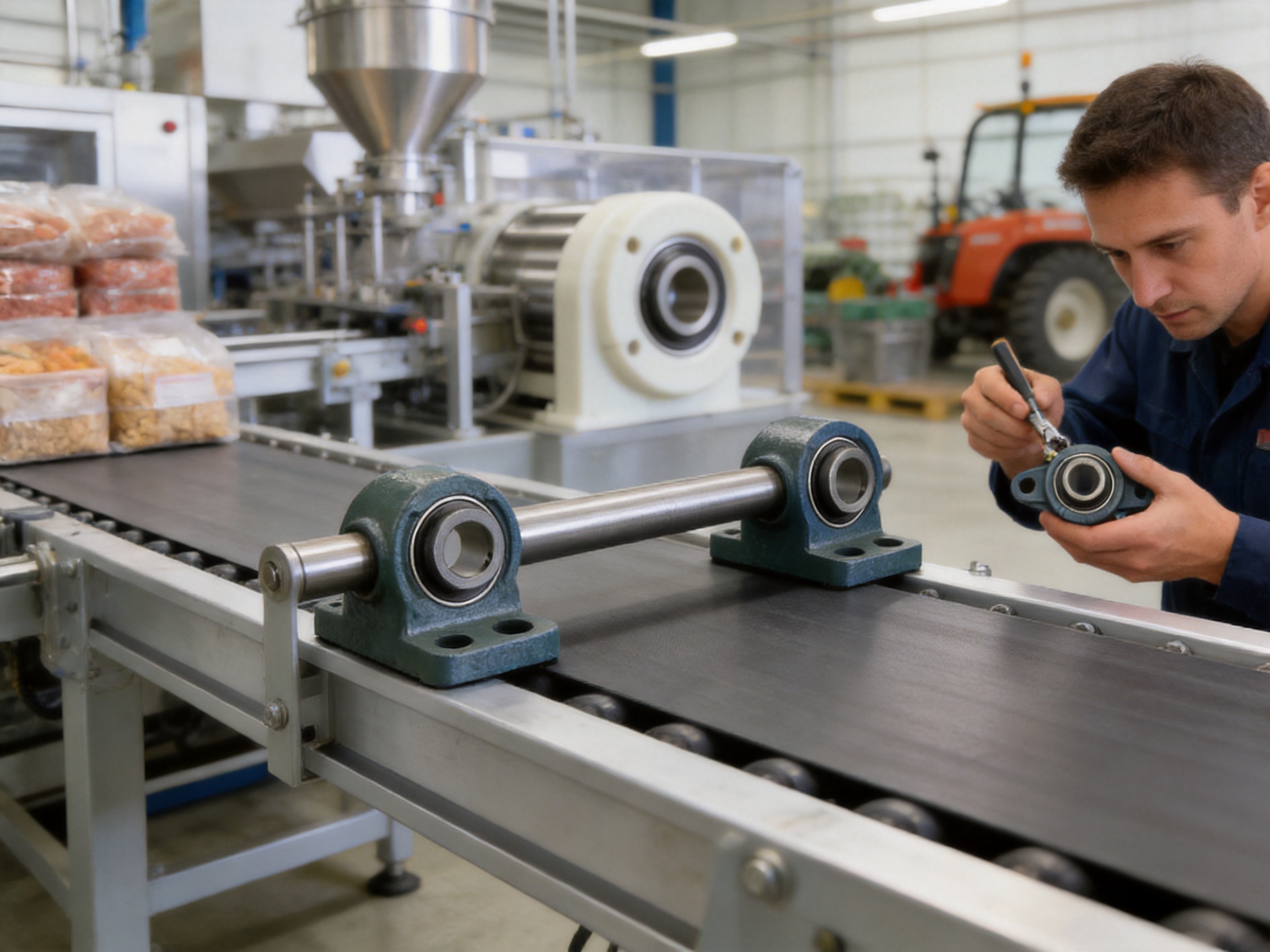
The 2 bolt flange bearing is suitable for a broad range of mechanical systems. One common application is conveyor equipment. Conveyors require shafts to support rollers, pulleys, sprockets, or belt systems. The bearing units must be easy to install, capable of handling continuous rotation, and accessible for maintenance. A 2-bolt flange unit fits well on side frames and panels.
Packaging machinery also uses mounted bearings in many rotating sections. Machines that fill, seal, label, wrap, or transfer products often require compact bearing supports. Space may be limited, and maintenance access is important. A 2 bolt flange bearing provides a neat mounting method without requiring large support structures.
Agricultural machinery benefits from durable mounted bearings because machines often work in dusty, dirty, or variable outdoor conditions. Proper sealing and lubrication help protect the bearing from contamination. Easy replacement is valuable because agricultural downtime during operating seasons can be costly.
Food and beverage equipment may use plastic or stainless steel flange bearing units where washdown, corrosion resistance, and cleanliness are important. The selected bearing design must match hygiene expectations, cleaning chemicals, and moisture exposure. Stainless steel and suitable seals can help improve service life in these environments.
Material handling systems, fans, textile machinery, woodworking machines, printing equipment, and light industrial automation systems can also use 2 bolt flange bearings. The product’s versatility comes from the combination of compact installation, alignment tolerance, material options, and interchangeable insert bearings.
Selecting the right 2 bolt flange bearing requires understanding the application conditions. The first factor is shaft diameter. The bearing bore must match the shaft size, and the shaft tolerance should be suitable for the locking method. A shaft that is too small may slip, while a shaft that is too large may be difficult to install or may reduce internal clearance.
The second factor is load. Radial load is usually the main load for mounted ball bearing units. Moderate axial loads may be acceptable depending on the bearing design, but the user should avoid applying excessive thrust loads unless the bearing is rated for them. For heavy loads or high shock loads, a stronger housing material or different bearing type may be needed.
The third factor is speed. Insert ball bearings can operate at moderate speeds, but seals, grease, alignment, load, and locking method influence safe operating speed. Higher speed applications require careful attention to balance, lubrication, clearance, and temperature rise.
The fourth factor is environment. Dust, moisture, chemicals, temperature, washdown, and vibration all affect bearing life. A sealed insert bearing with proper grease may be suitable for dusty environments, while stainless steel or plastic housings may be better for corrosive conditions. For high-temperature environments, special grease and seal materials may be required.
The fifth factor is maintenance strategy. Some users prefer relubricatable units with grease fittings, while others prefer sealed-for-life designs in clean, light-duty conditions. Maintenance capability, accessibility, and downtime cost should influence the bearing choice.
| Selection Factor | Recommended Consideration | Benefit of Correct Choice |
|---|---|---|
| Shaft Size | Match bearing bore and shaft tolerance to the locking method | Prevents slipping, vibration, and installation difficulty |
| Load Level | Confirm radial load, axial load, and impact conditions | Improves bearing life and avoids housing damage |
| Operating Environment | Select cast iron, cast steel, plastic, or stainless steel housing | Improves corrosion resistance, strength, or cost efficiency |
| Speed | Check bearing clearance, lubrication, seal type, and balance | Reduces heat, noise, and premature wear |
| Maintenance Method | Choose relubricatable or sealed design according to access and duty | Reduces downtime and supports predictable service intervals |
Correct installation is essential for the performance of any bearing unit. Before installation, the shaft should be inspected for burrs, rust, dirt, and dimensional errors. A clean and properly sized shaft improves locking reliability and helps the bearing run smoothly. The mounting surface should also be flat, clean, and strong enough to support the housing.
The bearing unit should be positioned on the shaft without hammering directly on the bearing rings or seals. If force is required, it should be applied carefully through suitable tools. The housing bolts should be inserted and tightened gradually. Uneven tightening can distort the housing or create misalignment. After the housing is secured, the insert bearing should be aligned and locked to the shaft according to the selected locking method.
For set screw locking, the screws should be tightened to the recommended torque. Insufficient torque may allow slipping, while excessive torque may damage the shaft or screw threads. For eccentric locking, the collar should be turned in the direction of shaft rotation and tightened securely. The final rotation of the shaft should be checked by hand when possible to confirm smooth movement.
If the bearing unit is relubricatable, grease should be applied according to operating conditions. Over-greasing can sometimes cause temperature rise, while under-greasing can cause wear. In dirty or wet environments, more frequent relubrication may be needed to purge contaminants and maintain the grease film.
Maintenance practices greatly influence bearing life. Regular inspection should include checking noise, vibration, temperature, grease condition, seal condition, housing bolt tightness, and shaft locking security. Early detection of abnormal sound or heat can prevent sudden failure and reduce repair costs.
Contamination is one of the most common causes of bearing failure. Dust, water, metal particles, and chemicals can damage raceways and rolling elements. Proper seals, correct installation, and clean lubrication practices help prevent contamination. If equipment operates in a harsh environment, users should consider more frequent inspections or upgraded sealing options.
Lubrication failure is another major cause of bearing damage. Grease can degrade due to heat, oxidation, contamination, or mechanical working. When grease loses its protective properties, metal-to-metal contact increases, leading to wear and fatigue. Selecting the right grease and relubrication interval is therefore important.
Misalignment can also shorten bearing life. Although a 2 bolt flange bearing can compensate for minor misalignment, it should not be used to correct severe installation errors. Excessive angular deviation increases load on the rolling elements and may damage seals. Proper frame alignment and shaft straightness remain important.
Loose mounting bolts or locking screws can create vibration, fretting, and shaft damage. During scheduled maintenance, technicians should confirm that all fasteners remain secure. In high-vibration applications, appropriate thread-locking methods or locking hardware may be considered.
Mounted bearings are often selected as standard components, but the supplier’s manufacturing experience has a direct impact on reliability. UKL Bearing Manufacturing Co., Ltd. has more than 15 years of OEM and ODM export experience and serves customers in regions including the United States, Italy, Germany, Poland, South Africa, Egypt, India, and other markets. This international background helps the company understand different technical expectations, packaging standards, documentation needs, and application environments.
OEM and ODM experience is especially important when customers require special dimensions, material changes, branding, packaging, clearance, grease, seals, or housing finishes. A manufacturer with engineering and production flexibility can support customized projects more effectively than a simple trading source. For machinery builders, this can reduce product development time and improve component compatibility.
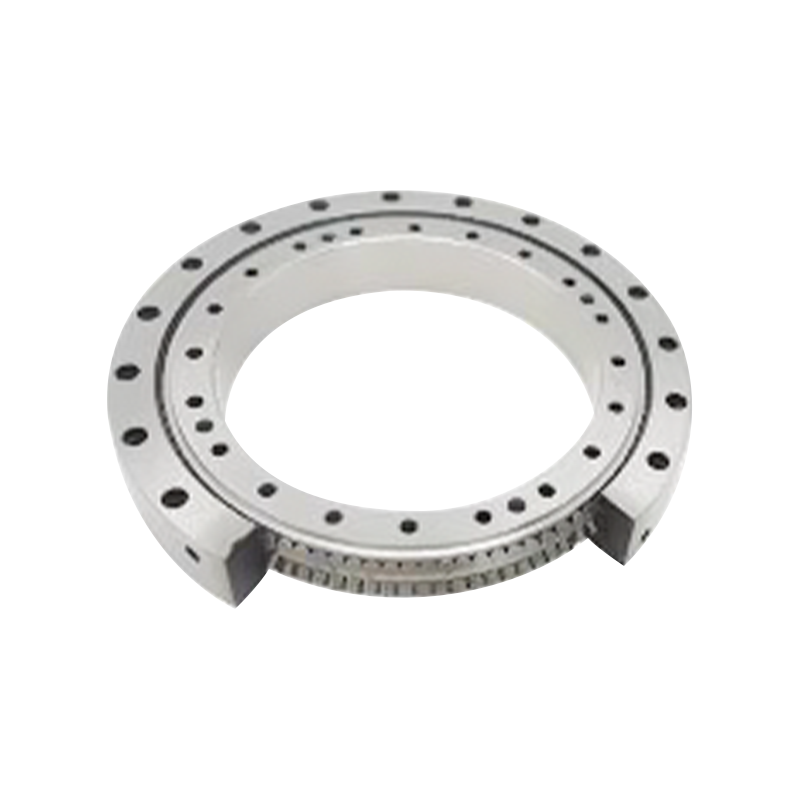
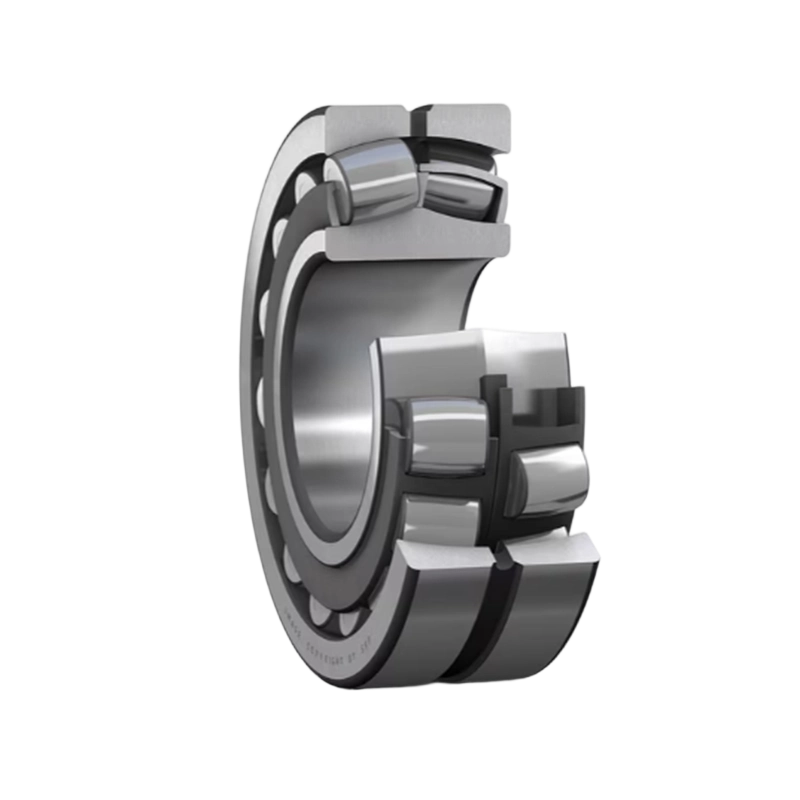
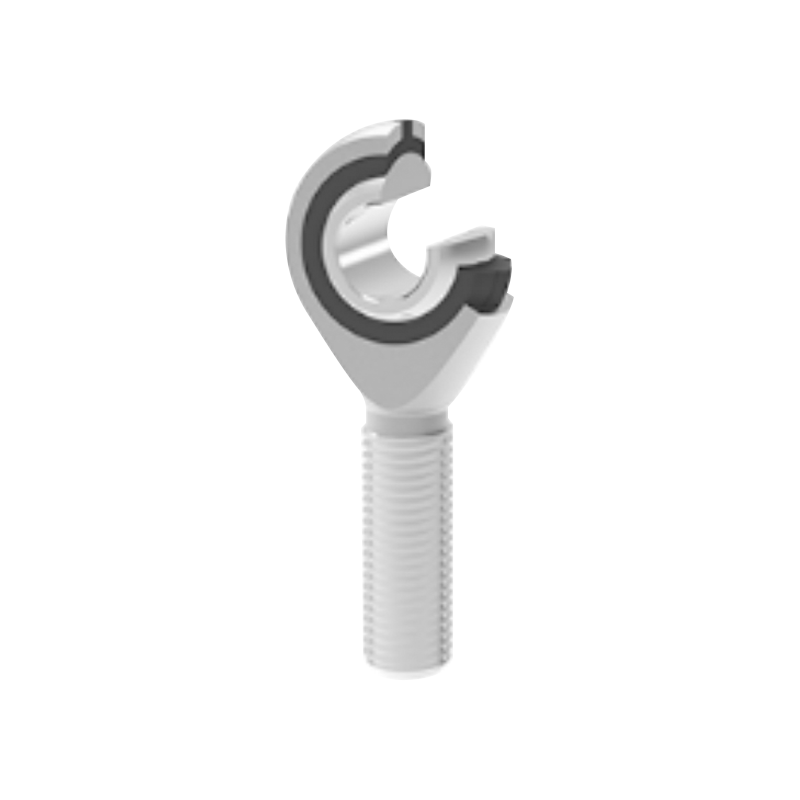
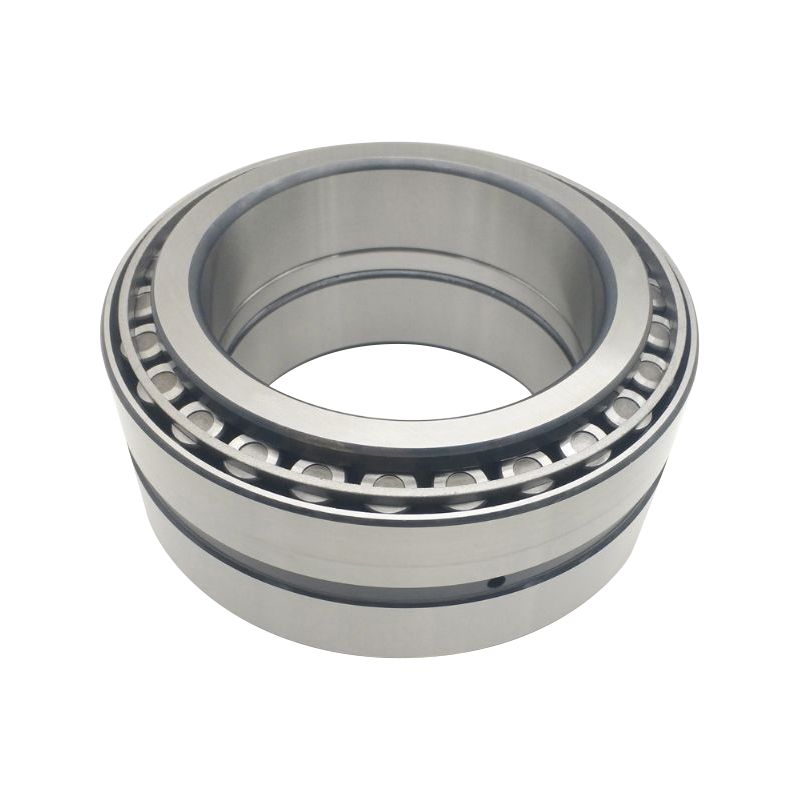
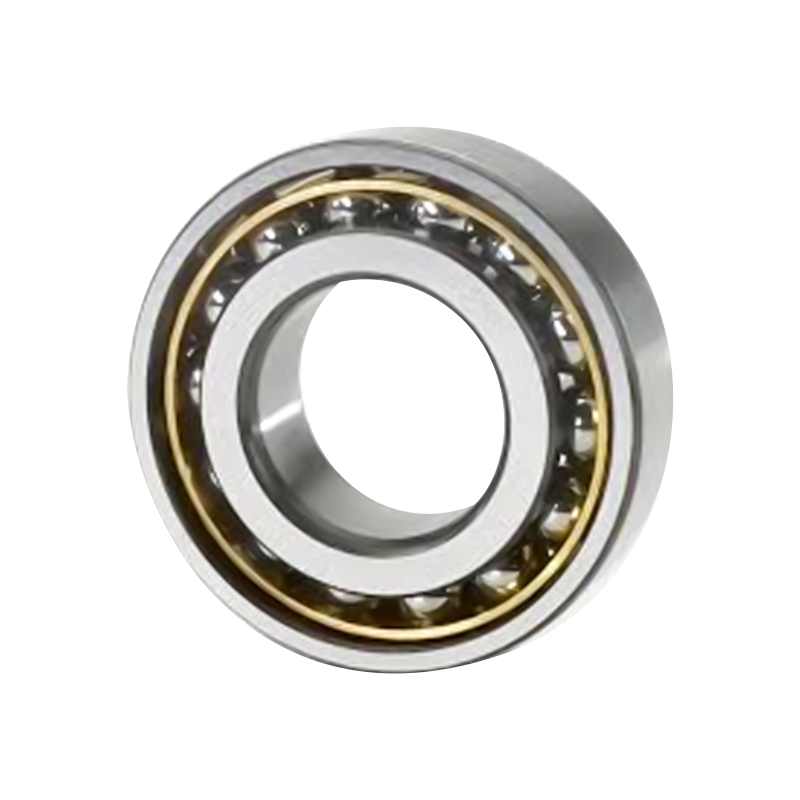
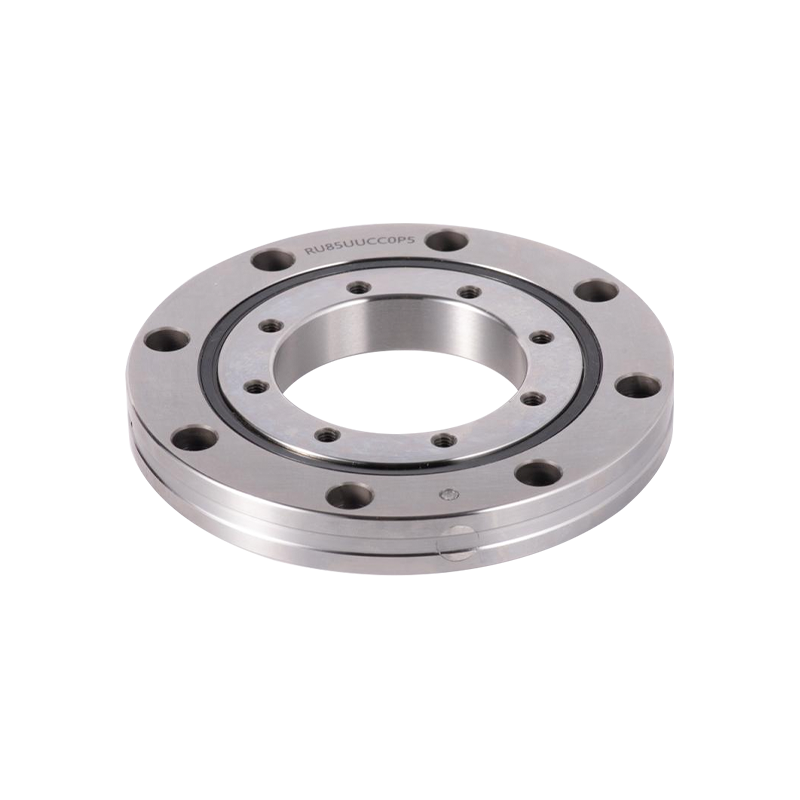
The company’s product range also supports broader bearing needs beyond mounted bearings. Categories include cross roller bearings, robot bearings, angular contact ball bearings, rod end bearings, spherical roller bearings, cylindrical roller bearings, tapered roller bearings, Nilos rings, and mounted bearings. This broad technical foundation helps the company serve customers with multiple bearing requirements through one coordinated supply channel.
Research and development capability is another important strength. High-precision products such as cross roller bearings and dual-direction thrust angular contact ball bearings require strong knowledge of raceway geometry, precision grinding, assembly control, and application engineering. This technical background supports the continuous improvement of standard products such as 2 bolt flange bearing units as well.
Industrial manufacturing must consider not only performance and cost but also long-term responsibility. UKL takes sustainability as a long-term commitment by adopting environmentally responsible processes, promoting material recycling, and optimizing energy usage. In bearing manufacturing, efficient material utilization, controlled heat treatment, responsible lubrication handling, and durable product design all contribute to reduced environmental impact.
A durable bearing also supports sustainability from the user’s perspective. Longer service life means fewer replacements, less downtime, reduced waste, and lower resource consumption. When a bearing unit operates reliably, machines consume less energy through reduced friction and fewer mechanical losses. Good sealing and lubrication also reduce the risk of grease waste and contamination.
Responsible production is increasingly important for global customers. Many OEMs and distributors seek suppliers who can provide stable quality while also demonstrating awareness of environmental and social responsibility. Support for educational and technical training initiatives further reflects a commitment to developing future engineering talent and improving industrial knowledge.
Product quality is only one part of a successful bearing supply relationship. Customers also need responsive communication, technical guidance, order coordination, and after-sales support. UKL provides multilingual service and rapid technical response, helping customers choose suitable bearing solutions and solve practical installation or maintenance questions.
For international customers, communication speed and clarity can prevent costly misunderstandings. Bearing specifications must be confirmed accurately, including model, bore size, housing type, material, locking method, seal type, grease, clearance, packaging, and quantity. A professional service team helps ensure that the delivered product matches the actual application.
After-sales support is also important when users need installation guidance, failure analysis, maintenance recommendations, or replacement selection. When a bearing operates in a difficult environment, technical cooperation between supplier and customer can identify improvements such as upgraded seals, different grease, stainless steel housing, or adjusted maintenance intervals.
Understanding common failure modes helps users obtain better value from 2 bolt flange bearings. One common issue is shaft slipping. This may be caused by incorrect shaft size, insufficient set screw torque, poor shaft surface condition, or excessive load. Prevention includes using the correct shaft tolerance, cleaning the shaft, tightening the locking system correctly, and selecting the proper insert bearing type.
Another common issue is overheating. Heat may result from excessive load, over-greasing, insufficient clearance, high speed, contamination, or misalignment. The solution depends on the cause. Users should check installation alignment, lubrication amount, operating speed, and environmental conditions. If the application is demanding, a different bearing configuration may be required.
Noise and vibration may indicate contamination, raceway damage, loose mounting bolts, shaft imbalance, or poor alignment. Regular inspection can detect these symptoms before complete failure. If the bearing becomes noisy soon after installation, the installer should check whether the bearing was damaged during mounting or whether the shaft and housing are aligned properly.
Corrosion is common in wet or chemical environments. Standard cast iron housings and bearing steel inserts may rust if exposed to moisture without protection. Stainless steel or plastic housings, corrosion-resistant insert bearings, protective coatings, and appropriate seals can improve performance in these conditions.
Seal damage can allow contamination to enter the bearing. Care should be taken during installation to avoid striking or deforming seals. In abrasive environments, seal selection is critical. Once contaminants enter, raceway wear can accelerate quickly.
For equipment manufacturers, the 2 bolt flange bearing offers design efficiency. Instead of creating a custom bearing arrangement, designers can use a standardized mounted unit with known dimensions and performance characteristics. This reduces engineering time and simplifies spare parts supply for end users.
The compact two-bolt housing helps designers save space and reduce machine weight. It also makes assembly lines more efficient because workers can install the unit quickly. If the machine is exported, standardized bearing units make maintenance easier for customers in different countries.
Customization capability adds further value. OEMs may require private labels, special packaging, material changes, grease selection, or corrosion-resistant designs. A manufacturer with ODM capability can help adapt the product to different machine models and market requirements.
Consistent batch quality is essential for equipment manufacturers. If every bearing unit fits correctly and runs smoothly, production efficiency improves. If components vary, assembly teams lose time and quality complaints increase. Therefore, supplier stability is a key part of the product’s real value.
For maintenance teams, a 2 bolt flange bearing is valuable because it is easy to identify, remove, and replace. The mounted unit can often be replaced with basic tools, especially when the shaft and surrounding structure are accessible. This reduces machine downtime and helps maintenance departments keep production running.
The interchangeability of housing and insert bearing can reduce spare parts cost. If the housing remains in good condition, only the insert bearing may need replacement. If the complete unit is damaged, a full replacement is still straightforward. This flexibility is helpful in factories with many machines using similar shaft supports.
Maintenance teams also benefit from supplier support. When failures occur repeatedly, a knowledgeable supplier can help identify whether the cause is contamination, overload, misalignment, improper lubrication, or incorrect bearing selection. This technical assistance can turn a recurring problem into a stable long-term solution.
A 2 bolt flange bearing is a mounted bearing unit that combines an insert ball bearing with a two-hole flange housing. It supports a rotating shaft and allows the unit to be mounted directly onto a machine frame, plate, or bracket.
It is commonly used in conveyors, packaging machinery, agricultural equipment, food processing machines, material handling systems, fans, light industrial machinery, and general shaft support applications.
The two-bolt design saves installation space, reduces weight, and allows quick mounting while still providing stable shaft support for many light and medium-duty applications.
In many designs, the insert bearing and housing can be interchanged or replaced separately when dimensions match. This helps reduce maintenance cost and spare parts inventory.
Cast iron is suitable for general use, cast steel is useful for tougher mechanical conditions, plastic is suitable for lightweight and corrosion-resistant applications, and stainless steel is preferred for wet, hygienic, or corrosive environments.
The insert bearing usually has a spherical outside diameter that fits into a matching spherical housing seat. This allows limited self-alignment, reducing stress caused by minor mounting errors or shaft deflection.
Common locking methods include set screw locking and eccentric locking. Other arrangements may be available depending on the insert bearing type and application requirements.
Manufacturing quality affects housing geometry, bearing raceway precision, seal reliability, locking strength, noise, vibration, and service life. A controlled production process helps ensure stable performance.
Service life can be improved by selecting the correct bearing size and housing material, installing the unit properly, maintaining lubrication, preventing contamination, checking fasteners, and avoiding excessive misalignment or overload.
The company offers integrated manufacturing, OEM and ODM experience, advanced production processes, broad bearing expertise, international export service, and technical support for standard and customized bearing solutions.
The 2 bolt flange bearing is a practical, efficient, and versatile mounted bearing solution. Its integrated design combines an insert bearing, flange housing, and shaft locking system into a compact unit that is easy to install and maintain. Compared with separate bearing arrangements, it reduces engineering complexity and assembly time. Compared with larger flange units, it saves space while still providing reliable support for many common applications.
The UCFL series design offers flexibility through different insert bearing options, locking methods, and housing materials. Cast iron, cast steel, plastic, and stainless steel housings allow users to match the unit to load, environment, hygiene, corrosion, and cost requirements. Interchangeability between housing and insert bearing further improves maintenance convenience.
Behind the product, advanced manufacturing processes are essential. Forging, turning, heat treatment, grinding, assembly, inspection, and packaging all influence the final performance of the bearing unit. UKL Bearing Manufacturing Co., Ltd. strengthens product reliability through integrated production capability, precision control, research and development, OEM and ODM experience, and international customer service.
For equipment manufacturers, the 2 bolt flange bearing supports efficient machine design and stable production. For maintenance teams, it offers quick replacement and practical reliability. For global buyers, it provides a balanced combination of performance, customization potential, and supply confidence. When selected and installed correctly, the 2 bolt flange bearing can deliver dependable shaft support, reduce downtime, and contribute to smoother mechanical operation across many industries.
1. Harris, T. A., and Kotzalas, M. N. Rolling Bearing Analysis: Essential Concepts of Bearing Technology. CRC Press.
2. Brändlein, J., Eschmann, P., Hasbargen, L., and Weigand, K. Ball and Roller Bearings: Theory, Design and Application. Wiley.
3. ISO 492. Rolling Bearings: Radial Bearings, Geometrical Product Specifications and Tolerance Values.
4. ISO 281. Rolling Bearings: Dynamic Load Ratings and Rating Life.
5. Neale, M. J. The Tribology Handbook. Butterworth-Heinemann.
6. Bearing Manufacturers Association. Mounted Ball Bearing Unit Selection and Maintenance Guidance.
Product Categories
Contact Us

Jane@ukl-bearing.com
Jenny@ukl-bearing.com
Andy@ukl-bearing.com
Ivy@ukl-bearing.com

+86-510- 88763239
+86-15371057968

No.1 Hehuan Road, Hudai Town, Binhu District, Wuxi City.
Ready to Begin?
Get in Touch

Now!
UKL BEARING
 English
 Español
 русский