Content
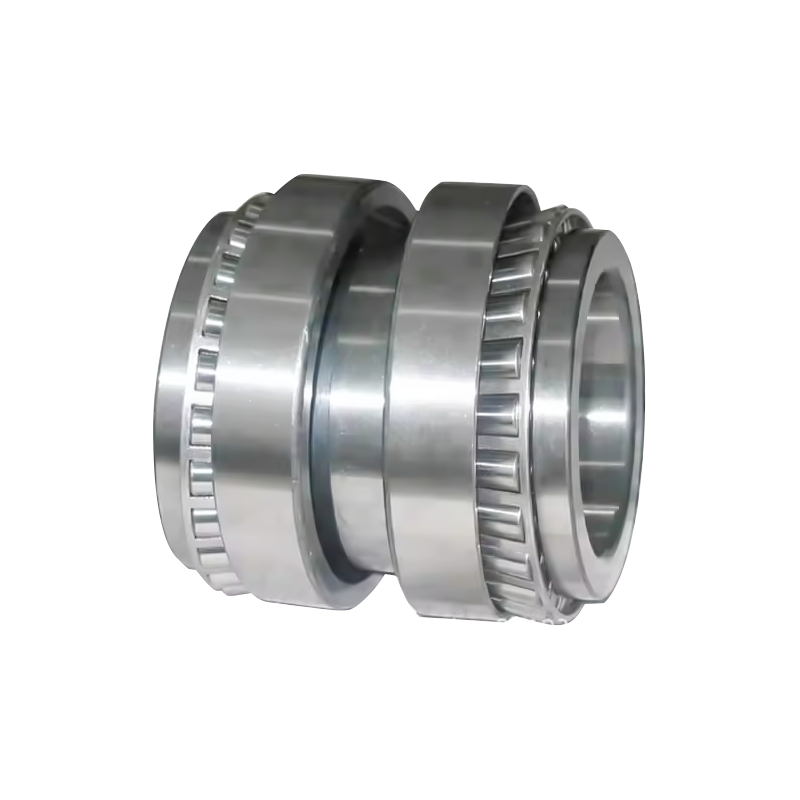
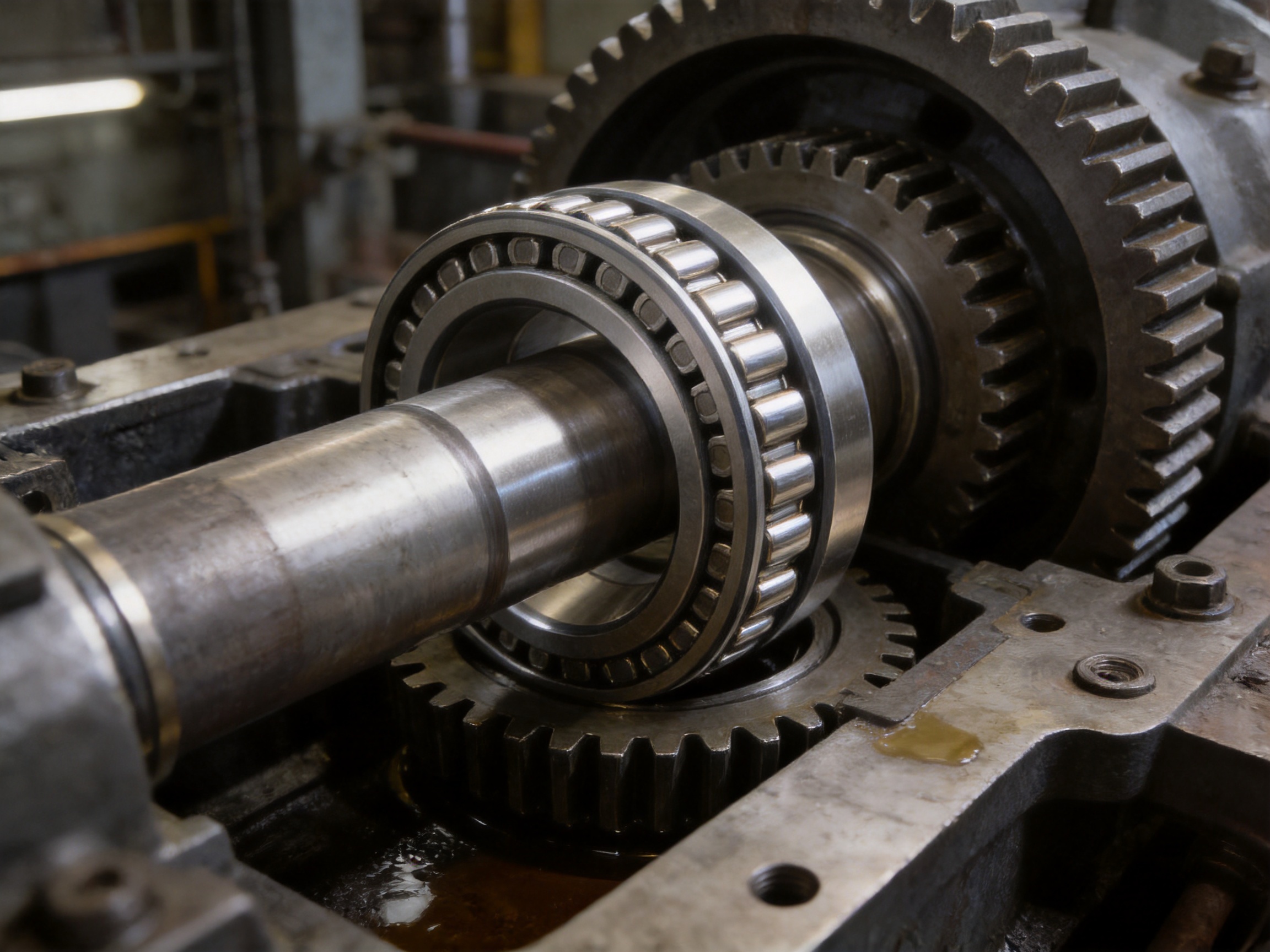
In demanding industrial machinery, bearing performance determines whether equipment runs smoothly, maintains alignment, carries heavy loads, and achieves reliable service life. The BT2B 332504/HA2 double row tapered roller bearing is designed for operating environments where radial forces, axial thrust, rigidity, and durability must be managed at the same time. As a double row tapered roller bearing, it offers a compact and highly capable solution for gearboxes, rolling mills, tunnel boring machines, heavy transmission systems, and other equipment that cannot tolerate instability, frequent maintenance, or premature failure.
Unlike general-purpose bearing arrangements that may require separate components to carry radial and axial loads, a double row tapered roller bearing integrates two rows of tapered rollers into one engineered unit. This structure enables the bearing to support heavy radial loads while also handling axial loads in both directions. For machine builders and maintenance engineers, this means stronger load capacity, better stiffness, more stable shaft guidance, and a simplified bearing arrangement compared with many conventional alternatives.
UKL Bearing Manufacturing Co., Ltd. supplies this bearing as part of its tapered roller bearing range, supported by integrated manufacturing capabilities that include forging, turning, heat treatment, grinding, assembly, inspection, and packaging. With extensive OEM and ODM export experience, a production capacity of 10,000 to 50,000 units per month, and a technical focus on precision bearing solutions, the company is positioned to serve global customers requiring dependable bearing performance in heavy-duty applications.
BT2B 332504/HA2 -Double Row Tapered Roller Bearings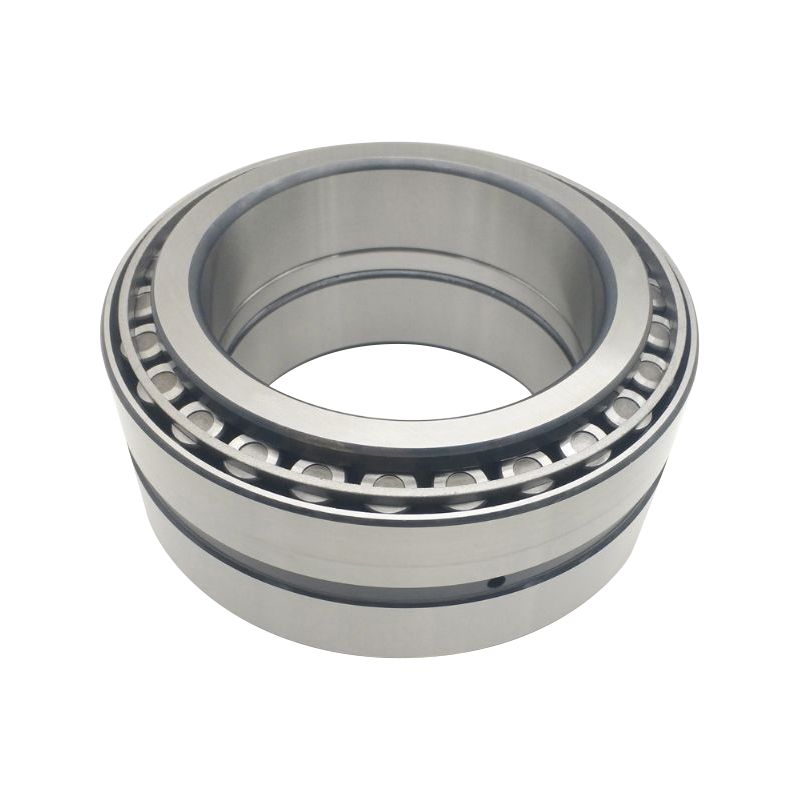
The BT2B 332504/HA2 is a double row tapered roller bearing developed for applications where high rigidity and large load capacity are essential. The basic function of this bearing is to reduce friction between rotating components while carrying combined loads. However, its value goes beyond simple rotation support. It provides controlled shaft positioning, resistance against deflection, and dependable performance in machinery where misalignment, shock load, and high contact stress may occur.
Double row tapered roller bearings are particularly suitable for installations where the bearing must resist axial forces from both directions. In mechanical systems such as industrial gearboxes, loads are rarely applied in only one direction. Gear mesh forces, torque transmission, dynamic vibration, and process loads can create complex combined load patterns. The two-row construction of the bearing helps distribute these forces more effectively, improving overall operating stability.
Compared with single row tapered roller bearings, a double row bearing can often deliver greater stiffness and simplify mounting. A single row bearing is commonly used in pairs when bidirectional axial load support is needed. This arrangement can be highly effective, but it requires careful adjustment of preload or clearance, accurate mounting distance, and precise alignment between two separate bearing positions. A double row bearing provides a more integrated solution, helping reduce assembly complexity while maintaining strong load-carrying performance.
The BT2B 332504/HA2 is intended for customers who need a bearing that supports productivity and reduces downtime. Whether used in a heavy gearbox, a rolling mill support system, or a tunneling machine drive, the bearing must perform under pressure. Its geometry, material treatment, and manufacturing precision all contribute to a product capable of enduring high loads while maintaining stable rotational behavior.
Tapered roller bearings use conical rolling elements arranged between inner and outer raceways. Because the contact lines of the raceways and rollers meet at a common point on the bearing axis, the bearing is capable of carrying combined radial and axial loads. This design makes tapered roller bearings one of the most important bearing types for heavy machinery, vehicle systems, reducers, mining equipment, and industrial drives.
The double row version expands the capability of this principle. By placing two rows of tapered rollers in one bearing assembly, the bearing can handle axial loads from both sides while maintaining high radial load capacity. This is especially important in machines where reversing thrust, fluctuating torque, or alternating process forces are present.
In industrial environments, downtime is expensive. A failed bearing can stop an entire production line, delay a construction project, or damage connected components. For this reason, equipment designers often choose bearing types that provide extra rigidity and service margin. Double row tapered roller bearings are selected not only because they carry heavy loads, but also because they help maintain accurate shaft guidance, reduce vibration, and improve equipment reliability.
The BT2B 332504/HA2 is therefore more than a replacement component. It is an engineering solution for applications where operating conditions demand strength, precision, and durability. Its design supports longer service life, lower friction compared with poorly matched alternatives, and improved resistance to the mechanical stresses found in heavy-duty machinery.
The competitive advantage of the BT2B 332504/HA2 comes from the combination of bearing geometry, manufacturing accuracy, material reliability, and application flexibility. Many bearings can support rotation, but not all bearings can remain stable under heavy combined loads. In applications such as rolling mills and tunnel boring machines, the ability to resist deformation and maintain alignment is critical.
One major advantage is bidirectional axial load capacity. A single row tapered roller bearing can carry axial load primarily in one direction. If a machine requires axial load support in both directions, engineers often need to install two single row bearings in an opposed arrangement. The double row configuration provides this capability within one bearing unit, reducing the need for complex paired bearing arrangements.
Another advantage is high rigidity. Bearing rigidity affects shaft deflection, gear mesh quality, vibration level, and overall machine accuracy. A bearing with insufficient stiffness may allow excessive movement under load, leading to uneven contact patterns, noise, heat generation, and reduced component life. The double row tapered roller structure helps improve stiffness by distributing loads through two rows of rollers and by providing a strong internal geometry for combined load support.
Load capacity is also a defining strength. Tapered rollers create line contact rather than point contact, allowing the bearing to distribute force over a larger contact area. This gives tapered roller bearings an advantage over many ball bearing designs in heavy radial and axial load conditions. The double row arrangement further increases the bearing’s ability to handle demanding industrial loads.
Service life is improved when load distribution, raceway accuracy, lubrication conditions, and material hardness are well controlled. UKL’s manufacturing process focuses on these factors through controlled heat treatment, precision grinding, and systematic inspection. The result is a bearing designed to reduce premature fatigue and support consistent operation.
Lower friction is another important performance factor. Although tapered roller bearings are designed for high load capacity, accurate geometry and surface finish help reduce unnecessary rolling resistance. Properly manufactured raceways and rollers reduce heat generation and improve energy efficiency. In heavy equipment, even small reductions in friction can contribute to improved operating stability and reduced maintenance pressure.
The BT2B 332504/HA2 double row tapered roller bearing is suitable for a range of industrial applications where heavy combined loads and high stiffness are required. These include gearboxes, rolling mills, tunnel boring machines, heavy conveyors, mining equipment, large reducers, lifting equipment, and industrial transmission systems.
In gearboxes, bearings must support shafts that transmit torque through gears. Gear mesh produces radial and axial forces, and these forces can vary with speed, load, and direction of rotation. A double row tapered roller bearing helps maintain shaft alignment and gear engagement under load, supporting smoother transmission and reducing the risk of uneven gear wear.
In rolling mills, bearings experience high radial loads, shock loads, vibration, and contamination risk. The bearing must maintain stable operation while supporting heavy rolling forces. Double row tapered roller bearings are valuable in these conditions because they offer high load capacity and rigidity in a compact form.
Tunnel boring machines operate in some of the most demanding construction environments. Bearings used in these machines may be exposed to heavy thrust, vibration, shock, and long operating cycles. Reliability is essential because bearing replacement can be extremely difficult and costly. A double row tapered roller bearing can contribute to the strength and stability required in this type of equipment.
In mining and material handling machinery, operating conditions often include dust, impact, fluctuating load, and continuous operation. Bearings must be selected for mechanical resilience and maintainability. The BT2B 332504/HA2 is well suited to such machinery when its dimensions, mounting arrangement, lubrication method, and operating limits match the application requirements.
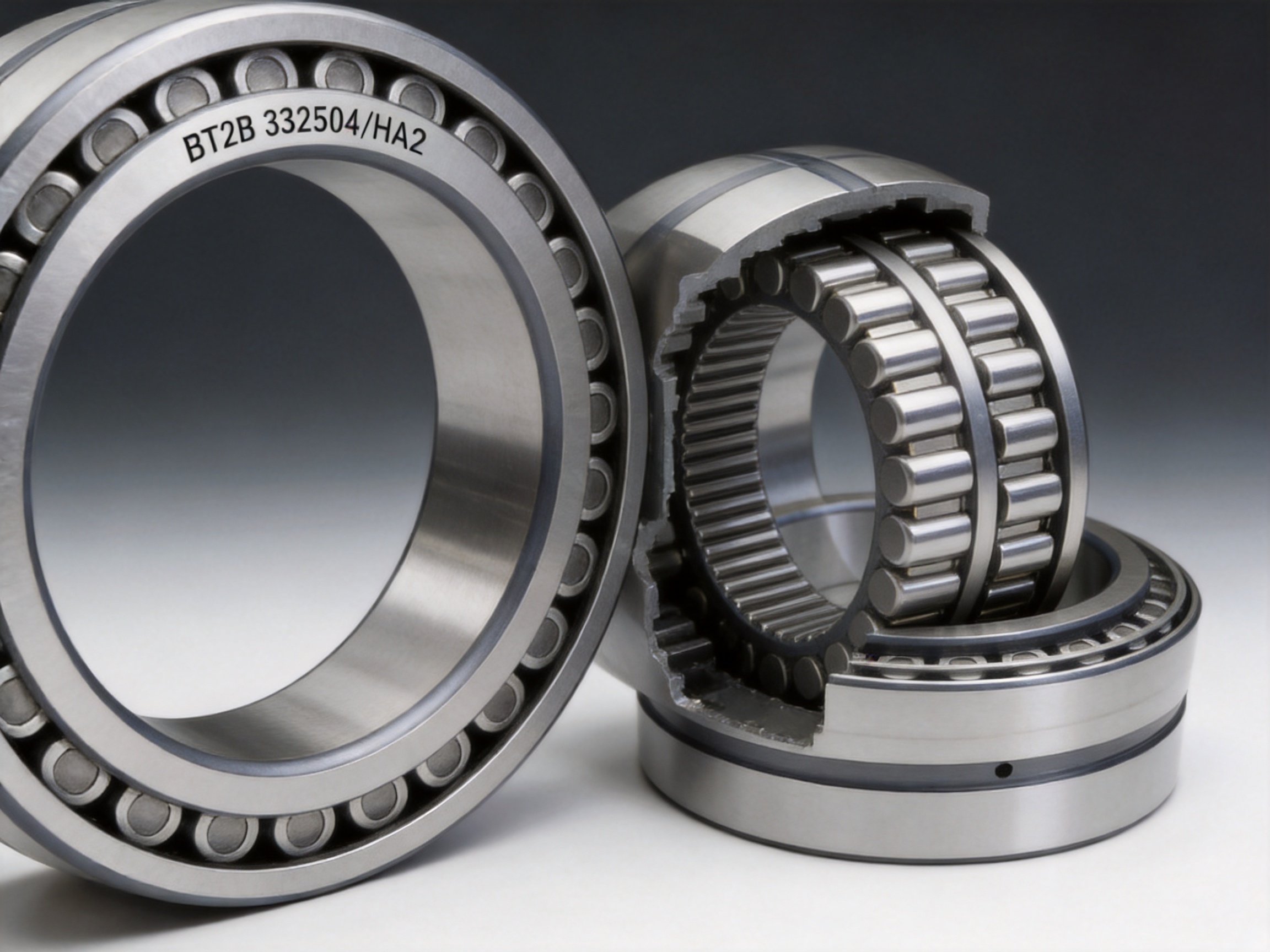
The performance of a double row tapered roller bearing is shaped by several technical factors, including roller geometry, raceway profile, internal clearance or preload, cage design, material quality, heat treatment, surface finish, and lubrication. Each factor affects the bearing’s ability to carry load, resist fatigue, limit friction, and operate with stability.
The tapered roller design enables combined load support. Because the rollers and raceways are arranged at an angle, radial load produces an axial component that must be managed by the bearing structure. In a double row bearing, the opposed roller rows are arranged to handle axial forces from both directions. This makes the design suitable for applications where load direction changes or where axial positioning must be controlled.
Raceway accuracy is critical. If the raceway profile is not properly controlled, load distribution may become uneven, causing edge stress, heat, noise, and reduced life. Precision grinding and finishing processes help create the correct raceway geometry and surface roughness. This supports smoother rolling contact and more predictable load distribution.
Material strength and heat treatment determine fatigue resistance. Bearing steels must achieve appropriate hardness, toughness, and microstructural consistency. Heat treatment must be controlled carefully because insufficient hardness may lead to wear, while excessive brittleness can increase the risk of cracking. A stable process improves bearing reliability under repeated load cycles.
Lubrication is another essential factor. Even the best bearing cannot perform properly without suitable lubrication. Lubricant separates rolling surfaces, reduces friction, removes heat, and protects against corrosion. For high-load applications, lubricant selection should consider speed, temperature, contamination exposure, load intensity, and maintenance intervals.
| Performance Factor | Importance in Heavy Machinery | Benefit of Double Row Tapered Design |
|---|---|---|
| Radial Load Capacity | Supports heavy shaft and process loads | Line contact and two-row structure improve load distribution |
| Bidirectional Axial Load Capacity | Manages thrust from both directions | Opposed roller rows provide axial support in two directions |
| Rigidity | Reduces shaft deflection and vibration | Compact double row geometry increases support stiffness |
| Service Life | Reduces downtime and replacement frequency | Improved load sharing and precision surfaces support fatigue resistance |
| Mounting Simplicity | Improves assembly efficiency | Integrated double row unit can reduce paired bearing complexity |
| Friction Control | Limits heat generation and energy loss | Accurate rolling geometry and surface finish support smoother operation |
UKL Bearing Manufacturing Co., Ltd. operates as an integrated manufacturer and trading enterprise with capabilities covering key stages of bearing production. This integrated structure is valuable because bearing quality depends on consistency across the entire manufacturing chain. A bearing is not made reliable by one process alone; it requires control from raw material preparation through final inspection and packaging.
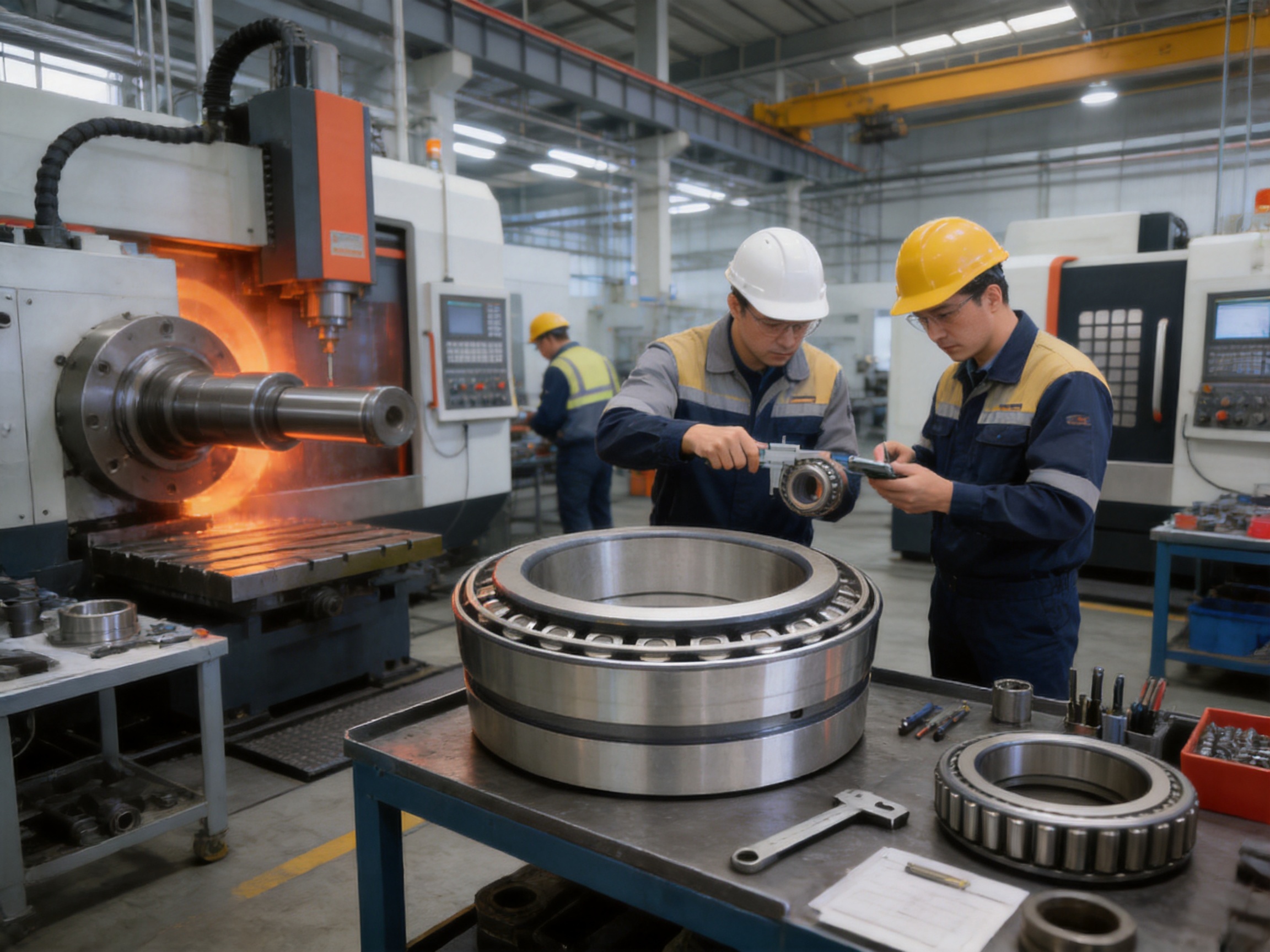
The company’s production system includes forging, turning, heat treatment, grinding, assembly, and packaging. Each stage contributes to the final performance of the BT2B 332504/HA2 double row tapered roller bearing. Forging helps form the initial bearing rings with improved material flow and strength. Turning creates the basic geometry needed before heat treatment and finishing. Heat treatment provides hardness and fatigue resistance. Grinding delivers precision dimensions and raceway quality. Assembly brings together rings, rollers, and cage components into a functional bearing unit. Packaging protects the bearing during storage and transport.
Modern bearing manufacturing requires more than machinery. It also requires process discipline, inspection methods, skilled technicians, and engineering knowledge. UKL’s experience in OEM and ODM export projects supports its ability to adapt bearing solutions to customer requirements. For customers in Europe, Asia, Africa, Russia, and other regions, consistent quality and dependable communication are important parts of supply performance.
The company’s production capacity of 10,000 to 50,000 units per month demonstrates its ability to support both regular orders and larger industrial supply programs. For distributors, machine builders, and maintenance organizations, this capacity helps reduce procurement uncertainty. A bearing supplier must not only produce accurate bearings but also deliver them reliably.
UKL’s technical focus includes high-precision bearing solutions for CNC machines, robotics, intelligent automation systems, and heavy industrial machinery. Although the BT2B 332504/HA2 belongs to the tapered roller bearing category, the company’s broader precision manufacturing experience supports its approach to dimensional accuracy, surface quality, and application engineering.
Quality assurance is central to the performance of double row tapered roller bearings. Heavy-duty bearings operate under conditions where small defects can become serious failures. Surface cracks, dimensional error, improper hardness, contamination, poor surface finish, or incorrect assembly can all reduce service life. A strong quality system therefore protects both the manufacturer and the end user.
In forging and ring preparation, material quality and forming consistency are important. The structure of the bearing rings must be suitable for later machining and heat treatment. Proper material selection and process control help reduce internal defects and improve mechanical strength.
During turning, the bearing components are shaped close to their final form. Dimensional control at this stage improves efficiency and ensures that later grinding operations can achieve the required precision. Accurate turning also helps maintain concentricity and stable material allowance.
Heat treatment is one of the most important stages for bearing life. The process must produce the correct hardness and microstructure throughout the load-bearing surfaces. Controlled heating, quenching, and tempering help obtain fatigue resistance while maintaining toughness. For tapered roller bearings exposed to heavy loads, heat treatment consistency is essential.
Grinding and finishing determine the final raceway profile, surface roughness, dimensional accuracy, and running precision. Smooth raceways reduce friction and support even contact between rollers and raceways. Precision grinding also helps control internal geometry, which affects load distribution and temperature behavior.
Assembly requires cleanliness and accuracy. Rollers must be matched with rings and cage components according to design requirements. Internal clearance or preload characteristics must be controlled to ensure proper operation after installation. Contamination during assembly can shorten bearing life, so clean handling and protective packaging are important.
Final inspection may include dimensional measurement, visual inspection, rotational checks, hardness verification, and packaging review. These steps help ensure that the bearing meets customer expectations before shipment. For export customers, stable inspection standards are especially important because the bearing may travel long distances before installation.
When selecting a bearing for heavy-duty equipment, engineers may compare double row tapered roller bearings with single row tapered roller bearings, spherical roller bearings, cylindrical roller bearings, and angular contact ball bearings. Each type has advantages, but the correct choice depends on load direction, speed, stiffness, mounting space, lubrication, and alignment conditions.
Single row tapered roller bearings are strong and widely used, but they typically carry axial load in one direction. To support axial loads in both directions, two bearings are often used in a paired arrangement. This can provide excellent performance, but installation is more complex. The BT2B 332504/HA2 offers an integrated double row solution that can simplify design and mounting while providing bidirectional axial support.
Spherical roller bearings are excellent for applications involving misalignment and heavy radial loads. However, in applications requiring precise axial positioning and high stiffness, a double row tapered roller bearing may offer advantages. Tapered roller geometry provides strong combined load capacity and can improve shaft guidance in heavy transmission systems.
Cylindrical roller bearings are very effective for high radial load applications and can perform well at higher speeds depending on design. However, many cylindrical roller bearing arrangements have limited axial load capability. If significant axial loads are present in both directions, a double row tapered roller bearing may be a more complete solution.
Angular contact ball bearings can support combined loads and are often used in high-speed precision systems. However, ball bearings generally have point contact, which can limit load capacity compared with roller bearings. For heavy industrial applications where load capacity and rigidity are more important than very high speed, double row tapered roller bearings often provide a stronger solution.
The BT2B 332504/HA2 stands out where heavy radial load, bidirectional axial load, stiffness, and compactness are required together. Its design reduces the need for multiple bearing components and supports stable operation in rugged machinery.
Service life is a key concern for any heavy-duty bearing. Bearing life is influenced by load, speed, lubrication, contamination, temperature, alignment, installation quality, and maintenance practices. The BT2B 332504/HA2 is designed to support long service life through robust geometry and precision manufacturing, but correct application remains essential.
Overloading can reduce bearing life dramatically. Even a bearing with high load capacity must be selected according to actual operating conditions. Engineers should evaluate radial load, axial load, dynamic load changes, shock load, duty cycle, and safety factors. If conditions are severe, additional technical review is recommended.
Lubrication must match the application. Grease lubrication may be suitable for some arrangements, while oil lubrication may be preferred where heat removal and continuous operation are important. The lubricant must maintain film strength under load and resist degradation under temperature and contamination exposure.
Sealing and contamination control are also critical. Dust, metal particles, water, and process debris can damage rolling surfaces. In rolling mills, mining equipment, and tunneling machinery, contamination risk is often high. Proper sealing, lubricant filtration, maintenance procedures, and storage practices help protect bearing life.
Installation quality can determine whether the bearing achieves its expected performance. Incorrect mounting force, misalignment, poor shaft or housing fit, and improper clearance setting can create stress concentration and early failure. The bearing should be installed using appropriate tools and procedures, with attention to cleanliness and dimensional compatibility.
Condition monitoring can further improve reliability. Temperature, vibration, noise, lubricant condition, and operating load should be monitored where possible. Early detection of abnormal behavior allows maintenance teams to intervene before catastrophic failure occurs.
For original equipment manufacturers, the bearing is not merely a purchased component. It is part of the machine’s performance promise. Choosing the right bearing affects warranty risk, customer satisfaction, operating efficiency, and brand reputation. The BT2B 332504/HA2 offers engineering value by combining load capacity, rigidity, and integrated bidirectional axial support.
Machine designers can benefit from the compact double row arrangement. By reducing the need for separate opposed bearing pairs, the design may simplify housing structure and assembly workflow. This can save time during production and reduce variation between assembled machines.
High rigidity helps improve machine performance. In gearboxes, shaft deflection can change gear tooth contact patterns. Poor contact can cause noise, wear, and reduced efficiency. A stiff bearing arrangement supports better alignment and more stable gear engagement.
Reliability also supports lifecycle value. A bearing that lasts longer reduces maintenance intervals, spare parts consumption, and unplanned downtime. For equipment sold into mining, construction, metallurgy, or energy industries, these lifecycle advantages can be more important than initial purchase cost.
UKL’s OEM and ODM capabilities support customers who require specific technical adjustments, packaging requirements, documentation, or export coordination. This flexibility is useful for manufacturers serving different markets and operating standards.
UKL Bearing Manufacturing Co., Ltd. serves customers across multiple regions, including the United States, Italy, Germany, Poland, South Africa, Egypt, India, and other markets. Global supply capability matters because industrial customers often need consistent product availability, export documentation, responsive communication, and technical support.
The company’s multilingual service team provides technical response, installation guidance, and after-sales maintenance support. This is particularly important for bearings used in critical machinery. Customers may need assistance with bearing selection, application review, failure analysis, or replacement planning. A supplier that understands both manufacturing and application requirements can help reduce risk.
The company’s address in Wuxi City places it within an important industrial region with access to manufacturing resources, logistics networks, and technical talent. Its combined role as manufacturer and trader allows it to support custom production and international distribution.
For distributors, dependable supply and consistent product quality are essential. For equipment manufacturers, engineering communication and documentation are equally important. For maintenance teams, replacement availability and practical support can determine how quickly machinery returns to operation. UKL’s structure is designed to serve these different customer needs.
Modern industrial customers increasingly evaluate suppliers not only by product performance but also by manufacturing responsibility. UKL emphasizes sustainability as a long-term commitment, adopting environmentally responsible processes, promoting material recycling, and optimizing energy usage. These actions support reduced environmental impact while maintaining production capability.
Bearing manufacturing involves energy-intensive processes such as heat treatment, machining, grinding, and cleaning. Efficiency improvements in these areas can reduce waste and energy consumption. Material recycling also helps reduce resource waste, especially when managing steel byproducts from machining and grinding operations.
Responsible manufacturing also includes quality consistency. A bearing that lasts longer can reduce replacement frequency and material consumption over the machine lifecycle. In this sense, durability itself contributes to sustainability. A reliable double row tapered roller bearing supports fewer breakdowns, fewer emergency shipments, and less premature scrap.
UKL also supports educational and technical training initiatives to foster future engineering talent. This reflects a broader view of industrial responsibility, where technical capability, workforce development, and environmental awareness all contribute to long-term progress.
When considering the BT2B 332504/HA2 for an application, engineers should evaluate several key factors. The first is load profile. Both radial and axial loads should be calculated under normal and peak operating conditions. Machines with shock loads or reversing loads require additional attention.
The second factor is speed. Bearing speed affects heat generation, lubrication requirements, and cage behavior. A bearing operating at higher speed may require improved lubrication and temperature control. For heavy-duty tapered roller bearings, the balance between load and speed must be carefully reviewed.
The third factor is mounting structure. Shaft and housing fits must be appropriate for load direction, rotation condition, and thermal expansion. Improper fits can cause creep, looseness, or excessive stress. The bearing housing should provide sufficient support and alignment accuracy.
The fourth factor is lubrication and sealing. The operating environment determines whether grease, oil bath, circulating oil, or another lubrication method is appropriate. Seals should be selected according to contamination risk and maintenance accessibility.
The fifth factor is maintenance strategy. Some applications allow regular inspection and relubrication, while others are difficult to access. Bearings in tunnel boring machines or large industrial systems may require extended maintenance intervals, making initial bearing quality and protection especially important.
Finally, engineers should review compatibility with existing equipment. If the BT2B 332504/HA2 is used as a replacement bearing, dimensions, tolerances, clearance, lubrication, and load ratings should be checked carefully. Technical communication with the supplier can help prevent incorrect selection.
Correct installation is essential for achieving the intended performance of a double row tapered roller bearing. Before installation, the bearing should remain in its protective packaging until the work area is ready. Cleanliness is important because even small particles can damage rolling surfaces.
The shaft and housing should be inspected for dimensional accuracy, surface finish, roundness, and cleanliness. Burrs, corrosion, or incorrect fits can cause mounting problems and reduce bearing life. The bearing should not be struck directly with a hammer, as impact can damage raceways and rolling elements.
Mounting force should be applied to the ring being fitted. If the inner ring is being mounted onto a shaft, force should be applied to the inner ring. If the outer ring is being installed into a housing, force should be applied to the outer ring. Applying force through rolling elements can create indentation and early failure.
Temperature-assisted mounting may be used where appropriate. Heating the bearing or cooling the shaft can ease installation, but temperatures must be controlled to avoid altering material properties or damaging lubricant. Induction heaters should be used carefully and demagnetization should be considered where required.
After installation, the bearing should be checked for smooth rotation, proper seating, and correct lubrication. Initial operation should be monitored for abnormal temperature rise, noise, or vibration. A controlled start-up procedure helps identify installation problems before full load operation.
Maintenance practices determine how well the bearing performs over time. Regular inspection should include temperature monitoring, vibration analysis, noise observation, lubricant condition checks, and seal condition review. Changes in operating behavior often indicate early-stage problems.
High temperature may be caused by insufficient lubrication, excessive lubricant, overloading, misalignment, incorrect clearance, or contamination. Noise may indicate surface damage, particle contamination, poor mounting, or inadequate lubrication. Vibration may result from imbalance, misalignment, looseness, raceway damage, or roller defects.
If abnormal behavior occurs, maintenance teams should investigate systematically. Simply replacing the bearing without identifying the root cause may lead to repeated failure. The shaft, housing, seals, lubricant, operating load, and installation procedure should all be reviewed.
Used bearings can provide valuable failure evidence. Wear patterns, discoloration, pitting, spalling, cage damage, and lubricant condition can help identify the cause of failure. UKL’s technical support can assist customers in understanding such issues and improving future reliability.
The main advantage is its ability to carry heavy radial loads and axial loads in both directions within one compact bearing arrangement. This improves rigidity and can simplify machine design compared with using separate bearing units.
It is suitable for heavy-duty applications such as gearboxes, rolling mills, tunnel boring machines, industrial transmission systems, mining equipment, and other machinery requiring high load capacity and strong shaft support.
A single row tapered roller bearing usually carries axial load in one direction and may need to be paired with another bearing for bidirectional axial support. The double row design provides bidirectional axial load capacity in an integrated structure, improving stiffness and simplifying assembly in many applications.
Manufacturing precision affects raceway accuracy, roller contact, friction, heat generation, vibration, and fatigue life. Precision grinding, controlled heat treatment, and careful assembly help the bearing operate reliably under heavy loads.
Engineers should consider radial load, axial load, speed, lubrication method, sealing, shaft and housing fits, operating temperature, contamination risk, and maintenance access. Application review helps ensure the bearing matches the machine’s actual operating conditions.
Yes, when correctly selected, installed, lubricated, and maintained, the bearing’s high load capacity and rigidity can support longer service life and reduce unplanned downtime. However, maintenance savings depend on the complete operating system, not the bearing alone.
The company supports reliability through integrated manufacturing processes, including forging, turning, heat treatment, grinding, assembly, inspection, and packaging. Its OEM and ODM export experience also supports technical communication and customer-specific requirements.
The BT2B 332504/HA2 double row tapered roller bearing is a strong solution for machinery that must carry heavy radial and bidirectional axial loads while maintaining rigidity and operational stability. Its double row tapered roller design provides advantages over many competing bearing arrangements, especially where compactness, stiffness, and combined load capacity are required.
For applications such as gearboxes, rolling mills, tunnel boring machines, and heavy industrial drives, bearing performance directly affects productivity and equipment life. The BT2B 332504/HA2 supports these requirements through robust design, precision manufacturing, and suitability for demanding operating conditions.
UKL Bearing Manufacturing Co., Ltd. strengthens the value of this product through integrated production capabilities, quality-focused process control, international export experience, and technical service. From forging and heat treatment to precision grinding and final inspection, each manufacturing stage contributes to bearing reliability.
In a market where industrial customers seek longer service life, reduced downtime, and dependable supply, the BT2B 332504/HA2 offers a practical and competitive bearing solution. It combines the mechanical benefits of double row tapered roller design with the manufacturing strength of a supplier focused on precision, durability, and global customer support.
Harris, T. A., and Kotzalas, M. N. Rolling Bearing Analysis: Essential Concepts of Bearing Technology. CRC Press.
ISO 281. Rolling Bearings: Dynamic Load Ratings and Rating Life. International Organization for Standardization.
ISO 492. Rolling Bearings: Radial Bearings, Geometrical Product Specifications and Tolerance Values. International Organization for Standardization.
Brändlein, J., Eschmann, P., Hasbargen, L., and Weigand, K. Ball and Roller Bearings: Theory, Design and Application. Wiley.
Neale, M. J. The Tribology Handbook. Butterworth-Heinemann.
Palmgren, A. Ball and Roller Bearing Engineering. Burbank Publishing.
Product Categories
Contact Us

Jane@ukl-bearing.com
Jenny@ukl-bearing.com
Andy@ukl-bearing.com
Ivy@ukl-bearing.com

+86-510- 88763239
+86-15371057968

No.1 Hehuan Road, Hudai Town, Binhu District, Wuxi City.
Ready to Begin?
Get in Touch

Now!
UKL BEARING
 English
 Español
 русский