Content
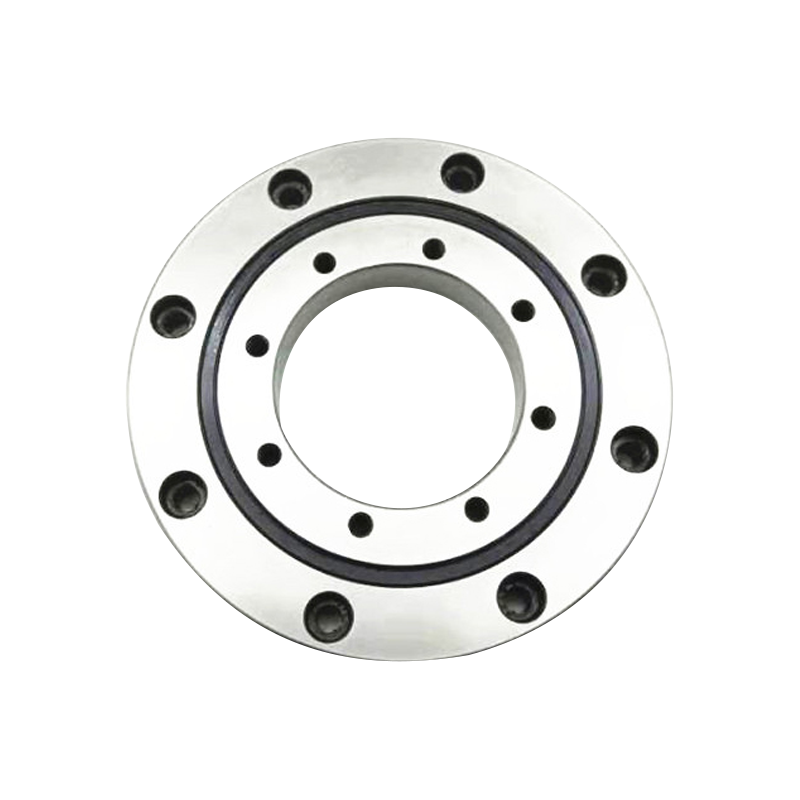
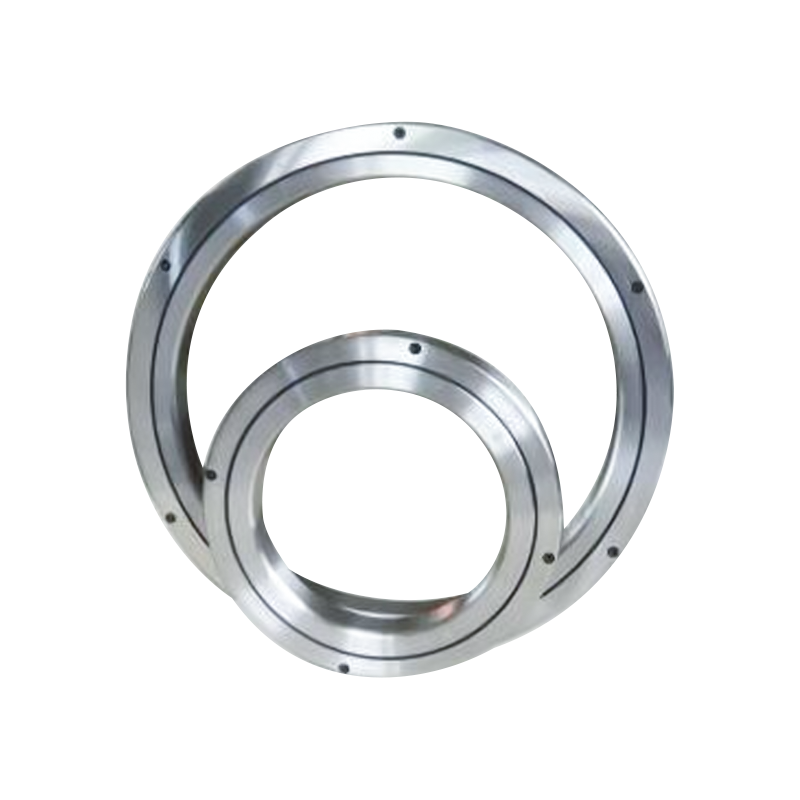
In compact automation, every millimeter of space and every gram of weight matters. Modern robotic joints, miniature rotary tables, surveillance camera gimbals, precision instruments, semiconductor handling devices, and intelligent automation modules all require rotary support components that are smaller, lighter, more accurate, and more reliable than conventional bearing solutions. The CRBT lightweight rotary joint bearing is designed for exactly this class of demanding applications. As an ultra-thin cross roller bearing with a section height of only 5.5 mm and a width of only 5 mm, it provides high rigidity, compact installation, and precision rotational performance in an exceptionally small envelope.
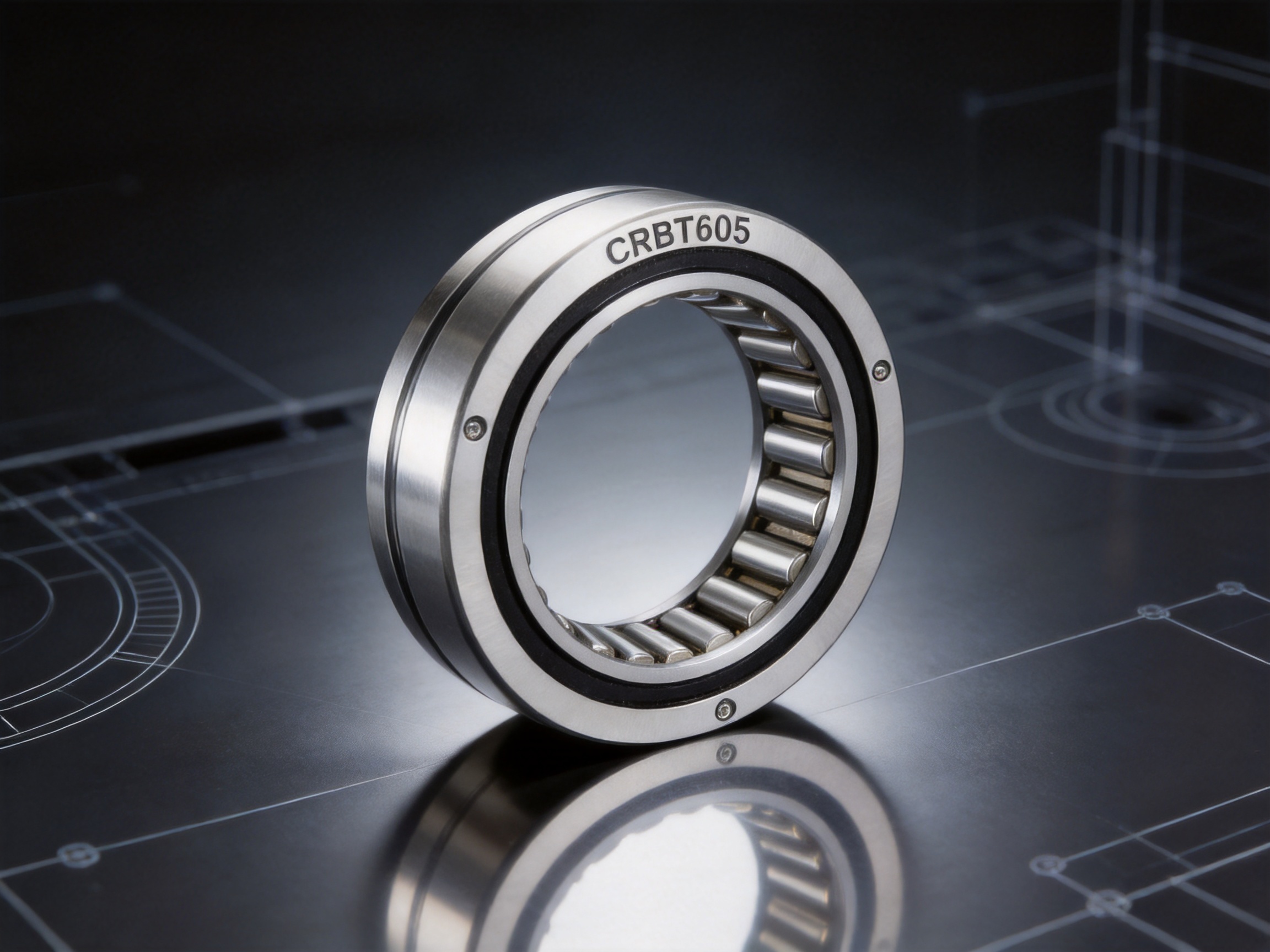
The product belongs to the cross roller bearing category, a bearing type known for supporting radial loads, axial loads, and moment loads in a single compact structure. In the CRBT design, cylindrical rollers are arranged in a crossed orientation, allowing the bearing to handle complex loads from multiple directions while maintaining smooth rotation and high positioning accuracy. This makes the bearing especially suitable for small robotic arms, humanoid robot joints, compact rotary stages, precision machine tools, miniature surveillance cameras, medical automation devices, and joint modules where installation space is extremely limited.
Compared with earlier thin-section cross roller bearings, the CRBT lightweight rotary joint bearing achieves a major reduction in cross-sectional size and mass. Its section height is only 69% of the previous thinnest cross-roller bearing design in the same comparison category, and its cross-sectional area is only 43% of previous products. Its weight is approximately 0.38 times that of the earlier CRBS-type reference bearing when compared at a 50 mm inner diameter. This means equipment designers can reduce rotational inertia, improve response speed, simplify structural design, and create more compact mechanisms without giving up the stability expected from a precision bearing.
CRBT Lightweight Rotary Joint Bearing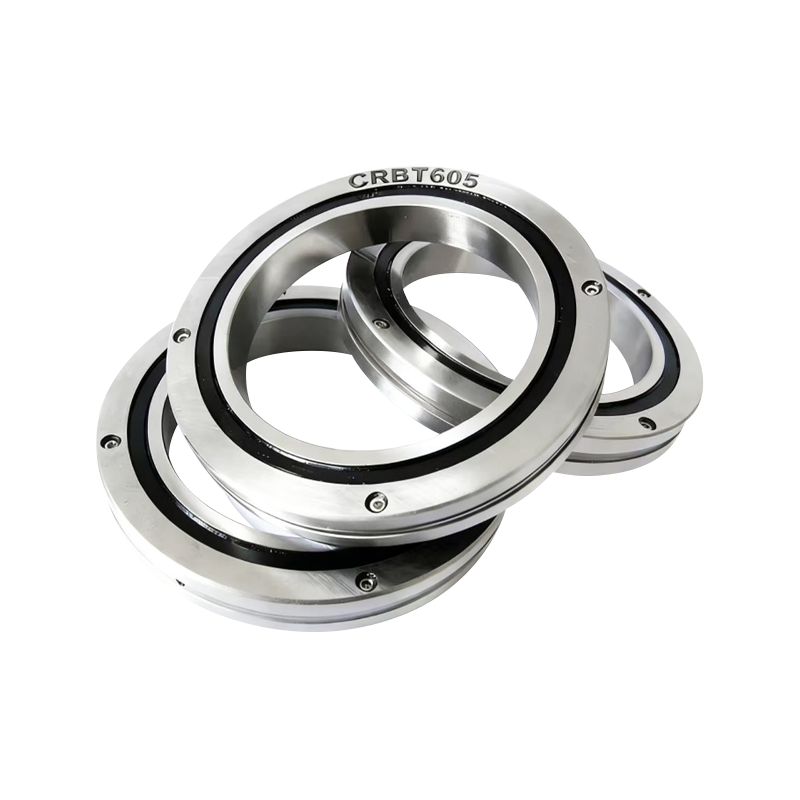
The CRBT lightweight rotary joint bearing is an extremely compact cross roller bearing developed for applications where conventional bearings are too large, too heavy, or insufficiently rigid. Its defining structural features are its very low section height, narrow width, and lightweight construction. With a width of only 5 mm across the series, the bearing can be integrated into assemblies where axial space is severely restricted. The product is particularly valuable in mechanisms that need a large central opening, precise rotation, and resistance to tilting moments.
In many traditional compact rotary mechanisms, engineers must combine two angular contact ball bearings, a pair of thin-section ball bearings, or a custom bearing set to obtain acceptable radial, axial, and moment stiffness. Such arrangements often increase assembly width, require careful preload adjustment, and introduce cumulative tolerance errors. A cross roller bearing simplifies the structure by combining multi-directional load capacity into one bearing unit. The CRBT version goes further by reducing the bearing envelope to a level suitable for highly miniaturized devices.
The bearing has no mounting holes, which is one of the reasons its structure can remain extremely compact. Instead of allocating space for fixing holes, the design concentrates material and geometry around the raceway and rolling elements. This allows a reduced section while maintaining functional load capacity for light-duty and precision applications. For designers working on small robotic wrists, camera rotation modules, scanning devices, inspection instruments, or compact rotary tables, the absence of mounting holes can be an advantage because it leaves more freedom for custom housing and clamping structures.
Although the bearing is lightweight, its crossed roller configuration provides better moment rigidity than many simple ball bearing alternatives of similar size. The rolling elements are arranged so that adjacent rollers are crossed at right angles. This orientation allows the bearing to resist loads in multiple directions. In a robotic joint, for example, the bearing may experience axial compression, radial load from the link structure, and a moment load caused by an offset tool or arm segment. A compact cross roller bearing is well suited to these combined load conditions.
From an application standpoint, the CRBT lightweight rotary joint bearing is especially relevant to the current direction of automation technology. Robots are becoming smaller, lighter, and more integrated. Service robots, humanoid robots, collaborative robots, medical robots, and inspection robots all require joint bearings that can deliver precision while occupying less space. The same trend appears in precision optics, sensor platforms, miniature machine tools, and compact measuring equipment. The CRBT bearing directly addresses this market demand by providing precision rotational support in a slim, lightweight package.
The most obvious advantage of the CRBT lightweight rotary joint bearing is its dimensional efficiency. A section height of 5.5 mm and a width of 5 mm are significant figures because they define how easily the bearing can be placed into a compact mechanical structure. In applications such as humanoid robot fingers, wrist joints, pan-tilt camera units, compact encoders, and small rotary tables, the designer may have only a few millimeters available for the bearing support system. A conventional bearing arrangement may require a much wider axial space or a larger radial envelope.
Compared with the previous thinnest cross roller bearing reference design, the CRBT bearing reduces section height to only 69%. This reduction may appear simple in numerical terms, but mechanically it can transform the entire design of a joint module. A smaller section height means the outer housing diameter can be reduced or the inner hollow diameter can be enlarged. The designer may use the saved space for wiring, sensors, harmonic drive components, gear stages, seals, optical paths, or lightweight structural ribs.
The width reduction is equally important. A bearing width of only 5 mm allows thin rotary modules and short axial stack-ups. In small robots, axial length is often a limiting factor because each joint must fit between adjacent links while leaving room for motors, reducers, encoders, brakes, and cables. Reducing bearing width can help shorten the whole actuator unit, which improves visual compactness, reduces cantilever length, and lowers bending moments in the surrounding structure.
The cross-sectional area reduction to only 43% of earlier products also directly affects weight. Less bearing material means lower mass, and lower mass is a central design priority for robotics and mobile equipment. When the bearing is placed in a moving joint, every gram saved reduces motor torque demand and energy consumption. In a robotic arm, weight savings near the end of the arm are especially valuable because they reduce inertia and improve dynamic response. A lighter joint can accelerate and decelerate more quickly, which may improve cycle time and control stability.
The reported weight of the CRBT design, approximately 0.38 times that of the earlier CRBS reference bearing at a 50 mm inner diameter, illustrates this advantage clearly. In a multi-axis robot, the cumulative effect of replacing heavier rotary support bearings with lightweight compact bearings can be substantial. Lower mass may allow the use of smaller motors, lower-capacity reducers, lighter brackets, and more compact housings. This creates a positive design chain: reducing bearing mass can reduce the mass of surrounding components, which further improves system efficiency.
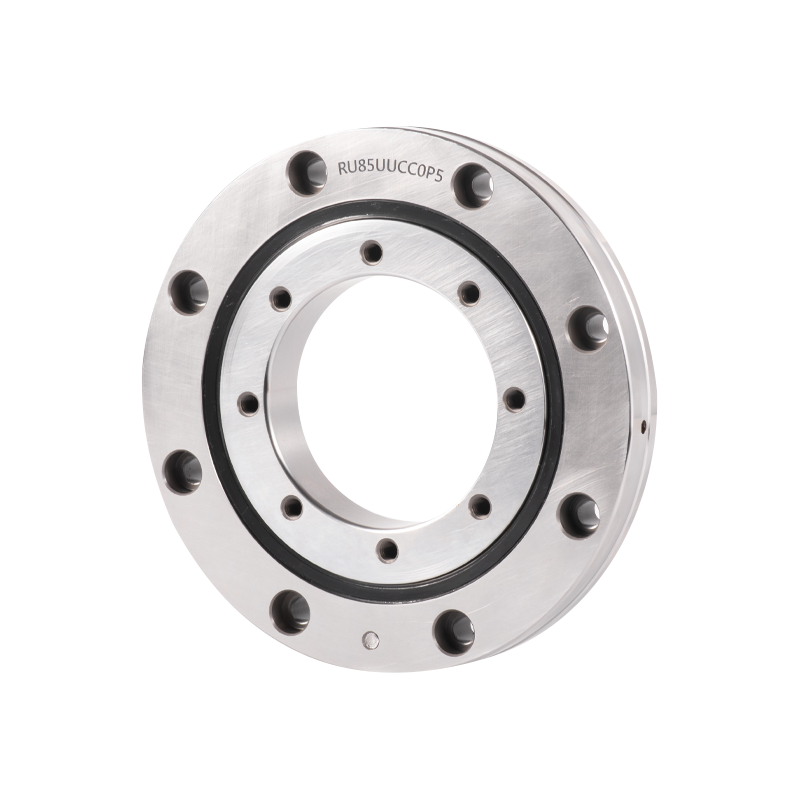
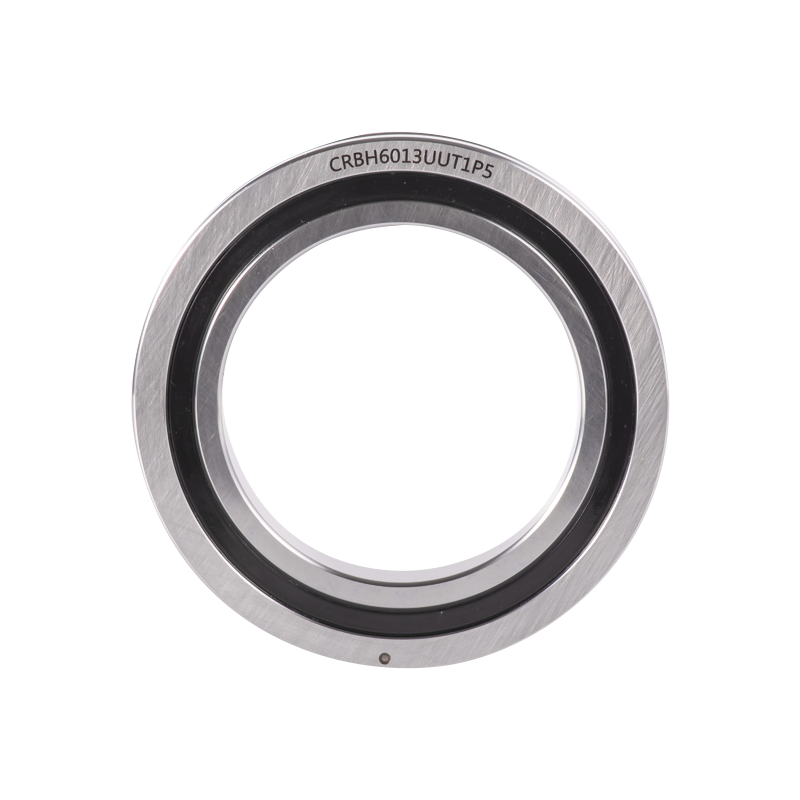
Cross roller bearings are widely used in precision rotary applications because they combine compactness with high rigidity. In a typical cross roller bearing, cylindrical rollers are placed alternately at right angles between the inner and outer raceways. This arrangement enables the bearing to support radial load, axial load in both directions, and moment load. The result is a bearing that can replace multiple conventional bearing sets in many applications.
For compact rotary joints, the ability to carry moment load is especially important. A small robotic arm joint may not experience very high continuous radial load, but it often experiences tilting forces when the arm changes direction, carries a tool, or encounters acceleration. A miniature camera gimbal may experience moment loads from lens weight, cable drag, wind vibration, or rapid pan-tilt movement. A precision rotary table may need to maintain perpendicularity and runout accuracy under an off-center workpiece. Cross roller geometry gives the bearing a structural advantage in these conditions.
Compared with ordinary deep groove ball bearings, cross roller bearings generally offer better rigidity under moment loads. Ball bearings can rotate smoothly and are excellent for many general applications, but a single ball bearing may not provide adequate tilting stiffness. Designers often need to use two ball bearings spaced apart to improve moment resistance, which increases axial space. The CRBT bearing offers a compact alternative where a single thin bearing can perform the function of a more complex bearing arrangement.
Compared with paired angular contact ball bearings, the CRBT bearing can simplify assembly. Angular contact bearings are capable of supporting combined loads, but they usually need to be mounted in pairs and preloaded correctly. The performance of the pair depends on spacing, preload accuracy, housing precision, and installation skill. A compact cross roller bearing can reduce the number of components and lower assembly complexity, especially in small modules where precise preload adjustment is difficult.
Compared with conventional cross roller bearings with mounting holes and larger cross sections, the CRBT bearing emphasizes miniaturization and weight reduction. This does not mean it is intended to replace heavy-duty rotary table bearings in all conditions. Rather, it provides a specialized solution for equipment where compactness, low inertia, and precision matter more than extremely high load capacity. It is a bearing for refined mechanical design, not oversized construction.
The CRBT lightweight rotary joint bearing series covers inner diameters from 10 mm to 95 mm, with outer diameters from 21 mm to 106 mm and a consistent width of 5 mm. This gives designers a broad range of compact options for different shaft sizes and rotary module diameters. Basic dynamic load ratings increase from approximately 1.12 kN for the smallest size to approximately 3.22 kN for the largest listed size, while basic static load ratings range from approximately 0.809 kN to 6.31 kN. Mass ranges from 9 g to 59 g across the listed models.
The following table summarizes selected models and key dimensions from the CRBT lightweight rotary joint bearing series.
| Model | Inner Diameter d mm | Outside Diameter D mm | Width B mm | Basic Dynamic Load C kN | Basic Static Load Co kN | Mass g | Corresponding Model |
| CRBT105AC1P5 | 10 | 21 | 5 | 1.12 | 0.809 | 9 | RAU1005C0P5 |
| CRBT155AC1P5 | 15 | 26 | 5 | 1.32 | 1.10 | 12 | RAU1505C0P5 |
| CRBT205AC1P5 | 20 | 31 | 5 | 1.49 | 1.40 | 15 | RAU2005C0P5 |
| CRBT305AC1P5 | 30 | 41 | 5 | 1.89 | 2.14 | 21 | RAU3005C0P5 |
| CRBT405AC1P5 | 40 | 51 | 5 | 2.14 | 2.74 | 27 | RAU4005C0P5 |
| CRBT505AC1P5 | 50 | 61 | 5 | 2.43 | 3.49 | 32 | RAU5005C0P5 |
| CRBT605AC1P5 | 60 | 71 | 5 | 2.63 | 4.09 | 38 | RAU6005C0P5 |
| CRBT705AC1P5 | 70 | 81 | 5 | 2.81 | 4.68 | 44 | RAU7005C0P5 |
| CRBT805AC1P5 | 80 | 91 | 5 | 3.05 | 5.43 | 50 | RAU8005C0P5 |
| CRBT955AC1P5 | 95 | 106 | 5 | 3.22 | 6.31 | 59 | RAU9505C0P5 |
The table demonstrates the central design philosophy of the product series: maintain a constant 5 mm width while offering a graduated range of inner diameters. This is helpful for engineers who must design multiple rotary modules with similar axial constraints but different bore requirements. A product platform with consistent width can reduce design effort, simplify inventory planning, and help standardize assembly processes across different equipment models.
The installation dimensions also show a compact mounting philosophy. The bearing series includes a minimum shoulder dimension indication and housing-related dimensions that support careful integration. Because ultra-thin bearings are sensitive to housing accuracy, the surrounding shaft and housing must be manufactured with suitable precision. Correct shoulder geometry, seating flatness, and clamping control are essential to fully realize the bearing’s accuracy and rigidity.
Robotic joints are among the most demanding applications for compact bearings. They require precision, rigidity, low friction, low weight, repeatability, and long service life. At the same time, the bearing must fit into a crowded assembly that may include a motor, reducer, encoder, torque sensor, brake, wiring passage, and protective housing. The CRBT lightweight rotary joint bearing offers several advantages in this environment.
First, it helps reduce joint thickness. A 5 mm bearing width is extremely valuable in wrist joints, elbow modules, humanoid shoulder modules, compact grippers, and robot neck rotation units. By reducing the required axial bearing space, the joint can be made shorter and more elegant. A shorter joint often has better structural stiffness because the distance between load points is reduced.
Second, the bearing lowers rotational inertia. In robotics, inertia influences acceleration, braking, servo tuning, and energy consumption. A lighter bearing in a rotating joint contributes to faster response and lower motor load. This is particularly important in humanoid robots and collaborative robots where natural motion, balance, and low power consumption are essential.
Third, the crossed roller structure improves tilting rigidity compared with many compact ball bearing alternatives. Robotic joints often experience offset loads, and insufficient moment stiffness can cause positioning error, vibration, or reduced control accuracy. The CRBT bearing’s geometry helps maintain stable rotation when the joint is subjected to combined load.
Fourth, the compact bearing can simplify the mechanical architecture. Instead of using multiple small bearings in a wide arrangement, designers may use one precision cross roller bearing. This can reduce part count, shorten assembly time, and lower the risk of cumulative alignment error. In high-volume automation products, fewer parts can also improve manufacturing consistency.
Fifth, the product supports miniaturization without sacrificing professional bearing design principles. Many small mechanisms use improvised bearing solutions because available standard bearings are too large. The CRBT series provides a purpose-built precision bearing platform, allowing designers to create compact devices with a more reliable support component.
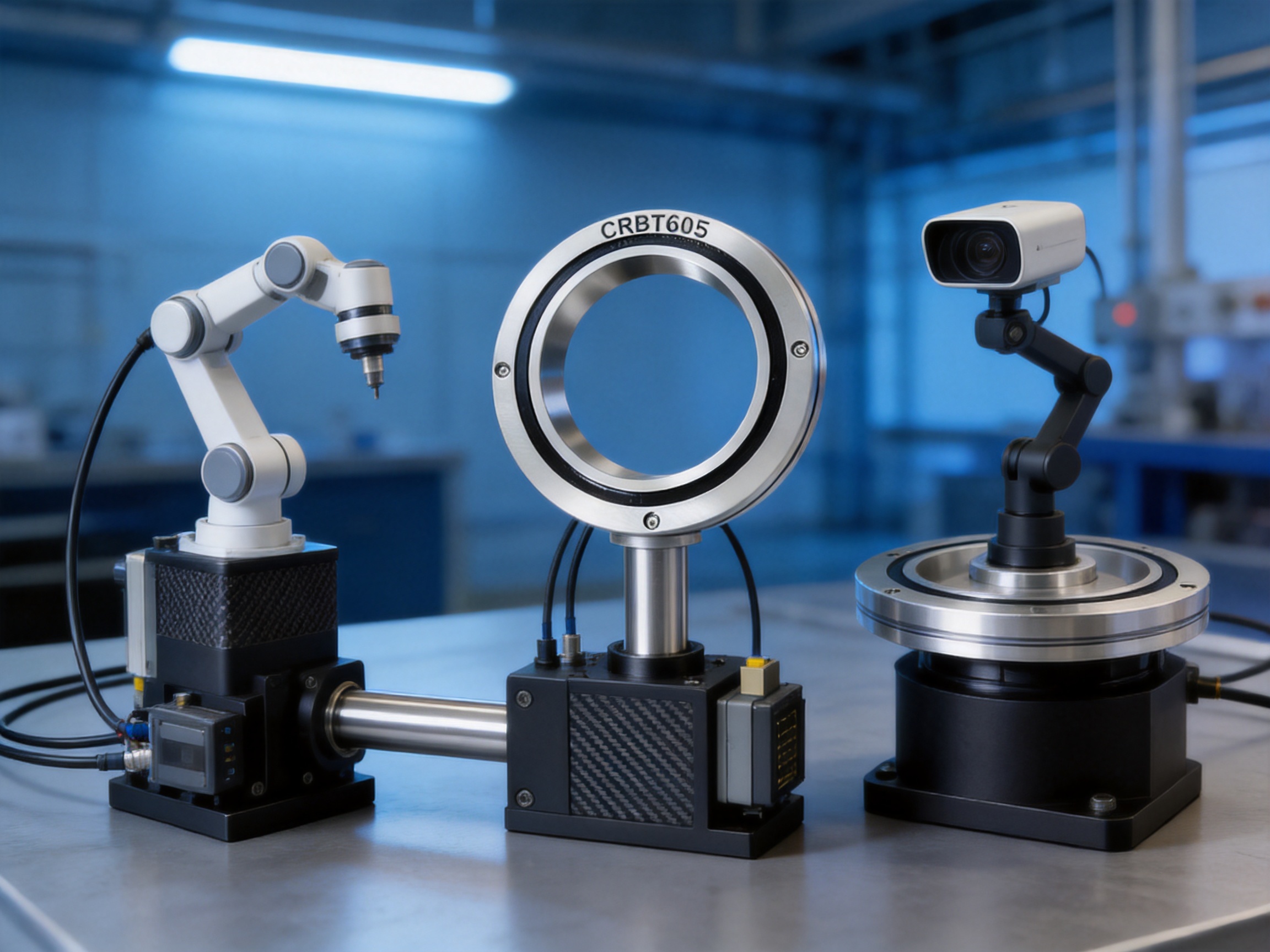
Miniature surveillance cameras, gimbal systems, inspection cameras, and optical positioning devices require smooth and accurate rotation. The rotational support must be compact enough to fit inside a small housing, light enough for rapid movement, and rigid enough to prevent vibration or image instability. The CRBT lightweight rotary joint bearing is well matched to these requirements.
In a pan-tilt camera, bearing play or low rigidity can cause image shake, tracking error, or poor stabilization. A cross roller bearing can help improve the support of the rotating axis, especially when the camera lens, sensor, or cable path creates an offset load. The compact 5 mm width helps keep the camera module thin, while the low weight reduces the torque required from small motors.
Optical systems are also sensitive to runout and angular deviation. When a lens, mirror, sensor, or scanning module rotates, any instability in the bearing support can affect optical alignment. A compact cross roller bearing provides a stable rotary foundation for devices such as laser scanners, small positioning stages, compact inspection modules, and portable measuring instruments.
Another advantage is the ability to leave internal space for cables or optical paths. Because the bearing series offers a central bore across multiple sizes, designers can route wires, fiber optics, slip rings, or mechanical shafts through the center. The ultra-thin radial section can preserve this central space while keeping the outer housing small.
Although the CRBT lightweight rotary joint bearing is especially compact, it is also relevant to precision rotary tables and machine tool accessories where space and weight must be minimized. Small indexing tables, micro-machining platforms, laboratory equipment, precision inspection fixtures, and compact CNC auxiliary axes all need accurate rotation with resistance to multi-directional loads.
In a small rotary table, the bearing must support the workpiece and maintain accuracy as the table rotates. Moment loads can occur when the workpiece center of gravity is offset. A cross roller bearing provides improved stiffness and rotational precision in a single bearing, reducing the need for complex paired arrangements. The CRBT bearing is suitable for light-duty precision platforms where extremely compact size is a priority.
Machine tool environments also highlight the value of manufacturing quality. Bearing raceway accuracy, heat treatment stability, grinding precision, and assembly cleanliness all influence final performance. Even a small bearing must be produced with careful process control to achieve smooth motion and repeatability. For applications such as precision machine tools, measuring equipment, and automation fixtures, consistency is as important as nominal specification.
For joint modules and compact tables that integrate reducers or direct-drive motors, the thin bearing width supports a short transmission path. A shorter assembly can improve torsional response and reduce deflection between the drive component and the output face. This is useful in equipment requiring accurate indexing, scanning, or controlled positioning.
A bearing as thin and lightweight as the CRBT series cannot be manufactured reliably without advanced production capability. Ultra-thin cross roller bearings require precise control at every stage, from material preparation to final inspection. The smaller the bearing section, the less tolerance the design has for distortion, raceway error, poor surface finish, or assembly inconsistency. This is why manufacturing strength is central to the value of the product.
UKL Bearing Manufacturing Co., Ltd. integrates research and development, production, and international distribution. The company operates as an integrated manufacturer and trader with modern production lines covering forging, turning, heat treatment, grinding, assembly, and packaging. This complete process chain supports consistent quality control and allows technical feedback to move efficiently from design to production.
The company’s production capacity of 10,000 to 50,000 units per month reflects the ability to support both sample development and scaled supply. For OEM and ODM customers, this is important because bearing selection is not only a technical decision but also a supply-chain decision. A bearing used in a robot joint, camera module, or machine tool accessory must be available with consistent quality over the life of the product.
The company has more than 15 years of OEM and ODM export experience and supplies customers in regions including the United States, Italy, Germany, Poland, South Africa, Egypt, India, and other markets. This international experience is valuable because different industries and regions often have different technical expectations, documentation requirements, packaging standards, and after-sales service needs. A manufacturer serving global customers must understand not only bearing production but also application communication and engineering support.
For high-precision products such as cross roller bearings and thrust angular contact ball bearings, the company’s research and development capability is particularly important. Compact rotary bearings often require custom adaptation, careful tolerance selection, and application-based recommendations. A dedicated R&D team can help refine product geometry, improve manufacturing methods, and support customers in selecting the correct bearing for their load, speed, accuracy, and mounting conditions.
The manufacturing process of a precision bearing begins with suitable bearing steel and controlled material preparation. The material must have the cleanliness, strength, and fatigue resistance required for rolling contact. Forging and initial forming create a stable foundation for the rings. In compact bearing production, material flow and internal structure are important because small sections can be more sensitive to deformation.
Turning is used to form the basic ring geometry. For ultra-thin bearings, this stage must be carefully controlled to avoid residual stress and dimensional deviation. The wall section is narrow, so machining forces and clamping pressure must be managed correctly. Poor control at the turning stage can later appear as roundness error or distortion after heat treatment.
Heat treatment gives the bearing rings the hardness and wear resistance needed for rolling contact fatigue life. However, heat treatment can also cause deformation if not controlled properly. For a 5 mm wide precision bearing, dimensional stability after heat treatment is essential. Controlled heating, quenching, tempering, and subsequent stabilization processes help maintain ring geometry and reduce internal stress.
Grinding is one of the most critical processes for precision bearing performance. Raceway geometry, surface finish, ring roundness, parallelism, and width accuracy all affect rotation quality. Cross roller bearings require high raceway accuracy because the rollers contact the raceways under combined load conditions. Precision grinding helps achieve smooth rolling motion, reduced vibration, and reliable load distribution.
Assembly requires careful handling of rollers, spacers or separators where applicable, rings, and preload-related features. Cleanliness is essential because small particles can cause noise, rough rotation, or early wear. For compact precision bearings, even minor contamination or assembly misalignment can influence feel and performance. Skilled assembly and controlled inspection are therefore necessary.
Packaging is also part of bearing quality. A precision bearing can be damaged by corrosion, impact, contamination, or poor storage conditions after production. Proper anti-rust treatment, protective packaging, labeling, and shipping control help ensure that the product reaches the customer in usable condition. For export customers, packaging must also support long-distance transportation and variable climates.
The value of the CRBT lightweight rotary joint bearing depends not only on its compact design but also on repeatable manufacturing quality. Precision bearings must be inspected for dimensions, rotational smoothness, clearance or preload characteristics, surface quality, hardness, and appearance. In applications such as robotics and machine tools, inconsistent bearings can create inconsistent product behavior. Reliable inspection reduces this risk.
Dimensional inspection verifies bore diameter, outside diameter, width, shoulder-related dimensions, and geometric tolerances. Because the bearing is ultra-thin, correct housing fit is important. If the bearing dimensions are not controlled, installation can lead to excessive deformation, poor rotation, or reduced life. Accurate measurement ensures that the bearing can be integrated into precision assemblies.
Raceway inspection is also vital. Surface finish and raceway geometry influence rolling friction, noise, and load distribution. Any localized defect can increase stress concentration and shorten service life. For cross roller bearings, the alternating roller orientation means that the raceway must support loads from different directions; therefore, uniformity is essential.
Rotational inspection evaluates smoothness and consistency. A bearing used in a camera gimbal, robotic joint, or measuring device must rotate smoothly at low speed without stick-slip behavior. Smooth rotation improves control performance, reduces motor load, and supports accurate positioning. The smaller the motor and the lighter the mechanism, the more noticeable bearing irregularity becomes.
Material and heat treatment verification help confirm hardness and structural stability. Bearing components must be hard enough to resist wear but not so brittle that they are vulnerable to cracking. Proper heat treatment control contributes to rolling contact fatigue resistance and dimensional stability over time.
For OEM customers, consistency across batches may be just as important as the performance of a single sample. A prototype bearing may work well, but production success requires repeatability. A manufacturer with integrated process control and export experience can support stable batch supply, which is essential for equipment manufacturers planning serial production.
To achieve the best performance from an ultra-thin cross roller bearing, installation must be carefully designed. Thin-section bearings are more affected by shaft and housing accuracy than larger, heavier bearings. The bearing itself may be manufactured with high precision, but poor mounting surfaces can distort the rings and reduce performance.
The shaft and housing should be machined with appropriate roundness, cylindricity, perpendicularity, and surface finish. The bearing seating surfaces should support the rings evenly. Uneven clamping, burrs, contamination, or angular misalignment can create localized stress and increase rotational resistance. Designers should treat the surrounding structure as part of the bearing system rather than as a simple support.
Because the CRBT bearing has no mounting holes, it is typically retained by the application’s housing design, clamping rings, shoulders, or other custom fixing structures. This gives design freedom but also places responsibility on the equipment engineer to ensure uniform retention. The fixing method should prevent axial movement while avoiding excessive ring deformation.
When designing a compact robotic joint, engineers should consider load direction, moment load, cable routing, lubrication environment, sealing, and service access. The bearing should be protected from contamination, especially in outdoor camera systems, industrial automation, or dusty environments. If the bearing is used in a clean or precision instrument environment, lubricant selection and cleanliness may become key considerations.
Preload and clearance behavior must also be considered. Cross roller bearings used in precision applications often need controlled internal conditions to reduce play and improve rigidity. However, excessive preload can increase friction and heat. The final setting depends on application requirements such as speed, load, positioning accuracy, and operating temperature. When in doubt, engineers should consult the bearing manufacturer for application-specific recommendations.
Many customers who select compact rotary bearings are not simply buying standard components; they are developing new machines. A robot manufacturer may be designing a new humanoid joint. A camera company may be creating a smaller pan-tilt unit. A machine tool builder may need a compact indexing axis. In these cases, technical collaboration between the bearing supplier and the equipment designer can shorten development time and reduce risk.
UKL Bearing Manufacturing Co., Ltd. has extensive OEM and ODM export experience, which supports this type of cooperation. The company can provide product selection support, dimensional communication, technical discussion, and custom bearing development according to project needs. For customers building specialized equipment, this flexibility can be more valuable than simply choosing from a catalog.
OEM customers often care about stable quality, repeatable dimensions, packaging, documentation, and long-term supply. ODM customers may also need design assistance, prototype evaluation, and adjustments to match unique installation conditions. A bearing manufacturer with R&D capability and integrated production can respond more effectively to these requirements.
The CRBT lightweight rotary joint bearing also works well as a platform product. Because the series covers multiple bore sizes with the same narrow width, customers can develop a family of compact rotary modules using similar design principles. This can reduce engineering complexity and create a more standardized product architecture.
For export customers, communication speed and after-sales service are important. The company’s multilingual service team provides technical response, installation guidance, and maintenance support for customers in different regions. This global service approach helps customers address bearing-related questions during design, testing, production, and field operation.
Modern industrial customers increasingly evaluate suppliers not only by price and performance but also by sustainability and responsible manufacturing practices. Bearing production involves steel processing, heat treatment, grinding, cleaning, lubrication, packaging, and logistics. Each stage has environmental considerations, including energy use, material efficiency, waste reduction, and emissions control.
UKL Bearing Manufacturing Co., Ltd. treats sustainability as a long-term commitment. The company promotes environmentally responsible processes, material recycling, and energy optimization to reduce its environmental footprint. For a precision manufacturer, sustainability is not separate from quality; efficient processes often reduce waste, improve consistency, and lower overall production cost.
The lightweight nature of the CRBT bearing also contributes to sustainability at the application level. A lighter bearing can reduce the mass of the final machine, lower energy consumption during motion, and support more efficient robotic and automation systems. In mobile robots, drones, portable devices, and compact intelligent equipment, weight reduction can directly influence battery life and operating efficiency.
The company also supports educational and technical training initiatives. This matters because advanced manufacturing depends on skilled engineers, technicians, and operators. Precision bearing production is not only a matter of machines; it also requires people who understand process control, measurement, assembly, and application requirements. Investing in technical talent helps strengthen long-term manufacturing capability.
When selecting a bearing for a compact rotary joint, engineers commonly compare several options: deep groove ball bearings, angular contact ball bearings, thin-section ball bearings, crossed roller bearings, and custom rotary units. Each option has advantages, but the CRBT lightweight rotary joint bearing occupies a distinctive position.
Deep groove ball bearings are widely available, economical, and suitable for many rotating applications. However, a single deep groove ball bearing may not provide enough moment rigidity for a precision rotary joint. Using two bearings can improve support, but it increases axial space and assembly complexity. For ultra-compact designs, this may not be acceptable.
Angular contact ball bearings can support combined loads and can be preloaded for precision. Yet they are often used in pairs, requiring accurate spacing and assembly control. In small modules, the required arrangement may be too wide. The CRBT bearing can provide multi-directional load support in a single slim unit, which may simplify the design.
Thin-section ball bearings provide compact radial dimensions and smooth rotation. They are useful where low friction is critical, but their moment stiffness may be limited compared with a cross roller arrangement. For applications where tilting rigidity and positioning stability are more important than very high rotational speed, the CRBT bearing may be the stronger solution.
Conventional cross roller bearings with mounting holes provide high rigidity and convenient mounting, but they are often larger and heavier. The CRBT bearing removes mounting holes and reduces section size to achieve a more compact and lightweight structure. This makes it better suited to miniature and weight-sensitive equipment.
Custom rotary units can be designed for a specific machine, but they may require higher development cost, longer lead time, and more complicated production control. A standardized CRBT bearing series gives engineers a ready precision component while still allowing custom housing design around it.
In a humanoid robot wrist, the CRBT bearing can support a compact output axis where a large bearing would make the wrist bulky. The low weight helps reduce inertia at the end of the arm, improving motion control. The crossed roller structure supports the moment loads caused by gripping objects or changing direction.
In a small robotic arm elbow joint, the bearing can help create a thin joint module with integrated motor and reducer components. The 5 mm width allows more room for the drive system while maintaining a stable rotary support. This can be valuable in educational robots, service robots, laboratory automation arms, and compact industrial manipulators.
In a miniature surveillance camera, the bearing can support smooth pan or tilt motion while fitting inside a small housing. Its low mass reduces motor demand, and its rigidity helps maintain image stability. This is useful for compact security cameras, portable inspection cameras, and intelligent vision systems.
In a precision rotary table for inspection, the bearing can provide stable rotation in a light-duty compact platform. The cross roller arrangement helps resist off-center loads, while the thin design keeps the table profile low. Such tables may be used in optical inspection, electronics assembly, laboratory automation, and small measurement instruments.
In a joint module for intelligent automation equipment, the bearing can provide a compact support around a hollow shaft. The central opening can be used for cables, air lines, sensors, or optical components. The bearing’s reduced radial section helps keep the total module diameter small.
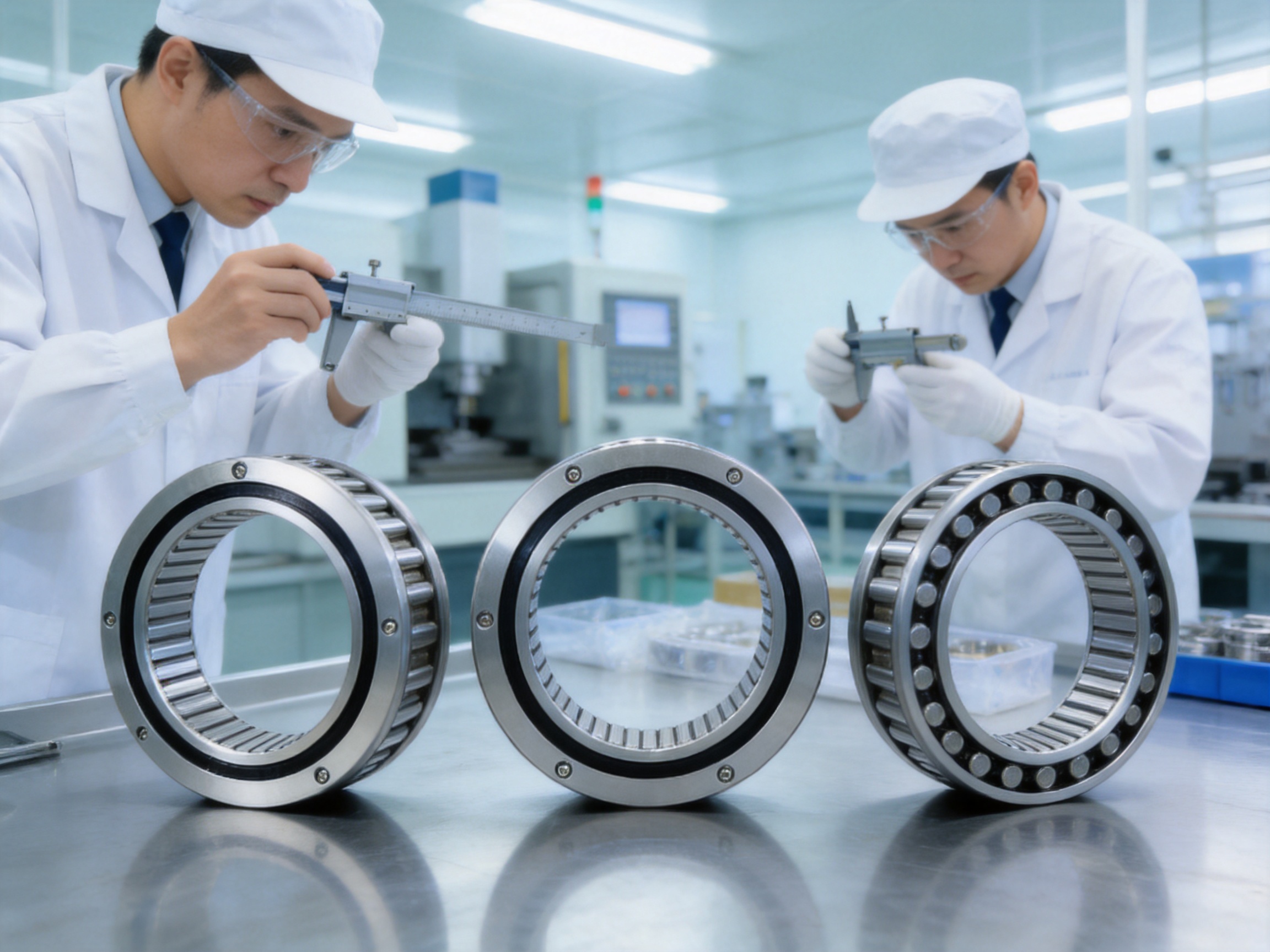
It is tempting to evaluate an ultra-thin bearing only by its catalog dimensions, but successful application depends heavily on supplier capability. A 5 mm wide cross roller bearing requires precise materials, advanced machining, stable heat treatment, clean assembly, and careful inspection. If any process is weak, the final bearing may not deliver the expected smoothness, rigidity, or life.
A supplier with integrated manufacturing can control more variables in-house. Forging, turning, heat treatment, grinding, assembly, and packaging are connected stages, and feedback from one stage can improve another. For example, if grinding results show a pattern of distortion, heat treatment or turning parameters can be adjusted. If assembly feedback indicates variation in rotational feel, component inspection standards can be refined.
UKL Bearing Manufacturing Co., Ltd. combines production capability with R&D and international service. This combination is important for customers who need more than a standard product shipment. Engineers may need help choosing the correct size, understanding load ratings, designing the housing, or solving installation challenges. A responsive technical team can help prevent costly design mistakes.
For global customers, export experience also matters. Bearings must be packed correctly, documented clearly, and delivered reliably. Communication must be accurate, especially when discussing dimensions, tolerances, and application conditions. A manufacturer familiar with international customers can reduce misunderstanding and support smoother cooperation.
The CRBT lightweight rotary joint bearing is designed to provide compact, lightweight, and precise rotary support in applications with limited installation space. It is especially suitable for small robotic arms, humanoid robot joints, miniature surveillance cameras, rotary tables, precision machine tools, and compact joint modules.
Its biggest differences are its ultra-thin section, 5 mm width, reduced cross-sectional area, and very low weight. Compared with an earlier thin cross-roller reference product, its section height is only 69%, its cross-sectional area is only 43%, and its weight is about 0.38 times at a 50 mm inner diameter comparison point.
The absence of mounting holes helps achieve an extremely compact and lightweight structure. Instead of using space for fixing holes, the design prioritizes a reduced bearing envelope. The bearing is typically fixed by the customer’s housing, shoulders, clamping structure, or other mechanical retention design.
Yes. As a cross roller bearing, it can support radial load, axial load, and moment load within its rated capacity. This makes it useful in rotary joints and precision mechanisms where the bearing may experience forces from multiple directions.
The bearing is primarily optimized for compactness, rigidity, precision, and lightweight rotary support rather than very high-speed operation. Suitability for a specific speed depends on load, lubrication, mounting accuracy, temperature, and operating duty cycle. Application-specific consultation is recommended.
Engineers should ensure high accuracy of the shaft and housing, clean mounting surfaces, uniform clamping, proper alignment, and protection from contamination. Ultra-thin bearings are sensitive to mounting deformation, so the surrounding structure must be designed carefully.
Humanoid robots require compact and lightweight joints with stable motion. The CRBT bearing reduces joint size and mass while providing rigidity against combined loads. This can improve motion response, reduce actuator demand, and support more compact robot design.
The bearing is supported by integrated manufacturing processes including forging, turning, heat treatment, grinding, assembly, and packaging. The manufacturer also has R&D capability, OEM and ODM export experience, production capacity for batch supply, and international technical service support.
Yes. Its compact width, low weight, and rigidity make it suitable for miniature surveillance cameras, compact pan-tilt mechanisms, optical devices, and sensor platforms where smooth and stable rotation is required.
Model selection should consider bore size, outside diameter, available installation space, load conditions, moment load, required accuracy, speed, lubrication, and mounting method. Customers should compare the listed dimensions and load ratings, then confirm the selection with technical support when the application is critical.
The CRBT lightweight rotary joint bearing represents a focused solution for one of the most important challenges in modern mechanical design: achieving high-precision rotary support in a smaller and lighter space. With a section height of 5.5 mm, a width of 5 mm, a reduced cross-sectional area, and a major weight reduction compared with previous thin cross roller bearing designs, it gives engineers a powerful option for compact automation, robotics, optical devices, miniature rotary stages, and precision joint modules.
Its crossed roller structure allows it to support radial, axial, and moment loads in a single compact bearing. This can reduce assembly complexity compared with paired ball bearing arrangements and improve rigidity compared with many simple compact bearing alternatives. For robotic joints, this means better resistance to tilting loads and lower inertia. For camera systems, it means smoother and more stable rotation. For precision equipment, it means compact design without abandoning professional bearing performance.
The product’s value is strengthened by the manufacturing capability behind it. UKL Bearing Manufacturing Co., Ltd. integrates R&D, production, and international distribution, with processes covering forging, turning, heat treatment, grinding, assembly, and packaging. The company’s export experience, monthly production capacity, technical service team, and commitment to sustainability support customers developing advanced equipment for global markets.
As intelligent automation continues to move toward smaller, lighter, and more integrated systems, bearing technology must evolve with it. The CRBT lightweight rotary joint bearing is well positioned for this future. It is not merely a smaller bearing; it is a compact precision component designed to help engineers create the next generation of responsive robots, stable optical devices, efficient rotary modules, and high-performance miniature machines.
1. Harris, T. A., and Kotzalas, M. N. Rolling Bearing Analysis: Essential Concepts of Bearing Technology. CRC Press.
2. Brändlein, J., Eschmann, P., Hasbargen, L., and Weigand, K. Ball and Roller Bearings: Theory, Design and Application. Wiley.
3. ISO 281. Rolling Bearings: Dynamic Load Ratings and Rating Life. International Organization for Standardization.
4. ISO 492. Rolling Bearings: Radial Bearings Geometrical Product Specifications and Tolerance Values. International Organization for Standardization.
5. Hamrock, B. J., Schmid, S. R., and Jacobson, B. O. Fundamentals of Fluid Film Lubrication. CRC Press.
6. Shigley, J. E., Mischke, C. R., and Budynas, R. G. Mechanical Engineering Design. McGraw-Hill.
Product Categories
Contact Us

Jane@ukl-bearing.com
Jenny@ukl-bearing.com
Andy@ukl-bearing.com
Ivy@ukl-bearing.com

+86-510- 88763239
+86-15371057968

No.1 Hehuan Road, Hudai Town, Binhu District, Wuxi City.
Ready to Begin?
Get in Touch

Now!
UKL BEARING
 English
 Español
 русский