Content
The 22205 E Bearing is a compact spherical roller bearing designed for equipment that must operate reliably under radial load, combined load, shaft deflection, vibration, and imperfect alignment. As part of the spherical roller bearing family, it is engineered to support demanding industrial motion where ordinary bearings may struggle to maintain service life and stable rotation. Its value is not only found in its geometry, but also in the manufacturing discipline behind it: material control, precision machining, heat treatment, grinding, assembly, inspection, and packaging all contribute to dependable performance.
In many industrial systems, bearing failure is not caused by load alone. Misalignment, contamination, poor lubrication, shock loading, heat, and installation error often work together to shorten operating life. The 22205 E Bearing answers these practical challenges through a self-aligning structure, strong rolling element capacity, and robust raceway design. For compact machinery, conveyor equipment, agricultural equipment, mining support systems, fans, gear-driven units, and general mechanical transmission assemblies, this bearing provides a balanced solution between load capability, adaptability, and space efficiency.
UKL Bearing Manufacturing Co., Ltd. manufactures and supplies bearings for global industrial users, including spherical roller bearings such as the 22205 E Bearing. The company integrates research and development, production, and international distribution, supported by modern processes covering forging, turning, heat treatment, grinding, assembly, and packaging. With export experience across multiple regions and an emphasis on OEM and ODM cooperation, UKL focuses on delivering bearings that meet practical operating requirements rather than only catalog specifications.
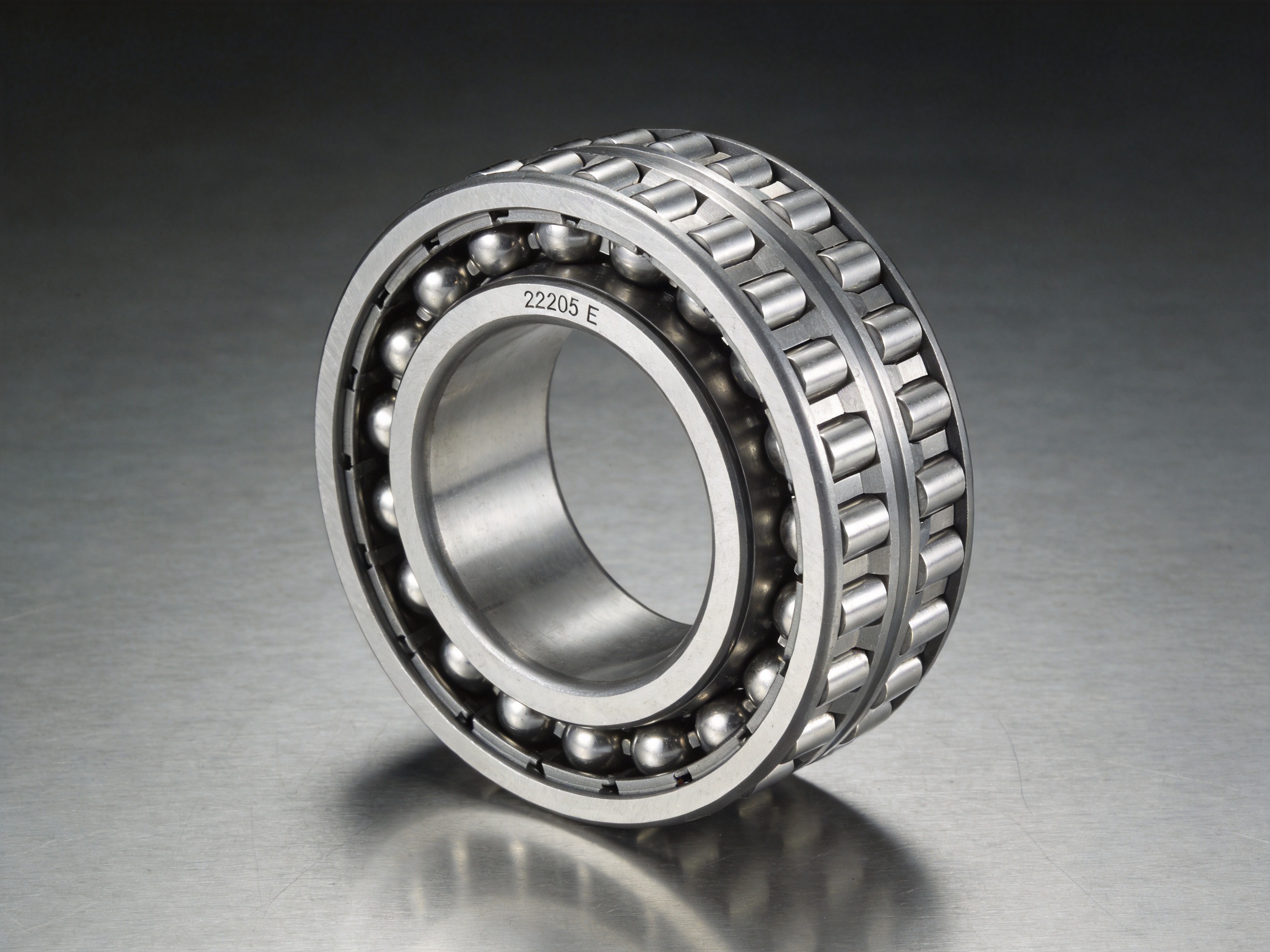
The 22205 E Bearing belongs to the 222 series of spherical roller bearings. This series is widely selected when machinery requires a bearing that can carry high radial loads and tolerate angular misalignment between the shaft and housing. The “22205” designation generally indicates a specific size series and bore code, while the “E” suffix usually refers to an enhanced internal design with improved load-carrying capability. Exact dimensional and cage details should always be confirmed according to the manufacturer’s drawing or technical datasheet, but the bearing is typically recognized as a compact self-aligning roller bearing for medium-duty and heavy-duty support points.
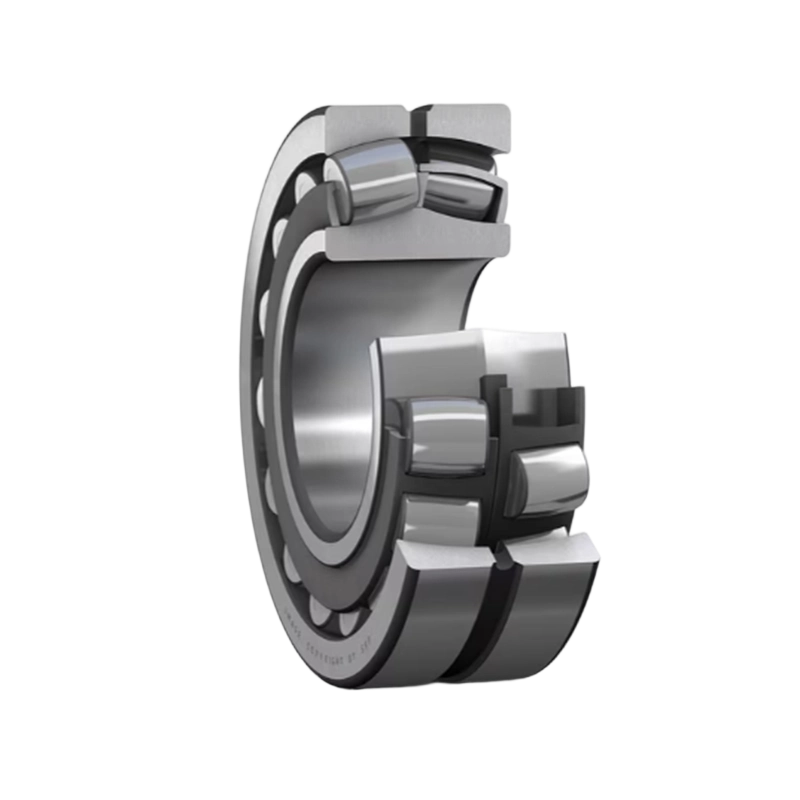
The main feature of a spherical roller bearing is its double-row roller structure. The rollers run between an inner ring with two raceways and an outer ring with a common spherical raceway. This outer raceway allows the inner ring, rollers, and cage assembly to align themselves relative to the outer ring. As a result, the bearing can compensate for shaft bending, housing deviation, or mounting inaccuracies within permissible limits. This self-aligning behavior is one of the most important advantages of the 22205 E Bearing over rigid bearing types.
Because the 22205 E Bearing is compact, it is often used where design space is restricted but load demands remain significant. In comparison with some ball bearing options of similar size, it can typically handle heavier radial loads because roller contact distributes load over a larger contact area. In comparison with plain bushings, it reduces friction and supports smoother rotation. In comparison with rigid cylindrical roller bearings, it offers superior misalignment tolerance. This combination makes it a practical choice for equipment designers who must balance load, alignment, size, and maintenance expectations.
Modern machinery is expected to run longer, faster, and with less maintenance. Production lines, conveyors, processing equipment, and automation systems all require rotating components that resist premature failure. Bearings are small compared with the complete machine, yet they often determine whether a system runs smoothly or stops unexpectedly. A bearing that cannot handle real working conditions may create heat, vibration, noise, shaft damage, seal failure, or complete equipment shutdown.
Spherical roller bearings are valued because they are forgiving. Industrial structures are rarely perfect under load. A welded frame may distort slightly. A shaft may bend under belt tension. A housing may experience thermal expansion. A machine base may settle after installation. These issues can introduce angular misalignment. Bearings with poor alignment tolerance may generate edge stress, uneven wear, and high temperature. The spherical outer raceway of the 22205 E Bearing helps reduce these risks by allowing the bearing to adapt within its designed alignment range.
This adaptability is especially important in applications such as conveyors, crushers, fans, pumps, agricultural machines, textile machinery, material handling equipment, and industrial gear units. In these environments, the bearing must often handle radial force, impact, dust, humidity, and fluctuating speed. A spherical roller bearing does not eliminate the need for correct installation and lubrication, but it gives the machine a greater safety margin against real-world imperfections.
The 22205 E Bearing uses rolling elements shaped to carry substantial radial load. Unlike ball bearings, where point contact concentrates load in smaller contact zones, spherical rollers provide line contact with the raceways. This enables the bearing to distribute force more effectively. In machinery where shafts carry pulleys, gears, rollers, or heavy rotating components, this load capacity becomes essential for reliable operation.
The E-type internal geometry is designed to optimize roller length, contact profile, raceway curvature, and internal load distribution. A well-designed E-type spherical roller bearing can provide stronger load ratings than older or basic designs within a similar envelope size. This advantage helps designers use compact bearing positions without sacrificing durability.
One of the greatest advantages of the 22205 E Bearing is its self-aligning capability. Misalignment may come from installation error, shaft deflection, frame deformation, or thermal expansion. Rigid bearings can suffer from localized stress when misalignment occurs. The 22205 E Bearing reduces this risk because its spherical outer raceway allows the inner assembly to adjust relative to the outer ring.
This feature is especially valuable in applications where it is difficult or expensive to maintain perfect alignment. For example, long conveyor shafts, outdoor machinery, and equipment exposed to shock loads often develop alignment variations during service. A self-aligning bearing can extend service life by reducing edge loading and uneven contact patterns.
Heavy-duty machinery often faces sudden changes in load. Impact from bulk material, uneven belt tension, intermittent operation, or vibration from connected equipment can all create stress. The robust internal structure of a spherical roller bearing makes it suitable for these conditions. The two rows of rollers support load from different directions and help maintain stability under dynamic working conditions.
Compared with lighter-duty bearing types, the 22205 E Bearing provides greater confidence in applications where operation is not perfectly smooth. Its ability to carry high radial load while tolerating moderate axial load in both directions increases design flexibility. This is particularly useful in general industrial equipment where load direction may vary during operation.
The 22205 E Bearing offers a useful balance between size and strength. Its compact dimensions allow it to fit into smaller bearing housings, yet its spherical roller design provides load capacity beyond many alternatives of comparable size. For machinery designers, this means the bearing can support strong mechanical performance without requiring excessive housing dimensions.
Compactness also helps reduce machine weight, conserve space, and simplify component layout. In equipment where the bearing location is limited by frame design or adjacent parts, the 22205 E Bearing offers a practical solution.
The 22205 E Bearing can be applied in many industries because its strengths match common mechanical challenges. It is suitable for rotating shafts, support rollers, small gear assemblies, conveyor systems, industrial fans, agricultural equipment, auxiliary mining equipment, and other machines requiring self-aligning support. Its versatility makes it a valuable inventory item for distributors, maintenance teams, and OEM manufacturers.
When properly selected, mounted, lubricated, and sealed, the 22205 E Bearing can help reduce downtime and improve maintenance planning. Its broad usability also allows purchasing departments to standardize bearing selections across multiple machines where load and dimensional requirements are compatible.
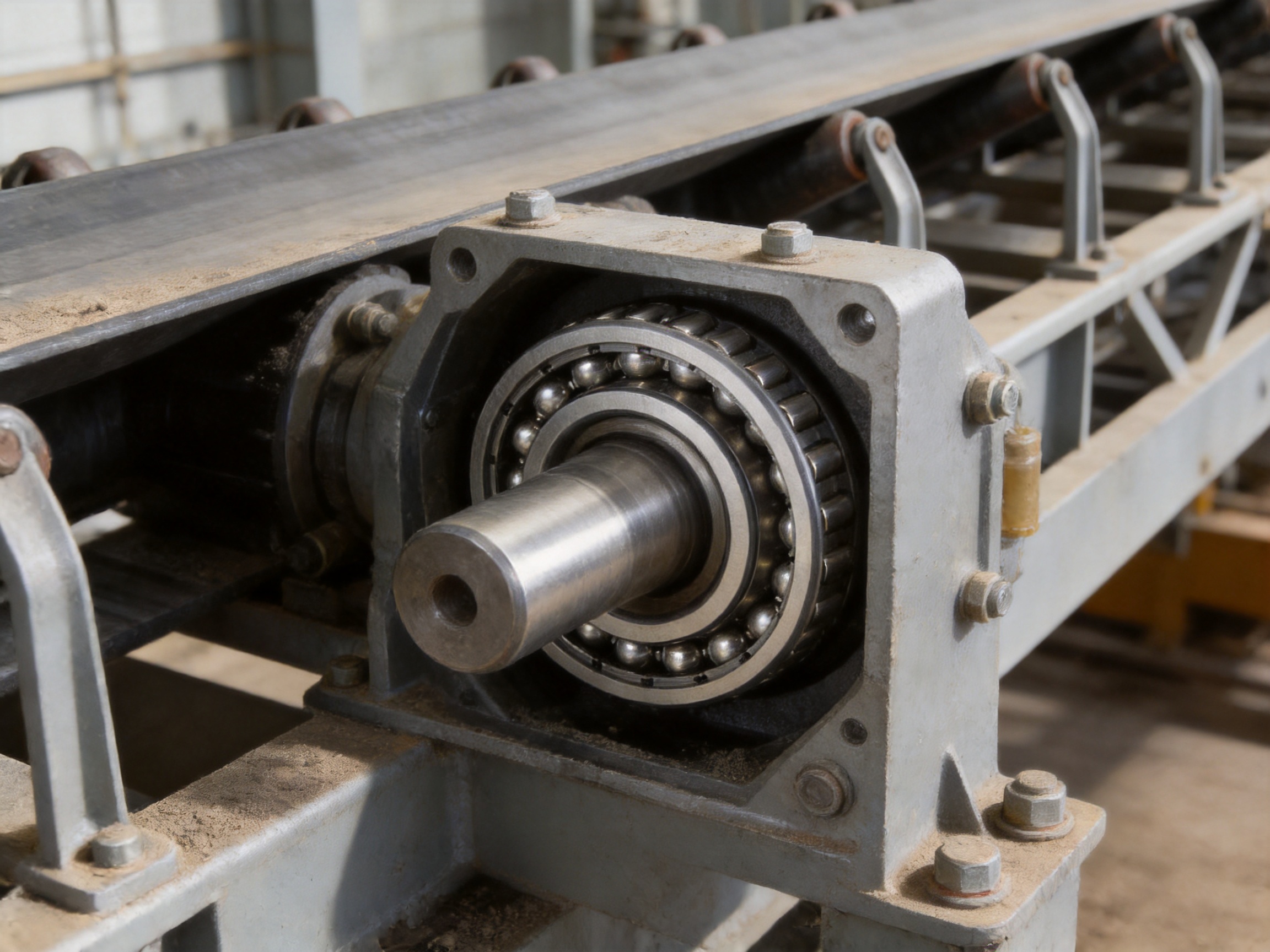
The 22205 E Bearing competes with several other bearing types, including deep groove ball bearings, angular contact ball bearings, cylindrical roller bearings, tapered roller bearings, and plain bushings. Each bearing type has its own advantages, but the spherical roller structure provides a unique combination of load capacity and self-alignment.
| Comparison Item | 22205 E Spherical Roller Bearing | Common Alternative | Practical Advantage |
|---|---|---|---|
| Misalignment tolerance | High, due to spherical outer raceway | Lower in rigid ball or cylindrical roller bearings | Reduces edge stress and premature wear in imperfect installations |
| Radial load capacity | Strong for compact size | Often lower in ball bearings of similar envelope | Better suited for heavy radial loads and shock conditions |
| Axial load support | Can support axial load in both directions within limits | Varies by type; some need paired arrangement | Improves flexibility in mixed-load applications |
| Vibration and impact resistance | Robust roller structure | Light-duty designs may fatigue faster | More reliable in harsh operating conditions |
| Maintenance practicality | Forgiving under shaft deflection and housing variation | More sensitive to alignment errors | Helps reduce unexpected failures caused by installation deviation |
Compared with deep groove ball bearings, the 22205 E Bearing usually provides higher radial load capacity and better accommodation of shaft deflection. Deep groove ball bearings remain excellent for high-speed, lower-load, and simple support applications, but when the working environment includes heavier loads and alignment challenges, spherical roller bearings are often preferred.
Compared with angular contact ball bearings, the 22205 E Bearing is less focused on precision axial positioning at high speed and more focused on rugged load support. Angular contact ball bearings are widely used in spindles, pumps, and precision assemblies where axial rigidity is important. However, they usually require careful mounting and correct preload or clearance control. The 22205 E Bearing is more forgiving in heavy-duty support positions where durability and alignment tolerance are priorities.
Compared with cylindrical roller bearings, the 22205 E Bearing offers much better self-alignment. Cylindrical roller bearings are excellent for high radial load and speed, but they are sensitive to misalignment unless special designs are used. In applications where housing and shaft alignment cannot be perfectly guaranteed, the spherical roller bearing can provide longer practical service life.
Compared with tapered roller bearings, the 22205 E Bearing offers self-aligning performance and simpler accommodation of combined load in many support positions. Tapered roller bearings are highly effective for combined radial and axial loads, especially in wheel hubs, gearboxes, and heavy equipment. However, they often require precise axial adjustment. The 22205 E Bearing may be easier to apply where angular misalignment is a major concern.
Compared with plain bushings, the 22205 E Bearing reduces rolling friction and can deliver smoother rotation when lubrication and sealing are correctly managed. Bushings may be cost-effective in low-speed or oscillating applications, but for continuous rotary motion under heavier load, rolling bearings generally provide improved efficiency and predictable maintenance intervals.
Conveyors often operate over long distances, with shafts exposed to belt tension, uneven loads, dust, and vibration. Perfect alignment is difficult to maintain over time. The 22205 E Bearing helps support conveyor rollers, drive shafts, and auxiliary rotating parts by compensating for shaft deflection and housing variation. Its radial load capacity also helps resist the forces generated by loaded belts and rotating drums.
Agricultural equipment may operate outdoors in dust, mud, moisture, and variable load conditions. Shafts can experience shock from soil contact, crop material, and uneven terrain. The 22205 E Bearing is suitable for machinery where compact size, load capacity, and alignment tolerance are needed. Proper sealing and lubrication are important in these applications, but the bearing’s robust structure gives it an advantage over more alignment-sensitive alternatives.
Fans and blowers require smooth rotation, stable support, and resistance to vibration. Misalignment may arise from thermal growth or frame movement. The 22205 E Bearing can support fan shafts where radial load and moderate axial load occur. Its self-aligning nature helps maintain stable contact even when installation conditions are not ideal.
Gear-driven machinery often produces radial forces and axial components depending on gear type and arrangement. While bearing selection must always consider speed, load direction, lubrication, and housing design, the 22205 E Bearing can be useful in compact support positions where combined load and misalignment tolerance are required. Its rugged internal structure helps maintain dependable operation in mechanical transmission systems.
Mining and quarrying environments are harsh. Dust, vibration, impact, and heavy material flow can damage components quickly. Although larger spherical roller bearings are often used in primary heavy equipment, compact sizes such as 22205 E can serve auxiliary machinery, feeder systems, small screens, and support drives. The bearing’s shock resistance and alignment tolerance provide meaningful advantages in these conditions.
UKL also develops high-precision bearings for robotics, CNC machines, and automation systems. While a 22205 E spherical roller bearing is not a substitute for specialized cross roller bearings in precision robotic joints, it can support auxiliary automation equipment where load, compactness, and durability matter. In intelligent manufacturing facilities, reliable bearings are essential for transfer systems, handling lines, and service machinery that keep automation running.
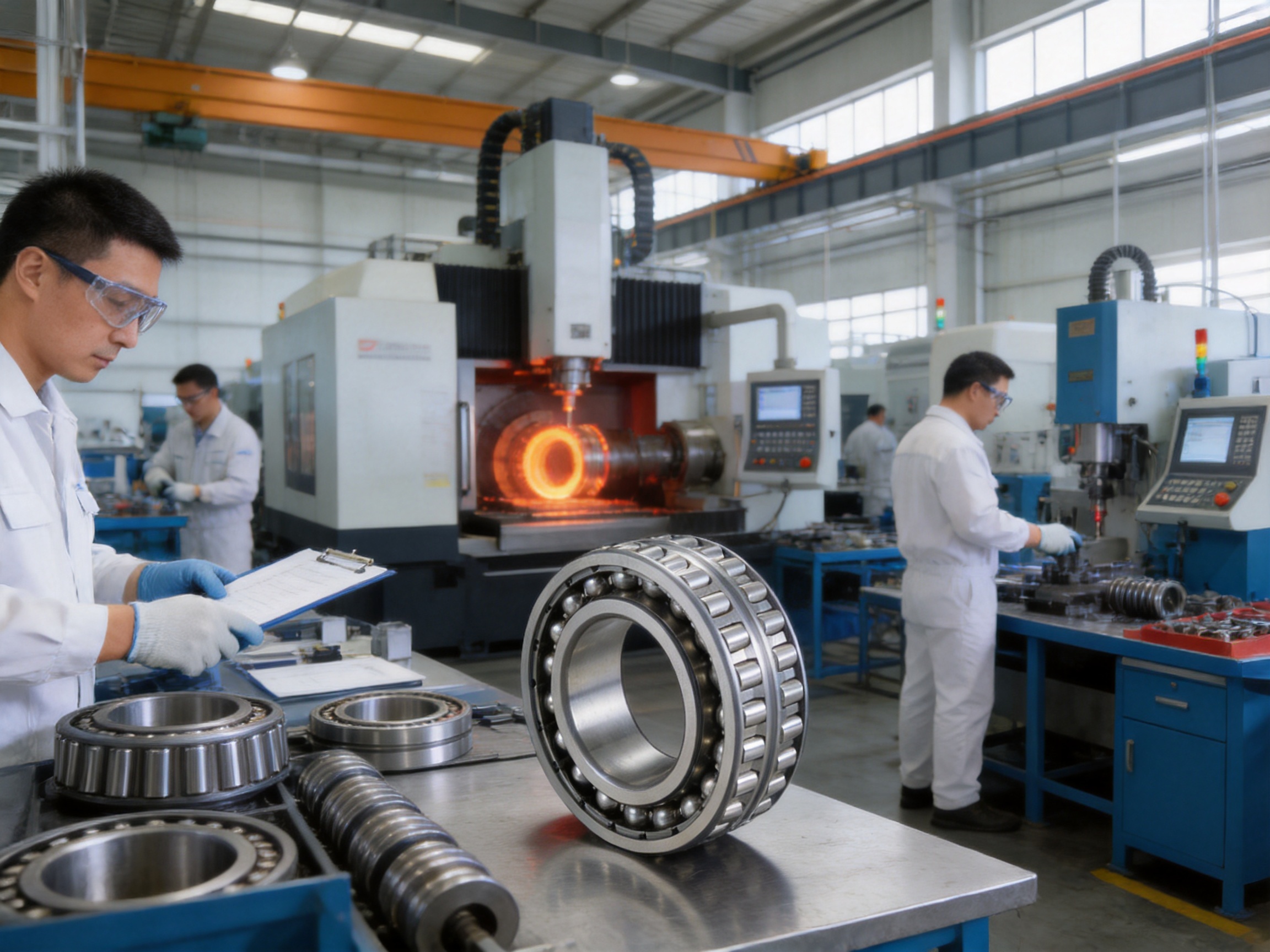
A bearing’s performance is determined by design and manufacturing quality together. Even the best theoretical design can fail if material quality, heat treatment, geometry, surface finish, cleanliness, or assembly accuracy is poor. UKL Bearing Manufacturing Co., Ltd. emphasizes integrated production control, allowing each process stage to support the final performance of the 22205 E Bearing.
High-quality bearing steel is essential for fatigue resistance, hardness, toughness, and dimensional stability. The rolling contact surfaces of the inner ring, outer ring, and rollers must withstand repeated stress cycles over long operating periods. Material defects such as inclusions, improper composition, or inconsistent microstructure can reduce fatigue life. Reliable manufacturing begins with controlled material sourcing and inspection.
For spherical roller bearings, the material must support both load capacity and resistance to shock. The rings and rollers need sufficient hardness after heat treatment, but they must also retain toughness to resist cracking under impact. Proper metallurgical control helps produce a bearing that performs consistently across batches.
Forging shapes the bearing rings and improves the internal grain flow of the steel. A well-controlled forging process helps reduce material waste and improves structural integrity. The forged blank becomes the foundation for all later machining operations. If forging is inconsistent, later precision machining cannot fully correct internal weaknesses.
UKL’s production system includes forging as part of its manufacturing chain. This allows better control over the early stage of bearing ring formation. For a compact bearing like the 22205 E, ring strength and dimensional consistency are especially important because the bearing must deliver strong load capacity within limited space.
After forging, the rings are turned to create the basic shape, including bore, outer diameter, side faces, and raceway preparation. Turning accuracy affects the efficiency of later grinding processes. If turning leaves excessive variation, grinding becomes more difficult and material stress may increase. Controlled turning supports stable wall thickness, consistent raceway position, and reliable assembly dimensions.
In competitive bearing manufacturing, turning is not merely rough machining. It is a controlled step that helps determine final concentricity, material allowance, and production efficiency. UKL’s multiple production lines support consistent machining flow, helping maintain repeatability from batch to batch.
Heat treatment is one of the most critical stages in bearing production. It transforms the steel microstructure to achieve the hardness and strength needed for rolling contact. If heat treatment is too aggressive, the bearing may become brittle. If it is insufficient, raceways and rollers may wear or deform prematurely. Correct heat treatment balances hardness, toughness, and dimensional stability.
For the 22205 E Bearing, heat treatment directly influences resistance to pitting, spalling, and fatigue failure. Consistent furnace control, quenching process management, tempering accuracy, and inspection all contribute to final quality. Advanced manufacturers pay close attention to heat treatment because it is often the difference between a bearing that looks acceptable and a bearing that performs reliably in service.
Grinding creates the final geometry and surface finish of the bearing rings and rollers. Raceway profile accuracy is especially important in spherical roller bearings because load distribution depends on correct contact between rollers and raceways. Poor grinding can create roughness, waviness, incorrect curvature, or dimensional variation. These defects may lead to noise, heat, vibration, and reduced fatigue life.
Precision grinding helps the 22205 E Bearing achieve stable rotation and proper internal clearance. Surface finish reduces friction and supports lubricant film formation. For industrial users, this means lower operating temperature, smoother motion, and improved service life when the bearing is correctly installed and maintained.
Bearing assembly requires clean conditions, correct component matching, and careful internal clearance control. The rollers, cage, inner ring, and outer ring must work together as a system. Internal clearance affects heat generation, load distribution, vibration, and operational reliability. Too little clearance may cause overheating after thermal expansion. Too much clearance may create vibration and uneven load sharing.
For spherical roller bearings, assembly also determines roller guidance and cage stability. A robust assembly process ensures that the bearing can operate under radial load, combined load, and alignment variation. UKL’s production process includes assembly and inspection stages intended to maintain consistency before products reach customers.
Inspection is not a single final step; it is a continuous control system. Dimensional inspection, hardness testing, surface roughness measurement, noise and vibration checks, visual inspection, and packaging verification all support bearing reliability. For exported products, consistent inspection is essential because customers may use the same bearing model in different regions, climates, and industries.
UKL’s international service experience encourages practical quality control. Bearings must not only meet technical drawings but also survive transportation, storage, installation, and field operation. By focusing on process control and verification, the company strengthens the reliability of products such as the 22205 E Bearing.
Packaging is sometimes overlooked, but it is critical for bearing quality. A precision bearing can be damaged by moisture, corrosion, impact, or contamination before installation. Proper anti-rust protection, clean wrapping, sturdy cartons, and export-ready packaging help ensure that the bearing arrives in usable condition. For customers in Europe, Asia, Africa, Russia, and other regions, packaging must support long-distance logistics and varied storage environments.
UKL Bearing Manufacturing Co., Ltd. is located in Wuxi City, Jiangsu Province, China, and operates as an integrated manufacturer and trader. Since its establishment in 2020, the company has built its development around precision, durability, and trust. Although the company is relatively young in establishment date, it has more than 15 years of OEM and ODM export experience through its team and supply chain background. This combination allows UKL to serve both standard bearing demand and customized industrial projects.
The company has 201–500 employees and a production capacity of 10,000–50,000 units per month. This capacity supports stable supply for distributors, maintenance companies, and OEM customers. For a product such as the 22205 E Bearing, reliable availability is important because industrial buyers often need repeat orders, emergency replacement stock, and consistent batch quality.
UKL exports bearings to the United States, Italy, Germany, Poland, South Africa, Egypt, India, and other regions. International market experience helps the company understand different customer expectations, documentation requirements, packaging standards, and application environments. A bearing used in a dry mining area may face different challenges from one used in a European factory or an agricultural machine in a humid climate. Global service experience helps improve product recommendations and after-sales support.
The company’s product categories include cross roller bearings, robot bearings, angular contact ball bearings, rod end bearings, spherical roller bearings, cylindrical roller bearings, tapered roller bearings, Nilos rings, and mounted bearings. This broad product range gives UKL a wider understanding of motion systems. Instead of viewing the 22205 E Bearing as an isolated component, the company can help customers compare bearing types and choose a solution based on load, speed, alignment, accuracy, and environmental needs.
UKL’s R&D team focuses on high-precision cross roller bearings, dual-direction thrust angular contact ball bearings, and other products used in CNC machines, robotics, and intelligent automation systems. This technical background benefits the entire manufacturing culture. Precision design, digital production control, and continuous process improvement contribute to the quality mindset required for spherical roller bearings as well.
Sustainability is also part of the company’s long-term direction. UKL promotes environmentally responsible processes, material recycling, and energy optimization. In modern manufacturing, sustainability and quality are increasingly connected. Efficient production reduces waste, stable processes reduce scrap, and responsible energy use supports long-term industrial development.
The 22205 E Bearing should be selected according to actual operating conditions. Engineers should consider radial load, axial load, speed, temperature, misalignment, lubrication method, sealing arrangement, shaft fit, housing fit, and duty cycle. A bearing with excellent design can still fail early if selected for conditions beyond its capability. Therefore, correct application analysis is essential.
For example, if axial load is dominant and continuous, another bearing type may be more suitable. If speed is extremely high, heat generation and cage design must be carefully evaluated. If contamination is severe, sealing and lubrication may become more important than load rating alone. UKL’s technical service team can assist customers in matching product selection with practical operating requirements.
Installation quality strongly affects bearing performance. The bearing should be mounted using correct tools and procedures. Force should not be transmitted through rolling elements during mounting. Shaft and housing fits should match the application. Cleanliness must be maintained to prevent particles from entering the bearing. Improper mounting can create dents, misalignment, preload, looseness, or internal damage.
For spherical roller bearings, alignment tolerance is an advantage, but it should not be treated as permission for careless installation. The bearing can compensate for reasonable misalignment, but extreme deviation may still reduce life. Correct mounting ensures that the self-aligning function works within its intended range.
Lubrication reduces friction, separates contact surfaces, removes heat, and protects against corrosion. The correct grease or oil should be selected based on speed, load, temperature, environment, and maintenance interval. Insufficient lubrication can cause heat and wear. Excessive grease can also increase temperature, especially at higher speeds. Contaminated lubricant may carry particles into the raceway contact zones.
Maintenance teams should establish lubrication schedules based on actual service conditions. In dusty, wet, or high-temperature environments, relubrication intervals may need adjustment. Proper lubrication is one of the most cost-effective ways to extend the service life of the 22205 E Bearing.
Contamination is a leading cause of bearing failure. Dust, metal particles, water, and chemical contaminants can damage raceways and rollers. Even small particles may create surface dents that later develop into fatigue damage. In harsh environments, external seals, shields, labyrinth seals, or mounted bearing housings with effective sealing should be considered.
The 22205 E Bearing’s robust structure helps resist heavy operating conditions, but it still requires protection from contamination. Good sealing design is especially important in agricultural, mining, construction, and material handling applications.
Vibration, temperature, noise, and lubricant condition can reveal early signs of bearing problems. Preventive maintenance allows users to plan replacement before catastrophic failure occurs. For critical equipment, condition monitoring can reduce downtime and protect connected components. A bearing failure may damage the shaft, housing, seals, gears, belts, or motor, making early detection valuable.
When the 22205 E Bearing is used in important machinery, operators should record operating temperature, vibration trends, lubrication intervals, and replacement history. These records help improve future bearing selection and maintenance planning.
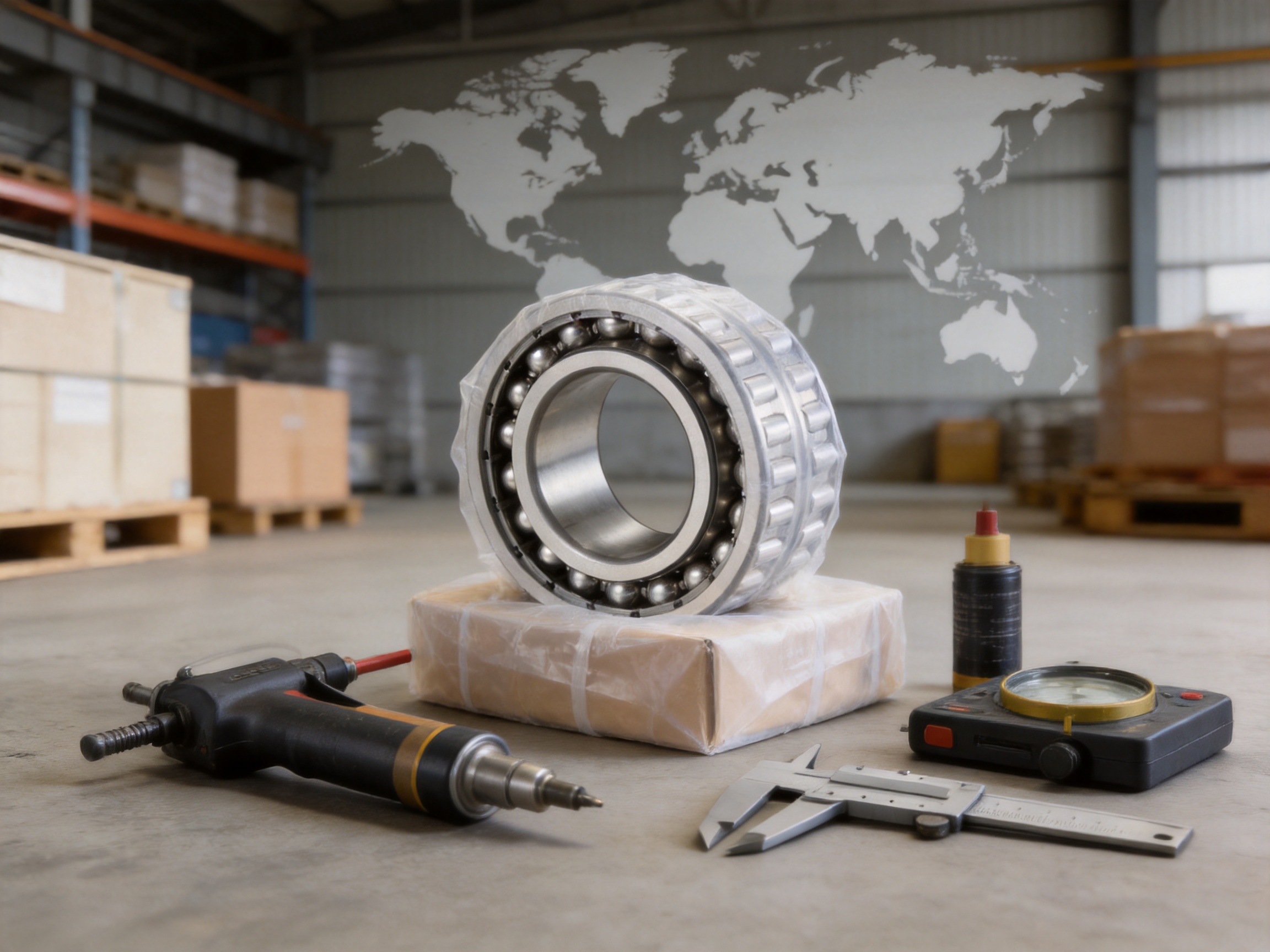
OEM manufacturers need bearings that support product reliability, production efficiency, and customer satisfaction. The 22205 E Bearing offers design flexibility because it can handle misalignment and high radial loads in a compact space. UKL’s OEM and ODM experience supports customized cooperation, technical communication, and stable batch supply. For machinery manufacturers, this helps reduce sourcing risk and improve product consistency.
Distributors require products with broad market demand, reliable quality, and repeatable supply. Spherical roller bearings are widely used across many industries, making the 22205 E Bearing a practical inventory item. UKL’s production capacity and export experience help support distributors serving local maintenance markets, industrial customers, and equipment manufacturers.
Maintenance teams need replacement bearings that install correctly, perform reliably, and withstand real operating conditions. A robust spherical roller bearing can reduce repeated failures caused by shaft deflection or imperfect alignment. When supported by correct lubrication and sealing, the 22205 E Bearing can help maintenance teams extend service intervals and reduce unexpected downtime.
Before purchasing a 22205 E Bearing, buyers should confirm key technical details. These include dimensions, internal clearance, cage type, tolerance class, lubrication requirements, sealing arrangement, heat treatment specifications, packaging, and any special application requirements. If the bearing will be used in high temperature, high speed, corrosive environments, or heavy shock conditions, additional engineering review is recommended.
Customers should also provide operating information when requesting technical support. Useful information includes shaft diameter, housing type, load direction, load magnitude, rotational speed, working temperature, operating hours, lubrication method, contamination level, and failure history if replacing an existing bearing. With this information, UKL can help evaluate whether the standard 22205 E Bearing is suitable or whether another bearing design should be considered.
The message behind every reliable bearing is precision. Precision does not only mean tight tolerances; it means the correct relationship between design, material, process, inspection, and application. Durability does not only mean hardness; it means resistance to real-world fatigue, shock, contamination, and maintenance variation. Trust does not only mean delivery; it means consistent communication, technical support, and responsibility for product performance.
UKL’s company philosophy aligns with these values. By integrating R&D, production, and distribution, the company can respond to industrial needs more effectively. Its modern factory processes allow control from early material preparation to final packaging. Its multilingual service team supports customers with technical response, installation guidance, and after-sales service. For global buyers, this combination of manufacturing and service is an important advantage.
The 22205 E Bearing is mainly used in machinery that requires high radial load capacity, self-alignment, and reliable performance under vibration or shaft deflection. Common applications include conveyors, agricultural machinery, fans, gear units, material handling equipment, and general industrial transmission systems.
A standard ball bearing uses balls and generally has point contact with the raceways, while the 22205 E Bearing uses spherical rollers with line contact. This gives it higher radial load capacity and better suitability for heavy-duty conditions. It also has self-aligning capability, which many standard ball bearings do not provide.
The self-aligning feature helps the bearing compensate for shaft deflection, housing misalignment, and installation variation. This reduces edge stress, heat generation, and uneven wear. In real industrial environments, where perfect alignment is difficult to maintain, this feature can significantly improve practical service life.
Yes, spherical roller bearings can generally carry axial load in both directions within specified limits, in addition to high radial load. However, the exact axial load capacity depends on the bearing design, operating speed, lubrication, and application conditions. Buyers should confirm load suitability before use.
The “E” suffix commonly indicates an enhanced internal design intended to improve load-carrying capacity and performance. Details may vary by manufacturer, so customers should confirm the exact design features through the supplier’s technical documentation.
Users can extend service life by selecting the correct bearing, maintaining proper shaft and housing fits, using correct mounting tools, applying suitable lubrication, protecting the bearing from contamination, and monitoring temperature and vibration during operation.
UKL offers integrated manufacturing, R&D capability, international export experience, multiple production lines, and a wide product range. Its processes include forging, turning, heat treatment, grinding, assembly, and packaging, helping support consistent product quality and reliable supply for global customers.
It can be suitable for harsh environments when correctly selected, sealed, lubricated, and maintained. The bearing structure is robust, but protection from dust, moisture, and contamination is still essential. For severe environments, customers should discuss sealing and lubrication plans with the supplier.
The 22205 E Bearing is a compact, robust, and versatile spherical roller bearing designed for machinery that must handle load, vibration, and misalignment. Its high radial load capacity, self-aligning performance, shock resistance, and practical size make it a strong choice for industrial applications where ordinary bearings may not provide sufficient durability.
Its competitive advantage is not limited to bearing geometry. Manufacturing quality is equally important. Through controlled material selection, forging, turning, heat treatment, grinding, assembly, inspection, and packaging, UKL Bearing Manufacturing Co., Ltd. supports the performance expected from a modern spherical roller bearing. The company’s R&D capability, production capacity, export experience, and customer service strengthen its position as a reliable bearing manufacturing partner.
For OEM buyers, distributors, and maintenance professionals, the 22205 E Bearing offers a dependable solution for compact heavy-duty support positions. When properly applied and maintained, it can help reduce downtime, improve equipment reliability, and support long-term industrial operation.
1. Harris, T. A., and Kotzalas, M. N. Rolling Bearing Analysis: Essential Concepts of Bearing Technology. CRC Press.
2. Brändlein, J., Eschmann, P., Hasbargen, L., and Weigand, K. Ball and Roller Bearings: Theory, Design and Application. Wiley.
3. ISO 15. Rolling Bearings: Radial Bearings, Boundary Dimensions, General Plan.
4. ISO 281. Rolling Bearings: Dynamic Load Ratings and Rating Life.
5. ISO 15243. Rolling Bearings: Damage and Failures, Terms, Characteristics and Causes.
6. Neale, M. J. The Tribology Handbook. Butterworth-Heinemann.
Product Categories
Contact Us

Jane@ukl-bearing.com
Jenny@ukl-bearing.com
Andy@ukl-bearing.com
Ivy@ukl-bearing.com

+86-510- 88763239
+86-15371057968

No.1 Hehuan Road, Hudai Town, Binhu District, Wuxi City.
Ready to Begin?
Get in Touch

Now!
UKL BEARING
 English
 Español
 русский