Content
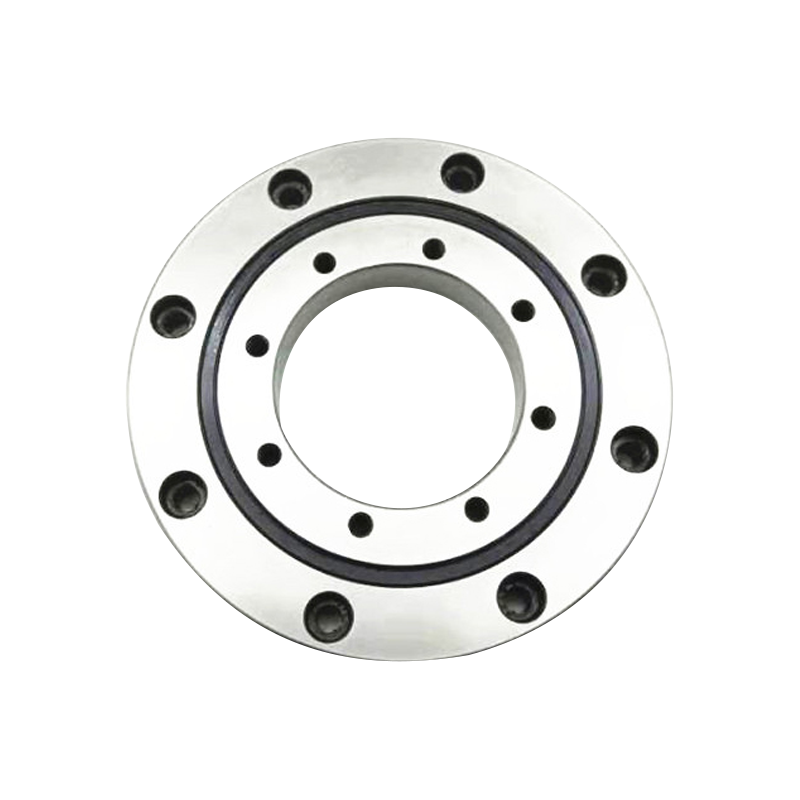
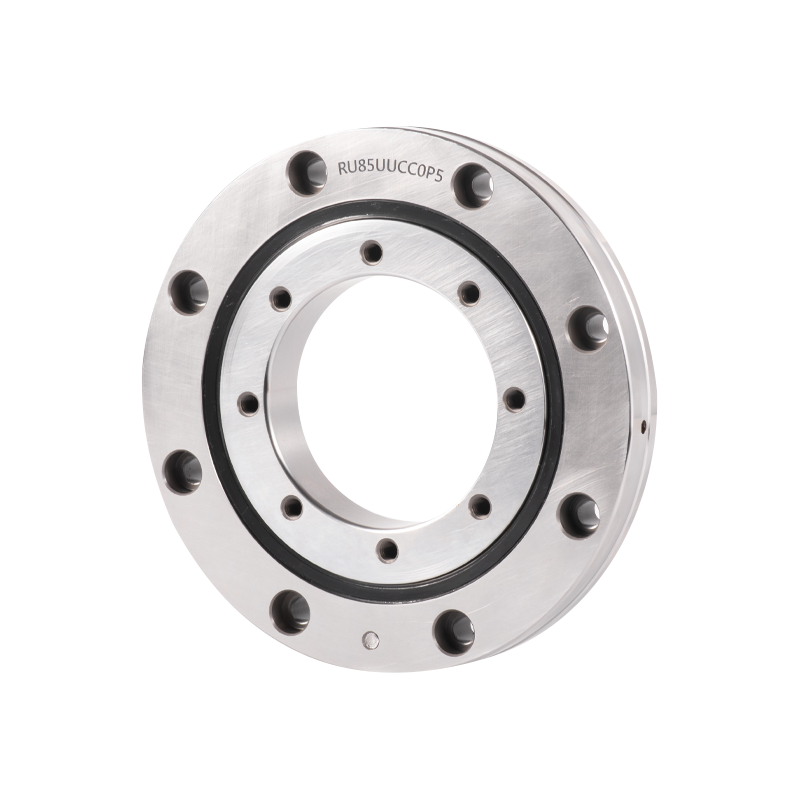
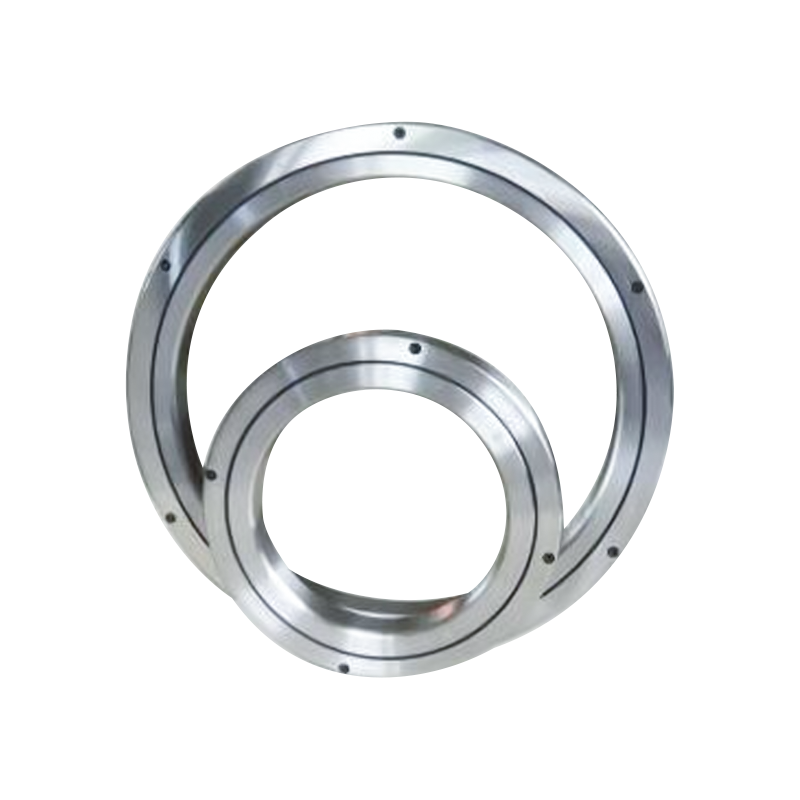
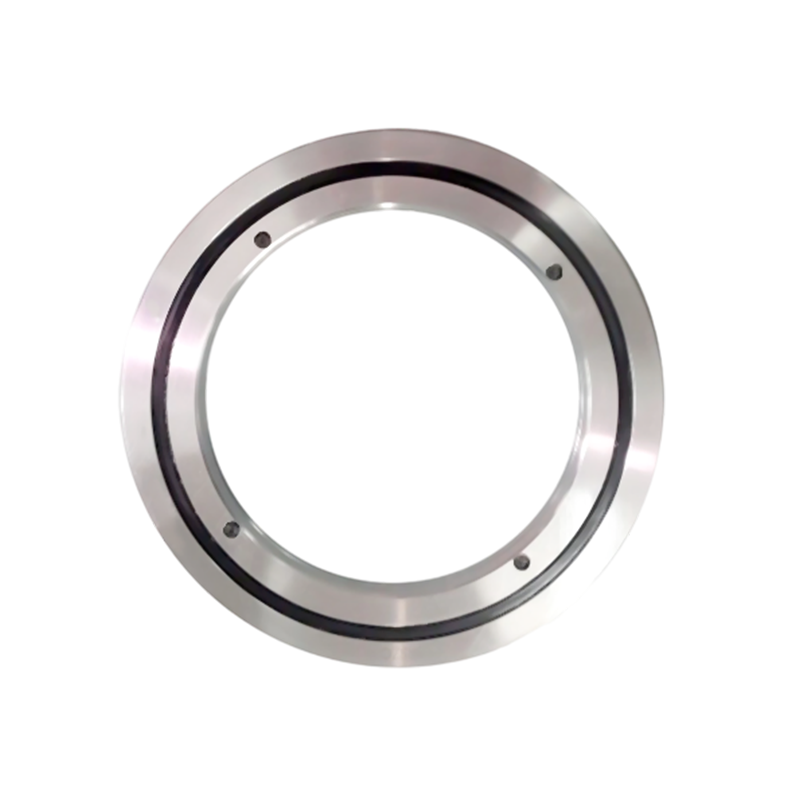
The RA Type bearing, designed with a segmented outer ring and an inner ring intended for rotation, is a compact slewing ring bearing solution for modern robotic motion systems, automated manipulators, precision positioning platforms, and lightweight industrial mechanisms. In applications where space, mass, rigidity, and smooth rotation must be balanced carefully, this bearing series provides a practical answer: a thin, light, high-stiffness rotational support capable of carrying complex loads while fitting into limited installation envelopes.
In industrial robotics, every millimeter and every gram can influence the performance of the complete machine. A joint that is too heavy increases motor load, raises energy consumption, reduces acceleration, and can limit working speed. A bearing that lacks rigidity causes deflection, vibration, positioning error, and shortened equipment life. The RA Type compact slewing bearing addresses these challenges through a reduced ring thickness, a compact cross roller structure, and a design orientation that supports rotating inner-ring applications commonly used in robot arms, rotary tables, indexing heads, inspection equipment, and intelligent production systems.
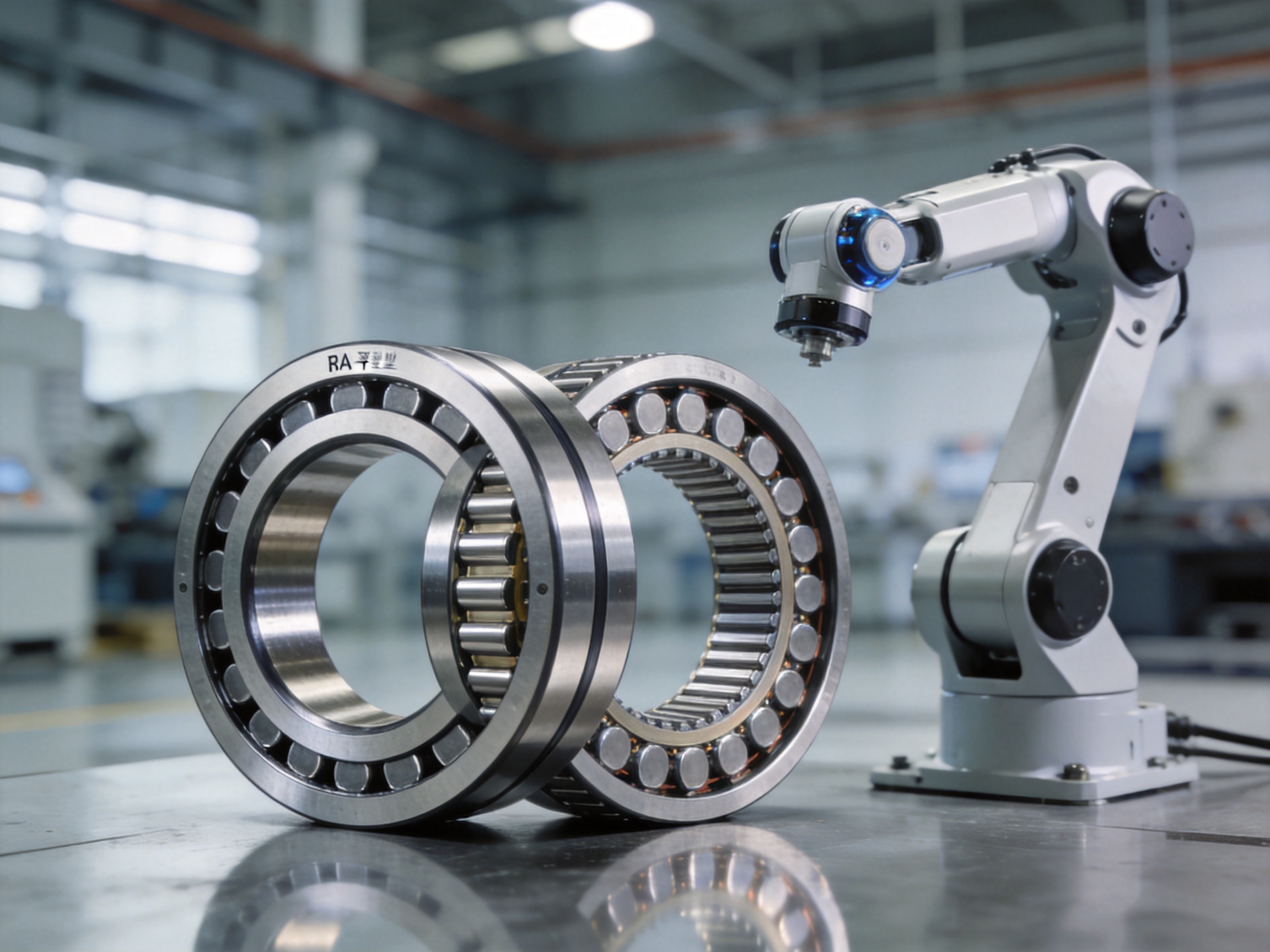
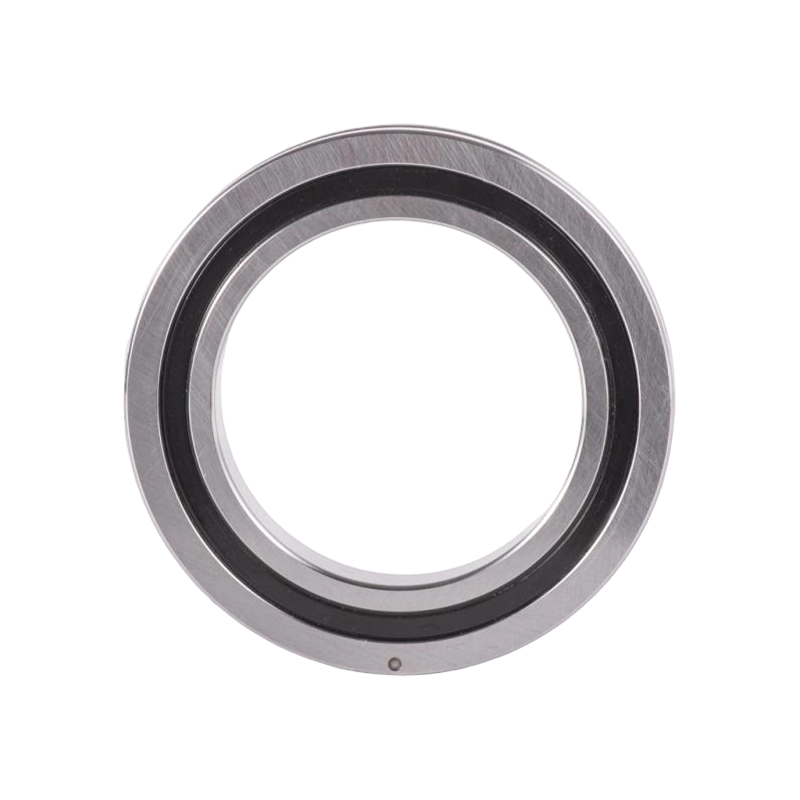
The RA Type series is engineered as a compact slewing ring bearing with both inner and outer rings reduced to an extremely thin section. This design makes it suitable for equipment where the available axial and radial space is limited, yet the rotational unit must still withstand radial loads, axial loads, and overturning moments. The outer ring is segmented, while the inner ring is designed for rotation, allowing it to be integrated into mechanisms where the rotating shaft, platform, or robotic joint is connected to the inner ring.
Compared with conventional large-section slewing bearings, the RA Type bearing offers a more compact profile. Compared with standard deep groove ball bearings used in pairs, it can provide better moment rigidity and more integrated load handling in a single bearing unit. Compared with bulky crossed roller alternatives, it provides a slim structure that helps engineers design lighter robot joints without compromising functional reliability.
The product is especially relevant for the rotating sections of industrial production robots and mechanical manipulators used in manufacturing environments. These systems demand accurate movement, repeatable positioning, low friction, and stable performance under frequent starts, stops, and directional changes. The RA Type bearing is intended to contribute to these goals by combining compact geometry with high rigidity and precise rotational guidance.
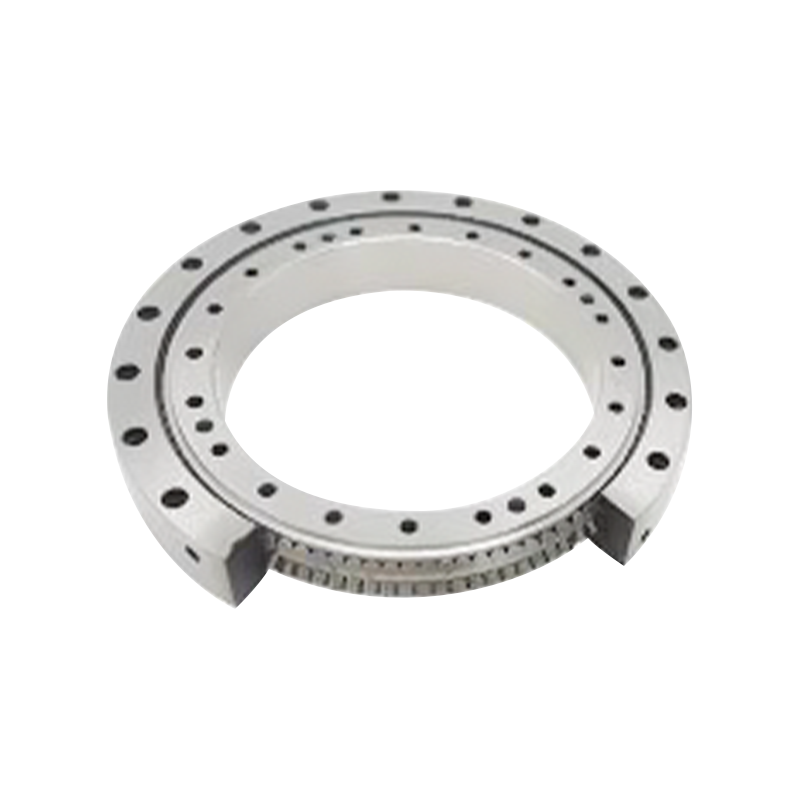
The structural concept of an outer ring segmented design with an inner ring for rotation is more than a construction detail. It influences assembly, load path, installation flexibility, and motion behavior. In robotic systems, the inner ring is often connected to the rotating member, such as a joint shaft, wrist axis, rotary actuator, or precision table. The outer ring may be mounted to a fixed housing, bracket, or robot body. This arrangement allows the rotating element to remain compact and concentric while the fixed support structure maintains stability.
The segmented outer ring can support practical assembly in thin-section crossed roller structures. Cross roller bearings typically contain cylindrical rollers arranged alternately at right angles. This arrangement enables the bearing to receive loads from multiple directions. Because the rollers are crossed, a single bearing can carry radial load, axial load in both directions, and moment load. That ability is essential for robotic axes, where the bearing is rarely subjected to a simple radial load only.
In many competitor solutions, engineers may need to use two angular contact bearings, tapered roller bearings, or multiple standard bearings to resist combined loads and tilting moments. This increases the axial length of the assembly, complicates preload adjustment, and raises the risk of mounting error. The RA Type bearing integrates these functions into a thin and compact unit, helping reduce the number of components and improving design simplicity.
The RA Type bearing offers several important advantages for robot manufacturers, automation equipment builders, precision machinery designers, and maintenance teams. These advantages are particularly valuable where the bearing must be small, light, accurate, and durable.
The most visible advantage of the RA Type series is its compact form. The thickness of both the inner and outer rings has been minimized to the practical limit. This is important because robot joints must often fit inside narrow housings, hollow arms, or compact rotary modules. A smaller bearing allows designers to reduce the diameter or width of the joint, creating a slimmer and more efficient machine.
Lower bearing weight also contributes directly to robotic performance. In multi-axis robots, each upstream joint must carry the weight of downstream components. Reducing bearing mass in the wrist, elbow, or rotary axis can improve acceleration, reduce servo motor load, and support energy-saving operation. For collaborative robots, lightweight rotary supports can also help improve responsiveness and safety characteristics.
Robotic equipment depends on repeatable positioning. Even small deflection in a bearing can cause tool-center-point error, vibration, or reduced machining quality. The RA Type bearing is designed to provide high rigidity within a slim cross-section. The crossed roller arrangement distributes loads efficiently and resists moment deformation more effectively than many ordinary bearing arrangements of similar size.
High rigidity helps maintain the alignment of robot joints under changing load conditions. When a robot arm accelerates, decelerates, carries a tool, or interacts with a workpiece, forces and moments are transmitted through the joint bearings. A rigid bearing helps preserve geometric accuracy and reduces unwanted motion. This is a key advantage over lower-cost standard bearing combinations that may be acceptable for simple rotation but less suitable for precision automation.
Robot bearings do not experience only one type of load. They must often carry radial forces from arm weight, axial forces from assembly structure, and overturning moments from offset payloads. The RA Type bearing is appropriate for these combined load conditions because the crossed roller construction allows load support in multiple directions.
This integrated load capacity can simplify mechanical design. Instead of arranging separate bearings to carry radial and axial loads, engineers can use a compact bearing that supports the combined action. This can reduce part count, shorten the assembly, and improve reliability by minimizing the number of tolerance stack-ups.
Precision rotary modules used in semiconductor equipment, inspection devices, medical devices, packaging machines, laser systems, and measuring instruments often require thin bearings with high rotational accuracy. The RA Type bearing can be used in such mechanisms when the application needs a compact slewing support with stable running performance. Its slim section allows it to be integrated into rotary actuators and indexing mechanisms where conventional slewing rings may be too large.
In automation, dynamic response matters. A heavy rotating system requires more torque to accelerate and decelerate. By reducing ring thickness and overall mass, the RA Type bearing helps reduce rotational inertia. This can improve cycle times, support smoother servo control, and reduce energy consumption. Compared with bulkier competitor bearings, a compact RA Type bearing may enable faster motion while preserving rigidity.
When selecting a bearing for robotic rotation, designers often compare crossed roller bearings, angular contact ball bearings, tapered roller bearings, cylindrical roller bearings, and compact slewing rings. Each type has advantages, but the RA Type bearing is particularly strong where compactness and combined load capacity are required.
Angular contact ball bearings can provide good axial load support and high speed, but they often need to be mounted in matched pairs to achieve adequate moment rigidity. This requires careful preload control and precise housing design. Tapered roller bearings can handle high combined loads, but they may generate more friction and require careful adjustment. Cylindrical roller bearings are strong in radial load capacity but usually need additional bearing arrangements for axial location. Standard slewing rings can support moment loads, but many are too large and heavy for compact robot joints.
The RA Type bearing offers a balanced solution. It is thinner and lighter than many conventional slewing bearings, more integrated than paired angular contact bearings, and better suited for compact moment support than simple radial bearings. This makes it a competitive choice for robotic joints and precision rotary equipment where space is limited but performance requirements are high.
| Selection Factor | RA Type Compact Cross Roller Slewing Bearing | Typical Competing Solution | Practical Advantage |
| Installation Space | Thin-section structure with reduced ring thickness | Often requires larger axial length or multiple bearings | Supports compact robot joint design |
| Load Direction | Supports radial, axial, and moment loads | May require separate bearings for different loads | Reduces component count and assembly complexity |
| Rigidity | High rigidity from crossed roller arrangement | Lower rigidity if using simple ball bearings | Improves positioning repeatability |
| Weight | Lightweight compact construction | Bulkier standard slewing rings or paired bearing sets | Reduces inertia and motor burden |
| Assembly | Integrated bearing unit for precision rotation | Requires preload adjustment and tolerance matching | Simplifies design and maintenance |
| Best Use | Robotics, manipulators, precision rotary axes | General machinery or less compact equipment | Better fit for intelligent automation |
The RA Type series covers a useful range of inner diameters, outside diameters, heights, and load ratings. The bearing models include compact sizes such as RA5008, RA6008, RA7008, RA8008, and RA9008, as well as larger models such as RA16013 through RA20013. The smaller models have a height of 8 mm, while larger models in the series have a height of 13 mm. This provides designers with options for different robotic joint sizes and rotating equipment layouts.
For example, the RA5008 model has an inner diameter of 50 mm, outside diameter of 66 mm, roller pitch diameter of 57 mm, height of 8 mm, and approximate weight of 0.08 kg. At the larger end, the RA20013 model has an inner diameter of 200 mm, outside diameter of 226 mm, roller pitch diameter of 212 mm, height of 13 mm, and approximate weight of 0.71 kg. These values demonstrate the compact and lightweight nature of the series across a broad size range.
Load ratings also scale with size. Smaller models provide radial basic load ratings suitable for compact rotary supports, while larger models offer significantly higher radial load capacity for more demanding axes. The RA16013, RA17013, RA18013, RA19013, and RA20013 models provide a higher load rating group, supporting larger robotic joints, heavy-duty manipulators, and precision rotary equipment requiring greater structural capacity.
Robot manufacturers face constant pressure to improve speed, precision, service life, and cost efficiency. Bearings are central to each of these objectives. A bearing failure can stop an entire production line, while poor bearing rigidity can reduce robot accuracy and product quality. The RA Type bearing helps robot manufacturers build more competitive machines by supporting compact construction, stable joint motion, and reliable rotational support.
One key benefit is design flexibility. The thin bearing section permits more freedom in arranging motors, reducers, encoders, brakes, cables, and housings. In a robot joint, many components compete for limited space. A compact bearing can allow larger hollow shafts, better cable routing, or smaller outer housings. This can improve the overall appearance, maintainability, and functional integration of the robot.
Another benefit is repeatable performance. Robotic production systems perform thousands or millions of cycles. Bearings must preserve smooth motion and accurate positioning over time. When manufactured with precise grinding, controlled heat treatment, clean assembly, and proper inspection, RA Type bearings can contribute to long-term motion stability.
A third benefit is reduced assembly burden. Using one compact crossed roller bearing instead of multiple separate bearings can simplify the bill of materials and reduce assembly time. It can also reduce the risk of incorrect preload or misalignment. For OEM manufacturers producing robots in volume, assembly simplicity can translate into lower production cost and more consistent quality.
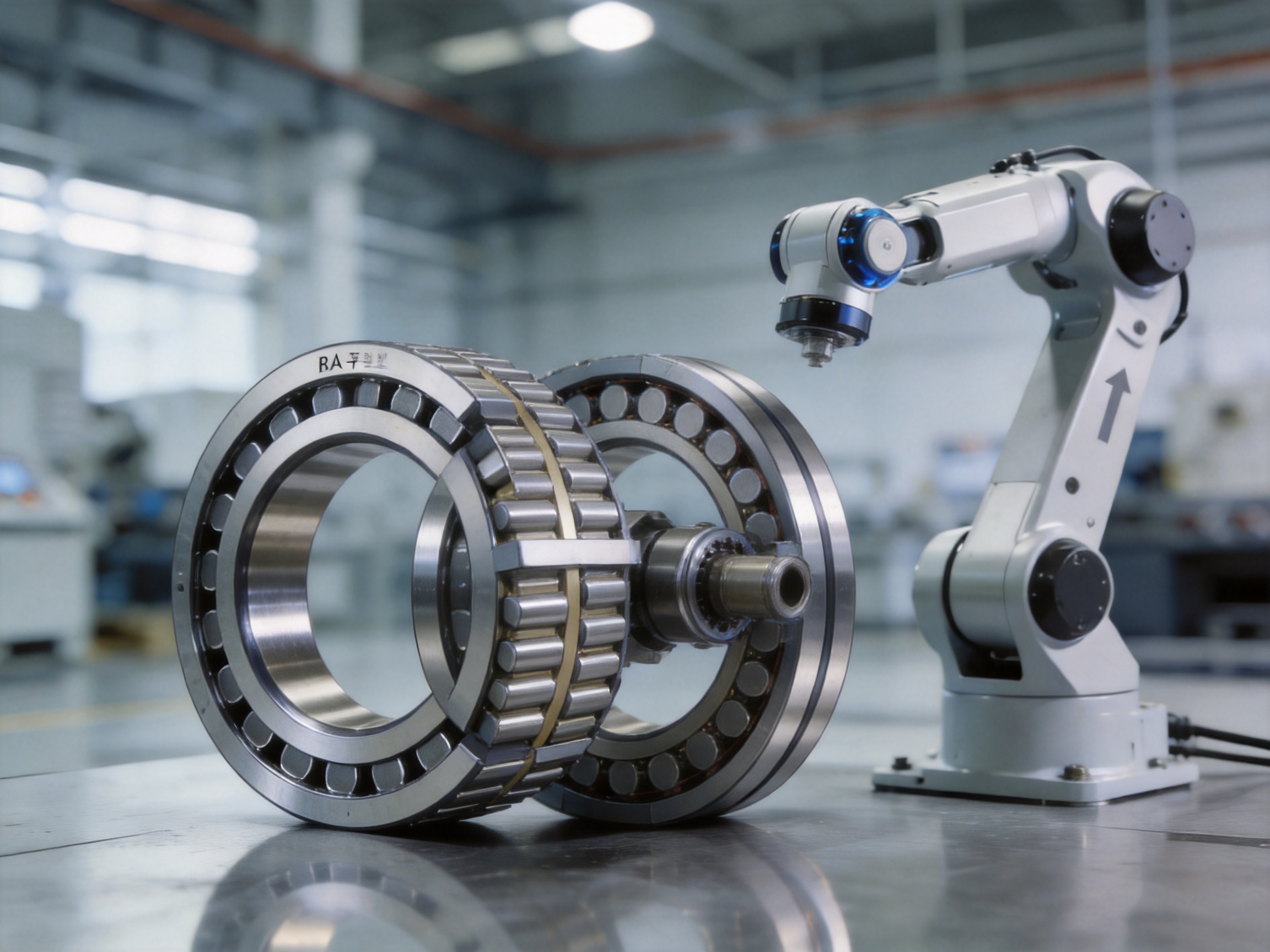
The performance of a precision bearing is not determined by design alone. Manufacturing quality is equally important. Ukl Bearing Manufacturing Co., Ltd applies an integrated production approach that includes forging, turning, heat treatment, grinding, assembly, inspection, and packaging. This manufacturing chain helps maintain control over quality from material preparation to finished product delivery.
Forging is important because it prepares the bearing rings with improved material structure and strength. Proper forging can help refine the internal grain flow of steel, improving durability under repeated load. After forging, turning processes shape the rings close to their final dimensions. Accurate turning provides the foundation for later precision operations and helps control material removal during grinding.
Heat treatment is one of the most critical stages in bearing manufacturing. It affects hardness, wear resistance, fatigue life, and dimensional stability. A bearing used in robotic equipment must resist repeated rolling contact stress. Controlled heat treatment improves the raceway surface and core properties needed for long-term operation. Poor heat treatment can cause early fatigue, cracking, dimensional distortion, or inconsistent performance, which is why process control is essential.
Precision grinding gives the bearing its final raceway geometry and dimensional accuracy. For a crossed roller bearing, raceway accuracy influences rotational smoothness, load distribution, rigidity, and noise. Advanced grinding and measurement processes help ensure that the rollers contact the raceway correctly. This improves load sharing and reduces localized stress. In high-precision robotic systems, even small geometric errors can affect motion accuracy, so grinding quality is a major differentiator.
Assembly must be performed carefully in a clean and controlled environment. Crossed rollers must be positioned correctly, and the bearing must be assembled to achieve the intended running performance. Contamination during assembly can shorten bearing life, while incorrect arrangement can affect friction and rigidity. Proper assembly practices help ensure smooth operation, stable torque, and reliable service.
Finally, packaging protects the bearing during storage and transportation. Precision bearings can be damaged by impact, corrosion, dust, or improper handling. Good packaging preserves cleanliness and dimensional integrity until the product reaches the customer’s assembly line.
Modern bearing customers often require more than standard catalog products. Robotic equipment, CNC machinery, intelligent automation systems, and precision devices may have unique installation spaces, load conditions, accuracy requirements, and service environments. Ukl Bearing Manufacturing Co., Ltd supports these needs through research and development, OEM and ODM experience, and technical service capability.
The company’s R&D activity focuses on high-precision cross roller bearings, dual-direction thrust angular contact ball bearings, and other products used in demanding equipment. By combining precision design with digital production control, the manufacturer can support customers who require reliable bearing performance for automation and intelligent manufacturing applications.
Custom bearing support may include selection assistance, dimensional adaptation, preload considerations, lubrication recommendations, accuracy class discussion, material review, and packaging requirements. For OEM customers, the ability to cooperate from design stage to mass production is especially valuable. A bearing manufacturer that understands both engineering design and production control can help reduce development risk and shorten the path to stable supply.
Precision robot bearings must be consistent. A single good sample is not enough; every batch must meet dimensional, material, and performance expectations. Quality control therefore includes incoming material inspection, process inspection, heat treatment verification, dimensional measurement, surface quality checks, rotational performance evaluation, and final inspection before shipment.
Dimensional accuracy is critical for the RA Type bearing because its thin section leaves little room for error. If the bearing is too loose in the housing, it may move under load. If the fit is too tight, internal clearance or preload can change, causing excessive torque, heat, or early failure. Accurate manufacturing supports predictable mounting behavior.
Surface finish is also important. Raceway and roller surfaces must support smooth rolling contact. Rough surfaces can increase friction, noise, and wear. Precision grinding and polishing processes reduce these risks. Cleanliness is another factor. Even small particles can indent raceways, disrupt rolling motion, and create early fatigue points.
Reliability also depends on correct product selection. The bearing’s load capacity must match the application’s radial load, axial load, moment load, duty cycle, speed, lubrication conditions, and environmental exposure. When loads exceed design limits, bearing damage accelerates. When lubrication is inadequate, friction and wear increase. When installation is improper, premature failure may occur even if the bearing itself is well made.
Although precision bearings are engineered for durability, several common causes can lead to premature failure if not managed correctly. Inadequate lubrication is one of the leading causes. Using unsuitable lubricant, applying too little or too much lubricant, or ignoring lubrication intervals can result in increased friction, heat, wear, and noise. For robotic equipment, lubrication should be selected according to speed, load, temperature, and environmental conditions.
Material fatigue is another common cause of bearing failure. Repeated rolling contact creates stress cycles in the raceways and rollers. If the bearing is overloaded, contaminated, poorly lubricated, or incorrectly installed, fatigue can appear earlier than expected. Correct sizing and proper operating conditions help maximize fatigue life.
Contaminants are also harmful. Dust, metal particles, moisture, and chemical residues can enter the bearing if seals are damaged or if assembly cleanliness is poor. Contamination can cause abrasive wear, indentation, corrosion, and noise. Regular inspection and proper sealing are therefore important in industrial environments.
Installation errors can include misalignment, excessive interference fit, uneven bolt tightening, impact damage, incorrect mounting surfaces, or improper handling. Thin-section bearings require careful installation because distortion can affect running accuracy. Mounting surfaces should be clean, flat, and dimensionally correct. The bearing should be handled with appropriate tools and installed according to technical instructions.
Excessive load is another risk. A compact bearing should not be selected only by size; it must be selected by load rating and actual application conditions. If the bearing experiences load beyond its capacity, raceway stress increases and failure may occur sooner. Engineers should consider both static and dynamic loads, shock loads, and moment loads.
Symptoms of bearing failure may include squeaking, grinding, metallic friction noise, abnormal vibration, rough rotation, increasing torque, heat generation, or reduced positioning accuracy. If such symptoms appear, the system should be inspected promptly. Continuing operation with a damaged bearing can lead to secondary damage to shafts, housings, motors, reducers, and surrounding components.
Correct installation is essential for extracting the full value of the RA Type bearing. The bearing should be stored in a clean, dry environment before installation. It should not be exposed to corrosive atmosphere, dust, or impact. During unpacking, operators should avoid touching precision surfaces with dirty hands or tools.
The mounting shaft and housing should be checked for dimensional accuracy, roundness, perpendicularity, and surface cleanliness. Because the RA Type bearing has a compact thin section, uneven mounting surfaces can distort the rings and affect smooth rotation. Burrs, chips, and dirt should be removed before assembly.
Fit selection should match the application. The rotating inner ring may require an appropriate fit with the rotating component to prevent creep under load. However, excessive interference can alter internal geometry. The fixed outer ring should also be mounted securely, and the segmented design should be handled according to the recommended procedure.
Fastening bolts should be tightened evenly in a cross pattern when applicable. Uneven tightening can distort the bearing and create localized stress. Torque values should be controlled. If the bearing is installed in a precision robot joint, final rotational torque and runout should be verified after mounting.
Lubrication should be applied according to operating conditions. The correct grease or oil helps reduce friction, prevent wear, and protect against corrosion. Relubrication intervals should consider speed, temperature, load, duty cycle, and contamination risk. In automated production environments, preventive maintenance schedules can help avoid unexpected downtime.
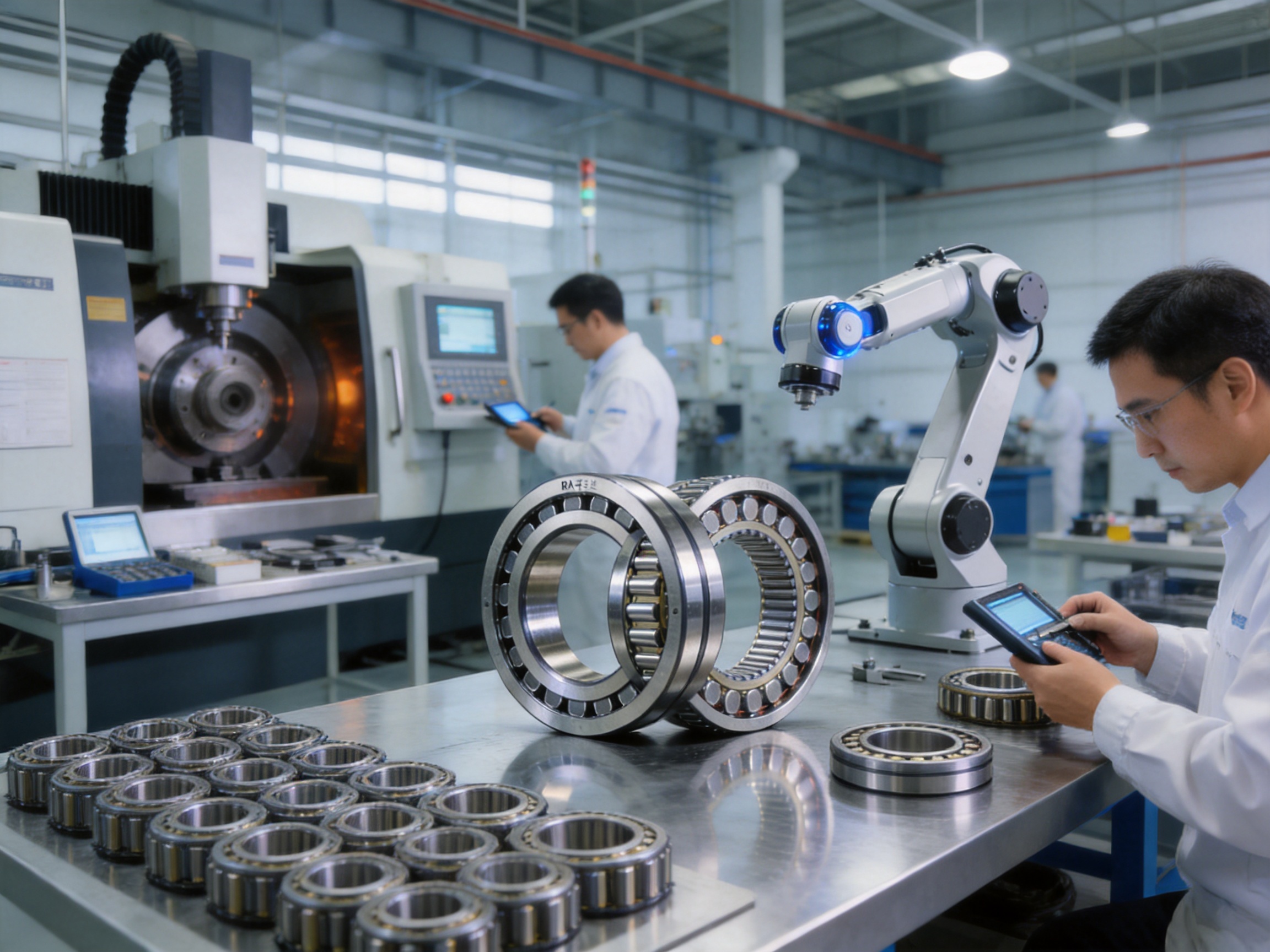
The RA Type bearing is well suited to the rotating sections of industrial production robots. These may include wrist axes, elbow joints, base rotary units, end-effector rotation mechanisms, and compact servo actuator modules. Its light weight and rigidity support faster, more accurate, and more efficient robotic movement.
Mechanical manipulators in manufacturing lines can also benefit from the bearing. Pick-and-place units, transfer arms, welding manipulators, loading systems, packaging machinery, and assembly robots often require compact rotary supports. The bearing’s ability to resist moment loads helps maintain stability when the manipulator carries offset loads.
Precision rotary tables are another important application. Inspection equipment, laser marking machines, testing systems, and electronic assembly equipment need smooth, stable rotation. A compact crossed roller slewing bearing can support accurate indexing and continuous rotary motion in a limited space.
CNC machines and intelligent automation devices may also use RA Type bearings in auxiliary axes, tool changers, rotary positioning systems, and measurement fixtures. In these applications, rigidity and rotational accuracy directly influence production quality.
Medical and laboratory devices can require compact rotary bearings where smooth motion, low noise, and precision are valued. While each application must be evaluated for specific cleanliness and material requirements, the compact structure of the RA Type bearing is attractive for equipment with limited internal space.
Many bearing products appear similar from the outside, but performance differences become clear during long-term operation. A bearing’s real value is created by material selection, heat treatment consistency, raceway precision, roller quality, assembly cleanliness, inspection discipline, and technical support. This is where advanced manufacturing capability becomes a competitive advantage.
Ukl Bearing Manufacturing Co., Ltd operates with multiple production lines covering key manufacturing processes. This integrated approach reduces dependence on uncontrolled external processes and supports better consistency. With production capacity reaching thousands of units per month, the company can support both standard orders and OEM supply programs.
Export experience also matters. Customers in different countries and industries may have different documentation, packaging, tolerance, and delivery requirements. A manufacturer with global supply experience can communicate more effectively with distributors, machine builders, and procurement teams. The company’s multilingual service support and technical response capability help customers resolve selection, installation, and maintenance questions more efficiently.
Another advantage is the combination of manufacturing and trading capability. This allows the company to provide a broad bearing product range while still maintaining technical focus on precision products. Customers seeking cross roller bearings, robot bearings, angular contact ball bearings, rod end bearings, spherical roller bearings, cylindrical roller bearings, tapered roller bearings, Nilos rings, and mounted bearings can work with one supplier for multiple industrial needs.
Sustainability is increasingly important in industrial manufacturing. A bearing may seem like a small component, but bearing quality influences energy consumption, equipment efficiency, maintenance frequency, and material waste. A durable bearing reduces replacement frequency and helps machines operate efficiently. A compact bearing can reduce system weight and energy demand.
The manufacturer’s commitment to environmentally responsible processes, material recycling, and energy optimization supports long-term industrial responsibility. By improving process efficiency and reducing unnecessary waste, bearing production can become more sustainable. In addition, support for technical training and engineering education helps develop future talent for advanced manufacturing industries.
When selecting an RA Type bearing, engineers should begin with the required inner diameter, outside diameter, available height, load direction, load magnitude, rotational speed, accuracy requirement, and service environment. A bearing should not be chosen only because it fits physically. It must also meet performance demands.
The inner diameter determines compatibility with the shaft or rotating structure. The outside diameter determines housing size. The height affects axial space. The roller pitch diameter influences load distribution and moment capacity. Load ratings help determine whether the bearing is suitable for the expected forces. Weight may be important in robot arms and moving systems.
For robotic joints, engineers should also evaluate reducer output loads, servo acceleration, emergency stop conditions, tool weight, offset distance, and duty cycle. Moment load calculations are especially important when the payload is positioned away from the bearing center. In high-precision equipment, runout, stiffness, and rotational torque may also need to be reviewed.
If the application involves dust, coolant, abrasive particles, high humidity, or temperature variation, sealing and lubrication should be considered carefully. For continuous operation, maintenance access and relubrication intervals should be planned from the design stage. Proper bearing selection is a collaboration between machine designers, maintenance teams, and bearing specialists.
The RA Type bearing is designed for compact precision rotation, especially in robotic joints, mechanical manipulators, rotary tables, and automation equipment. Its segmented outer ring and rotating inner ring structure make it suitable for applications where the inner component rotates while the outer structure remains fixed.
Robots need lightweight, rigid, and compact rotating supports. The RA Type bearing reduces ring thickness to save space and weight while using a crossed roller structure to support radial, axial, and moment loads. This helps improve positioning accuracy, reduce inertia, and simplify joint design.
Two angular contact ball bearings can support axial loads and provide good speed capability, but they require careful pairing, preload control, and more axial space. The RA Type bearing integrates combined load support into one compact unit, which can simplify assembly and improve moment rigidity in limited space.
Common causes include inadequate lubrication, contamination, installation errors, excessive load, fatigue, improper transportation, and incorrect fits. These problems can lead to noise, vibration, increased torque, heat, or eventual bearing failure.
The shaft and housing dimensions, mounting surface flatness, cleanliness, fit condition, bolt tightening sequence, and lubrication should all be checked. Because the bearing has a thin compact structure, installation accuracy is important for smooth rotation and long service life.
Yes. It can be used in precision rotary tables, inspection systems, CNC auxiliary axes, medical devices, laboratory equipment, packaging machinery, laser equipment, and other compact rotary mechanisms requiring rigidity and accuracy.
Precision bearings depend on accurate raceway geometry, controlled hardness, clean assembly, and stable dimensions. Forging, turning, heat treatment, grinding, assembly, and inspection all influence the final performance. Strong manufacturing control helps ensure consistent quality from batch to batch.
Important information includes inner diameter, outside diameter, installation height, radial load, axial load, moment load, speed, accuracy requirement, duty cycle, temperature, lubrication method, environment, and expected service life. For robotic applications, payload and offset distance are also important.
The RA Type compact cross roller slewing bearing offers a strong solution for precision robotic rotation. Its segmented outer ring and rotating inner ring configuration support practical integration into robot joints and compact rotary mechanisms. Its thin-section design helps reduce weight and space, while its crossed roller structure provides the rigidity and combined load capacity required by automation systems.
Compared with many competing bearing arrangements, the RA Type bearing can reduce component count, simplify assembly, improve moment rigidity, and support compact machine design. These advantages are especially valuable in industrial robots, mechanical manipulators, precision rotary tables, and intelligent manufacturing equipment.
The bearing’s performance is reinforced by advanced manufacturing capabilities, including forging, turning, controlled heat treatment, precision grinding, careful assembly, inspection, and protective packaging. With R&D capability, OEM and ODM experience, global export service, and a broad bearing product range, Ukl Bearing Manufacturing Co., Ltd is positioned to support customers seeking reliable precision bearing solutions for modern automation.
For engineers designing the next generation of robots and compact rotary systems, the RA Type bearing is more than a mechanical component. It is a structural foundation for accurate motion, reduced mass, improved efficiency, and long-term equipment reliability.
1. Harris, T. A., and Kotzalas, M. N. Rolling Bearing Analysis: Essential Concepts of Bearing Technology. CRC Press.
2. Brändlein, J., Eschmann, P., Hasbargen, L., and Weigand, K. Ball and Roller Bearings: Theory, Design and Application. Wiley.
3. ISO 281. Rolling Bearings: Dynamic Load Ratings and Rating Life. International Organization for Standardization.
4. ISO 492. Rolling Bearings: Radial Bearings, Geometrical Product Specifications and Tolerance Values. International Organization for Standardization.
5. Robot Industries Association. Industrial Robot Systems: Mechanical Design and Application Principles.
6. Bearing Engineering Handbook. Technical reference materials on lubrication, mounting, fatigue, and bearing selection for industrial applications.
Product Categories
Contact Us

Jane@ukl-bearing.com
Jenny@ukl-bearing.com
Andy@ukl-bearing.com
Ivy@ukl-bearing.com

+86-510- 88763239
+86-15371057968

No.1 Hehuan Road, Hudai Town, Binhu District, Wuxi City.
Ready to Begin?
Get in Touch

Now!
UKL BEARING
 English
 Español
 русский