Content
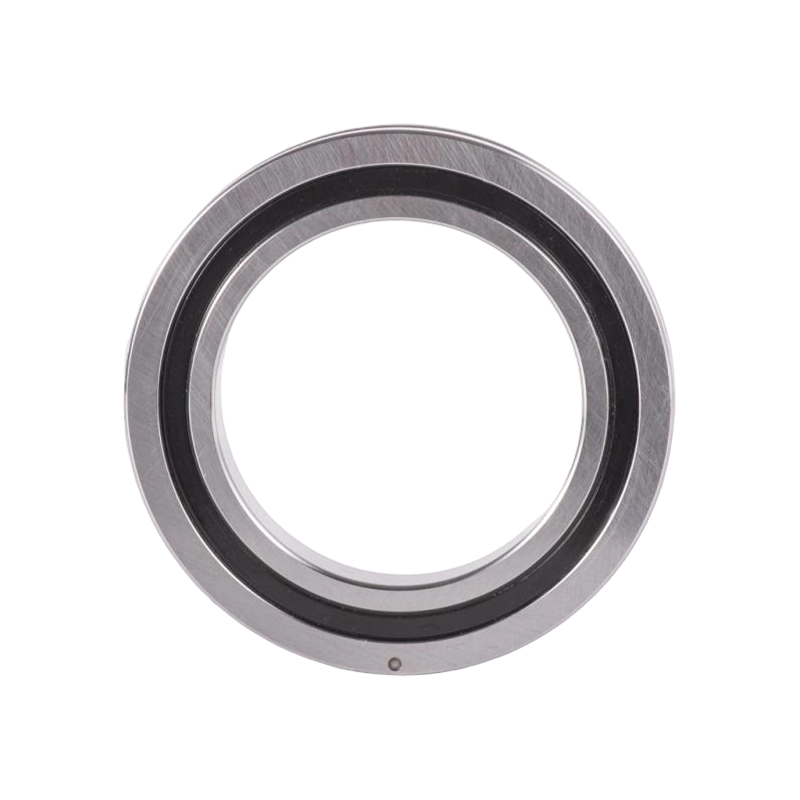
Precision motion systems increasingly demand bearings that can carry complex loads, maintain repeatable accuracy, save installation space, and operate reliably in compact equipment. The JXR Type crossed tapered roller bearing is designed for this environment. It combines two sets of raceways and tapered rollers arranged at right angles, with the rollers placed in an alternating crisscross pattern. This construction allows one compact bearing to support radial load, axial load, and overturning moment simultaneously, making it highly suitable for robotics, precision rotary tables, vertical grinding machines, indexing systems, large turntables, and advanced machine tools.
Unlike ordinary bearing arrangements that require multiple separate bearings to manage combined loads, the crossed tapered roller structure integrates load-carrying functions into a single rigid assembly. Its cross-sectional height is close to that of a single-row bearing structure, which helps designers reduce housing size, simplify installation, and save material. At the same time, the large taper angle and optimized geometry allow the complete bearing system to manage a span several times larger than the bearing width. This makes the product especially valuable where compact design and high moment capacity must be achieved together.
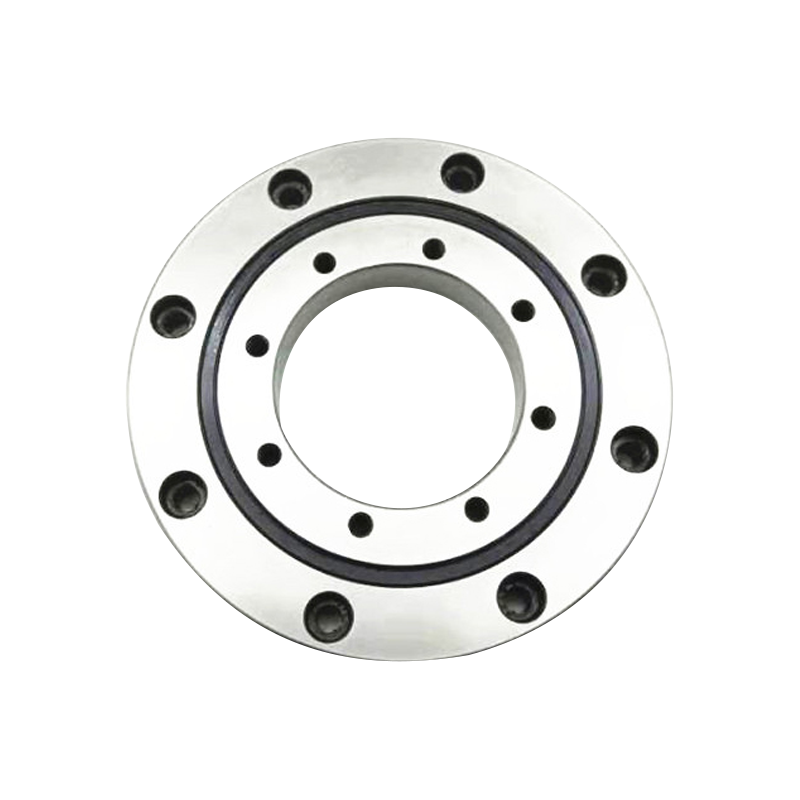
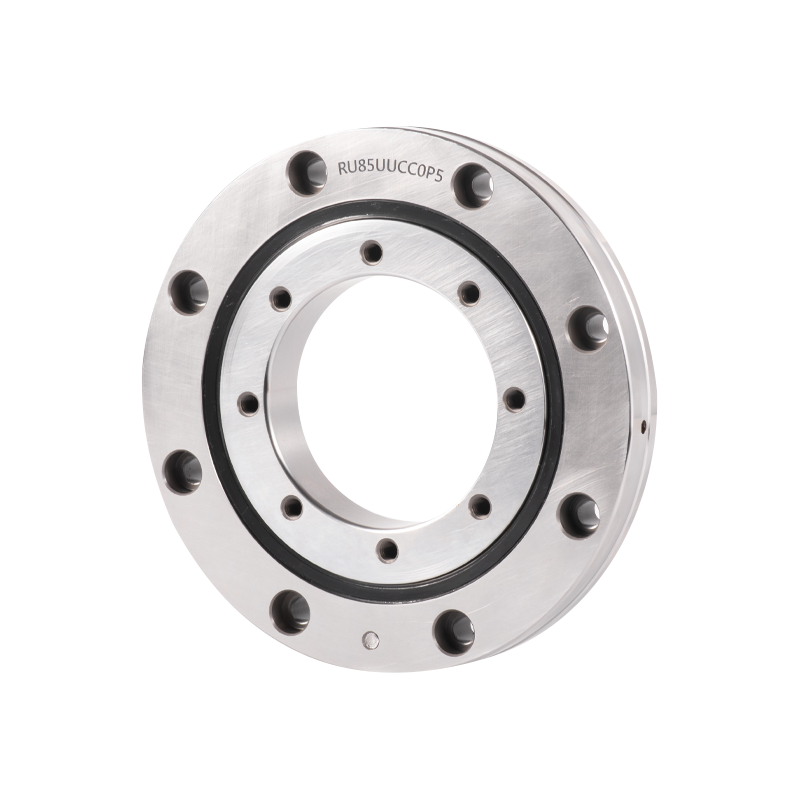
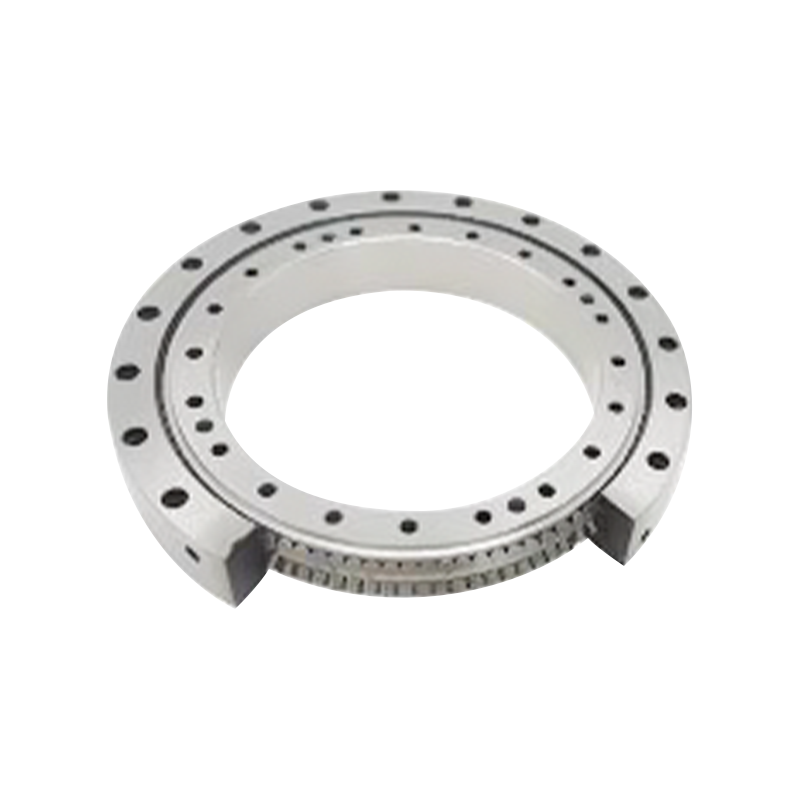
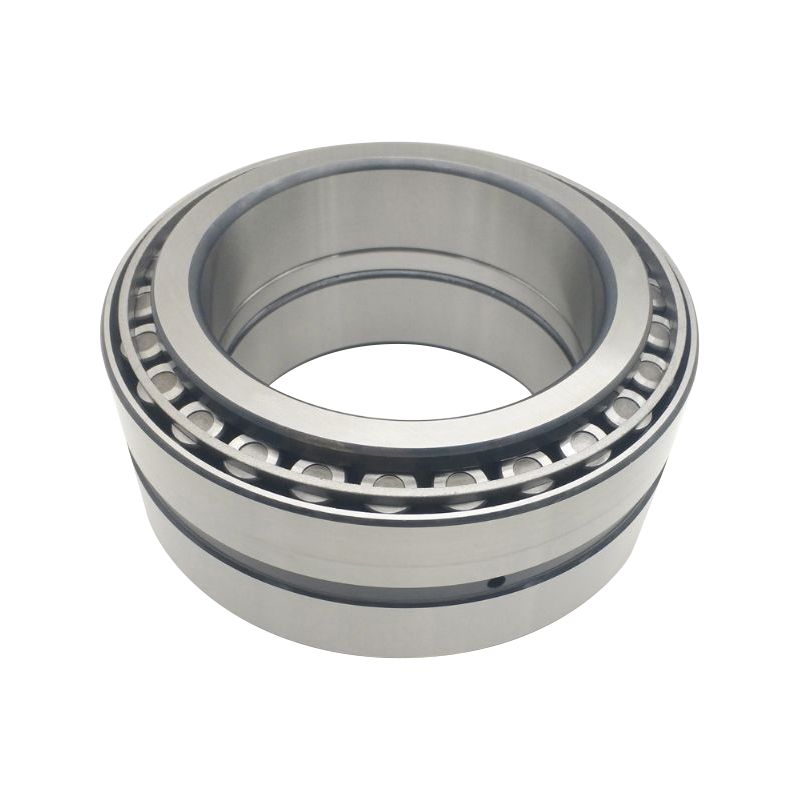
JXR Type (Crossed Tapered Roller Bearing)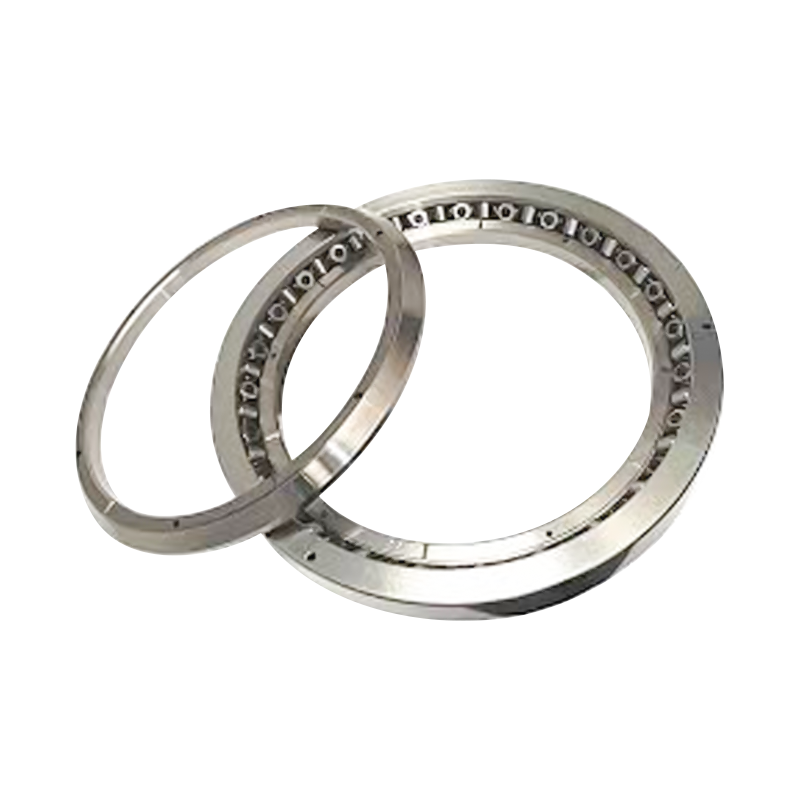
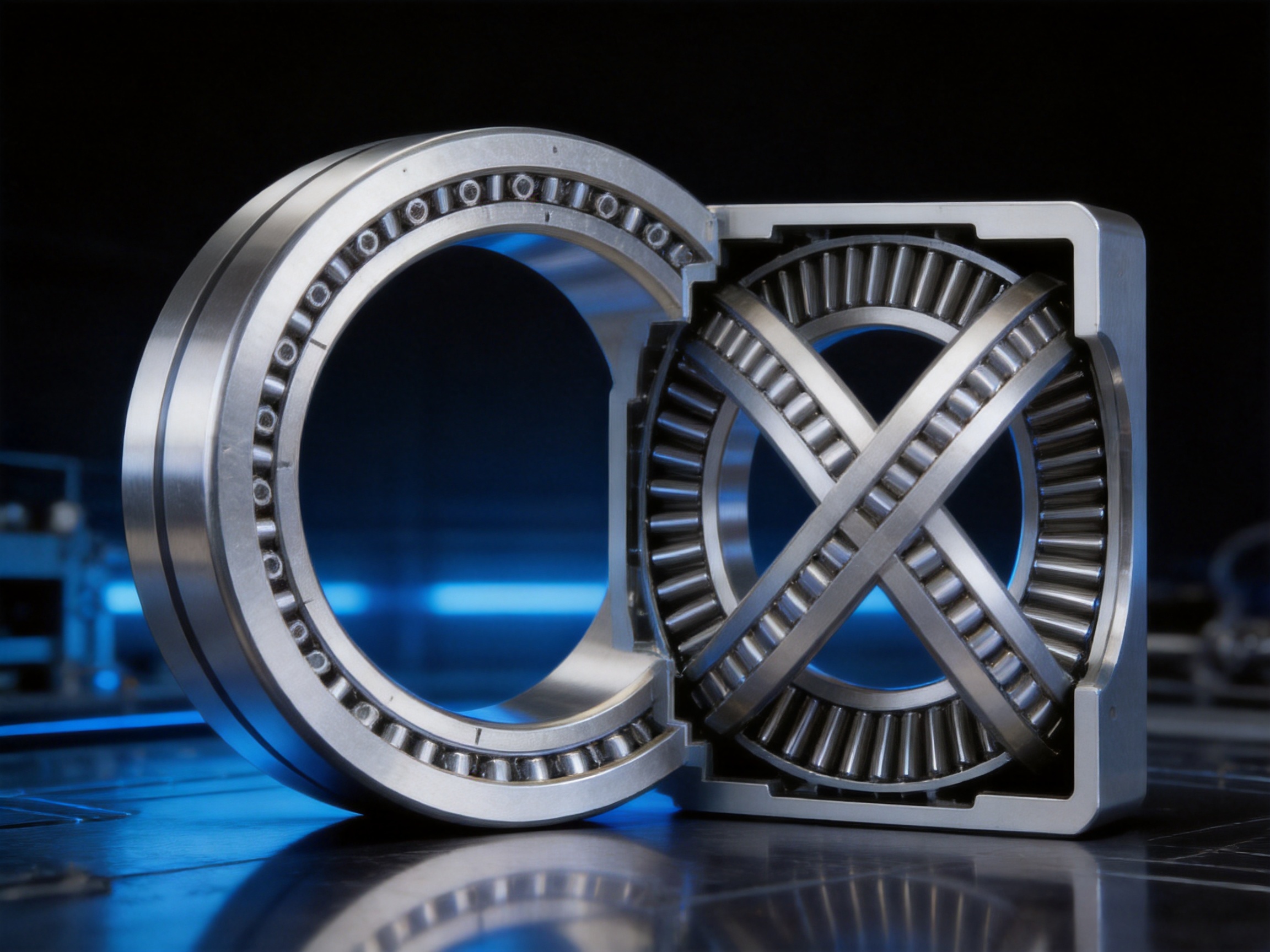
The JXR Type crossed tapered roller bearing is a high-precision bearing solution in the robot bearing category. Its defining feature is the use of tapered rollers arranged crosswise between two precision raceway systems. Each adjacent roller is oriented in the opposite direction, so load vectors are distributed efficiently through the bearing. This alternating layout gives the bearing high rigidity and excellent resistance to tilting torque, while preserving the compactness required by modern automated equipment.
The crossed tapered roller concept offers a practical answer to a common engineering problem: how to carry radial, axial, and moment loads without enlarging the bearing arrangement. In many traditional designs, a machine builder may use two angular contact ball bearings, two tapered roller bearings, or a combination of radial and thrust bearings. These arrangements can be effective, but they require axial space, careful preload adjustment, and additional housing precision. A crossed tapered roller bearing reduces these requirements by integrating the combined load capacity within one bearing envelope.
In high-speed vertical grinding machines, machine tool rotary tables, industrial robots, and precision circular indexing tables, any loss of rigidity can directly affect positioning accuracy, surface finish, tool life, and production stability. The JXR Type addresses this by providing a compact structure with high rigidity and high precision. The bearing can withstand large overturning moments created by offset loads, cutting force, eccentric workpieces, robot arm motion, or heavy rotary fixtures. As a result, it contributes to smoother operation and more predictable mechanical performance.
Another major feature is space efficiency. Because the bearing section height is similar to a single-row bearing structure, it can often replace larger multi-bearing systems. This advantage is important for robotic joints, compact CNC rotary axes, and automated equipment where every millimeter of design space matters. By reducing the number of components and simplifying the housing, machine builders can also reduce assembly time, alignment risk, and total system weight.
The mechanical strength of the JXR Type comes from both roller geometry and roller arrangement. Tapered rollers provide line contact rather than point contact, allowing load to be distributed over a larger contact area than many ball bearing designs. When these tapered rollers are crossed at right angles, the bearing can resist forces from multiple directions. This gives the structure excellent stiffness under combined radial, axial, and tilting loads.
High rigidity is especially important in applications where motion accuracy must remain stable during load changes. For example, a robot arm may experience rapidly changing direction, acceleration, deceleration, and payload orientation. A rotary table on a machine tool may carry a heavy workpiece while cutting forces act from different directions. A vertical grinding machine may require smooth rotation while resisting axial pressure and radial cutting load. In all these cases, the crossed tapered roller bearing supports the system by reducing elastic deformation and improving rotational stability.
Compared with conventional single-row radial bearings, the crossed tapered roller design is more capable of handling moment loads. A single radial bearing may carry radial load well, but it generally needs support from another bearing to resist tilting effectively. Compared with paired bearings, the crossed tapered roller bearing can provide similar or superior combined-load support with a shorter axial length. Compared with many large slewing-style solutions, it can offer higher precision and a more compact profile for applications that do not require extremely large sectional structures.
The taper angle is another important part of the design. The large taper angle helps convert external loads into stable internal force paths. This allows the bearing to manage a working span several times the bearing width, which improves resistance to overturning moments. This feature is highly valuable in rotary tables and turntables where the load may be located far from the bearing centerline.
The JXR Type crossed tapered roller bearing offers several advantages over common alternatives. First, it provides integrated load capacity. Instead of using separate radial and axial bearing components, one compact unit can carry radial force, axial force, and moment load. This reduces the complexity of the mechanical structure and can improve the reliability of the total assembly.
Second, it saves installation space. Many competing arrangements require two bearings mounted apart to generate moment stiffness. That layout increases the length of the shaft or housing. The crossed tapered roller design concentrates stiffness within a shorter axial dimension, allowing more compact equipment. For industrial robots and compact automation modules, this space-saving advantage can be decisive.
Third, it reduces housing material and system weight. Because the bearing does not require an extended arrangement to support combined loads, the surrounding structure can often be smaller. Lower housing weight can support faster robot movement, reduced inertia, easier installation, and more efficient energy use. In precision equipment, reduced mass can also improve dynamic response.
Fourth, it supports high precision rotation. The alternating roller arrangement and precision raceway processing help maintain rotational accuracy under load. This is beneficial for circular indexing tables, machine tool tables, and measuring or inspection systems where repeatability is essential. A lower-deflection bearing system can help improve machining consistency and reduce vibration.
Fifth, it offers high rigidity without excessive structural size. Competing solutions may achieve rigidity by using larger diameter bearings, wider bearing sets, or heavy support housings. The crossed tapered roller bearing achieves rigidity through geometry and internal arrangement, allowing machine designers to pursue compactness and strength at the same time.
Sixth, it simplifies assembly compared with multi-bearing layouts. A pair of conventional bearings must be aligned, preloaded, and mounted with controlled spacing. Any error in housing parallelism, shaft shoulder accuracy, or preload setting may affect service life. A compact crossed tapered roller bearing reduces the number of installation variables, helping equipment manufacturers improve production consistency.
Seventh, it is suitable for demanding industrial sectors. The product is not limited to a single application. It can be used in vertical drilling machines, grinding machine tables, precision circular indexing tables, large roller systems, turntables, rotary platforms, and industrial robots. This flexibility makes it a strong option for designers who want a bearing family that can support different equipment platforms.
Robotics places special demands on bearing systems. Robot joints must be compact, accurate, stiff, and durable. They also experience complex load combinations because the arm position, payload, and acceleration change continuously. A bearing used in such a joint must resist radial loads from the arm structure, axial loads from the transmission and mounting direction, and overturning moments caused by offset payloads.
The JXR Type crossed tapered roller bearing is well matched to these requirements. Its ability to carry multiple load directions allows it to support robot joint rotation with less need for auxiliary bearings. The high rigidity helps preserve robot positioning accuracy, while the compact section supports slimmer joint design. This can be useful in industrial robots used for welding, handling, assembly, palletizing, machining assistance, and automated inspection.
In intelligent manufacturing systems, the bearing may also be used in rotary positioning units, automated indexing platforms, and precision manipulators. These systems often require repeatable angular positioning while carrying changing loads. A bearing with low deflection and strong moment resistance helps reduce positioning error and mechanical vibration. This improves not only the accuracy of the machine but also the stability of the entire production process.
Robot bearings must also support long service life because downtime in automated production lines can be expensive. A compact bearing that combines rigidity, precision, and load capacity can reduce maintenance pressure. When manufactured with controlled heat treatment, precision grinding, and clean assembly, the bearing can achieve stable performance under continuous industrial operation.
Machine tools are among the most important application areas for crossed tapered roller bearings. Vertical drilling machines, grinding machine tables, CNC rotary tables, indexing tables, and precision circular positioning platforms all require accurate rotation under load. During machining, cutting forces act in different directions, and workpieces may create large overturning moments. If the bearing system lacks rigidity, the machine may suffer from chatter, poor surface finish, dimensional error, and reduced tool life.
The JXR Type helps solve these issues by providing high stiffness and combined-load carrying ability. Its crossed tapered roller structure resists tilting torque and maintains stable rotation when radial and axial forces occur together. This can improve table positioning repeatability and support heavier workpieces within a compact bearing envelope. For vertical grinding machines, the bearing can support the table while resisting axial grinding pressure and radial force, helping maintain smooth rotational accuracy.
Compared with standard ball bearing arrangements, crossed tapered rollers offer greater contact area and stronger resistance to deformation. Compared with using multiple separated tapered roller bearings, the crossed design can reduce axial space and simplify preload management. For machine builders, this means improved structural efficiency and easier integration into precision rotary axes.
In indexing applications, the bearing must support repeated start-stop movement. Each cycle can create moment load and impact-like stress. A rigid bearing with stable internal geometry helps maintain accuracy over many operating cycles. For grinding machine tables and large turntables, the ability to resist overturning moment is especially valuable because the workpiece load may not always be centered.
The bearing has a compact structure that saves space and material. Because the cross-sectional height is close to a single-row bearing, it helps equipment designers reduce the size of the bearing housing. This is not only a space advantage; it can also reduce the amount of material used in the machine base, table support, robot joint, or rotary unit. Lower material consumption can support cost efficiency and sustainability goals.
High rigidity is achieved through line-contact tapered rollers and alternating orientation. Each roller supports load in a defined direction, while the crossed pattern balances load paths throughout the bearing. This creates a stable internal structure that can resist complex forces. The result is a bearing that can perform where ordinary radial bearings would require additional support.
High precision depends on raceway accuracy, roller consistency, controlled clearance or preload, and careful assembly. In precision applications, even small geometric errors can cause runout, vibration, uneven load distribution, and heat generation. Advanced manufacturing and inspection processes are therefore essential. The product is designed for uses where accuracy is not optional but central to machine performance.
The bearing also has high rotation speed capability for its structural class. Although crossed tapered roller bearings are often selected primarily for rigidity and moment capacity, speed capability remains important in machine tools and automated equipment. Proper geometry, surface finish, lubrication, and material control all contribute to stable operation at rated speeds.
The JXR Type series includes models with different inner diameters, outside diameters, widths, chamfer sizes, load ratings, speed limits, and weights. Selection should consider the actual radial load, axial load, overturning moment, desired speed, mounting rigidity, lubrication method, operating temperature, installation accuracy, and required service life. The following table summarizes representative specifications from the product range.
| Bearing Type | Inner Diameter d | Outside Diameter D | Width H | Chamfer R | Basic Radial Load Rating | Basic Axial Load Rating | Limited Speed | Weight |
| JXR637050 | 300 mm | 400 mm | 37 mm | 1.5 mm | 63 kN | 80.1 kN | 720 r/min | 13 kg |
| JXR652050 | 310 mm | 425 mm | 45 mm | 2.5 mm | 82.2 kN | 102 kN | 640 r/min | 20 kg |
| JXR699050 | 370 mm | 495 mm | 50 mm | 3.0 mm | 93.6 kN | 119 kN | 600 r/min | 30 kg |
| XR496051 | 203.2 mm | 279.4 mm | 31.75 mm | 1.5 mm | 51.3 kN | 61.6 kN | 800 r/min | 6.5 kg |
| XR678052 | 330.2 mm | 457.2 mm | 63.5 mm | 3.3 mm | 100 kN | 123 kN | 620 r/min | 35 kg |
| XR766051 | 457.2 mm | 609.6 mm | 63.5 mm | 3.3 mm | 141 kN | 178 kN | 520 r/min | 51 kg |
| XR820060 | 580 mm | 760 mm | 80 mm | 6.4 mm | 215 kN | 234 kN | 300 r/min | 100 kg |
| XR855053 | 685.8 mm | 914.4 mm | 79.375 mm | 3.3 mm | 270 kN | 344 kN | 260 r/min | 150 kg |
| XR882055 | 901.7 mm | 1117.6 mm | 82.55 mm | 3.3 mm | 300 kN | 396 kN | 200 r/min | 185 kg |
| XR889058 | 1028.7 mm | 1327.15 mm | 109.22 mm | 3.3 mm | 405 kN | 534 kN | 160 r/min | 400 kg |
| XR897051 | 1549.4 mm | 1828.8 mm | 101.6 mm | 3.3 mm | 518 kN | 699 kN | 80 r/min | 500 kg |
The range covers compact sizes as well as large-diameter options. Smaller models may be used in precision equipment requiring high rotational accuracy with limited space. Larger models are suited for rotary platforms, large roller systems, turntables, and heavy indexing equipment. As the bearing diameter increases, radial and axial load ratings generally increase, while the limiting speed decreases due to larger rotating mass and greater rolling path diameter.
Model selection should not rely only on static load values. Engineers should also evaluate dynamic operating conditions, moment load, duty cycle, lubrication, mounting accuracy, shock load, temperature, and required precision grade. In high-accuracy systems, the stiffness of the surrounding structure is also critical. Even the best bearing cannot deliver full performance if the housing or shaft lacks sufficient rigidity.
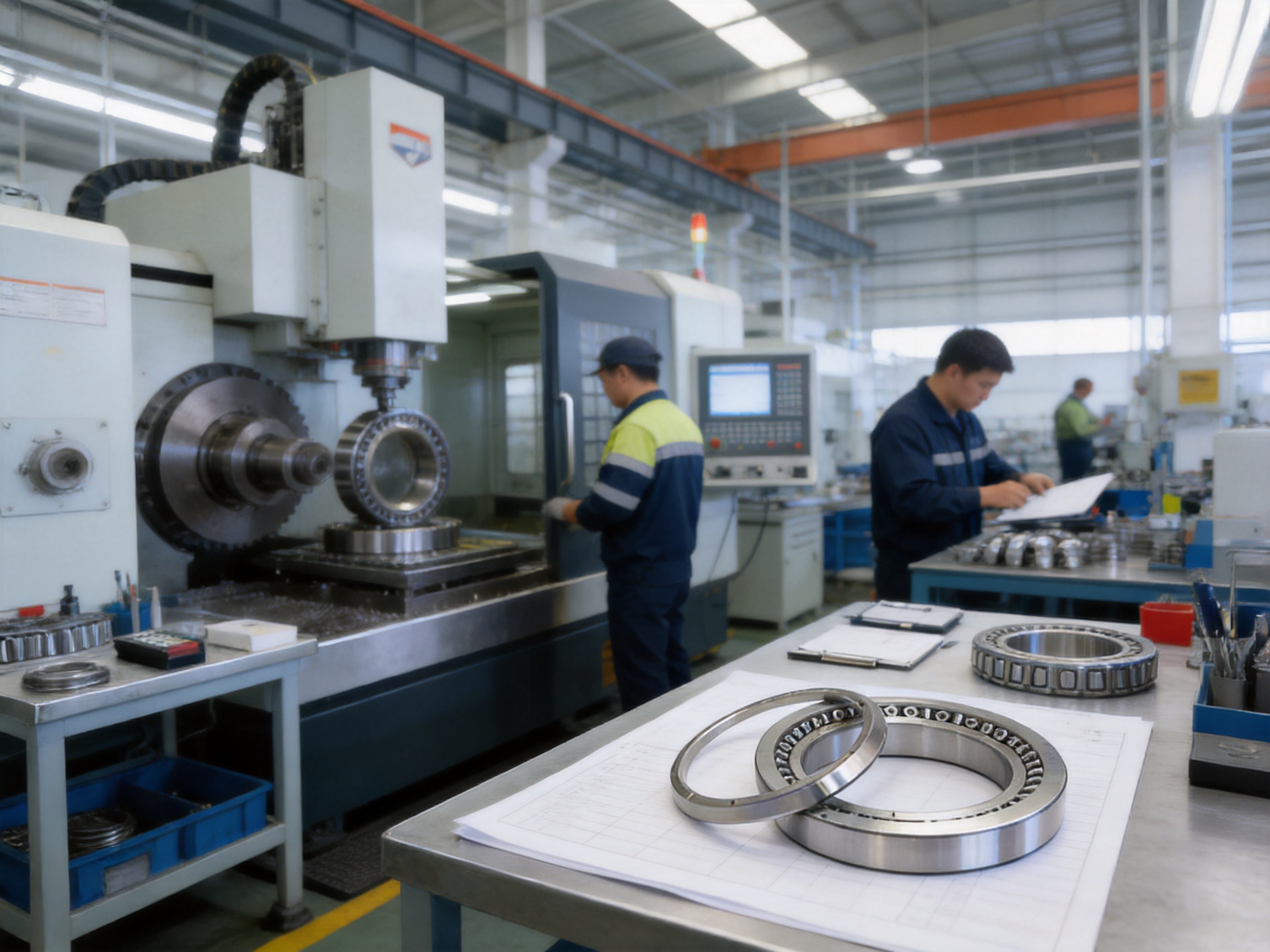
UKL Bearing Manufacturing Co., Ltd. supports this product through an integrated manufacturing system that includes research and development, production, quality control, and international distribution. The company operates modern production lines covering forging, turning, heat treatment, grinding, assembly, and packaging. These process stages are especially important for crossed tapered roller bearings because the final product depends on material stability, raceway accuracy, roller consistency, and clean assembly.
Forging provides the basic ring structure and helps improve material density and strength. A well-controlled forging process supports fatigue resistance, which is essential for bearings exposed to repeated loads. After forging, turning creates the preliminary geometry of the bearing rings. Accurate turning helps reduce excess material before grinding and ensures that later precision operations can be completed efficiently.
Heat treatment is one of the most critical stages. Bearing steel must achieve the correct hardness, toughness, and dimensional stability. If heat treatment is inconsistent, the bearing may experience premature wear, deformation, cracking, or reduced fatigue life. Controlled heat treatment supports stable raceways and rollers, enabling the bearing to withstand high contact stress during operation.
Grinding then brings the raceways and fitting surfaces to precision dimensions. For crossed tapered roller bearings, raceway profile, angle, roundness, and surface finish directly affect load distribution and rotational smoothness. Precision grinding reduces runout, improves contact quality, and helps maintain stable preload or clearance. Because the rollers are arranged at right angles, both raceway systems must be manufactured with careful geometric control.
Assembly requires cleanliness, measurement, and process discipline. Rollers must be selected and arranged so that load distribution remains balanced. The alternating crisscross pattern must be maintained accurately. Contamination during assembly can damage raceways and reduce bearing life, so clean handling and inspection are necessary. Final packaging protects the bearing during storage and transport, helping preserve surface quality before installation.
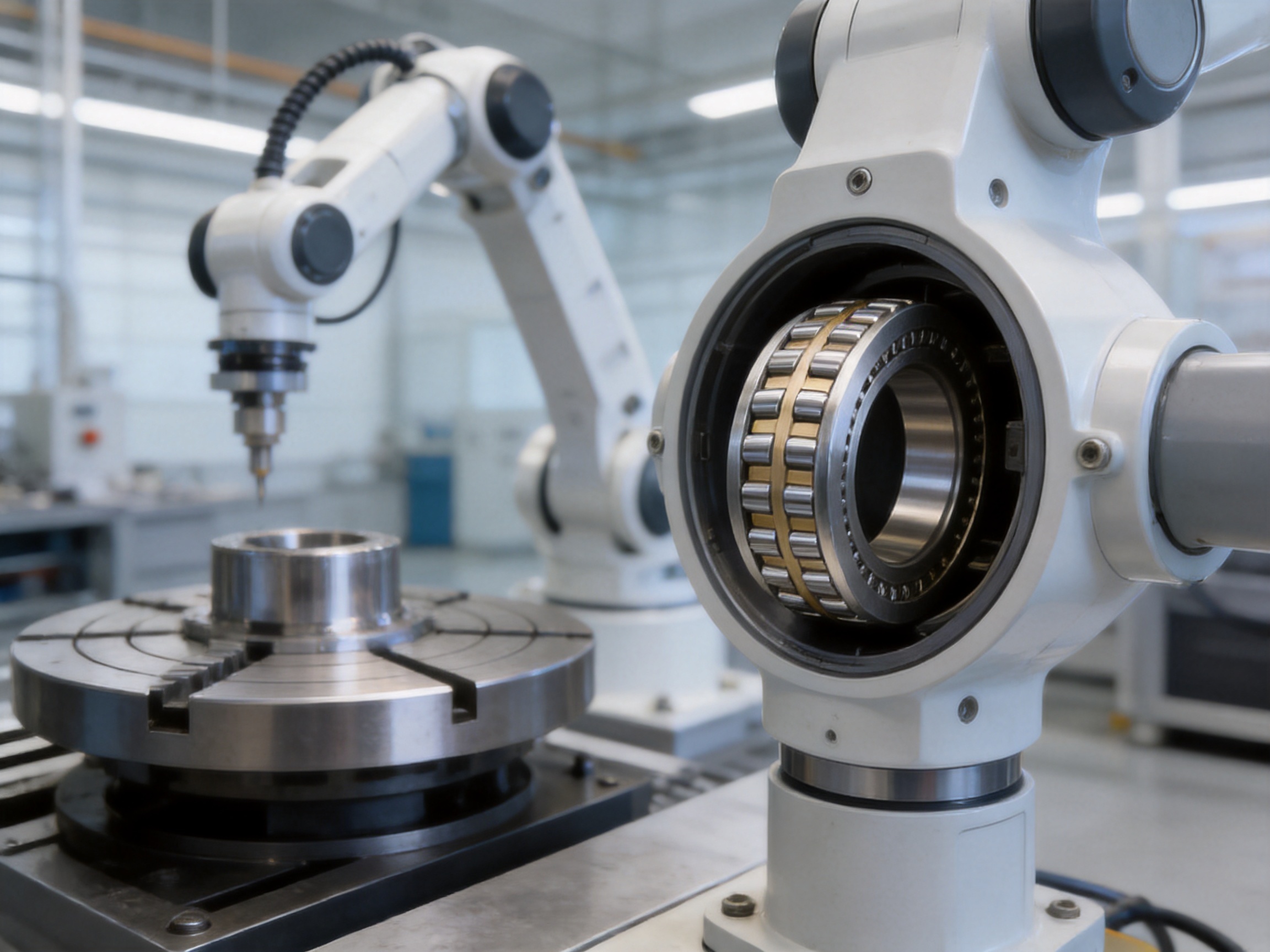
High-precision bearings require more than advanced machinery; they require a quality culture. UKL combines production control with inspection procedures intended to verify dimensional accuracy, surface finish, hardness, and assembly consistency. This is especially important for products used in robotics and CNC equipment, where small deviations can result in positioning errors or vibration.
Digital production control supports repeatability from batch to batch. By monitoring key process parameters, manufacturers can reduce variation and improve traceability. In bearing production, traceability helps identify material batches, heat-treatment conditions, grinding results, and inspection records. This contributes to both customer confidence and continuous process improvement.
Precision inspection may include dimensional measurement, roundness checks, raceway profile verification, hardness testing, surface roughness inspection, and rotational performance evaluation. For crossed tapered roller bearings, it is also important to ensure that internal geometry supports proper load sharing. If rollers do not carry load evenly, localized stress can increase and shorten service life.
Quality control also extends to packaging and logistics. Bearings with precision-ground surfaces must be protected from corrosion, impact, and contamination. Proper rust prevention, careful packing, and stable shipping procedures help ensure that the product reaches the customer ready for installation. This is particularly important for export markets and OEM customers operating long supply chains.
UKL Bearing Manufacturing Co., Ltd. is located at No.1 Hehuan Road, Hudai Town, Binhu District, Wuxi City. Since its establishment in 2020, the company has focused on precision bearing technology and engineering services. It operates as an integrated manufacturer and trader with 201 to 500 employees and more than 15 years of OEM and ODM export experience. This combination of manufacturing capability and international service experience helps the company support both standard bearing supply and customized industrial projects.
The company’s monthly production capacity of 10,000 to 50,000 units allows it to serve distributors, OEM clients, and industrial users across multiple markets. Its products are exported to the United States, Italy, Germany, Poland, South Africa, Egypt, India, and other regions. This international background reflects an ability to manage different technical requirements, documentation expectations, packaging standards, and delivery schedules.
One of the company’s strengths is its integrated production chain. With multiple production lines covering forging, turning, heat treatment, grinding, assembly, and packaging, it can control important quality factors internally. This reduces dependence on fragmented outsourcing and improves process coordination. For high-precision bearings such as crossed tapered roller bearings, integrated control helps maintain consistency in dimensions, hardness, surface finish, and final performance.
The company also emphasizes research and development. Its R&D team works on high-precision cross roller bearings, dual-direction thrust angular contact ball bearings, and other products used in CNC machines, robotics, and intelligent automation systems. This technical focus aligns closely with modern manufacturing trends, where compact rotary motion, precision positioning, and high rigidity are increasingly important.
Global service capability is another advantage. A multilingual service team can provide technical response, installation guidance, and after-sales maintenance support. For OEM customers, this service can help shorten development cycles and reduce risk during product integration. For distributors and end users, technical support helps ensure correct selection, installation, and maintenance.
For equipment manufacturers, the value of a bearing is not limited to the bearing itself. The bearing affects the entire mechanical design, assembly process, accuracy level, cost structure, and maintenance plan. The JXR Type crossed tapered roller bearing provides benefits across these areas because it combines several support functions into a compact unit.
In design, the bearing can reduce the need for long bearing spans. This allows shorter shafts, smaller housings, and more compact equipment layouts. In robotics, this may lead to slimmer joints and reduced moving mass. In machine tools, it may help create more compact rotary axes without sacrificing stiffness. In indexing systems, it can support accurate rotation while managing eccentric loads.
In assembly, using one integrated bearing can reduce alignment complexity. Multi-bearing systems require careful control of axial spacing, parallelism, preload, and shaft-housing geometry. The crossed tapered roller bearing still requires precise mounting, but it can simplify the overall bearing arrangement. This can reduce assembly time and improve production repeatability for OEM manufacturers.
In performance, the bearing’s high rigidity supports better accuracy under load. Equipment manufacturers can use this advantage to improve machine positioning, machining quality, robot repeatability, and rotary platform stability. In competitive equipment markets, these improvements can become clear product advantages.
In maintenance, a compact and rigid bearing arrangement may reduce the number of components that require inspection or adjustment. Proper lubrication and correct installation remain necessary, but the simplified structure can support easier service planning. For end users, reduced downtime and stable performance are often more valuable than initial component cost alone.
Correct installation is essential for any precision bearing. The JXR Type crossed tapered roller bearing should be mounted in a clean environment with proper tools and controlled force. The shaft and housing should meet the required dimensional and geometric accuracy. Burrs, contamination, incorrect fits, and uneven clamping can all reduce bearing performance.
The mounting surfaces should be rigid and accurately machined. Because the bearing is designed for high precision, the surrounding structure must not introduce distortion. If the housing is too flexible, the bearing may deform under load, reducing accuracy and service life. If the mounting surfaces are not flat or perpendicular, internal load distribution may become uneven.
Lubrication should be selected according to speed, load, temperature, duty cycle, and environmental conditions. Proper lubrication reduces friction, prevents wear, removes heat, and protects against corrosion. Both insufficient lubrication and excessive lubrication can cause problems. In high-speed applications, lubricant selection and quantity are especially important because heat generation can affect precision.
Preload or internal clearance should be managed according to the bearing design and application requirements. Excessive preload can increase friction and temperature, while insufficient preload can reduce rigidity and accuracy. Equipment manufacturers should follow technical guidance and conduct verification testing where necessary.
During installation, impact loading should be avoided. Hammering, misalignment, or force applied through rolling elements can damage raceways and rollers. Precision bearings should be handled with care, protected from dust and moisture, and installed using appropriate fixtures. After installation, rotational smoothness, runout, and operating temperature should be checked before full-load operation.
Service life depends on load, speed, lubrication, contamination control, mounting accuracy, operating temperature, and maintenance practices. A crossed tapered roller bearing can offer excellent performance, but it must be used within appropriate conditions. Overloading, poor lubrication, contamination, or misalignment can shorten life even in a high-quality bearing.
Regular inspection should focus on noise, vibration, temperature, lubrication condition, and rotational accuracy. Changes in sound or vibration may indicate contamination, insufficient lubrication, abnormal load, or early surface damage. Temperature increases may suggest excessive preload, lubricant problems, or misalignment. Early detection can prevent more serious equipment failure.
Lubricant condition should be monitored according to application severity. In dirty environments, sealing and contamination control become especially important. Abrasive particles can damage precision raceways and rollers, reducing accuracy and increasing wear. In machine tool applications, protection from coolant, chips, and grinding dust should be considered carefully.
For robotic and automation systems, maintenance planning should consider duty cycle and motion profile. Frequent acceleration and deceleration, reversing motion, and offset loads can create demanding conditions. Selecting the correct bearing size and maintaining proper lubrication are essential for long-term reliability.
Modern industrial purchasing increasingly considers sustainability as well as performance. A compact bearing that saves housing material and reduces equipment weight can contribute to more efficient machine design. When one crossed tapered roller bearing replaces a more complex arrangement, the machine may require fewer components, less material, and reduced assembly energy.
UKL also states a long-term commitment to environmentally responsible processes, material recycling, and energy optimization. In bearing manufacturing, these efforts can include efficient heat treatment, responsible handling of grinding fluids, material utilization improvement, and packaging optimization. Sustainability in precision manufacturing is not only about reducing waste; it is also about producing durable components that support longer equipment life.
Durability itself is a sustainability advantage. Bearings that maintain performance over long service intervals reduce replacement frequency, maintenance travel, downtime, and material consumption. In automated production lines, reliable bearings can also reduce scrap caused by mechanical instability. Therefore, precision, rigidity, and service life contribute to both economic and environmental value.
The JXR Type crossed tapered roller bearing is positioned for high-value applications where ordinary bearings may not provide enough combined-load capacity or rigidity. Its competitive value comes from the balance of compactness, precision, moment resistance, and manufacturing control. For customers comparing multiple suppliers, this balance is important because the lowest-cost bearing is not necessarily the lowest-cost system solution.
When compared with conventional bearing pairs, the product can reduce space, simplify design, and improve stiffness concentration. When compared with lower-precision cross roller alternatives, the focus on precision manufacturing and quality control can support better rotational accuracy and reliability. When compared with oversized slewing-style solutions, it can provide a more refined bearing structure for precision rotary motion.
The company’s OEM and ODM experience further strengthens its competitiveness. Many industrial customers do not need only catalog products; they need engineering communication, dimensional compatibility, technical documentation, and stable supply. A manufacturer with R&D capability and integrated production can respond more effectively to these needs.
International export experience also matters. Customers in different countries may require consistent packaging, inspection reports, technical communication, and delivery reliability. A supplier familiar with global markets can reduce procurement risk and improve long-term cooperation.
Choosing the correct crossed tapered roller bearing begins with understanding the load system. Engineers should calculate radial load, axial load, and overturning moment under normal and maximum operating conditions. They should also consider shock loads, emergency stops, machining forces, acceleration loads, and payload offsets.
Speed is another key factor. The product table shows limiting speeds from 800 r/min for smaller models to 80 r/min for the largest listed model. The required operating speed should remain within a safe range, considering lubrication, heat generation, duty cycle, and ambient temperature. If an application requires continuous operation near the speed limit, technical review is recommended.
Space and weight should also be evaluated. Smaller cross-section bearings can help reduce machine size, but the selected model must still provide sufficient load rating and stiffness. Oversizing may increase cost and rotating mass, while undersizing may reduce service life or accuracy. The best selection balances capacity, stiffness, size, speed, and cost.
Precision requirements must be considered early in the design process. Applications such as CNC rotary tables and robotic joints may require strict runout and repeatability. In these cases, bearing accuracy, housing accuracy, shaft accuracy, and assembly method must be treated as a complete system. A high-precision bearing should be matched with high-quality surrounding components.
Environmental conditions also affect selection. Exposure to dust, coolant, abrasive particles, moisture, or temperature variation may require special sealing, lubrication, or material consideration. In heavy industrial environments, contamination control can be as important as load capacity.
A crossed tapered roller bearing is a bearing in which tapered rollers are arranged alternately at right angles between precision raceways. This structure allows the bearing to carry radial load, axial load, and overturning moment in a compact design.
Robot joints require compact size, high rigidity, and the ability to handle changing load directions. The JXR Type supports radial, axial, and moment loads simultaneously, helping robot joints maintain positioning accuracy while saving installation space.
Ordinary radial ball bearings mainly handle radial loads and often need additional bearings to manage axial and moment loads. The crossed tapered roller design provides line contact and crossed load paths, giving it stronger combined-load capacity and greater rigidity.
Yes. The bearing is suitable for machine tool rotary tables, grinding machine tables, precision circular indexing tables, vertical drilling machines, and similar equipment. Its rigidity and moment resistance help support machining accuracy under complex loads.
A compact structure saves installation space, reduces housing material, and can lower system weight. In robotics and precision automation, this helps create smaller, lighter, and more responsive equipment without sacrificing load capacity.
Important processes include forging, turning, heat treatment, precision grinding, assembly, inspection, and protective packaging. Each process affects final bearing accuracy, strength, surface quality, and service life.
It should be installed in a clean environment using proper tools and controlled force. The shaft and housing should be accurately machined, mounting surfaces should be rigid, and lubrication should match the operating conditions. Impact loading and contamination should be avoided.
Useful information includes radial load, axial load, overturning moment, speed, duty cycle, required accuracy, installation dimensions, lubrication method, environmental conditions, and expected service life. For demanding applications, technical consultation is recommended.
The main advantages are combined-load capacity, high rigidity, compact section height, high precision, moment resistance, space saving, simplified assembly, and suitability for robotics and machine tool applications.
The JXR Type crossed tapered roller bearing is a high-performance solution for precision equipment that must combine compact design with strong load capacity and high rigidity. Its crossed tapered roller structure allows one bearing to handle radial load, axial load, and overturning moment at the same time. This provides clear advantages over many conventional bearing arrangements that require multiple components and larger installation space.
For robotics, the bearing supports compact joint design, accurate motion, and resistance to complex dynamic loads. For machine tools, it helps maintain rotary table accuracy, reduce deflection, and improve stability under machining forces. For indexing systems, turntables, and rotary platforms, it delivers the moment resistance needed for reliable positioning and heavy-load support.
The value of the product is strengthened by advanced manufacturing processes, including forging, turning, heat treatment, grinding, assembly, and packaging. UKL Bearing Manufacturing Co., Ltd. adds further support through R&D capability, integrated production, quality control, OEM and ODM experience, export service, and multilingual technical assistance. These strengths help customers obtain not only a bearing, but a reliable precision motion solution.
As intelligent manufacturing, robotics, and high-precision machine tools continue to advance, bearing systems must deliver greater stiffness, accuracy, and compactness. The crossed tapered roller bearing meets these needs with a structure designed for modern industrial motion. For engineers seeking a compact, rigid, and precise bearing for demanding rotary applications, the JXR Type represents a strong and competitive choice.
1. Harris, T. A., and Kotzalas, M. N. Rolling Bearing Analysis: Essential Concepts of Bearing Technology. CRC Press.
2. Brändlein, J., Eschmann, P., Hasbargen, L., and Weigand, K. Ball and Roller Bearings: Theory, Design and Application. Wiley.
3. ISO 281. Rolling Bearings: Dynamic Load Ratings and Rating Life. International Organization for Standardization.
4. ISO 492. Rolling Bearings: Radial Bearings Geometrical Product Specifications and Tolerance Values. International Organization for Standardization.
5. Shigley, J. E., Mischke, C. R., and Budynas, R. G. Mechanical Engineering Design. McGraw-Hill.
6. Hamrock, B. J., Schmid, S. R., and Jacobson, B. O. Fundamentals of Fluid Film Lubrication. CRC Press.
Product Categories
Contact Us

Jane@ukl-bearing.com
Jenny@ukl-bearing.com
Andy@ukl-bearing.com
Ivy@ukl-bearing.com

+86-510- 88763239
+86-15371057968

No.1 Hehuan Road, Hudai Town, Binhu District, Wuxi City.
Ready to Begin?
Get in Touch

Now!
UKL BEARING
 English
 Español
 русский