Content
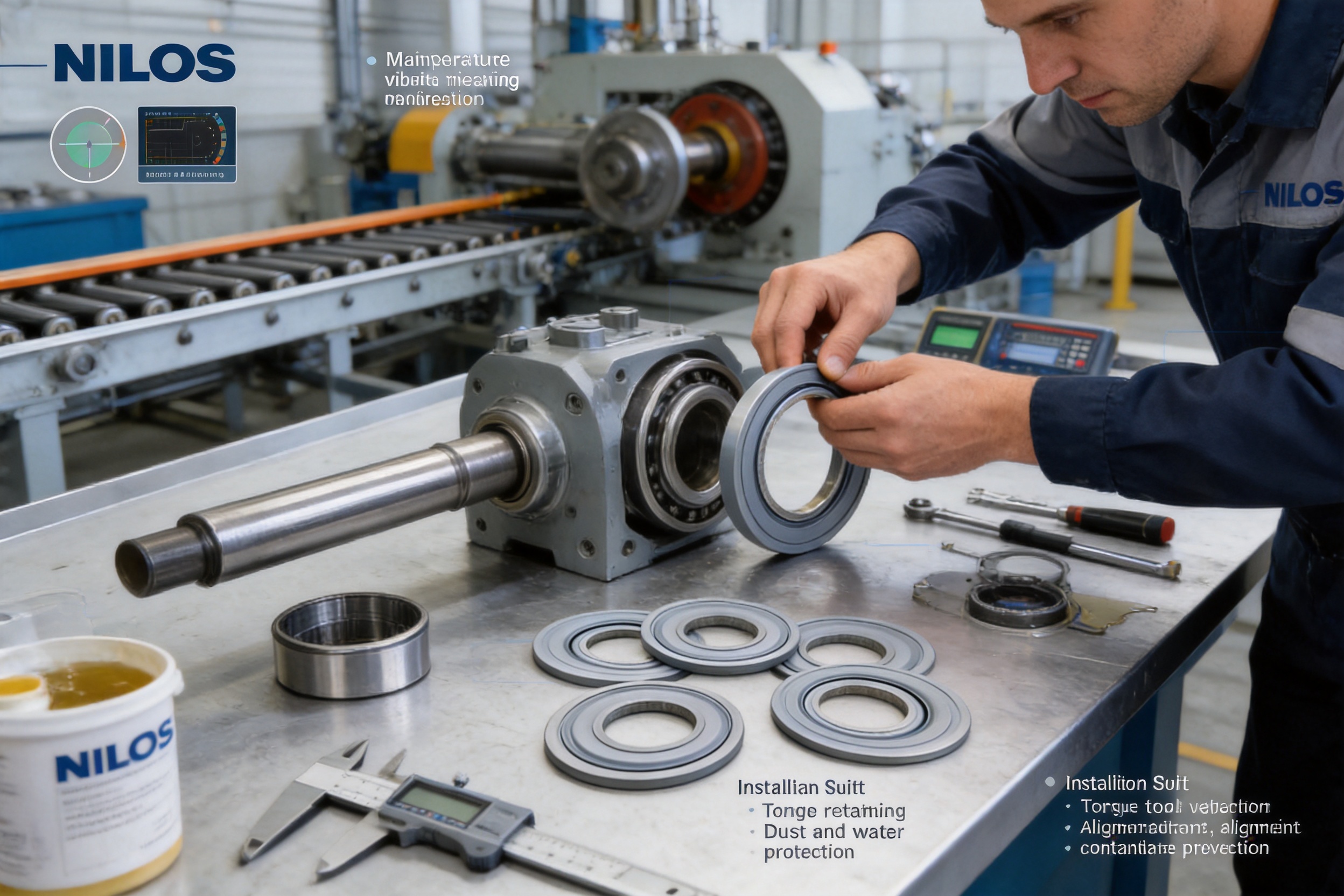
In modern industrial equipment, bearing performance depends on more than rolling elements, raceways, lubrication, and load capacity. A bearing can be manufactured to precise tolerances and still experience premature wear if abrasive dust, water, metal particles, or other contaminants enter the operating area. At the same time, lubricant may escape from the bearing arrangement, reducing service life and increasing maintenance requirements. Nilos rings provide a practical and durable solution to these challenges by forming a metal sealing arrangement around selected bearing types.
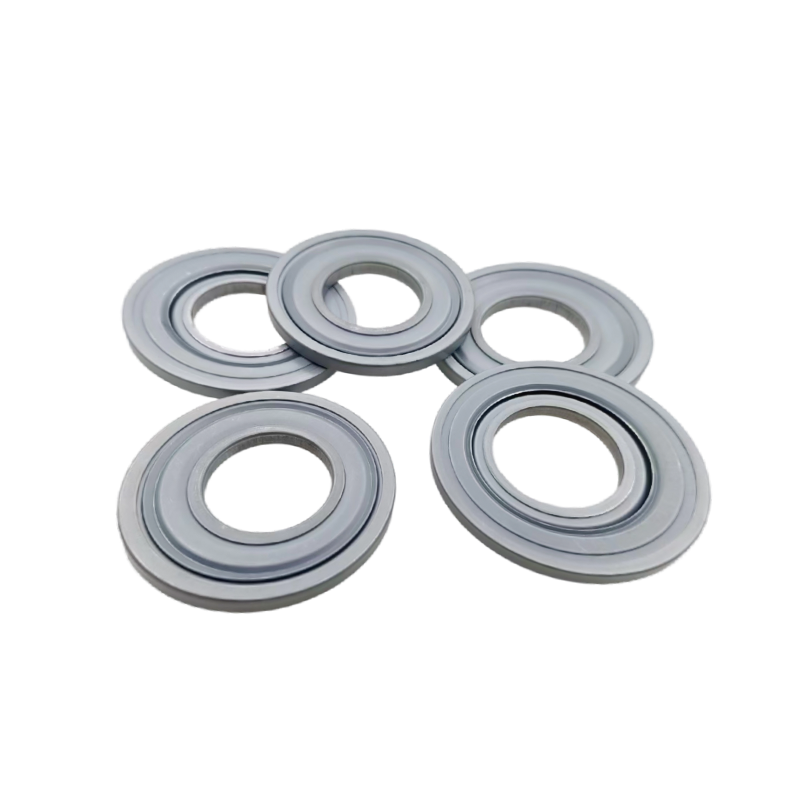
A Nilos ring is a precision-manufactured metal seal designed to protect a bearing and help retain its lubricant. Unlike many soft sealing materials, a metal sealing ring is not primarily dependent on elastomeric flexibility. Its function is based on carefully designed contact surfaces, narrow sealing gaps, and close cooperation with the bearing geometry. This makes the product especially valuable in applications where temperature, rotational speed, mechanical strength, contamination, or long service intervals place high demands on the bearing system.
Metal sealing rings are used in a wide range of industrial environments, including agricultural machinery, conveyors, motors, gearboxes, machine tools, transport equipment, processing systems, and general mechanical assemblies. They are also suitable for many applications in which a bearing requires additional protection but the available installation space does not allow a large external housing seal.
A Nilos ring is a metal sealing component installed with a bearing to protect the bearing interior and support lubricant retention. The ring is generally produced from corrosion-resistant or specially treated steel and is formed to create a controlled sealing interface around the bearing. Depending on its structure and installation position, it can seal against the inner ring, outer ring, or a corresponding bearing surface.
The sealing action is achieved through a close-fitting metal arrangement. In some designs, the ring forms a static seal against one bearing ring while maintaining a small clearance or controlled contact with the other. In other designs, the sealing lip is arranged to follow a specific bearing shoulder or side surface. The exact configuration depends on the bearing type, the shaft and housing dimensions, the expected contamination, the lubricant, the rotational speed, and the operating temperature.
Unlike a conventional rubber seal, a metal sealing ring does not rely on a thick flexible lip to maintain contact. This distinction gives the product several useful characteristics. It can tolerate demanding mechanical environments, has a strong resistance to aging, and may generate less friction than a heavily preloaded contact seal. It also offers a compact design for bearing arrangements where a separate labyrinth, felt, or rubber seal would be difficult to install.
The term “Nilos ring” is commonly associated with a family of metal seals used with rolling bearings. Different configurations are available for different bearing arrangements. Correct selection is important because a sealing ring must match the bearing series, shaft diameter, housing configuration, axial position, internal clearance, and operating conditions.
Rolling bearings depend on a controlled lubrication environment. Grease or oil must remain near the rolling contacts, while harmful particles and moisture must be kept away. If the lubricant is lost, friction and temperature can increase. If contaminants enter the bearing, they can create indentations, abrasive wear, corrosion, and surface fatigue.
Contamination is one of the most common causes of bearing damage in industrial applications. Dust particles can become embedded in the raceway or pass through the rolling contact zone. Water can remove or degrade grease, cause corrosion, and encourage surface deterioration. Fine metal debris generated by neighboring components can circulate through the bearing and accelerate wear.
A sealing ring does not replace proper bearing design or maintenance, but it creates an additional protective barrier. It can help reduce the entry of external contaminants and reduce lubricant migration through the side of the bearing. This is particularly useful in assemblies where the bearing is exposed to a dirty environment or where regular relubrication is difficult.
The value of a metal sealing ring is therefore connected to total machine performance. Better protection may help reduce unplanned downtime, improve lubricant service life, stabilize bearing temperature, and extend the interval between inspections. For equipment manufacturers, an effective sealing arrangement can also support a more compact and service-friendly product design.
Metal provides greater structural stiffness than many soft sealing materials. A well-designed ring is less likely to deform under installation pressure, vibration, or mechanical contact. This is important when the bearing is installed in a machine exposed to shock loads, cyclic movement, or heavy surrounding components.
The ring’s rigidity also supports dimensional stability. When the sealing geometry remains consistent, the clearance between the sealing surfaces can be controlled more accurately. This contributes to predictable performance during long-term operation.
Elastomeric seals may be limited by the temperature range of their rubber compound. Excessive heat can harden, soften, crack, or permanently deform an elastomer. Metal sealing rings are not immune to thermal effects, but they are generally less vulnerable to the aging mechanisms associated with rubber materials.
This makes them useful in applications involving elevated temperatures, heat generated by nearby machinery, or frequent temperature cycling. The suitability of a particular design still depends on the steel grade, surface finish, lubricant, bearing type, and actual operating temperature. Engineering verification should be completed before use in extreme thermal conditions.
Where the design uses a controlled clearance or a carefully managed contact surface, a metal sealing ring can provide effective protection with relatively low friction. Lower friction may reduce additional heat generation and support efficient operation, especially in applications where the bearing rotates continuously.
Friction performance depends on several factors, including the ring design, shaft speed, sealing pressure, surface roughness, lubricant viscosity, installation accuracy, and contamination level. A sealing solution should therefore be selected as part of the complete bearing arrangement rather than evaluated as an isolated component.
Metal rings are suitable for environments containing dust, chips, powder, moisture, and vibration when the design is correctly selected. Their resistance to mechanical damage makes them valuable in machinery that cannot rely solely on a delicate flexible lip seal.
For applications involving corrosive substances or frequent washing, material selection and surface treatment become especially important. Stainless or treated steel may be considered where ordinary bearing steel would not provide adequate protection. The ring must also be compatible with the cleaning chemicals and environmental conditions present at the installation site.
A Nilos ring can often be installed directly in the space adjacent to the bearing. This allows designers to add sealing protection without creating a large external housing arrangement. Compact installation is valuable in gearboxes, rollers, machine tools, and assemblies where axial space is restricted.
The compact structure also supports integration into existing equipment. In some cases, a metal sealing ring can improve protection without requiring a complete redesign of the shaft or housing. The available space, however, must be checked carefully because the ring requires the correct axial and radial clearances.
Because the product is made from a durable metal material and contains no conventional rubber lip that can age rapidly, it can offer a long service period when installed correctly. Its life is influenced by bearing speed, contamination, lubrication, temperature, alignment, vibration, and installation quality.
Long service potential is especially beneficial for equipment operating in remote locations or in production lines where stopping machinery is costly. A robust sealing system may reduce inspection frequency and help maintenance teams plan service activities more efficiently.
Nilos Ring
No single sealing method is ideal for every application. A Nilos ring should be compared with contact seals, non-contact shields, labyrinth seals, felt seals, and external housing seals according to the actual operating conditions.
| Sealing method | Main characteristics | Typical strengths | Important considerations |
|---|---|---|---|
| Metal sealing ring | Precision metal component installed with a bearing | Mechanical strength, compact structure, temperature resilience, durable service potential | Requires accurate bearing and dimensional matching |
| Rubber contact seal | Flexible lip contacts a rotating surface | Effective exclusion of many contaminants and good lubricant retention | Friction, heat, material aging, and speed limitations may apply |
| Non-contact shield | Metal shield with a small clearance | Low friction and simple bearing integration | Protection may be lower against water or fine contaminants |
| Labyrinth seal | Multiple passages create a difficult path for contaminants | Low friction and strong performance at higher speeds | Requires more installation space and careful design |
| Felt seal | Porous compressed material seals against a surface | Simple construction and useful for some low-speed applications | May absorb moisture, wear over time, and require maintenance |
| External housing seal | Separate seal installed around a shaft or housing | Can provide strong environmental protection | May increase size, cost, and assembly complexity |
The principal advantage of a metal sealing ring is its balance between protection, strength, compactness, and durability. A rubber seal may offer stronger initial exclusion of water in some conditions, while a labyrinth may be preferred for very high-speed applications. However, a metal ring can be a more suitable alternative where mechanical damage, elevated temperature, restricted space, or long-term structural stability is a concern.
Compared with an uncovered bearing, a sealing ring provides a clear protective benefit. Compared with a large external seal, it may reduce the required envelope and simplify integration. Compared with a conventional contact seal, it may offer lower aging risk and improved resistance to mechanical distortion. These advantages should be assessed together with the application’s speed, contamination, pressure, and lubrication requirements.
The geometry of the ring determines how it cooperates with the bearing. A small variation in the sealing lip, flange, shoulder, or clearance can influence friction, contamination exclusion, and lubricant retention. Precision forming and inspection are therefore essential.
Designers must consider whether the ring seals against the inner ring, outer ring, or a special bearing surface. The rotating and stationary components must be clearly identified. If the ring is installed in the wrong orientation, its sealing function may be reduced and the bearing may experience unnecessary friction.
Clearance is one of the most important technical factors. Excessive clearance may allow contaminants to pass through the sealing path. Insufficient clearance may cause unwanted rubbing, heat generation, or damage during operation. The correct value depends on bearing size, speed, thermal expansion, shaft runout, housing accuracy, and expected vibration.
Installation drawings and product specifications should define the recommended clearances. When the ring is used in a custom assembly, engineers should also account for tolerance stack-up across the shaft, housing, bearing, spacer, and sealing component.
The ring material must provide suitable strength, hardness, corrosion resistance, and formability. Surface quality is equally important. A rough or damaged sealing surface can increase friction and create a path for contamination. A clean, uniform surface supports stable sealing behavior.
Depending on the application, surface treatment may improve corrosion resistance or reduce the risk of surface damage. Any coating or treatment should be compatible with the lubricant and with the mating bearing surfaces.
Grease and oil differ in viscosity, flow behavior, temperature resistance, and contamination response. The sealing arrangement must be compatible with the lubricant used in the bearing. A lubricant that becomes too fluid at operating temperature may migrate more easily, while one that becomes too stiff may increase starting torque.
For oil-lubricated systems, the position of the ring and the oil level may be particularly important. For grease-lubricated bearings, the initial filling quantity and relubrication method should be considered. A seal can help retain lubricant, but it cannot compensate for incorrect lubricant selection or overfilling.
Conveyor rollers and material handling systems are often exposed to dust, fibers, particles, and vibration. Bearings may be installed in locations that are difficult to access, making long service life a priority. A metal sealing ring can provide additional protection around the bearing and help reduce the entry of external debris.
In these systems, the ring should be selected according to roller speed, load, shaft dimensions, environmental contamination, and the possibility of water exposure. The overall sealing arrangement may include a housing cover, external deflector, or labyrinth feature.
Agricultural equipment commonly operates in soil, dust, humidity, plant residue, and changing temperatures. Bearings in planting systems, harvesting machines, balers, and processing equipment may encounter contamination that quickly damages unprotected rolling contacts.
Metal sealing rings can be valuable in these conditions because they provide a mechanically robust barrier. However, where equipment is exposed to direct high-pressure washing or large quantities of water, an additional external sealing measure may be necessary.
Motors and gearboxes require controlled lubrication and stable bearing temperatures. A sealing ring can support lubricant retention and help protect the bearing from particles generated by gears, brakes, or surrounding components. Its compact form is useful where the bearing arrangement is enclosed within a limited housing space.
Engineers should evaluate rotational speed, heat transfer, shaft expansion, and the effect of the sealing ring on starting torque. For high-speed motor applications, non-contact configurations or other specialized solutions may be more appropriate.
Machine tools and automated production systems depend on repeatable movement and dimensional accuracy. Contamination from metal chips, coolant mist, grinding dust, and lubricants can affect bearing performance and positioning accuracy.
A precision metal sealing component can form part of a broader protection system around the bearing. It may be used in auxiliary bearing arrangements, support rollers, indexing mechanisms, and other assemblies where compact design and dimensional stability are important.
Robotic systems frequently combine repeated movement, compact mechanisms, and strict maintenance requirements. Although specialized robot bearings may use dedicated sealing structures, metal sealing rings can also be considered for compatible support bearings and auxiliary rotating assemblies.
The product should be evaluated in relation to oscillating motion, reversing rotation, acceleration, vibration, and cable or hose routing. Oscillating applications may require a different sealing strategy from continuous rotation because the sealing surfaces do not distribute lubricant in the same way.
Transport machinery, pumps, agricultural processing systems, fans, and industrial support equipment all depend on reliable bearing protection. A metal seal can be selected when a strong, compact, and durable solution is required.
Its usefulness extends across many industries because the basic challenges are similar: protect the rolling contact from contamination, retain lubrication, manage friction, and maintain dimensional stability over time.
The quality of a Nilos ring is closely related to manufacturing control. The sealing component may appear simple, but its performance depends on accurate dimensions, consistent forming, controlled material properties, clean surfaces, and reliable inspection. A professional manufacturing system must therefore manage the complete process from raw material preparation to final packaging.
Production begins with the selection and inspection of metal strip or sheet material. Material thickness, chemical composition, hardness, surface condition, and flatness are checked against the required specifications. Consistent raw material helps maintain stable forming behavior and reduces variation between production batches.
Materials are stored in a controlled manner to reduce corrosion, contamination, and mechanical damage. Traceability records allow the manufacturer to associate finished products with their original material batch, production line, and inspection data.
Blanking creates the basic ring profile from the metal material. The tooling must be designed to produce clean edges and accurate dimensions. Excessive burrs can interfere with installation or create unwanted contact with the bearing, so edge quality is carefully controlled.
Forming operations create the required flange, lip, shoulder, or sealing profile. Depending on the ring design, progressive stamping, precision pressing, or other controlled forming processes may be used. Tool wear is monitored because gradual changes in the die can affect the final geometry.
Modern production lines can combine automated feeding, forming, transfer, and inspection. Automation improves repeatability and reduces handling damage. It also supports higher production efficiency for standard sizes while maintaining the flexibility required for custom orders.
Some designs require turning, trimming, or other secondary machining to achieve the final dimensional accuracy. These operations refine the inner diameter, outer diameter, side profile, or locating features.
Machining parameters are selected to prevent deformation and maintain concentricity. The component must remain stable so that it can be installed evenly around the bearing. Any distortion may cause localized contact, uneven clearance, or poor sealing performance.
Heat treatment can be used to adjust hardness, strength, wear resistance, and dimensional stability. The appropriate process depends on the material and the intended service conditions. Temperature, holding time, cooling method, and atmosphere must be controlled carefully.
After heat treatment, components may require dimensional correction or further finishing. Inspection confirms that the material has reached the required properties without excessive distortion, cracking, or surface oxidation.
Grinding and finishing improve the accuracy and surface quality of functional areas. A controlled surface finish helps reduce unwanted friction and supports a consistent sealing interface. It also improves the repeatability of installation and the compatibility between the ring and bearing surfaces.
Finishing operations must be carefully managed because excessive material removal can change the sealing clearance. The manufacturer should verify critical dimensions after finishing rather than relying only on process settings.
Small metal particles, oil residues, forming compounds, and abrasive dust must be removed before packaging. Clean components reduce the risk of contaminating the bearing during assembly. Cleaning methods should be appropriate for the material and should not leave residues that interfere with lubricant performance.
Where the ring is supplied as part of a bearing or sealing assembly, controlled assembly procedures help maintain orientation and prevent deformation. Operators or automated equipment should use suitable tools and avoid applying force to sensitive sealing edges.
Quality control may include dimensional measurement, visual inspection, surface inspection, hardness testing, concentricity checks, and functional verification. Critical dimensions such as internal diameter, external diameter, width, profile height, and sealing clearance should be checked according to the product drawing.
Statistical process control can identify trends before they create nonconforming products. Inspection records provide evidence of production consistency and support technical communication with OEM customers. For custom components, first-article inspection and approval samples help confirm that the design has been interpreted correctly.
Packaging protects the rings from moisture, dust, impact, and deformation during storage and transport. Products should be separated or arranged to prevent scratching of functional surfaces. Labels normally identify the product code, size, quantity, batch information, and handling requirements.
Traceability is important for industrial customers that require repeat orders or quality documentation. A reliable identification system allows production records, inspection results, material information, and shipping data to be connected to the supplied product.
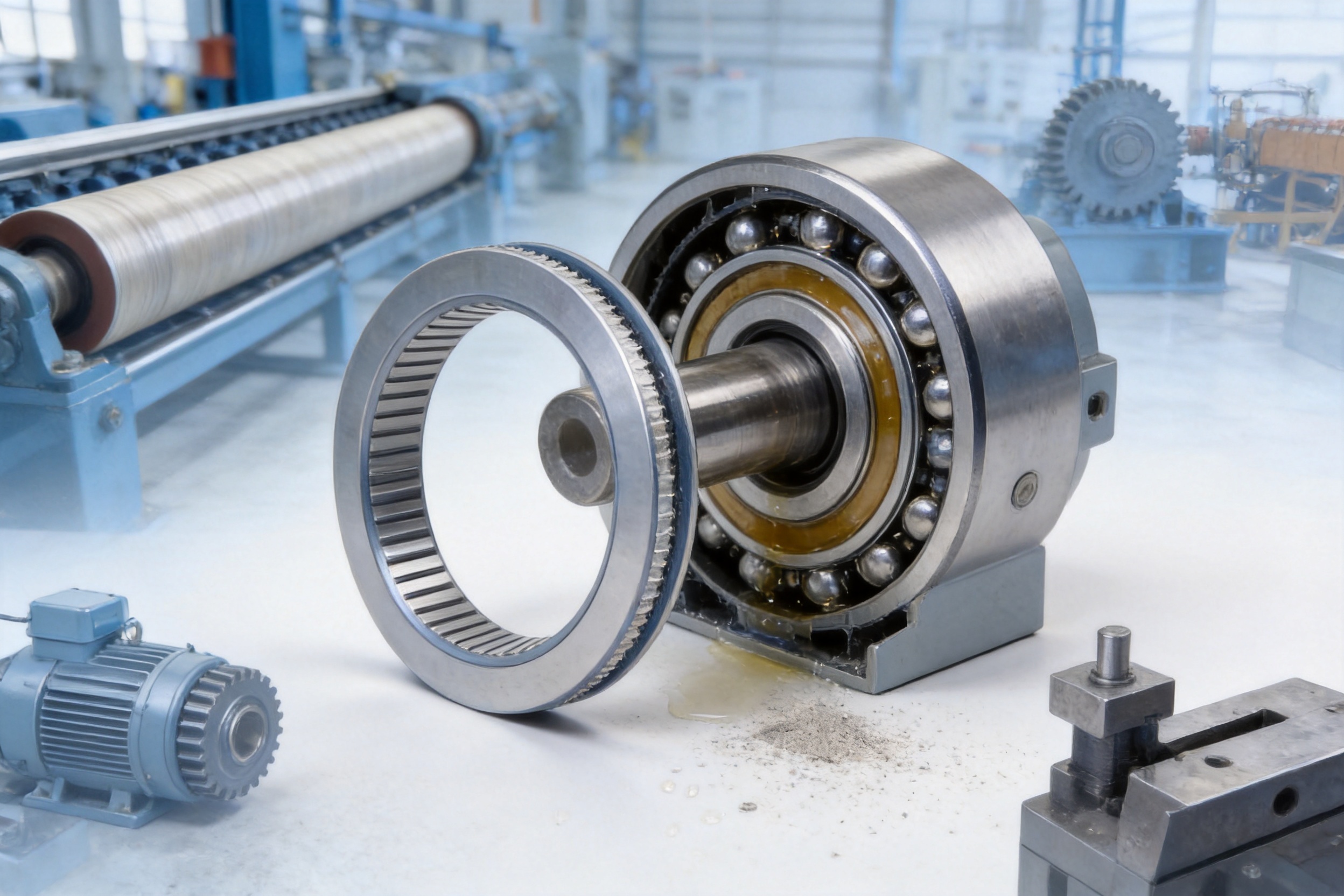
The manufacturer behind the product operates as an integrated bearing producer and international supplier. Its capabilities include research and development, production, quality management, export coordination, and technical service. This integrated model allows customers to communicate with one organization across the product development and supply process.
The company operates a modernized factory with production lines covering forging, turning, heat treatment, grinding, assembly, and packaging. Although a Nilos ring may use a different process sequence from a complete rolling bearing, the availability of these manufacturing capabilities demonstrates experience in precision metalworking and bearing-related production.
Production capacity is reported at approximately 10,000 to 50,000 units per month, depending on product type and order requirements. This range supports both regular industrial supply and project-based purchasing. Capacity planning is important for customers that need stable deliveries, repeat batches, or coordinated shipments of sealing rings and bearings.
The company’s technical development work includes high-precision cross roller bearings, dual-direction thrust angular contact ball bearings, and other products for CNC machines, robotics, and intelligent automation systems. This engineering background is relevant to metal sealing rings because it involves the same fundamental concerns: dimensional accuracy, controlled friction, surface quality, load behavior, and long-term reliability.
OEM and ODM experience provides additional value for customers with special requirements. A standard ring may be suitable for many applications, but some equipment requires a customized width, profile, material, surface treatment, clearance, or packaging method. A manufacturer with design and production resources can review the application and develop a solution based on drawings, samples, or operating data.
Custom development begins with technical information. Useful data includes the bearing designation, shaft diameter, housing diameter, available axial space, rotational speed, temperature, lubricant, contamination type, washdown conditions, and expected service life. Photographs, drawings, or failed component samples can also help clarify the installation environment.
After reviewing the application, engineers can determine whether a standard product is appropriate or whether a modified design is required. Prototype or sample production may be used to confirm fit and function before mass production. This step reduces the risk of ordering a component that matches one dimension but fails to meet the complete sealing requirement.
For OEM customers, consistency between batches is as important as initial performance. Controlled tooling, process documentation, inspection standards, and traceability help maintain the same dimensions across repeated orders. Packaging can also be customized to suit assembly lines, warehouse management systems, or export requirements.
The products are supplied to customers in Europe, Asia, Africa, Russia, the United States, Italy, Germany, Poland, South Africa, Egypt, India, and other markets. International distribution requires careful attention to documentation, packaging, delivery coordination, product identification, and technical communication.
A multilingual service team can provide technical response, installation guidance, and after-sales support. This is particularly useful when a customer is replacing an existing seal, developing new equipment, or troubleshooting an unexpected bearing failure. Clear communication helps ensure that the selected product is appropriate for the operating conditions.
The first step is to identify the exact bearing type and designation. Deep groove ball bearings, cylindrical roller bearings, tapered roller bearings, spherical roller bearings, and other designs have different side profiles and installation requirements. The sealing ring must match the bearing geometry.
Using only the shaft diameter is not sufficient. Two bearings may share the same bore but have different outside diameters, widths, shoulders, or side configurations. The complete bearing designation should be confirmed before selecting a ring.
Accurate measurements of the shaft and housing determine the fit and position of the ring. Diameters should be measured at several points to identify taper, ovality, or surface damage. The housing shoulder and axial space should also be checked.
Improper fits can cause movement, distortion, or unwanted friction. A ring that is too loose may fail to maintain its sealing position, while one that is too tight may be difficult to install and may damage the bearing or housing.
Continuous high-speed rotation, slow oscillation, reversing movement, and intermittent operation place different demands on the sealing system. At high speeds, friction and heat generation become more important. In oscillating applications, lubricant distribution and wear patterns may differ from those in continuous rotation.
The expected acceleration, vibration, and shaft runout should also be considered. A ring designed for a stable, low-vibration arrangement may not be suitable for a mechanism with significant misalignment or impact.
Contaminants should be identified by type and size. Dry dust, abrasive powder, metal chips, water spray, oil mist, mud, and chemical vapor require different protection strategies. The ring may be combined with an external deflector or cover when the environment is especially severe.
Where equipment is cleaned with high-pressure water, the sealing system must be evaluated as a complete arrangement. A metal ring alone may not be sufficient if water is directed toward the bearing at high velocity or pressure.
Operating temperature should include both ambient temperature and heat generated by the bearing, nearby gears, brakes, motors, or process equipment. Start-up and shutdown conditions may create temperature cycles that are more demanding than the average operating temperature.
The grease or oil grade, viscosity, additive package, and relubrication schedule should be confirmed. Compatibility between the lubricant and the ring material or surface treatment is essential.
Some machines are designed for frequent inspection, while others must operate for long periods without access. If maintenance access is limited, the sealing arrangement should support long-term lubricant retention and contamination control. The expected replacement procedure should also be considered when choosing the ring type.
Clear installation instructions, spare part identification, and batch traceability help maintenance teams replace products correctly. A durable seal is most effective when it is installed with the correct tools and orientation.
Before installation, inspect the ring, bearing, shaft, housing, and adjacent components. Remove burrs, rust, dirt, and residual machining particles. Confirm that the component designation and dimensions match the assembly drawing.
Do not strike the sealing edge directly with a hammer or hard tool. Use a suitable installation sleeve or pressing tool that applies force evenly to the correct area. Uneven force can bend the ring or change its sealing geometry.
Ensure that the ring is installed in the correct direction. The sealing profile, locating shoulder, and rotating or stationary relationship should match the manufacturer’s technical instructions. If the ring is designed to rotate with the shaft, confirm that its fit is suitable for that movement.
After installation, rotate the bearing by hand when possible. Check for abnormal resistance, scraping, binding, or uneven movement. For larger assemblies, measure starting torque or operating temperature during commissioning. Any unusual sound or rapid temperature rise should be investigated before the machine enters full production.
Keep the work area clean during assembly. Even a small quantity of abrasive debris can affect the bearing and sealing surfaces. Lubrication should be applied according to the bearing manufacturer’s instructions, and overfilling should be avoided.
Regular inspection can identify problems before they become major failures. Maintenance personnel should monitor noise, vibration, temperature, lubricant condition, and visible contamination. A change in any of these indicators may suggest bearing wear, seal damage, misalignment, or inadequate lubrication.
When a ring is removed, inspect it for deformation, scoring, corrosion, cracks, or unusual contact marks. Examine the bearing side surfaces and neighboring components as well. A damaged ring may be a symptom of excessive shaft runout, incorrect fit, installation impact, or an external mechanical problem.
Replacement intervals should be based on actual operating conditions rather than a fixed assumption. Clean, lightly loaded applications may achieve long service periods, while abrasive or wet environments may require more frequent inspection. Maintenance records help establish a realistic replacement schedule.
Common causes of poor sealing performance include incorrect ring selection, wrong orientation, excessive clearance, insufficient clearance, shaft or housing damage, lubricant overfilling, corrosion, and misalignment. Each cause should be addressed at the system level.
Responsible manufacturing combines product quality with efficient resource use. The manufacturer has identified environmental responsibility as a long-term commitment and applies measures related to material recycling, process improvement, and energy optimization.
Efficient production can reduce material waste during forming and machining. Recycling suitable metal scrap helps conserve resources, while process monitoring can reduce unnecessary rework. Optimizing energy use in heat treatment, grinding, lighting, and factory equipment can also lower the environmental impact of production.
Product durability contributes to sustainability in another way. A sealing ring that supports longer bearing life may reduce the frequency of component replacement, transportation, packaging consumption, and machine downtime. Reliability should therefore be viewed not only as a maintenance benefit but also as part of responsible industrial operation.
The company also supports educational and technical training initiatives intended to develop future engineering talent. Training is important in precision manufacturing because employee knowledge directly affects process control, inspection accuracy, equipment operation, and customer support.
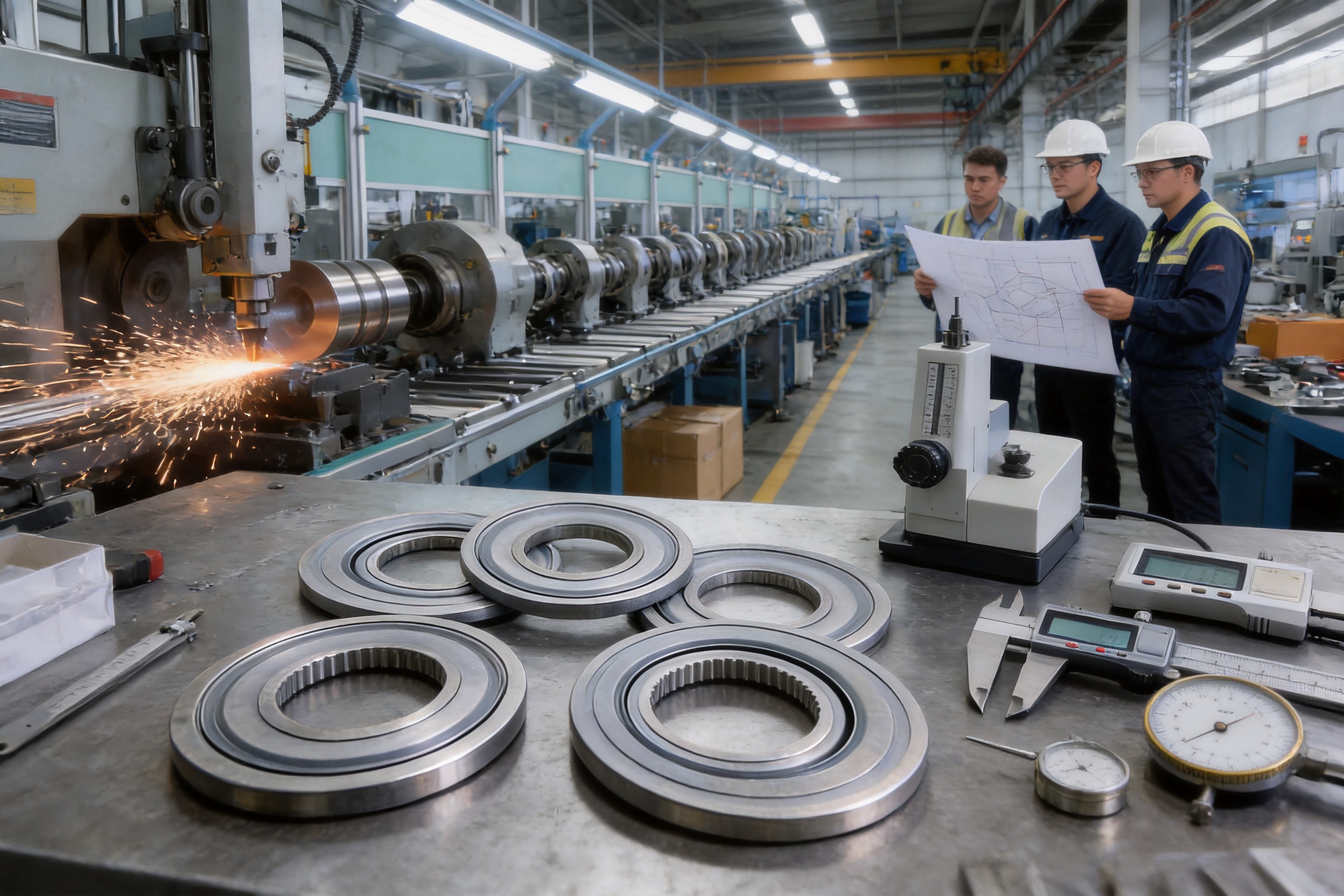
Purchasing a metal sealing ring from a specialized bearing manufacturer provides advantages beyond the component itself. A manufacturer with experience in bearings understands how the ring interacts with raceways, shoulders, cages, rolling elements, lubrication, and housing conditions.
This knowledge can help prevent the common mistake of treating the seal as a generic washer or independent stamped part. The performance of the ring depends on its relationship with the complete bearing arrangement. A bearing-focused supplier can evaluate that relationship more effectively.
Specialized manufacturing also supports better product consistency. Precision tooling, controlled heat treatment, surface finishing, dimensional inspection, and traceability are all important for repeatable sealing behavior. These capabilities are especially valuable for OEM production, where a small dimensional difference can affect assembly efficiency across thousands of machines.
Technical support is another important consideration. Customers may require assistance with product selection, drawings, installation, failure analysis, packaging, or delivery planning. A supplier that combines engineering and international service can provide a more complete solution than a trading source with limited technical resources.
Equipment manufacturers are increasingly required to provide machines that are reliable, compact, efficient, and easy to maintain. A suitable metal sealing ring can support these goals in several ways.
First, it can help protect the bearing without requiring a large external sealing structure. This may help designers reduce the size of a housing or simplify the arrangement of adjacent components. Second, its durable metal construction can support use in environments where flexible sealing materials are vulnerable to mechanical damage. Third, its potential for low friction can help control heat and energy losses in suitable applications.
A sealing ring can also improve product consistency. When the bearing arrangement is protected from contamination, the equipment may experience fewer premature bearing replacements. This can improve the customer’s perception of machine quality and reduce warranty or maintenance costs.
For manufacturers serving different markets, customized product dimensions, materials, surface treatments, and packaging can simplify global product development. The same engineering partner may be able to support standard components, custom rings, and related bearing products.
Before requesting a quotation, customers should prepare the bearing designation, quantity, application description, and required delivery schedule. Technical information is more valuable when it includes operating conditions rather than only a product name.
Important questions include: What is the bearing type? Which ring rotates? What are the shaft and housing dimensions? What is the maximum speed? What temperature is expected? Is the lubricant grease or oil? What contaminants are present? Is the equipment exposed to water or cleaning chemicals? How much space is available? Is the application continuous, intermittent, or oscillating?
Customers should also state whether the component is for a new design, a replacement, or a failure correction. If it is a replacement, photographs and measurements of the existing component can help identify the correct configuration. If the component is for a new design, a drawing review may prevent interference problems before production begins.
Its primary purpose is to provide a metal sealing arrangement around a rolling bearing. It helps reduce the entry of contaminants and supports the retention of lubricant near the bearing’s rolling contacts.
No. A rubber seal normally uses a flexible lip that contacts a rotating surface. A Nilos ring is a metal component that uses a controlled metal sealing geometry, contact, or clearance. Each type has different friction, temperature, speed, and contamination characteristics.
No. The ring must match the bearing series, dimensions, side configuration, shaft, housing, and operating conditions. The bearing designation and installation dimensions should be confirmed before ordering.
No sealing component can guarantee complete protection in every environment. A metal ring can reduce contaminant entry when correctly selected and installed, but severe water spray, pressure washing, large particles, or chemical exposure may require additional external protection.
Metal rings generally tolerate temperature-related aging better than many elastomeric seals. However, the complete assembly must be evaluated, including the ring material, bearing lubricant, bearing steel, cage, clearance, speed, and surrounding components.
It may introduce some additional friction if the design includes contact with a rotating surface. Some configurations use controlled non-contact or low-contact arrangements. Actual friction depends on the design, installation, speed, lubrication, surface finish, and contamination.
Useful information includes the bearing designation, shaft diameter, housing diameter, bearing width, available axial space, rotational speed, temperature, lubricant, contamination, motion type, and required quantity. A drawing or photograph of the installation can also be helpful.
Custom solutions may be developed for special dimensions, materials, profiles, surface treatments, or packaging requirements. Technical review is necessary to confirm feasibility and establish the correct design.
The ring should be installed using clean tools and even pressure applied to the correct locating area. The orientation, fit, clearance, and relationship between rotating and stationary parts must follow the technical drawing. Direct impact on the sealing edge should be avoided.
Use the correct ring for the bearing, maintain clean assembly conditions, verify shaft and housing dimensions, avoid overfilling with lubricant, control alignment, and monitor temperature and vibration during operation. Investigate any scoring, deformation, corrosion, or unusual noise promptly.
Traceability connects the finished product with its material batch, production process, inspection data, and shipping records. It supports consistent repeat orders, quality investigations, and customer documentation.
The manufacturer provides OEM and ODM export experience and integrates research, production, and international distribution. Customers can discuss standard products, custom designs, technical documentation, packaging, and repeat supply requirements.
Nilos rings are compact metal sealing components designed to support the protection and lubrication of rolling bearings. Their principal strengths include mechanical durability, dimensional stability, resistance to many temperature-related aging effects, compact installation, and the potential for low-friction performance in suitable designs.
They are particularly useful when a bearing must operate in a contaminated, vibrating, space-restricted, or maintenance-sensitive environment. Compared with conventional flexible seals, metal rings offer a different balance of protection, friction, temperature performance, and durability. Correct selection remains essential because the ideal sealing method depends on speed, motion, lubricant, contamination, temperature, and assembly geometry.
The manufacturing process behind a reliable ring involves material control, precision forming, secondary machining, heat treatment, surface finishing, cleaning, inspection, and protective packaging. An integrated bearing manufacturer with R&D, production, quality control, OEM/ODM, and international service capabilities can provide value throughout this process.
With advanced production lines covering forging, turning, heat treatment, grinding, assembly, and packaging, the manufacturer is positioned to support both standard and customized industrial requirements. Its experience in precision bearings for CNC machines, robotics, and intelligent automation further strengthens its ability to address demanding applications.
For customers seeking dependable metal seals, the best results come from treating the Nilos ring as part of a complete bearing system. Careful engineering review, accurate measurements, correct installation, appropriate lubrication, and planned maintenance will help the sealing solution deliver its full performance potential.
1. ISO 15243, Rolling Bearings—Damage and Failures—Terms, Characteristics and Causes.
2. ISO 281, Rolling Bearings—Dynamic Load Ratings and Rating Life.
3. ISO 199, Rolling Bearings—Thrust Bearings—Geometrical Product Specifications and Rated Loads.
4. ISO 5593, Rolling Bearings—Vocabulary.
5. Timken, Engineering Manual, sections on bearing lubrication, contamination, and sealing arrangements.
6. SKF, Rolling Bearings Catalogue, sections on bearing seals, shields, lubrication, mounting, and maintenance.
7. NSK, Rolling Bearings Technical Handbook, sections on bearing selection, operating conditions, and installation.
8. Schaeffler, Rolling Bearing Technical Principles, sections on bearing protection, lubrication, fits, and operating reliability.
9. Manufacturer-provided product information for metal sealing rings, bearing manufacturing processes, OEM/ODM services, and technical support.
Product Categories
Contact Us

Jane@ukl-bearing.com
Jenny@ukl-bearing.com
Andy@ukl-bearing.com
Ivy@ukl-bearing.com

+86-510- 88763239
+86-15371057968

No.1 Hehuan Road, Hudai Town, Binhu District, Wuxi City.
Ready to Begin?
Get in Touch

Now!
UKL BEARING
 English
 Español
 русский