Content
Self-lubricating rod end spherical bearings are compact mechanical components designed to transmit motion and load while accommodating angular misalignment between connected parts. They are widely used in automation equipment, robotic mechanisms, machine tools, industrial actuators, vehicle linkages, material-handling systems, and general mechanical assemblies. The SA self-lubricating rod end spherical bearing combines a carbon-steel rod end body with a self-lubricating radial spherical bearing. This construction provides a practical solution for applications that require oscillating movement, limited maintenance, reliable alignment, and high load-carrying capability.
Unlike ordinary plain bearings that require periodic greasing, the SA series uses a self-lubricating sliding friction pair. The SA…C design uses a steel and PTFE composite material, while the SA…ETL 2RS design uses a steel and PTFE braided fabric sliding layer. Both designs are intended to reduce maintenance requirements and provide stable performance in locations where lubricant replenishment is inconvenient, undesirable, or impossible.
The product range covers bore sizes from approximately 5 mm to 80 mm, depending on the series. This broad size range allows the same basic bearing concept to be applied to small precision linkages as well as large industrial mechanisms. Metric thread options are available, and left-hand thread versions can be produced when specified during ordering.
For industrial buyers, the value of a rod end bearing is determined by more than its nominal bore size. Load ratings, angular movement, friction behavior, operating temperature, corrosion resistance, dimensional consistency, mounting reliability, and service life must all be considered. The SA series is designed around these requirements, combining an assembled rod end structure with a maintenance-reducing sliding surface and a galvanized carbon-steel body.
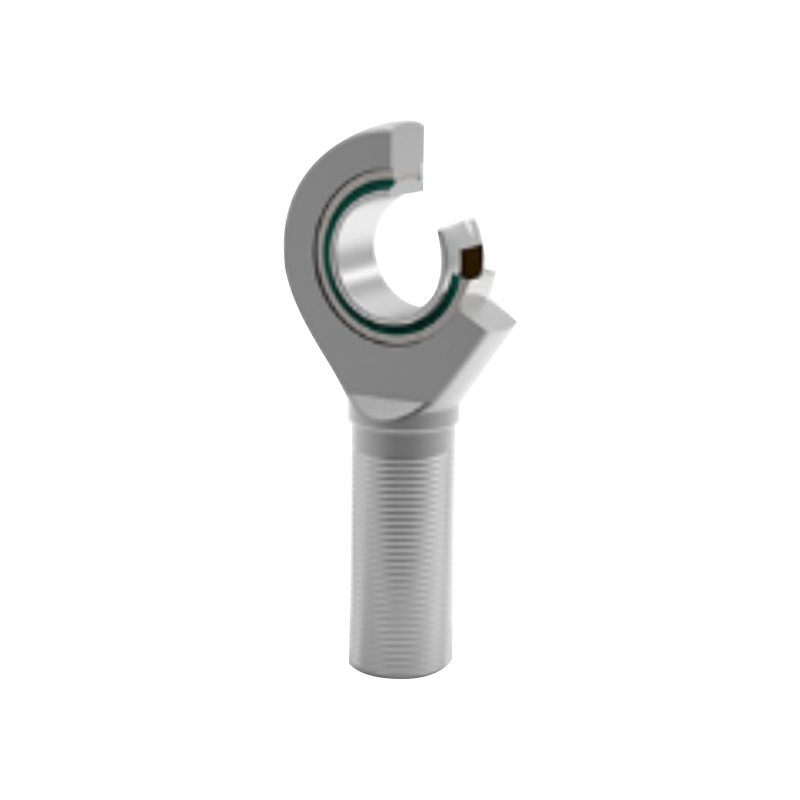
SA Self-Lubricating Rod End Spherical Bearing
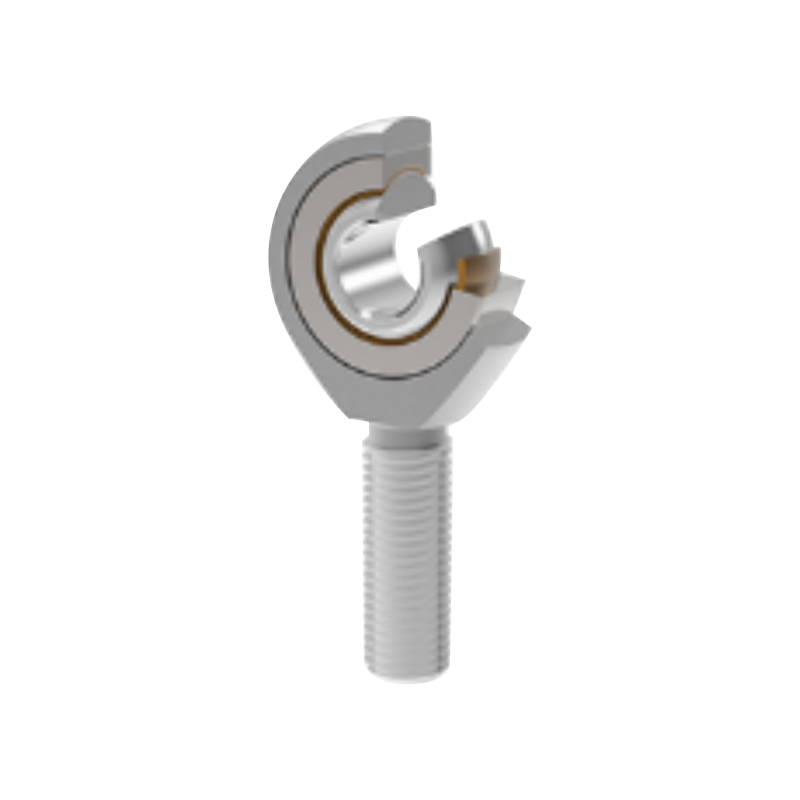
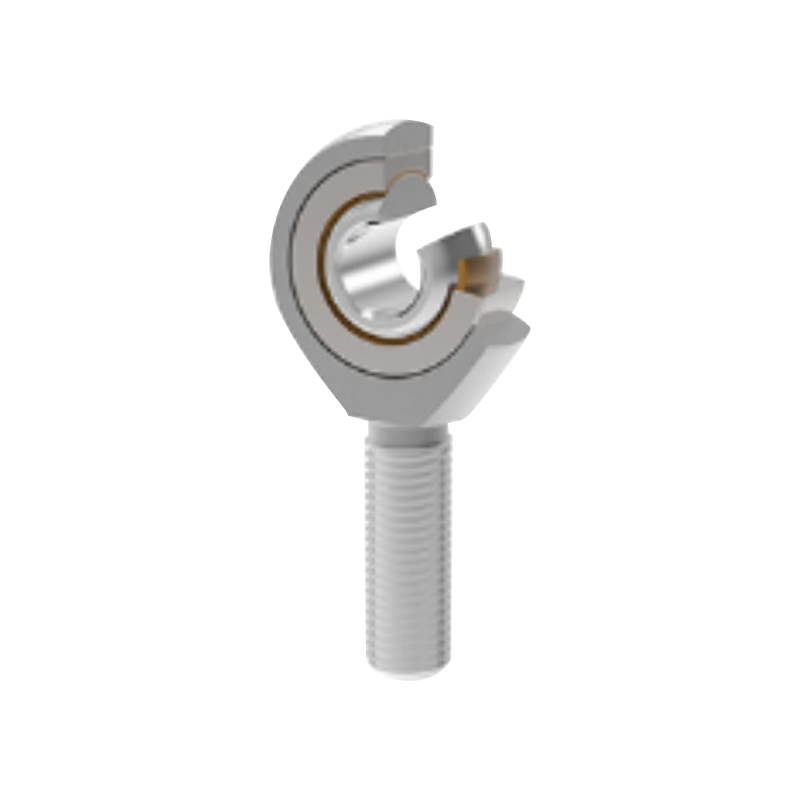
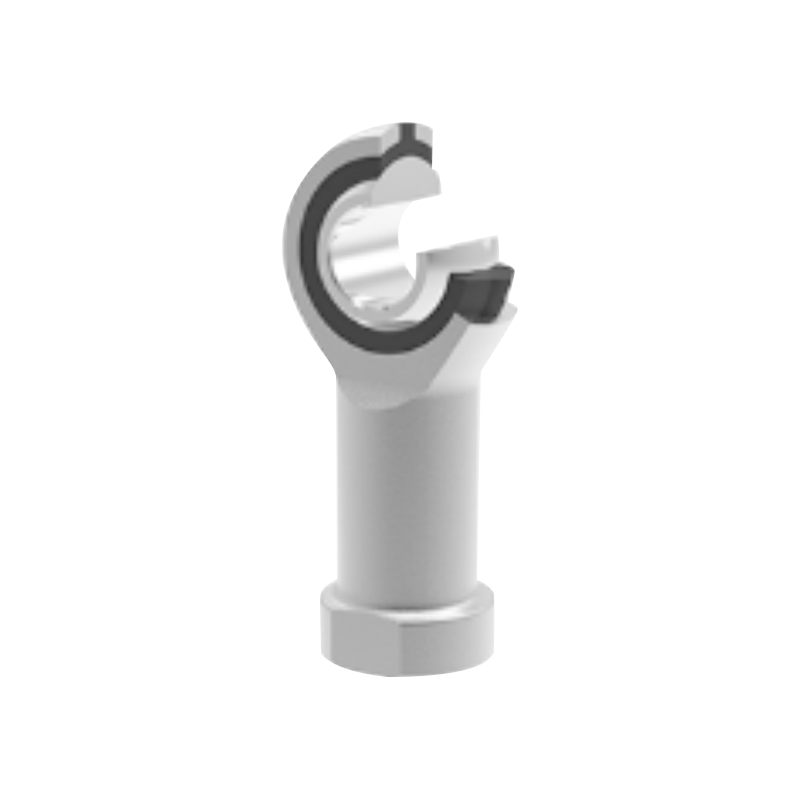
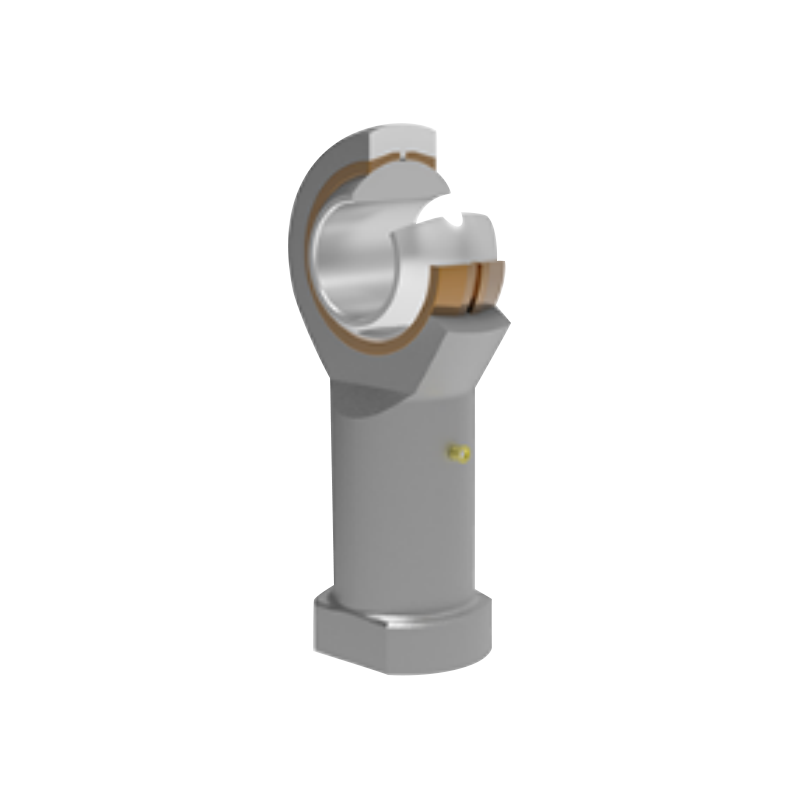
A rod end spherical bearing is a bearing assembly installed at the end of a connecting rod, actuator, control arm, linkage, or similar component. It normally consists of a threaded rod end body and a spherical plain bearing inserted into the eye of the body. The spherical inner ring allows angular movement between the shaft or pin and the rod end housing.
This angular movement is important because mechanical linkages rarely remain perfectly aligned throughout their entire operating cycle. A connecting rod may move through an arc, an actuator may change direction, or two components may experience small installation errors. A rigid bushing or standard radial ball bearing may not accommodate these conditions effectively. A spherical bearing can compensate for angular displacement while continuing to support radial loads.
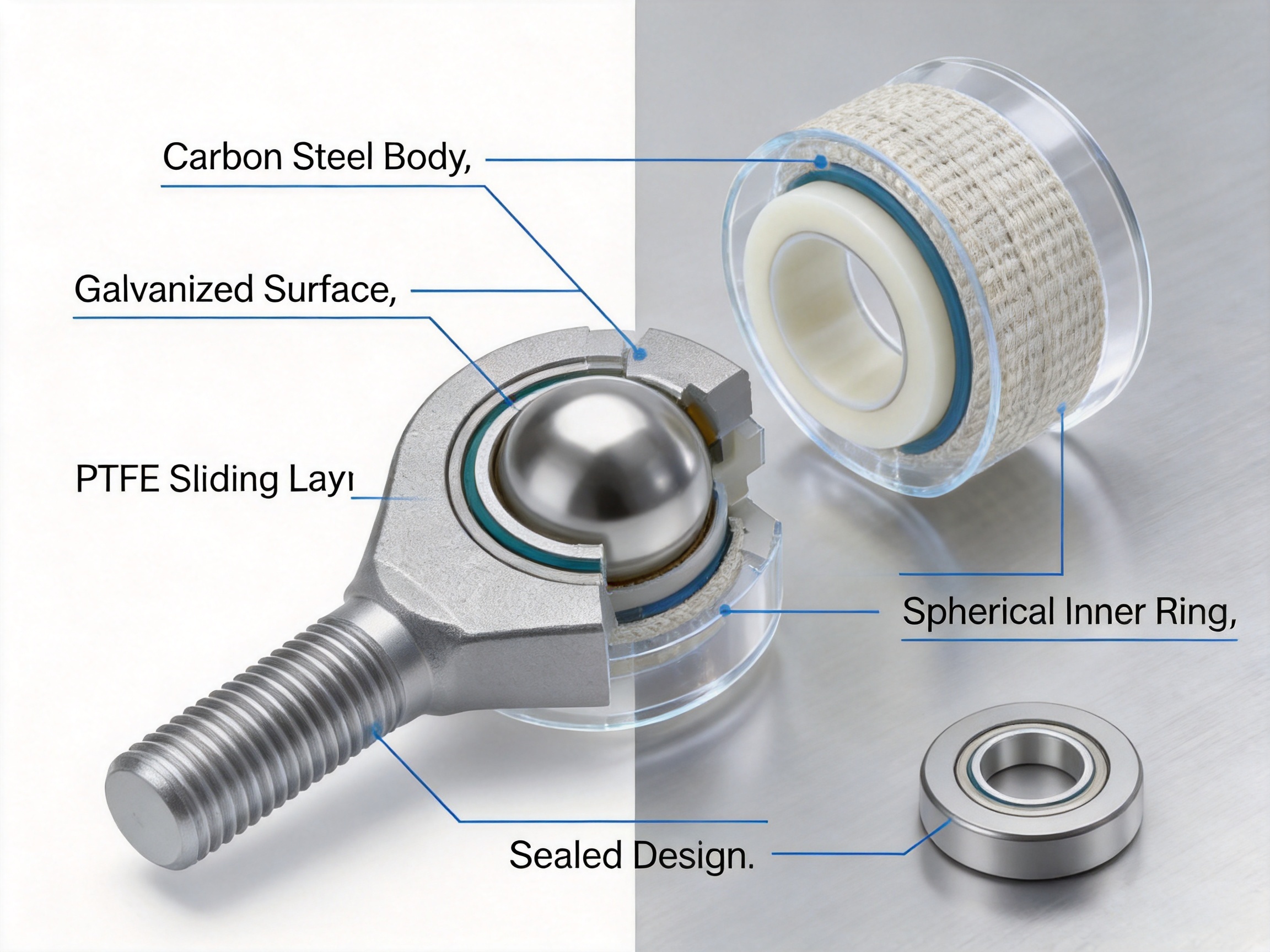
The SA series is assembled from two principal elements:
1. A carbon-steel rod end body with a galvanized surface.
2. A self-lubricating radial spherical bearing, such as the GE…C or GE…ET 2RS type.
The rod end body provides the threaded connection and structural support. The spherical bearing provides the sliding interface and angular movement. Because the sliding layer is designed to operate without regular lubrication, the complete assembly is suitable for applications where frequent maintenance would increase operating cost or create safety concerns.
The term “self-lubricating” does not mean that the bearing contains a conventional grease reservoir. Instead, it refers to a dry-running or low-maintenance sliding friction pair in which the PTFE-based material supplies low-friction behavior at the contact interface. Correct loading, alignment, speed, temperature, and environmental conditions remain essential to achieving satisfactory service life.
The rod end body is manufactured from carbon steel to provide the required combination of strength, machinability, thread accuracy, and economic efficiency. Carbon steel is well suited to rod end bodies because it can withstand the tensile and compressive forces generated by mechanical linkages while allowing precise machining of the threaded shank and spherical bearing housing.
The galvanized surface improves resistance to atmospheric corrosion. This is especially useful for equipment operating in workshops, factories, warehouses, agricultural environments, and general outdoor installations where the component may be exposed to humidity or occasional moisture.
Galvanization is not a substitute for engineering controls in highly corrosive environments. If the bearing is exposed to salt spray, aggressive chemicals, continuous immersion, or severe abrasive contamination, additional protection or a corrosion-resistant material may be required. Nevertheless, the galvanized carbon-steel body provides a practical level of surface protection for many standard industrial applications.
The spherical bearing inside the rod end body contains the main sliding friction pair. Its spherical geometry permits angular displacement while maintaining contact with the mating shaft or pin. The bearing is designed for oscillating movement, tilting movement, and low-speed rotational movement rather than high-speed continuous rotation typical of rolling-element bearings.
Two principal material configurations are identified in the product information:
SA…C uses a steel and PTFE composite sliding pair. This construction provides a low-friction interface with good dimensional stability and a compact structure. It is suitable for many general-purpose industrial linkages, actuator joints, and automation mechanisms.
SA…ETL 2RS uses a steel and PTFE braided fabric sliding pair. The braided fabric structure is designed to provide a durable self-lubricating surface for larger sizes and demanding load conditions. The “2RS” designation indicates a sealed arrangement intended to help protect the internal sliding area from external contamination.
The threaded shank allows the bearing to be screwed into a connecting rod, clevis, actuator component, machine frame, or adjustment mechanism. Depending on the selected model, threads include metric sizes such as M5, M8, M10, M12, M16, M20 × 1.5, M24 × 2, M30 × 2, M36 × 3, M39 × 3, M42 × 3, M45 × 3, M52 × 3, M56 × 4, M64 × 4, M72 × 4, and M80 × 4.
Thread specifications should always be confirmed before production or installation. The product information indicates that rod end bearings with different pitches or special thread precision requirements are available. Left-hand thread versions are identified by adding “L” and an appropriate left-hand marking. For example, a left-hand version may be specified in the form of SAL20C with an M20 × 1.5 left-hand thread and 6g tolerance.
The most apparent advantage of the SA series is its self-lubricating construction. Conventional steel-on-steel spherical plain bearings often require a regular supply of grease or oil. In a production line, this can mean scheduled lubrication intervals, access panels, maintenance labor, lubricant storage, and downtime.
A self-lubricating rod end bearing reduces these requirements. It is particularly useful in compact machines where a grease gun cannot easily reach the joint, in enclosed assemblies where lubricant contamination is unacceptable, or in clean manufacturing environments where excess grease may attract dust and debris.
Lower lubrication demand can also simplify machine design. Engineers may eliminate grease channels, lubrication fittings, external hoses, or maintenance access points. This can reduce assembly complexity and make the finished equipment easier to clean.
Rod ends are commonly used in mechanisms that move back and forth through a limited angle. This type of motion can be difficult for some rolling-element bearings because the rolling elements may repeatedly pass over the same small contact zone. A spherical plain bearing is naturally suited to oscillation and angular adjustment.
The SA bearing supports this type of movement through a sliding contact surface designed for low-friction operation. It can be used in control linkages, actuator connections, robotic joints, valve mechanisms, and positioning systems where the motion is intermittent or oscillatory.
Installation tolerances, frame deflection, thermal expansion, and manufacturing variation can create angular misalignment between a rod and its mating pin. If the joint cannot accommodate this movement, the mechanism may experience edge loading, unwanted bending, vibration, or premature wear.
The spherical inner geometry of the SA series allows the bearing to tilt relative to the rod end body. This flexibility helps the joint follow the actual motion path of the mechanism and reduces the risk of binding. However, the permitted angular movement depends on the specific bearing geometry and surrounding clearance. Designers should prevent the rod end body from contacting adjacent components before the bearing reaches its intended angular limit.
An assembled rod end bearing combines the spherical bearing and threaded housing into one ready-to-install component. Compared with building a joint from a separate spherical bearing, housing, bushing, and threaded adapter, the assembled design reduces the number of individual parts.
Fewer parts can simplify procurement, inventory management, installation, and replacement. It can also reduce the possibility of assembly errors, such as incorrect bearing orientation, unsuitable interference fits, or an improperly selected retaining arrangement.
The SA product family extends from small 5 mm bore models to large 80 mm bore models, with intermediate sizes covering common industrial requirements. This range supports both lightweight mechanisms and high-load assemblies.
Small models can be used in compact automation equipment, laboratory instruments, small actuators, and precision adjustment systems. Larger models can be applied to industrial machinery, heavy linkages, structural control mechanisms, and large hydraulic or pneumatic actuator connections.
The galvanized rod end body provides an additional barrier against ordinary atmospheric corrosion. This offers an advantage over untreated carbon-steel components, particularly in equipment exposed to humidity, condensation, or handling during storage and transport.
The surface finish also contributes to a consistent appearance and helps protect the threaded area during normal service. Installation should still be performed carefully to avoid damaging the galvanized layer or contaminating the bearing surface with metal particles.
The stated operating temperature range for the SA…C design is approximately 50°C to +150°C, while the SA…ETL 2RS design is approximately 30°C to +130°C. These ranges make the bearings suitable for many factory automation, machine-building, and general industrial environments.
Temperature affects friction, material behavior, clearance, sealing performance, and service life. Applications near the upper or lower limit should be reviewed individually. The actual allowable temperature may also be influenced by speed, load, ambient chemicals, installation conditions, and adjacent components.
The following table summarizes representative sizes and ratings from the supplied product information. Values should be confirmed against the current technical drawing and quotation before final design approval, especially where a source table contains incomplete or abbreviated model markings.
| Model | Bore d (mm) | Body width B (mm) | Dynamic load rating (kN) | Static load rating (kN) | Approximate weight (kg) |
|---|---|---|---|---|---|
| SA5C | 5 | 6 | 3.6 | 3.9 | 0.015 |
| SA8C | 8 | 8 | 5.8 | 10 | 0.026 |
| SA10C | 10 | 9 | 8.6 | 16 | 0.050 |
| SA12C | 12 | 10 | 11 | 23 | 0.088 |
| SA15C | 15 | 12 | 18 | 32 | 0.120 |
| SA17C | 17 | 14 | 22 | 44 | 0.190 |
| SA20C | 20 | 16 | 31 | 60 | 0.300 |
| SA25C | 25 | 20 | 51 | 85 | 0.555 |
| SA30C | 30 | 22 | 65 | 110 | 0.875 |
| SA40ETL-2RS | 40 | 28 | 175 | 180 | 1.85 |
| SA50ETL-2RS | 50 | 35 | 275 | 290 | 3.58 |
| SA60ETL-2RS | 60 | 44 | 430 | 450 | 5.89 |
| SA70ETL-2RS | 70 | 49 | 550 | 610 | 8.51 |
| SA80ETL-2RS | 80 | 55 | 705 | 750 | 12.30 |
Dynamic and static load ratings are not interchangeable with the actual load that a bearing can safely support in every application. They are reference values used for engineering selection. The bearing may experience radial load, axial load, tilting moment, shock load, or a combination of these forces. Load direction, oscillation angle, frequency, surface hardness of the mating pin, and environmental contamination must be included in the design review.
Some large models are available with alternative rod end body geometries, such as standard and extended or special-shank arrangements. These alternatives may have different thread sizes, overall lengths, weights, and load ratings even when the bore diameter is identical. Buyers should therefore specify the complete model designation rather than ordering only by bore size.
PTFE is widely used in self-lubricating bearing applications because of its low coefficient of friction and favorable sliding behavior. When integrated into a steel-based composite structure, it can provide a low-maintenance contact layer that operates without the continuous addition of grease.
The composite construction is especially valuable in applications where smooth movement and compact dimensions are important. It can help reduce starting friction, limit stick-slip behavior, and produce consistent motion in control linkages. The performance of the sliding layer depends on load, speed, oscillation angle, temperature, surface finish, and the hardness of the mating shaft.
The PTFE braided fabric sliding pair is intended for applications requiring a durable self-lubricating surface. A fabric-based layer can conform closely to the spherical contact geometry and distribute load over a broad area. This helps support larger bearing sizes and higher load levels.
The 2RS sealing arrangement provides additional protection against dust, moisture, and other contaminants. Seals are particularly beneficial in machinery operating near abrasive particles, metalworking residue, packaging dust, or outdoor contaminants. However, seals should not be considered a guarantee against contamination under every condition. Installation quality and surrounding equipment design remain important.
The performance of a rod end bearing depends heavily on the quality of the manufacturing process. A precise spherical bearing must have controlled dimensions, a stable sliding layer, accurate thread geometry, consistent heat treatment where applicable, and reliable assembly. Small errors in concentricity or surface finish can increase friction and reduce service life.
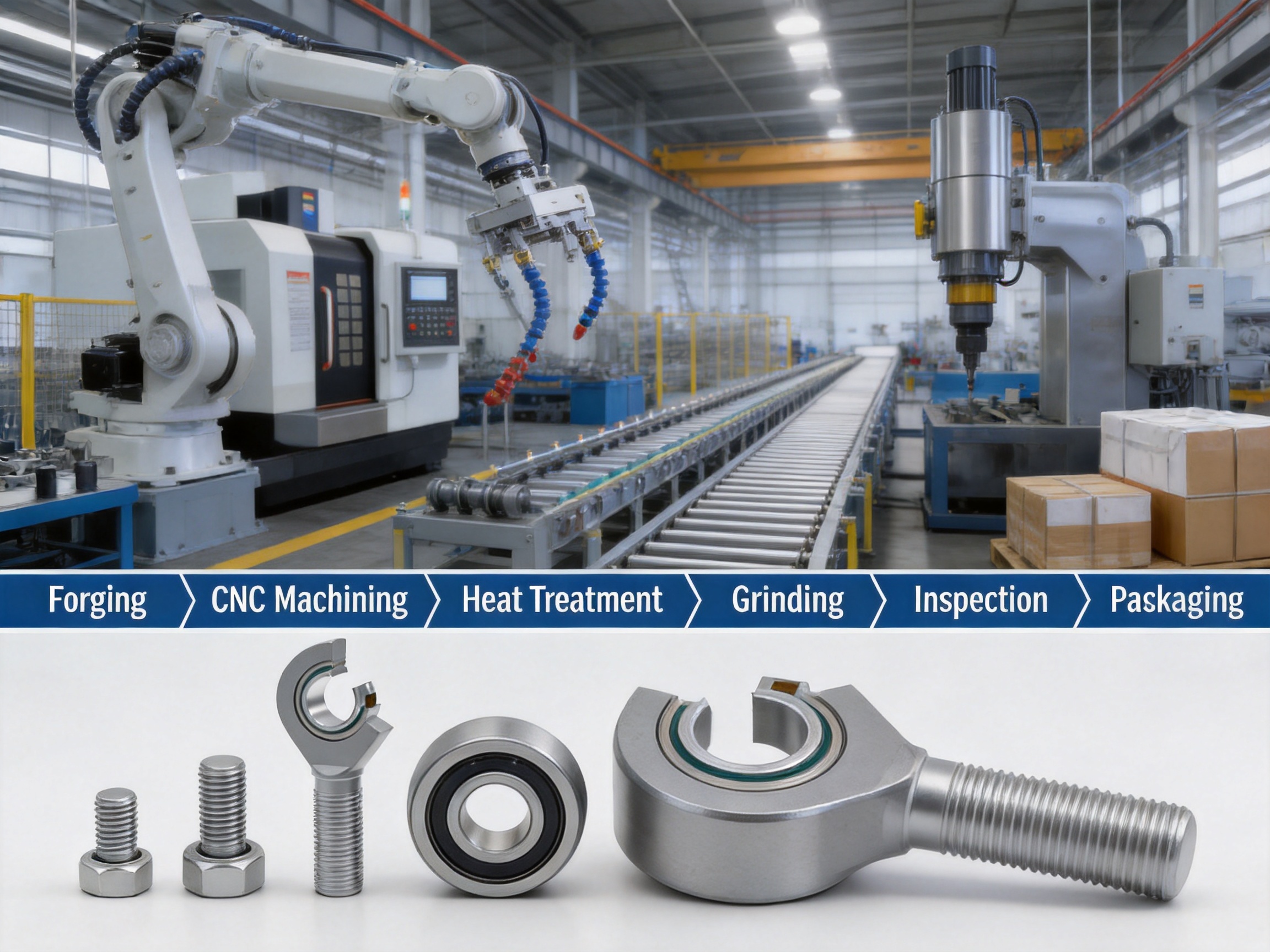
The manufacturing process begins with suitable raw material preparation and, where required, forging of the rod end body. Forging can improve material continuity and provide an efficient near-net shape for components that must withstand repeated mechanical loading.
Material selection and incoming inspection are essential at this stage. Chemical composition, dimensional condition, surface quality, and traceability should be managed so that subsequent machining and heat treatment begin with consistent input material.
Turning operations establish the basic external profile of the rod end body, including the shank, shoulder, and bearing housing. Modern turning equipment can produce repeatable diameters and lengths while maintaining efficient production for standard and custom models.
Thread preparation is particularly important. A thread that is too tight may complicate installation, while excessive clearance can reduce connection stability. Accurate thread form, pitch, major diameter, minor diameter, and tolerance class contribute to dependable assembly.
Heat treatment may be used to improve the strength, hardness, wear resistance, or dimensional stability of selected components. The precise process depends on the material grade and the function of the part. Proper control of heating, holding, cooling, and post-treatment inspection helps prevent distortion and ensures that the finished component meets its intended mechanical requirements.
For a rod end bearing, heat treatment must be balanced carefully. Excessive hardness may reduce toughness, while insufficient hardness may increase deformation or thread wear. Controlled processing supports a stable balance between strength, durability, and machinability.
Grinding and finishing operations are used to achieve the required geometry and surface quality on critical bearing surfaces. The spherical raceway and mating surfaces must be manufactured with sufficient roundness and smoothness to provide even contact and predictable movement.
Surface finishing also influences friction. Rough or damaged surfaces may generate excessive wear, while properly finished surfaces allow the PTFE sliding layer to operate more effectively. Inspection of surface condition is therefore an important part of the quality process.
Assembly connects the self-lubricating spherical bearing with the rod end body. The assembly process must control insertion force, alignment, fit, sealing arrangement, and final articulation. Excessive assembly force can damage the sliding layer or distort the housing. Insufficient retention can create looseness or noise during service.
After assembly, the bearing can be checked for smooth angular movement, abnormal resistance, dimensional conformity, and visible defects. A controlled assembly environment also reduces the risk of introducing abrasive particles into the sliding interface.
Digital production control supports traceability and repeatability across forging, turning, heat treatment, grinding, assembly, and packaging. Production data can be used to monitor process capability, identify variation, and improve corrective action.
Important inspection categories may include bore diameter, housing dimensions, thread accuracy, spherical alignment, angular movement, surface finish, seal condition, load-related characteristics, and appearance. Depending on the application, customers may request inspection records, material certificates, dimensional reports, or special quality documentation.
The manufacturer’s stated research and development focus includes high-precision cross roller bearings, dual-direction thrust angular contact ball bearings, and other products for CNC machines, robotics, and intelligent automation. This wider technical background is relevant to rod end bearing customers because it indicates experience with precision motion, controlled tolerances, and specialized bearing design.
A supplier capable of producing multiple bearing families can often provide more complete engineering support. For example, a machine builder may require rod ends for an actuator linkage, cross roller bearings for a rotary axis, and angular contact ball bearings for a high-speed spindle. Coordinating these products through one engineering and manufacturing partner can simplify communication and project management.
Robotic systems use many compact joints and linkage points. A rod end bearing may connect a servo actuator to a moving arm, support a gripper mechanism, or provide an adjustable link in a positioning assembly. The self-lubricating design is attractive because many automation systems operate continuously and must minimize planned maintenance.
In robotics, low friction and repeatable movement are important. Excessive joint resistance can increase motor load, reduce positioning accuracy, and create inconsistent motion. A correctly selected SA bearing can provide smooth articulation while accommodating small angular changes in the robot structure.
Machine tools contain actuators, guide mechanisms, tool-changing assemblies, access doors, clamping systems, and motion linkages. These systems may operate in environments containing chips, coolant mist, abrasive dust, and intermittent vibration.
Sealed ETL 2RS rod ends can be considered for applications in which contamination protection is important. The bearing should be positioned so that chips and coolant are not directed continuously against the seal. Proper shielding and regular inspection remain recommended even when a sealed bearing is used.
Rod ends are frequently installed at the end of hydraulic and pneumatic cylinders. They allow the cylinder rod to connect to a moving lever, gate, arm, or machine component while accommodating the angular change that occurs during the stroke.
The main design concerns include axial alignment, side loading, impact at the end of travel, thread engagement, and the strength of the mating pin. The rod end should not be used to compensate for significant structural misalignment caused by an inadequately supported cylinder. Excessive side loading can shorten the service life of any spherical plain bearing.
Packaging lines often contain repetitive linkages, cam followers, adjustment arms, and tensioning mechanisms. These machines benefit from components that require limited lubrication and can operate reliably over many cycles.
Self-lubricating rod ends can reduce the risk of lubricant transfer to packaging materials. They can also simplify maintenance schedules across multiple machines, especially when joints are installed behind guards or inside compact frames.
Agricultural equipment, mobile platforms, and off-road machinery may be exposed to dust, vibration, temperature variation, and moisture. Rod end bearings can be found in steering mechanisms, control linkages, implement adjustments, and actuator connections.
Galvanized surfaces provide useful protection in ordinary outdoor conditions. For severe mud, water immersion, fertilizer exposure, or salt contamination, designers should consider additional sealing, protective covers, corrosion-resistant fasteners, and a planned inspection program.
Conveyors, lifting equipment, sorting systems, and automated storage systems require numerous linkage points. Compact rod end bearings help transmit motion where a shaft, actuator, or lever must pivot relative to a fixed structure.
The wide size range allows the bearing family to support different load categories within the same equipment platform. Standardizing on a consistent bearing series can simplify spare-parts management and reduce training requirements for maintenance personnel.
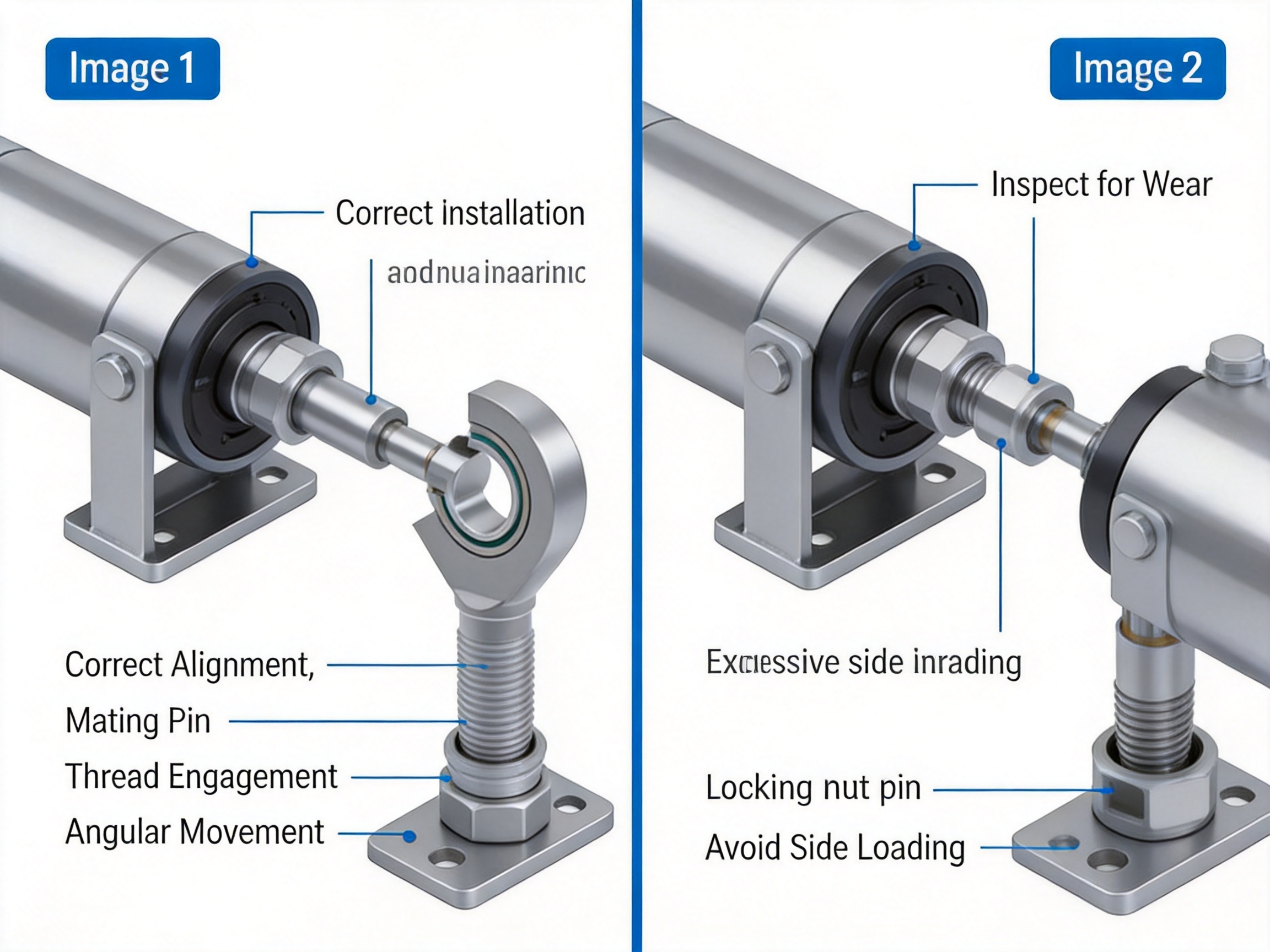
The first step is to identify whether the bearing will experience radial load, axial load, or a combination. Rod end spherical bearings are primarily selected for radial loading through the spherical contact. Axial forces may be present, but they should be evaluated carefully because the allowable axial capacity depends on the design and contact geometry.
Where a large axial force or overturning moment exists, a different bearing arrangement may be necessary. A spherical rod end should not be treated as a universal replacement for a dedicated thrust bearing or structural pivot.
Calculate the maximum operating load, including static load, dynamic load, acceleration, deceleration, shock, and any force generated by an offset connection. If an actuator is mounted at an angle, the rod end may experience a combination of axial and radial forces rather than a simple radial load.
Use an appropriate safety factor for the application. Machinery with impact, uncertain loading, frequent reversal, or safety-critical movement generally requires a higher design margin than a lightly loaded laboratory mechanism.
Self-lubricating spherical bearings are commonly used for oscillating movement, but life is strongly influenced by oscillation angle and frequency. A small angle repeated at high frequency can create concentrated wear in a limited contact zone. A larger angle may distribute contact more broadly but can increase edge effects if clearance is insufficient.
The design review should document the operating angle, cycles per minute, total cycles per day, expected service life, and whether the motion is smooth or subject to impact.
Compare the application temperature with the stated range for the selected series. Consider both ambient temperature and heat transferred through the connected shaft or housing. Chemical exposure, ultraviolet radiation, moisture, abrasive particles, and cleaning agents may also affect the sliding material, seals, or galvanized surface.
Where operating conditions are unusual, customers should request a technical review before placing a production order. Special materials, alternative seals, different surface treatments, or modified clearances may be available for certain applications.
Thread size, pitch, direction, thread tolerance, shank length, shoulder dimensions, and overall assembly length must be checked against the machine drawing. A bearing with the correct bore but an incorrect thread may be unusable.
Installation space must also allow the required angular movement. Adjacent brackets, washers, nuts, and machine surfaces should not interfere with the rod end body. Where adjustment is necessary, sufficient thread engagement should remain after the final position is established.
The mating pin or shaft is part of the bearing system. Its diameter must match the bearing bore, and its surface should be appropriately hard, smooth, clean, and free from burrs. A rough or undersized pin can significantly increase wear and clearance even when the rod end itself is manufactured correctly.
The pin should be adequately supported to prevent bending. If the pin deflects under load, contact may become uneven and produce premature wear at one side of the spherical bearing.
Before installation, inspect the rod end for transport damage, corrosion, thread deformation, seal damage, or contamination. Confirm the model marking, bore size, thread direction, and dimensional requirements. Do not install a component that has been dropped, visibly distorted, or contaminated with abrasive material.
Clean the mating pin and remove burrs from the mounting hole. The pin should enter the bearing smoothly without hammering directly on the sliding surface. If pressing is necessary, apply force through a suitable fixture that supports the correct bearing ring or housing area.
Use the correct nut, washer, spacer, or retaining arrangement. Tighten threaded connections according to the equipment manufacturer’s specified torque and locking method. Avoid rotating the rod end against excessive resistance during installation, particularly when the bearing is dry and not yet operating under its normal alignment.
After installation, move the mechanism slowly through its full range. Check for binding, interference, abnormal noise, excessive looseness, or restricted angular movement. Confirm that the rod end reaches the intended operating positions without the housing contacting adjacent parts.
Because the bearing is self-lubricating, routine grease application is generally not required. Adding an incompatible lubricant may attract abrasive dust, affect the PTFE sliding material, or interfere with the intended friction characteristics. If an application requires additional lubrication for a special reason, compatibility should be confirmed before use.
Maintenance personnel should inspect the joint at appropriate intervals. Look for increasing clearance, unusual noise, rough movement, seal damage, corrosion, thread loosening, or wear marks on the mating pin. A change in joint movement may indicate a problem elsewhere in the mechanism, such as misalignment, excessive load, or a bent connecting member.
Replacement should be based on measured wear, application requirements, and the consequences of failure. In safety-related systems, a preventive replacement schedule may be appropriate even when the bearing remains functional.
An integrated bearing manufacturer can support the product through multiple stages, including engineering, material preparation, machining, heat treatment, grinding, assembly, inspection, packaging, and distribution. This integration improves coordination between processes and helps reduce dependence on unrelated subcontractors.
The supplied company information indicates production lines covering forging, turning, heat treatment, grinding, assembly, and packaging. This process coverage is valuable for customers requiring consistent batches, private-label production, custom dimensions, or OEM and ODM support.
Production capacity of approximately 10,000 to 50,000 units per month supports both standard orders and larger equipment programs. Capacity alone does not guarantee quality, but it can help maintain delivery continuity when supported by effective process control, raw-material planning, and inspection systems.
The company also reports international export experience and supply relationships across Europe, Asia, Africa, Russia, North America, and other markets. International experience can help with export packaging, documentation, product labeling, communication across time zones, and the practical requirements of industrial procurement.
A multilingual service team can provide technical responses, installation guidance, and after-sales support. This is particularly useful when a bearing is used in an imported machine or when the customer requires rapid clarification of thread standards, custom dimensions, or application conditions.
Standard catalog dimensions are often sufficient for general machinery, but some equipment requires a modified thread, special pitch, unusual shank length, different thread precision, left-hand rotation, altered body geometry, or a particular sealing arrangement.
The SA series information specifically states that rod end bearings with different pitches or special thread precision requirements are available. Left-hand thread versions can also be identified through the appropriate “L” marking and left-hand designation.
For a custom project, the customer should provide a complete technical package whenever possible. Useful information includes bore diameter, external dimensions, thread size and pitch, thread direction, load, oscillation angle, operating temperature, speed, environment, required service life, installation constraints, annual demand, and inspection requirements.
OEM support is most effective when design changes are reviewed before tooling or mass production begins. A manufacturer can then evaluate manufacturability, material availability, heat-treatment requirements, assembly tooling, inspection gauges, and packaging needs. This early review helps avoid changes after production has started.
Grease-lubricated steel-on-steel spherical plain bearings can provide high load capacity and are useful in many heavy-duty applications. However, they require a suitable lubrication plan. The SA self-lubricating design is advantageous when maintenance access is limited, clean operation is important, or lubricant replenishment would be expensive.
Grease-lubricated designs may remain preferable where continuous heavy loading, severe shock, or specialized lubrication systems are already part of the machine. Selection must be based on the complete operating profile rather than on the self-lubricating feature alone.
Rolling-element rod ends can offer lower friction during continuous rotation and may be suitable for higher-speed movement. A spherical plain rod end is generally better suited to oscillation, angular misalignment, and compact pivoting connections.
The SA series also avoids the need for rolling elements, cages, and raceway arrangements used in rolling bearings. This can simplify the joint and make it more tolerant of the short-angle reciprocating motion found in many linkages.
Polymer bushings are economical and easy to install, but they do not normally provide the same angular self-alignment as a spherical rod end. A bushing may require a carefully aligned housing and shaft, while the SA bearing can accommodate a controlled degree of angular movement.
Rod ends also provide an integrated threaded connection, which can simplify adjustment and assembly. A polymer bushing may still be preferred for straight-line sliding or very low-cost applications where alignment is already controlled.
Product cost should be evaluated over the full service period rather than only by purchase price. A low-cost bearing that requires frequent lubrication, creates unplanned downtime, or causes replacement labor may have a higher total cost than a self-lubricating alternative.
The SA series can reduce maintenance activities by eliminating routine lubrication under suitable operating conditions. It can also reduce the number of maintenance consumables and simplify spare-parts planning. In automated production, even a short stoppage can affect output, so maintenance reduction may provide meaningful operational value.
The company reports the adoption of environmentally responsible processes, material recycling, and energy-use optimization. These initiatives support a more sustainable manufacturing approach. The environmental benefit of a bearing also depends on service life, replacement frequency, packaging, transport distance, and the ability to avoid lubricant contamination.
Long service life and consistent quality are important sustainability factors. A bearing that remains stable over many operating cycles reduces material consumption and the environmental impact associated with repeated replacement.
Purchasing departments should evaluate more than the product name when approving a supplier. Important questions include whether the manufacturer can provide dimensional drawings, material information, load ratings, sample approval, batch traceability, inspection records, and a clear process for handling nonconforming products.
For recurring orders, buyers should establish an agreed specification that identifies the exact model, thread, material, surface treatment, sealing configuration, packaging method, and acceptable quality level. This prevents a visually similar but technically different product from entering the supply chain.
Sample testing can include dimensional verification, thread gauging, visual inspection, articulation testing, friction evaluation, corrosion observation, and application-specific endurance testing. For critical machinery, the bearing should be tested in the actual or simulated mechanism rather than evaluated only as an isolated component.
Packaging should protect the threads, seals, galvanized surface, and spherical bearing from impact and contamination. Correct labeling helps warehouse staff identify bore size, thread direction, model family, and production batch.
One common mistake is selecting a bearing according to bore diameter alone. The correct choice also depends on dynamic and static load, thread geometry, body dimensions, angular clearance, temperature, and environmental exposure.
Another mistake is applying grease automatically to a self-lubricating bearing. Unless specifically approved, additional lubricant may not improve performance and can introduce contamination or compatibility problems.
Excessive side loading is also a frequent cause of premature failure. A rod end should articulate with the mechanism rather than being forced to correct a major structural misalignment. If the actuator or linkage is bent, the bearing may experience uneven contact and rapid wear.
Improper mating pins can damage the sliding surface. A pin that is too soft, too rough, undersized, or poorly supported can create abnormal wear. Burrs at the pin shoulder or mounting hole may cut the seal or interfere with installation.
Insufficient thread engagement can reduce joint strength, while excessive tightening can damage the rod end body or connected component. The installation drawing should specify the engagement length, locking method, and tightening procedure.
Finally, ignoring the operating temperature range may result in increased friction, seal deterioration, or reduced material life. Temperature should be considered during startup, continuous operation, cleaning, and emergency conditions.
It means that the bearing uses a PTFE-based sliding friction pair designed to operate without routine grease or oil replenishment. The sliding layer provides low-friction behavior during suitable operating conditions. It does not mean that the bearing is unaffected by excessive load, contamination, misalignment, or temperature.
The SA…C version uses a steel and PTFE composite sliding material and is specified for an operating temperature range of approximately 50°C to +150°C. The SA…ETL 2RS version uses a steel and PTFE braided fabric sliding pair and is specified for approximately 30°C to +130°C. The ETL 2RS design also includes a sealed arrangement intended to improve protection against external contaminants.
They are primarily intended for oscillating movement, angular adjustment, and low-speed pivoting. Continuous high-speed rotation may require a rolling-element bearing or a specially engineered plain-bearing solution. Speed, load, temperature, and lubrication conditions should be reviewed before selecting the bearing for continuous rotation.
Yes. The product information indicates that left-hand thread versions are available. The model and thread marking should include “L” and a left-hand designation, such as a format corresponding to SAL20C with an M20 × 1.5 left-hand thread.
The listed product range covers approximately 5 mm to 80 mm, depending on the model family. Smaller SA…C sizes are listed from 5 mm to 30 mm, while SA…ETL 2RS sizes extend into larger industrial dimensions.
No. Galvanization improves resistance to ordinary atmospheric corrosion but should not automatically be considered suitable for continuous saltwater exposure, immersion, or aggressive chemical environments. Such applications require a dedicated corrosion review and may need alternative materials, coatings, seals, or protective systems.
Routine lubrication is generally unnecessary. Maintenance should focus on inspecting the joint for looseness, wear, corrosion, seal damage, unusual noise, and restricted movement. The mating pin and surrounding mechanism should also be checked because misalignment or pin damage can shorten bearing life.
The supplied information indicates that different thread pitches and special thread precision requirements are available. Customers should provide detailed drawings and operating conditions so the manufacturer can confirm feasibility, tooling, tolerances, and inspection requirements.
Determine the maximum radial and axial forces, actuator stroke, angular movement, cycle frequency, temperature, environmental contamination, and required service life. Confirm thread size, thread direction, pin diameter, body clearance, and mounting arrangement. The selected bearing should be checked under the combined load rather than only the actuator’s nominal force.
It may operate successfully in a clean environment, but the surrounding application determines whether additional protection is advisable. In dusty, wet, abrasive, or chip-producing environments, guards, shields, and correct seal orientation can significantly improve service reliability.
The SA self-lubricating rod end spherical bearing combines the functions needed in a modern linkage joint: threaded installation, spherical angular movement, self-lubricating sliding behavior, corrosion-protected body construction, and a broad range of bore sizes.
Its main advantage over conventional grease-dependent rod ends is reduced maintenance. Its advantage over simple bushings is integrated angular articulation and threaded adjustability. Its advantage over many rolling-element solutions is suitability for oscillating movement and misalignment compensation. These benefits make the series relevant to robotics, automation, machine tools, actuators, conveyors, packaging systems, agricultural machinery, and general industrial equipment.
The manufacturing capabilities associated with forging, turning, heat treatment, grinding, assembly, packaging, digital production control, and research and development provide a foundation for consistent product quality and customization. International export experience, OEM and ODM support, and technical service further strengthen the product’s suitability for equipment manufacturers and industrial distributors.
Final selection should always be based on verified technical data and actual operating conditions. When the load, oscillation, temperature, environment, thread, and mating components are correctly evaluated, the SA series can provide a reliable, economical, and low-maintenance solution for articulated mechanical connections.
1. Product technical information for SA self-lubricating rod end spherical bearings, including model range, materials, operating temperatures, dimensions, load ratings, and approximate weights.
2. General engineering principles for spherical plain bearings, rod ends, sliding friction pairs, and oscillating-motion applications.
3. General industrial guidance for bearing installation, mating-shaft preparation, alignment control, thread engagement, and preventive maintenance.
4. General materials engineering references concerning PTFE-based sliding surfaces, galvanized carbon steel, sealing arrangements, and wear-resistant bearing construction.
5. Manufacturer information concerning integrated production processes, research and development, OEM and ODM services, quality control, international distribution, and technical support.
Product Categories
Contact Us

Jane@ukl-bearing.com
Jenny@ukl-bearing.com
Andy@ukl-bearing.com
Ivy@ukl-bearing.com

+86-510- 88763239
+86-15371057968

No.1 Hehuan Road, Hudai Town, Binhu District, Wuxi City.
Ready to Begin?
Get in Touch

Now!
UKL BEARING
 English
 Español
 русский