Content
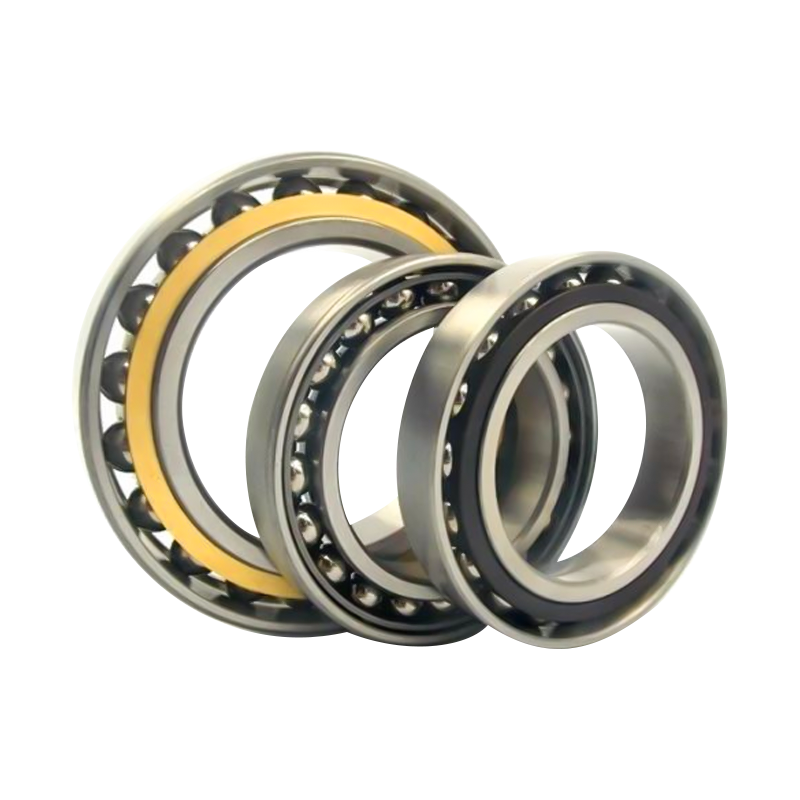
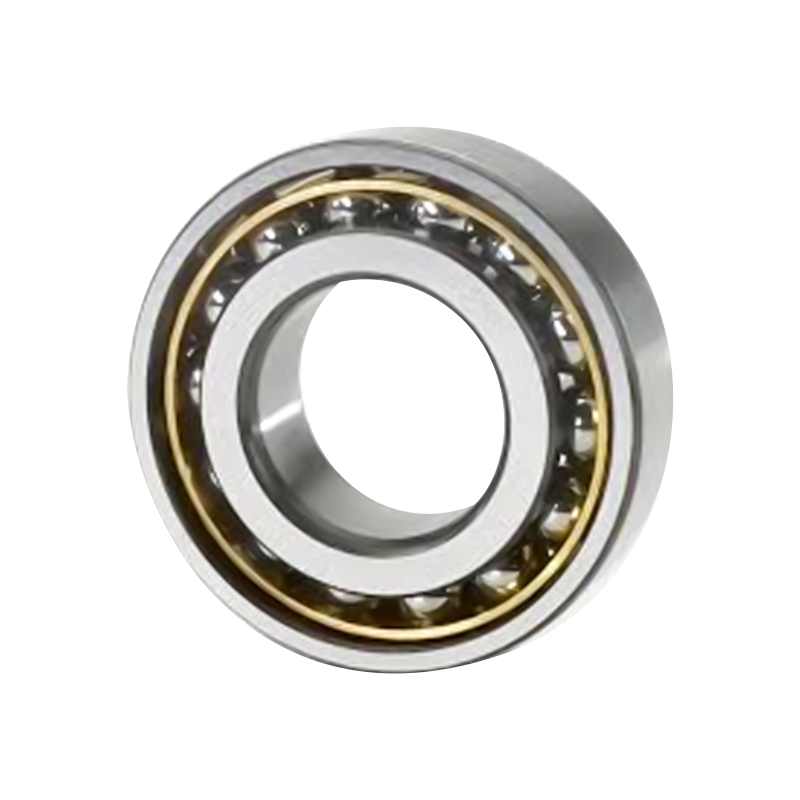
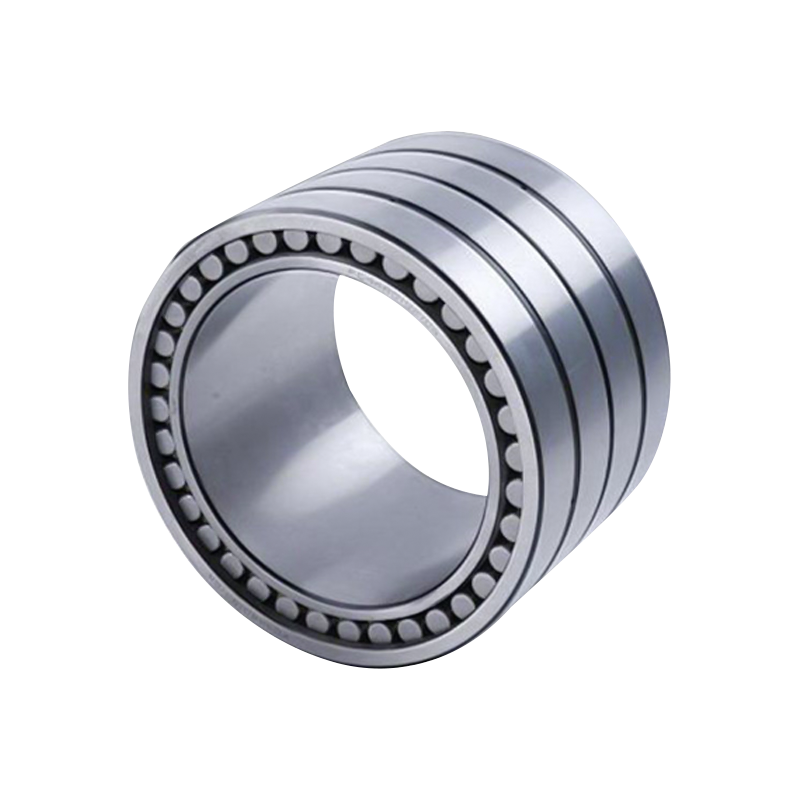
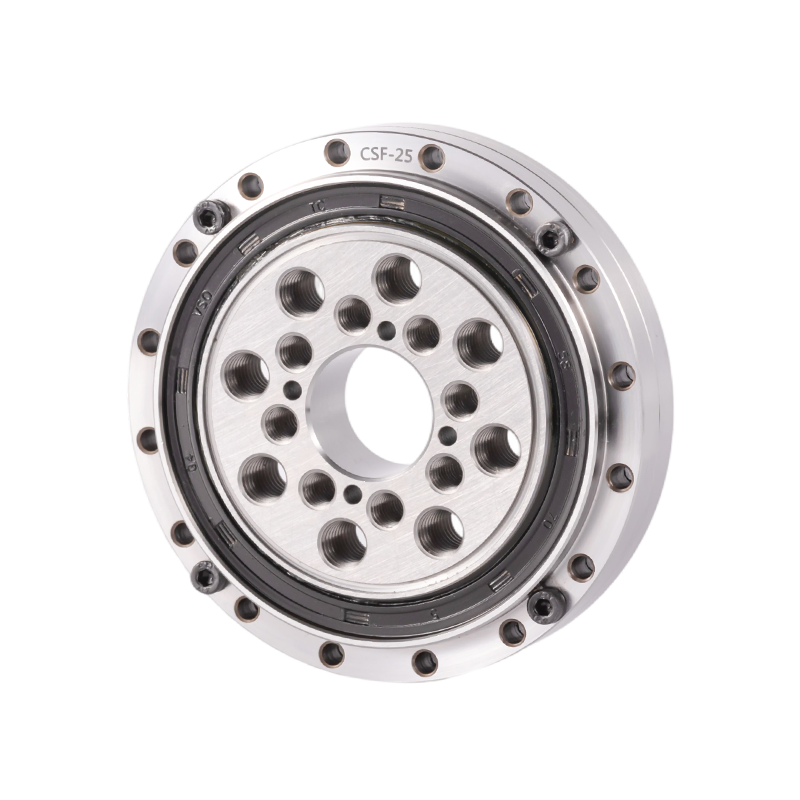
Four-point contact angular contact ball bearings are a specialized subset of angular contact ball bearings, distinguished by their ability to support radial loads and axial loads in both directions with a single row of balls. Unlike standard angular contact bearings, which typically support axial loads in one direction, four-point contact bearings feature a unique raceway design where each ball contacts the inner and outer rings at four distinct points. This design allows for efficient load distribution, reducing stress on the bearing components and extending their service life. In modern industrial settings, where efficiency, precision, and space optimization are paramount, these bearings have become an indispensable component in a wide range of applications—from the joints of collaborative robots to the spindles of high-precision CNC machines. This article explores the technical advantages of four-point contact angular contact ball bearings, the advanced manufacturing processes that ensure their reliability, and their real-world applications. Additionally, a Q&A section addresses common queries, and references to industry standards and technical literature are included to provide a comprehensive overview of these critical components.
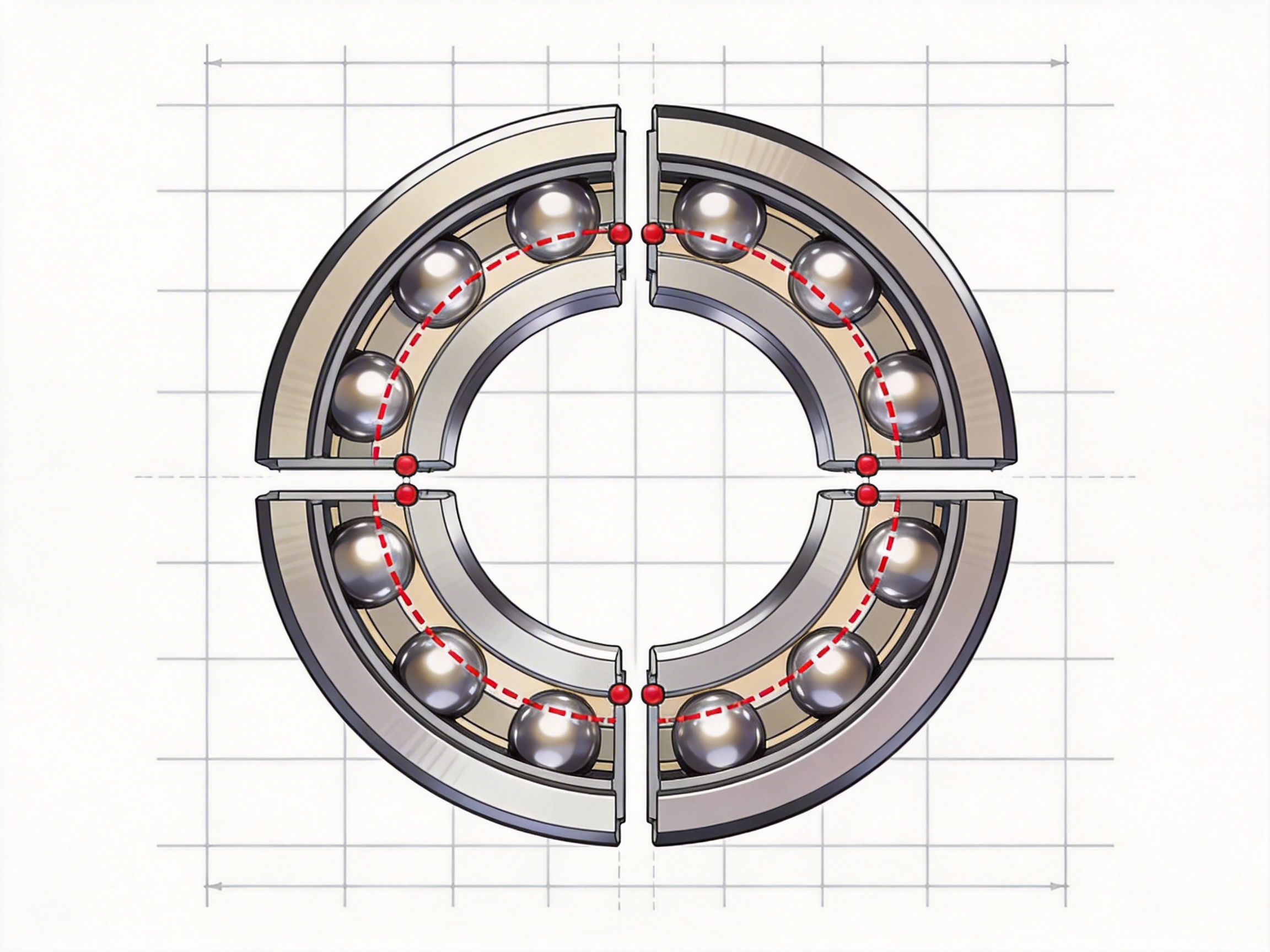
Four-point contact angular contact ball bearings stand out in the bearing market due to their unique design and performance benefits. Below are the key advantages that set them apart from competing bearing types:
One of the most significant advantages of four-point contact bearings is their ability to support radial loads and axial loads in both directions. This dual functionality eliminates the need for multiple bearings to handle different load types, reducing the overall number of components in a system and simplifying assembly. For example, in a gearbox application, a single four-point contact bearing can replace two separate bearings (one for radial load and one for axial load), streamlining the design and lowering maintenance costs over time. This capability is particularly valuable in applications where space is limited and component integration is critical.
Compared to double-row angular contact ball bearings, four-point contact bearings offer a more compact footprint. This is because their design integrates the load-bearing capabilities of two rows into a single row of balls, reducing the overall width of the bearing. For industries where space is at a premium—such as robotics, where compactness is essential for precision movement—this advantage is invaluable. A compact bearing allows engineers to design smaller, more efficient machines without compromising on load capacity or performance. For instance, in a collaborative robot arm, the compact size of four-point contact bearings enables the arm to have a slim profile, making it suitable for use in confined spaces alongside human workers.
The split inner ring design of four-point contact bearings enables the separate installation of the inner and outer rings. This feature simplifies assembly and disassembly processes, especially in applications where access to the bearing is limited. For instance, in a CNC machine spindle, the outer ring can be mounted in the housing first, followed by the inner ring and ball assembly, reducing the time and effort required for maintenance or replacement. This separate installation also allows for easier alignment of the bearing components, ensuring optimal performance and extending the bearing’s service life.
Four-point contact bearings are particularly well-suited for use in gearboxes alongside bevel gears. Their ability to handle both radial and axial loads makes them ideal for supporting the thrust forces generated by bevel gears, which are commonly used in applications requiring changes in direction of motion. This compatibility reduces the risk of bearing failure due to misalignment or uneven load distribution, enhancing the overall reliability of the gearbox. In automotive gearboxes, for example, four-point contact bearings are used to support the differential gears, ensuring smooth and efficient power transmission.
Many manufacturers offer custom design options for four-point contact bearings to meet specific application requirements. This includes variations in material (such as high-grade steel or ceramic for extreme conditions), seal types (to prevent contamination), and precision grades (for high-speed or high-precision applications). Customization ensures that the bearing is optimized for the unique needs of the end user, whether it’s a robotic arm in a manufacturing plant or a CNC machine in a precision engineering facility. For example, a manufacturer may design a ceramic four-point contact bearing for use in high-temperature aerospace applications, where steel bearings would fail due to thermal expansion.
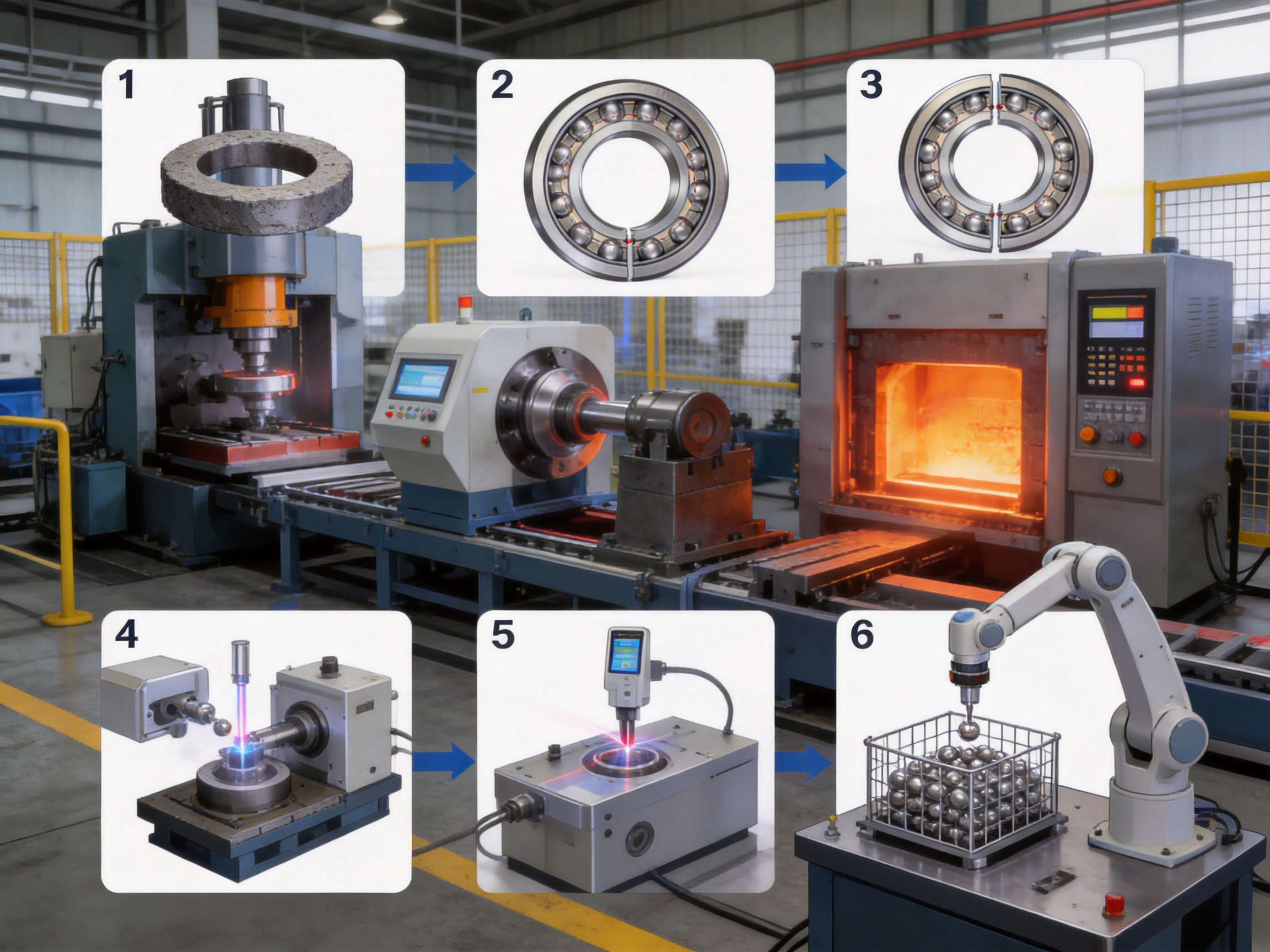
The performance and reliability of four-point contact angular contact ball bearings depend heavily on the manufacturing processes used to produce them. Leading manufacturers invest in state-of-the-art technology and rigorous quality control to ensure that each bearing meets international standards for precision and durability. Below is an overview of the key manufacturing processes and the strengths that set top manufacturers apart:
Forging is the first step in the production of bearing rings, as it enhances the mechanical properties of the raw material by aligning the grain structure. For four-point contact bearings, the raw material is typically high-carbon chromium steel (AISI 52100), which is heated to a temperature of approximately 1100–1200°C (2012–2192°F) in a gas-fired or electric furnace. The heated material is then transferred to a computer-controlled forging press, where it is shaped into a rough ring using a precision die. The forging process not only reduces the size of the material but also improves its strength, toughness, and resistance to fatigue. After forging, the rings are cooled slowly in a controlled environment to prevent cracking and distortion. Modern forging lines are equipped with automated handling systems that ensure consistent quality and reduce the risk of human error.
After forging, the bearing rings undergo turning, a machining process that removes excess material to achieve the desired dimensions. CNC turning machines are used to ensure high precision, with tolerances as tight as a few microns. This step is critical for ensuring that the rings fit together seamlessly and that the balls roll smoothly within the raceways. Advanced turning machines feature automated tool changers and inspection systems to maintain quality throughout the process. For example, a CNC lathe may use a diamond-tipped tool to finish the inner diameter of the inner ring, ensuring a smooth surface that reduces friction and wear.
Heat treatment is essential for increasing the hardness and wear resistance of the bearing rings and balls. For four-point contact bearings, the raceways are case-hardened using a process called carburizing. This involves heating the rings in a carbon-rich atmosphere (such as methane or propane) at a temperature of 850–950°C (1562–1742°F) for several hours, allowing carbon to diffuse into the surface of the steel. The rings are then quenched in oil or water to harden the surface, followed by tempering at a temperature of 150–250°C (302–482°F) to reduce brittleness. The core of the ring remains relatively soft, providing toughness to withstand impact loads. Advanced heat treatment systems use computerized temperature control to ensure that the rings meet the required hardness specifications (typically 58–64 HRC for the raceways).
Grinding is the final machining step, where the raceways and bearing surfaces are finished to achieve the required precision. This process uses abrasive wheels to remove small amounts of material, resulting in a smooth, flat surface with extremely tight tolerances. For four-point contact bearings, the raceways are ground to a precise angle (typically 30 or 40 degrees) to ensure that the balls contact the raceway at four points, which is essential for distributing loads evenly. Advanced grinding machines use laser measurement systems to monitor the surface finish and dimensions in real time, ensuring that each component meets the highest standards. For example, a cylindrical grinding machine may grind the outer diameter of the outer ring to a tolerance of ±0.001 mm, ensuring a perfect fit with the housing.
Assembly involves combining the inner ring, outer ring, balls, and cage (which holds the balls in place) into a complete bearing. The cage is typically made from nylon, brass, or steel, depending on the application. During assembly, the components are cleaned to remove any debris, and the bearing is lubricated with grease or oil to reduce friction and wear. After assembly, the bearing undergoes a series of quality tests, including noise measurement, vibration analysis, and load testing, to ensure that it meets performance specifications. Finally, the bearings are packaged in protective materials to prevent damage during shipping and storage. For example, high-precision bearings may be packaged in anti-static bags with desiccants to prevent corrosion during transport.
Leading manufacturers of four-point contact bearings combine these advanced manufacturing processes with a commitment to innovation, quality, and sustainability. For example, UKL Bearing Manufacturing Co., Ltd. has built its reputation on integrating R&D, production, and international distribution. With a production capacity of 10,000–50,000 units per month, the company serves clients across Europe, Asia, Africa, and Russia. Its modern factory is equipped with multiple production lines covering forging, turning, heat treatment, grinding, assembly, and packaging, ensuring consistency and excellence in every process. The company’s dedicated R&D team continuously develops high-precision bearings for CNC machines, robotics, and intelligent automation systems, leveraging precision design and digital production control to meet international standards. Additionally, the company prioritizes sustainability by adopting environmentally responsible processes, promoting material recycling, and optimizing energy usage to reduce its environmental footprint. Its multilingual service team provides rapid technical support, installation guidance, and after-sales maintenance worldwide, making it a reliable partner for global industries.
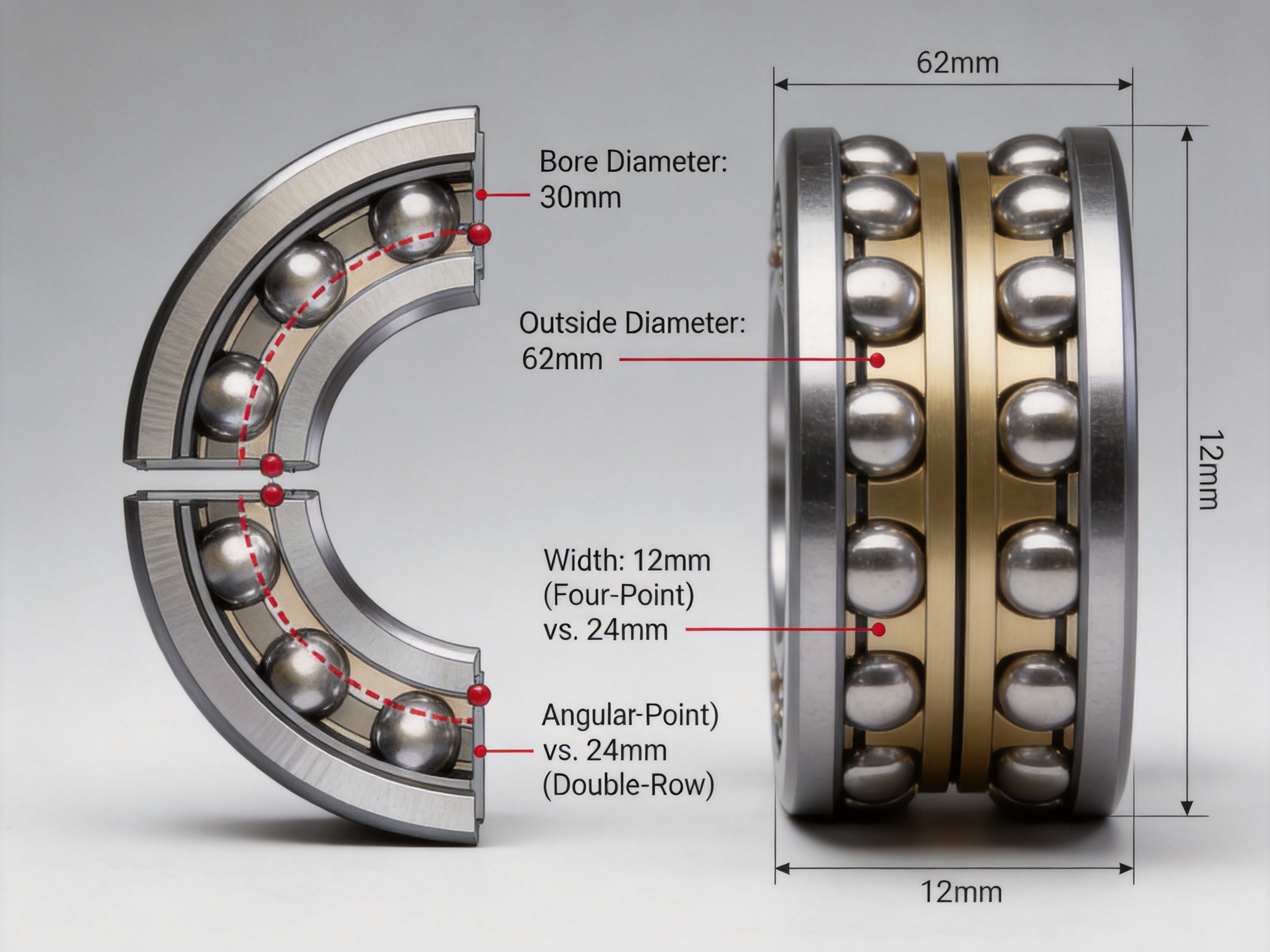
Four-point contact angular contact ball bearings are available in a wide range of sizes and configurations to meet the needs of different applications. Below is a table of key models with their technical specifications, followed by an overview of their common applications.
Below is a curated table of four-point contact angular contact ball bearing models, including their designation, bore diameter, outside diameter, width, basic dynamic load rating, and limiting speed:
| Designation | Bore Diameter (mm) | Outside Diameter (mm) | Width (mm) | Basic Dynamic Load Rating (kN) | Limiting Speed (r/min) |
|---|---|---|---|---|---|
| QJ 203 N2MA | 17 | 40 | 12 | 17 | 30000 |
| QJ 205 N2MA/C2L | 25 | 52 | 15 | 27 | 22000 |
| QJ 212 MA | 60 | 110 | 22 | 96.5 | 10000 |
| QJ 216 MA | 80 | 140 | 26 | 146 | 8000 |
| QJ 310 MA | 50 | 110 | 27 | 118 | 11000 |
| QJ 318 N2MA | 90 | 190 | 43 | 285 | 6300 |
| QJ 1080 N2MA | 400 | 600 | 90 | 904 | 1500 |
| PER.BB204RRY3-D | 16.053 | 45.225 | 18.669 | 19.6 | N/A |
| QJ 344 N2/309829 | 220 | 460 | 88 | 904 | 2400 |
| QJ 240 N2MA | 200 | 360 | 58 | 540 | 3000 |
Four-point contact angular contact ball bearings are used in a wide range of industrial applications due to their versatility and performance. Some of the most common applications include:
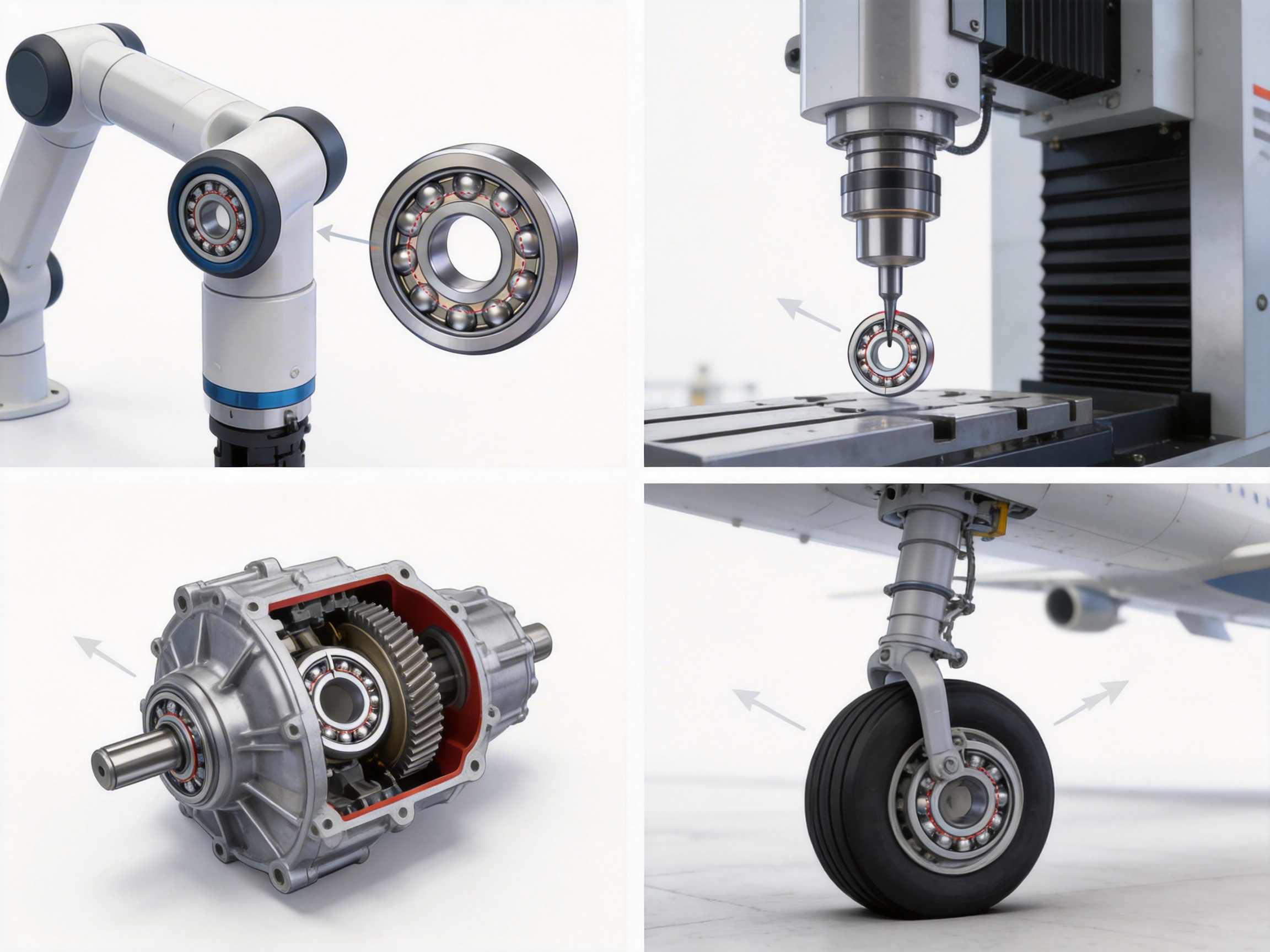
Collaborative robots (cobots) are designed to work safely alongside humans, requiring bearings that are compact, precise, and low-friction. Four-point contact bearings are used in the joints of cobots, such as the UR5 and UR10 from Universal Robots, enabling smooth and precise movement. The compact design of these bearings allows the cobot to have a slim profile, making it suitable for use in confined spaces. Additionally, the ability to handle multi-directional loads ensures that the cobot can perform a wide range of tasks, from assembly to packaging. In industrial robots, four-point contact bearings are used in the wrist joints, where they support the weight of the end-effector and handle the forces generated by rapid movement.
High-speed CNC milling machines, such as the Haas VF series, use four-point contact bearings in their spindles to support the rotating cutting tool. The bearings must be able to operate at speeds of up to 15,000 rpm while handling heavy cutting forces. Four-point contact bearings are ideal for this application because of their high load capacity and low friction. The precision grinding of the raceways ensures that the spindle remains stable, resulting in accurate and consistent machining. In CNC lathes, four-point contact bearings are used in the spindle and turret, where they support the workpiece and cutting tool, respectively.
Gearboxes, especially those using bevel gears, require bearings that can handle thrust loads. Four-point contact bearings are commonly used in gearboxes for automotive, industrial, and aerospace applications. They support the radial and axial loads generated by the gears, reducing wear and extending the life of the gearbox. In automotive transmissions, four-point contact bearings are used in the differential, where they support the side gears and pinion gears. In wind turbine gearboxes, four-point contact bearings are used to support the main shaft, handling the heavy loads generated by the rotating blades.
Automation systems, such as conveyor belts, packaging machines, and assembly lines, require bearings that are reliable and low-maintenance. Four-point contact bearings are used in the pulleys, rollers, and joints of these systems, ensuring smooth operation and minimal downtime. In packaging machines, four-point contact bearings are used in the sealing and cutting mechanisms, where they handle the forces generated by the moving parts. In conveyor belts, four-point contact bearings are used in the idler rollers, supporting the weight of the conveyor belt and the products being transported.
In the aerospace and defense industries, bearings must meet strict standards for reliability and performance. Four-point contact bearings are used in aircraft landing gear, missile guidance systems, and satellite components. Their ability to handle extreme temperatures, high loads, and harsh environments makes them ideal for these applications. In aircraft landing gear, four-point contact bearings are used in the struts and wheels, supporting the weight of the aircraft during takeoff and landing. In missile guidance systems, four-point contact bearings are used in the gyroscopes, ensuring precise control of the missile’s direction.
This section addresses common questions about four-point contact angular contact ball bearings, providing clear and concise answers based on the information presented in the article:
A: Four-point contact bearings are single-row bearings that can handle radial and axial loads in both directions, while double-row angular contact bearings have two rows of balls and are typically used for heavier loads. The key advantage of four-point contact bearings is their compact design, which allows them to fit into smaller spaces than double-row bearings. Additionally, four-point contact bearings can be installed separately (inner and outer rings), whereas double-row bearings are usually installed as a complete unit. Double-row bearings are better suited for applications where heavy loads are expected, while four-point contact bearings are ideal for space-constrained applications requiring multi-directional load support.
A: Four-point contact bearings have a limited ability to handle misalignment. Unlike self-aligning bearings, which are designed to accommodate significant misalignment, four-point contact bearings are best suited for applications where the shafts are properly aligned. However, some manufacturers offer custom designs with slight misalignment capabilities (up to 0.5 degrees) to meet specific application needs. Excessive misalignment can cause uneven load distribution, leading to premature bearing failure, so it is important to ensure proper alignment during installation.
A: The most common material for four-point contact bearings is high-carbon chromium steel (such as AISI 52100), which offers high hardness, wear resistance, and fatigue strength. For extreme conditions (such as high temperatures or corrosive environments), ceramic materials (like silicon nitride) or stainless steel may be used. The cage, which holds the balls in place, is typically made from nylon (for low friction and light loads), brass (for high loads and high temperatures), or steel (for extreme conditions). The choice of material depends on the application’s operating conditions and performance requirements.
A: To choose the right bearing, you need to consider several factors: (1) Load type and magnitude (radial, axial, or combined); (2) Speed (limiting speed of the bearing); (3) Operating temperature and environment (corrosion, dust, moisture, etc.); (4) Space constraints (bore diameter, outside diameter, width); (5) Precision requirements (for high-speed or high-precision applications). Consulting with a bearing manufacturer or engineer can help you select the optimal bearing for your specific needs. For example, if your application requires high speed and low friction, you may choose a bearing with a ceramic ball and a nylon cage.
A: Four-point contact bearings require regular maintenance to ensure optimal performance and longevity. This includes: (1) Lubrication (grease or oil) to reduce friction and wear; (2) Cleaning to remove debris and contaminants; (3) Inspection for signs of wear, corrosion, or damage; (4) Replacement of worn components. The frequency of maintenance depends on the application and operating conditions. For example, bearings in high-speed CNC machines may require lubrication every 500 hours, while bearings in low-speed conveyor belts may require lubrication every 2000 hours. It is important to follow the manufacturer’s maintenance guidelines to ensure the bearing’s reliability.
A: Yes, many manufacturers offer custom design options for four-point contact bearings. This includes variations in size, material, seal type, precision grade, and cage material. Customization allows the bearing to be optimized for specific application requirements, such as high temperatures, corrosive environments, or high-speed operation. For example, a manufacturer may design a stainless steel four-point contact bearing with a Viton seal for use in food processing equipment, where corrosion resistance and hygiene are critical.
A: The basic dynamic load rating (C) is the load that a bearing can withstand for a specified number of revolutions (usually 1 million) before the first signs of fatigue appear. It is an important parameter for selecting a bearing that can handle the expected loads in an application. The basic dynamic load rating is listed in the technical specifications of each bearing model. For example, the QJ 216 MA bearing has a basic dynamic load rating of 146 kN, meaning it can withstand a load of 146 kN for 1 million revolutions before fatigue failure occurs.
A: The split inner ring design allows the inner and outer rings to be installed separately. This simplifies assembly and disassembly, especially in applications where access to the bearing is limited. Additionally, the split inner ring enables a larger number of balls to be used, increasing the load capacity of the bearing. The split design also allows for easier replacement of the inner ring if it becomes damaged, reducing maintenance costs and downtime. For example, in a CNC machine spindle, the split inner ring allows the inner ring to be replaced without removing the entire spindle assembly.
The information presented in this article is based on the following sources:
Product Categories
Contact Us

Jane@ukl-bearing.com
Jenny@ukl-bearing.com
Andy@ukl-bearing.com
Ivy@ukl-bearing.com

+86-510- 88763239
+86-15371057968

No.1 Hehuan Road, Hudai Town, Binhu District, Wuxi City.
Ready to Begin?
Get in Touch

Now!
UKL BEARING
 English
 Español
 русский