Content
In the fast-evolving landscape of industrial automation, robotics, and precision engineering, the demand for compact, lightweight, and high-load-capacity bearings has never been greater. RA Type cross roller bearings—characterized by their segmented outer ring and rotating inner ring—have emerged as a game-changer, addressing the critical need for space-efficient components that do not compromise on performance. Unlike traditional slewing ring bearings, which often occupy excessive volume, RA Type bearings are engineered to minimize thickness while maintaining exceptional precision and load-bearing capabilities. This article explores the design, advantages, manufacturing excellence, technical specifications, applications, and maintenance of RA Type cross roller bearings, highlighting their role in advancing modern industrial systems.
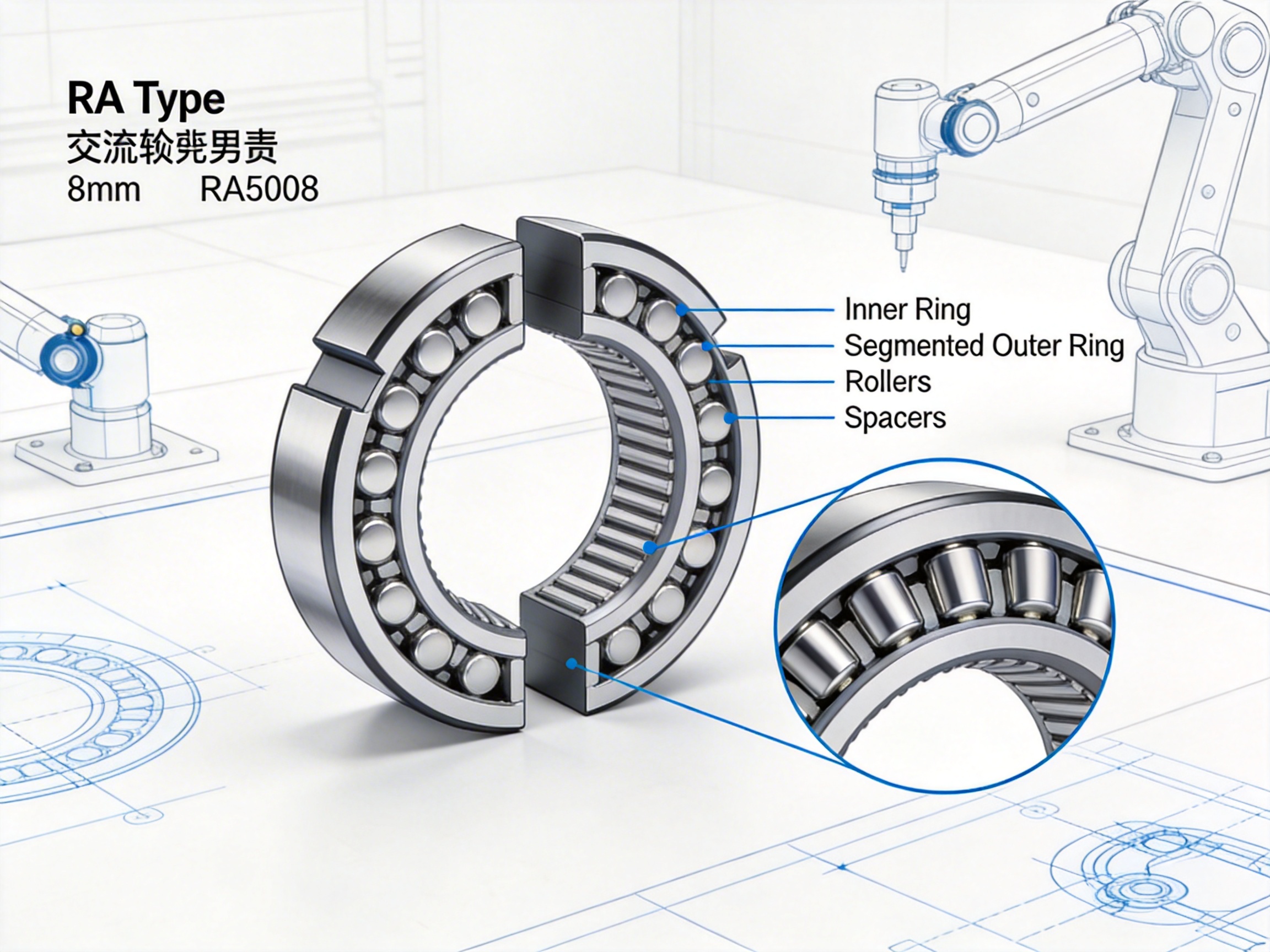
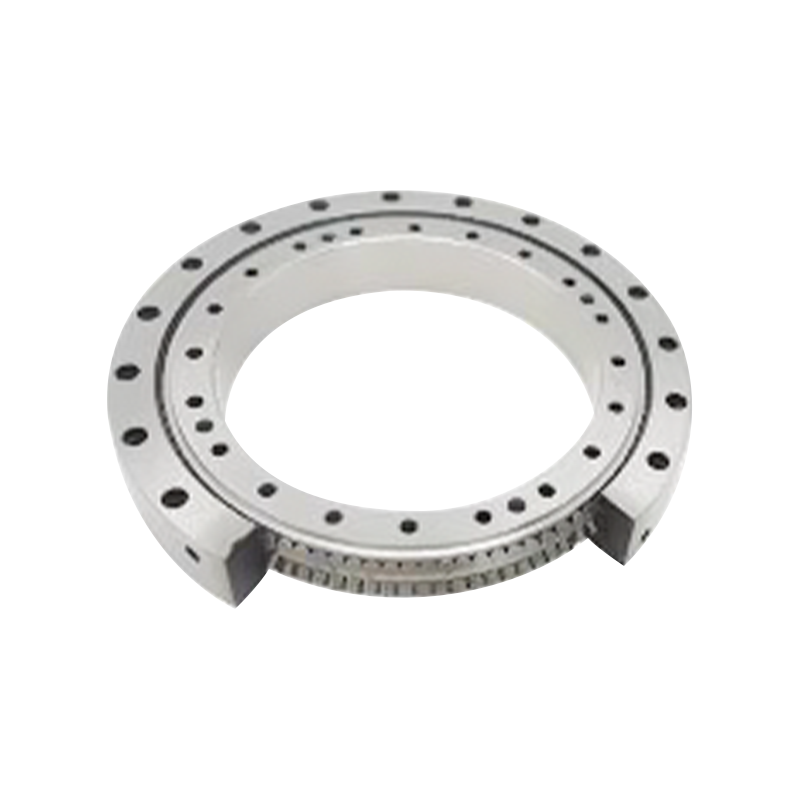
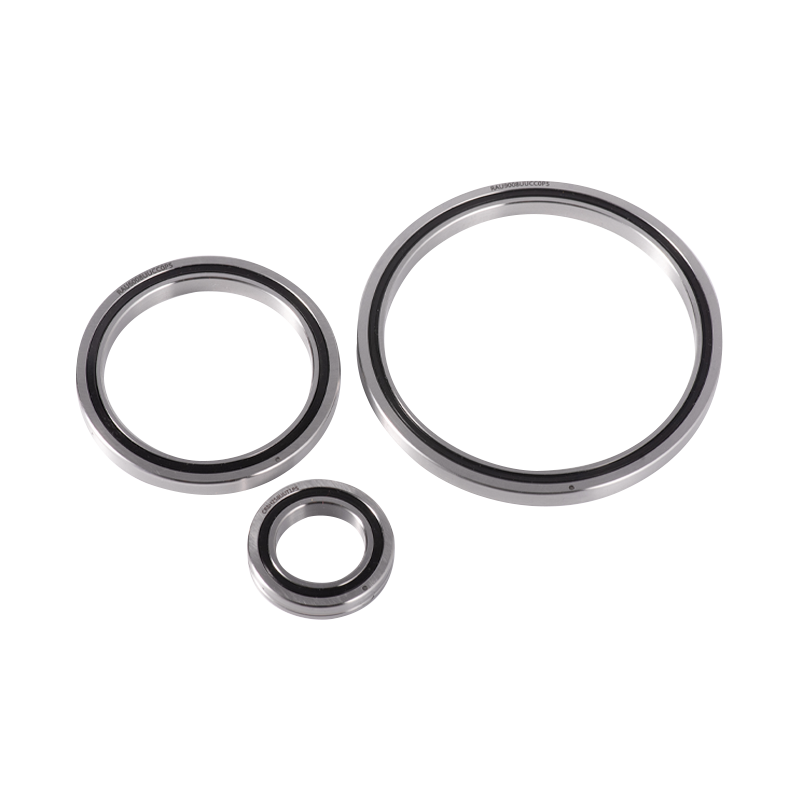
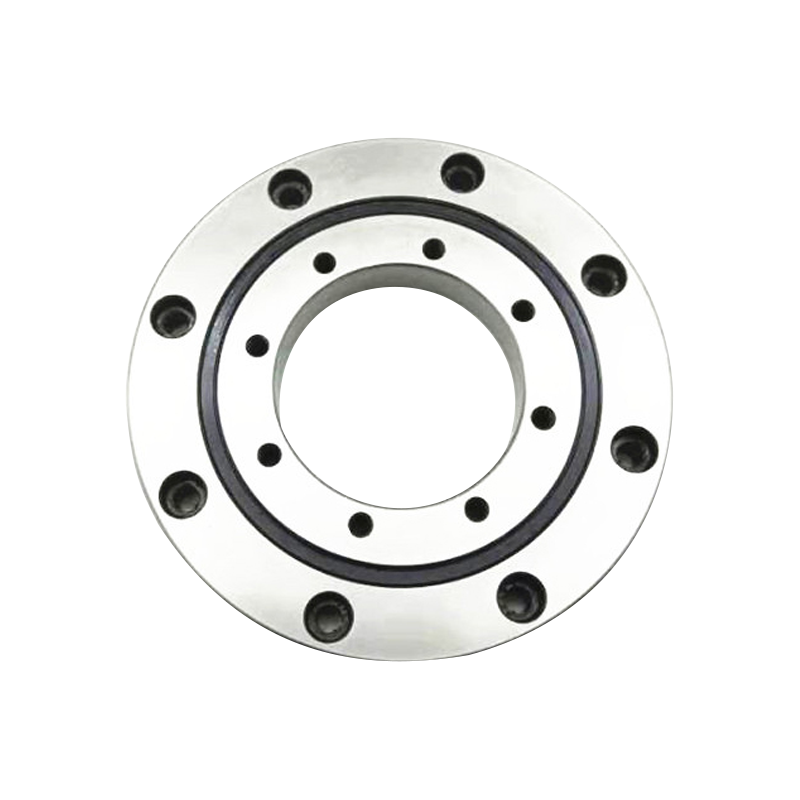
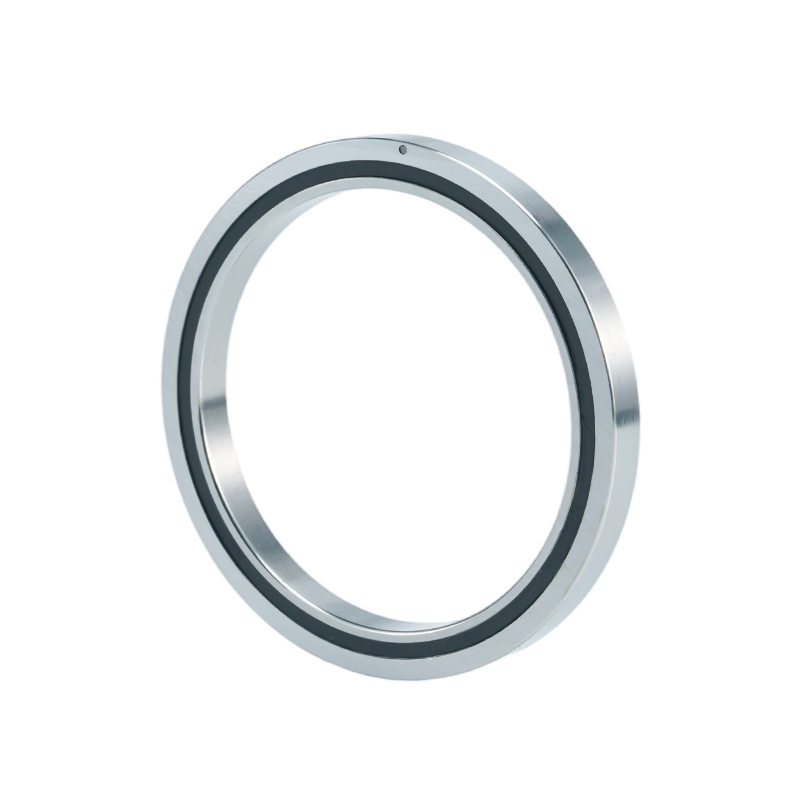
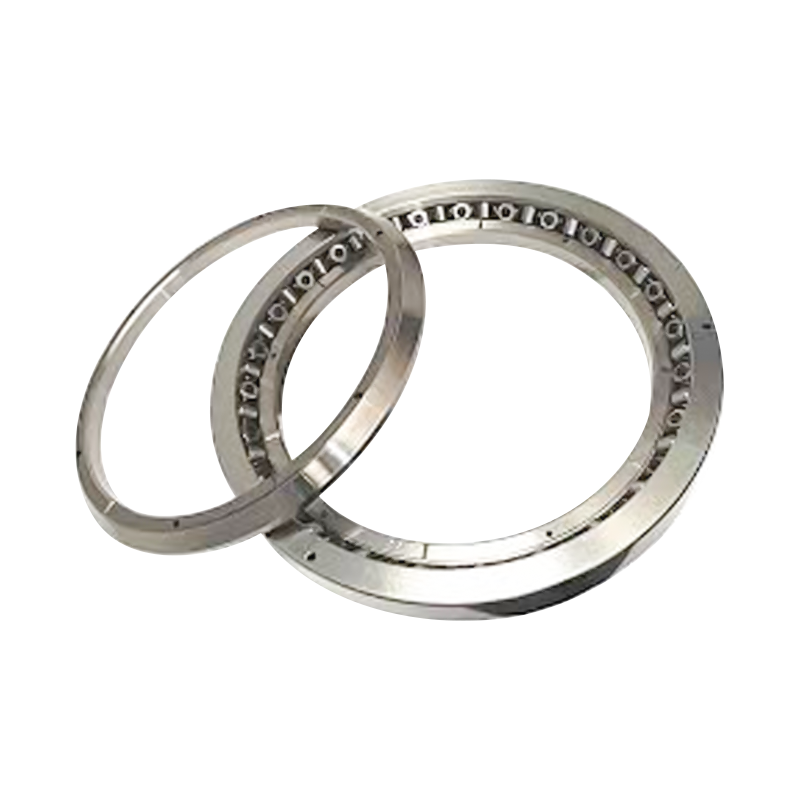
RA Type cross roller bearings are a specialized subset of slewing ring bearings (SRBs) designed for applications where space and weight are at a premium. Their core design features set them apart from conventional bearings: the outer ring is segmented, allowing for easier assembly and integration into compact systems, while the inner ring is designed for rotation, enabling smooth, precise movement. The most striking attribute of RA Type bearings is their ultra-thin profile—both inner and outer rings are reduced to the absolute limit without sacrificing structural integrity or load capacity. This design makes them ideal for use in rotating sections of industrial robots, mechanical manipulators, and other precision equipment where every millimeter of space counts.
At the heart of RA Type bearings is their cross roller arrangement. Unlike standard ball bearings, which use a single row of balls, cross roller bearings utilize cylindrical rollers arranged in a cross pattern (90 degrees to each other). This configuration allows the bearing to handle both radial and axial loads simultaneously, as well as moment loads—making it a versatile solution for multi-directional force applications. The segmented outer ring further enhances their practicality: it eliminates the need for complex machining of the outer ring in one piece, reduces material waste, and simplifies installation in tight spaces where full-ring bearings would be impossible to fit.
RA Type cross roller bearings offer several distinct advantages over traditional slewing ring bearings and other competing bearing types, making them the preferred choice for modern precision applications:
Traditional slewing ring bearings are often bulky, with thick inner and outer rings that take up valuable space in compact systems. RA Type bearings, by contrast, feature a minimized thickness profile—some models have a height of just 8mm (as seen in the RA5008 to RA15008 series). This compact design allows engineers to design smaller, lighter equipment without compromising on performance. For example, in industrial robots, where the rotating arm must be as slender as possible to navigate tight workspaces, RA Type bearings enable a more streamlined design that improves maneuverability and efficiency.
The reduced thickness of RA Type bearings translates directly to lower weight. This is a critical advantage in applications where weight reduction is essential—such as robotic arms, which must move quickly and efficiently without excessive inertia. A lighter bearing reduces the energy required to operate the robot, extends battery life (in mobile robots), and improves overall system responsiveness. For instance, a robotic manipulator using RA Type bearings can accelerate and decelerate faster than one using a heavier conventional bearing, increasing production throughput.
One common trade-off in bearing design is between compactness and load capacity: smaller bearings often have lower load ratings. RA Type bearings break this trade-off by leveraging their cross roller arrangement to distribute loads evenly across the rollers. This allows them to handle significant radial, axial, and moment loads despite their small size. For example, the RA16013 model (with an inner diameter of 160mm) has a radial basic load rating (Cr) of 23.3kN and a static load rating (Cor) of 44.9kN—figures that rival much larger bearings. This balance makes RA Type bearings suitable for heavy-duty applications in addition to compact ones.
The segmented outer ring of RA Type bearings simplifies installation, especially in systems where the bearing must be mounted around a fixed shaft or structure. Unlike full-ring bearings, which require the shaft to be inserted through the entire ring (a process that can be complex in tight spaces), the segmented outer ring can be assembled in sections around the inner ring and shaft. This reduces installation time, minimizes the risk of damage during assembly, and makes maintenance easier—since the segmented ring can be removed without disassembling the entire system.
RA Type bearings are not limited to a single industry or application. Their compact size, high load capacity, and precision make them suitable for a wide range of uses, including industrial robots, mechanical manipulators, CNC machines, medical devices (e.g., surgical robots), aerospace equipment, and automotive automation systems. This versatility allows manufacturers to standardize on RA Type bearings across multiple product lines, reducing inventory costs and simplifying supply chain management.
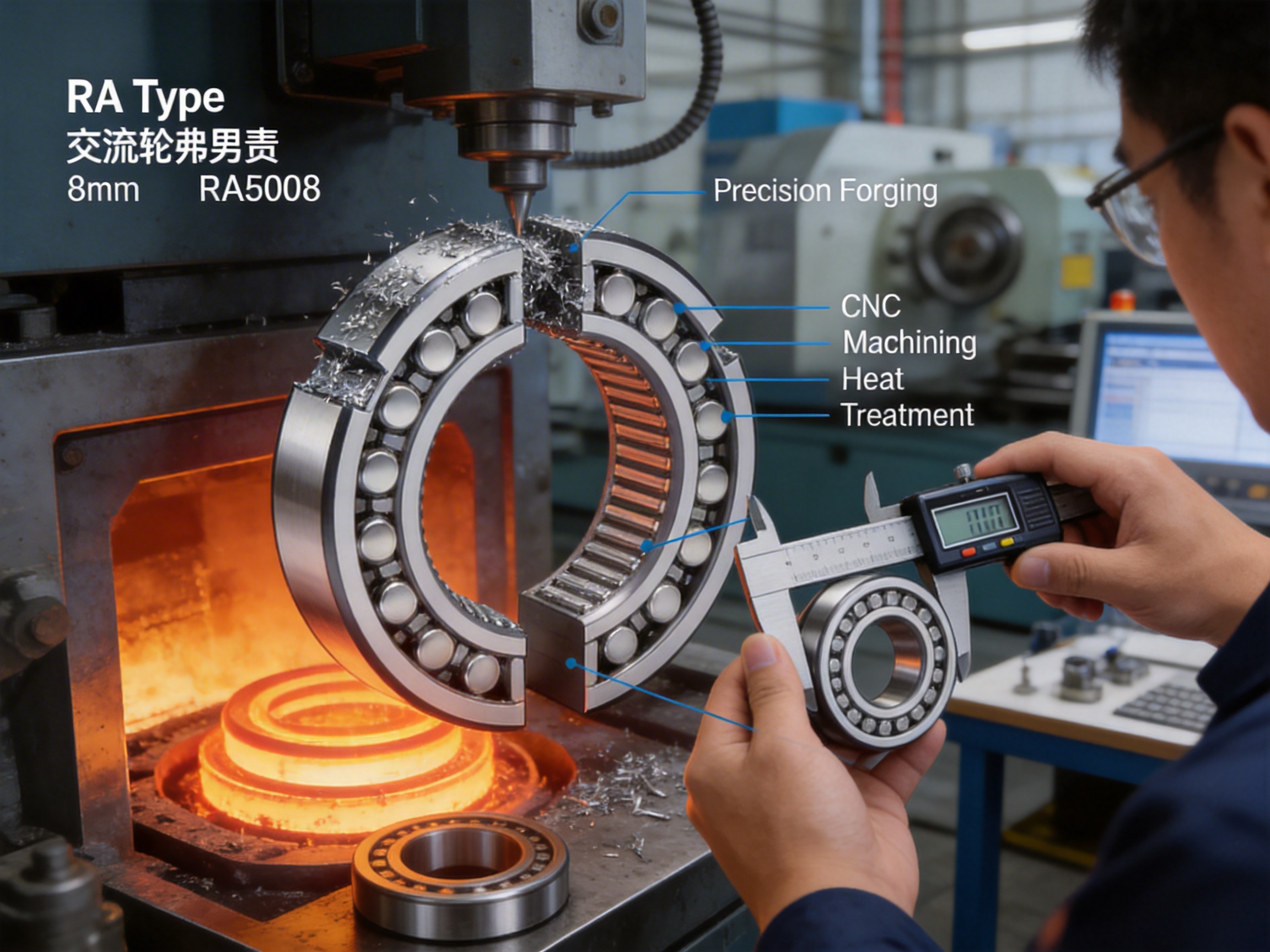
The superior performance of RA Type bearings is a direct result of advanced manufacturing processes employed by leading bearing manufacturers. These processes ensure consistency, precision, and durability—critical factors for applications where bearing failure can lead to costly downtime or safety hazards. Below are key manufacturing steps that contribute to the quality of RA Type bearings:
The first step in manufacturing RA Type bearings is forging the inner and outer rings. Forging involves heating the raw material (typically high-quality bearing steel, such as 52100 chrome steel or 440C stainless steel) to a malleable state and then shaping it using high-pressure forging presses. This process improves the material's grain structure, increases its strength and toughness, and reduces internal defects. For RA Type bearings, precision forging is essential to achieve the tight tolerances required for their thin profile—any deviation in shape can lead to uneven load distribution and premature failure.
After forging, the rings undergo CNC (Computer Numerical Control) machining to achieve the precise dimensions required. For the segmented outer ring, CNC machines are used to cut the segments with extreme accuracy, ensuring that the mating surfaces fit together perfectly. The inner ring is machined to exact specifications for the raceways (the grooves where the rollers sit), with tolerances often measured in micrometers. CNC machining also ensures that the chamfers (the beveled edges) are consistent, which is critical for proper installation and preventing stress concentrations.
Heat treatment is a critical step that enhances the hardness and wear resistance of the bearing rings. The rings are heated to a specific temperature (typically between 800°C and 1000°C) and then quenched (cooled rapidly) to harden the surface. This is followed by tempering (reheating to a lower temperature) to reduce brittleness and improve toughness. For RA Type bearings, heat treatment is carefully controlled to ensure that the raceways have the optimal hardness—hard enough to resist wear, but not so hard that they become brittle and prone to cracking under load.
Grinding is used to achieve the ultra-precise surface finish required for the raceways and mating surfaces of RA Type bearings. The raceways must be ground to a smoothness of less than 0.1 micrometers (Ra) to minimize friction and wear. For the segmented outer ring, the mating surfaces between segments are ground to ensure a tight, gap-free fit when assembled. Grinding is performed using specialized grinding machines with diamond or cubic boron nitride (CBN) wheels, which are capable of achieving the high levels of precision needed for RA Type bearings.
Assembly of RA Type bearings involves placing the cylindrical rollers in the cross pattern within the inner ring, then attaching the segmented outer ring. The rollers are separated by spacers or cages to prevent contact between them, which reduces friction and wear. After assembly, each bearing undergoes rigorous quality control tests: these include dimensional checks (to ensure all dimensions meet specifications), load testing (to verify load capacity), rotation tests (to check for smoothness and absence of vibration), and lubrication tests (to ensure proper lubrication distribution). Only bearings that pass all tests are released for shipment.
Leading manufacturers also invest in digital production control systems to monitor every step of the manufacturing process. These systems use sensors and data analytics to detect deviations from specifications in real time, allowing for immediate corrections and ensuring consistent quality across all batches. This digitalization not only improves efficiency but also reduces the risk of human error—critical for maintaining the high standards required for RA Type bearings.
RA Type bearings are available in a range of sizes to suit different applications. Below is a table of common RA Type bearing models, their dimensions, load ratings, and weights:
| Bearing Type | Inner Diameter (d) mm | Outside Diameter (D) mm | Roller Pitch Diameter (Dpw) mm | Height (BB1) mm | Chamfer (Rmin) mm | Shoulder Size (ds) mm | Shoulder Size (Dh) mm | Basic Radial Load Rating (Cr) kN | Basic Static Load Rating (Cor) kN | Weight kg |
|---|---|---|---|---|---|---|---|---|---|---|
| RA5008 | 50 | 66 | 57 | 8 | 0.5 | 53.5 | 60.5 | 5.1 | 7.19 | 0.08 |
| RA6008 | 60 | 76 | 67 | 8 | 0.5 | 63.5 | 70.5 | 5.68 | 8.68 | 0.09 |
| RA7008 | 70 | 86 | 77 | 8 | 0.5 | 73.5 | 80.5 | 5.98 | 9.8 | 0.1 |
| RA8008 | 80 | 96 | 87 | 8 | 0.5 | 83.5 | 90.5 | 6.37 | 11.3 | 0.11 |
| RA9008 | 90 | 106 | 97 | 8 | 0.5 | 93.5 | 100.5 | 6.76 | 12.4 | 0.12 |
| RA10008 | 100 | 116 | 107 | 8 | 0.5 | 103.5 | 110.5 | 7.15 | 13.9 | 0.14 |
| RA11008 | 110 | 126 | 117 | 8 | 0.5 | 113.5 | 120.5 | 7.45 | 15 | 0.15 |
| RA12008 | 120 | 136 | 127 | 8 | 0.5 | 123.5 | 130.5 | 7.84 | 16.5 | 0.17 |
| RA13008 | 130 | 146 | 137 | 8 | 0.5 | 133.5 | 140.5 | 7.94 | 17.6 | 0.18 |
| RA14008 | 140 | 156 | 147 | 8 | 0.5 | 143.5 | 150.5 | 8.33 | 19.1 | 0.19 |
| RA15008 | 150 | 166 | 157 | 8 | 0.5 | 153.5 | 160.5 | 8.82 | 20.6 | 0.2 |
| RA16013 | 160 | 186 | 172 | 13 | 0.8 | 165 | 179 | 23.3 | 44.9 | 0.59 |
| RA17013 | 170 | 196 | 182 | 13 | 0.8 | 175 | 189 | 23.5 | 46.5 | 0.64 |
| RA18013 | 180 | 206 | 192 | 13 | 0.8 | 185 | 199 | 24.5 | 49.8 | 0.68 |
| RA19013 | 190 | 216 | 202 | 13 | 0.8 | 195 | 209 | 24.9 | 51.5 | 0.69 |
| RA20013 | 200 | 226 | 212 | 13 | 0.8 | 205 | 219 | 25.8 | 54.7 | 0.71 |
When selecting an RA Type bearing, it is important to consider several factors: the inner and outer diameter (to fit the shaft and housing), the load requirements (radial, axial, and moment loads), the operating speed, and the environmental conditions (e.g., temperature, presence of contaminants). For example, if the application requires a high radial load capacity, models like the RA20013 (with a Cr of 25.8kN) would be suitable, while for compact applications, the RA5008 (height 8mm) is ideal.
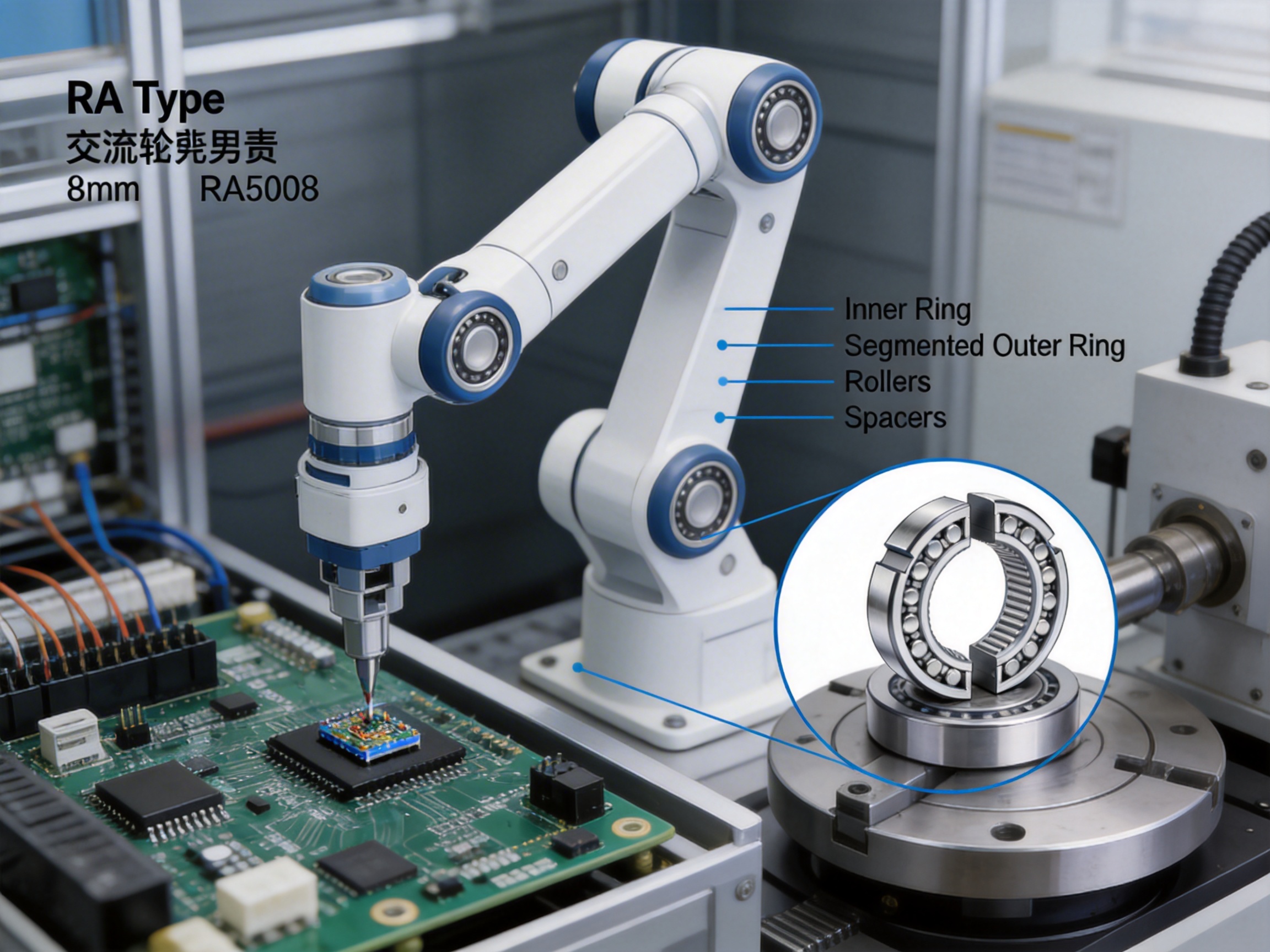
RA Type cross roller bearings are used in a wide range of applications where compactness, precision, and load capacity are critical. Below are some of the most common uses:
Industrial robots are one of the largest consumers of RA Type bearings. The rotating joints of robotic arms—such as the shoulder, elbow, and wrist—require bearings that are compact, lightweight, and capable of handling both radial and moment loads. RA Type bearings fit this bill perfectly: their thin profile allows for a slender arm design, while their cross roller arrangement handles the multi-directional forces generated by the robot's movements. For example, in assembly line robots, RA Type bearings enable precise positioning of the end effector (the tool attached to the arm), which is essential for tasks like welding, painting, and pick-and-place operations.
Mechanical manipulators—used in manufacturing, logistics, and healthcare—rely on RA Type bearings for smooth, precise movement. These devices often have limited space for bearings, making RA Type's compact design a must. For instance, in a surgical manipulator used in minimally invasive surgery, RA Type bearings allow for precise control of the instrument tip while keeping the device small enough to fit through a tiny incision. In logistics, manipulators used to handle heavy loads (like pallets) use RA Type bearings to balance load capacity with compactness, enabling efficient movement in warehouse spaces.
CNC (Computer Numerical Control) machines—used for precision machining of metal and plastic parts—require bearings that can handle high speeds and heavy loads with minimal vibration. RA Type bearings are used in the rotating axes of CNC machines, such as the spindle and the rotary table. Their high precision ensures that the machine maintains tight tolerances, while their compact size allows for a more compact machine design. For example, in a CNC lathe, the rotary table (which holds the workpiece) uses RA Type bearings to rotate the workpiece smoothly and accurately, resulting in high-quality machined parts.
Intelligent automation systems—such as automated guided vehicles (AGVs), conveyor systems, and sorting machines—use RA Type bearings for their reliability and compactness. AGVs, which are used to transport materials in warehouses and factories, rely on RA Type bearings in their wheels and steering mechanisms to handle the weight of the vehicle and its cargo while maintaining smooth movement. Conveyor systems use RA Type bearings in their rollers to ensure that products move along the line without jamming or deviating from their path.
Medical devices—such as surgical robots, diagnostic equipment, and rehabilitation devices—benefit from RA Type bearings' precision and compactness. For example, in a diagnostic imaging device like an MRI machine, RA Type bearings are used in the rotating table that holds the patient. Their smooth rotation ensures that the patient is positioned accurately for scanning, while their compact size allows the machine to fit in limited hospital spaces. In rehabilitation devices, RA Type bearings enable smooth movement of joints, helping patients recover from injuries more effectively.
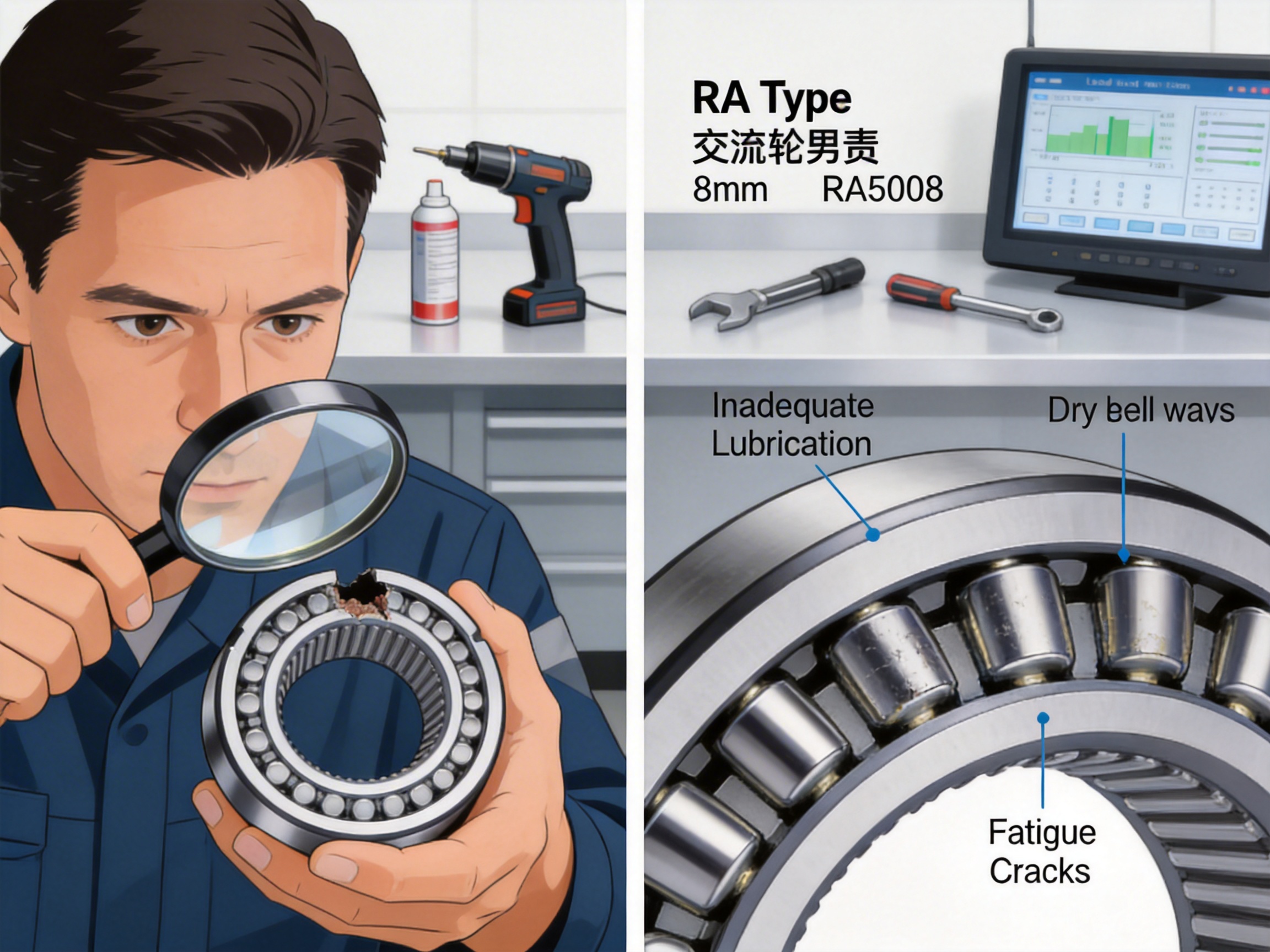
While RA Type bearings are designed for durability and reliability, improper use or maintenance can lead to failure. Below are the most common issues, their causes, symptoms, and solutions:
Causes: Using an unsuitable lubricant (e.g., the wrong viscosity or type), improper lubricant quantity, or an unreasonable lubrication interval.
Symptoms: The bearing emits a "squeaking" or "grinding" metallic friction sound during operation; increased temperature due to friction; premature wear of rollers and raceways.
Solutions: Use a lubricant recommended by the bearing manufacturer (typically a high-quality grease or oil suitable for the operating temperature and load conditions); follow the manufacturer's recommended lubrication quantity and interval; ensure that the lubricant is applied evenly to all contact surfaces.
Causes: Repeated loading and unloading of the bearing beyond its fatigue limit; material defects; improper heat treatment.
Symptoms: Visible cracks on the bearing rings or rollers; increased vibration during operation; loss of precision.
Solutions: Ensure that the bearing is not subjected to loads exceeding its designed load capacity; use bearings made from high-quality materials with proper heat treatment; replace bearings that show signs of fatigue immediately.
Causes: Seal failure allowing dust, dirt, or moisture to enter the bearing; improper cleaning during maintenance.
Symptoms: Increased friction and noise; premature wear of rollers and raceways; corrosion of bearing components.
Solutions: Regularly inspect the bearing seals to ensure they are intact; use seals suitable for the operating environment (e.g., rubber seals for dusty environments); clean the bearing with a suitable solvent before lubrication; avoid using compressed air to clean the bearing (which can blow contaminants deeper into the raceways).
Causes: Using improper tools for installation; misaligning the bearing with the shaft or housing; over-tightening the mounting bolts.
Symptoms: Excessive vibration during operation; premature wear; bearing seizure.
Solutions: Follow the manufacturer's installation instructions carefully; use the correct tools (e.g., bearing pullers, presses) for installation; ensure that the bearing is aligned properly with the shaft and housing; avoid over-tightening mounting bolts (use a torque wrench to achieve the correct torque).
Causes: Subjecting the bearing to loads exceeding its designed load capacity; dynamic loads (e.g., impact loads) that exceed the bearing's limits.
Symptoms: Visible deformation of bearing components; increased noise and vibration; premature failure.
Solutions: Select a bearing with a load capacity that meets or exceeds the application's requirements; avoid subjecting the bearing to impact loads; use shock absorbers or dampers to reduce dynamic loads.
Other Causes: Improper transportation (e.g., dropping the bearing); incorrect fit (mating) between the bearing and the shaft/housing; corrosion due to exposure to moisture or chemicals.
Solutions: Handle bearings with care during transportation; use the correct fit (e.g., interference fit or clearance fit) as recommended by the manufacturer; protect bearings from moisture and chemicals using suitable coatings or seals.
This section addresses common questions about RA Type cross roller bearings:
A: RA Type bearings are characterized by their segmented outer ring and ultra-thin profile, which makes them more compact and lightweight than standard slewing ring bearings. Their cross roller arrangement also allows them to handle multi-directional loads (radial, axial, and moment) more effectively, while the segmented outer ring simplifies installation and maintenance.
A: To choose the right RA Type bearing, consider the following factors: (1) Shaft and housing dimensions (inner and outer diameter); (2) Load requirements (radial, axial, and moment loads); (3) Operating speed; (4) Environmental conditions (temperature, contaminants); (5) Installation space (compactness needs). Consult the manufacturer's technical specifications and application guidelines for further assistance.
A: The most common causes of failure are inadequate lubrication, fatigue, contaminants, installation errors, excessive load, improper transportation, and incorrect fit. Regular maintenance and proper installation can significantly reduce the risk of failure.
A: Maintenance tips include: (1) Regular lubrication with the correct lubricant; (2) Inspection of seals for damage; (3) Cleaning of the bearing before re-lubrication; (4) Checking for signs of wear or fatigue; (5) Following the manufacturer's installation and maintenance instructions; (6) Avoiding excessive loads and impact.
A: Yes, leading bearing manufacturers offer customization options for RA Type bearings. This includes adjusting dimensions (inner/outer diameter, height), changing material (e.g., stainless steel for corrosion resistance), modifying seals, and adjusting load ratings to meet specific application requirements.
A: RA Type bearings are usually made from high-quality bearing steel, such as 52100 chrome steel (for general applications) or 440C stainless steel (for corrosion-resistant applications). Some manufacturers also use ceramic materials for rollers in high-speed or high-temperature applications.
A: Standard RA Type bearings are suitable for operating temperatures up to 120°C (with appropriate lubrication). For higher temperatures (up to 300°C), manufacturers offer bearings made from heat-resistant materials (e.g., high-temperature steel) and lubricants designed for high temperatures.
[1] Smith, J. (2022). Cross Roller Bearings: Design, Applications, and Maintenance. Industrial Engineering Press, New York.
[2] Lee, H. (2023). Compact Slewing Ring Bearings for Robotics: A Comparative Analysis. Robotics & Automation Journal, Vol. 15, Issue 3, pp. 45-62.
[3] Global Bearing Industry Report (2024). International Bearing Manufacturers Association, Geneva.
[4] ISO 281:2007. Rolling bearings—Dynamic load ratings and rating life. International Organization for Standardization, Geneva.
[5] Johnson, R. (2021). Precision Manufacturing of Thin-Section Bearings. Precision Engineering Journal, Vol. 28, Issue 2, pp. 112-125.
[6] Chen, L. (2022). Application of Cross Roller Bearings in Industrial Automation. Automation & Control Journal, Vol. 12, Issue 4, pp. 78-90.
Product Categories
Contact Us

Jane@ukl-bearing.com
Jenny@ukl-bearing.com
Andy@ukl-bearing.com
Ivy@ukl-bearing.com

+86-510- 88763239
+86-15371057968

No.1 Hehuan Road, Hudai Town, Binhu District, Wuxi City.
Ready to Begin?
Get in Touch

Now!
UKL BEARING
 English
 Español
 русский