Content
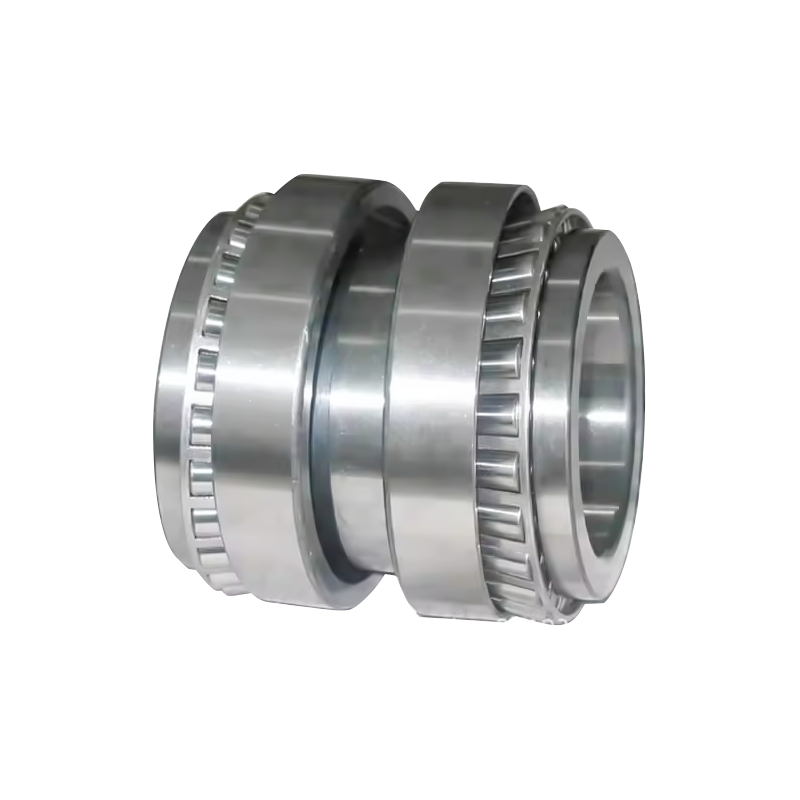
In demanding mechanical systems, bearings are not simply supporting parts; they are precision components that determine how reliably a machine can carry load, maintain alignment, control friction, and survive harsh duty cycles. The BT2B 332504/HA2 double row tapered roller bearing is designed for applications where heavy radial load, bidirectional axial load, and high rigidity must be managed at the same time. It is especially suitable for gearboxes, rolling mills, tunnel boring machines, heavy-duty transmission equipment, industrial reducers, and other machinery where compact structure and dependable load capacity are essential.
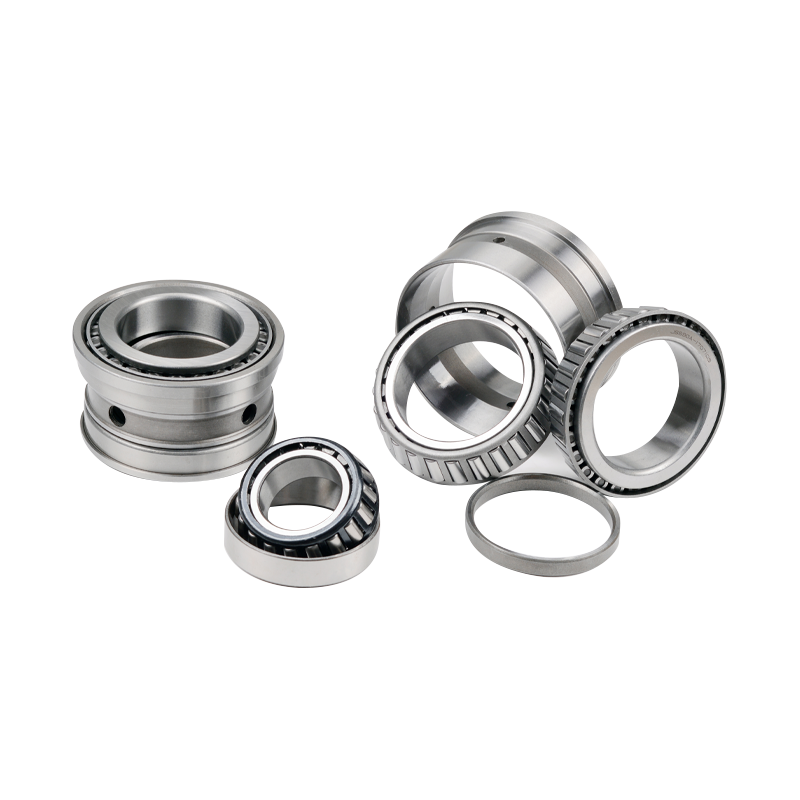
BT2B 332504/HA2 -Double Row Tapered Roller Bearings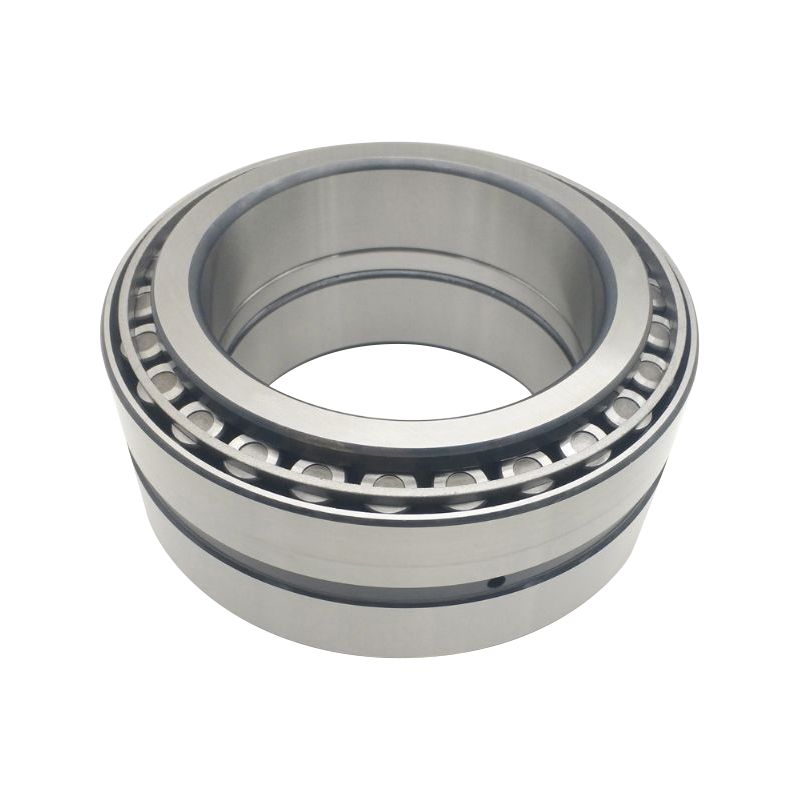
Double row tapered roller bearings offer a structural advantage over many single row bearing arrangements because two rows of tapered rollers are integrated into one bearing unit. This allows the bearing to support axial load from both directions while simultaneously carrying substantial radial load. In machinery that experiences impact, variable load direction, vibration, and high torque, this integrated design improves stability and helps reduce the complexity of surrounding components.
The BT2B 332504/HA2 bearing belongs to the tapered roller bearing category, a family known for its ability to combine radial and axial load support through the geometric interaction of tapered raceways and tapered rolling elements. In this design, the roller axes and raceway lines converge at a common point on the bearing axis, allowing the bearing to distribute load efficiently and maintain smooth rolling contact under demanding conditions. Compared with conventional ball bearings used in heavy-load positions, double row tapered roller bearings provide significantly higher load capacity and stiffness.
For industrial buyers, the value of this bearing is not only in its load rating but also in its ability to improve the whole mechanical system. A high-rigidity bearing helps control shaft deflection, gear mesh accuracy, vibration, and seal performance. When used in gearboxes or rolling equipment, this can support smoother operation, longer maintenance intervals, and more stable output performance. In equipment where downtime is costly, such as tunnel boring machines or continuous-process production lines, bearing reliability becomes a direct factor in operational profitability.
The BT2B 332504/HA2 double row tapered roller bearing is engineered for high-load, high-rigidity applications that demand stable operation under combined loads. It is designed to withstand heavy radial forces while resisting axial forces from both directions. This makes it a practical solution for machinery where force direction changes during operation or where axial restraint is required on both sides of the shaft.
Unlike a single row tapered roller bearing, which usually supports axial load in only one direction and often requires a paired arrangement to support bidirectional axial load, a double row configuration integrates two rows into one compact unit. This can simplify mounting, reduce the number of separate parts, and improve the consistency of bearing preload or clearance control. The integrated design can also reduce assembly error, especially in applications where precise axial positioning is important.
The HA2 suffix indicates a specific design or manufacturing characteristic associated with the bearing configuration. In professional procurement and technical selection, suffixes are important because they help identify internal geometry, cage type, material treatment, tolerance features, or special performance adjustments. For buyers, confirming the complete designation is essential to ensure interchangeability and performance compatibility with the target equipment.
In heavy industrial use, a bearing must perform consistently through repeated cycles of load, start-stop operation, thermal variation, and lubrication condition changes. The BT2B 332504/HA2 bearing is suitable for these environments because its tapered roller geometry spreads load over a larger contact area than point-contact designs. This helps reduce localized stress and contributes to longer service life when lubrication, installation, and operating conditions are properly controlled.
The fundamental advantage of a double row tapered roller bearing is its ability to handle complex load combinations. Many industrial machines do not apply load in one simple direction. Gear drives generate radial forces from torque transmission and axial forces from gear tooth geometry. Rolling mills experience radial loads from rolling pressure and axial forces from material movement or roll misalignment. Tunnel boring machines encounter fluctuating forces caused by rock hardness, cutterhead movement, and continuous vibration. In all these cases, the bearing must resist multidirectional forces while maintaining rotation accuracy.
A double row tapered roller bearing is especially valuable when machine designers need a compact arrangement with high stiffness. If two single row bearings are installed separately, the arrangement may require additional spacers, more axial space, and careful adjustment during assembly. A double row bearing provides a more integrated solution. This can improve mounting efficiency and reduce the risk of inconsistent internal clearance caused by separate bearing matching errors.
Compared with spherical roller bearings, tapered roller bearings can often provide better axial positioning and higher rigidity in applications where alignment is well controlled. Spherical roller bearings are excellent for misalignment compensation, but in gearboxes and similar systems where shaft position and gear mesh accuracy are critical, a tapered roller design may provide more precise support. Compared with cylindrical roller bearings, double row tapered roller bearings offer stronger axial load capability, making them more versatile for combined-load applications.
Compared with angular contact ball bearings, double row tapered roller bearings can carry heavier loads because roller contact distributes force over a line contact area rather than a smaller point or elliptical contact zone. Angular contact ball bearings are suitable for high-speed precision applications, but when the main requirement is heavy load capacity and rigidity, tapered roller bearings often have an advantage. This is why the BT2B 332504/HA2 bearing is positioned as a robust solution for large-capacity industrial machinery.
The first major advantage is high radial load capacity. Tapered rollers are designed to carry large radial loads because the rolling elements contact the raceways along a line. This line-contact principle spreads stress more effectively than many ball bearing designs. In equipment such as gearboxes, crushers, rolling equipment, and tunneling machinery, radial loads can be intense and continuous. A bearing with insufficient radial load capacity may develop fatigue, spalling, overheating, or excessive internal clearance. The BT2B 332504/HA2 bearing is built for such heavy-duty environments.
The second advantage is bidirectional axial load support. A single row tapered roller bearing supports axial load primarily in one direction, so two bearings are normally required in opposition if axial load exists in both directions. A double row design integrates this function, allowing one bearing to support axial forces from either side. This is particularly useful in gear drives and rotating assemblies where thrust direction may reverse during operation or where external process forces are unpredictable.
The third advantage is high rigidity. Rigidity is crucial for machines that require accurate shaft positioning. Excessive elastic deformation can cause gear misalignment, noise, vibration, uneven wear, seal leakage, and reduced efficiency. Double row tapered roller bearings provide strong support because the internal geometry resists both radial displacement and axial movement. Their stiffness makes them suitable for machines where structural stability directly influences output quality.
The fourth advantage is longer service life under suitable operating conditions. Because load is distributed across tapered rollers and optimized raceways, the bearing can withstand demanding stresses. When manufactured with high-quality steel, controlled heat treatment, accurate grinding, and proper assembly, the bearing can deliver long fatigue life. Correct lubrication and installation further extend performance. In many heavy-duty environments, longer service life means fewer unplanned shutdowns and lower maintenance cost.
The fifth advantage is lower friction compared with poorly matched multiple-bearing arrangements. Although tapered roller bearings naturally generate some axial component forces due to their geometry, a well-designed double row bearing can operate efficiently when the internal clearance, preload, lubrication, and surface finish are properly controlled. Lower friction means reduced heat generation, improved energy efficiency, and more stable operation over long production cycles.
The sixth advantage is simplified installation. A double row bearing can replace more complex bearing combinations in certain applications. By reducing the number of components that must be aligned and adjusted, it can help improve assembly consistency. For OEMs and maintenance teams, this can reduce installation time, lower the risk of error, and improve repeatability across equipment batches.
The operating principle of a tapered roller bearing is based on the controlled interaction of tapered rollers, inner raceways, and outer raceways. The geometry is arranged so that the projected lines of the roller surfaces and raceways meet at a common point along the bearing axis. This ensures that rolling motion is coordinated and that sliding is minimized when the bearing is correctly designed and lubricated.
In a double row tapered roller bearing, two rows of tapered rollers are arranged to support loads from opposing directions. Depending on the specific internal design, the rows may be arranged in back-to-back or face-to-face configuration. Back-to-back arrangements generally provide strong moment rigidity because the effective load centers are spread apart. Face-to-face arrangements can be more tolerant of slight mounting variations. The actual arrangement of a specific bearing should always be confirmed according to the technical drawing and application requirements.
The cage plays an important role in maintaining roller spacing and guiding the rolling elements. A high-quality cage helps reduce friction, prevents roller skewing, and supports stable lubrication flow. In heavy-duty bearings, cage strength and dimensional accuracy are important because the cage must survive vibration, acceleration, and load fluctuations.
Raceway accuracy is another critical design factor. The raceways must be ground to precise geometry to ensure even load distribution. If raceway profiles are inaccurate, load may concentrate at roller ends, causing edge stress and premature fatigue. Precision crowning and surface finishing help improve stress distribution and reduce the risk of localized damage. This is one reason advanced manufacturing control is essential for double row tapered roller bearings.
Internal clearance or preload must also be properly controlled. Excessive clearance can lead to vibration, impact, poor positioning, and uneven load distribution. Excessive preload can cause overheating, high friction, and reduced life. A well-made double row tapered roller bearing is produced with strict dimensional consistency so that the final operating condition can be controlled reliably during installation.
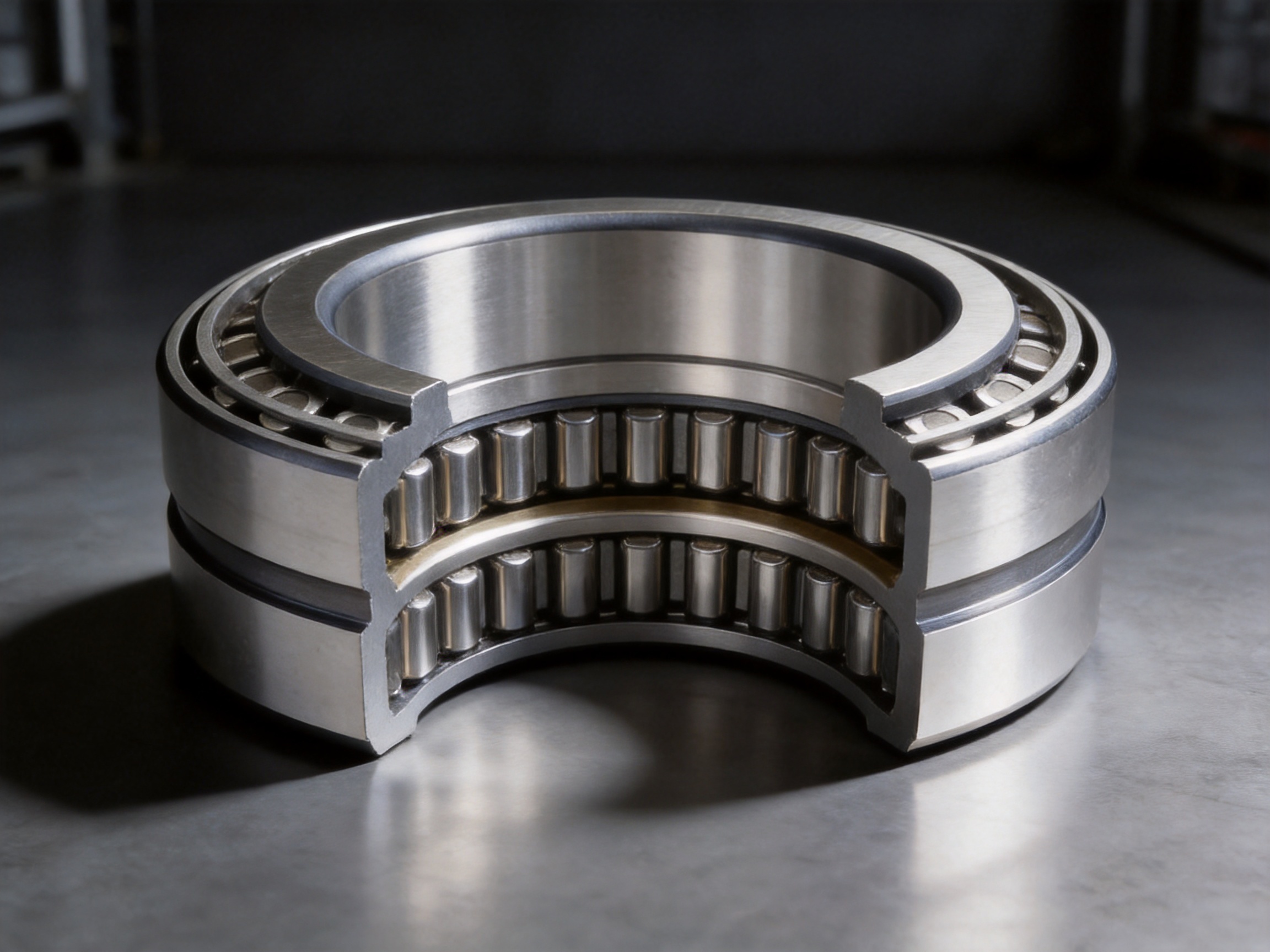
Gearboxes are among the most common applications for double row tapered roller bearings. In a gearbox, bearings support shafts that carry gears, transmit torque, and maintain gear mesh accuracy. Gear tooth contact generates radial and axial forces depending on gear type. Helical gears, for example, create significant axial thrust, and the direction of that thrust may vary depending on shaft rotation direction or gear arrangement.
The BT2B 332504/HA2 bearing is suitable for gearbox environments because it can resist both radial and axial loads while maintaining shaft alignment. High rigidity helps keep gears properly meshed, reducing noise and vibration. When shaft deflection is controlled, gear tooth contact becomes more uniform, which can reduce wear and improve transmission efficiency.
Industrial gearboxes often operate continuously, sometimes under shock loads or variable torque. In such conditions, the bearing must manage lubrication film stability, temperature changes, and contamination risks. A robust double row tapered roller bearing can improve gearbox reliability when paired with correct lubrication, filtration, sealing, and mounting practices.
For OEM gearbox manufacturers, using a high-capacity double row tapered roller bearing can also support more compact gearbox design. Because the bearing combines radial and bidirectional axial load capacity, it may reduce the need for additional thrust-bearing arrangements. This contributes to simplified housing design and more efficient use of space.
Rolling mills are extremely demanding bearing environments. Bearings in rolling equipment may experience high radial loads, impact, vibration, water, scale, heat, and contamination. The load is often cyclical and can change rapidly as material enters or exits the roll gap. Bearing rigidity and durability are essential for maintaining product quality and avoiding downtime.
Double row tapered roller bearings are valuable in rolling mill systems because they provide high load capacity and axial support. In rolling operations, axial forces may arise from roll alignment, material movement, guide forces, and thermal expansion. A bearing capable of handling axial forces from both directions can help stabilize the roll assembly.
The BT2B 332504/HA2 bearing is well suited for positions where combined load capacity and stiffness are critical. Its design helps reduce shaft or roll displacement, supporting consistent rolling accuracy. This can contribute to better dimensional control of rolled products and lower vibration levels in the mill stand or associated equipment.
Maintenance teams in rolling mill environments value bearings that can be installed reliably and run predictably. A double row bearing with controlled internal geometry can help reduce uncertainty during assembly. When combined with proper sealing, lubrication, and periodic inspection, it can become part of a durable rolling mill support system.
Tunnel boring machines operate in some of the harshest mechanical environments. They face large cutting forces, shock loads, dust, moisture, and difficult maintenance conditions. Bearings used in associated drives, gearboxes, conveyors, cutterhead support systems, or auxiliary rotating assemblies must provide strength and reliability.
A double row tapered roller bearing is useful in such equipment because the load direction is rarely simple. Cutting resistance can change as the machine moves through different geological layers. Vibration and impact can create alternating stresses. Equipment may run continuously for long periods, and access for maintenance may be limited. Under these conditions, a bearing with high load capacity and strong axial restraint can help improve machine uptime.
The BT2B 332504/HA2 bearing’s ability to manage heavy combined loads makes it a practical option for heavy construction and tunneling-related machinery. Its compact double row structure supports robust design while helping reduce the number of components in the bearing arrangement. For machinery where assembly space is limited and reliability is essential, this can be a significant advantage.
A high-performance double row tapered roller bearing cannot be achieved by design alone. Manufacturing quality determines whether the intended load capacity, rigidity, and service life are realized in practice. UKL Bearing Manufacturing Co., Ltd. integrates research and development, production, and international distribution, providing a complete manufacturing framework for industrial bearings. The company operates a modernized production system covering forging, turning, heat treatment, grinding, assembly, and packaging.
Forging is the foundation of bearing ring strength. Proper forging refines the steel structure and improves mechanical properties. A carefully controlled forging process helps create dense, uniform material that can withstand repeated rolling contact stress. For heavy-duty tapered roller bearings, material integrity is critical because subsurface fatigue can lead to spalling and failure if steel quality or forging structure is poor.
Turning prepares the ring geometry before heat treatment and grinding. Accurate turning reduces material waste and helps ensure that subsequent processes can achieve final precision efficiently. For double row tapered roller bearings, turning accuracy is important because the bearing contains multiple functional surfaces that must maintain strict relationships with one another.
Heat treatment gives bearing steel the hardness and fatigue resistance required for long-term performance. Controlled heating, quenching, and tempering influence hardness, microstructure, dimensional stability, and toughness. Overheating, underheating, or poor quenching control can reduce bearing life. A stable heat treatment process is therefore essential for bearings operating under heavy load.
Grinding is one of the most important processes in precision bearing production. Raceways, end faces, bore surfaces, and outer diameters must be ground to accurate dimensions and excellent surface finish. The quality of grinding directly affects running accuracy, noise, friction, heat generation, and load distribution. For tapered roller bearings, raceway angle and surface profile must be tightly controlled to ensure correct roller contact.
Assembly requires clean conditions, precise component matching, and controlled measurement. In a double row tapered roller bearing, internal clearance and component geometry must be verified carefully. Skilled assembly helps ensure the bearing performs as designed once installed in the machine. Packaging then protects the finished product from corrosion, contamination, and transport damage.
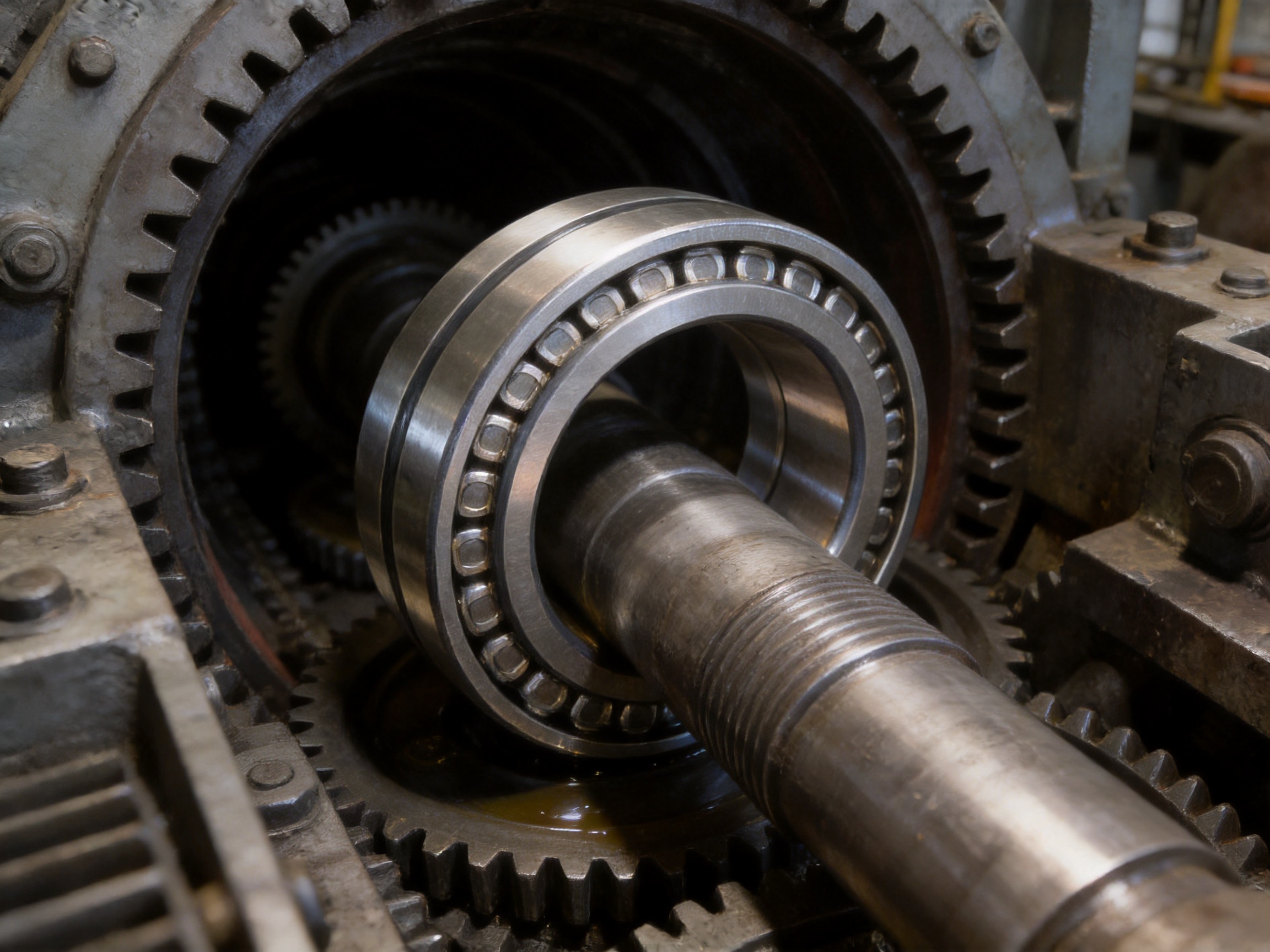
Quality control for double row tapered roller bearings must be systematic. It begins with raw material selection and continues through every stage of manufacturing. Bearing steel must meet chemical composition and cleanliness requirements. Inclusions, segregation, or improper microstructure can become fatigue initiation points. For heavy-duty bearings, steel cleanliness is particularly important because repeated high contact stress can expose even small metallurgical defects.
Dimensional inspection is required after turning, heat treatment, and grinding. Heat treatment can cause dimensional change, so intermediate measurement helps maintain process control. After grinding, precision inspection confirms bore diameter, outer diameter, width, raceway angle, roundness, taper accuracy, and surface finish. For double row designs, the relationship between the two rows must also be controlled to maintain correct load sharing.
Surface roughness is another important factor. Smoother raceways reduce friction and help support a stable lubrication film. However, surface finish must be optimized rather than simply minimized. The correct texture can help retain lubricant while avoiding damaging asperity contact. Advanced grinding and finishing processes contribute to stable bearing operation.
Noise and vibration testing may also be used for quality verification, especially when bearings are intended for precision or high-speed equipment. Although heavy-duty tapered roller bearings are often selected primarily for load capacity, vibration control remains important because excessive vibration can indicate geometry errors, surface defects, contamination, or assembly problems.
UKL’s manufacturing strength includes dedicated research and development capabilities for high-precision bearings such as cross roller bearings, dual-direction thrust angular contact ball bearings, and products used in CNC machines, robotics, and intelligent automation systems. This precision engineering background supports the company’s ability to manufacture tapered roller bearings with controlled geometry and dependable performance.
Reliable supply is a major consideration for industrial buyers. A bearing may be technically suitable, but if delivery is unstable or customization support is limited, procurement risk increases. UKL Bearing Manufacturing Co., Ltd. operates with 201–500 employees and has a production capacity of 10,000–50,000 units per month. This scale supports both regular batch production and customized bearing projects.
The company has more than 15 years of OEM and ODM export experience and supplies customers across Europe, Asia, Africa, Russia, and other regions. Export markets include the United States, Italy, Germany, Poland, South Africa, Egypt, and India. International supply experience is important because different customers may require different standards, documentation, packaging, inspection procedures, and technical communication.
For OEM clients, customization can be particularly valuable. Heavy machinery manufacturers may need special clearance, lubrication grooves, cage materials, heat treatment requirements, tolerance levels, or packaging methods. An integrated manufacturer with R&D, production, and export capability can respond more flexibly than a trading-only supplier. This makes it easier to align bearing specifications with actual equipment requirements.
Multilingual service and rapid technical response also improve customer experience. Bearing selection often involves load calculations, speed evaluation, lubrication review, mounting method analysis, and failure diagnosis. A supplier that can provide technical support before and after delivery helps customers reduce selection errors and improve equipment reliability.
| Evaluation Factor | BT2B 332504/HA2 Double Row Tapered Roller Bearing | Typical Single Row Tapered Roller Bearing Arrangement | Common Alternative Bearing Types |
|---|---|---|---|
| Radial Load Capacity | High capacity for heavy radial loads due to two-row tapered roller structure | High for one row, but may require paired bearings for equivalent support | Varies; ball bearings are generally lower, cylindrical rollers are high but less versatile axially |
| Axial Load Support | Supports axial load from both directions | Usually supports axial load mainly in one direction unless paired | Spherical rollers support axial load but may offer less axial positioning precision |
| Rigidity | High rigidity for shaft positioning and moment resistance | Depends on arrangement, spacing, and mounting accuracy | Angular contact ball bearings can be precise but may not match heavy-load rigidity |
| Installation Complexity | Integrated design can simplify assembly and reduce matching errors | Requires careful pairing, spacing, and clearance or preload adjustment | Depends on bearing type and application design |
| Service Life Potential | Long life when properly lubricated, mounted, and protected from contamination | Good when correctly paired and adjusted, but assembly errors can reduce life | Application-dependent; incorrect type selection can shorten life |
| Best Application Fit | Gearboxes, rolling mills, tunnel boring machines, heavy-duty combined-load systems | Moderate to heavy-duty systems where paired installation is practical | Specialized needs such as misalignment tolerance, high speed, or pure radial load |
Material quality is the foundation of bearing reliability. Tapered roller bearings operate under repeated rolling contact stress. Even when load appears steady from the outside, the contact zone experiences millions of stress cycles during service. High-quality bearing steel must resist fatigue, wear, deformation, and crack propagation.
Steel cleanliness is especially important. Non-metallic inclusions can become stress concentration points below the raceway surface. Under repeated load cycles, these points may initiate fatigue cracks that eventually reach the surface and cause spalling. Modern bearing manufacturing therefore emphasizes controlled steel sourcing, inspection, and heat treatment.
Heat treatment transforms bearing steel into a structure capable of supporting high contact stress. Proper hardness improves wear resistance, while adequate toughness helps prevent brittle failure. The challenge is to achieve a balance: a bearing ring that is too soft may deform or wear quickly, while one that is too brittle may crack under shock load. Controlled tempering helps stabilize the material and reduce residual stress.
For double row tapered roller bearings, dimensional stability after heat treatment is particularly important because internal geometry affects load sharing between the two rows. If one row carries more load than the other due to dimensional variation, fatigue life can be reduced. Precision heat treatment and grinding help ensure both rows contribute effectively.
Lubrication is essential for tapered roller bearing performance. A proper lubricant creates a film between rolling elements and raceways, reducing metal-to-metal contact. It also helps remove heat, protect against corrosion, and carry away small wear particles. Without suitable lubrication, even a high-quality bearing can fail prematurely.
The correct lubricant depends on speed, load, temperature, environment, and maintenance conditions. Oil lubrication is common in gearboxes because the bearing may share lubricant with gears. Grease lubrication may be used in equipment where sealing and maintenance simplicity are priorities. In high-load applications, lubricant viscosity must be sufficient to maintain film thickness under pressure.
Friction control is a major advantage of precision-manufactured bearings. When raceway geometry is accurate and surfaces are properly finished, rolling contact is smoother and heat generation is reduced. Excessive friction can lead to temperature rise, lubricant breakdown, clearance change, and accelerated fatigue. The BT2B 332504/HA2 bearing is designed to operate efficiently in heavy-duty environments when lubrication conditions are properly managed.
Thermal stability also depends on installation. If the bearing is mounted with excessive preload, friction and heat can rise quickly. If clearance is too large, vibration and impact can increase. Correct mounting tools, proper fitting tolerances, and careful measurement are essential. A well-manufactured bearing gives maintenance teams a strong foundation, but field installation determines final operating success.
Correct installation is one of the most important factors in bearing life. Double row tapered roller bearings should be handled carefully to prevent contamination, impact damage, and corrosion. Before installation, the shaft, housing, seals, lubricant, and tools should be clean and inspected. Any burrs, dents, or dimensional errors in mating parts can affect bearing alignment and load distribution.
Mounting force should be applied to the correct ring. If force is transmitted through rolling elements, raceway brinelling or hidden damage may occur. Heating methods may be used for certain interference fits, but temperature must be controlled to avoid altering material properties or damaging seals if present. Hydraulic, induction, or mechanical mounting tools should be selected according to bearing size and application requirements.
After installation, rotation should be checked for smoothness. Temperature, vibration, and noise should be monitored during initial operation. Early abnormal signs can indicate incorrect clearance, poor lubrication, misalignment, contamination, or housing deformation. Taking corrective action during commissioning can prevent serious failure later.
In heavy machinery, bearing installation is part of a complete system. Shaft rigidity, housing stiffness, lubricant delivery, sealing effectiveness, and operating load all influence performance. The BT2B 332504/HA2 bearing provides high capacity and rigidity, but the best results are achieved when the entire system is designed and maintained properly.
Preventive maintenance helps maximize bearing service life. Regular monitoring of temperature, vibration, lubricant condition, and seal integrity can identify problems before catastrophic failure occurs. In heavy-duty machinery, condition monitoring is especially valuable because bearing replacement may require significant downtime.
Lubricant analysis can reveal contamination, oxidation, metal particles, or viscosity changes. Water contamination is particularly harmful because it reduces lubricant film strength and can cause corrosion. Solid particles can create abrasive wear and surface dents that later become fatigue initiation points. Proper filtration and sealing are therefore critical.
Vibration analysis can detect defects such as raceway damage, roller defects, looseness, misalignment, or imbalance. Trending vibration data over time helps maintenance teams identify developing problems. Temperature monitoring provides another useful indicator. A sudden rise in temperature may indicate lubrication failure, excessive preload, overload, or contamination.
Common causes of bearing failure include improper mounting, inadequate lubrication, contamination, overload, misalignment, and electrical damage. Many of these issues are preventable with good maintenance practices. A high-quality double row tapered roller bearing can deliver excellent performance, but it must be supported by proper operating discipline.
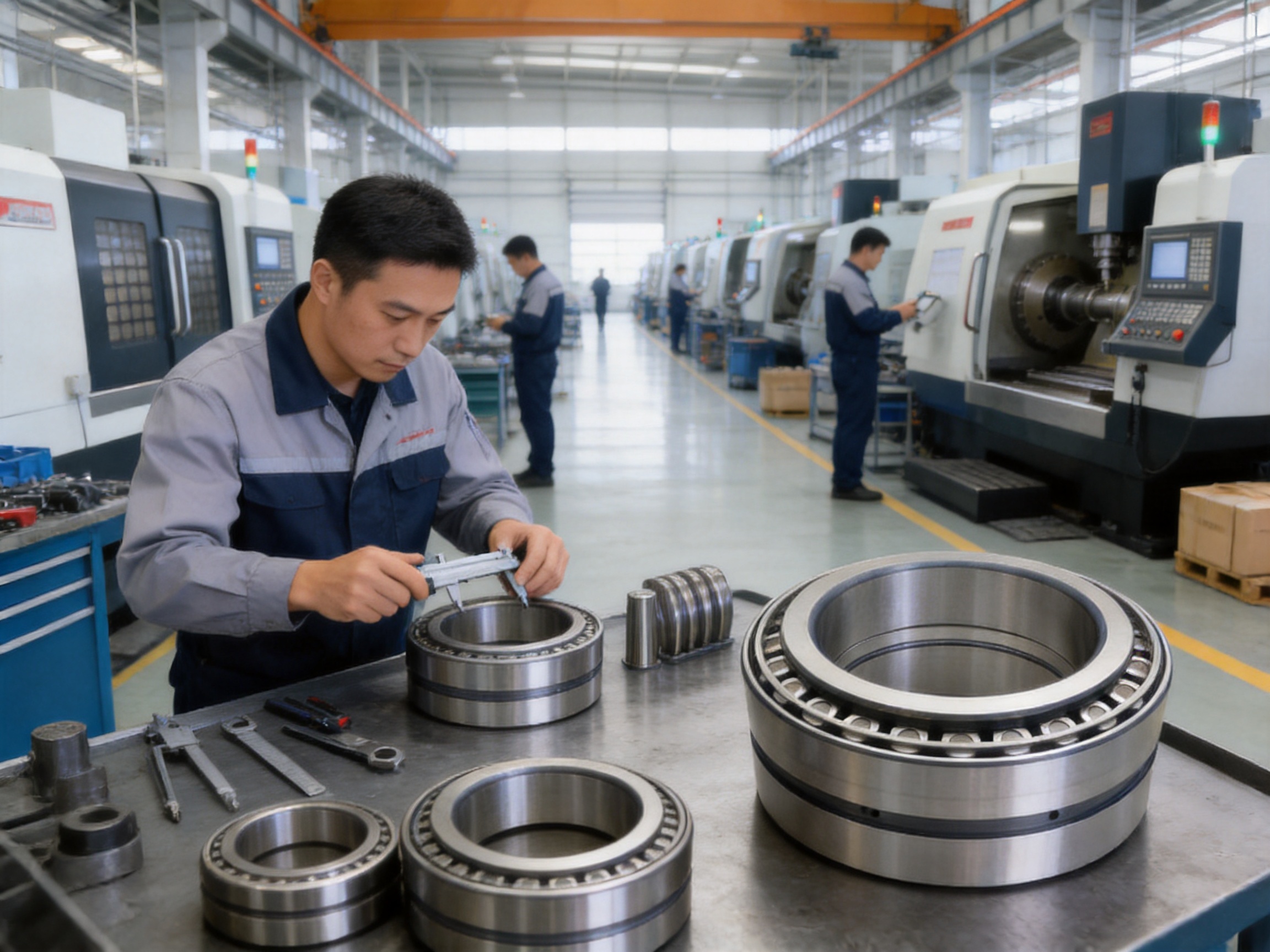
In the bearing industry, competitors may offer products with similar external dimensions, but internal quality can differ greatly. Two bearings with the same designation may not perform the same if material quality, heat treatment, raceway geometry, surface finish, and assembly control are different. This is why manufacturing process control becomes a competitive advantage.
Advanced production lines covering forging, turning, heat treatment, grinding, assembly, and packaging allow UKL to control each stage of bearing quality. This integrated approach reduces dependence on uncontrolled outside processes and improves traceability. When process data is managed effectively, manufacturers can identify variation, improve consistency, and respond quickly to technical issues.
R&D capability also matters. Bearings are not static products; application requirements continue to evolve. CNC machines, robotics, intelligent automation, heavy infrastructure equipment, and energy systems demand greater precision and reliability. A company with a dedicated R&D team can optimize designs, support custom engineering, and develop products that match changing industrial requirements.
For the BT2B 332504/HA2 bearing, competitive value comes from the combination of structural design and manufacturing discipline. The double row tapered roller configuration provides the mechanical basis for high load capacity and rigidity. Precision manufacturing then ensures that the geometry, surface quality, and assembly condition support real-world performance.
Modern industrial buyers increasingly consider sustainability in supplier selection. Responsible manufacturing is not only about environmental compliance; it is also about efficient resource use, waste reduction, long product life, and stable supply chains. A bearing with longer service life can reduce replacement frequency, maintenance waste, and downtime-related energy loss.
UKL has stated a long-term commitment to environmentally responsible processes, material recycling, and optimized energy usage. In bearing manufacturing, sustainability can be supported through improved process efficiency, reduced scrap, better heat treatment energy control, responsible lubricant management, and recyclable packaging. Precision manufacturing also contributes to sustainability because accurate parts reduce rework and improve product life.
Durability itself is a sustainability factor. When a bearing performs reliably for a longer period, fewer replacement parts are needed. Machines operate more efficiently, maintenance interventions are reduced, and the environmental impact of production, shipping, and disposal is lowered. In heavy-duty applications, preventing one major bearing failure can also prevent damage to shafts, gears, housings, and seals.
Selecting the correct bearing requires more than matching a part number. Engineers should evaluate radial load, axial load, speed, lubrication method, operating temperature, shock load, contamination risk, mounting arrangement, housing stiffness, shaft fit, and maintenance access. For replacement projects, it is important to confirm the complete bearing designation, including suffixes such as HA2.
Load calculation is central. The bearing must be able to support equivalent dynamic load and static load under expected operating conditions. Shock loads and variable loads should be considered with appropriate service factors. If the machine experiences frequent starts, stops, reversals, or impact, the bearing selection should include these conditions rather than only steady-state load.
Speed must also be reviewed. Tapered roller bearings are strong, but friction and heat generation increase with speed and load. Lubrication selection, internal clearance, and cooling conditions must match the operating speed. In gearboxes, oil flow and oil level can significantly influence bearing temperature.
Mounting dimensions and fits should be checked carefully. An interference fit may reduce internal clearance, while housing expansion at temperature may change operating conditions. Engineers should consider both cold installation condition and hot running condition. For high-load applications, rigid support and accurate alignment are essential.
Supplier support is valuable during selection. Technical consultation can help verify whether the BT2B 332504/HA2 bearing is suitable for a specific gearbox, rolling mill, tunnel boring machine, or custom industrial assembly. For OEM projects, drawings, sample confirmation, inspection reports, and application review can reduce risk before mass production.
OEMs need bearings that support product performance, production efficiency, and brand reputation. A reliable double row tapered roller bearing helps OEMs design machines with strong load capacity and stable shaft positioning. If the bearing is supplied consistently and supported by technical service, OEM production schedules become easier to manage.
Distributors need products that satisfy industrial customers and reduce after-sales problems. A bearing with dependable quality, clear designation, proper packaging, and export documentation helps distributors serve local markets more effectively. International supply experience is important because distributors often need flexible communication, reliable lead times, and product support for varied industries.
Maintenance teams need replacement bearings that fit correctly and perform predictably. Downtime pressure can be intense in rolling mills, mining operations, construction machinery, and gearbox repair facilities. A bearing such as BT2B 332504/HA2 offers a practical replacement solution when the original application requires high radial load capacity, bidirectional axial support, and strong rigidity.
For all customer groups, the combination of engineering performance and manufacturing reliability is the main value. A bearing is a small part of the total machine cost, but it can have a large influence on uptime. Choosing a suitable double row tapered roller bearing from a capable manufacturer can reduce lifecycle cost and improve operational confidence.
The main function is to support heavy radial loads and axial loads from both directions while maintaining high rigidity. It is suitable for heavy-duty machinery such as gearboxes, rolling mills, tunnel boring machines, and industrial transmission systems.
A single row tapered roller bearing generally supports axial load mainly in one direction and often needs to be paired with another bearing for bidirectional axial support. A double row tapered roller bearing integrates two rows of tapered rollers, allowing it to support axial load from both directions in a more compact and stable arrangement.
Gearboxes generate both radial and axial forces, especially when helical gears are used. The BT2B 332504/HA2 bearing provides high load capacity and stiffness, helping maintain shaft alignment and gear mesh accuracy. This can reduce vibration, noise, and uneven gear wear.
Compared with many ball bearings, tapered roller bearings have line contact between rollers and raceways, allowing them to carry heavier loads. Ball bearings are often excellent for speed and low friction, but double row tapered roller bearings are stronger choices when heavy combined loads and rigidity are the main requirements.
Double row tapered roller bearings depend on precise raceway geometry, controlled heat treatment, accurate grinding, and proper assembly. Small errors can cause uneven load distribution, friction, heat, or premature fatigue. High-quality manufacturing ensures the bearing can deliver the intended performance.
Key processes include forging, turning, heat treatment, grinding, assembly, and packaging. Forging improves material structure, heat treatment provides hardness and fatigue resistance, grinding creates accurate surfaces, and careful assembly controls internal geometry. Protective packaging helps prevent corrosion and contamination before installation.
Yes, when correctly selected, installed, lubricated, and maintained, a high-quality double row tapered roller bearing can provide long service life and reduce unexpected failures. Fewer breakdowns mean lower downtime costs, reduced replacement frequency, and better equipment productivity.
Engineers should check radial load, axial load, speed, temperature, lubrication method, shock load, contamination risk, mounting fits, housing stiffness, and the complete bearing designation. For replacement applications, confirming the suffix and dimensional compatibility is essential.
UKL Bearing Manufacturing Co., Ltd. combines R&D, production, and export service. With production capacity of 10,000–50,000 units per month and experience supplying markets in Europe, Asia, Africa, Russia, and other regions, the company can support OEM, ODM, distributor, and maintenance customers with technical communication and supply capability.
The BT2B 332504/HA2 double row tapered roller bearing is a heavy-duty bearing solution designed for machinery that requires high radial load capacity, bidirectional axial load support, strong rigidity, and reliable operation. Its integrated double row tapered roller structure provides important advantages over single row arrangements and many alternative bearing types in combined-load applications.
In gearboxes, it helps maintain shaft alignment and gear mesh stability. In rolling mills, it supports high-load operation and axial stability. In tunnel boring machines and heavy construction equipment, it provides the strength needed for fluctuating and impact-loaded environments. Across these applications, the bearing contributes to longer service life, lower maintenance risk, and improved machine reliability.
The true value of the bearing comes from the combination of design and manufacturing strength. Advanced processes such as forging, turning, heat treatment, grinding, assembly, and packaging determine whether the bearing can perform consistently under real operating conditions. UKL Bearing Manufacturing Co., Ltd. supports this product with integrated manufacturing capability, R&D strength, international export experience, and a commitment to precision engineering.
For OEMs, distributors, and maintenance professionals, selecting the right bearing is a strategic decision. A dependable double row tapered roller bearing can protect equipment, reduce downtime, and improve lifecycle value. The BT2B 332504/HA2 bearing is therefore a strong choice for high-rigidity, heavy-duty motion systems where performance, durability, and manufacturing reliability are essential.
Harris, T. A., and Kotzalas, M. N. Rolling Bearing Analysis: Essential Concepts of Bearing Technology. CRC Press.
ISO 281. Rolling Bearings: Dynamic Load Ratings and Rating Life. International Organization for Standardization.
ISO 76. Rolling Bearings: Static Load Ratings. International Organization for Standardization.
Brändlein, J., Eschmann, P., Hasbargen, L., and Weigand, K. Ball and Roller Bearings: Theory, Design and Application. Wiley.
Palmgren, A. Ball and Roller Bearing Engineering. SKF Industries.
Neale, M. J. The Tribology Handbook. Butterworth-Heinemann.
Product Categories
Contact Us

Jane@ukl-bearing.com
Jenny@ukl-bearing.com
Andy@ukl-bearing.com
Ivy@ukl-bearing.com

+86-510- 88763239
+86-15371057968

No.1 Hehuan Road, Hudai Town, Binhu District, Wuxi City.
Ready to Begin?
Get in Touch

Now!
UKL BEARING
 English
 Español
 русский