Content
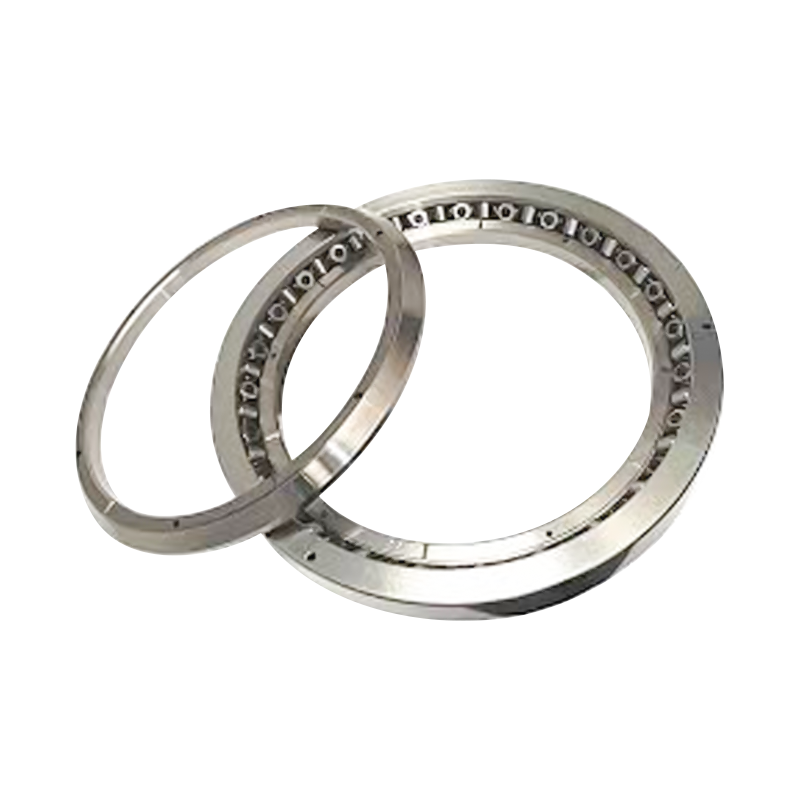
Modern robotic systems depend on compact motion components that can carry complex loads while preserving positioning accuracy over millions of repeated cycles. The RB2508 robot crossed roller bearing is designed for this demanding environment. As a compact RB-type crossed roller bearing with a split outer ring and an integrated inner ring, it supports radial loads, axial loads, and overturning moment loads in a single bearing arrangement. For robot joints, precision indexing mechanisms, rotary tables, direct-drive torque motors, and inspection instruments, this combination of compactness and rigidity is a major engineering advantage.
The RB2508 belongs to the robot bearing category because it answers one of the central problems in robotic design: how to achieve smooth, repeatable, high-stiffness rotation within a limited installation space. A robot joint cannot rely only on load capacity; it must also control deflection, minimize runout, preserve accuracy during frequent acceleration and deceleration, and resist the moment loads created by arms, end effectors, cables, reducers, and tooling. The RB2508 addresses these requirements through its crossed cylindrical roller structure and its optimized thin-section geometry.
Unlike many conventional bearing solutions that require two or more bearings to handle multi-directional loading, a crossed roller bearing can often perform the work of a paired bearing arrangement in a much smaller axial space. In the RB2508, cylindrical rollers are arranged alternately at 90 degrees on V-shaped raceways, with spacers separating the rollers to reduce friction and prevent skewing. This internal geometry gives the bearing high rigidity and enables it to carry loads from multiple directions simultaneously.
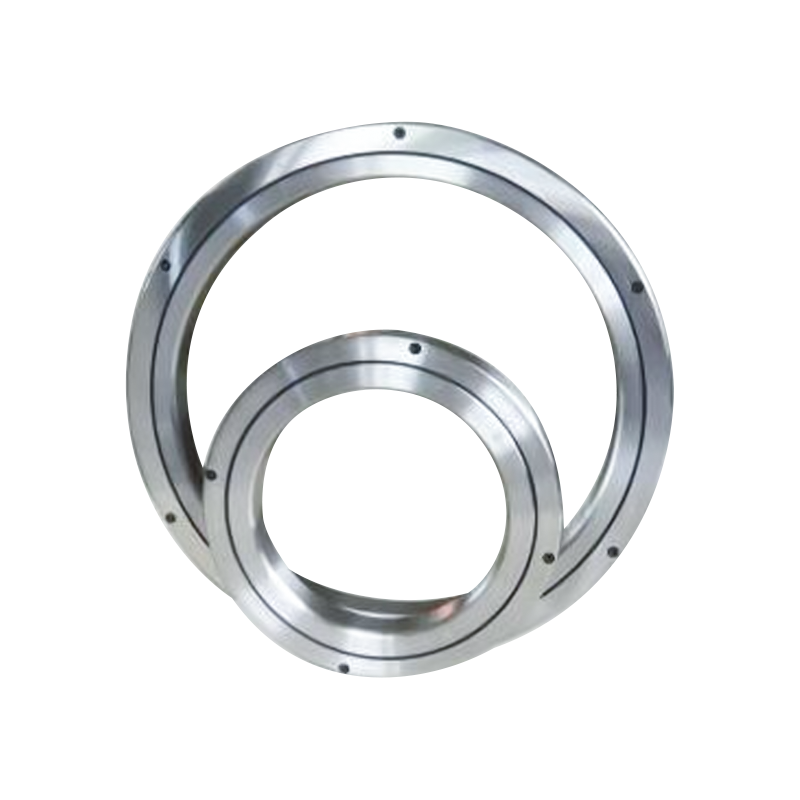
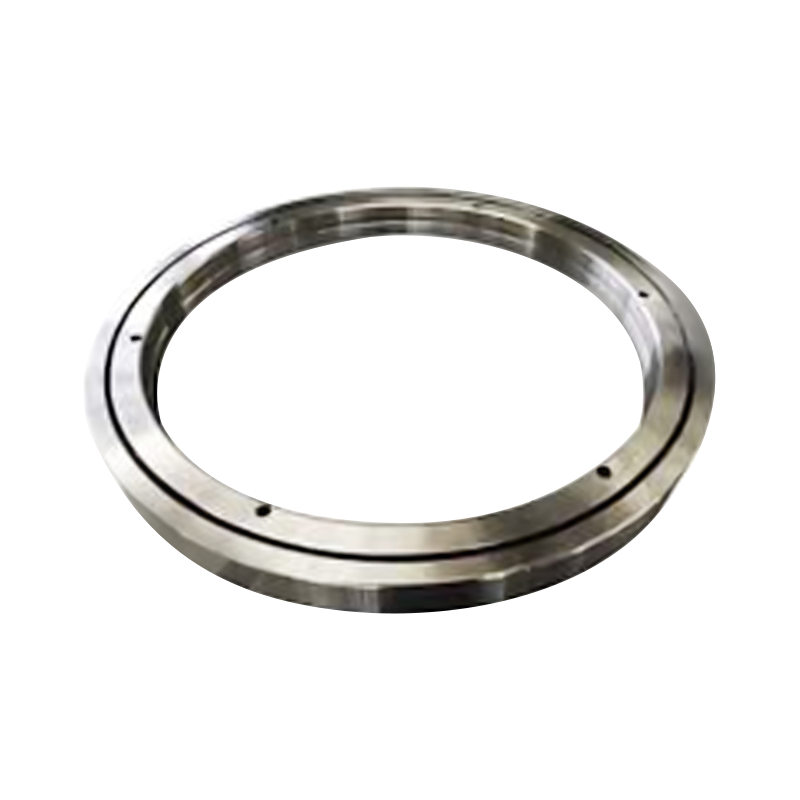
RB2508 Robot Crossed Roller Bearing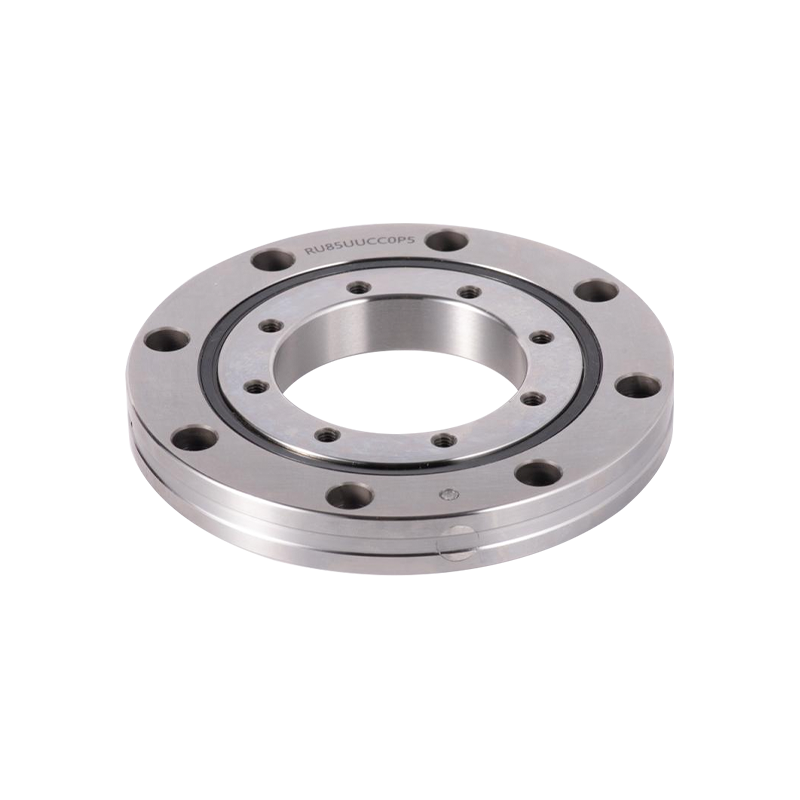
The RB2508 robot crossed roller bearing is an RB-type crossed roller bearing with a nominal inner diameter of 25 mm, outside diameter of 41 mm, roller pitch diameter of 32 mm, and height of 8 mm. Its compact 25 × 41 × 8 mm envelope makes it highly suitable for small robotic joints, rotary actuators, compact indexing mechanisms, optical positioning equipment, and other assemblies where space is limited but motion accuracy cannot be compromised.
The RB type is a basic and widely used crossed roller bearing design. It features a split outer ring and an integrated inner ring. This configuration is especially valuable when the application requires high rotational accuracy of the inner ring. In many robotic and precision rotary systems, the inner ring is connected to the rotating shaft or moving output member; therefore, improved inner-ring rotation accuracy directly supports better angular positioning and repeatability.
In practical terms, the RB2508 is engineered for applications where a light and compact bearing must still deliver a rigid rotational support. Its mass is approximately 0.05 kg, which is extremely beneficial in robot arms and compact automation units. Lower rotating and moving mass helps reduce motor load, improve dynamic response, and support energy-efficient system design. In small robotic joints, every gram can affect acceleration, deceleration, vibration, and control performance.
The bearing’s basic dynamic radial load rating is 3.63 kN, and its basic static radial load rating is 3.83 kN. These values are notable considering its ultra-compact dimensions. The geometry of crossed rollers enables line contact between rollers and raceways, allowing higher rigidity than many point-contact bearing arrangements of similar size. This is one of the reasons crossed roller bearings are often selected for precision equipment instead of ordinary ball bearings.
| Item | RB2508 Specification | Engineering Significance |
| Bearing type | RB-type crossed roller bearing | Compact structure with split outer ring and integrated inner ring |
| Product category | Robot bearings | Suitable for robot joints, compact rotary axes, and precision automation |
| Inner diameter | 25 mm | Fits compact shafts and small rotary modules |
| Outside diameter | 41 mm | Supports narrow installation envelopes |
| Roller pitch diameter | 32 mm | Optimized for load distribution and compact rigidity |
| Height | 8 mm | Thin-section design reduces axial space requirements |
| Chamfer | 0.5 mm minimum | Assists proper mounting and shoulder compatibility |
| Shoulder size ds | 28.5 mm | Guides shaft shoulder design |
| Shoulder size Dh | 35.5 mm | Guides housing shoulder design |
| Basic dynamic radial load rating Cr | 3.63 kN | Indicates capacity for repeated operational loading |
| Basic static radial load rating Cor | 3.83 kN | Indicates resistance to permanent deformation under static load |
| Weight | Approximately 0.05 kg | Helps reduce joint mass and improve robotic response |
The most important feature of the RB2508 is its crossed roller internal structure. The bearing contains cylindrical rollers arranged in alternating directions at right angles to one another. Each roller is positioned perpendicular to the adjacent roller, and the rollers operate on V-shaped raceways formed in the inner and outer rings. This creates a compact bearing unit capable of receiving radial, axial, and moment loads.
In an ordinary bearing arrangement, radial and axial load capacity may require separate components or matched pairs. For example, a pair of angular contact ball bearings can support combined loads, but the arrangement may require more axial space and careful preload adjustment. A tapered roller bearing pair can provide excellent rigidity, but it may be larger and more complicated to mount in compact robotic joints. The RB2508 provides a space-saving alternative because its crossed roller structure integrates multi-directional support in one compact bearing.
The use of cylindrical rollers also contributes to rigidity. Compared with balls, rollers create line contact rather than point contact. Line contact distributes load over a larger area, reducing elastic deformation under the same load. In robotic systems, reduced deformation is critical because even very small bearing deflections can become measurable positioning errors at the tool center point. A rigid bearing improves path accuracy, machining stability, inspection repeatability, and controlled motion.
Nylon spacers are placed between rollers to separate rolling elements and help control friction. Without proper separation, adjacent rollers could contact each other, causing sliding friction, heat generation, wear, and unstable rotation. Spacers improve smoothness by guiding the rolling elements and reducing roller-to-roller interference. For low-speed precision motion, where smooth start-up and stable micro-movement are essential, this design feature provides a clear benefit.
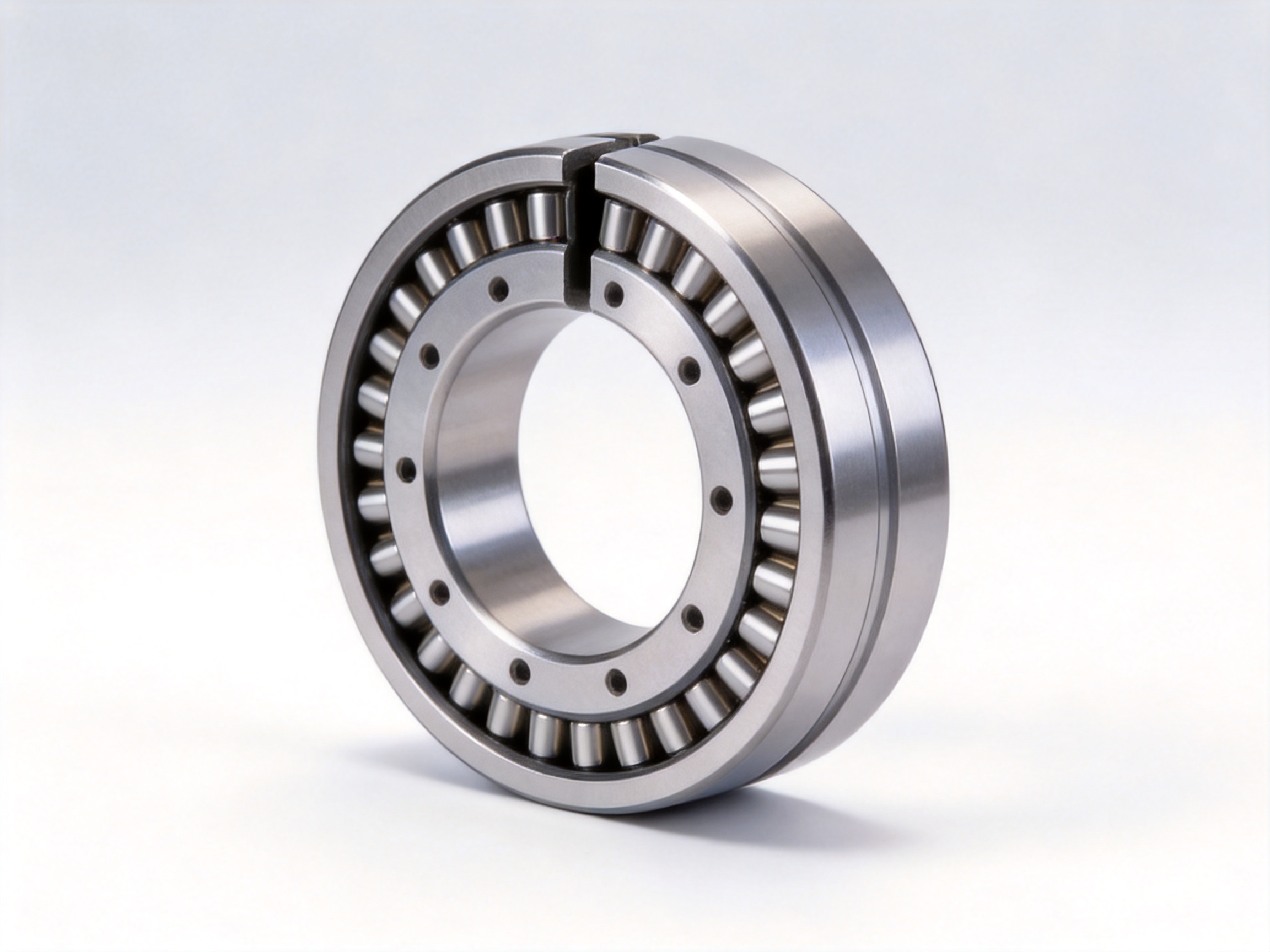
The RB-type construction uses a split outer ring and an integrated inner ring. This design supports assembly of the crossed roller set while maintaining a solid inner ring for rotational accuracy. The integrated inner ring is especially important when the inner ring serves as the rotating component. A continuous inner ring can provide better geometric stability and more consistent rotation than a split ring in applications where the inner ring must maintain high accuracy.
In machine tool indexing tables and robot joint modules, the rotating member must return to programmed positions repeatedly. Any ring deformation, uneven clamping, or internal clearance variation may influence accuracy. The RB2508’s design helps provide a stable inner-ring rotation reference. This makes it useful for rotary sections where the shaft side or central rotating component requires precise control.
The split outer ring also allows the bearing to be assembled with crossed rollers in a compact structure. During installation, the split ring must be handled correctly and clamped uniformly. When mounted with appropriate housing tolerances and fastening methods, the bearing can achieve high rigidity and reliable performance. Correct installation is therefore not only a mechanical step but also an important part of preserving the bearing’s designed precision.
Robot joints place unusual demands on bearings. A joint may rotate through repeated cycles, stop at precise positions, carry offset loads, resist vibration, and operate inside a compact actuator. The bearing must work with harmonic reducers, cycloidal reducers, direct-drive motors, encoders, brakes, and cable routing systems. The RB2508 is well suited to these compact assemblies because it combines low profile, high stiffness, and multi-directional load capacity.
In a small robot wrist, gripper rotary module, medical robot actuator, collaborative robot end joint, or inspection robot axis, installation space is often severely limited. A bearing with an 8 mm height can help designers reduce axial length and maintain a slim joint profile. This supports lighter robot arms, smaller housings, and better reach-to-weight ratios.
The ability to support moment loads is equally important. Robot arms rarely load bearings only in a purely radial direction. Tools and payloads create overhung loads, and the movement of the arm generates dynamic torque and changing load directions. The crossed roller configuration of the RB2508 helps resist these moment loads within a single bearing, simplifying the surrounding mechanical design.
Precision motion also depends on smooth rotation. Robots that perform assembly, laser positioning, semiconductor handling, laboratory automation, or camera orientation require controlled movement at low speed as well as stable positioning at rest. The RB2508’s internal roller arrangement and spacer-separated design are suitable for these high-accuracy rotary systems, especially when matched with proper lubrication, mounting, and preload control.
When compared with ordinary deep groove ball bearings, the RB2508 offers far higher rigidity for combined loads. Deep groove ball bearings are economical and widely available, but they are not ideal for large moment loads or high-precision rotary support in a compact joint. Their point-contact geometry can allow greater elastic deformation, and a single deep groove bearing is generally not sufficient for accurate moment load support.
Compared with a pair of angular contact ball bearings, the RB2508 can reduce axial space and simplify component count. Angular contact pairs are effective in precision spindles and high-speed systems, but they require careful arrangement, preload selection, and spacing. If two bearings must be separated to improve moment rigidity, the overall assembly becomes longer. The RB2508 can provide combined load support in one thin-section bearing, which is a major advantage for compact robotic modules.
Compared with tapered roller bearing pairs, the RB2508 is usually better suited for compact precision rotary motion where low profile and high rotational accuracy are priorities. Tapered roller bearings can carry heavy combined loads, but they often require more space, careful preload adjustment, and robust lubrication management. In small robot joints and precision inspection instruments, the thin crossed roller bearing design often provides a better balance of rigidity, compactness, and smoothness.
Compared with low-cost generic crossed roller bearings, the RB2508’s value depends on precision manufacturing consistency. Crossed roller bearings are sensitive to raceway geometry, roller diameter variation, surface finish, heat treatment stability, and assembly accuracy. A bearing that looks similar externally may not deliver the same rotational accuracy, stiffness, noise level, or service life. The manufacturing process behind the RB2508 is therefore a critical competitive factor.
UKL Bearing Manufacturing Co., Ltd. supports products such as the RB2508 through an integrated manufacturing and engineering system. The company combines production, research and development, international distribution, and technical service. This integrated structure is important because precision bearings cannot be treated as simple catalog items. Their performance depends on material control, machining accuracy, heat treatment stability, grinding precision, assembly discipline, and final inspection.
The production system includes multiple process stages, including forging, turning, heat treatment, grinding, assembly, and packaging. Each stage influences final bearing performance. Forging helps establish the material foundation and grain flow. Turning prepares accurate ring geometry before heat treatment. Heat treatment determines hardness, wear resistance, and dimensional stability. Grinding creates the final raceway accuracy and surface finish. Assembly controls roller matching, clearance, and smooth operation. Packaging protects the finished product from corrosion and contamination.
For crossed roller bearings, grinding quality is especially critical. The V-shaped raceways must be accurately formed so the rollers contact correctly. If the raceway angle, roundness, waviness, or surface roughness is not controlled, the bearing may experience uneven load distribution, vibration, localized stress, or poor rotational accuracy. Precision grinding and inspection therefore directly affect the bearing’s ability to perform in robotic systems.
The company’s manufacturing capability is supported by modernized production lines and digital production control. A production capacity of approximately 10,000 to 50,000 units per month allows stable supply for OEM and distributor needs while maintaining attention to quality. For customers building robotic actuators or precision equipment, supply continuity is a major advantage because bearing availability can influence production schedules and product launch timelines.
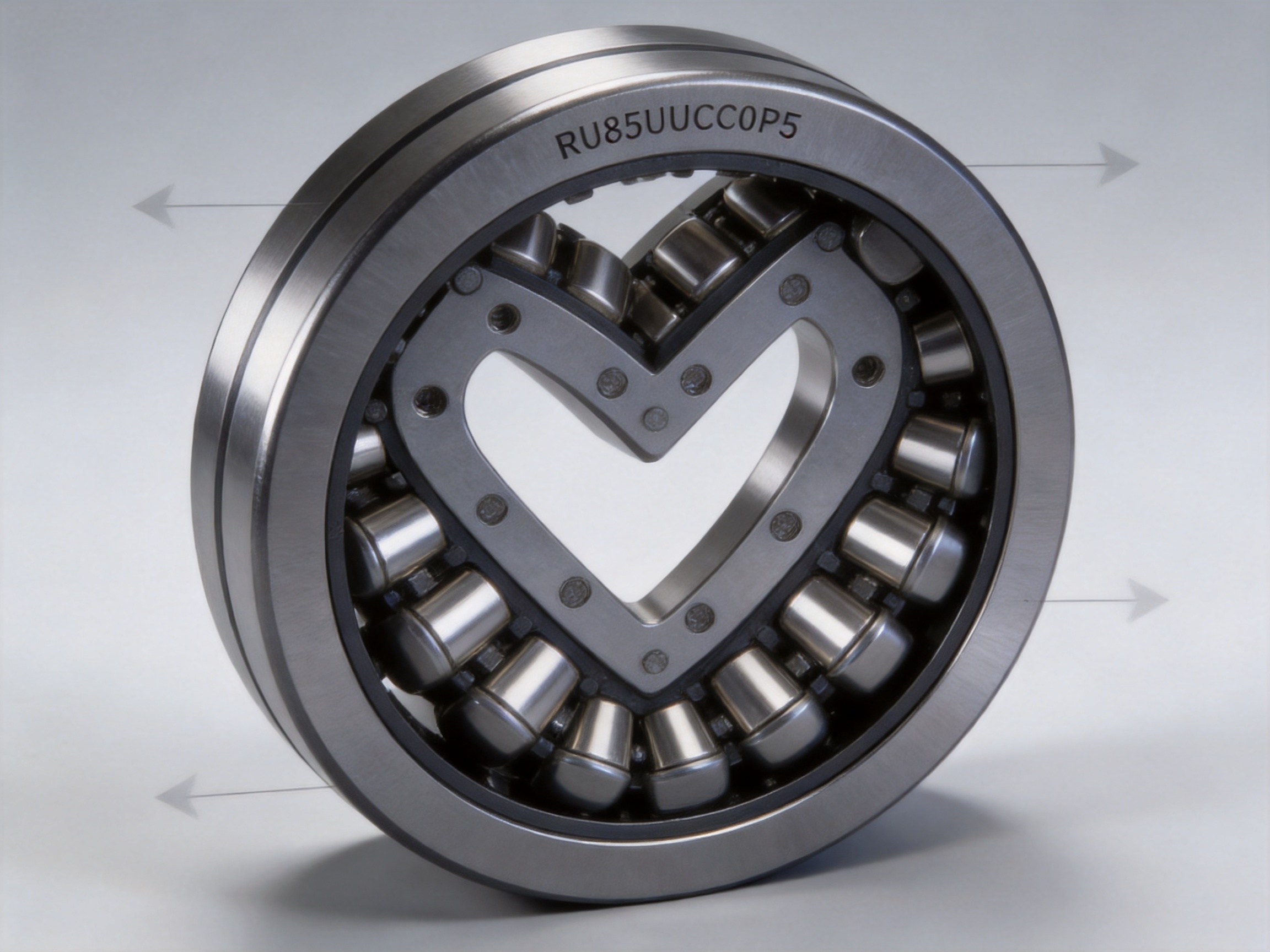
Precision bearing performance begins with suitable bearing steel and controlled metallurgical processes. In a crossed roller bearing, the raceways and rollers are subjected to repeated contact stress. Proper hardness, microstructure, and retained dimensional stability are essential for long service life. Heat treatment must achieve adequate wear resistance without causing excessive distortion or internal stress.
The heat treatment stage is one of the most technically significant steps in bearing manufacturing. If the rings distort unpredictably, later grinding must remove more material and may still not fully correct internal stress patterns. If hardness is inconsistent, the bearing may suffer from premature wear or reduced load capacity. Stable heat treatment supports consistent raceway geometry and reliable load performance.
After heat treatment, precision grinding establishes final accuracy. For small bearings like the RB2508, the challenge is magnified because the dimensions are compact and tolerances are tight. Minor deviations can become significant relative to the bearing size. Controlled grinding equipment, experienced operators, and inspection procedures help ensure that the inner ring, outer ring, and raceways meet demanding requirements.
Dimensional stability also matters during operation. Robot joints may experience temperature changes from motors, reducers, brakes, and ambient conditions. A well-manufactured crossed roller bearing should maintain stable geometry under normal operating conditions when properly selected and installed. This helps preserve preload, running accuracy, and stiffness throughout the service life of the machine.
The crossed roller bearing series can be produced with precision reaching very high accuracy levels, up to P2 grade according to the product program information. High precision is valuable for equipment where rotational error directly affects output quality. Examples include precision rotary tables, optical measurement instruments, semiconductor handling axes, and robotic joints requiring accurate position feedback.
Precision grade should be selected according to the application. Not every project requires the highest available grade, but applications involving measurement, machining, imaging, or high-repeatability motion often benefit from improved accuracy. The RB2508’s compact structure makes it particularly useful when designers need high precision in a miniature rotary axis.
Rotational accuracy is influenced by bearing quality, but it is also affected by shaft and housing accuracy. Even a high-precision bearing cannot perform optimally if installed in a housing with poor roundness, incorrect shoulder height, contamination, or uneven clamping. Therefore, the bearing manufacturer’s technical guidance is a meaningful advantage for customers who need reliable system-level performance.
The RB2508 can be used in robot joints, direct-drive torque motors, precision inspection instruments, compact rotary tables, and similar high-accuracy rotary systems. These applications share common requirements: compact size, smooth motion, resistance to combined loads, and accurate positioning. The bearing’s thin profile and multi-directional load capability make it suitable for these scenarios.
In robot joints, the RB2508 can support the rotating output section of a small actuator. It may be paired with a reduction mechanism or integrated into a direct-drive module. The bearing helps maintain alignment between the motor, reducer, encoder, and output flange. Stable alignment reduces vibration and improves control accuracy.
In direct-drive torque motors, the bearing supports the rotor or output stage without the compliance introduced by gear reduction. Direct-drive systems often require extremely smooth and accurate rotation because there is no mechanical reduction to mask irregularities. A rigid crossed roller bearing helps preserve rotor concentricity and axial stability.
In precision inspection instruments, the RB2508 can support rotating stages used for optical scanning, dimensional measurement, or sensor orientation. Low runout and high stiffness help improve measurement repeatability. In these applications, bearing quality contributes not only to mechanical reliability but also to data accuracy.
In compact indexing systems, the bearing can help maintain table alignment during repeated positioning. Indexing tables in machine tools and automation equipment experience changing loads during acceleration, stopping, clamping, and machining or assembly operations. A crossed roller bearing can improve stability by resisting moment loads and reducing deflection.
When selecting the RB2508, engineers should evaluate load direction, load magnitude, speed, duty cycle, required accuracy, allowable deflection, lubrication, operating temperature, mounting rigidity, and environmental conditions. Because crossed roller bearings are high-precision components, the surrounding structure must be designed to support the bearing properly.
The shaft and housing shoulders should match the recommended shoulder dimensions. For the RB2508, the shoulder reference values include ds of 28.5 mm and Dh of 35.5 mm. Correct shoulder design helps support the bearing rings without interfering with chamfers or rolling contact areas. Incorrect shoulder dimensions may cause stress concentration, misalignment, or insufficient support.
Mounting stiffness is also essential. A crossed roller bearing can only provide high rigidity if the housing and shaft are rigid enough to maintain geometry under load. Thin, flexible housings may deform and reduce bearing performance. For robotic actuator designers, bearing selection should therefore be integrated with housing analysis, flange design, and fastening strategy.
Preload and clearance conditions must be considered carefully. Excessive clearance can reduce accuracy and stiffness, while excessive preload can increase friction, heat, and wear. The ideal condition depends on the application’s accuracy requirement, load profile, and operating speed. For high-precision robotics, consulting the manufacturer for preload and mounting recommendations is often beneficial.
Lubrication reduces friction, wear, and heat generation while protecting raceways and rollers from corrosion. The correct lubricant depends on speed, load, temperature, environmental exposure, and maintenance expectations. Many robotic applications use grease lubrication because it is convenient, clean, and suitable for compact enclosed mechanisms.
Cleanliness is critical for crossed roller bearings. Contaminants such as metal chips, abrasive dust, fibers, or hardened particles can damage raceways and rollers. Even small particles may create vibration or localized wear in precision applications. During installation, the bearing should be protected from contamination, and the assembly environment should be controlled as much as practical.
Service life is influenced by load, lubrication, alignment, operating temperature, vibration, and installation quality. A bearing with adequate load rating can still fail prematurely if mounted improperly or contaminated. Conversely, a properly selected and installed RB2508 can deliver stable performance in precision motion systems for long operating periods.
Maintenance planning should account for the application. Some robotic joints are sealed for life, while other precision machines allow periodic inspection or relubrication. Engineers should consider access, lubricant compatibility, sealing method, and environmental exposure during the design phase rather than treating maintenance as an afterthought.
Quality control for a bearing such as the RB2508 must cover incoming materials, heat treatment results, dimensional accuracy, surface finish, hardness, roundness, assembly consistency, running smoothness, and packaging condition. Because crossed roller bearings are used in precision systems, inspection must focus not only on dimensions but also on functional behavior.
Raceway geometry inspection is essential. The V-shaped raceways must guide alternating rollers accurately. Roller diameter consistency is also important because variation among rollers can create uneven load sharing. Proper matching supports smooth rotation and helps avoid localized stress.
Noise and rotational feel can reveal assembly issues. A precision bearing should rotate smoothly without abnormal roughness, clicking, or tight spots when evaluated under appropriate conditions. Although final performance depends on installation, factory inspection provides an important baseline for quality assurance.
Packaging quality is another important but sometimes underestimated factor. Precision bearings must be protected from corrosion, impact, and contamination during storage and transport. Proper anti-rust treatment, clean packaging, and secure handling help ensure that the bearing arrives ready for installation.
UKL Bearing Manufacturing Co., Ltd. is located in Wuxi City, a major industrial region with strong manufacturing resources. The company has developed as an integrated manufacturer and trader with 201 to 500 employees and more than 15 years of OEM and ODM export experience. This combination supports both standard product supply and customized bearing solutions for international customers.
The company exports bearings to regions including the United States, Italy, Germany, Poland, South Africa, Egypt, India, and other markets. Global export experience is important because customers in different regions may follow different standards, documentation expectations, packaging requirements, and application practices. A multilingual service team improves communication and reduces project risk.
For OEM customers, engineering support can be as important as manufacturing capacity. Bearing selection affects actuator stiffness, motor sizing, thermal behavior, assembly process, and product reliability. Technical response, installation guidance, and after-sales service help customers integrate bearings more effectively into their machines.
The company’s research and development work includes high-precision crossed roller bearings and dual-direction thrust angular contact ball bearings used in CNC machines, robotics, and intelligent automation systems. This focus aligns closely with the needs of modern manufacturing, where precision motion and compact mechanical design are increasingly important.

Responsible bearing manufacturing must consider energy use, material efficiency, process control, and waste reduction. The company promotes environmentally responsible processes, material recycling, and optimized energy usage. In bearing production, sustainability can be supported through efficient heat treatment, controlled grinding processes, coolant management, scrap reduction, and durable product design.
A longer-lasting precision bearing can also contribute to sustainability at the system level. When bearings maintain performance over a longer service interval, machines require fewer replacements, less downtime, and fewer maintenance resources. For automated production lines and robotic cells, reliability reduces waste associated with unexpected failures and interrupted operations.
Technical training and engineering education also support sustainable industrial development. By helping customers and future engineers understand proper selection, installation, and maintenance, manufacturers can reduce misuse and premature failures. Knowledge transfer is therefore part of responsible manufacturing, especially for high-precision components such as crossed roller bearings.
The RB2508 enables designers to reduce the number of components needed for compact rotary support. Instead of using multiple bearings to separately handle radial, axial, and moment loads, engineers can often use one crossed roller bearing. This can simplify assembly, reduce tolerance stack-up, shorten the axial length of the mechanism, and improve rigidity.
In robotic design, compactness has a chain effect. A smaller bearing can support a smaller housing. A smaller housing can reduce arm mass. Lower arm mass can reduce motor torque requirements. Reduced motor torque can lower energy consumption and improve acceleration. Therefore, the bearing’s compact size contributes to overall system optimization rather than simply saving space.
High rigidity also improves control performance. Servo systems respond better when mechanical compliance is minimized. If a joint flexes under load, the controller may detect position error and attempt correction, potentially causing oscillation or reduced path accuracy. A rigid bearing support helps the mechanical system follow commanded motion more faithfully.
For precision instruments, compact rigidity improves measurement confidence. If a rotary stage deflects during measurement, the result may include mechanical error. A crossed roller bearing such as the RB2508 helps stabilize the rotating platform, supporting more repeatable measurement conditions.
Proper installation is necessary to obtain the full benefit of the RB2508. The bearing should be handled carefully, kept clean, and mounted using tools and procedures that avoid impact damage. Force should not be transmitted through the rolling elements during installation, because this can mark raceways and reduce service life.
The shaft and housing should be machined with appropriate tolerances for the required accuracy level. Shoulder faces should be square, clean, and free from burrs. Clamping components should apply uniform force. Uneven tightening may distort the split outer ring and affect rotational smoothness.
During assembly, designers should verify that the bearing seats fully against its shoulders and that adjacent components do not interfere with chamfers. The 0.5 mm minimum chamfer value should be considered when designing mating shoulders. Correct attention to these small details helps avoid unexpected assembly problems.
After installation, rotational smoothness should be checked before the machine is fully assembled. If abnormal tightness, noise, or uneven rotation is detected, the mounting condition should be reviewed. Early detection of installation issues can prevent damage and reduce troubleshooting time later.
The RB2508 is a strong candidate when the design requires a 25 mm bore, compact 41 mm outside diameter, and 8 mm height with combined load support. It is especially attractive where the inner ring must rotate accurately and where a single bearing must support radial, axial, and moment loads.
However, bearing selection should always be confirmed against actual operating conditions. Engineers should calculate applied loads, including dynamic loads caused by acceleration and deceleration. Moment loads from overhung tooling should be included. If shock loads or high duty cycles are expected, safety factors should be selected appropriately.
Speed should also be considered. Crossed roller bearings are often used in low-to-moderate-speed precision rotary applications rather than very high-speed spindle applications. If high rotational speed is required, lubrication, heat generation, cage or spacer behavior, and preload should be reviewed carefully.
Environmental conditions can influence sealing and lubrication choices. Dust, coolant, moisture, vacuum conditions, cleanroom requirements, or temperature extremes may require special design measures. In robotics and automation, bearings may operate near gear grease, motor heat, cleaning agents, or production debris, so the entire system environment should be evaluated.
For OEM manufacturers, the value of the RB2508 is not limited to its catalog dimensions. Its compact geometry, multi-directional load capacity, and precision manufacturing support faster product development and improved machine performance. A reliable bearing reduces engineering uncertainty and helps designers create smaller, stiffer, and more accurate rotary modules.
Another competitive advantage is the manufacturer’s ability to support OEM and ODM needs. Custom bearing requirements may include accuracy grade, clearance or preload control, lubrication selection, packaging, documentation, and batch supply planning. A supplier with production depth and export experience can help customers move from prototype to volume production more smoothly.
In global manufacturing, responsiveness matters. When a customer is developing a robot joint or precision actuator, technical questions may arise about fit, load capacity, installation, lubrication, and inspection. A multilingual service team and international supply experience help reduce delays and communication errors.
Price is always part of procurement, but in precision robotics, the lowest purchase price is rarely the lowest total cost. Bearing failure, inconsistent accuracy, difficult installation, or unstable supply can create much higher costs than the initial bearing price. The RB2508’s competitive value lies in its balance of compact performance, precision potential, manufacturing control, and technical support.
The RB2508 is used for compact precision rotary support in robot joints, direct-drive torque motors, inspection instruments, rotary tables, indexing mechanisms, and other high-accuracy automation systems. It is suitable when radial, axial, and moment loads must be supported in a limited space.
Crossed cylindrical rollers allow the bearing to carry loads from multiple directions. The rollers are arranged alternately at 90 degrees on V-shaped raceways, creating high rigidity and compact load capacity. This structure is especially useful for robotic joints and precision rotary axes.
The RB2508 has a 25 mm inner diameter, 41 mm outside diameter, 32 mm roller pitch diameter, and 8 mm height. Its weight is approximately 0.05 kg, making it suitable for compact and lightweight mechanical assemblies.
Compared with ordinary ball bearings, the RB2508 provides higher rigidity and better moment load support in a compact space. Ball bearings are useful in many general applications, but crossed roller bearings are better suited for precision rotary systems that require stiffness and multi-directional load capacity.
The integrated inner ring helps preserve rotational accuracy when the inner ring is the rotating component. This is valuable in robot joints, indexing tables, and rotary stages where inner-ring runout and positioning repeatability influence system performance.
Engineers should ensure clean handling, accurate shaft and housing tolerances, correct shoulder dimensions, uniform clamping, proper lubrication, and protection from contamination. Installation quality has a direct effect on rotational smoothness, rigidity, and service life.
In many compact precision applications, the RB2508 can replace more complex paired bearing arrangements because it supports radial, axial, and moment loads in a single bearing. The final decision should be based on load calculations, stiffness requirements, speed, accuracy, and installation conditions.
Key processes include forging, turning, heat treatment, precision grinding, assembly, inspection, and packaging. For crossed roller bearings, raceway grinding accuracy, roller matching, heat treatment stability, and cleanliness are especially important.
The RB2508 robot crossed roller bearing is a compact, rigid, and precise bearing solution for modern robotic and automation systems. With a 25 mm bore, 41 mm outside diameter, 8 mm height, and a weight of approximately 0.05 kg, it supports lightweight and space-saving machine design. Its crossed cylindrical roller structure enables it to carry radial, axial, and moment loads simultaneously, making it more suitable for precision rotary support than many conventional single-bearing alternatives.
Its RB-type structure, featuring a split outer ring and integrated inner ring, is particularly valuable where high inner-ring rotational accuracy is required. This makes the bearing suitable for robot joints, compact actuators, direct-drive torque motors, inspection instruments, indexing tables, and precision rotary stages. In these applications, rigidity, smoothness, and dimensional compactness are not optional advantages; they are central to the performance of the entire machine.
The product’s competitive strength is reinforced by the manufacturing capabilities behind it. Advanced production processes covering forging, turning, heat treatment, grinding, assembly, and packaging help ensure stable bearing quality. Research and development capability, export experience, technical service, and production capacity further support customers developing precision automation equipment for global markets.
For engineers seeking a compact crossed roller bearing that can improve stiffness, reduce assembly complexity, and support accurate robotic motion, the RB2508 is a practical and high-value choice. When selected correctly and installed with care, it can help create more compact, responsive, and reliable precision rotary systems.
Harris, T. A., and Kotzalas, M. N. Rolling Bearing Analysis: Essential Concepts of Bearing Technology.
ISO 492. Rolling Bearings: Radial Bearings, Geometrical Product Specifications and Tolerance Values.
ISO 281. Rolling Bearings: Dynamic Load Ratings and Rating Life.
Brändlein, J., Eschmann, P., Hasbargen, L., and Weigand, K. Ball and Roller Bearings: Theory, Design and Application.
Robotics Industries Association. Industrial Robot Design and Application Principles.
Precision Machine Design Literature on Rotary Tables, Crossed Roller Bearings, and High-Rigidity Motion Systems.
Product Categories
Contact Us

Jane@ukl-bearing.com
Jenny@ukl-bearing.com
Andy@ukl-bearing.com
Ivy@ukl-bearing.com

+86-510- 88763239
+86-15371057968

No.1 Hehuan Road, Hudai Town, Binhu District, Wuxi City.
Ready to Begin?
Get in Touch

Now!
UKL BEARING
 English
 Español
 русский