Content
Rod end bearings are compact mechanical components that connect a threaded shaft, linkage, actuator, or structural member while allowing controlled angular movement. In industrial equipment, they are often installed in locations where alignment changes, oscillating motion, vibration, and limited access make conventional bearing arrangements difficult to maintain. The SIK/SAK maintenance-free self-lubricating rod end bearing series is designed for these applications, combining a robust carbon-steel housing, a corrosion-resistant galvanized surface, a PTFE composite sliding layer, and a hardened chrome-plated bearing steel inner ring.
This construction provides a practical alternative to conventional lubricated rod ends. Instead of depending on regular grease replenishment, the bearing uses a steel/PTFE composite friction pair engineered for dry or low-maintenance sliding operation. The result is a compact connection solution for automation equipment, robotics, machine tools, packaging machinery, material-handling systems, agricultural equipment, and general industrial mechanisms.
Manufactured by UKL Bearing Manufacturing Co., Ltd., the series reflects an approach that combines material selection, precision machining, heat treatment, surface engineering, assembly control, and international OEM/ODM service. The company integrates research and development, production, and distribution, allowing customers to source standard products as well as customized thread configurations and special precision versions.
A rod end bearing, sometimes called a spherical rod end or Heim-type joint, consists of a threaded body containing a spherical inner ring. The inner ring has a bore through which a pin, bolt, or shaft can pass. The spherical relationship between the inner ring and the housing permits angular misalignment while transferring radial loads between connected components.
In a typical mechanism, one side of the rod end is connected to a threaded rod or actuator, while the spherical bore is connected to a lever, clevis, shaft, or moving frame. As the mechanism operates, the rod end accommodates angular changes that would otherwise place bending stress on the shaft or create binding between rigidly aligned components.
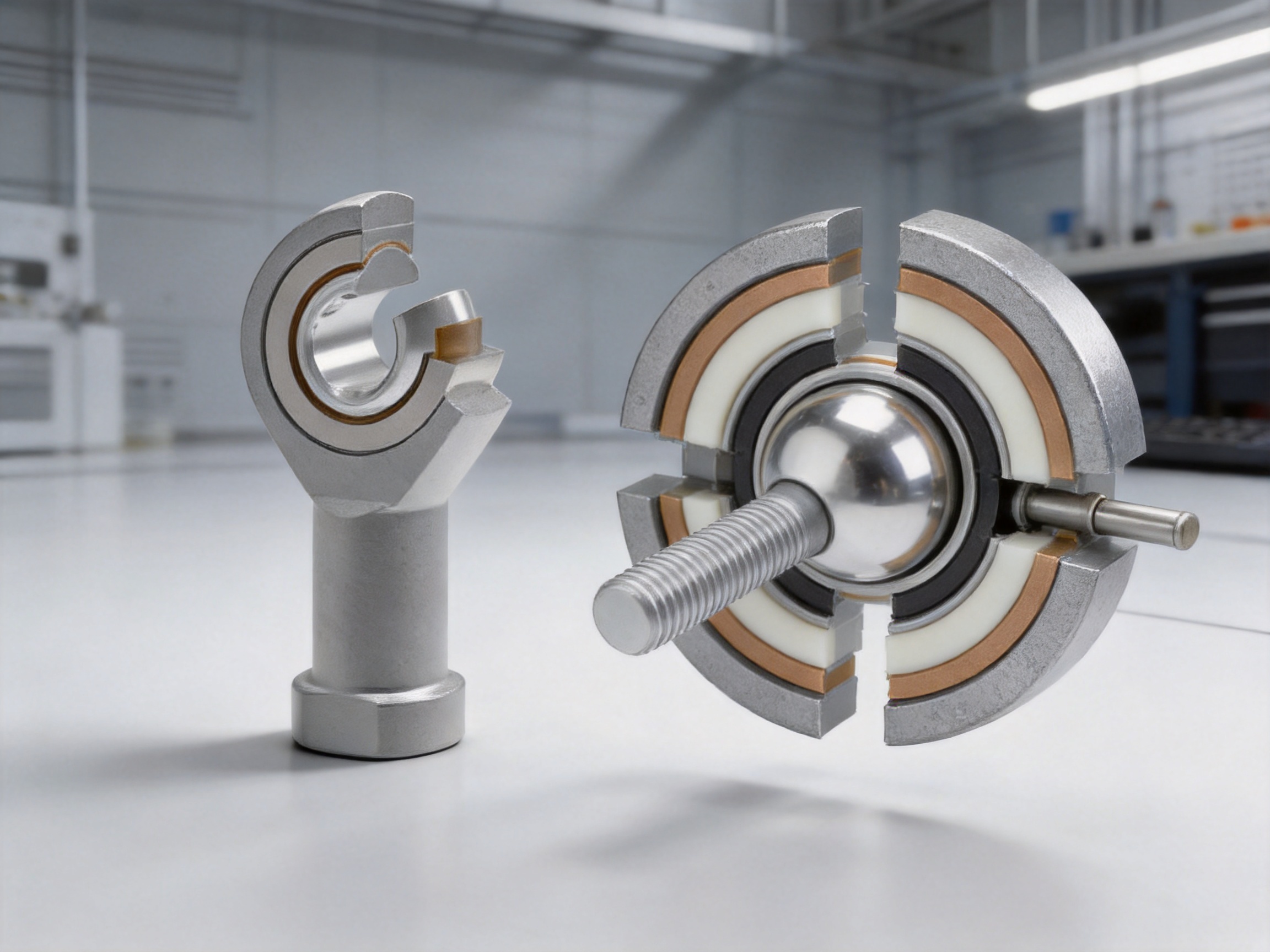
The SIK/SAK series uses a maintenance-free sliding design. The outer ring is based on bronze and is lined with PTFE composite material on the sliding surface. PTFE is recognized for its low coefficient of friction and strong resistance to many operating environments. The lining acts as a solid-lubricating interface, reducing dependence on external grease or oil during normal operation.
The inner ring is manufactured from bearing steel. It is integrally quenched and then spherically hard chrome plated. This treatment gives the sliding counterpart a hard, wear-resistant surface capable of working against the PTFE composite layer. The housing is made from carbon steel and galvanized to help protect the component against rust during storage, installation, and service.
The rod end body provides the structural connection between the threaded section and the spherical bearing portion. Carbon steel offers a practical balance of strength, machinability, cost efficiency, and availability. It can be accurately turned, drilled, threaded, and finished using established bearing manufacturing processes.
After machining, the body is galvanized for rust prevention. Galvanization is especially useful for components used in general industrial environments where humidity, handling, condensation, or occasional exposure to contaminants may affect untreated carbon steel. The protective surface also supports longer storage periods and helps preserve the appearance and usability of the threaded body.
Compared with an uncoated carbon-steel rod end, the galvanized housing offers better basic corrosion protection without requiring customers to apply a separate protective coating after delivery. This can simplify inventory management and reduce preparation work during assembly.
The outer ring uses a bronze base with a PTFE composite material precisely lined onto the sliding surface. Bronze provides a suitable support structure for the lining, while the PTFE composite supplies the low-friction interface required for oscillating and angular motion.
This material combination is one of the main advantages of the design. A conventional steel-on-steel rod end generally requires grease or oil to control friction and wear. In contrast, the PTFE composite layer is intended to provide continuous self-lubricating performance under the specified operating conditions. This reduces the need for grease fittings, scheduled relubrication, and maintenance access around the bearing.
The composite lining is also beneficial where lubricant contamination is undesirable. In food-processing support mechanisms, clean-room-adjacent equipment, textile machinery, laboratory devices, and certain packaging systems, excess grease can attract dust or migrate onto nearby surfaces. A self-lubricating sliding layer can help reduce these concerns, subject to the specific cleanliness requirements of the application.
The inner ring is made from bearing steel and undergoes integral quenching before spherical hard chrome plating. Quenching increases the hardness and strength of the steel, while the chrome-plated spherical surface improves resistance to contact wear and repeated sliding against the PTFE composite liner.
The spherical geometry is important because the inner ring does not simply rotate around a fixed cylindrical axis. It tilts inside the housing as the connected mechanism changes position. The hard chrome finish provides a consistent mating surface across this range of angular movement.
Compared with a softer, untreated inner ring, the quenched and hard chrome-plated version is better suited to repeated oscillation, moderate vibration, and long-term contact with the composite sliding material. Surface preparation and coating uniformity are essential, which is why machining, heat treatment, grinding, plating, and inspection must be managed as a coordinated production sequence.
The most direct advantage is the maintenance-free self-lubricating structure. Conventional rod ends with metal-to-metal contact normally need periodic greasing. If the bearing is installed inside a guarded machine, behind a panel, or at the end of a long actuator, reaching the lubrication point may require downtime or partial disassembly.
The SIK/SAK design minimizes this requirement by using a PTFE composite sliding layer. In applications within the recommended load, speed, temperature, and movement limits, operators can reduce routine lubrication activities. This can lower service labor, shorten maintenance shutdowns, and make the bearing more suitable for equipment with difficult-to-access joints.
Maintenance reduction does not mean that the entire machine can be operated without inspection. Periodic checks should still examine thread security, looseness, corrosion, contamination, abnormal noise, and excessive play. However, removing regular grease application from the normal service schedule can simplify the overall maintenance plan.
PTFE composite materials are widely selected for sliding interfaces where low friction is required. In a rod end, low friction helps the spherical inner ring adjust smoothly as the connected parts move. This can reduce resistance in linkages, minimize actuator loading, and support more consistent motion.
Low friction is particularly useful in systems that perform frequent short-stroke oscillations. Such movements can be difficult for conventional rolling bearings because the rolling elements may not complete enough rotation to distribute lubricant effectively. A sliding rod end is naturally suited to angular oscillation, provided that the load and movement conditions remain within the design limits.
The bearing is designed as a matched friction pair rather than as two unrelated materials. The PTFE composite liner provides the low-friction sliding interface, while the hardened chrome-plated inner ring provides a wear-resistant spherical counterface. This combination supports service life in mechanisms where repeated angular movement would gradually damage a softer or poorly finished surface.
Wear performance depends on many factors, including load, oscillation angle, frequency, temperature, shaft alignment, contamination, and installation quality. Nevertheless, the selected material pairing gives the product a strong technical position compared with basic unlined or untreated rod ends.
The galvanized carbon-steel body provides a level of corrosion protection beyond that of plain carbon steel. This is valuable for equipment operating in humid workshops, warehouses, agricultural environments, and general industrial facilities.
Galvanization does not make the bearing immune to corrosion. Severe chemical exposure, salt spray, constant immersion, and damaged surfaces require additional material or sealing considerations. Even so, the galvanized finish provides a practical improvement for many standard applications and helps reduce premature surface oxidation.
The product information supports customized pitches and special thread precision upon request. This is important for OEM customers because the thread is often one of the most application-specific features of a rod end. A machine designer may require a fine pitch for adjustment accuracy, a special tolerance for a preloaded connection, or a nonstandard thread length for an existing assembly.
Left-hand thread versions are also available. The specified identification method uses “L” and “Left” after the model number and thread marking. For example, an internal-thread configuration may be identified as SILK20C M20×1.5 Left 6H, while an external-thread configuration may be identified as SALK20C M20×1.5 Left 6g. Customers should confirm the final designation, thread tolerance, handedness, and dimensional drawing before placing a production order.
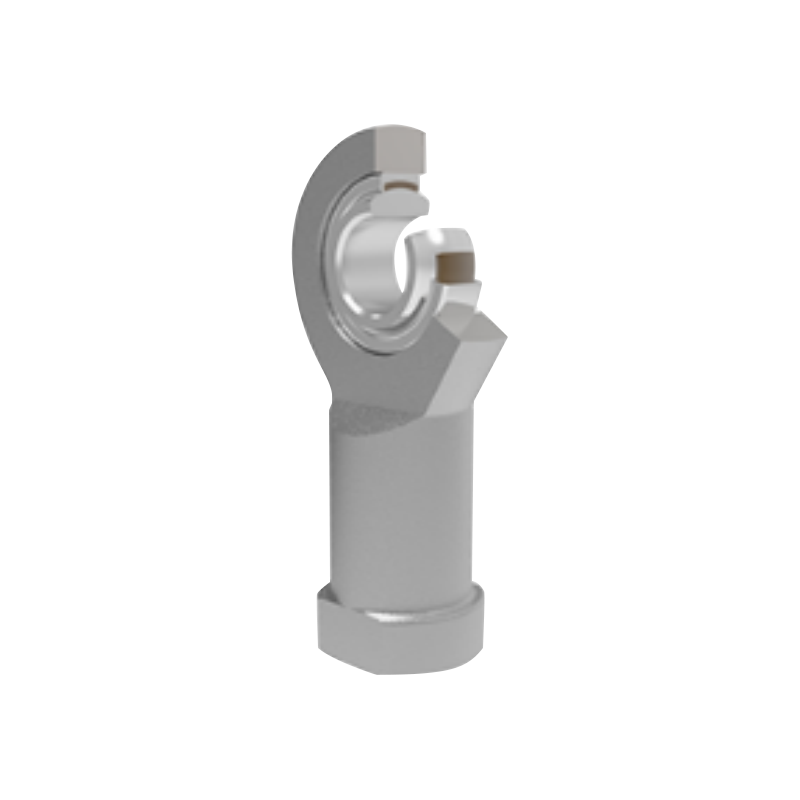
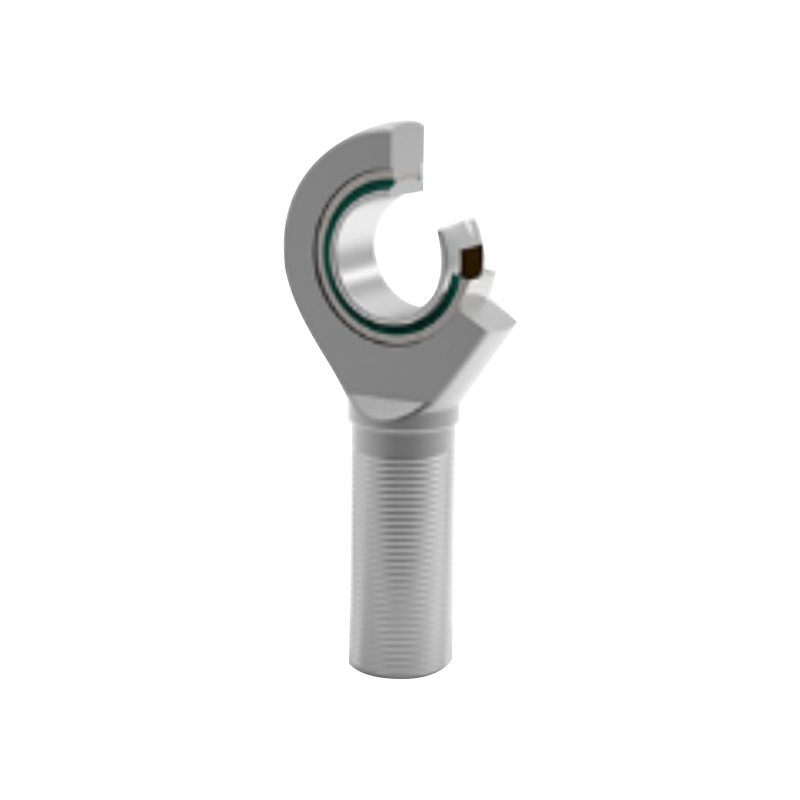
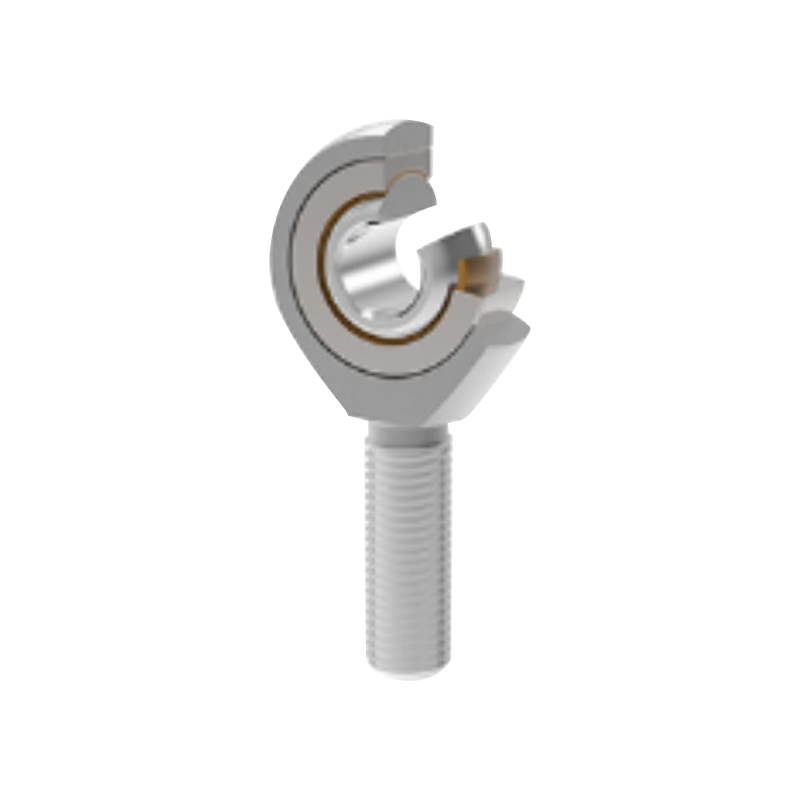
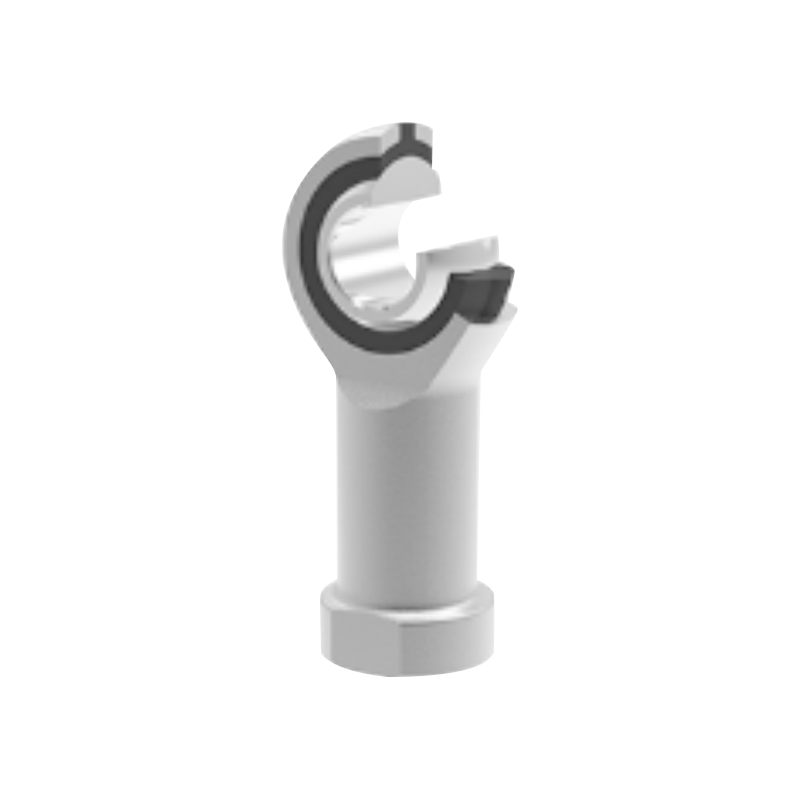
The SIK and SAK families are intended to cover different connection requirements. SIK models are identified as internal-thread rod ends, while SAK models are external-thread rod ends. This distinction allows engineers to select the configuration that best matches the surrounding linkage or actuator design.
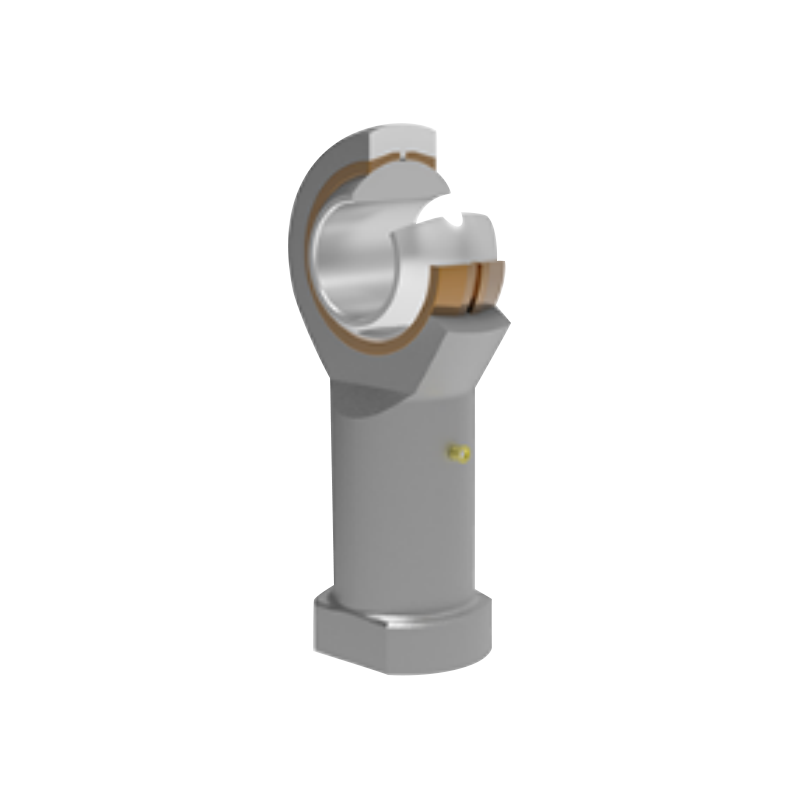
An internal-thread rod end contains a threaded hole in the body. It is commonly selected when a male-threaded rod, stud, or actuator shaft needs to screw into the bearing body. Internal-thread designs can provide a clean external profile and may be useful where the surrounding assembly has limited clearance.
The supplied SIK range covers nominal bore sizes from 5 mm to 20 mm. Listed thread sizes include M5, M6, M8, M10, M12, M14, M16, M18×1.5, and M20×1.5. The range supports small precision mechanisms as well as larger linkages with higher static and dynamic load requirements.
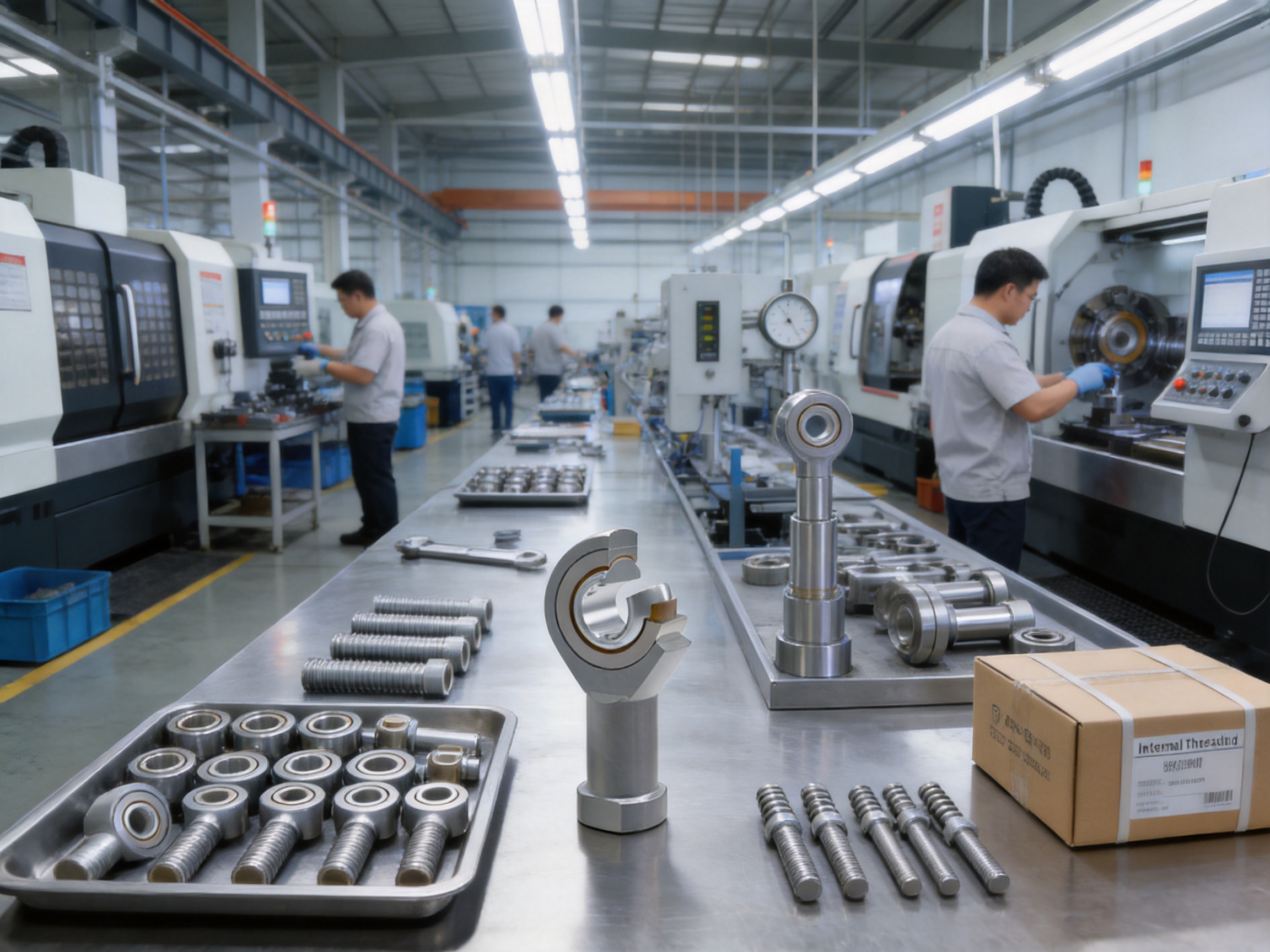
An external-thread rod end has a male thread extending from the body. It is commonly installed into a clevis, coupling, adjustment nut, actuator bracket, or female-threaded component. External-thread designs are convenient when the rod end itself functions as the threaded stud in an adjustable linkage.
The supplied SAK data covers nominal bore sizes from 5 mm to 20 mm, with corresponding thread sizes from M5 through M20×1.5. The external-thread configuration is suitable for applications where the designer needs direct attachment to a female-threaded part or wants to lock the axial position using a nut.
Selection should begin with the surrounding assembly. If the mechanism provides a male threaded shaft, an SIK internal-thread model may be appropriate. If the mechanism provides a female threaded hole or requires a projecting threaded stud, an SAK external-thread model may be more practical.
Other factors include available installation space, adjustment range, locking method, required thread tolerance, direction of adjustment, and whether right-hand or left-hand threads are needed. In a paired linkage, left-hand and right-hand threads can sometimes be combined to allow adjustment by rotating a central component without removing either end.
| Selection factor | SIK internal-thread configuration | SAK external-thread configuration |
| Thread arrangement | Female thread inside the rod end body | Male thread extending from the rod end body |
| Typical mating component | Threaded rod, stud, or actuator shaft | Female-threaded bracket, nut, clevis, or coupling |
| Common design benefit | Compact external profile and protected thread location | Direct insertion into a female-threaded assembly |
| Available nominal bore range | Approximately 5 mm to 20 mm | Approximately 5 mm to 20 mm |
| Customization | Pitch, precision, and left-hand thread options available upon request | Pitch, precision, and left-hand thread options available upon request |
The product series covers compact sizes for light mechanisms and larger sizes for more demanding industrial linkages. The listed nominal bore diameters range from 5 mm to 20 mm. Depending on the model, the static load ratings extend from approximately 3.6 kN to 40 kN, while dynamic load ratings are listed from approximately 4 kN to 14 kN in the supplied tables.
When interpreting a rod end load rating, engineers should distinguish between dynamic and static loading. Dynamic rating relates to repeated or moving load conditions under defined assumptions. Static rating relates to a non-rotating or slowly moving load condition and the permissible deformation or contact stress criteria. Actual application capacity may be lower when the bearing experiences shock loads, high oscillation frequency, edge loading, contamination, or significant misalignment.
Dimensions such as bore diameter, body width, spherical head diameter, thread size, overall length, minimum thread engagement, and edge radius must be checked against the final installation drawing. The supplied catalog tables include these dimensions in millimeters and provide approximate weights for each size.
| Model family | Nominal bore range | Thread examples | Approximate dynamic rating range | Approximate static rating range |
| SIK internal thread | 5 mm to 20 mm | M5 to M20×1.5 | About 4 kN to 14 kN | About 3.6 kN to 34 kN |
| SAK external thread | 5 mm to 20 mm | M5 to M20×1.5 | About 3.9 kN to 14 kN | About 3.6 kN to 40 kN |
The original product data includes some apparent transcription inconsistencies in several catalog cells, including repeated model labels and irregular dimension entries. For production selection, customers should request the latest controlled drawing and dimensional confirmation from UKL. This is especially important when the bearing is being substituted into an existing machine or when thread engagement and spherical head clearance are critical.
The specified operating temperature range is -50°C to +150°C. This broad range allows the rod ends to be considered for cold environments, outdoor machinery, heated processing equipment, and industrial automation systems with changing ambient temperatures.
Temperature affects all parts of a sliding bearing. PTFE composite materials may change in friction behavior as temperature rises or falls, while steel and bronze expand at different rates. The actual permissible load and movement combination should therefore be evaluated at the expected operating temperature rather than only at room temperature.
At low temperatures, the bearing must be able to accommodate the increased viscosity of any nearby contaminants or auxiliary lubricants and the contraction of connected components. At high temperatures, engineers should consider the effect of heat on the PTFE composite lining, housing strength, thread integrity, and surrounding seals or plastics.
The galvanized surface helps with general rust prevention, but it does not replace environmental engineering for aggressive conditions. For salt-laden atmospheres, chemical plants, washdown areas, or continuous outdoor exposure, the complete assembly should be assessed. Protective covers, suitable fasteners, drainage, stainless components, or special coatings may be required.
Contamination control is equally important. PTFE-lined rod ends are well suited to many dusty or low-maintenance applications, but abrasive particles can still accelerate wear if they enter the sliding interface. Where severe contamination is expected, the designer should consider protective boots, shields, clean installation practices, or a different bearing arrangement.
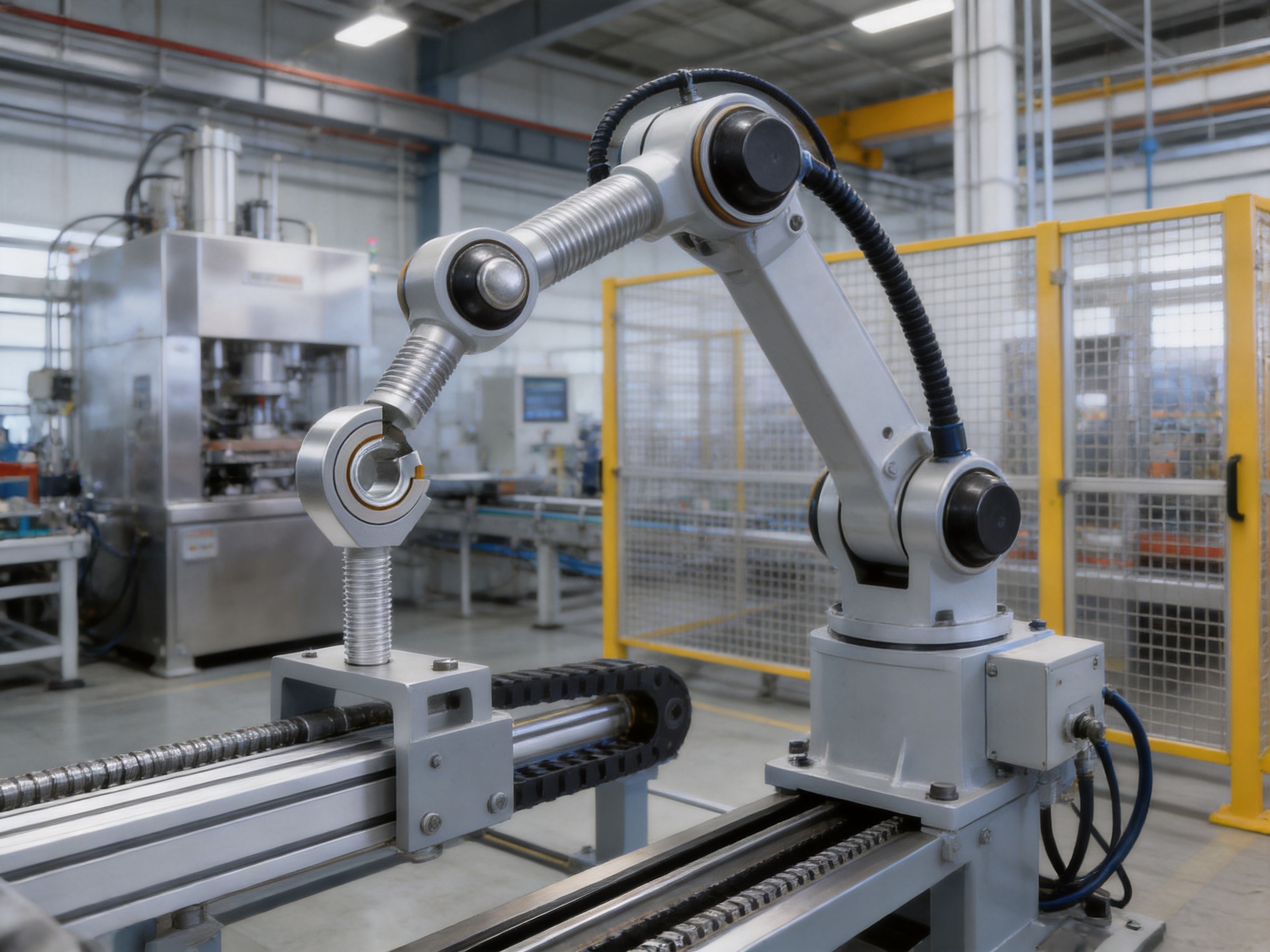
Robotic and automated systems frequently use linkages that move through repeated angular cycles. Rod ends can connect pneumatic cylinders, servo actuators, grippers, guide mechanisms, and articulated frames. The self-lubricating design is particularly useful where the equipment operates in enclosed cells or where frequent manual lubrication would interrupt production.
In automation, low friction can support smoother actuator response and reduce unnecessary mechanical resistance. The compact form also helps designers create lightweight assemblies with fewer separate components. When used in robot tooling, the bearing should be selected according to the expected radial load, oscillation angle, acceleration, vibration, and cycle count.
Machine tools use adjustable linkages, guards, actuation systems, tool-changing mechanisms, and positioning assemblies. A rod end can accommodate alignment variation between a moving actuator and a fixed bracket. The maintenance-free construction is beneficial in areas where cutting fluid, chips, or guarding make routine access difficult.
Machine-tool designers should prevent chips and abrasive debris from accumulating around the spherical interface. The bearing should also be installed so that the primary load is carried through the intended bore direction rather than through an unfavorable edge contact condition.
Packaging machinery often operates at high cycle rates and includes many small linkages. A self-lubricating rod end can help reduce routine lubrication points across a large machine. This can be advantageous in production areas where cleanliness, uptime, and repeatable motion are important.
Conveyors, sorting systems, indexing mechanisms, and lifting equipment may also benefit from rod ends that tolerate angular movement without requiring perfectly rigid alignment. Correct sizing remains essential because shock loads can occur when products stop abruptly or when a mechanism reaches the end of its stroke.
Agricultural machinery and mobile equipment experience vibration, dust, temperature changes, and irregular maintenance schedules. Galvanized housing and self-lubricating sliding technology can provide practical benefits in these conditions. Rod ends may be used in steering linkages, control mechanisms, implement adjustments, and hydraulic or mechanical actuator connections.
These applications can expose the bearing to mud, water, fertilizers, and abrasive soil. Protective installation and regular visual inspection are recommended. The product should not be considered automatically suitable for immersion or direct contact with highly corrosive substances without a specific engineering review.
Industrial doors, lifting platforms, inspection mechanisms, textile machines, assembly equipment, test fixtures, and adjustable support structures can all use rod end bearings. The wide thread range allows the same product concept to be applied to both small mechanisms and larger structural linkages.
Where equipment must operate continuously with minimal service intervention, the self-lubricating design can contribute to lower total maintenance effort. Where a machine is frequently reconfigured, customizable thread pitch and handedness can simplify integration with existing mechanical architecture.
SIK/SAK Maintenance-Free Self-Lubricating Rod End Bearings
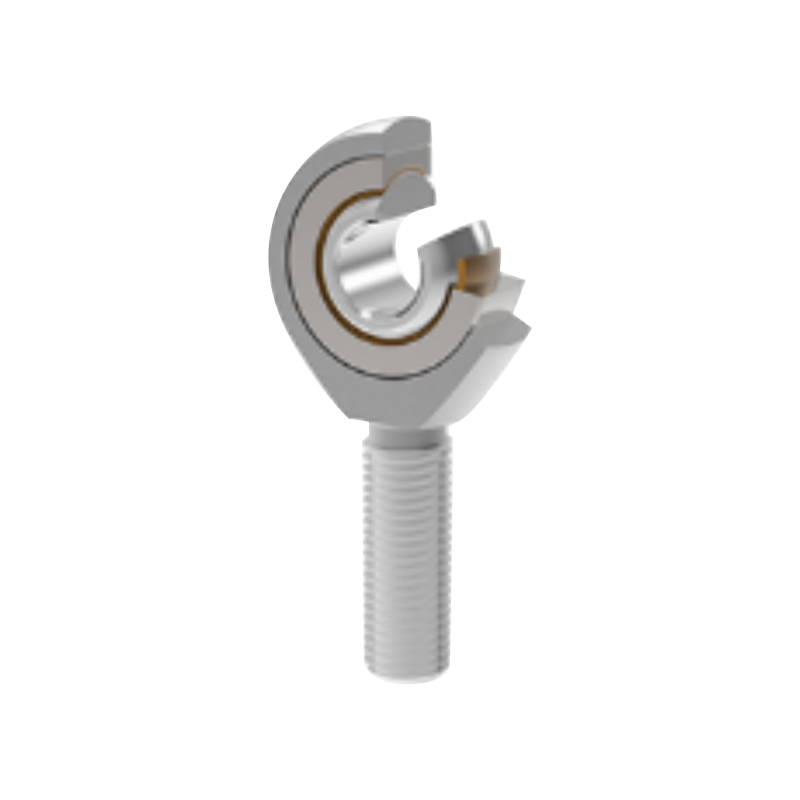
The performance of a self-lubricating rod end depends not only on its material specification but also on the quality of the manufacturing sequence. UKL Bearing Manufacturing Co., Ltd. operates as an integrated manufacturer and trader with capabilities covering research and development, production, and international distribution. Its manufacturing description includes forging, turning, heat treatment, grinding, assembly, and packaging.
Product development begins with application requirements such as load, movement, temperature, thread design, mounting space, and expected service life. For OEM projects, engineering input can be used to determine whether a standard SIK or SAK design is appropriate or whether a customized thread or dimensional variation is required.
UKL reports an R&D focus that includes high-precision cross roller bearings, dual-direction thrust angular contact ball bearings, and other bearing products used in CNC machines, robotics, and intelligent automation. This broader technical background is relevant to rod end production because it requires familiarity with precision geometry, friction behavior, heat treatment, and controlled assembly.
Where applicable, forging can improve material utilization and create a strong basic form for bearing components. Properly controlled forging supports consistent grain flow and reduces the amount of material that must be removed during subsequent machining. Material traceability and incoming inspection are important at this stage because chemical composition and cleanliness influence final mechanical properties.
Turning operations create the basic geometry of the rod end body, thread area, spherical housing region, and other external features. CNC turning can maintain repeatable dimensions across production batches while supporting different bore sizes and thread configurations.
Thread accuracy is especially important. An undersized, oversized, rough, or incorrectly formed thread can lead to poor assembly, insufficient engagement, loosening, or difficult adjustment. The ability to produce different pitches and special thread precision gives UKL flexibility for standard and OEM applications.
The inner ring is integrally quenched to increase hardness and strength. Heat treatment must be carefully controlled to achieve the required hardness without creating excessive distortion or internal stress. After quenching, grinding or other finishing processes may be needed to restore the required spherical geometry.
Consistent heat treatment is one of the foundations of wear resistance. If the inner ring is too soft, the sliding surface may wear prematurely. If the component is improperly treated, dimensional stability and fatigue performance may be affected. Controlled furnace parameters, batch records, hardness testing, and process verification help reduce these risks.
The spherical inner ring must provide a smooth, accurate counterface for the PTFE composite lining. Grinding and finishing operations help control roundness, surface roughness, and dimensional consistency. A properly finished surface promotes even contact and reduces localized stress on the liner.
Surface quality also influences friction. A rough or irregular surface can increase wear particles and cause uneven movement, while an excessively polished surface may not always provide the optimum interaction with a particular composite formulation. The finishing process should therefore be matched to the selected lining material and the intended application.
Hard chrome plating is applied to the spherical inner ring to improve surface hardness and wear resistance. Plating quality depends on surface preparation, bath control, coating uniformity, adhesion, and post-plating finishing. The coating must follow the spherical contour without creating unacceptable dimensional variation.
For high-quality production, the plated component should be inspected for coverage, surface defects, dimensional compliance, and adhesion. The final surface must be compatible with the PTFE composite layer so that the two materials work as a controlled friction pair.
The PTFE composite material is precisely lined onto the bronze-based outer ring. Lining thickness, bonding condition, surface continuity, and concentricity all influence bearing performance. The process must ensure that the composite layer remains securely supported while providing consistent contact with the inner ring.
Quality control may include visual inspection, dimensional measurement, surface examination, and functional checks. For customized products, the lining process should be verified against the specific load, temperature, and movement conditions identified by the customer.
After the carbon-steel body is machined, galvanizing provides basic rust protection. Assembly then brings together the housing, bronze/PTFE outer ring, and hardened chrome-plated inner ring. Assembly force, alignment, clearance, and movement should be controlled to prevent damage to the lining.
Packaging protects the finished rod ends from impact, moisture, contamination, and thread damage during transport. UKL’s stated production and packaging capabilities support both regular inventory requirements and export orders. Proper identification is particularly important for similar-looking SIK and SAK sizes, left-hand thread variants, and customized products.
UKL Bearing Manufacturing Co., Ltd. was established in 2020 and reports an organization of approximately 201 to 500 employees, along with more than 15 years of OEM/ODM export experience. The company states that its production capacity is approximately 10,000 to 50,000 units per month, depending on product type and order requirements.
The company serves customers in Europe, Asia, Africa, Russia, and other markets, with reported exports to the United States, Italy, Germany, Poland, South Africa, Egypt, India, and additional regions. This international orientation can be valuable for distributors and equipment manufacturers that require coordinated supply, export documentation, technical communication, and after-sales support.
UKL combines production with international distribution rather than operating only as a trading intermediary. This structure can improve communication between engineering, manufacturing, inspection, and customer service teams. It also supports OEM/ODM projects in which the customer needs more than a standard catalog item.
The company describes a modernized factory with multiple production lines for forging, turning, heat treatment, grinding, assembly, and packaging. This process coverage gives the manufacturer greater control over important bearing characteristics and can reduce dependence on disconnected subcontracting stages.
UKL also emphasizes environmentally responsible processes, material recycling, and energy optimization. Although the environmental impact of any specific product depends on materials, process conditions, packaging, and service life, longer-lasting and lower-maintenance components can support more efficient industrial equipment operation.
Before installation, verify the model code, bore diameter, thread size, thread direction, thread tolerance, body dimensions, and load requirements. SIK and SAK products may have similar external dimensions but different thread arrangements. A mismatch can cause assembly delays or unsafe operation.
Remove protective packaging carefully and inspect the thread for dents, burrs, or contamination. Check that the inner ring moves smoothly through its intended angular range. Do not force the spherical ring beyond the specified movement angle, and do not use sharp tools directly against the PTFE-lined surface.
Thread engagement should be sufficient for the applied load and the strength of the mating component. Avoid relying on only a few threads, especially in applications subject to vibration or shock. When an external-thread SAK model is secured with a nut, use an appropriate locking method such as a locknut, prevailing-torque nut, thread-locking system, or mechanical locking feature, depending on the application requirements.
The spherical function allows angular adjustment, but it does not compensate for every form of misalignment. The connected parts should be arranged so that the load passes through the intended center of the bore. Excessive lateral force, bending moment, or edge contact can shorten service life.
Pressing, hammering, or clamping directly on the PTFE-lined region can damage the sliding layer. Installation tools should apply force to the appropriate structural surfaces. The rod end should also be protected from weld spatter, grinding dust, paint overspray, and other contaminants during machine assembly.
Correct selection requires more than matching the bore diameter. Engineers should evaluate the complete operating profile, including radial load, axial load, oscillation angle, frequency, speed, temperature, shock, contamination, and expected service life.
For a static or slowly moving connection, the static load rating and the possibility of permanent deformation are important. For repeated motion, the dynamic rating, sliding speed, contact pressure, and wear behavior become more significant. If the bearing is exposed to impact or reversing loads, a safety factor should be included.
Thread strength should also be checked. The load capacity of the complete assembly may be limited by the rod, nut, bracket, pin, or thread engagement rather than by the spherical bearing itself. The weakest component determines the practical system capacity.
In high-cycle automation, cycle testing can provide more reliable information than a catalog rating alone. A representative test should reproduce the actual load, angular movement, speed, temperature, and contamination conditions. UKL can be consulted for technical evaluation and customized product recommendations.
The initial purchase price is only one part of a bearing’s total cost. A conventional greased rod end may require lubrication fittings, grease, labor, access panels, scheduled downtime, and replacement inventory. A self-lubricating model can reduce some of these recurring costs.
Reduced maintenance is especially valuable when many rod ends are installed on one machine. A packaging line or automated assembly system may contain dozens of moving joints. Eliminating routine lubrication at each point can provide meaningful savings over the service life of the equipment.
Lower friction can also support energy efficiency in certain mechanisms by reducing resistance during movement. The effect will depend on the total system design, actuator size, duty cycle, and other friction sources. It should be evaluated as part of an engineering assessment rather than assumed as a universal percentage improvement.
Standardized sizes from 5 mm to 20 mm can simplify spare-parts planning. At the same time, customized thread pitches and handedness allow the bearing to fit specialized assemblies without redesigning the entire mechanism.
A specialized manufacturer can contribute more than a catalog dimension. Bearing performance depends on the interaction of material, geometry, surface finish, heat treatment, lining quality, assembly clearance, and inspection. Small variations in any of these areas can affect friction, wear, load capacity, and service life.
UKL’s integrated capabilities provide a basis for coordinating these processes. Its product portfolio includes cross roller bearings, angular contact ball bearings, spherical roller bearings, cylindrical roller bearings, tapered roller bearings, mounted bearings, Nilos rings, and other industrial bearing products. Experience across these categories supports a broader understanding of rolling and sliding contact design.
For OEM customers, a manufacturer with R&D, production, and export experience can help evaluate custom threads, special tolerances, packaging requirements, labeling, and delivery schedules. This can be more efficient than coordinating separate suppliers for machining, surface treatment, assembly, and distribution.
Technical support is also important after delivery. UKL states that its multilingual service team provides technical response, installation guidance, and after-sales maintenance support for international customers. These services can help users address questions about mounting, thread configuration, application conditions, and replacement planning.
The SIK/SAK range is suitable for standard procurement, but many machine builders require application-specific modifications. UKL offers customization options including different thread pitches and special thread precision. Left-hand thread products can also be produced when identified correctly in the order documentation.
Other possible project requirements may include special thread lengths, modified body dimensions, customer-specific marking, packaging, inspection documentation, or production batch control. The feasibility of each change should be confirmed through an engineering drawing and technical review.
For an OEM or ODM project, the customer should provide the following information:
1. Required internal or external thread configuration.
2. Nominal bore diameter and mating pin or shaft dimensions.
3. Thread size, pitch, tolerance class, and handedness.
4. Radial, axial, and shock load conditions.
5. Oscillation angle, frequency, speed, and duty cycle.
6. Operating temperature and environmental exposure.
7. Required corrosion resistance and surface finish.
8. Expected service life and inspection requirements.
9. Packaging, labeling, and quantity requirements.
10. Applicable customer or industry standards.
Clear technical information helps prevent errors caused by similar model codes or incomplete thread descriptions. A controlled drawing should be used for final approval.
Quality assurance for this type of rod end should cover both incoming materials and finished performance. Important controls include steel grade verification, housing dimensions, thread inspection, heat-treatment hardness, chrome-plating condition, spherical geometry, PTFE lining integrity, assembly clearance, and final movement inspection.
Thread gauges can verify major assembly characteristics, while coordinate measurement or specialized gauges may be used for critical dimensions. Surface inspection can identify scratches, plating defects, burrs, or damage to the composite liner.
Functional inspection should confirm that the inner ring moves smoothly without excessive looseness or binding. Depending on the order, customers may also request material certificates, hardness records, dimensional reports, sampling plans, or batch traceability documentation.
A strong quality system should distinguish between cosmetic defects and functional defects while maintaining clear acceptance criteria. For export orders, consistent labeling and packaging reduce the risk of incorrect installation after the products reach the customer’s warehouse.
The outer ring contains a bronze base lined with PTFE composite material. This sliding layer is designed to provide self-lubricating performance, reducing the need for routine grease application under suitable operating conditions.
No. “Maintenance-free” refers primarily to the self-lubricating sliding interface. Operators should still inspect the thread, mounting security, corrosion, contamination, looseness, and general condition at appropriate maintenance intervals.
SIK models are internal-thread rod ends, while SAK models are external-thread rod ends. The correct choice depends on whether the mating component has a male or female thread and how the adjustment mechanism is arranged.
Yes. Left-hand threads can be requested. The model number and thread marking should include the required left-hand identification, such as “L” and “Left,” together with the applicable thread tolerance.
The specified operating temperature range is -50°C to +150°C. The final application should still be reviewed because load, speed, oscillation, nearby materials, and environmental conditions can affect performance at temperature extremes.
The listed SIK and SAK series covers nominal bore sizes from approximately 5 mm to 20 mm. The corresponding thread sizes range from M5 to M20×1.5, depending on the model.
They can be considered for many general industrial and dusty applications, but abrasive particles may accelerate wear if they reach the sliding interface. Protective covers, clean installation, and regular inspection are recommended where contamination is severe.
The supplied product information does not establish continuous immersion capability. Applications involving immersion, salt water, chemical exposure, or high-pressure washdown should receive a specific engineering review and may require different materials or additional protection.
The catalog provides dynamic and static load ratings. These values should be considered together with load direction, shock, misalignment, oscillation, temperature, and service life. The complete assembly must also be checked because the thread, shaft, nut, or bracket may limit capacity.
Yes. The product information states that different pitches and special thread precision can be provided upon request. Customers should submit a technical drawing or complete thread specification for confirmation.
The inner ring is integrally quenched and spherically hard chrome plated to improve surface hardness and wear resistance. It forms the durable counterface for the PTFE composite sliding layer.
They are suitable for consideration in robotic and automation linkages where angular movement, low maintenance, and compact installation are required. The final selection must match the robot’s load, cycle rate, acceleration, temperature, and contamination conditions.
Provide the SIK or SAK family, bore size, thread size and pitch, thread direction, tolerance, quantity, application load, movement conditions, temperature, environmental exposure, and any packaging or documentation requirements.
The products are manufactured by UKL Bearing Manufacturing Co., Ltd., located in Wuxi City, China. The company operates production and international distribution capabilities for standard and customized bearing products.
Before ordering a maintenance-free self-lubricating rod end bearing, confirm the following points:
1. The required configuration is SIK internal thread or SAK external thread.
2. The bore diameter matches the connecting pin or shaft.
3. The thread size, pitch, tolerance, and handedness are correct.
4. The available body length and spherical head dimensions fit the machine.
5. The dynamic and static load requirements are within acceptable limits.
6. The movement is compatible with a sliding spherical bearing.
7. The operating temperature remains within -50°C to +150°C.
8. Shock, vibration, contamination, and corrosion have been considered.
9. Installation tools will not damage the PTFE lining or plated surface.
10. The final drawing and technical specification have been approved.
This checklist can reduce procurement errors and improve reliability after installation. It is particularly useful when several similar sizes are used on one machine.
The SIK/SAK maintenance-free self-lubricating rod end bearing series combines the practical benefits of a compact spherical connection with a carefully selected steel/PTFE composite friction system. The carbon-steel body provides structural strength, galvanization offers basic rust protection, the bronze-backed PTFE lining reduces friction and lubrication requirements, and the quenched hard chrome-plated inner ring supports wear resistance.
Compared with conventional lubricated rod ends, the series can reduce routine servicing, simplify access in enclosed machinery, support cleaner operation, and provide consistent angular movement. The range of internal-thread and external-thread configurations, nominal bore sizes from 5 mm to 20 mm, and customization options for thread pitch and handedness make the product suitable for a broad selection of industrial mechanisms.
UKL’s manufacturing strengths extend across forging, turning, heat treatment, grinding, surface treatment, assembly, packaging, research and development, and international supply. This integrated capability supports standard products as well as OEM and ODM requirements. For customers selecting a rod end bearing, the most important steps are to verify the controlled drawing, evaluate the real operating conditions, select the correct thread configuration, and ensure proper installation.
When applied within its intended limits, this self-lubricating rod end design can be a dependable solution for robotics, automation, machine tools, packaging machinery, agricultural equipment, and general industrial systems where low maintenance and reliable angular movement are essential.
1. UKL Bearing Manufacturing Co., Ltd., SIK/SAK Maintenance-Free Self-Lubricating Rod End Bearings, product information and dimensional data.
2. General engineering principles for spherical plain bearings, rod ends, sliding contact, and oscillating motion.
3. General materials engineering references concerning PTFE composite sliding layers and bronze-backed bearing materials.
4. General bearing manufacturing references covering forging, turning, heat treatment, grinding, hard chrome plating, assembly, and inspection.
5. General mechanical design guidance for threaded joints, load ratings, angular misalignment, and industrial linkage installation.
Product Categories
Contact Us

Jane@ukl-bearing.com
Jenny@ukl-bearing.com
Andy@ukl-bearing.com
Ivy@ukl-bearing.com

+86-510- 88763239
+86-15371057968

No.1 Hehuan Road, Hudai Town, Binhu District, Wuxi City.
Ready to Begin?
Get in Touch

Now!
UKL BEARING
 English
 Español
 русский