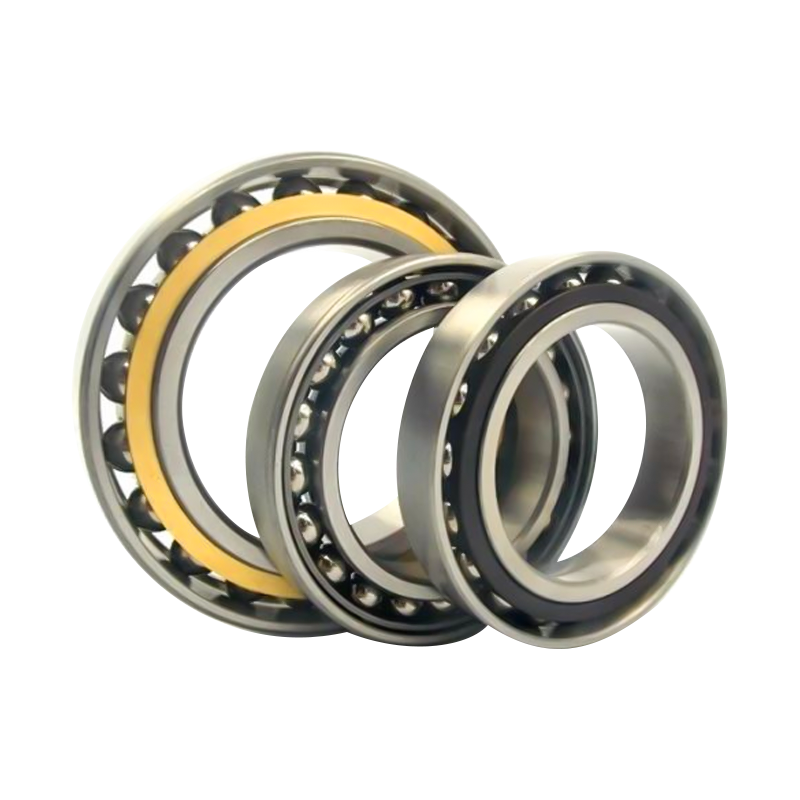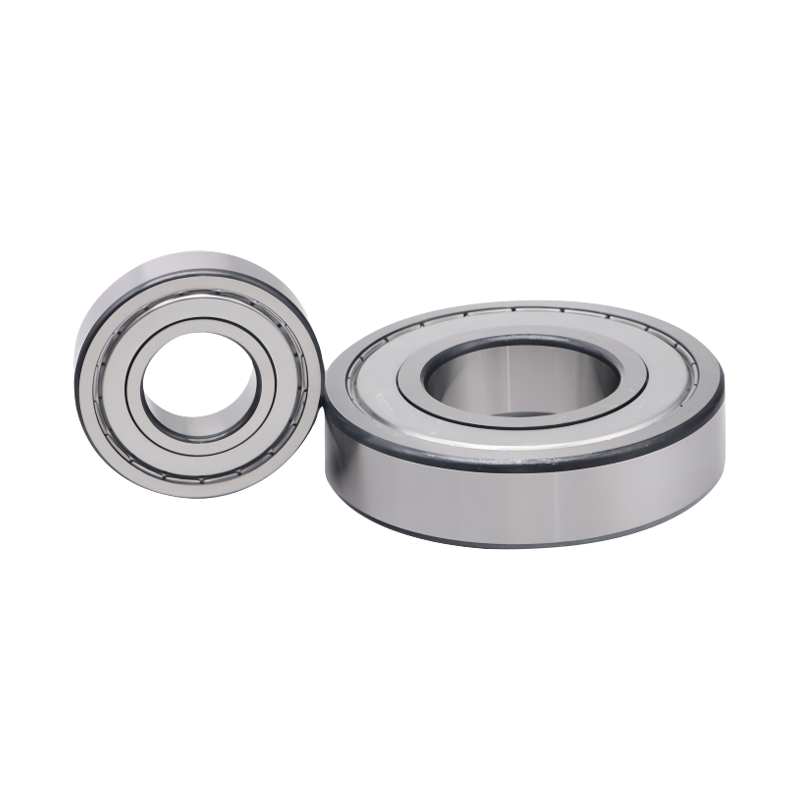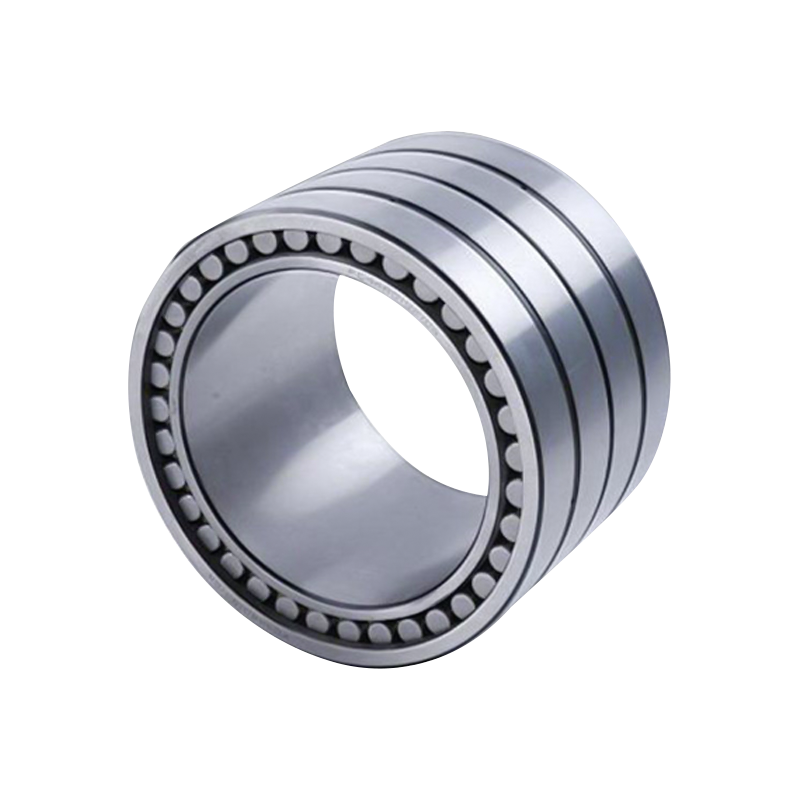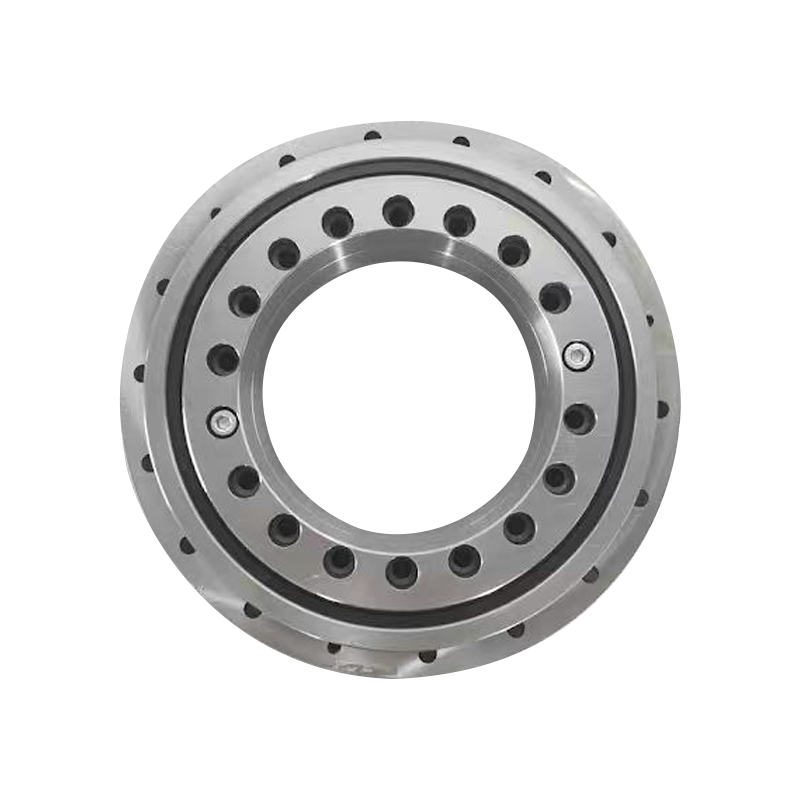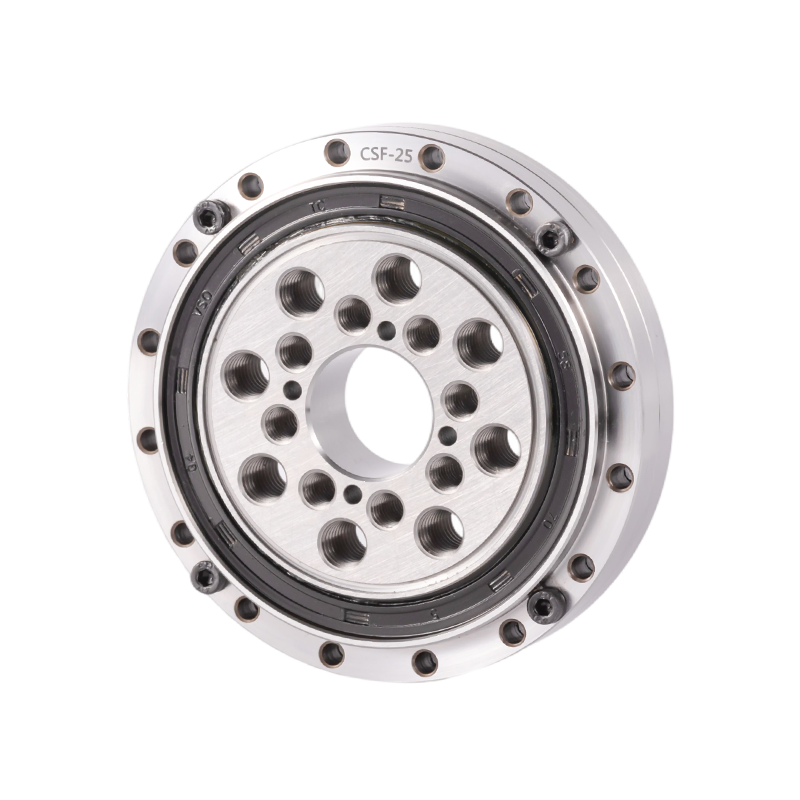
Bearings are the unsung heroes of modern engineering, enabling smooth, efficient motion in everything from robotic arms to CNC machines, gearboxes to automotive systems. Without precision bearings, the mechanical world as we know it would grind to a halt—literally. Among the diverse range of bearings available today, four-point contact angular contact ball bearings stand out as a versatile, high-performance solution that combines the best of radial and axial load handling in a compact package.
These bearings are not just another component; they represent a leap forward in bearing design, addressing key limitations of traditional angular contact and double-row bearings. By integrating a split inner ring, solid outer ring, and optimized ball-and-cage assembly, four-point contact bearings deliver exceptional load capacity, dual-direction axial support, and ease of installation—all while occupying less axial space than their double-row counterparts. In this article, we will explore the design, advantages, manufacturing processes, and real-world applications of four-point contact angular contact ball bearings, highlighting why they have become a go-to choice for engineers across industries.
Before diving into the technical details, it’s important to note that the quality of these bearings hinges on the manufacturing expertise of the producer. A leading manufacturer in this space combines decades of engineering experience with state-of-the-art production facilities to deliver bearings that meet the most stringent international standards. Their commitment to R&D, precision machining, and sustainability has positioned them as a trusted partner for clients worldwide.
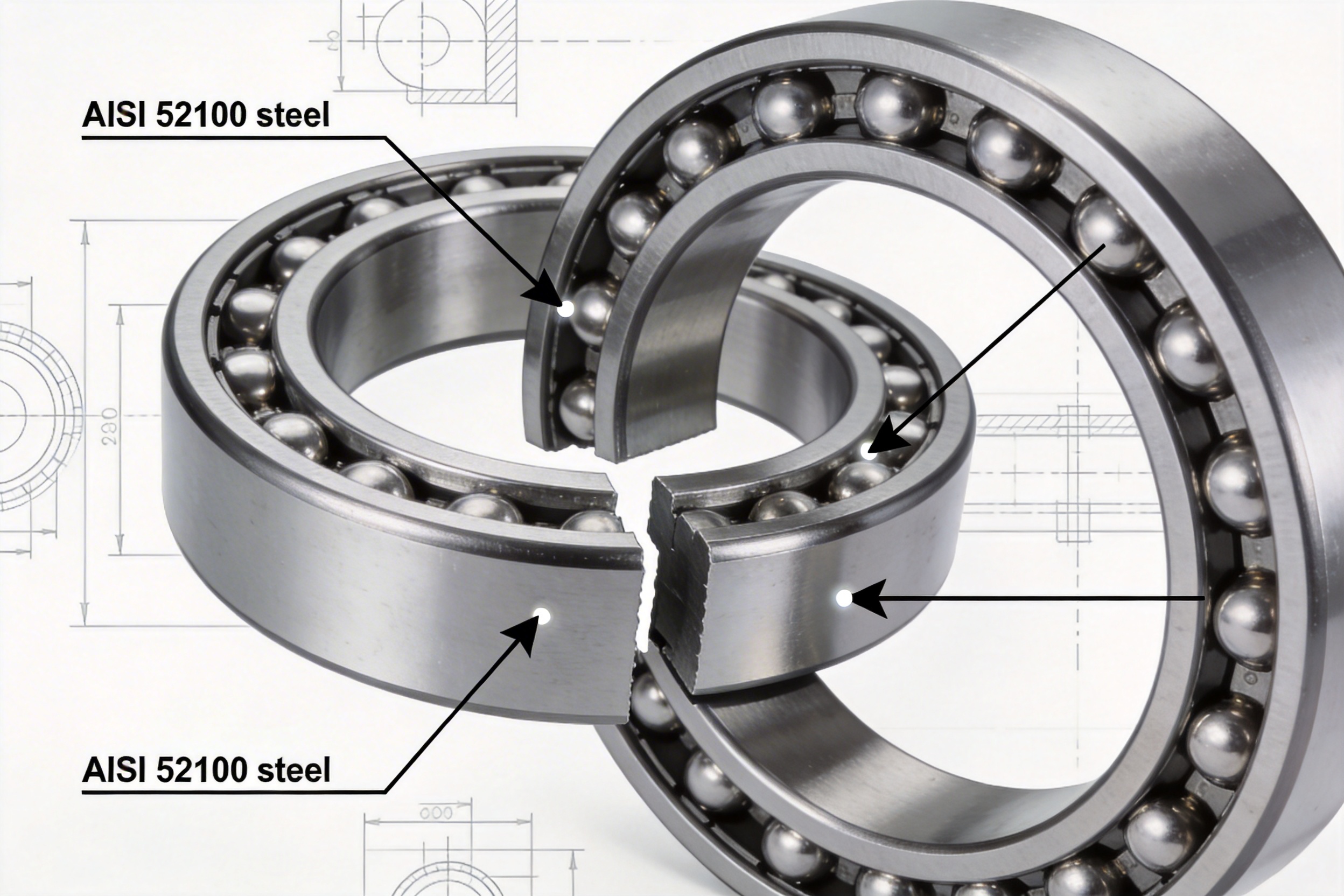
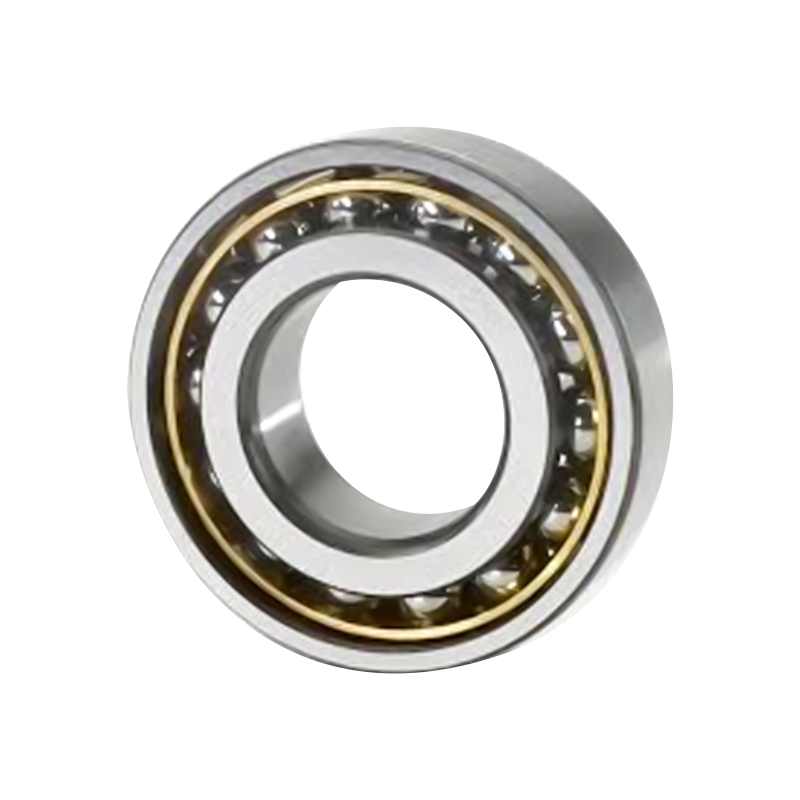
Four-point contact angular contact ball bearings are a specialized type of single-row angular contact ball bearing designed to handle both radial loads and axial loads in both directions. Unlike standard single-row angular contact bearings, which typically support axial loads in only one direction, four-point contact bearings achieve dual-direction axial support through their unique raceway geometry and component design.
The core components of a four-point contact bearing include: a solid outer ring, a split inner ring (composed of two separate halves), and a ball-and-cage assembly. The split inner ring is a critical innovation: it allows for the insertion of a larger number of balls than would be possible with a solid inner ring, significantly increasing the bearing’s load-carrying capacity. This design also enables the inner ring halves and the outer ring (with the ball-and-cage assembly) to be mounted separately, which simplifies installation in tight or complex machinery setups.
The raceway geometry of four-point contact bearings is optimized to distribute loads evenly across each ball. Each ball contacts the raceway at four distinct points—two on the inner ring and two on the outer ring—hence the name “four-point contact.” This even load distribution reduces stress on individual components, minimizes wear, and extends the bearing’s service life. Additionally, the contact angle (the angle between the line of contact and the bearing’s axis) is typically between 30 and 40 degrees, which balances radial and axial load support effectively.
Compared to double-row angular contact ball bearings, four-point contact bearings offer a more compact design. They require less axial space, making them ideal for applications where space is at a premium—such as robotic joints, precision gearboxes, and high-speed automation equipment. Despite their compact size, they deliver comparable or superior load capacity to double-row bearings, thanks to the larger number of balls allowed by the split inner ring.
Another key feature of four-point contact bearings is their ability to accommodate limited radial forces. While they are primarily designed for axial loads, they can handle moderate radial loads as well, making them a versatile choice for applications that require both types of support. This versatility eliminates the need for multiple bearings to handle different load types, reducing component count and simplifying machinery design.
Four-point contact angular contact ball bearings offer several distinct advantages over traditional bearing designs, making them a preferred choice for engineers in a wide range of industries. Let’s explore these advantages in detail:
1. Dual-Direction Axial Load Capacity
One of the most significant advantages of four-point contact bearings is their ability to support axial loads in both directions. Standard single-row angular contact bearings can only handle axial loads in one direction, requiring the use of two bearings (mounted back-to-back or face-to-face) to support loads in both directions. This increases component count, space requirements, and cost. Four-point contact bearings eliminate this need by handling dual-direction axial loads with a single bearing, simplifying design and reducing overall system complexity.
For example, in a robotic arm application, the bearing must support axial loads from both the upward and downward movements of the arm. A four-point contact bearing can handle these loads efficiently, whereas a single-row bearing would require a second bearing to support the opposite direction. This not only saves space but also reduces the risk of misalignment and increases the system’s overall reliability.
2. Compact Design
Four-point contact bearings are more compact than double-row angular contact ball bearings, occupying less axial space. This is a critical advantage in applications where space is limited, such as in precision CNC machines, aerospace components, and small-scale automation systems. The split inner ring allows for a larger number of balls without increasing the bearing’s overall size, ensuring that load capacity is not compromised for compactness.
Consider a gearbox application where bevel gears are used. The gearbox requires bearings that can handle both radial and axial loads from the bevel gears, but space inside the gearbox is constrained. A four-point contact bearing can fit into the available space while delivering the necessary load support, whereas a double-row bearing might be too large to accommodate.
3. Separable Components
The split inner ring design of four-point contact bearings allows for separate mounting of the inner ring halves and the outer ring (with the ball-and-cage assembly). This is a major advantage in applications where one component of the bearing needs to be installed first, or where access to the bearing is limited. For example, in a shaft assembly where the shaft has a flange or other feature that prevents the installation of a solid inner ring, the split inner ring can be easily mounted around the shaft.
Separable components also simplify maintenance and repair. If one part of the bearing becomes damaged, it can be replaced without removing the entire bearing assembly, reducing downtime and maintenance costs. This is particularly beneficial in industrial settings where machinery downtime can lead to significant losses.
4. Versatility in Applications
Four-point contact bearings are highly versatile and can be used in a wide range of applications. They are commonly found in:
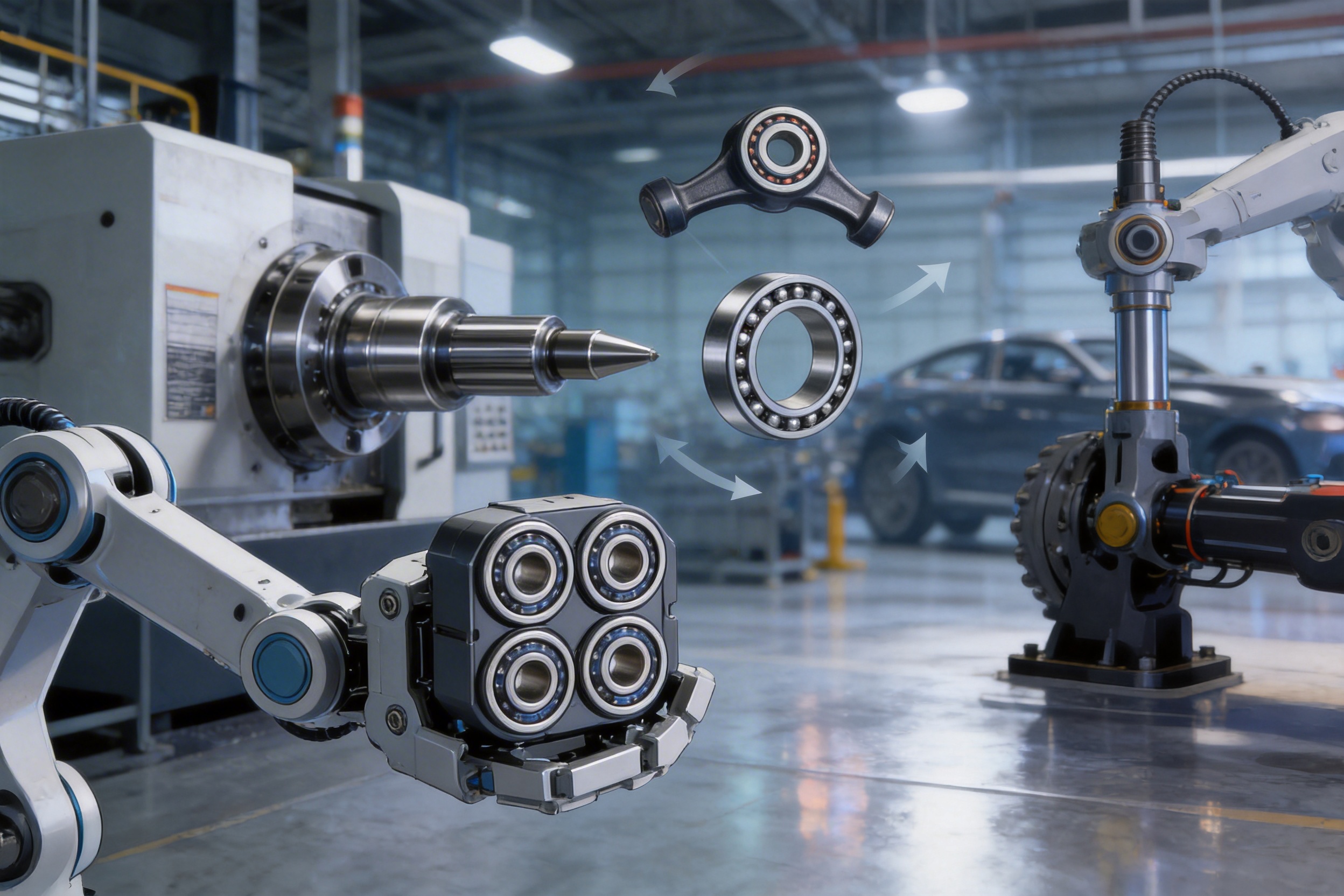
- Robotics and automation: Robotic joints, end-effectors, and linear actuators.
- CNC machines: Spindles, tool changers, and feed drives.
- Gearboxes: Especially those using bevel gears, where they handle both radial and axial loads.
- Automotive: Steering systems, differential gears, and suspension components.
- Aerospace: Landing gear, control surfaces, and engine components.
Their ability to handle dual-direction axial loads and moderate radial loads makes them suitable for these diverse applications, eliminating the need for specialized bearings for each use case.
5. Customization Options
Leading manufacturers offer custom four-point contact bearings to meet the specific needs of clients. This includes modifications to the bearing’s dimensions, material selection (e.g., ceramic balls for high-speed applications), and cage design (e.g., polyamide cages for low friction). Custom bearings can be designed to handle extreme temperatures, corrosive environments, or high-speed operations, ensuring optimal performance in even the most challenging conditions.
For example, a client in the aerospace industry might require a bearing that can withstand high temperatures and vacuum conditions. A custom four-point contact bearing with heat-resistant materials and a specialized cage design can be developed to meet these requirements.
6. Reduced Friction and Energy Efficiency
The precision manufacturing of four-point contact bearings—including smooth raceways, tight tolerances, and optimized ball-and-cage assemblies—results in reduced friction. Lower friction means less energy loss, making machinery more efficient and reducing operating costs. This is particularly important in high-speed applications, where friction can generate significant heat and reduce the bearing’s service life.
For example, in a high-speed CNC machine spindle, a four-point contact bearing with low friction will run cooler and consume less energy than a traditional bearing, leading to longer tool life and lower energy bills.
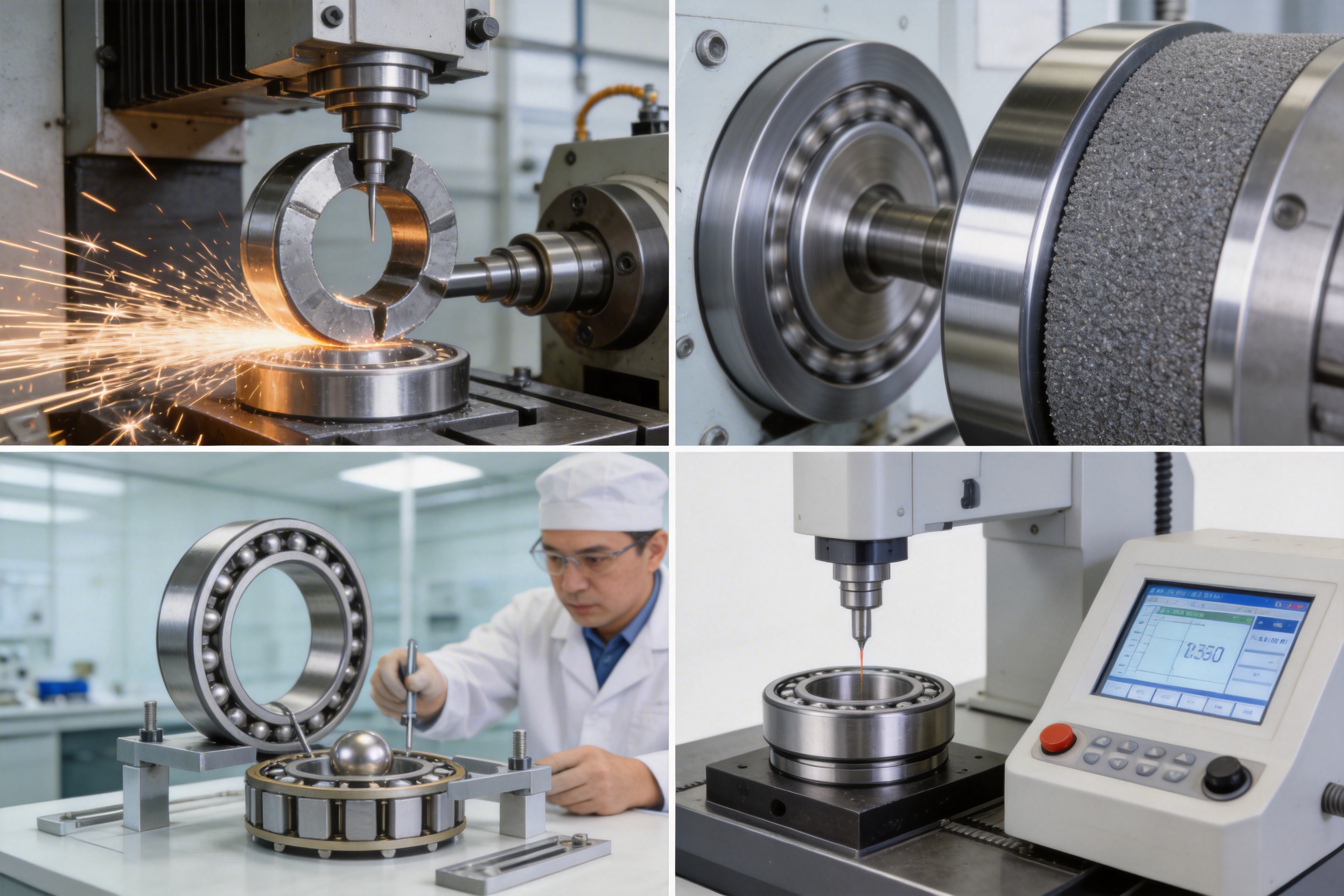
The performance and reliability of four-point contact angular contact ball bearings depend heavily on the manufacturing processes used to produce them. Leading manufacturers invest in state-of-the-art equipment, skilled labor, and rigorous quality control to ensure that every bearing meets the highest standards. Let’s take a closer look at the key manufacturing processes involved:
1. Research and Development (R&D)
Before any bearing is produced, a dedicated R&D team works to design and optimize the bearing for specific applications. This involves:
- Computer-aided design (CAD) and simulation: Using advanced software to model the bearing’s performance under different load conditions, speeds, and temperatures.
- Material selection: Choosing the best materials for the bearing’s components (e.g., high-carbon chromium steel for raceways, ceramic for balls in high-speed applications).
- Prototype testing: Building and testing prototypes to validate the design and identify any areas for improvement.
The R&D team also stays abreast of the latest industry trends and technological advancements, ensuring that the manufacturer’s bearings remain at the cutting edge of performance.
2. Forging
Forging is the first step in producing bearing components. It involves shaping raw material (typically bearing steel) into the desired shape using heat and pressure. Forging improves the material’s strength and fatigue resistance by aligning the grain structure, which reduces the risk of cracks and failures.
Leading manufacturers use closed-die forging, which produces components with precise dimensions and minimal waste. The forging process is carefully controlled to ensure that each component meets the required specifications, including hardness, density, and grain structure.
3. Turning
After forging, the components undergo turning— a machining process that uses CNC (Computer Numerical Control) lathes to shape the components to their final dimensions. Turning is critical for achieving tight tolerances, which are essential for the bearing’s performance.
CNC turning centers are equipped with high-precision tools and sensors to ensure that each component is machined to within a few microns of the required specification. This level of precision is necessary to ensure that the bearing’s raceways are smooth and that the components fit together perfectly.
4. Heat Treatment
Heat treatment is a key process that enhances the hardness, wear resistance, and fatigue strength of the bearing components. The components are heated to a specific temperature, then quenched (cooled rapidly) to harden the material. This is followed by tempering— a process that reheats the components to a lower temperature to reduce brittleness and improve toughness.
Leading manufacturers use vacuum heat treatment to avoid oxidation and ensure consistent hardness across all components. Vacuum heat treatment also produces a clean, uniform surface finish, which is essential for reducing friction and wear.
5. Grinding
Grinding is the process of finishing the bearing’s raceways and other critical surfaces to achieve an ultra-smooth finish and tight tolerances. Grinding is performed using high-precision grinding machines, which use abrasive wheels to remove small amounts of material from the components.
The raceways of four-point contact bearings are ground to a surface finish of less than 0.1 micrometers (Ra), which is critical for reducing friction and noise. The grinding process is carefully controlled to ensure that the raceways are perfectly round and that the contact angle is accurate.
6. Assembly
Assembly is the process of putting together the bearing’s components— the inner ring halves, outer ring, balls, and cage. Assembly is performed in a cleanroom environment to prevent contamination, which can damage the bearing and reduce its service life.
The assembly process involves:
- Cleaning the components to remove any debris or contaminants.
- Inserting the balls into the cage and outer ring.
- Mounting the inner ring halves around the balls.
- Setting the internal clearance (the gap between the balls and raceways) to the required specification.
- Lubricating the bearing with the appropriate lubricant (e.g., grease or oil) to reduce friction and wear.
Leading manufacturers use precision tools and jigs to ensure that the assembly is performed accurately and consistently.
7. Quality Control
Quality control is an ongoing process that starts with the raw material and continues through every stage of production. Leading manufacturers use a variety of testing methods to ensure that each bearing meets the required specifications, including:
- Dimensional inspection: Using coordinate measuring machines (CMMs) to check the dimensions of the components.
- Hardness testing: Using a hardness tester to verify that the components have the required hardness.
- Surface finish inspection: Using a profilometer to check the surface finish of the raceways.
- Performance testing: Running the bearing under simulated operating conditions to check for noise, vibration, and load capacity.
Only bearings that pass all quality control tests are shipped to clients.
8. Packaging and Shipping
After assembly and quality control, the bearings are packaged to protect them during transport. Packaging typically includes:
- Anti-rust coating: To prevent corrosion during storage and transport.
- Vacuum-sealed bags: To keep the bearings clean and free from contaminants.
- Sturdy boxes: To protect the bearings from damage during shipping.
Leading manufacturers ship their bearings to clients worldwide, with a focus on timely delivery and customer satisfaction.
To understand the real-world performance of four-point contact angular contact ball bearings, it’s helpful to look at their key performance metrics. These metrics include bore diameter, outside diameter, width, basic dynamic load rating, and limiting speed. The table below shows performance data for a selection of four-point contact bearings:
| Designation | Bore Diameter (mm) | Outside Diameter (mm) | Width (mm) | Basic Dynamic Load Rating (kN) | Limiting Speed (r/min) |
|---|---|---|---|---|---|
| QJ 1064 N2MA/C4 | 320 | 480 | 74 | 715 | 2000 |
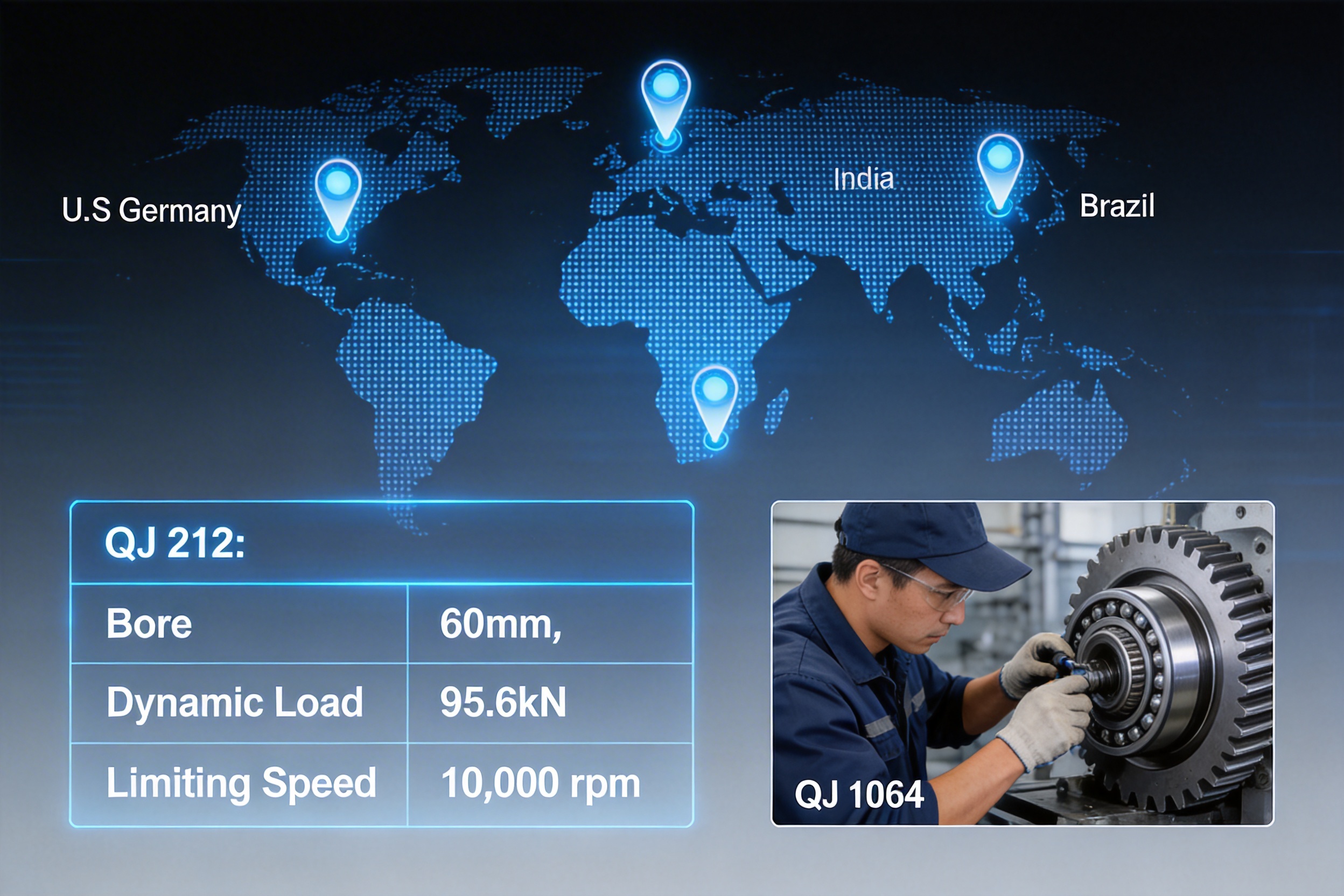
| QJ 212 | 60 | 110 | 22 | 95.6 | 10000 |
| QJ 308 MA | 40 | 90 | 23 | 78 | 14000 |
| QJ 222 N2MA/C4B20 | 110 | 200 | 38 | 280 | 5600 |
| QJ 336 N2MA | 180 | 380 | 75 | 680 | 3000 |
| PER.BB205RPP13 | 16.129 | 53.086 | 19.43 | 26.2 | N/A |
Let’s break down these metrics:
Bore Diameter: The diameter of the inner ring, which determines the size of the shaft the bearing can accommodate.
Outside Diameter: The diameter of the outer ring, which determines the size of the housing the bearing can fit into.
Width: The total width of the bearing, which affects the axial space required for installation.
Basic Dynamic Load Rating: The load that a bearing can withstand for a specified number of revolutions (typically 1 million) without failing due to fatigue. This is a key metric for determining the bearing’s load capacity.
Limiting Speed: The maximum speed at which the bearing can operate continuously without overheating or failing. This depends on factors such as lubrication, load, and temperature.
The data in the table shows that four-point contact bearings are available in a wide range of sizes, from small bearings (e.g., PER.BB205RPP13 with a bore diameter of 16.129 mm) to large bearings (e.g., QJ 1064 N2MA/C4 with a bore diameter of 320 mm). This range of sizes makes them suitable for a variety of applications, from small robotic joints to large industrial gearboxes.
The basic dynamic load rating varies significantly depending on the bearing’s size. For example, the QJ 1064 N2MA/C4 bearing has a basic dynamic load rating of 715 kN, which is suitable for heavy-duty applications. The QJ 212 bearing, on the other hand, has a basic dynamic load rating of 95.6 kN, which is suitable for lighter applications.
The limiting speed also varies depending on the bearing’s size and design. For example, the QJ 212 bearing has a limiting speed of 10,000 r/min, which is suitable for high-speed applications. The QJ 1064 N2MA/C4 bearing has a limiting speed of 2000 r/min, which is suitable for slower, heavy-duty applications.
To address common questions about four-point contact angular contact ball bearings, we’ve compiled the following Q&A:
Q: What is the difference between four-point contact bearings and standard angular contact bearings?
A: Standard angular contact bearings support axial loads in only one direction, while four-point contact bearings support axial loads in both directions. Four-point contact bearings also have a split inner ring, which allows for more balls and a more compact design.
Q: Can four-point contact bearings handle radial loads?
A: Yes, four-point contact bearings can handle moderate radial loads in addition to axial loads in both directions. This makes them a versatile choice for applications that require both types of support.
Q: What materials are used to make four-point contact bearings?
A: The most common material for bearing components is high-carbon chromium steel (e.g., AISI 52100), which offers excellent hardness, wear resistance, and fatigue strength. Ceramic balls (e.g., silicon nitride) are also used in high-speed applications to reduce weight and friction.
Q: How long do four-point contact bearings last?
A: The service life of a four-point contact bearing depends on several factors, including load, speed, lubrication, and environment. With proper maintenance, these bearings can last for thousands of hours. Leading manufacturers design their bearings to meet or exceed international standards for service life.
Q: Can four-point contact bearings be used in high-temperature environments?
A: Yes, custom four-point contact bearings can be designed to withstand high temperatures. This involves using heat-resistant materials (e.g., high-temperature steel) and specialized lubricants that can operate at elevated temperatures.
Q: What is the production capacity of leading manufacturers?
A: Leading manufacturers have a production capacity of 10,000 to 50,000 units per month. This allows them to meet the needs of both small and large clients.
Q: Where are four-point contact bearings exported to?
A: Leading manufacturers export their bearings to countries around the world, including the United States, Italy, Germany, Poland, South Africa, Egypt, India, and Russia.
Q: Do manufacturers offer custom bearing designs?
A: Yes, leading manufacturers offer custom bearing designs to meet the specific needs of clients. This includes modifications to dimensions, material selection, and cage design.
1. ISO 15:2017, Rolling bearings—Radial bearings, boundary dimensions.
2. Harris, T. A., & Kotzalas, M. N. (2007). Rolling Bearing Analysis: Life and Material Selection (5th ed.). CRC Press.
3. SKF Group. (2020). Bearing Technology Guide.
4. National Bearing Manufacturers Association (NBMA). (2019). Best Practices for Precision Bearing Manufacturing.
5. Boschert, R. (2018). Bearings for Robotics and Automation: Design, Selection, and Application. Industrial Press.
Four-point contact angular contact ball bearings are a versatile, high-performance solution that has revolutionized the field of bearing design. Their unique combination of dual-direction axial load capacity, compact design, separable components, and customization options makes them ideal for a wide range of applications, from robotics and automation to gearboxes and aerospace.
The performance and reliability of these bearings depend on the manufacturing processes used to produce them. Leading manufacturers invest in state-of-the-art equipment, skilled labor, and rigorous quality control to ensure that every bearing meets the highest standards. Their commitment to R&D, precision machining, and sustainability has positioned them as trusted partners for clients worldwide.
As the demand for precision, efficiency, and reliability continues to grow in the engineering industry, four-point contact angular contact ball bearings will play an increasingly important role. Whether you’re designing a robotic arm, a CNC machine, or a high-speed gearbox, these bearings offer the performance and versatility you need to succeed.
In conclusion, four-point contact angular contact ball bearings are not just another component—they are a testament to the power of innovation and engineering excellence. By combining advanced design with precision manufacturing, these bearings deliver the performance and reliability that modern engineering demands.
Product Categories
Contact Us

Jane@ukl-bearing.com
Jenny@ukl-bearing.com
Andy@ukl-bearing.com
Ivy@ukl-bearing.com

+86-510- 88763239
+86-15371057968

No.1 Hehuan Road, Hudai Town, Binhu District, Wuxi City.
Ready to Begin?
Get in Touch

Now!
UKL BEARING
 English
 Español
 русский