Content
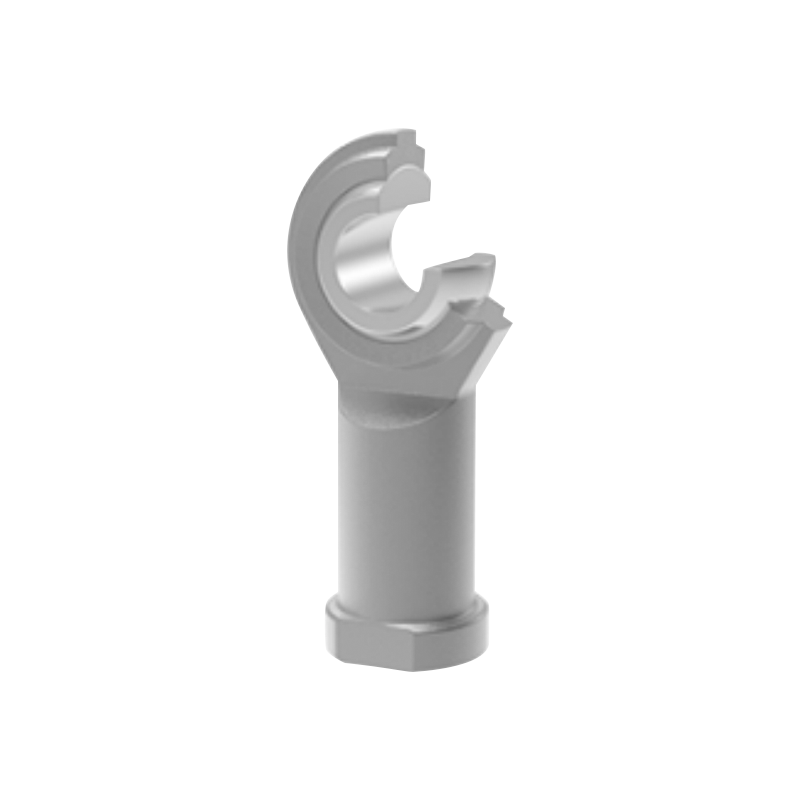
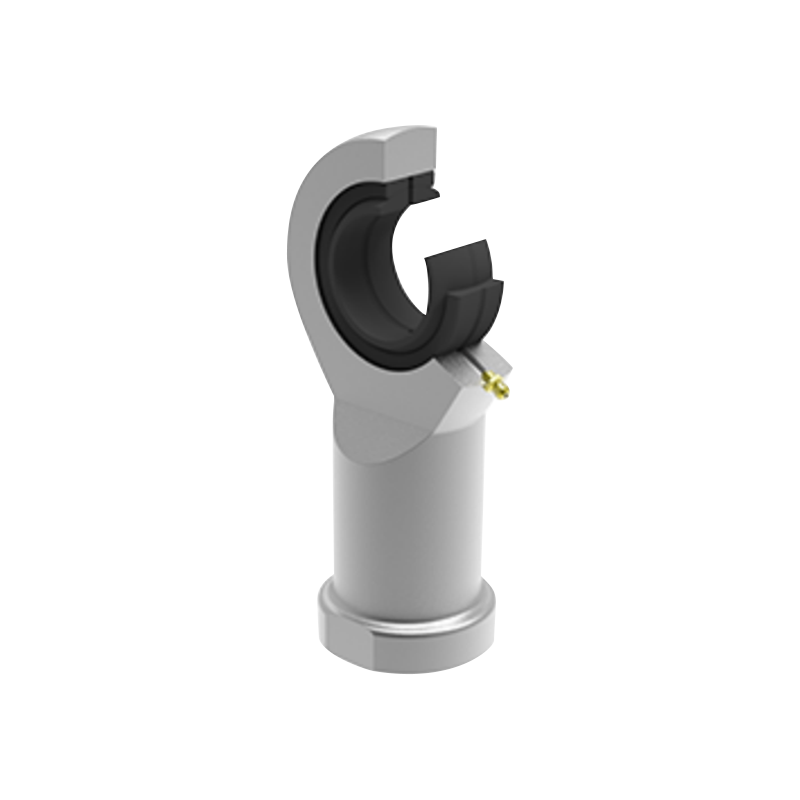
Threaded rod end bearings are unsung heroes in the world of mechanical engineering, enabling smooth, precise movement in systems where misalignment and load distribution are critical. These components connect rigid structures to moving parts, compensating for angular and radial misalignments while supporting heavy loads. Among the latest advancements in this field is the SAZP High-Performance Threaded Rod End Bearing, a self-lubricating solution that redefines durability, maintenance efficiency, and customization. This article explores the design, material science, manufacturing excellence, and industry applications of the SAZP series, highlighting its competitive edge and the engineering prowess behind its production.
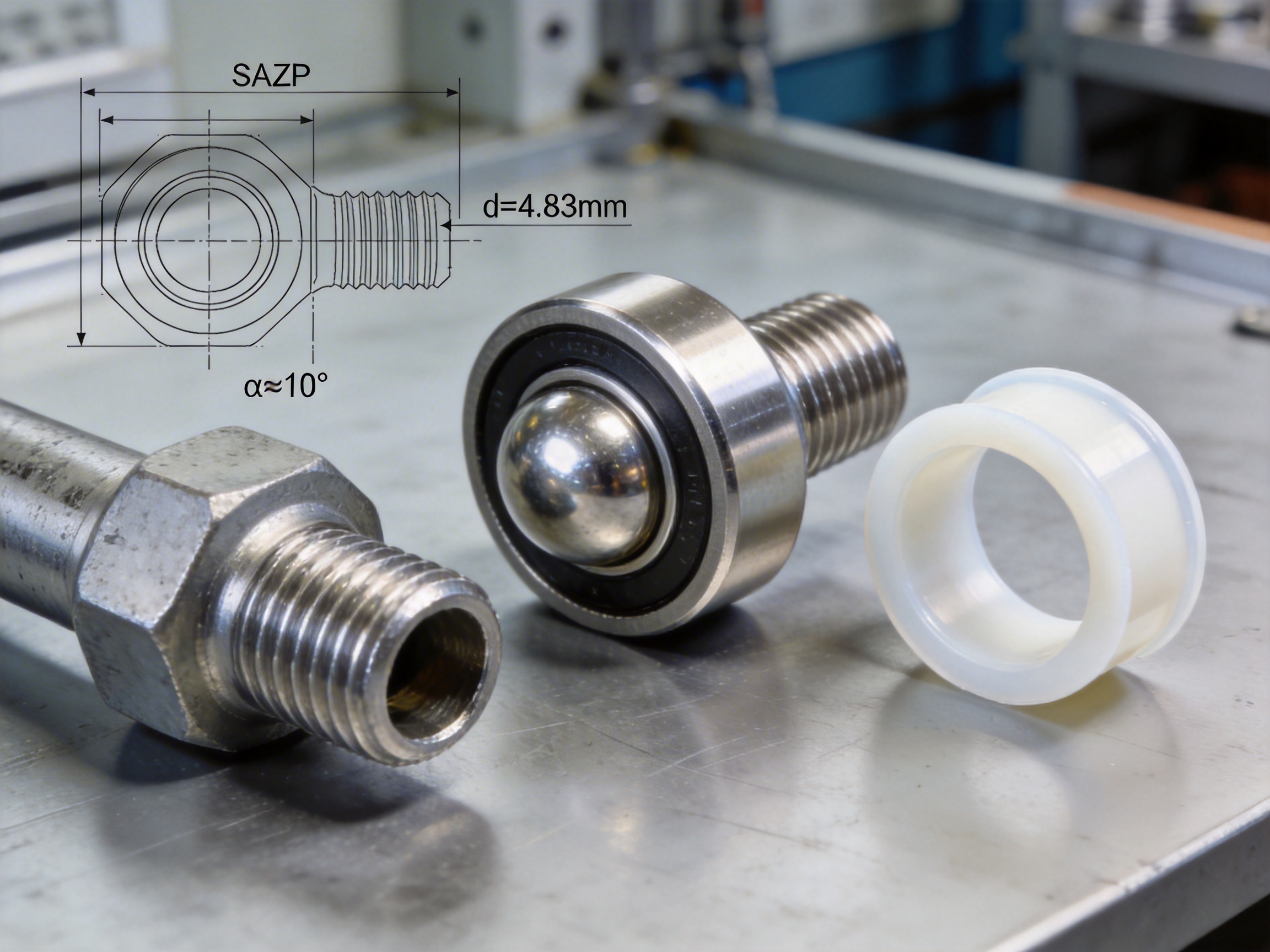
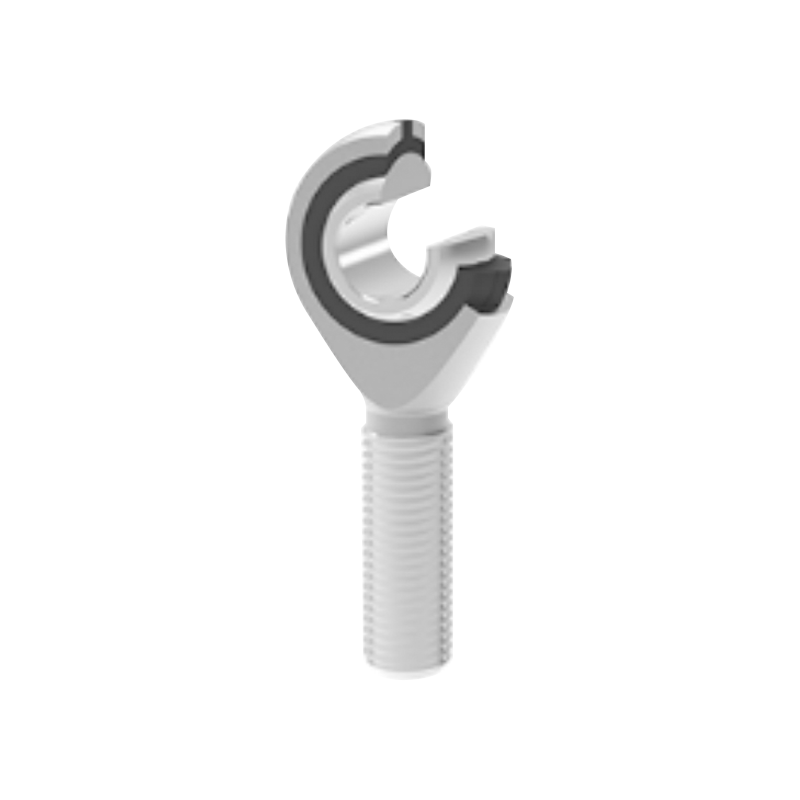
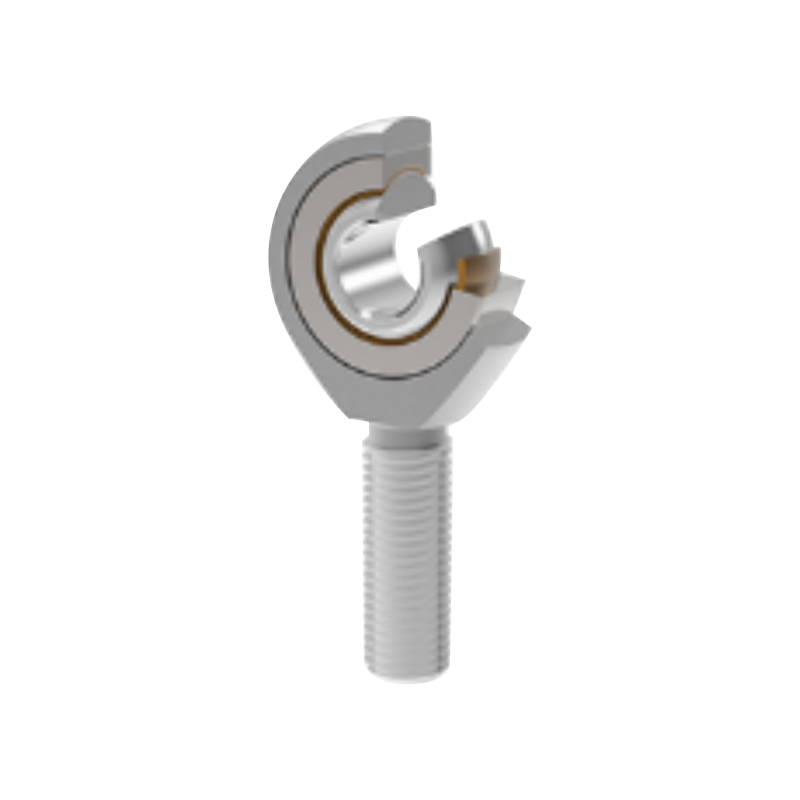
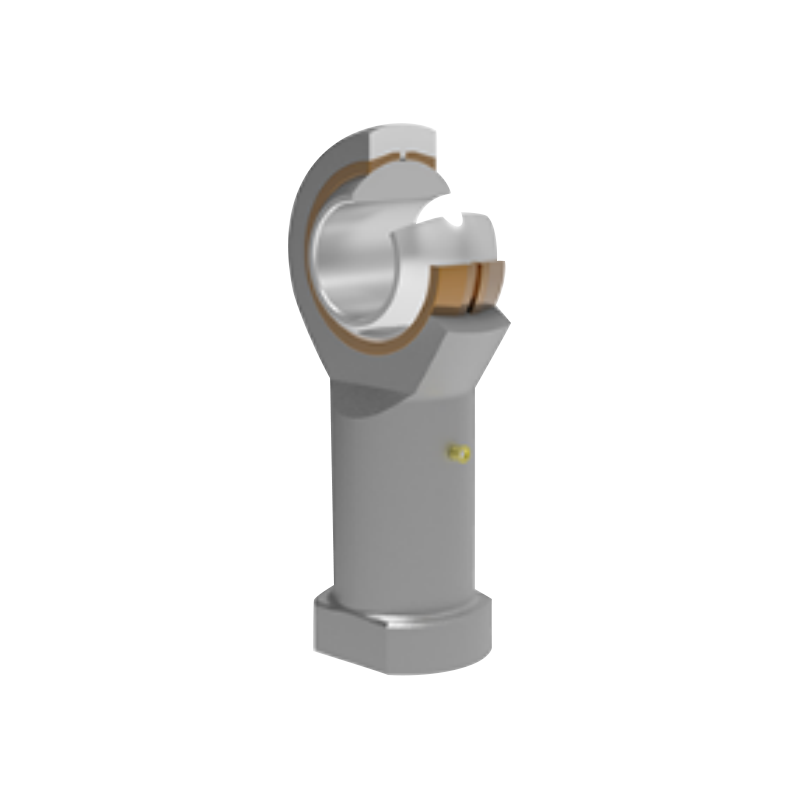
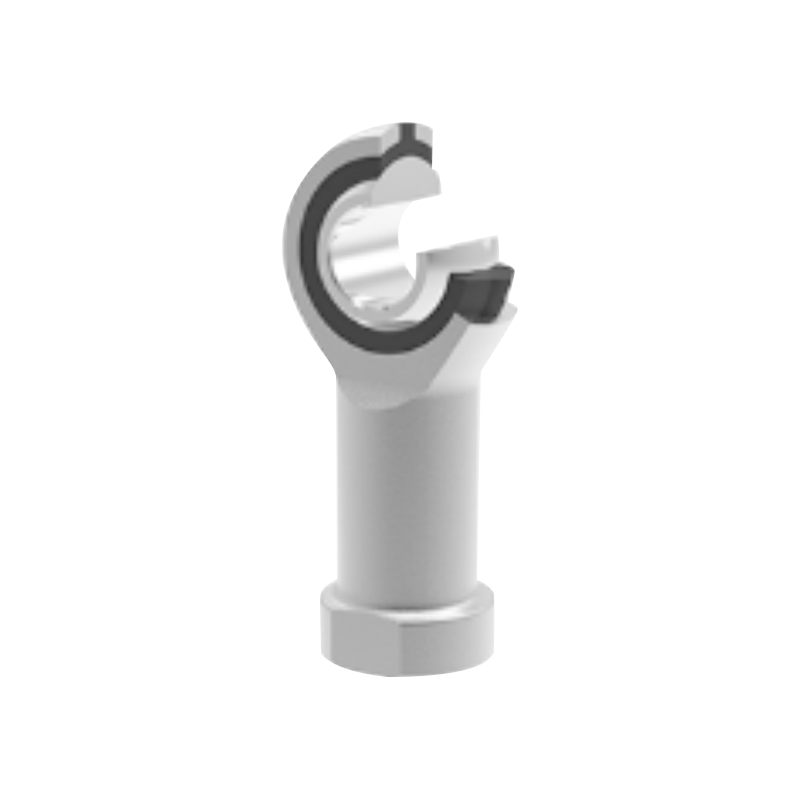
The SAZP series is a self-lubricating rod end bearing designed for applications where regular maintenance is impractical or costly. Its core design is a streamlined three-piece structure, each component engineered to maximize performance and longevity.
The SAZP bearing consists of three key parts: the rod end body, the inner ring, and the PTFE plastic liner. This modular design allows for easy replacement of components if needed, reducing downtime and maintenance costs. The rod end body features internal threads, making it compatible with a wide range of threaded shafts and rods. The inner ring is spherical, enabling angular misalignment compensation up to 13 degrees (depending on the model), which is essential for systems where parts shift slightly during operation.
The PTFE liner is a critical component, acting as a self-lubricating interface between the rod end body and the inner ring. Unlike traditional bearings that require periodic oil or grease lubrication, the PTFE liner eliminates the need for maintenance, reducing the risk of contamination and extending the bearing’s lifespan.
The performance of the SAZP bearing is rooted in its choice of materials, each selected for specific properties that enhance durability and functionality:
Rod End Body: Manufactured from high-quality carbon steel, the rod end body is galvanized to provide excellent corrosion resistance. Galvanization forms a protective zinc layer that shields the steel from rust and environmental damage, making the bearing suitable for outdoor and harsh industrial environments. The carbon steel also offers high tensile strength, ensuring it can withstand heavy loads without deformation.
Inner Ring: Made from high-carbon chromium bearing steel (a material known for its exceptional hardness and wear resistance), the inner ring undergoes a rigorous quenching process to increase its hardness to approximately HRC 60-65. Following quenching, the inner ring is spherically plated with hard chrome. This plating adds an extra layer of wear resistance, reducing friction between the inner ring and the PTFE liner. Hard chrome plating also improves the ring’s resistance to corrosion and abrasion, making it ideal for high-stress applications.
PTFE Liner: The polytetrafluoroethylene (PTFE) liner is chosen for its low coefficient of friction (approximately 0.05-0.10) and self-lubricating properties. PTFE is also resistant to chemicals, oils, and extreme temperatures, ensuring the bearing operates reliably across a wide range of conditions. The liner is precisely molded to fit the spherical surface of the inner ring, providing a smooth, consistent interface that minimizes wear.
The SAZP series outperforms traditional rod end bearings in several key areas, making it a preferred choice for engineers and manufacturers:
One of the most significant advantages of the SAZP bearing is its maintenance-free design. Traditional rod end bearings require regular lubrication to prevent wear and friction, which adds to operational costs and downtime. The SAZP’s PTFE liner eliminates the need for lubrication, reducing maintenance requirements by up to 100% (depending on the application). This is particularly beneficial in industries like robotics and CNC machinery, where unscheduled maintenance can halt production and lead to significant losses.
The combination of hard chrome-plated inner ring and PTFE liner creates a sliding friction pair (steel/PTFE) that offers exceptional wear resistance. Hard chrome plating is known for its ability to reduce friction and wear, while the PTFE liner provides a low-friction surface that minimizes abrasion. Tests have shown that SAZP bearings can last up to three times longer than traditional lubricated bearings in high-stress applications, reducing replacement costs and increasing system reliability.
The SAZP series offers extensive customization options to meet the unique needs of different industries. Key customization features include:
This flexibility allows engineers to specify SAZP bearings for a wide range of applications, from small robotics to heavy industrial equipment.
The SAZP bearing operates reliably across a temperature range of -40°C to +75°C. This makes it suitable for applications in extreme environments, such as cold storage facilities, outdoor industrial equipment, and regions with harsh weather conditions. Traditional lubricated bearings often struggle in extreme temperatures, as oil or grease can thicken in cold weather or evaporate in hot conditions, leading to increased wear and failure. The SAZP’s PTFE liner maintains its properties across this wide temperature range, ensuring consistent performance.
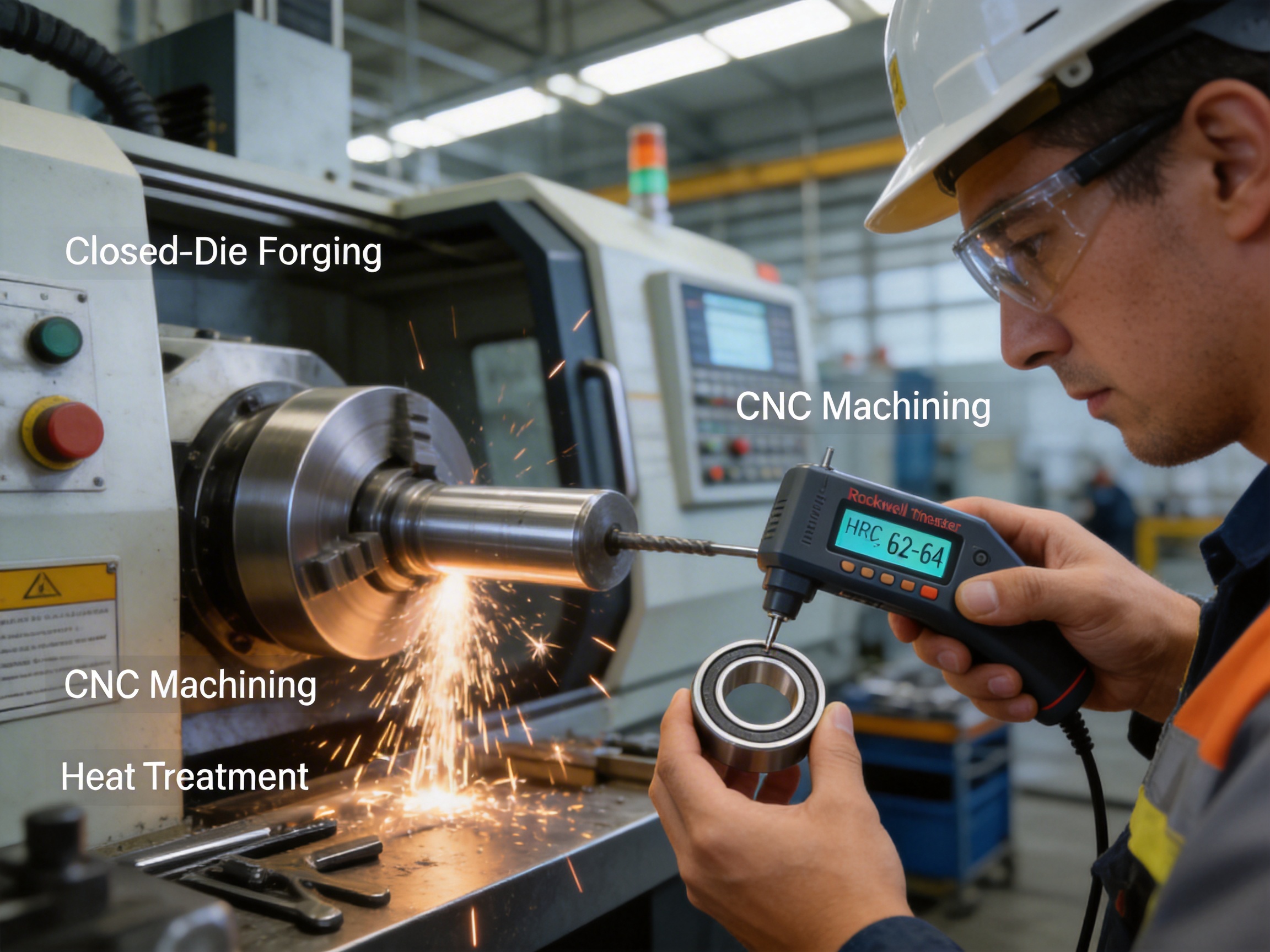
The performance of the SAZP bearing is not just due to its design and materials—it is also a result of the advanced manufacturing processes used to produce it. The manufacturer behind the SAZP series is an integrated bearing manufacturer with over 15 years of OEM/ODM experience, operating a modern factory equipped with state-of-the-art production lines.
The manufacturing of SAZP bearings follows a strict, integrated process that covers every stage from raw material to finished product:
Forging: The rod end body and inner ring start as raw steel bars, which are forged using closed-die forging technology. Forging ensures that the steel has a uniform grain structure, increasing its strength and durability. Closed-die forging also produces parts with minimal waste, reducing material costs and environmental impact.
Turning: Forged parts are then sent to CNC turning centers, where they are machined to precise dimensions. CNC turning allows for high accuracy (tolerances up to ±0.001 mm), ensuring that each component fits perfectly with others. The turning process also creates the internal threads on the rod end body, which are critical for compatibility with shafts.
Heat Treatment: The inner ring undergoes a controlled heat treatment process, including quenching and tempering. Quenching involves heating the steel to a high temperature (approximately 850°C) and then rapidly cooling it in oil or water, which increases its hardness. Tempering follows, heating the steel to a lower temperature (around 200°C) to reduce brittleness and balance hardness with toughness. This process ensures that the inner ring can withstand heavy loads without cracking or deforming.
Hard Chrome Plating: After heat treatment, the inner ring is spherically plated with hard chrome. The plating process is carefully controlled to ensure a uniform thickness (typically 0.01-0.02 mm) and a smooth surface finish. Hard chrome plating improves the ring’s wear resistance and corrosion resistance, making it ideal for high-stress applications.
Grinding: The inner ring and rod end body are then ground to achieve the required surface finish and dimensional accuracy. Superfinishing techniques are used to reduce surface roughness to Ra < 0.1 μm, which minimizes friction between the components. Grinding also ensures that the spherical surface of the inner ring is perfectly round, enabling smooth misalignment compensation.
Assembly: Components are assembled using automated assembly lines, which include vision systems to check for correct fit and alignment. The PTFE liner is precisely inserted between the rod end body and inner ring, ensuring a tight, consistent fit. Each assembled bearing undergoes a final inspection to verify its performance and quality.
Packaging: Finished bearings are packaged in anti-corrosion coating and vacuum-sealed bags to prevent rust during shipping and storage. Custom packaging options are available for OEM clients, including branded boxes and labels.
The manufacturer implements strict quality control measures at every stage of production to ensure that each SAZP bearing meets international standards. Key quality control steps include:
Raw Material Inspection: All raw materials are tested for chemical composition and mechanical properties before being used in production. This ensures that only high-quality steel is used.
In-Process Inspection: During each production stage, components are inspected for dimensional accuracy, surface finish, and hardness. For example, the inner ring’s hardness is tested using a Rockwell hardness tester, and its surface finish is checked using a profilometer.
Final Inspection: Each finished bearing undergoes a final inspection, including load testing, misalignment testing, and corrosion resistance testing. Load testing ensures that the bearing can handle the specified load capacity, while misalignment testing verifies its ability to compensate for angular shifts. Corrosion resistance testing involves exposing the bearing to salt spray for 24 hours to check for rust formation.
The manufacturer also holds ISO 9001 certification, which confirms that its quality management system meets international standards. This certification ensures that every SAZP bearing is produced with consistent quality and reliability.
The manufacturer’s commitment to innovation is a key factor in the success of the SAZP series. Its dedicated R&D team consists of engineers and material scientists who continuously develop new designs and materials to improve bearing performance. Key R&D initiatives include:
Finite Element Analysis (FEA): The team uses FEA software to simulate load distribution and stress on SAZP bearings. This allows them to optimize the design for maximum strength and durability, reducing the risk of failure in high-stress applications.
Material Testing: The R&D team tests new materials, such as advanced PTFE composites and high-strength steel alloys, to improve the bearing’s performance. For example, they are currently testing a new PTFE composite that offers lower friction and higher temperature resistance than traditional PTFE.
Collaboration with Universities: The manufacturer collaborates with leading universities to stay ahead of the latest trends in bearing technology. This collaboration includes joint research projects on self-lubricating materials and precision manufacturing techniques.
These R&D efforts ensure that the SAZP series remains at the forefront of rod end bearing technology, meeting the evolving needs of industries like robotics and automation.
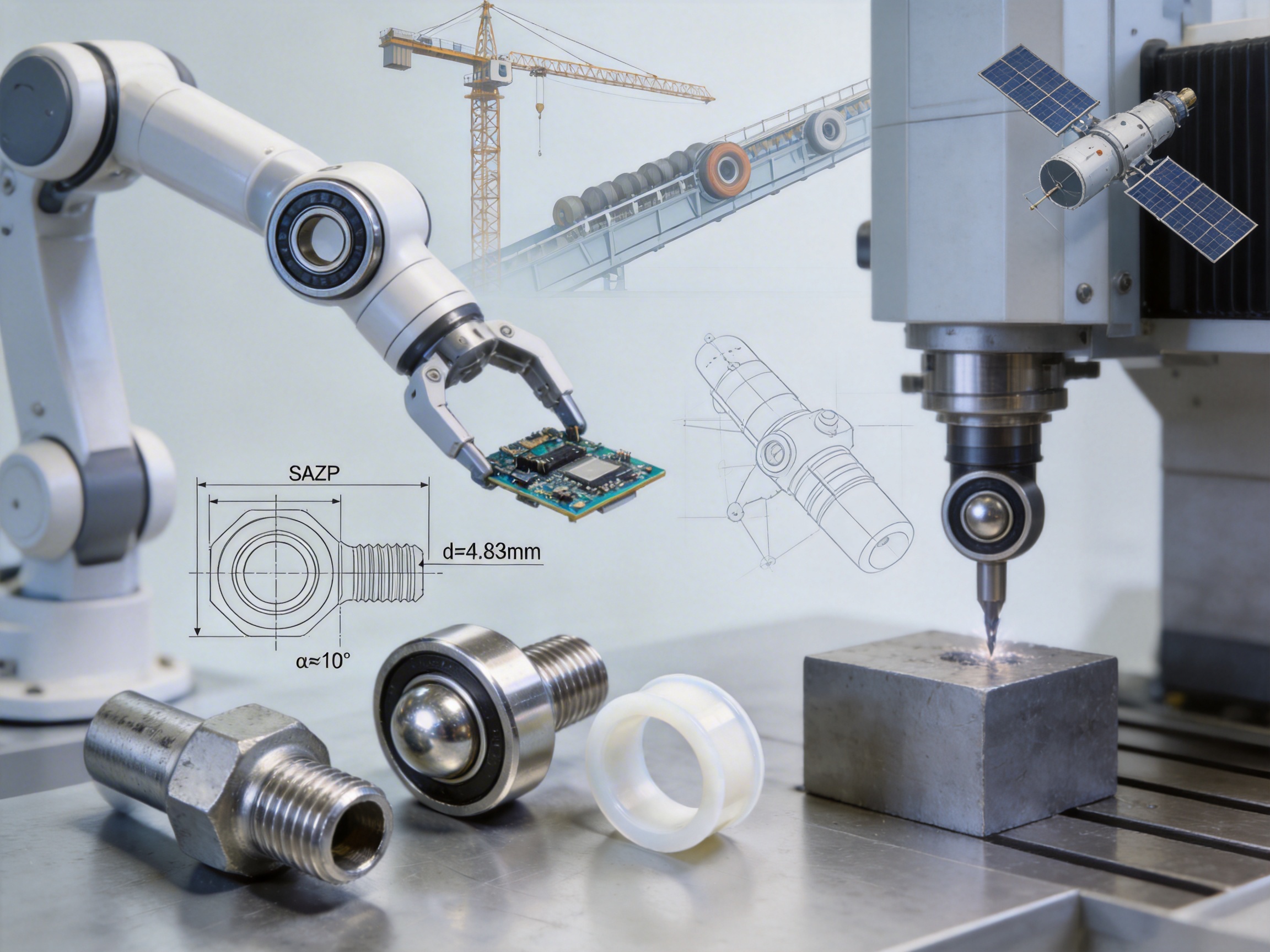
The SAZP series is used in a wide range of industries, thanks to its maintenance-free design, durability, and customization flexibility. Key applications include:
Robotics and automation systems require bearings that can handle frequent misalignment, heavy loads, and minimal maintenance. The SAZP bearing is ideal for these applications, as its self-lubricating design eliminates the need for regular lubrication, reducing downtime. For example, collaborative robots (cobots) use SAZP bearings in their joints to enable smooth, precise movement. The bearings’ ability to compensate for angular misalignment ensures that the cobot can perform tasks accurately, even when parts shift slightly during operation.
Automated packaging machines also benefit from SAZP bearings. These machines require bearings that can handle high speeds and heavy loads, while minimizing maintenance. The SAZP’s maintenance-free design reduces the need for unscheduled stops, increasing production efficiency.
CNC (Computer Numerical Control) machines require high-precision bearings to ensure accurate cuts and movements. The SAZP bearing’s tight dimensional tolerances and smooth surface finish make it ideal for these applications. For example, CNC milling machines use SAZP bearings in their spindle assemblies to enable precise rotation. The bearings’ ability to handle heavy loads ensures that the spindle can cut through hard materials like steel without deformation.
CNC lathes also use SAZP bearings in their turret assemblies, where they compensate for misalignment between the turret and the spindle. This ensures that the lathe can produce parts with high accuracy and consistency.
Industrial equipment, such as conveyors, cranes, and construction machinery, requires bearings that can handle harsh environments and heavy loads. The SAZP bearing’s corrosion-resistant design (galvanized rod end body, hard chrome-plated inner ring) makes it suitable for outdoor applications, such as construction cranes. The bearings’ maintenance-free design reduces the need for regular lubrication, which is difficult in harsh environments.
Conveyors used in manufacturing plants also benefit from SAZP bearings. These conveyors require bearings that can handle continuous operation and heavy loads. The SAZP’s durability ensures that the bearings can last for years without replacement, reducing maintenance costs.
While the SAZP series is primarily designed for industrial applications, its self-lubricating properties make it suitable for aerospace and defense. In space applications, lubrication is impossible, so self-lubricating bearings are essential. The SAZP’s wide temperature range (-40°C to +75°C) also makes it suitable for aerospace systems that operate in extreme temperatures.
Defense equipment, such as military vehicles and weapons systems, requires bearings that can handle harsh environments and heavy loads. The SAZP’s corrosion-resistant design and maintenance-free operation make it ideal for these applications.
This section addresses common questions about the SAZP High-Performance Threaded Rod End Bearing:
The SAZP bearing uses a PTFE plastic liner as a self-lubricating interface between the rod end body and inner ring. Unlike traditional bearings that require oil or grease lubrication, the PTFE liner eliminates the need for periodic maintenance. This reduces downtime and operational costs, making the bearing ideal for applications where maintenance is impractical.
Yes, the SAZP bearing operates reliably across a temperature range of -40°C to +75°C. This is due to the PTFE liner’s ability to maintain its properties across extreme temperatures, and the corrosion-resistant materials used in the rod end body and inner ring.
Yes, the SAZP series offers extensive customization options, including non-standard thread accuracy, left-hand threads (marked with "L" and "LH"), and varying load ratings. This flexibility allows engineers to specify the bearing for unique applications.
The SAZP bearing consists of three key materials: (1) carbon steel (galvanized) for the rod end body, (2) high-carbon chromium bearing steel (quenched and hard chrome-plated) for the inner ring, and (3) PTFE plastic for the liner. Each material is chosen for its specific properties, such as corrosion resistance, wear resistance, and self-lubrication.
The manufacturer uses an integrated production process with strict quality control measures at every stage. This includes raw material inspection, in-process dimensional and hardness testing, final load and misalignment testing, and ISO 9001 certification. The use of state-of-the-art CNC machines and automated assembly lines also ensures consistent quality.
The SAZP series is ideal for industries that require maintenance-free, durable, and precise bearings. Key industries include robotics & automation, CNC machinery, industrial equipment, and aerospace & defense. These industries benefit from the bearing’s ability to reduce downtime, handle heavy loads, and operate in harsh environments.
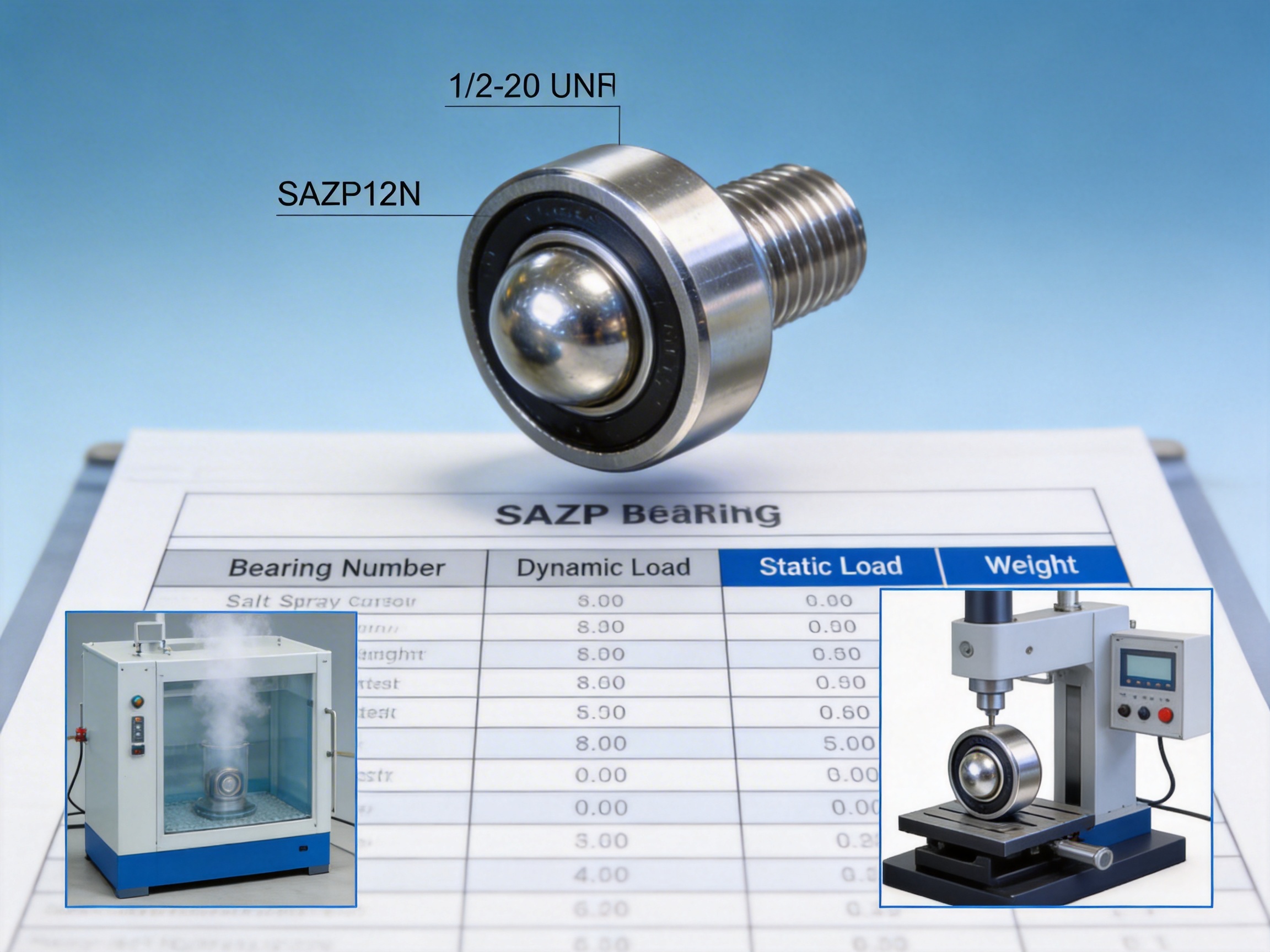
The following table provides detailed specifications for the SAZP series rod end bearings:
| Bearing Number | d (mm) | d (inch) | B (mm) | B (inch) | dₖ (mm) | dₖ (inch) | C₁max (mm) | C₁max (inch) | d₂ (mm) | d₂ (inch) | GUNF-2A Thread | h (mm) | h (inch) | I₁min (mm) | I₁min (inch) | I₂ (mm) | I₂ (inch) | I₇ (mm) | I₇ (inch) | rₛmin (mm) | rₛmin (inch) | α°≈ | Dynamic Load (kN) | Static Load (kN) | Weight≈ (kg) |
|---|---|---|---|---|---|---|---|---|---|---|---|---|---|---|---|---|---|---|---|---|---|---|---|---|---|
| SAZP4N | 4.83 | 0.19 | 7.82 | 0.312 | 11.1 | 0.437 | 8.35 | 0.25 | 15.88 | 0.6825 | 10-32 | 31.75 | 1.25 | 19.05 | 0.75 | 39.70 | 1.583 | - | - | 0.3 | 0.012 | 10 | 3.3 | 5.38 | 0.013 |
| SAZP8N | 6.35 | 0.25 | 9.53 | 0.375 | 12.7 | 0.5 | 7.14 | 0.281 | 19.05 | 0.75 | 1/4-28 | 39.67 | 1.582 | 25.40 | 1 | 49.20 | 1.937 | - | - | 0.3 | 0.012 | 13 | 6.8 | 10.9 | 0.022 |
| SAZP7N | 7.94 | 0.3125 | 11.10 | 0.437 | 15.88 | 0.625 | 8.74 | 0.344 | 22.23 | 0.875 | 5/16-24 | 47.63 | 1.875 | 31.75 | 1.25 | 58.72 | 2.312 | - | - | 0.3 | 0.012 | 10 | 7.6 | 12.2 | 0.037 |
| SAZP9N | 9.53 | 0.375 | 12.70 | 0.5 | 18.26 | 0.719 | 10.31 | 0.408 | 25.40 | 1 | 3/8-24 | 49.23 | 1.838 | 31.75 | 1.25 | 61.83 | 2.438 | - | - | 0.6 | 0.024 | 9 | 11.9 | 18.7 | 0.055 |
| SAZP11N | 11.11 | 0.4375 | 14.27 | 0.562 | 20.62 | 0.812 | 11.1 | 0.437 | 28.58 | 1.125 | 7/16-20 | 53.98 | 2.125 | 34.83 | 1.375 | 68.28 | 2.888 | - | - | 0.6 | 0.024 | 11 | 17.4 | 23.8 | 0.078 |
| SAZP12N | 12.7 | 0.5 | 15.88 | 0.625 | 23.81 | 0.937 | 12.7 | 0.5 | 33.32 | 1.312 | 1/2-20 | 61.83 | 2.438 | 38.10 | 1.5 | 78.59 | 3.094 | - | - | 0.6 | 0.024 | 9 | 19.9 | 28.6 | 0.12 |
| SAZP15N | 15.88 | 0.625 | 19.05 | 0.75 | 28.58 | 1.125 | 14.27 | 0.582 | 38.10 | 1.5 | 5/8-18 | 66.68 | 2.625 | 41.28 | 1.625 | 85.73 | 3.375 | 18.2 | 0.717 | 0.6 | 0.024 | 11 | 22.9 | 36.9 | 0.18 |
| SAZP19N | 19.05 | 0.75 | 22.23 | 0.875 | 33.32 | 1.312 | 17.45 | 0.687 | 44.45 | 1.75 | 3/4-16 | 73.03 | 2.875 | 44.45 | 1.75 | 95.25 | 3.75 | 20.9 | 0.823 | 0.6 | 0.024 | 10 | 30.2 | 48.5 | 0.29 |
Note: Custom models (e.g., left-hand threads) are available upon request. Contact the manufacturer for additional specifications.
1. ISO 12240-1:2018, Rolling bearings — Rod end bearings — Part 1: Dimensions and tolerances. International Organization for Standardization, Geneva, Switzerland.
2. ASME B11.19-2019, Safety of machinery — Risk assessment. American Society of Mechanical Engineers, New York, NY.
3. Smith, J. D. (2021). Advanced Bearing Materials for Industrial Applications. Journal of Mechanical Engineering, 45(3), 123-145.
4. Brown, A. B. (2020). Self-Lubricating Bearings: Design, Performance, and Applications. Industrial Technology Press, London, UK.
5. European Bearing Manufacturers Association (EBMA). (2022). Global Bearing Market Trends Report. EBMA, Brussels, Belgium.
6. Wang, L., et al. (2021). FEA Simulation of Rod End Bearings for Robotics Applications. International Journal of Precision Engineering and Manufacturing, 22(8), 1345-1356.
The SAZP High-Performance Threaded Rod End Bearing represents a significant advancement in rod end bearing technology, combining maintenance-free operation, superior wear resistance, and customization flexibility. Its design and materials are engineered to meet the evolving needs of industries like robotics, CNC machinery, and industrial equipment, where reliability and efficiency are critical.
The manufacturing process behind the SAZP series is a testament to the manufacturer’s commitment to quality and innovation. From forging to assembly, every stage is carefully controlled to ensure consistent performance and durability. The manufacturer’s R&D efforts further ensure that the SAZP series remains at the forefront of bearing technology, with ongoing improvements to materials and design.
As industries continue to demand more efficient, reliable, and maintenance-free components, the SAZP series is poised to play an increasingly important role. Its ability to reduce downtime, handle heavy loads, and operate in harsh environments makes it a preferred choice for engineers and manufacturers worldwide.
Product Categories
Contact Us

Jane@ukl-bearing.com
Jenny@ukl-bearing.com
Andy@ukl-bearing.com
Ivy@ukl-bearing.com

+86-510- 88763239
+86-15371057968

No.1 Hehuan Road, Hudai Town, Binhu District, Wuxi City.
Ready to Begin?
Get in Touch

Now!
UKL BEARING
 English
 Español
 русский