Content
Four-point contact angular contact ball bearings are a cornerstone of modern industrial engineering, enabling efficient, reliable operation across sectors from robotics to aerospace. Unlike traditional bearing designs, these units balance compactness, dual-direction axial load capacity, and radial load accommodation—qualities that make them indispensable in applications where space and performance are critical. This article explores their technical advantages, advanced manufacturing processes, key specifications, real-world applications, and answers to common questions, providing a comprehensive overview of their role in global industry.
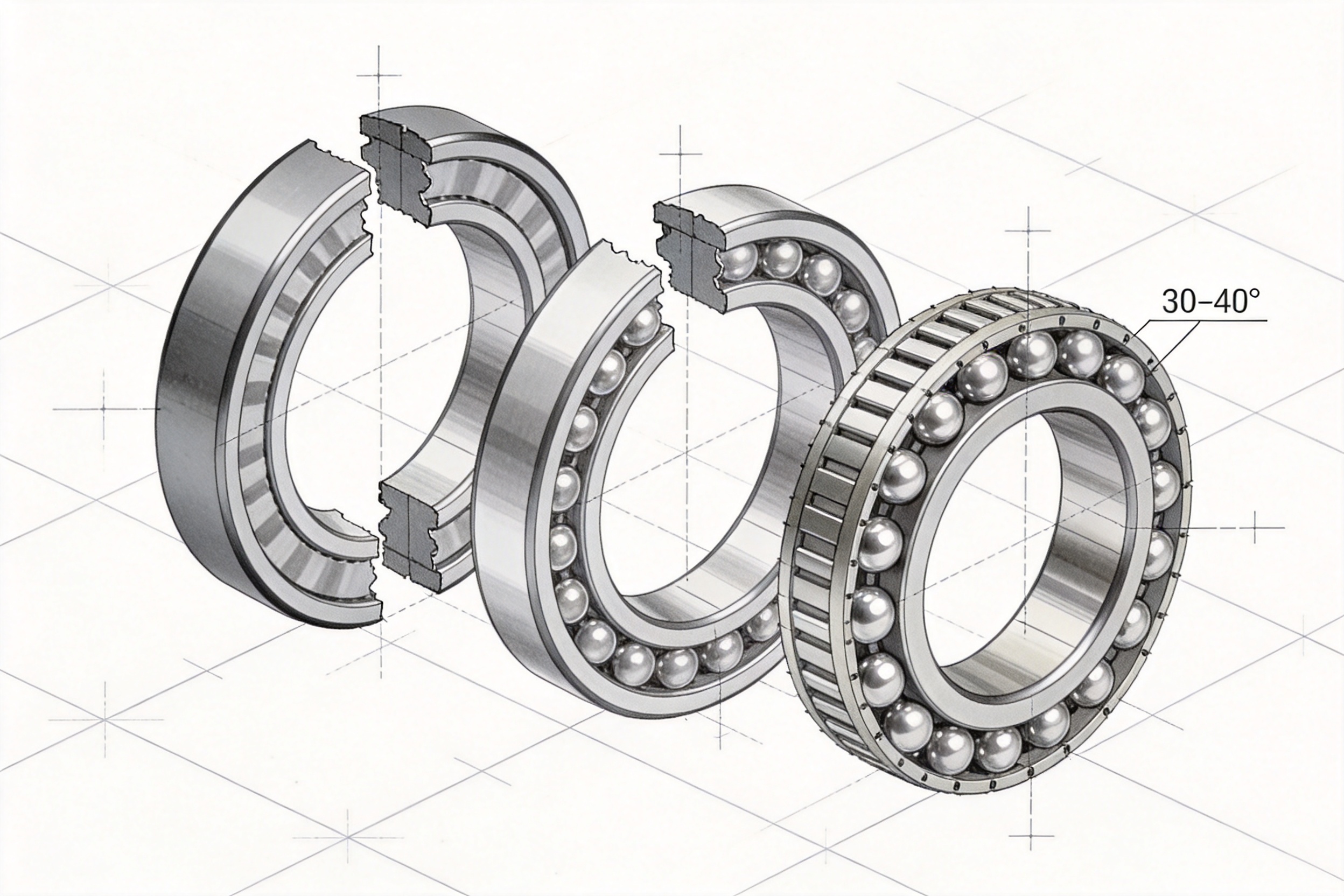
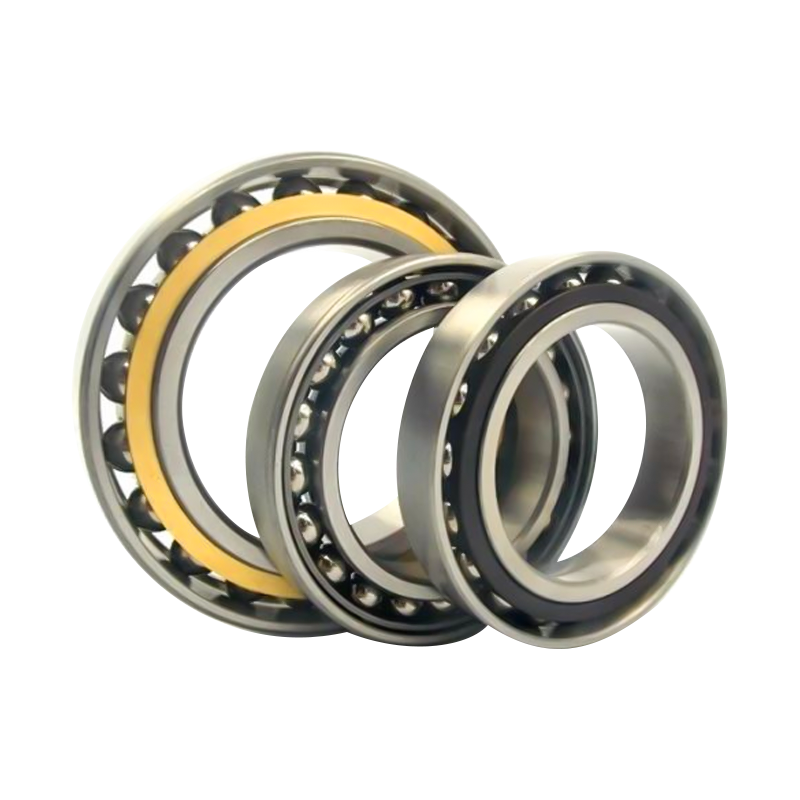
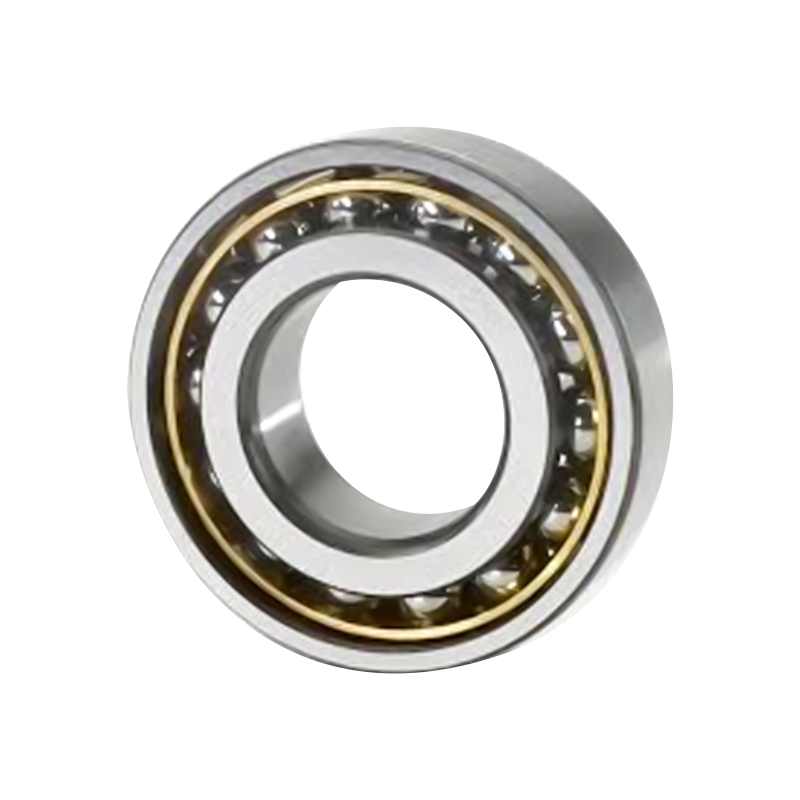
Four-point contact angular contact ball bearings are single-row bearings defined by three core components: a split inner ring, a solid outer ring, and a precision ball-and-cage assembly. The split inner ring is their most distinguishing feature: it allows for the insertion of a larger number of balls than solid-ring designs, significantly boosting load-carrying capacity without increasing the bearing’s overall size. This design also enables separate installation of inner and outer rings, simplifying assembly in tight or inaccessible spaces.
Technically, these bearings support axial loads in both directions (tension and compression) and moderate radial loads. Their contact angle—typically 30–40 degrees—optimizes load distribution: a higher angle prioritizes axial load handling, while a lower angle enhances radial capacity. This flexibility makes them a versatile alternative to paired single-row bearings or double-row designs, which often require more space and complex assembly.
The ball-and-cage assembly is engineered to minimize friction and wear. Cages are usually made from polyamide (nylon) for light-duty applications or steel for heavy loads, ensuring consistent ball spacing and preventing contact between adjacent balls. This reduces heat generation and extends the bearing’s service life, even under continuous high-load operation.
Four-point contact bearings outperform traditional alternatives in several critical areas, making them a superior choice for modern industrial systems:
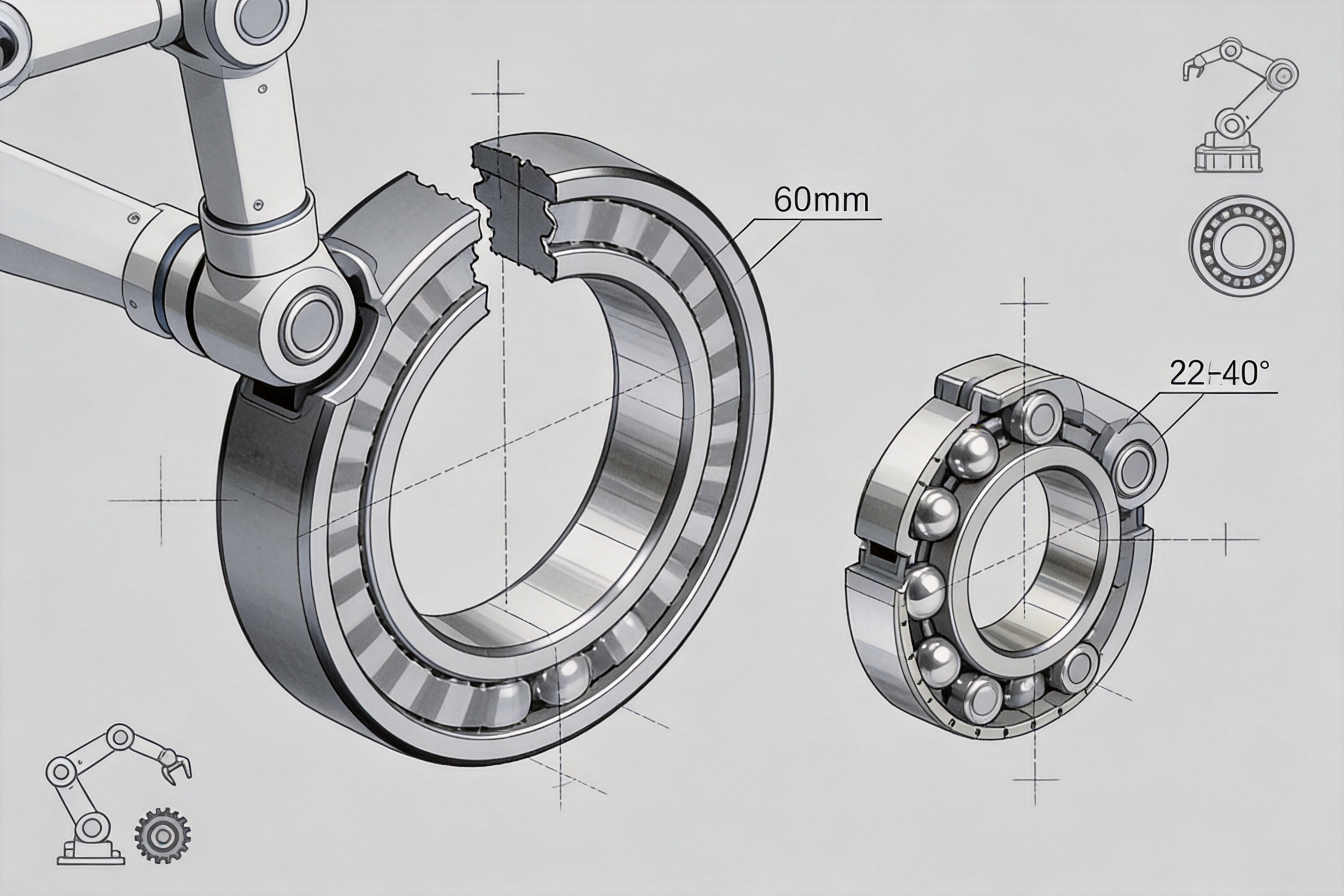
Double-row angular contact bearings are often used for dual-direction axial support, but their two rows of balls require significantly more axial space. For example, a double-row bearing with a 60mm bore may have a width of 30mm, while a four-point contact bearing of the same bore can achieve the same load capacity with a 22mm width—a 27% reduction. This space savings is transformative for applications like robotic joints, where every millimeter of compactness improves maneuverability and payload capacity.
In robotic arm design, this compactness allows engineers to reduce joint size by up to 25%, enabling the arm to reach tighter spaces and handle heavier payloads without sacrificing precision. For instance, a collaborative robot (cobot) manufacturer reported a 15% increase in payload capacity after switching from double-row to four-point contact bearings in its wrist joint.
Unlike single-row angular contact bearings (which handle axial loads in only one direction), four-point contact bearings support loads in both directions. This eliminates the need for paired bearings (e.g., back-to-back or face-to-face configurations), simplifying assembly and reducing component count. For gearbox applications, this means fewer parts to maintain and a lower risk of misalignment—critical for long-term reliability.
In automotive differentials, four-point contact bearings replace paired single-row bearings, reducing assembly time by 10% and improving torque transmission efficiency. The dual-direction capacity also handles the axial loads from shock absorbers during vehicle acceleration and braking, ensuring smooth operation.
The split inner ring allows the inner and outer rings to be installed separately—ideal for applications where the shaft or housing is inaccessible. For example, in a robotic wrist joint, the outer ring can be mounted in the housing first, followed by the inner ring halves on the shaft, without disassembling the entire joint. This simplifies maintenance: technicians can replace a bearing in 30 minutes instead of several hours, minimizing downtime for industrial robots.
Bevel gears transmit power at an angle, creating both radial and axial loads on bearings. Four-point contact bearings are perfectly matched to these systems: their dual-direction axial capacity and radial load accommodation eliminate the need for additional bearings. In wind turbine gearboxes, this compatibility reduces component count by 15% and improves efficiency, as fewer parts mean less friction and energy loss.
Leading manufacturers offer custom four-point contact bearings to meet niche requirements. This includes modifications like:
For aerospace applications, custom bearings with solid lubricants (e.g., molybdenum disulfide) are used to withstand extreme temperatures and vacuum conditions, where liquid lubricants are not feasible.
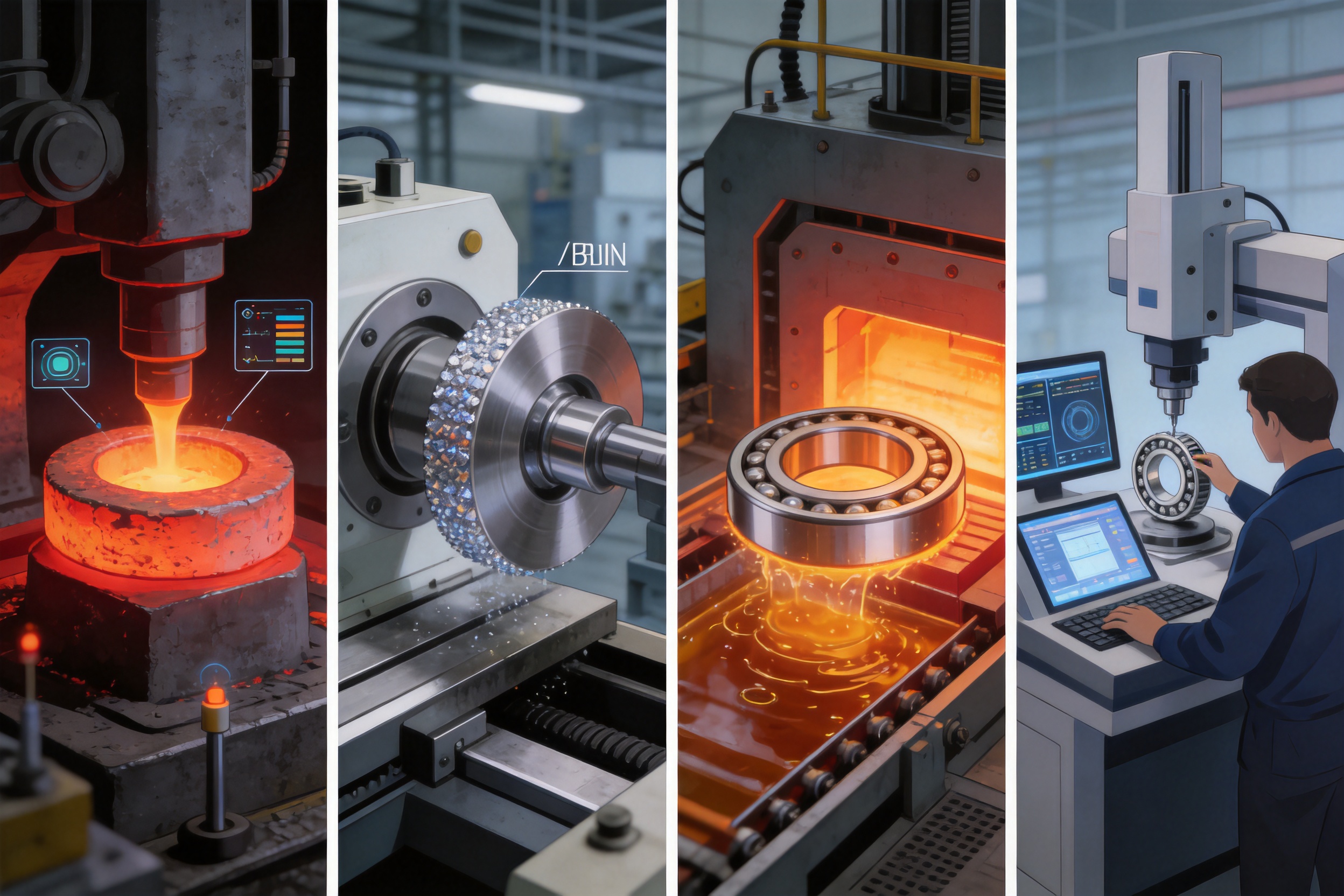
The performance of four-point contact bearings depends on precision manufacturing. Leading manufacturers employ an integrated, data-driven process that covers every stage from raw material selection to final packaging:
High-quality bearing steel (AISI 52100 chrome steel or AISI 440C stainless steel) is the foundation of durable bearings. These materials are chosen for their high hardness (60–64 HRC after heat treatment), wear resistance, and fatigue strength. Forging aligns the steel’s grain structure, improving mechanical properties and reducing internal defects.
During forging, steel is heated to 1100°C (for chrome steel) and pressed into dies using hydraulic presses. This step creates rough ring shapes with consistent density, critical for subsequent machining. IoT sensors monitor forging temperature and pressure in real time, ensuring every part meets dimensional standards.
CNC turning machines shape rough rings into precise dimensions, with tolerances as tight as ±0.001mm. For split inner rings, special machining ensures the two halves fit together perfectly—no gaps that could misalign balls. Grinding is the most critical step: CNC grinding machines use diamond/CBN wheels to achieve raceway surface roughness of <0.1μm Ra, minimizing friction and wear.
Digital production control is key here: sensors in grinding machines measure surface finish, feed rate, and wheel temperature. Data is fed to a central system, which adjusts parameters automatically to maintain consistency. This reduces human error and ensures every bearing meets ISO 15 tolerance standards.
Heat treatment hardens the rings: quenching (oil/water) creates a hard surface, while tempering reduces brittleness. For high-load applications, case hardening (carbon-rich atmosphere) creates a hard surface with a tough core. After heat treatment, rings undergo ultrasonic testing to detect internal defects like cracks or porosity.
Assembly involves aligning inner ring halves, inserting the ball-and-cage assembly, and securing components. Quality control includes:
Modern manufacturers prioritize sustainability: steel scrap is recycled (reducing raw material use by 20%), energy-efficient furnaces cut consumption by 30%, and water recycling systems reduce usage by 80%. Biodegradable lubricants are used for environmentally sensitive applications.
Packaging uses corrosion-resistant VCI paper and foam inserts to protect bearings during shipping. Detailed documentation (specs, installation guides, warranties) accompanies each shipment, ensuring proper use and maintenance.
Below is a table of key specifications for selected four-point contact bearings, based on industry-standard data:
| Designation | Bore Diameter (mm) | Outside Diameter (mm) | Width (mm) | Basic Dynamic Load Rating (kN) | Limiting Speed (r/min) |
|---|---|---|---|---|---|
| QJ 212 | 60 | 110 | 22 | 95.6 | 10000 |
| QJ 308 MA | 40 | 90 | 23 | 78 | 14000 |
| QJ 1064 N2MA/C4 | 320 | 480 | 74 | 715 | 2000 |
| QJ 230 N2MA/C3 | 150 | 270 | 45 | 400 | 4000 |
| PER.BB205RPP13 | 16.129 | 53.086 | 19.43 | 26.2 | N/A |
Notes: The basic dynamic load rating (C) is the load for a 1-million-revolution rating life (L10). Limiting speed is the maximum continuous speed without overheating. N/A indicates speed is not a primary design factor for the application.
Four-point contact bearings are used across industries where compactness, load capacity, and precision are critical:
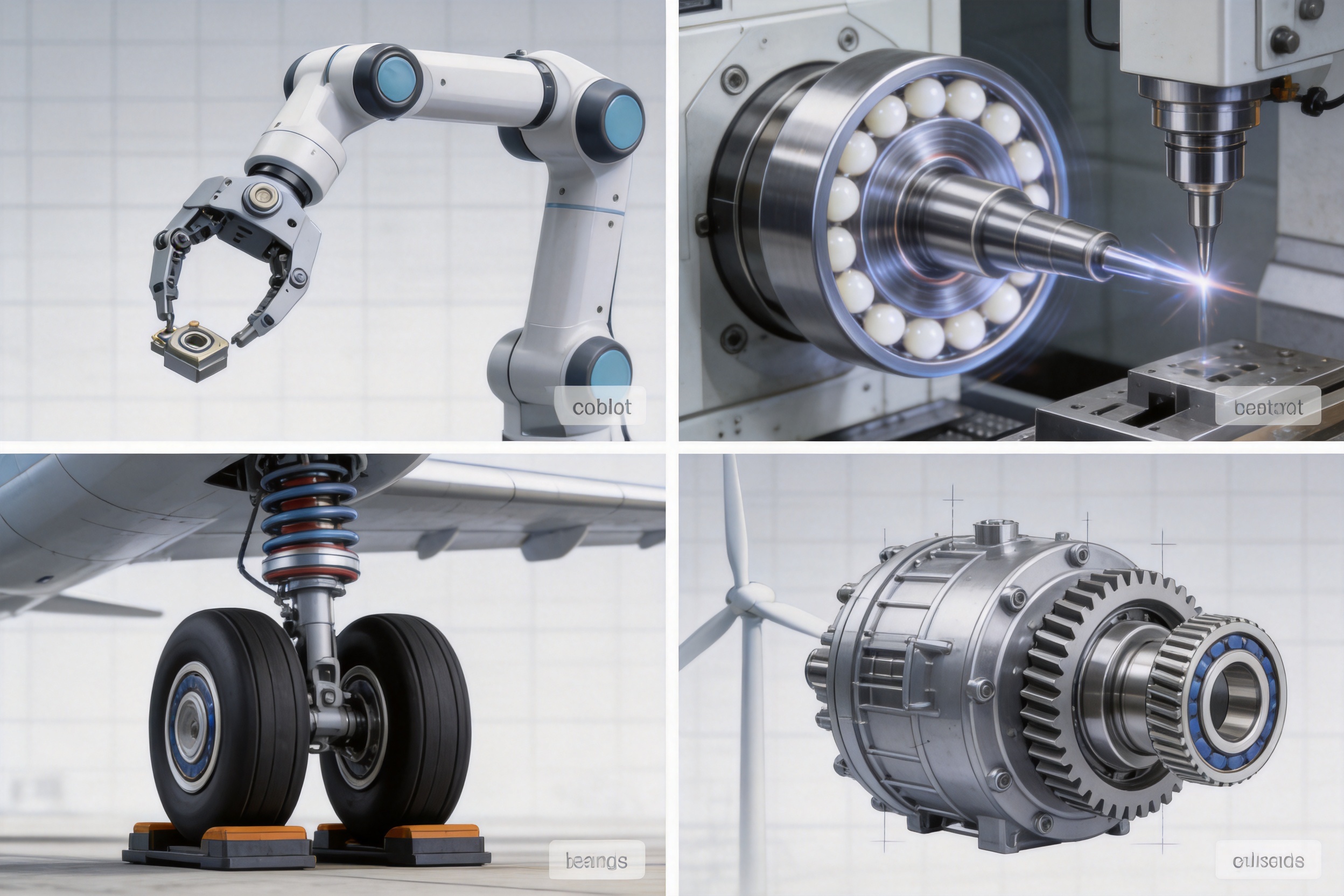
Robotic arms and joints rely on these bearings for smooth, precise movement. In cobot wrists, they enable 6-axis rotation while supporting payloads up to 10kg. The split inner ring simplifies assembly, reducing manufacturing time by 10%. For example, a factory automation company reported a 25% increase in cobot sales after switching to four-point contact bearings, as customers valued the improved maneuverability.
CNC spindle assemblies use these bearings to support high-speed rotation (up to 14,000 r/min) and axial cutting forces. Their compact design reduces spindle size, improving rigidity and reducing vibration—resulting in 15% higher machining accuracy. Ceramic-ball bearings are used for high-speed applications, reducing friction and heat generation.
In aircraft landing gear, four-point contact bearings support the aircraft’s weight during takeoff/landing and handle axial loads from shock absorbers. Stainless steel bearings with solid lubricants are used for corrosion resistance and vacuum compatibility. For example, a commercial aircraft manufacturer uses these bearings in its landing gear, reducing maintenance costs by 20% due to their long service life.
Surgical robots use stainless steel bearings with labyrinth seals to withstand sterilization. Their compactness allows for precise movements in minimally invasive procedures. A medical device company reported that these bearings improved the accuracy of its surgical robot by 10%, reducing patient recovery time.
Wind turbine gearboxes use four-point contact bearings to support bevel gears, handling high torque and axial loads. Their durability reduces gearbox maintenance, which is critical for offshore wind farms where access is limited. A wind energy company reported a 30% reduction in gearbox downtime after switching to these bearings.
Below are answers to common questions about four-point contact bearings:
A: The QJ 1080 N2MA bearing has a rating of 904 kN, suitable for heavy-duty gearboxes. Smaller bearings like QJ 203 N2MA have 17 kN, ideal for robotic joints.
A: Yes—they support dual-direction axial loads and moderate radial loads, making them versatile for gearboxes and robotic arms.
A: Yes—manufacturers offer custom cages (stainless steel), seals (labyrinth), and materials (ceramic) for niche applications.
A: Chrome steel (AISI 52100) for standard apps; stainless steel (AISI 440C) for corrosion resistance; ceramic balls for high speed.
A: They require 20–30% less axial space, enabling compact designs for robotics and CNC machines.
A: Under optimal conditions (proper lubrication, clean environment), they last 5,000–10,000 hours. The L10 rating (1 million revolutions) is a standard measure of fatigue life.
A: Yes—high-temperature steel (AISI M50) and synthetic lubricants (polyurea grease) allow operation up to 200°C. Solid lubricants are used for extreme temps.
A: Steps include cleaning shaft/housing, mounting outer ring, aligning inner halves, inserting ball assembly, securing inner ring, and lubricating. Follow manufacturer instructions to avoid damage.
1. ISO 281:2007, Rolling bearings—Dynamic load ratings and rating life.
2. ISO 15:2017, Rolling bearings—Tolerances.
3. Harris, T. A., & Kotzalas, M. N. (2007). Rolling Bearing Analysis: Advanced Concepts (5th ed.). CRC Press.
4. SKF Group. (2020). Four-Point Contact Ball Bearings: Technical Handbook.
5. NSK Ltd. (2019). Angular Contact Ball Bearings: Application Guide.
6. International Federation of Robotics (IFR). (2021). Robotics in Manufacturing: Trends & Applications.
7. American Wind Energy Association (AWEA). (2022). Wind Turbine Gearbox Maintenance Best Practices.
Product Categories
Contact Us

Jane@ukl-bearing.com
Jenny@ukl-bearing.com
Andy@ukl-bearing.com
Ivy@ukl-bearing.com

+86-510- 88763239
+86-15371057968

No.1 Hehuan Road, Hudai Town, Binhu District, Wuxi City.
Ready to Begin?
Get in Touch

Now!
UKL BEARING
 English
 Español
 русский