Content
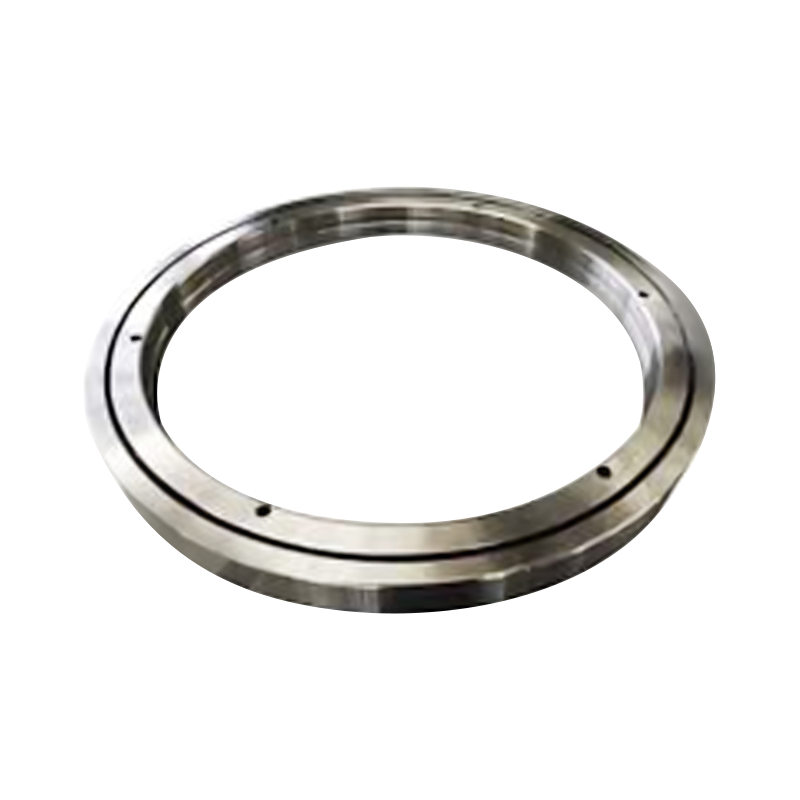
In precision motion engineering, the bearing is not merely a supporting component; it is the element that determines rigidity, positioning accuracy, service stability, and the long-term reliability of the entire rotating mechanism. The RAU Integrated Cross Roller Bearing is designed for applications where compact structure, high stiffness, smooth rotation, and reliable load handling must coexist in a limited installation space. It is especially suitable for robot joints, medical equipment, aerospace mechanisms, communication radar, weather radar, precision indexing tables, precision machine tools, optical equipment, and testing instruments that demand stable rotary performance.
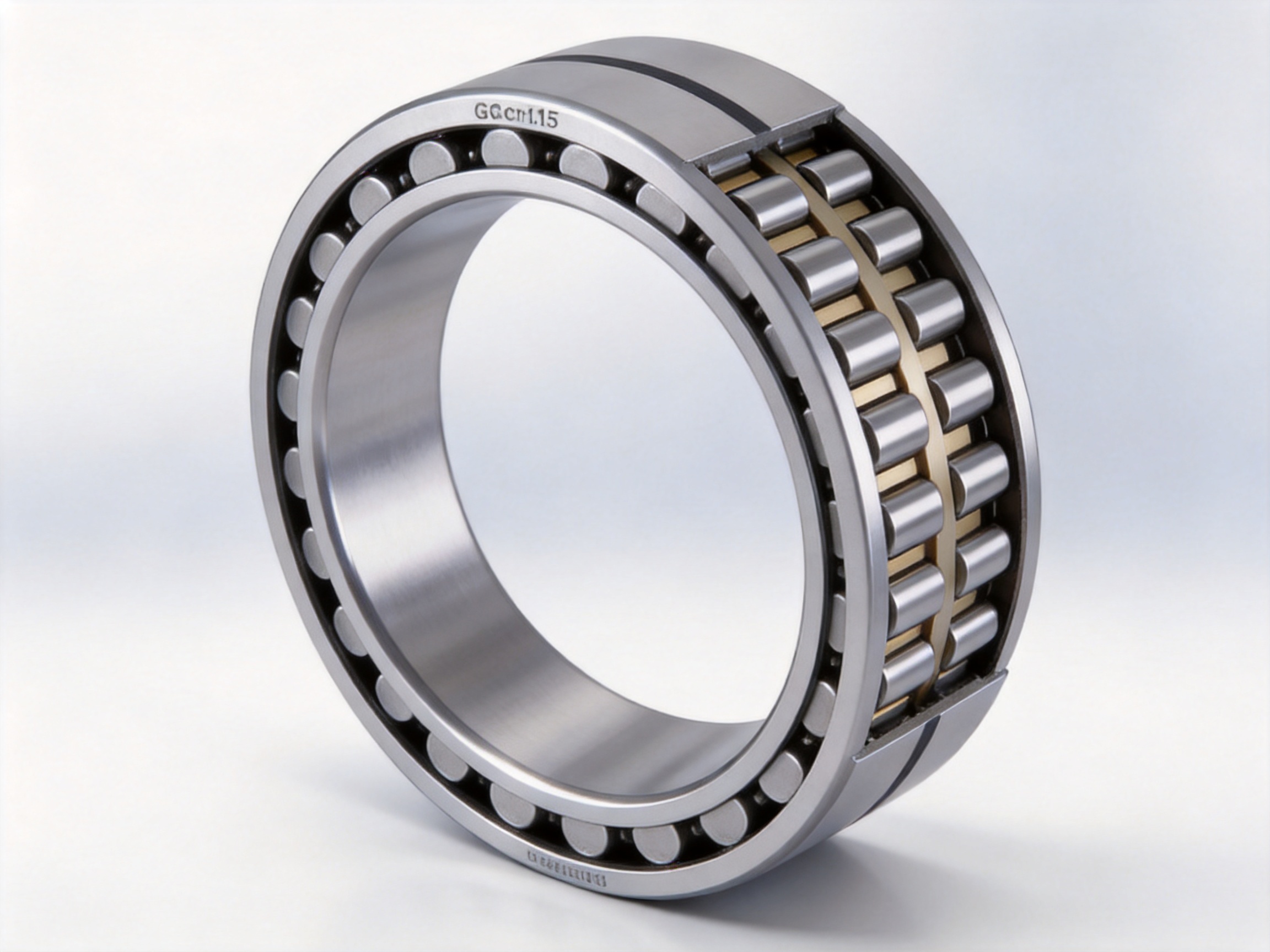
This product belongs to the cross roller bearing category, a bearing type known for arranging cylindrical rollers alternately at right angles between the inner and outer rings. This unique rolling element arrangement allows one bearing to support radial loads, axial loads in both directions, and overturning moments at the same time. Compared with conventional bearing combinations, the RAU Integrated Cross Roller Bearing provides higher rigidity in a thinner, lighter, and more installation-friendly structure.
UKL Bearing Manufacturing Co., Ltd. manufactures this bearing series with a strong emphasis on precision processing, material stability, controlled heat treatment, accurate grinding, strict assembly, and consistent quality inspection. With integrated production capabilities covering forging, turning, heat treatment, grinding, assembly, and packaging, the company provides customers with bearings that are suitable for demanding industrial automation and precision equipment environments.
RAU Integrated Cross Roller Bearing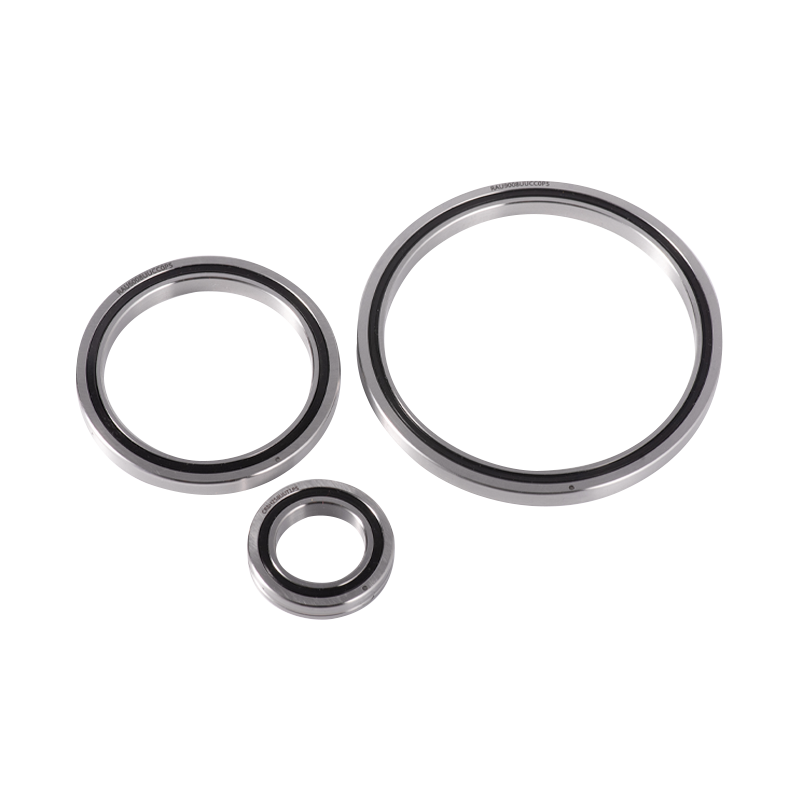
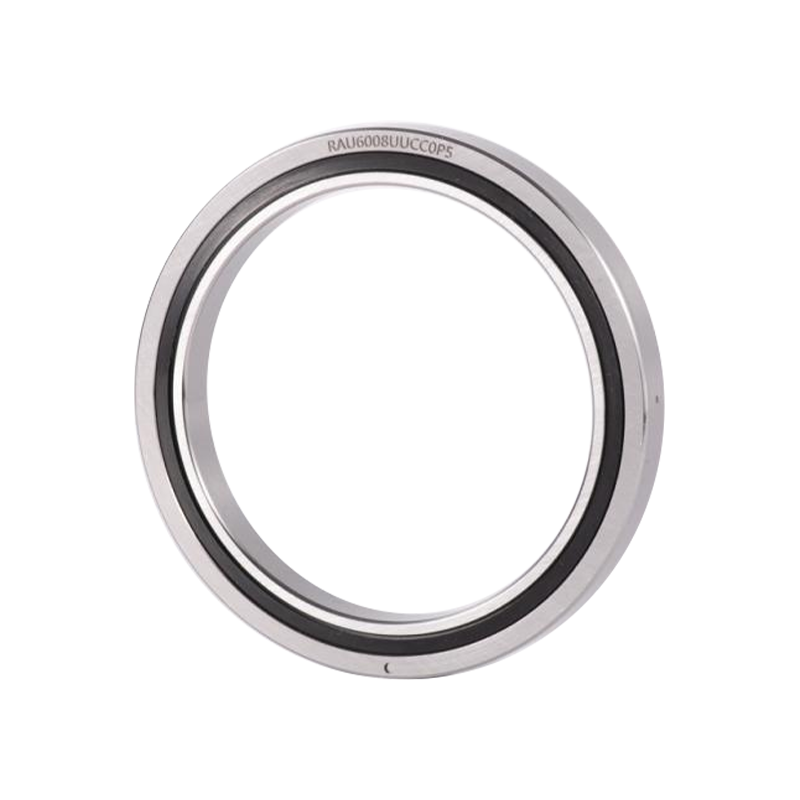
The RAU Integrated Cross Roller Bearing is an integrated crossed roller bearing with both inner and outer rings designed to support compact installation. Because the bearing has an extremely small cross-sectional area, it helps engineers reduce the size and weight of the mechanical structure without sacrificing rigidity. This feature is highly valuable in robot arms, rotary stages, radar antenna drives, measuring devices, and precision indexing systems where every millimeter of space matters.
The integrated inner and outer ring construction makes the bearing suitable for both inner ring rotation and outer ring rotation. This flexibility simplifies design work and allows the same bearing concept to be applied to different mechanical layouts. In addition, thinner versions with 5 mm width and compatible RA-type designs are available, allowing users to select a configuration that fits ultra-compact assemblies. The thinner series begins from ultra-small sizes with an inner diameter of 10 mm, supporting miniaturized precision equipment and compact automation modules.
In operation, the cross roller arrangement creates a large effective contact area and a stable load path. Rollers positioned at 90 degrees to each other can handle complex combined loads that would otherwise require multiple bearing sets. The result is a compact bearing that can replace paired angular contact ball bearings, tapered roller bearing combinations, or separate radial and thrust bearing arrangements in many precision systems.
The RAU series is particularly valuable when the application requires high stiffness. Stiffness refers to the bearing’s force capacity per unit deformation. RAU types can reach approximately 300 to 800 N/μm, which is far higher than many ordinary angular contact ball bearings, which are often around 50 to 150 N/μm. This improved rigidity helps reduce deflection under external load, maintain alignment, improve positioning repeatability, and prevent clearance-related instability during startup under heavy load.
High stiffness is one of the most important advantages of the RAU Integrated Cross Roller Bearing. In precision machinery, even a small amount of elastic deformation can cause positioning errors, vibration, poor surface quality, or unstable measurement results. The cross roller structure distributes loads efficiently and resists deformation from radial, axial, and moment forces. This makes the bearing a preferred solution for rotary indexing tables, robotic joints, machine tool swiveling axes, and measuring instrument stages.
Compared with ordinary angular contact ball bearings, the stiffness advantage is significant. Angular contact ball bearings use ball elements that contact the raceway at relatively small contact areas. While they are suitable for high-speed rotation and moderate precision applications, they may require paired or multiple arrangements to achieve sufficient combined-load capacity. The RAU Integrated Cross Roller Bearing can achieve high structural rigidity in a single bearing, reducing the number of components and simplifying assembly.
The mainstream precision classes for the RAU Integrated Cross Roller Bearing are P4 and P5 according to ISO-related accuracy expectations. These accuracy classes are suitable for equipment that requires stable rotational performance and limited runout. With rotational error that can be controlled to approximately ±2 μm depending on specifications and installation quality, this bearing type is suitable for precision measuring instruments, five-axis machining centers, optical tables, and high-grade automation equipment.
Accuracy is not only determined by the bearing itself. It also depends on shaft precision, housing accuracy, mounting surface flatness, installation torque, preload control, lubrication condition, and operating temperature. However, the high manufacturing accuracy of the RAU bearing provides a strong foundation. When matched with an appropriate installation structure, it helps the entire system maintain repeatable and smooth movement over long operating periods.
The RAU Integrated Cross Roller Bearing has a very small cross-sectional area, allowing designers to reduce the diameter difference between the shaft and housing. This is particularly important in equipment where compactness directly improves performance. In robot joints, a thinner bearing can help reduce joint volume and moment of inertia. In medical equipment, compact rotation modules can improve device portability and responsiveness. In radar and optical systems, lower structural mass supports smoother and more energy-efficient movement.
Lightweight design is not only about reducing total mass. It also affects acceleration, deceleration, vibration behavior, motor size, energy consumption, and dynamic response. By replacing larger bearing combinations with a thin-section cross roller bearing, engineers may reduce the load on drive components and improve the overall mechanical efficiency of the system.
Depending on size and lubrication method, the typical limiting speed of the RAU Integrated Cross Roller Bearing is approximately 2,000 to 6,000 rpm. In most precision positioning and oscillating applications, the operating speed is far below this range, meaning the bearing can provide stable performance with appropriate lubrication and mounting conditions. Low-friction grease helps reduce heat generation and supports smooth motion in continuous or intermittent duty cycles.
While cross roller bearings are often selected for rigidity and precision rather than extreme speed, the RAU design provides a balanced performance profile. It is suitable for applications that require precise rotation, controlled friction, and reliable load support at moderate speeds.
The bearing is made of GCr15 bearing steel, a widely used high-carbon chromium bearing steel recognized for its hardness, fatigue resistance, and dimensional stability after proper heat treatment. With surface nitriding treatment and hardness reaching HRC 60 or higher, the bearing offers strong wear resistance under suitable operating conditions. In properly lubricated and protected environments, wear life can reach more than 10,000 hours, although actual life is influenced by load, speed, lubrication, contamination, alignment, temperature, and installation quality.
Wear resistance is especially important in precision applications because bearing wear can lead to clearance changes, increased vibration, reduced repeatability, and higher noise. The RAU bearing’s material and surface treatment support long-term stability, making it suitable for equipment that must operate reliably over extended service cycles.
The following table presents representative specifications from the RAU Integrated Cross Roller Bearing range. Dimensions are shown in millimeters, load ratings are shown in kilonewtons, and weight is shown in kilograms.
| Bearing Type | Inner Diameter d | Outside Diameter D | Roller Pitch Diameter Dpw | Width B/B1 | Chamfer rmin | Shoulder ds | Shoulder Dn | Dynamic Load Cr | Static Load Cor | Weight |
| RAU5008 | 50 | 66 | 57 | 8 | 0.5 | 53.5 | 60.5 | 5.1 | 7.19 | 0.08 |
| RAU6008 | 60 | 76 | 67 | 8 | 0.5 | 63.5 | 70.5 | 5.68 | 8.68 | 0.09 |
| RAU7008 | 70 | 86 | 77 | 8 | 0.5 | 73.5 | 80.5 | 5.98 | 9.8 | 0.10 |
| RAU8008 | 80 | 96 | 87 | 8 | 0.5 | 83.5 | 90.5 | 6.37 | 11.3 | 0.11 |
| RAU9008 | 90 | 106 | 97 | 8 | 0.5 | 93.5 | 100.5 | 6.76 | 12.4 | 0.12 |
| RAU10008 | 100 | 116 | 107 | 8 | 0.5 | 103.5 | 110.5 | 7.15 | 13.9 | 0.14 |
| RAU11008 | 110 | 126 | 117 | 8 | 0.5 | 113.5 | 120.5 | 7.45 | 15.0 | 0.15 |
| RAU12008 | 120 | 136 | 127 | 8 | 0.5 | 123.5 | 130.5 | 7.84 | 16.5 | 0.17 |
| RAU15008 | 150 | 166 | 157 | 8 | 0.5 | 153.5 | 160.5 | 8.82 | 20.6 | 0.20 |
| RAU16013 | 160 | 186 | 172 | 13 | 0.8 | 165 | 179 | 23.3 | 44.9 | 0.59 |
| RAU18013 | 180 | 206 | 192 | 13 | 0.8 | 185 | 199 | 24.5 | 49.8 | 0.68 |
| RAU20013 | 200 | 226 | 212 | 13 | 0.8 | 205 | 219 | 25.8 | 54.7 | 0.71 |
A major advantage of the RAU Integrated Cross Roller Bearing is its ability to carry radial load, axial load in both directions, and moment load in a single compact unit. Conventional designs often require two angular contact ball bearings arranged back-to-back or face-to-face, or a combination of radial and thrust bearings. Such arrangements increase part count, axial space, assembly complexity, and risk of preload error. The RAU bearing simplifies the design by integrating multi-direction load support into one bearing unit.
This advantage is especially important in rotating joints and indexing mechanisms where moment load is significant. A bearing that resists tilting moment effectively helps maintain the perpendicularity and positional accuracy of the rotating part. For robot arms, this can improve end-effector positioning. For radar systems, it can improve pointing stability. For precision rotary stages, it can improve angular accuracy and repeatability.
Angular contact ball bearings are commonly used in machine tools and precision equipment, but they may not provide enough stiffness in thin-section compact layouts. The RAU Integrated Cross Roller Bearing can reach stiffness levels of approximately 300 to 800 N/μm, which is much higher than many ordinary angular contact ball bearings. This difference allows the RAU bearing to better resist deflection during heavy-load startup and during operation under external forces.
Higher rigidity contributes to better vibration behavior, lower positioning error, and more stable operation. In five-axis machining centers, for example, rotary axis rigidity affects machining accuracy and surface finish. In measuring instruments, rigidity affects repeatability and measurement confidence. In robot joints, rigidity improves path control and reduces compliance error.
Competitor solutions based on bearing pairs often require more axial space. Additional spacers, preload nuts, retaining components, and alignment features may also be necessary. The RAU Integrated Cross Roller Bearing provides high performance in a thin and compact structure, allowing a more efficient machine layout. This is valuable for customers who need to reduce equipment size, create lightweight modules, or integrate bearings into compact rotating units.
The compact cross section also allows engineers to design more direct load paths. Shorter load paths generally improve stiffness and reduce structural distortion. As a result, the bearing does not only save space; it can also improve the mechanical behavior of the complete assembly.
When multiple bearings are used to carry combined loads, the assembler must carefully control preload, spacing, axial clamping force, and alignment. Errors can lead to excessive heat, high friction, poor accuracy, or early failure. With the RAU Integrated Cross Roller Bearing, much of the load-carrying function is integrated into one precision component. This reduces assembly steps and supports more consistent final performance.
In mass production environments, assembly simplification can reduce labor time, improve repeatability, and lower total manufacturing cost. In maintenance environments, a compact integrated bearing can make replacement easier and reduce adjustment requirements. These benefits are important for automation system builders, machine tool manufacturers, and OEMs that value consistent quality.
Some thin-section bearings offer compactness but may not provide enough stiffness or combined-load capacity. Some heavy-duty bearings provide strength but require large installation space. The RAU Integrated Cross Roller Bearing balances compact size, high rigidity, precision accuracy, and practical speed capability. This balance makes it competitive in applications where the bearing must be small, accurate, strong, and reliable at the same time.
Robot joints require bearings that are compact, rigid, and capable of handling complex loads. During robot motion, the joint bearing may experience radial forces, axial forces, and overturning moments generated by arm weight, payload, acceleration, deceleration, and external contact. The RAU Integrated Cross Roller Bearing supports these combined loads while maintaining a thin and lightweight design.
In industrial robots, stiffness affects positioning accuracy and repeatability. In collaborative robots, compactness and smooth rotation contribute to safer and more responsive movement. In precision assembly robots, low deformation supports high process consistency. The RAU bearing is therefore suitable for robotic systems used in welding, assembly, handling, inspection, and intelligent automation.
Medical devices often require quiet, smooth, and accurate motion. Imaging equipment, surgical positioning systems, laboratory automation devices, and precision scanning mechanisms can benefit from a bearing that combines compact structure with high rotational accuracy. The RAU Integrated Cross Roller Bearing helps designers create smaller and more stable rotating modules without compromising load capacity.
In medical environments, reliability is essential. A bearing with high wear resistance, stable preload behavior, and precision manufacturing can support long-term equipment performance. Smooth rotation also improves user experience and helps reduce vibration-related measurement errors.
Aerospace mechanisms often require low weight, high reliability, and stable performance under demanding conditions. Compact cross roller bearings can be used in positioning mechanisms, optical assemblies, antenna systems, test equipment, and aerospace ground support systems. The RAU bearing’s thin section and high rigidity make it suitable for motion systems where weight and space are controlled carefully.
Although aerospace applications require detailed engineering verification, material control, environmental testing, and application-specific validation, the RAU bearing design provides a strong mechanical foundation for precision rotary support.
Communication radar, weather radar, and related antenna systems require precise pointing and stable rotation. Bearings used in these systems must handle moment loads caused by antenna structures, wind loads, and motion acceleration. The RAU Integrated Cross Roller Bearing helps maintain rotary stability, reducing angular deviation and supporting accurate signal direction control.
For radar and optical telescope applications, stiffness and rotational accuracy are essential. A bearing with low deformation can help maintain alignment, while smooth motion supports accurate tracking. The RAU bearing is suitable for systems that require precise controlled rotation over long service periods.
Indexing tables used in machining, inspection, welding, and assembly require high positioning accuracy and strong resistance to moment loads. A compact cross roller bearing allows the table to remain rigid during clamping, cutting, measuring, or welding operations. The RAU Integrated Cross Roller Bearing supports stable positioning and can help reduce table height, making machine design more compact.
In multi-station welding machines, the bearing must tolerate repeated indexing, load changes, and external forces. High stiffness and wear resistance help maintain the indexing table’s performance over time, supporting consistent product quality.
Five-axis machining centers, grinding machines, rotary tables, and precision spindles require bearing solutions that provide accuracy and rigidity. The RAU Integrated Cross Roller Bearing is suitable for rotary axes where combined loads and moment resistance are important. Its precision class and high stiffness help machine tools maintain geometric accuracy during machining.
Compared with larger bearing arrangements, the thin-section design enables compact rotary axis structures. This can improve dynamic response and reduce the mass that the drive system must accelerate. In high-performance machine tools, such design improvements can contribute to faster positioning and improved machining quality.
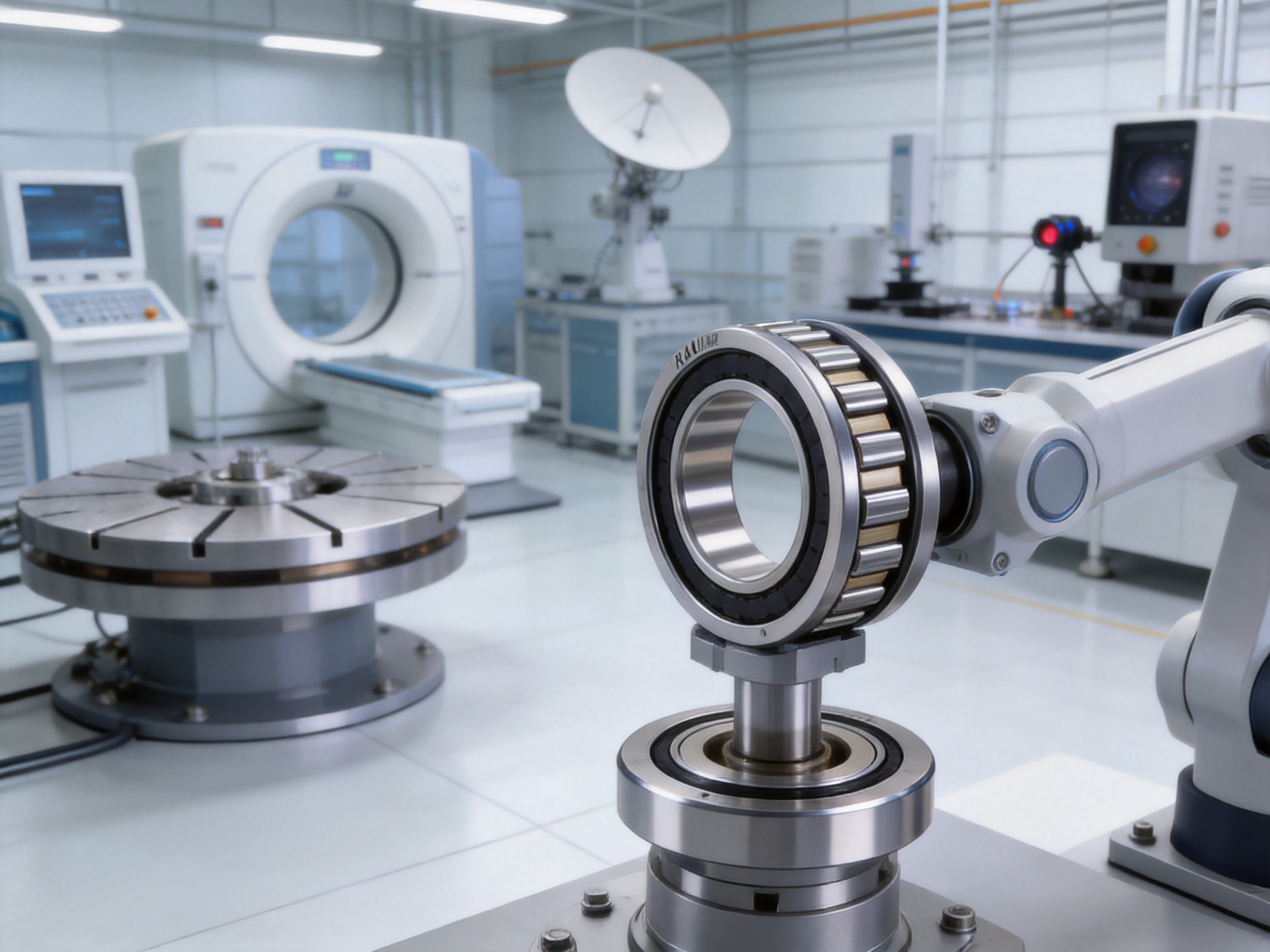
UKL Bearing Manufacturing Co., Ltd. operates as an integrated manufacturer and trader with production capabilities covering multiple key processes. The company’s manufacturing system includes forging, turning, heat treatment, grinding, assembly, and packaging. This integrated process control is important because the performance of a precision bearing depends on the consistency of every production stage.
Forging establishes the initial material structure and ring blank quality. Turning creates the basic geometry. Heat treatment determines hardness, fatigue strength, and dimensional stability. Grinding produces the precision raceway and dimensional accuracy. Assembly controls roller arrangement, clearance, and smooth rotation. Packaging protects the bearing from contamination and corrosion before installation. By managing these stages together, the company can maintain better quality consistency and respond more effectively to customer requirements.
The RAU Integrated Cross Roller Bearing uses GCr15 bearing steel, selected for its proven strength and fatigue resistance. Material quality is a foundation for bearing life. Clean steel, controlled chemical composition, appropriate heat treatment, and precision surface processing all contribute to reliable performance. For cross roller bearings, raceway quality is especially important because the rollers contact the raceways under concentrated load.
Surface nitriding improves wear resistance and helps the bearing maintain stable performance under repeated rolling contact. Hardness of HRC 60 or higher provides strong resistance to surface damage when lubrication and loading conditions are appropriate. This material and treatment strategy supports applications that require high durability and precision retention.
Grinding is one of the most critical processes in cross roller bearing production. Raceway geometry affects rolling smoothness, load distribution, noise, vibration, and accuracy. In a high-precision bearing, even small deviations can influence rotational performance. UKL’s production approach emphasizes controlled grinding and inspection to ensure that each bearing meets dimensional and rotational requirements.
For RAU bearings, the raceways must support alternately arranged rollers at right angles. Accurate raceway geometry ensures that each roller carries load properly and that the bearing maintains smooth movement. Poor raceway control can lead to uneven load distribution, local stress concentration, and reduced life. Precision grinding therefore directly supports the product’s stiffness, accuracy, and durability.
Heat treatment gives bearing steel its required hardness and fatigue strength. However, heat treatment can also cause dimensional change if not carefully controlled. Precision bearing manufacturing requires a balance between hardness, toughness, stress control, and geometric stability. UKL’s manufacturing flow uses heat treatment as a core process to ensure that the bearing rings achieve reliable mechanical properties before final grinding and finishing.
Dimensional stability is particularly important for thin-section bearings. Because the RAU Integrated Cross Roller Bearing has a small cross-sectional area, ring distortion must be controlled carefully. Stable heat treatment and accurate finishing help ensure that the bearing can be installed correctly and maintain performance after assembly.
Cross roller bearings require careful assembly because the rollers are arranged alternately in perpendicular directions. Roller size consistency, separator quality, raceway accuracy, and preload condition all influence final performance. Proper assembly ensures that the bearing rotates smoothly and provides the expected stiffness without excessive friction.
In precision applications, preload must be controlled to balance rigidity and rotational torque. Too little preload may reduce stiffness and allow micro-movement. Too much preload may increase friction, heat, and wear. The RAU Integrated Cross Roller Bearing is manufactured with attention to this balance, supporting reliable use in high-accuracy systems.
Quality inspection is essential for high-precision bearings. Dimensional measurement, rotational accuracy evaluation, hardness testing, surface inspection, and functional checks help confirm that the product is ready for demanding applications. UKL’s focus on digital production control and precision design supports consistent output across production batches.
For OEM customers, consistency is as important as individual product performance. A bearing that performs well in one prototype but varies in mass production can create costly assembly and warranty problems. Stable production control helps customers build repeatable machine modules and reduces quality risk in their own production lines.
UKL Bearing Manufacturing Co., Ltd. was established in 2020 and has developed as a bearing manufacturing company with more than 15 years of OEM and ODM export experience through its team and accumulated industry resources. The company employs 201 to 500 people and serves customers in Europe, Asia, Africa, Russia, and other regions. Its monthly production capacity ranges from 10,000 to 50,000 units, supporting both regular supply and project-based demand.
The company exports bearings to markets including the United States, Italy, Germany, Poland, South Africa, Egypt, India, and other countries. This international service experience helps the company understand different technical standards, documentation requirements, packaging expectations, and delivery needs. For customers purchasing precision bearings, technical communication and reliable supply are often as important as the product itself.
UKL integrates research and development, production, and international distribution. Its R&D team works on high-precision cross roller bearings, dual-direction thrust angular contact ball bearings, and other products used in CNC machines, robotics, and intelligent automation systems. This product development capability supports customers who need more than standard catalog bearings. OEM and ODM services can help adapt bearing solutions to special equipment layouts, load conditions, precision requirements, or installation constraints.
The company also emphasizes multilingual service, rapid technical response, installation guidance, and after-sales maintenance. For precision bearing users, correct installation and maintenance directly affect performance. Technical support can help customers choose the correct bearing model, design appropriate shaft and housing fits, select lubrication, and avoid installation mistakes.
Before selecting an RAU Integrated Cross Roller Bearing, engineers should determine the radial load, axial load, and moment load in the application. Because the bearing can support combined loads, it is suitable for complex loading conditions. However, model selection must still consider load rating, expected duty cycle, shock load, and safety factor. For applications with heavy moment loads, the bearing’s stiffness and static load capacity should be evaluated carefully.
Applications such as measuring instruments, machine tool rotary axes, and optical systems may require high rotational accuracy. P4 and P5 precision classes help meet these needs, but the surrounding components must also be manufactured accurately. Shaft shoulder perpendicularity, housing roundness, mounting surface flatness, and fastening method all influence final runout. Engineers should design the complete bearing seat with precision in mind.
The RAU bearing is ideal when axial and radial space are limited. Its thin section enables compact design. When selecting a model, engineers should confirm inner diameter, outside diameter, width, shoulder size, chamfer, and mounting clearance. The bearing should be installed so that loads are properly supported and ring deformation is avoided.
The bearing’s limiting speed varies by size and lubrication method, generally ranging from 2,000 to 6,000 rpm. For most indexing and oscillating applications, this is sufficient. Suitable grease should be selected according to speed, temperature, load, and environment. Lubrication prevents metal-to-metal contact, reduces friction, removes small amounts of heat, and protects against corrosion. Poor lubrication can shorten bearing life significantly.
Dust, moisture, vibration, temperature fluctuation, and chemical exposure can affect bearing performance. In contaminated environments, sealing and protection should be considered. For clean precision equipment, careful handling and clean installation are necessary to prevent particles from entering the raceway. Even small contaminants can influence smoothness and precision in high-grade bearings.
Correct installation is essential to obtain the full performance of the RAU Integrated Cross Roller Bearing. The bearing should be handled carefully and kept clean before mounting. The shaft and housing should be inspected for dimensional accuracy, roundness, and burr-free surfaces. Mounting surfaces should be clean, flat, and free from scratches that could distort the bearing rings.
When pressing or fitting the bearing, force should be applied evenly and only to the ring being mounted. Uneven force can damage the raceway or create unwanted deformation. Bolts, clamping rings, or retaining components should be tightened gradually in a cross pattern when applicable. This helps distribute clamping force evenly and prevents ring distortion.
After installation, the bearing should be rotated slowly by hand or at low speed to check for abnormal torque, noise, or roughness. If the bearing feels tight or irregular, the installation should be reviewed before full operation. For precision systems, runout and torque measurements are recommended after assembly.
Lubrication should follow the selected operating condition. Over-lubrication can increase torque and heat, while under-lubrication can cause wear. In applications requiring long service intervals, grease selection and sealing design should be confirmed during the design stage.
Although the RAU Integrated Cross Roller Bearing is designed for long service life, its actual operating life depends strongly on maintenance and application conditions. Proper lubrication, contamination control, correct loading, and stable alignment are the main factors that help extend bearing life. In precision equipment, periodic checks for noise, vibration, temperature, and rotational torque can help identify early signs of abnormal operation.
If the bearing operates in a dusty or wet environment, protective sealing should be considered. If the bearing is used in equipment with frequent acceleration and deceleration, engineers should verify that moment loads and dynamic loads remain within acceptable limits. If the bearing is used in medical or measuring equipment, cleanliness and smoothness may be more important than high load capacity, so handling and assembly practices become especially critical.
For many applications, bearing replacement is more costly than the bearing itself because downtime, disassembly, recalibration, and production interruption may be involved. Selecting a high-quality bearing and maintaining it correctly can reduce total ownership cost. The RAU Integrated Cross Roller Bearing supports this objective by combining durable material, precision manufacturing, and high stiffness in one compact product.
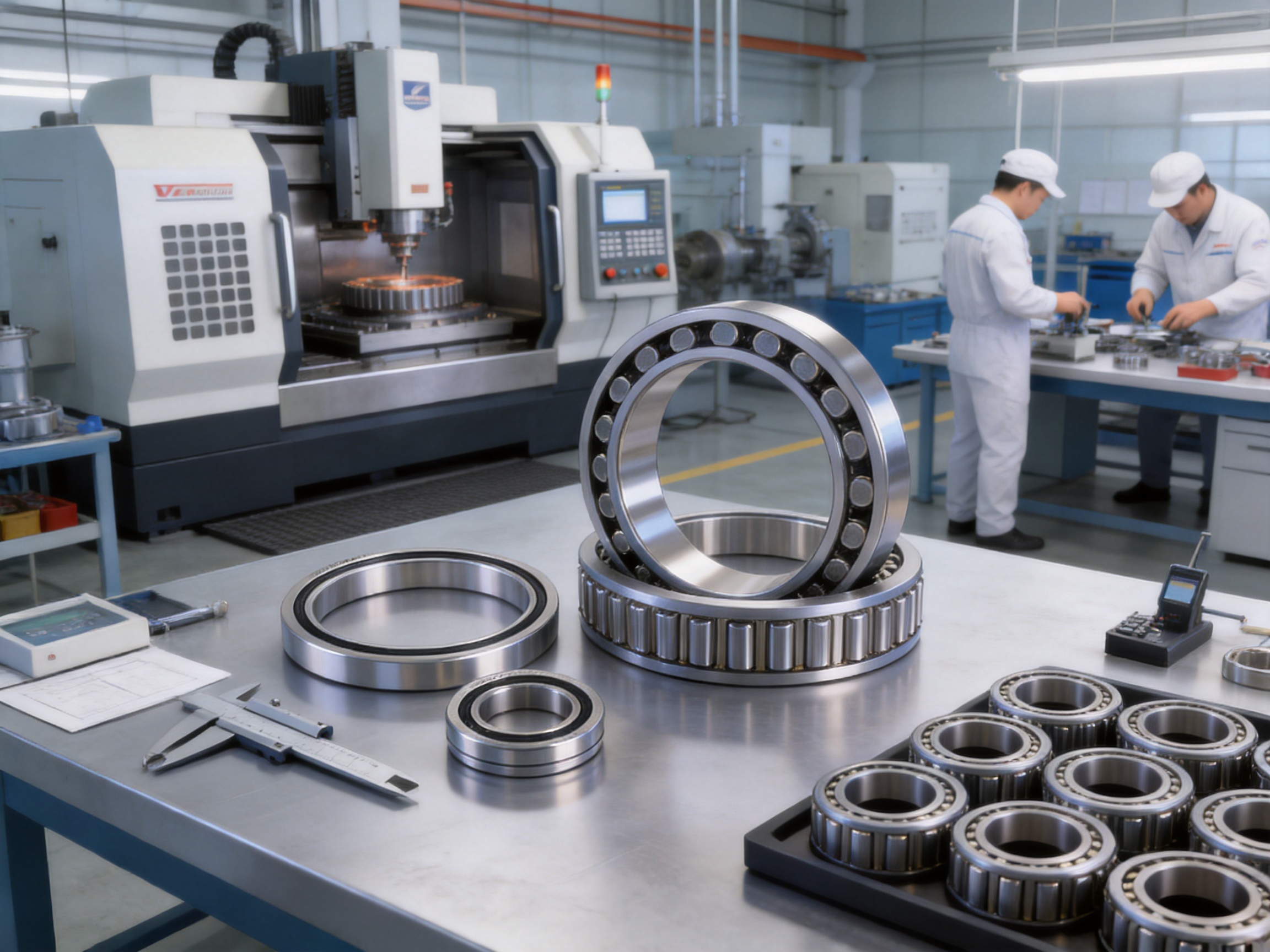
OEM customers often need a bearing that can be integrated into a specific mechanical design with predictable performance and supply stability. The RAU Integrated Cross Roller Bearing is suitable for OEM projects because it provides a compact structure, combined-load capability, high rigidity, precision class options, and a wide size range. These characteristics help engineers create standardized rotary modules for robots, machine tools, medical devices, and automation equipment.
Another important benefit is design simplification. When one integrated cross roller bearing replaces multiple conventional bearings, the surrounding structure can become simpler. The number of parts may decrease, assembly time may be reduced, and tolerance stack-up may be easier to control. For OEM manufacturers, these benefits can improve production efficiency and reduce quality variation.
UKL’s production capacity and export experience also support OEM cooperation. With the ability to produce 10,000 to 50,000 units per month, the company can support both sample development and batch supply. Its OEM and ODM experience helps customers develop customized bearing solutions when standard models are not sufficient.
Angular contact ball bearings are excellent for many high-speed and axial-load applications, but they often require paired installation to support axial loads in both directions and moment loads. The RAU Integrated Cross Roller Bearing provides stronger moment resistance and higher stiffness in a single compact unit. For applications where rigidity and positioning accuracy matter more than very high speed, the RAU bearing can be the better choice.
Tapered roller bearings provide strong radial and axial load capacity, but they usually require careful paired adjustment and may occupy more space. They are widely used in heavy-duty machinery, automotive applications, and industrial equipment. However, for thin-section precision rotary systems, the RAU Integrated Cross Roller Bearing offers a more compact and accuracy-focused solution.
Cylindrical roller bearings are strong in radial load capacity but generally do not provide the same axial and moment load support as cross roller bearings unless used in special combinations. The RAU bearing’s crossed roller structure is better suited for combined-load rotary applications where one compact bearing must provide multi-direction support.
Spherical roller bearings are designed to handle heavy loads and misalignment, but they are not typically selected for high-precision compact rotary stages. The RAU Integrated Cross Roller Bearing is more appropriate for applications requiring high rotational accuracy, low deformation, and compact installation.
Modern manufacturing requires both performance and responsibility. UKL Bearing Manufacturing Co., Ltd. adopts environmentally responsible processes, promotes material recycling, and optimizes energy usage to reduce environmental impact. Sustainability in bearing manufacturing includes efficient material use, process optimization, waste reduction, and improved product life. A longer-lasting bearing also supports sustainability by reducing replacement frequency and resource consumption.
The company also supports educational and technical training initiatives to encourage future engineering talent. In precision manufacturing, skilled engineers and technicians are essential. Bearing performance depends on process knowledge, measurement discipline, and attention to detail. By investing in people and technology, the company strengthens its ability to deliver reliable products.
Long-term reliability is built through design, material, process, inspection, and service. The RAU Integrated Cross Roller Bearing reflects this full-chain approach. It is not only a product with strong catalog specifications; it is the result of controlled manufacturing and engineering support.
The main advantage is its ability to provide high rigidity, compact installation, and combined-load support in one bearing. It can carry radial loads, axial loads in both directions, and moment loads, making it suitable for precision rotary systems.
The RAU Integrated Cross Roller Bearing generally provides much higher stiffness. RAU types can reach approximately 300 to 800 N/μm, while many ordinary angular contact ball bearings are around 50 to 150 N/μm. This makes the RAU bearing better for applications that require high rigidity and low deformation.
Suitable applications include robot joints, medical equipment, aerospace equipment, communication radar, weather radar, precision rotary indexing tables, precision machine tools, precision testing instruments, optical telescopes, and multi-station welding machines.
Yes. Because of its integrated inner and outer ring construction, the bearing can be used in designs requiring either inner ring rotation or outer ring rotation.
The bearing is made of GCr15 bearing steel with surface nitriding treatment. The hardness can reach HRC 60 or higher, supporting wear resistance and long service life under proper operating conditions.
Mainstream precision classes are P4 and P5 according to ISO-related accuracy standards. These classes are suitable for precision measuring instruments, machining centers, rotary tables, and automation equipment.
Depending on bearing size and lubrication method, the typical limiting speed is approximately 2,000 to 6,000 rpm. The correct operating speed should be confirmed according to load, lubrication, temperature, and application conditions.
Installation quality affects bearing accuracy, torque, life, and stiffness. Incorrect mounting, uneven clamping, poor shaft or housing accuracy, or contamination can reduce performance even if the bearing itself is precisely manufactured.
Yes. UKL Bearing Manufacturing Co., Ltd. has OEM and ODM export experience and supports customers with technical communication, model selection, production, and customized bearing solutions for specific industrial applications.
Service life can be improved by selecting the correct bearing model, controlling load and speed, using proper lubrication, preventing contamination, ensuring accurate installation, and performing periodic maintenance checks.
The RAU Integrated Cross Roller Bearing is a high-performance solution for compact precision motion systems. Its integrated structure, thin section, high stiffness, precision accuracy, and combined-load capability make it a strong alternative to conventional bearing combinations. By supporting radial, axial, and moment loads in one compact unit, it helps engineers simplify mechanical design, reduce installation space, improve rigidity, and enhance positioning performance.
For robot joints, medical equipment, aerospace mechanisms, radar systems, precision machine tools, and rotary indexing tables, the bearing provides the balance of compactness and strength required by modern intelligent equipment. Its GCr15 bearing steel construction, surface nitriding treatment, P4/P5 precision options, and stable limiting speed range support reliable operation in demanding applications.
Behind the product, UKL Bearing Manufacturing Co., Ltd. provides integrated manufacturing processes, including forging, turning, heat treatment, grinding, assembly, and packaging. The company’s R&D capability, production capacity, international export experience, and technical service strengthen the product’s value for OEMs and industrial customers. For users seeking a compact, rigid, and accurate rotary bearing solution, the RAU Integrated Cross Roller Bearing is a practical and competitive choice.
1. International Organization for Standardization. Rolling Bearings: Tolerances, Precision Classes, and General Technical Principles.
2. Harris, T. A., and Kotzalas, M. N. Rolling Bearing Analysis: Essential Concepts of Bearing Design and Application.
3. Brändlein, J., Eschmann, P., Hasbargen, L., and Weigand, K. Ball and Roller Bearings: Theory, Design and Application.
4. Japanese Industrial Standards Committee. Rolling Bearing Accuracy and Dimensional Standards.
5. Bearing Steel Technology Handbook. Material Properties, Heat Treatment, and Fatigue Performance of High-Carbon Chromium Bearing Steels.
6. Precision Machine Design Handbook. Rotary Axis Stiffness, Bearing Selection, and Accuracy Control in High-Precision Equipment.
Product Categories
Contact Us

Jane@ukl-bearing.com
Jenny@ukl-bearing.com
Andy@ukl-bearing.com
Ivy@ukl-bearing.com

+86-510- 88763239
+86-15371057968

No.1 Hehuan Road, Hudai Town, Binhu District, Wuxi City.
Ready to Begin?
Get in Touch

Now!
UKL BEARING
 English
 Español
 русский