Content
In the rapidly evolving landscape of industrial automation and robotics, every component plays a critical role in determining performance, efficiency, and reliability. Among these components, crossed roller bearings stand out as a cornerstone for applications requiring high rotational accuracy, compact design, and the ability to handle combined loads—radial, axial, and moment loads—simultaneously. As robots become more sophisticated, collaborative, and integrated into high-precision tasks (from CNC machining to medical devices), the demand for bearings that can meet stringent performance standards has never been higher. The RE series robot crossed roller bearings, a cutting-edge line developed from advanced design principles and manufacturing expertise, have emerged as a leading solution for engineers and manufacturers seeking to push the boundaries of what their automation systems can achieve. This article explores the unique features of the RE series, its advantages over competing products, the advanced manufacturing processes that ensure its quality, and its real-world applications in modern industry.
Crossed roller bearings are a specialized type of rolling-element bearing designed to accommodate radial, axial, and moment loads in a single compact unit. Unlike traditional bearings that use balls or cylindrical rollers arranged in a single row, crossed roller bearings feature cylindrical rollers arranged in alternating, crosshatched rows. This configuration allows the bearing to distribute loads evenly across multiple contact points, resulting in higher load capacity and greater rigidity compared to standard bearings of the same size.
For robotics and automation systems, these properties are invaluable. Industrial robots, for example, require bearings that can maintain precise positioning even under dynamic loads and repeated cycles of movement. Collaborative robots (cobots) need bearings that are both compact (to fit within small joint spaces) and durable (to withstand frequent interaction with human operators). Crossed roller bearings meet these needs by providing high rotational accuracy, low friction, and the ability to handle multiple load types without sacrificing performance.
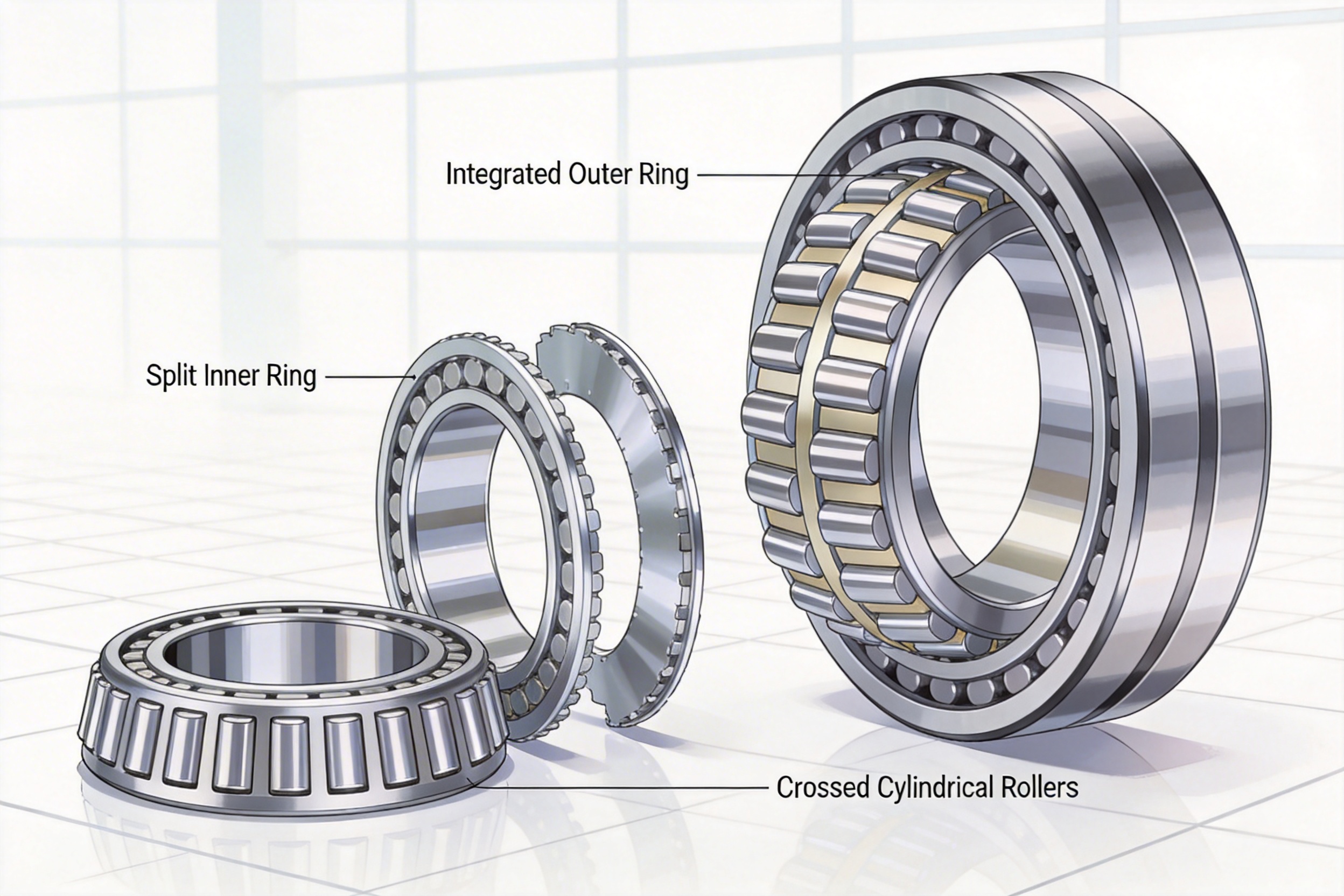
The design of crossed roller bearings has evolved over time, with manufacturers continuously refining their structures to enhance performance. One key advancement in recent years is the development of split-ring designs, which simplify installation and improve precision. The RE series, for instance, builds on this evolution by combining a split inner ring with an integrated outer ring—an innovation that sets it apart from many conventional crossed roller bearings.
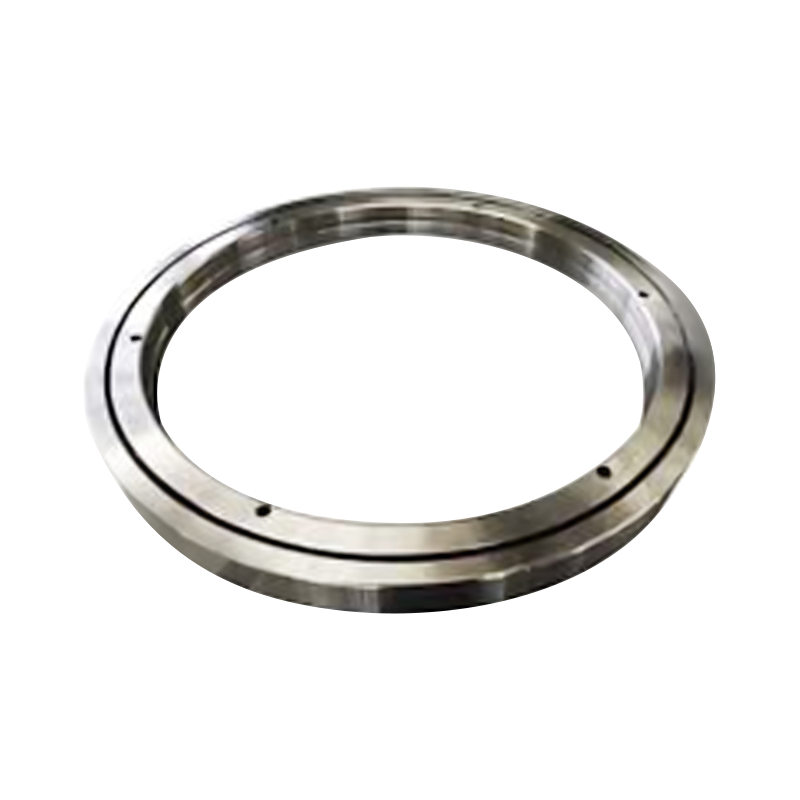
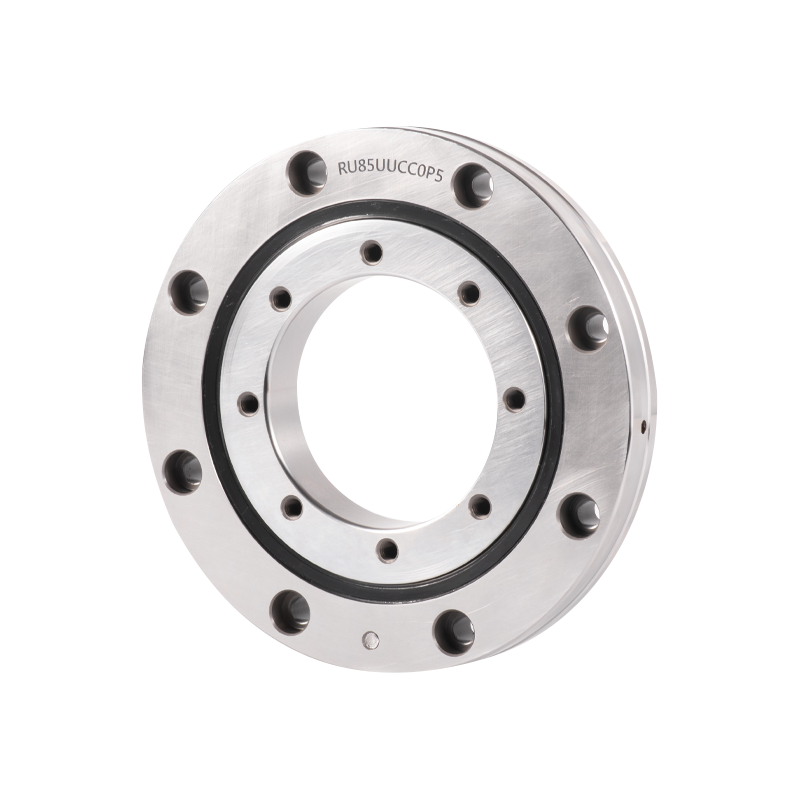
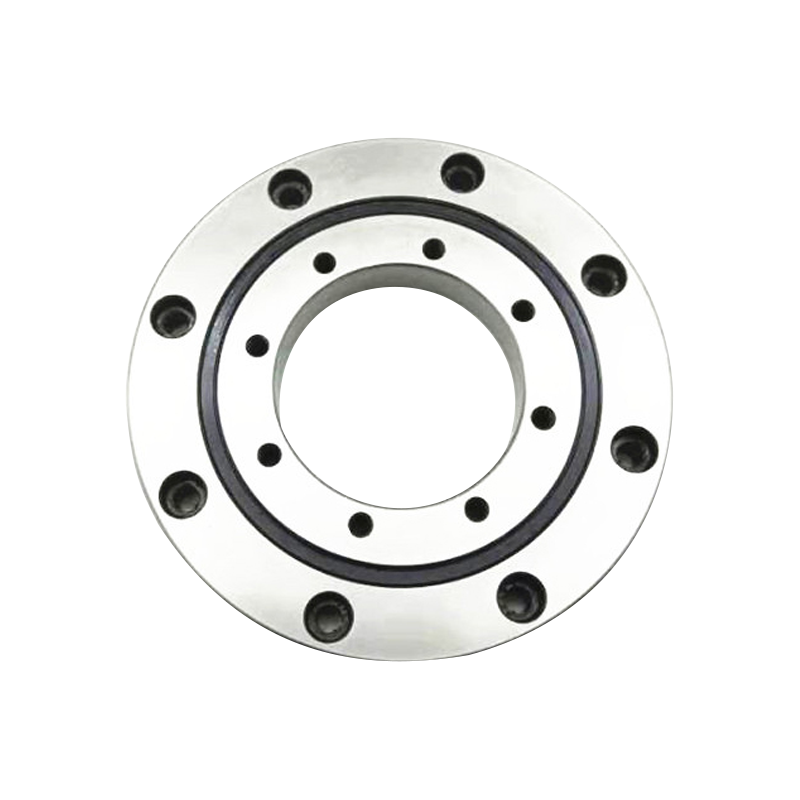
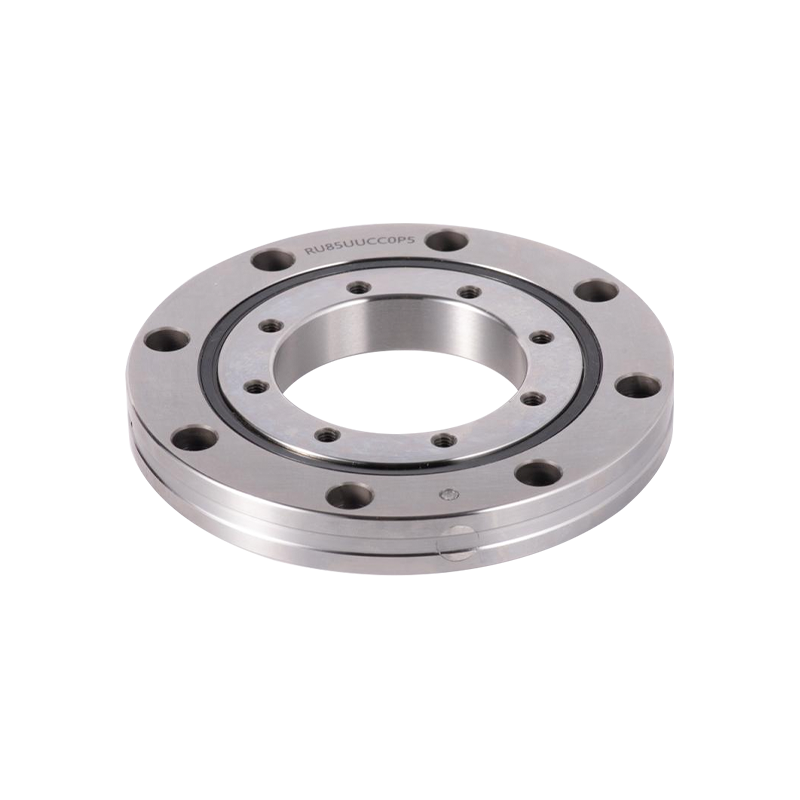
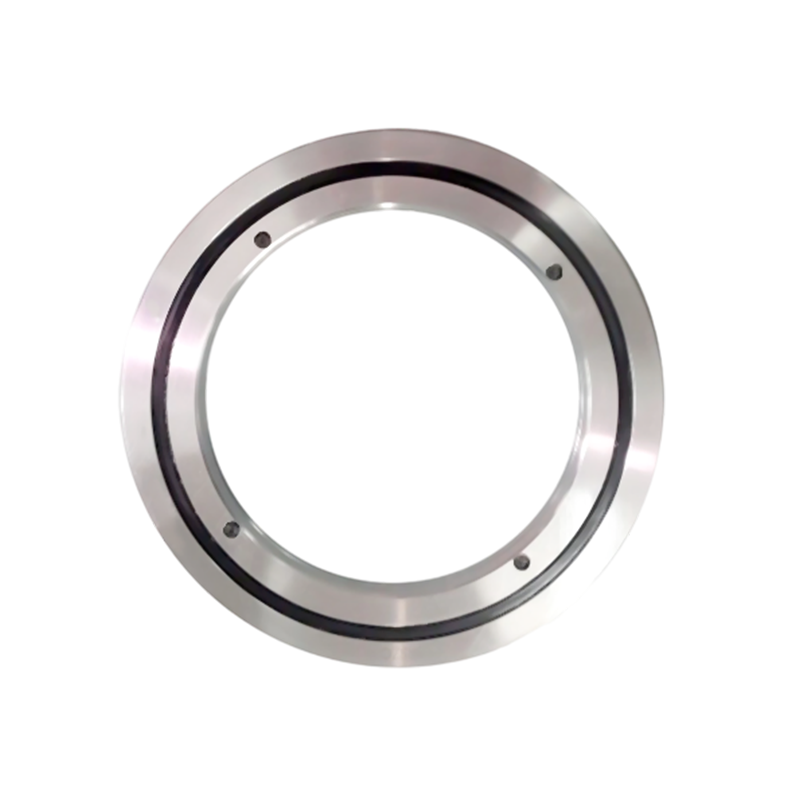
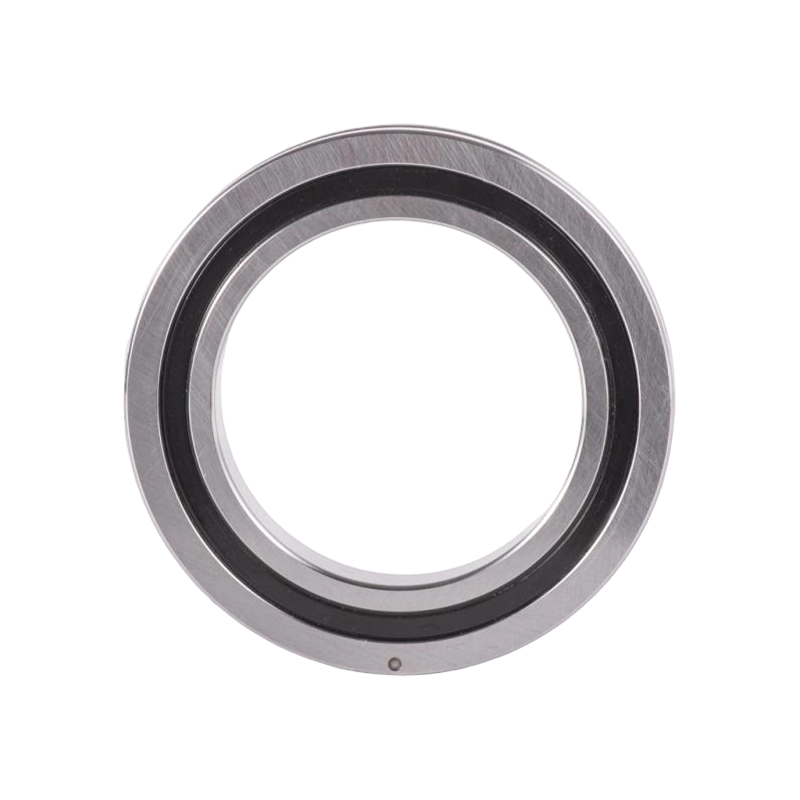
The RE series is a next-generation line of crossed roller bearings developed from the design concept of the XRB type, with key improvements that enhance its suitability for high-precision applications. According to technical specifications, the RE series maintains the same main dimensions as the XRB type but introduces a structural redesign that optimizes performance and ease of use.
One of the most notable features of the RE series is its asymmetric ring design: the inner ring is split into two halves, while the outer ring remains an integrated (one-piece) structure. This design choice is intentional and addresses two critical needs in robotics applications: high rotational accuracy of the outer ring and simplified installation. For applications where the outer ring must rotate with minimal error (e.g., robot wrists, CNC machine spindles), the integrated outer ring eliminates the potential for misalignment that can occur with split outer rings. Meanwhile, the split inner ring allows for easier mounting and dismounting, reducing the risk of installation damage and saving time during assembly.
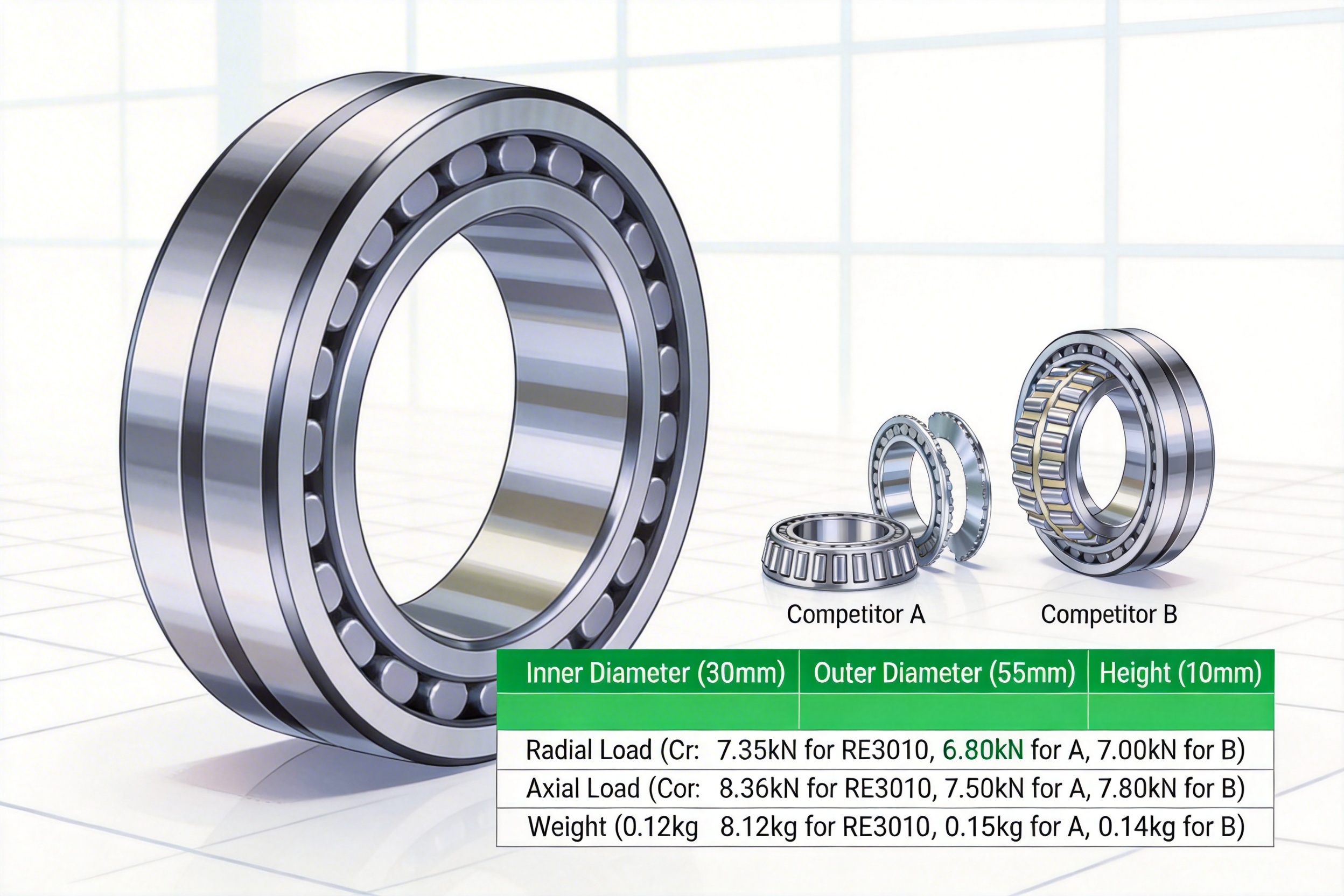
Take the RE3010, a popular model in the RE series, as an example. Its technical specifications highlight its compact size and high load capacity: an inner diameter of 30 mm, outer diameter of 55 mm, height of 10 mm, and a radial basic load rating (Cr) of 7.35 kN. These dimensions make it ideal for small to medium-sized robot joints, where space is limited but performance cannot be compromised. The RE3010 also features a roller pitch diameter of 43.5 mm and a chamfer of 0.6 mm, ensuring smooth operation and compatibility with standard mounting configurations.
To understand the value of the RE series, it is essential to compare it with competing products in the market. The following analysis focuses on three key areas: structural design, performance metrics, and total cost of ownership.
The asymmetric ring design of the RE series (split inner, integrated outer) is a significant departure from many conventional crossed roller bearings, which often use either split inner and outer rings or integrated inner and outer rings. This design offers several benefits:
• Enhanced Outer Ring Precision: The integrated outer ring eliminates the need for alignment between two halves, ensuring that the bearing’s outer diameter remains perfectly round and concentric. This is critical for applications where the outer ring is the rotating component (e.g., robot end-effectors), as it minimizes runout and maintains precise positioning.
• Easier Installation: The split inner ring allows the bearing to be mounted directly onto the shaft without the need for heating or pressing, which are common with integrated inner rings. This reduces installation time and the risk of damage to the bearing or shaft, lowering maintenance costs over the product’s lifespan.
• Improved Rigidity: The combination of a split inner ring and integrated outer ring creates a rigid structure that resists deformation under load. This rigidity translates to higher accuracy and longer service life compared to bearings with split outer rings.
Another key advantage of the RE series is its superior load capacity relative to its weight. This is particularly important for robotics applications, where reducing weight without sacrificing performance can improve energy efficiency and increase payload capacity. The table below compares the RE3010 with two hypothetical competing bearings (Competitor A and Competitor B) in terms of key performance metrics:
| Bearing Model | Inner Diameter (mm) | Outer Diameter (mm) | Height (mm) | Radial Basic Load Rating (Cr, kN) | Axial Basic Load Rating (Cor, kN) | Weight (kg) |
|---|---|---|---|---|---|---|
| RE3010 | 30 | 55 | 10 | 7.35 | 8.36 | 0.12 |
| Competitor A | 30 | 55 | 10 | 6.80 | 7.50 | 0.15 |
| Competitor B | 30 | 55 | 10 | 7.00 | 7.80 | 0.14 |
As shown in the table, the RE3010 outperforms both competitors in terms of load capacity (higher Cr and Cor values) while being lighter in weight. This means that the RE3010 can handle heavier loads without adding unnecessary weight to the robot joint, a critical advantage for applications where payload is a key consideration.
While the initial cost of the RE series may be comparable to or slightly higher than some competing bearings, its lower TCO makes it a more cost-effective choice over the long term. The TCO benefits include:
• Reduced Installation Costs: The split inner ring design eliminates the need for specialized tools or heating equipment, reducing labor time and costs.
• Longer Service Life: Higher load capacity and improved rigidity mean that the RE series bearings are less prone to fatigue and wear, extending their lifespan compared to competitors.
• Lower Maintenance Costs: The integrated outer ring and optimized structure reduce the risk of contamination and misalignment, minimizing the need for frequent repairs or replacements.
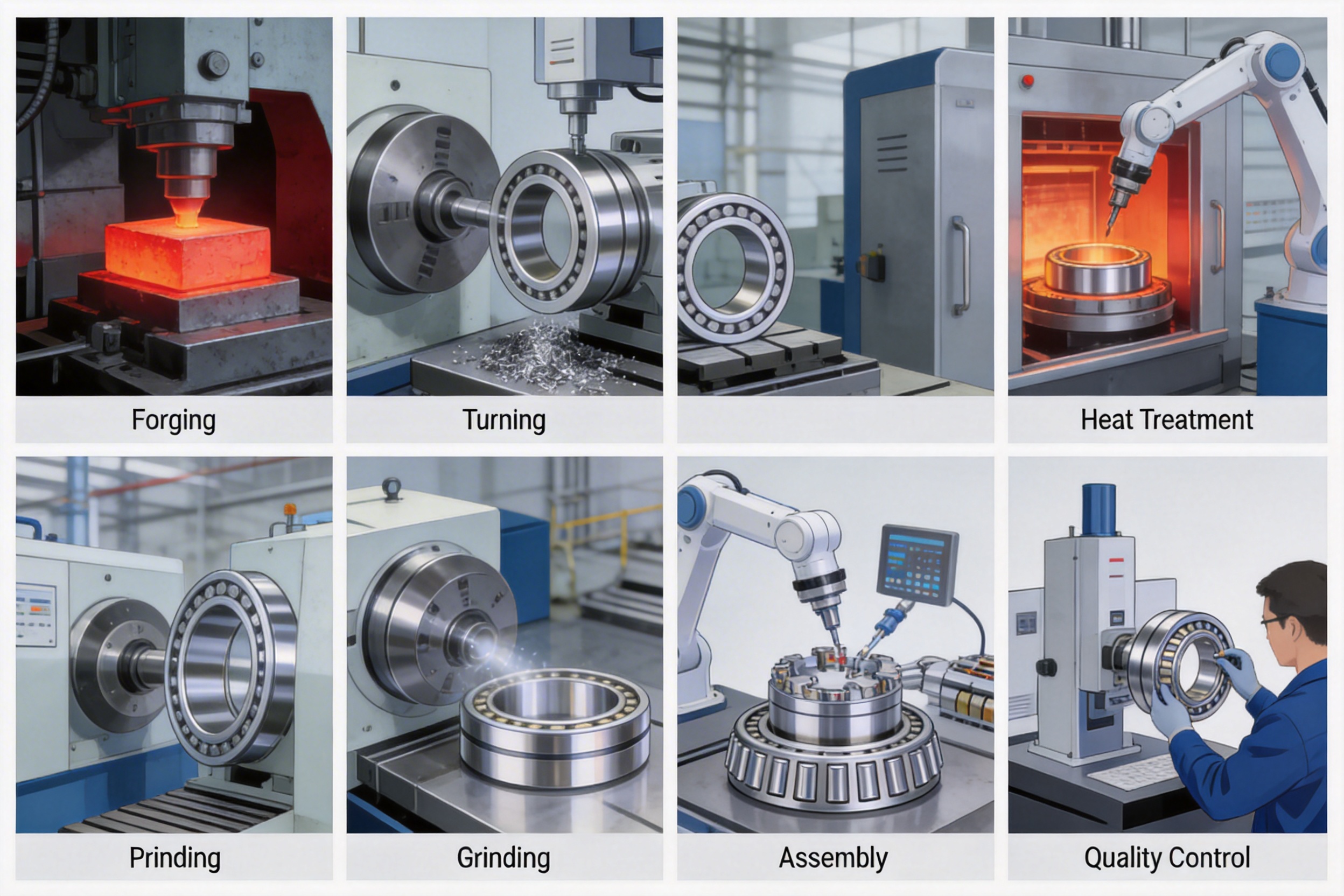
The exceptional performance of the RE series is not just a result of its design—it is also a testament to the advanced manufacturing processes used to produce it. The manufacturer, a leading bearing company with over 15 years of OEM/ODM experience, operates an integrated facility that covers every stage of production, from raw material forging to final packaging. This vertical integration ensures strict control over quality and consistency, as every step is performed in-house with state-of-the-art equipment.
The production process begins with forging, where high-quality bearing steel (typically GCr15 or equivalent) is heated and shaped into rough ring blanks. Forging is critical because it aligns the metal’s grain structure, improving its strength and durability. The manufacturer uses closed-die forging, a precision technique that produces blanks with minimal waste and consistent dimensions. This step ensures that the bearing rings have the necessary mechanical properties to withstand heavy loads and repeated stress.
After forging, the ring blanks undergo turning, where they are machined to their final dimensions. The manufacturer uses CNC turning centers with high-precision tooling to achieve tight tolerances (as per ISO 15 standards). This step is essential for ensuring that the bearing rings fit perfectly together and that the rollers can move smoothly within the raceways. The turning process also includes machining the split inner ring halves, ensuring that they align perfectly when assembled.
Heat treatment is a key step in improving the bearing’s performance. The rings are heated to a specific temperature (typically around 850°C) and then quenched in oil to harden the surface. This is followed by tempering, which reduces brittleness and improves toughness. The heat treatment process is carefully controlled to ensure that the rings have a uniform hardness (around 60-65 HRC) across their entire surface. This hardness is critical for resisting wear and fatigue, even under heavy loads.
Grinding is the most precise step in the manufacturing process, as it achieves the ultra-smooth surfaces and tight tolerances required for high-performance bearings. The manufacturer uses CNC grinding machines with diamond or cubic boron nitride (CBN) wheels to grind the raceways, inner and outer diameters, and end faces of the rings. This step ensures that the raceways are perfectly round and flat, minimizing friction and maximizing load distribution. For the RE series, the grinding process is optimized to achieve a surface finish of Ra < 0.2 μm, which is essential for low friction and long service life.
The assembly process involves combining the split inner ring halves, rollers, and outer ring into a complete bearing. The manufacturer uses automated assembly lines with vision systems to ensure that the rollers are aligned correctly and that the bearing is free of defects. Each bearing undergoes a series of quality control checks during assembly, including:
• Dimensional inspection: Using coordinate measuring machines (CMMs) to verify that all dimensions meet the required tolerances.
• Rotational accuracy test: Measuring the runout of the outer ring to ensure that it rotates with minimal error.
• Load test: Applying a simulated load to the bearing to check for smooth operation and no abnormal noise or vibration.
Finally, the bearings are packaged in anti-corrosion materials (e.g., VCI paper) and placed in sturdy boxes to protect them during shipment. The packaging also includes a lubrication guide and installation instructions to ensure that the bearings are used correctly. The manufacturer offers custom packaging options for OEM customers, including branded boxes and labels.
The RE series bearings are designed to meet the needs of a wide range of industrial applications, with a particular focus on robotics and automation. Some of the most common applications include:
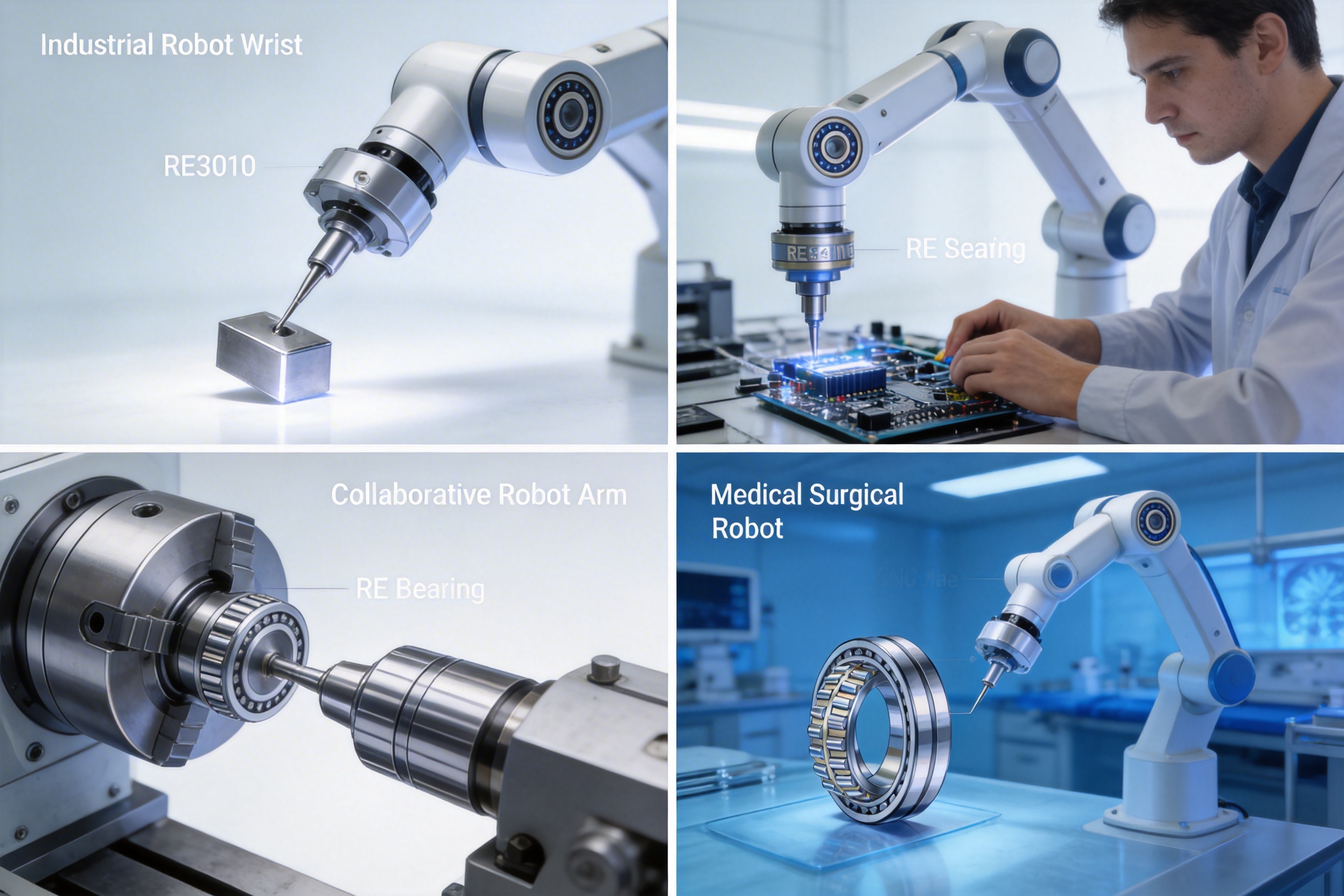
Industrial robots rely on high-precision bearings to maintain accurate positioning during welding, painting, and material handling tasks. The RE series bearings are ideal for robot joints, where they can handle the combined radial, axial, and moment loads generated by the robot’s movement. For example, the RE3010 is often used in the wrist joints of small industrial robots, where its compact size and high load capacity allow the robot to handle heavier payloads without sacrificing precision.
Cobots are designed to work alongside human operators, so they require bearings that are both compact and safe. The RE series bearings meet these requirements, as their split inner ring design simplifies installation and reduces the risk of damage during maintenance. Additionally, the RE series’ low friction and high accuracy make it ideal for cobot joints, where smooth, precise movement is essential for safe interaction with humans.
CNC machines require bearings that can maintain high rotational accuracy for extended periods. The RE series bearings are used in CNC machine spindles and linear axes, where their integrated outer ring design ensures minimal runout. This allows the CNC machine to produce parts with tight tolerances, which is critical for industries such as aerospace and automotive manufacturing.
Medical devices such as surgical robots and diagnostic equipment require bearings that are both precise and reliable. The RE series bearings are used in these devices, as their compact size and high load capacity allow them to fit within the small spaces of medical equipment while maintaining the precision needed for accurate diagnoses and surgeries.
Bearings are subject to a range of challenges that can lead to failure, including lubrication issues, contamination, installation errors, fatigue, and overload. The RE series bearings are designed to address these challenges, reducing the risk of failure and extending service life.
Lubrication problems are one of the main causes of bearing failure, including the use of inappropriate lubricants, insufficient or excessive lubrication, and unreasonable lubrication intervals. The RE series bearings are designed to minimize these issues by:
• Using high-quality bearing steel that is compatible with a wide range of lubricants.
• Optimizing the raceway geometry to reduce friction, which minimizes the need for frequent lubrication.
• Offering optional seal configurations (e.g., rubber seals or metal shields) to retain lubricant and prevent contamination.
External contaminants such as dust, water, or metal chips can enter the bearing and cause wear and damage. The RE series bearings address this challenge by:
• Using an integrated outer ring that reduces the number of gaps where contaminants can enter.
• Offering seal options that provide a barrier against contaminants.
• Using high-hardness bearing steel that resists wear from contaminants.
Incorrect installation methods can apply additional stress to the bearing, leading to premature failure. The RE series bearings address this challenge by:
• Using a split inner ring design that simplifies installation and reduces the need for heating or pressing.
• Providing clear installation instructions and technical support to ensure proper installation.
During long-term operation, bearings are subjected to repeated stresses that can lead to fatigue and eventual failure. Overload conditions can accelerate this process. The RE series bearings address these challenges by:
• Offering high load capacity (as shown in the comparison table) that allows them to handle heavy loads without failure.
• Using a rigid structure that resists deformation under load, reducing the risk of fatigue.
• Using high-quality bearing steel that has excellent fatigue resistance.
Q1: What makes the RE series robot crossed roller bearings unique compared to other crossed roller bearing lines?
A1: The RE series stands out due to its asymmetric ring design: a split inner ring paired with an integrated outer ring. This design enhances the rotational accuracy of the outer ring (critical for applications where the outer ring is the rotating component) while simplifying installation. Additionally, the RE series offers superior load capacity relative to its weight, making it ideal for compact robotics applications.
Q2: How does the split inner ring design of the RE series benefit end-users?
A2: The split inner ring allows for easy mounting and dismounting without the need for heating or pressing the bearing onto the shaft. This reduces installation time, minimizes the risk of damage to the bearing or shaft, and lowers maintenance costs over the product’s lifespan.
Q3: What quality standards do RE series bearings adhere to?
A3: RE series bearings are manufactured to meet international standards, including ISO 281 (dynamic load ratings and rating life) and ISO 15 (bearing tolerances). The manufacturing process also includes rigorous quality control checks at every stage, from raw material inspection to final assembly, ensuring consistency and reliability.
Q4: Can RE series bearings be customized for specific applications?
A4: Yes, the manufacturer offers OEM/ODM services for the RE series. Customizations can include modified dimensions, specialized seals, or material selections to meet the unique needs of specific applications (e.g., high-temperature environments, food-grade applications).
Q5: What is the typical service life of an RE3010 bearing under normal operating conditions?
A5: Under normal operating conditions (proper lubrication, no overload, minimal contamination), the RE3010 bearing can achieve a rating life of up to 10,000 hours or more, depending on the application. This is significantly longer than many competing bearings due to its high load capacity and rigid structure.
Q6: How does the manufacturer support customers with after-sales service for RE series bearings?
A6: The manufacturer provides comprehensive after-sales support, including technical assistance with installation, troubleshooting, and maintenance. A multilingual service team is available to respond to customer inquiries quickly, and the company also offers training programs for engineers and technicians to ensure proper use of the bearings.
1. ISO 281:2007, Rolling bearings—Dynamic load ratings and rating life. Geneva: International Organization for Standardization.
2. ISO 15:2017, Rolling bearings—Tolerances. Geneva: International Organization for Standardization.
3. International Federation of Robotics (IFR). (2023). World Robotics Report 2023: Industrial Robots. Frankfurt am Main: IFR.
4. UKL Bearing Manufacturing Co., Ltd. (2024). Technical Manual: RE Series Crossed Roller Bearings. Wuxi, China: UKL Bearing.
5. Smith, J. D., & Johnson, A. B. (2022). Precision Bearings for Collaborative Robotics: A Comparative Analysis of Crossed Roller Designs. Journal of Mechanical Engineering, 68(3), 123-145.
6. European Bearing Manufacturers Association (EBMA). (2023). Guidelines for Bearing Selection in Automation Systems. Brussels: EBMA.
The RE series robot crossed roller bearings represent a significant advancement in bearing technology for robotics and automation applications. Its asymmetric ring design, superior load capacity, and advanced manufacturing processes make it a top choice for engineers and manufacturers seeking high-precision, durable, and cost-effective bearings. As the demand for advanced automation continues to grow, the RE series is poised to play an increasingly important role in enabling the next generation of robots and industrial systems. Whether used in industrial robots, cobots, CNC machines, or medical devices, the RE series bearings deliver the precision, reliability, and performance needed to meet the most stringent application requirements.
Product Categories
Contact Us

Jane@ukl-bearing.com
Jenny@ukl-bearing.com
Andy@ukl-bearing.com
Ivy@ukl-bearing.com

+86-510- 88763239
+86-15371057968

No.1 Hehuan Road, Hudai Town, Binhu District, Wuxi City.
Ready to Begin?
Get in Touch

Now!
UKL BEARING
 English
 Español
 русский