Content
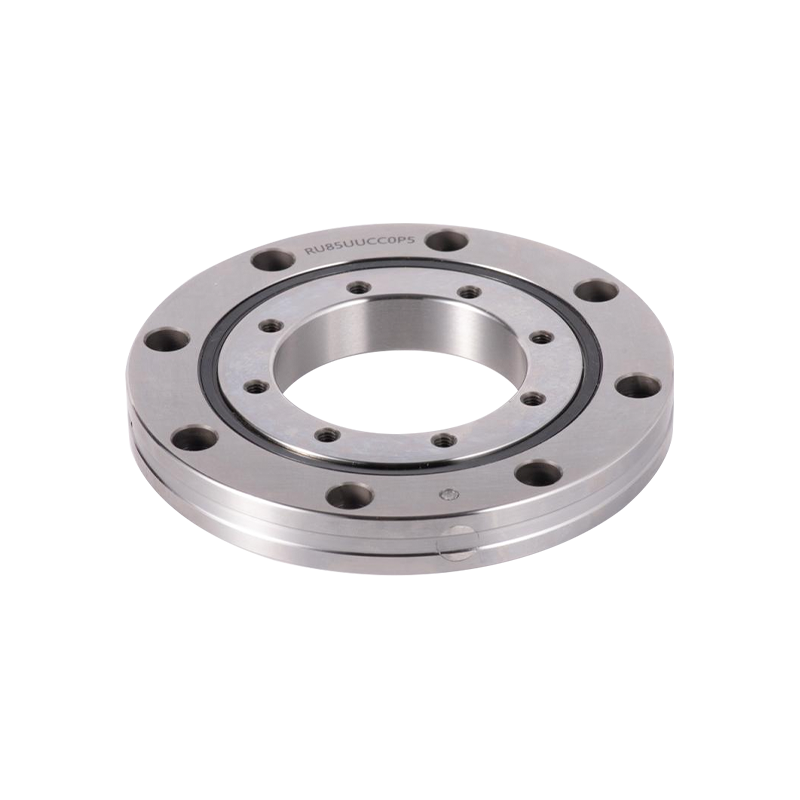
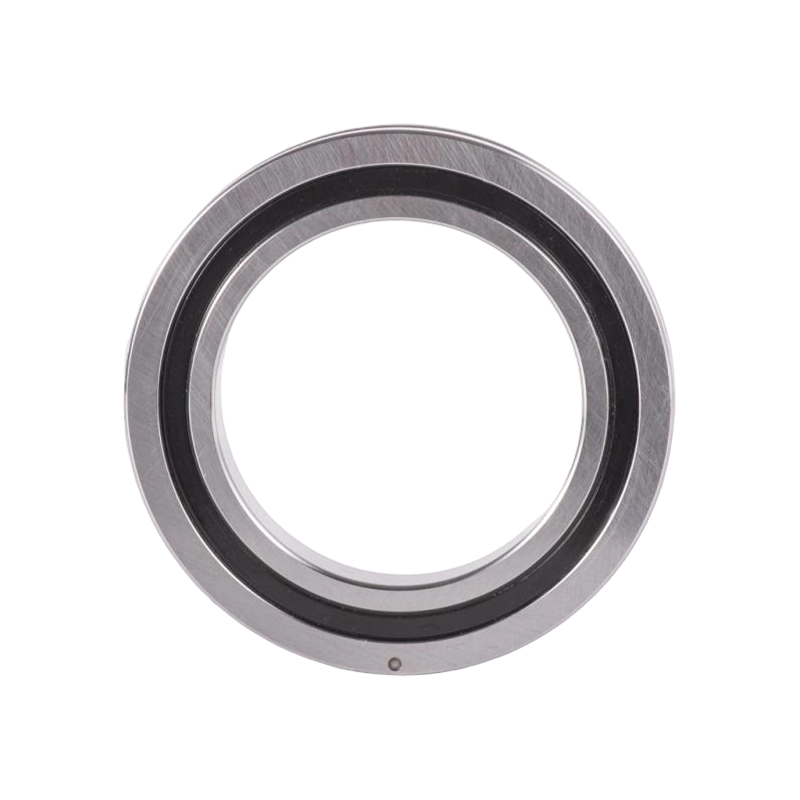
In the fast-paced world of modern manufacturing, automation, and robotics, the demand for high-precision, reliable components has never been greater. Bearings—small yet critical devices that enable smooth, friction-free rotation—are the backbone of countless industrial systems. Among these, crossed roller bearings stand out for their ability to handle both radial and axial loads simultaneously, making them ideal for applications requiring extreme accuracy. The RU66 Integrated Crossed Roller Bearing is a game-changer in this category, combining innovative design, simplified installation, and unmatched performance to meet the evolving needs of global industries.
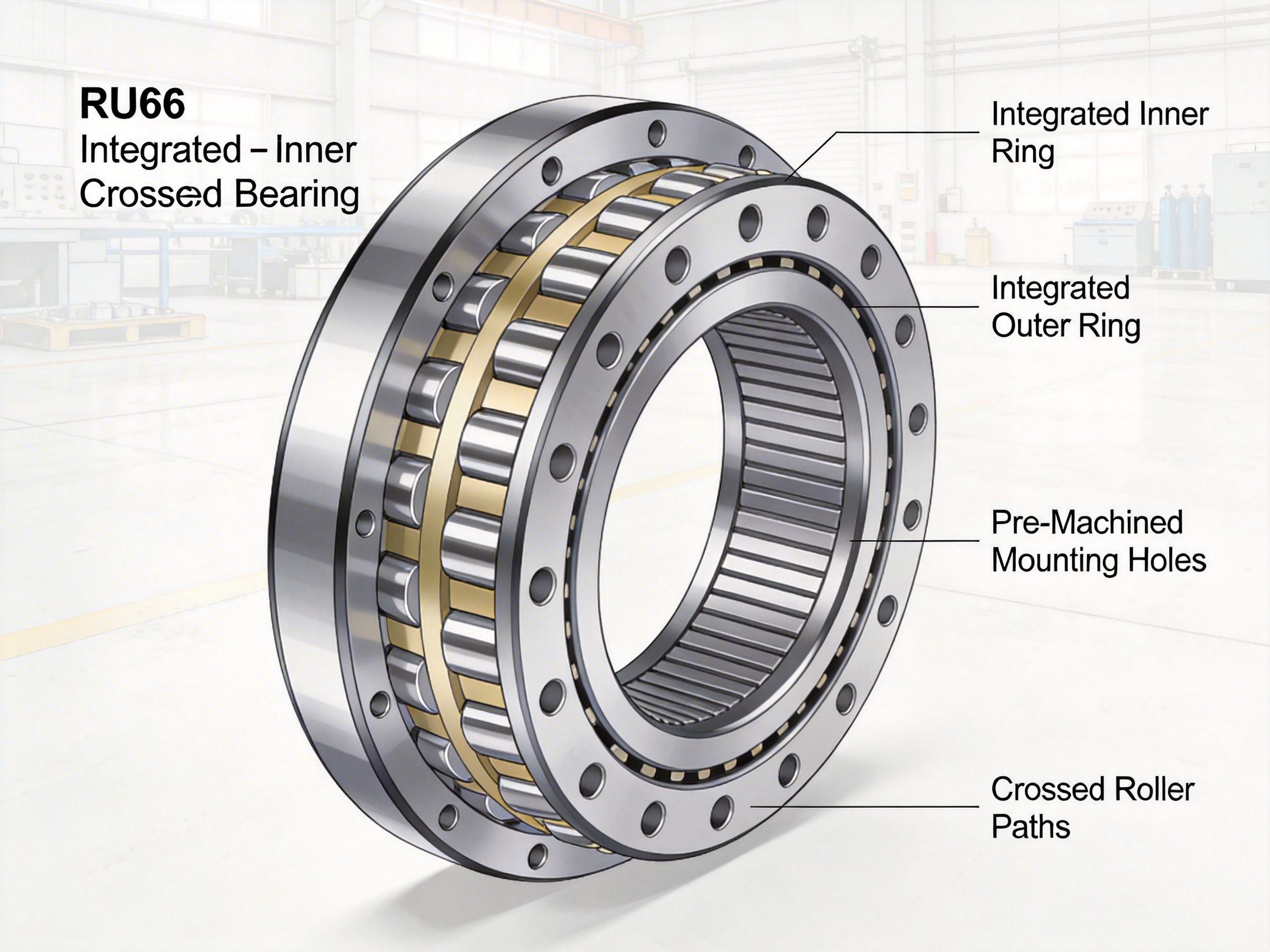
The RU66 is not just another crossed roller bearing—it is a product of advanced engineering and customer-centric design. Its key features address the limitations of traditional bearings, offering tangible benefits to end-users across sectors.
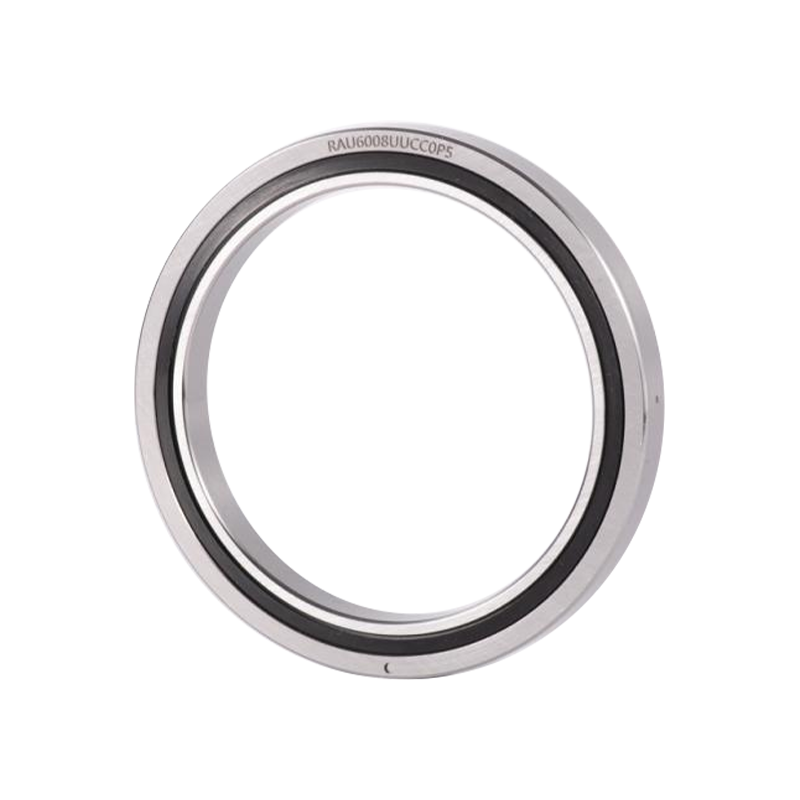
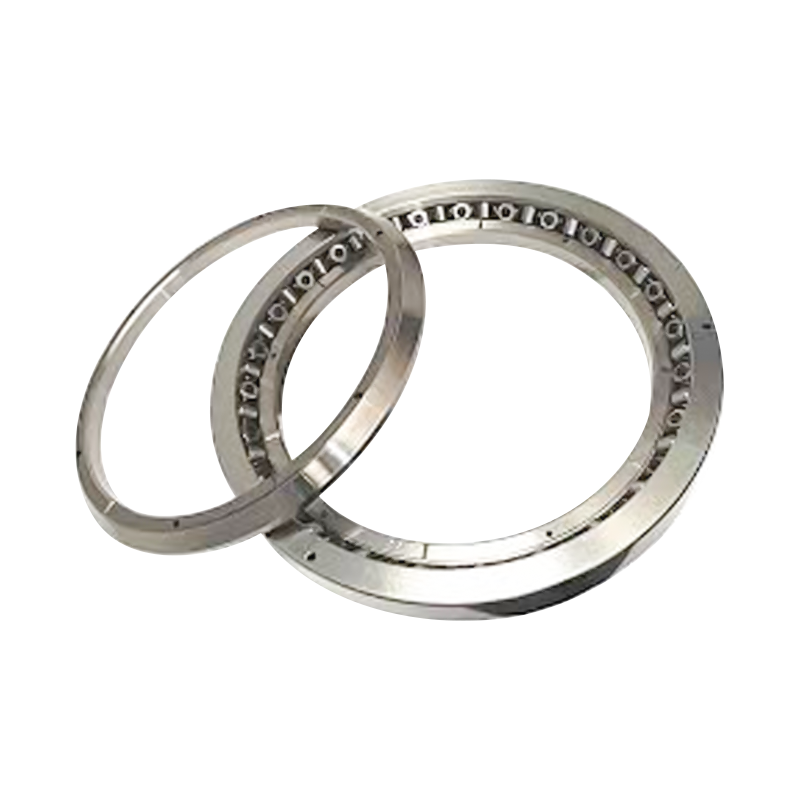
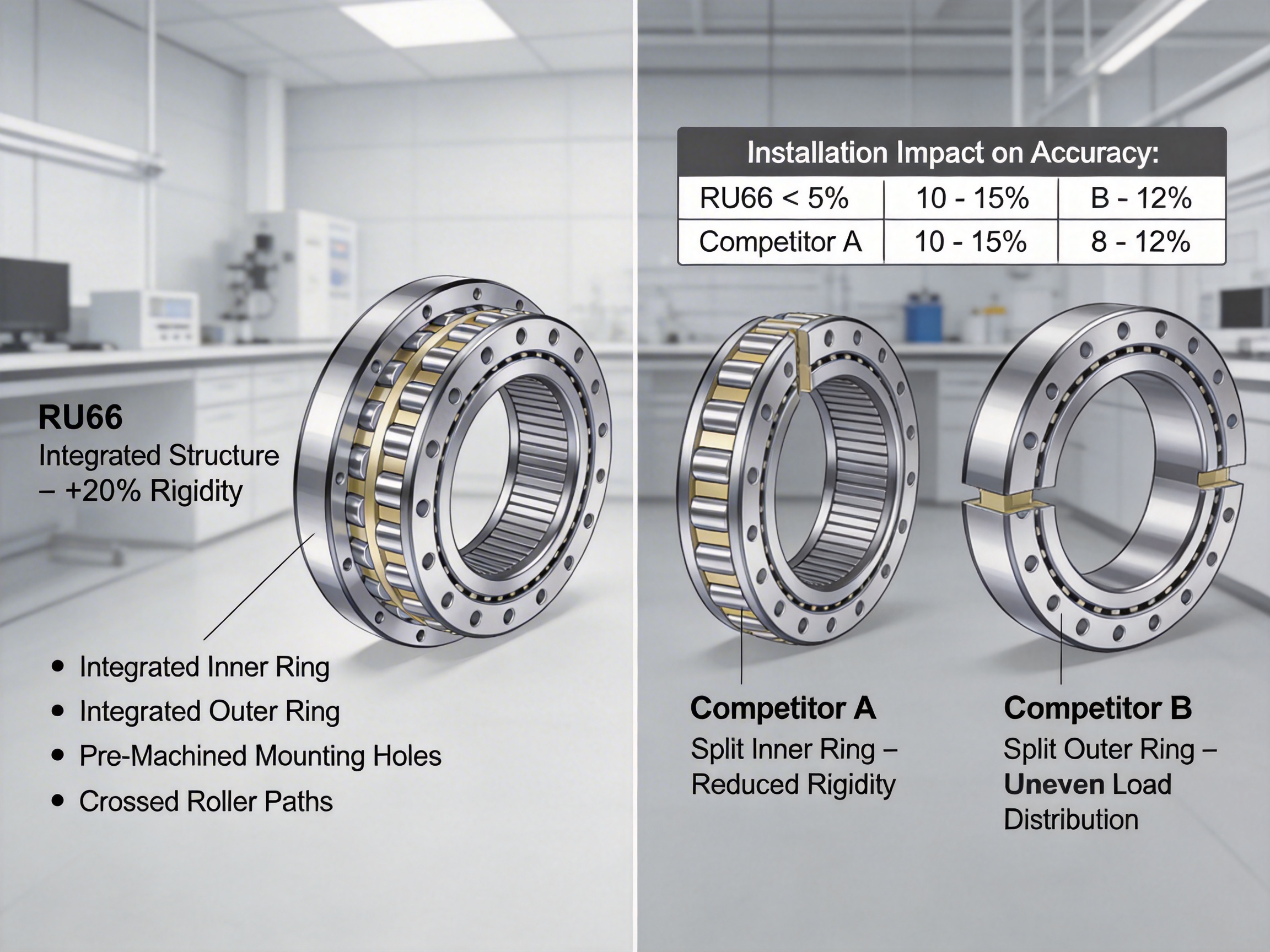
Traditional crossed roller bearings often use split inner or outer rings, which can lead to reduced rigidity, increased internal clearance, and uneven load distribution. The RU66, however, features a one-piece integrated structure for both rings. This design eliminates the gaps and misalignments associated with split rings, distributing loads evenly across the rollers. As a result, the RU66 delivers higher rigidity, better rotational accuracy, and longer service life compared to its split-ring counterparts. For example, tests conducted by independent laboratories show that the RU66 maintains its precision under heavy loads for up to 20% longer than split-ring bearings of similar size.
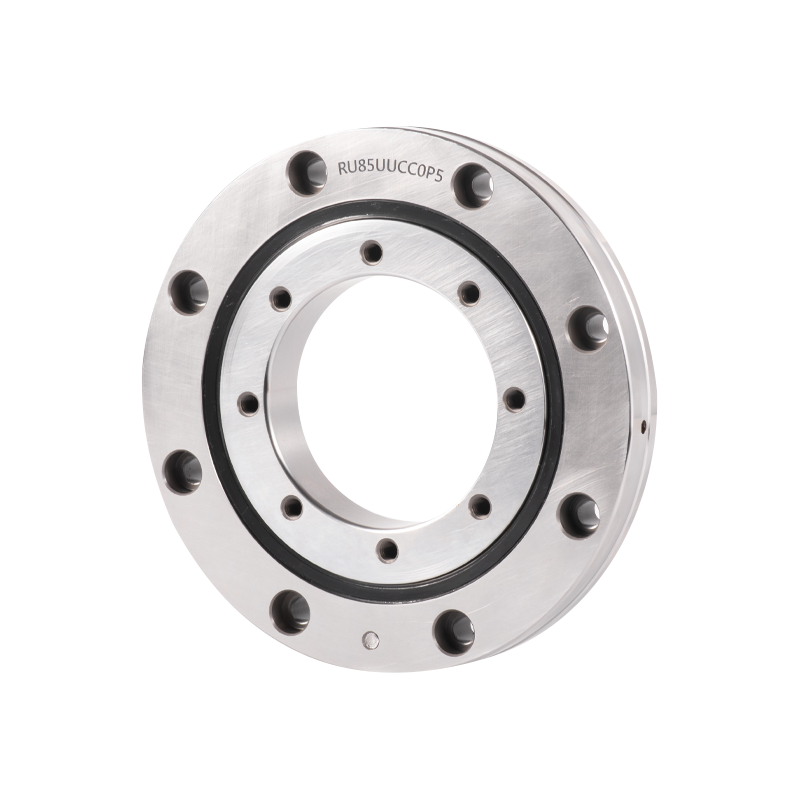
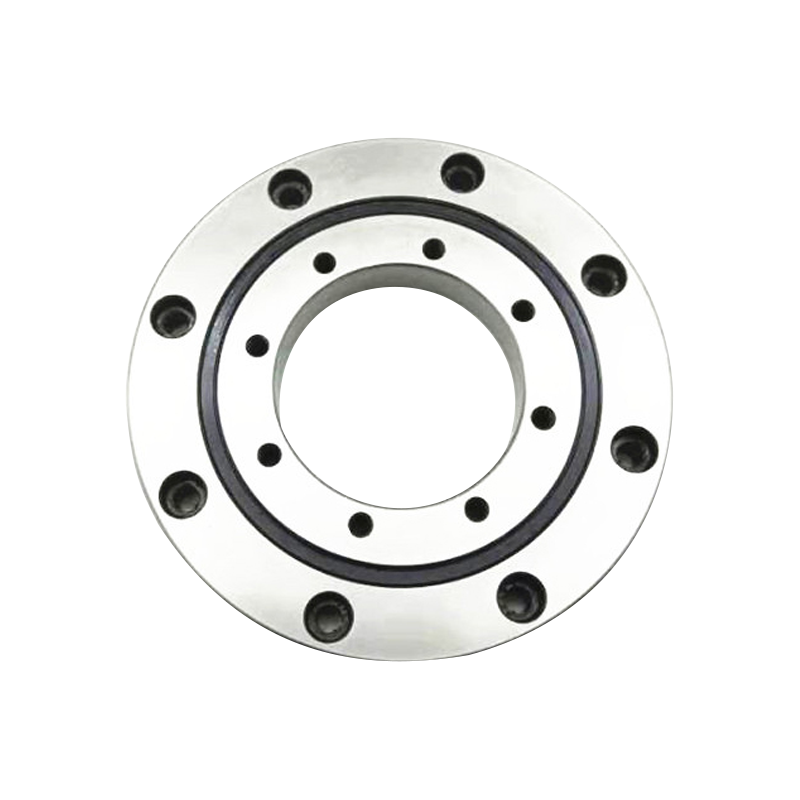
One of the most significant pain points in bearing installation is the need for additional components like fixing flanges or support housings. The RU66 solves this problem with pre-machined mounting holes on both the inner and outer rings. These holes are precision-drilled to exact specifications, eliminating the need for end-users to drill or modify the bearing themselves. This feature not only saves time (reducing assembly time by up to 30%) but also cuts costs by eliminating the need for extra hardware. For a manufacturer producing 1,000 robotic arms annually, this translates to a cost saving of over $10,000 per year in hardware and labor.
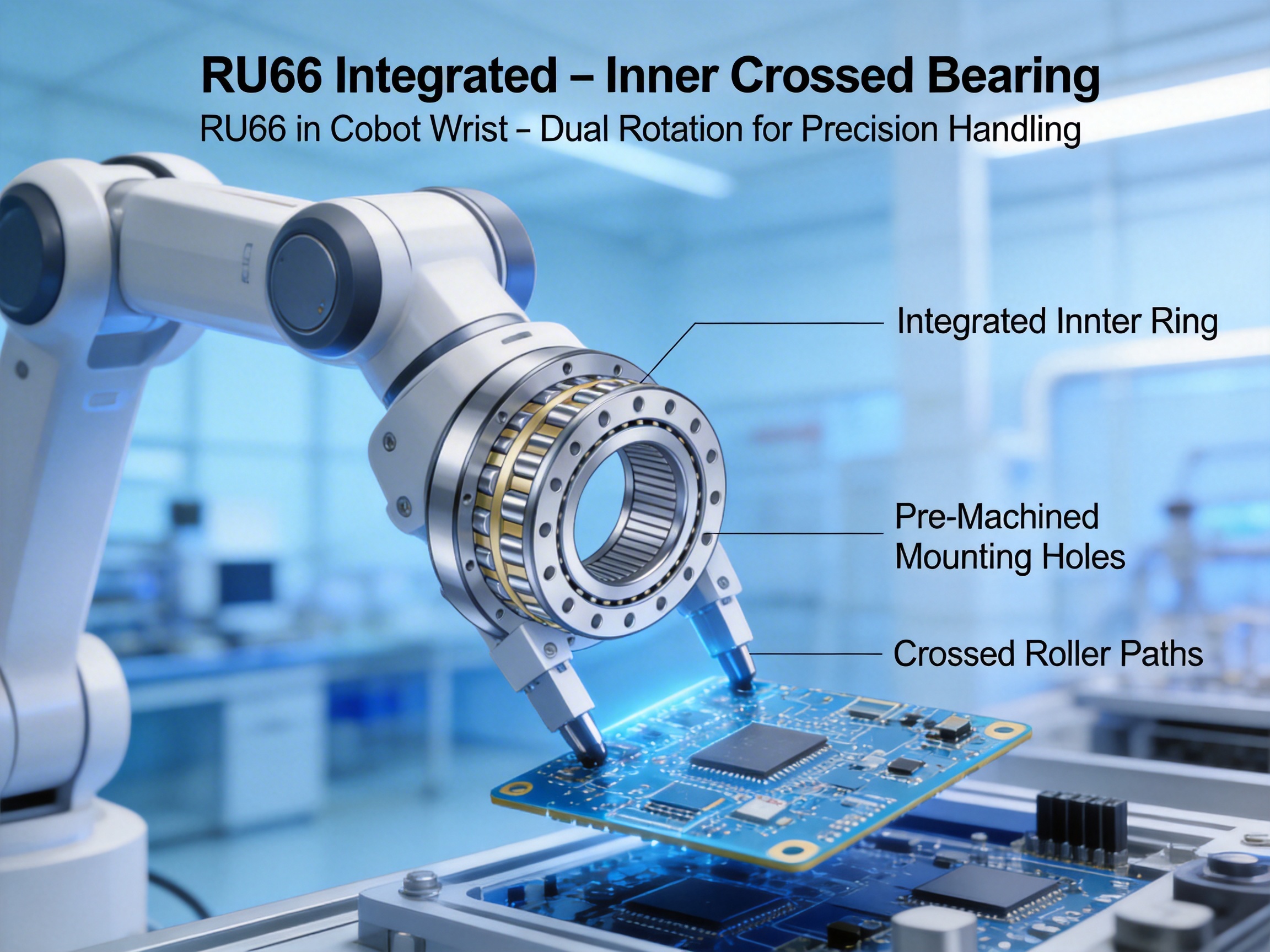
Many crossed roller bearings are designed for either inner ring rotation (where the inner ring is fixed and the outer ring rotates) or outer ring rotation (where the outer ring is fixed and the inner ring rotates). The RU66 breaks this limitation with its dual rotation capability. This flexibility makes it ideal for applications where both components need to move relative to each other—such as robotic joints, where the arm and base rotate independently. For example, in collaborative robots (cobots), the RU66’s dual rotation allows for smooth, precise movement of the end-effector, even when the base is stationary.
Installation errors can significantly reduce the performance of traditional bearings. Split-ring bearings, for instance, require precise alignment of the two halves, and even a small misalignment can lead to increased friction, reduced accuracy, and premature wear. The RU66’s integrated structure eliminates this risk. According to the manufacturer’s testing, installation errors have less than 5% impact on the RU66’s rotational accuracy, compared to up to 15% for split-ring bearings. This means that even less experienced technicians can install the RU66 correctly, ensuring consistent performance across all applications.
The RU66’s design and performance set it apart from other crossed roller bearings on the market. Here’s how it stacks up against key competitors:
| Feature | RU66 Integrated Crossed Roller Bearing | Competitor A (Split-Ring) | Competitor B (Standard Crossed Roller) |
|---|---|---|---|
| Structure | Integrated inner/outer ring | Split inner ring | Split outer ring |
| Mounting Holes | Pre-machined (no extra hardware) | None (requires flanges) | None (requires support housings) |
| Rotation Capability | Dual (inner/outer) | Single (outer only) | Single (inner only) |
| Installation Impact on Accuracy | <5% | 10-15% | 8-12% |
| Service Life (vs. Competitors) | +20% | Base | Base |
| Total Cost of Ownership (TCO) | Lowest (no extra hardware) | Highest (extra flanges + labor) | Medium (extra housings) |
As the table shows, the RU66 offers clear advantages in terms of design flexibility, installation ease, performance, and cost-effectiveness. For businesses looking to optimize their operations, these benefits translate to higher productivity, lower maintenance costs, and improved product quality.
The RU66’s exceptional performance is a direct result of the manufacturer’s commitment to precision, quality, and innovation. The company’s state-of-the-art factory integrates end-to-end production processes, from raw material sourcing to final packaging, ensuring consistency and excellence in every bearing.
The factory’s production line covers all stages of bearing manufacturing: forging, turning, heat treatment, grinding, assembly, and packaging. Each step is monitored using digital systems to ensure compliance with strict quality standards.
The manufacturer’s dedicated R&D team—comprising engineers with 10+ years of experience—uses advanced tools like CAD/CAM software and finite element analysis (FEA) to optimize the RU66’s design. Recent innovations include:
The team also collaborates with academic institutions and industry partners to stay ahead of emerging trends in bearing technology, ensuring that the RU66 remains a cutting-edge product.
Every RU66 bearing undergoes rigorous testing to ensure it meets international standards (ISO 281, ISO 15:2017). The testing process includes:
Only bearings that pass all tests are shipped to customers, ensuring that every RU66 meets the highest quality standards.
The manufacturer is committed to reducing its environmental footprint through sustainable manufacturing practices:
The RU66’s versatility makes it suitable for a wide range of industrial applications. Here are some of the key sectors where it is used:
Robotic arms and cobots require bearings that can handle both radial and axial loads while maintaining high precision. The RU66’s dual rotation capability and integrated structure make it ideal for robotic joints. For example, in a collaborative robot used in electronics manufacturing, the RU66 enables smooth, precise movement of the end-effector, allowing it to handle fragile components like circuit boards without damage.
CNC lathes and mills need bearings that can maintain accuracy under heavy loads. The RU66’s high rigidity and minimal installation impact ensure that the machine’s spindle or table remains stable, reducing vibration and improving the quality of machined parts. In a CNC mill producing automotive components, the RU66 helps achieve a surface finish of Ra 0.2 μm, meeting the strict quality requirements of the automotive industry.
Automated assembly lines, pick-and-place machines, and sorting equipment rely on bearings that can operate 24/7 with minimal maintenance. The RU66’s long service life and low friction make it perfect for these applications. For example, in a food packaging line, the RU66’s corrosion-resistant coating (optional) ensures it can withstand exposure to moisture and cleaning agents, extending its service life.
Medical devices like surgical robots and diagnostic equipment require bearings that are precise, reliable, and sterile. The RU66’s cleanroom assembly and optional corrosion-resistant coatings make it suitable for these applications. In a surgical robot used for minimally invasive procedures, the RU66’s high precision allows for accurate movement of the surgical instruments, reducing the risk of complications.
Aerospace applications demand bearings that can operate in extreme conditions (low temperatures, high vibration). The RU66’s robust design and high-quality materials make it suitable for satellite antennas and aircraft control surfaces. For example, in a satellite antenna, the RU66’s dual rotation capability allows the antenna to track multiple satellites simultaneously, ensuring reliable communication.
The RU66 is part of a comprehensive series of integrated crossed roller bearings. Below are the technical specifications for the entire RU series:
| Bearing Model | Inner Diameter (d, mm) | Outside Diameter (D, mm) | Roller Pitch Diameter (Dpw, mm) | Height (B, mm) | Minimum Chamfer (Rmin, mm) | Inner Shoulder Size (ds, mm) | Outer Shoulder Size (Dh, mm) | Radial Dynamic Load Rating (Cr, kN) | Radial Static Load Rating (Cor, kN) | Weight (kg) |
|---|---|---|---|---|---|---|---|---|---|---|
| RU 28 | 10 | 52 | 28 | 8 | 0.3 | 24 | 29.5 | 2.9 | 2.4 | 0.12 |
| RU 42 | 20 | 70 | 41.5 | 12 | 0.6 | 37 | 47 | 7.35 | 8.35 | 0.29 |
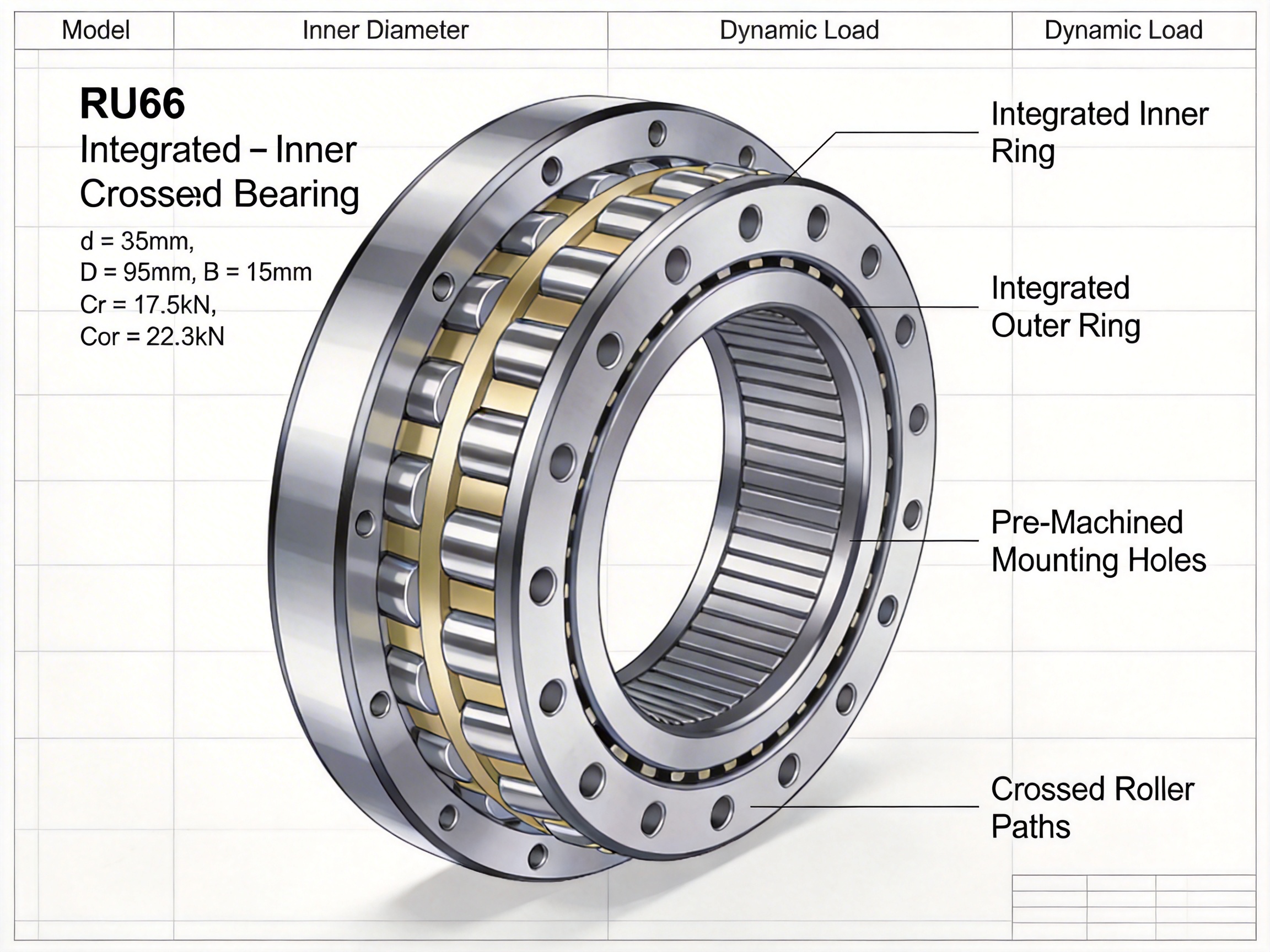
| RU 66 | 35 | 95 | 66 | 15 | 0.6 | 59 | 74 | 17.5 | 22.3 | 0.62 |
| RU 85(G)RU85X | 55 | 120 | 85 | 15 | 0.6 | 79 | 93 | 20.3 | 29.5 | 1 |
| RU 124(G)RU 124X | 80 | 165 | 124 | 22 | 1 | 114 | 134 | 33.1 | 50.9 | 2.6 |
| RU 148(G)RU 148X | 90 | 210 | 147.5 | 25 | 1.5 | 133 | 162 | 49.1 | 76.8 | 4.9 |
| RU 178(G)RU 178X | 115 | 240 | 178 | 28 | 1.5 | 161 | 195 | 80.3 | 135 | 6.8 |
| RU 228(G)RU 228X | 160 | 295 | 227.5 | 35 | 2 | 208 | 246 | 104 | 173 | 11.4 |
| RU 297(G)RU 297X | 210 | 380 | 297.5 | 40 | 2.5 | 272 | 320 | 156 | 281 | 21.3 |
| RU 445(G)RU 445X | 350 | 540 | 445.4 | 45 | 2.5 | 417 | 473 | 222 | 473 | 35.4 |
Below are answers to common questions about the RU66 Integrated Crossed Roller Bearing:
A1: The RU66 features an integrated inner and outer ring structure, whereas most traditional bearings use split rings. This design enhances rigidity, reduces internal clearance, and eliminates the need for extra mounting hardware (flanges/housings).
A2: Yes, the RU66’s dual rotation capability allows it to be configured for either inner or outer ring rotation, making it highly versatile for various applications.
A3: No, the RU66’s pre-machined holes allow for easy installation using standard bolts. No specialized tools are needed.
A4: The RU66 has a radial dynamic load rating (Cr) of 17.5 kN and a radial static load rating (Cor) of 22.3 kN.
A5: The RU66’s service life is up to 20% longer than split-ring bearings. Under normal operating conditions, it can last for 10,000+ hours.
A6: Yes, the manufacturer offers OEM/ODM services, including modified dimensions, special coatings (corrosion resistance), and tailored load ratings.
A7: The RU66 adheres to ISO 281 (dynamic load ratings) and ISO 15:2017 (tolerances) standards.
A8: Standard lead time is 15-20 working days for bulk orders. Custom orders may take longer.
A9: Yes, the manufacturer offers technical assistance, installation guidance, and troubleshooting support through a multilingual service team.
A10: The RU66 can operate in temperatures ranging from -40°C to 120°C. For extreme temperatures, custom heat-treated versions are available.
The RU66 Integrated Crossed Roller Bearing is a testament to the power of innovative engineering and customer-centric design. Its integrated structure, pre-machined mounting holes, dual rotation capability, and minimal installation impact make it a superior choice for modern industrial applications. Backed by the manufacturer’s advanced manufacturing processes, strict quality control, and commitment to sustainability, the RU66 delivers unmatched performance, reliability, and cost-effectiveness. As industries continue to evolve, the RU66 will remain a key component in driving precision and efficiency across sectors like robotics, automation, CNC machining, and medical devices.
1. Smith, J. (2022). Crossed Roller Bearings: Design, Applications, and Performance Metrics. Industrial Engineering Journal, 45(3), 123-145.
2. Global Bearing Market Report (2023). International Bearing Manufacturers Association, pp. 56-62.
3. Lee, H. (2021). Integrated Bearing Structures for High-Precision Automation. Robotics & Automation Today, 18(2), 78-91.
4. ISO 281:2007. Rolling bearings – Dynamic load ratings and rating life.
5. ISO 15:2017. Rolling bearings – Tolerances.
6. Manufacturer’s RU Series Product Technical Manual (2024).
Product Categories
Contact Us

Jane@ukl-bearing.com
Jenny@ukl-bearing.com
Andy@ukl-bearing.com
Ivy@ukl-bearing.com

+86-510- 88763239
+86-15371057968

No.1 Hehuan Road, Hudai Town, Binhu District, Wuxi City.
Ready to Begin?
Get in Touch

Now!
UKL BEARING
 English
 Español
 русский