Content
In demanding mechanical systems, a rod end bearing is more than a connection point. It is a compact motion-control component that must carry load, accommodate misalignment, resist wear, and continue operating in environments where vibration, shock, contamination, and repetitive movement are part of daily service. The SI steel-on-steel rod end bearing is designed for these requirements, combining a carbon-steel rod end body with a radial spherical plain bearing of the GE…E or GE…ES type. This construction gives the bearing a strong mechanical foundation, reliable articulation, and the ability to perform in industrial applications where strength, serviceability, and dimensional consistency are essential.
The SI steel-on-steel rod end bearing belongs to the rod end bearing category and is especially suitable for applications requiring oscillating movement, tilting movement, or low-speed rotational movement under high load. Typical application fields include automation equipment, construction machinery, agricultural machinery, hydraulic cylinders, robotic auxiliary mechanisms, packaging equipment, textile machinery, transportation systems, and general industrial linkages. Because the sliding contact pair is steel against steel, the bearing is particularly valued in heavy-load applications where impact resistance and durability are more important than ultra-low friction alone.
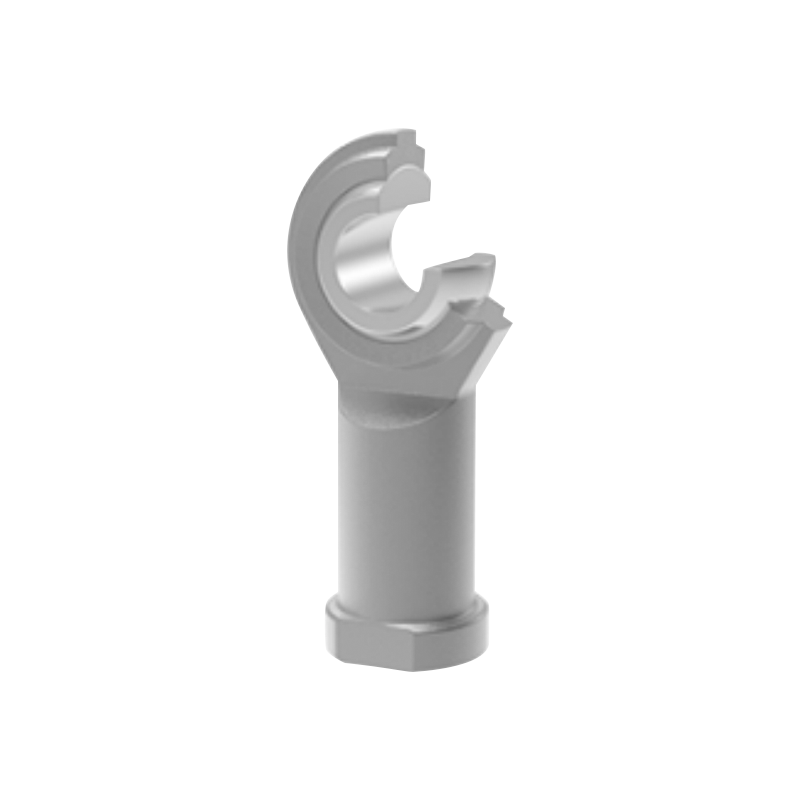
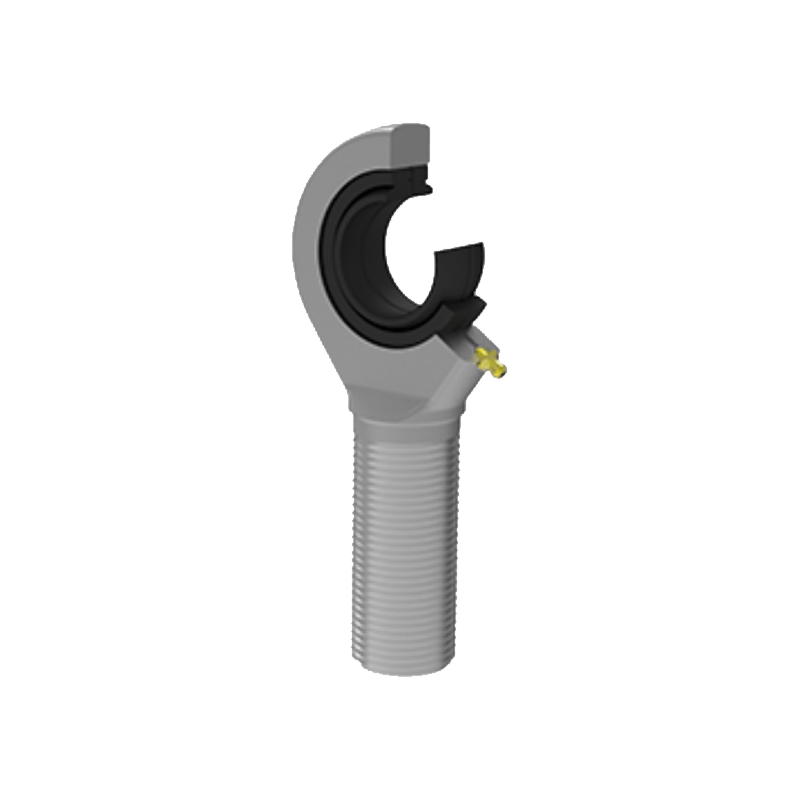
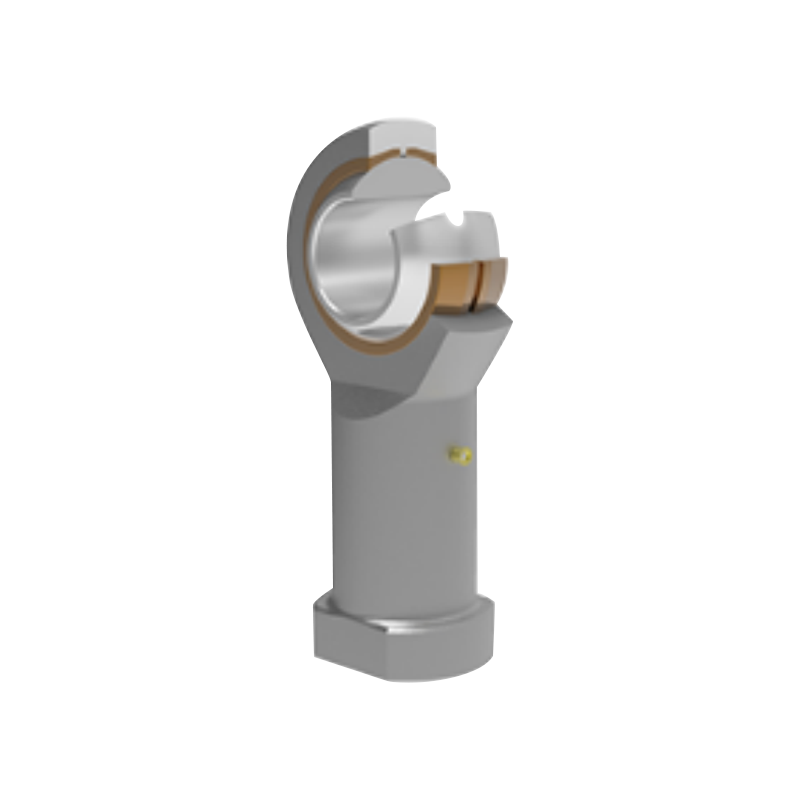
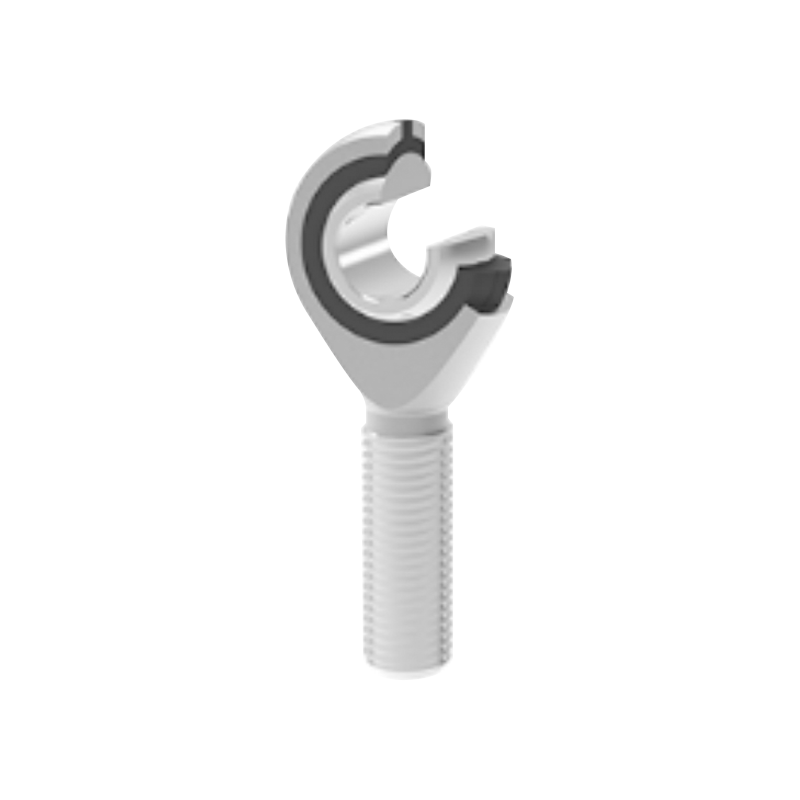
SI Steel On Steel Rod End Bearing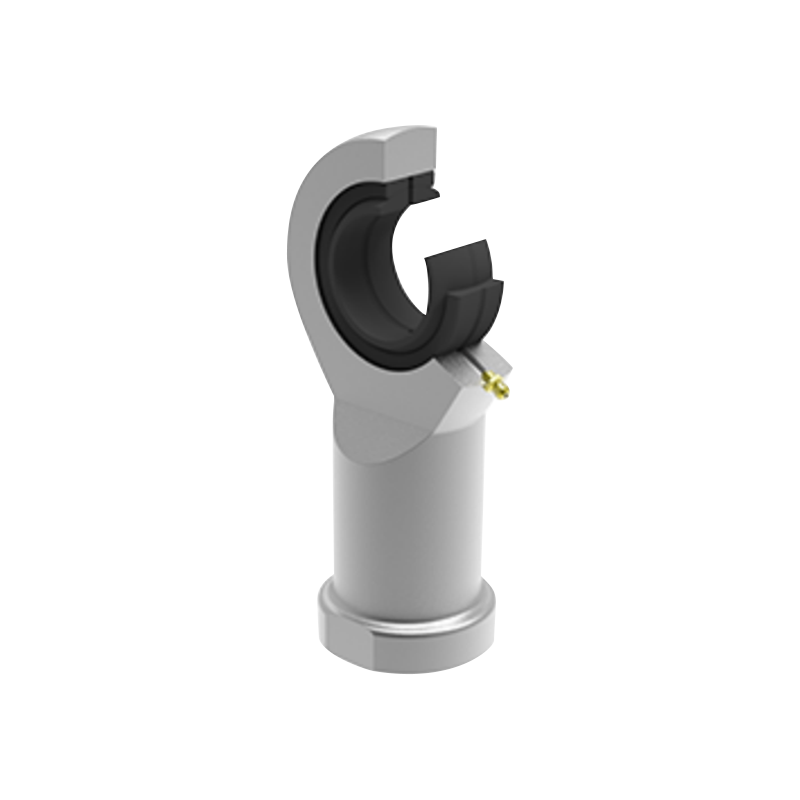
The product range covers SI…E models from 5 mm to 12 mm bore sizes and SI…ES models from 15 mm to 80 mm bore sizes. These options allow engineers to select an appropriate size for compact control rods as well as larger load-bearing linkages. The rod end body is made of carbon steel and receives a galvanized surface treatment, which improves external corrosion resistance and helps maintain a cleaner, more professional appearance during handling, storage, and operation. With an operating temperature range from approximately -50°C to +150°C, the bearing can support many industrial operating conditions, provided that lubrication and sealing practices are matched to the application.
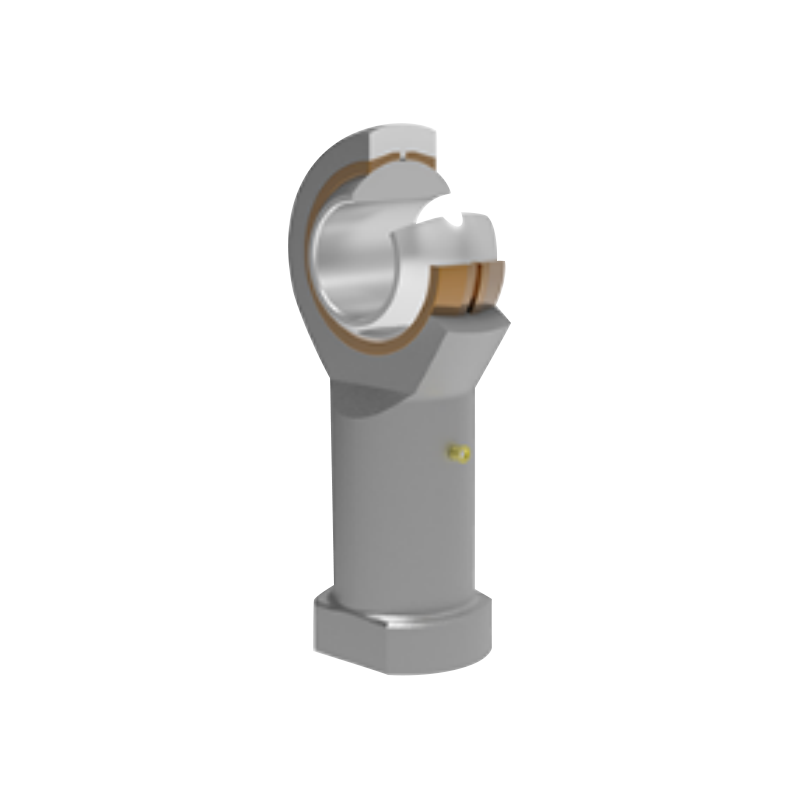
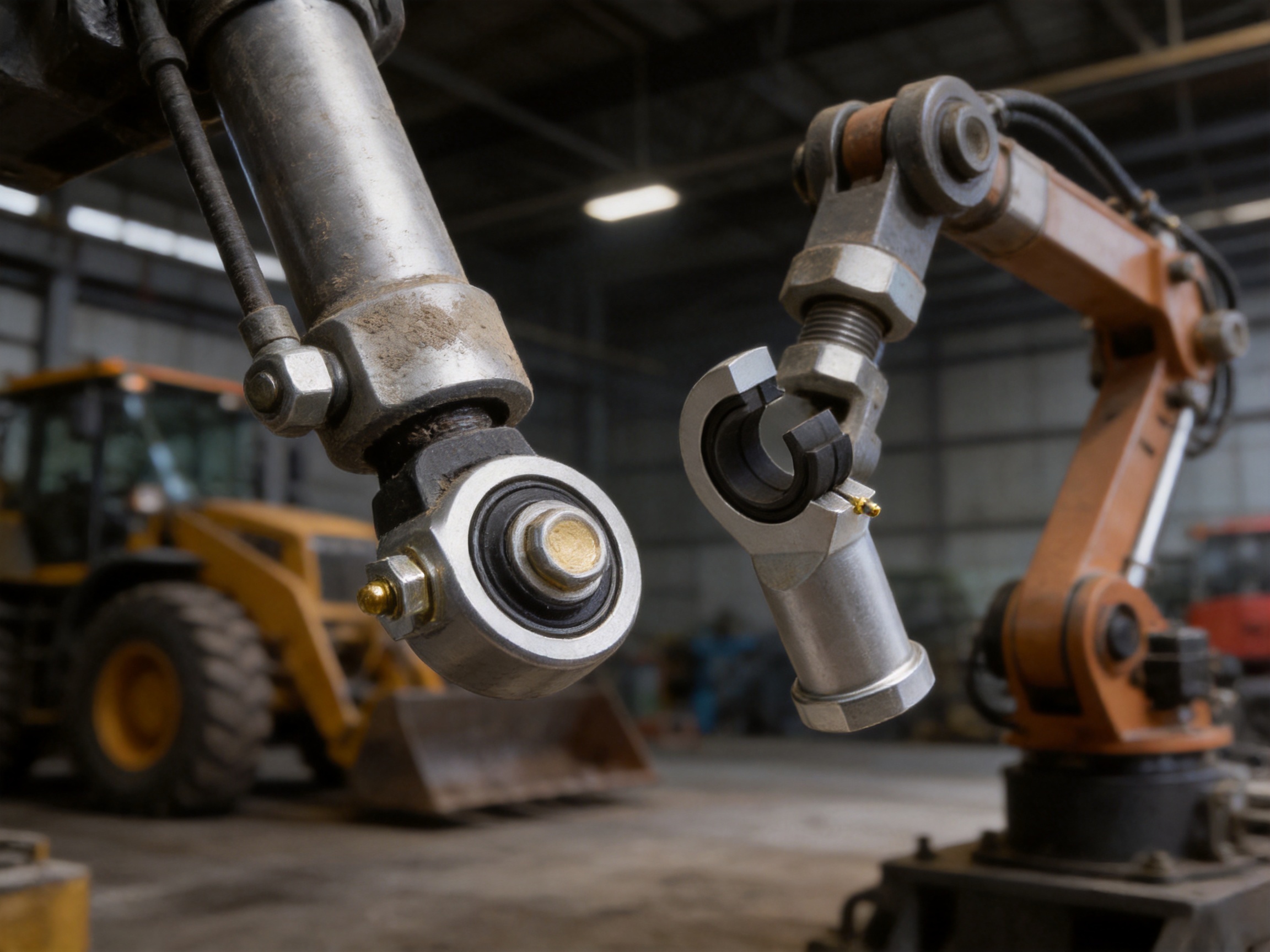
The SI steel-on-steel rod end bearing is an assembled bearing unit. Its structure consists of two key elements: the rod end body and the inserted radial spherical plain bearing. The spherical plain bearing allows angular displacement between the inner ring and the outer ring, while the rod end body provides a threaded connection to the surrounding mechanical structure. This combination makes the product highly useful where two parts must be connected but perfect alignment cannot be guaranteed throughout the full operating cycle.
Compared with rigid joints, the SI rod end bearing allows controlled articulation. Compared with simple bushings, it provides a defined spherical contact geometry and higher capability to compensate for misalignment. Compared with lightweight commercial rod ends, the steel-on-steel version is designed for applications where load capacity, shock resistance, and long service life are primary concerns. The geometry of the bearing supports angular movement while distributing stress over a spherical sliding surface, helping reduce localized wear when properly lubricated and installed.
The sliding friction pair is steel on steel. This is a traditional and proven solution for heavy-duty spherical plain bearings. Steel-on-steel contact offers excellent resistance to high static and dynamic load, especially when combined with appropriate lubrication. In applications involving shock loading or alternating loads, steel-on-steel bearings often provide better robustness than softer liner-based designs. While PTFE-lined or maintenance-free rod ends can be useful in some clean, light-duty, or limited-maintenance applications, steel-on-steel rod ends remain a strong choice for machinery where high load and periodic maintenance are expected.
One of the main advantages of the SI steel-on-steel rod end bearing is load-carrying strength. The product series includes compact sizes with dynamic load ratings starting from 3.4 kN and larger sizes reaching dynamic load ratings up to 400 kN. Static load ratings are also substantial, with larger variants reaching up to 750 kN depending on model. This makes the product suitable for mechanisms where the joint must resist both operating forces and occasional peak loads.
Another advantage is serviceability. Except for models with the suffix “E,” other models can be lubricated through an oil cup or rod end eyelet. Lubrication capability is important because steel-on-steel sliding surfaces rely on a lubricant film to reduce friction, carry away contaminants, and slow wear. In many industrial settings, a lubricated rod end can deliver a long working life when included in a routine maintenance plan. Competitor products that lack accessible lubrication points may be less suitable for dusty, wet, or high-load environments where lubricant renewal is necessary.
The galvanized carbon-steel housing is also a practical benefit. It provides a strong threaded body while offering improved surface protection compared with untreated steel. This matters during storage, transport, assembly, and operation in moderate environmental exposure. The body design is compact yet strong, giving engineers a durable mechanical interface without unnecessary bulk.
The availability of different thread options increases design flexibility. Rod end spherical plain bearings with different pitches or special thread precision requirements can be supplied. For left-hand threads, the bearing model and thread marking include “L” and “left,” such as SIL20ES M20×1.5 left 6H. This flexibility helps machine builders standardize linkages, reduce redesign work, and match existing equipment specifications.
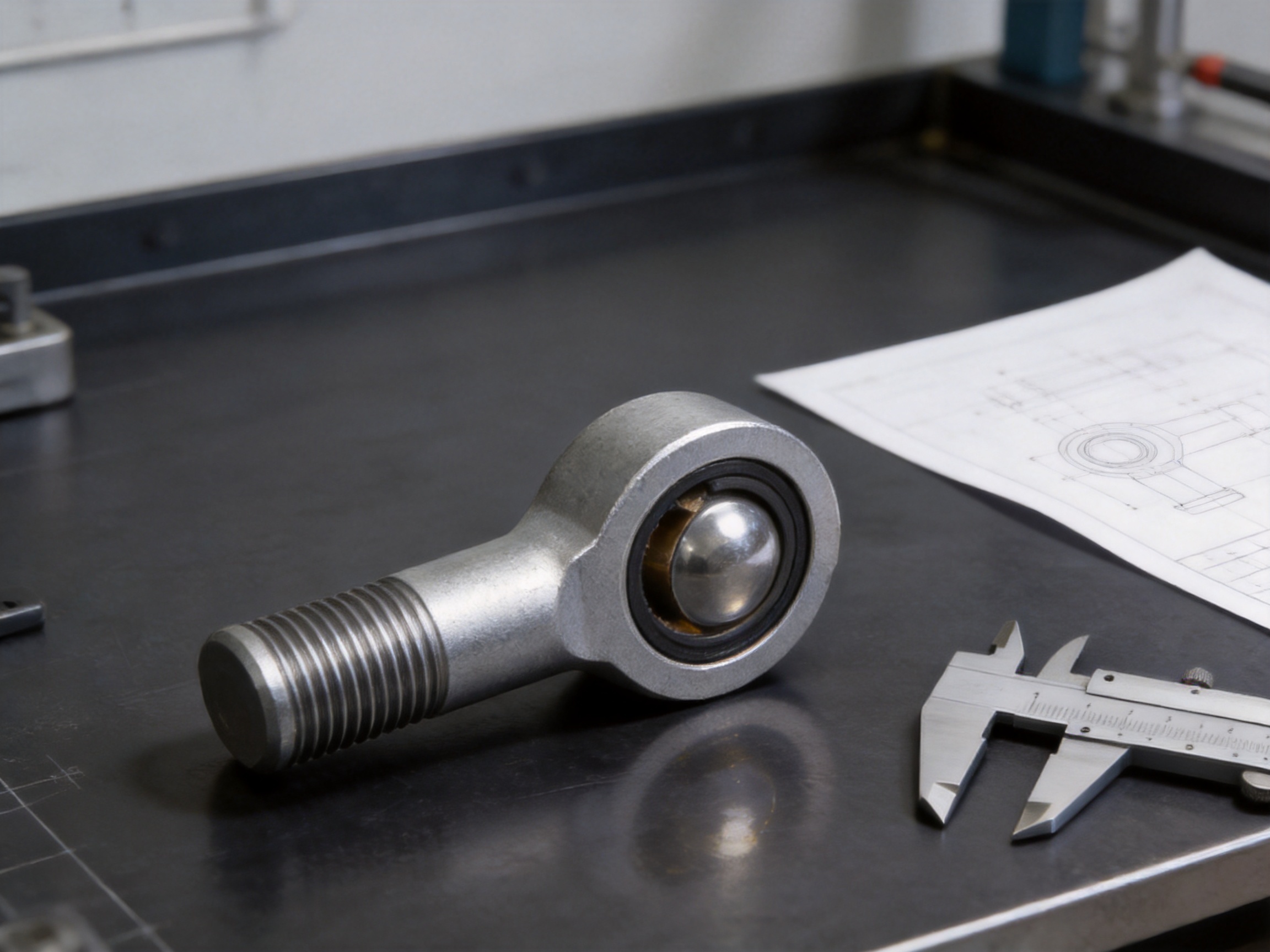
When compared with economical zinc-plated rod ends made for light-duty linkage, the SI steel-on-steel type provides a stronger solution for industrial load conditions. Lower-grade rod ends may be adequate for simple adjustment mechanisms, but they can experience accelerated wear, thread deformation, or housing fatigue when exposed to high load and vibration. The SI series, built around a spherical plain bearing insert, is intended for more serious mechanical duty.
When compared with plastic-lined or maintenance-free rod ends, the SI steel-on-steel version offers higher suitability for heavy loads, impact, and harsh use. Maintenance-free rod ends can reduce lubrication tasks, but the liner can limit load capacity, temperature capability, and resistance to contamination or shock depending on application. Steel-on-steel designs, when maintained correctly, are often preferred in hydraulic equipment, construction machinery, and load-bearing industrial linkages because their metallic sliding surfaces withstand demanding conditions.
When compared with unbranded or inconsistent imported rod ends, the value of a controlled manufacturing process becomes significant. Dimensional accuracy, heat-treatment stability, thread precision, surface finish, bearing fit, and assembly consistency all influence performance. A rod end that looks similar externally may not deliver the same fatigue life or operating reliability if the steel quality, raceway geometry, or lubrication path is poorly controlled. For buyers, the advantage is not only in the product specification but also in the manufacturing discipline behind it.
The SI steel-on-steel rod end bearing uses a steel/steel sliding friction pair. This configuration is suitable for applications involving high load and oscillating movement. The contact surfaces should be lubricated according to operating conditions, especially for ES-type models. The product can operate across a broad temperature range, generally from -50°C to +150°C, making it adaptable to cold outdoor equipment and warmer industrial environments.
The bearing body is made from carbon steel with a galvanized surface. Carbon steel provides strength and machinability, while galvanizing improves resistance against surface corrosion. The radial spherical plain bearing insert is based on GE…E or GE…ES series construction, creating a dependable articulated joint. The threaded shank provides a convenient mechanical connection, and thread variations may be made according to project requirements.
The product range includes small bore sizes for compact equipment and large sizes for heavy-duty linkages. The table below summarizes selected models to illustrate the breadth of the series. Engineers should verify final dimensions, loads, thread requirements, and lubrication arrangements before ordering, especially for custom thread pitches or left-hand thread configurations.
| Model | Bore d mm | Thread | Approx. Dynamic Load kN | Approx. Static Load kN | Approx. Weight kg | Typical Use Direction |
| SI5E | 5 | M5 | 3.4 | 8.1 | 0.023 | Compact linkage and light control rods |
| SI8E | 8 | M8 | 5.5 | 12.9 | 0.040 | Small automation mechanisms |
| SI12E | 12 | M12 | 10 | 24.5 | 0.108 | Medium control and adjustment linkages |
| SI20ES | 20 | M20×1.5 | 30 | 60 | 0.335 | Hydraulic and industrial rod connections |
| SI35ES | 35 | M36×3 | 79 | 146 | 1.50 | Heavy machinery linkage |
| SI50ES | 50 | M45×3 | 156 | 290 | 3.48 | High-load oscillating joints |
| SI70ES | 70 | M56×4 | 313 | 610 | 8.72 | Large industrial and mobile equipment |
| SI80ES | 80 | M64×4 | 400 | 750 | 12.9 | Very heavy-duty mechanical connections |
A rod end bearing can only perform as well as the manufacturing process allows. UKL Bearing Manufacturing Co., Ltd. operates as an integrated manufacturer and trading organization with a focus on precision bearing solutions. Since its establishment in 2020, the company has developed around engineering service, international supply, and product customization. With more than 15 years of OEM and ODM export experience in its team, the company supports customers in Europe, Asia, Africa, Russia, and other regions.
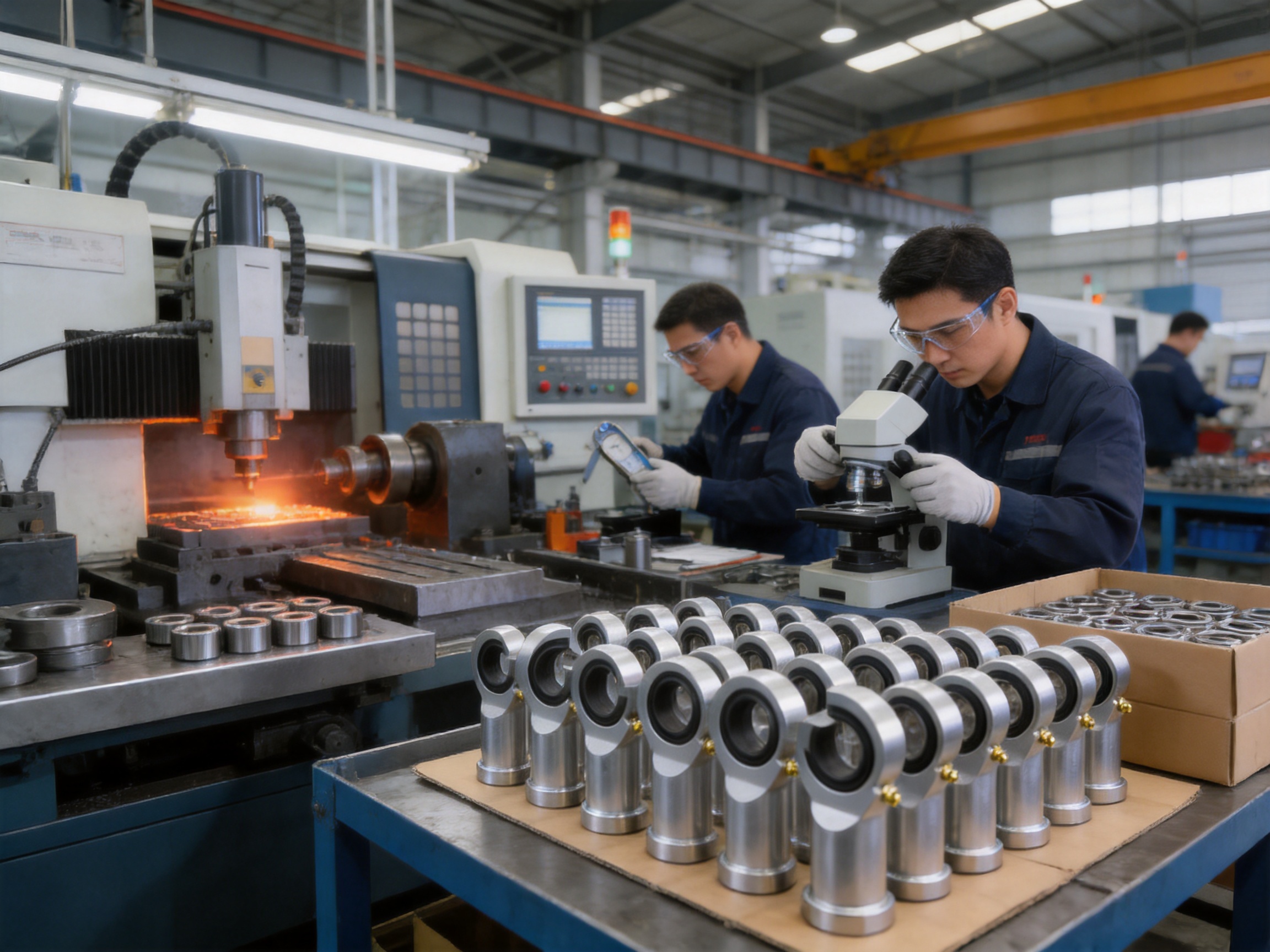
The production system covers multiple essential stages: forging, turning, heat treatment, grinding, assembly, and packaging. Each step contributes to the final quality of the SI rod end bearing. Forging helps produce strong steel blanks with suitable grain structure. Turning forms the external geometry, thread base, and housing features. Heat treatment improves the mechanical properties of the bearing components. Grinding refines accuracy and surface quality. Assembly ensures correct fitting between the rod end body and spherical plain bearing insert. Packaging protects the finished product during transport and storage.
Advanced manufacturing is not only about machines; it is also about process control. Dimensional inspection, material verification, surface treatment management, and assembly checks all help reduce variation. A rod end bearing must be consistent from batch to batch because the customer’s equipment depends on predictable installation dimensions and predictable operating behavior. When the bore, thread, center height, and housing dimensions are controlled, customers can reduce assembly problems and avoid field failures caused by mismatched parts.
UKL’s production capacity of approximately 10,000 to 50,000 units per month supports both project-based orders and recurring industrial supply. This capacity is valuable for OEM customers who require stable lead times and repeatable quality. For distributors, it supports inventory planning across multiple sizes. For maintenance buyers, it increases the chance that replacement bearings can be obtained without long delays.
For rod end bearings, quality control begins with material selection. Carbon steel for the rod end body must provide sufficient strength, machinability, and dimensional stability. The spherical plain bearing insert must have accurate spherical geometry and suitable contact surfaces. If these basic requirements are not met, lubrication alone cannot prevent premature failure. Therefore, consistent incoming material control is a foundation for product reliability.
Turning and threading are especially important for rod end bearings. The threaded shank must fit correctly into the mating component, whether the thread is standard right-hand, left-hand, fine pitch, or specially specified. Poor thread accuracy can create assembly looseness, uneven load distribution, or failure under vibration. Thread precision requirements such as 6H can be supplied for appropriate designs, enabling better compatibility with engineered assemblies.
Heat treatment plays a major role in wear resistance and strength. A bearing that is too soft may deform or wear quickly. A bearing that is too brittle may crack under impact or alternating load. Controlled heat treatment helps balance hardness, toughness, and dimensional stability. Grinding and finishing then refine the bearing surfaces so that the sliding contact can function smoothly when lubricated.
Assembly quality is another key factor. The spherical plain bearing must be seated securely in the rod end body. The final unit must allow articulation without excessive looseness or binding. A well-assembled rod end bearing provides smooth movement and reliable load transfer. Inconsistent assembly can cause noise, uneven wear, and unpredictable operating life.
In automation systems, rod end bearings are used in linkages, actuators, guided arms, positioning mechanisms, and adjustment rods. The SI steel-on-steel rod end bearing is useful where the movement is not purely rotational and where misalignment must be absorbed. Its compact design makes it suitable for machinery where space is limited but strength is required.
In robotics and intelligent equipment, rod end bearings may appear in auxiliary positioning mechanisms, support linkages, end-effector adjustment systems, and motion-transfer assemblies. While high-precision robot joints often use specialized bearings such as cross roller bearings or angular contact ball bearings, rod end bearings remain important in peripheral motion systems that require adjustability and angular accommodation.
In hydraulic cylinder systems, rod end bearings are frequently used at cylinder ends or linkage connection points. Hydraulic systems generate high force and often experience changing angles during extension and retraction. A spherical rod end bearing allows the connection to align naturally as the mechanism moves, reducing side loading and helping protect the cylinder rod and mounting structure.
In construction and agricultural machinery, the bearing must deal with impact, dust, moisture, and variable loading. Steel-on-steel construction with lubrication capability is a strong advantage in these conditions. Operators can renew grease during maintenance, flushing out some contamination and maintaining a protective film between sliding surfaces.
In packaging, textile, printing, and transportation equipment, rod end bearings help transmit motion through compact linkages. Even when loads are lower than in construction machinery, the need for alignment compensation remains important. A bearing that can tolerate angular displacement helps reduce stress on connected components and improves overall mechanical reliability.
Because the SI series uses a steel-on-steel sliding pair, lubrication is essential for many models and many applications. The product information specifies that models with the suffix “E” are not lubricated, while other models may be lubricated through an oil cup or rod end eyelet depending on configuration. Maintenance teams should confirm the exact model and lubrication route before installation.
Lubrication reduces direct metal-to-metal contact, lowers friction, protects against corrosion, and helps carry away fine wear particles. In high-load oscillating motion, the contact area may not experience full rotation, so lubricant distribution can be challenging. Regular grease replenishment is therefore recommended where accessible. The lubrication interval should be based on load, speed, movement angle, temperature, contamination level, and operating hours.
When installing the bearing, the mating parts should be clean and correctly aligned. The threaded shank should be screwed into the mating component to an adequate engagement length. Locking devices such as jam nuts, thread lockers, or mechanical retainers may be used according to machine design requirements. The bearing should not be forced into severe misalignment beyond its allowed angular range, because excessive angle may create edge loading and reduce service life.
Periodic inspection should check for looseness, unusual noise, corrosion, cracked housing, damaged threads, excessive play, or dry running marks. If the bearing is used in a safety-critical mechanism, replacement intervals should be based on engineering assessment rather than waiting for visible failure. Proper maintenance allows steel-on-steel rod end bearings to deliver strong long-term performance.
One reason the SI steel-on-steel rod end bearing is attractive to industrial buyers is the availability of customization. Different thread pitches and special thread precision requirements can be supplied. This matters because rod end bearings are often integrated into larger assemblies where standard catalog threads may not match existing designs. Customization reduces the need for adapters, simplifies assembly, and helps maintain compact machine design.
Left-hand thread options are also important. Many linkages use one right-hand and one left-hand rod end so that the center distance can be adjusted by rotating the connecting rod. In such cases, proper marking is essential. For example, a left-hand threaded model may be indicated as SIL20ES M20×1.5 left 6H. Clear marking helps avoid assembly errors and supports efficient maintenance.
For OEM projects, the company can support discussions about dimensional requirements, operating conditions, expected loads, packaging, and export documentation. This is especially useful for customers who need consistent supply across multiple machine models. By combining manufacturing capacity with technical communication, the supplier can help customers move from sample approval to batch delivery more efficiently.
Many bearing buyers compare products only by size and price. However, rod end bearings operate as load-bearing safety components in many machines. A small difference in heat treatment, spherical accuracy, thread quality, or assembly fit can make a large difference in field performance. Integrated manufacturing reduces the risk of uncontrolled outsourcing and makes it easier to maintain consistent standards.
UKL integrates research and development, production, and international distribution. This structure supports faster feedback between customer requirements and manufacturing improvement. If a customer needs a modified thread, special inspection requirement, or packaging specification, the communication path is shorter than with a purely trading company. At the same time, the company’s export experience helps international customers obtain products that match both technical and logistics expectations.
The company’s production lines include forging, turning, heat treatment, grinding, assembly, and packaging. This complete workflow allows greater control over component quality and delivery scheduling. For a steel-on-steel rod end bearing, every one of these processes affects performance. A forged body must be strong, a turned thread must be accurate, a heat-treated surface must resist wear, a ground spherical surface must move smoothly, and the assembled product must meet dimensional requirements.
Industrial bearing manufacturing requires energy, steel, coolants, lubricants, packaging materials, and logistics resources. A responsible manufacturer must consider how to reduce waste and improve efficiency. UKL emphasizes environmentally responsible processes, material recycling, and optimized energy usage as part of its long-term commitment. These practices are increasingly important for global customers who evaluate suppliers not only by price but also by environmental and operational responsibility.
Material recycling helps reduce waste from machining and production. Energy optimization can reduce the environmental impact of heat treatment, grinding, and other power-intensive processes. Process stability also contributes to sustainability because fewer defective parts mean less scrap, fewer reworks, and lower resource consumption. Quality and sustainability therefore support each other.
The company also supports educational and technical training initiatives to foster future engineering talent. In the bearing industry, experienced technicians and engineers are essential because many quality factors depend on practical understanding of materials, machine tools, heat treatment, inspection, and assembly. Training helps maintain long-term manufacturing capability and supports continuous improvement.
Industrial buyers often need more than a product. They need stable communication, technical response, export experience, and after-sales support. UKL has built long-term partnerships with distributors and OEM clients across multiple continents, including customers in the United States, Italy, Germany, Poland, South Africa, Egypt, India, and other regions. This global experience helps the company understand different market standards, packaging preferences, and documentation requirements.
A multilingual service team provides technical response, installation guidance, and after-sales maintenance support. This is valuable when customers must confirm model selection, thread direction, lubrication arrangement, or replacement compatibility. Prompt communication can prevent ordering mistakes and reduce downtime for maintenance customers.
For distributors, broad product knowledge is useful because customers may request rod end bearings along with spherical roller bearings, cylindrical roller bearings, tapered roller bearings, mounted bearings, angular contact ball bearings, cross roller bearings, Nilos rings, and robot bearings. A supplier with a broader bearing portfolio can help customers consolidate sourcing while still receiving technical support for specialized applications.
Selecting the correct SI steel-on-steel rod end bearing begins with the bore size. The bore must match the pin or shaft used in the linkage. Next, the thread size and thread direction must match the rod or mating component. Engineers should confirm whether a right-hand or left-hand thread is required and whether the pitch is standard or special.
Load rating is another critical factor. The dynamic and static load ratings should be compared with actual operating loads, including shock, vibration, and peak forces. A safety factor should be applied according to the application. For mechanisms with impact loading or uncertain load conditions, a larger size or higher-rated bearing may be appropriate.
Operating angle must also be considered. Rod end bearings can accommodate angular misalignment, but every model has geometric limits. If the linkage exceeds the allowable angle, the bearing may experience edge contact or interference. The surrounding components should allow sufficient clearance for the bearing head during movement.
Environmental conditions influence material and maintenance choices. Dusty, wet, or outdoor applications require attention to lubrication intervals and corrosion protection. High-temperature applications require suitable grease and confirmation that operating temperature remains within the bearing’s acceptable range. Low-temperature applications require lubricants that remain effective without excessive stiffness.
Maintenance access should be considered during machine design. If an ES-type lubricated bearing is selected, the grease path must remain accessible after installation. A bearing that cannot be lubricated in the field may not achieve its expected life in a harsh environment. Designers should plan grease nipple access, inspection space, and replacement clearance.
The true cost of a rod end bearing is not limited to its purchase price. A low-cost component can become expensive if it fails early, damages adjacent parts, causes downtime, or requires frequent replacement. The SI steel-on-steel rod end bearing is designed to provide value through strength, serviceability, dimensional reliability, and broad application suitability.
In OEM manufacturing, consistent bearing quality reduces assembly variation and warranty risk. In maintenance operations, a reliable replacement bearing reduces machine downtime. In distribution, a complete range of sizes helps meet customer demand without sourcing from many inconsistent suppliers. These life-cycle benefits can be more important than a small difference in unit price.
Steel-on-steel rod end bearings are especially valuable when users can implement proper lubrication and inspection. Under these conditions, the bearing’s metallic contact surfaces can provide long service life under heavy load. For companies operating fleets of machinery, routine lubrication is often already part of maintenance practice, making the SI series a practical and durable solution.
It is an assembled rod end spherical plain bearing made from a rod end body and a radial spherical plain bearing insert. The rod end body is carbon steel with a galvanized surface, and the sliding friction pair is steel against steel. It is used to connect mechanical parts while allowing angular movement and misalignment compensation.
It is commonly used in hydraulic cylinders, industrial linkages, automation equipment, agricultural machinery, construction machinery, transportation systems, and other mechanisms requiring strong articulated connections under load.
Steel-on-steel contact provides high load capacity, good shock resistance, and strong suitability for heavy-duty applications. When properly lubricated, it can perform reliably in harsh industrial environments.
Many SI…ES models can be lubricated through an oil cup or rod end eyelet. Models with the suffix “E” are identified as not lubricated. Users should confirm the exact model and follow a maintenance schedule based on load, speed, environment, and operating hours.
The operating temperature range is approximately -50°C to +150°C, depending on lubricant selection, application conditions, and installation environment.
Yes. Left-hand threaded versions can be supplied and should be clearly marked with “L” and “left,” such as SIL20ES M20×1.5 left 6H.
Maintenance-free rod ends are useful in some applications, but steel-on-steel rod ends are often preferred for heavier loads, shock conditions, and harsh environments where periodic lubrication is acceptable or already part of the maintenance plan.
The galvanized surface improves external corrosion resistance and helps protect the carbon-steel body during storage, handling, and operation in moderate environmental exposure.
Engineers should confirm bore size, thread size, thread direction, load rating, angular movement, lubrication method, operating temperature, environmental exposure, and maintenance access.
The product is supported by integrated manufacturing processes including forging, turning, heat treatment, grinding, assembly, and packaging. These processes help ensure strength, dimensional accuracy, surface quality, and consistent product performance.
The SI steel-on-steel rod end bearing is a practical and durable solution for machinery that requires strong articulated connections. Its steel/steel sliding pair, galvanized carbon-steel body, broad size range, and lubrication capability make it suitable for heavy-duty industrial environments. With available bore sizes from compact 5 mm models to large 80 mm models, the series supports a wide range of linkage and actuator applications.
Its advantages over many competing products come from a combination of structural strength, serviceability, customization options, and manufacturing consistency. The bearing is not simply a commodity connector; it is a precision mechanical component that influences machine reliability, alignment, and service life. For applications involving high load, oscillating movement, shock, and environmental exposure, the SI steel-on-steel rod end bearing offers a balanced solution.
Behind the product, UKL Bearing Manufacturing Co., Ltd. provides integrated production, export experience, technical communication, and a broad bearing portfolio. The company’s process chain, from forging to packaging, supports consistent quality and reliable supply. For OEMs, distributors, and maintenance teams seeking dependable rod end bearings, this combination of product performance and manufacturing capability creates long-term value.
1. ISO 12240, Spherical Plain Bearings: Dimensional and Tolerance Standards.
2. ISO 76, Rolling Bearings: Static Load Ratings.
3. ISO 281, Rolling Bearings: Dynamic Load Ratings and Rating Life.
4. Harris, T. A., and Kotzalas, M. N. Rolling Bearing Analysis. CRC Press.
5. Brändlein, J., Eschmann, P., Hasbargen, L., and Weigand, K. Ball and Roller Bearings: Theory, Design and Application. Wiley.
6. Spherical Plain Bearings and Rod Ends: Engineering Design Guidelines, industrial bearing catalog literature.
Product Categories
Contact Us

Jane@ukl-bearing.com
Jenny@ukl-bearing.com
Andy@ukl-bearing.com
Ivy@ukl-bearing.com

+86-510- 88763239
+86-15371057968

No.1 Hehuan Road, Hudai Town, Binhu District, Wuxi City.
Ready to Begin?
Get in Touch

Now!
UKL BEARING
 English
 Español
 русский