Content
Heavy-duty industrial equipment demands bearing solutions that can withstand enormous radial forces, repeated shock loads, long operating cycles, and demanding production environments. In rolling mills, blooming mills, and other large-scale metal-processing systems, a bearing failure can interrupt an entire production line, damage associated components, and create substantial maintenance costs. For these applications, the selection of a bearing must be based not only on nominal load capacity, but also on internal geometry, clearance control, lubrication compatibility, installation accuracy, sealing arrangements, maintenance requirements, and manufacturing consistency.
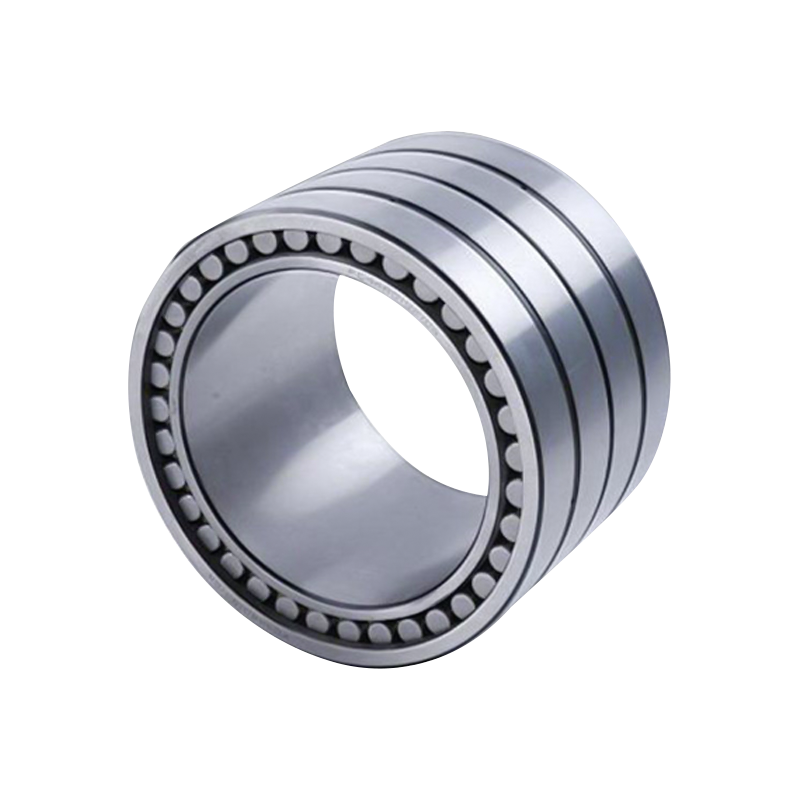
The 331138 AG Four-Row Tapered Roller Bearing is designed for applications where extremely high radial load capacity is essential and where partial axial loads may also be present. Its four-row tapered roller construction provides a high level of load distribution within a compact radial arrangement. The bearing is particularly suitable for heavy machinery, including four-high hot rolling mills, cold rolling mills, blooming mills, and related industrial equipment.
Unlike a conventional single-row bearing, the four-row design distributes applied forces through multiple rows of tapered rollers and raceways. This configuration supports heavy radial loading while maintaining the fundamental benefits of tapered roller bearing technology, including controlled rolling contact, effective guidance, and the ability to accommodate axial forces in defined directions. The internal clearance may also be adjusted through spacers or shims, allowing the bearing arrangement to be adapted to operating conditions, shaft fits, thermal behavior, and required running performance.
Manufactured by UKL Bearing Manufacturing Co., Ltd., the 331138 AG is supported by integrated engineering, production, inspection, and international service capabilities. The company combines bearing research and development with forging, turning, heat treatment, grinding, assembly, and packaging operations. This integrated approach helps improve process continuity and supports consistent product quality from raw material preparation to final delivery.
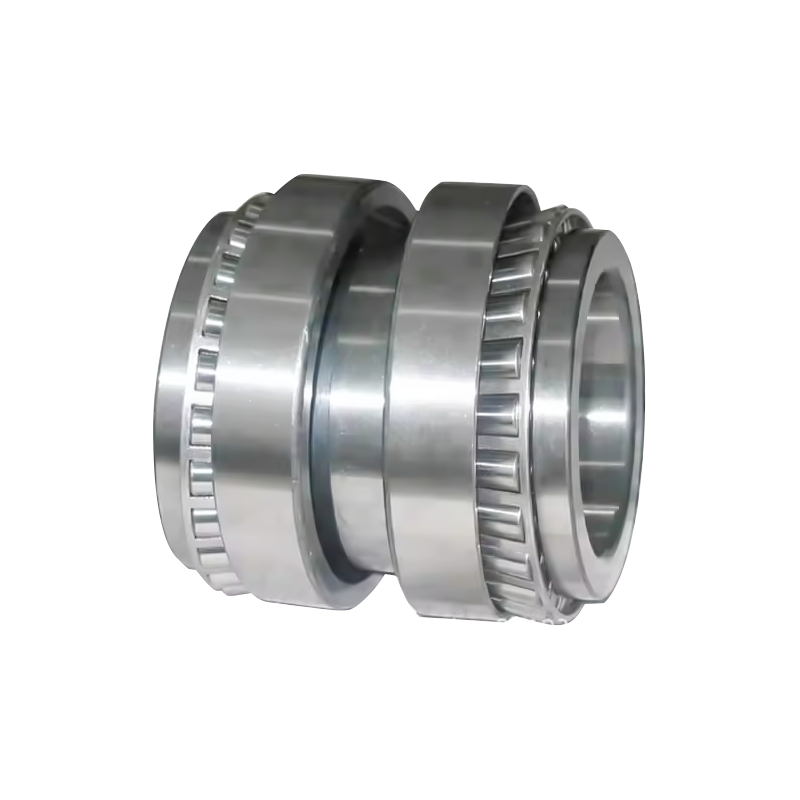
331138 AG Four-Row Tapered Roller Bearing
The 331138 AG is a four-row tapered roller bearing developed for extremely demanding radial-load applications. Four rows of tapered rollers operate between matched tapered raceways, creating a bearing arrangement capable of supporting loads that would exceed the practical limits of many standard bearing configurations. The design is especially useful where the available installation space is limited in relation to the required load capacity.
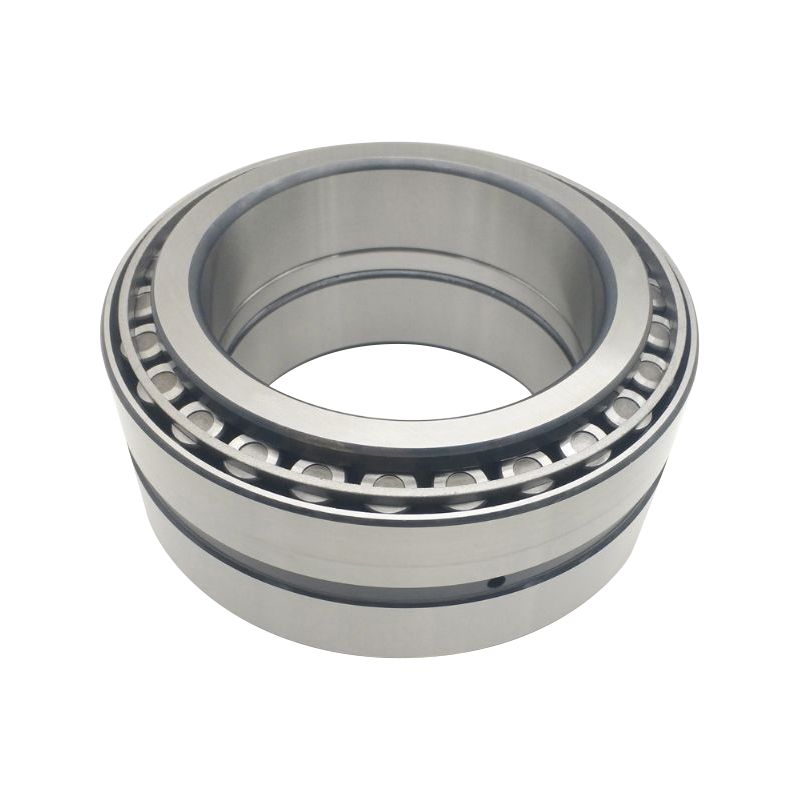
A tapered roller bearing operates through the interaction of tapered rollers, an inner ring or cone assembly, and an outer ring or cup assembly. The theoretical extension of the raceway and roller contact lines converges toward a common point on the bearing axis. This geometry allows the bearing to transmit radial loads and axial loads through rolling contact, while also controlling the relationship between the rollers and raceways.
In the 331138 AG configuration, the presence of four roller rows increases the number of effective rolling contacts available to carry the applied load. Instead of concentrating the load within one row, the bearing divides it across multiple rows. This can reduce the load carried by individual rollers and raceway zones, provided that the bearing is correctly installed, properly lubricated, and operated within its specified limits.
The bearing is intended for heavy-duty service rather than light machinery or general-purpose applications. Its most suitable operating environment is one where high radial loads, intermittent axial forces, shock, vibration, and frequent production cycles are expected. Typical equipment includes rolling mill work rolls, backup rolls, blooming mill assemblies, reduction equipment, and other large industrial machines requiring high-capacity radial support.
The “AG” designation identifies the specified product configuration and should be confirmed with the supplier when ordering replacement components, matching assemblies, or accessories. In industrial bearing applications, correct identification is essential because a bearing that appears dimensionally similar may have different internal geometry, clearance, material specifications, or spacer arrangements.
The main advantage of a four-row tapered roller bearing is its ability to accommodate very high radial loads in a single bearing position. Heavy rolling mill machinery produces forces that may vary according to strip thickness, rolling speed, material hardness, roll pressure, and operating conditions. These forces can be transmitted through the roll neck and into the bearing housing. A bearing with insufficient capacity may experience accelerated raceway fatigue, roller damage, plastic deformation, or excessive temperature rise.
Four-row construction provides a greater number of contact elements than a single-row or many two-row arrangements. This increases the available load-carrying surface and enables the bearing to distribute force across several rows. The result is a bearing arrangement intended to provide high static and dynamic capacity while supporting long service intervals under appropriate conditions.
The multiple-row arrangement also helps the bearing manage complex load patterns. A rolling mill may generate a predominantly radial load, but axial forces can occur because of roll alignment, thermal expansion, roll crossing, guide forces, housing movement, or operational transients. Although the bearing should not be treated as a universal thrust bearing, its tapered geometry allows it to accommodate partial axial loads within the designed operating range.
Another significant feature is the ability to pre-adjust internal clearance by modifying spacers or shims. Internal clearance influences load distribution, operating temperature, roller guidance, and the amount of movement permitted between components. A clearance that is too large may allow excessive movement and uneven load distribution. A clearance that is too small may create excessive preload, heat generation, and premature fatigue. The adjustable spacer arrangement allows technicians and engineers to select a setting appropriate for the machine and operating conditions.
Compared with a fixed-clearance bearing arrangement, an adjustable four-row design can offer greater flexibility during installation and maintenance. The final setting can be considered together with shaft diameter, housing geometry, fit interference, operating temperature, lubricant viscosity, and anticipated load. This flexibility is valuable in rolling mill applications, where the same general machine type may operate under different production schedules and thermal conditions.
The defining advantage of the 331138 AG is its ability to support extremely high radial loads. Multiple tapered roller rows share the applied load, allowing the bearing to serve in positions where a standard single-row bearing would be inadequate. This high capacity is important for work rolls, backup rolls, and other rotating shafts subjected to strong compressive and bending forces.
High radial capacity can also help simplify machine design. Instead of using several separate bearing positions or a more complicated combination of bearing types, a four-row bearing can consolidate load support in one carefully engineered location. The final arrangement must always be determined by the equipment designer, but the high-capacity configuration can contribute to a more compact and serviceable bearing housing.
Tapered roller geometry gives the bearing an axial load capability in addition to its radial capacity. The rollers and raceways are arranged so that forces can be transmitted along the bearing axis as well as perpendicular to it. In rolling mill systems, this is useful because axial forces may arise from alignment variations, guide systems, thermal movement, or changes in the material being processed.
The bearing’s axial capacity depends on internal design, operating speed, lubrication, clearance, installation, and the magnitude and direction of the applied load. Therefore, the 331138 AG should be selected using actual machine data rather than relying only on its general product category. Technical confirmation is recommended whenever axial loads are significant or when the bearing is part of a locating and non-locating arrangement.
The ability to adjust clearance through spacers or shims is one of the most practical characteristics of this bearing type. Clearance can be adapted to the shaft and housing fits, expected thermal expansion, lubricant behavior, and required running accuracy. This is particularly relevant in rolling mills because bearing temperatures and load conditions may change substantially during continuous production.
Correct clearance adjustment improves the probability that the load will be distributed evenly across the four roller rows. It can also reduce the risk of excessive roller sliding, localized stress, and abnormal heat generation. Adjustment should be performed by trained personnel using the manufacturer’s instructions and suitable measuring equipment. Improvised spacer modification or uncontrolled grinding can compromise the bearing’s internal geometry and should be avoided.
A bearing does not achieve long service life solely because it has a large number of rollers. Service life depends on the combined influence of material quality, heat treatment, raceway accuracy, surface finish, load distribution, lubrication, contamination control, installation, alignment, and maintenance. The 331138 AG is designed as part of an industrial bearing program that considers these factors together.
When operating conditions remain within the intended limits, the four-row design can reduce the stress carried by individual rolling contacts. This may support longer fatigue life and more stable performance than an undersized bearing arrangement. Proper maintenance remains essential, but the bearing’s basic architecture provides a strong foundation for reliable heavy-duty operation.
Rolling mills often expose bearings to water, scale, metal particles, high temperatures, vibration, shock, and lubricant contamination. A heavy-duty bearing must therefore be supported by an appropriate sealing, lubrication, inspection, and housing strategy. The 331138 AG is suitable for use in such systems when the complete bearing arrangement is designed to protect the rolling contacts from harmful contaminants.
The bearing itself should not be considered isolated from the surrounding machine. Housing condition, shaft finish, oil or grease delivery, cooling systems, seals, and mounting procedures have a direct effect on operating results. The product’s high load capacity is most effectively used when it forms part of a complete reliability program.
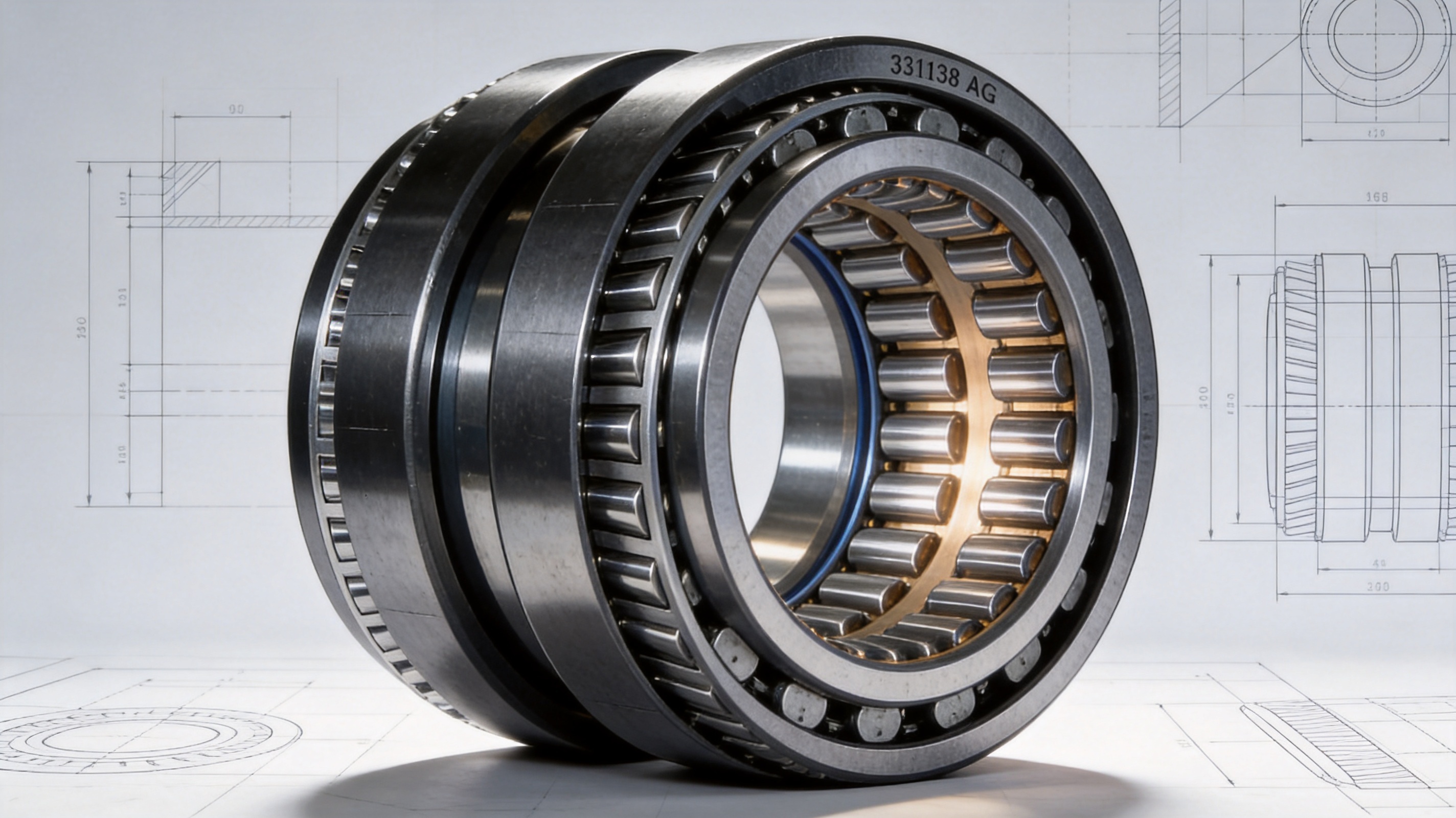
Choosing between a four-row tapered roller bearing and another bearing type requires an evaluation of load direction, speed, stiffness, installation space, operating temperature, adjustment requirements, and maintenance conditions. No single bearing design is ideal for every application. However, the four-row tapered roller construction offers distinct advantages in heavy radial-load machinery.
| Bearing arrangement | Main strength | Typical limitation in heavy rolling equipment | Potential advantage of the 331138 AG |
|---|---|---|---|
| Single-row tapered roller bearing | Good radial and axial load capability in a relatively simple arrangement | Lower total radial capacity for extreme loads | Four rows provide greater load-sharing potential |
| Two-row tapered roller bearing | Balanced radial and axial support | May require a larger or multiple-bearing arrangement for very high loads | Higher capacity within a specialized multi-row design |
| Spherical roller bearing | Excellent radial capacity and misalignment accommodation | Axial guidance and stiffness may not match a tapered arrangement for certain applications | Controlled tapered contact and partial axial-load support |
| Cylindrical roller bearing | High radial capacity and, in selected designs, high speed capability | Axial load capability varies by design and may require additional bearings | Integrated tapered geometry for radial and partial axial loads |
| Plain bearing or sleeve bearing | Can support very large loads at low or moderate speeds | Requires suitable lubrication film and may have different friction and maintenance behavior | Rolling contact offers a different efficiency and service approach |
| Multiple separate bearing sets | Flexible system configuration | More components, more installation points, and more opportunities for misalignment | Multi-row capacity in a consolidated bearing arrangement |
Compared with a single-row tapered roller bearing, the 331138 AG offers a substantial increase in load-sharing capability. A single-row bearing can be effective in moderate-duty applications, but it may not be the most practical solution for a rolling mill work roll or backup roll subjected to continuous high pressure. Selecting a larger single-row bearing may also increase housing size without providing the same integrated multi-row arrangement.
Compared with a two-row tapered roller bearing, the four-row design is intended for more severe radial loading. The trade-off is that a four-row bearing may require more careful installation, clearance adjustment, and maintenance planning. This is not a disadvantage in a professional heavy-industry environment; rather, it reflects the need to manage a higher-performance component correctly.
Spherical roller bearings are widely used for heavy radial loads and can tolerate certain shaft or housing misalignments. However, their axial guidance characteristics and stiffness may differ from those required in a rolling mill. A four-row tapered roller bearing may be preferred where controlled tapered contact, partial axial support, and adjustable internal clearance are important design requirements.
Cylindrical roller bearings can offer high radial capacity and may be advantageous at higher speeds, depending on their configuration. Nevertheless, their axial load capacity varies significantly between designs. When the machine experiences both high radial forces and meaningful partial axial forces, a tapered roller bearing may offer a more integrated solution.
Compared with using several separate bearings, a four-row bearing can reduce the number of independent bearing positions and simplify the load-supporting concept. Fewer separate components may also reduce the number of interfaces that must be aligned and inspected. The final choice still depends on the machine’s shaft, housing, speed, load spectrum, and thermal behavior.
Hot rolling mills process heated metal under very high rolling forces. The work rolls and backup rolls must rotate while maintaining controlled contact pressure against the material. The bearing positions are exposed to shock, heat transfer, water spray, scale, and variable loads caused by changes in the material entering the roll gap.
In this environment, a bearing must provide high radial capacity and stable support while minimizing unwanted movement. The 331138 AG can be considered for suitable roll-neck or related positions where its dimensions, load ratings, speed limits, and clearance range match the equipment requirements. Protection against water and scale should be addressed through the housing and sealing system.
Cold rolling mills operate at lower material temperatures but often require high dimensional accuracy, stable roll positioning, and consistent surface quality. Small changes in roll alignment or bearing clearance can affect strip thickness, shape, and surface finish. The adjustable clearance capability of a four-row tapered roller bearing can be valuable when the machine requires carefully controlled internal settings.
Cold rolling equipment may also operate at higher speeds than some hot rolling systems. For this reason, speed, lubrication, heat generation, and cage behavior must be reviewed carefully. The 331138 AG should be applied only after confirming that its operating conditions are compatible with the specific mill design.
Blooming mills handle large billets and ingots, generating substantial impact and radial loads as the material passes repeatedly through the rolls. The load pattern can be highly variable, and shock loading may be significant. A high-capacity multi-row bearing is appropriate for consideration in systems where strength, durability, and load distribution are priorities.
Because blooming mill conditions can be severe, maintenance teams should establish inspection routines based on production cycles rather than waiting for visible bearing damage. Lubricant condition, housing temperature, vibration, clearance, and seal performance should be monitored as part of a preventive or predictive maintenance program.
Beyond rolling mills, four-row tapered roller bearings may be considered for heavy reduction equipment, large gear-driven machinery, industrial presses, large rotating shafts, and other systems with severe radial loading. The suitability of the 331138 AG depends on the bearing envelope, load spectrum, speed, axial force, lubrication, and mounting arrangement.
In every application, engineers should distinguish between the bearing’s ability to carry a load and the machine’s ability to apply that load evenly. Poor shaft roundness, inadequate housing support, or misalignment can produce concentrated loading that reduces the benefits of the four-row design. Proper system engineering is therefore essential.
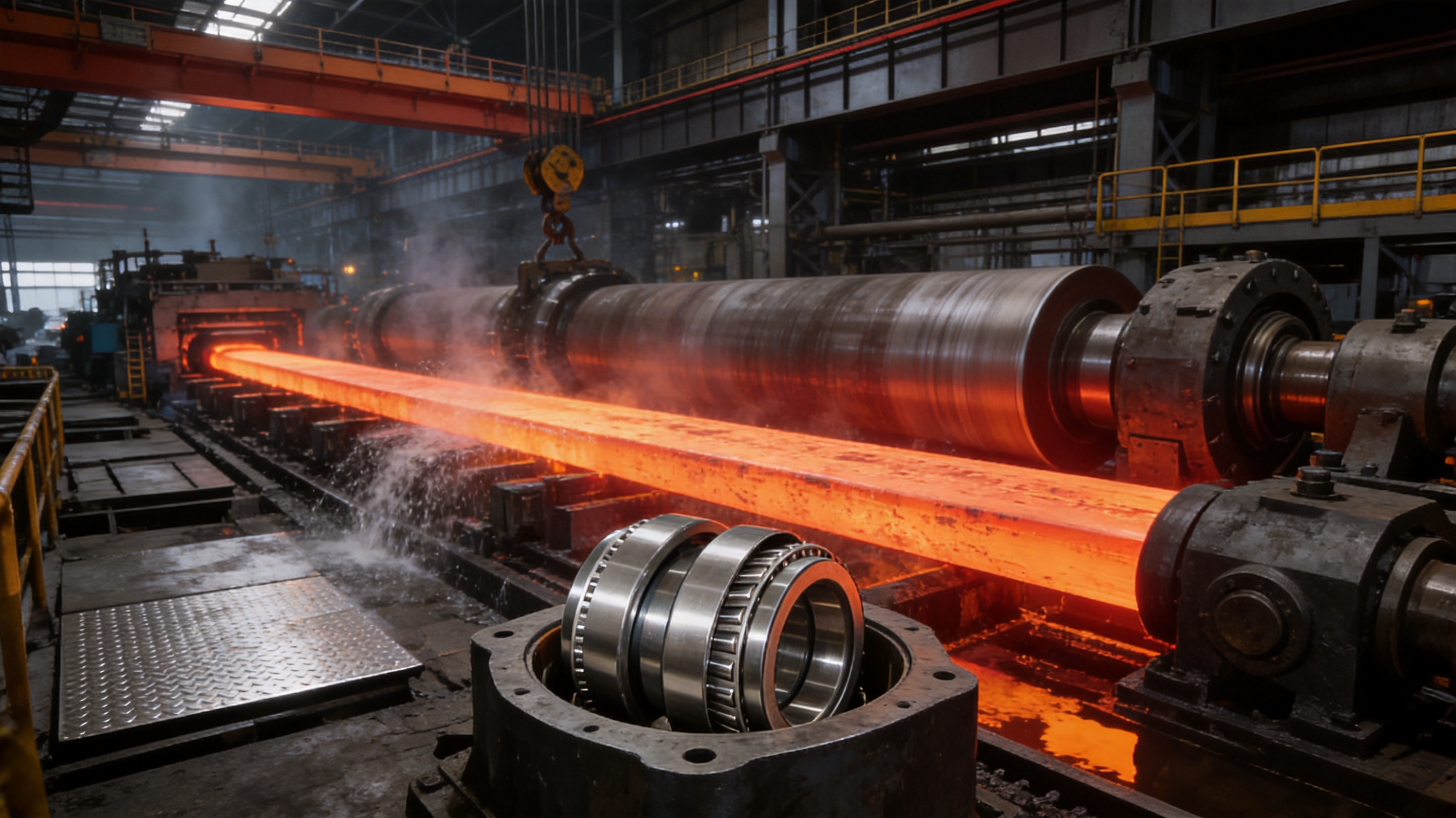
UKL Bearing Manufacturing Co., Ltd. integrates research and development, production, quality control, and international distribution. This integrated operating model is important for specialized bearings because four-row tapered roller bearings require coordination between component geometry, material treatment, dimensional control, assembly, and final inspection.
The company maintains an engineering-oriented approach to bearing production. Its research and development activities cover high-precision bearing products for industrial automation, CNC machines, robotics, and other demanding applications. This technical foundation supports the design and manufacture of specialized bearing configurations, including heavy-duty tapered roller bearings.
Product development begins with understanding the application. Load direction, operating speed, shaft and housing dimensions, temperature, lubrication, installation method, and service expectations must all be considered. For custom or replacement projects, technical communication is especially important because the correct bearing may involve more than selecting an outside diameter and bore dimension.
Engineering support can help customers evaluate bearing type, internal clearance, material requirements, lubrication recommendations, spacer configuration, and replacement compatibility. This is valuable for equipment operators seeking to improve reliability rather than simply replace a failed component with an identical part.
Forging forms the initial shape of many bearing rings and related components. A controlled forging process can help establish a suitable material structure and reduce unnecessary machining allowance. Proper material preparation is important because bearing rings must withstand repeated contact stress over long operating periods.
Material quality should be evaluated through appropriate inspection and process controls. Clean steel, consistent chemical composition, suitable forging practice, and controlled handling contribute to the reliability of the finished bearing. For heavy-duty bearings, the quality of the starting material is particularly important because the component may be exposed to very high subsurface stresses.
After forging, turning operations establish the basic dimensions and geometry of the rings. Accurate turning creates a stable foundation for heat treatment and subsequent grinding. Process control during this stage can influence material allowance, distortion management, and the efficiency of later finishing operations.
Precision machining is necessary for tapered raceway components because small geometric errors can affect roller contact, load distribution, and clearance. Consistent machining practices help ensure that the final grinding process can achieve the required profile and dimensional accuracy.
Heat treatment is one of the most important processes in bearing manufacturing. Bearing rings and rollers must combine hardness, wear resistance, fatigue strength, and dimensional stability. A controlled heat-treatment cycle can improve the material’s ability to resist repeated rolling contact and surface damage.
For heavy-duty tapered roller bearings, heat treatment must be compatible with the size and geometry of the components. Large rings can behave differently from smaller components during heating and cooling. Uniform process control helps reduce the risk of excessive distortion, inconsistent hardness, or residual stresses that could affect service life.
Heat-treatment quality is typically evaluated through hardness testing, metallurgical examination, dimensional inspection, and process records. These controls are part of the manufacturing foundation required for reliable heavy industrial bearings.
Grinding establishes the precision surfaces that directly influence bearing performance. The tapered raceways, roller surfaces, shoulders, and other functional areas must achieve controlled dimensions, geometry, roughness, and surface integrity. A high-quality grinding process helps promote consistent contact between the rollers and raceways.
Surface finish is important because rough or damaged surfaces can increase friction, generate heat, disturb lubricant films, and accelerate fatigue. Raceway geometry is equally important. If a raceway profile is not controlled, some roller rows or portions of a row may carry more load than intended. This can create localized stress even when the nominal bearing capacity appears adequate.
Grinding operations must therefore be supported by suitable measurement and process monitoring. The objective is not merely to produce a smooth surface, but to create a functional rolling geometry that performs consistently under load.
Four-row tapered roller bearings contain multiple precision components that must be assembled in the correct order and relationship. Cones, cups, rollers, cages, spacers, and shims may need to be matched and controlled as a complete set. Assembly accuracy directly affects internal clearance, roller guidance, and load distribution.
A disciplined assembly process reduces the risk of component mix-up, contamination, incorrect orientation, and unsuitable spacer combinations. Clean assembly conditions are essential because particles introduced during assembly can become abrasive contaminants once the bearing begins to operate.
Where clearance is adjustable, the assembly department must maintain accurate records for spacer and shim configurations. Customers should receive clear identification and technical information so that installation personnel can understand the intended arrangement and adjustment method.
Inspection is required throughout production rather than only at the end of the manufacturing line. Dimensional checks, hardness verification, surface inspection, geometry measurement, assembly checks, and visual examination work together to identify deviations before the product is shipped.
Quality assurance also includes traceability. Production records, batch information, inspection results, and packaging identification can help support future analysis and replacement planning. For large industrial customers, traceability is particularly valuable because bearing performance may need to be correlated with machine history, lubricant condition, load patterns, and maintenance events.
After inspection, bearings must be packaged to protect them from moisture, dust, impact, and corrosion during storage and transportation. Correct packaging is especially important for large bearings because they may spend significant time in warehouses or move through several logistics stages before installation.
UKL supplies customers in Europe, Asia, Africa, Russia, the United States, and other markets. Its international distribution experience supports the delivery of industrial bearings to OEMs, distributors, maintenance contractors, and end users. Multilingual technical service and after-sales communication can help customers resolve installation, maintenance, and replacement questions more efficiently.
Competitiveness in heavy-duty bearing manufacturing depends on repeatability. A bearing may have an attractive nominal specification, but inconsistent dimensions, hardness, surface quality, or internal clearance can produce unpredictable performance. The manufacturing process must therefore focus on consistency from one production batch to another.
For the 331138 AG, consistency is important because the four roller rows must work together. If one row has a different effective contact condition from the others, the load may not be distributed evenly. Accurate component matching and controlled spacer dimensions help maintain the intended internal relationship.
Dimensional consistency also supports replacement interchangeability. When a customer orders a replacement bearing, the new unit should match the required mounting dimensions and operating configuration. Clear product identification, technical documentation, and communication with the manufacturer reduce the possibility of selecting an unsuitable substitute.
Installation has a direct effect on bearing performance. Even a precisely manufactured bearing can fail prematurely if it is forced onto the shaft, mounted into a damaged housing, contaminated during assembly, or adjusted with incorrect clearance.
Before installation, inspect the shaft and housing for burrs, corrosion, cracks, impact marks, and dimensional wear. Confirm that the shaft seat and housing bore meet the required roundness, cylindricity, diameter, and surface-finish conditions. The mounting surfaces must be clean and free from loose particles or residual machining debris.
Use suitable lifting equipment for large bearing components. Heavy rings and assemblies should not be dragged across unprotected surfaces or dropped onto hard floors. Impact loading during handling can create dents or deformation that may not be visible until the bearing is operating.
When mounting the bearing, apply force only to the ring being fitted. Pressing through the rollers can damage raceways and rolling elements. If heating is used to expand a ring, temperature control is essential. Uneven or excessive heating can alter material properties, damage protective coatings, or create unsafe handling conditions.
Clearance adjustment should follow the supplier’s technical instructions. Spacers and shims should be clean, flat, correctly identified, and installed in the specified sequence. Technicians should use calibrated measuring equipment and record the final setting. The objective is to achieve the required operating clearance, not simply to obtain a tight mechanical fit.
After assembly, rotate the shaft by hand where practical and check for unusual resistance, roughness, binding, or abnormal noise. Confirm that seals, lubrication channels, housing covers, and retaining components are correctly installed before the machine is placed into service.
Lubrication separates the contacting surfaces, reduces friction, carries away heat, and protects the bearing against wear and corrosion. In heavy rolling mill applications, lubricant selection must consider load, speed, operating temperature, water exposure, contamination, relubrication intervals, and compatibility with seals and other machine components.
Grease may be suitable for certain arrangements, while circulating oil or oil-air systems may be preferred where heat removal and continuous lubrication are important. The correct lubricant viscosity and additive package should be confirmed for the actual operating conditions. Mixing incompatible greases or oils can cause separation, hardening, softening, or loss of protective properties.
Over-lubrication can be as harmful as under-lubrication. Excess grease may increase churning, operating temperature, and friction. Insufficient lubricant can lead to metal-to-metal contact, smearing, discoloration, and rapid surface fatigue. A controlled lubrication schedule should be based on operating data and manufacturer recommendations.
Contamination control is particularly important in steel-processing equipment. Water can reduce lubricant performance and promote corrosion. Scale and metallic particles can indent raceways and rollers. Dust can act as an abrasive. Effective seals, clean lubricant handling, filtered oil, proper housing maintenance, and timely inspection all contribute to longer bearing life.
A planned maintenance program allows operators to detect problems before catastrophic failure. Temperature monitoring is one of the simplest methods. A gradual temperature increase may indicate insufficient lubrication, excessive preload, contamination, seal friction, misalignment, or overload. Temperature should be interpreted together with production conditions because load and speed changes naturally affect heat generation.
Vibration monitoring can reveal raceway damage, roller defects, looseness, misalignment, and changes in internal condition. For large and expensive rolling mill equipment, periodic vibration analysis may provide valuable early warning. Analysis should be performed by personnel who understand the machine’s operating cycle and the characteristic frequencies associated with the bearing arrangement.
Lubricant analysis can identify water, wear particles, oxidation, viscosity changes, and contamination. In oil-lubricated systems, regular sampling may help establish a trend before damage becomes severe. Grease analysis can also provide useful information when a suitable sampling method is available.
Visual inspection during planned shutdowns should include the housing, seals, lubricant passages, spacer condition, shaft seat, and adjacent gears or couplings. If a bearing is removed, the rollers and raceways should be examined for spalling, pitting, scoring, smearing, discoloration, fretting, and indentations. The appearance of damage can help identify its root cause.
Replacing a damaged bearing without correcting the underlying cause can lead to repeated failure. If the bearing shows fatigue, investigate overload, insufficient capacity, excessive clearance, inadequate lubrication, or misalignment. If corrosion is present, review water ingress and storage conditions. If there are dents or brinelling marks, examine handling, installation, and shock loading.
An integrated manufacturer can provide more than a catalog part. By combining R&D, production, inspection, and distribution, the supplier can respond to application requirements across the product life cycle. This is useful when customers need custom dimensions, replacement matching, special clearance, technical documentation, or production support.
UKL Bearing Manufacturing Co., Ltd. reports a production capacity of approximately 10,000 to 50,000 units per month and operates multiple production lines covering forging, turning, heat treatment, grinding, assembly, and packaging. This production structure supports both standard and customized bearing programs, subject to technical review and order requirements.
The company’s experience in OEM and ODM export projects supports cooperation with equipment manufacturers and industrial distributors. OEM customers may require drawing approval, inspection documentation, packaging identification, batch traceability, and consistent repeat orders. ODM customers may need assistance developing a product that matches a machine’s operating environment and installation constraints.
For end users, the advantage of direct technical communication can be significant. A bearing selection should be based on actual operating information rather than a generic product name. Load, speed, temperature, lubricant, shaft size, housing type, axial force, and expected service life should be discussed before a final recommendation is made.
Heavy industrial equipment is often built around specialized dimensions and legacy bearing arrangements. A direct replacement may require more than a standard catalog number. The new bearing may need to match an existing housing, shaft, seal, spacer, lubrication system, or installation tool.
Customization may involve bore and outside diameter, width, internal clearance, roller arrangement, cage design, material, heat treatment, spacer dimensions, or packaging requirements. Any modification must be engineered carefully because changing one parameter can influence load distribution, speed capability, temperature, and service life.
Technical cooperation should begin with accurate application data. Useful information includes the machine model, shaft dimensions, housing drawings, bearing position, radial and axial loads, rotational speed, operating temperature, lubricant type, contamination level, mounting method, and previous failure history. Photographs of damaged components and maintenance records may also help identify the correct solution.
For replacement projects, the original bearing markings and dimensions should be recorded. If the original bearing has failed, retain the components for inspection whenever possible. Damage patterns can provide evidence about misalignment, insufficient clearance, excessive preload, contamination, or lubrication problems.
Modern bearing manufacturing must address both performance and responsible production. UKL states that it adopts environmentally responsible processes, promotes material recycling, and works to optimize energy usage. These practices support a broader approach to industrial manufacturing in which product durability and resource efficiency are considered together.
A long-service bearing can contribute to sustainability by reducing replacement frequency, unplanned downtime, material consumption, and disposal requirements. However, these benefits depend on correct application and maintenance. Extending bearing life through proper lubrication, contamination control, and condition monitoring is often more effective than treating bearings as disposable components.
UKL also describes support for educational and technical training initiatives. Training is relevant to bearing reliability because many failures result from installation or maintenance errors rather than manufacturing defects. Technicians who understand clearance adjustment, mounting force, lubrication, and contamination control can significantly improve equipment performance.
International service support is another important strength. Customers operating in different regions may need rapid technical response, installation guidance, after-sales assistance, and maintenance recommendations. A multilingual service team can help reduce misunderstandings and support communication between plant engineers, distributors, and the manufacturer.
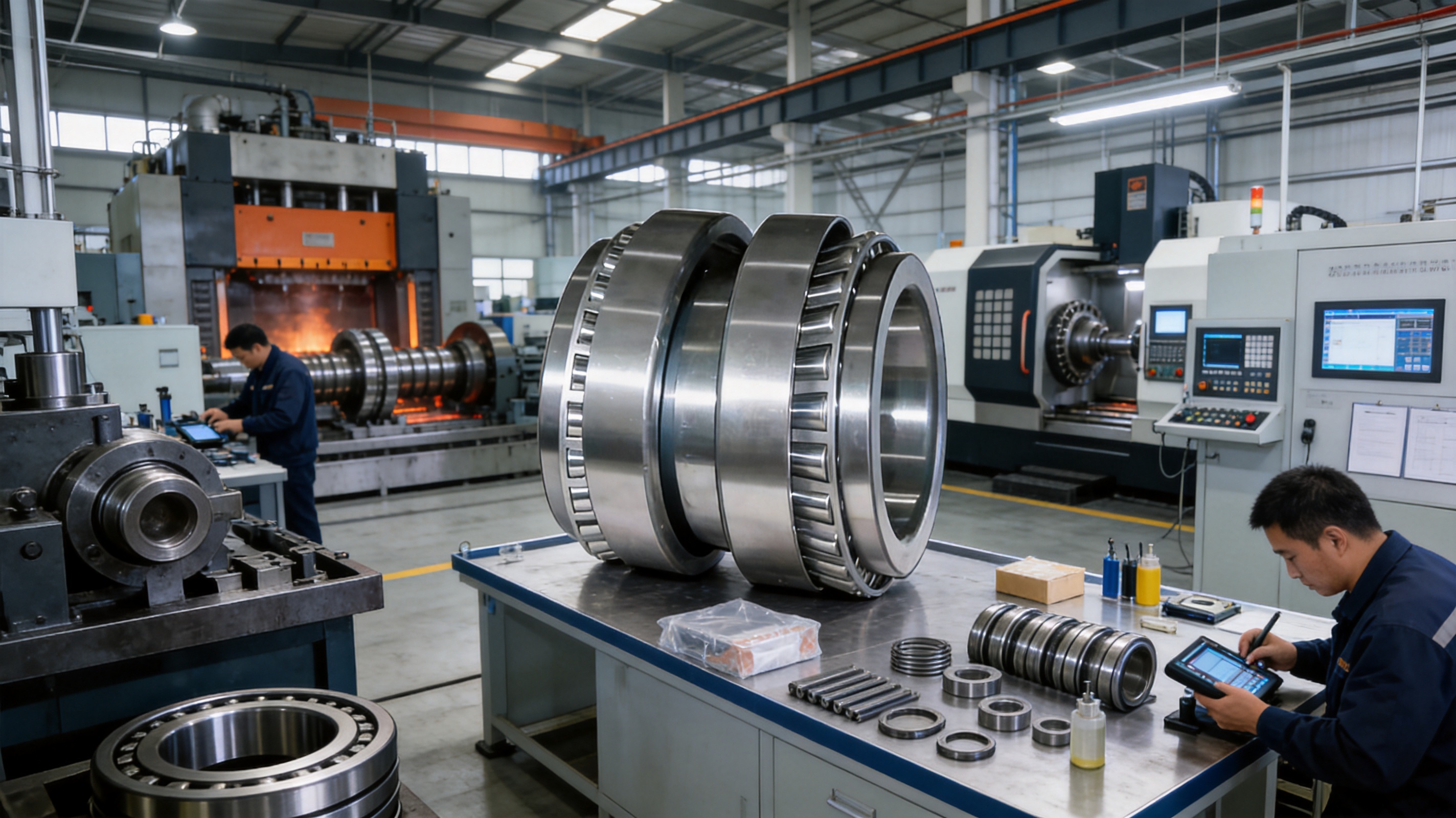
Before ordering the 331138 AG, the customer should confirm that the bearing is suitable for the intended machine. The following checklist can support a technical review.
First, verify the complete bearing designation, including the AG configuration and any associated components. Confirm that the bore, outside diameter, width, and housing arrangement match the equipment drawing.
Second, determine the actual radial load and its variation during the operating cycle. Continuous load, peak load, shock load, and load direction should all be considered. A bearing that is suitable for the average load may still be inadequate if short-duration overloads are frequent.
Third, evaluate axial forces. Identify the direction, magnitude, frequency, and source of axial loading. Confirm whether the bearing is part of a locating arrangement, a non-locating arrangement, or a system containing separate axial guidance.
Fourth, confirm rotational speed and acceleration. Heavy-duty bearings may have high load capacity but still require careful speed and lubrication evaluation. Speed limits depend on bearing design, lubricant, clearance, cage arrangement, load, and cooling.
Fifth, review the operating temperature. Consider ambient temperature, heat from the processed material, frictional heat, lubricant temperature, cooling flow, and thermal expansion of the shaft and housing.
Sixth, select an appropriate clearance setting. The correct value depends on fits, thermal conditions, load, speed, and the machine’s required stiffness. Spacer and shim adjustment should be planned before installation.
Seventh, assess contamination and sealing. Water, metal scale, dust, and cleaning fluids may enter the housing. The sealing system and lubricant must be selected to provide suitable protection.
Finally, establish a maintenance plan. Record installation measurements, lubricant type, operating temperature, vibration levels, and inspection results. These records can help identify trends and improve future bearing selection.
The 331138 AG is a four-row tapered roller bearing designed primarily for extremely high radial loads and partial axial loads. It is intended for heavy industrial equipment such as four-high hot rolling mills, cold rolling mills, blooming mills, and comparable machinery.
Four roller rows allow the applied load to be distributed across multiple rolling-contact zones. This provides a high radial load capacity and can reduce the load carried by individual rollers and raceway areas when the bearing is correctly installed and operated.
Yes, the tapered geometry allows the bearing to accommodate partial axial loads. The allowable axial load depends on the specific bearing arrangement, load direction, speed, lubrication, clearance, and operating conditions. Significant axial loads should be reviewed with the manufacturer.
Internal clearance affects load distribution, heat generation, roller guidance, stiffness, and operating temperature. The 331138 AG can be adjusted through spacers or shims so that the final setting is better matched to shaft and housing fits, thermal expansion, and machine requirements.
Suitability depends on the actual speed, lubricant, load, cooling, internal clearance, and machine arrangement. Four-row tapered roller bearings are primarily selected for high-load applications, so speed capability should be confirmed through a detailed technical evaluation rather than assumed from the bearing type alone.
The appropriate lubricant may be grease, circulating oil, oil-air, or another approved system depending on the application. Selection should consider load, speed, temperature, contamination, water exposure, and relubrication requirements. The lubricant recommendation should be confirmed for the specific machine.
Premature failure can be reduced through correct bearing selection, clean handling, accurate installation, proper clearance adjustment, suitable lubrication, effective sealing, alignment control, and condition monitoring. When a bearing fails, the root cause should be investigated before installing a replacement.
Useful information includes the complete bearing designation, machine application, shaft and housing dimensions, radial and axial loads, operating speed, temperature, lubricant, contamination conditions, quantity required, and any special packaging or inspection requirements. Drawings and photographs can be helpful for customized or replacement projects.
UKL Bearing Manufacturing Co., Ltd. operates as an integrated manufacturer and trader with OEM and ODM export experience. Customers can discuss custom dimensions, clearance, materials, packaging, documentation, and other technical requirements with the company’s engineering and sales teams.
Technicians should inspect the shaft, housing, seals, spacer surfaces, lubricant passages, and mounting tools. They should confirm orientation, apply force to the correct ring, use controlled heating if required, measure the final clearance, and record the installation results.
The bearing should remain in its original protective packaging in a clean, dry, temperature-stable environment. It should be protected from moisture, corrosive vapors, dust, vibration, and impact. Bearings should not be stored directly on damp floors or exposed to uncontrolled outdoor conditions.
Not necessarily. A replacement must match the machine’s dimensions, load requirements, speed, clearance, lubrication, housing, and axial guidance arrangement. A four-row bearing should be evaluated as a complete engineering solution rather than substituted solely because its general dimensions appear similar.
The 331138 AG Four-Row Tapered Roller Bearing is a specialized solution for heavy-duty machinery that requires extremely high radial load capacity and support for partial axial loads. Its four-row tapered roller construction distributes force across multiple rolling-contact zones, while its adjustable spacer and shim arrangement allows internal clearance to be adapted to different operating conditions.
These characteristics make the bearing particularly relevant to four-high hot rolling mills, cold rolling mills, blooming mills, and other large industrial systems. Compared with single-row or two-row arrangements, it offers a higher-capacity design for severe radial loading. Compared with alternative bearing types, it provides a combination of multi-row load distribution, tapered contact geometry, partial axial-load support, and adjustable clearance.
The product’s performance also depends on the quality of the complete manufacturing and maintenance process. UKL Bearing Manufacturing Co., Ltd. supports the product through integrated R&D, forging, turning, heat treatment, grinding, assembly, inspection, packaging, and international service. This combination helps address the demanding requirements of OEM customers, industrial distributors, maintenance contractors, and end users.
For the best results, customers should select the bearing using accurate application data and should treat installation, lubrication, sealing, clearance adjustment, and condition monitoring as essential parts of the solution. When correctly matched and maintained, the 331138 AG can provide a durable, high-capacity bearing option for some of the most demanding operating environments in modern heavy industry.
1. ISO 281, Rolling Bearings—Dynamic Load Ratings and Rating Life.
2. ISO 76, Rolling Bearings—Static Load Ratings.
3. ISO 15243, Rolling Bearings—Damage and Failures—Terms, Characteristics, and Causes.
4. ISO 1132, Rolling Bearings—Tolerances, Definitions, and Principles.
5. Technical principles for tapered roller bearing selection, mounting, lubrication, and maintenance.
6. Industrial rolling mill bearing application and maintenance practices.
7. Manufacturer-provided product information for the 331138 AG Four-Row Tapered Roller Bearing.
8. Manufacturer-provided information regarding UKL Bearing Manufacturing Co., Ltd. production, engineering, export, and service capabilities.
Product Categories
Contact Us

Jane@ukl-bearing.com
Jenny@ukl-bearing.com
Andy@ukl-bearing.com
Ivy@ukl-bearing.com

+86-510- 88763239
+86-15371057968

No.1 Hehuan Road, Hudai Town, Binhu District, Wuxi City.
Ready to Begin?
Get in Touch

Now!
UKL BEARING
 English
 Español
 русский