Content
In modern machinery, the bearing is often a small component compared with the size of the complete system, yet it has a decisive influence on reliability, operating smoothness, maintenance frequency, and total lifecycle cost. A 4 bolt flange bearing unit is one of the most widely used mounted bearing solutions because it combines a bearing insert, a robust housing, a square four-bolt mounting pattern, and self-aligning capability in one ready-to-install assembly. For equipment builders and maintenance teams, this design offers a practical balance of strength, alignment tolerance, ease of installation, and economical operation.
The 4 bolt flange bearing, commonly associated with the UCF series, is designed for applications where a rotating shaft must be supported on a flat surface or machine frame. The housing is mounted using four bolts, creating a secure and stable foundation that resists shifting under radial load, moderate thrust load, vibration, and operational shock. Inside the housing, the bearing insert typically features a spherical outside diameter that matches the concave bore of the housing. This structure allows the insert to self-align within a limited range, helping compensate for mounting errors, shaft deflection, and slight structural deformation.
For industries that depend on continuous mechanical operation, such as conveyors, agricultural machines, packaging equipment, material handling systems, textile machinery, food processing machines, fans, and general industrial drives, a well-made 4 bolt flange bearing unit can reduce downtime and simplify maintenance. The unit can be installed quickly, replaced conveniently, and adapted to many standard shaft sizes. Its compact yet strong construction makes it especially valuable where space, time, and reliability must be controlled together.
Ukl Bearing Manufacturing Co., Ltd supplies 4 bolt flange bearing units as part of a wider mounted bearing and precision bearing portfolio. The company combines manufacturing experience, OEM and ODM export capability, R&D support, and international service coverage to deliver bearing solutions for global customers. With production processes covering forging, turning, heat treatment, grinding, assembly, inspection, and packaging, the company emphasizes both dimensional accuracy and consistent batch quality. For buyers seeking stable supply, application support, and competitive performance, this manufacturing background is an important advantage beyond the bearing unit itself.
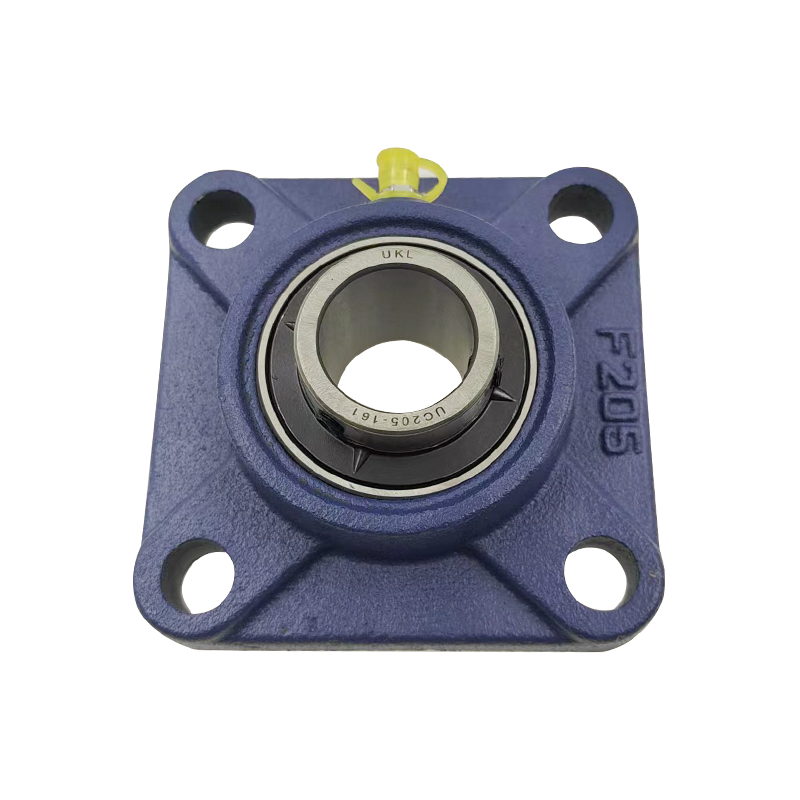
A 4 bolt flange bearing unit is a mounted ball bearing assembly consisting of two primary elements: the bearing insert and the flange housing. The bearing insert is the rotating element that supports the shaft, while the housing provides the mounting interface and structural support. The square flange housing has four bolt holes arranged at the corners, allowing the complete unit to be bolted directly to a machine wall, bracket, panel, or structural frame.
The most common designation for this design is the UCF series. In many industrial catalogs, “UC” refers to the bearing insert type, and “F” refers to the four-bolt flange housing. The result is a complete mounted bearing unit that can be selected according to shaft diameter, housing material, sealing type, locking method, lubrication arrangement, and application requirements.
The bearing insert usually contains an inner ring, outer ring, rolling elements, cage, seals, grease, and a locking mechanism. The inner ring is commonly extended on both sides, providing extra shaft support and space for set screws or other locking devices. The outer surface of the insert is spherical. The housing bore is correspondingly concave, allowing the bearing insert to tilt slightly and align itself with the shaft. This self-aligning property is one of the most important reasons for the popularity of 4 bolt flange bearing units.
The housing is frequently made from gray cast iron because this material provides excellent vibration damping, good strength, effective heat dissipation, and economical manufacturability. Depending on the operating environment, housings may also be produced from stamped steel, plastic, stainless materials, cast steel, or other customized materials. For general industrial service, gray cast iron remains a preferred choice because it offers a strong balance of durability, rigidity, cost efficiency, and machining stability.
Unlike loose bearings that require separate housing design, precise bore machining, and additional assembly work, a 4 bolt flange bearing unit is supplied as an integrated product. This reduces design complexity for equipment manufacturers and speeds up replacement for maintenance departments. The ready-to-mount design is one of the key competitive advantages of the product category.
The four-bolt flange configuration provides stronger mounting stability than many lighter two-bolt or pressed-housing alternatives. When the bearing is exposed to radial loads, belt tension, vibration, or intermittent impact, the four-bolt arrangement distributes the mounting force across a larger area. This helps reduce housing movement, frame stress concentration, and bolt loosening. In applications where alignment and rigidity are essential, the four-bolt flange design can contribute directly to longer bearing life.
The square housing shape is also convenient for machine builders. It can be mounted on vertical, horizontal, or inclined surfaces. The flat flange base allows straightforward installation on machine panels, conveyor frames, equipment side plates, or welded brackets. Because the bolt pattern is standardized in many UCF series sizes, replacement and interchangeability are simple for many users.
Another major benefit is shaft support accuracy. A four-bolt bearing unit can hold the shaft position more securely than a less rigid mounted solution, particularly in medium-duty and heavy-duty applications. When combined with good shaft preparation and proper alignment procedures, the unit helps maintain smooth rotation, reduce vibration, and protect connected components such as pulleys, sprockets, couplings, and drive rollers.
For maintenance teams, the four-bolt structure also simplifies field work. If a bearing unit must be replaced, technicians can unfasten the four mounting bolts, release the shaft locking mechanism, remove the unit, and install a replacement without redesigning the surrounding machine structure. This ease of replacement is especially valuable in production environments where downtime is costly.
The 4 bolt flange bearing unit offers several practical advantages over competing mounted bearing types and traditional separate bearing-and-housing assemblies. These advantages are especially meaningful when buyers consider not only purchase price, but also installation time, alignment flexibility, service life, and maintenance convenience.
In an ideal mechanical system, shafts, frames, and mounting surfaces would be perfectly aligned. In real production environments, however, slight misalignment is common. Welded frames may deform during fabrication, shafts may deflect under load, and installation surfaces may not be perfectly square. A rigid bearing arrangement can generate additional stress under these conditions, increasing heat, vibration, and premature wear.
The spherical outer diameter of the bearing insert and the matching concave housing bore allow the bearing to self-align within a controlled angle. This helps reduce the negative effects of minor installation errors. While self-alignment does not replace good engineering practice, it gives the equipment a useful tolerance margin. Compared with non-aligning bearing arrangements, a self-aligning mounted unit can be more forgiving, easier to install, and more reliable in general industrial service.
Traditional bearing installations may require separate housings, covers, seals, grease fittings, retaining devices, and precision mounting procedures. A 4 bolt flange bearing unit integrates many of these functions into one assembly. The bearing insert is already matched with the housing, seals are installed, grease is applied, and the unit is ready for mounting.
This integrated design saves labor. It also reduces the chance of assembly errors, such as incorrect bearing seating, improper housing selection, or seal mismatch. For OEM production lines, faster installation improves assembly efficiency. For maintenance teams, quick replacement helps restore equipment operation with less downtime.
Gray cast iron housings provide excellent compressive strength, vibration absorption, and thermal stability. In many machines, vibration is not only uncomfortable; it can cause bolt loosening, noise, accelerated wear, and fatigue failure. The damping characteristics of gray cast iron help absorb part of this vibration, contributing to smoother operation.
Compared with lighter stamped housings, cast iron flange housings generally provide better rigidity and load-bearing capacity. Compared with fully customized machined housings, standard 4 bolt flange units are more economical and easier to replace. This makes the product attractive for both new equipment manufacturing and aftermarket maintenance.
Many UCF type bearing inserts use set screw locking, which is practical, fast, and widely accepted. The extended inner ring provides enough contact area for secure shaft positioning. When properly installed, the set screws hold the inner ring to the shaft and help transmit rotation smoothly. Other locking systems may also be available depending on customer requirements, including eccentric locking collar, adapter sleeve, or customized locking designs.
Correct shaft locking is essential because slippage between the shaft and inner ring can cause fretting, heat generation, noise, and damage. A well-manufactured bearing insert with accurate inner ring geometry and reliable set screw machining provides better holding performance and longer service stability.
Many 4 bolt flange bearing units are supplied pre-lubricated and equipped with grease fittings for relubrication. This makes maintenance straightforward. Operators can establish lubrication intervals according to speed, load, temperature, contamination, and duty cycle. Proper lubrication reduces friction, prevents metal-to-metal contact, protects against corrosion, and helps seals perform effectively.
Compared with sealed-for-life components that cannot be serviced, relubricatable mounted units can be better suited for harsh industrial environments. In dusty, wet, or high-load conditions, periodic greasing can extend operating life and reduce failure risk.
The 4 bolt flange bearing unit is suitable for many types of machinery. It is used in conveyors, fans, blowers, packaging machines, printing machinery, agricultural equipment, textile systems, food processing machines, woodworking equipment, mining support systems, material handling frames, and general industrial automation. This versatility makes it a convenient standardized component for machine builders and spare parts distributors.
Because the design is widely used, customers benefit from broad interchangeability, multiple size options, and established installation practices. A high-quality manufacturer can further enhance this standard product by improving material control, heat treatment consistency, sealing performance, surface finish, and inspection accuracy.
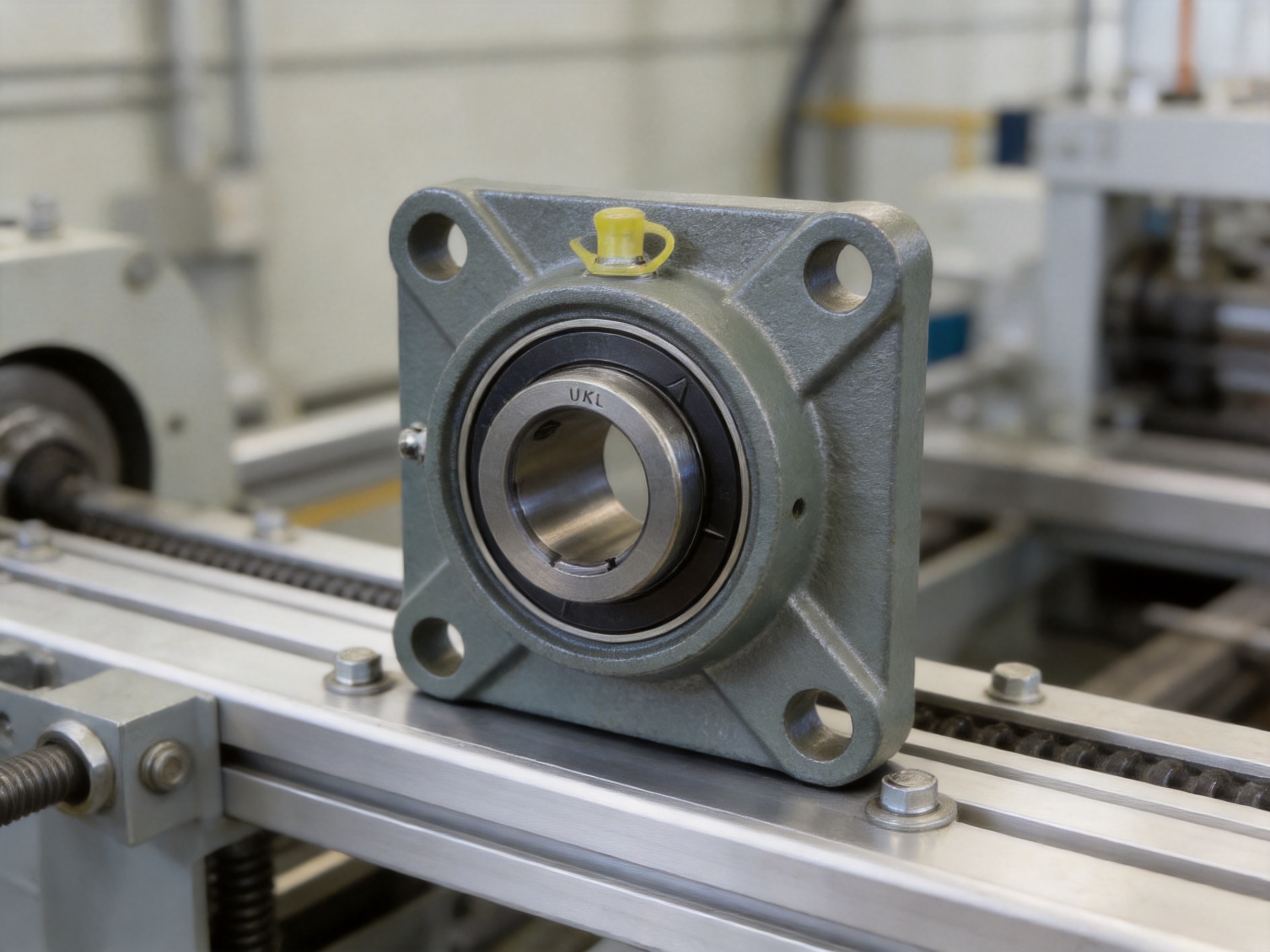
Choosing the correct bearing support solution depends on application conditions. A 4 bolt flange bearing unit is not the only possible option, but it often delivers a strong balance of performance and convenience. The following table summarizes how it compares with several common alternatives.
| Solution Type | Main Strengths | Limitations | Best Use Scenario |
|---|---|---|---|
| 4 bolt flange bearing unit | Strong mounting stability, self-alignment, easy installation, good replacement convenience, suitable for many shaft support positions | Requires a flat mounting surface and adequate space for square housing | Conveyors, industrial machinery, equipment side frames, moderate to heavy mounted support |
| 2 bolt flange bearing unit | Compact design, lighter weight, faster installation with fewer bolts | Less mounting rigidity than four-bolt designs in demanding applications | Light-duty equipment and narrow mounting spaces |
| Pillow block bearing unit | Excellent for horizontal base mounting, simple shaft support | Not ideal for vertical panel mounting or side-wall installation | Floor-mounted shafts, conveyors, drive rollers, fans |
| Separate bearing and custom housing | Can be optimized for special machinery and high precision requirements | Higher design cost, longer assembly time, more complex maintenance | Special equipment requiring nonstandard housing geometry |
| Stamped steel mounted bearing | Low weight and cost-effective for light-duty service | Lower rigidity, lower resistance to shock, less damping capability | Light agricultural, household, or low-load machinery |
The table shows why the 4 bolt flange bearing unit is frequently selected for practical industrial machinery. It provides more secure mounting than lighter flange designs while avoiding the complexity and cost of fully customized bearing housings. For customers who need predictable performance, easy inventory management, and broad application suitability, the UCF style unit is often an efficient choice.
The performance of a mounted bearing unit depends greatly on the housing material. Gray cast iron is commonly used because it provides a favorable combination of strength, machinability, damping ability, and thermal behavior. In rotating machinery, the housing must maintain dimensional stability while absorbing vibration and transferring heat away from the bearing insert. Gray cast iron performs well in these functions, which is why it remains a leading material for standard flange bearing housings.
Cast iron also offers good resistance to deformation under tightening force. When the four mounting bolts are tightened, the housing should seat firmly against the machine surface without distortion that could affect bearing alignment. High-quality casting and machining help ensure that the flange face is flat, the bolt holes are accurately located, and the spherical seat properly contacts the bearing insert.
In some operating environments, alternative housing materials may be preferred. Stamped steel can be used for light-duty, cost-sensitive applications. Plastic housings may be selected where corrosion resistance, washdown compatibility, or weight reduction is important. Cast steel can be considered for more severe mechanical loads. Stainless or coated housings may be used in food processing, chemical, or outdoor environments. The ability to adapt materials to customer requirements is an important manufacturing advantage.
The bearing insert material is typically bearing-grade steel, selected for hardness, fatigue strength, and wear resistance. The rings and rolling elements must undergo controlled heat treatment to achieve the required hardness and microstructure. A good bearing insert depends on more than material grade; it also requires accurate turning, stable heat treatment, precision grinding, controlled assembly, effective cleaning, and appropriate lubrication.
Mounted bearings often operate in environments where dust, moisture, fibers, agricultural residue, metal particles, and processing debris are present. Contamination is one of the most common causes of bearing failure. A 4 bolt flange bearing unit must therefore include sealing features that protect the rolling elements and lubricant.
Seals help retain grease inside the bearing and block external contaminants. Depending on the design, the bearing insert may use contact seals, non-contact shields, multiple-lip seals, slingers, or combinations of sealing elements. For dirty environments, more robust sealing can significantly improve service life. For higher-speed applications, seal friction and heat generation must also be considered.
A well-designed seal must balance protection and efficiency. Excessive seal friction can increase temperature and energy loss, while insufficient sealing can allow contamination to enter the raceways. Manufacturing consistency is especially important because seal fit, lip geometry, surface finish, and assembly cleanliness all influence performance. Ukl Bearing Manufacturing Co., Ltd supports customers by matching bearing unit specifications to actual operating conditions rather than treating all mounted bearings as identical commodities.
The competitive strength of a 4 bolt flange bearing unit depends on manufacturing discipline. Even when the external design looks standard, differences in material control, machining accuracy, heat treatment stability, grinding quality, assembly cleanliness, and inspection procedures can create large differences in noise, temperature, vibration, load capacity, and service life.
Ukl Bearing Manufacturing Co., Ltd operates as an integrated manufacturer and trader with production capabilities covering multiple key processes. The company’s manufacturing flow includes forging, turning, heat treatment, grinding, assembly, and packaging. This broad process coverage gives the company greater control over product consistency and delivery reliability.
Forging is an important early process for bearing rings. Proper forging improves material structure and prepares the ring blank for subsequent machining. Good forging practice helps reduce internal defects, improve grain flow, and support fatigue resistance. Material traceability and incoming inspection are also important because bearing performance begins with steel quality.
For mounted bearing units, the housing casting process is equally important. Castings must be controlled to reduce porosity, cracks, deformation, and dimensional inconsistency. After casting, the housing requires cleaning, aging or stabilization where appropriate, and machining of functional surfaces. Accurate housing machining ensures that the bearing insert seats correctly and that the mounting face aligns properly with the machine.
Turning creates the initial geometry of rings, bores, outer diameters, grooves, shoulders, and other features. At this stage, dimensional control affects all later processes. If turning allowances are inconsistent, grinding becomes less stable and final geometry may suffer. Skilled machining and process monitoring help maintain uniformity across production batches.
For the bearing insert, the inner ring bore must be accurate to fit the shaft properly. The extended inner ring and set screw holes require precise machining. For the housing, the spherical seat must be machined to match the insert. Bolt holes must be positioned accurately so the unit can be installed easily and aligned correctly.
Heat treatment transforms bearing steel to achieve hardness, wear resistance, and rolling contact fatigue performance. Temperature control, quenching conditions, tempering, and microstructure inspection all influence final bearing quality. Insufficient hardness may cause premature wear, while excessive brittleness can increase cracking risk. Stable heat treatment is therefore one of the strongest indicators of a reliable bearing manufacturer.
For mounted bearings used in continuous operation, the heat-treated rings and rolling elements must withstand repeated stress cycles. Every rotation produces contact stress between the balls and raceways. Over time, poor heat treatment can lead to spalling, pitting, noise, and failure. A manufacturer with controlled heat treatment processes can deliver more predictable service life.
Grinding determines the final accuracy of the raceways, bore, outer surface, and other critical dimensions. Smooth raceways reduce friction, noise, and heat generation. Accurate geometry supports even load distribution across rolling elements. Poor grinding can create vibration, uneven contact, lubricant film disruption, and early fatigue.
In a 4 bolt flange bearing unit, the spherical outside diameter of the insert must also be accurately finished to allow proper self-alignment in the housing. If the spherical surface is inconsistent, the insert may not seat correctly or may align poorly under load. Precision grinding and inspection help ensure that the self-aligning function works as intended.
Assembly is not merely putting parts together. Bearing assembly requires cleanliness, correct component matching, proper cage installation, seal placement, grease filling, and rotational inspection. Contaminants introduced during assembly can damage raceways quickly after operation begins. Excessive grease can create heat, while insufficient grease can cause wear. The grease type must also match operating speed, temperature, load, and environment.
A finished bearing unit should rotate smoothly, lock securely, and fit the housing correctly. The four-bolt housing should have clean threads or bolt holes, a stable mounting surface, and protective coating where required. Packaging should protect the finished unit from corrosion, impact, dust, and moisture during storage and transportation.
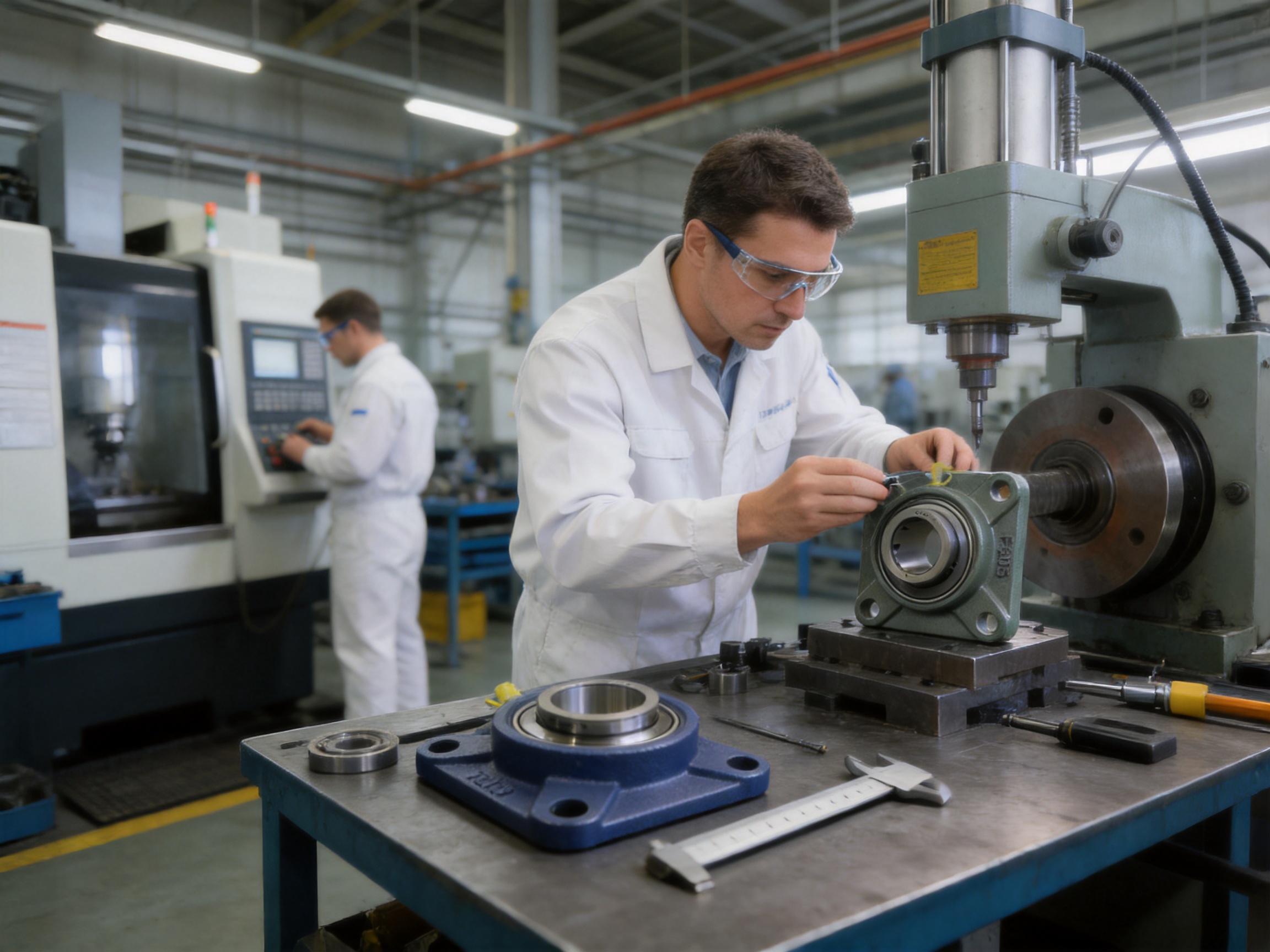
Quality control is a decisive factor when comparing bearing suppliers. Many 4 bolt flange bearing units may appear similar in catalog dimensions, but their real performance can differ significantly. Reliable inspection must cover raw materials, heat treatment results, dimensional accuracy, hardness, surface finish, radial clearance, rotational noise, sealing, lubrication, housing machining, and final appearance.
Ukl Bearing Manufacturing Co., Ltd emphasizes consistency across production processes. With multiple production lines and a monthly production capacity ranging from 10,000 to 50,000 units, the company is positioned to support both batch orders and ongoing supply programs. For international customers, this capacity is important because it reduces procurement uncertainty and supports long-term inventory planning.
Inspection also supports customization. OEM and ODM projects often require specific tolerances, surface treatments, packaging, labels, lubrication types, or material options. A manufacturer with a structured inspection system can manage these details more reliably than a supplier that only trades standard parts without production control.
For distributors, stable quality reduces customer complaints and warranty risk. For machine builders, consistent bearing units improve assembly efficiency because each unit fits predictably. For end users, reliable bearing performance reduces downtime and maintenance cost. Quality is therefore not an abstract claim; it is a measurable value across the entire supply chain.
Correct selection is essential for achieving good performance. A 4 bolt flange bearing unit should be chosen according to shaft diameter, load direction, load magnitude, speed, temperature, contamination level, mounting orientation, lubrication plan, and expected service life.
Radial load is usually the primary load for mounted ball bearing units. Moderate axial load may also be present, depending on the application. However, if axial load is heavy or continuous, engineers should evaluate whether another bearing type or special arrangement is required. Speed must also be considered because higher speeds increase heat generation and require appropriate lubrication and sealing.
Mounting surface quality is another important factor. The flange should be installed on a flat, rigid surface. If the machine frame is weak or uneven, the housing may distort or move under load. Mounting bolts should be tightened evenly and secured according to appropriate procedures. The shaft should be clean, correctly sized, and free from burrs. Set screws should be tightened properly to avoid slippage.
Environmental conditions strongly influence seal and material selection. In dusty conveying systems, enhanced sealing may be beneficial. In wet environments, corrosion-resistant materials or coatings may be required. In food or packaging applications, cleanliness, lubricant type, and washdown resistance may be important. In outdoor equipment, temperature variation, moisture, and vibration should be considered.
Even the best bearing unit can fail early if installed incorrectly. Proper installation starts with inspection. Before mounting, technicians should confirm that the shaft diameter matches the bearing bore, the shaft surface is smooth, the housing is not damaged, and the mounting surface is flat and clean. The bearing should remain protected from dust and moisture before installation.
The unit should be placed on the mounting surface without forcing it into position. Bolts should be inserted and tightened gradually in a cross pattern to distribute clamping force evenly. Over-tightening one side before the others may create stress or misalignment. After the housing is fixed, the shaft locking mechanism should be secured according to recommended torque practices.
After installation, the shaft should be rotated by hand where possible to check for smooth movement. Any abnormal tightness, noise, or binding should be investigated before the machine is operated at full speed. Initial operation should be monitored for temperature, vibration, and noise. For relubricatable units, the lubrication schedule should be established based on actual conditions.
Maintenance records are useful. Tracking installation date, lubrication interval, operating temperature, and replacement history can help predict bearing life and identify system problems such as misalignment, overload, contamination, or poor sealing.
Service life depends on both product quality and operating conditions. A high-quality 4 bolt flange bearing unit can still fail prematurely if exposed to severe contamination, lack of lubrication, overloading, excessive speed, or improper installation. Conversely, correct maintenance can significantly extend the life of the bearing unit.
Lubrication is one of the most important maintenance activities. Grease reduces friction, protects surfaces, seals out contaminants, and prevents corrosion. The correct grease type and relubrication interval depend on the application. High-speed equipment may require grease with suitable viscosity and low churning characteristics. Heavy-load or wet applications may require grease with stronger film strength or water resistance.
Regular inspection should include checking for unusual noise, vibration, temperature rise, grease leakage, seal damage, loose bolts, shaft movement, and housing cracks. Early warning signs should not be ignored. A noisy bearing may indicate contamination, insufficient lubrication, raceway damage, or misalignment. Excessive temperature may indicate over-greasing, under-greasing, high load, seal friction, or installation stress.
When replacement is required, technicians should investigate the failure mode. If the old bearing shows contamination marks, better sealing or maintenance may be needed. If there is fretting on the shaft, locking or shaft fit should be reviewed. If the housing is cracked, load conditions or mounting structure may be inadequate. This feedback helps improve future reliability.
Different customer groups value different aspects of the 4 bolt flange bearing unit. OEM manufacturers need consistent dimensions, stable supply, customization support, and competitive pricing. Distributors need reliable inventory, broad product coverage, good packaging, and reduced complaint rates. End users need long service life, easy installation, and quick replacement.
For OEMs, the four-bolt flange unit reduces engineering workload because the housing and bearing insert are already integrated. Standardized mounting dimensions simplify machine design. If customization is needed, Ukl Bearing Manufacturing Co., Ltd can support OEM and ODM requirements based on its production experience and technical team.
For distributors, a dependable mounted bearing product line helps serve many industries with one versatile category. Because UCF style units are widely used, demand is broad and repeatable. Good manufacturing consistency helps distributors build customer trust and reduce after-sales problems.
For end users, the main value is operational reliability. A bearing that runs quietly, resists contamination, and can be maintained easily reduces production interruptions. In many facilities, downtime costs far more than the price of the bearing. Therefore, selecting a better manufactured mounted unit can be an economical decision even if the initial price is not the lowest.
Ukl Bearing Manufacturing Co., Ltd has developed as an integrated manufacturer and trader serving global bearing markets. Since its establishment in 2020, the company has focused on precision, durability, and technical support. Although the company is young in formal establishment, it operates with more than 15 years of OEM and ODM export experience, supporting customers in Europe, Asia, Africa, Russia, and other regions.
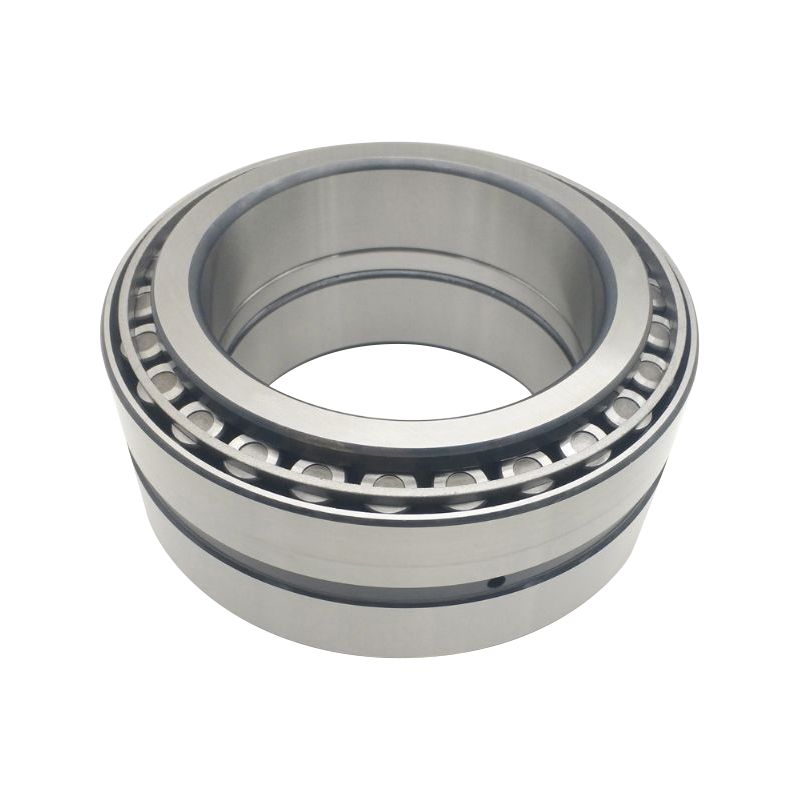
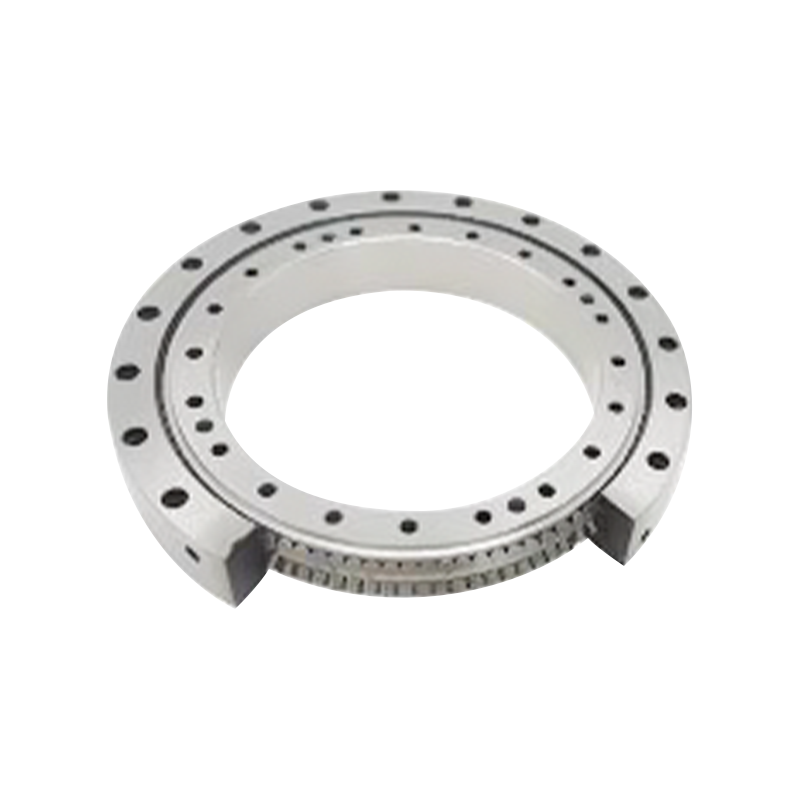
The company’s product range includes mounted bearings, cross roller bearings, robot bearings, angular contact ball bearings, rod end bearings, spherical roller bearings, cylindrical roller bearings, tapered roller bearings, and Nilos rings. This broad portfolio gives the technical team wider bearing knowledge and allows customers to source multiple bearing categories from one supplier.
Modern production lines cover forging, turning, heat treatment, grinding, assembly, and packaging. This integrated manufacturing capability is a major strength because bearing quality depends on every process. By controlling more stages internally, the company can respond more effectively to customer requirements, improve consistency, and support customized specifications.
The company’s R&D work focuses on high-precision bearing technologies, including cross roller bearings and dual-direction thrust angular contact ball bearings used in CNC machines, robotics, and intelligent automation systems. This technical foundation benefits standard mounted bearing products as well, because precision thinking, process discipline, and inspection culture can be applied across product lines.
International service is another important advantage. Customers in different regions may have different standards, applications, packaging preferences, and documentation needs. A multilingual service team helps provide technical response, installation guidance, and after-sales support. For global buyers, communication speed and technical clarity can be as important as product supply.
Industrial manufacturing must consider environmental responsibility as well as product performance. Bearing production involves steel processing, heat treatment, machining, lubrication, cleaning, packaging, and transportation. Responsible manufacturers seek to reduce waste, improve energy efficiency, recycle materials, and optimize production processes.
Ukl Bearing Manufacturing Co., Ltd treats sustainability as a long-term commitment. The company promotes environmentally responsible processes, material recycling, and energy optimization. These actions help reduce environmental impact while improving production efficiency. In bearing manufacturing, sustainability and quality often support each other: better process control reduces scrap, efficient machining reduces waste, and stable production reduces unnecessary rework.
The company also supports educational and technical training initiatives to help develop future engineering talent. This reflects a broader commitment to the industry, not only to product sales. As industrial automation, robotics, and intelligent manufacturing continue to grow, skilled technical people will become increasingly important for bearing design, application, and maintenance.
When purchasing mounted bearing units, some buyers focus mainly on unit price. However, the true cost of a bearing includes purchase price, installation labor, downtime, maintenance, replacement frequency, energy loss, and damage to connected components. A cheaper bearing that fails early may become much more expensive than a better bearing with stable performance.
A high-quality 4 bolt flange bearing unit can reduce total cost in several ways. First, accurate dimensions make installation faster and reduce assembly problems. Second, better sealing and lubrication reduce contamination-related failures. Third, stable heat treatment and grinding improve fatigue life and reduce noise. Fourth, strong housing construction protects alignment and resists vibration. Fifth, reliable supply reduces emergency purchasing and inventory risk.
For conveyor systems, a failed flange bearing can stop an entire production line. For packaging machines, bearing vibration can affect product quality and machine timing. For agricultural equipment, bearing failure in the field can cause costly delays. For fans and blowers, bearing noise and heat can indicate serious operational risk. In all these cases, bearing reliability has value far beyond the component itself.
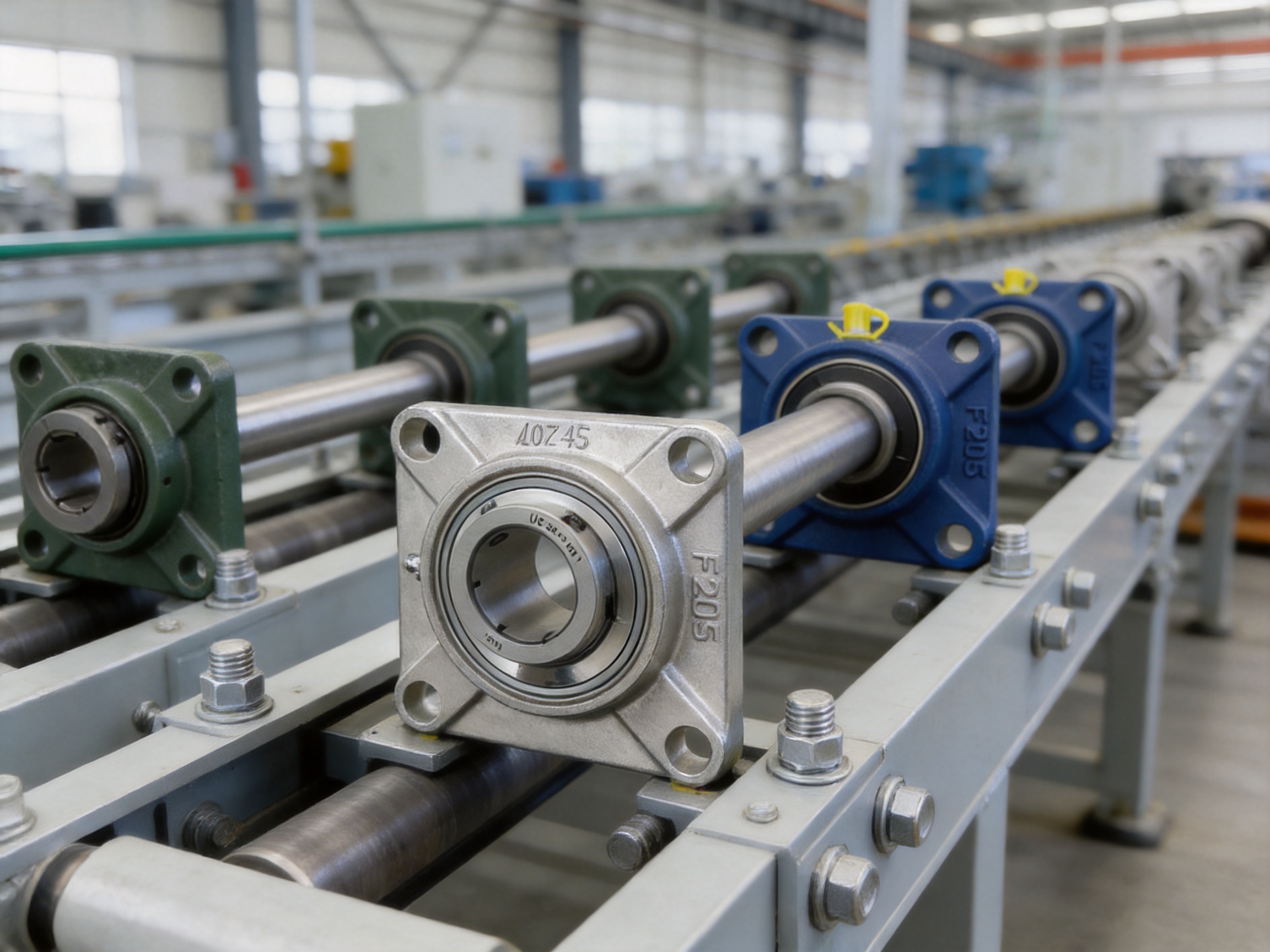
Conveyors frequently use 4 bolt flange bearing units to support rollers, drive shafts, tail pulleys, and guide shafts. The four-bolt housing offers stable mounting on side frames, while self-alignment helps compensate for frame tolerances. Relubrication capability is valuable in dusty or continuous-duty environments.
Agricultural equipment often operates with dust, moisture, vibration, and shock loads. Cast iron flange units can provide robust support for shafts in harvesters, seeders, conveyors, and processing equipment. Proper sealing and maintenance are especially important in this sector.
Packaging lines require smooth motion, repeatability, and easy maintenance. Four-bolt flange bearings support shafts in conveyors, wrappers, labeling machines, and filling equipment. Depending on hygiene requirements, special housing materials, coatings, or lubricants may be selected.
Rotating equipment such as fans and blowers requires smooth bearing operation to reduce vibration and noise. A well-mounted flange bearing helps maintain shaft position and supports stable rotation. Correct alignment and lubrication are critical for these applications.
Many machines use side-mounted shafts or rotating assemblies that benefit from a square flange bearing unit. Examples include woodworking equipment, textile machines, material handling systems, printing equipment, and automation frames. The UCF style design provides a practical standardized solution.
Although the 4 bolt flange bearing unit is a standard product, many applications require specific adjustments. Customers may request special seals, different grease, alternative housing material, surface coating, customized packaging, private labeling, specific clearance, enhanced corrosion resistance, or documentation support. OEM and ODM experience is valuable because customization must be managed without compromising bearing performance.
For example, a customer operating in a wet environment may need better corrosion protection. A customer in a dusty factory may need stronger sealing. A machine builder exporting equipment may require specific packaging and marking. A distributor may need consistent labeling and carton design. A technical manufacturer can help evaluate these requirements and provide practical solutions.
Customization should always be based on application conditions. Simply changing one feature without considering the complete system may not solve the problem. For instance, stronger sealing may improve contamination protection but may also increase friction at higher speeds. A different grease may improve temperature resistance but must remain compatible with seals and operating conditions. Technical communication is therefore essential.
A 4 bolt flange bearing unit is a mounted bearing assembly with a square flange housing and four mounting holes. It includes a bearing insert inside the housing and is used to support a rotating shaft on a flat machine surface.
UCF commonly refers to a bearing unit using a UC type insert and an F type four-bolt flange housing. It is a widely used designation for square flange mounted ball bearing units.
Self-alignment allows the bearing insert to adjust slightly inside the housing. This helps compensate for small mounting errors, shaft deflection, and frame misalignment, reducing stress and improving operating reliability.
Gray cast iron offers good strength, vibration absorption, heat dissipation, machinability, and cost efficiency. These characteristics make it a popular choice for mounted bearing housings in general industrial applications.
A 4 bolt flange bearing usually provides stronger and more stable mounting because the load is distributed across four bolts. A 2 bolt flange bearing is more compact and may be suitable for lighter-duty or space-limited applications.
Many 4 bolt flange bearing units are supplied pre-greased and include grease fittings for relubrication. Relubrication intervals depend on speed, load, temperature, contamination, and operating time.
Common causes include contamination, insufficient lubrication, excessive load, poor shaft fit, misalignment beyond the allowable range, improper installation, over-tightened or loose bolts, and unsuitable operating conditions.
Technicians should check shaft size, shaft surface condition, housing integrity, mounting surface flatness, bolt tightening, locking screw security, and smooth shaft rotation after installation.
Yes. Depending on the application, options may include different housing materials, coatings, seals, grease types, clearances, and packaging specifications. OEM and ODM customization can be discussed according to working conditions.
A manufacturer that controls forging, turning, heat treatment, grinding, assembly, inspection, and packaging can manage quality more consistently. This reduces variation and supports more reliable bearing performance.
The 4 bolt flange bearing unit is a proven, practical, and versatile mounted bearing solution for industrial machinery. Its square four-bolt housing provides stable support, while the self-aligning bearing insert helps compensate for real-world installation conditions. The integrated assembly reduces design complexity, speeds installation, and simplifies maintenance. With proper material selection, sealing, lubrication, and installation, the unit can deliver dependable service in conveyors, agricultural machinery, packaging systems, fans, material handling equipment, and many other applications.
Compared with lighter or more complex alternatives, the 4 bolt flange bearing offers an excellent balance of strength, convenience, availability, and cost effectiveness. However, true performance depends on manufacturing quality. Material control, casting quality, heat treatment, precision grinding, assembly cleanliness, sealing, lubrication, and final inspection all determine whether the bearing runs smoothly and lasts as expected.
Ukl Bearing Manufacturing Co., Ltd strengthens this product value through integrated manufacturing capability, technical R&D, OEM and ODM experience, global export service, and a broad bearing portfolio. By combining advanced production processes with practical application support, the company provides mounted bearing solutions for customers seeking reliability, consistency, and long-term cooperation.
For buyers who want more than a standard component, a well-manufactured 4 bolt flange bearing unit offers a dependable foundation for smoother rotation, lower maintenance pressure, and improved machine uptime.
1. Harris, T. A., and Kotzalas, M. N. Rolling Bearing Analysis: Essential Concepts of Bearing Technology. CRC Press.
2. Brändlein, J., Eschmann, P., Hasbargen, L., and Weigand, K. Ball and Roller Bearings: Theory, Design and Application. Wiley.
3. ISO 15. Rolling Bearings: Radial Bearings, Boundary Dimensions, General Plan. International Organization for Standardization.
4. ISO 281. Rolling Bearings: Dynamic Load Ratings and Rating Life. International Organization for Standardization.
5. ISO 492. Rolling Bearings: Radial Bearings, Geometrical Product Specifications and Tolerance Values. International Organization for Standardization.
6. Shigley, J. E., Budynas, R. G., and Nisbett, J. K. Mechanical Engineering Design. McGraw-Hill Education.
7. Neale, M. J. The Tribology Handbook. Butterworth-Heinemann.


Product Categories
Contact Us

Jane@ukl-bearing.com
Jenny@ukl-bearing.com
Andy@ukl-bearing.com
Ivy@ukl-bearing.com

+86-510- 88763239
+86-15371057968

No.1 Hehuan Road, Hudai Town, Binhu District, Wuxi City.
Ready to Begin?
Get in Touch

Now!
UKL BEARING
 English
 Español
 русский