Content
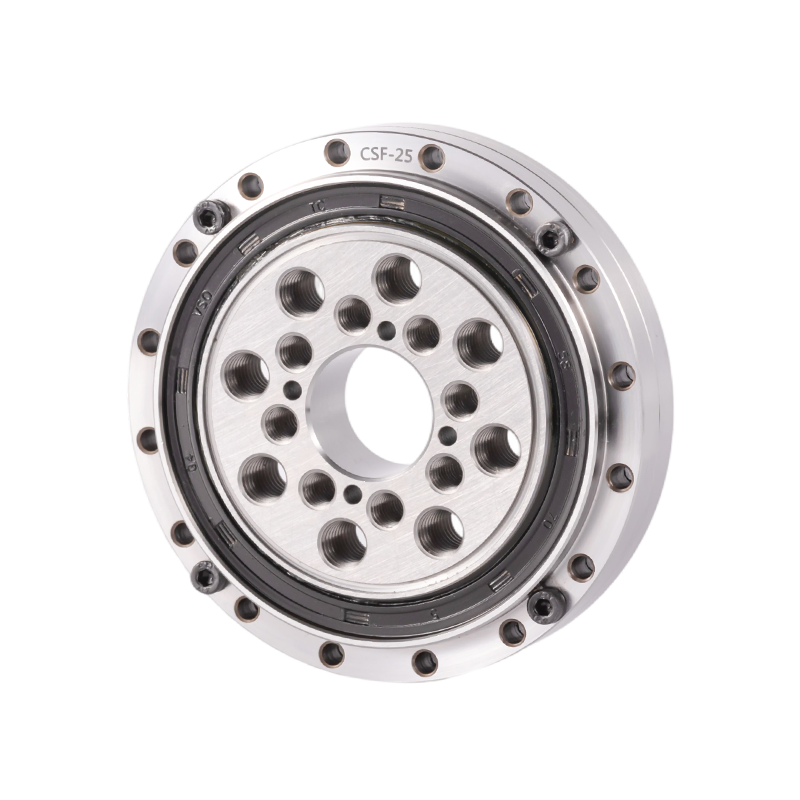
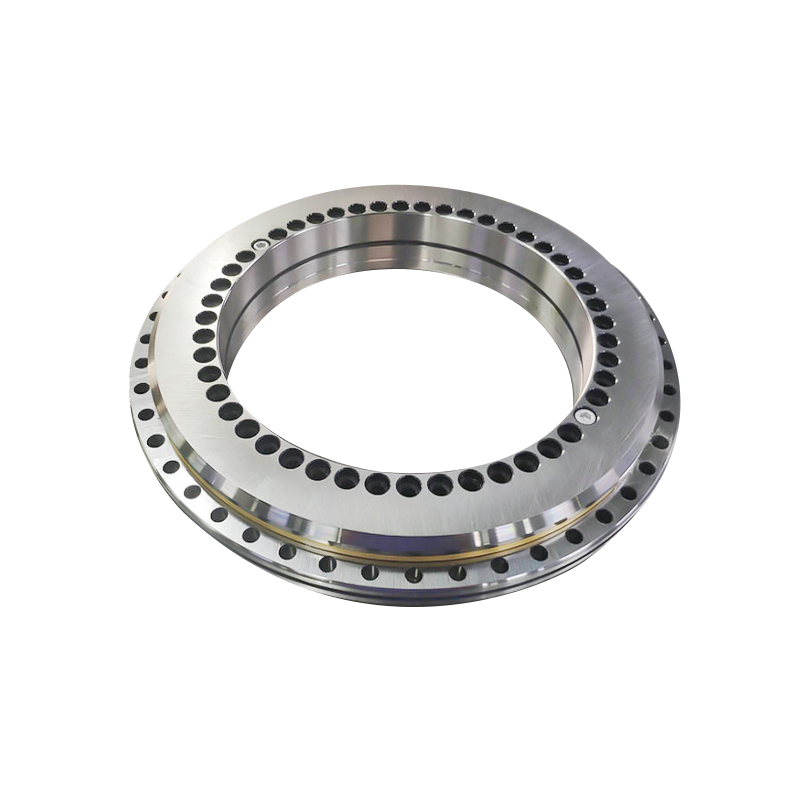
In precision motion systems, the bearing inside a reducer is not a simple supporting component; it is a decisive element that influences torque transmission, positioning accuracy, rigidity, service life, assembly efficiency, and the long-term stability of the entire machine. The CSF G high rigidity reducer bearing is designed for compact harmonic reducer structures where high moment load capacity, high rotational accuracy, and reliable stiffness are required in a limited installation space.
This product belongs to the cross roller bearing category and is especially suitable for CSF(G) harmonic reducers used in robotics, medical devices, aerospace mechanisms, precision machine tools, radar systems, rotary indexing tables, optical instruments, and automated manufacturing equipment. Its structural concept combines an integral inner ring with a two-piece outer ring, reducing dependence on additional flanges and bearing housings. This makes installation faster and helps designers build more compact, more accurate, and more efficient motion modules.
Compared with conventional reducer bearings and ordinary crossed roller bearings, the CSF G high rigidity reducer bearing offers several competitive advantages: stronger structural rigidity, simplified mounting, high torque capacity, excellent positioning accuracy, compact weight-saving design, and stable performance under high-load and high-speed operating conditions. These advantages are supported by material selection, heat treatment control, precision grinding, and strict manufacturing management.
Ukl Bearing Manufacturing Co., Ltd has developed this product as part of a broader high-precision bearing portfolio serving robotics, CNC machinery, intelligent automation, and industrial transmission applications. With integrated production capabilities including forging, turning, heat treatment, grinding, assembly, and packaging, the company provides both manufacturing consistency and engineering support for OEM and ODM customers worldwide.
CSF G High Rigidity Reducer Bearing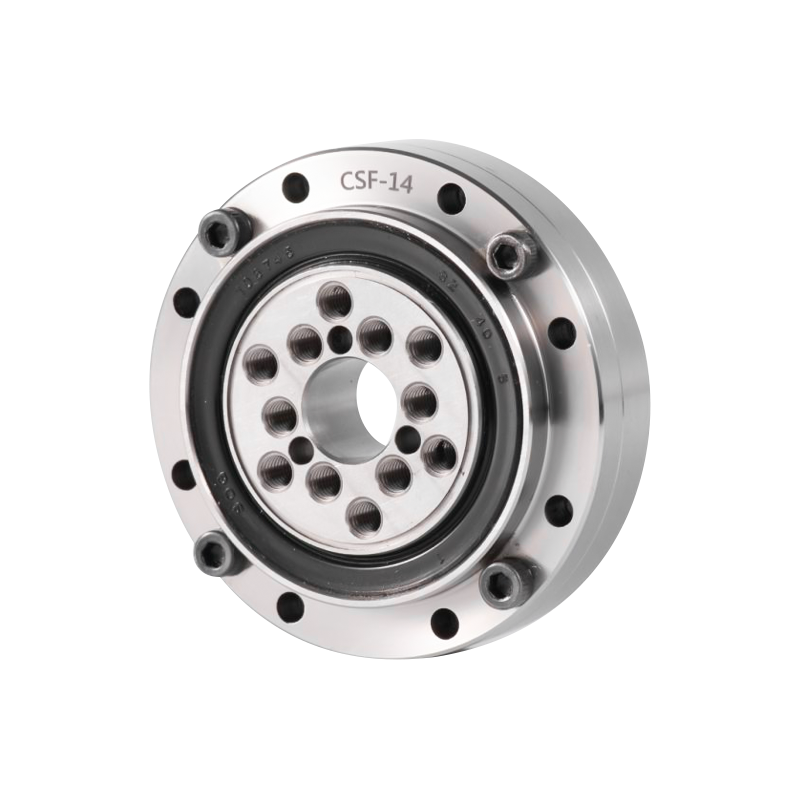
The CSF G high rigidity reducer bearing is a compact precision bearing designed to support harmonic reducer operation. Harmonic reducers are widely used where compact size, high reduction ratio, low backlash, and precise motion control are required. However, these reducers also place demanding requirements on internal bearing performance. The bearing must resist radial load, axial load, overturning moment, and torque-induced deformation while maintaining smooth rotation and repeatable accuracy.
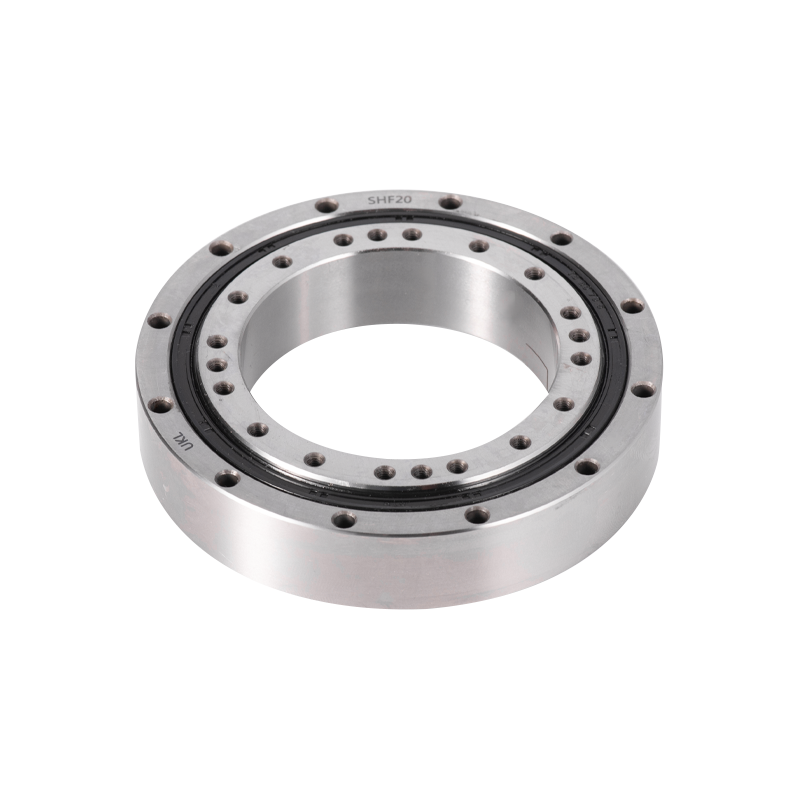
The CSF G series addresses these requirements through a cross roller bearing structure. In a cross roller arrangement, cylindrical rollers are alternately arranged at right angles between the inner and outer raceways. This configuration enables one bearing to support radial loads, axial loads in both directions, and moment loads simultaneously. As a result, the bearing can replace more complex multi-bearing arrangements while improving compactness and stiffness.
For harmonic reducer applications, rigidity is essential. Even very small elastic deformation can reduce positioning precision, cause vibration, increase wear, and affect repeatability. The CSF G high rigidity reducer bearing is therefore designed to maintain high structural stiffness during acceleration, deceleration, reversing movement, and continuous torque transmission.
The product is also optimized for easy integration. Its integral inner ring and two-piece outer ring reduce the need for complicated peripheral structures. The installation process becomes simpler, and the final reducer assembly can achieve better concentricity and stable rotational performance. For equipment manufacturers, this means shorter assembly time, reduced part count, improved reliability, and easier quality control.
The integral inner ring is one of the defining characteristics of this bearing series. In many conventional structures, segmented rings or additional mounting components may introduce alignment errors or uneven clamping forces. These issues can lead to vibration, inconsistent preload, and reduced bearing life. By using an integral inner ring, the CSF G bearing improves raceway continuity and helps ensure stable rolling contact.
This design contributes directly to rotational accuracy. The bearing can maintain better geometric stability during operation, which is especially important in robot joints, indexing systems, and precision rotary tables. When a robot arm performs repeated positioning or when a medical device requires controlled micro-movement, the bearing must deliver consistent motion without unpredictable deviation. The integral inner ring helps provide that consistency.
The two-piece outer ring design simplifies installation and makes the bearing suitable for compact reducer assemblies. Because the bearing does not require additional flanges and bearing housings in many applications, equipment designers can reduce the complexity of the surrounding structure. This is valuable in harmonic reducers, where internal space is limited and every millimeter matters.
Traditional bearing arrangements often require multiple support elements, additional housing machining, careful adjustment, and more assembly steps. The CSF G design reduces these requirements. The result is a cleaner assembly process, lower risk of mounting error, and improved production efficiency for reducer manufacturers and automation equipment builders.
The cross roller structure allows the bearing to support complex loads in one compact unit. In many precision machines, the bearing is not exposed to only one type of load. Robot joints, for example, experience radial load from arm weight, axial load from joint structure, and moment load during acceleration or payload movement. A conventional single-direction bearing may not provide sufficient support under these combined conditions.
By arranging rollers alternately at 90 degrees, the CSF G bearing can carry radial, axial, and moment loads efficiently. This improves rigidity and reduces the need for using multiple bearings in combination. The result is a more compact mechanical design with fewer components and better control of deformation.
The bearing’s precision design allows it to remain compact and relatively lightweight while still delivering high load capacity. This is important for applications such as robot joints, aerospace equipment, and portable medical systems, where reducing mass improves response speed, energy efficiency, and system performance.
In robotic systems, every additional gram in a moving joint increases inertia and energy consumption. A compact high-rigidity bearing helps reduce joint mass while maintaining precision. In aerospace and optical instruments, lightweight design also contributes to system stability and easier integration into limited-space assemblies.
One of the strongest advantages of the CSF G high rigidity reducer bearing is that it can simplify the reducer support structure. Many competing solutions depend on separate bearing housings, flanges, spacers, or paired bearing sets. These extra components increase cost, assembly time, and the possibility of tolerance accumulation.
The CSF G design integrates key support functions into one bearing structure. This helps manufacturers reduce the total number of parts and improve assembly repeatability. A simpler structure is not only easier to build; it is also easier to inspect, maintain, and scale in production.
Compared with standard deep groove ball bearings or ordinary angular contact arrangements, a cross roller reducer bearing provides higher rigidity under combined loads. Ball bearings can be excellent for high-speed rotation, but in reducer output applications, moment rigidity and positioning stability are often more important. The CSF G bearing is designed for these specific needs.
Its roller contact geometry gives it greater load-bearing area than point-contact ball structures. This allows better resistance to deformation when torque, axial force, and overturning moment act together. In high-precision systems, this rigidity directly supports better motion repeatability.
Competitors may offer general-purpose crossed roller bearings, but reducer-specific applications require more than basic load capacity. The bearing must align with harmonic reducer mounting patterns, dimensional constraints, and accuracy requirements. The CSF G bearing is engineered for CSF(G) harmonic reducer use, making it more suitable for direct integration into precision reducer assemblies.
High positioning accuracy is especially valuable in robotic welding, inspection equipment, diagnostic devices, indexing tables, and radar mechanisms. If bearing runout or deformation is excessive, the final system may fail to reach required accuracy even if the motor and controller are precise. A high-rigidity bearing helps convert control signals into reliable mechanical movement.
The product uses GCr15 bearing steel, a material widely recognized for bearing applications due to its hardness potential, fatigue strength, and wear resistance. However, material selection alone does not guarantee performance. Heat treatment, machining accuracy, raceway finish, and assembly control are equally important.
The CSF G bearing uses an integral quenching process for the outer ring to enhance the strength of the outer ring structure and improve durability. The inner ring uses high-frequency quenching to increase hardness and wear resistance in the raceway contact area. This combination supports longer service life and more stable operation under demanding working conditions.
For equipment manufacturers, a bearing is not purchased only as a catalog component. It must match the mechanical design, mounting hole pattern, reducer size, performance target, and production schedule. Ukl Bearing Manufacturing Co., Ltd supports OEM and ODM projects with engineering communication, technical guidance, and production flexibility. This is a competitive advantage compared with suppliers who provide only standard products without customization or application support.
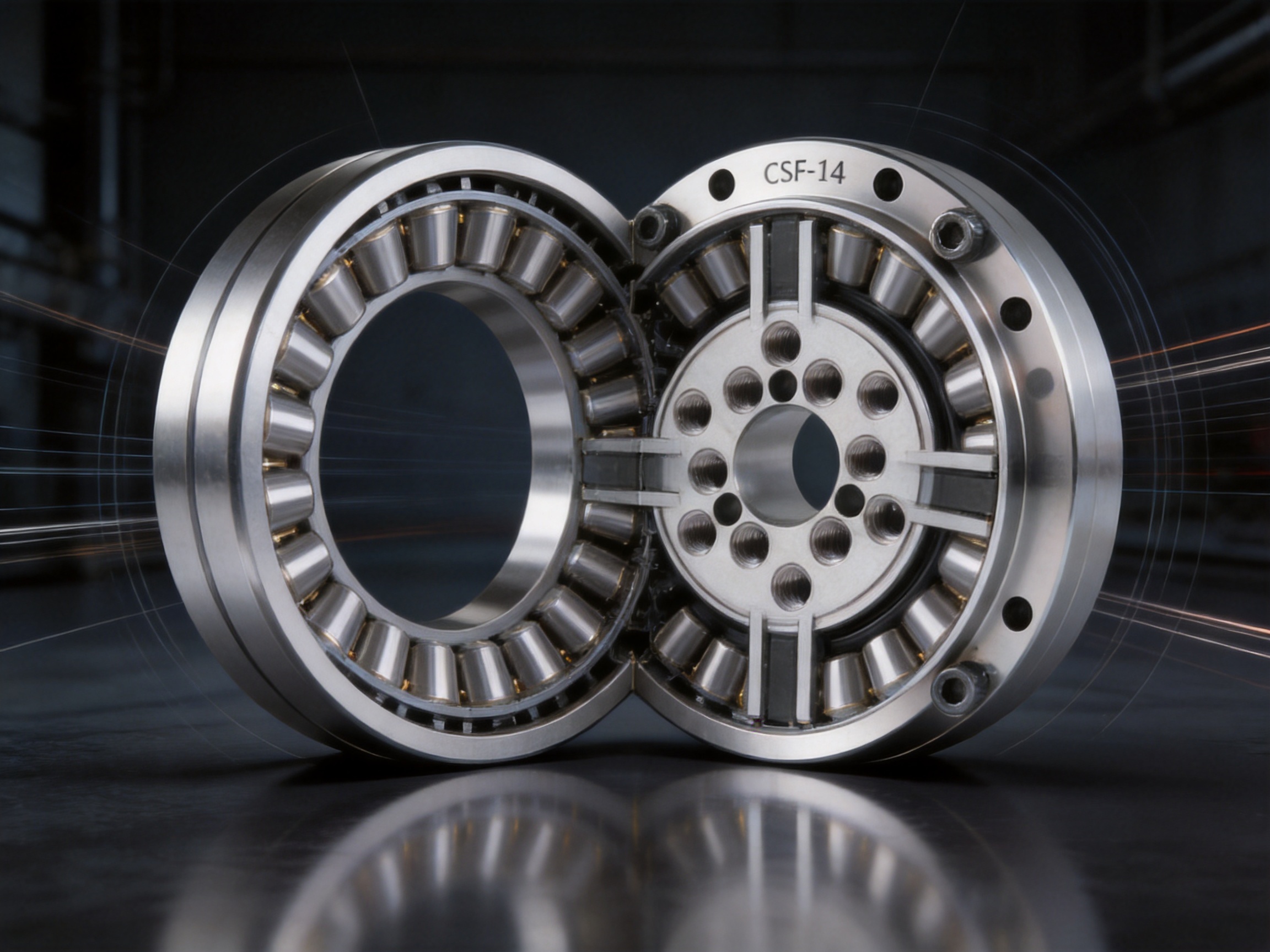
GCr15 bearing steel is selected for the CSF G high rigidity reducer bearing because it provides excellent wear resistance and is suitable for high-load and high-speed environments. For precision reducer bearings, the material must resist contact fatigue, maintain dimensional stability, and provide a reliable hardened raceway surface.
The quality of bearing steel affects the bearing’s performance at every stage of operation. Clean steel, controlled hardness, and uniform microstructure help reduce premature fatigue, surface peeling, and wear. In precision applications, even minor defects can influence vibration, noise, and life. Therefore, reliable material selection is an essential foundation for product performance.
The outer ring uses an integral quenching process. This process helps enhance the overall strength of the outer ring structure and supports durability when the bearing is subjected to combined forces. In reducer applications, the outer ring may experience complex stress distribution caused by mounting load, moment load, and reducer output torque. Integral quenching improves the ring’s structural integrity and helps maintain shape stability.
The inner ring uses high-frequency quenching, focused on improving hardness and wear resistance in the raceway contact area. The raceway is where rolling elements continuously contact the ring surface. If hardness is insufficient or inconsistent, wear may increase, rotational accuracy may decline, and bearing life may shorten.
High-frequency quenching allows the bearing to obtain a hardened contact surface while maintaining suitable core toughness. This balance is important because the bearing must resist surface fatigue while also tolerating operational stress and mounting loads.
After heat treatment, precision machining and grinding are essential to achieve accurate dimensions, raceway geometry, and surface finish. Grinding accuracy affects rotational smoothness, preload consistency, and load distribution among rollers. In a cross roller bearing, roller alignment and raceway accuracy are particularly important because the bearing must support loads in multiple directions.
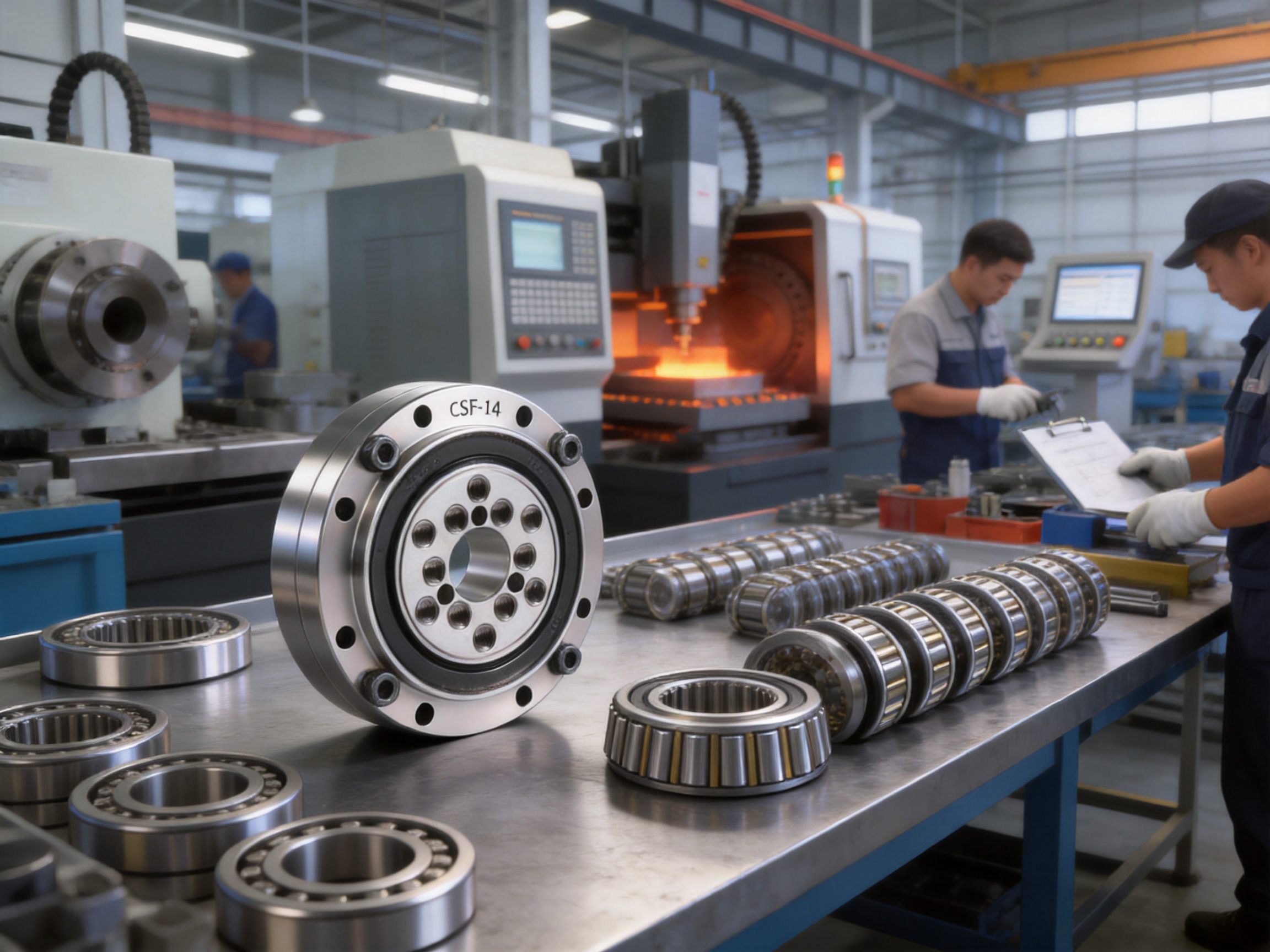
Ukl Bearing Manufacturing Co., Ltd operates modern production lines covering forging, turning, heat treatment, grinding, assembly, and packaging. This integrated capability supports process control from raw material to finished bearing. When each stage is controlled internally, it becomes easier to maintain stable quality and respond quickly to customer requirements.
Assembly is a critical stage for high-rigidity reducer bearings. Roller arrangement, ring matching, clearance control, lubrication condition, and final inspection all influence performance. The goal is to ensure smooth rotation, correct preload or internal clearance, and reliable operation after installation in the reducer.
Quality inspection may include dimensional checks, rotational accuracy checks, appearance inspection, noise evaluation, and packaging verification. For OEM customers, stable batch consistency is often as important as single-piece accuracy. A bearing used in robotic production or medical equipment must perform consistently across repeated manufacturing lots.
Ukl Bearing Manufacturing Co., Ltd is an integrated manufacturer and trading company specializing in precision bearing manufacturing and engineering services. Since its establishment in 2020, the company has focused on high-performance bearing solutions for global industrial customers. It has more than 15 years of OEM and ODM export experience through its team and supply capabilities, supporting customers in Europe, Asia, Africa, Russia, and other regions.
The company’s production capacity ranges from 10,000 to 50,000 units per month, enabling it to serve both small-batch precision projects and larger industrial supply programs. Its products are exported to markets including the United States, Italy, Germany, Poland, South Africa, Egypt, India, and other countries. This international experience helps the company understand different technical expectations, documentation needs, packaging standards, and communication requirements.
The factory is equipped with multiple production lines covering the full bearing manufacturing process. This includes forging, turning, heat treatment, grinding, assembly, and packaging. Such process integration improves traceability and supports consistent quality. It also allows faster response when customers require special sizes, modified mounting holes, different tolerance levels, or application-specific bearing guidance.
Technology is a core part of the company’s competitiveness. Its research and development team focuses on high-precision cross roller bearings, dual-direction thrust angular contact ball bearings, and other products used in CNC machines, robotics, and intelligent automation systems. Through precision design and digital production control, the company works to ensure that each product meets demanding requirements for accuracy and performance.
The company also emphasizes sustainability as a long-term commitment. Environmentally responsible processes, material recycling, and energy optimization are promoted during production. For global customers who are increasingly concerned with supply chain responsibility, this manufacturing attitude supports both technical and environmental value.
The following table summarizes key dimensional and mounting data for the CSF G high rigidity reducer bearing series. Values are based on the provided product information and are intended to support preliminary selection. Final selection should consider application load, speed, accuracy requirement, mounting method, lubrication, and operating environment.
| Bearing Type | Outer Diameter D (mm) | Inner Dimension d (mm) | C (mm) | H (mm) | B (mm) | dm | dn | dl | Weight (kg) |
| CSF(G)-14 | 55 | 11 | 16 | 16.5 | 13.5 | 49 / 8-φ3.5 | 23 / 6-M4 | 17 / 6-M4 | 0.15 |
| CSF(G)-17 | 62 | 10 | 16 | 16.5 | 13.5 | 56 / 10-φ3.5 | 27 / 6-M5 | 19 / 6-M5 | 0.24 |
| CSF(G)-20 | 70 | 14 | 16 | 16.5 | 13.5 | 64 / 12-φ3.5 | 32 / 8-M6 | 24 / 8-M5 | 0.30 |
| CSF(G)-25 | 85 | 20 | 18 | 18.5 | 16.5 | 79 / 16-φ3.5 | 42 / 8-M8 | 30 / 8-M6 | 0.45 |
| CSF(G)-32 | 112 | 26 | 21.5 | 22.5 | 19 | 104 / 16-φ4.5 | 55 / 8-M10 | 40 / 8-M8 | 0.90 |
| CSF(G)-40 | 126 | 24/32 | 22.5 | 24 | 21.5 | 117 / 20-φ5 | 68 / 8-M10 | 50 / 8-M10 | 1.30 |
| CSF(G)-50 | 157 | 32/40 | 30 | 31 | 28 | 147 / 16-φ5.5 | 84 / 8-M14 | 60 / 8-M14 | 2.80 |
| CSF(G)-65 | 210 | 44/52 | 37 | 39 | 35 | 198 / 20-φ6.5 | 110 / 8-M16 | 80 / 8-M16 | 7.90 |
Robot joints require compact, high-rigidity, and highly accurate bearing support. The CSF G high rigidity reducer bearing is suitable for robot joints because it can support combined loads while maintaining precise rotational control. In industrial robots, collaborative robots, and service robots, joint accuracy determines motion quality and repeatability.
When a robot accelerates, stops, reverses, or carries a payload, the joint bearing must resist moment load and maintain stable alignment. A bearing with insufficient rigidity may cause vibration, positioning error, or reduced path accuracy. The CSF G bearing helps improve mechanical stiffness and supports smoother, more predictable motion.
Medical equipment such as surgical robots, diagnostic systems, and precision positioning mechanisms requires stable and reliable motion. In these applications, equipment must move accurately and consistently while maintaining low vibration and dependable operation. A compact high-rigidity bearing contributes to device precision and structural stability.
The bearing’s compact design is also useful where medical devices must be lightweight and space-efficient. Because installation is simplified, equipment designers can create cleaner internal structures and reduce unnecessary mechanical complexity.
Aerospace systems often demand high precision, low weight, and excellent reliability. Bearings used in positioning mechanisms, control systems, and optical assemblies must provide stable performance under strict dimensional and environmental constraints. The CSF G bearing’s high rigidity and compact weight-saving design make it suitable for high-precision aerospace equipment.
Communication radar, weather radar, and related scanning systems require accurate rotation and stable positioning. The bearing must maintain smooth movement and resist external forces while supporting long operating cycles. High rotational accuracy helps the radar maintain target tracking and scanning consistency.
Precision rotary indexing tables, CNC machine tools, and testing instruments depend on repeatable mechanical positioning. In machine tools, bearing rigidity affects machining accuracy, surface quality, and tool path stability. In testing instruments, repeatability is essential for measurement confidence. The CSF G bearing supports these requirements through its high stiffness and accurate rotational performance.
Large radio and optical telescopes require stable, accurate, and smooth motion over long periods. Even small mechanical deviations can influence pointing accuracy and observation quality. A high-rigidity bearing solution helps maintain stable rotation and reduces the risk of deformation-related error.
The CSF G high rigidity reducer bearing is designed to make installation quick and efficient, especially for harmonic reducer assemblies. Because the structure can eliminate the need for certain flanges and bearing housings, the installation process becomes simpler. This reduces the number of machining surfaces that must be controlled and lowers the probability of alignment error.
During installation, it is important to ensure that mounting surfaces are clean, flat, and accurately machined. Uneven mounting pressure can distort the bearing rings and reduce rotational accuracy. Bolts should be tightened according to a suitable sequence and torque requirement to prevent uneven stress. Because cross roller bearings are precision components, careful handling is necessary to avoid impact damage, contamination, or raceway defects.
Lubrication should be selected according to operating speed, load, temperature, and service conditions. Proper lubrication reduces friction, wear, and heat generation. For reducer applications, lubricant compatibility with the reducer system should also be considered. If the bearing operates in a sealed reducer housing, contamination control and sealing quality are also important.
Engineers should consider load direction, expected moment load, duty cycle, speed range, temperature, and required accuracy when selecting the appropriate CSF G model. Smaller models are suitable for compact mechanisms and lightweight joints, while larger models provide increased capacity for heavier loads and higher moment requirements.
Modern automation places increasing demands on compact mechanical systems. Robots are expected to move faster, carry more payload, and position more accurately. Machine tools must deliver higher productivity while maintaining micron-level precision. Medical equipment must be stable, compact, and reliable. These trends make bearing rigidity more important than ever.
Rigidity affects how a system responds under load. If a bearing deforms during operation, the output position may deviate from the controller’s intended command. In a robot, this can reduce path accuracy. In a machine tool, it can affect cutting quality. In a radar system, it can influence scanning precision. In medical equipment, it can affect motion reliability.
The CSF G bearing is designed to address these concerns. Its cross roller arrangement, integral inner ring, two-piece outer ring, and optimized manufacturing process work together to provide a compact yet stable bearing solution. This makes it a strong choice for equipment designers who need both high precision and space efficiency.
Reliable bearing supply requires more than manufacturing equipment. It requires process discipline, experienced engineering, inspection standards, and responsive service. Ukl Bearing Manufacturing Co., Ltd supports global customers with multilingual service, technical response, installation guidance, and after-sales support. This is valuable for OEM customers who need reliable communication during product selection, sample testing, production ramp-up, and long-term maintenance.
The company’s global export experience allows it to serve customers in different industries and regions. Bearings are supplied for markets in Europe, Asia, Africa, Russia, and other areas. This broad market presence strengthens the company’s understanding of industrial requirements, documentation practices, and logistics needs.
For customers requiring custom bearings, the company can provide OEM and ODM support. Customization may involve dimensional adjustment, mounting hole changes, tolerance selection, lubrication requirements, packaging standards, or application-specific consultation. This ability helps customers obtain a bearing solution that better fits their equipment design rather than forcing the design to adapt to a generic bearing.
Standard ball bearings are widely used and cost-effective, but they are often not ideal for reducer output support where high moment rigidity is required. Ball bearings rely on point contact, which limits their stiffness under heavy combined loads. The CSF G cross roller bearing uses line contact rollers, improving load distribution and rigidity.
Paired angular contact bearings can support axial and radial loads, but they require careful arrangement, preload control, and additional installation space. In compact harmonic reducers, space is limited. The CSF G bearing can provide combined load support in a single compact unit, reducing assembly complexity.
Ordinary crossed roller bearings may provide good rigidity, but not all are optimized for CSF(G) harmonic reducer structures. The CSF G series is designed with reducer integration in mind, including mounting convenience, compact dimensions, and high rigidity requirements. This application-specific design improves suitability for precision reducer assemblies.
Low-cost generic bearings may appear attractive at purchase, but poor material control, inconsistent heat treatment, rough raceway finish, or unstable dimensions can lead to vibration, short life, and assembly problems. The CSF G bearing focuses on long-term value through material selection, controlled quenching, precision grinding, and manufacturing consistency.
When selecting a CSF G high rigidity reducer bearing, buyers should begin with the reducer size and installation space. The dimensional table provides the outer diameter, inner dimension, width-related dimensions, mounting patterns, and approximate weight. The bearing must match the mechanical design and allow suitable fastening.
Next, the operating load should be evaluated. This includes radial load, axial load, moment load, torque transmission, impact load, and duty cycle. Applications with frequent acceleration and deceleration may impose higher dynamic stress than constant-speed applications. Robot joints and indexing tables are typical examples where dynamic load analysis is important.
Accuracy requirements should also be defined. Precision applications may require stricter runout, lower clearance, or controlled preload. If the bearing is used in a medical, aerospace, or optical system, additional inspection and documentation may be needed. Early communication with the manufacturer helps ensure that the supplied bearing matches application expectations.
Environmental conditions should not be ignored. Temperature, contamination, lubrication, vibration, and sealing conditions can affect bearing life. If the bearing is used in a dusty, humid, or high-temperature environment, appropriate protection and maintenance planning are necessary.
Finally, buyers should consider total value rather than only unit price. A high-quality reducer bearing can reduce assembly time, improve machine accuracy, lower maintenance frequency, and prevent costly downtime. In high-value equipment such as robots, CNC machines, radar systems, and medical devices, bearing reliability has a direct economic impact.

For OEM manufacturers, the CSF G high rigidity reducer bearing provides value in several ways. First, it supports compact mechanical design. A compact bearing helps reduce reducer size and allows more efficient use of space. This is especially important in robots and automation equipment where smaller, lighter joints improve performance.
Second, it supports production efficiency. Because the bearing structure reduces the need for additional flanges and housings, assembly becomes more straightforward. Fewer components also mean fewer inventory items, fewer tolerance stack-up problems, and fewer opportunities for assembly error.
Third, it supports product quality. High rigidity and accurate rotation improve the final equipment’s motion performance. For manufacturers selling precision machines, this can strengthen product competitiveness and customer satisfaction.
Fourth, it supports long-term supply cooperation. Ukl Bearing Manufacturing Co., Ltd combines manufacturing capacity, R&D capability, international export experience, and service support. This combination is important for OEM customers who need stable supply, engineering cooperation, and continuous improvement over multiple product generations.
It is a precision cross roller bearing designed for high-rigidity reducer applications, especially CSF(G) harmonic reducers. Its crossed roller structure allows it to support radial loads, axial loads in both directions, and moment loads in one compact bearing.
The bearing uses an integral inner ring and a two-piece outer ring. This structure simplifies installation, improves rotational stability, and can reduce the need for additional flanges and bearing housings in reducer assemblies.
Robot joints require high rigidity, compact size, and accurate positioning. The CSF G bearing provides strong combined load capacity and stable rotational accuracy, helping robot joints achieve repeatable and precise movement.
The bearing uses GCr15 bearing steel, selected for wear resistance, hardness potential, fatigue strength, and suitability for high-load and high-speed operating environments.
The outer ring uses integral quenching to improve structural strength and durability. The inner ring uses high-frequency quenching to improve raceway hardness and wear resistance, supporting longer service life and stable operation.
Ordinary ball bearings usually have point contact and lower moment rigidity. The CSF G cross roller bearing uses roller line contact and a crossed arrangement, giving it better rigidity and combined load capacity in precision reducer systems.
Yes. Its structure is designed to simplify installation and reduce dependence on additional mounting components. This can shorten assembly time, reduce part count, and improve consistency in OEM production.
Suitable applications include robot joints, medical equipment, aerospace mechanisms, multi-station welding machines, communication radar, weather radar, precision rotary indexing tables, CNC machine tools, testing instruments, precision rotary tables, and optical telescopes.
Engineers should consider installation space, bearing dimensions, load direction, moment load, speed, accuracy requirement, lubrication, environmental conditions, and mounting hole compatibility.
Yes. Ukl Bearing Manufacturing Co., Ltd provides OEM and ODM support, including technical communication, customization discussion, production capability, and after-sales service for global customers.
The CSF G high rigidity reducer bearing is a specialized cross roller bearing solution for precision harmonic reducer applications. Its integral inner ring, two-piece outer ring, compact structure, high torque capacity, and high rigidity make it well suited for advanced motion systems where accuracy and stability are essential.
Compared with conventional bearing arrangements and many generic competitors, this bearing offers clear advantages in structural integration, load capacity, installation efficiency, and precision performance. Its use of GCr15 bearing steel, outer ring integral quenching, inner ring high-frequency quenching, and precision manufacturing processes further supports durability and operational reliability.
For robotics, medical equipment, aerospace systems, radar mechanisms, machine tools, indexing tables, and optical instruments, bearing quality directly influences final equipment performance. A high-rigidity reducer bearing helps reduce deformation, improve repeatability, and support long-term stable operation.
Supported by the manufacturing capabilities, R&D strength, global service experience, and OEM/ODM flexibility of Ukl Bearing Manufacturing Co., Ltd, the CSF G high rigidity reducer bearing provides a strong option for equipment manufacturers seeking precision, compactness, and dependable performance in modern automation and transmission systems.
1. Harris, T. A., and Kotzalas, M. N. Rolling Bearing Analysis: Essential Concepts of Bearing Technology. CRC Press.
2. ISO 492. Rolling Bearings: Radial Bearings, Geometrical Product Specifications and Tolerance Values.
3. ISO 281. Rolling Bearings: Dynamic Load Ratings and Rating Life.
4. Brändlein, J., Eschmann, P., Hasbargen, L., and Weigand, K. Ball and Roller Bearings: Theory, Design and Application.
5. Hamrock, B. J., Schmid, S. R., and Jacobson, B. O. Fundamentals of Machine Elements.
6. Engineering reference materials on harmonic reducer design, crossed roller bearing selection, and precision rotary support systems.
Product Categories
Contact Us

Jane@ukl-bearing.com
Jenny@ukl-bearing.com
Andy@ukl-bearing.com
Ivy@ukl-bearing.com

+86-510- 88763239
+86-15371057968

No.1 Hehuan Road, Hudai Town, Binhu District, Wuxi City.
Ready to Begin?
Get in Touch

Now!
UKL BEARING
 English
 Español
 русский