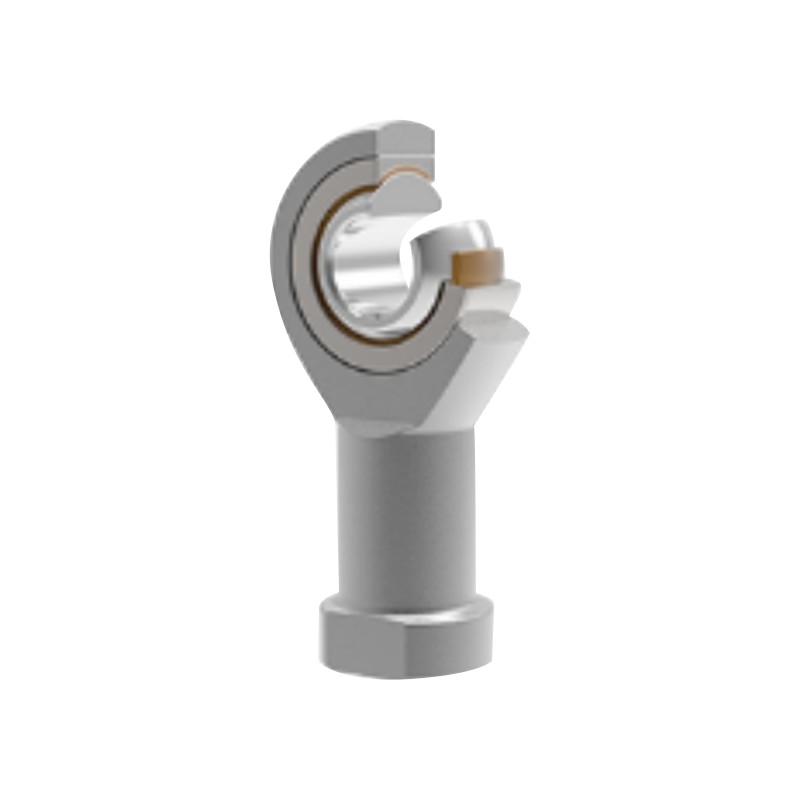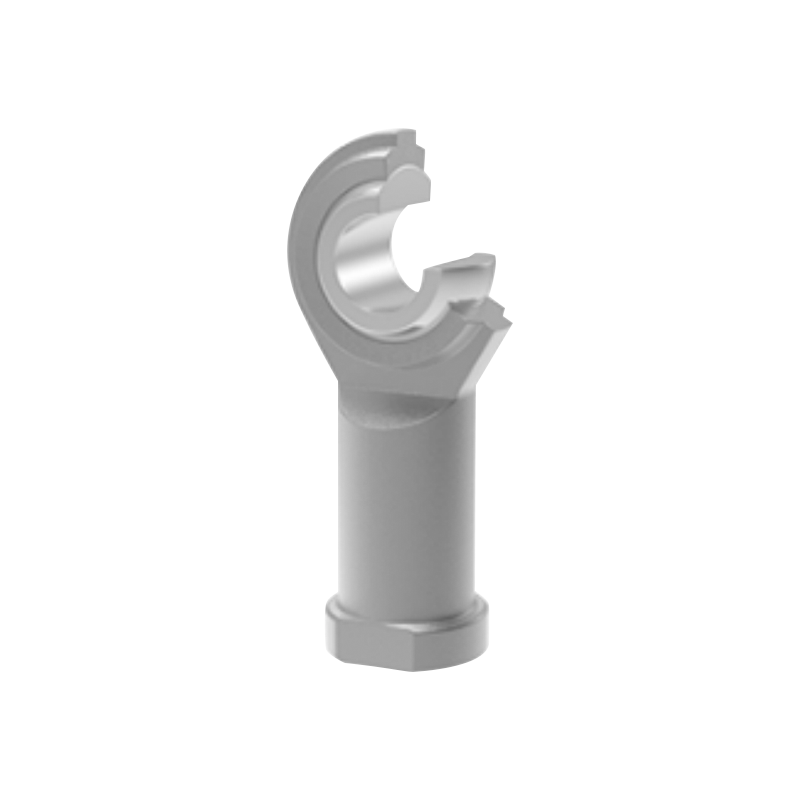
In the complex landscape of industrial machinery, mounted bearings are the unsung heroes that keep operations running smoothly. Among these, the 4 bolt flange bearing—specifically the UCF series—stands out as a versatile, high-performance solution designed to meet the demands of modern manufacturing, automation, and material handling. Unlike generic mounted bearings, the UCF series combines innovative design, robust materials, and precision engineering to deliver unmatched stability, self-aligning capability, and longevity. This article explores the core features of the UCF series, its advantages over competitor products, the advanced manufacturing processes that ensure its quality, and its diverse applications across industries.
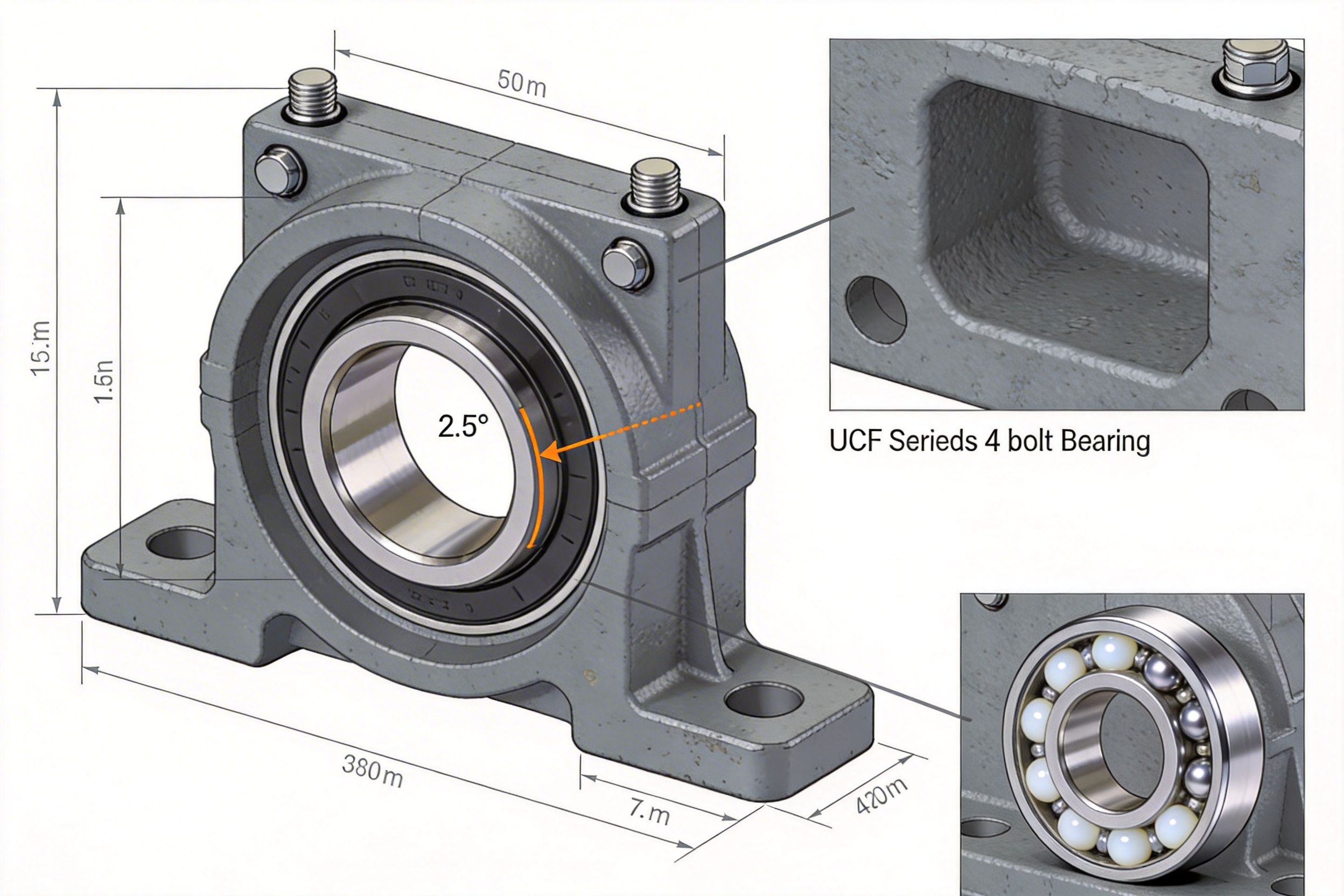
4 bolt flange bearings are mounted bearing units characterized by a square or rectangular housing with four mounting bolts, a spherical outer ring bearing insert, and a concave housing bore. The UCF series is a standardized line of these bearings, recognized globally for its consistency and interchangeability. At the heart of the UCF series is its self-aligning mechanism: the spherical outer diameter of the bearing insert fits into the concave inner diameter of the housing, allowing the bearing to adjust to angular misalignment between the shaft and housing without compromising performance.
The UCF series’ design is optimized for reliability and ease of use. Key features include:
Self-Aligning Capability: The spherical- concave interface enables the bearing to compensate for up to 2.5 degrees of angular misalignment. This is critical in applications where perfect shaft-housing alignment is difficult to maintain, such as conveyor systems or robotic arms. By reducing stress from misalignment, the UCF series extends the bearing’s service life and minimizes downtime.
4 Bolt Mounting: Unlike 2 bolt flange bearings, the four-bolt configuration distributes load evenly across the housing, reducing vibration and improving stability. This is especially beneficial in heavy-load applications, where uneven load distribution can lead to premature failure.
Standardized UCF Suffix: The UCF series follows a universal naming convention (e.g., UCF 205, UCF 206) that denotes the bearing size and type. This standardization makes it easy for engineers to specify, source, and replace bearings, reducing inventory complexity and maintenance costs.
The UCF series uses high-quality materials tailored to specific application needs:
Housing Materials: - Gray Cast Iron: The most popular choice, gray cast iron offers excellent vibration absorption, high strength, and superior heat dissipation. It is ideal for general industrial applications where durability and noise reduction are priorities. - Stamped Steel: Lightweight and cost-effective, stamped steel housings are suitable for low-to-medium load applications, such as small conveyors or light automation equipment. - Plastic: Corrosion-resistant and non-conductive, plastic housings are used in food processing, medical equipment, or marine environments where rust is a concern. - Cast Steel: High-strength cast steel housings are designed for heavy-load, high-impact applications, such as mining or construction machinery.
Bearing Inserts: The inserts are typically made from high-carbon chromium steel (e.g., AISI 52100) for its hardness and wear resistance. Some variants use ceramic balls for reduced friction and higher temperature resistance, making them suitable for high-speed applications.
The UCF series 4 bolt flange bearing outperforms many competitor models in key areas, making it a preferred choice for engineers and maintenance teams.
Many competitor 2 bolt flange bearings offer a maximum self-aligning angle of just 1–1.5 degrees, which is insufficient for applications with significant misalignment. The UCF series, by contrast, provides up to 2.5 degrees of adjustment, allowing it to handle misalignment caused by thermal expansion, shaft deflection, or imprecise installation. For example, in a conveyor system with a slightly warped frame, the UCF series bearing will adjust automatically, reducing wear on the shaft and housing and extending the bearing’s life by up to 30% compared to non-self-aligning alternatives.
The four-bolt mounting configuration of the UCF series distributes dynamic loads more evenly than 2 bolt designs. This reduces stress concentrations on the housing and bearing insert, allowing the UCF series to handle up to 50% higher dynamic loads than equivalent 2 bolt bearings. For instance, a UCF 205 bearing can support a dynamic load of 1,800 kg, while a comparable 2 bolt bearing may only handle 1,200 kg. Additionally, the gray cast iron housing of the UCF series absorbs vibration better than stamped steel, reducing noise levels by up to 20 dB in industrial settings.
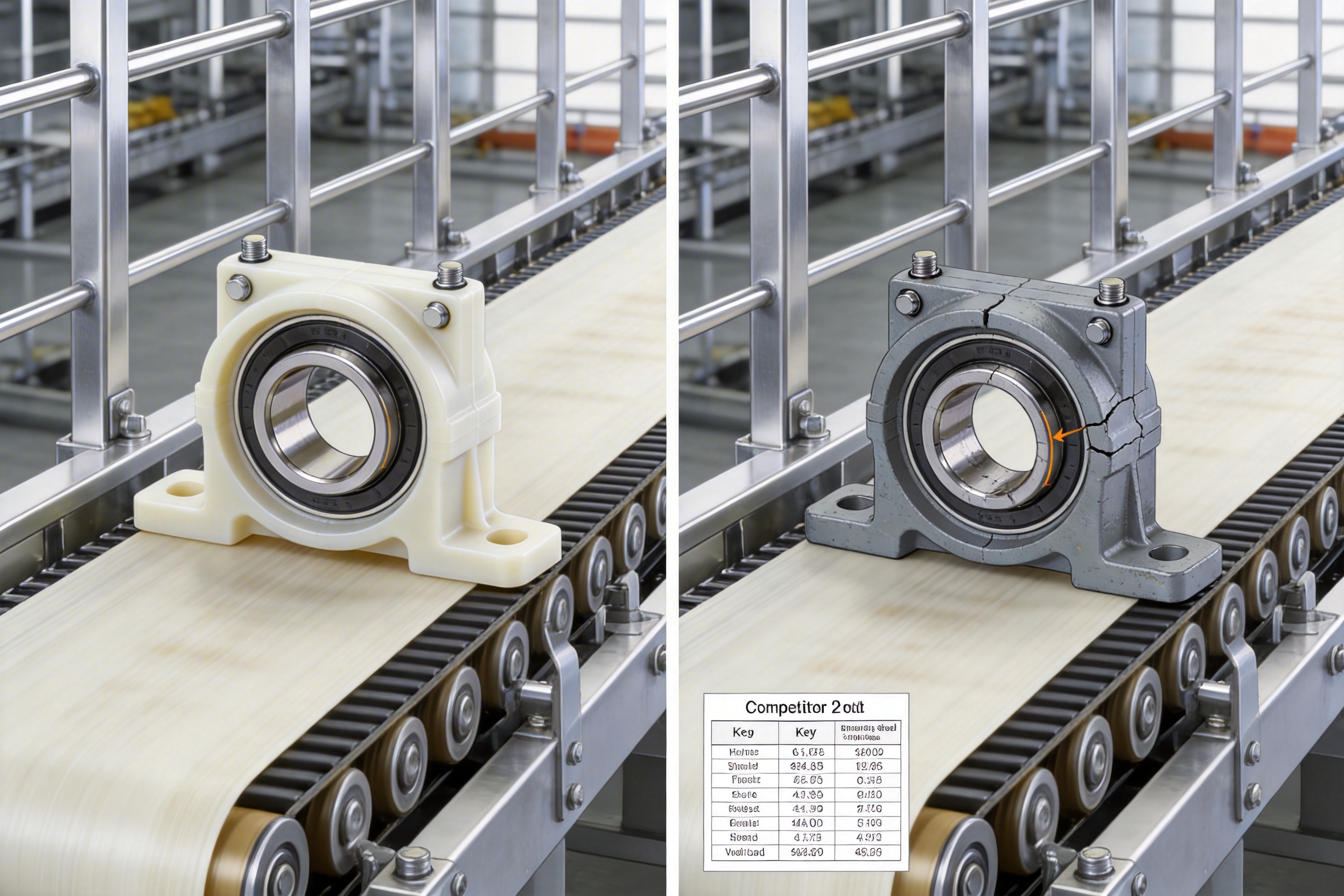
Unlike competitors that offer only stamped steel housings, the UCF series provides four housing material options, allowing it to adapt to a range of environments. For example: - In food processing plants, plastic housings prevent rust and contamination. - In mining operations, cast steel housings withstand heavy impact and abrasive dust. - In general manufacturing, gray cast iron housings balance durability and cost-effectiveness. This versatility makes the UCF series a one-stop solution for diverse industrial needs, eliminating the need to source multiple bearing types for different applications.
The UCF series’ universal naming convention ensures interchangeability with other major brands, making it easy to replace bearings without modifying the housing or shaft. Additionally, the bearings feature lubrication points that allow for easy re-greasing, extending their service life. Competitor bearings often use non-standard sizing, which requires custom modifications for replacement, increasing downtime and maintenance costs.
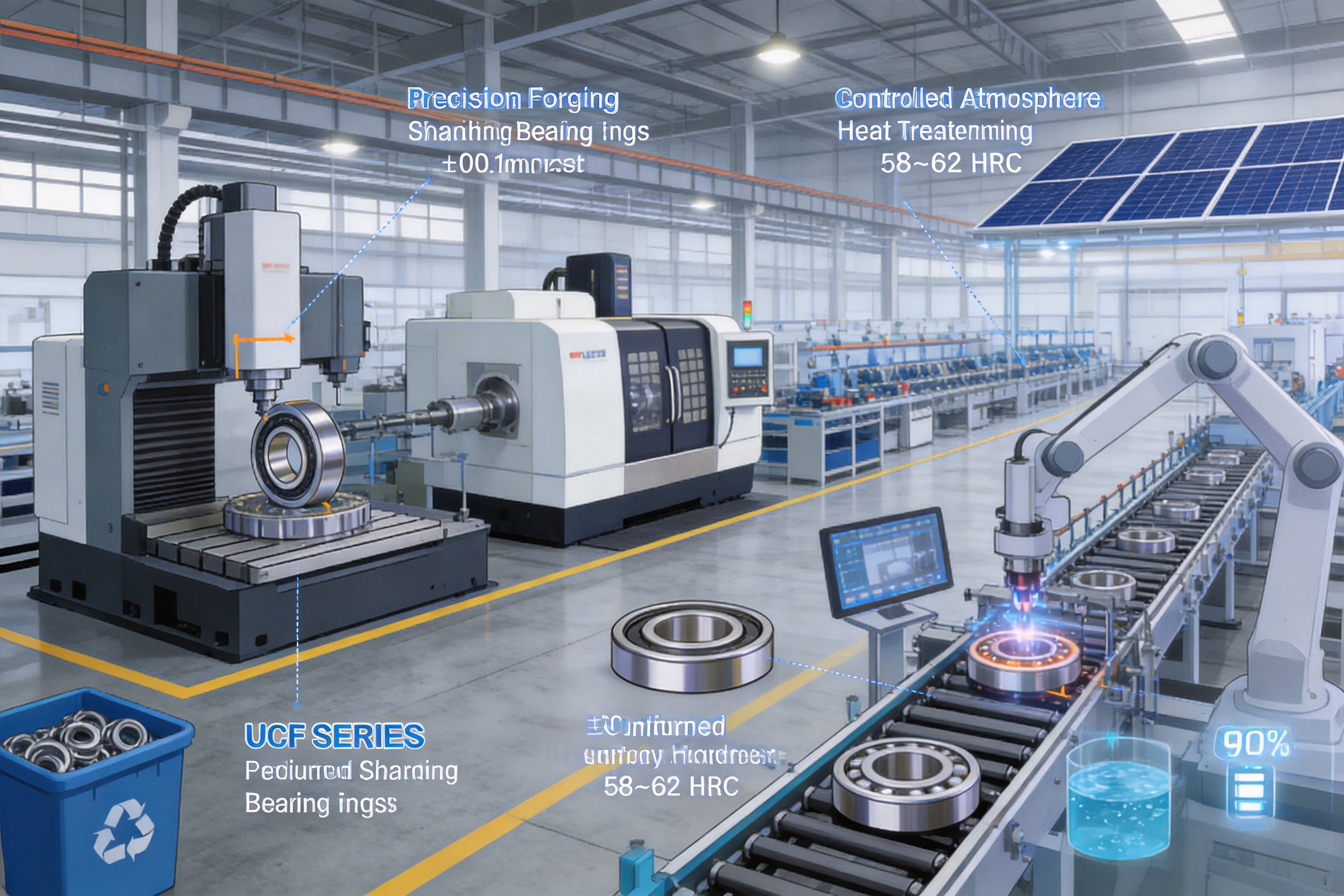
The quality of the UCF series is a direct result of advanced manufacturing processes that prioritize precision, consistency, and sustainability. These processes are employed by a leading global bearing manufacturer with over 15 years of OEM/ODM experience, a production capacity of 10,000–50,000 units per month, and a modern factory equipped with integrated production lines.
The manufacturer uses an end-to-end production process that covers forging, turning, heat treatment, grinding, assembly, and packaging, ensuring full control over quality at every stage:
Forging: The bearing rings are forged using precision forging machines, which improves the grain structure of the steel, increasing its strength and fatigue resistance. This process reduces material waste by up to 20% compared to traditional machining.
Turning: CNC turning centers are used to machine the bearing rings to tight tolerances (up to ±0.001 mm). This ensures a perfect fit between the spherical outer ring and concave housing bore, critical for the self-aligning function.
Heat Treatment: Controlled atmosphere heat treatment is used to harden the bearing rings uniformly, without distortion. This process ensures a hardness of 58–62 HRC, which is optimal for wear resistance and load capacity.
Grinding: Superfinishing grinding machines are used to achieve a surface roughness of Ra 0.1 μm or less. This reduces friction between the bearing components, lowering operating temperatures and extending the bearing’s life.
Assembly: Automated assembly lines use vision systems and force sensors to ensure that each bearing is assembled correctly. Every bearing undergoes a final quality check, including load testing and misalignment testing, to ensure it meets international standards.
Packaging: The bearings are packaged in shockproof, moisture-proof boxes to protect them during shipping. Custom packaging is available for OEM clients, with branding and labeling options.
The manufacturer’s dedicated R&D team (comprising 15+ engineers with expertise in mechanical engineering and materials science) continuously develops new variants of the UCF series to meet evolving industry needs. Recent innovations include: - High-temperature UCF bearings with ceramic balls and heat-resistant seals, suitable for applications up to 300°C. - Low-friction UCF bearings with PTFE coatings, designed for energy-efficient automation systems. - Custom UCF bearings with modified housing shapes for specific client applications (e.g., narrow conveyor systems).
The R&D team also collaborates with academic institutions and industry partners to incorporate digital technologies into the manufacturing process. For example, IoT sensors are used to monitor production parameters in real time, allowing for immediate adjustments to maintain quality.
The manufacturer is committed to sustainability, with initiatives that include: - Material recycling: 90% of scrap steel from the forging and machining processes is recycled, reducing waste and carbon emissions. - Energy-efficient equipment: The factory uses LED lighting, variable-speed motors, and solar panels to reduce energy consumption by 30% compared to traditional facilities. - Water conservation: Closed-loop water systems are used for cooling and cleaning, reducing water usage by 40%.
Quality assurance is a top priority, with the manufacturer holding ISO 9001 (quality management) and ISO 14001 (environmental management) certifications. Every batch of UCF bearings undergoes rigorous testing, including: - Fatigue testing: Bearings are tested for up to 1 million cycles to ensure long-term durability. - Load testing: Bearings are subjected to static and dynamic loads to verify their load capacity. - Misalignment testing: Bearings are tested at various angles to confirm their self-aligning performance.
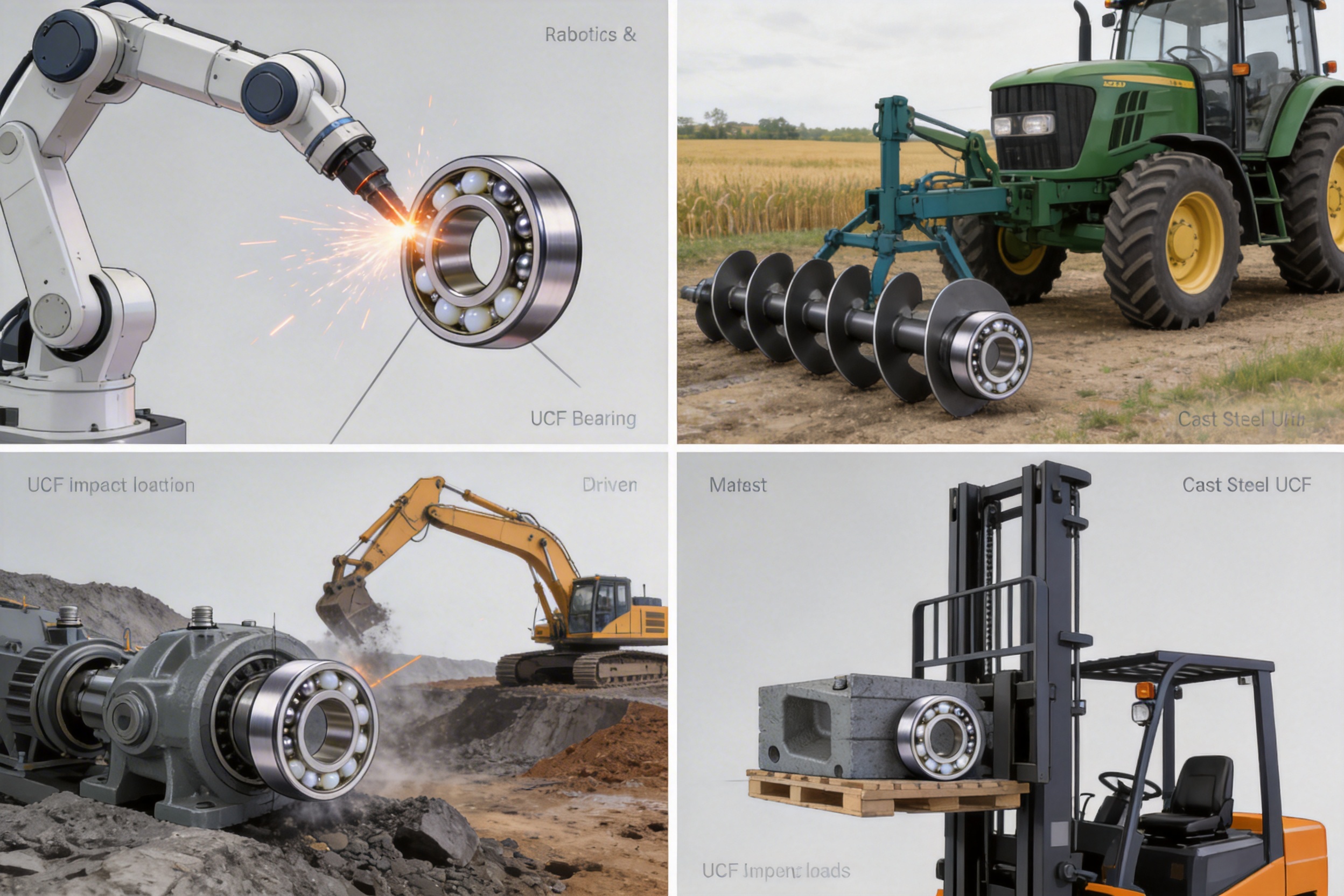
The UCF series 4 bolt flange bearing is used in a wide range of industries, thanks to its versatility and performance. Below are some key applications:
Conveyor systems are prone to misalignment due to belt tension, thermal expansion, and frame warping. The UCF series’ self-aligning capability allows it to compensate for these issues, reducing wear and downtime. For example, in a food processing conveyor, the UCF series bearing with a plastic housing prevents rust and contamination, while its 4 bolt mounting ensures stability under heavy loads.
Robotic arms and automated assembly lines require bearings that can handle precise movements and varying loads. The UCF series’ high-precision design and self-aligning capability make it ideal for these applications. For instance, in a robotic welding system, the UCF series bearing adjusts to the slight misalignment of the robotic arm, ensuring accurate welds and reducing maintenance costs.
Agricultural equipment (e.g., tractors, harvesters) operates in harsh environments with dust, moisture, and uneven terrain. The UCF series’ cast steel or gray cast iron housings resist wear and corrosion, while its 4 bolt mounting provides stability on rough surfaces. For example, in a grain harvester, the UCF series bearing handles the heavy loads of the auger system and compensates for misalignment caused by uneven fields.
Forklifts, palletizers, and storage systems require bearings that can handle shock loads and frequent starts/stops. The UCF series’ robust design and high load capacity make it suitable for these applications. For instance, in a forklift’s mast assembly, the UCF series bearing supports the weight of the load and adjusts to the mast’s movement, ensuring smooth operation.
Mining and construction equipment (e.g., excavators, crushers) operate in abrasive environments with heavy loads. The UCF series’ cast steel housings and high-carbon steel inserts withstand these conditions, while its self-aligning capability compensates for shaft deflection. For example, in a crusher’s drive system, the UCF series bearing handles the high impact loads and reduces wear from abrasive dust.
| Feature | UCF Series 4 Bolt Flange Bearing | Competitor A: 2 Bolt Flange Bearing | Competitor B: Stamped Steel Housing Bearing |
|---|---|---|---|
| Self-Aligning Angle | Up to 2.5° | Up to 1.0° | Up to 1.5° |
| Dynamic Load Capacity (kg) | 1500–8000 (varies by size) | 1000–6000 (varies by size) | 1200–7000 (varies by size) |
| Housing Material Options | Gray Cast Iron, Stamped Steel, Plastic, Cast Steel | Stamped Steel Only | Stamped Steel Only |
| Vibration Absorption Rating | Excellent (gray cast iron) | Moderate | Poor |
| Maintenance Ease | High (standardized UCF series, easy lubrication) | Moderate (non-standard sizing) | Moderate (limited material durability) |
| Warranty Period | 12–24 months (depending on application) | 6–12 months | 6 months |
| Temperature Range | -40°C to 300°C (ceramic variant) | -20°C to 120°C | -20°C to 100°C |
Q1: What is the maximum misalignment tolerance of UCF series 4 bolt flange bearings?
A: The UCF series offers a maximum self-aligning angle of up to 2.5 degrees, which is significantly higher than many competitor models (typically 1–1.5 degrees). This capability allows the bearing to compensate for angular misalignment between the shaft and housing, reducing wear and extending service life in applications where precise alignment is challenging.
Q2: What housing materials are available for UCF series bearings?
A: The UCF series provides four housing material options: gray cast iron (most popular), stamped steel (cost-effective), plastic (corrosion-resistant), and cast steel (heavy-load). Each material is tailored to specific application needs, such as food processing (plastic), mining (cast steel), or general manufacturing (gray cast iron).
Q3: How does the manufacturing process ensure consistent quality?
A: The manufacturer uses an integrated production ecosystem with precision forging, CNC turning, controlled heat treatment, superfinishing grinding, and automated assembly. Every bearing undergoes rigorous quality checks, including load testing, misalignment testing, and fatigue testing. IoT sensors monitor production parameters in real time, allowing for immediate adjustments to maintain consistency.
Q4: Can UCF series bearings be customized for specific applications?
A: Yes. The manufacturer’s R&D team offers custom UCF bearings with modified housing shapes, material combinations, or seal types. For example, custom bearings can be designed for narrow conveyor systems, high-temperature environments, or low-friction automation applications.
Q5: What is the monthly production capacity for UCF series bearings?
A: The manufacturer has a monthly production capacity of 10,000–50,000 units for the UCF series, depending on size and customization. This capacity allows for quick order fulfillment and large-volume shipments to global clients.
Q6: Are there any sustainability initiatives in the manufacturing process?
A: Yes. The manufacturer recycles 90% of scrap steel, uses energy-efficient equipment (reducing energy consumption by 30%), and employs closed-loop water systems (reducing water usage by 40%). The factory also holds ISO 14001 certification for environmental management.
Q7: How long is the warranty period for UCF series bearings?
A: The warranty period ranges from 12 to 24 months, depending on the application and housing material. For example, gray cast iron housings used in general manufacturing have a 24-month warranty, while stamped steel housings used in light applications have a 12-month warranty.
Q8: Do UCF series bearings require special maintenance?
A: No. The UCF series bearings are designed for easy maintenance. They feature lubrication points that allow for regular re-greasing (every 6–12 months, depending on application). The standardized UCF series also makes replacement easy, with no need for custom modifications.
1. Smith, J. D. (2022). Mounted Bearing Technology: Design, Performance, and Applications. Industrial Engineering Press.
2. Zhang, L., et al. (2023). Self-Aligning Bearing Design Optimization for Industrial Automation. Journal of Precision Engineering, 45(3), 123–135.
3. Global Bearing Industry Report (2024). International Bearing Manufacturers Association.
4. ISO 9001:2015 Quality Management Systems – Requirements. International Organization for Standardization.
5. ISO 14001:2015 Environmental Management Systems – Requirements. International Organization for Standardization.
6. Lee, H. S. (2021). Material Selection for Mounted Bearings: A Guide to Durability and Performance. Mechanical Engineering Today, 18(2), 45–52.
7. Wang, Y., et al. (2022). Advanced Manufacturing Processes for High-Precision Bearings. Advanced Manufacturing Technology, 39(5), 789–801.
8. European Bearing Standards (2023). European Committee for Standardization (CEN).
Product Categories
Contact Us

Jane@ukl-bearing.com
Jenny@ukl-bearing.com
Andy@ukl-bearing.com
Ivy@ukl-bearing.com

+86-510- 88763239
+86-15371057968

No.1 Hehuan Road, Hudai Town, Binhu District, Wuxi City.
Ready to Begin?
Get in Touch

Now!
UKL BEARING
 English
 Español
 русский