Content
In heavy-duty mechanical systems, the bearing is not a passive component; it is a central element that determines reliability, load capacity, alignment stability, friction behavior, and service life. The BT2B 332504/HA2 double row tapered roller bearing is engineered for demanding applications where high radial loads and bidirectional axial loads must be managed at the same time. It is designed for equipment that operates under high stress, long duty cycles, vibration, shock loading, and strict requirements for rigidity.
As a member of the tapered roller bearing family, the BT2B 332504/HA2 offers the structural advantage of tapered raceways and tapered rollers arranged to distribute forces efficiently. Compared with many conventional single row bearing arrangements, a double row tapered roller bearing can provide higher stiffness, better axial load support in both directions, improved load sharing, and more compact installation possibilities. These characteristics make it especially suitable for gearboxes, rolling mills, mining machinery, tunnel boring machines, industrial drives, and other equipment where downtime can be costly.
Ukl Bearing Manufacturing Co., Ltd. focuses on the design, production, and export of precision bearing solutions for global industrial users. With integrated production capabilities covering forging, turning, heat treatment, grinding, assembly, and packaging, the company supports stable product quality from raw material processing to finished bearing delivery. The BT2B 332504/HA2 double row tapered roller bearing reflects this manufacturing philosophy: robust design, controlled processing, accurate geometry, and dependable performance in severe operating environments.
BT2B 332504/HA2 -Double Row Tapered Roller Bearings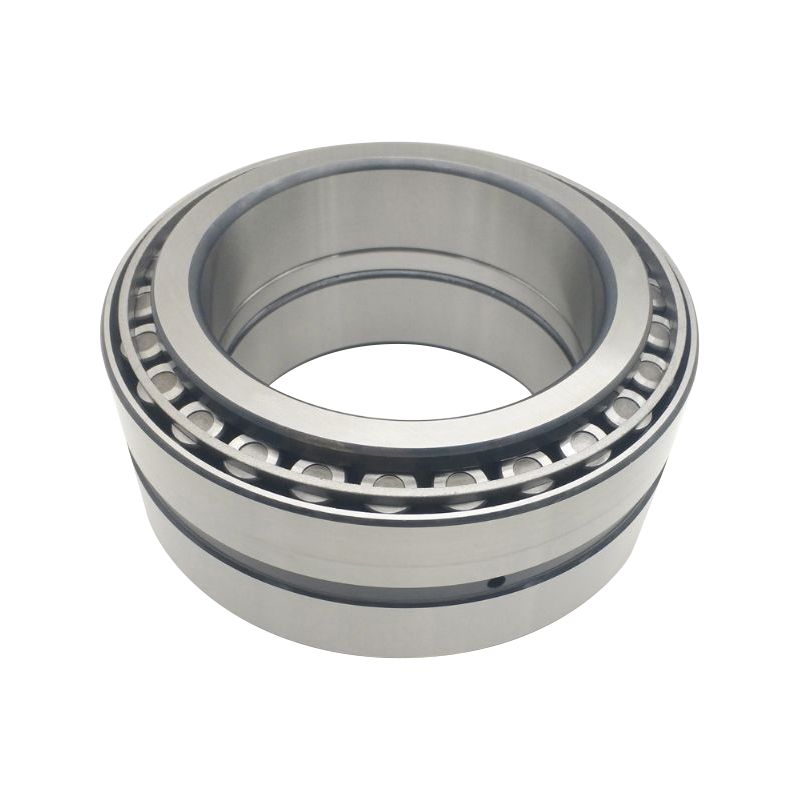
The BT2B 332504/HA2 double row tapered roller bearing is designed to combine radial load capacity with axial load capacity in two directions. This is essential in systems where the shaft is exposed not only to vertical or radial forces but also to thrust forces generated by helical gears, rolling pressure, misalignment tendencies, or process loads. In many heavy machines, these loads change continuously during operation. A bearing must therefore provide not only strength but also stability under dynamic conditions.
The geometry of a tapered roller bearing is based on rolling elements shaped as truncated cones. The inner ring raceway, outer ring raceway, and roller axes are designed so that their projected lines converge at a common point on the bearing axis. This geometry allows the bearing to support combined loads more effectively than many simple radial bearing types. In a double row configuration, two sets of rollers are arranged to provide axial support in both directions while maintaining high radial capacity.
The BT2B 332504/HA2 is particularly valuable where a single bearing unit must replace a more complex arrangement of paired bearings. By integrating two rows of tapered rollers into one bearing assembly, designers can simplify installation, improve axial positioning, and enhance system rigidity. This can reduce assembly errors and improve performance consistency across production batches of machinery.
For users operating gear reducers, rolling stands, large conveyors, crushers, construction machinery, or tunnel boring equipment, bearing reliability is directly connected with productivity. A failure can stop the entire production line. A bearing like the BT2B 332504/HA2 is therefore selected not only for its catalog load rating but also for its ability to maintain controlled running behavior under heavy load, contamination risks, lubrication challenges, and long-term fatigue stress.
Compared with many single row tapered roller bearings, the BT2B 332504/HA2 provides higher stiffness because the two rows of rollers create a wider effective support span. A wider support span helps limit shaft deflection and improves positional accuracy under load. In gearboxes, this means more stable gear mesh and reduced edge loading. In rolling mills, it supports more consistent roll positioning. In heavy industrial machines, it helps maintain alignment under shock and vibration.
Another advantage is the ability to support axial loads in both directions. A single row tapered roller bearing generally supports thrust load primarily in one direction and often requires pairing with another bearing for bidirectional axial load control. The double row design solves this issue in one integrated unit. This can simplify bearing arrangement design and reduce the number of components required in the housing.
The BT2B 332504/HA2 also offers improved load distribution when manufactured with accurate raceway profiles, controlled roller geometry, and high-quality cage design. Load distribution is critical because uneven stress concentration can lead to premature fatigue, spalling, heat generation, and noise. Precision grinding and inspection help ensure that rollers contact raceways in a controlled manner, reducing peak stress and improving service life.
Compared with spherical roller bearings in certain applications, double row tapered roller bearings may offer greater axial location accuracy and higher stiffness. Spherical roller bearings are excellent for misalignment accommodation, but when a machine requires firm axial positioning and high rigidity, tapered roller geometry can be the preferred choice. For this reason, double row tapered roller bearings are widely used in heavy-duty shafts where both strength and positional control matter.
Compared with standard ball bearings, the BT2B 332504/HA2 has a much greater capacity for heavy radial and combined loads. Ball bearings perform well at high speeds and lower loads, but in heavy industrial equipment, line contact between tapered rollers and raceways provides a larger load-bearing area than point contact in ball bearings. This makes tapered roller bearings better suited to high-load applications where durability is more important than extremely high rotational speed.
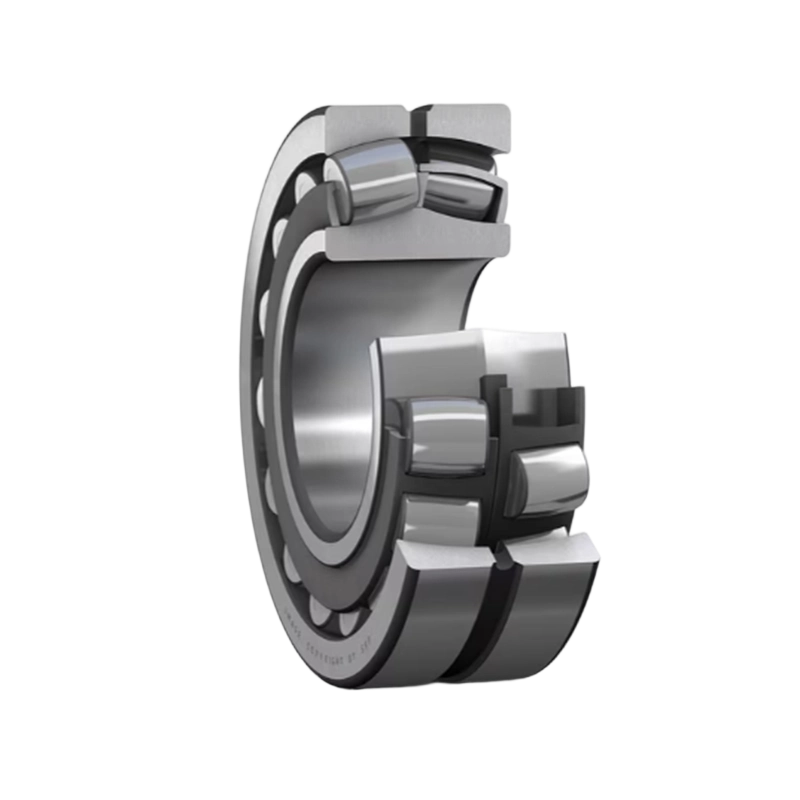
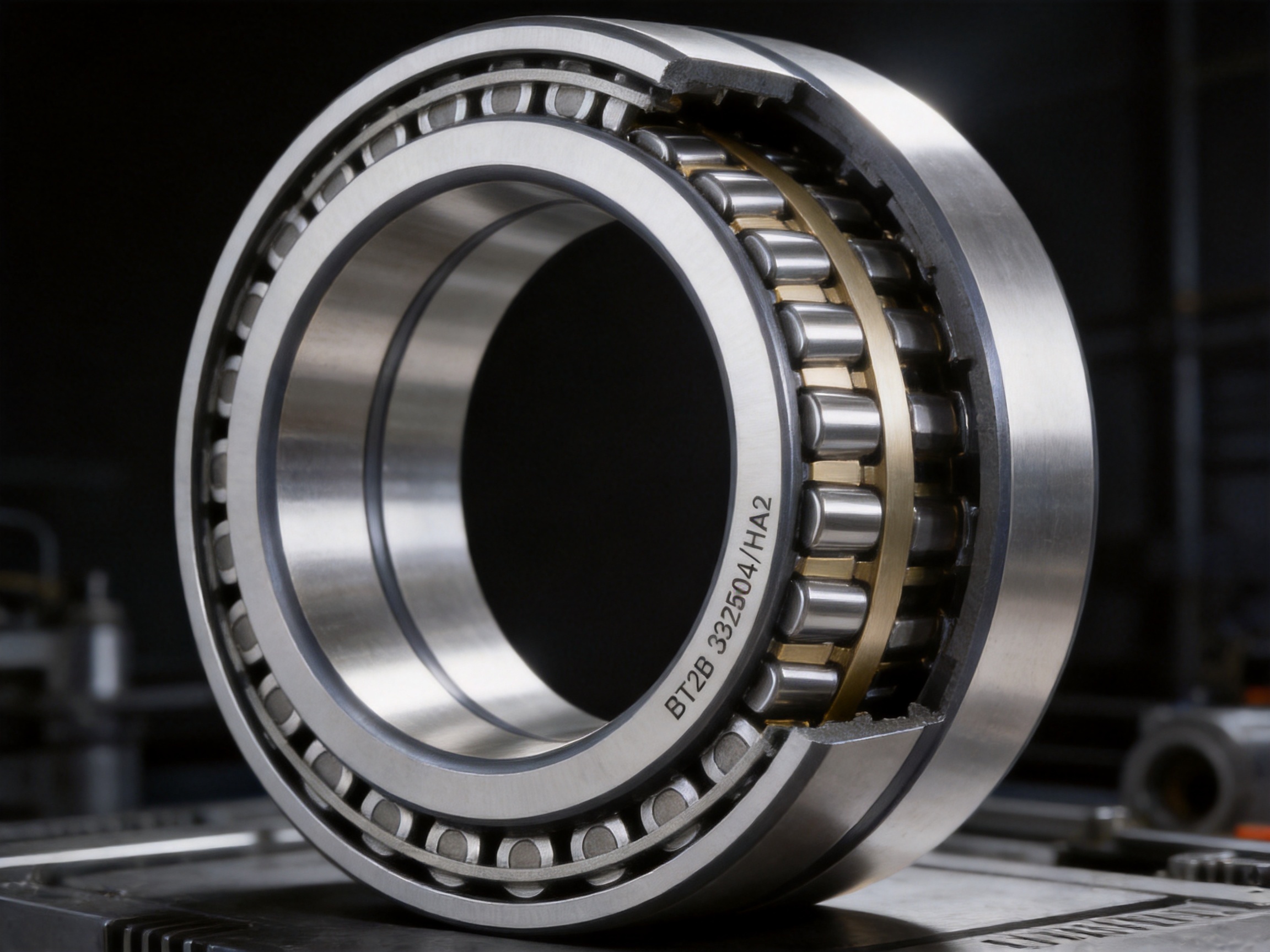
The main components of a double row tapered roller bearing include the inner ring, outer ring, tapered rollers, cage, and sometimes spacers or design features that control internal clearance or preload. Each component contributes to the bearing’s performance. The inner and outer rings provide hardened raceways that guide the rollers. The rollers transmit load through line contact. The cage separates the rollers, maintains spacing, reduces friction between rolling elements, and supports stable rotation.
In the BT2B 332504/HA2, the double row arrangement allows two rows of rollers to act together against external loads. When radial load is applied, both rows share the force depending on internal geometry and operating conditions. When axial load is applied from one direction, one row carries the dominant thrust load; when the thrust direction reverses, the opposite row supports it. This makes the bearing suitable for equipment exposed to changing or reversing axial forces.
Internal clearance is another important factor. Too much clearance can cause vibration, impact loading, and reduced running accuracy. Too little clearance or excessive preload can increase friction, heat generation, and risk of seizure. A high-quality double row tapered roller bearing must be manufactured with carefully controlled internal geometry so that the final operating clearance is appropriate for the application. This requires accurate control of ring dimensions, roller size variation, raceway angle, and assembly matching.
The cage design also influences reliability. In heavy-duty tapered roller bearings, the cage must maintain roller spacing under acceleration, deceleration, and vibration. It must also support lubricant distribution and resist deformation. Depending on application requirements, cages may be optimized for strength, temperature resistance, oil flow, and wear performance. The goal is to maintain stable roller motion and prevent skewing, which can increase stress and heat.
Surface finish is essential in tapered roller bearings. The raceway and roller surfaces must be smooth enough to support a stable lubricant film. Poor surface finish can increase friction, reduce fatigue life, and cause early damage. Advanced grinding and superfinishing processes are therefore important for reducing asperity interaction and improving bearing endurance.
Manufacturing a reliable double row tapered roller bearing requires more than machining metal into shape. It requires control of metallurgy, dimensional accuracy, heat treatment, surface integrity, cleanliness, assembly precision, and final inspection. Ukl Bearing Manufacturing Co., Ltd. integrates multiple production processes to support consistent bearing quality. This integrated approach reduces dependence on fragmented supply chains and allows better control of each step that affects performance.
The process begins with material selection. Bearing steel must offer high hardness, fatigue resistance, wear resistance, and dimensional stability. For heavy-duty tapered roller bearings, the cleanliness of steel is especially important because inclusions can become initiation points for fatigue cracks. Proper material sourcing and incoming inspection help ensure that the bearing has a strong foundation before any machining begins.
Forging is used to shape the rings and improve material grain flow. Proper forging can enhance mechanical strength and reduce waste compared with machining from solid bar stock. After forging, the ring blanks are processed through turning operations to establish the basic geometry of the inner and outer rings. Precision turning prepares the part for later heat treatment and grinding.
Heat treatment is one of the most critical stages. The bearing rings and rollers must reach high hardness while maintaining toughness and dimensional stability. If heat treatment is not controlled, parts may become brittle, distorted, or inconsistent in hardness. Advanced heat treatment control helps create a uniform hardened structure that resists rolling contact fatigue. Proper tempering reduces internal stress and improves reliability during long-term operation.
Grinding gives the bearing its final precision geometry. Raceway angles, roundness, cylindricity, width, bore size, outer diameter, and roller profiles must meet strict tolerances. In tapered roller bearings, small deviations in raceway geometry can significantly influence load distribution. Precision grinding therefore directly affects running smoothness, heat generation, and fatigue life.
Assembly is another key stage. Rollers must be matched and positioned correctly. The cage must guide them reliably. Internal clearance or preload must be controlled according to the bearing design. During assembly, cleanliness is essential because contamination particles can damage raceways and reduce bearing life. The finished bearing must be inspected for dimensions, rotation quality, noise, vibration, and appearance before packaging.
For heavy-duty bearings, quality assurance must be preventive rather than reactive. It is not enough to inspect a final product and remove defective parts; the process must be controlled so defects are not produced in the first place. Ukl Bearing Manufacturing Co., Ltd. emphasizes digital production control, precision design, and process monitoring to maintain stable quality across production batches.
Dimensional measurement is used throughout manufacturing. Ring dimensions, raceway geometry, roller diameter variation, taper angle, and surface roughness all affect final performance. By inspecting parts at multiple stages, manufacturers can correct process drift before it affects assembly. This reduces variation and improves reliability for customers who require consistent replacement and OEM supply.
Hardness testing verifies that heat treatment has achieved the required mechanical properties. Metallurgical examination may be used to confirm microstructure quality. Surface inspection checks for grinding burns, cracks, dents, or contamination. Noise and vibration testing can identify issues related to geometry, cleanliness, or assembly. Rotation testing helps confirm smooth operation before shipment.
Traceability is also important. In industrial supply, customers may require records related to material batches, production dates, heat treatment lots, and inspection results. Traceability supports accountability and helps solve technical issues efficiently if field conditions require investigation. For OEM users, stable documentation can be as important as the bearing itself.
Packaging quality must not be overlooked. A precision bearing can be damaged by moisture, dust, impact, or poor handling during transport. Anti-rust protection, secure packaging, and clear labeling help ensure that the BT2B 332504/HA2 reaches the customer in proper condition. For export markets, packaging must also support long-distance shipping and warehouse storage.
| Evaluation Item | BT2B 332504/HA2 Double Row Tapered Roller Bearing | Typical Single Row Tapered Roller Bearing | Typical Deep Groove Ball Bearing |
|---|---|---|---|
| Radial Load Capacity | Very high, suitable for heavy-duty industrial loads | High, but usually lower in equivalent compact arrangements | Moderate, better for lighter loads |
| Axial Load Direction | Supports axial loads in both directions | Primarily supports axial load in one direction unless paired | Limited axial load capacity |
| Rigidity | High stiffness due to double row tapered roller structure | Good, but arrangement-dependent | Lower stiffness under heavy combined loads |
| Installation Complexity | Can simplify designs by integrating two rows in one unit | Often requires paired mounting and adjustment | Simple, but not ideal for heavy combined loads |
| Best Application Area | Gearboxes, rolling mills, mining machinery, tunnel boring machines | Automotive, industrial shafts, paired bearing arrangements | Motors, pumps, light machinery, high-speed moderate-load systems |
| Service Life Potential | Long service life when correctly lubricated and installed | Good, dependent on mounting precision | Good in suitable low-to-medium load applications |
The BT2B 332504/HA2 double row tapered roller bearing is suitable for applications where load intensity, shaft stability, and long operating life are essential. One of the most common application areas is industrial gearboxes. Gearboxes often generate radial loads from gear tooth forces and axial loads from helical gear geometry. If the bearing arrangement is not sufficiently rigid, gear mesh can become unstable, causing noise, vibration, pitting, and reduced efficiency. A double row tapered roller bearing helps support the shaft with high stiffness and bidirectional thrust capacity.
Rolling mills are another important application. Mill bearings are exposed to enormous rolling forces, impact, water, scale, and thermal variation. Stable bearing performance is necessary to maintain roll position and product dimensional accuracy. The high load capacity of tapered roller geometry makes the BT2B 332504/HA2 a practical solution for such demanding environments when properly sealed and lubricated.
Tunnel boring machines operate under severe underground conditions, including heavy thrust, vibration, contamination, and continuous operation. Bearings used in such machines must be durable and capable of supporting complex loads. A double row tapered roller bearing can be used in supporting systems where high radial and axial forces are present and where maintenance access may be limited.
Mining and quarry equipment also benefits from robust bearing design. Crushers, screens, conveyors, and excavating equipment often experience shock loads and contamination. Bearing failure in these systems can lead to expensive downtime. The strength and load-sharing capability of a double row tapered roller bearing can help extend service intervals when combined with correct sealing and lubrication.
Heavy industrial fans, marine drives, steelmaking equipment, construction machinery, and large material handling systems may also use bearings of this type. In all of these cases, the bearing must support the shaft reliably while controlling friction and heat. The BT2B 332504/HA2 is particularly valuable when designers need a compact solution for combined radial and axial loads.
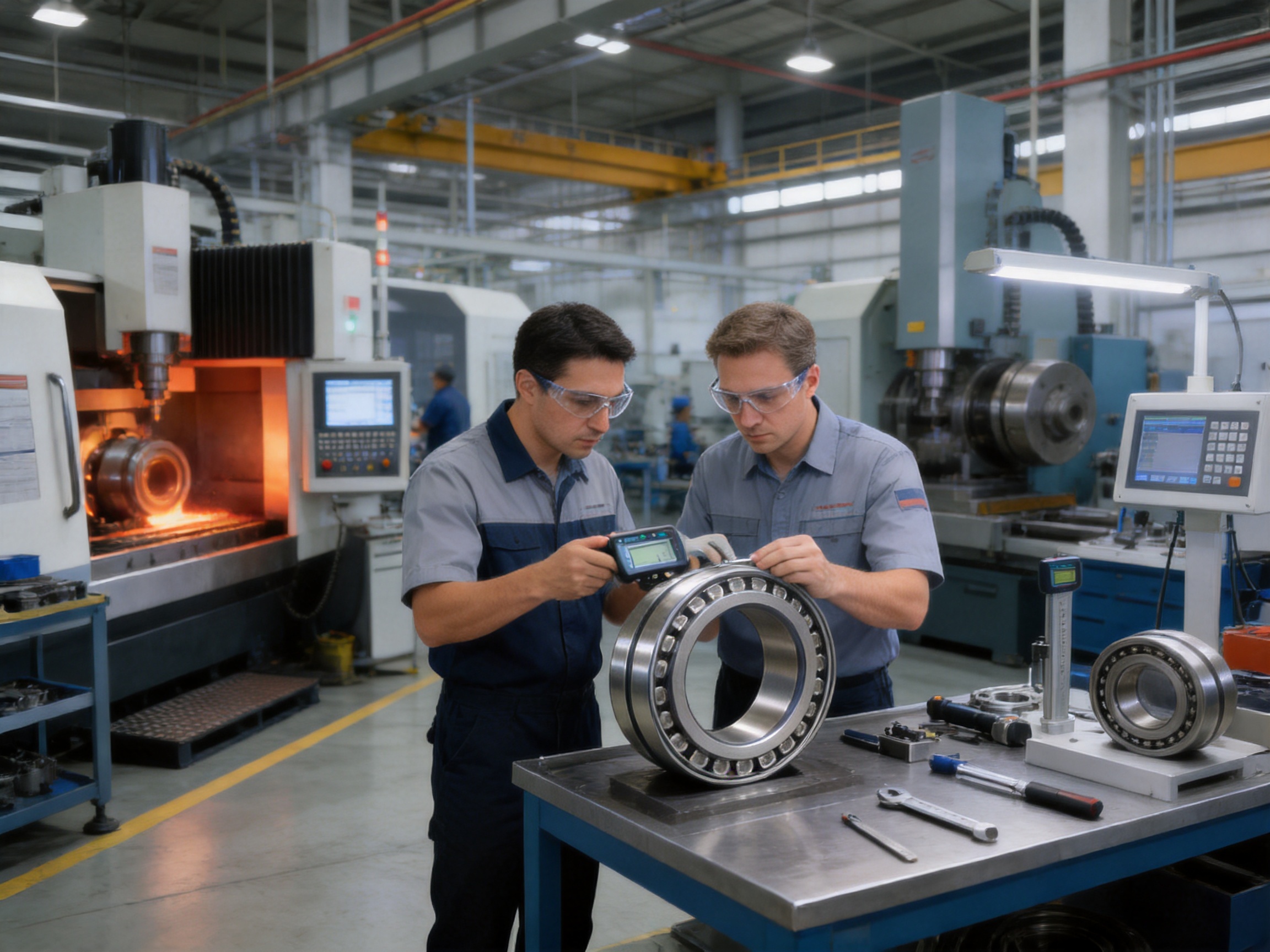
Rigidity is a major advantage of double row tapered roller bearings. In heavy machinery, a shaft is not perfectly rigid; it bends under load. If the bearing arrangement does not resist this deflection, the entire system may suffer. Gear teeth may contact unevenly, seals may wear prematurely, couplings may vibrate, and components may experience fatigue stress. A high-rigidity bearing helps maintain the designed geometry of the machine during operation.
The BT2B 332504/HA2 provides rigidity through its tapered roller contact geometry and double row structure. Line contact between rollers and raceways supports higher load over a larger contact area than point contact in ball bearings. The double row arrangement adds axial stability and improves resistance to overturning moments. This is especially important in applications where the load is offset from the bearing centerline.
For OEM machinery designers, bearing rigidity can influence the size and weight of surrounding components. A stronger bearing arrangement may allow a more compact shaft support design, reducing the need for additional bearing pairs or overly large housings. In replacement applications, selecting a properly engineered double row tapered roller bearing can help restore machine performance and reduce recurring failures caused by insufficient support.
Bearing service life is influenced by load, speed, lubrication, contamination, temperature, mounting accuracy, and material quality. In tapered roller bearings, fatigue resistance depends heavily on the quality of the rolling contact surfaces and the cleanliness of the steel. The BT2B 332504/HA2 is designed for long service life by combining high load capacity with controlled manufacturing processes.
Rolling contact fatigue occurs after repeated stress cycles beneath the contact surface. If the stress is too high or if material defects are present, cracks can form and eventually lead to spalling. Proper bearing design reduces stress concentration by optimizing roller profile and raceway geometry. Precision manufacturing reduces surface defects and dimensional errors. Clean lubrication reduces abrasive wear and surface damage.
Compared with lower-grade bearings produced with less accurate process control, a well-manufactured double row tapered roller bearing offers more predictable life. The benefit is not only longer operation but also reduced risk of unexpected failure. For industrial users, predictability is extremely valuable because maintenance can be planned rather than forced by sudden breakdowns.
Correct installation is still essential. Even the best bearing can fail early if mounted with excessive force, misaligned housings, incorrect clearance, poor lubrication, or contamination. For this reason, technical support and installation guidance are important parts of a complete bearing supply service. Ukl Bearing Manufacturing Co., Ltd. supports customers with technical response and after-sales assistance for global applications.
Lubrication is vital for the BT2B 332504/HA2 because it separates rolling contact surfaces, reduces friction, carries away heat, and protects against corrosion. In heavy-duty applications, lubricant selection should consider load, speed, operating temperature, sealing conditions, and contamination exposure. Oil lubrication is often used in gearboxes and circulating systems, while grease lubrication may be used in equipment where simplicity and sealing are priorities.
Insufficient lubrication can lead to metal-to-metal contact, overheating, wear, and early fatigue. Excessive lubrication can also cause churning losses and temperature rise, especially at higher speeds. The correct lubricant quantity and viscosity are therefore important. In systems exposed to water, dust, metal particles, or process debris, sealing and filtration become equally important.
For double row tapered roller bearings, lubricant must reach both rows of rollers and support uniform film formation. Housing design should allow proper oil flow or grease distribution. During maintenance, users should inspect lubricant condition for discoloration, contamination, water ingress, or metal particles. A good lubrication program can significantly extend the service life of the bearing.
Proper installation is essential to achieve the designed performance of the BT2B 332504/HA2. Before mounting, the bearing, shaft, housing, tools, and workspace should be clean. Dirt or metal chips can damage raceways and reduce life. The bearing should remain in its protective packaging until installation to prevent contamination and corrosion.
Mounting force should be applied only to the ring being fitted. If force is transmitted through the rollers, raceways can be dented, causing vibration and premature failure. Appropriate mechanical, hydraulic, or thermal mounting methods should be used depending on bearing size and fit. Heating must be controlled to avoid reducing hardness or damaging seals and cages if present.
Shaft and housing fits should match application requirements. A loose fit can cause creep, fretting, and wear. An excessively tight fit can reduce internal clearance and increase heat. Housing alignment must be checked because misalignment can cause uneven load distribution. After installation, the bearing should rotate smoothly and operating temperature should be monitored during initial running.
For machinery with severe duty cycles, scheduled inspection is recommended. Maintenance teams should monitor vibration, noise, temperature, lubricant condition, and sealing performance. Early detection of abnormal conditions can prevent catastrophic failure and reduce downtime.
Industrial customers often require not only a high-quality bearing but also reliable supply. Ukl Bearing Manufacturing Co., Ltd. has developed integrated manufacturing and trading capabilities to serve customers across Europe, Asia, Africa, Russia, and other regions. With production capacity ranging from 10,000 to 50,000 units per month, the company can support both standard demand and customized OEM or ODM projects.
The company’s factory is equipped with multiple production lines covering forging, turning, heat treatment, grinding, assembly, and packaging. This production structure helps ensure process continuity and reduces the risk of quality variation caused by uncontrolled outsourcing. For customers, this means more stable delivery, better technical communication, and stronger accountability.
With more than 15 years of OEM and ODM export experience, the team understands that international customers require technical documents, consistent packaging, shipment coordination, and communication across time zones. The company’s multilingual service team provides technical response, installation guidance, and after-sales maintenance support. This service capability is particularly important for heavy-duty bearings because application conditions can vary widely from one machine to another.
The company also invests in research and development for high-precision bearings used in CNC machines, robotics, and intelligent automation systems. Although the BT2B 332504/HA2 belongs to the heavy-duty tapered roller bearing category, the same precision engineering mindset supports its production. Experience in high-accuracy bearing design strengthens the company’s ability to control geometry, surface quality, and performance consistency.
Different machines may require different bearing features. Customers may need specific clearance, tolerance class, cage material, lubrication groove design, packaging, marking, or documentation. OEM and ODM support allows the bearing supplier to align the product with actual application demands rather than offering only generic catalog items.
For the BT2B 332504/HA2, customization may involve performance matching for operating speed, load direction, temperature range, lubrication method, and service environment. In heavy industries, a bearing may face shock load, dust, moisture, vibration, and long continuous operation. Understanding these factors helps determine whether special heat treatment, surface finish control, clearance selection, or sealing coordination is needed.
Technical communication is essential during customization. Customers should provide information such as shaft dimensions, housing dimensions, load data, speed, lubrication type, operating temperature, duty cycle, mounting orientation, and failure history if replacing an existing bearing. With this information, engineers can recommend suitable bearing specifications and avoid repeated field failures.
Modern bearing manufacturing must balance performance with environmental responsibility. Ukl Bearing Manufacturing Co., Ltd. adopts processes aimed at reducing waste, improving material use, recycling resources, and optimizing energy consumption. In bearing production, sustainability can be improved through efficient forging, controlled machining allowances, coolant management, heat treatment optimization, and responsible packaging practices.
A durable bearing also contributes to sustainability by reducing replacement frequency, downtime, material consumption, and waste. When the BT2B 332504/HA2 operates longer in service, fewer spare parts are consumed and fewer emergency repairs are required. Reliability is therefore not only an economic advantage but also an environmental benefit.
The company also supports technical training and engineering development. This matters because proper bearing selection, installation, lubrication, and maintenance can greatly extend service life. Educating users and future engineers helps reduce avoidable failures and promotes more efficient industrial operation.
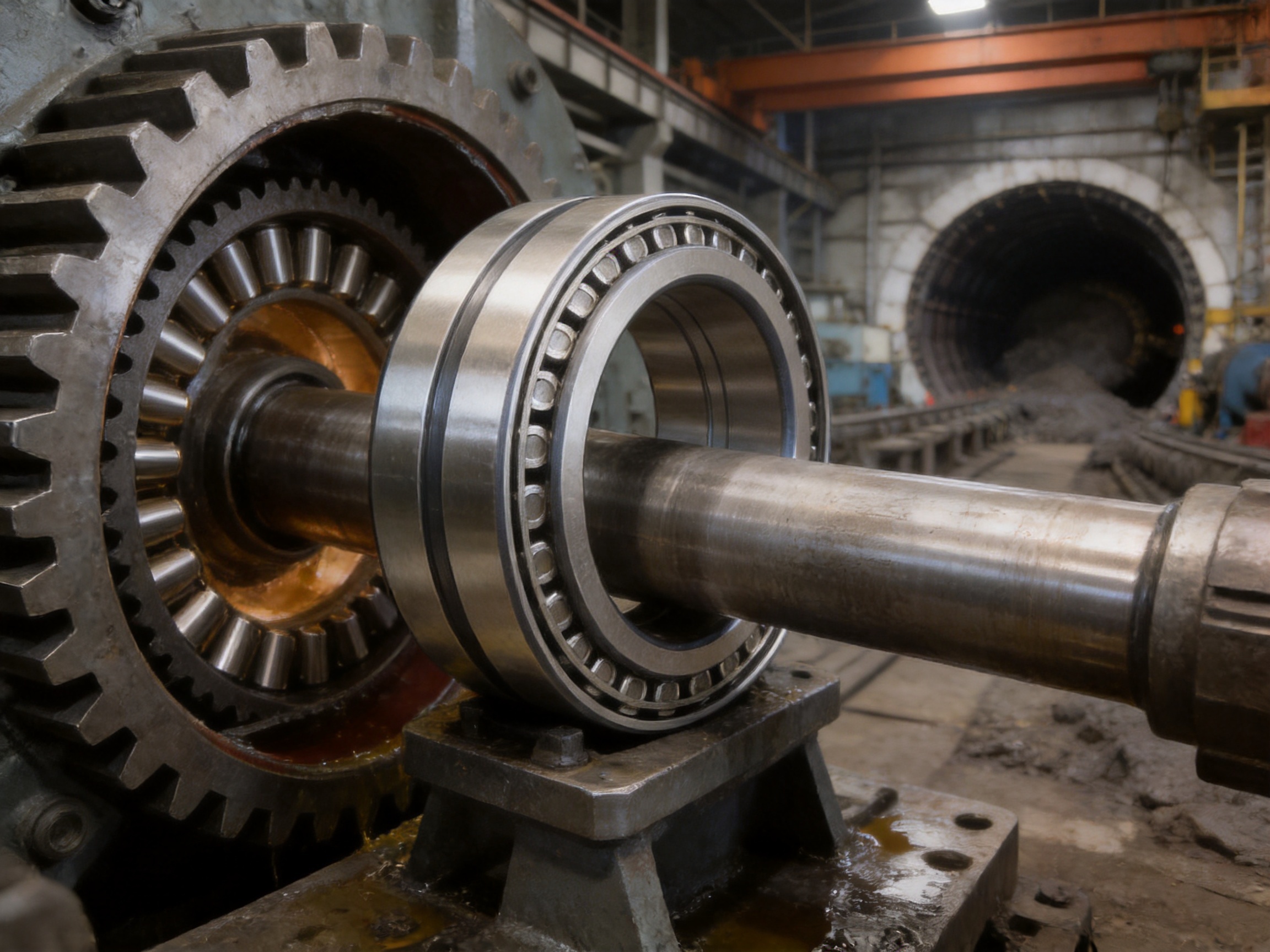
Selecting the correct bearing begins with understanding the machine. The BT2B 332504/HA2 should be considered when the application involves heavy radial load, bidirectional axial load, high rigidity requirements, and limited space for multiple bearing units. It is especially useful where a paired bearing arrangement would be more complex or where axial positioning must be stable.
Engineers should evaluate equivalent dynamic load, static load, speed, temperature, lubrication, contamination level, shaft fit, housing fit, and required service life. If the bearing will be exposed to shock or vibration, safety factors should be considered. If the machine operates continuously, heat balance and lubrication flow become critical. If the environment is contaminated, sealing and maintenance procedures must be planned carefully.
It is also important to consider mounting and dismounting. Large double row tapered roller bearings may require special tools, lifting equipment, heating devices, or hydraulic systems. Maintenance teams should be trained before installation. Storage conditions should protect the bearing from moisture, dust, and vibration.
Customers should consult the supplier when uncertain about bearing selection. A technical discussion can identify potential issues before purchase, such as incorrect clearance, inappropriate fits, insufficient lubrication, or housing deformation. For heavy-duty equipment, the cost of technical preparation is small compared with the cost of downtime.
Like all rolling bearings, double row tapered roller bearings can fail if operating conditions exceed design limits or if installation and maintenance are poor. Common failure modes include fatigue spalling, abrasive wear, adhesive wear, corrosion, cage damage, overheating, false brinelling, and mounting damage. Understanding these modes helps users prevent them.
Fatigue spalling is often caused by excessive load, poor load distribution, contamination, or material defects. Prevention includes proper bearing selection, precision mounting, clean lubrication, and quality manufacturing. Abrasive wear is caused by hard particles in the lubricant or environment. Effective sealing, filtration, and lubricant replacement help reduce this risk.
Corrosion occurs when moisture or chemicals reach bearing surfaces. Anti-rust storage, proper sealing, and suitable lubricant additives can help. Overheating may result from insufficient clearance, excessive preload, too much lubricant, too little lubricant, or high speed. Temperature monitoring during commissioning can detect problems early.
Cage damage may occur from vibration, poor lubrication, roller skewing, or shock loading. A stable cage design and correct operating conditions reduce this risk. Mounting damage often appears as dents or raceway marks caused by improper force transmission. Using correct tools and procedures is the best prevention.
The value of the BT2B 332504/HA2 is not limited to its purchase price. In heavy industry, the real cost of a bearing includes installation labor, downtime, lost production, maintenance planning, and potential damage to surrounding components. A low-cost bearing that fails early can become far more expensive than a high-quality bearing with stable performance.
By offering high load capacity, bidirectional axial support, and improved rigidity, the BT2B 332504/HA2 can help reduce unplanned downtime. Its double row design may simplify machine design and reduce the number of components required. Its long service life potential supports planned maintenance and better asset management.
For OEM customers, consistent bearing quality helps protect machine reputation. A gearbox, rolling mill, or tunneling machine is judged by its reliability in the field. Bearing failures can damage customer trust. Selecting a reliable bearing supplier with integrated manufacturing and technical support can improve the overall competitiveness of the finished equipment.
The main purpose of the BT2B 332504/HA2 is to support heavy radial loads and axial loads in both directions. It is designed for demanding machinery such as gearboxes, rolling mills, tunnel boring machines, mining equipment, and other heavy-duty industrial systems.
A single row tapered roller bearing usually supports axial load mainly in one direction and often needs to be paired with another bearing for bidirectional thrust support. The BT2B 332504/HA2 uses a double row structure, allowing it to support axial loads in both directions while providing higher rigidity and compact installation advantages.
High rigidity helps maintain shaft position under load. This improves gear mesh, reduces vibration, limits deflection, and protects surrounding components. In heavy machinery, rigidity can directly influence reliability, noise, efficiency, and service life.
Important processes include material inspection, forging, turning, heat treatment, precision grinding, surface finishing, assembly, inspection, anti-rust treatment, and packaging. Each step affects bearing strength, geometry, surface quality, and operating life.
Suitable applications include industrial gearboxes, rolling mills, steelmaking equipment, mining machinery, tunnel boring machines, heavy conveyors, crushers, marine drives, and other systems requiring combined radial and axial load support.
Yes. Depending on application requirements, customization may include clearance selection, tolerance control, cage design, marking, packaging, documentation, and technical matching for specific operating conditions.
The most important maintenance factors are proper lubrication, contamination control, correct installation, temperature monitoring, vibration monitoring, and regular inspection of seals and lubricant condition.
Integrated production allows better control over material processing, heat treatment, grinding accuracy, assembly quality, and final inspection. This improves consistency and reduces quality risks for industrial customers.
The BT2B 332504/HA2 double row tapered roller bearing is a high-performance solution for machinery that must withstand heavy radial loads, bidirectional axial loads, vibration, and long operating cycles. Its double row tapered roller structure provides excellent rigidity, strong load capacity, and compact installation advantages compared with many conventional bearing arrangements.
For industrial users, the bearing offers value through improved stability, longer service life potential, reduced installation complexity, and better resistance to demanding operating conditions. For OEM machinery builders, it supports reliable product design and stronger field performance. For maintenance teams, it provides a dependable replacement option when machinery requires robust combined-load support.
Ukl Bearing Manufacturing Co., Ltd. strengthens the product’s value with integrated manufacturing processes, advanced production control, OEM/ODM experience, global export capability, and technical service support. From material selection to final packaging, every stage of production contributes to the final reliability of the bearing. In heavy-duty industries where downtime is costly and performance expectations are high, the BT2B 332504/HA2 stands as a practical and durable bearing solution.
1. Harris, T. A., and Kotzalas, M. N. Rolling Bearing Analysis: Essential Concepts of Bearing Technology. CRC Press.
2. Brändlein, J., Eschmann, P., Hasbargen, L., and Weigand, K. Ball and Roller Bearings: Theory, Design and Application. Wiley.
3. ISO 281. Rolling Bearings: Dynamic Load Ratings and Rating Life. International Organization for Standardization.
4. ISO 76. Rolling Bearings: Static Load Ratings. International Organization for Standardization.
5. Tedric A. Harris. Rolling Bearing Analysis. John Wiley & Sons.
6. Bearing Steel Technology: Advances and State of the Art in Bearing Steel Quality Assurance. ASTM International.
Product Categories
Contact Us

Jane@ukl-bearing.com
Jenny@ukl-bearing.com
Andy@ukl-bearing.com
Ivy@ukl-bearing.com

+86-510- 88763239
+86-15371057968

No.1 Hehuan Road, Hudai Town, Binhu District, Wuxi City.
Ready to Begin?
Get in Touch

Now!
UKL BEARING
 English
 Español
 русский