Content
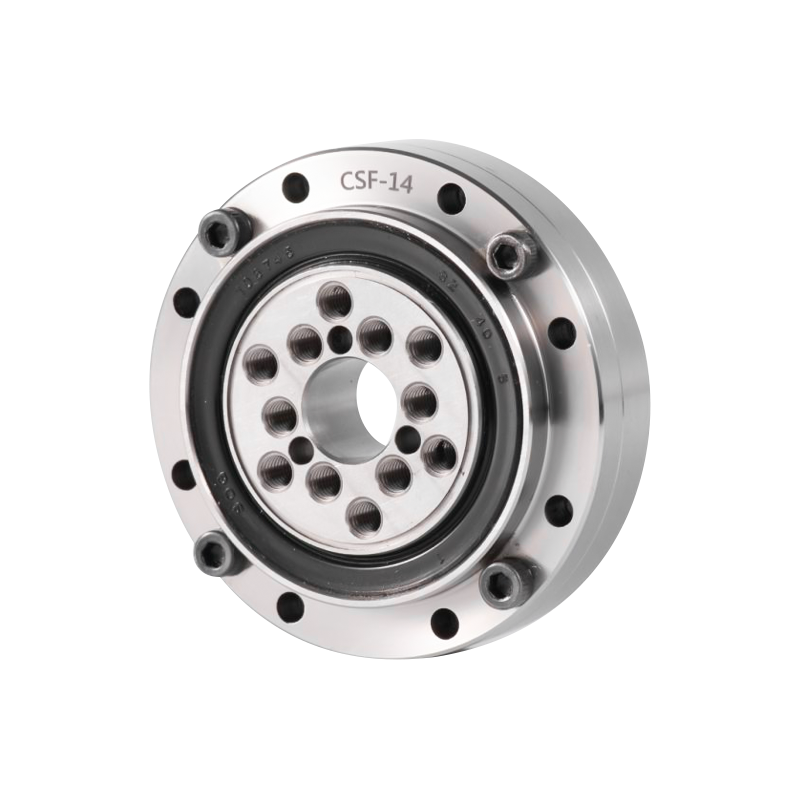
In the world of robotics, machine tools, aerospace mechanisms, precision indexing devices, and intelligent automation, the harmonic reducer has become one of the most important transmission solutions for compact, high-ratio, low-backlash motion. At the center of this performance is a group of specialized bearings that must support deformation, output torque, axial force, overturning moment, and repeatable positioning accuracy under demanding conditions. A precision harmonic reducer bearing is not a general-purpose bearing installed inside a gearbox; it is a highly engineered motion component designed to preserve rigidity, rotational accuracy, reliability, and service life in a compact transmission structure.
Precision Harmonic Reducer Bearing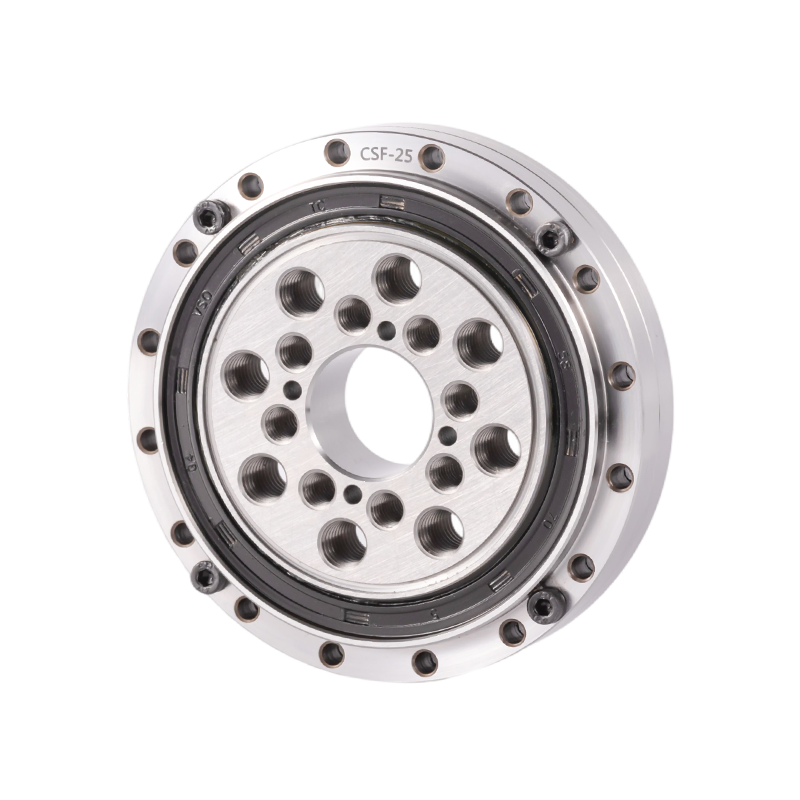
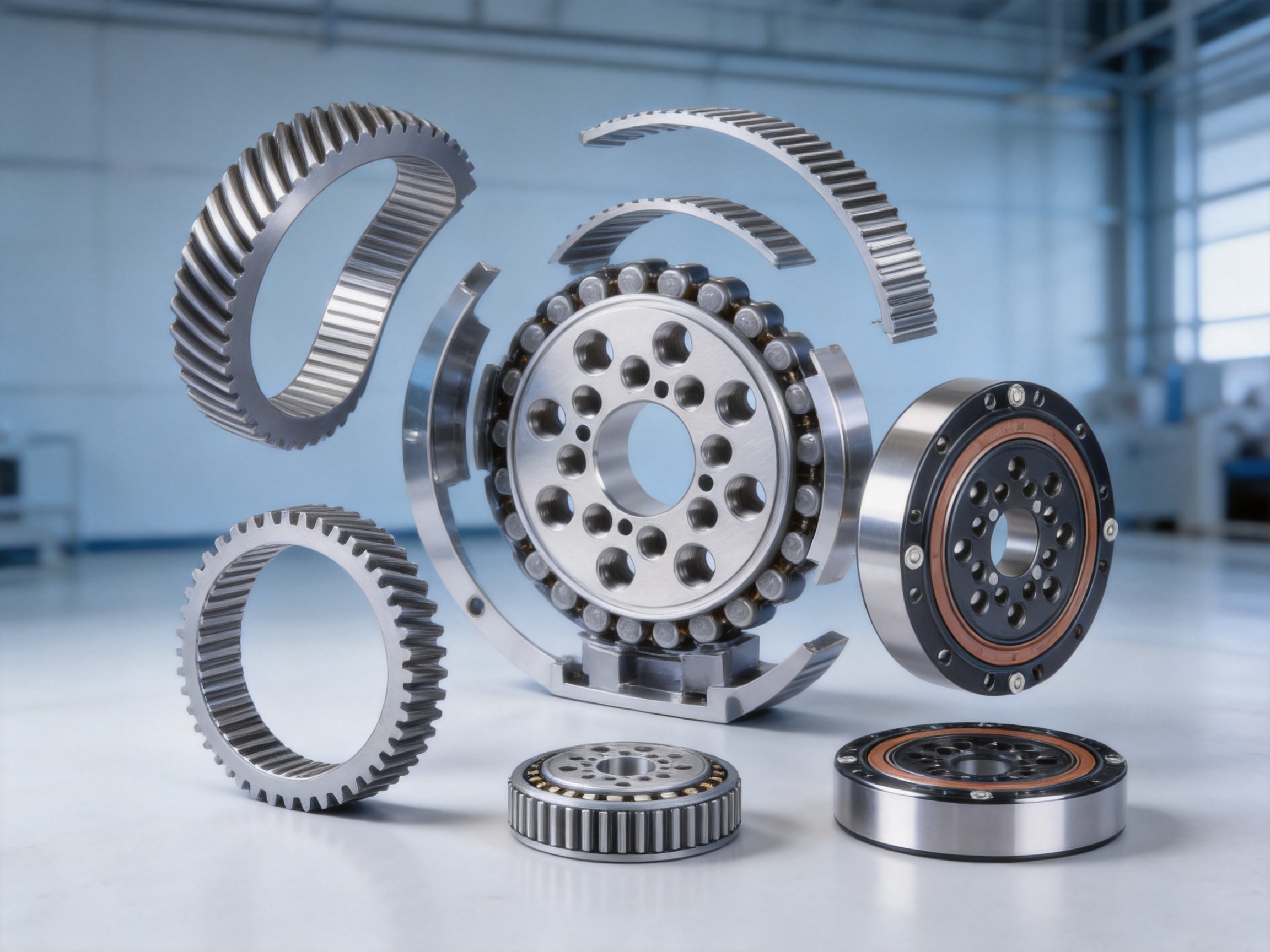
Precision harmonic reducer bearings are especially important because harmonic reducers combine elastic deformation with gear meshing. This creates unique bearing requirements. The reducer normally includes a wave generator, a flex spline, and a circular spline. It also incorporates a rigid bearing, often in the form of a crossed roller bearing, and a flexible bearing, often a thin-walled deep groove ball bearing that can adapt to elliptical deformation. The rigid bearing supports output connection and external load, while the flexible bearing cooperates with the wave generator cam and must deform consistently without losing smooth rotation.
For companies and equipment manufacturers selecting harmonic reducer bearings, the key question is not only whether the bearing fits the reducer size. The real question is whether the bearing can maintain precision under preload, resist torque fluctuation, reduce vibration, support high stiffness, and deliver stable life in real industrial operation. This article explains the structure, advantages, technical features, manufacturing standards, and selection principles of precision harmonic reducer bearings, while also presenting the production strengths and engineering capabilities of Ukl Bearing Manufacturing Co., Ltd as a supplier of high-precision bearing solutions.
A harmonic reducer mainly consists of three basic components: the wave generator, the flex spline, and the circular spline. The wave generator is usually an elliptical cam installed with a flexible bearing. When the cam rotates, the bearing causes the flex spline to deform into an elliptical shape. The flex spline has external teeth, while the circular spline has internal teeth. Because the circular spline has more teeth than the flex spline, the two components mesh at the long axis of the ellipse and disengage near the short axis. This tooth difference creates high reduction ratio motion with excellent positioning capability.
The bearing system inside the harmonic reducer supports this entire process. The flexible bearing allows the wave generator to transmit elliptical motion smoothly to the flex spline. It must withstand repeated radial deformation while maintaining the rolling function of the balls. Unlike a standard bearing, it cannot simply remain circular during operation. Its outer ring must deform elastically and repeatedly, which makes material selection, heat treatment, wall thickness control, and raceway accuracy especially important.
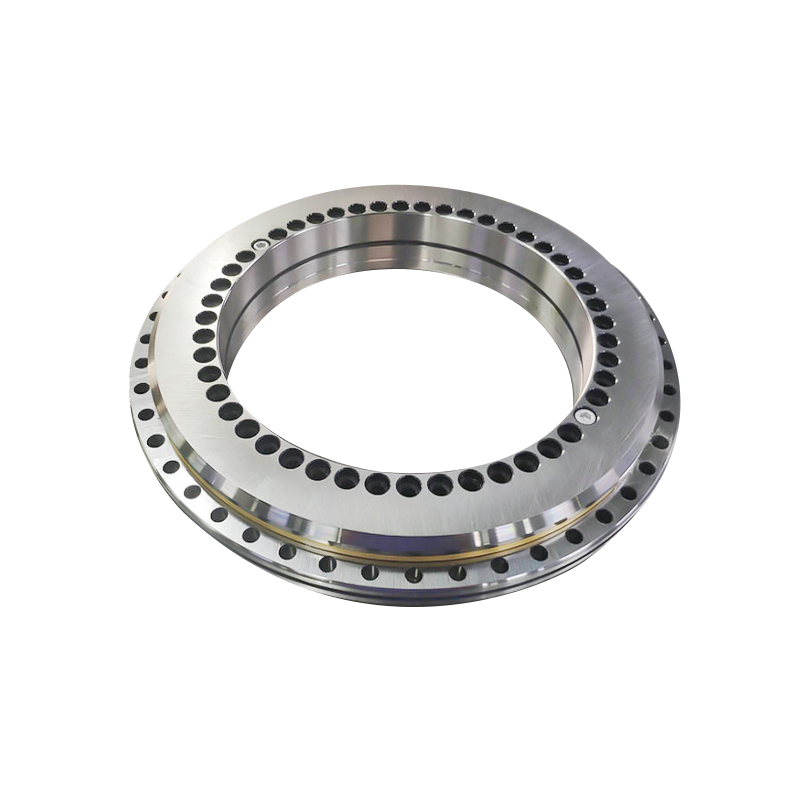
The rigid bearing, frequently a crossed roller bearing, is installed at the output end of the reducer and supports the external connection. It must carry radial loads, axial loads, and moment loads simultaneously. In robotic joints, for example, the output bearing may be subjected to combined forces from the arm load, tool load, acceleration, deceleration, and impact. A crossed roller structure is ideal for this task because the rollers are arranged alternately at right angles, allowing one compact bearing to handle loads from multiple directions with high rigidity.
The performance of the reducer therefore depends heavily on the performance of both the flexible bearing and the rigid bearing. If the flexible bearing has unstable deformation, the meshing accuracy between the flex spline and circular spline can be affected. If the rigid bearing lacks stiffness or rotational accuracy, the output shaft may exhibit vibration, deflection, or reduced positioning precision. For this reason, precision harmonic reducer bearings must be produced with tighter tolerances and more rigorous quality control than many conventional industrial bearings.
Harmonic reducers are widely used in applications where compact size, low backlash, and high torque transmission are required. Industrial robots rely on harmonic reducers in wrist axes, elbow joints, shoulder joints, and compact rotary modules. CNC machines use them in indexing tables, tool changers, and high-precision feed mechanisms. Aerospace equipment may use harmonic reducers in actuators, antenna positioning systems, and lightweight control mechanisms. Medical devices, semiconductor equipment, optical systems, and inspection instruments also benefit from precise harmonic drive motion.
In each of these applications, bearing performance directly influences the final output quality. A reducer with poor bearing rigidity may create angular error. A bearing with unstable preload may cause heat generation or vibration. A flexible bearing that cannot tolerate repeated radial deformation may suffer from premature fatigue. A rigid bearing with insufficient machining accuracy can reduce the reducer’s rotational smoothness and repeatability.
Precision harmonic reducer bearings solve these challenges through optimized geometry, controlled preload, high-grade steel, accurate grinding, and clean assembly. The result is a compact bearing solution capable of meeting the increasingly strict requirements of advanced automation. Compared with ordinary bearings, these specialized bearings provide stronger integration with harmonic reducer structures and better long-term motion stability.
One of the greatest advantages of a precision harmonic reducer bearing is high rigidity. In a harmonic reducer, rigidity determines how well the system resists elastic deformation under load. High rigidity helps maintain output position, reduce vibration, and improve dynamic response. This is especially important for robots, where each joint must move with repeatable accuracy while carrying changing loads.
Rigid bearings used in harmonic reducers are commonly preloaded before shipment. Proper preload eliminates internal clearance and increases stiffness. However, preload must be carefully controlled. Too little preload reduces rigidity and may allow micro-movement. Too much preload increases friction, heat generation, and wear. A precision manufacturer must therefore combine design calculation, machining accuracy, and testing to achieve the correct preload range.
Compared with lower-grade competitors, a well-designed harmonic reducer bearing offers more consistent stiffness from batch to batch. This consistency is essential for OEM manufacturers because it allows reducer assembly lines to maintain predictable performance without excessive adjustment.
Rotational accuracy is another core advantage. Harmonic reducers are used because they can deliver precise angular displacement. If the output bearing has excessive runout, waviness, or geometric error, the reducer cannot achieve its full positioning potential. Precision harmonic reducer bearings are manufactured with tight control over raceway geometry, roller or ball size grouping, end-face accuracy, and assembly alignment.
In crossed roller rigid bearings, the alternating roller arrangement creates excellent rotational stability. Each roller must be accurately guided to avoid skewing and uneven contact. The raceway must be ground to a high level of roundness and surface finish. The result is smoother rotation, reduced torque variation, and improved accuracy during both low-speed positioning and continuous operation.
Harmonic reducer output bearings must carry complex loads. In real use, loads rarely act in only one direction. A robot joint, for example, may experience radial force, axial force, and overturning moment at the same time. Crossed roller bearings are particularly suitable because their rollers are arranged perpendicular to adjacent rollers, creating the ability to support loads from multiple directions in a compact space.
Precision harmonic reducer bearings therefore help machine builders reduce the need for multiple bearing sets. A single compact bearing can deliver the rigidity and load capacity that would otherwise require a larger and heavier support arrangement. This contributes to lightweight design, smaller joint size, and better energy efficiency in automated equipment.
The flexible bearing is one of the most distinctive parts of a harmonic reducer. Its maximum radial deformation is a core performance parameter. The bearing must deform with the elliptical cam while allowing balls to roll smoothly between the inner and outer raceways. If the outer ring cannot deform properly, the harmonic motion becomes unstable. If deformation is excessive or uneven, fatigue life may decrease.
High-quality flexible bearings are manufactured with carefully selected thin-wall geometry, elastic material properties, and precision raceway finishing. The goal is to create a bearing that can repeatedly change shape without cracking, binding, or producing excessive heat. Compared with common thin-section bearings, a specialized harmonic flexible bearing is engineered specifically for the wave generator environment.
Noise and torque ripple are important in modern precision equipment. In collaborative robots, inspection devices, and medical equipment, smooth and quiet motion is often a competitive advantage. Precision harmonic reducer bearings reduce vibration through raceway accuracy, optimized rolling element selection, improved cage design, and controlled lubrication.
Smooth torque also improves servo system performance. When torque fluctuation is lower, the motor controller can achieve more accurate positioning with less compensation. This can reduce energy consumption, improve surface finish in machining, and enhance the user experience in automated systems.
Harmonic reducers are compact, and compactness creates challenges for lubrication, heat dissipation, and load distribution. Precision bearings extend service life by improving contact conditions inside the bearing. Accurate raceway geometry helps distribute load evenly. High-quality heat treatment increases fatigue resistance. Clean assembly reduces contamination-related wear. Proper grease selection improves lubrication stability over time.
Compared with low-cost alternatives, premium harmonic reducer bearings may offer lower life-cycle cost because they reduce downtime, maintenance, replacement frequency, and risk of equipment failure. In automation, a bearing failure can stop an entire production line. Reliability therefore has economic value beyond the price of the bearing itself.
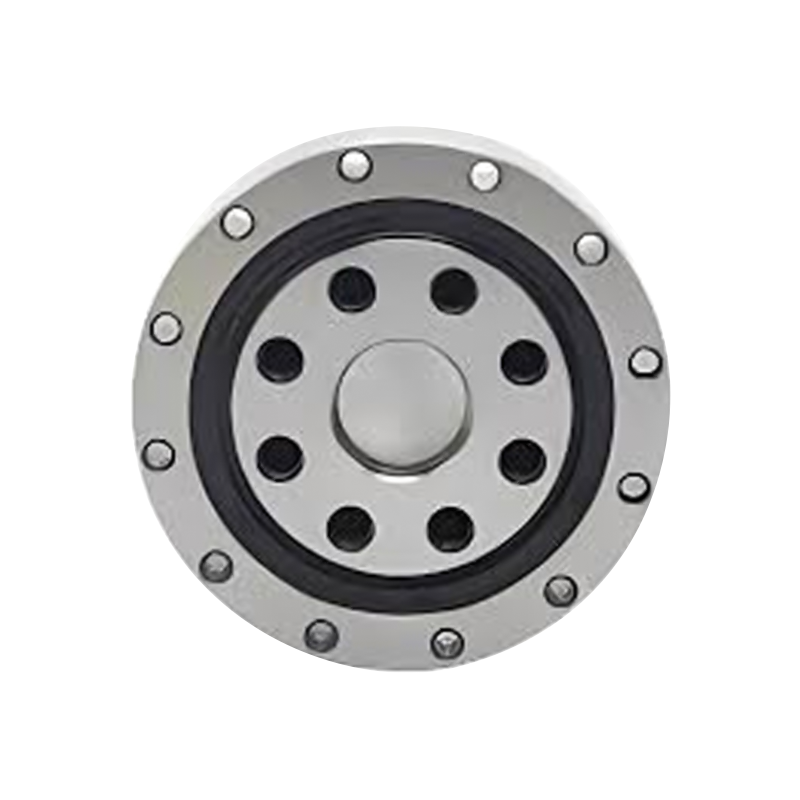
The following table summarizes common CSF(G) series harmonic reducer bearing dimensions. These specifications help equipment designers evaluate compatibility with reducer structures, installation hole arrangements, and weight targets. Final selection should consider actual operating load, output torque, installation accuracy, lubrication, duty cycle, and environmental conditions.
| Bearing Type | Outer Diameter D (mm) | Bore d (mm) | C (mm) | H (mm) | B (mm) | dm | dn | dl | Weight (kg) |
| CSF(G)-14 | 55 | 11 | 16 | 16.5 | 13.5 | 49 | 8-φ3.5 | 23 | 0.15 |
| CSF(G)-17 | 62 | 10 | 16 | 16.5 | 13.5 | 56 | 10-φ3.5 | 27 | 0.24 |
| CSF(G)-20 | 70 | 14 | 16 | 16.5 | 13.5 | 64 | 12-φ3.5 | 32 | 0.30 |
| CSF(G)-25 | 85 | 20 | 18 | 18.5 | 16.5 | 79 | 16-φ3.5 | 42 | 0.45 |
| CSF(G)-32 | 112 | 26 | 21.5 | 22.5 | 19 | 104 | 16-φ4.5 | 55 | 0.90 |
| CSF(G)-40 | 126 | 24/32 | 22.5 | 24 | 21.5 | 117 | 20-φ5 | 68 | 1.30 |
| CSF(G)-50 | 157 | 32/40 | 30 | 31 | 28 | 147 | 16-φ5.5 | 84 | 2.80 |
| CSF(G)-65 | 210 | 44/52 | 37 | 39 | 35 | 198 | 20-φ6.5 | 110 | 7.90 |
These models cover a useful range from small, lightweight harmonic reducer assemblies to larger high-torque units. Small sizes are often used in compact robotic wrists, precision instruments, and light automation modules. Larger sizes are suitable for higher-load robot axes, machine tool rotary mechanisms, and industrial indexing systems. Because harmonic reducers are highly integrated, even small dimensional deviations can influence assembly quality. For this reason, bearing dimensional accuracy, mounting hole accuracy, and end-face precision must be controlled carefully during production.
Harmonic reducers are known for low backlash, but backlash performance depends not only on gear tooth design. Bearing stiffness and assembly accuracy also influence the output response. If the rigid bearing allows elastic tilting, the output component may shift under reversing loads. This can create positioning error even when the gear mesh itself is accurate. A high-rigidity precision bearing helps maintain the alignment between the reducer housing, output flange, and driven load.
In high-performance applications, repeatability is often more important than simple static accuracy. A robot may return to the same position thousands or millions of times. Bearing stability helps ensure that the output angle remains consistent despite changing temperature, speed, and load. By reducing internal clearance and improving raceway quality, precision harmonic reducer bearings support stable repeatable motion.
Servo systems depend on predictable mechanical response. If the bearing system introduces friction fluctuation, the controller must compensate. This can cause overshoot, hunting, vibration, or reduced bandwidth. Precision bearings reduce these problems by providing smoother rolling contact and more consistent preload. A smoother reducer allows the motor and controller to work more efficiently, especially during small-angle movement and frequent start-stop operation.
In robotics, dynamic response affects cycle time and path accuracy. A joint that can accelerate and decelerate smoothly can follow programmed trajectories more accurately. In machine tools, smooth motion contributes to better machining surfaces and more consistent indexing. In aerospace actuators, predictable torque response supports reliable control under strict safety requirements.
Modern equipment designers constantly seek lighter and smaller mechanical systems. Crossed roller rigid bearings help achieve this because they can support combined loads in a single compact unit. Instead of using separate radial and thrust bearings, designers can integrate one high-rigidity bearing into the harmonic reducer output. This saves axial space and reduces component count.
Flexible bearings also contribute to compactness. Their thin-walled design allows the wave generator to remain small while still transmitting deformation to the flex spline. However, this compact design requires very high manufacturing precision. Thin-walled rings are more sensitive to distortion during machining, heat treatment, grinding, and assembly. Advanced manufacturing processes are therefore essential.
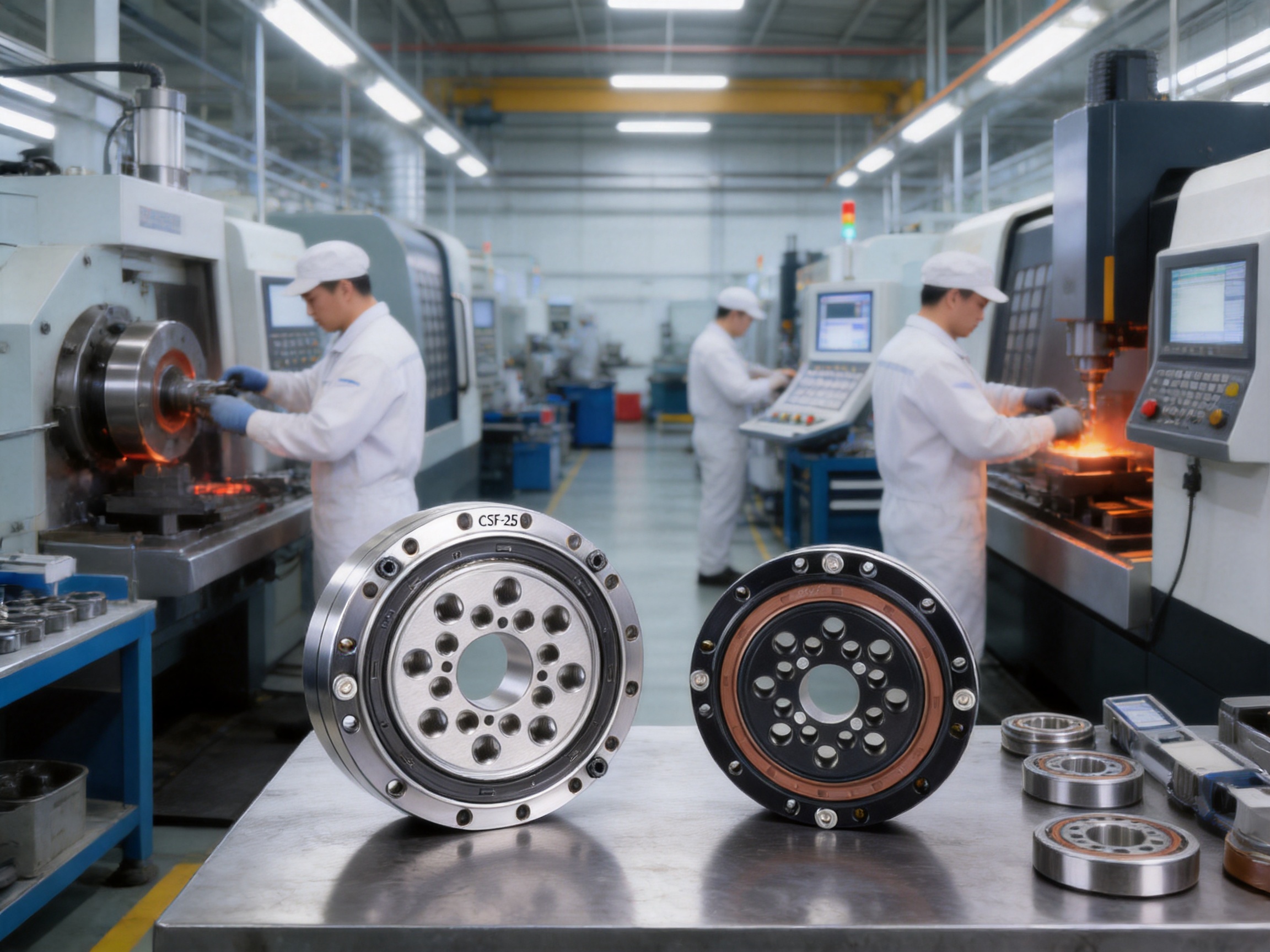
Producing harmonic reducer bearings requires much more than standard bearing assembly. Ukl Bearing Manufacturing Co., Ltd integrates research and development, production, and international distribution, with manufacturing processes covering forging, turning, heat treatment, grinding, assembly, and packaging. This integrated capability helps control quality across the entire production chain rather than relying only on final inspection.
Bearing performance begins with material quality. High-grade bearing steel must offer fatigue strength, hardness stability, cleanliness, and dimensional reliability. In high-precision applications, steel cleanliness is especially important because non-metallic inclusions can become fatigue initiation points under repeated rolling contact. The forging process helps refine the internal structure of the steel and prepare a stable blank for later machining.
For harmonic reducer bearings, material consistency is vital. The rigid bearing must resist heavy combined loads, while the flexible bearing must tolerate repeated elastic deformation. Although these parts may have different structural requirements, both require controlled metallurgical properties and careful processing.
Turning creates the initial geometry of bearing rings. For thin-walled bearings, turning must be performed with controlled clamping force and stable cutting parameters to avoid distortion. If a ring is deformed during turning, later grinding may not fully correct the internal stress or shape error. Precision turning also prepares raceway profiles, shoulders, mounting faces, and installation holes for subsequent processes.
A manufacturer with experience in robotic and automation bearings understands that the turning stage influences final accuracy. Even before grinding, the bearing ring must have stable geometry and enough allowance for finishing. Proper process planning reduces scrap, improves repeatability, and supports consistent high-volume production.
Heat treatment determines hardness, wear resistance, fatigue strength, and dimensional stability. For precision harmonic reducer bearings, heat treatment must be controlled to reduce deformation and ensure uniform hardness. Thin-walled flexible bearing rings are particularly sensitive to heat-treatment distortion. If distortion is excessive, grinding becomes difficult and residual stress may remain.
Advanced heat treatment involves controlled heating, quenching, tempering, and inspection. The goal is to achieve the required hardness while preserving stable dimensions. For high-precision reducer bearings, dimensional stability after heat treatment is essential because the final product must maintain accuracy during long-term operation.
Grinding is one of the most critical steps in precision bearing manufacturing. Raceway roundness, surface roughness, width accuracy, and end-face parallelism all influence bearing performance. In crossed roller bearings, raceway geometry must support smooth line contact and proper roller orientation. In flexible bearings, the raceway must remain smooth and accurate even when the outer ring is deformed by the elliptical cam.
High-accuracy grinding improves rotational precision, reduces noise, and supports stable preload. Poor grinding can create vibration, local stress concentration, and premature wear. A precision manufacturer therefore monitors grinding wheel condition, coolant cleanliness, machine stability, and inspection data throughout the process.
Assembly transforms accurate components into a functional bearing. During assembly, rolling elements must be selected and grouped accurately. Cages or separators must guide rollers or balls smoothly. Seals, lubrication, and mounting features must be correctly installed. For rigid bearings, preload may be applied before shipment to ensure stiffness and reduce clearance.
Preload control is a major competitive advantage. Some suppliers can produce dimensionally correct bearings but cannot maintain stable preload behavior. For harmonic reducer applications, inconsistent preload can create assembly problems for reducer manufacturers and performance variation for end users. A reliable supplier tests and controls preload so that the bearing performs consistently after installation.
Precision bearing quality cannot be guaranteed by visual inspection alone. Dimensional measurement, runout testing, hardness testing, surface finish inspection, noise evaluation, and torque testing may all be required depending on the bearing type. For harmonic reducer bearings, radial deformation capability, stiffness, and rotational accuracy are key performance indicators.
Ukl Bearing Manufacturing Co., Ltd operates with modern production lines and digital production control concepts. This supports consistency from batch to batch and helps meet the requirements of OEM and ODM customers. With production capacity reaching 10,000 to 50,000 units per month, stable quality systems are essential for serving global industrial clients.
Precision harmonic reducer bearings belong to a specialized category connected with cross roller bearings, robot bearings, angular contact ball bearings, and other high-performance products. A supplier experienced in these categories can better understand the relationship between bearing geometry, preload, rigidity, and equipment performance. This is different from a general bearing trader that mainly focuses on standard catalog items.
Specialization matters because harmonic reducers are sensitive mechanical systems. A bearing may look correct by size but still fail to deliver required stiffness or deformation performance. A specialized supplier can support customers with technical selection, customization, and performance matching.
Many reducer manufacturers and automation equipment builders require customized bearings. Dimensions, hole patterns, preload, material treatment, lubrication, packaging, and marking may need adjustment. Ukl Bearing Manufacturing Co., Ltd has more than 15 years of OEM/ODM export experience, enabling it to support customized bearing requirements for global clients.
OEM and ODM capability is especially valuable for customers developing new harmonic reducer platforms. Engineers may need to compare different bearing structures, evaluate load conditions, or adapt mounting interfaces. A cooperative supplier can shorten development time and reduce the risk of design mismatch.
As an integrated manufacturer and trader, the company combines production capability with international service experience. This structure benefits overseas customers because technical questions, customization requests, delivery coordination, and after-sales support can be handled more efficiently. The company exports bearings to regions including the United States, Italy, Germany, Poland, South Africa, Egypt, India, and other markets, giving it practical experience with different industrial standards and customer expectations.
Global export experience also improves packaging, documentation, communication, and logistics reliability. For precision bearings, proper packaging is not a minor issue. Bearings must be protected from corrosion, impact, dust, and improper handling during transportation. A supplier experienced in export markets understands these requirements.
The company’s production system covers forging, turning, heat treatment, grinding, assembly, and packaging. This process coverage allows better control over every major stage of bearing production. Compared with suppliers that outsource most processes, an integrated production line can respond faster to quality feedback, adjust technical parameters, and maintain process traceability.
Modern production is especially important for high-precision bearings because small errors in earlier stages can become serious problems later. By managing the whole production chain, the manufacturer can control material flow, machining allowance, heat-treatment deformation, grinding accuracy, and assembly quality more effectively.
The company’s research and development focus includes high-precision cross roller bearings and dual-direction thrust angular contact ball bearings used in CNC machines, robotics, and intelligent automation systems. This engineering background aligns closely with harmonic reducer bearing applications. Customers in robotics and automation often need more than a price quotation. They need advice on rigidity, life, lubrication, installation tolerance, and performance trade-offs.
Technical support can help customers avoid common problems such as excessive bearing clearance, incorrect preload, mounting surface distortion, inadequate lubrication, or improper installation sequence. In precision mechanisms, these details can determine whether a product succeeds in operation.
Industrial robots require compact joints with high torque density and repeatable positioning. Harmonic reducers are widely used in robot wrist and arm axes because they offer high reduction ratios in small spaces. Precision harmonic reducer bearings support the output flange and help maintain joint rigidity. For welding robots, handling robots, assembly robots, and collaborative robots, bearing reliability affects uptime and movement accuracy.
Robot bearings must also handle frequent acceleration and deceleration. Each cycle places changing loads on the bearing. High rigidity and accurate preload reduce vibration and improve path tracking. In collaborative robots, low noise and smooth torque are also important because the machine may operate near human workers.
Machine tools require accurate rotary motion for indexing tables, tool changers, spindle positioning systems, and auxiliary axes. Harmonic reducer bearings contribute to positioning accuracy and stiffness. In machining, even small deflection can influence cutting quality. A rigid output bearing helps maintain tool or workpiece position under cutting force.
Precision bearings also support smooth low-speed movement, which is important for contouring and fine positioning. Stable torque and low vibration can improve surface finish and reduce chatter in sensitive operations.
Aerospace applications often require lightweight, compact, reliable motion systems. Harmonic reducers may be used in actuators, control systems, antennas, and optical positioning equipment. Bearings in these systems must deliver reliable performance under strict environmental and safety requirements. Dimensional stability, fatigue resistance, and quality traceability are especially important.
Because aerospace mechanisms may be difficult to service after installation, long service life and predictable performance are critical. Precision harmonic reducer bearings help reduce failure risk in demanding motion systems.
Semiconductor equipment requires clean, accurate, and smooth motion. Positioning systems, wafer handling robots, inspection equipment, and precision stages may use harmonic reducers. Bearings used in these systems must reduce vibration and maintain fine movement control. Low particle generation, stable lubrication, and high accuracy are important design considerations.
Medical and laboratory equipment often requires quiet operation, compact design, and precise movement. Surgical robots, imaging devices, laboratory automation, and sample handling systems can benefit from harmonic reducer bearings. Smooth motion and reliability help improve operating confidence and reduce maintenance needs.
The first selection factor is load. Designers must evaluate radial load, axial load, overturning moment, shock load, and duty cycle. A bearing should not be selected only by dimension. If the output bearing is undersized, rigidity and life may be insufficient. If it is oversized, the reducer may become heavier and less efficient.
For robotic joints, moment load is often a critical factor. The farther the payload is from the joint center, the greater the overturning moment. Crossed roller bearings are well suited for these conditions, but proper sizing remains essential.
Accuracy requirements vary by application. A general automation device may not require the same precision as a semiconductor positioning system or aerospace actuator. However, harmonic reducers generally benefit from high bearing accuracy. Designers should consider runout, rotation smoothness, preload stability, and mounting face accuracy.
Preload selection depends on application stiffness requirements, speed, heat generation, and expected load. Higher preload increases rigidity but may increase friction. Lower preload reduces friction but may allow micro-clearance. A supplier with technical experience can help determine the appropriate preload for the intended reducer design.
For flexible bearings, maximum radial deformation is a core parameter. The bearing must match the elliptical cam geometry and flex spline requirements. If the bearing is not designed for the correct deformation range, performance may degrade quickly. Designers should confirm deformation capability, material elasticity, and fatigue resistance.
Even the best bearing can perform poorly if installed incorrectly. Mounting surfaces should be clean, flat, and accurately machined. Bolts should be tightened evenly according to the recommended sequence. Excessive press fit or uneven clamping can distort thin-walled rings and reduce rotational accuracy. For crossed roller bearings, mounting accuracy directly affects runout and preload behavior.
Lubrication reduces friction, wear, noise, and heat. Grease selection should consider speed, temperature, load, and environment. In some precision applications, special grease may be required for low noise, low particle generation, or wide temperature range. Sealing helps protect the bearing from contamination, but seal friction must also be considered in torque-sensitive systems.
Precision harmonic reducer bearings should be handled with care from the moment they leave the package. The bearing should be kept clean and protected from dust, moisture, and impact. Operators should avoid dropping the bearing or applying force through rolling elements. Installation tools should apply pressure evenly to the correct ring.
Before installation, the mating parts should be inspected for burrs, chips, and dimensional errors. For output rigid bearings, housing and shaft accuracy influence final performance. For flexible bearings, the cam surface and related components must be clean and correctly shaped. If the bearing is forced onto an inaccurate surface, deformation may become uneven.
Bolt tightening should follow a cross pattern to distribute clamping force evenly. Gradual tightening is recommended to avoid local distortion. After installation, rotation should be checked for smoothness. If abnormal torque, noise, or binding occurs, the assembly should be inspected before operation.
During operation, temperature and noise should be monitored, especially during initial running. A short break-in period may help distribute grease. However, excessive heat or noise indicates possible misalignment, overload, incorrect preload, contamination, or lubrication failure.
Modern manufacturing must balance performance with sustainability. Ukl Bearing Manufacturing Co., Ltd treats sustainability as a long-term commitment. The company adopts environmentally responsible processes, promotes material recycling, and optimizes energy usage to reduce environmental impact. In precision bearing manufacturing, sustainability also means producing reliable products that last longer and reduce waste caused by premature failure.
A longer-life bearing reduces replacement frequency and lowers the environmental burden associated with maintenance, transportation, and discarded components. High manufacturing consistency also reduces scrap during assembly and improves production efficiency for OEM customers. In this sense, precision engineering and sustainability are connected.
The company also supports educational and technical training initiatives to foster future engineering talent. This reflects a broader view of industrial responsibility. As automation and intelligent manufacturing continue to grow, skilled engineers and technicians will be essential for developing reliable mechanical systems.
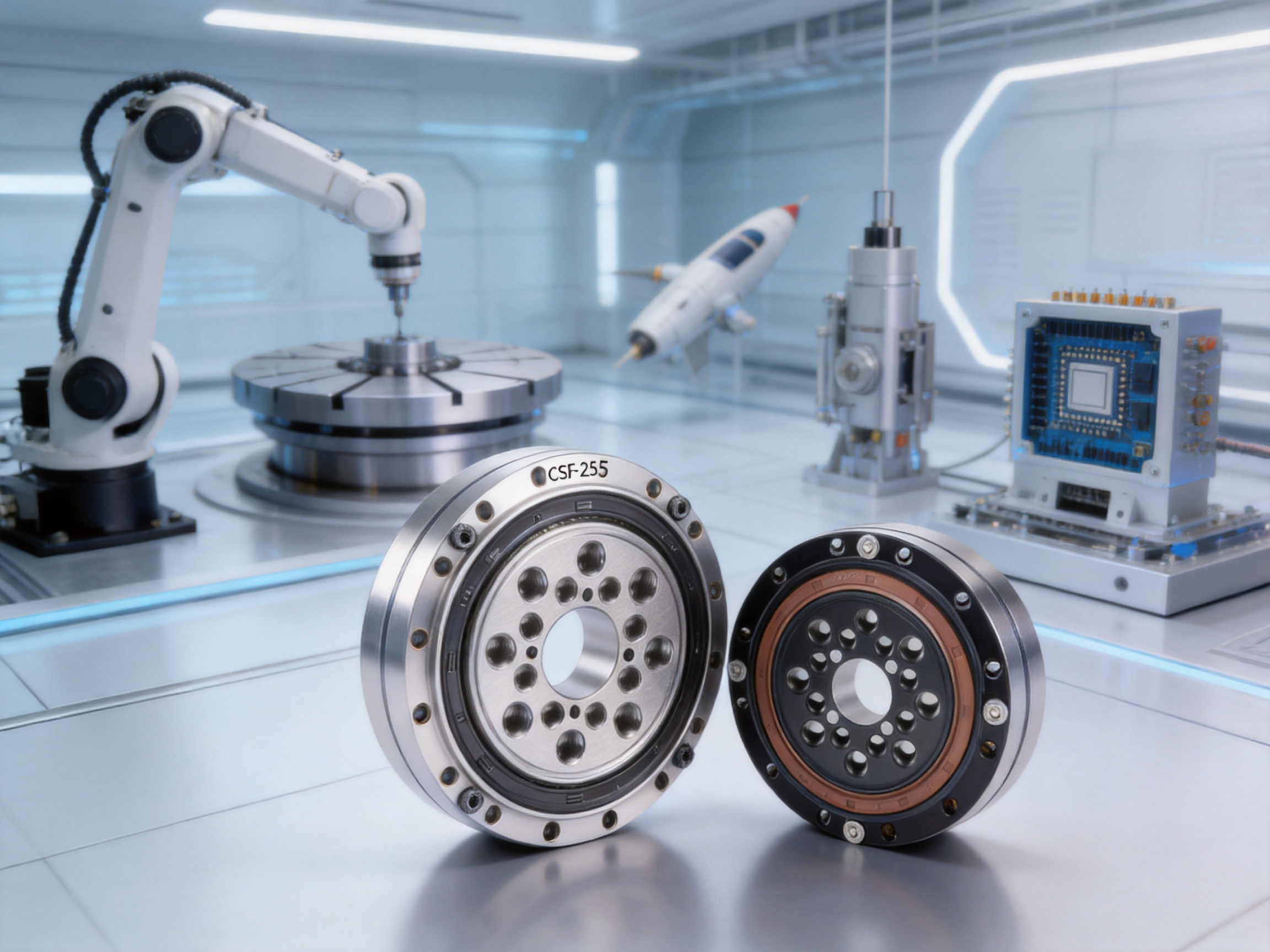
Choosing the right bearing supplier is a strategic decision for reducer manufacturers and automation equipment builders. A low-cost bearing may appear attractive during purchasing, but if it causes assembly variation, unstable preload, early failure, or customer complaints, the total cost becomes much higher. Precision harmonic reducer bearings should be sourced from a supplier with proven manufacturing capability, quality control, and technical understanding.
Ukl Bearing Manufacturing Co., Ltd provides bearing solutions for customers requiring high precision, durability, and customization. The company is located at No.1 Hehuan Road, Hudai Town, Binhu District, Wuxi City, and serves international markets with multilingual support. Its product categories include cross roller bearings, robot bearings, angular contact ball bearings, rod end bearings, spherical roller bearings, cylindrical roller bearings, tapered roller bearings, Nilos rings, and mounted bearings.
The company’s strength lies in combining manufacturing capacity with engineering service. With 201 to 500 employees, monthly production capacity of 10,000 to 50,000 units, and extensive export experience, it can support both standard orders and customized OEM/ODM projects. For harmonic reducer bearings, this means customers can receive assistance not only with product supply but also with selection, installation guidance, technical communication, and after-sales service.
For global customers, fast response is important. The company’s service team provides technical response, installation guidance, and after-sales maintenance support for international partners. This helps customers solve problems quickly and maintain production continuity.
The demand for harmonic reducer bearings will continue to grow as automation expands. Industrial robots are becoming more common in manufacturing, logistics, healthcare, agriculture, and service industries. Collaborative robots require compact, lightweight, quiet, and safe joints. Semiconductor and medical equipment require ultra-smooth precision motion. Aerospace and defense systems require reliability under demanding conditions.
These trends will push bearing technology toward higher precision, lower friction, better material performance, smarter quality control, and more application-specific customization. Digital production control will become increasingly important for maintaining consistency. Advanced inspection data may be used to predict performance and improve process control. Lubrication technology will also evolve to support cleaner, quieter, and longer-life operation.
Another important trend is integration. Customers increasingly want bearing suppliers to understand the entire mechanical system, not just the bearing itself. For harmonic reducers, this means considering the interaction between the wave generator, flexible bearing, flex spline, circular spline, rigid bearing, housing, output flange, and servo control system. Suppliers with engineering knowledge will have a clear advantage.
A precision harmonic reducer bearing is a specialized bearing used inside or at the output of a harmonic reducer. It may include a flexible bearing for the wave generator and a rigid bearing, often a crossed roller bearing, for supporting the output end. These bearings are designed for high rigidity, rotational accuracy, deformation control, and reliable load capacity.
A crossed roller bearing can support radial loads, axial loads, and overturning moments in a compact structure. Its rollers are arranged alternately at right angles, allowing one bearing to handle complex combined loads. This makes it ideal for harmonic reducer output support in robots, CNC machines, and precision automation equipment.
The flexible bearing is usually thin-walled and designed to deform elastically with the elliptical cam of the wave generator. A standard bearing is generally intended to remain circular during operation, while the flexible bearing must repeatedly change shape and still maintain smooth rolling performance.
For rigid bearings, the most important indicators are rigidity, reliability, rotational accuracy, preload consistency, and load capacity. For flexible bearings, maximum radial deformation is a core parameter, along with fatigue resistance, smooth rotation, and dimensional stability.
Preload removes internal clearance and increases rigidity. Proper preload improves positioning stability and reduces vibration. However, excessive preload can increase friction, heat, and wear. Precision control of preload is therefore essential for reliable performance.
They are commonly used in industrial robots, collaborative robots, CNC machine tools, aerospace actuators, semiconductor equipment, medical devices, optical positioning systems, inspection equipment, and precision automation machinery.
Harmonic reducer bearings require specialized knowledge of rigidity, deformation, preload, thin-wall machining, raceway accuracy, and assembly control. A specialized manufacturer can provide more consistent performance, better customization, technical guidance, and stronger quality assurance than a general supplier focused mainly on standard bearings.
Yes. Customization may include dimensions, mounting holes, preload, lubrication, material treatment, accuracy level, packaging, and application-specific design support. OEM and ODM customization is valuable for customers developing new reducer models or special automation equipment.
Precision harmonic reducer bearings are essential components for modern high-accuracy motion systems. They support the unique operating principles of harmonic reducers by combining rigidity, rotational accuracy, controlled elastic deformation, compact load capacity, and long service life. The rigid bearing stabilizes the reducer output under complex loads, while the flexible bearing enables the wave generator to create smooth elliptical deformation. Together, they determine much of the reducer’s real-world performance.
Compared with ordinary bearings or low-grade alternatives, precision harmonic reducer bearings offer major advantages in stiffness, smooth torque, positioning repeatability, load resistance, vibration reduction, and reliability. These benefits are especially valuable in robotics, CNC machines, aerospace systems, semiconductor equipment, and medical devices, where motion quality directly affects productivity, safety, and final product performance.
Ukl Bearing Manufacturing Co., Ltd strengthens these product advantages through integrated manufacturing, advanced process control, R&D capability, OEM/ODM experience, and global service. With production processes covering forging, turning, heat treatment, grinding, assembly, and packaging, the company can provide stable and customized bearing solutions for demanding industrial applications. As intelligent automation continues to develop, precision harmonic reducer bearings will remain a key technology for compact, accurate, and reliable motion.
1. Harris, T. A., and Kotzalas, M. N. Rolling Bearing Analysis: Essential Concepts of Bearing Technology. CRC Press.
2. Hamrock, B. J., Schmid, S. R., and Jacobson, B. O. Fundamentals of Machine Elements. McGraw-Hill Education.
3. Budynas, R. G., and Nisbett, J. K. Shigley’s Mechanical Engineering Design. McGraw-Hill Education.
4. Slocum, A. H. Precision Machine Design. Society of Manufacturing Engineers.
5. Norton, R. L. Machine Design: An Integrated Approach. Pearson.
6. Standard technical literature on crossed roller bearings, harmonic drive transmission principles, bearing preload control, and precision reducer assembly practices.
Product Categories
Contact Us

Jane@ukl-bearing.com
Jenny@ukl-bearing.com
Andy@ukl-bearing.com
Ivy@ukl-bearing.com

+86-510- 88763239
+86-15371057968

No.1 Hehuan Road, Hudai Town, Binhu District, Wuxi City.
Ready to Begin?
Get in Touch

Now!
UKL BEARING
 English
 Español
 русский