Content
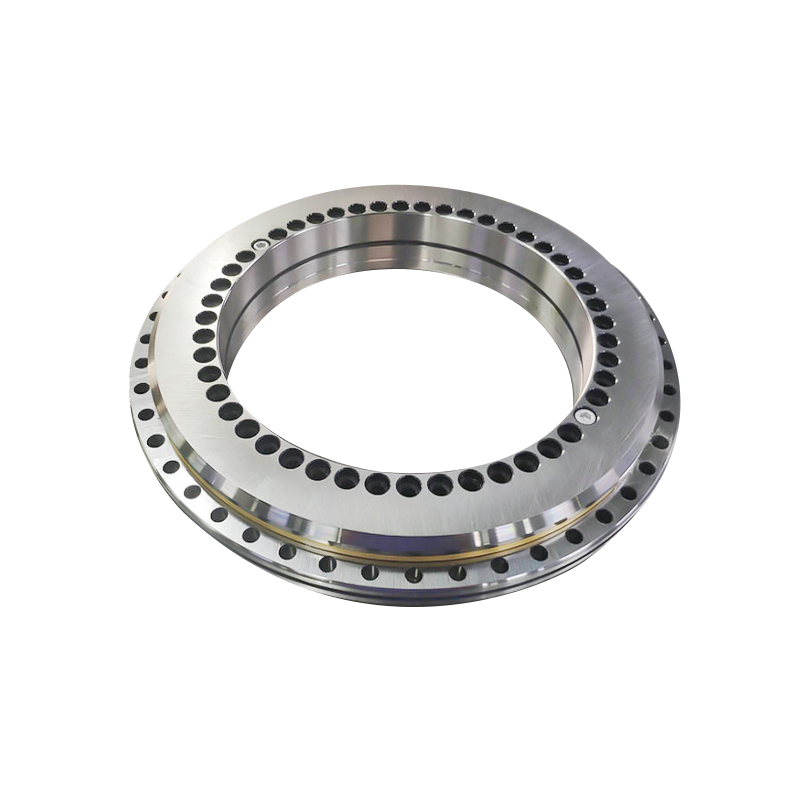
Precision motion systems require bearings that can carry combined loads, maintain positioning accuracy, resist tilting, and operate with low friction at demanding speeds. The ZKLDF thrust angular contact ball series is engineered for exactly these requirements. It is a bidirectional thrust angular contact ball bearing series designed for applications where axial load capacity, radial support, rigidity, repeatability, and rotational smoothness must work together in a compact bearing arrangement.
In modern manufacturing, high-speed rotary tables, milling heads, grinding spindles, honing systems, precision measuring equipment, and testing instruments all depend on bearing solutions that can maintain accuracy under real operating stress. A conventional bearing arrangement may require multiple separate bearings, preload adjustment, additional mounting components, and complicated assembly procedures. By contrast, the ZKLDF series provides a highly integrated solution that supports axial loads in both directions while also accommodating radial loads and tilting moments. This combination helps machine builders simplify design, reduce assembly time, and improve operational stability.
ZKLDF Thrust Angular Contact Ball Series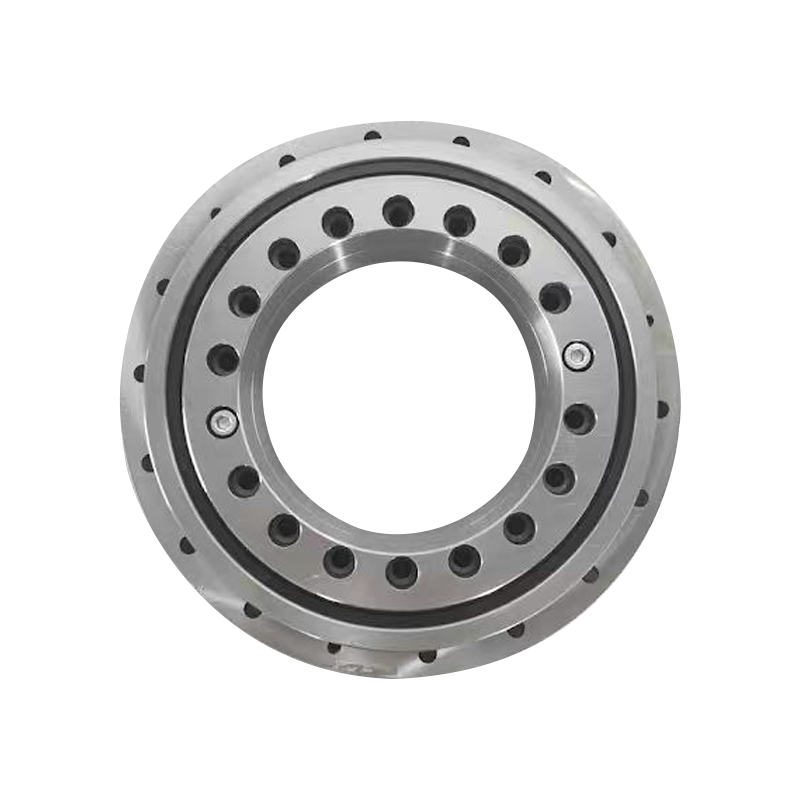
The ZKLDF thrust angular contact ball bearing series is a high-precision bearing solution for combined-load applications. It is designed to provide high axial load capacity in two directions, radial load support, high tilting rigidity, low friction torque, and stable performance at elevated speeds. These features make the series especially suitable for precision rotary systems where accuracy and rigidity are essential.
Unlike ordinary thrust bearings that primarily support axial force, the ZKLDF series is designed to handle more complex loading conditions. In real machines, loads rarely act in only one direction. Rotary tables and indexing heads, for example, may experience axial forces from workpiece weight and machining pressure, radial forces from cutting loads, and overturning moments caused by eccentric loading. The ZKLDF series addresses these combined forces through its thrust angular contact structure, making it a practical option for high-performance equipment.
The series includes multiple model sizes, ranging from ZKLDF100 to ZKLDF650. This broad range enables designers to select a bearing according to shaft diameter, outer diameter, installation space, load requirements, and speed demands. The listed bore sizes extend from 100 mm to 650 mm, which allows the product family to serve compact precision systems as well as larger industrial rotary platforms.
The bearing series is also designed with installation convenience in mind. The product data includes screw connection quantities, connecting screw holes, pitch information, tightening torque guidance, rated loads, limiting speeds, friction torque values, weights, and overall dimensions. These parameters help engineers evaluate suitability during the early design stage and support accurate installation during equipment assembly.
The main advantage of the ZKLDF bidirectional thrust angular contact ball bearing series is its ability to combine several critical performance functions in one bearing solution. It is not simply a thrust bearing, nor is it only a radial support bearing. Its value lies in the balance of axial capacity, radial capacity, high speed capability, stiffness, and precision.
First, the series provides bidirectional axial support. This is important because many rotary systems are loaded from both directions during acceleration, braking, tool contact, reversing motion, or clamping operations. A bearing that can carry axial load in both directions reduces the need for paired conventional bearings and helps maintain a more compact machine structure.
Second, the series offers high tilting rigidity. Tilting rigidity is a decisive factor in rotary tables, milling heads, measuring equipment, and automation systems. When a bearing lacks rigidity, even a small moment load can cause deflection, which may lead to machining error, vibration, poor surface finish, or inaccurate measurement results. The ZKLDF design helps resist these tilting forces and supports stable rotational geometry.
Third, the series is built for low friction. Low friction improves operating efficiency, reduces heat generation, and supports smoother rotation. In precision equipment, temperature rise can affect dimensional stability, lubrication performance, and long-term accuracy. Lower friction torque therefore contributes not only to energy efficiency but also to accuracy retention.
Fourth, the series supports high-speed operation relative to its size and load capacity. The listed limiting speeds under grease lubrication range from 2800 r/min for ZKLDF100 to 440 r/min for ZKLDF650. Larger bearings naturally operate at lower limiting speeds because of their diameter and mass, but the series still provides a strong combination of rigidity and rotational capability.
Fifth, the range provides high axial and radial load capacity. For example, the ZKLDF100 model has a dynamic axial load rating of 67 kN and a static axial load rating of 251 kN, while larger models such as ZKLDF650 provide a dynamic axial load rating of 388 kN and a static axial load rating of 2350 kN. This makes the product family suitable for both precision and heavy-duty applications.
A bidirectional thrust angular contact ball bearing is designed to manage axial forces from both directions while preserving precision and rigidity. This is especially important in rotary applications where the direction of force may change repeatedly. During machining, for instance, cutting forces may push the spindle or rotary table in one direction, while tool withdrawal, braking, or reverse movement may load the system in the opposite direction.
Traditional bearing arrangements may use two separate angular contact bearings or a combination of radial and thrust bearings to achieve similar performance. However, such arrangements may require careful preload adjustment and additional housing accuracy. If assembly conditions are imperfect, preload may become inconsistent, which can increase friction, reduce life, or reduce rigidity. The ZKLDF series helps reduce these risks by providing an integrated bearing solution designed for combined loads.
Another important advantage is compactness. In machine tool design, every millimeter of axial space can matter. A compact bearing arrangement can reduce machine height, improve structural stiffness, and leave more room for drive systems, encoders, sealing components, and lubrication systems. The ZKLDF series supports this design philosophy by delivering multiple bearing functions in a single precision unit.
The angular contact geometry also contributes to moment resistance. When load is applied away from the bearing centerline, the bearing must resist an overturning moment. If the bearing deflects excessively, the rotary axis can shift, producing positioning errors. A high-rigidity thrust angular contact bearing helps preserve axis stability and supports repeatable motion, which is essential for CNC equipment, robotics, and precision inspection systems.
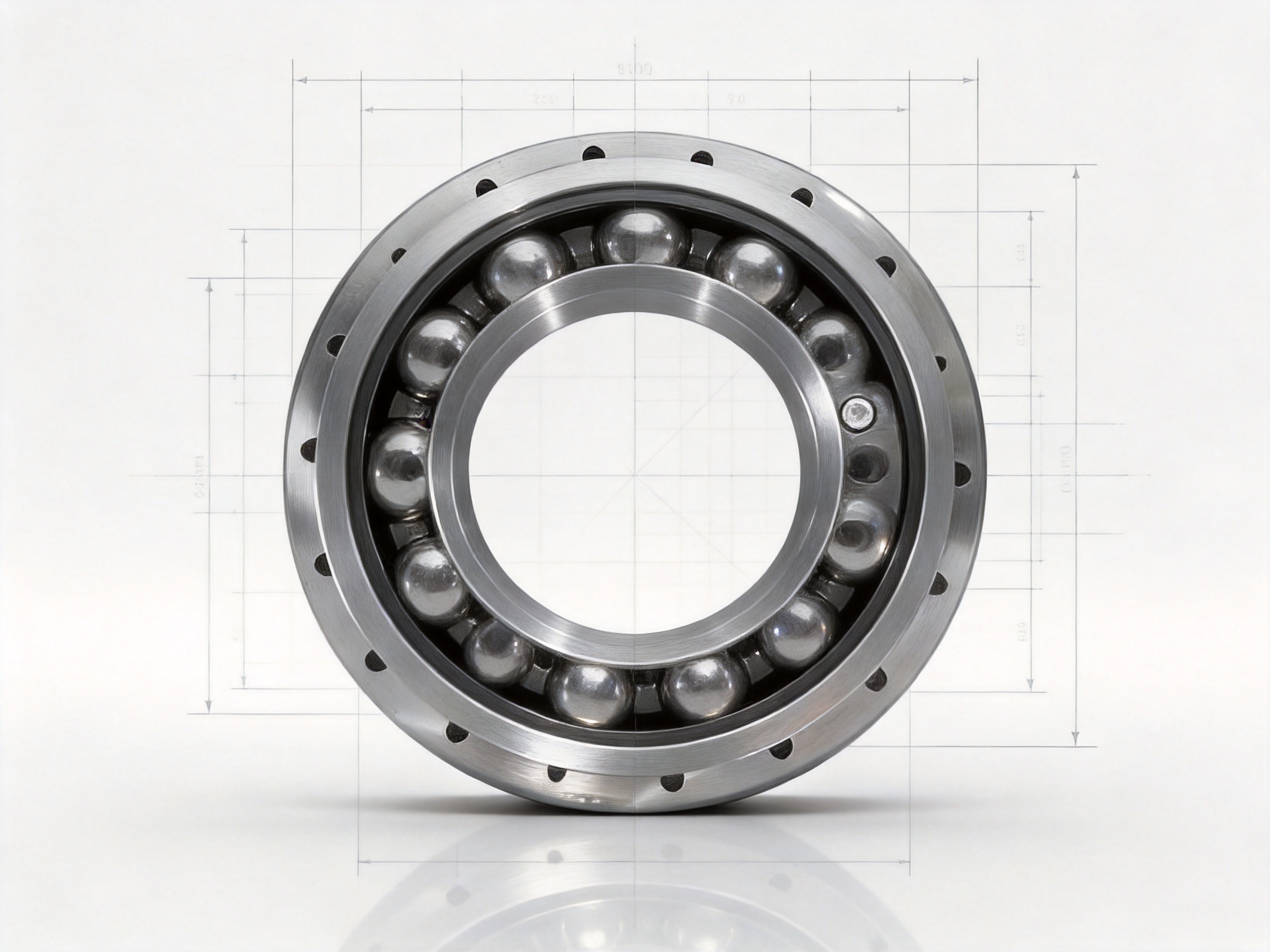
High-speed rotary tables are one of the most important application areas for the ZKLDF series. A rotary table must often carry the weight of the workpiece, resist cutting forces, maintain indexing accuracy, and rotate smoothly at controlled speeds. These requirements create a demanding combination of axial load, radial load, and moment load.
In machining centers, rotary tables are frequently used for multi-axis milling, drilling, boring, grinding, and contour machining. The bearing supporting the rotary table directly affects the quality of the final part. If the bearing lacks stiffness, the table may tilt under load, causing geometric error. If the bearing has high friction, heat generation may affect accuracy. If the bearing cannot handle bidirectional axial forces, the table may lose stability during dynamic operation.
The ZKLDF series addresses these concerns with high tilting rigidity and low friction torque. Its bidirectional axial support is particularly useful when tables are accelerated, decelerated, or subjected to alternating machining forces. The result is a stable rotating platform that supports precision machining and reliable repeatability.
Another benefit for rotary table builders is installation convenience. The availability of fixing-hole data, tightening torque recommendations, and dimensional information helps engineers integrate the bearing into the table design. This can shorten development cycles and reduce the chance of assembly-related errors.
Milling, grinding, and honing heads require bearing systems that can deliver precise motion under significant mechanical stress. In milling, cutting forces can vary rapidly depending on tool engagement, feed direction, tool geometry, and material hardness. In grinding, smooth rotation and thermal stability are critical to surface finish and dimensional accuracy. In honing, controlled contact and stable rotational motion help achieve consistent bore geometry.
The ZKLDF series is well suited to these applications because it supports combined loads while maintaining low friction. High axial and radial load capacity enables the bearing to support tool forces, while tilting rigidity helps maintain the correct angular position of the rotating component. This improves machining consistency and reduces the risk of vibration or chatter.
In high-precision grinding equipment, bearing friction can influence heat generation and therefore dimensional stability. The low-friction characteristic of the ZKLDF series helps reduce unnecessary temperature rise. This can be valuable in machines that operate for long periods or require tight tolerances.
For honing heads, stable motion is essential because the process depends on controlled contact between abrasive stones and the workpiece. Bearing deflection can affect contact pressure and lead to uneven material removal. The rigidity of the ZKLDF series supports more predictable processing conditions.
Precision measurement and testing systems often require motion that is not only accurate but also repeatable, smooth, and stable over time. In these applications, excessive friction, vibration, or bearing deflection can directly compromise measurement results. The ZKLDF series provides the stiffness and smooth operation needed for rotary measurement platforms, calibration equipment, and testing devices.
In metrology systems, the bearing must support the rotating component without introducing significant runout or angular error. High precision and high tilting rigidity are therefore essential. Low friction also helps ensure smooth motion, especially when the equipment requires fine positioning or low-speed rotation.
Testing equipment may also expose bearings to varying loads and repeated cycles. A bearing with strong static load capacity and stable structure can better withstand these conditions. The ZKLDF series offers static axial load ratings suitable for demanding test benches and inspection platforms.
The ZKLDF series includes a wide selection of models with different dimensions, rated loads, limiting speeds, friction torque values, and weights. The following table summarizes key performance parameters from the available product data. Engineers can use this information as a starting point for model selection, while final selection should consider operating load, duty cycle, lubrication, mounting accuracy, temperature, and environmental conditions.
| Model | Bore d mm | Outer Diameter D mm | Height H mm | Dynamic Axial Load Ca kN | Static Axial Load Coa kN | Grease Limiting Speed r/min | Friction Torque Nm | Approx. Weight kg |
| ZKLDF100 | 100 | 185 | 38 | 67 | 251 | 2800 | 1.6 | 4.5 |
| ZKLDF120 | 120 | 210 | 40 | 72 | 315 | 2400 | 2 | 6 |
| ZKLDF150 | 150 | 240 | 40 | 76 | 365 | 2000 | 3 | 7.5 |
| ZKLDF180 | 180 | 280 | 43 | 85 | 440 | 1700 | 3 | 8 |
| ZKLDF200 | 200 | 300 | 45 | 112 | 550 | 1600 | 4.5 | 11 |
| ZKLDF260 | 260 | 385 | 55 | 155 | 920 | 1200 | 7.5 | 22 |
| ZKLDF325 | 325 | 450 | 60 | 165 | 1110 | 1000 | 11 | 28 |
| ZKLDF395 | 395 | 525 | 65 | 214 | 1470 | 800 | 16 | 39 |
| ZKLDF460 | 460 | 600 | 70 | 255 | 1860 | 700 | 21 | 50 |
| ZKLDF580 | 580 | 750 | 90 | 282 | 2150 | 500 | 40 | 82 |
| ZKLDF650 | 650 | 870 | 122 | 388 | 2350 | 440 | 63 | 168 |
The table shows the progression of the series from compact precision sizes to larger heavy-duty models. As model size increases, load capacity rises significantly. At the same time, limiting speed decreases, which is typical for larger-diameter bearings because surface speed, centrifugal effects, lubrication behavior, and thermal conditions become more demanding.
The model data also demonstrates that the series offers a practical balance between load capacity and friction torque. For example, the ZKLDF200 offers a dynamic axial rating of 112 kN and a static axial rating of 550 kN while maintaining a friction torque value of approximately 4.5 Nm. Larger models such as ZKLDF460 and ZKLDF650 provide much greater load capacity for heavy rotary systems, with friction torque values appropriate to their size and capacity.
Compared with conventional bearing arrangements, the ZKLDF thrust angular contact ball bearing series provides several competitive advantages. These advantages are especially important for machine builders who need to improve performance while controlling assembly complexity and production cost.
One major advantage is integration. A traditional arrangement may require separate radial bearings, thrust bearings, spacers, locknuts, preload adjustment mechanisms, and carefully machined housing shoulders. Each additional component introduces potential error. The ZKLDF series helps simplify this arrangement by providing bidirectional axial support, radial support, and moment rigidity in a compact structure.
Another advantage is improved rigidity in limited space. In many machines, bearing span is restricted by housing dimensions. If multiple bearings cannot be spaced far apart, moment stiffness may be limited. The ZKLDF series is designed specifically for high tilting rigidity, helping provide stability even within compact installation spaces.
Low friction is also a competitive advantage. Some heavy-duty bearing arrangements provide high load capacity but generate greater friction and heat. Excessive heat can shorten lubricant life and affect machine accuracy. The ZKLDF series is engineered for low friction performance, making it attractive for applications where speed, precision, and thermal stability are required together.
Ease of installation is another important factor. The product data includes connection screw information, tightening torque values, and fixing-hole dimensions. These details help reduce uncertainty during installation. When a bearing is installed correctly, preload and alignment are more likely to remain within intended limits, supporting longer service life and better machine performance.
In addition, the series offers a wide model range. This allows machine designers to select a bearing that matches the application rather than forcing the machine design around a limited bearing selection. From 100 mm to 650 mm bore sizes, the product family covers many rotary table and precision equipment requirements.
The performance of a precision bearing depends not only on design but also on manufacturing capability. UKL Bearing Manufacturing Co., Ltd. supports the ZKLDF series with integrated production and engineering resources. The company combines manufacturing, trading, research and development, and international distribution to serve customers in demanding industries.
The company operates a modern production environment with multiple manufacturing lines covering forging, turning, heat treatment, grinding, assembly, and packaging. This full-process capability is essential for high-precision bearing production. Each process affects final performance. Forging influences material structure and strength. Turning establishes the initial geometry. Heat treatment determines hardness, wear resistance, and fatigue performance. Grinding controls final dimensional accuracy and surface quality. Assembly influences preload, smoothness, cleanliness, and consistency. Packaging protects the finished bearing during transportation and storage.
By integrating these processes, the manufacturer can better control quality throughout production. This reduces dependence on fragmented subcontracting and supports consistent batch performance. For OEM and ODM customers, process control is especially important because machine builders require repeatable quality across production runs.
The company has more than 15 years of OEM and ODM export experience and serves international customers across Europe, Asia, Africa, Russia, and other regions. Export experience matters because bearing requirements vary by market, industry, and application. Customers may require dimensional customization, documentation, technical support, packaging standards, or application guidance. A manufacturer with export experience is better prepared to meet these practical requirements.
The company’s monthly production capacity of 10,000 to 50,000 units supports both project-based demand and recurring supply programs. This capacity helps customers maintain production schedules and reduces the risk of supply interruption. For machine builders, bearing availability is a critical factor because a delayed bearing can delay the shipment of an entire machine.
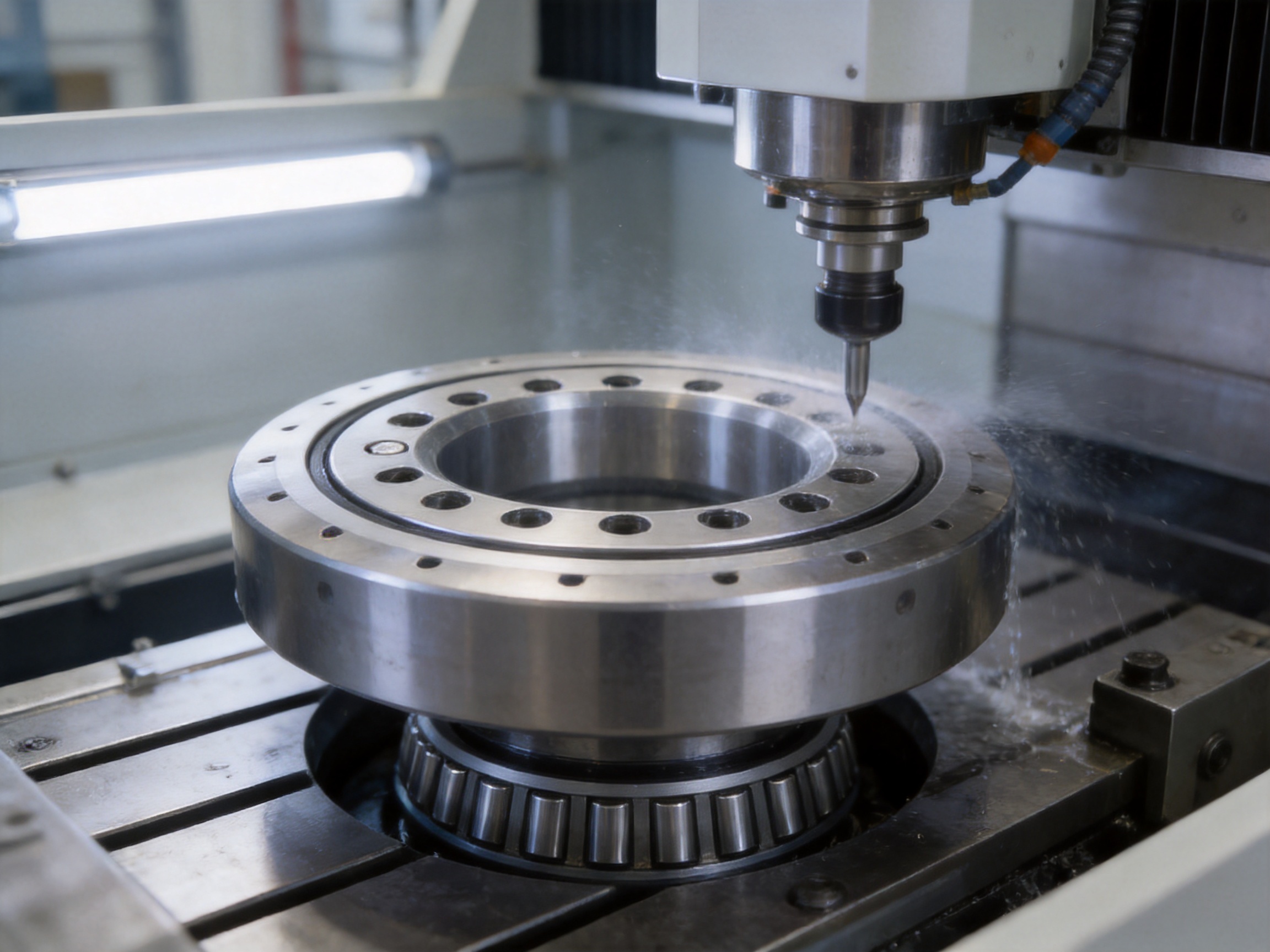
Precision bearing manufacturing requires strict process control. A bearing such as the ZKLDF series must meet demanding requirements for geometry, hardness, surface finish, internal clearance or preload condition, and rotational smoothness. Small deviations can affect friction torque, load distribution, noise, vibration, and life.
The production process begins with material preparation and forming. Proper forging helps improve material density and mechanical strength. In bearing rings, uniform material properties are important because the raceways must withstand repeated rolling contact stress. After forming, turning operations create the basic ring geometry and prepare the component for heat treatment and grinding.
Heat treatment is one of the most important stages in bearing production. The goal is to achieve the required hardness and microstructure while controlling distortion. If heat treatment is inconsistent, the bearing may suffer from uneven hardness, dimensional instability, or reduced fatigue life. Controlled heat treatment supports reliable performance under high loads.
Grinding determines the final accuracy of bearing raceways and mounting surfaces. High-quality grinding contributes to smooth rotation, accurate load distribution, and low friction. For a bidirectional thrust angular contact bearing, the accuracy of contact surfaces is especially important because the bearing must manage axial loads, radial loads, and moments. Precision grinding helps ensure that the rolling elements share load properly.
Assembly is another critical step. Cleanliness, component matching, lubrication, and inspection all affect final bearing performance. Even a well-ground bearing can perform poorly if assembly is not controlled. The manufacturer’s integrated assembly process helps ensure that each bearing is prepared for reliable operation.
Digital production control and precision design support further consistency. By monitoring production parameters and applying engineering feedback, the company can improve repeatability and reduce variation. This is particularly valuable for high-precision products used in CNC machines, robotics, and intelligent automation systems.
Reliability is central to bearing selection. A bearing failure can stop an entire production line, damage equipment, reduce product quality, and create maintenance cost. The ZKLDF series is designed for applications where reliability and precision are both important.
High static load ratings help the bearing resist permanent deformation under heavy or shock-like loads. This is important in rotary tables, where the weight of the workpiece and fixture can be significant. Dynamic load ratings reflect the bearing’s ability to operate under repeated rolling contact stress. Proper selection based on load, speed, lubrication, and duty cycle helps achieve long service life.
Low friction also contributes to reliability. Lower friction reduces heat generation, which protects lubricant performance and reduces thermal expansion effects. In precision systems, reduced heat can help maintain alignment and accuracy over longer operating periods.
High tilting rigidity reduces deflection under moment loads. This not only improves machining or measurement accuracy but also helps distribute load more predictably within the bearing. Excessive deflection can concentrate stress and reduce life. A rigid bearing structure therefore supports both accuracy and durability.
The product’s installation data also supports reliability. Correct screw tightening torque and accurate mounting are essential for maintaining bearing performance. Improper mounting can distort bearing rings or create uneven preload. The availability of installation-related data helps engineers and technicians avoid these issues.
Selecting the correct ZKLDF model requires careful analysis of the application. Engineers should consider axial load in both directions, radial load, tilting moment, speed, duty cycle, lubrication, temperature, mounting structure, and required accuracy. The model table provides a useful starting point, but final selection should be based on the complete operating condition.
Axial load is usually a primary selection factor because the ZKLDF series is designed for thrust angular contact performance. Engineers should evaluate both continuous operating loads and peak loads. Static load rating is important where the bearing may experience heavy clamping force, workpiece weight, or non-rotating load. Dynamic load rating is important for applications with continuous rotation or repeated motion.
Speed is another important factor. The limiting speed listed for grease lubrication should be compared with the required operating speed. If the application operates close to the limiting speed, attention should be given to lubrication, heat dissipation, preload, and duty cycle.
Tilting moment should also be evaluated. Rotary tables often carry eccentric loads, meaning the load center is not perfectly aligned with the rotational axis. This creates a moment that the bearing must resist. High tilting rigidity is one of the key strengths of the ZKLDF series, but correct model selection remains necessary.
Installation dimensions must be reviewed carefully. The series provides bore diameter, outer diameter, height, fixing-hole data, and other dimensional values. Designers should ensure that the surrounding structure has adequate stiffness. Even the best bearing cannot perform properly if the housing or shaft is too flexible or inaccurately machined.
The installation of precision bearings requires attention to cleanliness, alignment, tightening sequence, and torque control. The ZKLDF series provides useful mounting information, including screw connection quantity, connecting screw holes, pitch, and tightening torque. These details help technicians achieve stable installation conditions.
During mounting, bearing seating surfaces should be clean, flat, and free of burrs. Contamination can create local distortion or misalignment. The mounting structure should be sufficiently rigid to support the bearing without deformation. When screws are tightened, torque should be applied evenly and in a controlled sequence to avoid ring distortion.
Correct tightening torque is important because insufficient torque may allow movement, while excessive torque may deform bearing components or mounting surfaces. The product data provides torque values associated with model sizes, supporting more predictable assembly.
Because the bearing is designed as an integrated solution, installation may be simpler than assembling multiple separate bearings. Reduced component count can lower assembly time and reduce opportunities for error. This is a meaningful advantage for OEM machine builders who assemble equipment in batches and need consistent results.
Although the ZKLDF series is especially suited for rotary tables and machine tool systems, its characteristics also align with the needs of robotics and intelligent automation. Robotic systems require compact components, precise movement, rigidity, and reliability. Automation platforms often involve repeated indexing, controlled rotation, and combined loads.
In robotic positioning systems, bearing deflection can lead to end-effector error. High tilting rigidity helps preserve positioning accuracy. Low friction supports smoother motion and can reduce drive energy requirements. Bidirectional axial support helps when the system moves through different orientations or load directions.
In intelligent automation equipment, such as inspection machines, assembly platforms, or precision indexing stations, the ZKLDF series can help maintain repeatability. Stable bearing performance supports consistent process results and reduces downtime.
The manufacturer’s R&D focus on high-precision cross roller bearings, dual-direction thrust angular contact ball bearings, and products for CNC machines, robotics, and automation systems further strengthens the product’s relevance. This engineering orientation enables the company to support customers working in advanced motion-control applications.
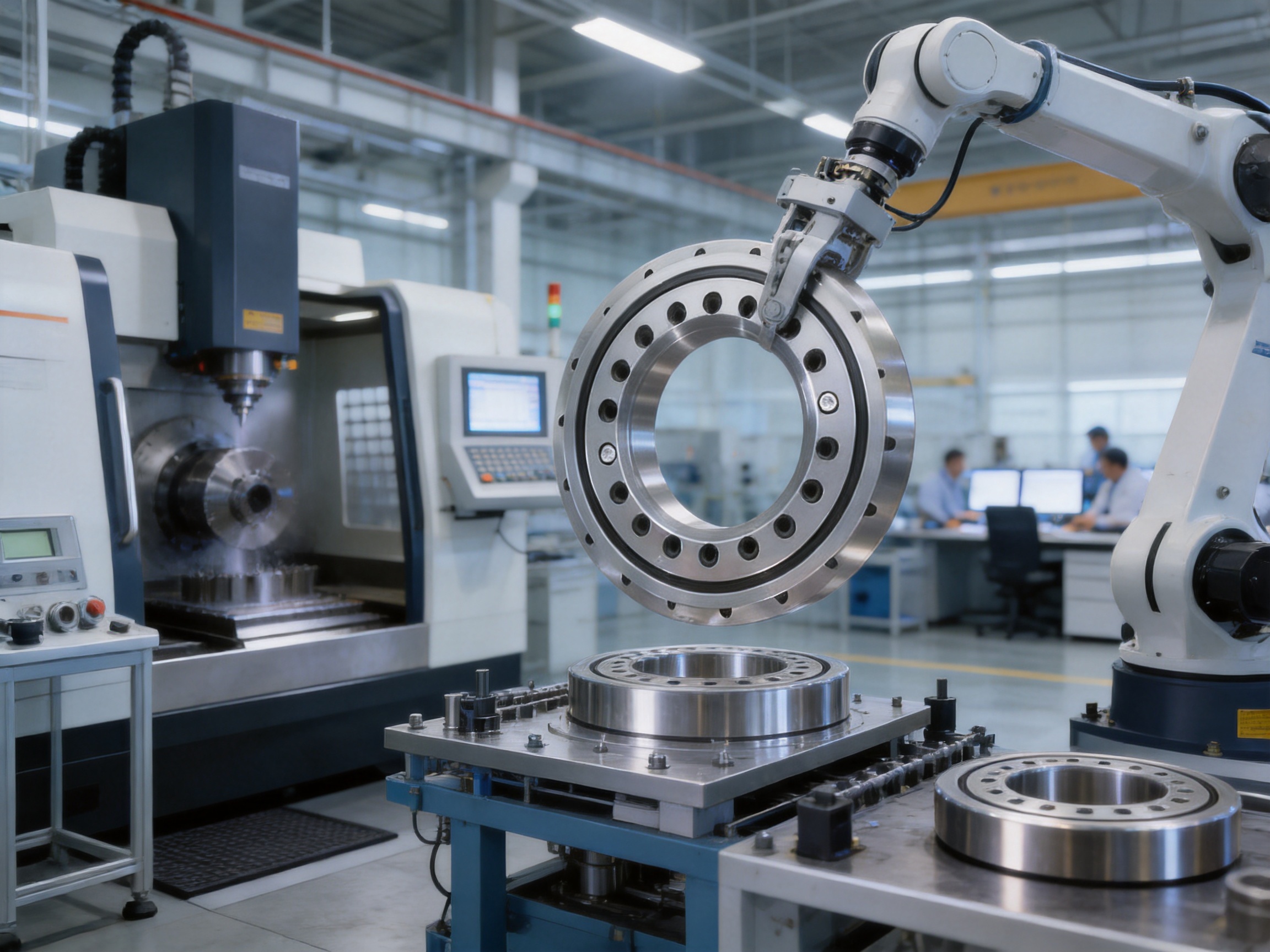
Modern industrial customers increasingly consider sustainability as part of supplier evaluation. UKL Bearing Manufacturing Co., Ltd. recognizes environmental responsibility as a long-term commitment. The company promotes environmentally responsible processes, material recycling, and optimized energy use to reduce environmental impact.
In bearing manufacturing, sustainability can be improved through efficient material utilization, controlled heat treatment energy consumption, waste reduction, process optimization, and long-life product design. A durable, high-performance bearing can also support sustainability indirectly by reducing replacement frequency, machine downtime, and resource consumption over the equipment life cycle.
Responsible manufacturing also includes support for technical training and engineering development. By encouraging education and skill development, the company contributes to the future of precision manufacturing and industrial technology. This is important because advanced bearing production depends on experienced engineers, technicians, and quality specialists.
Global customers need more than a product. They need technical communication, stable supply, documentation, installation guidance, and after-sales response. UKL Bearing Manufacturing Co., Ltd. has built long-term partnerships with distributors and OEM clients across multiple continents. Its multilingual service team provides technical response, installation guidance, and after-sales maintenance support.
For OEM customers, bearing selection may begin during machine design. Engineers may need dimensional confirmation, load analysis support, or recommendations for mounting conditions. A responsive supplier can help reduce design risk and shorten development cycles. For distributors, stable quality and reliable delivery are essential for customer trust.
The company’s export markets include the United States, Italy, Germany, Poland, South Africa, Egypt, India, and other regions. Serving such diverse markets requires flexibility and understanding of international expectations. This experience supports customers who require consistent bearing performance and professional communication.
OEM and ODM experience is especially valuable for custom bearing requirements. Some machines may require special packaging, specific accuracy classes, modified lubrication, or tailored documentation. A manufacturer with engineering and production integration is better positioned to evaluate and support these needs.
Machine builders evaluate bearings based on performance, cost, reliability, availability, and integration convenience. The ZKLDF series provides competitive value by combining high precision, high load capacity, low friction, high speed capability, and high rigidity in one product family.
From a design perspective, the series can reduce complexity. Instead of designing a multi-bearing system with complex preload control, engineers can use a dedicated bidirectional thrust angular contact bearing designed for combined loads. This may reduce the number of parts, simplify assembly, and improve consistency.
From a performance perspective, the series supports high-quality motion. It helps rotary tables maintain accuracy, machining heads resist deflection, and measurement systems preserve repeatability. These improvements can translate into better final product quality for end users.
From a manufacturing perspective, the supplier’s integrated process capability supports quality control and delivery reliability. Advanced production lines, R&D support, export experience, and monthly production capacity give customers confidence in long-term cooperation.
From a maintenance perspective, low friction and high rigidity can support stable operation. Correctly selected and installed, the bearing can contribute to reduced heat, smoother motion, and longer service intervals.
The series is mainly used for high-speed rotary tables, milling heads, grinding heads, honing heads, precision measuring equipment, testing systems, CNC machines, robotics, and intelligent automation equipment. It is designed for applications involving combined axial, radial, and tilting loads.
Ordinary thrust bearings mainly support axial loads. The ZKLDF series provides bidirectional axial support while also handling radial loads and tilting moments. This makes it more suitable for precision rotary systems where loads are complex and accuracy must be maintained.
Tilting rigidity helps the bearing resist angular deflection under moment loads. In rotary tables, machining heads, and measurement equipment, even small deflection can cause positioning errors, vibration, poor surface finish, or inaccurate measurements. High tilting rigidity supports stable and repeatable rotation.
Yes. The series is designed for low friction and high-speed operation. The listed grease lubrication limiting speeds range from 2800 r/min for the ZKLDF100 model to 440 r/min for the ZKLDF650 model. Actual operating speed should be evaluated based on load, lubrication, temperature, and duty cycle.
Low friction reduces heat generation, improves rotational smoothness, supports energy efficiency, and helps maintain dimensional stability. In precision applications, reduced temperature rise can improve accuracy retention and lubricant life.
The available models include ZKLDF100, ZKLDF120, ZKLDF150, ZKLDF180, ZKLDF200, ZKLDF260, ZKLDF325, ZKLDF395, ZKLDF460, ZKLDF580, and ZKLDF650. The bore sizes range from 100 mm to 650 mm.
Engineers should consider axial load in both directions, radial load, tilting moment, operating speed, lubrication, temperature, duty cycle, required accuracy, mounting dimensions, and housing rigidity. The model table provides a starting point, but final selection should be based on complete application conditions.
The product is supported by integrated manufacturing processes including forging, turning, heat treatment, grinding, assembly, and packaging. These processes are combined with R&D, digital production control, export experience, and quality-focused production management.
Yes. UKL Bearing Manufacturing Co., Ltd. has more than 15 years of OEM and ODM export experience and supplies customers in multiple international markets. The company can support technical communication, product selection, installation guidance, and customized cooperation.
The series provides bidirectional axial capacity, radial support, high tilting rigidity, low friction, and installation-friendly dimensional data. These features help rotary table manufacturers improve accuracy, stability, assembly efficiency, and long-term reliability.
The ZKLDF thrust angular contact ball bearing series is a high-performance solution for precision rotary systems that require combined-load capability, low friction, high rigidity, and reliable speed performance. Its bidirectional thrust angular contact design makes it especially valuable for high-speed rotary tables, milling, grinding, honing, measurement, testing, robotics, and automation applications.
Compared with conventional bearing arrangements, the series offers important advantages in integration, rigidity, installation convenience, and performance balance. It can reduce design complexity while supporting precise and stable rotation under axial, radial, and moment loads. With a wide model range from ZKLDF100 to ZKLDF650, the series provides options for both compact precision systems and large industrial rotary platforms.
The strength of the product is reinforced by the manufacturing capabilities of UKL Bearing Manufacturing Co., Ltd. Integrated production lines covering forging, turning, heat treatment, grinding, assembly, and packaging help ensure consistency and quality. R&D capability, digital production control, OEM and ODM experience, global service, and sustainable manufacturing practices further support the company’s position as a reliable bearing manufacturing partner.
For engineers and machine builders seeking a bearing solution that combines precision, stiffness, load capacity, and operational efficiency, the ZKLDF bidirectional thrust angular contact ball bearing series offers a compelling choice. It is designed not only to carry loads, but also to protect accuracy, simplify installation, and support the next generation of intelligent manufacturing equipment.
1. Harris, T. A., and Kotzalas, M. N. Rolling Bearing Analysis: Essential Concepts of Bearing Technology.
2. Brändlein, J., Eschmann, P., Hasbargen, L., and Weigand, K. Ball and Roller Bearings: Theory, Design and Application.
3. ISO 281. Rolling Bearings: Dynamic Load Ratings and Rating Life.
4. ISO 76. Rolling Bearings: Static Load Ratings.
5. Manufacturer product data for ZKLDF bidirectional thrust angular contact ball bearing series.
Product Categories
Contact Us

Jane@ukl-bearing.com
Jenny@ukl-bearing.com
Andy@ukl-bearing.com
Ivy@ukl-bearing.com

+86-510- 88763239
+86-15371057968

No.1 Hehuan Road, Hudai Town, Binhu District, Wuxi City.
Ready to Begin?
Get in Touch

Now!
UKL BEARING
 English
 Español
 русский