Content
In modern automation, industrial robotics, CNC machine tools, inspection systems, rotary tables, semiconductor equipment, medical devices, and precision positioning mechanisms, a bearing is not merely a mechanical component. It is a core motion element that determines stiffness, accuracy, repeatability, service life, and the stability of the complete machine. Among precision bearing solutions, the RW high-performance crossed roller bearing stands out because it combines compact dimensions, high rigidity, excellent rotational accuracy, and simplified installation in one integrated structure.
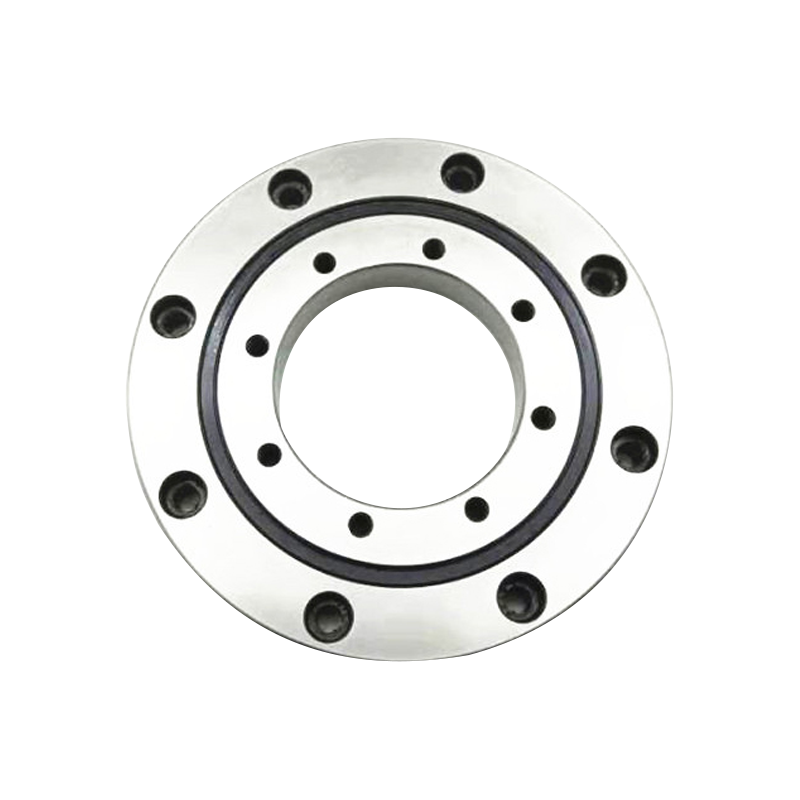
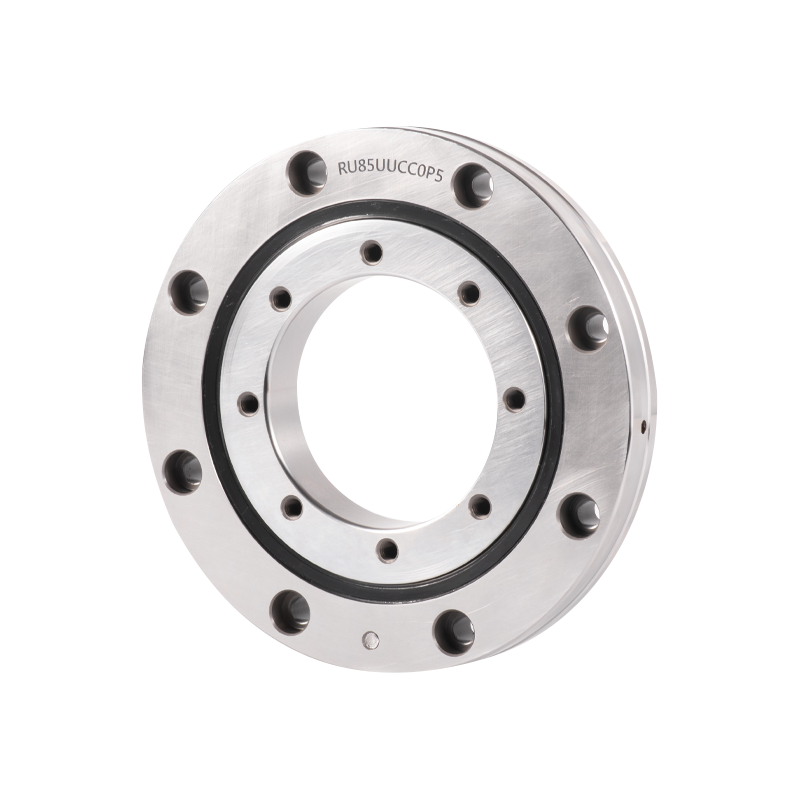
The RW type crossed roller bearing is designed with integral inner and outer rings and mounting holes on both rings. This structural concept enables the bearing to be fixed directly to shafts, housings, rotary tables, robot joints, or support structures without requiring complex intermediate flanges or complicated clamping arrangements. Its rollers are arranged in a crossed configuration, typically alternating at 90 degrees with the roller axes positioned to support loads from multiple directions. This allows one bearing to handle radial loads, axial loads, and overturning moments at the same time.
For engineers, equipment builders, and purchasing teams seeking a precision bearing that reduces assembly time while improving performance, the RW series provides a balanced solution. It offers high component rigidity, optimized mounting-hole geometry, improved machining precision, and practical dimensional options from medium sizes to large rotary support sizes. It is especially suited for applications where compactness, accuracy, and load capacity must coexist.
RW High Performance Cross Roller Bearing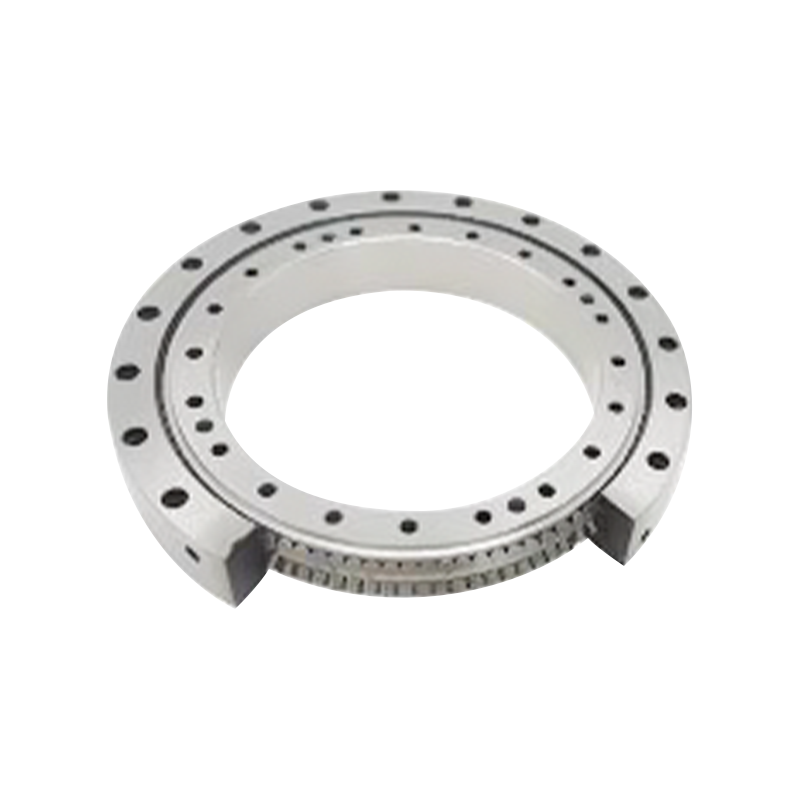
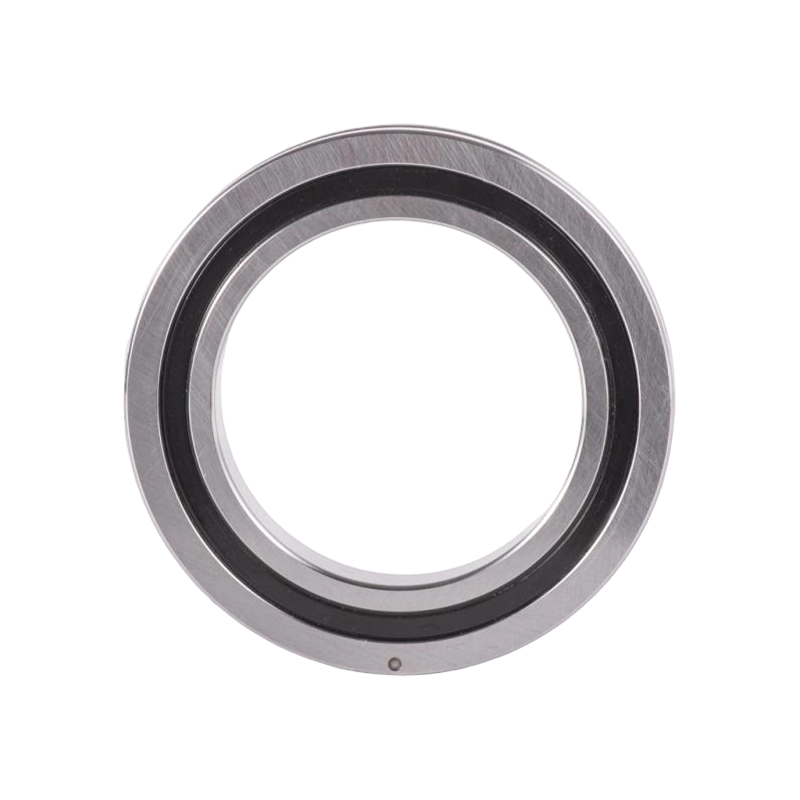
The RW high-performance crossed roller bearing is a precision bearing with an integrated inner ring and integrated outer ring. Unlike many split-ring or separable bearing structures, this design improves overall component stability and reduces the risk of deformation during installation. Both the inner and outer rings include machined mounting holes, allowing direct bolt fixing from the application side.
The bearing is engineered for high rigidity through the use of small-diameter rollers arranged in a double-row crossed configuration at 45-degree intervals. This roller arrangement distributes load efficiently and supports high moment stiffness in a compact envelope. The bearing is therefore well suited for robot reducers, robot arms, harmonic-drive output sections, precision rotary tables, measuring equipment, industrial automation turntables, and other mechanisms requiring stable and accurate rotation.
A key advantage of the RW type is that the mounting holes are optimized not only for assembly convenience but also for performance stability. Improper installation can deform the rolling surface of a precision bearing, causing uneven preload, fluctuating torque, poor runout, and reduced life. The RW design addresses this challenge by matching the size and quantity of mounting holes to the ring dimensions, helping control rolling surface deformation during installation.
High rotational accuracy is another central characteristic. The integrated-ring structure and improved machining precision allow the bearing to meet demanding accuracy requirements in applications where positioning error, vibration, or uneven rotation cannot be accepted. For machine builders, this means fewer compensating components, fewer alignment operations, and a more dependable final assembly.
The RW series uses integral inner and outer rings. This differs from split-ring designs in which one ring is divided for assembly or preload adjustment. Split-ring bearings can be useful in certain applications, but they may be more sensitive to fastening sequence, housing accuracy, and installation stress. An integral-ring structure increases ring continuity, improves stiffness, and supports more stable rotational behavior.
In high-precision rotation, ring integrity matters. When a bearing ring is split, the joint area may become a potential source of deformation or micro-displacement if the mounting structure is not sufficiently rigid. With the RW design, the integrated rings help maintain a more uniform raceway geometry. This contributes to smoother torque, better runout stability, and improved resistance to operating moment loads.
The RW bearing includes mounting holes on both inner and outer rings. These holes allow the bearing to be mounted directly to the surrounding equipment. For example, the inner ring may be bolted to a rotating shaft or rotary plate, while the outer ring may be fixed to a stationary housing. In other designs, users may need additional fixing plates, lock nuts, or shoulder structures, which add weight and increase the stack-up tolerance of the machine.
Direct mounting provides several benefits. It shortens assembly time, reduces the number of parts, simplifies inventory, and decreases the chance of installation error. It can also improve total machine rigidity because the bearing becomes an integrated load-carrying part of the mechanism instead of a component held indirectly by several intermediate elements.
Precision bearings are sensitive to installation deformation. If bolts are too large, too few, unevenly tightened, or located too close to the raceway, localized deformation can occur. The RW series addresses this by optimizing mounting-hole dimensions and quantity according to bearing size. This helps reduce deformation of the rolling surface during assembly and contributes to stable rotation after installation.
For equipment builders, this is a practical advantage over conventional bearing arrangements. Many bearing failures are not caused by the bearing design itself but by incorrect installation or support deformation. A bearing with carefully designed mounting geometry gives engineers a more reliable foundation and reduces the need for complex corrective procedures.
The crossed roller configuration is one of the primary reasons the RW bearing can support complex loads in a compact size. Cylindrical rollers are arranged alternately so that adjacent rollers can carry loads in different directions. As a result, the bearing can handle radial loads, axial loads in both directions, and moment loads with a single bearing unit.
Compared with a pair of angular contact ball bearings or a combination of radial and thrust bearings, a crossed roller bearing often provides higher rigidity in a smaller axial width. It can also simplify design because one bearing can replace multiple bearing elements. This is especially useful in robot joints, rotary indexing tables, inspection equipment, and compact automation devices where space is limited.
One of the most important performance advantages of the RW series is its combination of compact size and high rigidity. In many machines, space around the rotating axis is limited. Designers may not have enough room for two separated bearing rows, large housings, or heavy support structures. The RW crossed roller bearing solves this issue by arranging small-diameter rollers in a compact crossed structure, allowing high moment stiffness without excessive bearing width.
Compared with standard deep groove ball bearings, the RW type provides much stronger resistance to overturning moments. Compared with many paired angular contact bearing arrangements, it can reduce axial space and simplify preload management. Compared with large rotary support bearings, it can offer higher rotational accuracy in precision equipment while maintaining a practical load capacity.
High rotational accuracy is essential in robotics, measuring systems, precision turntables, and machine tools. If bearing rotation is unstable, the entire machine may experience positioning errors, vibration, or uneven motion. The RW series supports high rotational accuracy through integrated rings, precision machining, and controlled raceway geometry.
In applications such as robot joints, small angular errors can be amplified at the end effector. A slight rotational runout in the bearing may produce visible tool-position deviation. By using a bearing designed for precision motion, robot manufacturers can improve repeatability and reduce calibration burden. In rotary tables and measurement devices, improved accuracy supports smoother indexing, more reliable inspection results, and better machining consistency.
Installation time is a major cost factor in equipment manufacturing. Conventional bearing arrangements may require shaft shoulders, support housings, spacers, locking elements, preload adjustment, and repeated measurement. The RW bearing reduces this burden because the inner and outer rings can be directly fixed using the integrated mounting holes.
This direct-fixing structure helps production teams assemble precision modules more quickly. It also improves repeatability between units because fewer independent components must be aligned. For OEM production, reduced assembly time can lower labor costs, shorten delivery cycles, and improve output consistency.
Precision bearings can lose accuracy if installed incorrectly. Excessive tightening torque, uneven bolt sequence, poor mounting surface flatness, and misalignment can distort the rings. The RW design helps reduce this risk because its mounting-hole relationship is engineered to minimize rolling surface deformation. While correct installation remains essential, the bearing gives users a stronger starting point than many ordinary arrangements.
This advantage is particularly valuable in distributed manufacturing or international equipment assembly, where installation practices may vary between factories or service locations. A bearing with direct mounting and stable ring geometry supports more predictable performance across different production environments.
Many rotating mechanisms experience multiple types of load simultaneously. A robot joint may encounter radial load from arm weight, axial load from thrust forces, and overturning moment from dynamic movement. A turntable may experience radial load from workpiece weight, axial clamping force, and moment load from offset machining or inspection operations.
The RW crossed roller bearing is suitable for these combined-load conditions because its roller arrangement supports multidirectional forces. This reduces the need for separate thrust and radial bearing combinations. Fewer bearing elements mean fewer tolerance stack-ups, fewer alignment challenges, and potentially greater system reliability.
The RW series includes multiple bearing sizes for different machine designs. The following table summarizes representative models and key parameters based on the supplied product data. Dimensions are given in millimeters, basic load ratings are given in kilonewtons, and weight is given in kilograms.
| Bearing Type | Bore d | Outside Diameter D | Width B | Inner Ring Mounting Holes | Outer Ring Mounting Holes | Basic Dynamic Load Rating Cr | Basic Static Load Rating Cor | Weight |
| RW145 | 100 | 185 | 20 | 12 through holes | 12 through holes | 24.6 | 59.3 | 2.70 |
| RW164 | 120 | 210 | 30 | 12 through holes | 12 through holes | 48.6 | 112 | 4.90 |
| RW195 | 150 | 240 | 30 | 16 through holes | 16 through holes | 54.1 | 136 | 5.70 |
| RW228 | 160 | 295 | 35 | 24 through holes | 24 through holes | 59.3 | 161 | 12.00 |
| RW230 | 180 | 280 | 40 | 20 through holes | 20 through holes | 87 | 215 | 9.90 |
| RW250 | 200 | 300 | 40 | 20 through holes | 20 through holes | 89.7 | 231 | 11.00 |
| RW297 | 210 | 380 | 40 | 24 through holes | 24 through holes | 101 | 288 | 22.00 |
| RW323 | 260 | 385 | 50 | 24 through holes | 24 through holes | 168 | 422 | 24.00 |
| RW388 | 325 | 450 | 50 | 30 through holes | 30 through holes | 199 | 558 | 29.00 |
| RW445 | 350 | 540 | 50 | 32 through holes | 32 through holes | 216 | 652 | 47.00 |
| RW463 | 395 | 525 | 50 | 36 through holes | 36 through holes | 208 | 634 | 31.00 |
| RW530 | 460 | 600 | 50 | 40 through holes | 40 through holes | 233 | 771 | 40.00 |
| RW665 | 580 | 750 | 60 | 32 through holes | 32 through holes | 314 | 902 | 92.00 |
| RW760 | 650 | 870 | 60 | 32 through holes | 32 through holes | 336 | 1030 | 138.00 |
This range demonstrates that the RW series can support both compact precision modules and large rotary mechanisms. Smaller models offer lightweight rigidity for compact automation systems, while larger models provide high load capacity and moment stiffness for heavy-duty turntables, robot bases, large positioning axes, and industrial machinery.
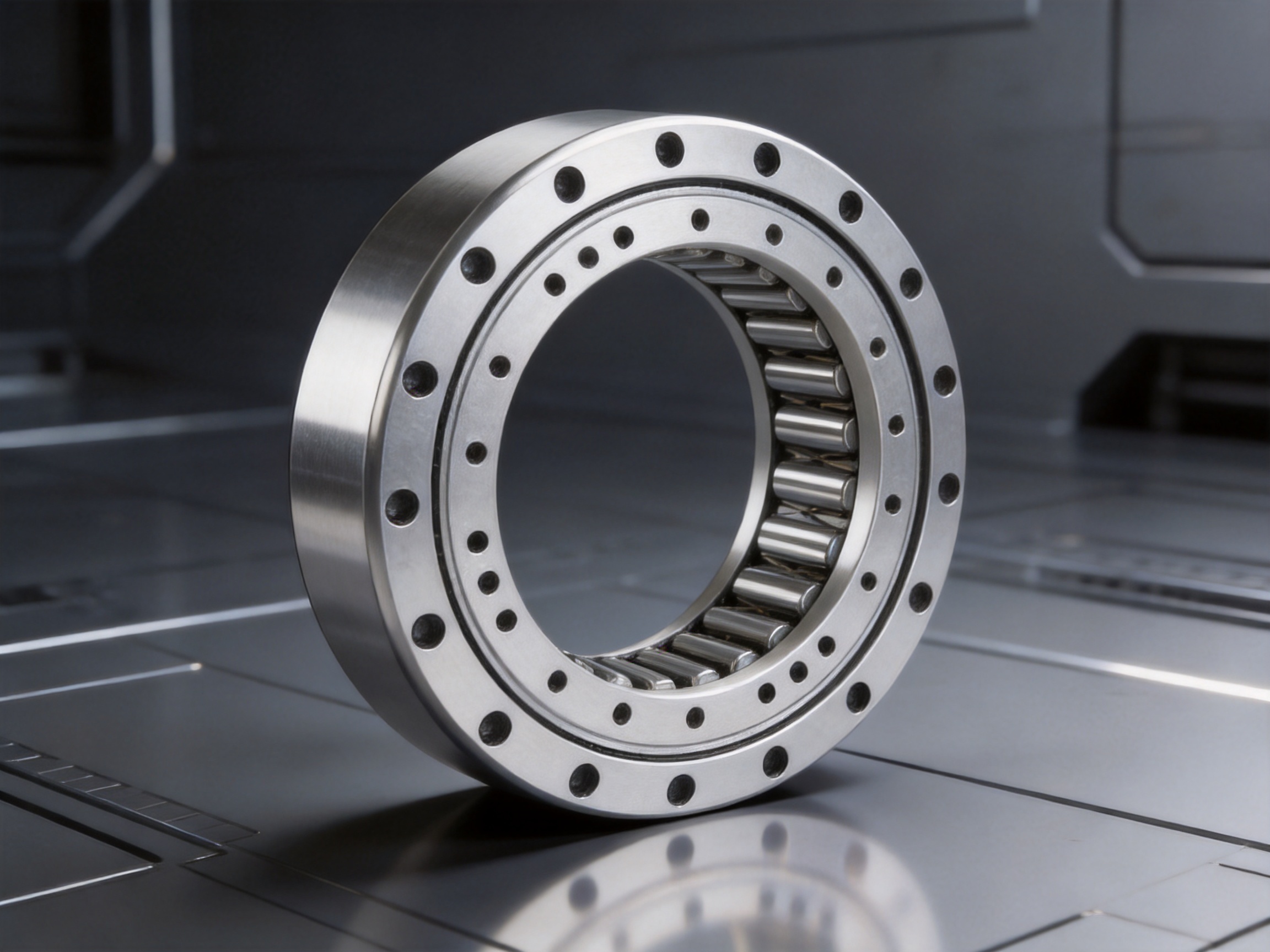
Robot bearings must be compact, rigid, accurate, and durable. A robot joint often operates under repeated acceleration, deceleration, reversing motion, and combined loading. The RW crossed roller bearing is well suited for this environment because it can support radial, axial, and moment loads in a single compact bearing.
In robot arms, bearing stiffness directly affects end-effector accuracy. When the bearing deflects under load, the robot may lose positioning precision. The RW series helps reduce this problem through its crossed roller structure and integral-ring design. It can be used in robot wrists, joint output sections, rotary axes, inspection robots, welding robots, handling robots, and collaborative automation systems where compactness and reliability are important.
CNC machines require accurate and stable rotating components. Rotary tables, indexing heads, tool changers, and precision feed mechanisms all depend on bearing quality. The RW series can improve machining accuracy by offering high rigidity and stable rotation under combined load conditions.
In a CNC rotary table, the workpiece may impose axial load, radial load, and moment load at the same time. A bearing with insufficient stiffness can cause vibration, positioning error, or poor surface finish. The RW bearing’s compact design and high load rating make it useful for machine builders seeking accurate rotation without excessive structural complexity.
Measurement systems require smooth, repeatable, and low-error motion. Whether used in coordinate measuring machines, optical inspection platforms, or laboratory rotary stages, the bearing must minimize runout and support stable positioning. The integrated structure of the RW bearing contributes to high rotational accuracy and repeatability.
Because mounting holes are included on both rings, measurement equipment designers can create compact rotary stages with fewer components. This helps reduce accumulated tolerances and improves the consistency of measurement results.
Semiconductor manufacturing and electronics assembly often require precise motion in compact machines. Wafer handling, inspection platforms, alignment tables, and vacuum-compatible motion modules may all benefit from crossed roller bearing technology. Although application-specific material, lubrication, and cleanliness requirements must be considered, the RW concept offers an excellent foundation for high-precision rotary motion.
Automated production lines frequently use rotary indexing tables to move parts between stations. These tables must carry workpieces, resist off-center loads, and index accurately thousands or millions of times. The RW crossed roller bearing is suitable because it provides moment stiffness and high load capacity while simplifying assembly through direct mounting.
For line builders, this can reduce design complexity. Instead of arranging separate radial and axial bearings, one RW bearing can often serve as the central rotary support. This saves space, improves rigidity, and supports faster production of complete automation modules.
A precision bearing cannot achieve high performance through design alone. It also requires advanced manufacturing processes, accurate process control, reliable inspection, and consistent assembly methods. UKL Bearing Manufacturing Co., Ltd. integrates research, production, and international distribution, providing a complete manufacturing foundation for products such as the RW high-performance crossed roller bearing.
The company operates as an integrated manufacturer and trader with a modernized factory. Its production processes cover forging, turning, heat treatment, grinding, assembly, and packaging. These stages are essential for precision bearing production because each stage affects final accuracy, load capacity, durability, and service reliability.
Forging is one of the first critical stages in bearing manufacturing. Proper forging improves material density, refines grain flow, and prepares the bearing rings for subsequent machining. High-quality forged blanks help provide the strength and fatigue resistance required for precision bearings operating under heavy and repeated loads.
For crossed roller bearings, ring stability is especially important. The raceway must remain accurate under load, during assembly, and throughout service life. A strong forging foundation helps reduce the risk of dimensional instability and supports long-term reliability.
After forging, turning creates the basic geometry of the bearing rings. This includes the bore, outside diameter, faces, shoulders, and preliminary raceway shapes. Precision turning must control concentricity, parallelism, and allowance for later grinding. If turning accuracy is poor, later processes must remove excessive material, which may reduce efficiency and increase thermal stress.
In RW bearings, the integrated inner and outer rings require careful machining because the mounting holes and raceway geometry must work together. The turning stage establishes the mechanical foundation that supports subsequent heat treatment and grinding precision.
Heat treatment is essential for bearing performance. It gives the raceways and rolling elements the hardness, wear resistance, and fatigue strength needed for long service life. However, heat treatment also creates the possibility of distortion. For precision crossed roller bearings, distortion control is crucial because ring deformation can affect final accuracy.
Advanced heat treatment processes require controlled temperature, soaking time, quenching method, and tempering conditions. Consistent heat treatment supports stable hardness and helps ensure that the bearing can withstand repeated stress cycles in demanding applications.
Grinding is one of the most important stages for high-precision bearings. It determines final raceway geometry, surface finish, bore accuracy, outside diameter accuracy, and width consistency. For RW crossed roller bearings, grinding quality directly affects rotational accuracy, preload stability, friction torque, vibration, and operating smoothness.
High-precision grinding enables the integrated rings to achieve the geometric accuracy required by robotics and automation systems. The improved machining precision of the RW product is a major reason it can meet high rotational accuracy requirements.
During assembly, rollers, separators or cages, seals if applicable, and rings must be matched and assembled with care. Roller size variation, cleanliness, lubrication amount, and preload control all affect final performance. Precision assembly ensures that the crossed roller arrangement functions as intended and that the bearing delivers smooth motion.
Inspection is equally important. Dimensional checks, rotational torque checks, runout measurement, and visual inspection help confirm that each bearing meets application expectations. For customers using bearings in robotics or precision equipment, reliable inspection reduces risk and supports stable machine performance.
Precision bearings must be protected during storage and transportation. Packaging prevents corrosion, contamination, impact damage, and mishandling. For international customers, reliable packaging is a practical but important part of product quality. The company’s experience in OEM and ODM export supports global delivery and customer-specific requirements.
Technology development is a central strength behind the RW bearing and related precision products. The company’s R&D team focuses on high-precision crossed roller bearings, dual-direction thrust angular contact ball bearings, and other products used in CNC machines, robotics, and intelligent automation systems.
R&D capability matters because bearing applications are becoming more demanding. Robots are becoming lighter and faster. CNC machines require better accuracy and higher productivity. Automation equipment must run longer with less maintenance. These trends require bearings that combine load capacity, compactness, high accuracy, and reliable service life.
Through precision design and digital production control, the company can align product structure with customer application requirements. For example, mounting-hole patterns, ring dimensions, shoulder dimensions, and load ratings must be considered together. A bearing is not simply a catalog item; it is part of a mechanical system. Understanding system needs allows better product selection and, when required, customized solutions.
OEM and ODM experience also supports international equipment builders. Customers may need bearings adapted to specific installation spaces, accuracy targets, lubrication conditions, or packaging requirements. A manufacturer with R&D and production capability can respond more effectively than a trading-only supplier.
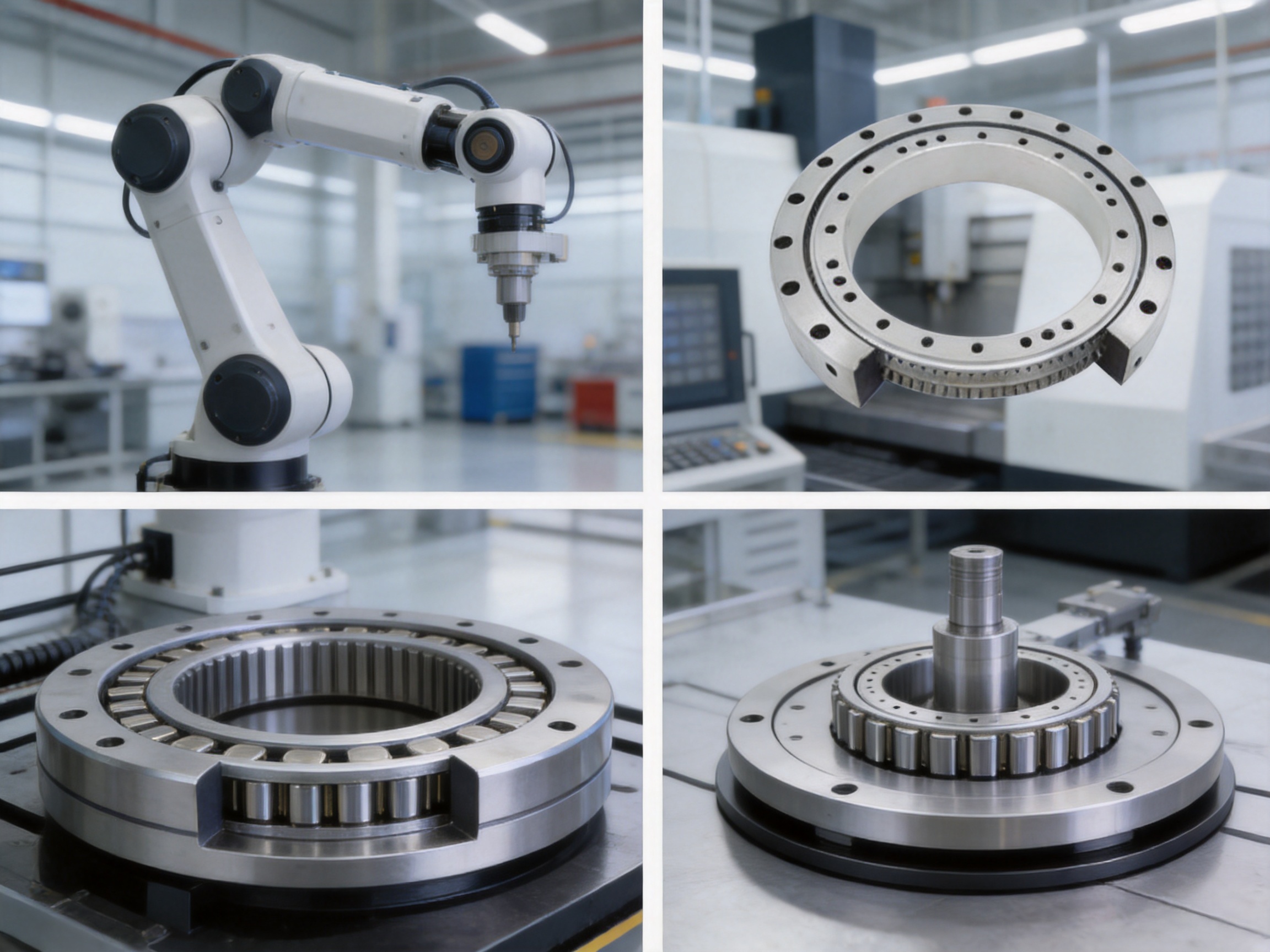
Many rotating systems fail to maintain accuracy because moment load causes deflection. A bearing with low moment stiffness may appear acceptable under simple radial load but perform poorly when the load is offset from the rotational center. The RW crossed roller structure is designed to resist these combined loads, making it particularly valuable for robot joints and rotary tables.
By handling radial, axial, and moment loads in one unit, the RW bearing can reduce the number of bearing components required. This simplifies the mechanical structure, lowers the chance of assembly error, and can improve design compactness. Reduced component count also helps maintenance teams because there are fewer parts to inspect and replace.
Direct mounting holes improve assembly repeatability. When every bearing is installed through a standardized hole pattern, production workers can follow consistent procedures. This is especially important in batch production of robots, rotary modules, and automated equipment. Repeatable assembly supports repeatable product performance.
Machine rigidity depends not only on the bearing but also on how the bearing is connected to the surrounding structure. The RW bearing’s direct mounting helps create a rigid connection between the bearing rings and the machine components. This can improve the stiffness of the whole rotating axis compared with designs that use intermediate adapters or loosely fitted components.
Compact bearing solutions are increasingly important because equipment builders want lighter machines with smaller footprints. The RW series supports miniaturization by combining high rigidity with compact dimensions. In robotics, reduced joint size and weight can improve dynamic response. In automation machines, compact rotary modules can help create more efficient layouts.
Choosing the correct RW bearing requires more than matching the bore diameter. Engineers should consider load type, load magnitude, required accuracy, operating speed, duty cycle, mounting structure, lubrication, environmental conditions, and assembly method.
The basic dynamic load rating helps estimate fatigue life under rotating load conditions. The basic static load rating helps evaluate the bearing’s ability to withstand stationary or low-speed loads without permanent deformation. Moment load should also be considered carefully, especially for applications with offset mass or external forces.
Mounting surface accuracy is another important factor. Even a high-precision bearing can perform poorly if mounted on an uneven, soft, or distorted surface. Designers should ensure adequate flatness, rigidity, and bolt tightening control. The optimized mounting-hole design of the RW bearing helps reduce deformation, but good engineering practice remains necessary.
Lubrication should match operating conditions. Low-speed positioning stages may prioritize smooth torque and contamination control. High-cycle automation equipment may require durable grease and planned maintenance intervals. Clean environments may require special lubrication choices. Customers should coordinate lubrication selection with operating temperature, speed, load, and cleanliness requirements.
Correct installation is essential for extracting the full performance of the RW high-performance crossed roller bearing. The bearing should be handled carefully to avoid impact, contamination, or corrosion. Mounting surfaces should be cleaned before assembly, and burrs or foreign particles should be removed.
Bolts should be tightened gradually and evenly using a cross-sequence pattern. This helps distribute clamping force and reduce local deformation. A torque wrench should be used according to the equipment design requirements. Over-tightening can deform the rings, while under-tightening can allow micro-movement and reduce rigidity.
The mounting structure should support both rings properly. If one ring is fixed to a weak or uneven component, the bearing may experience distortion during operation. Shoulder dimensions and support surfaces should be designed to provide stable contact. After installation, rotational torque and runout should be checked if the application requires high precision.
In high-accuracy machinery, it is often helpful to test the complete rotating module after bearing installation. This confirms that the bearing, housing, bolts, shaft, and surrounding structure function together as intended. Such testing can identify assembly issues before the machine enters service.
The RW high-performance crossed roller bearing is competitive because it addresses both engineering performance and manufacturing practicality. Many bearings offer one advantage but create another problem. A conventional bearing may be inexpensive but lack stiffness. A complex precision arrangement may provide accuracy but require difficult assembly. A large rotary bearing may carry load but occupy too much space. The RW design balances these requirements.
Its integral inner and outer rings provide stability and high rotational accuracy. Its mounting holes reduce assembly time and simplify machine design. Its crossed roller arrangement supports combined loads in a compact space. Its optimized hole relationship helps reduce deformation during installation. Its size range allows use in both compact and heavy-duty precision equipment.
Compared with ordinary crossed roller bearings without integrated mounting holes, the RW series can reduce the need for additional fixing structures. Compared with split-ring bearings, it offers stronger ring continuity and greater resistance to installation-related distortion. Compared with multiple-bearing arrangements, it can reduce component count and tolerance stack-up. Compared with general-purpose bearings, it offers a higher level of rigidity and accuracy for demanding automation applications.
These advantages make the product suitable for manufacturers who want to build higher-value machinery. In competitive markets, equipment builders must reduce assembly cost while improving technical performance. A bearing that simplifies design and improves motion quality can create value throughout the product lifecycle.
UKL Bearing Manufacturing Co., Ltd. has developed as a bearing manufacturer and engineering service provider with experience in OEM and ODM export. The company serves customers in regions including the United States, Italy, Germany, Poland, South Africa, Egypt, India, and other markets. This international experience supports a better understanding of different technical standards, documentation expectations, packaging needs, and after-sales service requirements.
The company’s production capacity of 10,000 to 50,000 units per month supports both regular supply and project-based demand. Multiple production lines covering key manufacturing stages help maintain process consistency. For industrial customers, stable production capacity is important because bearing shortages can delay complete machine delivery.
The company also emphasizes multilingual service, technical response, installation guidance, and after-sales support. Precision bearings are often selected for demanding applications, and customers may need assistance with model selection, mounting method, lubrication, troubleshooting, or replacement planning. A manufacturer that provides technical communication can reduce customer risk and improve application success.
Sustainability is another part of the company’s long-term approach. Environmentally responsible processes, material recycling, and energy optimization help reduce the environmental footprint of manufacturing. In global supply chains, sustainability is becoming increasingly important for OEMs and industrial buyers. A bearing supplier that recognizes this trend can better support customers with modern procurement requirements.
OEM customers need bearings that are reliable, consistent, and easy to integrate. The RW series supports these needs because its structure reduces design complexity and improves assembly efficiency. When an OEM builds hundreds or thousands of machines, even small improvements in assembly time and reliability can create significant value.
Consistency is also critical. If bearing performance varies from batch to batch, machine calibration becomes more difficult. The company’s integrated manufacturing process, from forging to packaging, supports better control over quality. Digital production control and precision inspection further contribute to stable output.
For custom projects, OEM and ODM capability allows the manufacturer to participate in the design stage. This can help optimize bearing selection before tooling, housings, or machine frames are finalized. Early engineering communication can prevent later design changes and reduce development cost.
In industries such as robotics and intelligent automation, product cycles are fast and technical demands are rising. A bearing supplier with R&D capability, manufacturing control, and international service experience can become a strategic partner rather than a simple component vendor.
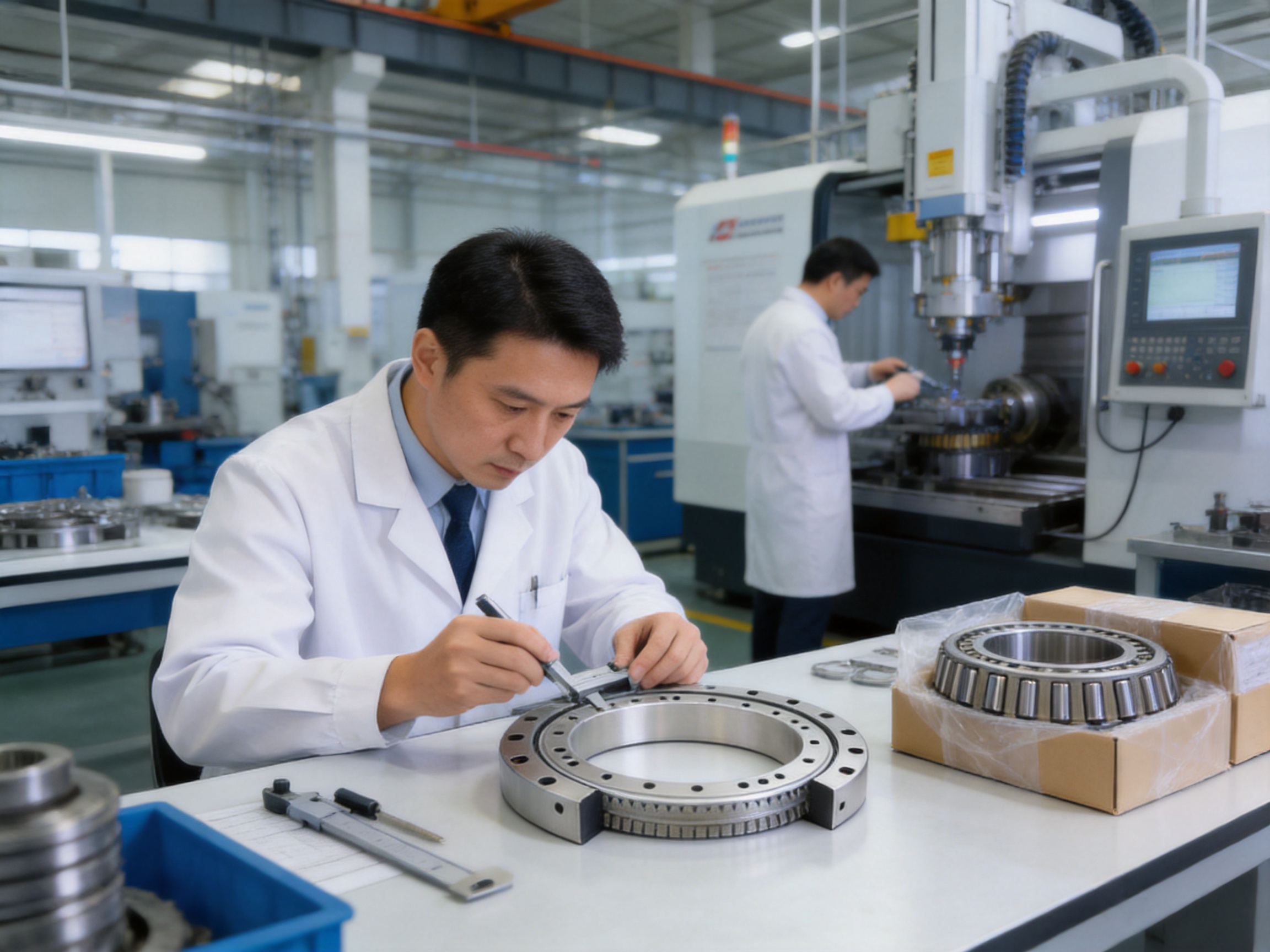
The service life of a crossed roller bearing depends on load, speed, lubrication, installation quality, contamination control, operating temperature, vibration, and maintenance practices. Although the RW series is engineered for high performance, proper operation is necessary to achieve long-term reliability.
Users should avoid shock loading beyond the bearing’s design limits. Sudden impact can damage raceways or rollers, especially in precision applications. Equipment should also be protected from contamination. Dust, metal particles, and moisture can degrade lubrication and accelerate wear.
Lubrication should be checked according to application requirements. Some precision mechanisms operate for long periods at low speed and may need grease selected for smooth torque. Other automation systems run frequent cycles and may require maintenance intervals based on operating hours. If the bearing is used in special environments, such as cleanrooms or high-temperature equipment, lubrication should be selected accordingly.
Monitoring can improve reliability. Unusual noise, increased torque, vibration, or reduced positioning accuracy may indicate installation issues, contamination, lubrication degradation, or overload. Early detection allows corrective action before major equipment failure occurs.
The main advantage is its combination of compact size, high rigidity, high rotational accuracy, and simplified installation. The bearing uses integral inner and outer rings with mounting holes on both rings, allowing direct fixing while supporting radial, axial, and moment loads in one unit.
Integral rings provide better structural continuity than split-ring designs. This helps maintain raceway geometry, improves rotational stability, reduces sensitivity to installation deformation, and supports high precision in demanding applications.
The crossed roller arrangement allows adjacent rollers to support loads in different directions. This enables the bearing to handle radial loads, axial loads from both directions, and overturning moments at the same time, making it suitable for robot joints, rotary tables, and precision positioning systems.
Typical applications include industrial robots, CNC rotary tables, indexing systems, precision measuring equipment, semiconductor equipment, automation turntables, medical equipment, and high-accuracy rotary modules.
Both the inner ring and outer ring have machined mounting holes. This allows the bearing to be bolted directly to the machine structure, reducing the need for additional fixing plates, spacers, or complicated adjustment components.
Compared with standard bearing combinations, the RW series can reduce component count, improve rigidity, save axial space, and simplify assembly. Compared with some split-ring crossed roller bearings, the integrated ring structure can provide better stability and accuracy.
Engineers should evaluate bore size, outside diameter, width, dynamic load rating, static load rating, moment load, operating speed, accuracy requirements, mounting structure, lubrication, and environmental conditions. The complete mechanical system should be considered, not only the bearing dimensions.
A precision bearing can be distorted if mounted on an uneven or weak surface. Flat, rigid, and clean mounting surfaces help preserve bearing accuracy. Even though the RW design helps reduce installation deformation, good mounting practice remains essential.
Key processes include forging, turning, heat treatment, grinding, assembly, inspection, and packaging. Each process affects final accuracy, durability, load capacity, and service reliability.
Yes. The product is suitable for OEM equipment builders, and the manufacturer’s R&D, production, and export experience can support project-based bearing selection, technical communication, and application guidance.
The RW high-performance crossed roller bearing is a strong solution for precision rotary motion in robotics, CNC machinery, automation equipment, measuring systems, and other high-value industrial applications. Its integrated inner and outer rings provide structural stability. Its crossed roller arrangement supports complex loads in a compact space. Its mounting holes on both rings simplify installation and reduce assembly time. Its optimized mounting-hole geometry helps limit rolling surface deformation, supporting stable rotation after installation.
Beyond the product design, manufacturing strength plays a decisive role. With processes covering forging, turning, heat treatment, grinding, assembly, and packaging, supported by R&D capability and international OEM and ODM experience, the company behind the product offers more than a catalog bearing. It provides a precision motion solution supported by production capacity, technical service, and global supply experience.
For equipment manufacturers seeking higher rigidity, improved rotational accuracy, reduced assembly complexity, and dependable performance, the RW series deserves careful consideration. It meets the needs of modern intelligent manufacturing, where every component must contribute to accuracy, efficiency, and long-term reliability.
1. Harris, T. A., and Kotzalas, M. N. Rolling Bearing Analysis: Essential Concepts of Bearing Technology. CRC Press.
2. ISO 281. Rolling Bearings: Dynamic Load Ratings and Rating Life. International Organization for Standardization.
3. ISO 76. Rolling Bearings: Static Load Ratings. International Organization for Standardization.
4. Brändlein, J., Eschmann, P., Hasbargen, L., and Weigand, K. Ball and Roller Bearings: Theory, Design and Application. Wiley.
5. Shigley, J. E., Budynas, R. G., and Nisbett, J. K. Mechanical Engineering Design. McGraw-Hill Education.
6. Product technical data for RW high-performance crossed roller bearings with integral inner and outer rings and mounting holes.
Product Categories
Contact Us

Jane@ukl-bearing.com
Jenny@ukl-bearing.com
Andy@ukl-bearing.com
Ivy@ukl-bearing.com

+86-510- 88763239
+86-15371057968

No.1 Hehuan Road, Hudai Town, Binhu District, Wuxi City.
Ready to Begin?
Get in Touch

Now!
UKL BEARING
 English
 Español
 русский