Content
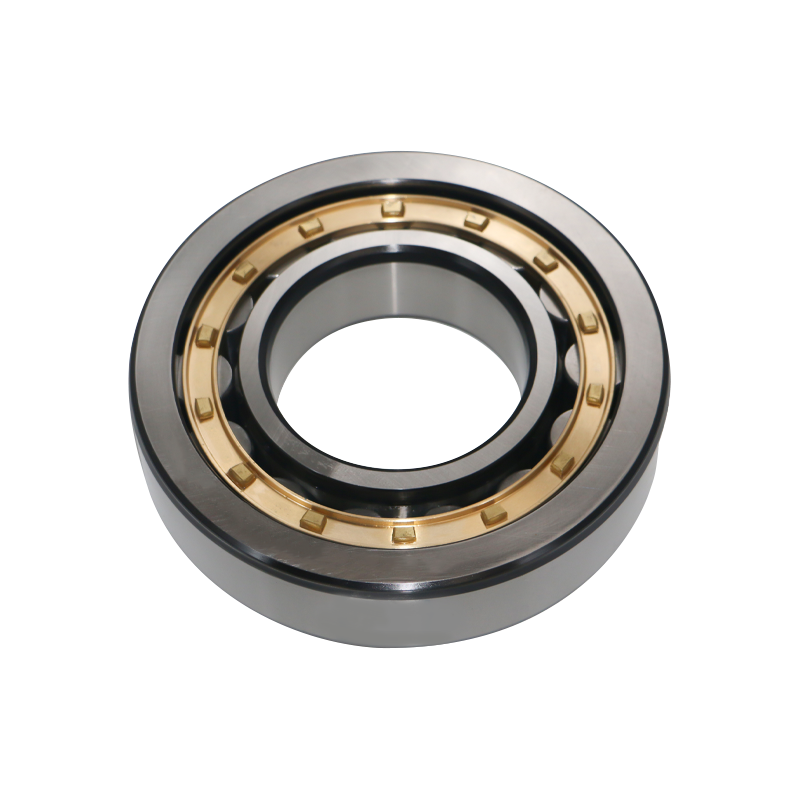
In modern automation, every controlled movement depends on the quality of the bearing system behind it. Precision rotary tables, robot joints, medical scanners, measuring instruments, machine tool indexing units, semiconductor handling devices, and compact positioning mechanisms all require bearings that can carry complex loads while maintaining smooth, repeatable, and highly accurate rotation. The RE Cross Cylindrical Roller Bearing is designed for exactly these demanding conditions.
This bearing type belongs to the crossed roller bearing family. Its defining structure is a split inner ring combined with a one-piece outer ring, making it especially suitable for applications where the outer ring must rotate with high accuracy. Inside the bearing, cylindrical rollers are arranged alternately at right angles, allowing one compact bearing to support radial loads, axial loads, and overturning moments at the same time. This multi-directional load capacity is a major advantage over many conventional bearing arrangements that require two or more bearings to achieve similar performance.
Compared with standard deep groove ball bearings, paired angular contact bearings, or traditional roller bearing assemblies, the RE-type crossed cylindrical roller bearing offers a more compact envelope, higher rigidity, better moment load resistance, and excellent rotational accuracy. Its thin-walled design helps reduce machine weight, while its preloaded structure improves stability during precision movement. For industries moving toward lighter, faster, and more intelligent equipment, these characteristics provide a strong engineering advantage.
Ukl Bearing Manufacturing Co.,Ltd manufactures precision bearings for global industrial applications, integrating research and development, production, quality control, and international service. With modern production lines covering forging, turning, heat treatment, grinding, assembly, inspection, and packaging, the company is able to support OEM and ODM requirements for high-precision cross roller bearings and related bearing solutions. The RE Cross Cylindrical Roller Bearing reflects this manufacturing strength through its dimensional consistency, stable preload control, and reliable performance in demanding machinery.
RE Cross Cylindrical Roller Bearing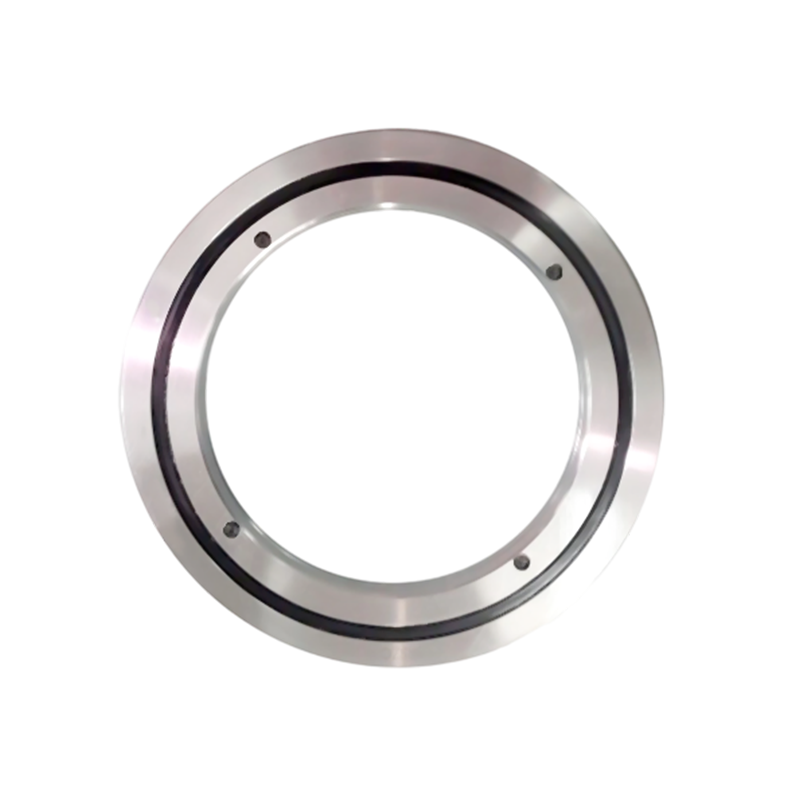
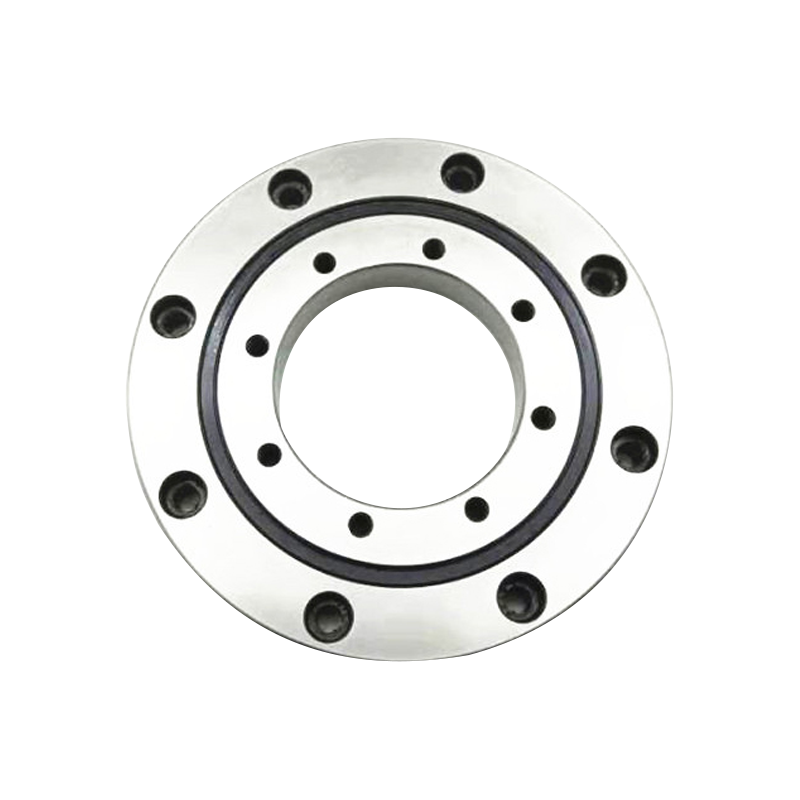
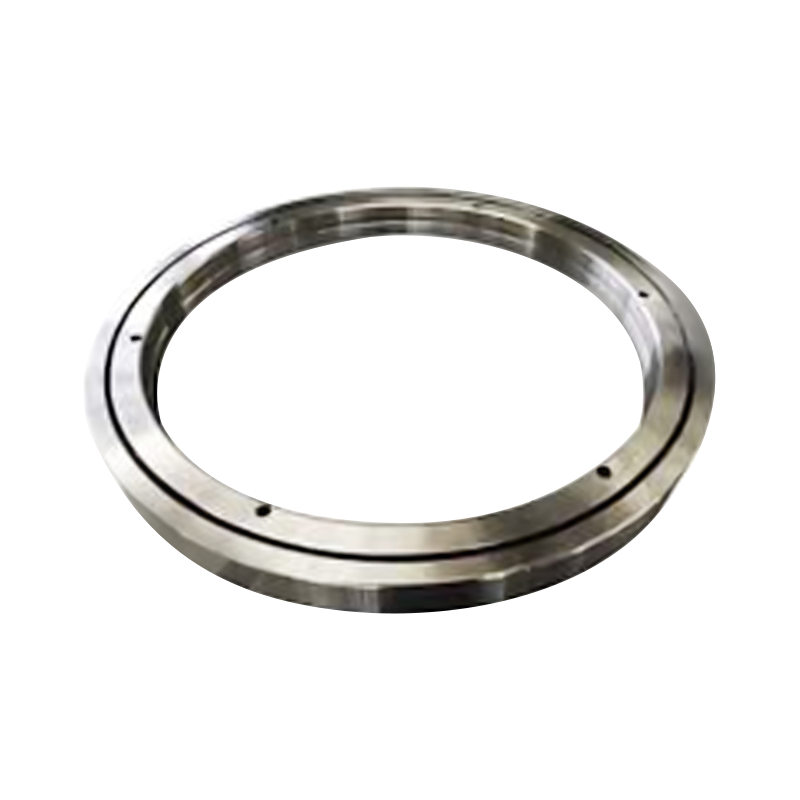
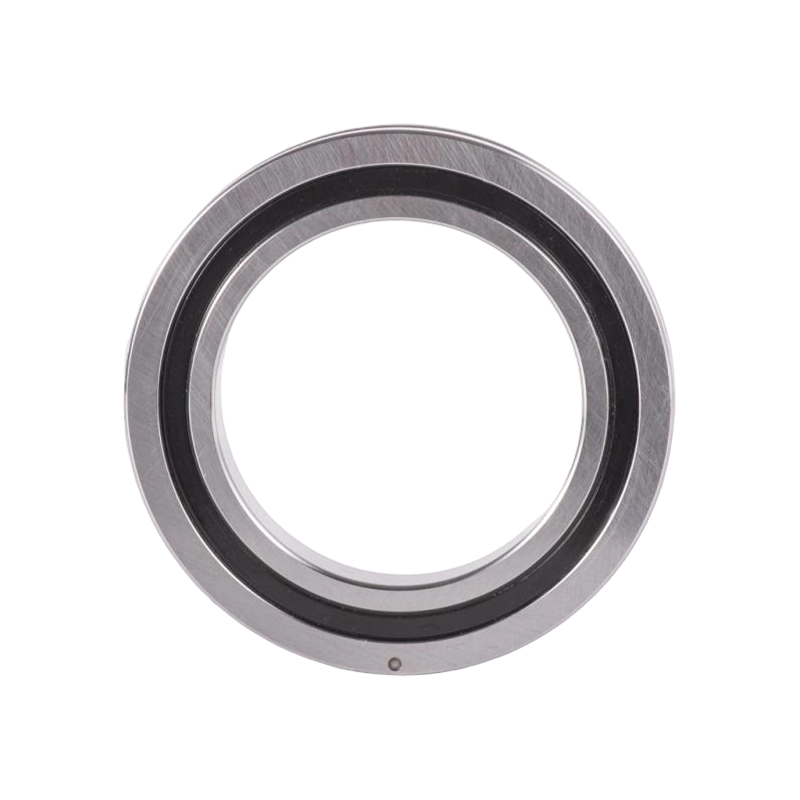
The RE Cross Cylindrical Roller Bearing is a high-precision crossed roller bearing with a split inner ring and an integral outer ring. This structure is different from the RB type, which is typically known for its split outer ring and integral inner ring configuration. The RE design is particularly useful when the outer ring rotates and the application demands stable outer-ring running accuracy. Because its main dimensions correspond closely to RB-type crossed roller bearings, engineers can often evaluate RE-type bearings in compact machinery layouts where space and accuracy are key priorities.
The internal rolling elements are cylindrical rollers, not balls. These rollers have line contact with the raceways, which gives the bearing higher rigidity and load capacity than point-contact ball bearings of similar size. The rollers are arranged in a crossed pattern, usually alternating at 90 degrees. This arrangement allows the bearing to handle loads from multiple directions within a single bearing unit. In practical terms, it can support radial force, axial force in both directions, and tilting moment simultaneously.
The split inner ring allows assembly of the crossed roller structure, while the one-piece outer ring contributes to stable rotational accuracy. Once the split ring is secured with bolts and nuts, the bearing is intended to be installed as a complete unit. Disassembling it arbitrarily can disturb the internal spacer arrangement, preload condition, and roller contact geometry. For this reason, correct handling and installation are important parts of achieving the full performance potential of the bearing.
The RE-type bearing is commonly selected for robot arm rotary joints, precision rotary tables, medical devices, measuring instruments, optical positioning equipment, and other mechanisms where compact size must be combined with high stiffness. These are environments where small errors can become large performance problems. By delivering stable rotation at the micrometer level, the RE bearing helps equipment designers achieve smoother motion, better positioning repeatability, and longer service life.
The most important advantage of the RE Cross Cylindrical Roller Bearing is its ability to combine several bearing functions into one compact component. A conventional design might require two angular contact ball bearings or a combination of radial and thrust bearings to resist complex loads. Such arrangements increase axial space, add assembly complexity, and introduce additional tolerance accumulation. The crossed roller design simplifies this by integrating multi-directional load support into one bearing.
The one-piece outer ring is a key feature. Since the RE type is intended for applications requiring high outer ring rotational accuracy, the integral outer ring helps maintain continuous raceway geometry. This improves running stability and reduces the risk of uneven rotation that may occur when a rotating ring is split. For turntables, robot wrists, inspection devices, and measuring instruments, this structural advantage helps maintain smooth motion under load.
Another major advantage is preloaded rigidity. Bearings in this series are supplied with optimized preload. Proper preload removes internal clearance and improves stiffness, which is essential for applications that must resist vibration, external force changes, and moment loads. High rigidity also reduces micro-movement between components, improving positioning accuracy and reducing wear caused by repeated small oscillations.
The thin-walled and compact design is also highly valuable. Many modern machines are designed with strict space limits. Robot joints must be slim and lightweight. Medical devices must be compact and quiet. Measuring instruments must be stable without excessive mass. The RE bearing supports these design trends by providing high performance within a reduced cross-section. This can shorten shaft length, reduce housing size, lower machining costs, and contribute to more efficient equipment architecture.
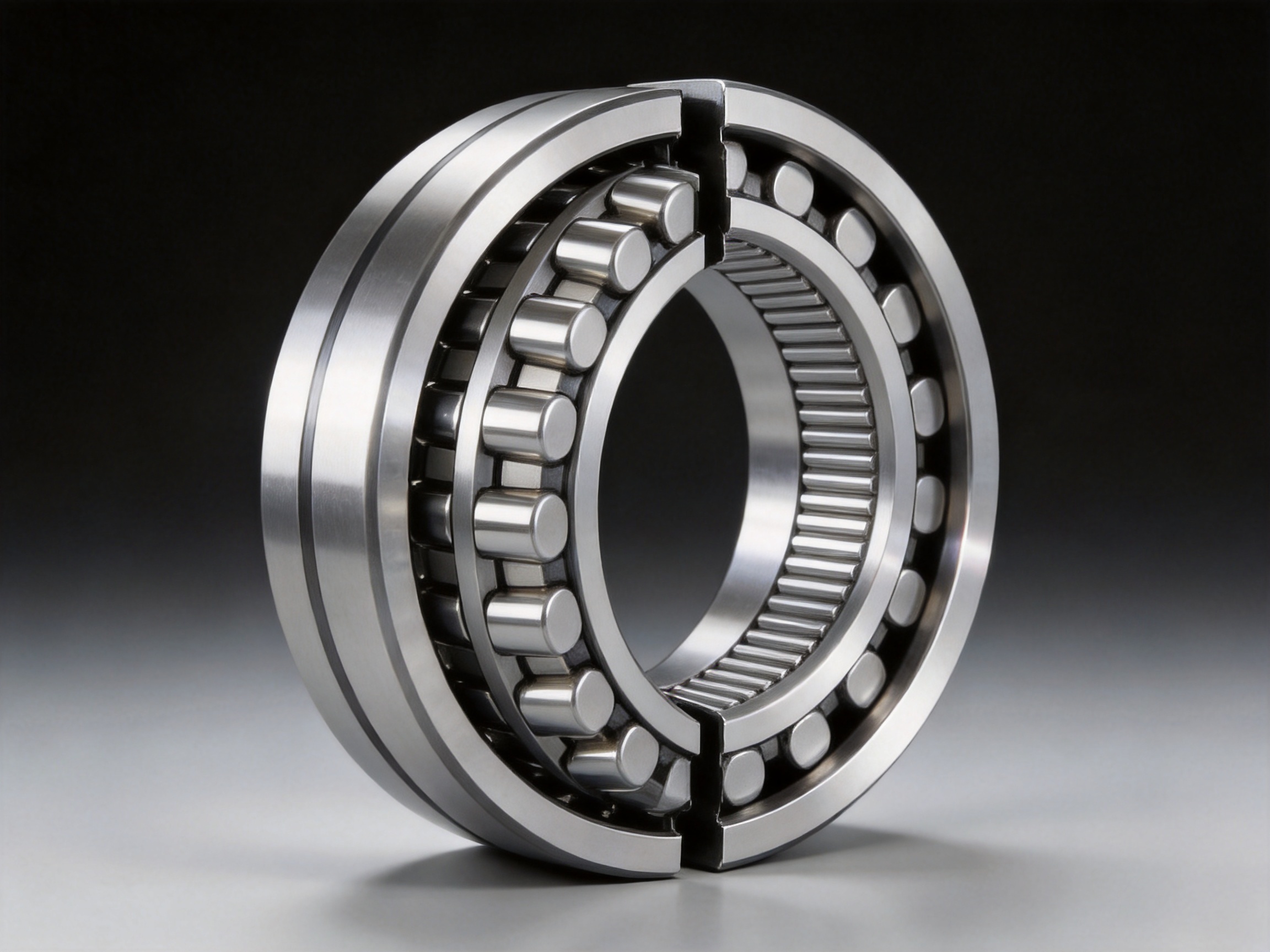
High precision is one of the primary selling points of the RE Cross Cylindrical Roller Bearing. Accuracy can reach P4 and P2 grades according to application requirements and production specification. Such precision levels are important for equipment that depends on controlled angular indexing, stable circular runout, and repeatable positioning. In robotics and precision automation, a small bearing error may be amplified at the tool point, so bearing accuracy directly influences final machine performance.
The bearing also provides high load capacity. Because cylindrical rollers have line contact, they distribute load over a larger contact area than balls. This makes the bearing more capable of supporting heavy radial loads and moment loads. The crossed arrangement further allows axial load support in both directions. For applications such as rotary tables, this eliminates the need for separate thrust bearing support and simplifies mechanical design.
Low starting torque is another important operating advantage. The use of separators, including nylon separators in certain configurations, can reduce roller skewing and friction. Lower moment of inertia and lower starting torque allow smoother motion control, especially in servo-driven systems. For angular indexing, measuring equipment, or robotic axes, smoother startup and stopping reduce vibration and improve positioning stability.
Thermal stability is also important. The compact bearing arrangement can reduce shaft length and limit geometry changes caused by thermal expansion. In precision equipment, temperature changes can affect alignment, preload, and runout. By using a compact bearing with controlled internal geometry, designers can reduce some of the mechanical sensitivity associated with longer shafts and multi-bearing systems.
Impact resistance and surface wear resistance can be improved through the use of carburized steel and proper heat treatment. In industrial applications, bearings may face shock loads, repeated starts and stops, and complex operating cycles. A bearing material system with a hard wear-resistant surface and a tough core helps resist surface fatigue while maintaining structural durability.
When engineers compare bearing options, they often evaluate load capacity, rigidity, accuracy, size, assembly complexity, and total cost. The RE Cross Cylindrical Roller Bearing performs strongly across these categories. It is not merely a replacement for a standard bearing; it is a design solution for high-precision rotary systems.
Compared with deep groove ball bearings, the RE bearing has much greater moment load capability and rigidity. Deep groove ball bearings are excellent for many general-purpose applications, but they are not optimized for high overturning moments or ultra-precise rotary positioning. Their point contact limits stiffness under heavy or complex loads. In contrast, crossed cylindrical rollers create a more rigid support structure in a compact space.
Compared with paired angular contact ball bearings, the RE bearing often saves space and simplifies assembly. A matched pair of angular contact bearings can support axial and radial loads, but it requires careful arrangement, preload control, spacer matching, shaft machining, and housing accuracy. The crossed roller bearing provides multi-directional load support in a single unit, reducing assembly steps and potential tolerance errors.
Compared with tapered roller bearing assemblies, the RE bearing is usually better suited for compact precision equipment requiring smooth low-speed or indexing motion. Tapered roller bearings can carry high loads, but they often require more axial space and careful preload adjustment during installation. The RE bearing arrives with controlled preload, making it easier to achieve repeatable precision when installed correctly.
Compared with ordinary cross roller bearings with a split outer ring, the RE structure provides a specific advantage when the outer ring rotates. The integral outer ring supports more stable rotational accuracy, which is particularly important in applications where the outer ring is connected to the moving component. This makes the RE type a strong choice for outer-ring rotation mechanisms.
| Evaluation Item | RE Cross Cylindrical Roller Bearing | Conventional Alternatives | Practical Advantage |
| Load Direction | Radial, axial, and overturning moment loads in one bearing | Often requires multiple bearings | Simpler structure and reduced component count |
| Rigidity | High rigidity through crossed cylindrical rollers and preload | Lower rigidity in many ball bearing arrangements | Better positioning stability and vibration resistance |
| Space Efficiency | Thin-walled compact design | Larger axial space may be needed | Shorter shaft length and smaller housing design |
| Outer Ring Rotation | Integral outer ring supports high rotational accuracy | Split rotating rings may reduce stability | Improved running accuracy for rotary platforms |
| Assembly | Preloaded bearing unit | Preload may require adjustment and matching | Reduced assembly time and fewer adjustment errors |
| Precision Applications | Suitable for P4 and P2 accuracy requirements | General-purpose grades may be insufficient | Better fit for robotics, measuring instruments, and medical equipment |
The RE Cross Cylindrical Roller Bearing series covers a variety of dimensions suitable for compact and medium-sized precision mechanisms. Typical models include small inner diameters such as 20 mm and 25 mm, as well as larger sizes above 100 mm. The product tables include key values such as inner diameter, outside diameter, roller pitch diameter, bearing height, chamfer, shoulder dimensions, radial dynamic load rating, radial static load rating, and weight.
For example, the RE 2008 model has a 20 mm inner diameter, 36 mm outside diameter, 29 mm roller pitch diameter, and 8 mm height, with a compact weight of approximately 0.04 kg. This type is suitable for small precision mechanisms where weight and space are critical. At the larger end of the listed RE range, the RE 13025 model has a 130 mm inner diameter, 190 mm outside diameter, 162 mm roller pitch diameter, and 25 mm height, with a higher radial load rating and a weight of approximately 2.82 kg.
These parameter options allow designers to choose a bearing according to load, stiffness, envelope size, and machine layout. Because RE-type bearings share main dimensions with RB-type crossed roller bearings, they can be evaluated in applications where outer ring rotational accuracy is the deciding factor. This dimensional compatibility can help engineers compare structural concepts without completely redesigning the equipment envelope.
| Model | Inner Diameter d mm | Outside Diameter D mm | Height B mm | Dynamic Load Rating Cr kN | Static Load Rating Cor kN | Weight kg |
| RE 2008 | 20 | 36 | 8 | 3.23 | 3.10 | 0.04 |
| RE 5013 | 50 | 80 | 13 | 16.7 | 20.9 | 0.27 |
| RE 8016 | 80 | 120 | 16 | 30.1 | 42.1 | 0.70 |
| RE 10020 | 100 | 150 | 20 | 33.1 | 50.9 | 1.45 |
| RE 12025 | 120 | 180 | 25 | 66.9 | 100 | 2.62 |
| RE 13025 | 130 | 190 | 25 | 69.5 | 107 | 2.82 |
Robotic systems are among the most important application areas for RE Cross Cylindrical Roller Bearings. Robot joints require compact bearings capable of carrying radial, axial, and moment loads while maintaining smooth rotation. A robot arm may move repeatedly through millions of cycles, and every joint must provide both strength and accuracy. The crossed roller structure is highly suitable because it offers high rigidity in a compact cross-section.
In robot wrists and rotary joints, the bearing must resist external loads from tooling, workpieces, acceleration, deceleration, and impact. A conventional bearing arrangement may need multiple bearings to handle these forces, increasing joint length and weight. The RE bearing can help reduce joint size while improving moment stiffness. This contributes to faster response, lower energy consumption, and better end-effector accuracy.
Automation equipment also benefits from the bearing’s smooth indexing behavior. Production lines increasingly use rotary positioning stations, inspection turntables, pick-and-place arms, and compact servo axes. These systems need repeatable angular movement with low runout and minimal backlash. The preloaded RE bearing supports this requirement by reducing internal clearance and improving resistance to deflection.
For collaborative robots and intelligent automation systems, low friction and stable movement are especially important. Operators expect quiet, controlled, and safe motion. A bearing that reduces starting torque and maintains consistent rotation can improve the overall feel and control response of the robot. It also supports more accurate sensor feedback because mechanical irregularity is reduced.
Precision rotary tables often require a bearing that can carry heavy radial and axial loads while maintaining excellent rotational accuracy. These tables are used in machine tools, inspection systems, laser processing, electronic assembly, and optical measurement. The bearing inside the rotary table determines runout, stiffness, and the ability to hold position under cutting or measuring forces.
The RE Cross Cylindrical Roller Bearing is well suited for rotary tables where the outer ring rotates. The integral outer ring helps provide stable rotation, while the crossed rollers resist tilting moments generated by offset loads. This is especially important when the workpiece is not centered or when external force is applied during machining or inspection.
In CNC-related equipment, rigidity is directly connected to machining accuracy. If the bearing deflects under load, the tool path may deviate, creating dimensional errors or poor surface finish. The preloaded crossed roller design helps maintain table stiffness and reduces movement under changing loads. It can also reduce the number of components needed in the rotary axis, simplifying assembly and improving reliability.
Because the bearing is compact, it can be integrated into low-profile rotary tables. A thinner table structure can improve machine accessibility and reduce overall equipment size. For machine builders, this means more flexible design possibilities and potentially lower production costs.
Medical devices and measuring instruments demand more than load capacity. They require clean motion, low vibration, quiet operation, and consistent accuracy. In these industries, the bearing is not simply a mechanical support; it is part of the accuracy chain. The RE Cross Cylindrical Roller Bearing can support these applications by offering stable micrometer-level rotation in a compact structure.
Medical imaging equipment, positioning arms, surgical assistance systems, and laboratory automation devices may all use precision rotary components. The bearing must maintain smooth operation while supporting sensitive instruments. Excess vibration or runout may reduce image clarity, measurement repeatability, or control precision. The RE bearing’s high accuracy and rigidity help reduce these risks.
Measuring instruments often operate under light to moderate loads but demand exceptional repeatability. A compact crossed roller bearing can provide the stiffness needed to maintain alignment while allowing smooth angular movement. Because the bearing supports loads from multiple directions, it helps maintain the geometric relationship between the measured object, sensor, and machine frame.
In optical and inspection equipment, rotational error can directly affect measurement results. A bearing with stable outer ring rotation is particularly valuable when the outer ring supports the rotating platform or optical component. The RE structure helps achieve this by combining an integral outer ring with optimized preload and precise roller guidance.
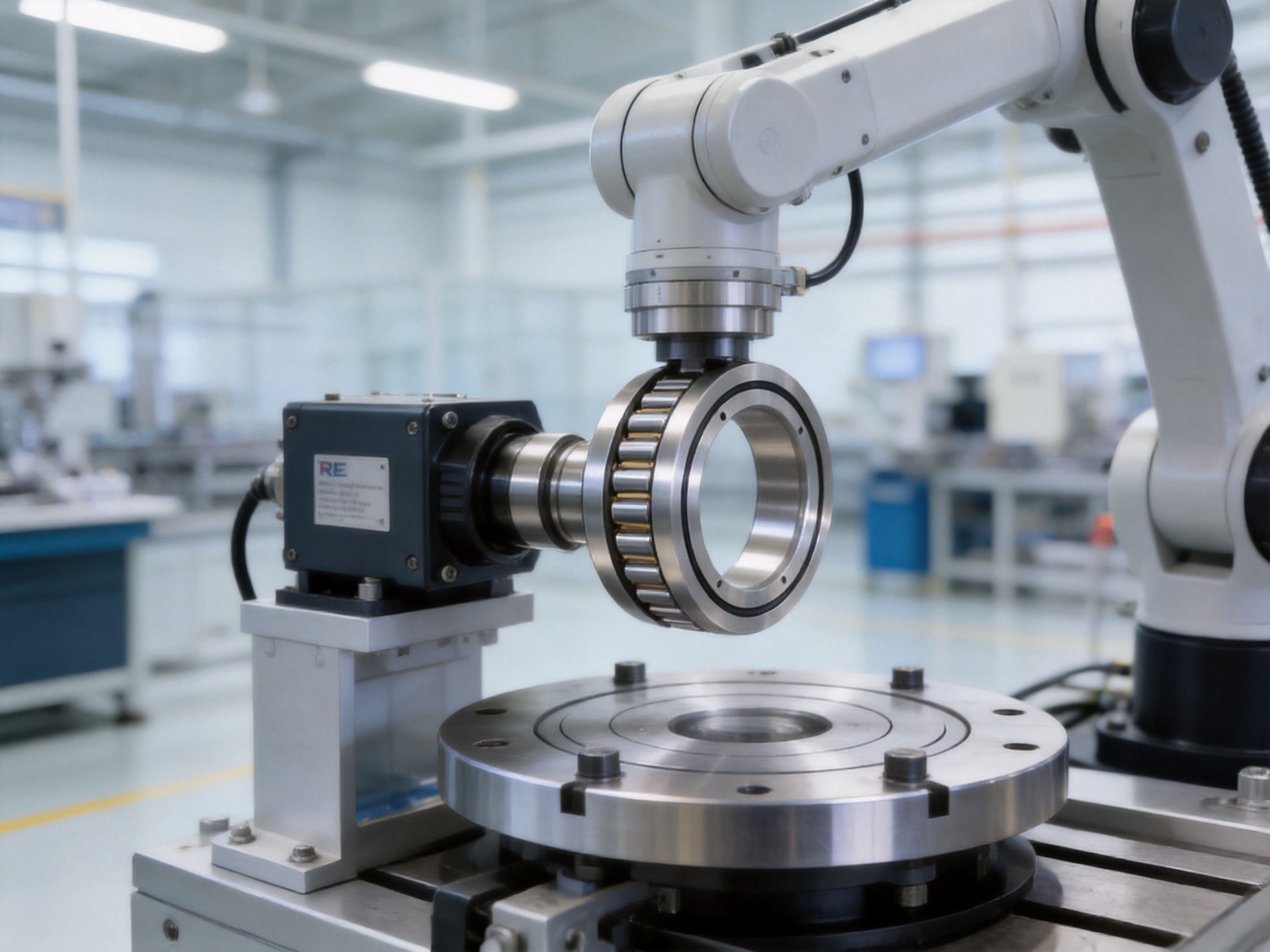
High-performance bearings depend on advanced manufacturing. The RE Cross Cylindrical Roller Bearing requires precision at every stage, from raw material selection to final inspection. Ukl Bearing Manufacturing Co.,Ltd has developed an integrated manufacturing system that supports consistency, customization, and quality control for precision bearing production.
The manufacturing process begins with material selection and forging. Bearing steel must provide strength, cleanliness, fatigue resistance, and dimensional stability. Forging improves the internal structure of the steel and prepares it for machining. Proper material control is essential because even a small defect can affect bearing life under repeated load cycles.
Turning and machining processes create the basic ring geometry. For crossed roller bearings, dimensional accuracy is especially important because the rolling elements contact raceways in alternating directions. Raceway position, wall thickness, shoulder dimensions, chamfer geometry, and ring flatness all influence final performance. Precision turning establishes the foundation for later grinding accuracy.
Heat treatment is another critical stage. The objective is to achieve a hard, wear-resistant raceway surface while maintaining adequate toughness. Carburized steel can offer excellent impact resistance and surface wear resistance. Proper heat treatment control reduces the risk of distortion, cracking, or inconsistent hardness. After heat treatment, dimensional correction and precision grinding bring the bearing rings to final tolerance.
Grinding is one of the most important operations for high-precision bearings. Raceways must be ground to controlled geometry and surface finish. Poor grinding can cause uneven contact, vibration, noise, heat generation, or reduced life. Precision grinding equipment and process control help achieve stable raceway profiles suitable for P4 and P2 accuracy requirements.
Assembly requires careful control of rollers, separators, preload, and split ring fastening. The internal spacer arrangement must be correct because incorrect assembly can significantly affect rotation and rolling element stress. After assembly, the bearing is inspected for accuracy, torque, clearance or preload condition, noise, and appearance. Packaging must protect the precision surfaces during transport and storage.
Precision bearing manufacturing requires a quality system that checks not only final dimensions but also process stability. A bearing can meet simple size requirements yet fail to deliver smooth high-precision rotation if raceway geometry, preload, roller matching, or assembly cleanliness is not controlled. For this reason, quality control must be present throughout production.
Dimensional inspection verifies inner diameter, outside diameter, height, chamfer, shoulder dimensions, and other catalog parameters. For the RE bearing, matching these values is important because the bearing must fit accurately into the shaft and housing. Incorrect installation fits can create excessive preload or looseness, both of which can reduce performance.
Geometric inspection checks roundness, runout, flatness, and raceway profile. These values are directly related to rotational accuracy. In high-end applications, small deviations can become measurable errors in the final machine. By controlling geometry, the manufacturer helps the customer achieve stable rotation without requiring excessive adjustment.
Hardness and metallurgical inspection confirm that heat treatment has produced the required material properties. Bearings are subject to repeated rolling contact, so surface hardness and internal toughness must be properly balanced. A surface that is too soft may wear quickly, while a structure that is too brittle may crack under shock load.
Final functional inspection evaluates rotation, torque, noise, and overall assembly condition. Since the RE bearing is preloaded, the final torque must be suitable for the intended accuracy and rigidity. Excessive torque may cause heating and energy loss, while insufficient preload may reduce stiffness. Stable quality control ensures that each bearing performs consistently in the customer’s equipment.
An integrated manufacturer has advantages over companies that only trade standard bearings. When forging, turning, heat treatment, grinding, assembly, and packaging are coordinated under one manufacturing system, process feedback becomes faster and more effective. If a dimensional issue appears during grinding, it can be traced back to turning or heat treatment. If assembly torque varies, roller matching or raceway geometry can be reviewed. This closed-loop control improves consistency.
Ukl Bearing Manufacturing Co.,Ltd combines manufacturing and trading capabilities with OEM and ODM export experience. This allows the company to serve customers who need standard catalog bearings as well as customized bearing solutions. For international customers, the ability to communicate technical requirements, adjust specifications, and provide production support is a major advantage.
The company’s production capacity of thousands of units per month supports both batch orders and continuing supply programs. Customers in robotics, machine tools, medical equipment, and automation often require stable long-term supply. A manufacturing partner must provide not only a good sample but also repeatable quality across ongoing production. Integrated process control supports this requirement.
Modernized production lines also improve cost competitiveness. Precision bearings require skilled processes, but efficient equipment and organized production help control lead time and production cost. For OEM customers, this balance of performance and value can be decisive when selecting a bearing supplier.
To obtain the best performance from an RE Cross Cylindrical Roller Bearing, engineers should consider the complete mechanical system. The bearing itself is only one part of the precision chain. Shaft accuracy, housing accuracy, flange rigidity, installation method, lubrication, operating temperature, and load conditions all influence final performance.
The bearing should be mounted so that the side-clamping flange firmly clamps the inner or outer ring from the side according to the application design. The dimensional tolerances of installed components must be carefully controlled. If the housing or shaft is inaccurate, the bearing may deform after installation, reducing rotational accuracy and increasing torque.
During installation, external force should not be applied to the connecting bolts. These bolts secure the split ring and help maintain the bearing’s internal structure. Applying improper force to them may disturb the assembled condition. If the joint between the split ring sections is slightly misaligned, the bolts can be loosened and the position corrected gently with a plastic hammer before installation. Metal hammers or excessive impact should be avoided.
The bearing should not be disassembled arbitrarily. The internal spacer block arrangement is important for roller motion and stress distribution. Incorrect assembly can cause uneven load sharing, abnormal rotation, and premature failure. The bearing is supplied as a precision unit and should be handled accordingly.
Lubrication is also important. The bearing is simple in structure but must be well lubricated. Appropriate grease or oil reduces friction, protects raceways from wear, helps prevent corrosion, and improves service life. Lubricant selection should consider speed, load, temperature, cleanliness, and maintenance interval.
In the bearing market, many products may appear similar by dimension, but performance differences often become clear during operation. The RE Cross Cylindrical Roller Bearing distinguishes itself through its combination of compact structure, outer ring rotation accuracy, optimized preload, high rigidity, and multi-directional load capacity.
Some lower-cost alternatives may offer similar catalog dimensions but lack stable preload control. Without proper preload, a crossed roller bearing may have internal clearance or excessive friction. Clearance reduces rigidity and positioning accuracy, while excessive preload increases torque and heat. A well-manufactured RE bearing balances these factors to deliver reliable motion.
Other competitors may focus only on standard sizes without supporting customization. Many OEM projects require special tolerances, special grease, packaging requirements, accuracy grades, or documentation. A manufacturer with OEM and ODM experience can better support these project-specific requirements. This is especially important for export customers who need consistent technical communication and reliable batch production.
Another competitive advantage is manufacturing depth. Products that pass through disconnected suppliers may suffer from inconsistent process control. Integrated manufacturing allows better traceability and faster improvement. For a precision product such as a crossed roller bearing, this can make a meaningful difference in final machine performance.
The RE bearing also offers value by reducing the number of components in the customer’s design. Even if the unit price is higher than a simple ball bearing, the total system cost may be lower when it replaces multiple bearings, spacers, locknuts, longer shafts, and more complex housings. Reduced assembly time and improved precision can create additional savings for machine builders.
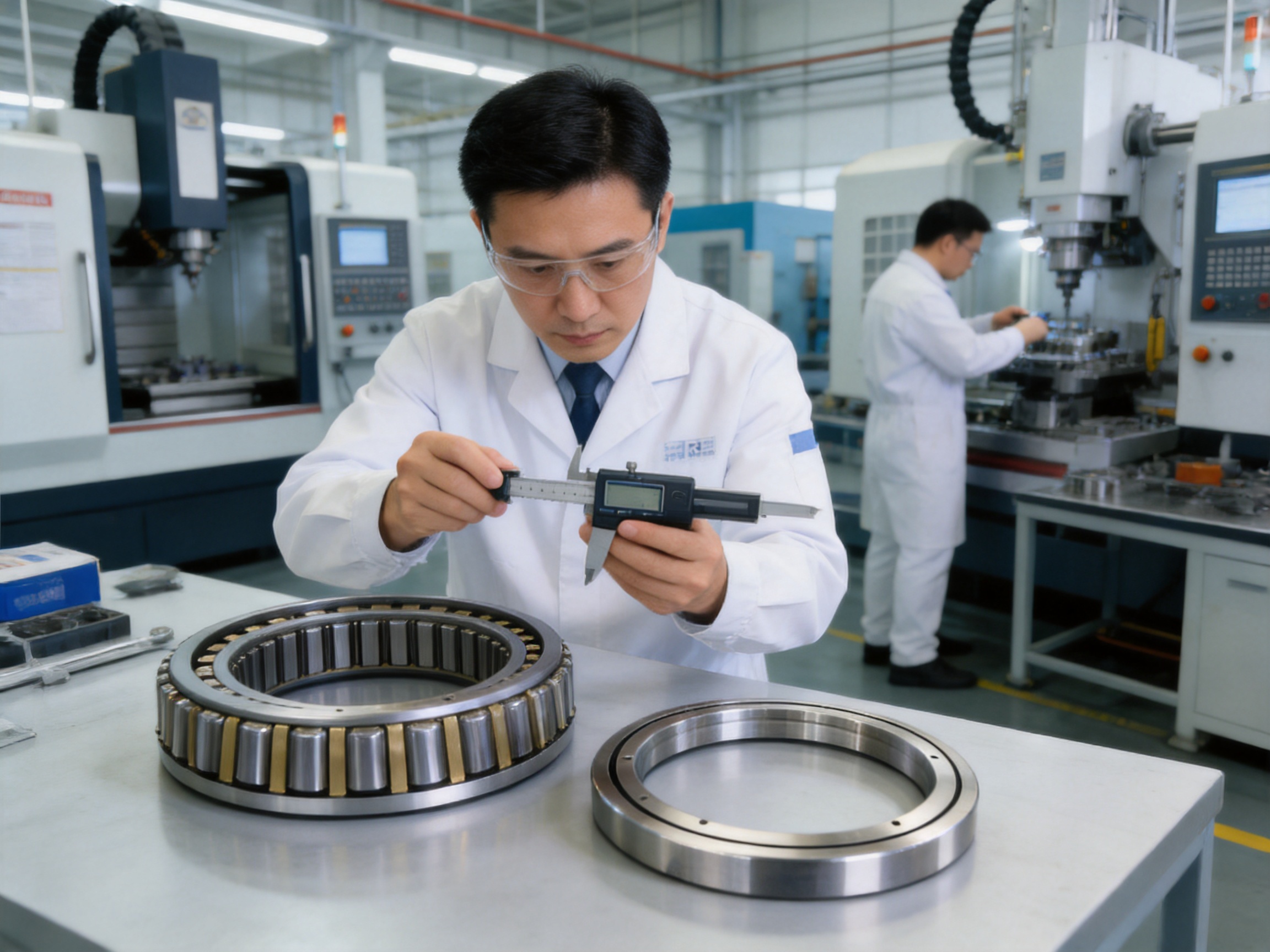
Industrial manufacturing increasingly requires attention to sustainability. Bearing production involves energy, steel, lubrication materials, and precision machining resources. Responsible manufacturing focuses on reducing waste, improving material utilization, recycling where possible, and optimizing energy use. Ukl Bearing Manufacturing Co.,Ltd recognizes sustainability as a long-term commitment and works to support environmentally responsible processes.
Precision manufacturing can contribute to sustainability in several ways. A longer-lasting bearing reduces replacement frequency and material consumption. A bearing that enables compact machine design can reduce equipment weight and energy use. Stable production processes reduce scrap and rework. Proper packaging protects products during transport and prevents waste caused by damage.
The company also supports technical training and engineering development. This matters because future industrial efficiency depends on skilled people who understand precision design, manufacturing control, and maintenance. By supporting technical knowledge, the manufacturer contributes not only to its own production capability but also to the broader industrial ecosystem.
Global customers need more than a product. They need communication, documentation, delivery support, technical response, and after-sales service. Ukl Bearing Manufacturing Co.,Ltd exports bearings to multiple regions, including the United States, Italy, Germany, Poland, South Africa, Egypt, India, and other markets. This international experience helps the company understand different industry expectations and quality requirements.
A multilingual service team can provide technical communication for bearing selection, installation guidance, and maintenance questions. This is important because crossed roller bearings are precision components. Correct selection and installation can significantly affect performance. Responsive support helps customers reduce risk during design and production.
For distributors, stable supply and consistent packaging are important. For OEM customers, batch consistency, technical documentation, and customization support are often more important than simple availability. The company’s integrated production system and export experience support both types of customers.
The service life of an RE Cross Cylindrical Roller Bearing depends on load, speed, lubrication, installation accuracy, contamination control, operating temperature, and maintenance. Although the bearing is designed for high rigidity and precision, improper use can shorten its life. Engineers and maintenance teams should treat it as a precision component rather than a general mechanical part.
Contamination is one of the most common causes of bearing damage. Dust, chips, abrasive particles, or degraded lubricant can damage raceways and rollers. In machine tool and automation environments, sealing and cleanliness should be considered during design. If the bearing operates in a dusty or contaminated environment, protective covers or sealing measures should be used.
Lubrication intervals should be determined according to operating conditions. Low-speed indexing applications may have different requirements from continuous rotation applications. Heavy load, high temperature, or frequent oscillation may require more careful lubrication planning. Over-lubrication can also create resistance or heat in some applications, so the lubricant quantity should be appropriate.
Installation inspection after mounting is recommended. Rotation should feel smooth and consistent. Abnormal torque, noise, or tight spots may indicate misalignment, housing deformation, incorrect clamping, or contamination. Detecting these issues early can prevent damage during operation.
It is a crossed roller bearing with cylindrical rollers arranged alternately at right angles. The RE type uses a split inner ring and one-piece outer ring, making it especially suitable for applications requiring high outer ring rotational accuracy.
It can support radial loads, axial loads in both directions, and overturning moment loads at the same time. This is one of its main advantages over many conventional bearing arrangements.
The integral outer ring helps maintain stable raceway geometry when the outer ring rotates. This improves rotational accuracy and makes the bearing suitable for precision rotary tables, robot joints, and measuring equipment.
Paired angular contact ball bearings can support combined loads, but they usually require more axial space, careful preload adjustment, and more assembly components. The RE crossed roller bearing integrates multi-directional load support into one compact preloaded unit.
No. The bearing should not be disassembled arbitrarily. Incorrect assembly of internal spacers or rolling elements can affect rotation, preload, and stress distribution, reducing performance and service life.
Typical applications include precision rotary tables, robot arm rotary joints, medical devices, measuring instruments, optical positioning systems, automation equipment, and compact indexing mechanisms.
The bearing can be produced for high-precision requirements, including P4 and P2 grades depending on specification and application needs.
The shaft and housing tolerances must be controlled, the side-clamping flange must firmly clamp the appropriate ring, and external force should not be applied to connecting bolts. If a split-ring joint is slightly misaligned, it should be corrected carefully with suitable methods before installation.
Integrated production provides better control over material, turning, heat treatment, grinding, assembly, inspection, and packaging. This improves consistency, traceability, customization capability, and long-term supply reliability.
The RE Cross Cylindrical Roller Bearing is a high-value solution for precision rotary motion. Its split inner ring, integral outer ring, crossed cylindrical roller arrangement, optimized preload, and compact thin-walled design allow it to deliver high rigidity, high load capacity, and excellent rotational accuracy. These characteristics make it especially strong in applications where the outer ring rotates and where radial, axial, and moment loads must be supported within limited space.
Compared with conventional bearing solutions, the RE bearing can simplify machine design, reduce component count, improve stiffness, and support micrometer-level rotational stability. It is particularly suitable for robotics, precision rotary tables, medical devices, measuring instruments, and advanced automation equipment. In these applications, bearing quality directly affects machine performance, reliability, and user confidence.
Ukl Bearing Manufacturing Co.,Ltd supports this product with integrated manufacturing processes, precision production lines, advanced quality control, OEM and ODM experience, and global service capability. From material preparation to final inspection, every stage contributes to the performance of the finished bearing. For customers seeking compact design, high accuracy, stable supply, and strong technical support, the RE Cross Cylindrical Roller Bearing represents a reliable and competitive choice for modern precision machinery.
1. Harris, T. A., and Kotzalas, M. N. Rolling Bearing Analysis: Essential Concepts of Bearing Technology.
2. ISO 492. Rolling Bearings: Radial Bearings, Geometrical Product Specifications and Tolerance Values.
3. ISO 281. Rolling Bearings: Dynamic Load Ratings and Rating Life.
4. Brändlein, J., Eschmann, P., Hasbargen, L., and Weigand, K. Ball and Roller Bearings: Theory, Design and Application.
5. Bearing Engineering Handbook: Design Principles for Precision Rotary Systems.
Product Categories
Contact Us

Jane@ukl-bearing.com
Jenny@ukl-bearing.com
Andy@ukl-bearing.com
Ivy@ukl-bearing.com

+86-510- 88763239
+86-15371057968

No.1 Hehuan Road, Hudai Town, Binhu District, Wuxi City.
Ready to Begin?
Get in Touch

Now!
UKL BEARING
 English
 Español
 русский