Content
Modern automation, robotics, precision machine tools, medical equipment, semiconductor systems, and aerospace devices all depend on one essential mechanical capability: the ability to move smoothly, accurately, and reliably under complex loads. In many high-end applications, a bearing is not only a rotating component; it is the structural center of motion, the reference point for accuracy, and the part that determines whether a machine can maintain repeatable performance over thousands or millions of cycles. The RU Series crossed roller bearing is designed for precisely this class of demanding applications.
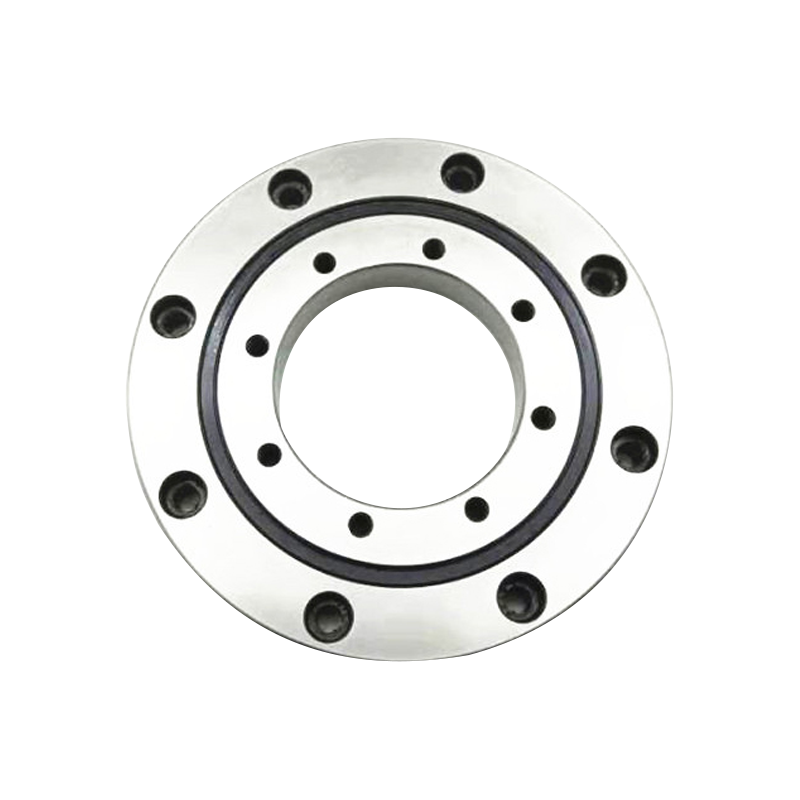
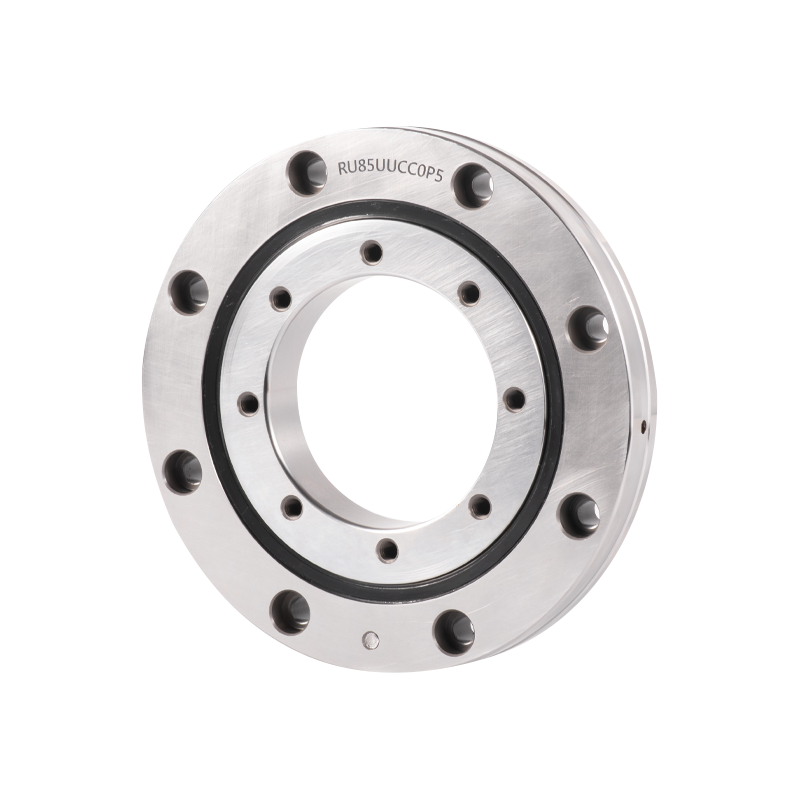
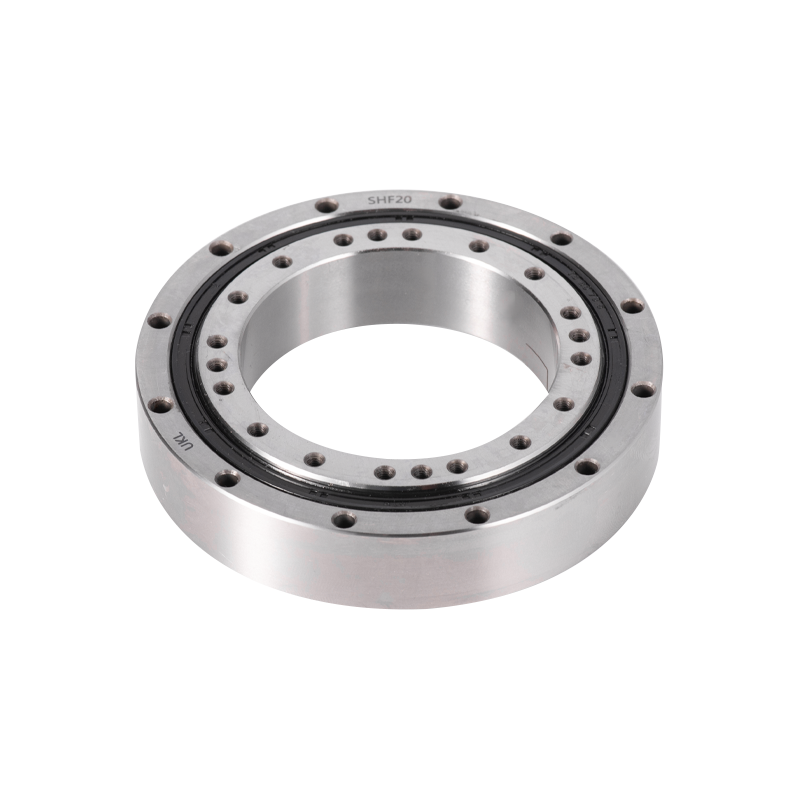
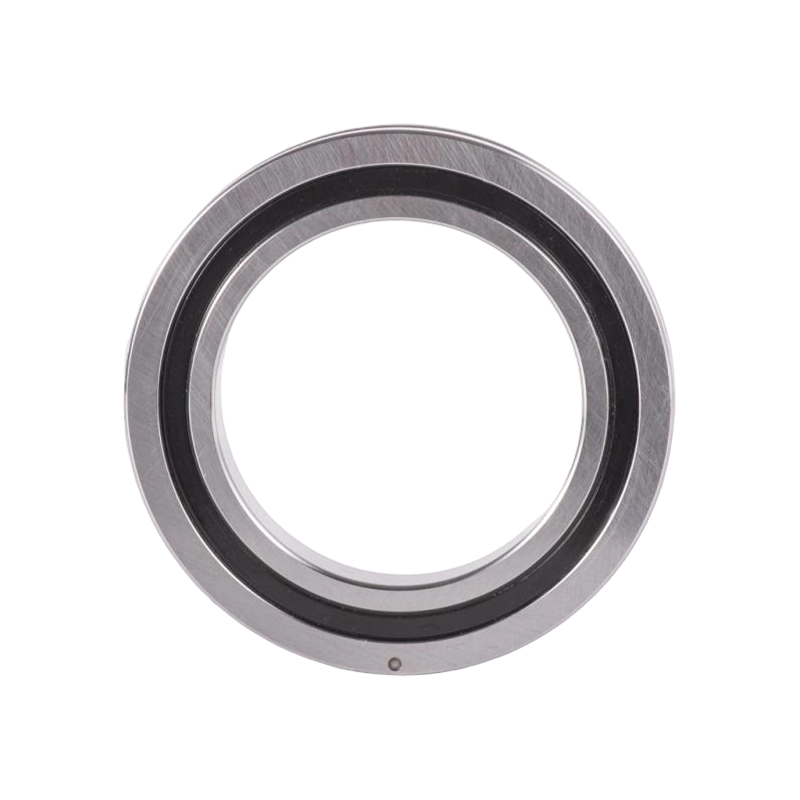
The RU Series crossed roller bearing features an integrated inner and outer ring structure with mounting holes. This design eliminates the need for many additional fixing flanges, support seats, and complicated surrounding components. By combining compact geometry, high rigidity, stable torque, and multi-directional load capacity, the bearing offers an efficient solution for equipment where space is limited but performance requirements are high. It is especially suitable for applications involving inner ring rotation, outer ring rotation, or alternating motion patterns.
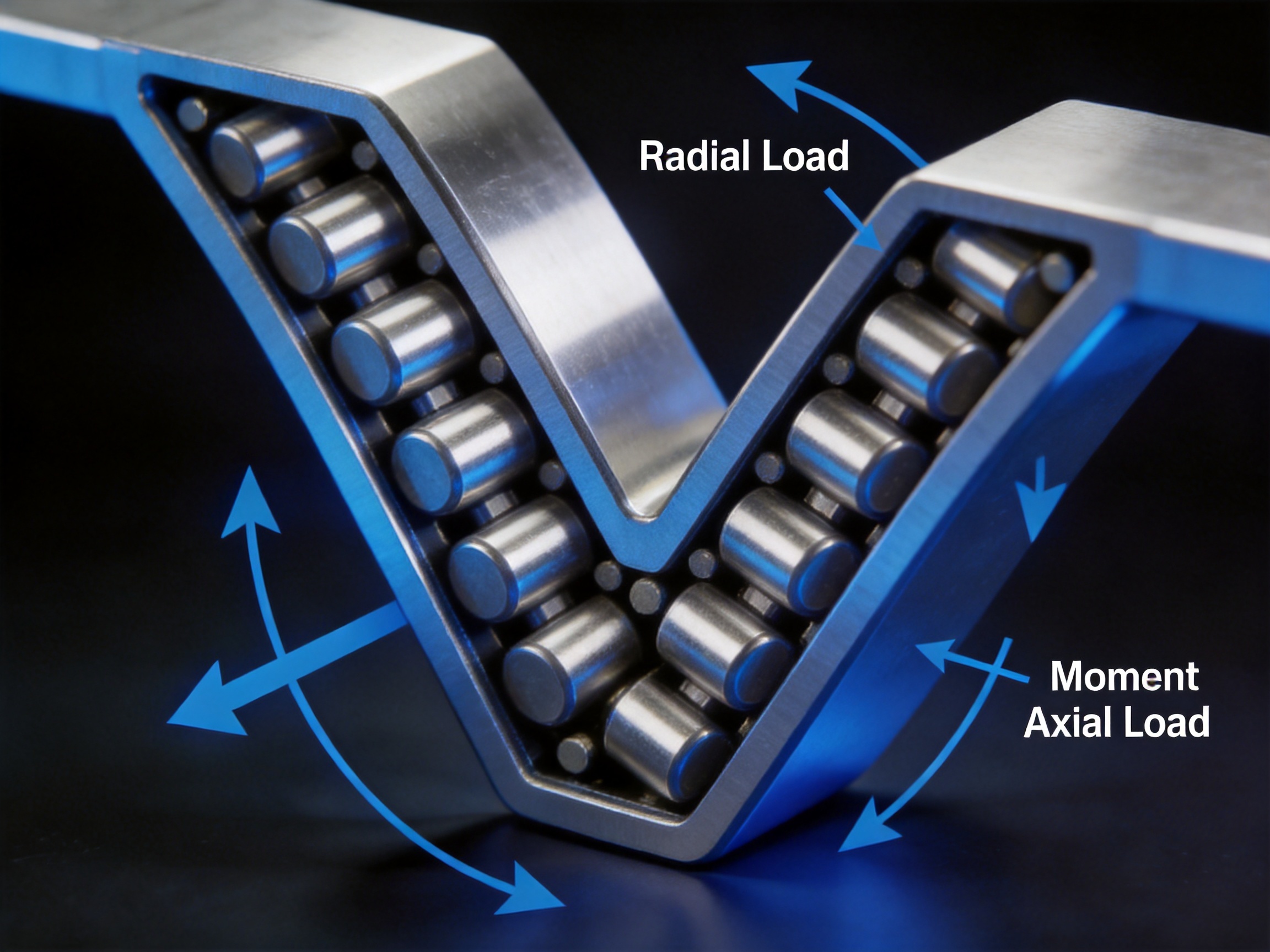
Unlike conventional bearing arrangements that may require multiple bearings to carry radial, axial, and moment loads separately, the crossed roller structure allows a single bearing set to handle composite loads from different directions. Cylindrical rollers are arranged alternately at right angles in 90-degree V-grooves, and spacers are used to reduce friction and prevent roller skewing. This design helps achieve high rotational accuracy, smooth low-torque operation, and excellent rigidity in a compact envelope.
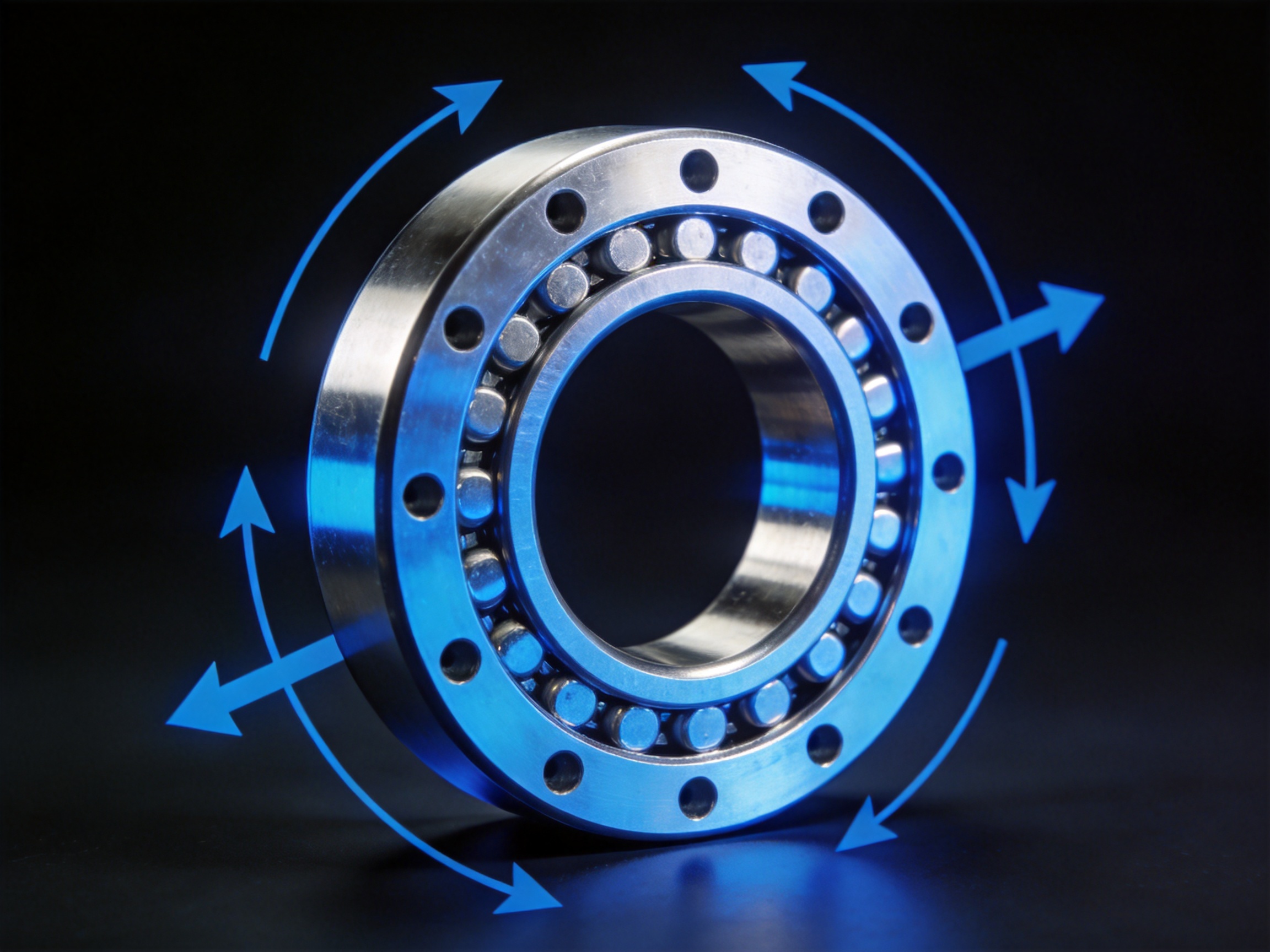
In standard machinery, a conventional radial bearing may be sufficient when the main requirement is to support rotation under a relatively simple radial load. However, advanced equipment rarely operates under such simple conditions. A robot joint may experience radial load, axial load, overturning moment, vibration, acceleration, and frequent reversing motion at the same time. A CNC rotary table may require extremely high indexing accuracy while carrying a heavy workpiece. A medical scanner must rotate smoothly and quietly while maintaining reliable alignment. A semiconductor wafer handling mechanism must move with repeatable precision and minimal vibration.
In these cases, bearing performance cannot be judged only by load rating. Engineers must also consider rigidity, runout, installation error sensitivity, torque fluctuation, compactness, preload stability, and service consistency. A bearing that is strong but bulky may reduce equipment performance. A bearing that is compact but insufficiently rigid may introduce deflection. A bearing that rotates smoothly when unloaded may show torque instability after preload or assembly. Therefore, a precision motion bearing must balance multiple engineering requirements at once.
The RU Series crossed roller bearing addresses these requirements through its integrated structure and optimized internal geometry. Because the inner and outer rings are integrated and provided with mounting holes, the bearing can be directly installed into the machine structure. This reduces the number of interfaces and helps maintain alignment. Since the rollers are crossed at 90 degrees, the bearing supports forces from all major directions. The compact section design allows machinery designers to reduce size and weight while maintaining stiffness.
The internal principle of the RU Series is based on crossed cylindrical rollers arranged alternately between precisely ground raceways. Each roller is oriented perpendicular to the adjacent roller. This alternating arrangement creates a bearing capable of receiving radial loads, axial loads in both directions, and moment loads. The rollers run in V-shaped grooves, allowing the load to be distributed through two inclined raceway surfaces.
The use of spacers between rollers is an important feature. In many rolling systems, direct roller-to-roller contact can create friction, heat, uneven motion, and instability. Spacers reduce this problem by separating the rolling elements, helping prevent skewing and minimizing mutual friction. As a result, the bearing can provide smoother rotation and lower torque fluctuation compared with structures that suffer from roller interference or retainer-related jamming.
The integrated inner and outer rings with mounting holes also represent a significant practical advantage. In some crossed roller bearings, the surrounding housing and fixing parts must be manufactured with very high precision to ensure performance. If the installation surface is not accurate, bearing performance may be reduced. With an integrated design, installation becomes simpler, and the influence of assembly variation can be reduced. This is particularly beneficial for equipment manufacturers seeking stable production quality and shorter assembly time.
One of the most important advantages of the RU Series crossed roller bearing is its excellent rigidity. Because the rollers make line contact with the raceways and are arranged in a crossed configuration, the bearing can resist deformation under combined loads. Compared with traditional bearing arrangements that may require two or more bearings to support loads in different directions, one crossed roller bearing can often perform the work of a more complex assembly.
This compact rigidity is valuable in robots, rotary tables, inspection equipment, and automation mechanisms. When the bearing section is thinner and the structure is more compact, the surrounding machine can be designed smaller and lighter. In robotics, reduced joint size can improve dynamic response and reduce motor load. In machine tools, compact high-rigidity support can improve machining accuracy. In medical and optical devices, smaller size can help create more precise and efficient equipment layouts.
Many competitors or conventional alternatives rely on combinations of angular contact ball bearings, tapered roller bearings, or radial bearings to handle different load directions. While these solutions can be effective, they often require careful pairing, preload adjustment, housing design, and axial positioning. The RU Series crossed roller bearing simplifies the design by carrying radial, axial, and moment loads within one bearing unit.
This multi-directional load capacity is especially important in joints and turntables. A robot arm joint, for example, is rarely loaded in a single direction. It must support the weight of downstream links, external payloads, acceleration forces, and moment loads during movement. A crossed roller bearing is suitable for this environment because the crossed rollers provide structural resistance from multiple directions. The result is more stable rotation and reduced deflection under operational load.
Precision equipment often fails to meet performance expectations not because a component breaks, but because the motion loses accuracy. Small runout, elastic deformation, inconsistent preload, or uneven torque can lead to positioning errors. The RU Series is designed for high-precision rotation, with accuracy levels that can reach P5, P4, and P2 grades depending on the specification and production requirements.
High rotational accuracy is achieved through precision machining, raceway grinding, controlled roller geometry, and careful assembly. The integrated structure also helps preserve performance after installation. When fewer external fixing components are required, there are fewer sources of assembly error. This allows the bearing to maintain stable motion accuracy in actual equipment rather than only in laboratory testing.
Low and stable torque is essential for servo-controlled systems. If a bearing has high friction or torque fluctuation, the motor and control system must compensate, which can reduce positioning smoothness and increase energy consumption. In applications such as measuring instruments, optical platforms, medical imaging, and robot joints, torque stability directly affects motion quality.
The RU Series uses spacers between rollers to reduce mutual friction and prevent roller tilting. This helps avoid the single-sided contact or jamming that can occur in some traditional retainer designs. The result is smoother movement, more predictable torque, and improved controllability. For equipment builders, this can mean easier tuning, more stable servo response, and better long-term operation.
Another major advantage is installation efficiency. Because the bearing has an integrated inner and outer ring structure with mounting holes, it does not require additional fixing flanges or support seats in many designs. The split ring, rollers, and retaining structure are pre-assembled and fixed at the factory to prevent separation. This makes on-site installation easier and reduces the risk of assembly mistakes.
For machinery manufacturers, simpler installation can reduce production time, lower labor requirements, and improve consistency across batches. When a bearing is difficult to install correctly, even a high-quality component may fail to perform as intended. A design that minimizes installation sensitivity provides real value beyond catalog specifications.
Rigidity determines how much the bearing deforms under load. In a robot joint, insufficient rigidity can cause end-effector deviation. In a machine tool, it can cause machining error or vibration. In measuring equipment, it can compromise repeatability. The crossed roller structure increases rigidity because rollers are arranged to resist forces from multiple directions, and the line contact between rollers and raceways offers a strong load-bearing interface.
Compared with many traditional bearing configurations, the RU Series can increase rigidity substantially because the load is supported through a compact but mechanically efficient structure. This high rigidity is not achieved by simply making the bearing larger; it comes from geometry, material treatment, precision raceway processing, and controlled assembly.
The thin-section design of the RU Series helps engineers reduce machine size without sacrificing support capacity. Compactness is not merely a space-saving feature. In high-speed or high-response mechanisms, reduced mass can improve acceleration, reduce inertia, and decrease energy consumption. In robotics, lighter joints contribute to better payload-to-weight ratios. In aerospace and defense applications, weight reduction is often a key design target.
The bearing’s integrated mounting structure also reduces the need for additional surrounding hardware. This can lower total system weight and simplify component sourcing. When evaluating a bearing, engineers should consider not only the bearing itself but also the entire assembly it requires. A bearing that eliminates extra parts may provide significant overall design advantages.
Precision bearings often require controlled preload or clearance to achieve the desired balance between rigidity and torque. Too much clearance can reduce accuracy and rigidity. Excessive preload can increase friction, heat, and wear. The RU Series design supports precise clearance adjustment, helping maintain high-precision rotational motion even under preload conditions.
This feature is important in machine tools and indexing mechanisms where positioning repeatability is critical. Controlled preload helps reduce play and improves stiffness. At the same time, careful manufacturing and assembly are required to ensure that preload does not create excessive torque. The combination of precision processing and controlled assembly gives the RU Series an advantage in demanding applications.
Industrial robots require compact, rigid, and accurate bearings at critical joints such as the waist, shoulder, elbow, wrist, and rotary axes. These joints must handle complex loads while providing smooth servo-controlled motion. The RU Series is well suited to robot joints because it combines high moment rigidity with low torque and compact dimensions.
In robot applications, bearing performance affects not only motion quality but also the robot’s positioning repeatability and service life. A joint bearing must withstand frequent starts, stops, reversals, and shock loads. The crossed roller structure helps maintain stable performance under these conditions. The integrated mounting design can also simplify robot joint assembly and reduce the risk of alignment error.
Machining center rotary tables, precision indexing plates, grinding machine spindles, and positioning units require bearings that can support heavy workpieces while maintaining rotational accuracy. A small amount of deflection can reduce machining precision, surface finish, and tool life. The RU Series offers the rigidity and accuracy required for these demanding machine tool functions.
For rotary tables, the bearing must support axial load from the workpiece, radial load from cutting force, and moment load from offset machining. A crossed roller bearing can carry these loads simultaneously, helping maintain accuracy during operation. The compact design also allows machine designers to create lower-profile rotary systems.
Medical equipment such as CT scanning systems, surgical robots, imaging platforms, and positioning arms requires quiet, smooth, and reliable motion. Bearings used in medical devices must operate with high precision and consistency, often in environments where vibration, noise, and mechanical instability are unacceptable.
The RU Series can support these requirements through smooth low-torque rotation and stable structural performance. In surgical robots, bearing rigidity contributes to precise movement. In scanning systems, rotational accuracy helps maintain image quality and mechanical reliability. The compact design also supports the development of smaller and more ergonomic medical equipment.
Precision measuring instruments, coordinate systems, optical platforms, and inspection devices depend on repeatable motion. In these applications, the bearing often acts as part of the measurement reference structure. Any runout, vibration, or looseness can directly affect measurement results.
The high rotational accuracy and controlled rigidity of the RU Series make it suitable for such equipment. Low torque and smooth rotation are also valuable because measuring systems often operate at low speeds where torque fluctuation can be more noticeable. The bearing’s stable performance helps maintain reliable inspection and measurement outcomes.
Radar antennas, satellite communication devices, tracking systems, and aerospace positioning mechanisms require dependable motion under demanding conditions. Bearings in these systems may need to support moment loads, withstand environmental stress, and maintain accuracy over long service periods.
The compact high-rigidity structure of the RU Series is advantageous where space and weight are limited. Its ability to carry multi-directional loads in one bearing unit can simplify system design and reduce assembly complexity. For mission-critical equipment, reducing the number of components and interfaces can improve reliability.
Semiconductor manufacturing demands extremely clean, stable, and precise motion. Wafer processing equipment, IC manufacturing machinery, inspection platforms, and precision handling systems require accurate rotation with minimal vibration and predictable torque. Mechanical instability can affect process yield and equipment uptime.
The RU Series supports semiconductor-related applications through compactness, precision, and low torque. Its integrated mounting features can also help create stable mechanical layouts in highly specialized equipment. For manufacturers of semiconductor systems, bearing consistency and production quality are essential.
The RU Series includes multiple sizes to meet different design requirements. Selection depends on inner diameter, outer diameter, roller pitch diameter, height, load rating, weight, and the mechanical requirements of the application. The table below summarizes representative models and technical parameters.
| Model | Inner Diameter d mm | Outer Diameter D mm | Roller Pitch Diameter Dpw mm | Height B mm | Chamfer Rmin mm | Shoulder ds mm | Shoulder Dh mm | Basic Dynamic Load Cr kN | Basic Static Load Cor kN | Weight kg |
| RU 28 | 10 | 52 | 28 | 8 | 0.3 | 24 | 29.5 | 2.9 | 2.4 | 0.12 |
| RU 42 | 20 | 70 | 41.5 | 12 | 0.6 | 37 | 47 | 7.35 | 8.35 | 0.29 |
| RU 66 | 35 | 95 | 66 | 15 | 0.6 | 59 | 74 | 17.5 | 22.3 | 0.62 |
| RU 85 | 55 | 120 | 85 | 15 | 0.6 | 79 | 93 | 20.3 | 29.5 | 1.00 |
| RU 124 | 80 | 165 | 124 | 22 | 1 | 114 | 134 | 33.1 | 50.9 | 2.60 |
| RU 148 | 90 | 210 | 147.5 | 25 | 1.5 | 133 | 162 | 49.1 | 76.8 | 4.90 |
| RU 178 | 115 | 240 | 178 | 28 | 1.5 | 161 | 195 | 80.3 | 135 | 6.80 |
| RU 228 | 160 | 295 | 227.5 | 35 | 2 | 208 | 246 | 104 | 173 | 11.40 |
| RU 297 | 210 | 380 | 297.5 | 40 | 2.5 | 272 | 320 | 156 | 281 | 21.30 |
| RU 445 | 350 | 540 | 445.4 | 45 | 2.5 | 417 | 473 | 222 | 473 | 35.40 |
These specifications show the wide size coverage of the series, from compact precision mechanisms to larger rotary structures. The smaller models are suitable for compact joints, indexing mechanisms, and precision devices, while the larger models can support heavy-duty rotary tables, antenna systems, and industrial automation platforms. During selection, engineers should evaluate not only load rating but also rigidity, allowable mounting space, required accuracy, lubrication, speed, and operating environment.

A crossed roller bearing can only deliver high accuracy if every manufacturing process is carefully controlled. The performance of the finished bearing depends on material quality, forging quality, heat treatment stability, turning accuracy, grinding precision, assembly control, inspection standards, and packaging protection. UKL Bearing Manufacturing Co., Ltd. integrates research, production, and international distribution, with multiple production lines covering forging, turning, heat treatment, grinding, assembly, and packaging. This process integration helps ensure consistency from raw material to finished product.
High-performance bearings begin with suitable bearing steel and controlled material preparation. The material must have sufficient hardness, fatigue resistance, dimensional stability, and cleanliness. Forging improves the internal grain structure and prepares the blank for later machining. A controlled forging process helps reduce internal defects and supports long-term fatigue life.
For crossed roller bearings, the rings must maintain precision geometry after processing. Poor material preparation may lead to deformation during heat treatment or grinding. Therefore, material control and forging quality are fundamental to accuracy and durability.
After forging, bearing rings are turned to create the basic geometry. Turning accuracy affects the amount of material left for grinding and the stability of later processes. Precise turning can reduce machining stress, improve process efficiency, and help maintain dimensional consistency.
For an integrated bearing with mounting holes, dimensional consistency is especially important. The mounting surfaces, raceway areas, and hole patterns must work together as part of the final assembly. If one feature is inaccurate, installation quality and rotational accuracy may be affected.
Heat treatment is critical for bearing life. Raceways and rollers must achieve appropriate hardness to resist wear and fatigue. At the same time, the process must control distortion. Excessive deformation after heat treatment can increase grinding difficulty or reduce final accuracy.
Advanced heat treatment control helps create stable metallurgical properties. Proper quenching and tempering support hardness, toughness, and dimensional stability. For precision bearings, stability is as important as hardness because a bearing may operate in equipment that demands consistent accuracy over long periods.
Grinding is one of the most important stages for the RU Series. The raceway geometry must be accurate because rollers contact the raceways through line contact. Errors in angle, roundness, surface finish, or waviness can increase torque, vibration, noise, and wear. Precision grinding helps create the raceway surfaces needed for smooth and accurate motion.
Mounting surfaces also require careful processing. Since the bearing is installed directly through mounting holes, the flatness and parallelism of mounting surfaces influence final performance. A precision bearing should not be considered separately from its installation interface; the bearing and machine structure must work together.
Cylindrical rollers must be manufactured with tight dimensional control. Diameter variation, roundness error, surface finish, and end geometry all influence load distribution and torque. In crossed roller bearings, alternating rollers must work together evenly. Roller sorting and matching are therefore important for stable preload and smooth rotation.
If roller dimensions vary too much, some rollers may carry excessive load while others contribute less support. This can reduce bearing life and increase torque fluctuation. Precision roller control helps ensure that the bearing performs as a unified mechanical system.
Assembly is where component precision becomes product performance. The split ring, rollers, and retainers or spacers are carefully assembled and fixed to prevent separation. Clearance and preload are controlled according to the bearing’s accuracy and application requirements. Proper assembly helps maintain rigidity while avoiding unnecessary friction.
The use of spacers requires precise handling because each spacer contributes to smooth roller motion. During assembly, cleanliness is also essential. Contamination can damage raceways, increase wear, and affect torque. A disciplined assembly process is necessary for high-end bearings used in robotics, machine tools, medical equipment, and semiconductor systems.
Final inspection verifies that the bearing meets dimensional, rotational, and performance requirements. Typical quality checks may include dimensional measurement, runout inspection, rotational torque evaluation, surface condition inspection, hardness verification, and packaging review. For high-precision grades, measurement systems and production discipline are essential.
UKL’s manufacturing strength includes R&D capability, digital production control, modernized production lines, and an experienced export background. With production capacity in the range of 10,000 to 50,000 units per month and over 15 years of OEM and ODM export experience, the company supports both standard and customized bearing requirements for global industries.
Precision products require more than machines; they require engineering knowledge, process discipline, and customer-oriented technical support. UKL Bearing Manufacturing Co., Ltd. has developed as an integrated manufacturer and trader with a team of 201 to 500 employees. The company serves markets across Europe, Asia, Africa, Russia, the United States, Italy, Germany, Poland, South Africa, Egypt, India, and other regions. This international experience helps the company understand different industrial standards, equipment requirements, and customer expectations.
The company’s product scope includes crossed roller bearings, robot bearings, angular contact ball bearings, rod end bearings, spherical roller bearings, cylindrical roller bearings, tapered roller bearings, Nilos rings, and mounted bearings. This broad bearing portfolio allows the engineering team to support customers in selecting the right solution for different mechanical systems. However, high-precision crossed roller bearings are especially important for modern automation and intelligent manufacturing.
Research and development are central to competitiveness. The company continuously develops high-precision crossed roller bearings, dual-direction thrust angular contact ball bearings, and other specialized products used in CNC machines, robotics, and intelligent automation systems. Through precision design and digital production control, it works to ensure that products meet international expectations for accuracy and performance.
Another strength is the ability to support OEM and ODM projects. Many equipment manufacturers need bearings adapted to specific mounting dimensions, load conditions, accuracy targets, lubrication requirements, or packaging standards. A company with R&D, production, and international service capability can help customers move from concept to production more efficiently. This is especially valuable in robotics and automation, where compact structures and precise mounting requirements are common.
In the precision bearing market, many products may appear similar in catalog dimensions, but practical performance can differ significantly. The RU Series provides several competitive advantages that matter in real equipment operation.
First, the integrated inner and outer ring design reduces dependence on additional support structures. Some competing solutions require complex housings, flanges, or paired bearing arrangements. These can increase cost, space, and assembly time. The RU Series simplifies installation and reduces the number of required components.
Second, the crossed roller arrangement allows one bearing to carry loads from all directions. In contrast, conventional bearing sets may require multiple bearings arranged in combination to manage radial, axial, and moment loads. Such combinations may work well but often need precise preload setting and careful alignment. The RU Series provides a more compact and integrated approach.
Third, the spacer-separated roller structure supports smooth low-torque motion. Traditional retainer structures or poorly controlled roller arrangements may create friction, skewing, or jamming under certain conditions. By reducing roller interference, the RU Series improves motion stability and servo controllability.
Fourth, the product is supported by complete manufacturing processes, from forging to final assembly. Process control is a major differentiator because precision bearing quality depends on consistency. A supplier that controls multiple production stages can respond more effectively to quality requirements and customization needs.
Fifth, the company’s export and OEM experience supports global customers with technical communication, installation guidance, and after-sales service. For many buyers, a bearing supplier must provide more than parts. It must provide engineering support, documentation, responsive communication, and stable supply capability.
When selecting an RU Series crossed roller bearing, engineers should evaluate radial load, axial load, moment load, dynamic load, static load, and any shock or vibration conditions. The listed basic load ratings provide useful guidance, but actual application conditions must be analyzed carefully. A bearing used in a robot joint may experience peak loads during acceleration or emergency stop. A rotary table may experience variable cutting forces. These real-world loads should be included in selection calculations.
Although the integrated design simplifies installation, the surrounding machine surfaces still need proper accuracy. Mounting surface flatness, bolt tightening sequence, housing rigidity, and alignment all affect bearing performance. Uneven tightening can distort the rings and increase torque. Insufficient support rigidity can reduce the benefits of the bearing’s internal stiffness.
Engineers should design the mounting structure to support the bearing evenly. Correct shoulder dimensions, bolt strength, and installation procedures should be followed. For high-precision applications, controlled tightening torque and runout verification after installation are recommended.
Lubrication reduces friction, wear, noise, and heat. The correct lubricant depends on speed, load, operating temperature, cleanliness requirements, and maintenance strategy. Grease is commonly used in many precision mechanisms due to convenience and sealing benefits. Oil lubrication may be considered for special applications requiring heat removal or extremely consistent friction behavior.
Insufficient lubrication can increase wear and torque. Excessive or unsuitable lubricant can also increase resistance, especially at low temperature or in high-precision low-torque systems. Lubrication should be selected as part of the total bearing design.
Preload improves rigidity and eliminates clearance, but it must be controlled. Excessive preload may increase torque, heat generation, and wear. The RU Series is designed to maintain high-precision motion under preload, but the final result depends on correct selection and installation. Engineers should balance rigidity requirements with torque and temperature limitations.
Applications may involve dust, coolant, humidity, vacuum conditions, temperature variation, or cleanroom requirements. The bearing environment influences seal selection, lubrication, material treatment, and maintenance intervals. For semiconductor, medical, and optical applications, cleanliness may be especially important. For machine tools, protection against coolant and chips may be necessary.
Advanced manufacturing must also consider environmental responsibility. UKL treats sustainability as a long-term commitment by adopting environmentally responsible processes, promoting material recycling, and optimizing energy usage. Bearing production involves steel processing, heat treatment, grinding, lubrication, and packaging, all of which can benefit from responsible management.
Efficient manufacturing reduces waste and supports stable quality. Material recycling helps reduce resource consumption. Energy optimization in heat treatment and machining can reduce environmental impact. Sustainable production is not separate from product quality; both depend on process control, efficient resource use, and long-term thinking.
The company also supports educational and technical training initiatives to foster future engineering talent. This is important because precision manufacturing depends on skilled people as much as advanced equipment. Training helps ensure that knowledge of bearing design, machining, inspection, and application continues to develop.
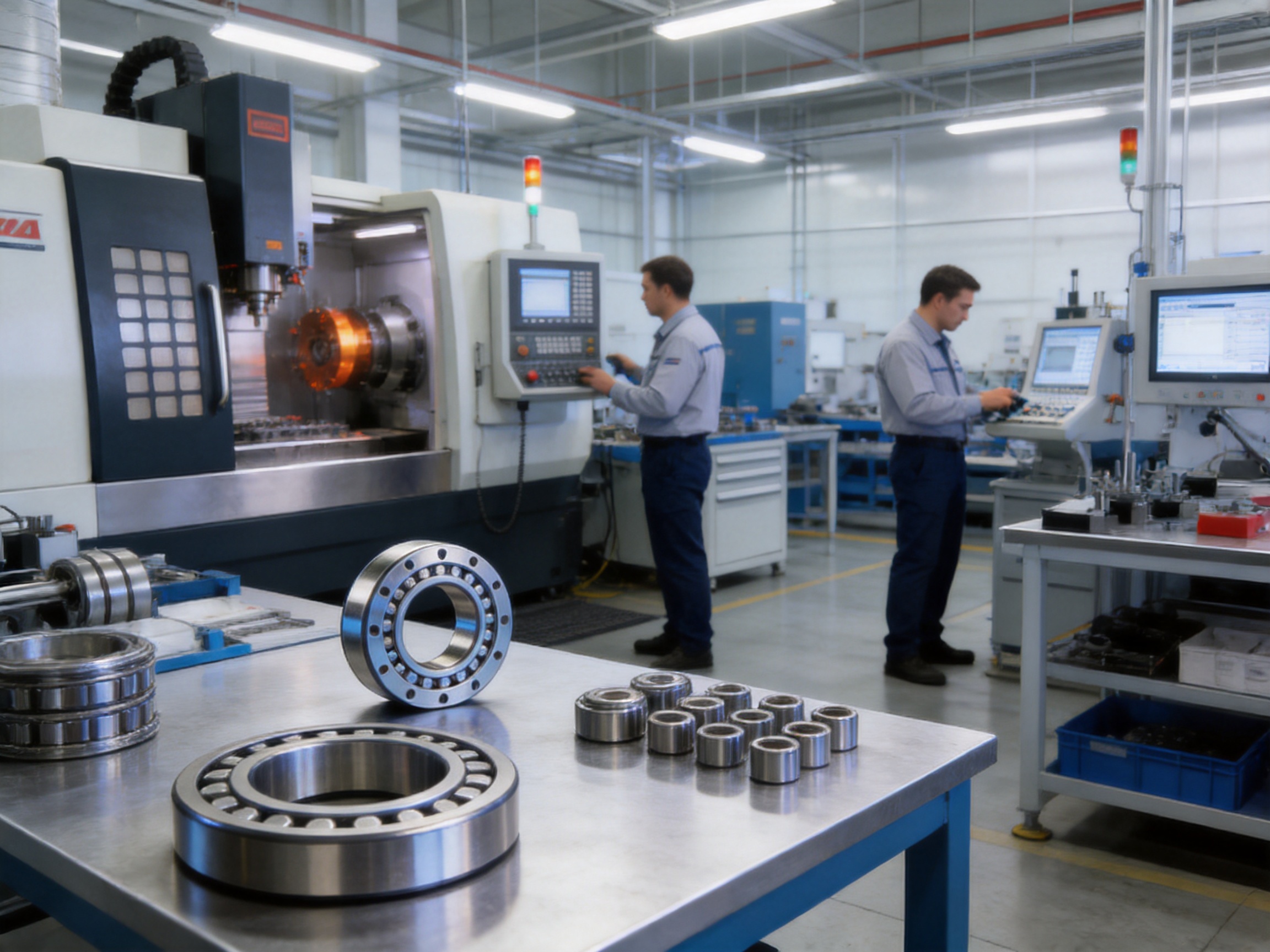
The RU Series uses cylindrical rollers arranged alternately at 90 degrees in V-grooves, allowing one bearing to carry radial loads, axial loads in both directions, and moment loads. It also has integrated inner and outer rings with mounting holes, making installation simpler and reducing the need for extra fixing flanges or support seats.
Robot joints experience complex loads, including radial force, axial force, moment load, acceleration force, and frequent reversing motion. The crossed roller structure provides high rigidity and multi-directional load capacity in a compact size, which helps improve joint accuracy, stability, and response.
The integrated inner and outer rings include mounting holes, so the bearing can be installed directly into the equipment structure in many applications. The internal components are pre-assembled and fixed at the factory, reducing the risk of separation or assembly error during installation.
Low and stable torque improves motion smoothness and makes servo control easier. It reduces energy loss, minimizes friction-related heat, and improves precision at low speeds. This is especially important in robotics, measuring equipment, optical systems, medical devices, and semiconductor equipment.
In many designs, yes. Because the RU Series can carry radial, axial, and moment loads simultaneously, it may replace more complex bearing combinations. However, final selection should be based on load analysis, accuracy requirements, available space, and installation conditions.
Common applications include industrial robots, CNC rotary tables, precision indexing plates, medical scanning equipment, surgical robots, optical platforms, measuring instruments, radar antennas, satellite communication devices, semiconductor equipment, and automated production systems.
Important processes include material selection, forging, turning, heat treatment, precision grinding, roller sorting, assembly, clearance or preload control, inspection, and protective packaging. Each process contributes to final accuracy, rigidity, torque, and service life.
Engineers should consider inner diameter, outer diameter, height, load ratings, weight, required rigidity, rotational accuracy, mounting method, operating speed, lubrication, environment, and expected service life. It is also important to evaluate actual combined loads instead of only checking a single load value.
Precision bearings require consistent production control. A manufacturer with integrated production lines, R&D capability, inspection systems, and OEM or ODM experience can provide more stable quality, better customization support, and stronger technical service.
The RU Series crossed roller bearing is a high-performance solution for equipment that requires compact design, high rigidity, multi-directional load capacity, smooth rotation, and stable precision. Its integrated inner and outer ring structure with mounting holes simplifies installation and reduces dependence on additional surrounding components. Its crossed cylindrical roller arrangement enables one bearing to support radial, axial, and moment loads simultaneously. Its spacer-separated internal design supports smooth low-torque operation and helps prevent roller interference.
For engineers developing industrial robots, precision machine tools, medical devices, measuring systems, aerospace mechanisms, and semiconductor equipment, the RU Series offers a practical combination of structural strength and motion accuracy. Compared with conventional bearing arrangements, it can reduce assembly complexity, save space, increase rigidity, and improve motion stability.
Behind the product is a manufacturing system that includes R&D, forging, turning, heat treatment, grinding, assembly, packaging, and international technical support. With broad industry experience, production capacity, and OEM or ODM service capability, UKL Bearing Manufacturing Co., Ltd. supports customers seeking reliable bearing solutions for advanced motion systems.
As intelligent manufacturing continues to develop, machinery will require higher precision, smaller structures, greater load capacity, and more reliable operation. The RU Series crossed roller bearing is designed to meet these needs by combining advanced bearing principles with disciplined manufacturing. It is not merely a component for rotation; it is a precision motion platform for the next generation of automated and high-performance equipment.
Harris, T. A., and Kotzalas, M. N. Rolling Bearing Analysis: Essential Concepts of Bearing Technology.
Hamrock, B. J., Schmid, S. R., and Jacobson, B. O. Fundamentals of Machine Elements.
ISO 492. Rolling Bearings: Radial Bearings, Geometrical Product Specifications and Tolerance Values.
ISO 281. Rolling Bearings: Dynamic Load Ratings and Rating Life.
Juvinall, R. C., and Marshek, K. M. Fundamentals of Machine Component Design.
Precision Bearing Application Manuals for Robotics, Machine Tools, and Automation Systems.
Product Categories
Contact Us

Jane@ukl-bearing.com
Jenny@ukl-bearing.com
Andy@ukl-bearing.com
Ivy@ukl-bearing.com

+86-510- 88763239
+86-15371057968

No.1 Hehuan Road, Hudai Town, Binhu District, Wuxi City.
Ready to Begin?
Get in Touch

Now!
UKL BEARING
 English
 Español
 русский