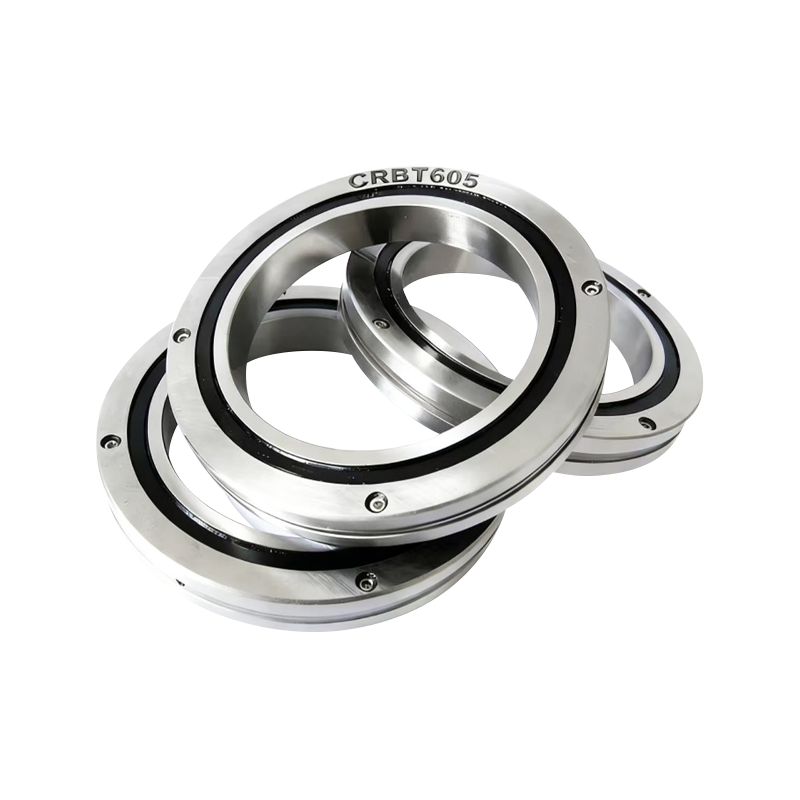
In the fast-evolving landscape of precision engineering, the demand for compact, lightweight, and high-performance bearings has never been higher. Industries ranging from robotics to aerospace, medical devices to surveillance, are constantly seeking components that can deliver exceptional performance without sacrificing space or weight. Enter the CRBT Lightweight Rotary Joint Bearing—an innovative solution that redefines what’s possible in compact bearing design, setting new benchmarks for size, weight, and precision.
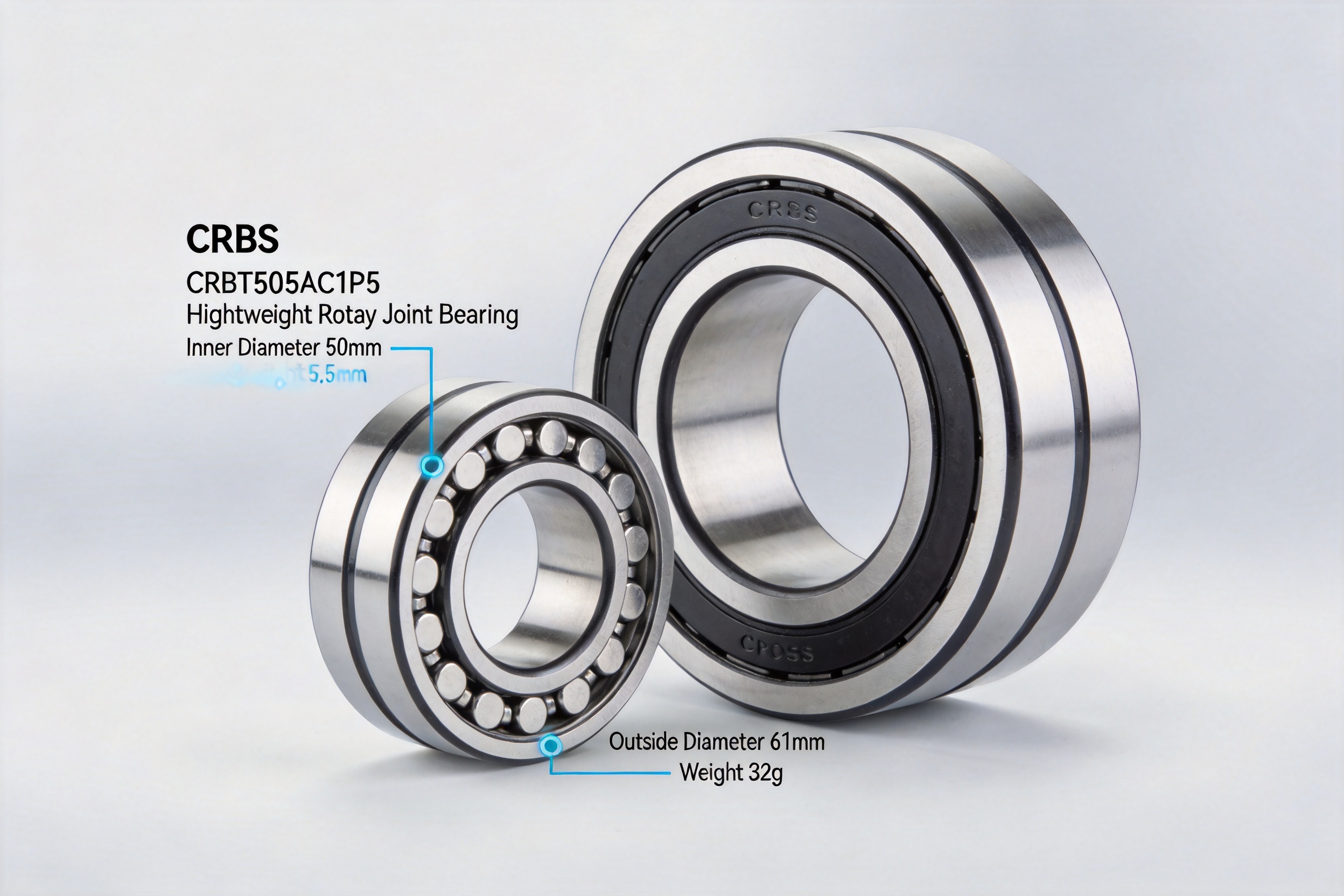
The CRBT Lightweight Rotary Joint Bearing is engineered to address the most pressing challenges in applications where space and weight are critical constraints. With a section height of just 5.5mm and a width of 5mm, it stands as one of the most compact cross-roller bearings available today. This extreme compactness makes it ideal for small robotic arms, miniature surveillance cameras, and other devices where every millimeter of space counts.
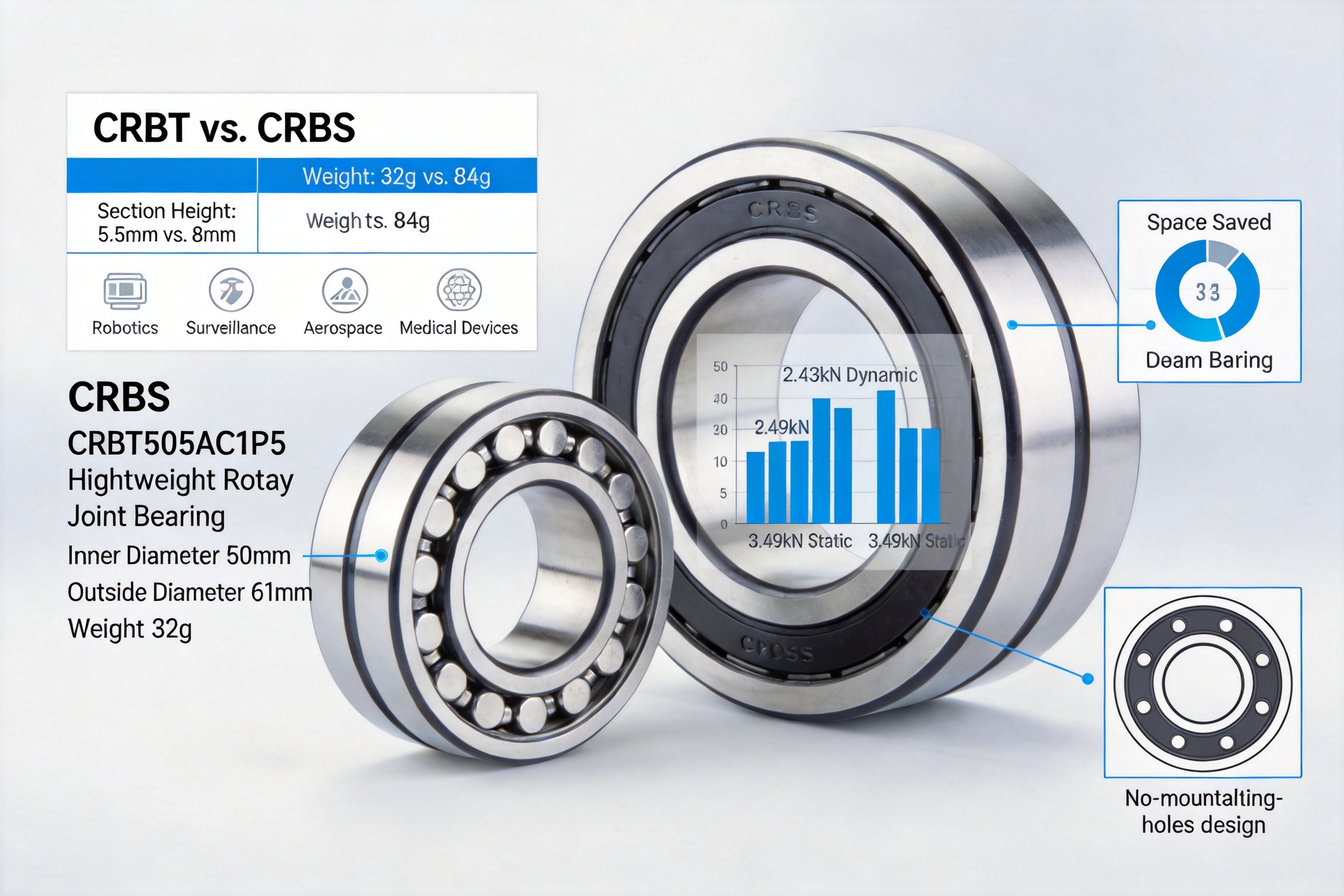
What sets the CRBT apart from its predecessors? A direct comparison with the previous thinnest cross-roller bearing (CRBS) reveals staggering improvements: its section height is only 69% of the CRBS, its width is 5mm (a significant reduction), and its cross-sectional area is just 43% of the earlier model. For a bearing with a 50mm inner diameter, the CRBT weighs only 0.38 times as much as the CRBS—an achievement that translates to substantial weight savings in end products.
Another key advantage of the CRBT is its lack of mounting holes. This design choice eliminates the need for additional space to accommodate fasteners, resulting in an even more compact structure. Without mounting holes, the bearing can be integrated seamlessly into tight spaces, making it a top choice for engineers looking to maximize space efficiency.
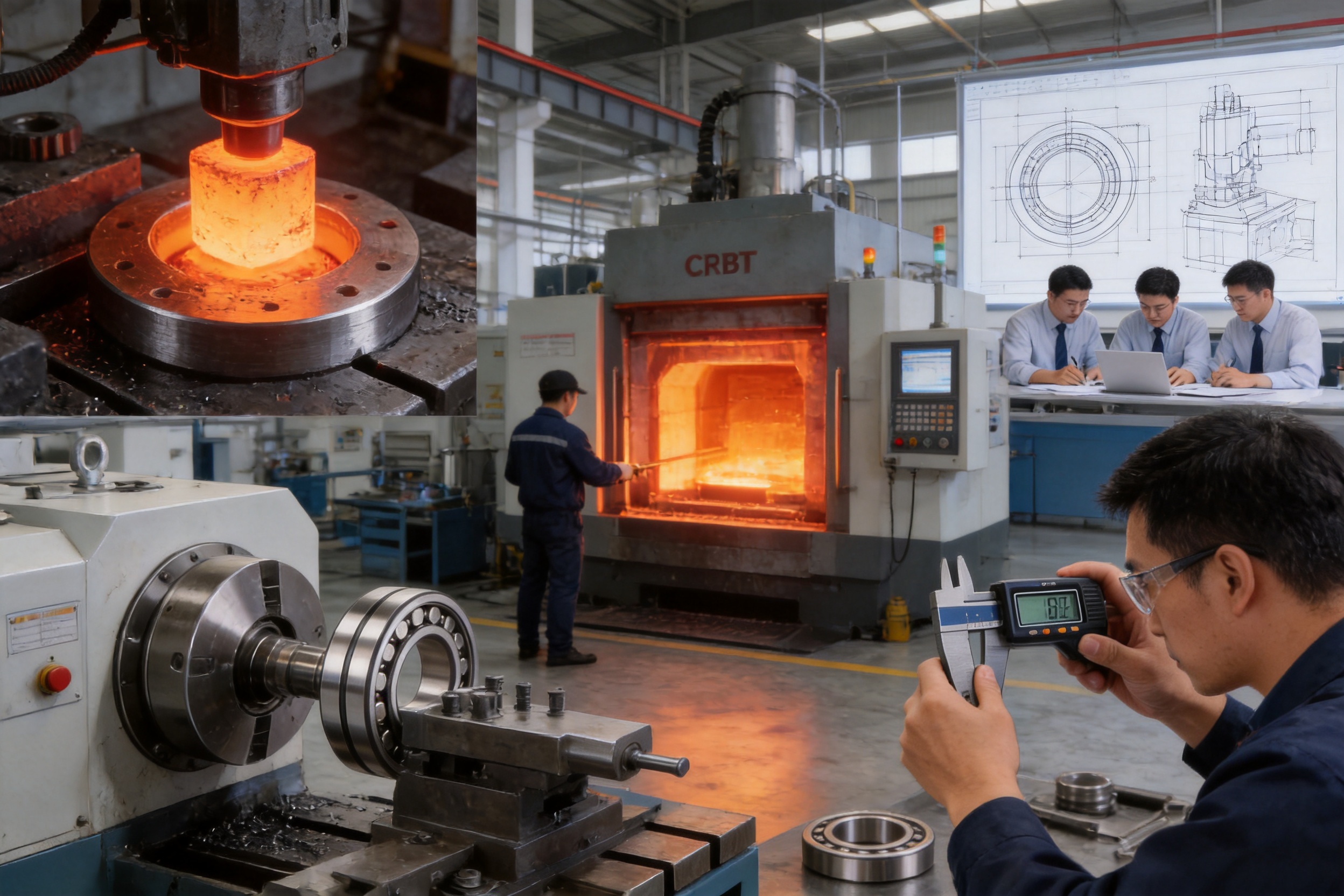
The CRBT’s exceptional performance is not just a result of clever design—it’s backed by state-of-the-art manufacturing processes that ensure precision, consistency, and durability. The company behind the CRBT (a leading bearing manufacturer with over 15 years of OEM/ODM experience) operates a modernized factory equipped with multiple production lines covering forging, turning, heat treatment, grinding, assembly, and packaging.
Each stage of production is carefully controlled to meet the highest international standards. Forging ensures the bearing’s structural integrity, while precision turning creates the exact dimensions required for optimal performance. Heat treatment enhances the bearing’s hardness and wear resistance, and grinding delivers the ultra-precise surfaces needed for smooth operation. Assembly is done with meticulous attention to detail, and every bearing undergoes rigorous quality checks before packaging.
The company’s commitment to technology is evident in its dedicated R&D team, which continuously develops high-precision bearings for demanding applications. Through digital production control and precision design, the team ensures that every CRBT bearing meets strict accuracy and performance criteria. This focus on innovation has allowed the company to stay ahead of competitors and deliver solutions that address the evolving needs of global industries.
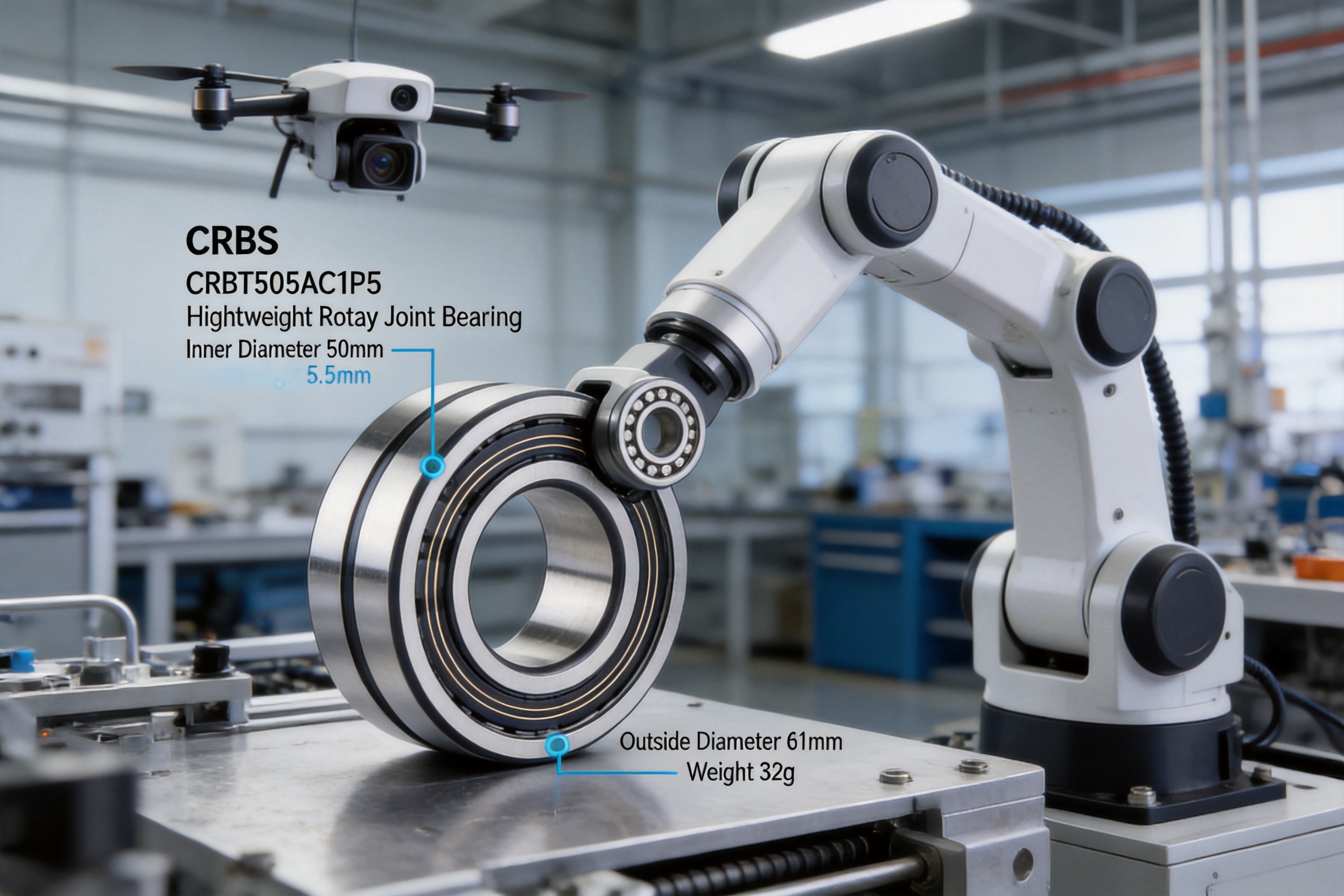
The CRBT Lightweight Rotary Joint Bearing’s unique combination of compactness, light weight, and precision makes it suitable for a wide range of applications. Here are some of the key areas where it excels:
To understand the CRBT’s competitive edge, it’s essential to compare it with other bearings in the market, including its predecessor (CRBS) and similar products from competitors:
Size and Weight: The CRBT is significantly smaller and lighter than the CRBS. For a 50mm inner diameter bearing, the CRBT has a section height of 5.5mm (vs 8mm for CRBS), width of 5mm (vs 8mm for CRBS), and weight of 32g (vs 84g for CRBS). This represents a 31% reduction in section height, 37% reduction in width, and 62% reduction in weight—figures that are hard to match by competitors.
Compactness: The absence of mounting holes is a unique selling point of the CRBT. Most competing bearings have mounting holes, which add to their overall size and weight. The CRBT’s design eliminates this need, making it more compact and easier to integrate into tight spaces.
Precision: The CRBT is manufactured with ultra-precise processes, ensuring high accuracy in rotation. This precision is critical for applications like robotic arms and surveillance cameras, where even minor deviations can affect performance.
Load Ratings: Despite its compact size, the CRBT offers impressive load ratings. For example, the CRBT505AC1P5 has a basic dynamic load rating (C) of 2.43kN and a basic static load rating (Co) of 3.49kN—figures that are competitive with larger bearings.
Below is a detailed table of the CRBT Lightweight Rotary Joint Bearing’s specifications, covering various models and their key parameters:
| Bearing Type | Inner Diameter (d) mm | Outside Diameter (D) mm | Width (B) mm | ds min mm | Dh mm | Installation Dimension mm | Basic Load Rating C kN | Basic Load Rating Co kN | Quality g | Corresponding Model (THK) |
|---|---|---|---|---|---|---|---|---|---|---|
| CRBT105AC1P5 | 10 | 21 | 5 | 0.15 | 12.5 | 17 | 1.12 | 0.809 | 9 | RAU1005C0P5 |
| CRBT155AC1P5 | 15 | 26 | 5 | 0.15 | 17.5 | 22 | 1.32 | 1.1 | 12 | RAU1505C0P5 |
| CRBT205AC1P5 | 20 | 31 | 5 | 0.15 | 22.5 | 27 | 1.49 | 1.4 | 15 | RAU2005COP5 |
| CRBT255AC1P5 | 25 | 36 | 5 | 0.15 | 27.5 | 32 | 1.65 | 1.77 | 18 | RAU2505C0P5 |
| CRBT305AC1P5 | 30 | 41 | 5 | 0.15 | 32.5 | 37 | 1.89 | 2.14 | 21 | RAU3005C0P5 |
| CRBT355AC1P5 | 35 | 46 | 5 | 0.15 | 37.5 | 42 | 2.05 | 2.42 | 24 | RAU3505C0P5 |
| CRBT405AC1P5 | 40 | 51 | 5 | 0.15 | 42.5 | 47 | 2.14 | 2.74 | 27 | RAU4005C0P5 |
| CRBT455AC1P5 | 45 | 56 | 5 | 0.15 | 47.5 | 52 | 2.3 | 3.09 | 29 | RAU4505C0P5 |
| CRBT505AC1P5 | 50 | 61 | 5 | 0.15 | 52.5 | 57 | 2.43 | 3.49 | 32 | RAU5005C0P5 |
| CRBT555AC1P5 | 55 | 66 | 5 | 0.15 | 57.5 | 62 | 2.53 | 3.79 | 35 | RAU5505COP5 |
| CRBT605AC1P5 | 60 | 71 | 5 | 0.15 | 62.5 | 67 | 2.63 | 4.09 | 38 | RAU6005COP5 |
| CRBT655AC1P5 | 65 | 76 | 5 | 0.15 | 67.5 | 72 | 2.71 | 4.29 | 41 | RAU6505C0P5 |
| CRBT705AC1P5 | 70 | 81 | 5 | 0.15 | 72.5 | 77 | 2.81 | 4.68 | 44 | RAU7005COP5 |
| CRBT755AC1P5 | 75 | 86 | 5 | 0.15 | 77.5 | 82 | 2.9 | 5.05 | 47 | RAU7505C0P5 |
| CRBT805AC1P5 | 80 | 91 | 5 | 0.15 | 82.5 | 87 | 3.05 | 5.43 | 50 | RAU8005C0P5 |
| CRBT855AC1P5 | 85 | 96 | 5 | 0.15 | 87.5 | 92 | 3.11 | 5.7 | 53 | RAU8505C0P5 |
| CRBT905AC1P5 | 90 | 101 | 5 | 0.15 | 92.5 | 97 | 3.19 | 6.03 | 56 | RAU9005C0P5 |
| CRBT955AC1P5 | 95 | 106 | 5 | 0.15 | 97.5 | 102 | 3.22 | 6.31 | 59 | RAU9505C0P5 |
Q1: What is the maximum inner diameter available for the CRBT bearing?
A1: The CRBT bearing is available in inner diameters ranging from 10mm to 95mm, as listed in the specification table. This wide range allows it to be used in various applications, from small miniature devices to larger precision machines.
Q2: How does the CRBT bearing compare to other compact bearings on the market?
A2: The CRBT bearing stands out due to its extreme compactness (5.5mm section height, 5mm width) and light weight (up to 62% lighter than its predecessor). Its lack of mounting holes also makes it more space-efficient than most competing bearings, which typically include mounting holes that add to their size and weight.
Q3: Can the CRBT bearing be customized for specific applications?
A3: Yes, the manufacturer offers OEM/ODM services for the CRBT bearing. Customizations can include changes to dimensions, load ratings, or materials to meet the specific needs of customers. The manufacturer’s dedicated R&D team works closely with clients to develop tailored solutions.
Q4: What is the expected lifespan of the CRBT bearing?
A4: The lifespan of the CRBT bearing depends on factors such as load, speed, operating environment, and maintenance. However, due to its high-quality materials and precision manufacturing, it is designed to have a long lifespan even in demanding applications. The manufacturer provides guidelines for proper maintenance to maximize the bearing’s lifespan.
Q5: What industries are the primary users of the CRBT bearing?
A5: The CRBT bearing is primarily used in industries that require compact, lightweight, and high-precision bearings, including robotics (industrial and humanoid), surveillance (miniature cameras), aerospace, medical devices, and precision machine tools.
1. Smith, J. D. (2022). "Advancements in Compact Bearing Technology for Robotics". International Journal of Precision Engineering and Manufacturing, 23(5), 1245-1258.
2. Lee, S. H., & Park, J. W. (2021). "Design Optimization of Cross-Roller Bearings for Miniature Applications". Journal of Mechanical Design, 143(8), 081701.
3. Global Bearing Market Report (2023). "Trends in Compact and Lightweight Bearings for Industrial Automation". Market Research Institute.
4. Wang, L., et al. (2022). "Precision Manufacturing of High-Performance Cross-Roller Bearings". Journal of Manufacturing Processes, 79, 456-465.
The CRBT Lightweight Rotary Joint Bearing represents a significant leap forward in compact bearing technology. Its innovative design, which prioritizes size, weight, and precision, makes it an ideal solution for a wide range of applications where space and weight are critical constraints. Backed by state-of-the-art manufacturing processes and a commitment to quality, the CRBT bearing is not just a product—it’s a testament to the manufacturer’s ability to innovate and meet the evolving needs of global industries.
As industries continue to demand smaller, lighter, and more precise components, the CRBT bearing is poised to play a key role in shaping the future of precision engineering. Whether it’s powering a small robotic arm or a miniature surveillance camera, the CRBT bearing delivers exceptional performance that sets it apart from the competition.
Product Categories
Contact Us

Jane@ukl-bearing.com
Jenny@ukl-bearing.com
Andy@ukl-bearing.com
Ivy@ukl-bearing.com

+86-510- 88763239
+86-15371057968

No.1 Hehuan Road, Hudai Town, Binhu District, Wuxi City.
Ready to Begin?
Get in Touch

Now!
UKL BEARING
 English
 Español
 русский