Content
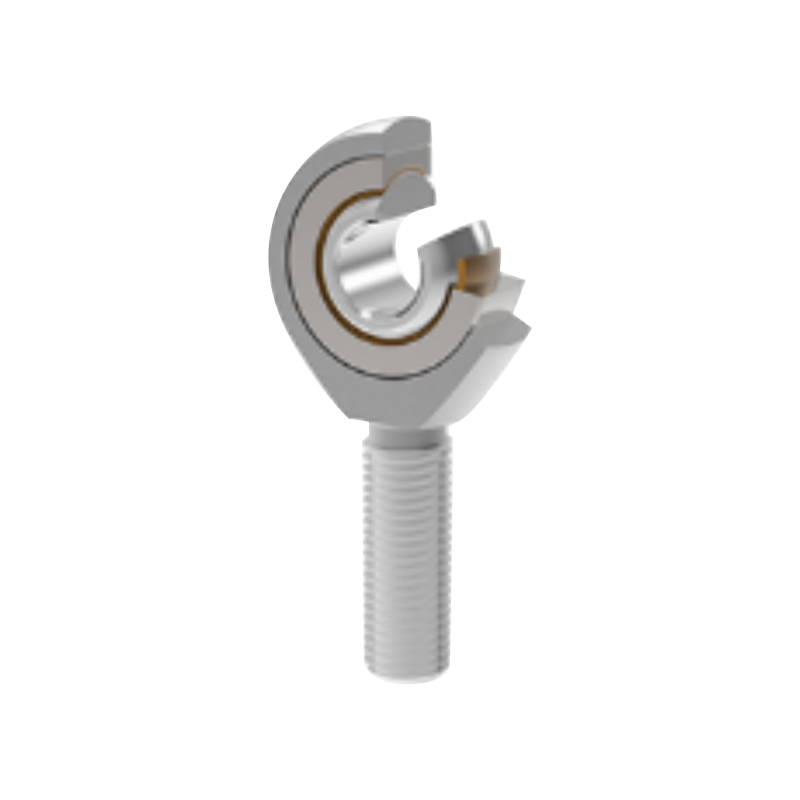
Rod end bearings are essential mechanical connection elements in systems that require controlled angular movement, reliable force transmission, and compensation for assembly or operating misalignment. The SI steel-on-steel rod end bearing is designed for these demanding conditions. It combines a robust carbon-steel rod end body with a steel-on-steel spherical plain bearing, creating a durable joint for hydraulic cylinders, construction machinery, agricultural equipment, automated production lines, material-handling systems, and industrial mechanisms.
Unlike rigid threaded connections, an SI rod end bearing allows the connected shaft, piston rod, or linkage to articulate around the spherical contact surface. This movement helps reduce side loading, compensate for angular deviation, and maintain a more stable transfer of radial forces. The result is a mechanical joint that can support repeated movement while resisting shock, vibration, and heavy operating loads.
The SI series is particularly valuable in applications where strength and impact resistance are more important than completely maintenance-free operation. Its steel-on-steel sliding friction pair provides high mechanical strength and excellent resistance to deformation. When correctly lubricated and installed, the bearing can deliver dependable service in demanding industrial environments.
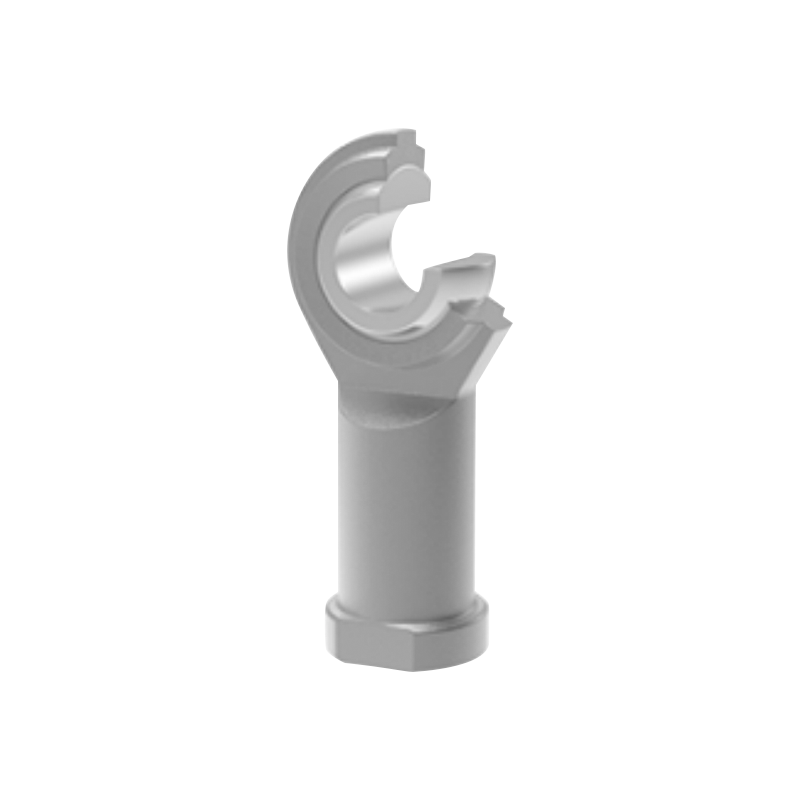
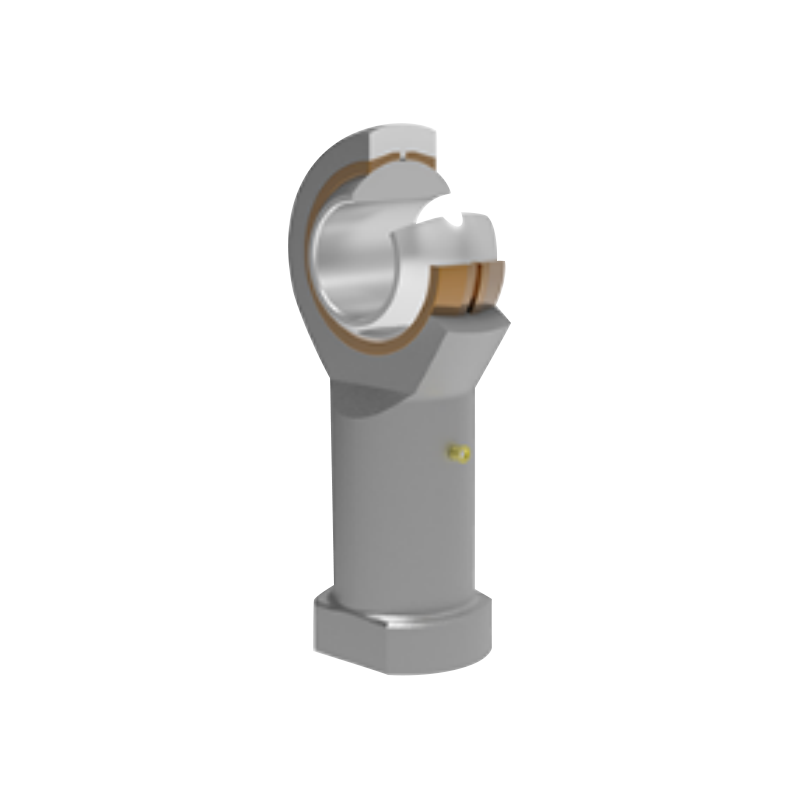
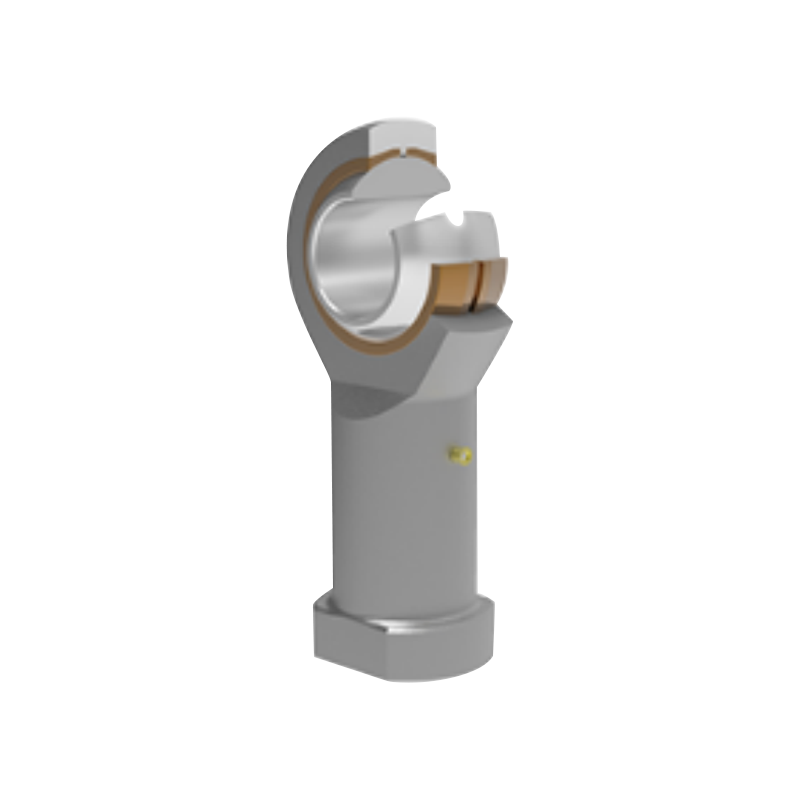
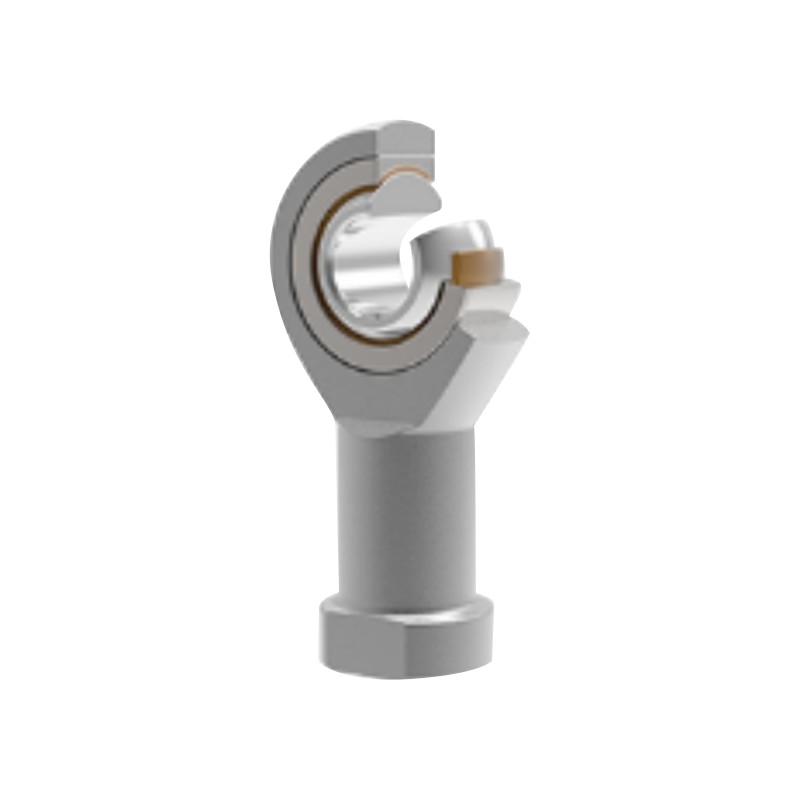
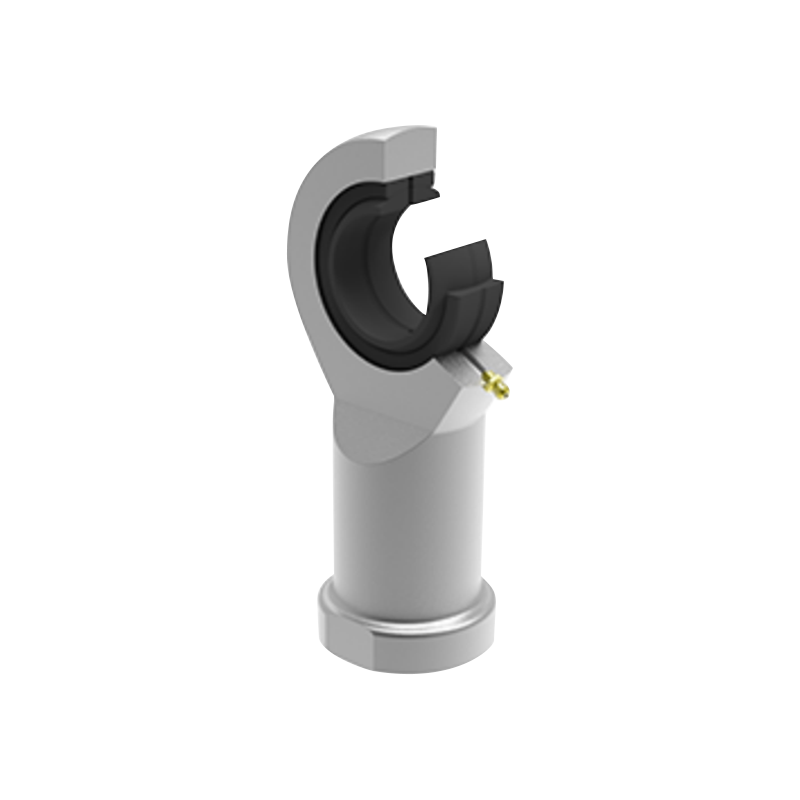
Assembled SI rod end spherical plain bearings consist of two principal components: a rod end body and an integrated radial spherical plain bearing. The rod end body is manufactured from carbon steel and protected with a galvanized surface. This construction provides a practical balance of strength, machinability, corrosion resistance, and cost efficiency.
The internal spherical plain bearing is based on the GE…E or GE…ES radial spherical plain bearing design. The bearing permits oscillating movement, rotation, and limited angular displacement between the inner ring and the outer housing. This makes it suitable for mechanisms in which the connected components do not remain perfectly aligned during the complete operating cycle.
The standard product family covers bore sizes from approximately 5 mm to 80 mm. Smaller models are commonly used in compact automation assemblies and light mechanical linkages, while larger models are suitable for hydraulic cylinders, lifting equipment, agricultural machinery, construction equipment, and heavy industrial mechanisms.
Models carrying the “E” suffix are generally supplied without the same lubrication arrangement available on other models. Models with the “ES” suffix can normally be lubricated through an oil cup or through a lubrication passage in the rod end eyelet. The exact lubrication method should be verified against the selected model and application conditions before installation.
| Product characteristic | SI series specification or feature | Application value |
|---|---|---|
| Rod end body | Carbon steel with galvanized surface | High structural strength and improved surface protection |
| Sliding friction pair | Steel/steel | Suitable for high loads, shock, and repeated oscillation when lubricated |
| Product type | Assembled rod end spherical plain bearing | Combines a threaded rod end with a spherical plain bearing |
| Typical bore range | Approximately 5 mm to 80 mm | Supports compact and heavy-duty equipment designs |
| Lubrication | Oil cup or rod end eyelet on applicable models | Allows maintenance and lubricant replenishment |
| Operating temperature range | Approximately −50°C to +150°C, subject to lubrication and application conditions | Suitable for a broad range of industrial environments |
| Thread options | Metric thread options, including fine-pitch variants | Facilitates integration with hydraulic cylinders and mechanical linkages |
| Special configurations | Different pitches and special thread precision available | Supports customized equipment requirements |
The defining feature of this bearing family is the steel-on-steel sliding friction pair. This material combination is selected for applications where the bearing must withstand substantial radial loads, impact forces, vibration, and repeated changes in direction.
Steel-on-steel designs differ from composite, polymer-lined, or maintenance-free rod ends. Composite bearings can be advantageous where low friction, low noise, and minimal maintenance are the main priorities. However, they may not offer the same resistance to severe shock loads, high static forces, or mechanical deformation. In heavy-duty equipment, excessive impact can damage a softer sliding layer or cause permanent changes in clearance.
The SI bearing uses a stronger metallic contact system. With an appropriate lubricant film, the steel sliding surfaces can support high loads while maintaining controlled movement. The structure is especially effective in hydraulic cylinder connections and articulated machinery, where force levels may change suddenly and where the joint can experience both oscillating movement and misalignment.
| Performance factor | Steel-on-steel SI rod end | Composite or PTFE-lined rod end | Practical implication |
|---|---|---|---|
| Radial load capacity | Very high for the product class | Moderate to high depending on design | Steel-on-steel is well suited to heavy linkages |
| Shock resistance | Excellent | Moderate | Useful in construction and mobile machinery |
| Wear behavior | High wear resistance with proper lubrication | Often favorable under light or moderate loads | Lubrication discipline is important for SI bearings |
| Maintenance | Periodic lubrication may be required | Often maintenance-free | Maintenance access should be included in the design |
| Temperature capability | Broad operating range subject to lubricant selection | Limited by liner or polymer material | Steel construction can be advantageous in harsh conditions |
| Resistance to deformation | Very high | Dependent on liner and backing materials | Suitable for high static and dynamic loads |
| Typical applications | Hydraulic cylinders, heavy machinery, lifting systems | Light automation, low-load motion systems | Selection should reflect the actual load and environment |
The primary advantage of steel-on-steel construction is not simply a higher nominal load rating. It is the combination of load capacity, shock resistance, stiffness, and service durability. A bearing may operate in a mechanism with substantial vibration or intermittent impact, and its ability to retain structural integrity can be more important than achieving the lowest possible friction coefficient.
The rod end body provides the threaded interface and structural support, while the spherical plain bearing provides movement between the attached components. This division of functions allows the bearing to be installed directly into a threaded rod, clevis, actuator, or hydraulic-cylinder assembly.
The spherical inner ring supports rotation and angular displacement. When the piston rod of a hydraulic cylinder extends or retracts, the rod end may not move along a perfectly straight axis. Small installation tolerances, frame deflection, thermal expansion, and changing load directions can all create angular deviation. The spherical design accommodates these conditions more effectively than a rigid joint.
In practical terms, the bearing can help reduce bending forces on the connected rod. It can also reduce localized stress at the threaded connection and prevent the mechanism from binding when the operating geometry changes. These benefits contribute to better movement quality and longer service life for connected components.
The articulation angle varies according to the model and installation arrangement. Many SI series configurations provide an approximate articulation capability of around 6° to 13°, while the actual permissible angle must be confirmed from the dimensional drawing and application design. The angle should never be treated as a substitute for correct alignment. Excessive angular movement can create edge loading, accelerate wear, and reduce the useful life of the bearing.
SI Steel On Steel Rod End Bearing
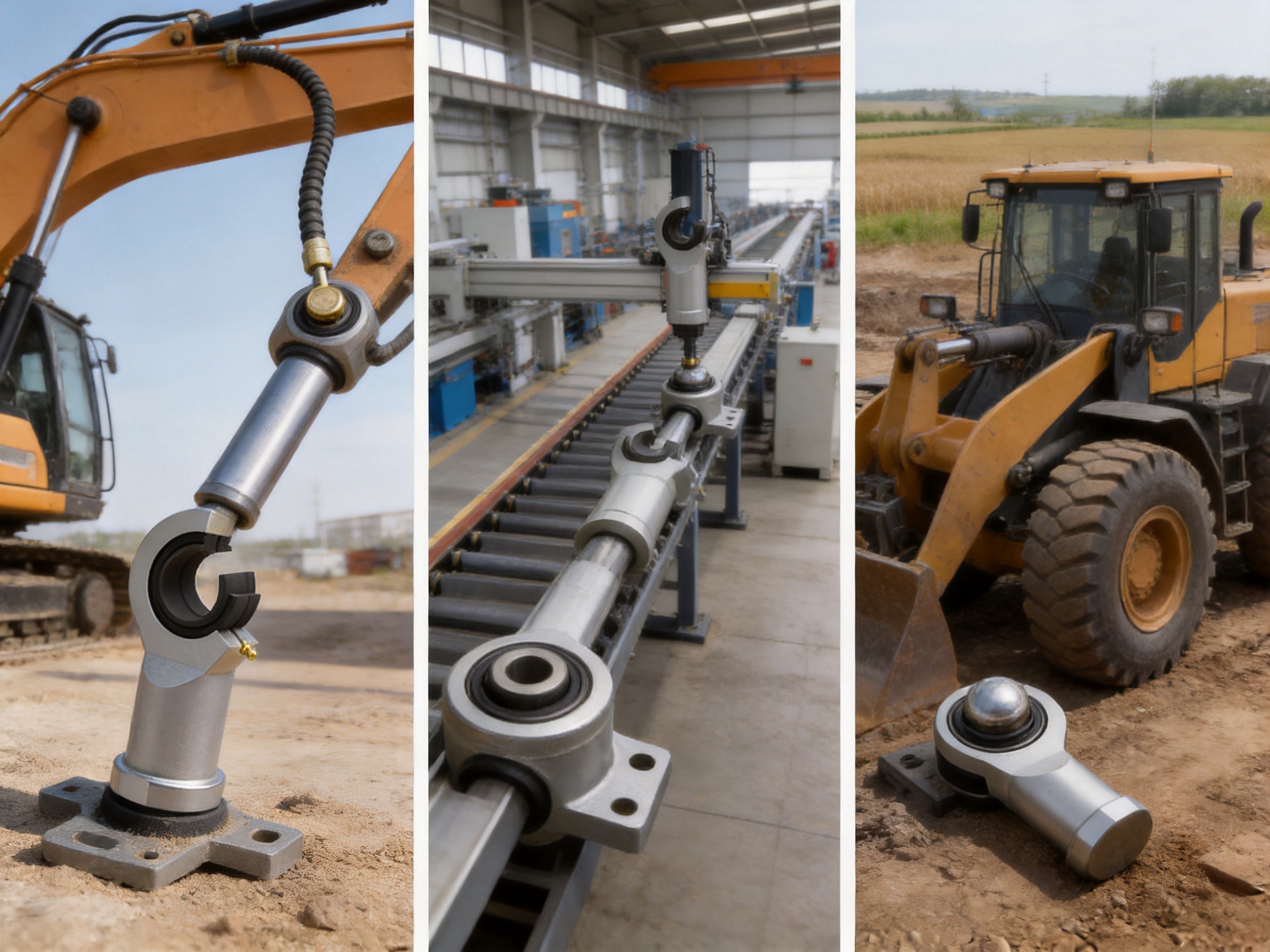
Hydraulic cylinders are among the most common applications for steel-on-steel rod end bearings. A cylinder converts hydraulic pressure into linear force, but the cylinder body and piston rod are often installed within a mechanism that changes angle during operation. The connection at the rod end must therefore transmit considerable force while allowing the cylinder to follow the movement of the machine.
An SI rod end bearing at the end of a hydraulic cylinder can compensate for moderate angular variation between the piston rod and the connected lever, bracket, or linkage. This reduces the risk of side loading on the piston rod. Excessive side loading can increase seal wear, damage the rod surface, accelerate guide wear, and reduce the reliability of the complete hydraulic assembly.
The steel-on-steel structure is well suited to hydraulic equipment because hydraulic cylinders may experience high static loads, sudden pressure changes, vibration, and impact. A steel rod end can maintain a stable connection under these conditions while providing the articulation required by the machine geometry.
Typical hydraulic-cylinder applications include:
For hydraulic-cylinder installation, the selected SI bearing should match the cylinder rod thread, bore diameter, expected radial load, articulation angle, and lubrication arrangement. The bearing should also be protected from direct contamination by mud, abrasive dust, and water whenever the operating environment is severe.
A properly selected and lubricated rod end can improve cylinder alignment and reduce stress throughout the mechanism. It does not eliminate the need for adequate guide support, correct mounting, or proper cylinder alignment. Instead, it provides a controlled mechanical interface that helps the complete system tolerate normal movement and installation variation.
Automation equipment requires repeatable motion, stable positioning, and dependable operation over many cycles. Although automated systems often operate under lower loads than construction machinery, their bearings may experience a very high number of movements. A small amount of wear or looseness can eventually affect positioning accuracy, noise, and product quality.
SI rod end bearings can be used in automation systems where mechanical strength and articulation are more important than completely maintenance-free operation. They are suitable for linear actuators, linkage assemblies, packaging equipment, conveyors, automated welding machines, and auxiliary robotic mechanisms.
In a linear actuator, the rod end bearing can connect the actuator rod to a moving platform or lever. The spherical design allows the actuator to follow the changing angle of the mechanism while reducing binding. In a conveyor or packaging machine, it can connect guide arms and adjustment mechanisms that require repeatable movement and resistance to vibration.
The compact SI5E model is particularly useful where installation space is limited. With a 5 mm bore, approximately 6 mm bearing width, and an M5 thread, it can be integrated into compact assemblies. The catalogue data lists a dynamic load rating of approximately 3.4 kN and a static load rating of approximately 8.1 kN for the SI5E model. These values are reference ratings and should be evaluated together with speed, load direction, lubrication, oscillation angle, and operating cycle.
Automation designers should consider whether the steel-on-steel construction is appropriate for the required cleanliness, noise, and maintenance conditions. In food-processing or cleanroom environments, a different bearing material or sealing arrangement may be preferred. In general industrial automation, however, the SI series offers a strong solution where the mechanism experiences shock, vibration, or substantial mechanical loads.
Construction equipment places unusually demanding conditions on mechanical joints. Excavators, loaders, cranes, mining machines, and road-building equipment operate with changing loads, uneven ground, shock, dust, and vibration. Linkages must move freely while retaining high stiffness and resistance to deformation.
The SI steel-on-steel rod end bearing is suitable for these conditions because its metallic structure can withstand high force and impact. The bearing can be installed at the end of an actuator or within a linkage where the connected elements move through a limited angular range.
In an excavator, for example, a rod end may connect a hydraulic cylinder to the bucket, arm, or boom linkage. During operation, the joint is exposed to changing load directions and sudden impact when the bucket engages material. A bearing with insufficient stiffness may develop excessive clearance or suffer premature wear. A steel-on-steel design offers a more robust connection when supported by proper lubrication and contamination control.
Similar advantages apply to cranes, lifting platforms, agricultural harvesters, seeders, and mining equipment. In each case, the bearing must be selected according to the actual load path rather than only the nominal bore size. Static load, dynamic load, oscillation frequency, shock factor, and mounting geometry all influence performance.
For outdoor machinery, the galvanized rod end body provides useful surface protection. Galvanizing does not make the bearing immune to corrosion, and exposed surfaces should still be protected from standing water, salt, aggressive chemicals, and abrasive contamination. Regular inspection is particularly important in mobile equipment operating in mud, dust, or high-humidity conditions.
The SI series is offered in a broad size range. The smallest models support compact mechanical systems, while the largest models can be integrated into heavy-duty hydraulic and structural mechanisms. The available sizes include different bore diameters, body dimensions, thread diameters, thread pitches, and overall lengths.
Representative catalogue data is shown below. Dimensions and ratings should be confirmed against the current technical drawing before production use, particularly when ordering non-standard thread configurations.
| Model | Bore d (mm) | B (mm) | Thread | Dynamic rating (kN) | Static rating (kN) | Approximate weight (kg) |
|---|---|---|---|---|---|---|
| SI5E | 5 | 6 | M5 | 3.4 | 8.1 | 0.023 |
| SI8E | 8 | 8 | M8 | 5.5 | 12.9 | 0.040 |
| SI10E | 10 | 9 | M10 | 8.1 | 17.6 | 0.065 |
| SI12E | 12 | 10 | M12 | 10 | 24.5 | 0.108 |
| SI15ES | 15 | 12 | M14 | 16 | 36 | 0.169 |
| SI20ES | 20 | 16 | M20 × 1.5 | 30 | 60 | 0.335 |
| SI25ES | 25 | 20 | M24 × 2 | 48 | 83 | 0.665 |
| SI30ES | 30 | 22 | M30 × 2 | 62 | 110 | 1.05 |
| SI40ES | 40 | 28 | M39 × 3 | 99 | 180 | 2.05 |
| SI50ES | 50 | 35 | M45 × 3 | 156 | 290 | 3.48 |
| SI60ES | 60 | 44 | M52 × 3 | 245 | 450 | 5.55 |
| SI70ES | 70 | 49 | M56 × 4 | 313 | 610 | 8.72 |
| SI80ES | 80 | 55 | M64 × 4 | 400 | 750 | 12.9 |
The ratings in the table provide a basis for comparison, but they should not be treated as a universal permissible operating load. A bearing’s actual service life depends on load direction, load magnitude, oscillation angle, frequency, lubrication, contamination, temperature, mounting rigidity, and the quality of the mating components.
Where a system experiences axial loads, the designer should verify the axial load capacity separately. Rod end spherical plain bearings are primarily selected for radial loads and angular movement. An axial force that is not properly supported may increase friction, cause edge loading, or damage the bearing surfaces.
Thread compatibility is one of the most important selection factors for rod end bearings. The SI series includes metric thread configurations, and selected models use fine-pitch threads such as M20 × 1.5, M24 × 2, M30 × 2, M36 × 3, M42 × 3, M45 × 3, M52 × 3, and M64 × 4.
Fine-pitch threads can provide useful adjustment accuracy and increased engagement in applications where the available threaded length is limited. They can also help match the threads used on hydraulic-cylinder rods and adjustment mechanisms. However, thread selection must include consideration of strength, engagement length, tightening method, locking arrangement, and compatibility with the mating component.
Left-hand thread versions are available for applications requiring opposing adjustment or paired mechanical movement. For left-hand threads, the bearing model and thread marking should include the appropriate left-hand designation. A typical identification format may include the suffix “L” and a description such as “left.” The exact ordering code should be confirmed before manufacture.
Correct installation requires the bearing to be aligned with the intended load direction. The rod end should not be forced into an angular position that exceeds the permissible articulation angle. The threaded shank should be fully and correctly engaged, and the locking nut or retaining arrangement should be tightened according to the equipment manufacturer’s specification.
Installation surfaces should be clean and free from burrs. The mating pin should have the correct diameter and surface condition. Excessive clearance between the inner ring and pin can create impact and accelerated wear, while insufficient clearance may restrict movement. When a lubrication passage is provided, it should remain accessible after assembly.
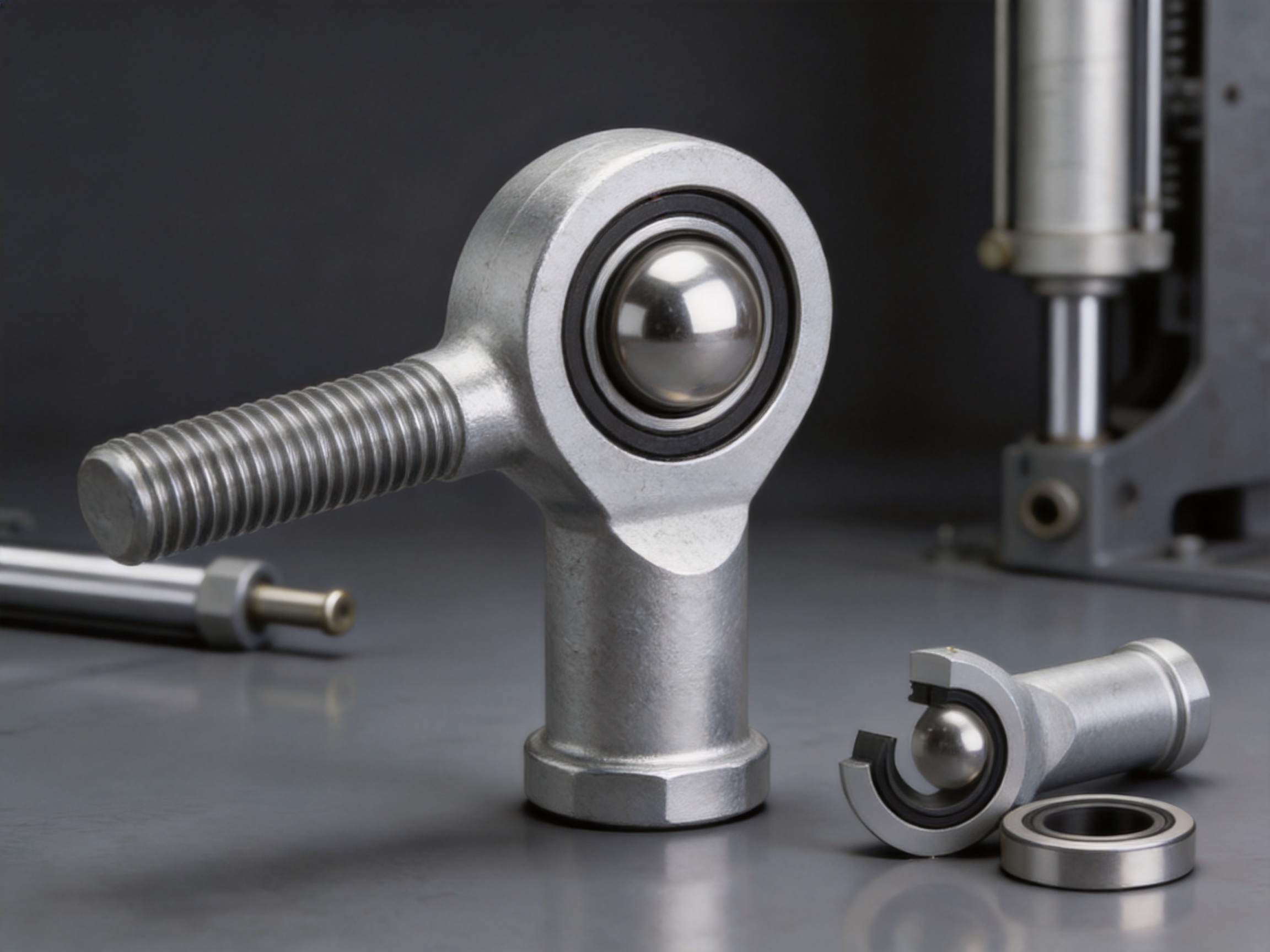
Steel-on-steel rod end bearings depend on an appropriate lubrication film to reduce friction, control wear, and protect the sliding surfaces. Lubrication is especially important under high loads, slow oscillating movement, frequent reversals, and high contact pressure.
Applicable ES models can be lubricated through an oil cup or rod end eyelet. This arrangement allows maintenance personnel to replenish lubricant without dismantling the complete linkage. The lubrication interval should be established according to operating conditions rather than based solely on calendar time.
Factors that may require more frequent lubrication include:
The selected lubricant must be compatible with the bearing materials, seals, temperature range, and surrounding equipment. Mixing incompatible greases can reduce lubricant performance. Maintenance procedures should include cleaning the lubrication point before applying fresh lubricant so that contaminants are not pushed into the bearing.
Regular inspections should check for increased clearance, unusual noise, corrosion, damaged threads, cracked housing surfaces, lubricant loss, and abnormal wear patterns. If the bearing develops excessive looseness or visible damage, relubrication alone may not restore its performance. Replacement should be considered before the looseness affects the cylinder rod, pin, bracket, or connected mechanism.
Models that are not designed for regular lubrication should not be modified without technical approval. The distinction between lubricated and non-lubricated configurations should be maintained throughout purchasing, installation, and maintenance documentation.
The stated operating temperature range for the SI series is approximately −50°C to +150°C, subject to the selected lubricant, load, speed, sealing arrangement, and environmental conditions. Steel components can tolerate a broad temperature range, but lubricant viscosity and performance may change substantially with temperature.
At low temperatures, lubricant may become more viscous, increasing starting torque and resistance to movement. At high temperatures, lubricant oxidation, thinning, or degradation may reduce the protective film. The lubricant specification should therefore be selected according to the lowest and highest expected operating temperatures.
In corrosive environments, the galvanized body provides an additional level of protection, but it should not be considered a complete corrosion-control system. Applications exposed to salt spray, chemical vapors, acidic cleaning agents, or persistent moisture may require special material, coating, sealing, or maintenance arrangements.
Contamination control is equally important. Abrasive particles can enter the sliding interface and act as a grinding medium. Protective covers, suitable seals, correct installation, and regular cleaning can significantly improve service life. In mobile machinery, the bearing should be positioned and protected so that direct impact from stones or high-pressure washing is minimized.
The performance of a steel-on-steel rod end bearing depends on more than its general design. Dimensional consistency, material quality, heat treatment, surface finish, internal clearance, thread accuracy, and assembly control all affect the final product.
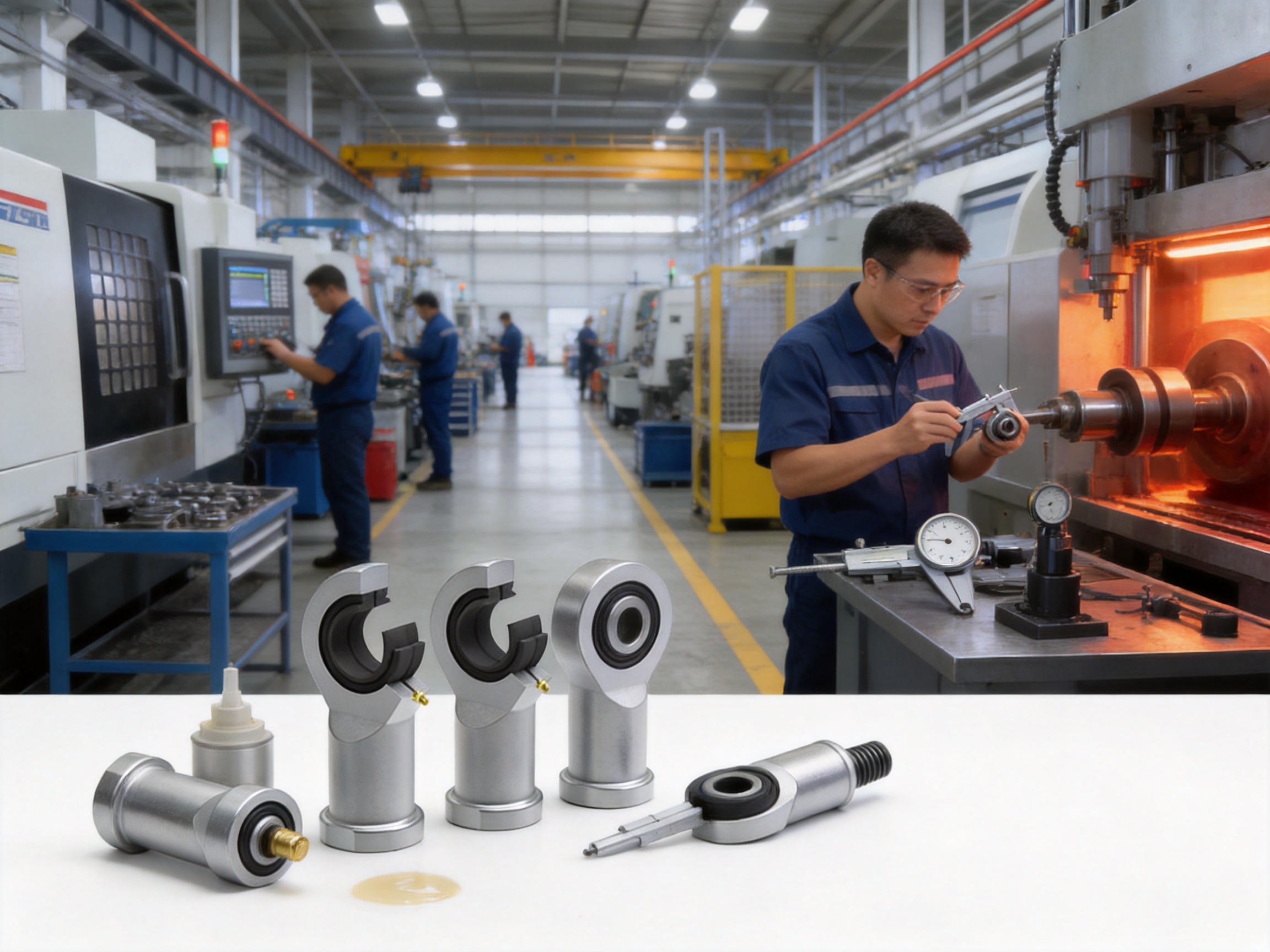
UKL Bearing Manufacturing Co., Ltd. integrates research and development, forging, annealing, turning, heat treatment, grinding, automated assembly, inspection, and international distribution. This integrated manufacturing structure allows process control to be applied from raw material preparation through final packaging.
Forging and forming processes establish the basic geometry and structural integrity of the rod end body and bearing components. Proper control of heating, forming pressure, cooling, and material flow helps reduce the risk of internal defects and supports consistent mechanical strength.
Annealing and related heat-treatment processes are used to achieve appropriate material conditions for machining and subsequent service. Heat treatment must be controlled carefully because excessive hardness, insufficient hardness, or uneven metallurgical structure can affect wear resistance, toughness, and dimensional stability.
Turning operations produce the main external and internal geometries of the components. Precision turning controls bore dimensions, outside diameters, shoulder positions, thread blanks, and reference surfaces. Consistency at this stage supports the accuracy of later grinding and assembly operations.
Heat treatment is applied according to the requirements of the component material and function. It can improve hardness, strength, wear resistance, and fatigue performance. Process monitoring and inspection are necessary to ensure that the final parts meet the intended mechanical and dimensional requirements.
Grinding provides the surface precision needed for the spherical contact components and other functional surfaces. Improved roundness, profile accuracy, and surface finish help create a more stable sliding interface. Grinding parameters must be controlled to avoid overheating, grinding burns, and unwanted changes in surface structure.
Automated assembly improves repeatability and reduces variation between individual bearings. Assembly operations may include component cleaning, fitting, clearance control, lubrication where required, and final inspection. Automation is particularly valuable for maintaining consistent production results across large quantities and different size ranges.
UKL operates a modern production base with multiple process lines and a monthly production capacity stated at approximately 10,000 to 50,000 units, depending on product mix and order requirements. The company also has more than 200 experienced professionals and supports OEM and ODM projects for customers in multiple international markets.
Quality control should cover incoming material verification, process inspection, dimensional inspection, hardness testing, surface evaluation, thread inspection, assembly verification, and final packaging inspection. For industrial customers, traceability and batch-level documentation can provide additional confidence during equipment qualification and after-sales analysis.
Product development is another important manufacturing strength. A bearing manufacturer serving automation, robotics, CNC machinery, hydraulic equipment, and industrial systems must be able to respond to different load conditions, mounting geometries, materials, and performance requirements.
UKL maintains research and development activities covering high-precision bearings, cross roller bearings, dual-direction thrust angular contact ball bearings, and other specialized products. This wider technical portfolio supports knowledge sharing between different bearing technologies, including precision grinding, raceway control, material selection, and assembly accuracy.
For SI rod end bearings, engineering support may include selection of bore size, thread form, thread pitch, lubrication arrangement, surface treatment, special tolerances, and left-hand or right-hand thread configuration. OEM and ODM customers may also require custom dimensions, packaging, markings, inspection documentation, or production schedules.
UKL combines manufacturing with international sales and technical support. Its products are supplied to customers in Europe, Asia, Africa, the Middle East, Russia, and other regions. A multilingual service team provides technical response, installation guidance, and after-sales communication.
For international buyers, reliable supply involves more than product availability. It also includes consistent product identification, clear technical documentation, export packaging, production planning, quality records, and responsive communication. These factors are particularly important when rod end bearings are used in replacement programs or integrated into equipment supplied to multiple countries.
OEM and ODM experience can help customers develop a bearing configuration that matches a specific hydraulic cylinder, actuator, linkage, or machine frame. Customization should be based on engineering drawings and verified operating conditions rather than on a direct dimensional substitution alone.
The SI steel-on-steel rod end bearing offers several advantages compared with lower-cost or less specialized alternatives. Its most important benefit is a combination of strength, articulation, and maintainability. A simple rigid threaded joint may be less expensive, but it cannot accommodate the same angular movement. A polymer-lined bearing may require less maintenance, but it may not tolerate the same shock or static loading. A low-quality rod end may have nominally similar dimensions but lack the manufacturing consistency required for long-term reliability.
These benefits make the SI series particularly competitive in equipment where downtime is costly and where a joint must remain functional despite vibration, shock, and changing alignment. The bearing is not intended to replace every other rod end design. Selection should always reflect the actual balance between load, friction, maintenance, cleanliness, speed, temperature, and service life.
Selection should begin with the load and movement requirements. The bore diameter must match the connecting pin or shaft, while the thread must match the hydraulic-cylinder rod or mating component. The bearing should be large enough to support the expected radial load with an appropriate safety margin.
The following factors should be evaluated:
The dynamic load rating is relevant when the bearing experiences repeated movement under load. The static load rating is important when the bearing is exposed to stationary loads, overloads, or shock conditions. Neither rating alone determines the actual service life. A bearing working at a moderate load but with severe contamination or insufficient lubrication may fail earlier than a bearing operating at a higher load in clean, well-lubricated conditions.
The installation geometry should also be reviewed. The bearing should remain within its permissible articulation angle throughout the full movement of the machine. If the mechanism requires a larger angle, a different joint design or additional alignment component may be necessary.
Before installation, inspect the bearing for damage, corrosion, contamination, or incorrect thread marking. Confirm the model, bore size, thread direction, and lubrication configuration against the assembly drawing.
Clean the mating pin and threaded connection. Remove burrs and sharp edges that could interfere with seating or damage the bearing. Do not strike the bearing directly with a hammer. If pressing is required, apply force to the appropriate supporting surfaces and avoid transmitting assembly force through the sliding contact area.
Ensure that the bearing is aligned with the load path. The rod end body should not be used as a lever to force the attached component into position. If the parts do not align naturally, the root cause may be an incorrect mounting dimension, bent component, excessive tolerance, or unsuitable bearing angle.
Use the correct locking nut, washer, retaining plate, or other securing arrangement. Thread engagement should meet the equipment designer’s requirements. Under-tightening may cause loosening and impact, while over-tightening may distort the threaded connection or affect the bearing housing.
After installation, move the mechanism slowly through its full range. Check for binding, excessive resistance, interference, and unexpected contact. Verify that the bearing does not reach the end of its articulation range during normal operation.
Where lubrication is required, apply the specified lubricant before commissioning. Record the installation date and establish an inspection schedule based on operating cycles and environmental severity.
Early detection of bearing problems helps prevent secondary damage. A worn rod end may cause play in the linkage, uneven movement, vibration, noise, or loss of positional accuracy. In hydraulic-cylinder systems, excessive bearing clearance may also increase side loading and contribute to rod or seal damage.
| Observed condition | Possible cause | Recommended action |
|---|---|---|
| Excessive radial play | Wear, insufficient lubrication, contamination, or overload | Inspect clearance, lubricate if appropriate, and replace if wear exceeds the permitted limit |
| Movement feels rough | Contamination, corrosion, inadequate lubricant, or misalignment | Clean and inspect the joint; verify alignment and lubricant compatibility |
| Abnormal noise | Metal-to-metal contact, damaged surfaces, loose mounting, or insufficient lubrication | Stop the equipment if necessary and identify the source before continued operation |
| Thread loosening | Insufficient tightening, vibration, or incorrect locking method | Check thread engagement and apply the approved locking arrangement |
| Rapid wear | High oscillation frequency, excessive load, poor lubrication, or abrasive contamination | Review application conditions and maintenance frequency |
| Corrosion | Water, salt, chemicals, damaged coating, or poor storage | Improve protection and replace components with compromised functional surfaces |
Service life can be extended by maintaining correct alignment, using suitable lubricant, preventing contamination, avoiding overload, and replacing worn mating pins before they damage the spherical bearing. A bearing should not be evaluated in isolation. The pin, bracket, cylinder rod, locking nut, and surrounding structure all contribute to the performance of the joint.
Rod end bearings should be stored in a clean, dry environment with protection from condensation, corrosive fumes, dust, and mechanical impact. Packaging should prevent the bearings from rubbing against one another and should preserve model identification throughout storage and transportation.
For industrial customers, clear labeling is important because similar-size rod ends may have different thread pitches, lubrication arrangements, or thread directions. Purchase orders should specify the complete model designation, bore size, thread, quantity, surface-treatment requirement, and any inspection or packaging documentation.
Consistent production capacity supports maintenance programs and replacement-part planning. UKL’s integrated production system and international supply experience are intended to support both standard orders and customized OEM requirements. Customers can benefit from technical communication before production, inspection coordination during manufacturing, and after-sales support during installation or replacement.
The SI steel-on-steel rod end bearing is a durable and adaptable solution for mechanical systems that require high load capacity, controlled angular movement, and resistance to shock. Its carbon-steel body, galvanized surface, spherical plain bearing structure, and steel-on-steel sliding pair make it suitable for hydraulic cylinders, construction equipment, agricultural machinery, material-handling systems, automation equipment, and industrial linkages.
Compared with rigid joints, the SI series provides valuable angular compensation. Compared with softer or maintenance-free alternatives, it offers greater structural strength and impact resistance in demanding operating conditions. The trade-off is the need for appropriate lubrication and regular inspection on applicable models. When this maintenance requirement is properly managed, the bearing can deliver reliable and long-lasting service.
The broad dimensional range, metric and fine-pitch thread options, left-hand thread availability, lubrication configurations, and potential for special thread precision allow the series to meet diverse application requirements. Correct selection must consider radial and static loads, articulation, speed, temperature, contamination, installation, and service conditions.
Manufacturing quality is equally important. Through forging, annealing, turning, heat treatment, grinding, automated assembly, research and development, and international technical support, UKL Bearing Manufacturing Co., Ltd. provides an integrated approach to rod end bearing production. Its OEM and ODM experience, modern production facilities, broad bearing portfolio, and global service capability strengthen its position as a supplier for industrial customers seeking consistent and customized bearing solutions.
An SI steel-on-steel rod end bearing is an assembled rod end spherical plain bearing with a carbon-steel threaded body and a steel-on-steel sliding contact pair. It allows rotation and limited angular movement while transmitting radial loads between connected mechanical components.
Hydraulic cylinders often experience high forces, vibration, shock, and changing installation angles. The SI spherical design allows limited angular misalignment and helps reduce side loading on the piston rod. Its steel-on-steel construction provides high strength and impact resistance when properly lubricated.
Yes. SI rod end bearings can be used in linear actuators, conveyors, packaging machines, automated welding equipment, and robotic auxiliary mechanisms. Compact models such as the SI5E are suitable for smaller assemblies where mechanical strength and controlled articulation are required.
The exact configuration should be confirmed from the current catalogue, but E models are generally supplied without the same lubrication access provided on ES models. Applicable ES models can commonly be lubricated through an oil cup or rod end eyelet. The correct maintenance procedure depends on the specific model.
Steel-on-steel bearings generally require suitable lubrication to control friction and wear, especially under high loads and oscillating movement. Lubrication access and maintenance requirements vary by model. The lubricant type and interval should be selected according to temperature, load, speed, contamination, and manufacturer guidance.
The catalogue data lists an approximate dynamic load rating of 3.4 kN and a static load rating of 8.1 kN for the SI5E model. These are reference values rather than universal working-load limits. The actual permissible load must account for oscillation, shock, lubrication, temperature, mounting, and required service life.
Yes. The spherical plain bearing design permits rotation and limited angular displacement. The permissible articulation angle depends on the model and installation geometry. The bearing should not be forced beyond its specified angle because excessive articulation can cause edge loading and accelerated wear.
Left-hand thread versions are available for suitable applications. The model and thread marking should clearly identify the left-hand configuration. Customers should confirm the complete designation and thread specification before placing an order.
Important factors include bore diameter, radial and static load, shock, oscillation angle, frequency, temperature, lubrication, contamination, installation space, thread diameter, thread pitch, thread direction, and required service life. The bearing should be selected as part of the complete mechanical assembly.
Material consistency, forging quality, heat treatment, machining accuracy, grinding precision, surface finish, internal clearance, thread accuracy, and assembly control all influence bearing performance. Integrated manufacturing and inspection processes help reduce dimensional variation and improve repeatability between batches.
Common industries include hydraulic equipment, construction machinery, agricultural machinery, material handling, industrial automation, packaging, lifting systems, mining, road construction, and general mechanical engineering.
Different thread pitches and special thread precision requirements can be supplied for suitable projects. OEM and ODM customers may also discuss customized dimensions, markings, packaging, inspection documents, and production requirements with the manufacturer.
1. Product technical information for SI assembled steel-on-steel rod end spherical plain bearings.
2. Catalogue dimensional and load-rating data for SI series rod end bearings.
3. General engineering principles for spherical plain bearings, oscillating loads, lubrication, and angular misalignment.
4. Industrial bearing manufacturing practices covering forging, heat treatment, grinding, assembly, and quality inspection.
5. Application guidance for rod end bearings in hydraulic cylinders, automation equipment, construction machinery, and material-handling systems.
6. Manufacturer information concerning OEM/ODM production, international supply, research and development, and bearing engineering services.
Product Categories
Contact Us

Jane@ukl-bearing.com
Jenny@ukl-bearing.com
Andy@ukl-bearing.com
Ivy@ukl-bearing.com

+86-510- 88763239
+86-15371057968

No.1 Hehuan Road, Hudai Town, Binhu District, Wuxi City.
Ready to Begin?
Get in Touch

Now!
UKL BEARING
 English
 Español
 русский