Content
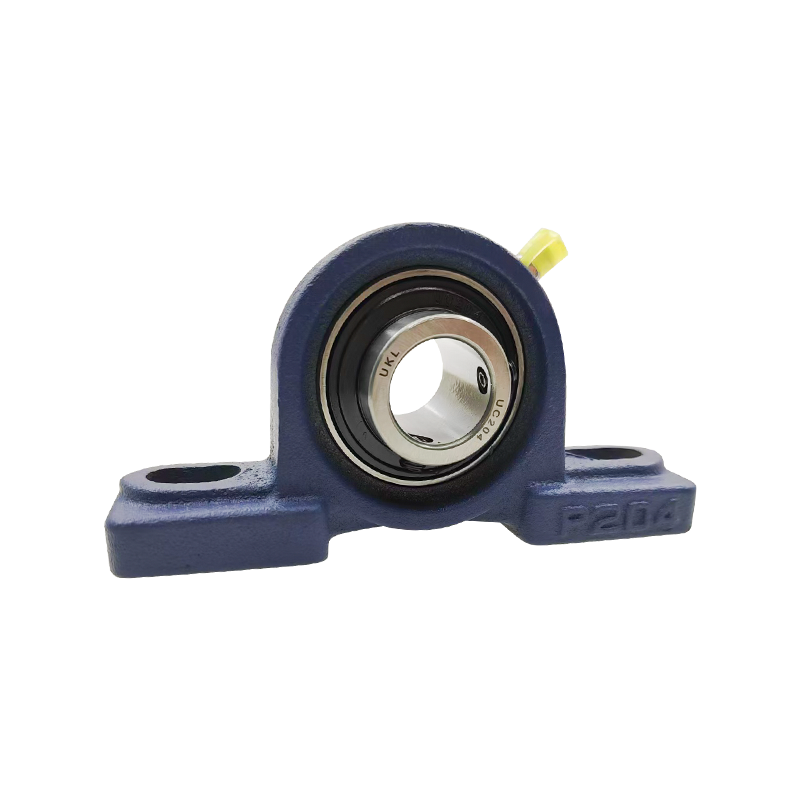
In modern industrial machinery, reliable shaft support is not a minor detail; it is one of the foundations of stable equipment operation. Tapped base pillow block bearings are designed to provide compact, secure, and self-aligning support for rotating shafts in applications where space, mounting flexibility, durability, and maintenance convenience all matter. As a mounted bearing solution, this product combines a cast iron housing, a set screw insert ball bearing, a slinger seal arrangement, and a tapped base structure that allows installation from below or into threaded mounting points. The result is a practical bearing unit suitable for agricultural machinery, conveyors, fans, HVAC equipment, pumps, manufacturing systems, feed mills, construction equipment, automotive-related assemblies, and many other industrial machines.
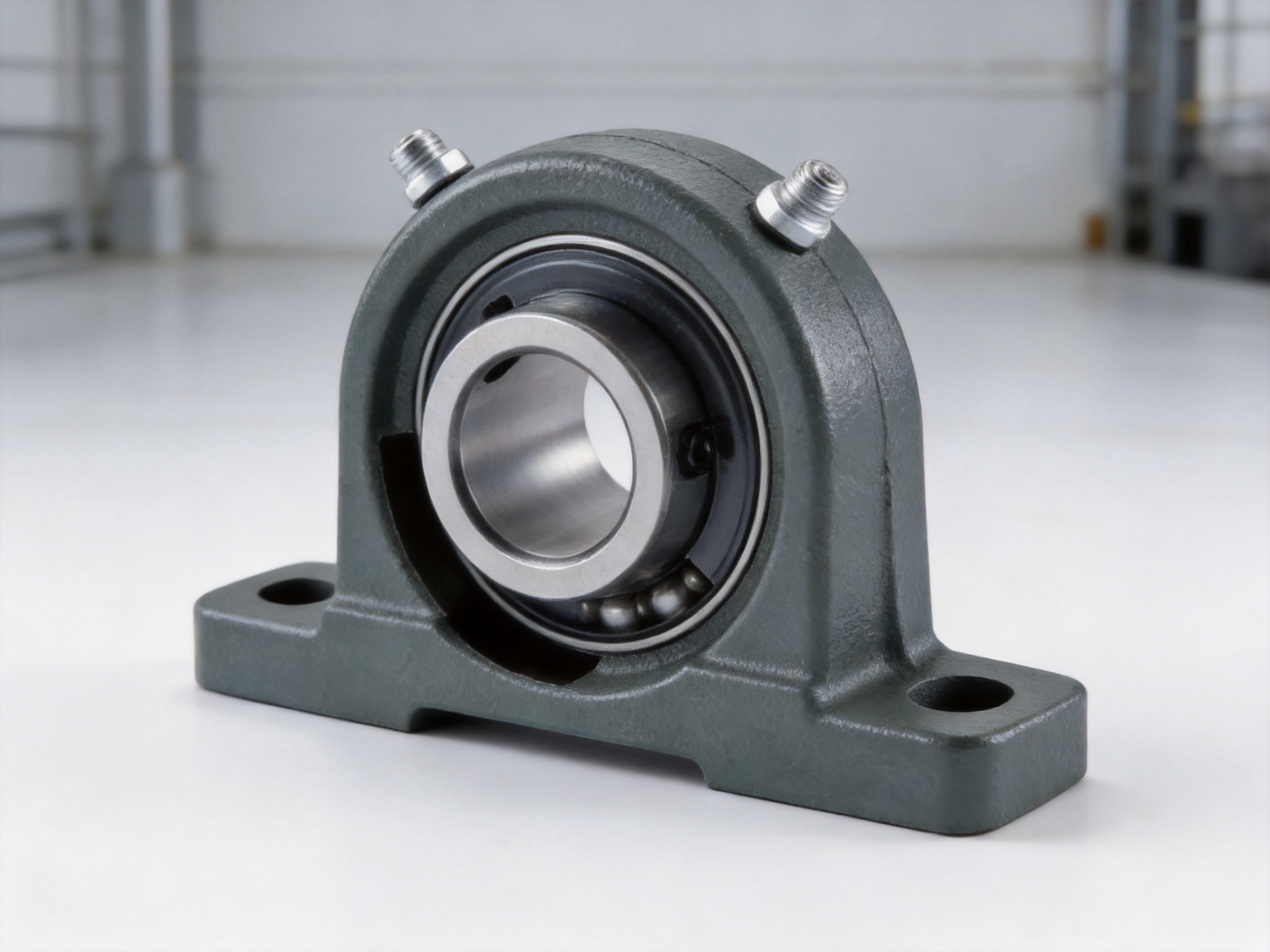
The tapped base pillow block bearing unit discussed in this article consists of a strong cast iron housing with an anti-rotation device and a chrome steel insert ball bearing. The insert bearing is self-aligning and is fixed to the shaft by two specially positioned set screws in the inner ring. This design enables the bearing to compensate for minor mounting errors and shaft misalignment, while also maintaining a firm grip on the shaft during operation. Compared with many basic mounted bearing units, a well-made tapped base pillow block bearing offers improved installation flexibility, dependable sealing, high load-carrying performance, and reduced downtime in demanding operating environments.
Tapped Base Pillow Block Bearings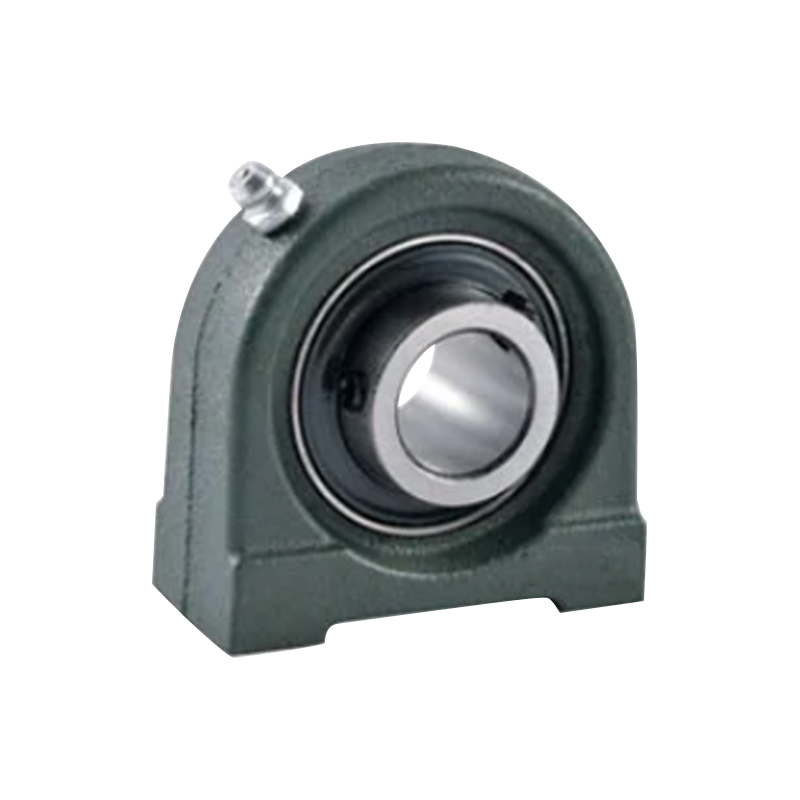
A pillow block bearing is a mounted bearing unit that supports a rotating shaft through a rolling bearing installed inside a housing. The housing is normally bolted to a machine frame, plate, base, or support bracket. In a tapped base pillow block bearing, the mounting holes are threaded, or the design is intended for applications where the bearing unit must be fastened through tapped holes rather than through standard through-bolts. This feature is especially useful when the bearing must be installed on compact equipment, enclosed machinery, adjustable brackets, or frames where access from the opposite side is limited.
The core of the unit is the insert ball bearing. In this product, the insert bearing is made from chrome steel, a material widely used in bearing manufacturing because of its hardness, fatigue resistance, wear resistance, and ability to maintain dimensional stability after heat treatment. The inner ring is extended and fitted with two set screws. These screws are tightened onto the shaft, allowing the bearing to lock in position without the need for a separate adapter sleeve or complex mounting mechanism. For many industrial machines, this set screw locking method provides a practical balance between installation speed, holding force, and serviceability.
The cast iron housing plays an equally important role. It supports the bearing, absorbs mechanical stress, protects the insert, and provides a rigid mounting interface. Cast iron is widely selected for pillow block housings because it offers good compressive strength, vibration damping, machinability, and cost-effectiveness. When properly produced and machined, a cast iron housing can maintain alignment under load and provide long-term stability even in continuous-duty operation.
Another important element is the anti-rotation device. In a mounted bearing unit, the outer ring of the insert bearing must remain properly seated inside the housing. If the bearing outer ring rotates in the housing bore, wear, looseness, heat generation, and premature failure may occur. An anti-rotation device helps prevent this problem by securing the insert bearing position within the housing. This improves service reliability and helps maintain correct bearing geometry over time.
The tapped base pillow block bearing has several design features that make it attractive for industrial use. First, it is self-aligning. Minor shaft deflection, frame inaccuracies, or installation deviations can occur in real equipment, especially in conveyors, agricultural machines, fans, and mobile equipment. A self-aligning insert bearing can accommodate these small angular errors, reducing edge stress and helping the bearing operate more smoothly.
Second, the unit uses a set screw locking mechanism. Two set screws located in the inner ring are tightened against the shaft. This arrangement makes installation straightforward and allows technicians to mount the bearing without special tools. For maintenance teams, the set screw design is familiar, fast, and efficient. It also allows easy replacement when equipment must be repaired or upgraded.
Third, the insert bearing includes a slinger seal design. Sealing is critical in mounted bearing applications because dust, water, crop residue, fibers, metal particles, or other contaminants may enter the bearing. Once contamination reaches the raceways, it can damage lubricant films, increase friction, and shorten bearing life. A slinger seal helps deflect contaminants and protect the internal rolling elements. In many practical environments, this sealing system contributes significantly to longer service intervals.
Fourth, the tapped base design improves mounting flexibility. In some machines, a standard pillow block with through-holes may be difficult to install because there is no access behind the mounting plate. A tapped base unit solves this issue by allowing bolts to be inserted from one side or by matching threaded mounting positions. This can simplify machine design, reduce assembly time, and support compact mechanical layouts.
Fifth, the product combines strength with convenience. The cast iron housing gives the bearing unit a robust support structure, while the insert bearing provides smooth rotation. The complete unit is supplied as an integrated assembly, reducing the need for users to separately source housing, bearing, seals, and locking components. This integrated design helps reduce procurement complexity and improves consistency across repeated installations.
Compared with ordinary mounted bearing units, a high-quality tapped base pillow block bearing provides a stronger combination of installation convenience and operating reliability. Standard pillow block bearings often require access to both sides of the mounting surface for bolt and nut assembly. In compact or enclosed machines, this can create difficulties during installation and maintenance. The tapped base configuration helps reduce this problem by supporting installation where access is limited.
Another advantage is the combination of self-alignment and a secure shaft locking method. Some simple bearing supports require very accurate alignment during installation. If the shaft and housing are not aligned correctly, the bearing may experience uneven loading, excessive heat, noise, and early failure. The self-aligning function of the insert bearing helps absorb minor errors. This is especially valuable in equipment that operates under frame flexing, vibration, or variable load conditions.
The slinger seal system also provides a competitive advantage. Many low-cost bearing units use basic seals that may not provide enough protection in dusty, wet, or debris-filled environments. A slinger design adds an additional barrier effect, helping to keep contamination away from the bearing interior. This can reduce maintenance frequency and lower the risk of unexpected downtime.
The cast iron housing is another area where quality matters. Poorly manufactured housings may have dimensional errors, weak casting structure, rough bearing seats, or poor surface finish. These problems can lead to misalignment, looseness, vibration, and reduced bearing life. A precisely machined housing with consistent bore geometry provides better support for the insert bearing and helps maintain operational stability.
In addition, a manufacturer with strong production control can offer more consistent product quality than suppliers relying only on assembly or trading. When forging, turning, heat treatment, grinding, assembly, and packaging are controlled through an integrated production system, each stage can be checked and optimized. This reduces variation from batch to batch and helps customers receive bearings with dependable dimensions, hardness, clearance, sealing performance, and appearance.
The performance of a tapped base pillow block bearing depends on how each component contributes to the unit as a whole. The insert ball bearing carries radial loads and allows the shaft to rotate with low friction. The inner ring grips the shaft through the set screws. The rolling elements transmit load between the inner and outer rings. The cage separates the balls and promotes stable rolling motion. The seals protect the lubricant and internal contact surfaces. The housing supports the bearing and connects the rotating system to the machine frame.
The self-aligning feature is achieved through the relationship between the spherical outside surface of the insert bearing and the corresponding housing seat. This geometry allows the bearing to tilt slightly inside the housing, compensating for small angular deviations. In real-world machinery, this is extremely useful because perfect alignment is difficult to maintain. Shafts may bend under load, frames may distort, and mounting surfaces may not be perfectly flat. The self-aligning design protects the bearing from excessive localized stress.
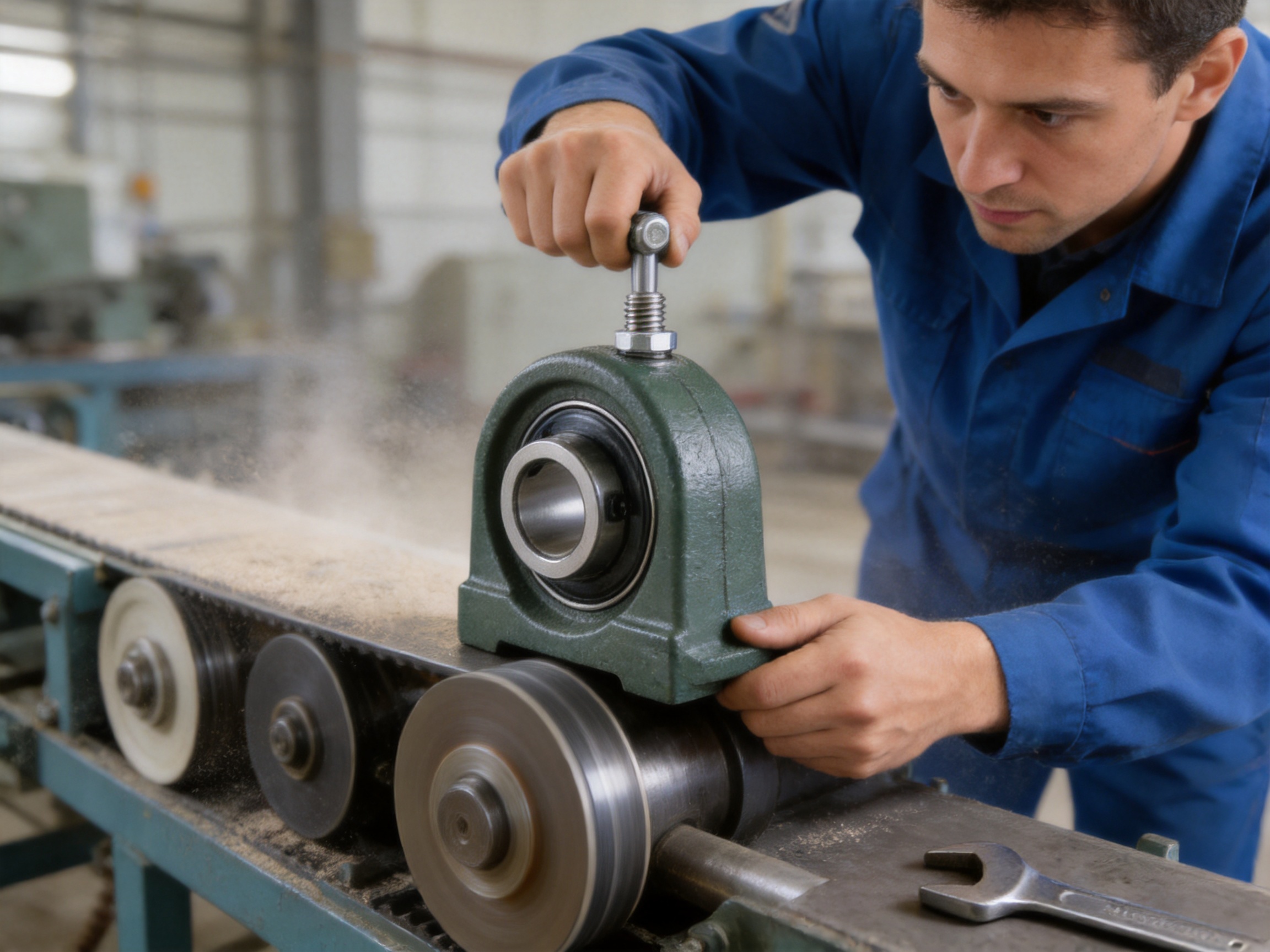
The set screw locking system is widely valued for its simplicity. After the bearing unit is positioned on the shaft and mounted to the machine frame, the screws are tightened to the recommended torque. The screws press against the shaft surface and prevent relative movement between the inner ring and shaft. This method is suitable for many light to medium-duty applications and is particularly common in conveyors, fans, agricultural machinery, and general industrial equipment.
The tapped base mounting arrangement contributes to cleaner machine design. Instead of requiring nuts below or behind the mounting surface, the bearing can be fastened directly into a threaded interface. This is beneficial for assemblies where underside access is blocked by guards, covers, frames, or other components. It can also reduce assembly steps on production lines, making the bearing unit attractive for OEM equipment manufacturers.
Because this bearing is supplied as a complete mounted unit, it also supports easier inventory management. Maintenance teams can keep complete replacement units on hand rather than managing separate housings, bearings, seals, and locking accessories. In many plants, simplified spare parts management reduces repair time and helps equipment return to production faster.
| Item | Description | Practical Benefit |
|---|---|---|
| Product Type | Tapped base pillow block bearing unit | Compact mounted bearing solution for shaft support |
| Housing Material | Cast iron | Strength, stability, vibration damping, and long service life |
| Bearing Type | Set screw insert ball bearing | Simple shaft locking and convenient installation |
| Bearing Material | Chrome steel | Hardness, wear resistance, and rolling fatigue strength |
| Alignment Function | Self-aligning insert structure | Compensates for minor shaft and mounting misalignment |
| Seal Design | Slinger seal arrangement | Improved contamination resistance in industrial environments |
| Locking Method | Two set screws positioned in the inner ring | Fast installation and secure shaft attachment |
| Housing Feature | Anti-rotation device | Helps prevent bearing movement inside the housing |
| Common Applications | Agriculture, conveyors, fans, HVAC, pumps, feed mills, manufacturing equipment | Broad usability across industrial and mechanical systems |
Tapped base pillow block bearings are used in many applications because they combine durable support with straightforward installation. In agricultural machinery, they can support shafts in equipment exposed to dust, vibration, crop residue, outdoor conditions, and variable loads. Examples include feed handling systems, grain equipment, farm machinery, and conveying mechanisms. The slinger seal design is especially useful in these settings because contamination is a constant challenge.
In conveyor systems, pillow block bearings support drive shafts, tail pulleys, idlers, rollers, and intermediate rotating components. Conveyor equipment often operates for long hours and may run in dusty factories, warehouses, mines, food processing areas, packaging lines, or material handling facilities. A bearing unit that is easy to install and replace can reduce downtime when service is required. The tapped base design may also help engineers create compact conveyor frames where access space is limited.
In fan assemblies and HVAC systems, stable bearing support is essential for controlling vibration, noise, and energy consumption. When a fan shaft is not properly supported, imbalance forces can increase, leading to higher noise and reduced component life. A self-aligning mounted bearing helps compensate for small alignment errors and supports smoother operation. The cast iron housing also contributes to vibration damping, which is valuable in air movement equipment.
Pump-related equipment can also benefit from reliable mounted bearing support, especially in auxiliary systems, transfer mechanisms, and machinery where external shaft supports are required. While bearing selection must always consider load, speed, temperature, and exposure conditions, the tapped base pillow block bearing can provide a dependable support option in many pumping and fluid-handling environments.
Manufacturing equipment often requires modular bearing units that can be installed quickly and maintained easily. Production machines, automated handling systems, packaging equipment, light-duty processing machines, and mechanical transfer lines may all use pillow block bearing units. The tapped base configuration can be especially helpful when machine builders want to reduce installation complexity or design compact assemblies.
In sporting and consumer goods production equipment, reliability and cost efficiency are important. Equipment manufacturers need components that perform consistently but do not introduce unnecessary complexity. A tapped base pillow block bearing provides a practical solution by combining the housing, bearing, sealing, and locking system into one ready-to-install unit.
The quality of a mounted bearing unit is not determined only by its design. Manufacturing quality is equally important. Ukl Bearing Manufacturing Co.,Ltd operates as an integrated manufacturer and trader with experience in OEM and ODM export projects. Its production approach covers multiple critical processes, including forging, turning, heat treatment, grinding, assembly, and packaging. This integrated production capability helps ensure that each bearing unit is made with controlled dimensions, consistent material properties, and reliable assembly quality.
Forging and material preparation form the basis of bearing strength. Bearing steel must be processed carefully to achieve a structure capable of resisting rolling contact fatigue. Poor material quality can lead to cracks, spalling, deformation, and premature failure. By controlling material selection and early-stage processing, the manufacturer can build a stronger foundation for the final product.
Turning and machining determine the geometry of bearing rings and housing components. Dimensional accuracy is essential because bearings operate with very small clearances and precise contact geometry. If ring dimensions, raceway forms, housing bores, or mounting faces are inaccurate, the final bearing unit may generate vibration, noise, heat, or uneven load distribution. Advanced machining control helps reduce these risks.
Heat treatment is one of the most important processes in bearing manufacturing. Chrome steel bearing rings must reach appropriate hardness while maintaining toughness and dimensional stability. If heat treatment is too soft, the raceways may wear quickly. If it is too brittle, the bearing may crack under shock loads. Controlled heat treatment improves hardness uniformity, fatigue resistance, and long-term performance.
Grinding gives bearing raceways their final precision. The surface finish and geometry of the raceway directly affect rolling smoothness, friction, noise, and fatigue life. High-quality grinding reduces surface roughness and improves roundness. For mounted insert bearings, accurate grinding also supports stable internal clearance and smooth rotation under load.
Assembly is where all components come together. Balls, cages, seals, rings, lubricant, and housings must be assembled in a clean and controlled manner. Contamination introduced during assembly can shorten bearing life before the product is even installed. Proper assembly procedures help ensure that the bearing rotates smoothly, seals are seated correctly, and set screws function as intended.
Packaging may seem less technical than grinding or heat treatment, but it is also important. Bearings must be protected from corrosion, impact, moisture, and contamination during transportation and storage. For export markets, durable packaging helps ensure that products arrive ready for installation even after long-distance shipping.
Industrial customers do not only need one good bearing; they need repeated quality across many orders. Consistency is essential for OEM production, distributor inventory, and maintenance programs. A bearing manufacturer with modernized production lines and systematic inspection can reduce batch variation and provide more predictable performance.
Quality control for tapped base pillow block bearings may include material verification, hardness testing, dimensional inspection, surface finish measurement, roundness checks, clearance verification, seal inspection, rotational smoothness testing, and visual examination of the housing and assembly. Each test helps identify possible defects before the product reaches the customer.
Dimensional inspection is particularly important for the housing bore, mounting surfaces, shaft bore, inner ring, and set screw positions. If these dimensions are not controlled, installation may become difficult or the bearing may not perform properly. Accurate dimensions also support interchangeability, allowing users to replace units quickly when needed.
Rotational testing helps confirm that the insert bearing turns smoothly without abnormal noise, tight spots, or roughness. In many applications, vibration and noise can indicate internal defects, contamination, improper clearance, or assembly errors. Early detection helps prevent failures in customer equipment.
Seal inspection is also important. A damaged or poorly seated seal can allow contamination to enter the bearing. Since many mounted bearings operate in exposed environments, sealing quality directly affects bearing life. The slinger seal arrangement must be properly installed to provide effective protection.
For export customers, documentation and traceability are additional advantages. When a manufacturer can track production batches and maintain quality records, customers gain confidence in long-term supply stability. This is particularly valuable for distributors and OEMs that need dependable components for international markets.
The chrome steel insert bearing is selected because rolling bearings experience repeated contact stress. Every revolution creates load cycles between the balls and raceways. Over time, these cycles can cause fatigue if the material is not strong enough. Chrome steel, when properly heat treated and finished, provides the hardness and fatigue resistance required for long bearing life.
Hardness is important, but it is not the only factor. A bearing ring must also have suitable toughness to resist shock loading. In agricultural, construction, and conveyor applications, loads may not be perfectly smooth. Equipment may experience sudden starts, stops, vibration, uneven material flow, or accidental impact. A balanced heat treatment process helps the bearing survive these conditions.
The cast iron housing supports the bearing under mechanical load. Cast iron has good damping properties, which means it can help absorb vibration better than some harder, less damping materials. It is also strong in compression and suitable for producing complex housing shapes. When the housing is properly cast and machined, it provides a stable platform for the insert bearing.
The set screws must also be made and treated correctly. They need enough strength to hold the shaft without stripping or deforming during tightening. Their position in the inner ring affects locking force and balance. Poorly made set screws may loosen, damage the shaft excessively, or fail to maintain clamping force. A quality bearing unit uses set screws designed for secure and repeatable locking.
Correct installation is essential for achieving the full service life of a tapped base pillow block bearing. Before installation, the shaft should be inspected for diameter accuracy, straightness, cleanliness, and surface condition. Burrs, rust, dirt, or damage can prevent the bearing from seating correctly. The mounting surface should also be flat, clean, and strong enough to support the bearing under load.
The bearing unit should be placed in the correct position before the mounting bolts are fully tightened. If multiple bearing units support the same shaft, alignment should be checked carefully. Although the insert bearing is self-aligning, it should not be used to compensate for severe installation errors. Excessive misalignment can still reduce bearing life and increase operating temperature.
After the housing is mounted, the set screws should be tightened evenly and to the recommended torque. Over-tightening may damage the shaft or threads, while under-tightening may allow the inner ring to slip. If the application involves vibration or reversing loads, appropriate locking practices should be followed according to the equipment design.
Once installed, the shaft should be rotated by hand if possible to check for smooth movement. Any binding, unusual resistance, or abnormal noise should be investigated before the equipment is started. After initial operation, temperature and vibration should be monitored to confirm normal performance.
Lubrication practices should follow the bearing type and application conditions. Some insert bearings are pre-lubricated, but relubrication may be required depending on speed, load, temperature, contamination, and operating hours. Over-lubrication can generate heat and damage seals, while under-lubrication can cause wear and fatigue. A balanced maintenance schedule is important.
A well-designed tapped base pillow block bearing can provide long service life when properly selected, installed, and maintained. However, bearing life is affected by many factors, including load, speed, alignment, lubrication, contamination, temperature, vibration, and mounting quality. Maintenance teams should monitor the bearing environment and adjust service intervals accordingly.
Regular visual inspection can identify early signs of problems. Technicians should look for loose mounting bolts, damaged seals, grease leakage, corrosion, cracks in the housing, unusual shaft movement, or contamination buildup around the bearing. Early correction can prevent minor issues from becoming major failures.
Noise and vibration monitoring are also useful. A healthy bearing normally runs smoothly. Increasing noise, rumbling, squealing, or vibration may indicate contamination, insufficient lubrication, misalignment, looseness, or internal damage. In critical equipment, vibration analysis can provide deeper insight into bearing condition.
Temperature monitoring helps identify friction-related problems. If a bearing becomes unusually hot, possible causes include overloading, excessive speed, poor lubrication, over-lubrication, misalignment, seal friction, or internal damage. Comparing the bearing temperature with normal operating history can help maintenance teams detect abnormal changes.
Relubrication should be performed with compatible grease and clean tools. Contaminated grease can introduce abrasive particles into the bearing. Grease fittings and surrounding areas should be cleaned before lubrication. The correct amount of grease should be applied according to operating conditions and manufacturer recommendations.
When replacement is necessary, the complete bearing unit can often be changed quickly. This is one of the major advantages of mounted bearing units. Instead of disassembling complex bearing arrangements, technicians can remove the old unit, prepare the shaft and mounting surface, and install a new unit. The tapped base design may further simplify replacement in restricted-access locations.
Choosing the correct tapped base pillow block bearing requires more than matching the shaft diameter. Engineers should consider load direction, load magnitude, speed, operating temperature, contamination level, moisture exposure, vibration, duty cycle, mounting space, and maintenance access. The bearing must be suitable for the actual operating environment, not only the theoretical machine design.
Radial load is usually the primary load for pillow block bearing applications. However, some machines also generate axial load. Insert ball bearings can support limited axial loads, but excessive thrust loading may require a different bearing arrangement. Engineers should calculate or estimate load conditions before final selection.
Speed is another important factor. Higher speeds require better balance, lubrication, sealing compatibility, and heat control. If the application operates continuously at elevated speed, bearing temperature and grease performance must be evaluated carefully. The selected unit should operate within suitable speed limits.
Contamination level strongly affects bearing life. Dusty, wet, or dirty environments require better sealing and maintenance planning. The slinger seal design improves protection, but no seal can make a bearing completely immune to severe contamination. In harsh environments, regular inspection and relubrication are important.
Mounting space determines whether a tapped base unit is the best option. If access behind the mounting surface is limited, a tapped base design can simplify installation. If the machine design requires frequent adjustment, technicians should also consider how easily the mounting bolts and set screws can be accessed.
Compatibility with the shaft is essential. The shaft diameter, tolerance, hardness, and surface finish affect the performance of the set screw locking method. A shaft that is too small may not lock securely. A shaft that is rough, damaged, or corroded may create installation problems. A shaft that is too soft may be damaged by the set screws.
OEM customers often require bearings that match specific equipment designs. They need consistent dimensions, reliable supply, stable quality, and technical communication. A manufacturer with OEM and ODM experience can support these needs by providing product selection assistance, customization discussions, packaging options, and production coordination.
Distributors require products that can serve multiple market segments. Tapped base pillow block bearings are suitable for broad industrial distribution because they apply to many machine categories. A distributor can supply them to customers in agriculture, material handling, HVAC, manufacturing, repair services, and general machinery maintenance.
International customers also value communication and after-sales support. Ukl Bearing Manufacturing Co.,Ltd serves customers in regions including the United States, Italy, Germany, Poland, South Africa, Egypt, India, and other markets. A multilingual service team can provide technical response, installation guidance, and after-sales support, helping customers choose and use bearing products more effectively.
Production capacity is another important factor for global supply. With monthly production capacity in the range of 10,000 to 50,000 units, the company can support both regular distribution demand and project-based orders. Reliable production scheduling helps customers reduce procurement risk and maintain stable inventory.
Modern industrial buyers increasingly consider sustainability when selecting suppliers. Bearing production involves steel, energy, machining fluids, packaging materials, and logistics. Responsible manufacturers work to reduce waste, improve energy efficiency, recycle materials, and optimize production processes. These efforts support long-term environmental responsibility while also improving manufacturing efficiency.
Material recycling is especially relevant in bearing manufacturing because steel and cast iron are recyclable materials. By improving material utilization and recycling scrap, manufacturers can reduce waste and support more sustainable production. Process optimization can also reduce energy consumption in heat treatment, machining, and assembly operations.
Sustainability also includes product durability. A bearing that lasts longer reduces replacement frequency, downtime, waste, and resource consumption. Therefore, precision manufacturing, good sealing, correct material selection, and reliable quality control all contribute indirectly to environmental performance.
Training and technical development are also part of responsible industrial growth. Supporting engineering knowledge, installation awareness, and maintenance education helps customers use bearings correctly and safely. Better usage practices reduce premature failures and improve the efficiency of industrial equipment.
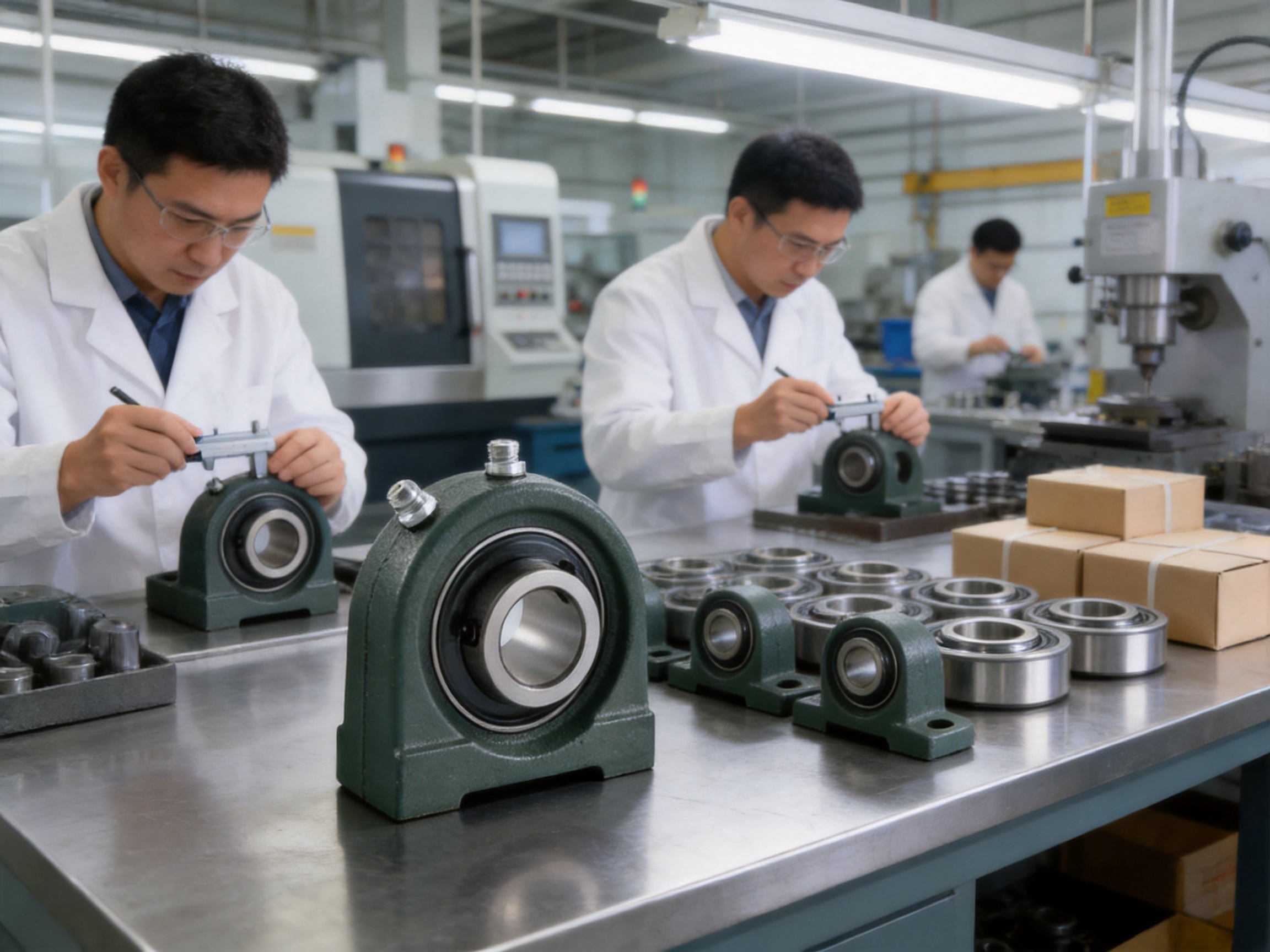
A tapped base pillow block bearing is a mounted bearing unit designed to support a rotating shaft. It includes a housing and an insert ball bearing. The tapped base feature allows convenient fastening in applications where threaded mounting or one-side installation is preferred.
The tapped base design improves installation flexibility, especially where access behind the mounting surface is limited. In addition, this product uses a cast iron housing, a self-aligning chrome steel insert bearing, two set screws for shaft locking, a slinger seal design, and an anti-rotation device for stable operation.
Self-alignment helps the bearing compensate for minor shaft or mounting misalignment. This reduces uneven stress on the bearing raceways and can improve service life, especially in equipment exposed to vibration, frame flexing, or installation variation.
The insert bearing has two set screws positioned in the inner ring. After the bearing is placed on the shaft, the screws are tightened against the shaft surface. This locks the inner ring to the shaft and helps transmit rotation securely.
The slinger seal helps deflect dust, moisture, and debris away from the bearing interior. This improves protection against contamination, which is one of the most common causes of bearing failure in industrial environments.
Typical applications include agricultural machinery, automotive-related equipment, construction machinery, pumps, manufacturing equipment, sporting and consumer goods production systems, conveyors, fan assemblies, HVAC equipment, feed mills, and other industrial machines.
Cast iron provides strength, stability, and vibration damping. It supports the insert bearing and helps maintain proper position under operating loads. A well-machined cast iron housing improves the reliability of the complete bearing unit.
Yes, it can be used in many dusty environments, especially because the slinger seal design provides added protection. However, maintenance practices such as inspection and relubrication should be adjusted according to the severity of contamination.
The shaft should be clean, straight, and correctly sized. The mounting surface should be flat and free from debris. The bearing should be aligned properly, and the set screws and mounting bolts should be tightened correctly.
Service life can be improved by selecting the correct bearing size, avoiding overload, ensuring proper alignment, using suitable lubrication, preventing contamination, tightening set screws correctly, and performing regular inspection.
Tapped base pillow block bearings provide a dependable and practical solution for shaft support in a wide range of machinery. Their value comes from the combination of a strong cast iron housing, a self-aligning chrome steel insert bearing, a secure set screw locking method, a protective slinger seal design, and a tapped base structure that simplifies installation in restricted spaces. These features make the product suitable for agriculture, conveyors, HVAC equipment, fans, pumps, manufacturing systems, feed mills, construction equipment, and many other industrial applications.
Compared with ordinary mounted bearing options, a high-quality tapped base pillow block bearing offers advantages in mounting flexibility, contamination resistance, alignment tolerance, maintenance convenience, and operational reliability. The anti-rotation device helps maintain bearing position in the housing, while the integrated unit design simplifies procurement and replacement.
The product’s performance is strengthened by advanced manufacturing capabilities. Through controlled forging, turning, heat treatment, grinding, assembly, and packaging, Ukl Bearing Manufacturing Co.,Ltd can support consistent bearing quality for both OEM customers and industrial distributors. With export experience, production capacity, technical service, and a commitment to precision manufacturing, the company is positioned to supply reliable mounted bearing solutions for global industry.
For engineers, purchasing teams, and maintenance professionals, the tapped base pillow block bearing is more than a simple shaft support. It is a compact, service-friendly, and durable component that helps machines run smoothly, reduces maintenance complexity, and supports long-term equipment performance.
Harris, T. A., and Kotzalas, M. N. Rolling Bearing Analysis: Essential Concepts of Bearing Technology. CRC Press.
ISO 281. Rolling Bearings: Dynamic Load Ratings and Rating Life. International Organization for Standardization.
ISO 492. Rolling Bearings: Radial Bearings, Geometrical Product Specifications and Tolerance Values. International Organization for Standardization.
Brändlein, J., Eschmann, P., Hasbargen, L., and Weigand, K. Ball and Roller Bearings: Theory, Design and Application. Wiley.
Neale, M. J. The Tribology Handbook. Butterworth-Heinemann.
SKF Group. Rolling Bearings Technical Principles and Maintenance Guidelines.
Schaeffler Technologies. Rolling Bearing Design and Application Engineering Reference.
Product Categories
Contact Us

Jane@ukl-bearing.com
Jenny@ukl-bearing.com
Andy@ukl-bearing.com
Ivy@ukl-bearing.com

+86-510- 88763239
+86-15371057968

No.1 Hehuan Road, Hudai Town, Binhu District, Wuxi City.
Ready to Begin?
Get in Touch

Now!
UKL BEARING
 English
 Español
 русский